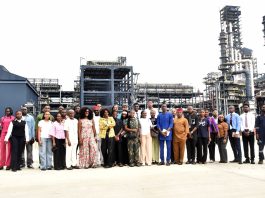

























The Centre for the Promotion of Private Enterprise (CPPE) has released its comprehensive review of Nigeria’s economic performance in 2025, describing the year as a period of macroeconomic stabilisation following the turbulence associated with the initial phase of economic reforms. The Centre also expressed cautious optimism about the outlook for 2026, projecting a gradual transition from stability to stronger and more inclusive growth.
2025: A Year of Macroeconomic Stabilisation
According to the statement signed by the Chief Executive Officer of CPPE, Dr Muda Yusuf, exchange rate stability emerged as the most visible macroeconomic achievement in 2025. The naira traded largely within the ₦1,440–₦1,500 per US dollar band for most of the year, with episodes of marginal appreciation that helped strengthen business confidence, ease imported inflation, and restore predictability to pricing, contracting, and investment planning.
Inflation also decelerated significantly, declining from 24.48 percent in January to approximately 14.45 percent by November 2025. This slowdown was supported by currency stability, easing logistics pressures, and improving supply conditions. Several food items and imported consumer goods recorded outright price declines, contributing to improved consumer sentiment and reduced price volatility.
Business confidence strengthened materially during the year. The NESG–Stanbic IBTC Business Confidence Index remained positive for most of 2025, reflecting improved investor perceptions and a gradual recovery in corporate profitability. Many firms that posted losses in 2024 returned to profit in 2025, underscoring the gains from macroeconomic stabilisation.
Fiscal Performance: Mixed Outcomes
Despite improvements in macroeconomic indicators, CPPE noted that federal fiscal performance remained weak. Rising debt-service obligations continued to constrain fiscal space and undermine effective budget implementation, while revenue performance fell short of expectations, largely due to sub-optimal oil sector outcomes.
The 2025 Federal Budget was anchored on optimistic assumptions of a US$75 per barrel oil price and crude oil production of 2.06 million barrels per day. Actual outcomes were significantly lower, with average oil prices around US$66 per barrel and production closer to 1.66 million barrels per day. As a result, the projected ₦41 trillion revenue target was substantially missed, leading to weak implementation of capital expenditure.
In contrast, sub-national governments recorded relatively stronger fiscal outcomes. Improved liquidity, stronger internally generated revenue performance, and better execution of capital projects enabled more visible delivery of infrastructure and social services across several states.
Sectoral Performance Highlights
CPPE observed that the services sector remained the primary driver of economic growth in 2025. By the third quarter of the year, services accounted for about 53 percent of GDP, compared with 3.44 percent for oil. The non-oil sector contributed 96.56 percent of GDP and grew by 3.91 percent, underscoring Nigeria’s gradual structural shift away from oil dependence.
The services sector grew by 4.14 percent, driven largely by telecommunications, financial services, trade, construction, and real estate. Manufacturing performance remained fragile, growing by just 1.25 percent and contributing 7.62 percent to GDP. Persistent challenges—such as power deficits, high logistics costs, unfair competition from imports, weak access to finance, and elevated operating costs—continued to weigh on the sector.
Agriculture recorded a modest recovery, growing by 3.79 percent and contributing 31.21 percent to GDP. However, insecurity, low productivity, and post-harvest losses continued to limit its contribution to exports and government revenues.
2026 Outlook: From Stability to Growth
Looking ahead, CPPE’s outlook for 2026 is one of cautious optimism. With reform momentum sustained, Nigeria is expected to transition more decisively from stabilisation to growth. GDP growth is projected between 4.0 and 4.5 percent, supported by further moderation in inflation and stronger non-oil sector performance.
Moderating inflation is expected to strengthen domestic demand and create room for gradual monetary easing, potentially lowering interest rates and stimulating private investment. Services—particularly telecommunications, finance, construction, real estate, and trade—are expected to remain the main engines of growth.
Capital market prospects also appear positive, bolstered by the potential listing of the Dangote Refinery, which could deepen market liquidity and attract both domestic and foreign portfolio inflows. CPPE noted that policy credibility remains strong, reinforcing investor confidence and capital inflows.
Key Risks to the Outlook
Despite the improving outlook, CPPE highlighted several downside risks that could undermine growth prospects in 2026. These include persistent security challenges affecting agriculture, logistics, and investment; volatility in oil prices and production; and enduring structural constraints such as high power, energy, and logistics costs.
Debt and fiscal pressures remain significant, with debt service estimated at over ₦15 trillion in the 2026 Appropriation Act—about 50 percent of projected revenue—continuing to constrain fiscal space. External risks, including geopolitical tensions, could disrupt trade flows, commodity prices, and capital movements. In addition, pre-election fiscal pressures, political uncertainties, and emerging resistance to tax reforms could heighten macroeconomic risks.
Conclusion
CPPE concluded that 2025 laid a solid foundation of macroeconomic stability for Nigeria. The outlook for 2026 is reassuring, with expectations of stronger growth, easing inflation, improved investor confidence, and a gradual shift toward more inclusive economic expansion.
“If reform momentum is sustained and security challenges are effectively addressed, 2026 could mark the beginning of a more robust growth phase with tangible improvements in living standards,” the Centre stated.