




























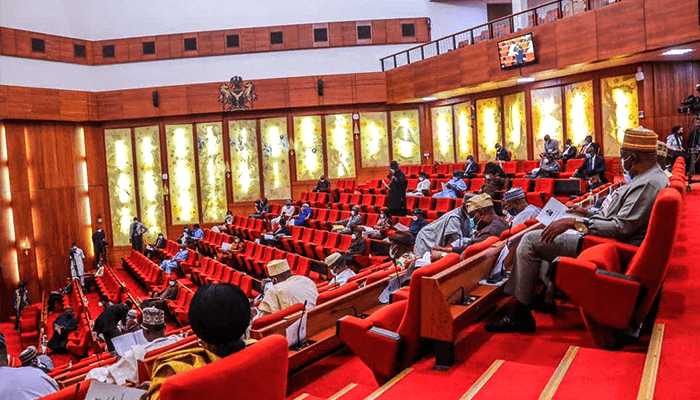
The Senate on Wednesday turned down proposals to establish a separate regulatory body for Nigeria’s rapidly expanding fintech industry, choosing instead to reinforce the authority of the Central Bank of Nigeria (CBN) and assign it a coordinating role over other oversight agencies in supervising digital financial services.
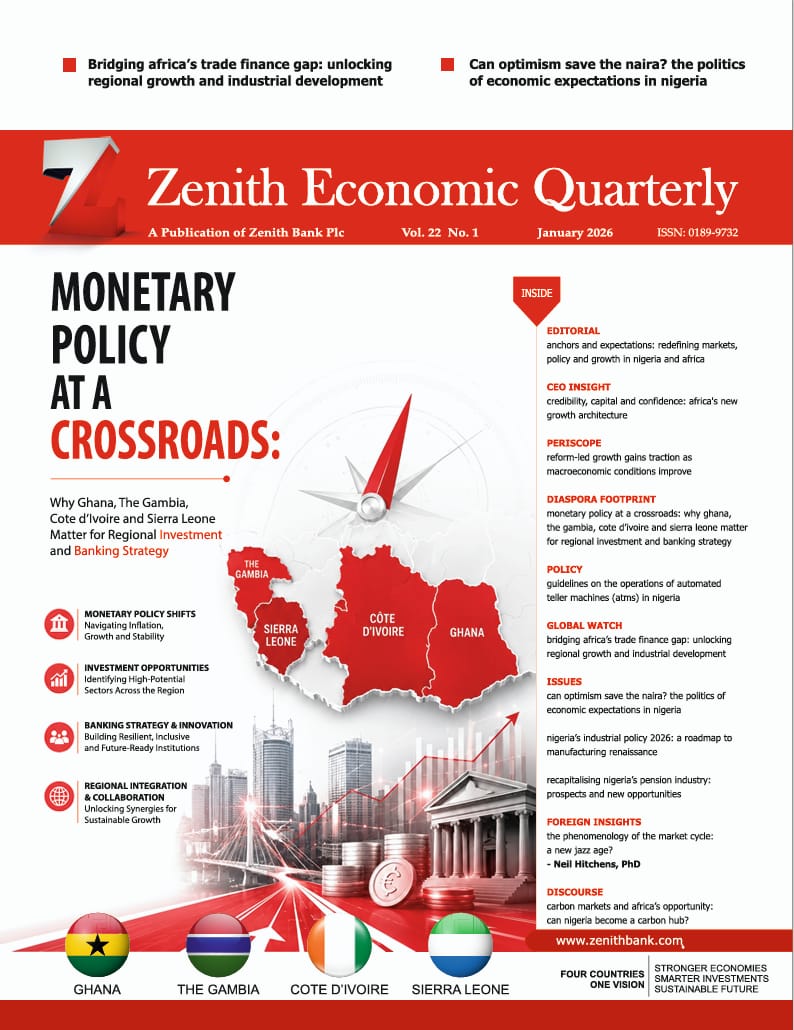 https://www.digital.zenithbank.com/ZEQ/ZEQ-jan-2026/index.html#p=1
The resolution emerged from deliberations at a one-day public hearing held at the National Assembly on the Banks and Other Financial Institutions Act (Amendment) Bill 2025 (SB. 959).
The session also featured an investigative review into the growing menace of Ponzi schemes, with specific attention to the recent collapse linked to the Crypto Bullion Exchange (CBEX).
The hearing was convened jointly by the Senate Committees on Banking, Insurance and Other Financial Institutions; ICT and Cyber Security; Capital Market; and Anti-Corruption and Financial Crimes, a move lawmakers said underscored the urgency of preserving the credibility of Nigeria’s financial system amid accelerating digital transformation and recurring fraud incidents.
Speaking at the session, Tokunbo Abiru, Chairman of the Senate Committee on Banking, Insurance and Other Financial Institutions, explained that the proposed amendment is designed to plug regulatory loopholes by expressly incorporating technology-driven financial service providers into a more robust statutory regime under the CBN.
Abiru observed that fintech operators, including digital lenders, mobile money providers, payment gateways and settlement platforms now handle enormous transaction volumes and serve millions of Nigerians.
While acknowledging their contribution to financial inclusion, he cautioned that the existing legal structure has not evolved sufficiently to match their operational scale, complexity and systemic relevance.
He pointed out that the present framework for identifying Systemically Important Financial Institutions is largely tailored to conventional banks and does not adequately cover large, data-centric non-bank platforms.
According to him, this regulatory blind spot creates potential threats to financial stability, consumer protection, data governance and even national security.
Under the amendment, the CBN would be empowered to classify eligible fintech and digital financial institutions as Systemically Important Institutions.
The bill also proposes the creation of a national registry to boost transparency and disclose beneficial ownership, alongside enhanced risk-based supervision suited to technology-enabled financial services.
Abiru firmly rejected calls for a new fintech regulator.
“Establishing a new agency would duplicate functions, create bureaucratic overlap, increase administrative costs and fragment regulatory authority in a sector where coordination and coherence are essential,” he said.
He argued that oversight of fintech operations is inherently tied to monetary policy, payments regulation, prudential supervision, Know-Your-Customer requirements, Anti-Money Laundering compliance and systemic risk surveillance, responsibilities that already fall within the purview of the CBN.
Rather than setting up an additional bureaucracy, Abiru maintained that updating the BOFIA framework and institutionalising structured collaboration between the apex bank and agencies such as the Securities and Exchange Commission, Nigerian Communications Commission, National Information Technology Development Agency, Corporate Affairs Commission, Federal Competition and Consumer Protection Commission, the Office of the National Security Adviser and the Federal Ministry of Finance would provide a more efficient and cohesive regulatory model.
Representing Senate President Godswill Akpabio, Opeyemi Bamidele, Senate Leader, stated that the engagement reflected the Senate’s constitutional mandate to safeguard the stability, credibility and resilience of Nigeria’s financial architecture.
Bamidele described the financial system as the backbone of the economy, noting that it mobilises savings, channels credit, facilitates transactions and supports enterprise development.
He stressed that sound regulation should not be perceived as an obstacle to innovation but as a foundation for sustainable expansion.
He further emphasised that “digital innovation must function within well-defined legal parameters that guarantee consumer protection, cybersecurity, operational resilience and transparency.”
“Strengthening supervision of systemically important institutions, including fintech operators is essential,” he said, to maintain public confidence and avert systemic disruptions.
The Senate also ramped up scrutiny of fraudulent investment schemes and digital Ponzi operations, characterising their spread as a significant danger to investor trust and economic stability.
Lawmakers cited the fallout from CBEX as a sobering example of the damage inflicted by schemes that lure participants with promises of extraordinary returns. Submissions presented at the hearing indicated that professionals, retirees, traders, small-scale entrepreneurs and students were among those who incurred substantial losses.
Beyond individual hardship, senators warned that such schemes undermine confidence in legitimate financial institutions, distort capital flows, tarnish Nigeria’s financial reputation and heighten vulnerability to money laundering and illicit financial activities.
Bamidele said the investigative session would probe potential regulatory and enforcement gaps, evaluate coordination among supervisory and security agencies, and determine whether existing statutes sufficiently address digital and cross-border financial crimes.
He underscored the need for forward-looking regulation rather than reactive responses, adding that financial literacy initiatives must complement enforcement measures and legislative reforms.
Agencies and institutions that submitted memoranda included the Nigeria Deposit Insurance Corporation, the Economic and Financial Crimes Commission, the Nigerian Communications Commission, the Federal Competition and Consumer Protection Commission, the Ministry of Finance Incorporated and the Chartered Institute of Bankers of Nigeria, alongside representatives of the CBN.
At the conclusion of proceedings, the Senate reiterated its resolve to reinforce Nigeria’s financial regulatory framework, shield citizens from exploitation and ensure that fintech innovation thrives within a coordinated supervisory structure anchored by the CBN.