























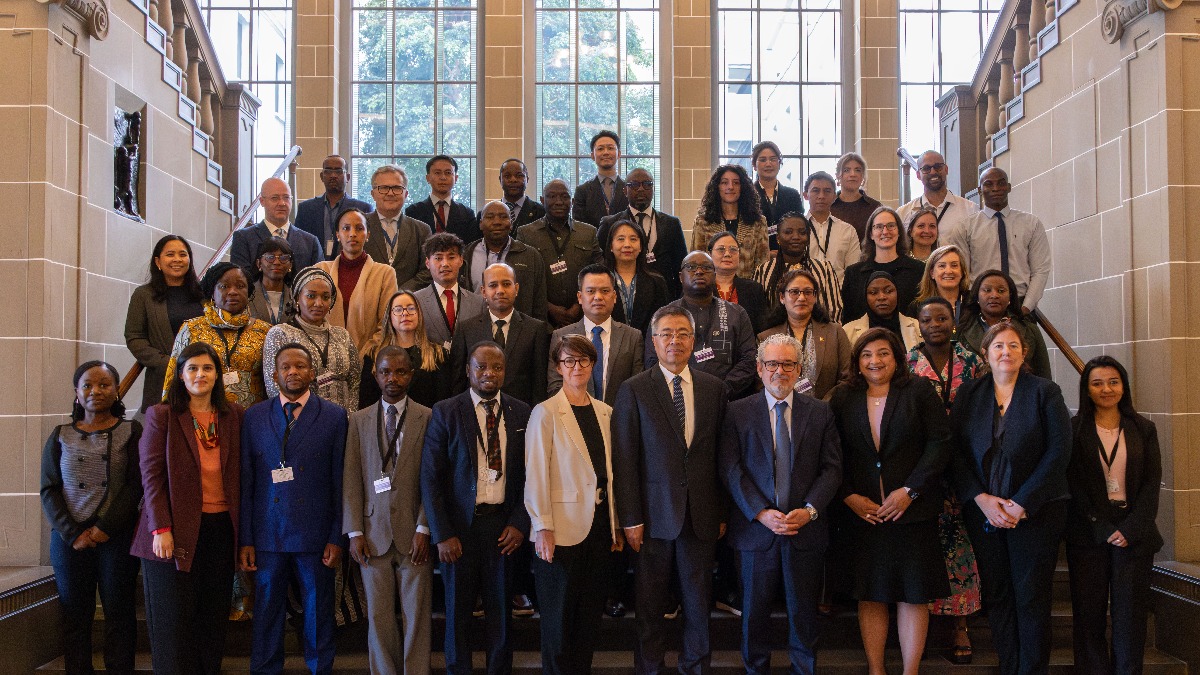
…WTO Deputy Director-General Xiangchen Zhang opened the WTO’s workshop on incentives for technology transfer to least-developed countries (LDCs) on 21 April 2026, drawing attention to the conditions necessary for technology transfer to take root and deliver results in LDCs.
 https://www.digital.zenithbank.com/ZEQ/ZEQ-jan-2026/index.html#p=1
These conditions include predictable and sound legal frameworks, access to finance, absorptive capacity, coordination across ministries, and engagement with the private sector. DDG Zhang emphasized that without these elements, even well-designed technology transfer incentives may not generate sustainable results. He added that LDCs are increasingly articulating their needs in priority sectors, and that this is essential as it “provides a stronger basis for aligning incentives with priorities and for fostering more effective partnerships.”
After the opening remarks, a high-level panel discussed policies and other elements that enable effective cross-border technology transfer. The panel consisted of Mr Kumar Iyer, Permanent Representative of the United Kingdom to the WTO; Ms Emmanuelle Ivanov-Durand, Permanent Representative of France to the WTO and Chair of the Council for Trade-related Aspects of Intellectual Property Rights (TRIPS); Mr Cherno Marenah, Deputy Permanent Representative of The Gambia; Mr Marco Alemán, Assistant Director General of the World Intellectual Property Organization (WIPO); and Ms Aissatou Diallo, Executive Director of the Enhanced Integrated Framework (EIF).
Ms Ivanov-Durand warmly welcomed participants and emphasized that successful technology transfer depends on strong regulatory frameworks, scalable systems, local adaptation, and investment in human capital, with the same key success factors applying both nationally and internationally.
Mr Alemán highlighted that technology transfer is increasingly driven by global innovation networks involving partnerships between firms, universities and public institutions. He emphasized the importance of strong innovation ecosystems – combining intellectual property frameworks, skilled human capital and institutional capacity – to enable countries, particularly LDCs, to absorb, adapt and scale technologies.
The high-level panel discussions highlighted that effective technology transfer to LDCs depends on a strong enabling business environment, including access to finance.
The workshop, taking place on 21-22 April 2026, will conclude with an opportunity for participants to attend the formal meeting of the Council for TRIPS on 23 April 2026.
Background to the workshop
The purpose of the workshop is to facilitate dialogue on reported technology transfer measures under Article 66.2 of the TRIPS Agreement.
The workshop brings together close to 25 participants from LDCs, Geneva-based officials from LDCs, experts from seven developed members, and specialists from the public and private sectors, as well as intergovernmental organizations, including WIPO, the UN Food and Agriculture Organization (FAO), the UN Technology Bank, and Knowledge Exchange UK.
Since 2003, when members agreed on the transparency mechanism for technology transfer under Article 66.2, developed country members have submitted over 400 reports detailing their actions and commitments. To date, the Council for TRIPS has conducted 22 reviews of these reports, generating valuable insights into effective technology transfer strategies and best practices.
See resource page on TRIPS and Technology Transfer.