







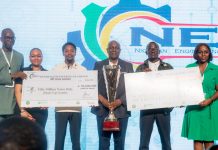




















A Nigerian scientist and researcher, Professor Charles Adeola, is gaining international recognition for groundbreaking scientific contributions to address humanity’s most pressing challenges, including food insecurity, zoonotic disease outbreaks, sustainable agriculture, biodiversity conservation, and climate change adaptation.
 https://www.digital.zenithbank.com/ZEQ/ZEQ-jan-2026/index.html#p=1
Through years of cutting-edge genetic and genomic research, Professor Adeola has led and contributed to projects that are helping to strengthen livestock resilience, improve disease surveillance, conserve endangered biodiversity, and protect livelihoods dependent on agriculture and natural ecosystems.
An evolutionary and conservation geneticist with a footprint across the Kunming Institute of Zoology in China and Bayero University Kano in Nigeria, Dr. Adeola is utilizing “Genetic Archaeology” and advanced genomic profiling to solve problems that have long plagued the real economy and the global food chain.
One of his most significant contributions focuses on combating African Swine Fever (ASF), a deadly viral disease with an almost 100 per cent fatality rate in pigs that continues to threaten pork supply chains and the livelihoods of millions of smallholder farmers across Africa and other parts of the world. Through his research project titled “Decoding the Genetic Basis of ASFV Resilience in African Indigenous Pigs,” Professor Adeola is working to identify genetic markers associated with resistance to the disease. The findings could pave the way for breeding ASF-resistant pigs, helping to secure food supply systems and reduce economic losses in vulnerable communities.
Professor Adeola’s work also addresses the challenge of unsustainable livestock farming in tropical regions. His studies on the genetic diversity and adaptive resilience of African indigenous livestock have revealed unique genetic traits that enable local cattle, goats, and pigs to survive extreme heat, diseases, and poor nutritional conditions. The research supports the promotion of climate-smart and sustainable livestock systems built around resilient indigenous breeds rather than heavily resource-dependent imported varieties.
In the area of zoonotic disease control, Professor Adeola has contributed significantly to research on prion diseases, including fatal neurodegenerative disorders such as Scrapie and Bovine Spongiform Encephalopathy. His project on natural prion resistance genes in Nigerian livestock identified genetic variants that could help scientists and breeders develop disease-resistant herds, thereby strengthening food safety and reducing risks to human and animal health.
He has also developed innovative genomic surveillance tools for tracking dangerous pathogens. Through his targeted capture sequencing research, Professor Adeola successfully developed an efficient system for sequencing the genomes of economically important pathogens, including the first Nigerian genome of the African Swine Fever Virus. The innovation enables faster disease tracking, early outbreak detection, and more effective vaccine development strategies.
Beyond agriculture and animal health, Professor Adeola’s research is making major contributions to biodiversity conservation and ecosystem sustainability. His extensive work on Nigerian forest butterflies, reptiles, amphibians, and freshwater fish species has uncovered previously undocumented species and hidden genetic diversity using advanced DNA barcoding techniques. These discoveries provide critical scientific evidence needed for conservation planning and the protection of threatened ecosystems across Nigeria and West Africa.
His research on freshwater fish genetics is also helping to address the growing problem of overfishing and declining fish populations by supporting science-based fisheries management and conservation strategies for economically important species relied upon by millions for food and income.
Professor Adeola’s scientific contributions further extend to climate adaptation research. Through studies on livestock adaptation to extreme environmental conditions, such as heat stress, ultraviolet radiation, and low-oxygen environments, his work is helping identify genes associated with climate resilience. These findings are expected to contribute to the development of future livestock breeds capable of surviving worsening climate conditions.
In addition, his studies on the evolutionary history and domestication patterns of African poultry, pigs, grasscutters, and other indigenous species are providing valuable scientific justification for the conservation of Africa’s unique animal genetic resources, many of which are under threat from industrial agriculture and environmental pressures.
It has been proven that Professor Adeola’s body of work demonstrates the growing role of African scientists in solving global development challenges through innovation, biotechnology, and data-driven research.
His contributions continue to position Nigeria as an important player in global scientific research, particularly in the areas of genomics, livestock resilience, disease control, biodiversity conservation, and sustainable agriculture.