





















By Ayobami Adesanmi
 https://www.digital.zenithbank.com/ZEQ/ZEQ-jan-2026/index.html#p=1
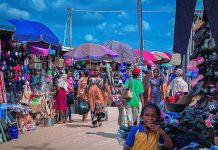
Yesterday, standing amid the noise of commerce and the promise of renewal at Bodija International Market, Governor Seyi Makinde said something that ought to outlive the ribbon he cut. Commissioning a two-kilometre road, a newly built fire service station, modern shops and an ultra-modern trailer park delivered by Ibadan North Local Government, he declared that local governments across Oyo State are functional and delivering real projects for their people. He called it proof that the councils are discharging their constitutional responsibilities without interference, proof that grassroots government, in this dispensation, actually works. He praised Hon. Seun Olufade, the council’s chairman, for translating office into outcome.
It was a fair thing to say about Ibadan North. It was, in fact, a generous and accurate thing to say. But statements of that kind are dangerous precisely because of their sweep, because the moment a governor says “our local governments,” thirty-three different realities are folded into one triumphant sentence, and some of those realities do not deserve the folding.
As the applause settled, one local government’s name rose quietly and would not leave: Kajola.
With the greatest respect to His Excellency, I must ask the question a governor’s celebration cannot answer for him: does Kajola Local Government fit the description he gave? Is it functional? Is it delivering real projects? Ask the people who live there, and the answer arrives without hesitation, and it is not the answer the Governor gave yesterday.
For more than two years, Hon. Barrister Mustapha Akeem Olawale, known across Kajola simply as Hon. Mugaty, has occupied the chairman’s office. Let it be said plainly: nobody who has not sat in that chair has the right to pretend the job is easy. Local government is the frontline of Nigerian governance, the layer closest to the pothole, the collapsed culvert, the dry borehole, and it is also, notoriously, the layer with the thinnest resources and the least room for excuses to hide in. Difficulty is real. But difficulty has never been the measure of leadership. Leadership is measured by what it does with difficulty, by the solutions it manufactures out of scarcity, not by the scarcity itself.
Today, ask an indigene of Kajola to name one signature project, one road, one market, one facility, that has visibly altered the story of their community since May 2024, and watch the silence that follows. That silence is the real verdict. Governments are not remembered for the meetings they held or the photographs they appeared in. They are remembered for what still stands after they have gone.
There is a particular tragedy in Kajola’s stagnation, because Kajola is not a barren place. It is one of the most agriculturally endowed local governments in the whole of Oyo State, blessed with fertile soil, hardworking farmers, and produce that could feed markets far beyond Okeho and Ilero if only the infrastructure existed to move it there. Fertile land without farm access roads is wealth without a bridge to the world. Kajola’s farmers are not lacking in effort; they are lacking in institutions willing to meet that effort halfway: access roads to the farm gate, aggregation centres, storage that prevents a season’s harvest from rotting before it reaches a buyer, processing hubs that would let raw produce leave the local government as finished value rather than raw loss. None of this requires a miracle. It requires a local government that treats agriculture as an economy to be built, not a backdrop to be photographed.
And what of the young people of Kajola, the ones who finish school and then face the oldest question in Nigerian public life: stay and struggle, or leave and hope? A local government’s most honest report card is not its budget document; it is the number of its own children who choose to stay.
Words are cheap in Nigerian politics, so I did not rely on words. I went to the record, the Oyo State Government’s own published inventory of local government projects, the closest thing our state has to a public ledger of grassroots performance. Roads, markets, culverts, schools, clinics: councils across the state appear again and again, Lagelu, Egbeda, Ido, Ona Ara, Iseyin, Oyo East, Oyo West, and now, freshly, Ibadan North with the very projects the Governor stood before yesterday. Kajola does not appear. Not once. Not as a footnote. In a ledger detailed enough to record a single reinforced culvert in a single village, an entire local government area is missing, and that omission is not a technicality. It is a mirror, and every indigene of Kajola deserves to look into it. (https://feedbackoysg.com/local-government-project-as-of-8-december-2025/)
Nobody is asking Kajola to compete with the commercial muscle of metropolitan Ibadan. That would be an unfair yardstick, and unfair yardsticks produce dishonest conclusions. The fair question is narrower and harder to escape: what does Kajola have to show for what has passed through its treasury? What road has it built? What market has it modernised? What clinic can a mother point to and say, that changed how I bring my children into this world? What will the children of today, grown into adults twenty years from now, remember this administration for having built? These are not hostile questions. They are the only questions that matter in governance, asked of every officeholder everywhere: not “did you occupy the office,” but “what did the office become in your hands?”
It is tempting to blame everything on money, on the perennial Nigerian excuse that there simply wasn’t enough to work with. But the councils cited above did not all swim in surplus revenue either. What separated them was not the size of their allocation; it was the size of their imagination. Creative leadership does not wait passively for federal allocation to arrive before it moves. It builds partnerships. It courts intervention agencies and development partners. It mobilises community labour and community pride. It treats scarcity as a design constraint, not a dead end, the way a resourceful farmer treats a dry season, not as an excuse to plant nothing, but as a reason to plant smarter. By that standard, Kajola’s leadership has not yet shown us enough. Attending functions, issuing congratulatory statements, appearing at commissionings that belong to other men’s councils, none of that is governance. It is the costume of governance, worn in place of the thing itself.
As a new local government election approaches, Hon. Mugaty did not emerge as his party’s candidate for another term. Only the party’s stakeholders can give the full and true account of how that outcome came to be, and it would be dishonest to pretend that Nigerian party primaries are ever decided by performance alone: zoning, delegate arithmetic and internal loyalties all cast long shadows over these contests, and no fair commentator should present a primary result as a verdict signed by the people themselves. But perception is its own kind of political fact, and many residents have quietly connected that outcome to two years of underwhelming delivery. Whether or not it was the decisive factor, the fact that so many believe it was should give every officeholder, present and future, something to sit with. Because here is a truth every Nigerian politician eventually learns, usually too late: public office is borrowed from the people, not owned by the politician who holds it. It is a loan with an unwritten repayment schedule, and the currency of repayment is not loyalty, not attendance, not photographs; it is visible, lived improvement in the lives of the people who lent it to you.
Long after the campaign posters have peeled off the walls of Okeho and faded from the fences of Ilero, something else will remain in their place, or it won’t. A tarred road remains. A functioning market remains. A borehole that still runs remains. A clinic that still receives patients remains. These are the only monuments Nigerian local government has ever been able to build honestly, and they are more durable than any inauguration speech. History, in the end, is kinder to builders than to titleholders. Nobody remembers the name of every chairman who ever sat in a council seat. Everybody remembers the road that finally reached their village. This is why the stakes of this conversation extend far beyond one man’s tenure. It is a conversation about what Kajola, and every local government like it, owes the people who make it possible, and what those people, in turn, are entitled to demand.
Let me be unambiguous, because clarity matters more than comfort here: this is not written out of malice toward Hon. Mugaty, and it should not be read that way. Public service is a difficult, often thankless calling, and as this chapter of his service draws toward a close, he deserves the ordinary human courtesy of good wishes for whatever comes next. Every leader is entitled to learn from the record he leaves behind and to contribute differently in a different season of life. But goodwill toward a person must never be allowed to replace honesty about a record. The two are not in conflict; they simply serve different purposes, and a mature political culture should be able to hold both at once.
Governor Makinde, yesterday you told Oyo State that its local governments are functional, that they are delivering real projects for their people. Ibadan North gave you the evidence to say so, and it did so honestly. Several other councils have offered their own quiet proof across this same year. Kajola, regrettably, has not yet kept pace, and a promise made on behalf of thirty-three local governments is only as strong as the weakest one left standing behind it. This is not an attack on your government. It is an appeal to it, and to whoever inherits Kajola’s chair after December. An appeal that a local government blessed with fertile land, hardworking people and a university now rising in its own headquarters town should never again have to explain its absence from the state’s own record of progress. An appeal that the next chapter be written by builders, not by bearers of title.
Until Kajola can point, proudly, specifically, without qualification, to roads that hold, markets that hum, farms that feed further than they ever have, and young people who choose to stay because there is finally something worth staying for, the people of Kajola will keep arriving, gently but firmly, at one unavoidable conclusion, and I will keep saying it on their behalf: Governor Makinde, with due respect, Kajola Local Government is not working. Not yet. But it does not have to stay that way, and the next hand to hold that chair has everything required to prove it.