


























The Centre for the Promotion of Private Enterprise (CPPE) has called on the Federal Government to urgently cushion the impact of rising petrol prices on households and businesses, while cautioning against a return to the universal petrol subsidy regime.
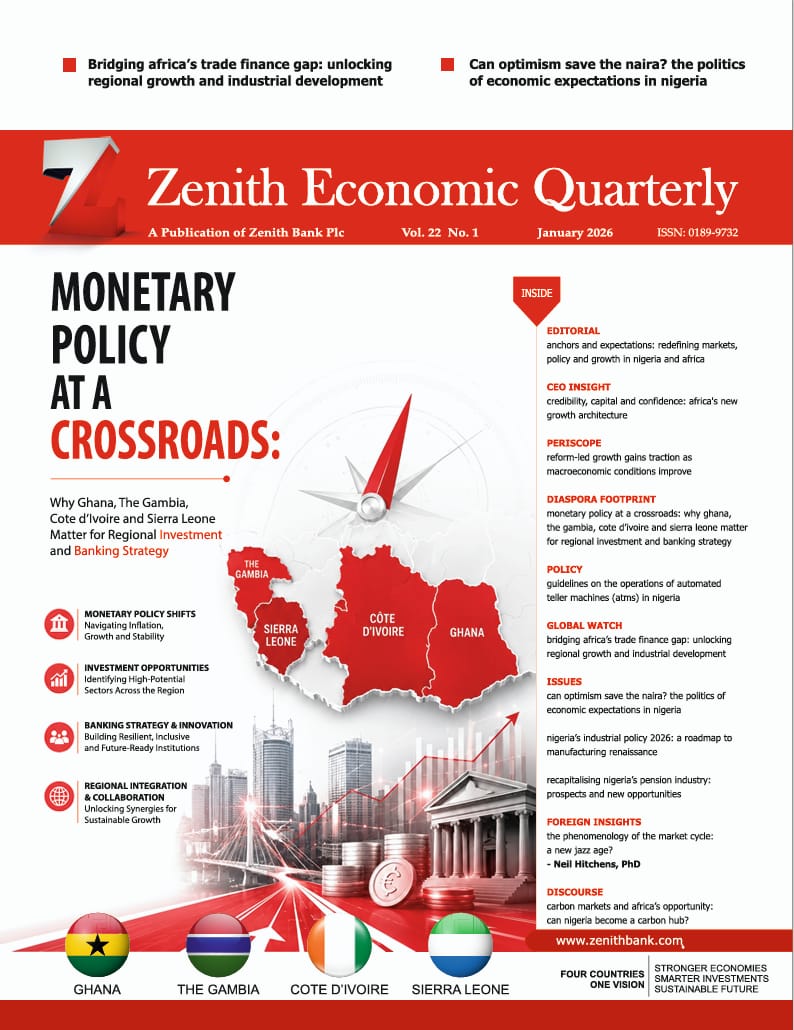 https://www.digital.zenithbank.com/ZEQ/ZEQ-jan-2026/index.html#p=1
The Centre said the recent escalation in petrol prices has intensified the cost-of-living crisis, increased transportation, logistics and production costs, weakened household purchasing power and further constrained the competitiveness of Nigerian businesses, particularly micro, small and medium-sized enterprises (MSMEs).
In a statement signed by its Chief Executive Officer, Dr Muda Yusuf, the CPPE said the current situation requires urgent and socially responsive policy intervention, but stressed that the debate should go beyond pump prices to consider the broader implications for fiscal sustainability, foreign-exchange stability, domestic refining, industrialisation, employment and energy security.
According to the Centre, the critical policy question is no longer whether Nigeria should return to the old subsidy regime, but how government can preserve the gains of the downstream petroleum reforms while reducing their social costs and ensuring that citizens benefit tangibly from the fiscal resources released by the reforms.
Old Subsidy Regime Was Unsustainable
The CPPE said Nigeria’s former petrol subsidy model imposed significant fiscal and economic costs on the country.
Before the reform, Nigeria was spending an estimated $10 billion to $15 billion annually on petroleum-product imports, placing substantial pressure on foreign-exchange liquidity and the country’s external reserves.
The Centre noted that subsidy and under-recovery obligations also absorbed significant public resources, constrained Federation Account revenues and intensified fiscal pressures.
It added that artificially low domestic petrol prices created incentives for arbitrage and cross-border diversion, effectively resulting in Nigerian public resources being used to subsidise fuel consumption outside the country.
“The old regime was therefore not merely a subsidy problem; it was a major fiscal, foreign-exchange and resource-allocation problem,” the Centre said.
Subsidy Reform Has Improved Refining Investment Climate
The CPPE said the transition to market-based pricing has significantly improved the commercial viability of domestic refining and strengthened incentives for long-term investment in the downstream petroleum sector.
For decades, it noted, administratively suppressed prices and uncertainty around the pricing framework weakened investment incentives in domestic refining.
The Centre said a competitive refining industry could generate benefits well beyond petrol supply, creating opportunities across diesel, aviation fuel, petrochemicals, fertiliser, plastics, chemicals, logistics, storage and maritime services.
It also noted that increased domestic refining would conserve foreign exchange through import substitution, create export opportunities and retain refining, engineering, logistics and technical jobs within Nigeria.
The Centre therefore urged the government to sustain policies that would enable Nigeria to move from dependence on imported petroleum products towards becoming a competitive regional refining and petrochemical hub.
Fiscal Gains Must Translate Into Better Lives
While acknowledging that subsidy reform has increased revenues available to the three tiers of government, the CPPE stressed that increased government revenue alone cannot justify the policy.
According to the Centre, Nigerians must be able to see measurable improvements in their daily lives through better public transportation, electricity supply, healthcare, education, food security, infrastructure and social protection.
The Centre said the issue has increasingly become one of fiscal accountability and expenditure quality, urging the Federal, State and Local Governments to demonstrate transparently how additional revenues arising from the reform are being deployed to improve economic and social outcomes.
“Citizens need to see where the gains from the reform are going. Fiscal gains must translate into public value,” the Centre said.
Global Oil Shock Should Be Distinguished From Subsidy Removal
The CPPE also urged policymakers and the public to distinguish between the structural price adjustment resulting from subsidy removal and the more recent increase driven by global crude oil and refined-product price movements.
The Centre noted that petrol prices had been around ₦774–₦800 per litre before the latest escalation in international energy prices, but subsequently rose above ₦1,300 per litre amid heightened global energy-market pressures linked to the Middle East crisis.
It therefore cautioned against attributing the entirety of the recent petrol-price increase to subsidy removal.
“These are two distinct issues,” the Centre said. “One is a domestic structural reform involving the transition to market-based pricing; the other is an external commodity-price shock. They require different policy responses.”
Universal Petrol Subsidy Could Cost Nearly ₦20tn Annually
The CPPE warned that restoring a universal petrol subsidy would recreate many of the economic distortions associated with the former regime, including fiscal leakages, foreign-exchange pressures, arbitrage, smuggling, pricing distortions and investment uncertainty.
Using an estimated Premium Motor Spirit (PMS) consumption benchmark of 50 million litres per day and an indicative subsidy requirement of ₦1,050 per litre, the Centre estimated that a universal subsidy could potentially cost approximately:
- ₦52.5 billion daily
- ₦1.575 trillion monthly
- ₦19.16 trillion annually
The Centre stressed that the actual cost would depend on factors including petrol consumption, crude-oil prices, exchange rates, refinery or landing costs and the regulated pump price. It also noted that consumption could rise under a subsidy regime as price differentials could recreate incentives for cross-border diversion.
According to the CPPE, an annual subsidy bill approaching ₦20 trillion would represent an enormous opportunity cost for the Nigerian economy.
Such expenditure, it argued, could compete with funding for infrastructure, education, healthcare, security, agriculture and social protection, while potentially widening the fiscal deficit and increasing borrowing and debt-service pressures.
The Centre further warned that increased government borrowing could crowd out private-sector credit, prolong high interest rates and weaken investment, productivity, employment and economic growth.
“Nigeria would risk replacing an energy-price problem with a much larger fiscal, debt, foreign-exchange and investment problem,” the CPPE cautioned.
CPPE Advocates Targeted Relief Over Universal Subsidy
Rather than restoring a universal petrol subsidy, the Centre called for targeted measures that directly address household vulnerability and the high operating costs confronting businesses.
The CPPE recommended that government prioritise:
Mass transit and logistics: Expand affordable public transportation, rail freight and logistics infrastructure to reduce the impact of high mobility and distribution costs.
Electricity and alternative energy: Improve the reliability of electricity supply and accelerate the deployment of CNG, solar and other distributed-energy solutions.
Food production: Strengthen agricultural productivity through improved food security, irrigation, rural infrastructure, storage and logistics.
Targeted social protection: Provide direct support to vulnerable households rather than subsidising petrol consumption across all income groups.
Healthcare and education: Improve affordable public healthcare and education to reduce major household expenses.
Support for productive enterprises: Reduce energy, logistics and financing costs for businesses, particularly MSMEs, to protect jobs and investment.
Domestic refining: Maintain a predictable, market-oriented downstream petroleum policy framework that supports investment confidence and encourages further refining capacity.
The Centre stressed that these interventions should be pursued as a shared responsibility of the Federal, State and Local Governments.
“Preserve Reform, Mitigate Its Social Costs”
The CPPE acknowledged that the current petrol-price escalation presents a serious cost-of-living, inflation and business-competitiveness challenge requiring urgent government action.
However, it maintained that restoring the pre-reform universal subsidy regime would neither be fiscally sustainable nor economically prudent.
The Centre called for the government to preserve the downstream petroleum reforms while aggressively mitigating their social and economic costs.
It also urged greater transparency and accountability in the utilisation of additional resources accruing to the three tiers of government as a result of subsidy reform.
“The subsidy debate should move beyond the binary question of whether petrol subsidy should be restored,” Dr Yusuf said.
“The more consequential issue is how Nigeria can convert the gains of the reform into lower structural costs, stronger domestic production, improved competitiveness, greater energy security and measurable improvements in citizens’ welfare.”
According to the CPPE, this approach offers Nigeria a pathway to making the petroleum-sector reform economically sustainable and socially defensible.