Tag: African Export–Import Bank (Afreximbank)

  • Heirs Energies Agrees $750m Afreximbank Financing to Drive Long-Term Growth

    Heirs Energies Agrees $750m Afreximbank Financing to Drive Long-Term Growth

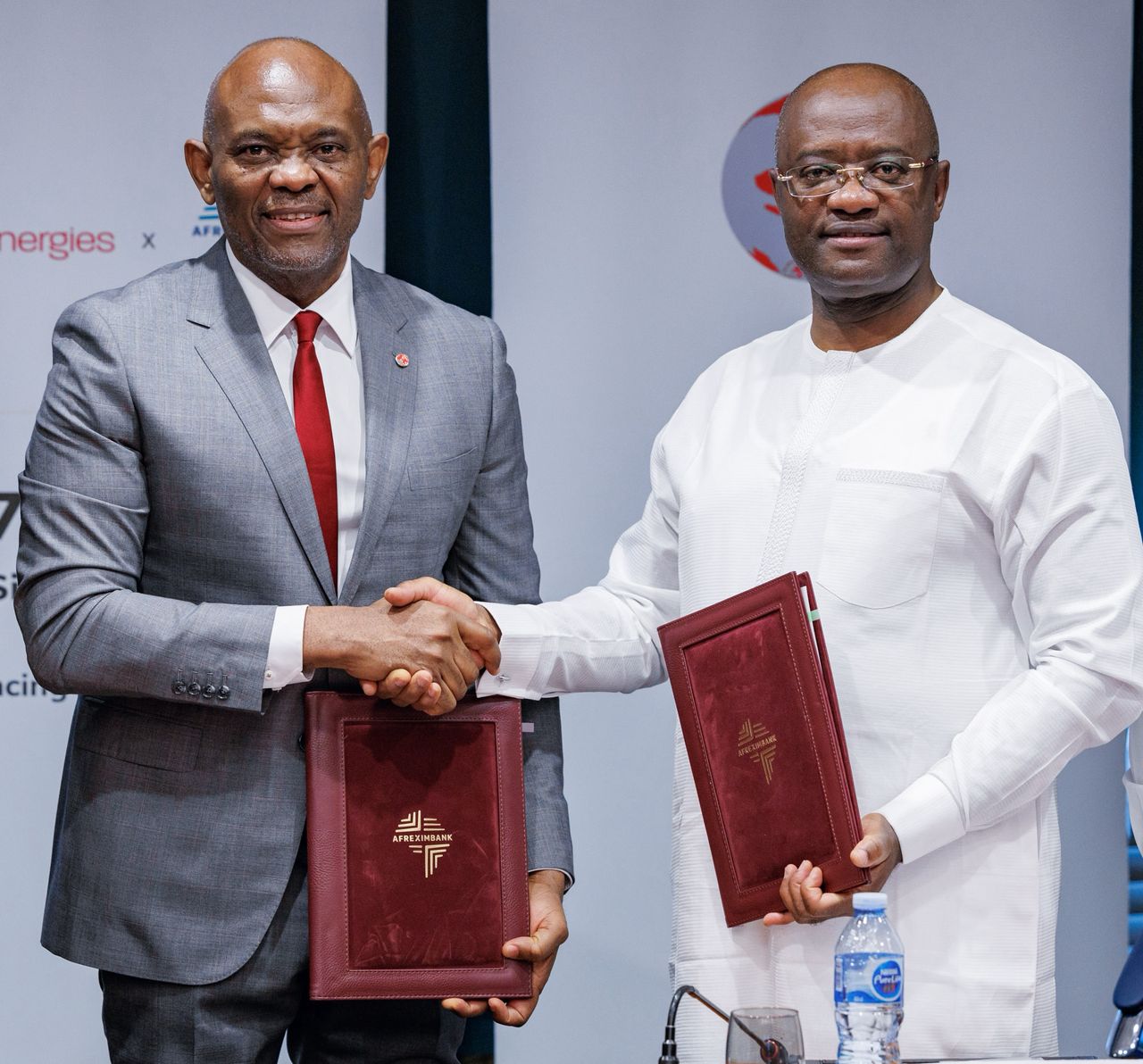
    Heirs Energies Limited, Nigeria’s leading indigenous integrated energy company, has executed a USD 750 million financing with the African Export–Import Bank (Afreximbank).

    The transaction was concluded at a signing ceremony in Abuja on Saturday 20th December 2025, attended by Mr. Tony O. Elumelu, CFR, Chairman of Heirs Energies, and Dr. George Elombi, President and Chairman of Afreximbank.

    The transaction represents one of the largest financings secured by an indigenous African energy company and demonstrates lender confidence in Heirs Energies’ operating performance, governance standards, proprietary brownfield excellence capability, and long-term growth trajectory.

    Since assuming operatorship of OML 17, Heirs Energies has delivered a disciplined transformation programme, focused on restoring production, strengthening asset integrity, and improving operational efficiency. Through targeted brownfield interventions and infrastructure optimisation, the Company has successfully transitioned from acquisition-led financing to a capital structure aligned with the long-term development profile of its reserves.

    Oil and gas production has doubled, from an acquisition production level of 25,000 barrels of oil per day (bopd) and 50 million standard cubic feet of gas per day (mmscf/d). Today, OML-17 produces over 50,000 bopd and 120 mmscf/d. All the gas production goes into the Nigerian domestic gas market and has been catalytic for power generation in Nigeria. Community relations have been transformed and the highest standards of health and safety implemented.

    The Afreximbank facility will accelerate field development, optimise production, and allow Heirs Energies to pursue value-accretive growth opportunities, while maintaining disciplined capital management.

    Speaking at the signing, Mr. Tony O. Elumelu, CFR, Chairman of Heirs Energies, said, “This transaction is a powerful affirmation of what African enterprise can achieve when backed by disciplined execution and long-term African capital. It reflects the successful journey Heirs Energies has taken – from turnaround to growth – and reinforces our belief in African capital working for African businesses. This is Africa financing Africa’s future.”

    Dr. George Elombi, President and Chairman of Afreximbank, stated, “Afreximbank is proud to support Heirs Energies at this pivotal stage of its growth. This financing reflects our confidence in the Company’s leadership, governance, and asset base, and aligns with our mandate to support African champions that are driving sustainable economic transformation across the continent.”

    The transaction further reinforces Afreximbank’s role in enabling indigenous operators with the scale and capability to deliver sustainable energy development, energy security, and long-term economic value across Africa.

    With this milestone achieved, Heirs Energies is firmly positioned to advance into its next phase of growth, focused on operational excellence, responsible resource development, and enduring value creation for stakeholders.

    Heirs Energies Limited is Africa’s leading indigenous-owned integrated energy company, committed to meeting Africa’s unique energy needs, while aligning with global sustainability goals.  Having a strong focus on innovation, environmental responsibility, and community development, Heirs Energies leads in the evolving energy landscape and contributes to a more prosperous Africa.

    The African Export-Import Bank is a Pan-African multilateral financial institution mandated to finance and promote intra- and extra-African trade. The Bank plays a critical role in supporting Africa’s industrialisation, trade expansion, and economic transformation.

  • African Business Stories Present Africa Champion Award to Prof. Benedict Oramah, President Afreximbank at UNGA

    African Business Stories Present Africa Champion Award to Prof. Benedict Oramah, President Afreximbank at UNGA

    …celebrates One Year of Impact with Launch of Inaugural Impact Report

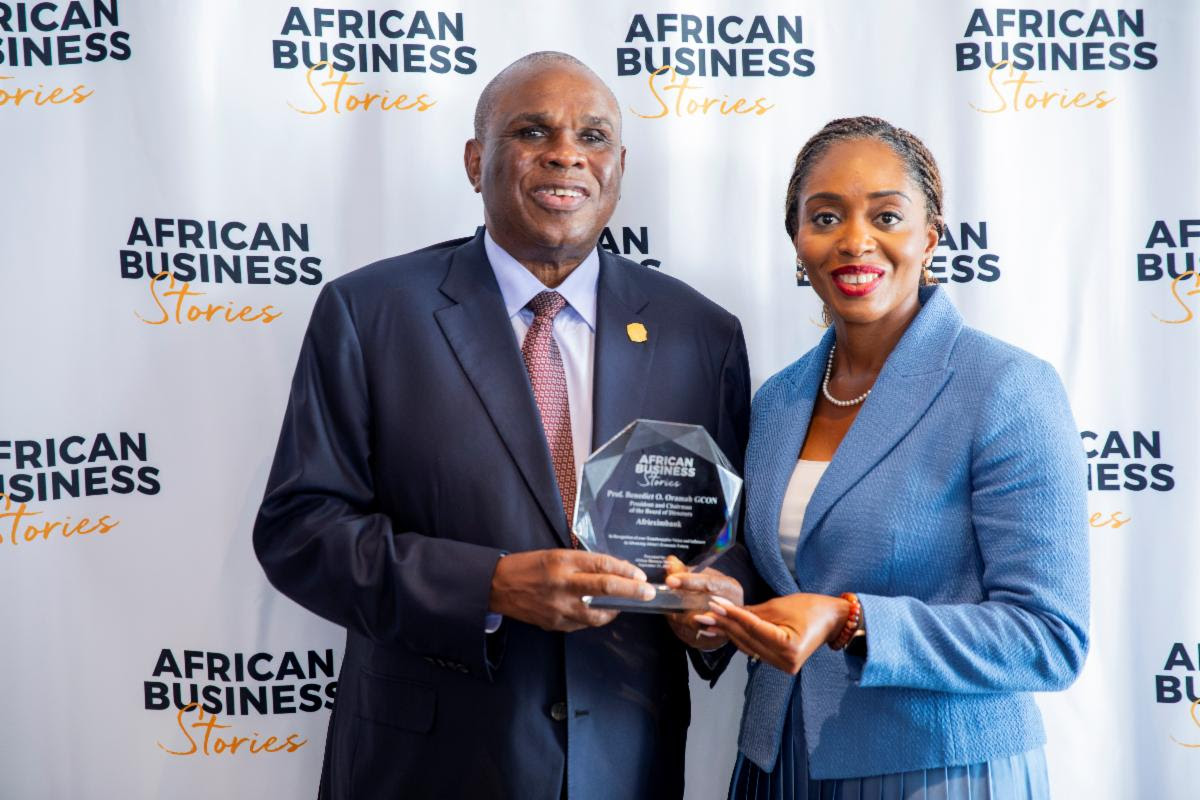
    On the sidelines of the 80th United Nations General Assembly, African Business Stories (ABS) marked the one-year anniversary of its flagship Roundtable Series with two milestones: the presentation of its inaugural Africa Champion Award to Prof. Benedict Oramah, President and Chairman of the African Export–Import Bank (Afreximbank), and the launch of its first Impact Report, capturing a year of progress in closing Africa’s $42 billion gender financing gap.

    The event opened with special remarks from Congresswoman Sheila Cherfilus-McCormick (Florida’s 20th District), who underscored the urgency of shifting from aid to trade in U.S.–Africa relations. She highlighted new U.S. legislation enabling diaspora remittances to be reinvested as capital and reaffirmed her commitment to the renewal of the African Growth and Opportunity Act (AGOA).

    “When women start businesses, they create jobs, change communities, and shift entire economies,” said Cherfilus-McCormick.

    Left to Right: Ejike Egbuagu, CEO Moneda Invest, Kanayo Awani, EVP Afreximbank, Florie Liser, President & CEO Corporate Council on Africa, Prof. Benedict Oramah, President Afreximbank, Akaego Okoye, Founder African Business Stories, Hon. Imaan Sulaiman-Ibrahim, Minister of Women Affairs, Nigeria

    The award was presented by Ms. Florie Liser, President & CEO of the Corporate Council on Africa, who praised Prof. Oramah’s transformative leadership in expanding Afreximbank’s assets and guarantees eight-fold, growing revenues seven-fold, and ensuring women, youth, and SMEs have access to trade and capital opportunities.

    “Prof. Oramah embodies the foresight to envision a stronger Africa through trade, the resolve to mobilize billions in capital for transformative initiatives, and the commitment to ensure that women, youth, and SMEs are not left behind,” said Liser.

    In his acceptance remarks, Prof. Oramah underscored the importance of narrative ownership and boldness in Africa’s development journey:

    “The problem of Africa is that others have been telling our stories — and telling them in ways that put us down. We must tell our own stories and define African best practices.”

    He also called for ambition in mobilizing resources at scale:

    “Small projects rarely succeed. If we want to compete globally, Africa must think big and act boldly.”

    The ABS Impact Report, unveiled by Founder Akaego Okoye, documents five high-level convenings held across New York, Washington, D.C., and Luanda, Angola over the past year. These gatherings brought women founders face-to-face with policymakers, financiers, and global leaders, and laid the groundwork for new access to markets and capital. The report serves both as a record of impact and a roadmap for future action.

    Alongside these milestones, the Roundtable featured:

    A Founders Panel with Ifedayo Agoro (Dang! Lifestyle) and Lesego Serolong-Holzapfel (Moedi Wines), sharing the realities of accessing capital, navigating trade barriers, and scaling globally

    A Public–Private Dialogue with Hon. Hajiya Imaan Sulaiman-Ibrahim (Nigeria’s Minister of Women Affairs) and Cheryl Buss (CEO, Absa International), highlighting how policy frameworks and innovative financial products must align to unlock scale for women entrepreneurs

    The signing of an MOU between Nigeria’s Federal Ministry of Women Affairs and Domena Commodities Limited to expand women’s participation in agribusiness and trade

    “The $42 billion funding gap is not just a challenge, it is an opportunity,” said Akaego Okoye. “This first year has proven that when women are seen, connected, and resourced, they don’t just grow businesses — they transform economies. ABS will continue to create the access and partnerships needed to catalyze their success.”

  • Access Bank Pushes for Youth and Diaspora-Driven Growth at IATF 2025

    Access Bank Pushes for Youth and Diaspora-Driven Growth at IATF 2025

    Access Bank has reaffirmed its commitment to strengthening Africa–Caribbean economic collaboration at the Intra-African Trade Fair (IATF) 2025.

    During the event, Sunmbo Olatunji, Chief Executive Officer, The Caribbean Expansion at Access Bank, underscored the importance of leveraging Africa’s demographic advantage, strategic resources, and diaspora linkages to create new pathways for sustainable growth. She spoke on “The Global Africa We Want: Business Collaboration Without Borders”.

    “The Global Africa we want is one without borders in spirit, vision, or opportunity, an Africa where our youth, diaspora, and private sector drive collaboration that makes us a central player in the global economy,” she stated.

    Olatunji, identified key sectors with the greatest potential for cross-border collaboration, including agriculture and food security, the creative and cultural industries, sustainable tourism, and technology and digital innovation.

    “Africa and the Caribbean are natural partners. By combining Africa’s scale with Caribbean expertise and diaspora networks, we can unlock value chains in agriculture, export our culture more effectively, and create unique tourism and digital innovation ecosystems,” she added.

    Olatunji further stressed that the private sector must play a pivotal role in building resilience and driving inclusive growth across regions. She noted that financial institutions have a responsibility to provide platforms that enable trade, simplify remittances, and support entrepreneurs.

    “At Access Bank, we see ourselves not just as bankers, but as connectors of opportunities. Our Caribbean expansion reflects a clear commitment to link Africa’s dynamic economies with diaspora wealth and expertise, unlocking a future of shared prosperity,” she said.

    The IATF 2025, organised by the African Export–Import Bank (Afreximbank) in collaboration with the African Union, serves as a premier platform to accelerate intra-African trade, strengthen Africa–Caribbean economic partnerships, and showcase investment opportunities across the continent.

  • Karavan Press bags Creative Africa Nexus (CANEX) Book Factory Prize for Publishing in Africa 2025

    Karavan Press bags Creative Africa Nexus (CANEX) Book Factory Prize for Publishing in Africa 2025

    Karavan Press was recognised for its book In Silence My Heart Speaks by Thobeka Yose, winning the $20,000 top prize

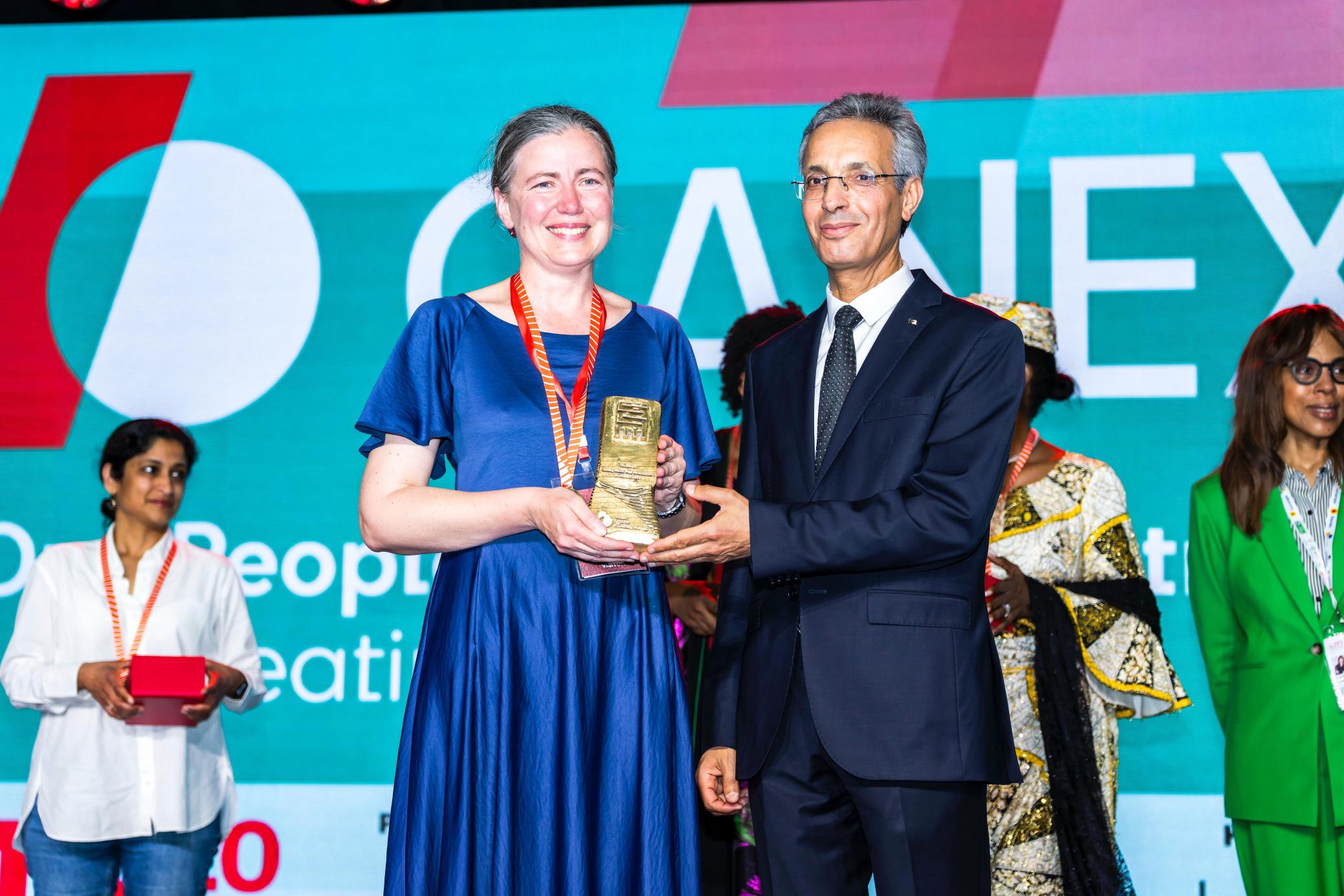
    Karavan Press, an independent publisher based in Cape Town, South Africa is the winner of the 2025 edition of the CANEX Book Factory Prize for Publishing in Africa that celebrates and recognises outstanding contributions of African publishers and authors to the literary world.

    Karavan Press was recognised for its book In Silence My Heart Speaks by Thobeka Yose, winning the $20,000 top prize. The Prize was presented by Algeria’s Minister of Culture and Arts Azzedine Mihoubi during an award ceremony held during the ongoing Intra-African Trade Fair 2025 (IATF2025) in Algiers. Finalists received $2,000 each.

    The Prize is a joint initiative of the Creative Africa Nexus (CANEX), an intervention by African Export–Import Bank (Afreximbank) in partnership with Narrative Landscape Press Limited. It aims to showcase the literary and publishing value chain in Africa and developing literary talent across the continent and the Diaspora.

    “Through the CANEX Book Factory Prize for Publishing in Africa, we continue to strengthen Africa’s creative economy by elevating publishers and amplifying African narratives to global audiences. Besides the Prize, we deliver a Pan-African writing workshop, and e-newsletter highlighting African literature, to spotlight and elevate the African book value chain,” said Afreximbank’s Director for Intra African Trade and Export Development (Creatives and Diaspora), Temwa Gondwe.

    Now in its second year, the Prize attracted over 80 submissions from across the continent, reflecting the diversity and vitality of African storytelling. Publishers submitted trade books published for a general audience and widely available through libraries and bookstores. The entries spanned fiction, non-fiction, and poetry, in hardcover and paperback, with an emphasis on works printed and published on the continent and written in indigenous languages. Entries could be in one or more of the official languages of the African Union: Arabic, English, French, Portuguese, Spanish, Swahili, and any other African language. Submissions were judged on the quality of writing, editing and production.

    The jury comprised Dr. Boukenna Abdelaziz, Professor of History at Algiers University; Lavaille Lavette, President of JVL Media; and Prof. Egara Kabaji, Professor of Literary Communication at Masinde Muliro University of Science and Technology. The jury lauded the outstanding quality of writing, editing, and production.

    The Prize is one of the activities under the CANEX Book Factory, an annual programme of events under Afreximbank’s CANEX initiative culminating in the awards ceremony. Last year, Cassava Republic Press (Nigeria) won the top prize during the inaugural edition of the CANEX Book Factory Prize for Publishing in Africa for the book Female Fear Factory: Unveiling Patriarchy’s Culture of Violence by Pumla Dineo Gqola.

    CANEX at IATF is billed as the largest gathering of creatives from Africa and the Diaspora across value chains of diverse creative and cultural industries from film, music, and fashion to culinary arts, sports, and visual arts amongst others. The weeklong summit has convened continental and global players to showcase and exhibit their goods and services, and to explore business and investment opportunities within the rapidly expanding creative economy. It is being held as part of IATF2025, hosted by the People’s Democratic Republic of Algeria and co-convened by Afreximbank, the African Union Commission and the African Continental Free Trade Area (AfCFTA) Secretariat. The weeklong event is projected to facilitate trade and investment deals worth over US$44 billion.

    IATF is a platform for businesses to showcase their goods and services to visitors and buyers while exploring opportunities and exchanging information. IATF aims to tap into opportunities from AfCFTA’s single market of over 1.4 billion people and GDP of over US$3.5 trillion. The ongoing IATF2025 is its fourth edition with the last three editions of IATF cumulatively generating over $118 billion in trade and investment deals and attracting more than 70,000 visitors and 4,500 exhibitors

  • Creative Africa Nexus (CANEX) announces 2nd Edition of The Prize for Publishing in Africa

    Creative Africa Nexus (CANEX) announces 2nd Edition of The Prize for Publishing in Africa

    the prize is open to trade books published by Africa-domiciled publishers in the year preceding the prize, in one or more of the official languages of the African Union: Arabic, English, French, Portuguese, Spanish, Swahili, and any other African language

    Creative Africa Nexus (CANEX), an intervention by African Export–Import Bank (Afreximbank) invites African publishers of trade books to apply for the second edition of the CANEX Book Factory Prize for Publishing in Africa.

    The initiative, developed in partnership with Narrative Landscape Press Limited, underscores the commitment of Afreximbank through the CANEX Book Factory to showcasing of the literary and publishing value chain in Africa, and developing literary talent across the continent and its diaspora. The inaugural edition saw Cassava Republic Press, win the Prize in 2024 for the “Female Fear Factory: Unveiling Patriarchy’s Culture of Violence,” by Pumla Dineo Gqola.

    The CANEX Book Factory Prize for Publishing in Africa is designed to celebrate and recognise the outstanding contributions of African publishers and authors to the literary world. The total prize fund is $28,000, with $20,000 awarded to the winner and $2,000 distributed to each of the four finalists. The prize is open to trade books published by Africa-domiciled publishers in the year preceding the prize, in one or more of the official languages of the African Union: Arabic, English, French, Portuguese, Spanish, Swahili, and any other African language.

    Submissions will be judged on the quality of writing, editing and production. Priority will be given to books printed and produced on the African continent, as well as to books published in indigenous African languages. Interested publishers should visit https://apo-opa.co/4hsvFVy to register, with entries open from 17 March – 30 April 2025.

    The CANEX Book Factory is an annual programme of events under Afreximbank’s Creative Africa Nexus initiative. This year’s programme will culminate in an awards ceremony at the fourth edition of the Intra-African Trade Fair (IATF), Africa’s premier trade and investment event, taking place in Algiers, Algeria from 4 – 10 September 2025.

    During the week-long fair, more than 2,000 exhibitors, including businesses from the African continent and globally, will be showcasing their goods and services to the visitors and buyers while exploring opportunities and exchanging information. This is projected to translate into over US$44 billion in trade and investment deals.

    Mrs. Kanayo Awani, Executive Vice President, Intra African Trade and Export Development, Afreximbank, said, “We are delighted to announce the 2025 CANEX Book Factory Prize for Publishing in Africa. Building on last year’s successful edition, this landmark initiative celebrates African publishing excellence. Through the CANEX Book Factory, we aim to put a spotlight on the enormous contribution of African authors and publishers to Africa’s cultural identity and economy.”

    Dr Eghosa Imasuen, co-founder of Narrative Landscape Press Limited and Programme Manager for the CANEX Book Factory, said, “The first edition of the Prize greatly underscored the necessity of this intervention in the publishing value chain in Africa. We are grateful to Afreximbank and CANEX for their ongoing support of African publishing. We are excited to launch this second edition, and we hope to see submissions from more publishers across the continent than in the inaugural edition.”

  • Funding Options for Health Products Manufacturing in Africa Tabled

    Funding Options for Health Products Manufacturing in Africa Tabled

    Development finance institutions (DFIs) are stepping up to accelerate Africa’s pharmaceutical and vaccine manufacturing ambitions, marking a new phase in the continent’s push for self-sufficiency in health products.

    Funding proposals were presented during the 2nd Vaccine and Health Products Manufacturing Forum, held in Cairo from February 4-6, 2025. At this gathering, Africa CDC, Gavi, the Vaccine Alliance, and the Regionalized Vaccine Manufacturing Collaborative (RVMC) convened stakeholders, with Egypt’s Unified Procurement Authority (UPA) as the host.

    Leading DFIs, including the African Export–Import Bank (Afreximbank), the African Development Bank, the European Investment Bank (EIB), the World Bank, the International Finance Corporation (IFC), and the French Development Agency, explored investment strategies to accelerate local pharmaceutical production and expand Africa’s role in global health security.  They also highlighted their institutions’ current and upcoming investments to support these efforts.

    Afreximbank outlined its progress in implementation a pledged US$2 billion facility to support healthcare and health product manufacturing. Meanwhile, institutions like IFC and the EIB introduced new financing initiatives they are developing with partners.

    This momentum marks a significant shift in Africa’s journey toward self-reliance, ensuring sustainable manufacturing ecosystems, reducing dependency on external supply chains, and improving pandemic preparedness. The forum built upon the momentum of the 2023 gathering in Marrakesh, Morocco, where 25 vaccine manufacturing initiatives were identified across the continent, with 10 already having installed capacity.

    Delegates in Cairo also learned how Egypt has positioned itself as one of Africa’s most advanced producers of health products, offering a model for bridging the continent’s manufacturing gap.  The country demonstrates what is possible when strong political will, strategic investments, and regulatory excellence converge.

    Egypt’s progress aligns with the African Union’s goal to manufacture 60% of vaccines locally by 2040. However, procurement remains a key challenge. Dr Aly al-Ghamrawy, chairman of the Egyptian Drug Authority, emphasised the risks of external reliance: “COVID-19 is a stark reminder of how Africa was pushed to the back of the queue for life-saving drugs. Reliance on external suppliers leaves us vulnerable in times of crisis.”

    Egypt’s regulatory progress has also set a new benchmark. In December 2024, the World Health Organization recognised it as the first African country to achieve Maturity Level 3 for medicines and vaccines – a milestone that signals a well-regulated and stable pharmaceutical sector. This achievement coincided with Egypt’s production of its first locally manufactured insulin.

    While Egypt’s progress is commendable, broader challenges persist across the continent. Fragmented regulatory systems, limited technology, workforce shortages, lack of off-take guarantees, and gaps in financing have hindered regional manufacturing growth.

    Dr Chiluba Mwila, talent development lead for Africa CDC’s Platform for Harmonised African Health Manufacturing (PHAHM), emphasised the need for industry-academia collaboration to develop STEM curricula, internships, and on-the-job training.

    Despite these challenges, progress continues. New financing mechanisms and policy shifts are behind the increased momentum. In June 2024, Gavi launched the African Vaccine Manufacturing Accelerator (AVMA), securing US$1.2 billion in pledges to expand vaccine production in Africa. At the same time, Afreximbank pledged a US$2 billion facility under the Africa Health Security Investment Plan. The newly established African Pooled Procurement Mechanism is set to enhance demand certainty and market sustainability.

    Meanwhile, the African Medicines Agency was highlighted at the forum as a critical enabler, with participants urging stronger regulatory coordination to accelerate approvals and ensure safety. The African Continental Free Trade Area was also recognised as key to expanding regional trade and strengthening market access.

    Africa CDC Director General Dr Jean Kaseya reaffirmed the continent’s vision: “The agenda of local manufacturing is not an option; it’s a vision we are materialising.”

    New partnerships announced at the forum highlighted Africa’s expanding capacity to manufacture vaccines, diagnostics and therapeutics. Afrigen and Biogeneric Pharma advanced mRNA technology transfer, while Evapharma, Quantoom and Unizima strengthened collaboration in mRNA vaccine development and production-marking critical steps toward boosting local manufacturing and reducing reliance on imports.

    In attendance at the forum were representatives from 12 Member States (Algeria, Egypt, Ethiopia, Ghana, Kenya, Morrocco, Nigeria, Rwanda, Senegal, South Africa, Uganda, and Zambia), National Regulatory Authorities, Regional Economic Communities, African manufacturers, global partners, philanthropies and civil society organisations. As Africa moves toward its goal of manufacturing 60% of its vaccines by 2040, sustained investment, harmonised regulation, and cross-sector collaboration will be crucial in achieving this vision.

  • Feature- Nigeria and African Energy Poverty and Gas-To-Power Projects: Build More and Build Better

    Feature- Nigeria and African Energy Poverty and Gas-To-Power Projects: Build More and Build Better

    By NJ Ayuk

    As the executive chairman of the African Energy Chamber (AEC), it’s my honor and my privilege to tell the world the story of Africa’s oil and gas industry – to explain what this continent can do to help power the world and fuel its own future. But it’s also my mission to talk about African energy poverty and to explain why this continent needs better access to energy now in order to illuminate its own potential and power forward.

    To illustrate the issue of energy poverty in general, I’d like to focus on energy poverty in Nigeria in particular.

    Within Africa, Nigeria is an interesting subject. It’s the most heavily populated country in Africa, with more than 200 million citizens. It surpassed South Africa to become the continent’s largest economy about a decade ago, and its GDP topped USD441.5 billion in 2021. It has the largest crude oil reserves in sub-Saharan Africa and is typically the largest liquids producer in the region, though output figures have slumped this year due to problems with theft and sabotage. Likewise, it has sub-Saharan Africa’s biggest reserves of natural and associated gas and is far and away the region’s biggest gas producer.

    Nigeria also experiences significant energy poverty, despite these advantages. As noted in the AEC’s recently released report, “The State of African Energy: 2023 Outlook,” consistent access to modern energy services – that is, steady and reliable electricity supplies – is available to only 60% of the country’s population on average, and access rates appear to be significantly lower in rural areas than they are in urban areas. And according to World Bank data, about 99.9 million people, or more than 47% of Nigeria’s population, lived in rural areas as of the end of 2021. That means nearly 100 million Nigerians are living without any true level of certainty that the lights and the electric power that so many in the developed world take for granted will stay on.

    I, for one, think they deserve to have that certainty.

    They deserve it on human grounds, and their country already has a significant amount of what is needed to provide them with it. And by that, I mean that Nigeria has gas that it could use to generate power.

    What Nigeria Has

    As I’ve already noted, the country’s gas resources are the largest in sub-Saharan Africa. Nigeria has already been shown to have more than 200 trillion cubic feet (tcf) of gas in proven reserves, and government officials believe that the figure could go even higher, perhaps reaching 600 trillion cubic feet (tcf) following additional exploration.

    If that prediction comes true, Nigeria will have the fourth largest gas reserves in the world, behind only Russia, Iran, and Qatar. It will have more than enough gas to meet current demand; it will have enough gas to produce significant volumes of LNG for export while also supporting gasification programs, both on the domestic and regional levels.

    But it’s not enough just to have all that gas. Nigeria also needs the means to make use of its gas. Without the proper infrastructure, it won’t be able to put its resources to work and will merely have a scattered collection of raw materials.

    What Nigeria Needs

    In practical terms, this means that Nigeria ought to have the following:

    • Upstream production facilities for gas.
    • Midstream gas transportation facilities such as pipelines, including field networks and trunk lines.
    • Downstream gas-processing plants and production facilities for gas-derived fuels such as liquefied natural gas (LNG), compressed natural gas (CNG), and liquid petroleum gas (LPG).
    • Downstream gas distribution systems, including town gas networks.
    • Downstream gas storage depots.
    • Gas-fired thermal power plants (TPPs) – preferably co-generation plants, as they are more efficient.
    • Transmission, distribution, and storage infrastructure for the electricity produced by gas-fired TPPs.
    • Smart and secure operational technology (OT) systems that can optimize the flow of data and resources between consumer markets and energy networks

    I’m not suggesting here that it’s the Nigerian government’s job to provide all this infrastructure. But I do believe that it’s Abuja’s responsibility to make sure that this infrastructure becomes available. To this end, I think that Nigeria also needs government bureaucracies that are competent and trustworthy enough to ensure that oil-, gas-, and power-related contracts are only awarded to companies capable of providing the goods and services required within the acceptable parameters.

    What Nigeria Envisions

    Developing this infrastructure requires the right kind of vision, which Nigeria already has in place: its “Decade of Gas” program is designed to make the country entirely gas-powered by 2030.

    When President Muhammadu Buhari rolled out this initiative in March 2021, he indicated that it aimed to make the gas sector the cornerstone of Nigerian economic activity. By the time the “Decade of Gas” comes to an end, he said, the country will have done the following:

    • Adopted a new oil and gas law to facilitate investment.
    • Carried out new exploration projects, discovered new reserves, and brought new fields onstream.
    • Constructed new gas-processing plants and production facilities for LPG and other gas-derived fuels.
    • Built new export pipelines and constructed new production trains at gas liquefaction plants such as Nigeria LNG (NLNG).
    • Constructed new domestic pipelines along routes to serve local customers plus gas-fired thermal power plants (TPPs) to increase domestic electricity supplies.
    • Expanded domestic power transmission and distribution networks, especially in rural areas.

    Nigeria still has a significant amount of ground to cover before it achieves all of these targets. However, it has made progress. The biggest example of this is the Petroleum Industry Act (PIA), which Buhari signed into law after it passed both houses of the National Assembly. The Nigerian government is also successfully promoting LPG, a gas-derived fuel, as a replacement for wood and charcoal as cooking fuel. (According to NLNG, domestic LPG consumption has climbed by around 1,000% over the last 14 years.)

    And as recently as this November,  Nigeria moved closer to building its first floating liquified natural gas (FLNG) facility. Nigerian company UTM Offshore signed a front-end engineering design (FEED) contract to design the facility with JGC Corporation, Technip Energies, and KBR. Chief Timipre Sylva, Minister of Petroleum Resources, Nigeria, described the project as a step in the right direction for Nigeria to develop, exploit, and monetize its natural gas.

    During the African Energy Week in Cape Town, Amni International Petroleum Development Company Limited, a Nigerian independent oil and gas exploration and production company and the African Export–Import Bank (Afreximbank) signed an agreement for the provision of a $600 million syndicated reserve-based lending facility.

    To a lesser extent, Abuja can also claim credit for the headway it has made on the Ajaokuta-Kaduna-Kano (AKK) pipeline, which is being built to bring gas to the northern part of the country. When finished, the pipeline will deliver fuel to gas-powered industrial facilities and feedstock to TPPs with a generating capacity of 3,600 MW. It may also serve eventually as the first leg of the Trans-Saharan Gas Pipeline (TSGP) network, which will allow Nigeria to export gas to Europe via Algeria. Unfortunately, though, the project has been running behind schedule, and the heavy floods that began hitting many parts of the country in mid-2022 have caused additional delays.

    In the meantime, Abuja has also moved forward with plans for establishing another gas export network – the Nigeria-Morocco Gas Pipeline (NMGP), a 5,600-km offshore network that would serve more than a dozen West African states. This system would, like TSGP, pump Nigerian gas to Europe, but it would also serve the purpose of delivering the gas to regional markets as well. As such, it would establish Nigeria as a supplier of fuel to much of West Africa.

    Thus far, neither NMGP nor TSGP has been built. But Nigerian authorities are working to hammer out agreements on these projects – and they see the ways that European market conditions have changed since the beginning of 2022 as an incentive to work harder and to work faster.

    What Nigeria Could Achieve

    If they succeed, they will create infrastructure that could do quite a bit to alleviate energy poverty in Nigeria and beyond.

    In the case of NMGP, the construction of this pipeline would provide multiple countries beyond Nigeria with a steady source of gas. As such, it would serve as an incentive for the construction of TPPs in places where millions of people do not have access to reliable energy supplies. At the same time, the pipeline’s access to European markets, where buyers are more likely to pay in hard currency, would help ensure the profitability of the whole system.

    Likewise, the TSGP network has the potential to benefit Nigeria by ensuring that the country has enough access to hard-currency markets in Europe to cover the costs of the domestic initiatives that depend on AKK – that is, the gas-fired power and industrial projects in the northern part of the country.

    Infrastructure Is Needed Throughout the Continent

    Of course, energy poverty is not limited to Nigeria; more than 600 million people in Africa lack access to electricity, and nearly 730 million use hazardous and inefficient cooking fuels and technologies. Nevertheless, while each African country is unique, I hope that this look at Nigeria helps shed light on some of the common challenges facing our continent’s countries — a higher rate of energy poverty in rural areas and the tremendous need for infrastructure development.

    As “The State of African Energy: 2023 Outlook” points out, even in the four African countries with a universal electricity rate of more than 70% — Egypt, South Africa, Kenya, and Algeria — access to electricity drops significantly in rural areas, to an average of about 63% of the population, compared to an average of 96% in urban areas.

    The situation for rural Africans is even more dismal in other parts of the continent. In the Democratic Republic of Congo, for example, only about 19% of the overall population has access to electricity and in rural areas, only 1% of the population has electricity.

    This will not change until we develop the necessary infrastructure to deliver energy to Africans throughout the continent.

    On the brighter side, Nigeria also gives us examples of measures African countries can take to begin addressing these challenges. No, Nigeria has not achieved its ultimate goal-eradicating energy poverty, but it has plans and initiatives in place with real potential to make a difference — as long as Nigeria continues pursuing them.

    If they haven’t done it yet, governments throughout the continent should be developing and implementing multipronged programs of their own to eradicate energy poverty. They, like Nigeria, should be leveraging their natural gas resources. They should be developing and executing gas utilization plans, improving their approach to resource management, monetizing natural gas to help pay for infrastructure projects, and launching more gas-to-power initiatives.

    Instead of being daunted by the vast numbers of Africans without electricity, shrugging our shoulders, and giving up, I hope that we will be steadfast in our determination to make energy poverty history by the end of this decade.

    For a complete look at our recommendations and “The State of African Energy: 2023 Outlook,” download our report here (https://bit.ly/3goAZzK).