Tag: Agro-processing

  • Federal Ministry of Finance Leads FG-Backed Deal to Deliver Quality Homes and Boost Agriculture in Niger State

    Federal Ministry of Finance Leads FG-Backed Deal to Deliver Quality Homes and Boost Agriculture in Niger State

    The Federal Ministry of Finance has anchored the signing of a Memorandum of Understanding (MoU) between the Niger State Government and the Ministry of Finance Incorporated (MOFI) for the implementation of a Mass Housing and Agricultural Settlement Project in Niger State.

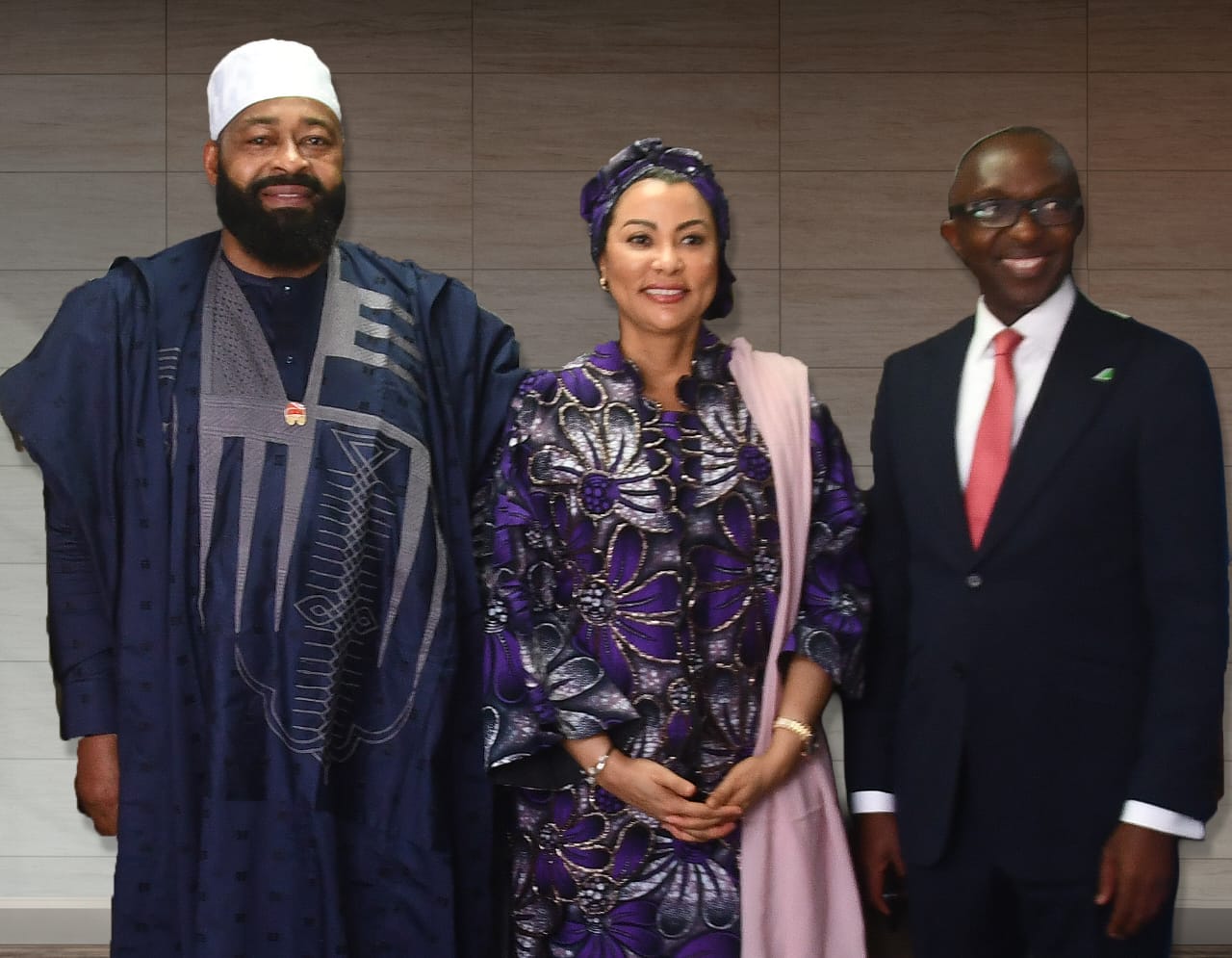
    Speaking at the MoU signing ceremony, Dr. Doris Nkiruka Uzoka-Anite, the Honourable Minister of State for Finance, described the agreement as a landmark initiative that underscores the Federal Government’s commitment to cooperative federalism, inclusive economic growth, and strategic alignment in line with President Bola Ahmed Tinubu’s Renewed Hope Agenda.

    With the Federal Ministry of Finance serving as the anchor institution, the project benefits from strong policy coordination, financial credibility, and institutional oversight. The initiative is designed to integrate housing delivery with agricultural productivity, rural stability, and economic empowerment.

    “Housing is a fundamental pillar of development. In Niger State, housing also intersects directly with agriculture, food security, and rural livelihoods. This project is therefore structured not merely as a housing intervention, but as a settlement framework for farmers aimed at strengthening agricultural value chains,” the Minister stated.

    Niger State, one of Nigeria’s most agriculturally endowed states, continues to face challenges, including insecure settlements, rural-urban migration, and limited rural infrastructure. The project seeks to address these constraints by providing secure, well-planned housing settlements for farmers, strategically located to support agricultural production, storage, processing, and access to markets.

    The Honourable Minister emphasized that anchoring farmers in stable communities with access to basic infrastructure will improve productivity, reduce post-harvest losses, enhance security, and encourage youth participation in agriculture, making farming more efficient, attractive, and profitable.

    Sustainability and affordability are core pillars of the initiative, with integrated renewable energy solutions—including solar-powered homes and community facilities, designed to ensure reliable power, reduce energy costs, and support agro-processing and storage activities. The project also prioritises efficient land use, access roads, water infrastructure, and environmentally responsible building practices.

    Reacting to the sustainability focus of the project, the Governor of Niger State, His Excellency Mohammed Umaru Bago, expressed strong optimism about its transformative impact on the state.

    “When you say sustainability, affordability is very important. When I heard that a mini-grid has been deployed in Jos, it’s because it’s affordable. Diesel is not sustainable because it’s not affordable. For considering the factor of affordability in this project, we’re grateful,” the Governor said.

    He further announced the state’s commitment to the project, adding, “So, Honourable Minister, Niger State is bringing forward 100,000 hectares of land for this project. I want to assure you that with this initiative, you have solved 80 percent of our problems.”

    Drawing a direct link to the Federal Government’s development agenda, Governor Bago noted, “We’ve gone across the world and seen how people transit from poverty to prosperity. And I think the goal of the President, my father, is for us to transition our people out of poverty in the next four years, by the grace of God.”

    The Managing Director and Chief Executive Officer of the Ministry of Finance Incorporated (MOFI), Dr. Armstrong Ume Takang (Ph.D.), who attended the ceremony alongside other critical stakeholders, including the building contractor, reaffirmed MOFI’s commitment to quality delivery and agricultural productivity.

    Dr. Takang assured the Niger State Government of the contractor’s proven competence and credibility in delivering mass housing projects, stressing that affordability would not come at the expense of quality.

    “We want affordable and decent houses. The fact that they are located in rural communities does not mean the quality should be compromised,” he said.

    Beyond housing, Dr. Takang highlighted MOFI’s broader role in strengthening the agricultural component of the settlements through strategic partnerships.

    “We have partners who will supply affordable fertilisers imported in large quantities. We will also work with other partners to ensure access to key agricultural inputs, not only fertilisers, but also pesticides, high-quality seeds, and elements of mechanisation,” he added.

    The project adopts an innovative financing model that blends public assets with private investment, ensuring sustainability, transparency, and shared risk. Through this approach, the government focuses on policy direction and oversight while leveraging private sector efficiency and capital.

    Beyond improving food security, the Mass Housing and Agricultural Settlement Project will stimulate broad-based economic activity and generate employment across construction, agriculture, agro-processing, renewable energy, logistics, and community services. The initiative will support local industries such as cement, steel, transportation, and agro-allied enterprises, while strengthening rural economies and increasing Niger State’s internally generated revenue.

    Affordability and inclusiveness remain central to the project’s design. The settlements are tailored to the income realities of farmers and low- to middle-income earners, supported by transparent allocation mechanisms and strong governance structures to ensure benefits reach the intended beneficiaries.

    The MoU sends a clear signal to the investment community that Niger State, working in alignment with the Federal Ministry of Finance and MOFI, is open to credible, well-structured, and impact-driven investment. Developers, financial institutions, pension funds, real estate investors, and agribusiness operators are invited to view the project as a scalable and replicable model.

    Reaffirming the Federal Ministry of Finance’s commitment, the Honourable Minister assured stakeholders of continued coordination, fiscal discipline, and policy support to ensure the project moves swiftly from signing to execution and delivery.

    Commending the leadership of MOFI and the Executive Governor of Niger State, the Minister concluded that the initiative reflects a shared vision for integrated development.

    “Through this partnership, we are not just building houses; we are creating stable farming communities, strengthening food security, and laying the foundation for sustained prosperity in Niger State,” she said.

  • Feature: Unlocking Africa’s $180 billion Digital Trade Economy

    Feature: Unlocking Africa’s $180 billion Digital Trade Economy

    Fortifying Africa’s Digital Infrastructure: Connecting Markets, Building Trust, Accelerating Trade

    The future of African trade is digital, and it’s unfolding. From Dakar to Durban, a quiet but steady transformation is taking shape. According to the United Nations Conference on Trade and Development (UNCTAD), global trade hit a record $33 trillion in 2024, with developing economies, including Africa, playing a growing role in that expansion.

    The African Free Continental Trade Area offers the largest free market, including 55 countries, a population of 1.3 billion and a combined GDP of $3.4 trillion. The opportunities are vast, yet the strategies required for industrial players to source, move and manage raw materials and finished goods remain a challenge.

    “The continent’s digital economy is projected to reach $180 billion by 2025, up from $115 billion in 2020, thus contributing significantly to Africa’s GDP, creating new job opportunities, and expanding regional trade. Digital trade is transforming the continent’s economic landscape, creating new opportunities for real economic growth, productive job creation, and poverty reduction.” H.E. Dr Jumoke Oduwole, Minister, Federal Ministry of Industry, Trade & Investment

    “Building on this rapid expansion, our focus must shift from isolated digital initiatives to a fully integrated ecosystem that streamlines every step of trade—sourcing, supplying, logistics and payments. By integrating these functionalities on a single platform, Matta enables manufacturers to navigate sourcing headaches and suppliers to manage cross-border complexities with confidence and unlocks new markets in Africa in real time. This holistic approach is what will transform digital trade’s potential into tangible, inclusive economic growth across Africa.” Mudiaga Mowoe, Founder and Chief Executive Officer, Matta.

    Launched to enable sustainable African economies, Matta’s integrated ecosystem—today powered by the Matta digital marketplace and the Flux logistics management tool, with Oxide Finance (Matta’s upcoming trade-financing and cross-border payments platform) arriving soon—empowers manufacturers and suppliers across food & beverage, home & personal care, paints & coatings, agro-processing, automotive assembly, textiles, construction, and beyond with truly end-to-end sourcing, movement, and settlement. Rather than supplanting traditional trade networks, this unified platform amplifies human partnerships through real-time visibility, traceability, and seamless transactions.

    This evolution in digital trade and industrial growth is one of the key conversations that will take centre stage at the West Africa Industrialisation, Manufacturing & Trade (West Africa IMT) Summit and Exhibition, set to take place from October 21-23, 2025. West Africa IMT is a high-level platform for government leaders, investors, manufacturers, and technology innovators to align practical solutions and policy frameworks for accelerating Africa’s industrial transformation.

    Matta, Africa’s integrated ecosystem for industrial trade, will join other industry stakeholders across the continent at West Africa IMT 2025 to discuss the potential opportunities for industrial growth in the West African sub-region. As manufacturers increasingly seek more innovative, more efficient ways to power production beyond physical infrastructure and policy support, there’s an urgent need for systems that simplify sourcing, enhance transparency, and ensure supply chain reliability. Matta addresses these challenges by connecting African manufacturers directly to verified suppliers of raw materials and commodities, ensuring business continuity in an environment where procurement bottlenecks often slow production timelines.

    Digital platforms address multiple challenges simultaneously: procurement complexities, logistics coordination, payment processing, and data-based planning. By integrating these capabilities into industrial operations, West African economies can accelerate development timelines and establish competitive manufacturing centres that participate effectively in global markets.

    As African nations chart independent economic paths, digital trade platforms like Matta will significantly influence how quickly and effectively new industrial capabilities develop. The transformation in African trade is already underway, with effects that will continue to reshape economic relationships for years to come.

  • UK attracts $85m investment into Nigeria’s manufacturing sector

    UK attracts $85m investment into Nigeria’s manufacturing sector

    The government of the United Kingdom (UK) has helped to attract $85 million investment into Nigeria’s manufacturing sector through its Manufacturing Africa programme since 2020.

    Deputy British High Commissioner to Nigeria, Jonny Baxter, disclosed this at a ceremony to announce the funding of three Nigerian-based clean energy companies to expand renewable energy access in the country.

    According to a statement by Ndidiamaka Eze, Senior Press & Public Affairs Officer at the British High Commission, Baxter said that the  Manufacturing Africa programme has so far supported 31 Nigerian companies to raise investment in sectors including agro-processing, industrial parks, pharmaceuticals, vehicle manufacturing, e-mobility, and renewable energy.

    “The programme has helped to attract $85 millions into Nigeria’s manufacturing sector since 2020,” he stated.

    Baxter said that the fund would enhance Nigeria’s commitments toward boosting private-sector-led economic growth.

    “We’re funding the Manufacturing Africa programme to provide free advisory services to companies raising finance to expand their capabilities and create new jobs in Nigeria. It’s great to see these companies realise their goals with UK support,” he added.

    According to him, the advisory services that the programme has provided to the companies included financial analysis, modelling, commercial diligence analysis and strategic business planning.

    Meanwhile, the statement listed the three clean energy companies funded by the programme as Arnergy, Koolboks, and BURN Manufacturing.

    “The three companies in the programme’s portfolio – Arnergy, Koolboks, and BURN Manufacturing – have collectively secured $17 million in Foreign Direct Investment (FDI), boosting Nigeria’s efforts to expand access to renewable energy solutions. These investments will provide energy for more Nigerians, reduce carbon emissions, lead to the creation of 1,100 jobs, and support thousands of livelihoods. The three companies are sustainability trailblazers,” the statement said.

  • Feature: 10 Priority areas to boost the Nigerian Economy

    Feature: 10 Priority areas to boost the Nigerian Economy

    by Ayo Akinfe

    Should Bola Tinubu seek $100bn in international loans and spend it on the following ten priority areas to boost the Nigerian economy?

    [1] Security
    Provide funding for geo-political zone, state or local government security outfits to combat the current insecurity menace. Our current security architecture is wholly inadequate

    [2] Restructuring
    No matter how you cut it, Nigeria is going nowhere unless we end our dependence on crude oil and get the states to start acting as federating units. Our states need help to stand on their own two feet

    [3] Railway
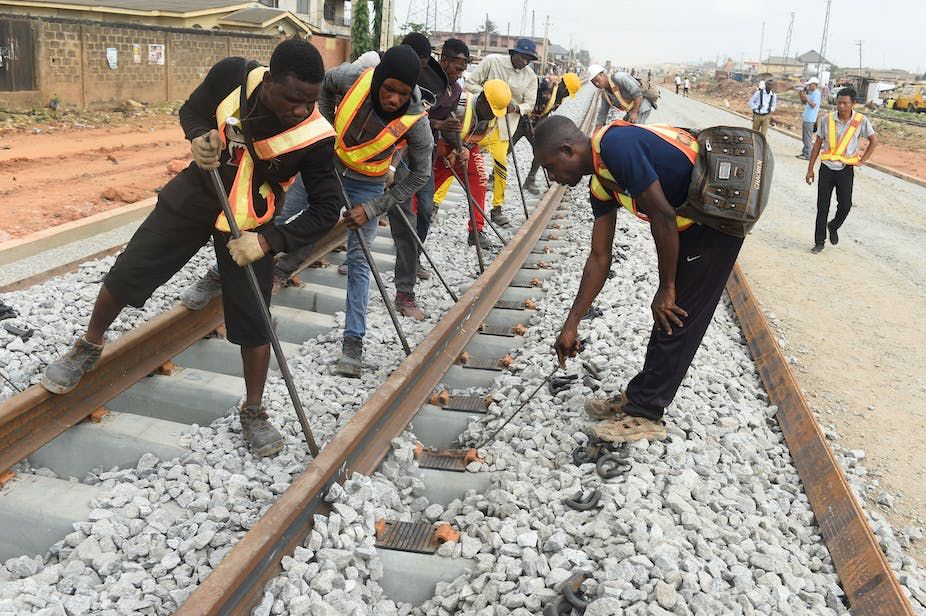
    Nigeria is one huge car park. We need to move about 80% of our freight and passengers off the road and on to rail. All of our 774 local government areas need to be part of a national railway network

    [4] Refineries
    How can all three of our national refineries have broken down at the same time? Dangote’s refinery will ameliorate this problem but if we want a surplus of petroleum products to export, we need the Port Harcourt, Warri and Kaduna refineries working too

    [5] Steel
    No country will ever become self-reliant without a domestic steel capability. We need to get the Ajaokuta, Aladja and Osogbo steel mills up and running to full capacity

    [6] Manufacturing
    Every single one of our 774 local government areas must have at least one industrial estate. We will get nowhere with the current dependence on imports. Nigeria is simply not productive enough as a nation

    [7] Low-cost housing estates
    We have a growing population and lack a housing programme to accommodate our people. Common sense will tell anyone that this is not sustainable

    [8] Coastal wind farms
    Nigeria has 853km of Atlantic coastline. I cannot believe that we do not have a Calabar to Badagry wind farm to generate clean energy

    [9] Agro-processing
    We are the world’s leading producer of cassava, yam, kolanuts, Shea nuts, etc and are among the top 10 producers of cocoa, cashew, coconuts, palm oil, neem, millet, sorghum, groundnuts, pineapples, papaya, bamboo, rubber, etc. Nigeria needs to start processing all these products

    [10] Launching a national carrier
    European airlines have been ripping us off for ages, it is time for a fightback. Nigeria desperately needs an airline that can compete with the likes of BA, Virgin Atlantic, KLM, Emirates, Lufthansa, etc