Tag: aircraft

  • AFG Aviation Ireland Limited expands its African footprint with a CRJ1000 finance lease to Nigeria’s Cally Air

    AFG Aviation Ireland Limited expands its African footprint with a CRJ1000 finance lease to Nigeria’s Cally Air

    AFG Aviation Ireland Limited (“AFG”), a global leader in commercial aviation, is pleased to announce the successful acquisition of two Bombardier CRJ1000 aircraft (MSN 19004 and MSN 19009) from Regional One, and the respective placement of these two aircraft with Cally Air. The airline is the state-backed carrier of Cross River State, Nigeria, and will operate the aircraft under a finance lease agreement with AFG.

    The addition of these modern, fuel-efficient regional jets will serve as a cornerstone for Cally Air’s fleet development, providing the operational foundation needed to expand connectivity within Nigeria and open new routes across West Africa. This strategic addition will help accelerate the airline’s growth trajectory, supporting regional trade, tourism, and sustainable economic development.

    “This agreement is a testament to AFG’s ability to connect global capital with local ambition,” said Christian Nuehlen, Founder and CEO of AFG. “The African aviation sector is poised for exceptional growth, and we are committed to providing the aircraft, financing structures, and expertise that enable our partners to realize their full potential.”

    Christian Hatje, Senior Vice President Commercial at AFG, added: “Our collaboration with Cally Air reflects our long-standing belief in the opportunities this dynamic continent has to offer.”

    With a proven track record of structuring complex transactions and delivering aircraft on time and on budget, AFG remains a trusted partner for airlines, lessors and aviation stakeholders seeking to expand across the African continent and other high-potential markets.

  • Airbus releases its latest study identifying key unserved routes to boost air travel in Africa

    Airbus releases its latest study identifying key unserved routes to boost air travel in Africa

    Global aerospace and aviation leader, Airbus, has released an analysis detailing several key unserved African routes which could provide greater connectivity for travellers, drive economic growth in local economies, and provide a significant boost in revenue for airlines. The company also highlighted data on Africa from its latest Global Market Forecast (GMF). 

    Several of the top unserved routes identified in the analysis are concentrated in cities such as Lagos, Cape Town, Nairobi, Dakar, and Douala. Airbus also touched on strategic recommendations to capitalise on the opportunities of a more connected continent as well as Airbus’ capabilities to help realise this potential. 

    “Despite significant traffic between certain city-pairs, some identified routes still lack regularly scheduled non-stop flights. Factors such as restrictive bilateral air service agreements, economic variables, and challenges with capacity, frequency and operating cost efficiency contribute to these routes remaining unserved,” said Geert Lemaire, Market Intelligence and Consulting Director, Airbus. “With our capacity to make analyses about route and network development potential in-house, Airbus remains committed to partnering with airlines across Africa to identify optimised fleet solutions inline with network development requirements that further stimulate the continent’s air transport industry growth and improve connectivity for travellers.” 

    The forecast, meanwhile, predicts a 4.1% growth overall in air traffic over the next 20 years, resulting in an anticipated need for 1 180 new aircraft by 2043. Meanwhile, the continued growth of the aviation sector in Africa is expected to result in 3.3% real GDP growth on the continent, well above the 2.6% global average. This growth is ratified by data from Airbus’ Global Services Forecast, which estimates that Africa will need to introduce 15 000 more pilots, 20 000 technicians and 24 000 cabin crew to meet the surge in air travel demand. 

    To learn more about the untapped opportunities in Africa’s aviation sector, we invite you to read Airbus’ latest analysis on unserved routes here

  • Feature: The very least we expect from Festus Keyamo

    Feature: The very least we expect from Festus Keyamo

    by Ayo Akinfe

    This is the very least we expect from a man of your pedigree Festus Keyamo during your four year tenure

    [1] If Nigeria was a country that had any shame, we would be eternally embarrassed about the fact that the country does not have a single aviation maintenance, repair and overhaul (MRO) facility. MRO’s are an essential requirement to ensure that aircraft are maintained in pre-determined conditions of airworthiness to safely transport passengers and cargo. Airlines go through regular rigorous checks just as cars have to have an MOT every year to prove they are roadworthy

    [2] What this means in practical terms is that whenever any aircraft lands in Nigeria, it leaves immediately to be maintained elsewhere. In plain language – There is no aircraft mechanic workshop in the whole of Nigeria. Globally, the commercial aircraft MRO market is influenced by external factors in the wider air transport industry including global fleet size, aircraft utilisation and increasing and decreasing air traffic volumes for both passengers and cargo. Please sort this out Festus

    [3] In 2015, the global MRO market was worth $135.1bn, representing three quarters of the $180.3bn aircraft production market. Over the 2017–2026 decade, it is expected that the MRO market worldwide should reach over $900bn, with 23% in North America, 22% in Western Europe and 19% in Asia Pacific. Nigeria needs to get in on the act

    [4] In 2018, the commercial aviation industry expended $88bn on MRO, while military aircraft spent $79.6bn, including field maintenance. Across Africa, the only MRO providers are South African Airways Technical (Saat), Ethiopian Airlines Maintenance and Engineering, Kenya Airways Technical, Air Algerie Technics and Tunisair Technics. There are also joint ventures such as Air France Industries’ and Royal Air Maroc’s Aerotechnic Industries

    [5] Given how centrally located Nigeria is in Africa, the fact that Nigerians are the continents most travelled people and being the largest economy, we should be Africa’s aviation workshop, generating at least $20bn a year from MRO

    [6] For me, Lagos, Abuja and Calabar, the gateway to east and central Africa, should all be major MRO and aviation hubs. Our aviation policy should be geared towards making them massive depots where airlines bring their planes from all across Africa

    [7] Nigeria needs a major international airline in which the federal government has a minority stake of say 25%. This airline should be able to compete with the likes of Virgin, BA, Air France, KLM, Emirates, etc

    [8] Given the size of the African aviation market and the field day the Europeans and Americans are having ripping us off, Nigeria has got to spearhead the creating of a continental giant. Just imagine the kind of carrier we would have if Nigeria Air, Egypt Air and Ethiopian Airlines merged their operations

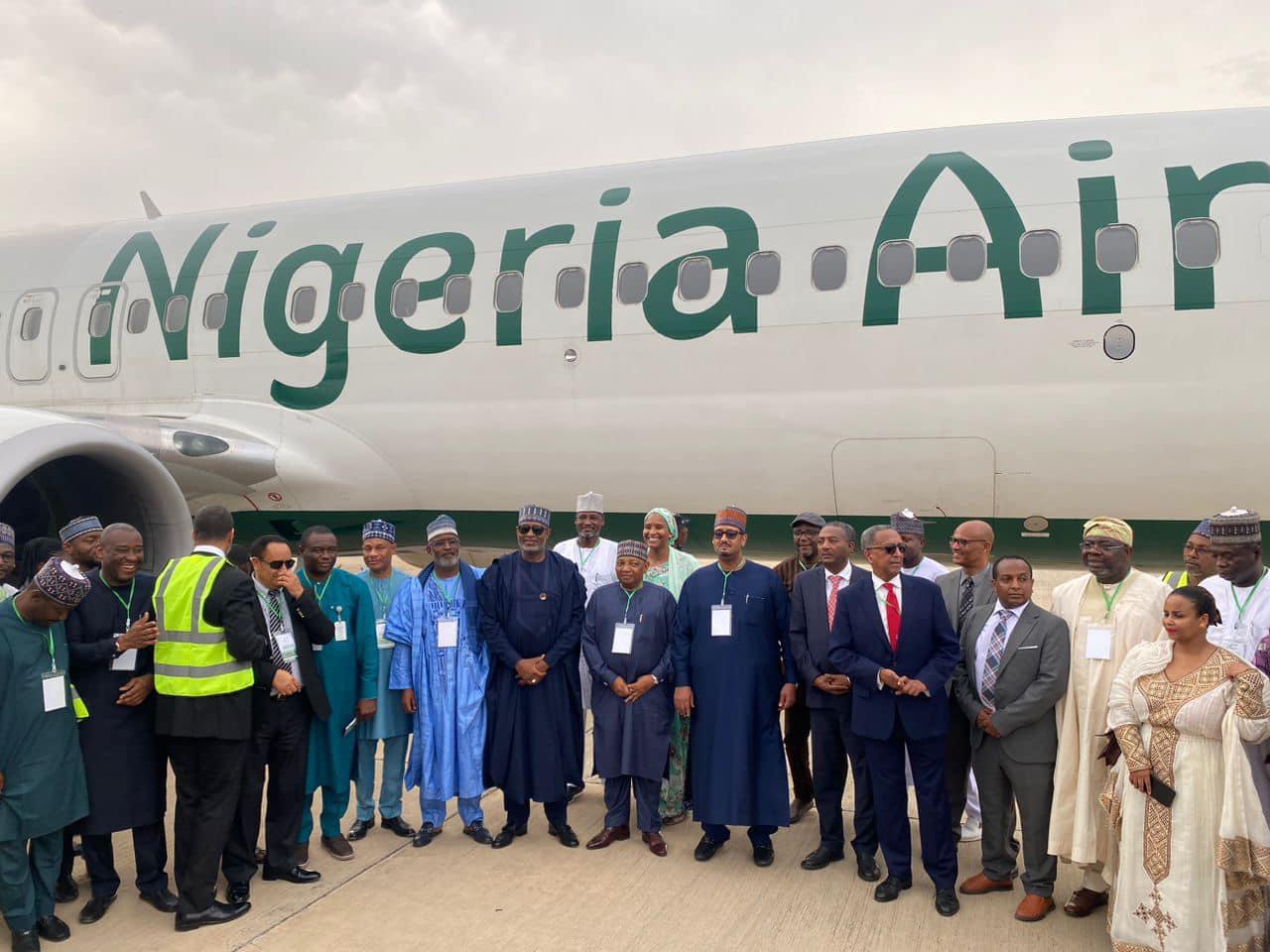
    [9] As a first step in all this, I expect to see Nigeria Air up and running within six months. No funny games Festus, we need an airline with at least a fleet of 20 planes flying to at least 10 African destinations and to at least another 190 global ones

    [10] Domestically, I expect Festus to bring the airports in the 36 state capitals of Nigeria up to international standards. They should all be able to operate international flights. Why should a man have to fly to Lagos or Abuja first before leaving Nigeria

  • Feature: 10 Private Conglomerates that Tinubu needs to float on five different stock exchanges

    Feature: 10 Private Conglomerates that Tinubu needs to float on five different stock exchanges

    10 private giant conglomerates that President Tinubu needs to get floated on about five major stock exchanges with the Nigerian government taking out a 25% stake in them

    Ayo Akinfe

    [1] NNPC – Oil processing, distribution and retailing and the manufacturing of industrial equipment. It should also be involved in the production of oil by-products like petrochemicals and fertiliser

    [2] Innoson – Manufacturing of industrial goods like automobiles, railway wagons, aircraft, ships, electronic consumer goods and medical equipment

    [3] Nigerian Railway Corporation – Railway carriages, engines, tracks, signalling equipment and all ancillary products associated with the rail trade

    [4] Air Nigeria – It should have a manufacturing arm that is involved in a joint venture with a company like Boeing or Embraer to assemble aircraft

    [5] Transcorp – This company simply has to be revisited. It must manufacture agricultural equipment, electricity transformers, power cables, medical equipment and be engaged in food processing

    [6] Power Holding Corporation of Nigeria – This company should have an arm dedicated to building hydro-electric, gas-fired and nuclear power plants. It should also establish solar farms and the world’s largest offshore windmill farm along Nigeria’s Atlantic coastline

    [7] The Food Processing Company of Nigeria – It would be charged with adding value to every single crop we grow in Nigeria. Its guiding principle should be nothing is to be exported unless 50% value is added

    [8] Man of God Plc – I insist that Nigeria’s rich clergymen must merge their business operations into one conglomerate. This company must be involved in food processing, road construction, running rail franchises, operating airlines and private universities

    [9] Nitel – We missed a big trick when the private telecommunications operators took over the industry. Nitel should have re-invented itself as a manufacturer of communications products like mobile phones, laptops, desktop computers, iPads, etc. Vietnam has made this transition and is now one of the world’s largest producer of handsets

    [10] Nigerian Textile and Leather Company – This outfit will be charged with manufacturing shoes, handbags, belts, clothing and industrial clothing. It will own cotton ginning plants, leather tanneries, textile factories and aim to supply all the major global fashion retailers. Nigerians shamelessly wear Gucci and Lui Vitton products without contributing one thing to these companies who make millions off them

  • NAMA MD Tasks Airlines on Incident Reporting

    NAMA MD Tasks Airlines on Incident Reporting

    …inducted into the AFARN Hall of Fame

    The Acting Managing Director of the Nigerian Airspace Management Agency (NAMA), Mr. Matthew Lawrence Pwajok has urged pilots, air traffic controllers, airlines, ground handlers, passengers and other stakeholders in the aviation industry to continue to report aviation incidents to the safety authorities as this would further enhance the relative safety in the industry and also boost confidence in air travel.

    Pwajok who was an award recipient at the Association of Foreign Airlines and Representatives in Nigeria (AFARN) safety summit and awards which held in Lagos at the weekend contended that investing in sensitization of key stakeholders in the area of safety reporting is as important as investing in safety-critical equipment and manpower training, stressing that incident reports were a critical and strategic aspect of the aviation safety chain, because “if you don’t report incidents we can’t control them, if we don’t have reports we cannot provide the required risk analysis and mitigations.”

    He commended pilots “for being very faithful in incident reporting, even to the detriment of the airlines, as this could sometimes cause slight flight delays while awaiting a review or investigation of the incident by NCAA before releasing the aircraft back for operations. NCAA for investigation, and when the reported event or defect is mitigated, the aircraft is released back to service. For instance, we had an occurrence at Escravos yesterday that was reported to the control tower by the pilot, and consequently, NAMA informed AIB and NCAA, and after the required mitigations were effected, the aircraft was released back to service. It is as prompt as that! These are the kind of 24/7 collaboration, cooperation, and coordination that have largely enhanced safety in the sector.”

    The NAMA boss appreciated stakeholders in the industry for the enhanced safety in the sector which he attributed to the effective synergy amongst stakeholders and strategic efforts by service providers. The NAMA MD opined that the relative safety enjoyed in the sector over the last 10 years was not by chance or luck but as a result of significant investments both in infrastructural deployment and human capital development to enhance safety in the Nigerian airspace, thereby ensuring that major air disasters such as those witnessed between 2005 and 2006 were a thing of the past.

    According to him, “one of the first things the agency did under the Obasanjo government was the implementation of Safe Tower project and this began with the automation of the control tower at Abuja airport in 2007. In 2008 we completed that of Lagos and Port Harcourt and subsequently Kano. This project provided the main mitigation to what was considered the primary cause of most of these air disasters. The project provided NAMA with automated air traffic management systems, as well as meteorological sensors along the runways, and provided ATC with real-time weather information from the runways, availing us with wind direction, wind speed, low-level wind shear alerting systems, cloud altitudes, cloud densities, cloud direction of movement, air temperature, air pressure, prevailing weather conditions, etc. Thus, basically, every element of weather is displayed at the control tower at the four major airports, so pilots are given adequate information on approaching weather, prevailing weather, or forecasted weather conditions.”

    “We went further to deploy the Total Radar Coverage of Nigeria (TRACON) in 2010. We could now track aircraft over the entire airspace of Nigeria and beyond, unlike before when air traffic controllers had to manually depend on pilot reports to control and ensure safety of flights, separation of aircraft from each other, and sequence them for arrival or for takeoff. The radar system has the capacity to detect conflicts, aircraft crossing each other, with inbuilt ground safety nets such as short-term conflict alert, and medium-term conflict detection with respect to aircraft crossing at the same level or in close proximity either vertically or laterally, the radar system will alert ATC. The radar system is also equipped with minimum safe altitude warning, thus if you are very low to the terrain it will alert us. The system also has a danger area infringement warning to alert aircraft away from restricted, prohibited or dangerous areas with known or reported activities hazardous to air safety. These are all ground safety nets, about ten of them that are in-built in the radar system to give the air traffic controller adequate information, and to a large extent, that has enhanced safety in our airspace.”

    Pwajok further stated that the drive towards enhancing air safety is attributable to global, regional and national initiatives following the development of the ICAO Global Air Navigation Plan, Global Aviation Safety Plan in 2012. At the regional level, the ministers responsible for civil aviation in Africa met in Abuja, Nigeria following the ranking of Africa as the continent with the least volume of flight operations, but with the highest fatal accidents rate in the world. “Thus on 20th July 2012, we had the ministerial declaration in Abuja: what the International Civil Aviation Organization (ICAO) refers to as the Abuja Safety Targets. Ministers responsible for aviation met in Abuja, reviewed the safety level in Africa and agreed that over 60% of the fatal accidents were caused by (i) loss of control in flight (ii) controlled flight into terrain, and (iii) runway incursion, excursion and confusion. In addressing these, the Ministerial Conference and the African Civil Aviation Commission (AFCAC) came up with a 16-point agenda out of that declaration: to reduce loss of controlled flight into the terrain by 50%; reduce runway incursion and excursion by 50%; reduce loss of control in flight by 50%, implement state safety programme by CAAs and also ensure effective implementation of oversight, Pwajok said.”

    He noted that the above strategies were domesticated at national levels, while strategic and concerted efforts were made towards implementation and enhancement of air safety through investment in safety critical infrastructure, training, establishment of safety management system and quality management system, as well as development of safety plans, safety policies, safety objectives, safety key performance indicators, and acceptable level of safety performance. He also lauded the Honourable Minister of Aviation, Sen. Hadi Sirika for facilitating the huge investment in development of air navigation services in line with the aviation roadmap, as well championing recent collaborative efforts by aviation agencies, airlines and other stakeholders in a bid to enhance safety in the nation’s airspace.

    This year’s AFARN summit with the theme- Aviation Safety in a Global Distressed Economy: The Place of Nigeria, also had in attendance the Managing Director of the Federal Airports Authority of Nigeria (FAAN), Capt. Rabiu Yadudu, Commissioner, Accident Investigation Bureau (AIB), Engr. Akin Olateru and the representative of DG, Nigerian Civil Aviation Authority (NCAA), who were also inducted into the AFARN Hall of Fame alongside Pwajok.