Tag: Amazon

  • How the Product Leadership Accelerator (PLA) is Re-Engineering African Enterprises for a Digital-First Economy

    How the Product Leadership Accelerator (PLA) is Re-Engineering African Enterprises for a Digital-First Economy

    As Africa looks to technology for the next wave of economic evolution, the PLA stands at the center of that journey, turning the SVPG Product Operating Model into a reality for the continent’s most innovative and ambitious enterprises

    As the global community celebrates World Product Day, a profound shift is taking place across Africa’s enterprise landscape. The Product Leadership Accelerator (PLA), an initiative of the Innovate Africa Foundation, is officially setting a new gold standard for how value is created and scaled, in Africa, by transforming African enterprises from traditional service providers into high-velocity, “product-led” engines of growth.

    The PLA is bridging the gap between legacy business models and the modern Product Operating Model. This methodology, practiced by global companies like Apple, Netflix and Amazon, is now being localized, through the PLA, to ensure African enterprises and startups alike solve the continent’s toughest challenges through relentless innovation and de-risked execution.

    Building a Pan-African Product Management Talent Pipeline

    The PLA is currently powering its 2026 Accelerator Program, a rigorous 12-week program featuring 48 product managers from 13 African countries, including Nigeria, Egypt, Ghana, South Africa, and Kenya. In a significant move for gender equity in tech, the cohort maintains a female representation of about 54%, ensuring the future of African product leadership is as diverse as the markets it serves.

    As the fellows tackle real-world problem statements across diverse industries during the 12 week accelerator program, they are mentored by an elite roster of practitioners who have built products at enterprises such as Interswitch, Netflix, Amazon, Microsoft, Paystack, and mPesa. They also receive strategic, high-level guidance from global product legends Marty Cagan and SVPG Partner, Christian Idiodi.

    “Building in Africa requires a distinct level of empathy, adaptability, and mastery of the product operating model,” explains Nkem Nweke, Lead at the PLA. “We empower leaders and enterprises to harness tools like AI while offering them strategic product management advisory. Our goal is to support companies in adopting a product-led culture which drives sustainable economic growth. By mitigating risks before investing significant capital or public resources, we help both enterprises and startups create solutions that truly meet market and consumer needs.”

    Enterprise Transformation and Proven Outcomes

    The impact of the PLA extends deep into the corporate sector through its specialized Product Management Advisory. Organizations reliant on technology spanning telecoms, FMCG, commerce, retail, finance, and government, are increasingly seeking to leverage the PLA’s expertise to shift their product teams from traditional project-based approaches to outcome-driven product cultures that drive growth.

    The effectiveness of the PLA’s approach is best seen through its corporate partnerships. Afrinvest, a leading financial institution, serves as a primary example of how the PLA’s advisory services drive immediate corporate value.

    “The PLA didn’t just upskill one individual; it has been a game-changer for our internal innovation culture, sparking a ripple effect of outcome-driven progress throughout our entire product department. “says Victor Ndukauba, Deputy MD, Afrinvest West Africa. “Seeing the speed at which our team can now identify and solve real consumer problems is why we’ve increased our participation this year.”

    This sentiment is echoed by partners like Insight7, One Cluster and Agile Product Management, who view the PLA as the engine room for the continent’s digital maturity.

    Central to this transformation is integrating tools like Artificial Intelligence (AI), enabling product managers to achieve world-class standards, driving efficiency, and ensuring African businesses set the pace for global innovation.

    De-Risking African-Built Solutions

    For founders, the stakes have never been higher. “Our goal is to raise product leaders who are deeply versed in the mechanics of discovery and delivery, ” notes Osa Awani, Head of Program at the PLA. “We see the shift happening in real-time as our fellows move from theoretical knowledge to building solutions that address market friction with surgical precision.” When founders and Product Managers master the product operating model, they stop guessing; and with a commitment to solving real problems, African product leaders will not only compete globally they will lead.”

    Impact by the Numbers

    • 13 Countries: Active representation in the 2026 cohort, including Nigeria, South Africa, Ghana, Egypt, Kenya, Rwanda, Zimbabwe, Cameroun, Egypt and more.
    • 54%+ Female Representation: Leading the charge in inclusive tech leadership.
    • Scores of Scholarships: The Innovate Africa Foundation has provided scholarships to dozens of African product managers to attend prestigious SVPG Masterclasses, resulting in career promotions, career pivots to executive leadership, and the launch of new tech ventures.
    • 3-City Product Tour: Recently concluded engagements with product leaders across Lagos, Nairobi, and Cape Town.

    A Future Defined by Innovation

    Founded by Christian Idiodi, (partner at the globally renowned Silicon Valley Product Group),  the PLA is rooted in the belief that the intersection of world-class tools such as Artificial Intelligence (AI) and strategic product management is essential to mastering the craft of creating exceptional products for Africa; thereby unlocking Africa’s economic potential. By offering cutting-edge tools, a robust network, and the innovative mindset of the world’s most successful organizations, the PLA ensures Africa’s challenges are addressed with future-ready, world-class solutions.

  • Meta planning sweeping layoffs as AI costs mount

    Meta planning sweeping layoffs as AI costs mount

    Meta (META.O), is planning sweeping layoffs ​that could affect 20% or more of the company as ‌Meta seeks to offset costly artificial intelligence infrastructure bets and prepare for greater efficiency brought about by AI-assisted workers.

    No date has been set for the cuts, and the magnitude has not been finalised, the people said.

    Top executives have recently signalled their plans to other senior leaders at Meta and told them to begin planning how to pare back, two of the people said. The sources spoke anonymously because they ​were not authorised to disclose the cuts.

    “This is speculative reporting about theoretical approaches,” Meta spokesperson Andy Stone ⁠said in response to questions about the plan.

    If Meta settles on the 20% figure, the layoffs will be the company’s most ​significant since a restructuring in late 2022 and early 2023 that it dubbed the “year of efficiency.” It employed nearly 79,000 people as ​of December 31, according to its latest filing.

    The company laid off 11,000 staffers in November 2022, or around 13% of its workforce at the time. Around four months later, it announced it was cutting another 10,000 jobs.

    ZUCKERBERG FOCUSING ON GENERATIVE AI

    Over the last year, CEO Mark Zuckerberg has been pushing Meta to ​compete more forcefully in generative AI. The company has offered huge pay packages, some worth hundreds of millions of dollars over ​four years, to court top AI researchers to a new superintelligence team.

    The company has said it plans to invest $600 billion to build data centers ‌by 2028. ⁠Earlier this week, it acquired Moltbook, a social networking platform built for AI agents. Meta is also spending at least $2 billion to buy Chinese AI startup Manus.

    Zuckerberg has alluded to efficiency gains from the investments, saying in January he was starting to see “projects that used to require big teams now be accomplished by a single very talented person.”

    Meta’s plans reflect a broader pattern among major ​U.S. companies, particularly in tech, this ​year. Executives have pointed ⁠to recent improvements in AI systems as one reason for the changes.

    In January, Amazon confirmed it would cut some 16,000 jobs, amounting to nearly 10% of its workforce. Last month, the fintech company Block ​chopped nearly half of its staff, with CEO Jack Dorsey explicitly pointing to AI tools and their ​growing capability to ⁠help companies do more with smaller teams.

    Meta’s planned AI investments follow a series of setbacks with its Llama 4 models last year, including criticism that it provided misleading results on the benchmarks it used for early versions. It abandoned the release of the largest version of ⁠that model, ​called Behemoth, which had been due out in the summer.

    The superintelligence team has ​been working to reassert the company’s standing this year by building a new model called Avocado, but the performance of that model has also lagged expectations.

    Culled from Reuters

  • Amazon Launches Bazaar App in Nigeria, Expanding Low-Price Shopping Experience

    Amazon Launches Bazaar App in Nigeria, Expanding Low-Price Shopping Experience

    Amazon announced the launch of its new Amazon Bazaar app in Nigeria, bringing customers a dedicated shopping experience with hundreds of thousands of affordable products across fashion, home, and lifestyle categories.

    Building on the success of Amazon Haul in countries such as the U.S., UK, Germany, France, Italy, Spain, Japan, and Australia, and Amazon Bazaar in Mexico, Saudi Arabia, and the UAE, this expansion introduces the low-price shopping experience to more destinations worldwide.

    The Amazon Bazaar app is now available in 15 new countries, including Nigeria, Hong Kong, the Philippines, Taiwan, Kuwait, Bahrain, Oman, Qatar, Peru, Ecuador, Argentina, Costa Rica, the Dominican Republic, and Jamaica.

    Most items on the app cost under ₦15,000, with some starting as low as ₦3,000. New customers get 50% off their first order, and orders above ₦30,000 qualify for free delivery, while smaller purchases attract a standard fee. Deliveries typically arrive within two weeks, supported by Amazon’s 24/7 multilingual customer service.

    Customers can shop confidently using their existing Amazon credentials and enjoy features such as reviews, star ratings, and Amazon’s trusted compliance standards. The app also supports payments in naira (₦) and accepts Visa, Mastercard, and American Express.

    Amazon Bazaar blends value-focused shopping with interactive entertainment, including social lucky draws and promotions. The app is available for download now on iOS and Android app stores in Nigeria.

  • Temu Partners with International AntiCounterfeiting Coalition to Strengthen IP Enforcement

    Temu Partners with International AntiCounterfeiting Coalition to Strengthen IP Enforcement

    Joins IACC marketplace advisory council alongside global brands and platforms

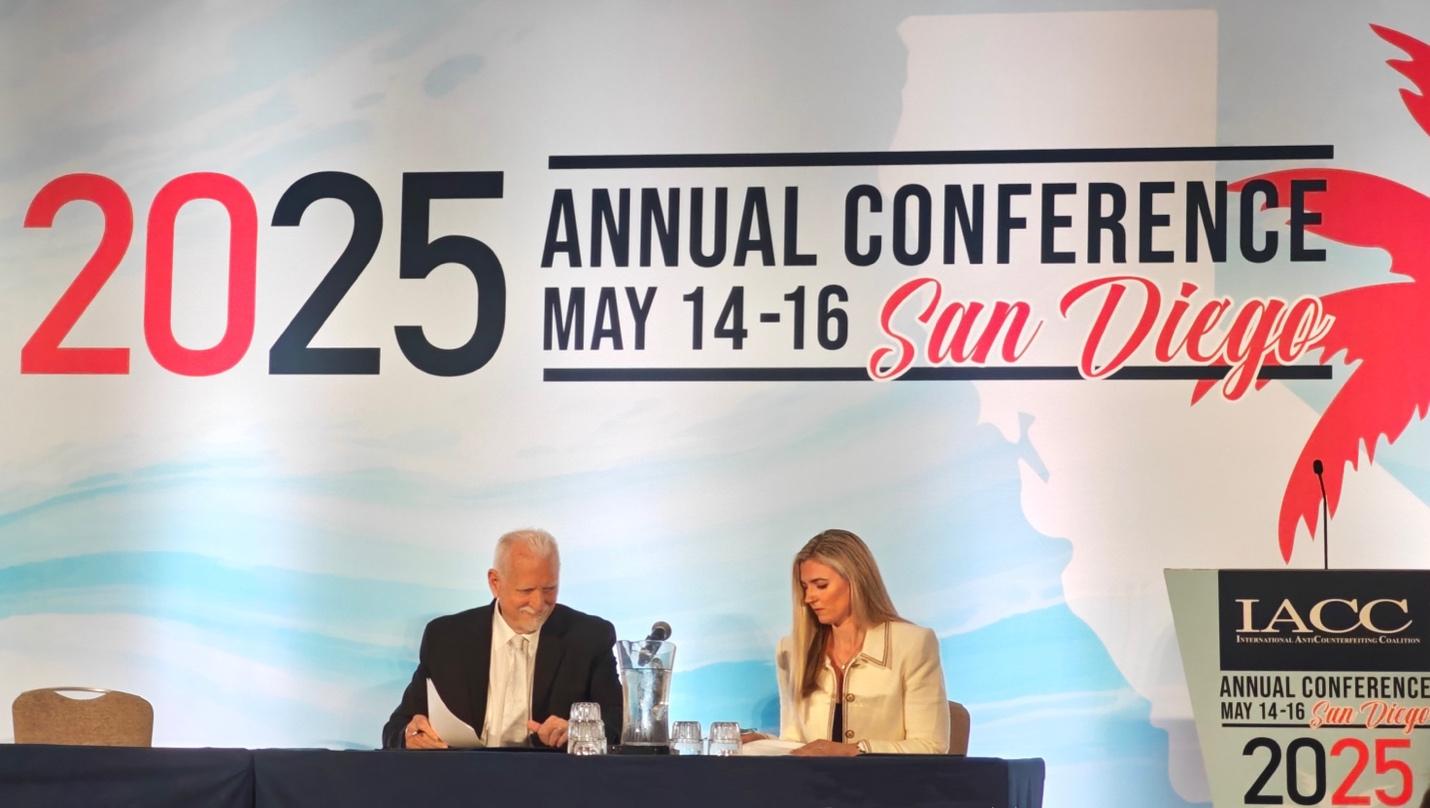
    (L-R) IACC President Bob Barchiesi and Temu’s IP Compliance Lead for the U.S. Christine Casaceli signed the MoU 

    Temu, the global online marketplace, has signed a Memorandum of Understanding (MoU) with the International AntiCounterfeiting Coalition (IACC) to deepen collaboration on intellectual property protection and expand efforts to combat online counterfeiting.

    The MoU was signed during the IACC’s 2025 Annual Conference in San Diego last week. As part of the collaboration, Temu has joined the IACC’s newly launched Marketplace Advisory Council (MAC) as an inaugural member. The MAC is a cross-industry forum that includes leading online marketplaces, payment providers, and global brands, aimed at setting a new standard for cooperation in the fight against counterfeit goods.

    “We’re pleased to welcome Temu as an inaugural member of the Marketplace Advisory Council and as a key partner in our shared fight against counterfeiting,” said Bob Barchiesi, President, International Anti-Counterfeiting Coalition. “This MoU reflects a meaningful step forward in our collaboration, grounded in transparency, accountability, and a joint commitment to consumer protection. The IACC created the MAC to bring stakeholders together in a way that drives real, sustained impact—and Temu’s participation helps strengthen that vision.”

    The MAC offers a collaborative platform where e-commerce platforms, payment companies, and brand owners can work together, share insights, and forge stronger partnerships to address one of the digital economy’s most persistent challenges: the proliferation of counterfeit goods online.

    “Joining this coalition underscores Temu’s commitment to building a trustworthy online marketplace,” said a Temu spokesperson. “We look forward to collaborating with other industry leaders to create a powerful, collective force against the sale of illegal goods online.”

    Since launching in 2022, Temu has invested heavily in intellectual property enforcement. Measures include:

    • Comprehensive seller vetting and compliance training
    • Round-the-clock algorithmic monitoring supported by manual review
    • A dedicated IP protection portal and brand registry for streamlined takedown submissions
    • An internal enforcement team handling claims with high speed and accuracy

    In addition to Temu, other members of the IACC MAC include e-commerce platforms Amazon, and eBay; payments providers Mastercard, PayPal, and Visa; as well as global brands such as Apple, Chanel, Colgate-Palmolive, Disney, Ford, Johnson & Johnson, and Nike.

  • Kikelomo Atanda-Owo Abati launches Third Book, Encounters: Governance, Policy, & Society Featuring Prominent Nigerian Leaders

    Kikelomo Atanda-Owo Abati launches Third Book, Encounters: Governance, Policy, & Society Featuring Prominent Nigerian Leaders

    Renowned media entrepreneur, journalist, established corporate entrepreneur and author Kikelomo Atanda Owo Abati has released her highly anticipated third book, Encounters: Governance, Policy, & Society. The new publication features insightful conversations with some of Nigeria’s most influential figures, including Dr. Ngozi Okonjo-Iweala, Babatunde Raji Fashola, Allen Onyema, Reuben Abati, Chude Jideonwo, Babajide Otitoju, Azubike Osumili, Ajuri Ngelale and many others.

    Following the success of her first book, Unbroken, a deeply personal autobiography detailing her life experiences and overcoming a near-fatal marriage, Encounters delves into critical discussions surrounding Nigeria’s governance, policy challenges, and societal progress. The book reflects Atanda-Owo’s commitment to contributing to national discourse through in-depth interviews with thought leaders shaping Nigeria’s future.

    In Encounters: Governance, Policy, & Society, Atanda-Owo’s interviews capture the essence of leadership and policy-making, providing readers with a unique perspective on Nigeria’s future. Her rich professional background and journey make this book compelling for those interested in governance, policy, and societal development.

    Kikelomo Atanda- Owo, often referred to as “Kiki,” brings to this work her extensive experience spanning about two decades in her extensive experience spanning about two decades in telecommunications, media, journalism, and strategic communications. She is the founder/convener of contemporary live talk show, Real Talk With Kike, on Silverbird and Inspiration 92.3 FM. She has become a leading voice in the communications industry.

    She is also the CEO of Z-Edge Limited, a top-notch organization that offers corporate and management training, event management, procurement, and targeted integrated marketing communications services, Atanda-Owo has consistently demonstrated strategic leadership, positioning the company as a frontrunner service brand in Nigeria.

    In addition to her professional achievements, Atanda-Owo remains a staunch advocate for single mothers and widows through herKike Hub Foundation, highlighting her dedication to uplifting underserved communities. She is also recognized for her exemplary work in media entrepreneurship, collaborating with major industry players like MTN Nigeria and Stanbic IBTC. She orchestrated the “MTN Football Scholar” program for 21 young, talented Nigerian boys who are presently in the US studying and working with the funding of $3M per season over 3 years and helped generate $7.25M in partner revenues.

    Kikelomo Atanda-Owo’s influence continues to grow, as she was named one of the top 15 most powerful women journalists in Nigeria by WiJAfrica in 2023 and 2024. Armed with a bachelor’s degree in communications, an MSC from Kingston University and MBA from the University of South Wales, she remains a trailblazer in media, communications, and strategic consultancy, inspiring the next generation of leaders.

    The book is available on Amazon, iBooks, Rakuten Kobo and many other e-book selling platforms.

  • Commonwealth Short Story Award Winner Releases The Talent Coach

    Commonwealth Short Story Award Winner Releases The Talent Coach

    Dr. Frederick Mordi, a Commonwealth Short Story Award winner, who wrote The Familiar Stranger and Other Stories, has announced the release of his second novel, The Talent Coach.

    Published by New Africa Book Publishers (NABP), The Talent Coach is a tour de force that adds a new perspective to the nature versus nurture debate. The novel tells the compelling story of Dr. Joe Jordan is highly sought after by many high-profile clients including CEOs of Fortune 500 Companies, heads of state, and athletes.

    Dr. Jordan visited Nigeria recently at the invitation of a leading new-generation bank. While in the country, the celebrated orator, who is often described as a walking encyclopaedia of knowledge, met with Nigerians from all walks of life.

    As he had done in the 62 other countries across all the continents of the world that he had visited, Dr. Jordan helped many Nigerians to re (discover) their hidden talents and taught them how to mine their natural endowments to become successful in life, using the 12 principles that he had carefully curated.

    The pulsating novel has a length of 206 pages, divided into a prologue, 12 topics, each with a striking quote, which drives home the message intended for the reader, and an epilogue. There is also a workbook at the end of the novel that Dr. Jordan had developed to help people carry out a critical self-assessment of their talent and become a better version of themselves.

    From debunking the myth that talent is exclusive to a select few, to exploring the intricate relationship between nature and nurture, Dr. Jordan expertly guides readers on a journey of self-realisation and shows them how to unleash their innate potential.

    In the first topic, “Everybody Has Talent,” he emphasises the universality of talent and dispels the notion that it is confined to a lucky few, while the second topic “Nature or Nurture” delves into the long-standing debate surrounding the origin of talent.
    The Talent Coach offers indispensable advice on the need to focus on one’s strengths and stay committed to a chosen path, in the next topic: “Remain In Your Field”& “The Icarus Parado” looks at the challenges some talented individuals often face in sustaining stasis in stardom.

    In “Practice Makes Perfect,” he highlights the undeniable role of deliberate practice in honing talent, while “Dealing With The Impostor Syndrome” equips readers with the tools to overcome self-doubt and embrace their accomplishments. Dr. Jordan guides readers on how to build their emotional strength to enable them to bounce back from setbacks in “What Is Your Adversity Quotient?”

    These are just a few samples of the interesting concepts that the novel, which is an invaluable resource for anyone seeking personal and professional growth, offers readers. The author’s engaging writing style and adroitness in the use of dialogue will hold the attention of readers to the end.

    The Talent Coach has received rave reviews and endorsements from acclaimed experts. According to Fela Durotoye, an executive coach, leadership expert, global speaker, and nation builder: “Through the pages of this brilliant book, the ultimate talent coach himself, Fred Mordi, helps us to unravel the mystery of TALENT, as the secret place of our greatness.”

    Professor Emurobome Idolor, FANIM, first to obtain a PhD degree in Music from a Nigerian University, said: “The factual content of this book makes it all-important for parents and children to own.”

    For Olakunle Kasumu, presenter/producer, Channels Book Club Show, “All the recurrent questions about talent, natural abilities, acquired skills, and nature versus nurture, are answered as you read a story that is, in itself, captivating.”

    The Talent Coach is available for purchase in leading physical bookstores across Nigeria, and in digital bookstores such as Amazon, Lulu and Selar.

    Dr. Mordi, the author of the book, is a corporate communications practitioner with over two decades of experience cutting across journalism, public relations, government affairs, stakeholder management, change management, and reputation management.

  • Google, Meta, Microsoft, Others Agree on AI ‘Red Lines’

    Google, Meta, Microsoft, Others Agree on AI ‘Red Lines’

    More than a dozen technology leaders, also including Amazon, IBM and Samsung, signed up to protocols for the development of artificial intelligence

    Sixteen global tech giants, including Alphabet’s Google, Meta, Microsoft and OpenAI, have vowed to commit themselves to the safe development of AI.

    The pledge, which also saw firms from China, South Korea and the United Arab Emirates sign up, was announced in a UK government statement on Tuesday, as South Korea and Britain co-hosted a global AI summit in Seoul.

    The agreement, which comes at a time when the breakneck pace of AI innovation is leaving governments scrambling to keep up, is a step up from the commitments made at the first global AI summit held six months ago, the statement said.

    Zhipu.ai, backed by Chinese tech giants, Alibaba, Tencent, Meituan and Xiaomi, as well as UAE’s Technology Innovation Institute, were among the 16 companies pledging to publish safety frameworks on how they will measure risks of frontier AI models.

    The firms, also including Amazon, IBM and Samsung Electronics, voluntarily committed to not develop or deploy AI models if the risks cannot be sufficiently mitigated, and to ensure governance and transparency on approaches to AI safety, the statement said.

    “It’s vital to get international agreement on the ‘red lines’ where AI development would become unacceptably dangerous to public safety,” said Beth Barnes, founder at METR, a non-profit for AI model safety.

    The artificial intelligence (AI) summit in Seoul this week aims to build on a broad agreement at the first summit held in the United Kingdom to better address a wider array of risks.

    At the November summit, Tesla’s Elon Musk and OpenAI CEO, Sam Altman mingled with some of their fiercest critics, while China co-signed the “Bletchley Declaration,” on collectively managing AI risks alongside the United States and others.

    British Prime Minister Rishi Sunak and South Korean President Yoon Suk Yeol oversaw a virtual summit later on Tuesday, followed by a ministerial session on Wednesday.

    This week’s summit will address “building… on the commitment from the companies, also looking at how the [AI safety] institutes will work together,” Britain’s Technology Secretary, Michelle Donelan said on Tuesday.

    AI in Medicine, Finance Concerns

    Since November, discussion on AI regulation has shifted from longer-term doomsday scenarios to “practical concerns” such as how to use AI in areas like medicine or finance, said Aidan Gomez, co-founder of large language model firm Cohere.

    Industry participants wanted AI regulation that will give clarity and security on where the companies should invest, while avoiding entrenching big tech, Gomez said.

    With countries such as the UK and US establishing state-backed AI Safety Institutes for evaluating AI models and others expected to follow suit, AI firms are also concerned about the interoperability between jurisdictions, analysts said.

    Representatives of the Group of Seven (G7) major democracies are expected to take part in the virtual summit, while Singapore and Australia were also invited, a South Korean presidential official said.

    China will not participate in the virtual summit but is expected to attend Wednesday’s in-person ministerial session, the official said.

    South Korea’s foreign ministry said Musk, former CEO of Google, Eric Schmidt, Samsung Electronics’ Chairman, Jay Y. Lee and other AI industry leaders will participate in the summit.

  • Exclusive: Data Digitalization, content and cloud providers are essential to developing data centres in the country- Egboye

    Exclusive: Data Digitalization, content and cloud providers are essential to developing data centres in the country- Egboye

    Rack Centre, West Africa’s best-connected Tier III Carrier and Cloud-neutral data centre, recently had its groundbreaking ceremony to construct a new best-in-class Rack Centre LGS2 data centre in Lagos, Nigeria. The new build is expected to expand the capacity of Rack Centre by ten folds and consolidate its leadership as the digital infrastructure hub in the sub-Saharan African region.

    Our correspondent had a chat with the Chief Operating Officer of Rack Centre, Ezekiel Egboye; please find below, excerpts:

    NW: How would you assess the evolution of data centres in Nigeria?

    EE: Historically, data centres have been misconstrued in this country. In the past, we had computer houses where companies stored IT infrastructure. However, this does not meet the global definition of a data centre, which requires high standards of cooling, power redundancy, security, and connectivity.

    The founders of Rack Centre identified this challenge and decided to provide the services that would allow enterprise businesses, small and corporate businesses to meet the global standards for data centres. Rack Centre began operation in 2013. It was the first carrier-neutral data centre in the country to provide colocation services that accommodate the best possible uptime for the benefit of its customers. This has allowed Rack Centre to achieve a USP of zero downtime since inception. This has afforded a lot of opportunities to the banks and across other sectors, where they now have a reliable facility where they can host their infrastructure and grow it in line with what is expected and best practice.

    In the last 10 years, there has been a gradual progression in the data centre industry. We have grown significantly, and there have been new entrants into the data centre landscape in the country. It has been an incredible journey to date. We will continue to grow and provide the scalability platform required to meet the ever-growing demands of the industry. It is noteworthy that we are entering a new era of data centre growth. This is due to the accommodation of digitalization, which will boost more localization of data and applications provided by the new entrants of international content and cloud providers into the African market.

    NW: As a big player in the data centre market, how would you rate network latency and redundancy in Nigeria?

    EE: When you talk about latency, it is providing communication between accessing your infrastructure and where you are consuming the infrastructure. In the past 10 years, there has been significant improvement and growth in Nigeria’s telecommunications infrastructure, which has substantially impacted latency reduction.

    Rack Centre is the best-connected data centre facility in West Africa. We have over 63 ISPs and network providers in the facility, providing fibre and telecom mast services. All eight undersea cables are directly connected to Rack Centre. This allows our clients to solve their latency issues and brings economies of scale to our clients when they have multiple redundancies. Three independent network paths are coming into the facility, creating network resilience regarding fibre connectivity. We ensure that all the 63 network providers currently in our facility have dual routes into the facility, which takes away the risk of fibre cuts or any fibre issues that typically happen around the country.

    In addition to all the eight undersea cables, we have all the relevant, current Tier 1 service providers in the country, such as Orange Networks, Liquid Telecom, WIOCC, and Avanti. These providers are present at Rack Centre, thereby reducing latency for our clients.

    Another key thing is the presence of IXPN (Internet Exchange Point of Nigeria) and AF-CIX (African Interconnection Exchange). These two independent internet exchange platforms have brought in member partners into the community to interconnect within Rack Centre, which significantly reduces latency issues and provides the required speed and connectivity within the member partners for the client to connect to any global resources they intend to consume seamlessly.

    NW: What are the critical drivers of growth and demand for data centres in Nigeria?

    EE: The critical growth driver for data centres is the digitalization of our economy and society, which is supported by content and cloud providers. Digitalization is not really the future but today, and it will continue to grow.

    Digitalization requires exceptional connectivity because we have very savvy clients and customers in the country today. The country is vast, with knowledgeable people who expect to be able to access content and cloud providers’ platforms easily. The digital economy mandate from the Federal Government is equally important.

    Also, Global content and cloud providers like Google, Amazon, Microsoft, and many others are also coming into the country. This is because, in technology, there is something called the edge, which means putting infrastructure as close as possible to the people who consume it. Global content providers have taken advantage of this by setting up local hubs in Nigeria to provide direct and easy access to content and local applications in Nigeria.

    At Rack Centre, we work closely with content and cloud providers to make us a data hub for many of these providers to provide access to content and applications to the local market. The likes of Nollywood and a few other content creators are very important for this growth in the industry. This is because the more data you consume, the more infrastructure is required, and the more data centre space is needed to provide hosting for that infrastructure.

    NW: Internet penetration is growing faster in Nigeria, leading to increased demand for data centres; what future lies ahead for data centres in Nigeria?

    EE: I am glad to say that the future of the data centre industry in Nigeria is extremely bright. We see continuous growth in the hosting and infrastructure requirements driven by the key factors that I have highlighted. There is also a huge penetration of international clients. Africa is a key market, and Nigeria is at the heart of Africa. And the international players clearly understand the importance of anchoring their Africa strategy in Nigeria.

    We will ensure that we continue expanding in the data centre field. That was one of the critical things that made us and our shareholders believe very strongly in the capacity we have seen, which has impacted the decision to expand our facility to bring in the 12MW data centre facility in line with projected future demand. We broke ground for our new data centre facility called LGS 2 in April 2023 which will see our overall campus IT power load go up to 13.5MW from 1.5MW, which is set to be completed next year. It would become the largest data centre infrastructure outside South Africa within the Sub-Saharan African region, offering carrier and cloud neutrality, situated in a superior geographical location with 100% uptime.

    NW: Are there plans to establish in other parts of the country?

    EE: We constantly review the market to understand it better and have a strategy to ensure that we are part of the market and fulfil the market demands. This means we constantly review the country’s data centre landscape, identify areas where we think growth is needed, and continuously explore. Our shareholders are very open and interested in making investment decisions. As long as we identify the right business case, the investment will be there, and we will expand.

    So, in simple terms, we have plans to bring additional sites within the country, and we are going through the process of understanding the various geographical data centre requirements. We will address the challenge as we see fit.

    NW: The COVID-19 pandemic triggered many changes and opportunities in the digital ecosystem in Nigeria and the rest of the world. Do you think data centres in Nigeria have the requisite infrastructure and facilities to meet digital demand?

    EE: Definitely, and I can tell you that Rack Centre is a classic example of how data centres responded to COVID-19. One key thing about data centre colocation is that it provides 24/7 operations. During the COVID-19 pandemic, we were very prepared. We had critically assessed the situation and worked very closely with the health authorities. We also had a Business Continuity Plan (BCP) in place, which we evolved to ensure that we could provide and maintain the same level of access, quality of service, and seamless operations.

    This allowed enterprise and corporate businesses the freedom to work remotely without having their engineers come down to the physical data centres to do any upgrades. We have what we describe as “remote hands,” where you can log on through our online platform to request any remote services you need. Our capable engineers on duty would provide those services on behalf of the client.

    Also, because of the remote working, we saw a huge bandwidth requirement. Internet usage and connectivity to the infrastructure grew significantly. We also saw a significant increase in the demand for content. All of these factors greatly impacted the growth of our various clients from an infrastructure standpoint. This meant that they needed to take up more space.

    Those clients that had their infrastructure in-house historically saw the advantage of moving their infrastructure to Rack Centre. This was so that they could rely 100% on Rack Centre services and experience fewer issues around their local in-house staff trying to come into the office or being able to provide 24/7 service.

    So, they pushed the burden into the capable hands of Rack Centre, and we were able to support them post-COVID-19 pandemic.

    NW: What is the number of clientele Rack Centre has enjoyed since its foray into data centre space?

    EE: One important thing to note here is that the journey of colocation in Nigeria has been gradual. Historically, people were skeptical of outsourcing their infrastructure to a third party. They felt very safe having it in-house, where they could monitor or control it. But over time, there has been great awareness. We have continuously been there to educate people and build trust. We have had 100% uptime without a single downtime for ten years. No data centre facility in the country today has operated with 100% uptime with no issues. That is an excellent testament to the capability of our infrastructure and also the support team that we have. This has changed the mindset of clients who want to keep their infrastructure themselves because they cannot provide that level of service to themselves.

    Also, there are specific government policies and mandates from the Central Bank of Nigeria, which mandate banks to have, at least, either their primary or secondary infrastructure in a Tier III facility to which they must comply. This has also changed how banks now view data centres, use them, and encourage their staff to be part of transitioning from in-house to external colocation facilities.

    I would also like to add that there are many advantages for our clients to benefit from our highly connected facility. Our pedigree in the industry has attracted a teeming number of local and international clients, which has driven our ecosystem growth of Telco & Carriers, Financial institutions, Hyperscalers, and our push to create awareness amongst the MSME’s, Educational & Public Sector, to the benefits of colocation.

    The increased flexibility and opportunity present in terms of colocation and interconnection at our facility provide newly onboarded clients with the freedom of choice and new network services to connect with multiple carriers in our data centres enabling redundancy, optimal uptime, and cost-efficiency, all of which are being offered by our ever-growing carrier cloud and content ecosystem.

    In summary, there has been significant growth in terms of client uptake that we have seen in the last five to seven years.

    NW: Even though Tier III data centres exist locally, many companies still host their data outside the country; how positioned is Rack Centre in addressing this challenge to encourage local hosting? 

    EE: We constantly create awareness by educating the market about the quality of service we provide. Our customer satisfaction is exceptionally high, which is a key trigger that is starting to make people understand that Rack Centre can provide the same quality of service as any data centre in the world.

    We are now working with many digital ecosystem partners that provide cloud computing locally and internationally, providing the same level of cloud computing that foreign cloud service providers can offer. Our local partners also charge in local currency and have a local presence. This effort is contributing a great deal to helping to educate the market and change the mindset of those hosting abroad to work with the local cloud service providers to be able to consume their data and access their infrastructure locally.

    We must also recognize the latency issue when you are hosting abroad. As I said earlier, clients are becoming very savvy. So, when clients notice latency issues in accessing their applications or processing payments, they get agitated and concerned. Local hosting, with all the ISPs we have in the country, all located in the Rack Centre, over 63 of them, and we are continuously growing, all the undersea cables, the IXPN and AF-CIX platforms, if you look at them together, it eliminates that issue of latency clients typically have once hosted in Rack Centre. In conclusion, there are many reasons why those hosting abroad must bring back their infrastructure to regional data centres like Rack Centre.

    NW: How has Rack Centre been able to maintain 100% uptime?

    EE: We can confidently speak about our culture of excellence. Every touchpoint in the value chain at Rack Centre must meet stringent excellence criteria set by the business, from security to accessing your infrastructure, to the support you get, and to our operational engineering department. We have a clear mandate to do our best, and we continuously improve what we do.

    From an uptime perspective, it is in our DNA to continually invest in the right quality of infrastructure. We ensure that every aspect of our infrastructure is top quality. We have a very strong maintenance culture driven by a clear annual maintenance schedule, where we also have all the critical spare parts in stock. We invest a lot of capital expenditures into our critical infrastructure, and we have an excellent team that is very knowledgeable, constantly trained, and motivated to do the job, going beyond what is expected of them. The team has won a lot of global awards, individually and as a team.

    In the area of support level, the team is knowledge-based and can deliver on time. Within every operator, there are bound to be some challenges. It is only smooth sometimes, but what makes us exceptional is how we can deal with those challenges. We believe in documentation and processes, so we have clear procedures, and the team understands the importance of processes and governance in day-to-day operations.

    NW: Can you share with us some of the plans and projections of Rack Centre for Nigeria in the next five years?

    EE: In the next five years, we have a lot planned. We are currently building a new data centre, which is expected to be completed next year. It is a huge facility, so it will take some time to fill it up. However, we are confident that we will be able to do so within three years. This is based on our projections and understanding of the growth in the market.

    In addition to this, we are also looking at other opportunities within the country. We will explore these opportunities once we identify a suitable business case for a second location within the country. This is part of our five-year plan, and we are excited to see what the future holds.
  • Cybersecurity skills shortage: Recession or stress?

    Cybersecurity skills shortage: Recession or stress?

    The economic landscape has seen many technology companies lay off vast numbers of employees, but for cybersecurity, the picture looks very different

    In 2023, there have been so many layoffs in the technology industry that TechCrunch labelled it a “reckoning” in its extensive list released late April. To date, across numerous organisations that include Microsoft, Google, Amazon, Dropbox and Zoom, to name but a few, there have been nearly 169,000 layoffs. Meta is expected to lay off 10,000 roles in the next few months and Disney 7,000. And yet, in cybersecurity there are still more “jobs open than people to fill them”.  According to Anna Collard, SVP Content Strategy & Evangelist at KnowBe4 AFRICA, the biggest challenge facing the cybersecurity profession right now is not the sudden loss of a job, but the long-term impact of skills shortages and stress.

    “The cybersecurity skills shortage has meant that fewer roles in this profession have been affected by the layoffs,” she says. “However, there is ongoing job security anxiety for people in the technology industry, regardless of their roles. Cybersecurity professionals are juggling high-demand jobs that are intensely stressful, and they rarely switch off. Security is a 24/7 job where nobody notices the hard work done until something goes wrong.”

    A fact echoed by a recent report on the state of SecOps and automation, which found that 93% of security professionals said their alerts had doubled over the past five years. 56% handle around 1,000 alerts a day. 83% have alert fatigue. Cybersecurity personnel are batting down the defences and battling it out daily but, as Collard points out, the moment they slip up, it becomes a blame game, which can make this an intensely toxic environment.

    This is reflected in the Tines State of Mental Health in Cybersecurity 2022 report which reiterated this reality. Around 27% of professionals believed their mental health had declined over the past year, 66% experience stress at work, 64% say their work affects their mental health and 58% are on medication to manage their mental wellbeing. Only half are in good physical health, with a mere 42% getting a much-needed eight hours of sleep a night.

    “This shifts the conversation from plugging the gaps to making cybersecurity significantly healthier for those entering into the profession,” says Collard. “The holes left by limited access to skilled people are not going to be filled if security remains a space where stress goes to thrive. Amidst the recession and the economic crisis, cybersecurity roles remain empty, which says that the problem may not exclusively be lack of skills development.”

    Cybersecurity is a fascinating industry and for those who love a challenge and thrive on problem solving, it is a space where they can shine. But not if that is at the expense of their health. There are plenty of stories, told around the cybersecurity campfire, of a CISO having a heart attack in the middle of a security incident, or shortly after. The Tines survey found that nearly 30% of cybersecurity professionals believed their mental health was getting worse.

    “Cybersecurity is fun,” says Collard. “It is interesting and dynamic. But these benefits are often overshadowed by that sense of dread that something is about to go horribly wrong. Incidents are unexpected, stressful and often leave teams exhausted, and there is no time to rest before the next incident hits. Cybercriminals are very well rewarded for their diligence when it comes to exploiting every vulnerability they can find. Cybersecurity teams have to chase these vulnerabilities and threats to ensure nothing is left to chance.”

    To minimise the risk of losing talented security people, companies need to look beyond the gaps and skills and into providing truly holistic support to their security professionals. This goes beyond upskilling. Now, security teams need mental wellness support that kicks the toxic blame-game dynamic out of the door.

    “If you want to attract more people into cybersecurity, you need to put controls in place that minimise the stress and emphasise the value of your people,” concludes Collard. 

  • Funmi Modupe Connects Youths with The Book JAPA

    Funmi Modupe Connects Youths with The Book JAPA

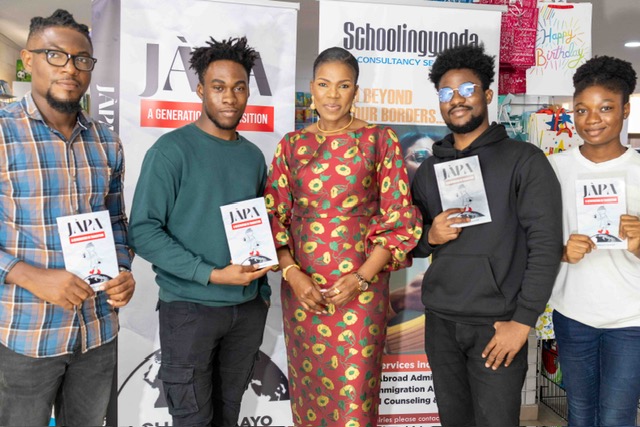
    As part of her contribution to the future of work, Funmi Modupe, author of JAPA and CEO of Schoolingyonda Consultancy recently unveiled a new book – JAPA at Laterna Ventures in Lagos. The educational masterpiece takes a critical look at a generation in transition, driven by the growing interconnectedness of a new world.

    It was a colourful event with guests cut across the society ranging from captains of industry to young undergraduates, entrepreneurs, and members of the international community. The Book JAPA is focused on the physical and emotional transition people make when they travel, also offering valuable insights into the benefits of venturing beyond borders.

    In the words of the Author, Funmi Modupe said, “My book is a must-read for students and their families, as well as anyone interested in the global shift transforming all aspects of life and humanity.”

    She further stressed that the lifestyle of humans post-pandemic, school curriculums and the actual nature of work have changed forever. So there is a daunting need for individuals and organizations to unlearn while rethinking new ways to collaborate and solve problems in the society.   

    Modupe is a dynamic woman who is passionate about young people and education. Also, through her personal experience and deep understanding of the complexities of transition, she was able to deliver a book that is both thought-provoking and inspiring.

    Ademola Adelakun, a young computer science graduate from the University of Lagos, shared his experiences after finishing school in 2021. Despite job hunting for so long with very limited opportunities within the corporate and government institutions, he has resolved to “JAPA” to Canada for greener pastures.     

    Funmi Modupe is the Founder and Chief Executive Officer of Schoolingyonda – an educational consultancy service with the goal to offer students personalised study thereby assisting parents and their wards to acquire opportunities abroad. Interested readers can also order The Book JAPA in different formats on Amazon or website via https://schoolingyonda.com/japa/ and join the conversation on social media to acquire new skills in the workplace. 

  • Feature: Strengthening Nigeria’s Distribution System to Transform the Digital Economy

    Feature: Strengthening Nigeria’s Distribution System to Transform the Digital Economy

    By Elvis Eromosele 

    Recently, I had the task of sending prescription glasses in a case to Benin City. After considering all the available options, it became clear that taking it to a park and paying one thousand naira was the best way to get it delivered, on the same day. It was cost-effective, and timely and ensured that I met my goal. 

    I spoke to a driver, he very reluctantly revealed that he made, on average, N12, 000.00 daily, from, “help me deliver this”. Imagine this: one driver in one park makes an average of N12, 000.00 daily. Multiply this by the number of drivers in that one park, over 50 times the number of interstate transport parks across Lagos and then across the country. We’ll be talking billions of naira monthly boosting the informal sector (we should talk about this soon).

    Now imagine the various types of commodities that are packaged and transported through this process. The potential is immense. The opportunity is boundless. 

    I suspect that the park drivers may have effectively taken the market from formal courier service providers. So, while courier firms are battling with the federal government (through the regulator, NIPOST), the market is whittling away. This is the definition of disruption. 

    At the core of distribution is transportation. As more and more people, especially young people, take their businesses online the need for an effective distribution system grows. Horses for courses. This is essential if goods must get to the hands of the final consumer. This is where the money will be made. 

    The government talks about growing the digital economy, creating jobs and improving the ease of doing business. It must now back up the talk with real-life and real-time support for the distribution and logistics sector. It is a sector that holds tremendous opportunities for socioeconomic transformation. 

    It’s not only individuals that need functional distribution systems. Multinationals, public corporations and in fact, everyone needs to deliver something somewhere at some time. 

    The system that makes this work effectively cannot remain haphazard and disjointed. It cannot depend exclusively on “help me deliver this”. It needs the power of synergy and coordination. It requires structure and organisation. It must be nourished and harnessed. 

    In today’s digital economy, distribution and logistics are crucial to ensuring that goods and services are delivered to customers quickly and efficiently. You will agree with me that the rise of e-commerce has fundamentally changed the way we buy and sell products, and this has led to a greater need for effective distribution and logistics systems.

    At its core, the digital economy is all about speed and convenience. Consumers expect to be able to order products online and have them delivered to their doorstep within a matter of days, or even hours in some cases. This means that businesses must be able to move goods quickly and efficiently through the supply chain, from the point of manufacture to the end customer.

    Distribution and logistics play a key role in making this happen. These systems coordinate the movement of goods and ensure they arrive at their intended destination on time and in good condition. They are also responsible for managing inventory levels, tracking shipments, and handling returns and exchanges.

    One example of the importance of distribution and logistics in the digital economy can be seen in the rise of same-day delivery services. With companies like Amazon and Walmart in America offering same-day delivery in many major cities, there is a growing need for distribution and logistics systems that can deliver products quickly and efficiently. Jiji, Jumia and Konga are pioneering similar initiatives across the African continent. This requires a combination of advanced tracking and routing technology and a network of distribution centres strategically located throughout the country.

    Nigeria is a country with a large population and a growing economy. With a diverse range of industries, from agriculture to manufacturing to technology, there is a need for a robust and efficient distribution network to ensure that goods and services are delivered to customers in a timely and cost-effective manner. Nigeria can strengthen its distribution network through these simple steps:

    Improve Infrastructure: Nigeria’s road, rail, and port infrastructure are in dire need of improvement. Poor roads and largely outdated rail networks make it difficult for goods to be transported quickly and efficiently across the country. The government needs to invest in upgrading and modernizing its infrastructure to improve the movement of goods.

    Encourage Private Investment: The government should encourage private sector investment in logistics and distribution. This can be done through tax incentives, grants, and other forms of financial support to help businesses expand their distribution networks.

    Embrace Technology: Nigeria can also strengthen its distribution network by embracing technology. This includes the use of digital platforms to streamline operations and improve supply chain visibility. By using technology, businesses can track shipments, manage inventory, and optimize delivery routes, leading to the faster and more efficient delivery of goods.

    Develop Regional Distribution Centers: Nigeria has a large landmass, and it can be difficult to transport goods from one part of the country to another. Developing regional distribution centres can help to solve this problem. These centres can serve as hubs for goods coming in and out of different regions, making it easier to transport them across the country.

    Improve Customs Processes: Nigeria’s customs processes can be lengthy and bureaucratic, leading to delays in the movement of goods. Simplifying and streamlining these processes can help to speed up the delivery of goods and reduce the cost of doing business.

    Efforts must also be intensified to improve the nation’s security architecture. Security is important to ensure the safety of individuals involved in this process. 

    Nigeria’s distribution network needs to be strengthened to support the country’s growing economy. Improving infrastructure, encouraging private investment, embracing technology, developing regional distribution centres, and improving customs processes are important elements to help kick-start this. By taking these steps, Nigeria can build a more efficient and effective distribution network that supports economic growth and development. We can then begin to reap the benefits of the digital economy in tangible ways. 

    Elvis Eromosele, a Corporate Communication professional and public affairs analyst lives in Lagos.

  • Banker and Regulator Agree Chat Commerce can Radically Shift Financial Inclusion in Nigeria

    Banker and Regulator Agree Chat Commerce can Radically Shift Financial Inclusion in Nigeria

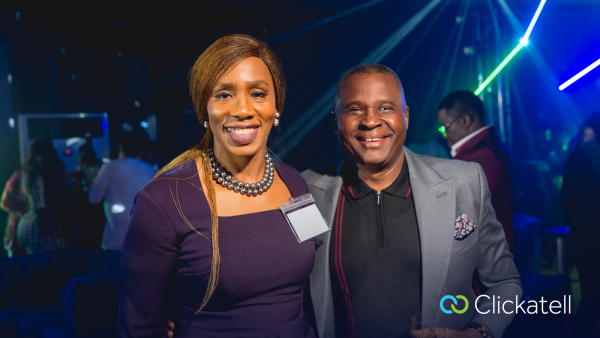
    Clickatell (www.Clickatell.com), the Chat Commerce and business messaging leader, discussed with attendees at Clickatell’s Connect Interact and Transact (CIT) annual event earlier this month how they could drive financial inclusion and reach their revenue goals by adopting Chat Commerce. The event took place at the Radisson Blu, Anchorage in Lagos with industry experts from Clickatell, Ecobank and Central Bank of Nigeria (CBN) sharing insight and tips with an audience of business and technology leaders. 

    Werner Lindemann, Clickatell’s Senior Vice President of Enterprise Sales, Growth Markets, kicked off by pointing out how global brands, like Amazon and Uber, have built their entire business model on convenience commerce – where businesses find ways to deliver services and products to their customers wherever they are and at a time that works for them.

    Lindemann went on to share that the best way to reach customers where they are is on their phone. However, he said apps have a very limited shelf life, saying the average customer regularly uses just five apps on their phone. He advised instead of focusing on building apps, brands should be looking to leverage the power of chat, especially since WhatsApp is the most used (https://bit.ly/3Nab6Q1) social media platform in Nigeria. What’s more, when combined with USSD, companies will be able to reach almost every person in the country. 

    The power of Chat Commerce is especially relevant for the Nigerian banking industry and Lindemann shared that banks can now onboard new clients and conduct Know Your Customer (KYC) standards using chat, meaning banks can serve customers anywhere in the country, in real time.

    Lindemann shared other use cases where Clickatell had radically changed how Southern African businesses engaged with their customers, these included:

    • How a national retailer was able to cut their broadsheet print production and distribution from 5 Dollars to just 3 cents
    • How that retailer now has a 40% to 70% engagement rate on their product specials using WhatsApp, compared to 3% on SMS
    • How a national retailer now uses WhatsApp to enable self-service for their loyalty programme and has eliminated more than 20 000 call centre calls per month to block or replace loyalty cards
    • How a national healthcare chain now allows customers to order and arrange collection of their chronic medication at their nearest outlet, no matter where they are in the country
    • How a Southern African low-cost airline allows travellers to check in and receive their boarding pass on the WhatsApp channel 

    An engaging panel discussion followed the keynote, introduced by Clickatell’s West Africa Managing Director, Samson Isa and facilitated by Uzo Nwani, Commercial Director of Clickatell.

    Opening the discussion, panelists highlighted how their organization had used technology to boost inclusivity. For CBN, this was achieved by its introduction of the eNaira digital currency. For Ecobank, its move to offer a WhatsApp channel allowed them to reach their customers more easily. And for Clickatell, it has been the company’s drive to help banks in Africa improve their reach by moving to the more ubiquitous chat channel.

    “One out of three Nigerians are financially excluded. Therefore the work we have done with Clickatell on the eNaira USSD channel is so exciting. We are also looking to the eNaira to lower the costs of remittances as well as bring down the high costs of cash management. We believe the eNaira will drive inclusive growth and make the Central Bank, as an institution, much more effective in carrying out its mandate,” said Stephen Ambore, Assistant Director, CBN.

    Osahon Akpata, Group Head of Consumer Payments at Ecobank shared the power of mobile with the audience.

    “Across 33 countries, Ecobank Group processed $5.1 billion through our mobile app in 2021 and we built an agency banking network of 110,000 agents, leveraging the ubiquity of mobile devices. While Chat Commerce is still in its infancy for us, we are scaling up the platform for better customer service. We have integrated artificial intelligence into our chatbot, Rafiki, to help solve customer queries quicker and seamlessly. We also have customers using the chat channel for transactions and we plan on expanding its use to product information as well. People are already on these chat platforms, and we aim to serve them with payments where they are,” he said.

    Akpata went on to share that being able to generate QR codes on the WhatsApp channel, make transfers and buy airtime have all been met with great enthusiasm by Ecobank customers, adding that chat will be a key part of the bank’s drive to reach its target of 100 million customers.

    CBN will also be looking to chat to connect with people in Nigeria further in the future.

    “We are looking at chat to help us deliver financial literacy and boost inclusion. When it comes to innovation, chat, including USSD, can help us reach new customers and I am excited about the future opportunities, especially at the base of the pyramid,” said Ambore.

    Lindemann wrapped up the proceedings by saying: “We’ve just kicked off a project with a major bank with around 15 million active customers, and we will be building them a chat banking wallet in just six weeks. In my opinion, chat is allowing us to fast-forward innovation for enterprises. I believe every enterprise has a responsibility to deploy products that have a real impact on their customer and society, and to see this happen in six weeks is testament to the power of chat.”

  • Feature: No Nigerian Presidential Candidate as a Tropical Rainforest Policy

    Feature: No Nigerian Presidential Candidate as a Tropical Rainforest Policy

    by Ayo Akinfe

    When I look at the way the British Tory leadership election is being dominated by economic issues, it is easy to see what is wrong with Nigerian politics. Do any of the Nigerian presidential candidates for instance have a tropical rainforest policy?

    [1] I was just checking through some data on tropical rainforests and discovered there is not one such registered forest in Nigeria despite it accounting for 7.7% of our landmass. This inspite of the fact that the rainforest forms the majority of the environment in certain states like Ogun, Ondo, Ekiti, Akwa Ibom, Imo, Abia, Cross River, Edo Oyo, Ebonyi and Ekiti

    [2] For anyone who thinks this is not important, do you know that the rainforests are arguably the most vital ecosystems on our planet. Home to over half the world’s plant and animal species, the largest rainforests absorb vast amounts of carbon dioxide from the atmosphere, helping maintain the balance of the air we breathe, while simultaneously playing a critical role in curbing global warming

    [3] Tropical rainforests once covered 14% of the earth’s land surface but today, this figure is only 6%. Despite this, about 80% of the world’s documented species can be found in tropical rainforests. Of all tropical rainforests, 57% are found in Latin America with a third in Brazil. Other major tropical rainforests are located in southeast Asia and the Pacific islands (25%) and West Africa (18%)

    [4] Nigeria has about 10,000 square hectares of tropical rain forest. We are losing about 3% of this a year. Lagos State for instance was once all tropical rainforest but alas today, there is barely one tree left standing in the state

    [5] Do you also know that cocoa can only grow in the tropical rainforest as it needs its canopy to thrive? In Australia for instance they tried growing cocoa but it simply did not work

    [6] Checking through the lists, I found several protected rain forests like the Amazon, Congolese, New Guinean, Valdivian, Borneo, Sumatra, etc forests but none in Nigeria. We simply have not ring-fenced our forests or introduced any measures to protect them

    [7] Yam, coffee, cocoa, bananas, mangoes, papaya, macadamia, avocado, and sugarcane all originally came from the tropical rainforest and are still mostly grown on plantations in regions that were formerly primary forest. A responsible people would maintain their forests alongside farming settlements to produce these crops in specially designated areas

    [8] Known as the lungs of the earth, it is the tropical rainforest that allows us to produce oxygen on our planet. A simulation was once performed in which all rainforest in Africa were removed. This simulation showed an increase in atmospheric temperature by 2.5 to 5 degrees Celsius. Just imagine the impact that would have on earth

    [9] Carbon dioxide increases each year as a result of burning fossil fuels and deforestation but the amount it goes up from one year to the next depends on whether tropical forests are absorbing carbon dioxide or releasing it. Basically, the less forest we have, the less oxygen there is on our planet

    [10] Why can’t Nigeria leapfrog the rest of the world here and do something dramatic. Ringfence maybe the rain forest areas of Ondo, Ekiti and Edo states and give it a name like maybe the Oranmiyan Rain Forest and set up a special laboratory there that can produce oxygen. Also, ban logging in this designated zone and then set a cocoa production target of say 5m tonnes. Just imagine the premiums we could charge on producing natural oxygen directly from the tropical rain forest

  • Non-oil Exports Key To Nigeria’s Economic Rejuvenation, Say Stakeholders At Zenith Bank International Trade Seminar

    Non-oil Exports Key To Nigeria’s Economic Rejuvenation, Say Stakeholders At Zenith Bank International Trade Seminar

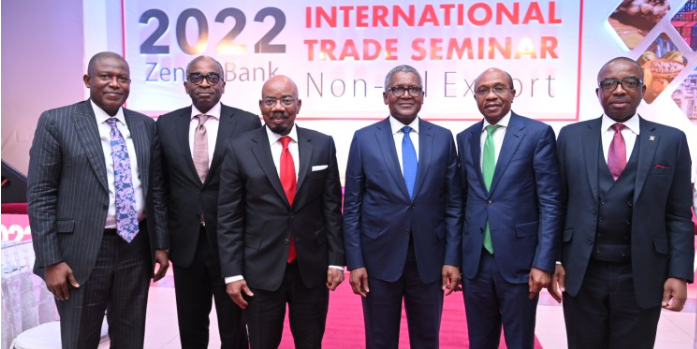
    Stakeholders unanimously called for support of Nigeria’s Non-Oil Export Sector at the 7th Annual Edition of the Zenith Bank International Trade Seminar themed “Unlocking Opportunities in Nigeria’s Non-Oil Export Business”, which was held on Wednesday, July 20, 2022, at the Civic Centre, Victoria Island, Lagos and virtually.

    In his Goodwill Message Presentation, the Founder and Chairman of Zenith Bank Plc, Mr. Jim Ovia, CON, called for a concerted effort towards diversifying Nigeria’s export base through the promotion of non-oil exports. Highlighting the importance of non-oil export to the nation’s economy, Ovia pointed out that Nigeria exported cocoa and several other non-oil products for years before oil was discovered. He cited the example of the 25-storey Cocoa House in Ibadan, which was built with proceeds from cocoa exports. He pointed out that many countries in the world, such as Japan and China been successful because they are doing a great deal of innovation, production and manufacturing of goods and services. According to him, we should also look at promoting the nation’s non-oil export sector through technology to create technological giants like Apple, Tesla, and Google. And we already have technology companies in this mould in Nigeria, such as Flutterwave, which has a valuation of $3 billion, making it more valuable than some banks in Nigeria. Speaking further on the enormous potential in Nigeria’s non-oil sector, Ovia highlighted the phenomenal growth of Nigeria’s emerging financial technology (Fintech) companies such as Flutherwave, OPay, Interswitch, Kuda and Paystack, with market valuations of $3 billion, $2 billion, $1 billion, $500 million, $200 million, respectively. According to him, this underscores the enormous opportunity in the Fintech space. He also noted that the most capitalized companies in the world, such as Apple, Microsoft, Alphabet (Google), Amazon, Tesla, Visa, etc., are not oil companies but are in the technological innovation space.

    In his welcome address, the Group Managing Director/CEO of Zenith Bank, Mr. Ebenezer Onyeagwu, said that the annual Zenith Bank Trade Seminar has served as a veritable platform to deepen the conversation on promoting non-oil export in Nigeria, bringing together non-oil export practitioners and relevant government agencies to interact and explore the opportunities and proffer solutions to the challenges of non-oil export in the country. Speaking on the origin of the Zenith Bank Annual International Trade Seminar, Onyeagwu said that the commodity price slump of 2014-2016 was a watershed moment. According to him, “when crude oil prices plummeted from $114.55 per barrel in June 2014 to $28.76 in January 2016, with an attendant effect on the availability of foreign exchange, it was time to look towards the non-oil export sector for a more sustainable source of foreign exchange that is not susceptible to external shocks and price volatility.

    Highlighting some of the salient outcomes of the past six Zenith Bank Annual International Trade Seminar editions, Onyeagwu noted that previous editions’ outcomes have found expression and influenced policy initiatives. For instance, the extension of the period of repatriation of Non-Oil Export proceeds from 90 days to 180 days and the policy mandating shippers not to carry export without a Nigeria Export Proceeds (NXP) Form Number were recommendations from previous seminars. Also, the need to incentivize exporters to repatriate their export proceeds through the official channels and the recommendation to create export terminals across various export hubs in the country were also from past seminars. Also, previous editions recommended having Export Desks in commercial banks, which has now been instituted. He also stated that Zenith Bank has trained over 100 exporters through its Zero to Hero programmes which provide a platform for grooming and exposing beginners to become strong exporters by providing training on documentation, product sourcing, access to market and financing. He noted that Zenith Bank will continue the advocacy of promoting non-oil export.

    Delivering his goodwill message, the Central Bank of Nigeria Governor, Mr. Godwin Emefiele, CON, commended Zenith Bank and its leadership led by the Founder and Chairman of the Board, Jim Ovia, for its laudable initiative in organizing an annual export seminar to explore opportunities in Nigeria’s non-oil export with a view to increasing the nation’s non-oil export base and ultimately increasing its share as a percentage of total export. In his words: “This is why the theme of this year’s seminar “Unlocking Opportunities in Nigeria’s Non-Oil Export Business” is timely and appropriate. This is because the global economy and structure are changing rapidly before our eyes. The previous world economic order underpinned by globalization and seamless trade possibilities seems to be suffering major disruptions lately. We believe Nigeria has a lot of potentials, and we can harness this for the good of our people and country.” He pointed out that the CBN has undertaken several initiatives to promote the non-oil export sector because of its firm belief that the non-oil export sector holds enormous potential to contribute to employment generation, wealth creation and economic growth of the country.

    In his keynote address, the President & Chief Executive of Dangote Group, Alhaji Aliko Dangote, GCON, said that “Nigeria’s non-oil export is quite low compared to other African top oil producers. This exposes the economy to oil price/production risks. There is much room for growth, and the CBN is helping drive this through the RT200 programme”. According to him, the CBN RT200 FX programme, which aims to achieve $200 billion in foreign exchange earnings from non-oil proceeds over the next 3-5 years, has very laudable objectives, including enhancing foreign exchange inflow, diversifying the source of FX inflow, increasing the level of contribution from non-oil export, and ensuring stability and sustainability of FX flows.

    In his Goodwill Message, His Excellency, Wamkele Mene, Secretary General, African Continental Free Trade Area (AfCFTA) Secretariat, enumerated the progress and achievements of the African Continental Free Trade Area and the efforts to improve intra-Africa trade. Also, in his Goodwill Message, Professor Benedict Oramah, President / Chairman of African Export-Import Bank (Afreximbank), highlighted the efforts of Afreximbank to enhance intra-Africa trade through the implementation of the Pan-African Payment and Settlement System (PAPSS). According to him, the Pan-African Payment and Settlement System will make it easy and seamless for Africans to trade amongst themselves and receive payment for goods and services in their local currencies, eliminating currency conversion challenges.

    Zenith Bank remains committed to promoting the non-oil export sector in Nigeria by identifying emerging opportunities which help stimulate non-oil exports and develop robust financial products and incentives for operators in the sector. The bank launched the Non-Oil Export Seminar in 2017 as an initiative to deepen the discourse on promoting the non-oil export business in Nigeria.

  • valU, MENA’s Leading Buy-Now, Pay-Later (BNPL) Lifestyle-Enabling Fintech Platform, Enters Into an Agreement with Members of Alhokair Family to sell a Minority Stake

    valU, MENA’s Leading Buy-Now, Pay-Later (BNPL) Lifestyle-Enabling Fintech Platform, Enters Into an Agreement with Members of Alhokair Family to sell a Minority Stake

    the transaction puts valU, the largest BNPL provider in Egypt, at a USD 247.4 million valuation

    valU, MENA’s leading Buy-Now, Pay-Later (BNPL) lifestyle-enabling fintech platform, announced today that Fawaz Abdulaziz Alhokair, Salman Abdulaziz Alhokair, and Abdul Majeed Abdulaziz Alhokair (“Alhokair Family”) have entered into an agreement to acquire a 4.99% stake in valU through a capital injection of USD 12.4 million, signifying a valuation of USD 247.4 million for the company.

    Currently subject to relevant regulatory approvals and satisfaction of certain conditions precedent, the transaction marks Alhokair Family’s first investment in a BNPL platform in Egypt, underscoring valU’s strength in the market and marking a key steppingstone for the platform to create strategic regional partnerships.

    The transaction comes on the heels of valU’s entry into the Saudi market last week through FAS Finance, a joint venture (JV) with FAS Labs in which FAS Labs owns 65% while valU owns 35%. The launch of FAS Finance and the strategic partnership bring a lifestyle-enabling solution to Saudi shoppers, with valU offering greater affordability and value for customers, all available through one digital platform.

    “We are thrilled to be further growing our partnership with the Alhokair Family. The transaction puts valU, the largest BNPL provider in Egypt, at a USD 247.4 million valuation, and is a testament to valU’s visible success story, business model, and potential for growth in Egypt and on a regional level,” said Karim Awad, Group CEO of EFG Hermes Holding. “We are proud to have grown a strong brand like valU that, since late 2017, has not only established itself as the leading BNPL platform but has also attracted the interest of the world’s largest retailer, Amazon, one of the most important brands globally, and now one of the region’s most prominent retail players, Alhokair,” concluded Awad.

    valU is a fast-growing, innovative fintech platform in the MENA region that serves more than 574,000 app clients in Egypt, the Arab world’s largest consumer market. In its home country, valU currently boasts over 5,000 points of sale locations catering to hundreds of thousands of customers transacting in home furnishings, electronics, home appliances, fashion, auto spare parts, healthcare, education, and travel, among a wide array of other services. With its entry into the Saudi market, valU will be present across Alhokair’s expansive retail network of more than 1,000 stores as well as online on the VogaCloset and monobrand websites, including 14 in Saudi Arabia. It will also extend to other vendors, retail networks, and merchants to include and cover the entire Saudi market.

    Alhokair Family’s agreement to acquire a stake in valU signals investors’ interest in the NBFI space in Egypt and puts it on the map as a leading innovator and exporter of financial inclusion solutions, at a time when inflationary pressures are on the rise in the country and the rest of the region.

    “We are extremely proud of the fact that Alhokair Family is now a shareholder in valU. Preceded by the announcement of valU’s entry into KSA last week—our first new-market entry since we began operations out of Cairo 5 years ago —the acquisition agreement cements our solid partnership with Alhokair, a retail powerhouse and a perfect partner on our journey to expand across the region,” said Walid Hassouna, CEO of valU. “valU has definitely filled a financing gap in the Egyptian market and supported financial inclusion. The business model that we created strives to have a positive daily impact on hundreds of thousands of consumers, retailers, and service providers across the country,” concluded Hassouna.

    Last month, EFG Hermes Holding and Amazon entered into an option agreement whereby Amazon agreed to acquire USD 10 million in EFG Hermes GDRs with the option to replace that investment into valU at a future date, translating into a stake of 4.255% of the issued share capital of valU.