Tag: Brussels

  • International dialogue on forcibly replaced Ukrainian children, led by Ukraine, Canada and the European Union

    International dialogue on forcibly replaced Ukrainian children, led by Ukraine, Canada and the European Union

    • 63 countries and international organisations gathered in Brussels to discuss the long-term impact of war on children forcibly taken from their homeland.
    • Co-chaired by Ukraine and Canada, the Coalition discussed returning children, rehabilitation and reintegration as well as preventing the militarisation of children.
    • Discussions focused on uniting international efforts to protect children affected by the war, support their recovery, and facilitate safe reunification with their families and communities. 
    • Switzerland and Cyprus joined the Coalition, reflecting broader international engagement on child protection in conflict settings.

    The International Coalition for the Return of Ukrainian Children met in Brussels on Monday, bringing together representatives from 63 countries and international organisations to discuss international approaches to protecting children affected by armed conflict.

    The meeting, co-chaired by Ukraine, Canada and hosted by the European Union (EU), focused on how countries can work together to return forcibly deported children to their families, communities and cultural environments, while also supporting their long-term recovery and reintegration.

    Participants discussed approaches to child protection, rehabilitation, trauma recovery, access to education and the challenges faced by children exposed to militarisation, displacement and conflict-related disruption.

    The Coalition also discussed the importance of international coordination in supporting the safe return of children and ensuring systems are in place to help them recover from trauma of war and deportation and rebuild stable and peaceful lives. 

    Bring Kids Back UA, launched by President Zelenskyy in 2023 provides the national framework for Ukraine’s efforts to return children, support their recovery and reintegration. The International Coalition for the Return of Ukrainian Children serves as a platform for coordinating the diplomatic, humanitarian, legal, and informational efforts to achieve the objectives of Bring Kids Back UA – to ensure justice and safe return for thousands of deported children.

    Recruitment of children into armed activity, exposure to military training, and separating them from family and community can have long-lasting efforts on their wellbeing and identity. The involvement of children in war limits opportunity for a peaceful life and can – and has – cost lives. Coalition members emphasised the importance of rehabilitation programmes that prioritise psychological support, education, family and community reintegration. 

    HE Ms Tokozile Xasa, Ambassador of South African to the EU was in attendance, and the Coalition welcomed Switzerland and Cyprus as full members joining other countries including Argentina, Japan, Italy, the United States, Panama, Ireland and Ukraine, increasing the total membership to 49 members.

    Partners also discussed ongoing diplomatic engagement, support mechanisms for returned children and families, and the importance of sharing best practice on reintegration and recovery. The European Union, the US, Lithuania, the UK, Germany and Canada committed a combined USD$100m to ensure important work in supporting returned children and their families can continue.

    Coalition members agreed to coordinated sanctions, synchronised across members spanning Europe, North America, South America, Asia, and Oceania.

    Ukraine has officially confirmed over 20,000 cases of deportation and forced transfer of Ukrainian children to Russia. The Russian Federation itself reported it had transferred 744,000 Ukrainian children from the territories it occupied.

    The safe return of Ukrainian children is an important step towards bringing peace to Ukraine, and broader European security. Only once children are safe in their homeland, can peace be meaningfully achieved. 

    Minister Andrii Sybiha stressed that international efforts are invaluable:

    “We speak not only about returning children — we speak about a triple return. Return every child, return Ukraine to every child, and return childhood to these children. Statements are not enough. Words of empathy are not enough. Actions, both political and legal, are needed to ensure accountability and bring our kids back home. And of course, the best thing we can bring to our children is peace.”

    The meeting followed a joint non-governmental organisations statement issued in late April in Ukraine, which set out 12 recommendations, including strengthening and expanding the use of legal mechanisms to protect affected children and continued political and economic pressure to ensure the immediate, safe and unconditional return of all Ukrainian children. 

    The Coalition aims to combine expertise and resources to raise international awareness and secure the children’s safe return. 

    The expansion of the Coalition’s membership, alongside significant new financial commitments, reflects a strengthened international effort to support Ukraine’s work to ensure every unlawfully taken child is accounted for, returned, and given the support needed to recover. 
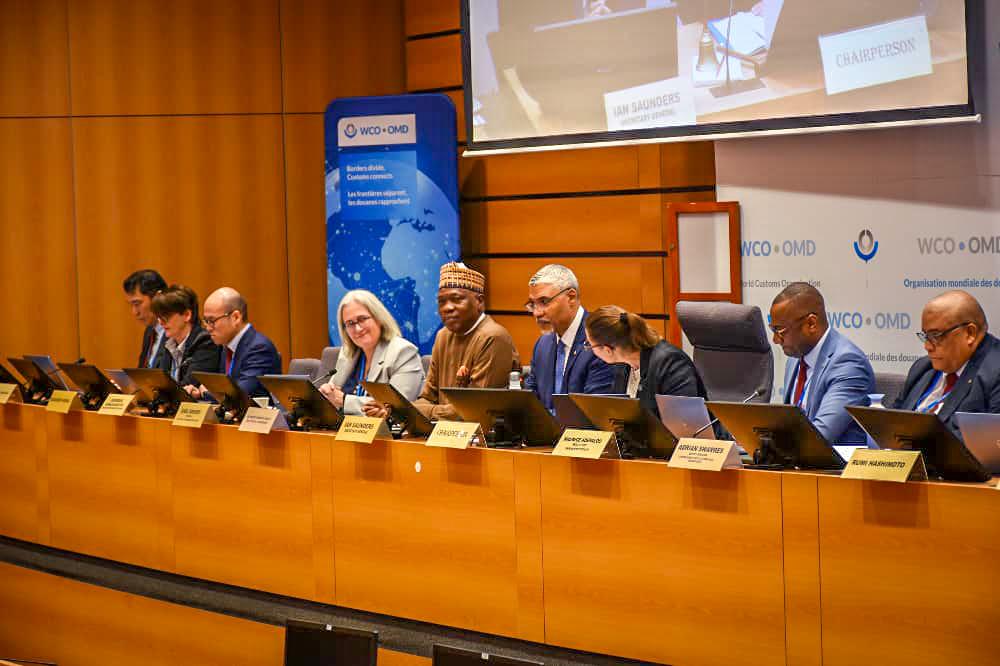
  • CGC Adeniyi Makes History at Global Customs Forum, Leads WCO Enforcement Dialogue

    CGC Adeniyi Makes History at Global Customs Forum, Leads WCO Enforcement Dialogue

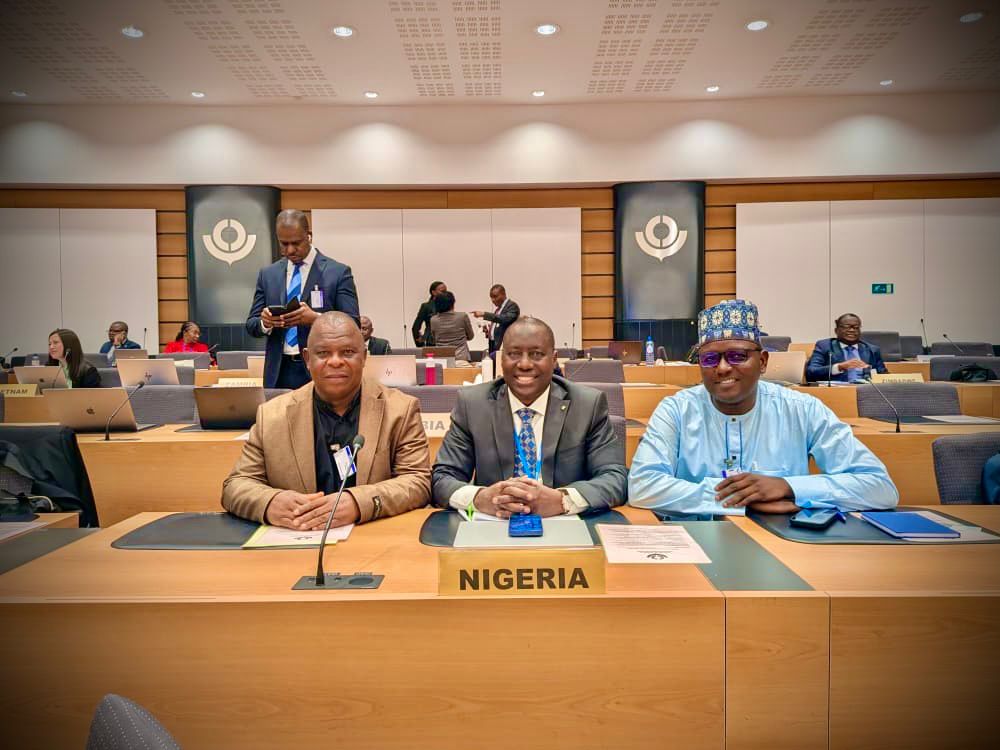
    The Comptroller-General of Customs and Chairperson of the Council of the World Customs Organisation (WCO), Adewale Adeniyi, made history on Monday, 23 March 2026, as he delivered the keynote address at the opening of the 46th Session of the WCO Enforcement Committee held at the organisation’s headquarters in Brussels, Belgium.

    The milestone event marked the first time in the Committee’s 43-year history that its opening session was jointly addressed by both the WCO Secretary-General, Ian Saunders, and the Council Chairperson. This unprecedented development not only underscored the growing strategic relevance of the Enforcement Committee but also positioned the Nigeria Customs Service (NCS) at the centre of a defining moment in global Customs cooperation.

    The session further highlighted a major shift in the Committee’s operational outlook, transitioning from a predominantly enforcement-focused platform to a policy-driven body addressing a wider spectrum of contemporary challenges. These include detection technologies, intelligence sharing, supply chain integrity, and trade-based money laundering, all within a more structured and forward-looking framework. The ongoing review of the Committee’s Terms of Reference, last updated in 2009, reflects efforts to align its governance with the realities of an increasingly complex global trade environment.

    In his keynote address, the Comptroller-General commended Customs administrations worldwide for their sustained efforts to combat transnational organised crime. He emphasised the evolving nature of threats within global supply chains and the urgent need for coordinated, intelligence-led enforcement approaches. “Customs enforcement today is no longer about isolated seizures, it is about protecting the integrity of global trade,” he stated.

    As part of its contribution to the session, the NCS is expected to present field-level perspectives on fragile border management, drawing from its operational experience as a frontline administration within one of Africa’s most demanding border environments. These insights are expected to enrich ongoing global discourse and strengthen policy considerations within the enforcement community.

    The Comptroller-General concluded his address with a call for deeper collaboration among Customs administrations, noting that “when Customs administrations work together, enforcement becomes stronger, trade becomes safer, and the global economy becomes more resilient.” On the margins of the session, delegates witnessed a live demonstration of drone technology by the Netherlands Customs team, illustrating the growing role of unmanned systems in modern border surveillance.

  • Nigeria Customs earns Global Commendations

    Nigeria Customs earns Global Commendations

    In furtherance of its commitment to strengthening institutional integrity and aligning with global best practices in customs administration, the Nigeria Customs Service (NCS) has deepened its engagement with the World Customs Organisation (WCO) Anti-Corruption and Integrity Promotion (A-CIP) Programmme.

    This followed a high-level meeting held at the WCO Headquarters in Brussels, Belgium, on 23 March 2026, during a working visit by the Comptroller-General of Customs, Bashir Adewale Adeniyi, MFR, who also serves as the Chairperson of the WCO Council.

    The engagement provided an opportunity for the A-CIP Team to brief the Comptroller-General on the progress of its ongoing collaboration with the NCS. 

    Discussions centred on integrity capacity-building initiatives, the development of integrity-focused standard operating procedures, and the planned conduct of an integrity risk assessment exercise in 2026. The team also outlined its strategic priorities under Phase II of the Programme (2026–2030), which places emphasis on embedding integrity safeguards within automated customs systems, trade facilitation frameworks, and revenue administration processes.

    Furthermore, the A-CIP team commended the NCS for its active participation in the WCO integrity survey and for approving the release of the survey outcomes, a step that reflects a strong institutional commitment to transparency and accountability. The positive outcomes of the survey underscore the impact of ongoing reforms within the Service, including structured valuation review mechanisms, strengthened post-clearance audit processes, and the implementation of the Voluntary Disclosure Framework under the Nigeria Customs Service Act 2023.

    In his remarks, the Comptroller-General expressed appreciation to the A-CIP team for the quality and relevance of its engagement with the Service, reiterating the NCS’s resolve to sustain and deepen the partnership. Both parties acknowledged that institutional integrity remains a critical pillar for building public trust and enhancing the credibility of customs administrations, particularly in an increasingly complex global trade environment.

    Building on the outcomes of the meeting, both sides agreed on a set of forward-looking actions to consolidate progress under the A-CIP Programme. These include publishing the WCO integrity survey results to demonstrate transparency, establishing and training a dedicated Implementation Working Group, and systematically integrating survey recommendations into NCS operational and business processes. 

    In a separate development, the Comptroller-General also held a strategic meeting with the WCO Secretary-General, Ian Saunders and relevant secretariat staff, during which both sides exchanged updates on the work of the Policy Commission and Council.

  • Nigeria Customs Advocates Impact-Driven Reform Communication at WCO Capacity Building Session

    Nigeria Customs Advocates Impact-Driven Reform Communication at WCO Capacity Building Session

    The Nigeria Customs Service (NCS) has showcased its impact-focused reform communication model at the 17th Session of the Capacity Building Committee of the World Customs Organisation (WCO) held at its Headquarters in Brussels from 25 to 27 February 2026.

    Speaking at the session, the National Public Relations Officer of the Service, Deputy Comptroller of Customs Abdullahi Maiwada, delivered a presentation titled “Communicating the Results of Capacity-Building Initiatives More Effectively: Nigeria Customs Service Experience and Lessons Learned.”

    In his address to delegates from member administrations, Maiwada explained that the NCS, under the leadership of the Comptroller General of Customs, Adewale Adeniyi MFR, who doubles as the Chairperson of the WCO Council, has deliberately transitioned from routine activity reporting to evidence-based storytelling that clearly demonstrates reform outcomes and measurable impact.

    “The Service’s reform communication framework is structured around three core pillars: institutional capacity building, human resource development, and stakeholder capacity engagement, ensuring that reforms are not only implemented but clearly understood and trusted,” Maiwada noted.

    Using the Time Release Study (TRS) as a case study, he highlighted how the Service adopted transparent data presentation tools, including infographics, to demonstrate that a significant proportion of cargo clearance delays were attributable to systemic idle time rather than inspection procedures.

    According to him, “This approach shifted the narrative from defensive explanations to performance benchmarking, strengthening shared accountability across the trade ecosystem.”

    On the Advance Ruling programme, Maiwada disclosed that 83 Advance Rulings were issued in 2025, while registered accounts grew from 60 in December 2024 to 173 in December 2025, reflecting a 188.3 percent increase in stakeholder participation.

    He further stated that the initiative accounted for 2.9 percent of total revenue from goods valued at ₦240.89 billion in 2025, reinforcing the role of structured communication in promoting predictability and voluntary compliance.

    Highlighting progress under the Authorised Economic Operator (AEO) Programme, he revealed that about 120 Companies have received full AEO certification. Additionally, 3,270 officers were trained nationwide as AEO Champions to sustain implementation and deepen stakeholder engagement.

    He referenced the deployment of the indigenous Unified Customs Management System, called B’Odogwu, as a milestone in digital transformation, supported by continuous sensitisation and user engagement.

    Furthermore, he highlighted the Customs Integrity Perception Survey as a data-driven tool for strengthening accountability and public trust, noting that integrity management within the Service is now measurable and continuously assessed.

    Maiwada further encouraged WCO member administrations to integrate communication units at the design stage of reform initiatives, humanise institutional processes, sustain engagement beyond single events, and strengthen peer learning across Customs administrations.

    At the end of the session, Nigeria nominated LI Yan of China Customs for the position of Chair of the 18th Session of the WCO Capacity Building Committee and was unanimously supported by all delegates. As China’s Customs Attaché to Brussels since 2020, she has effectively managed both multilateral and bilateral initiatives within the WCO and with key partners, consistently fostering collaboration and innovation. Her four terms as Vice Chair and election as Chair at the 16th Session and the recent reelection at the just concluded 17th Session of the WCO Capacity Building Committee reflect her dedication and the Committee’s trust in her abilities.

  • World Customs Organisation Recognizes SIFAX Group

    World Customs Organisation Recognizes SIFAX Group

    The World Customs Organisation (WCO) has commended SIFAX Group for its strategic importance and the excellent service that has become the hallmark of the business conglomerate.

    This recognition was given during the presentation of a “Certificate of Merit” to the company by WCO during this year’s International Customs Day celebration in Abuja, Nigeria, with the theme “Customs Delivering on its Commitment to Efficiency, Security, and Prosperity.”

    The World Customs Organization (WCO) is an intergovernmental organization headquartered in Brussels, Belgium. WCO works on customs-related matters including the development of international conventions, instruments, and tools on topics such as commodity classification, valuation, rules of origin, collection of customs revenue, supply chain, security, and international trade facilitation, among others.

    SIFAX Group is one of the few organisations recognized from Nigeria by WCO at the event.

    The award was presented by the Chief of Defence of Staff, General Christopher Musa.

    According to Ian Saunders, WCO Secretary General, the honour was bestowed on the company “for rendering exceptional service to the international Customs community.”

    While responding to this recognition, Dr. Taiwo Afolabi, Chairman, SIFAX Group lauded both WCO and the Nigeria Customs Service for identifying and honouring the critical role the company has played in facilitating trade globally in its over three decades of operations.

    He said: “SIFAX Group has received different awards from stakeholders and governments all around the world, but this honour is special because of the critical role WCO plays in supporting customs administrations globally to facilitate trade and deliver efficient services.

    “SIFAX Group has over the years developed a culture of excellent service, stakeholder management, relationship building and community impact for the overall good of the business ecosystem. We are glad that our impact is felt and rewarded not only in Nigeria but globally. We want to thank WCO for this honour and promise this will spur us to up our game in meeting and exceeding expectations in quality service delivery and societal impact.”

    Afolabi also lauded the Comptroller General, Nigeria Customs Service, Mr Wale Adeniyi, for his exceptional leadership that has resulted in unprecedented achievements by the Service since he assumed office.

  • European Council celebrates new president António Costa: “No to concepts like global North and South”

    European Council celebrates new president António Costa: “No to concepts like global North and South”

    …US sends congratulatory message

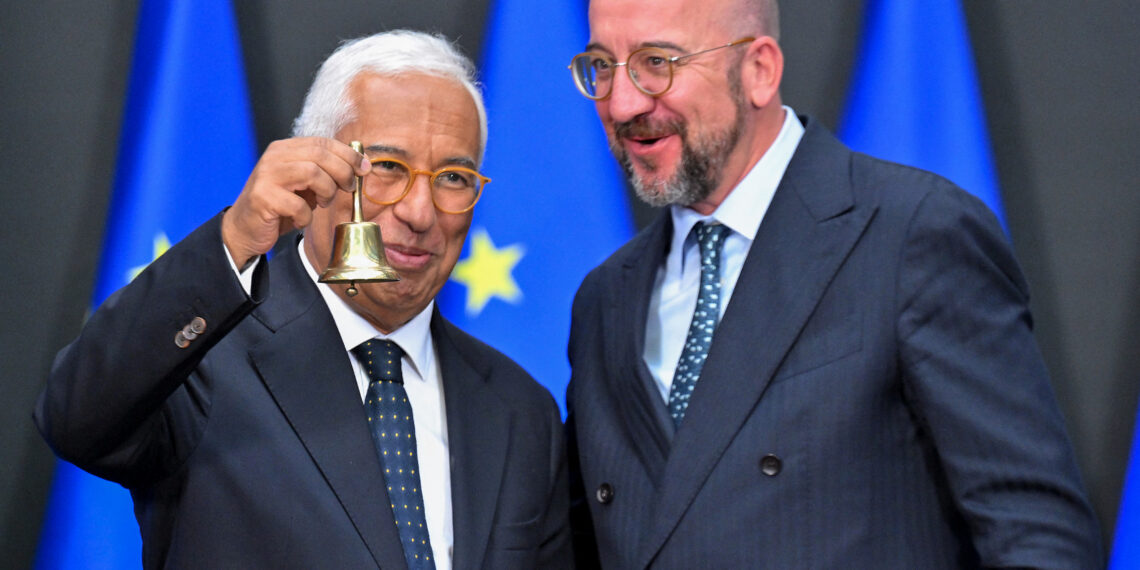
    In Brussels, the Bell Ceremony marking the handover between Charles Michel and the former Portuguese prime minister. In sign of continuity on support for Ukraine: “Peace does not mean capitulation and should not reward the aggressor”

     A new chapter opens at the helm of the European Council. Today (Nov. 29) saw the official handover between the outgoing president, Charles Michel, and António Costa, the former Portuguese prime minister chosen from the member states to succeed the Belgian. The 27 were addressed by the new leader, saying that “we must not ignore our differences of opinion” because they are “the strength of the Union.” But without forgetting that “only together can we ensure peace, stability, and prosperity for our continent.”

    The President of the European Commission, Ursula von der Leyen and the Vice President of the European Parliament, Pina Picierno, were also present at the symbolic bell ceremony, the “sceptre” used by the President of the European Council to open and close summits with EU heads of state and government. In passing the baton to his Socialist colleague, Michel vindicated what has been achieved over the past five years: ambition on climate goals, the pandemic crisis, and the resolute response to the Russian invasion of Ukraine. “The European Council,” said the Belgian liberal, “is and must be the guardian of European unity. When we are united, we are very strong and can achieve great things for the good of people.”

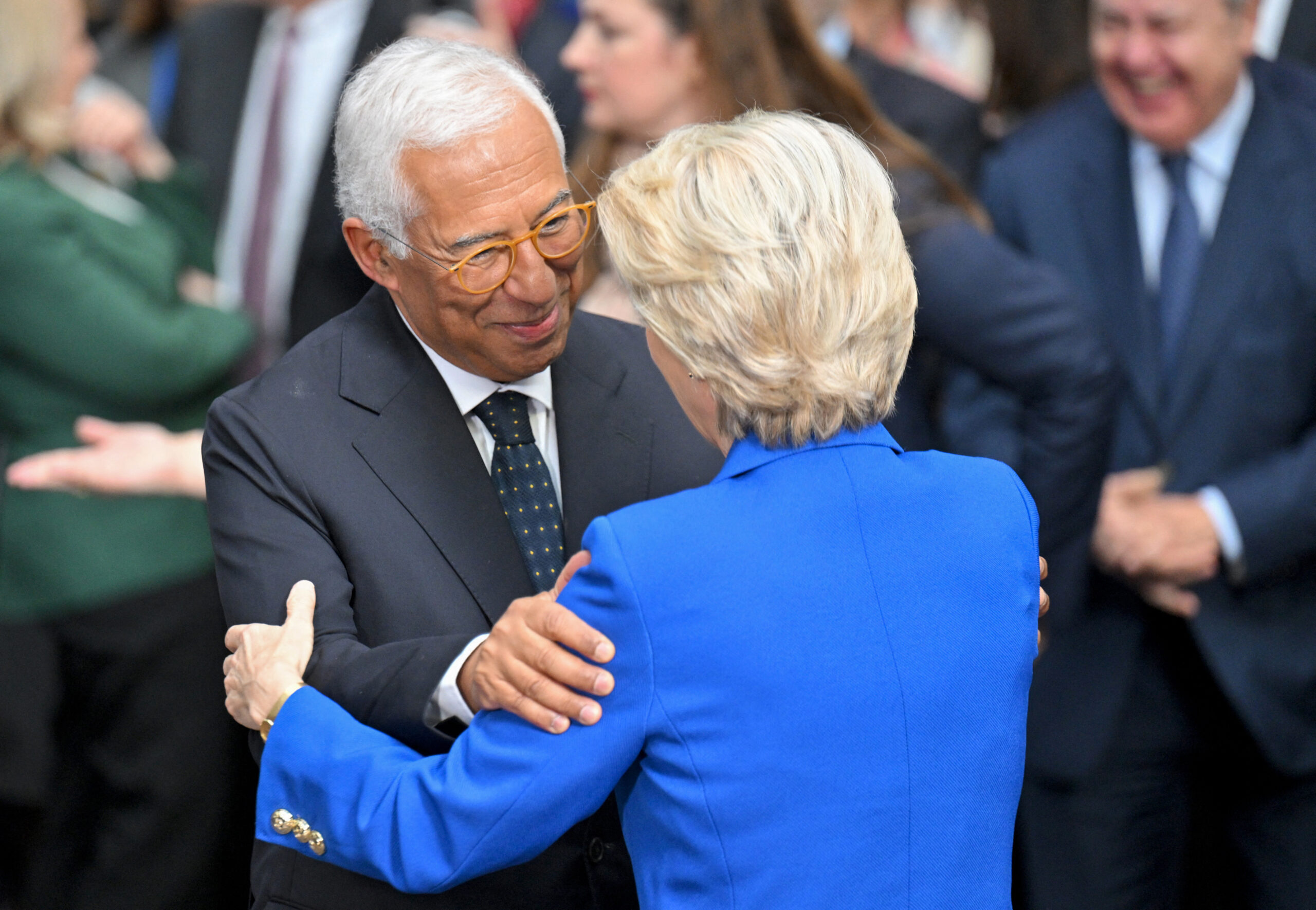
    Antonio Costa and Ursula von der Leyen at the Bell Ceremony for the handover of the European Council leadership, 29/11(2024. (Photo by Nicolas TUCAT / AFP)

    Costa, from former mayor of Lisbon and Lusitanian prime minister to president of the European Council, said, “There is no contradiction between these three levels.” Because,” the Socialist leader summarized, “Lisbon is my city. Portugal is my country, and Europe is our common home.” A home whose foundation must be “European values, peace and prosperity.”

    In continuity with his predecessor, Costa promises not to yield a step on support for Kyiv: “Peace does not mean graveyard peace, it does not mean capitulation, and it does not have to reward the aggressor,” the newly appointed president made clear, but “it must be durable and respect international law.” A warning to those he crosses, if only for a month, to the rotating presidency of the Council of the European Union: Viktor Orbán, the most outspoken advocate of the need for an immediate ceasefire in Ukraine on Putin’s terms. But also to U.S. President-elect Donald Trump: the relationship with the White House will be one of the new challenges that Costa will have to show he can handle in the coming years.

    Peace must also be pursued and achieved through enlargement, which Costa called a “tool for peace and a geopolitical imperative.” Brussels and the candidate countries must “work harder and faster”. Without “artificial timelines,” but also without “undue obstacles.” Peace must finally be pursued in a multipolar world of seven continents and 193 countries to be “engaged by weaving together a global network,” Costa said. To do this, rich Europe must abandon “concepts such as Global South or Global North,” the European Council president warned again. EU external action must be guided by support for “global causes, such as fighting poverty, climate change, and safeguarding the health of our oceans.”

    Costa’s first engagement will be as early as Monday, December 2, when the leader will meet von der Leyen and the President of the European Parliament, Roberta Metsola. Standing in for her today was Dem Pina Picierno, who, wishing the new president well, stressed that “collaboration between the different institutions that make up the European Union will be fundamental so that it becomes increasingly strong and competitive.”

    The US sends Congratulatory message

    The United States congratulates European Council President, António Costa, European Commission President, Ursula von der Leyen, High Representative Kaja Kallas, and the new College of Commissioners as they assume office.

    The United States and Europe are steadfast partners who share democratic values and enjoy strong people-to-people connections. We look forward to working with the new Commission and Council leadership, the European Parliament and its President, Roberta Metsola, and the member states of the European Union. When the United States and European Union work together, we foster global security, prosperity, and democratic values that benefit the world.

    Who is Antonio Costa

    Socialist, 62 years old, a great passion for Benfica and an even greater one for politics. Member of Parliament, MEP, mayor, minister and prime minister: Antonio Costa is a longtime politician who, in his various capacities, has navigated the European Union far and wide. His career has made him an assiduous visitor to the EU Council in its various formats. Minister of Justice (1999-2002), Minister of Interior (2005-2007), and then prime minister (2014-2024). A stint in the Europarliament (2004-2005), of which he was vice-president. A convinced supporter of European unity, he witnessed the great enlargement of 2004.

    He was not in government; he was mayor of Lisbon when his country asked for a bailout program from the EFSF rescue fund (2011) when the euro crisis reached the foothills of the Iberian Peninsula. But then, as head of government, he was called upon to handle the not-so-easy management of the COVID-19 pandemic crisis. During the summer of 2017, Costa relied heavily on the EU and its civil protection service to manage the fire emergency, which, in effect, helped to give a concrete demonstration of what the European Union means. He resigned at the end of 2023 after allegations of corruption hit some of his ministers and even himself (but apparently, it was a case of homonymy). His experience leads him to enjoy the political esteem of colleagues and opponents alike.

  • Feature: Buhari’s Expected Report from the African Union- European Union Summit

    Feature: Buhari’s Expected Report from the African Union- European Union Summit

    by Ayo Akinfe

    President Buhari should return to Nigeria from this AU-EU Summit in Brussels with a signed agreement that looks like this-

    [1] Nigeria is willing to offer European Union (EU) member states observer status at the Economic Community of West African States (ECOWAS). This is to facilitate massive investment in West Africa with an annual minimum target of $500bn

    [2] Nigeria is offering free land and five-year tax holidays to European automobile manufacturers like Citroen, Peugeot, Fiat, Volkswagen, Mercedes, BMW, Volvo. We want each of them to open assembly and manufacturing plants in Nigeria employing at least 5,000 local people each.

    [3] Any company from an EU nation that invests in a manufacturing facility in Nigeria employing at least 1,000 people will get a five-year tax holiday. In return, any state in Northern Nigeria where these investors build a manufacturing facility employing at least a thousand local people will be compelled by law to rescind its Sharia laws to accommodate their foreign workers.

    [4] Shipping industries from across the EU are welcome to open at least one shipyard in the Niger Delta to manufacture vessels for global distribution. Nigeria will offer them a 99-year lease to do this

    [5] On an annual basis, each EU nation will take in 50,000 Nigerian graduates to train them up to international standards in manufacturing, management, and commerce

    [6] Power and steel companies will be given unprecedented sweeteners when they invest in Nigeria. If they invest over $10m and employ in excess of 1,000 Nigerians, they will be offered five-year tax holidays, 99-year land leases, diplomatic status for their staff and the right to acquire Nigerian citizenship.

    [7] Pharmaceutical giants from EU member states must combine forces and manufacture a COVID-19 vaccine in Nigeria. Their Nigerian plant must manufacture up to 300m doses by the end of 2021

    [8] Agricultural giants are welcome to come and invest heavily in cattle ranches, food processing plants, storage facilities and refrigeration in Nigeria. They will be offered 100-year land leases and five year tax holidays

    [9] Most EU countries have a national airline. We want them to come and take out a 25% stake in Nigeria’s planned national carrier. Any airline that comes will become a joint partner in the venture, second only to Air Peace, taking over all the assets of Arik Air

    [10] Steel companies are desperately needed in Nigeria like yesterday. Steel giants from across the EU are to purchase the Ajaokuta, Aladja and Oshogbo steel mills with a mandate to produce 20m tonnes by 2025.

    Ayo is a London-based journalist who has worked as a magazine and newspaper editor for the last 31 years. He was the founding editor of Nigerian Watch, the UK-based paper for the Nigerian community in the UK.  

    He is the current president of Ondo Union UK, the chair of Uncelebrated Nigerian Awards UK and was the chairman of the Nigerian Centenary Awards UK organising committee. He was recently appointed as the Chairman of the Central Association of Nigerians in the UK

    He is also the author of two books on Nigeria. Fuelling the Delta Fires is an expose which reveals the depth of the challenges in the Niger Delta, while Black Ladder is a narrative about the life of a Nigerian immigrant in the UK. In addition, Ayo is a columnist for several publishing houses in both Nigeria and the UK.

    Ayo has a history degree from the University of Ibadan and I did my post-graduate studies in journalism at the University of Westminster.