Tag: China

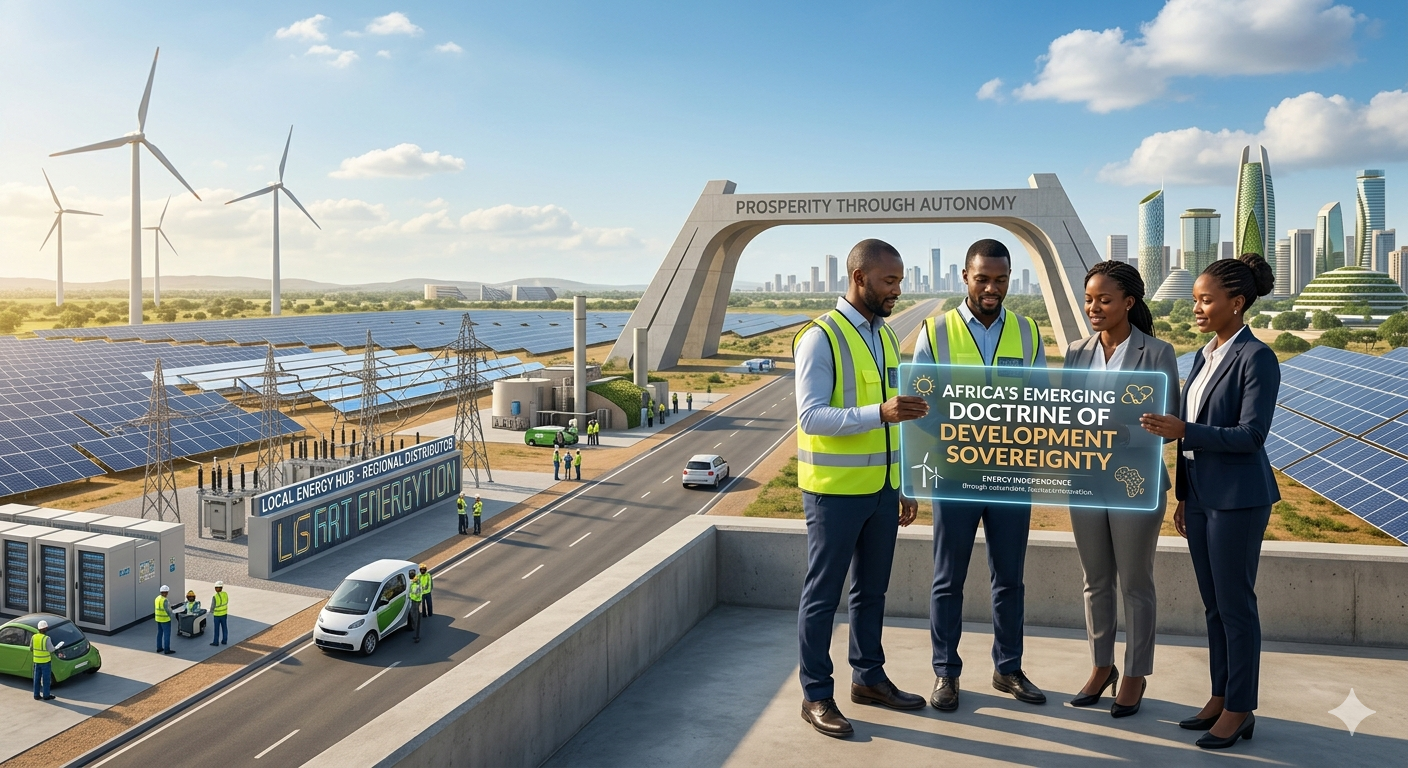
  • Feature- Africaโ€™s Emerging Doctrine of Development Sovereignty

    Feature- Africaโ€™s Emerging Doctrine of Development Sovereignty

    By Sola Adebawo

    The most important outcome of the Africa Forward 2026 Summit in Nairobi may not be the declaration itself, but the deeper strategic philosophy quietly emerging beneath it.

    Across energy, industrial policy, digital infrastructure, agriculture, climate negotiations, debt restructuring, and critical minerals, a new continental posture appears to be taking shape. It is not yet formal doctrine in the institutional sense. No treaty has codified it. No single African government articulates it in identical language. Yet, while implementation remains uneven across the continent, African states increasingly appear to be converging around a common strategic instinct: the belief that Africa must regain greater sovereign control over the developmental pathways that shape its economic future.

    This is what may increasingly be described as Africaโ€™s emerging doctrine of development sovereignty.

    At its core, development sovereignty is not isolationism, economic nationalism, or rejection of global cooperation. Rather, it reflects a growing insistence that Africaโ€™s participation in the global economy must occur on terms more consistent with long-term domestic transformation, industrial capability, strategic autonomy, and internal value creation.

    For decades, African economies operated within a global system that largely positioned the continent as a supplier of raw materials and a consumer of finished products. According to the United Nations Conference on Trade and Development, many African economies remain heavily commodity-dependent, with raw materials accounting for the overwhelming majority of merchandise exports across several states.

    This structure created persistent vulnerabilities. Commodity price shocks repeatedly destabilized fiscal systems. Manufacturing capacity remained limited. Industrial employment lagged demographic growth. Foreign exchange earnings fluctuated sharply. And despite decades of resource extraction, infrastructure and energy deficits remained severe across large portions of the continent.

    The problem was never merely resource scarcity. Africa possesses roughly 30 per cent of the worldโ€™s mineral reserves, significant hydrocarbon deposits, vast agricultural potential, and one of the worldโ€™s youngest populations. The deeper issue was structural positioning within global production systems.

    What now appears to be changing is Africaโ€™s willingness to challenge that positioning.

    The Nairobi summit reflects this transition. The language emerging from the declaration reportedly emphasizes industrialization, local value addition, regional manufacturing, pharmaceutical production, digital sovereignty, climate financing reform, and strategic infrastructure development. These are not isolated policy themes. Together, they outline a broader developmental philosophy.

    Energy policy provides perhaps the clearest example.

    For years, African governments faced growing international pressure to rapidly align with decarbonization frameworks largely designed around advanced industrial economies. Yet Africa accounts for less than 4 percent of historic global carbon emissions while simultaneously hosting nearly 600 million people without access to electricity, according to the International Energy Agency.

    Increasingly, African policymakers are arguing that energy transition cannot become a mechanism that restricts industrialization itself.

    This explains the continentโ€™s evolving emphasis on what many leaders now describe as a โ€œjust and development-centered transition.โ€ In practice, this means African states intend to pursue renewables while also preserving policy space for natural gas development, petrochemicals, refining capacity, fertilizer production, LNG infrastructure, regional electricity markets, and industrial energy expansion.

    The underlying argument is strategic rather than ideological: no civilization has industrialized at scale without reliable and affordable energy density.

    The same logic is now extending into critical minerals.

    Africa holds major reserves of cobalt, lithium, manganese, graphite, rare earths, and copper, all central to global energy transition technologies. Yet many African governments increasingly resist models where raw minerals are exported while processing, battery manufacturing, advanced refining, and technology capture occur elsewhere.

    Countries such as Zimbabwe, Namibia, and the Democratic Republic of Congo have all introduced various beneficiation or export-control measures in recent years aimed at retaining greater domestic value creation.

    The same strategic repositioning is visible in digital infrastructure and artificial intelligence.

    Increasing concerns about data extraction, foreign platform dominance, cloud dependency, and algorithmic asymmetry are driving conversations around African data centres, sovereign cloud systems, local AI models, digital taxation frameworks, and indigenous language datasets. The Nairobi discussions reportedly touched extensively on digital sovereignty and African participation in the future AI economy.

    Even sovereign finance is increasingly being reframed through this lens.

    Africaโ€™s debt burden has become not merely a fiscal issue but a developmental constraint. The African Development Bank estimates Africa faces an annual infrastructure financing gap exceeding $100 billion. Meanwhile, borrowing costs for many African economies remain disproportionately high relative to actual default risk.

    As a result, calls for reform of the international financial architecture are no longer framed purely as appeals for fairness. They are increasingly framed as strategic prerequisites for developmental autonomy itself.

    Yet development sovereignty cannot succeed through rhetoric alone.

    Strategic autonomy without institutional competence risks reproducing the very vulnerabilities it seeks to escape. Industrial policy requires disciplined execution. Resource sovereignty requires transparent governance. And developmental ambition requires states capable of sustaining policy continuity beyond electoral cycles and political transitions.

    This broader doctrinal shift also helps explain the changing tone of Africaโ€™s geopolitical engagements.

    The old post-Cold War framework, in which African states often aligned primarily around aid dependency and donor conditionality, is gradually giving way to a more transactional and multipolar diplomacy. African governments now simultaneously engage the European Union, China, United States, Turkey, India, Gulf states, and emerging middle powers while seeking to maximize strategic leverage across competing interests.

    Within this context, the Africa Forward 2026 Summit may ultimately represent something larger than an Africa-France diplomatic reset. It may represent part of Africaโ€™s gradual transition from developmental dependence toward developmental sovereignty.

    Whether the continent can successfully execute this transition remains uncertain. Institutional weakness, governance deficits, corruption, infrastructure limitations, policy inconsistency, debt vulnerability, and political instability remain serious structural obstacles.

    Yet the strategic direction itself is becoming increasingly visible.

    The central African question is no longer whether the continent will participate in the global economy, but whether it will finally participate on terms aligned with its own long-term developmental interests.

    โ€”โ€”โ€”โ€”โ€”โ€”โ€”โ€”โ€”โ€”โ€”โ€”โ€”โ€”โ€”โ€”โ€”โ€”โ€”โ€”โ€”โ€”

    Sola Adebawo is an energy executive, institutional strategy and public affairs leader with deep experience at the intersection of energy, governance, policy, and strategic communication. His writing explores reform, political economy, leadership, culture, and the relationship between institutions and public life. He is an author, scholar, and ordained minister.

  • Zenith Bank launches Cรดte Dโ€™Ivoire subsidiary today, Strengthens Francophone West Africa Presence

    Zenith Bank launches Cรดte Dโ€™Ivoire subsidiary today, Strengthens Francophone West Africa Presence

    Zenith Bank Plc has announced the opening of its Cรดte dโ€™Ivoire subsidiary, marking a pivotal achievement in the Groupโ€™s Pan-African expansion strategy.

    The official opening ceremony, scheduled to hold on Wednesday, April 29, 2026, is expected to attract senior government officials and regulators from Nigeria and Cรดte dโ€™Ivoire, continental business leaders, and members of the diplomatic community, highlighting the strategic economic ties and investment opportunities between the two markets.

    The new subsidiary, licensed in December 2025 by the Ministry of Finance and Budget, Republic of Cรดte dโ€™Ivoire, and regulated by the UMOA Banking Commission, will commence operations from its headquarters at SCI Wall Street, Avenue Noguรจs, Plateau, Abidjan.

    The launch represents a strategic move to deepen the Bankโ€™s presence in Francophone West Africa and strengthen financial intermediation within the West African Economic and Monetary Union (WAEMU). Positioned as a gateway for cross-border trade and investment, Zenith Bank Cรดte dโ€™Ivoire will focus on corporate banking, trade finance, local and offshore banking services, and structured financial solutions tailored to businesses operating across Africa and internationally.

    Commenting on the launch, the Group Managing Director/CEO, Dame Dr. Adaora Umeoji, OON, said: โ€œFrom the very beginning, our Founder and Chairman, Jim Ovia CFR, set out to build a truly global brand with a strong presence across Africa and key international markets. The launch of Zenith Bank Cรดte dโ€™Ivoire is a bold step in realising that vision; opening a strategic corridor into Francophone West Africa and reinforcing our commitment to facilitating trade, investment, and enterprise growth across the continent. As we continue to expand thoughtfully and strategically, we remain focused on delivering world-class banking solutions that connect African businesses to global opportunities.โ€

    The new subsidiary will be headed by MD/CEO, Mr. Cรฉdric Tano, a seasoned banking executive with over two decades of experience. Speaking ahead of the official opening, he said โ€œWe are proud to establish Zenith Bankโ€™s presence in Cรดte dโ€™Ivoire at a time of strong economic growth in the country and increasing regional integration. Our focus is to showcase the Zenith brand as a customer-centric institution that combines global best practices with deep local insight. We are well positioned to support businesses with innovative financing solutions, facilitate cross-border trade, and contribute meaningfully to the growth of the Ivorian economy and the wider WAEMU region.โ€

    The Cรดte dโ€™Ivoire launch forms part of Zenith Bankโ€™s broader continental growth strategy. In addition to the Anglophone countries where it currently operates, and in line with the expansion into the Francophone market, the Bank has commenced its entry process into the CEMAC (Central African Economic and Monetary Community) region, with Cameroon as the focal point.

    With a footprint already spanning Nigeria, Ghana, Sierra Leone, The Gambia, the United Kingdom, France, the UAE, and China, Zenith Bank continues to bridge African markets with global opportunities, enabling seamless trade and financial connectivity across the continent and beyond.

    Founded in 1990, Zenith Bank has grown into one of Africaโ€™s most respected banking institutions, boasting a robust capital base and a consistent track record of strong financial performance. For 16 consecutive years, the Bank has held the record of highest Tier-1 capital in the Nigerian banking industry. Built on the foundation of People, Technology, and Service, Zenith Bank continues to deliver innovative financial solutions while maintaining a disciplined approach to growth and risk management. Its performance has earned it numerous local and international recognitions and endorsements.

  • Affordable Housing: FG Partners China to Unlock Innovative and Scalable Solutions

    Affordable Housing: FG Partners China to Unlock Innovative and Scalable Solutions

    โ€‹

    The Federal Government is advancing a strategic partnership with China to accelerate affordable housing delivery and close Nigeriaโ€™s widening housing gap through technology-driven, scalable solutions.

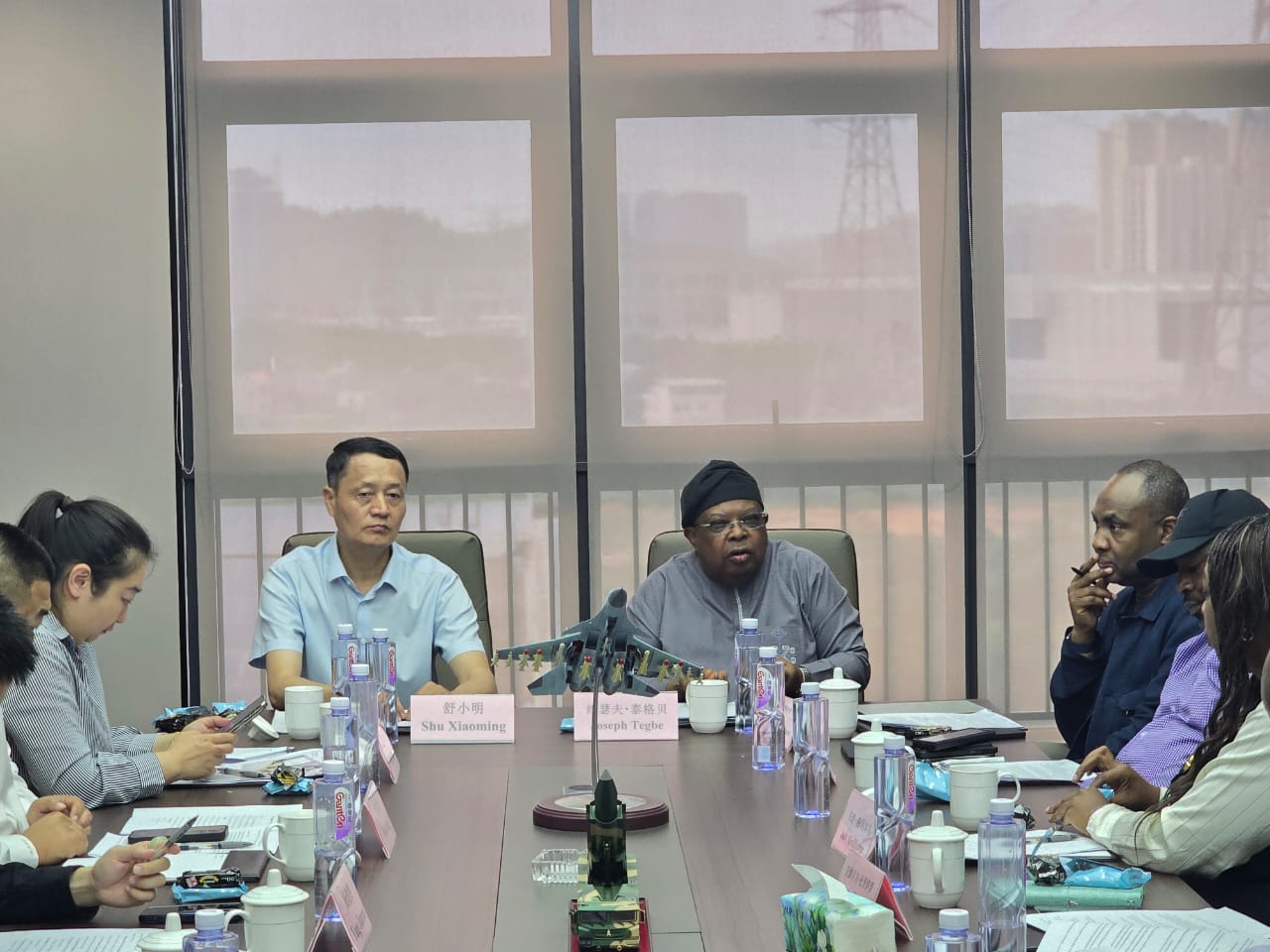
    This follows a high-level technical study tour to Guangzhou led by Joseph Tegbe, Director-General and Global Liaison of the Nigeria-China Strategic Partnership, alongside a delegation from Family Homes Funds Limited. The delegation included the Managing Director, Abdul Mutallab Mukhtar, and the Executive Director of Operations, Emeka Henry Inegbu.

    The engagement focused on unlocking strategic partnerships to integrate modular and prefabricated housing technologies into Nigeriaโ€™s construction ecosystemโ€”an approach expected to significantly reduce building costs, shorten delivery timelines, and improve quality at scale. With Nigeriaโ€™s housing deficit estimated in the millions, the Federal Government is increasingly prioritising industrialised construction methods and international collaboration to drive sustainable housing delivery. Discussions also explored potential partnerships with leading engineering, procurement, and construction (EPC) firms to strengthen execution capacity for large-scale social housing projects. In parallel, the delegation engaged prospective financing partners to mobilise long-term capital required to fund affordable housing initiatives and expand access for low- and middle-income earners.

    The meetings were facilitated by Joerno Conceptions Limited and the E-Link Group in China. The engagements were further strengthened through the cooperation of Zou Gang, Executive Deputy Director of the China-Africa Economic and Trade Enterprises Working Committee, underscoring the depth of institutional collaboration supporting the initiative.

    The move signals a broader shift toward results-oriented bilateral engagement, where technical expertise, capital mobilisation, and policy alignment converge to deliver measurable outcomes. By leveraging Chinaโ€™s advanced construction capabilities to meet Nigeriaโ€™s urgent housing needs, the partnership is positioned not only to expand access to affordable homes but also to stimulate job creation, strengthen local value chains, and enhance urban resilience.

    The initiative further reinforces ongoing Nigeriaโ€“China cooperation across key sectors, with housing emerging as a critical pillar within the Renewed Hope Agenda of President Bola Ahmed Tinubu, GCFR.

  • Zenith Bank Plc acquires Paramount Bank Kenya Limited

    Zenith Bank Plc acquires Paramount Bank Kenya Limited

    Zenith Bank Plc has announced the completion of its acquisition of the entire issued share capital of Paramount Bank Kenya Limited, following the receipt of all requisite regulatory approvals in Kenya and Nigeria.

    This acquisition marks a significant step towards our long-term strategic growth agenda and a strong inroad into the East African markets. It further reinforces the Bank’s position as a leading financial institution in Sub-Saharan Africa and affirms the Bank’s mantra of following our customers’ businesses.

    In a statement released on 7 April 2026, the Lagos-based bank confirmed that it had acquired 100 percent of Paramount Bankโ€™s issued share capital following approvals from regulators in both Nigeria and Kenya. The deal, first announced in November 2025, represents Zenithโ€™s first direct foothold in East Africa, a region increasingly targeted by West African financial institutions.

    The bank described the transaction as a โ€œsignificant stepโ€ in its long-term growth ambitions, noting that it reinforces its position as a leading financial institution across sub-Saharan Africa. It added that the acquisition aligns with its strategy of supporting customers as they expand across borders, particularly into high-growth African markets.

    Regulatory clearance for the deal was granted by the Competition Authority of Kenya in January 2026, after determining that the acquisition would not substantially reduce competition within the sector. The regulator classified the transaction as a notifiable merger because its value exceeded KSh1 billion, equivalent to approximately $7.7 million at current exchange rates.

    In approving the deal, the authority stated that the deal was โ€œunlikely to lead to a substantial prevention or lessening of competition,โ€ but imposed a key condition requiring Zenith to retain all 78 employees of Paramount Bank for at least 12 months. The provision is intended to safeguard jobs during the transition period.

    Final approvals were also secured from the Central Bank of Kenya and the Central Bank of Nigeria, clearing the way for the transactionโ€™s completion.

    Although Paramount Bank ranked 33rd out of 39 licensed banks in Kenya as of December 2024, analysts view the acquisition as a strategic entry point into a competitive but fast-growing market. Kenyaโ€™s banking sector has attracted increasing interest from regional players, including Nigerian lenders such as Access Bank Plc, United Bank for Africa, and Guaranty Trust Holding Company.

    Zenithโ€™s expansion builds on its existing presence across West Africa and its international operations in the United Kingdom, the United Arab Emirates, China, and South Africa. By acquiring Paramount, the bank gains immediate access to local capabilities in corporate and retail banking, SME lending, trade finance, and bancassurance.

    Customers of the Kenyan lender have been assured of continuity in the short term, with the potential for enhanced products and services as integration progresses. The combined entity is also expected to leverage growing trade links within East Africa and tap into the regionโ€™s accelerating adoption of digital banking.

    The acquisition underscores a broader trend of African banks deepening regional integration, as competition intensifies for market share in key economic hubs across the continent.

  • NCSP DG Participates in Inaugural World Data Organization Assembly in Beijing

    NCSP DG Participates in Inaugural World Data Organization Assembly in Beijing

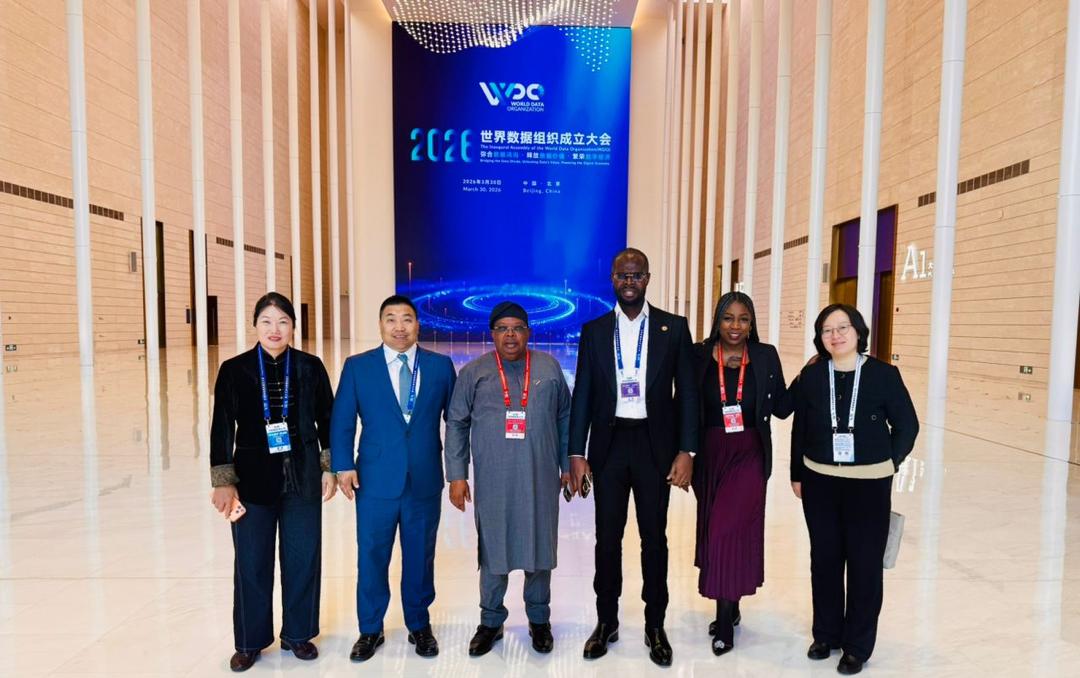
    The Director-General of the Nigeria-China Strategic Partnership (NCSP), Joseph Tegbe, joined other international delegates at the inaugural assembly of the World Data Organization (WDO), held recently in Beijing, China.

    The high-level gathering convened over 500 participants, including senior government officials, multilateral institutions, and digital technology experts, marking a significant step toward strengthening global coordination on data governance and the digital economy.

    Accompanied by the NCSP Head of International Relations, Ms. Judy Melifonwu, Tegbeโ€™s participation underscores Nigeriaโ€™s growing strategic interest in global digital cooperation, particularly within the context of its bilateral engagement with China.

    As Director-General of the NCSP, his presence reflects ongoing efforts to position Nigeria as an active stakeholder in shaping international frameworks governing data access, utilisation, and security.

    The assembly featured a keynote address by Ding Xuexiang, who delivered remarks on behalf of Xi Jinping, the Vice Premier. In his address, he emphasized the need for coordinated global action to harness the value of data while ensuring security, inclusiveness, and trust in the digital economy.

    For Nigeria, participation at this level presents significant opportunities to engage in global standard-setting discussions on data governance and cross-border data flows, strengthen bilateral cooperation with China in advancing digital infrastructure and innovation, unlock new pathways for investment and knowledge exchange within the digital economy, and position Nigerian institutions and talent to benefit from emerging global data ecosystems.

    The establishment of the WDO signals a new phase in international collaboration on digital transformation, and with Tegbeโ€™s engagement, the NCSP continues to play a pivotal role in aligning Nigeriaโ€™s strategic interests with evolving global opportunities in data and technology.

  • Nigerian Scientist Uncovers 5,000-Year-Old Europe-to-Africa Pig Migration, Redefining Agricultural History

    Nigerian Scientist Uncovers 5,000-Year-Old Europe-to-Africa Pig Migration, Redefining Agricultural History

    A groundbreaking international study led by Nigerian geneticist, Dr. Adeniyi Charles Adeola has solved a millennia-old biological mystery, revealing that Africaโ€™s resilient indigenous pigs are not local in origin but are descendants of ancient travelers from the Iberian Peninsula (modern-day Spain and Portugal).

    The research, titled โ€œIntegrated mitogenome and Y chromosome analysis untangles the complex origin of African pigs,โ€ was recently published in the prestigious journal iScience. The findings rewrite the history of African agriculture, suggesting that the continent was integrated into global maritime and land-based trade networks far earlier than previously understood.

    African indigenous pigs are often described as the “tough guys” of the livestock world. Raised primarily by smallholder farmers in Sub-Saharan Africa, these animals possess an extraordinary ability to survive on poor-quality forage, endure harsh tropical climates, and resist devastating local diseases, including the African Swine Fever Virus (ASFV).

    Despite their importance to food security and rural livelihoods, the origins of these 49 recognized breeds remained shrouded in confusion. Previous theories suggesting they descended from North African wild boars were debunked when genetic markers failed to align.

    To crack the code, Dr. Adeolaโ€”an evolutionary and conservation geneticist with appointments at the Kunming Institute of Zoology in China and Bayero University, Kano, led a team that performed “genetic archaeology” on pigs across Benin, Cameroon, The Gambia, Nigeria, Tanzania, and Uganda. By analyzing mitochondrial DNA (maternal) and Y-chromosome (paternal) sequences, the team traced a lineage known as sub-haplogroup E2.

    The DNA analysis revealed a stunning three-part historical narrative of migration and adaptation:

    • Act I: The Arrival (5,250 Years Ago): A founder population of domestic pigs arrived in West Africa from the Iberian Peninsula. Dr. Adeola suggests these animals were brought by ancient maritime traders, fundamentally transforming local food systems over five millennia ago.
    • Act II: The Great Eastern Trek (1,980 Years Ago): After thousands of years of stability in the West, a group of these pigs migrated eastward overland. This movement mirrors broader patterns of human settlement across the continent, eventually populating what is now Eastern Africa.
    • Act III: The Modern Expansion (500 Years Ago): In the last five centuries, the population underwent a rapid boom. This period also saw the introduction of Asian pig genetics and limited interbreeding with wild boars, resulting in the highly adaptable “super pigs” found today.

    “Weโ€™re not just tracing pigs; weโ€™re tracing people,” Dr. Adeola explained. “Their journey is our journey, written in the genome. Itโ€™s a powerful reminder of how deeply our histories are intertwined with the animals we live alongside.”

    The study suggests that pigs serve as a living archive of human innovation. The fact that these animals survived a 5,000-year journey across varied landscapes is a testament to the sophisticated trade and migratory networks managed by ancient African civilizations.

    The discovery comes at a critical time. Currently, over half of Africaโ€™s indigenous pig breeds have an uncertain conservation status, and 5% are already endangered. Modernization, climate change, and the influx of imported commercial breeds threaten to wipe out these unique genetic lineages.

    Dr. Adeola emphasized that mapping these genomes is essential for food security. By identifying the genes responsible for disease resistance and climate resilience, scientists can develop better strategies for sustainable farming.

    “These animals are part of our heritage,” Dr. Adeola concluded. “By preserving their genetic diversity, we ensure that future generations of farmers have livestock capable of surviving an increasingly unpredictable environment.”

  • Feature: The new axis: Chinaย 

    Feature: The new axis: Chinaย 

    by Nicholas Woode-Smith

    As the United States pulls away from its role as global hegemon, and the world shifts towards a multilateral order, new powers have risen to vie for extra power. These new powers have exhibited a capriciousness that we are unused to in the democratic West, but as this series has explored in previous articles onย Russiaย andย Iran, most are not truly capable of truly replacing the USA as the preeminent world power.
    ย 
    The Peopleโ€™s Republic of China is the exception. It has the population, the economic power, and the sheer unified will to become a true threat to not just its region, but to global stability and freedom.
    ย 
    While Russia languishes in the trenches against Ukraine,ย it is China supplying ammunition. While Iran brutally crushes its freedom protests, it is China giving it a lifeline by continuing toย purchase sanctioned oil.
    ย 
    If the Axis is an octopus, then China is the head. But the Middle Kingdom doesnโ€™t think of itself that way. It has always seen itself as a dragon, and it will stop at nothing to ensure that its fiery ambitions are achieved โ€“ no matter how many of its temporary allies are burnt in the process.
    ย 
    China: The red dragon
    In 1949, after a brutal civil war and surviving the malevolent occupation of Imperial Japan, mainland China became communist under the leadership of Chairman Mao Zedong and the Chinese Communist Party (CCP). Those who opposed him fled to the island of Taiwan, declaring their own Republic of China.
    ย 
    What followed was a brutal crackdown on not just landlords and the old imperial state of China, as was the promise of the CCP, but on the people of Chinaโ€™s freedoms and livelihoods.
    ย 
    Land collectivisation, and communist policies that perverted incentive structures and led to institutional deceit and corruption on every level led to the starvation and death of upwards ofย 45 million peopleย between 1959 and 1961 in theย Great Chinese Famine.
    ย 
    Theย Cultural Revolution, an effort to purge the remnants of capitalism and traditional Chinese culture, killed a further 1 to 2 million people.
    ย 
    Communism impoverished China destroyed its spirit and turned it into one of the poorest, most dangerous countries in the world. By Maoโ€™s death in 1976, China was an isolated, agrarian backwater โ€“ one of the worldโ€™s poorest countries โ€“ a fall from the golden dynasties of Ming, Qing and Song that was felt in secret by many Chinese leaders.
    ย 
    In 1978, Deng Xiaoping secured power over China, after seizingย de factoย control of the CCP in the power vacuum that followed Maoโ€™s death. He drastically reformed the country, opening China to foreign trade and embracing free market capitalism that led to explosive growth.
    ย 
    But Chinaโ€™s capitalism wasnโ€™t what we were used to in the West. It wasnโ€™t accompanied by political liberties or democracy. It unlocked economic growth through shredding up red tape and enabling free market competition between firms, but this economic power wasnโ€™t meant to serve individual entrepreneurs โ€“ but was ultimately a resource that would be used by the CCP under a new form of Authoritarian State-Capitalism. Or what Bethany Allen, author ofย Beijing Rules, calls economic state-craft.
    ย 
    Chinaโ€™s empire
    The reason to fear China today is its economic statecraft and its ability to leverage its population and economic power towards geopolitical ends. But before we proceed with how it uses its power, it is important to determine its goals.
    ย 
    China is an imperial power. Like how the Soviet Union decried imperialism while growing and presiding over an empire, China is the same. It seized control over the peaceful state of Tibet in 1950, forcing its spiritual leader the Dalai Lama into exile.
    ย 
    It still maintains control over vast swathes of its imperial territories, including, notably, Xinjiang, where it maintains forced labour camps, re-education camps and has undertaken aย persecution of the Uyghur peopleย that has been likened to genocide.
    ย 
    It has forced itself on the free republic of Hong Kong, where it used the cover of COVID-19 to crush pro-democracy protests in 2019 and 2020 โ€“ turning one of the worldโ€™s freest states into a colony.
    ย 
    It actively invades the waters of other countries, claiming control over the South China Sea, and poaching fish in territorial waters as far as South Africaโ€™s.
    ย 
    Skirmishes are common between China and India over their shared border, where China has constantly tried to encroach on Indiaโ€™s sovereignty. And the Chinese government has actively violated Bhutanโ€™s territory by building settlements and outposts within its borders.
    ย 
    The list of Chinaโ€™s violations of sovereignty and territorial integrity goes on โ€“ including soft-power coercion and shadow puppeteering of satellite states.
    ย 
    Vast human rights abuses
    China has no respect for the freedoms of other countries. But despite trying to gain global hegemony, it also has no respect for the rights of its own people.
    ย 
    The CCP maintains absolute control over the country, engaging in heavy censorship and control of the media โ€“ including the internet. Information is tightly controlled. This is especially utilised to quash any remembrance ofย the Tiananmen Square massacreย of 1989, where potentially thousands of pro-democracy protesters were slaughtered by the military.
    ย 
    Today, any mention of the massacre is censored and punished by the CCP. This censorship extends overseas and to non-Chinese citizens. Inย June 2020, China used its power over the video conferencing tool Zoom to shut down pro-democracy meetings using the platform. The CCP constantly leverages the greed of multinational corporations wanting access to its market to enforce its illiberal behaviour โ€“ forcingย Cambridge University Pressย to restrict access to Tiananmen-related scholarship, andย Bing to block searches about Tiananmen Square.
    ย 
    The CCP engages in arbitrary detentions, capturing and making any perceived dissident disappear. Pro-Democracy supporters and individuals who do even petty things to spite the party are jailed and often are not heard from again. Famously, Jack Ma, the billionaire co-founder of Alibaba, was forced to step down from control of his company and largely disappeared from public life after criticising Chinaโ€™s banking regulations.
    ย 
    This pettiness and control go as far as harassing and destroying the career of MMA fighter Xu Xiaodong โ€“ who was perceived to be bringing shame on traditional Chinese martial arts and was subsequently censored, humiliated, and blacklisted.
    ย 
    China enforces a dystopian โ€œSocial Credit Scoreโ€ system, where citizens are rewarded for compliance with the authoritarian state, and punished for even petty offences. A low credit score results in blacklisting, that can lead to bans from public transport and flying, public shaming, prohibition on serving in positions of economic or political power, and limitations on access to credit.
    ย 
    Economic statecraft
    China has a population of approximately 1.4 billion people, and an economic system that mixes a lack of red tape with support by the government to meet economic needs. Companies deemed strategic, like electric cars, solar panels and others, are given vast subsidies by the government, and are equipped to undercut foreign markets and dump imports on smaller countries to crush their local industries.
    ย 
    This economic power was made scarily apparent during the COVID-19 pandemic, which originated in China. China used its censorship abilities to deny that COVID-19 was transmissible to humans, all the whileย using organised institutions spread throughout the Chinese diaspora to buy up local supplies of medical masksย and then send them back to China.
    ย 
    When the world realised that there was a pandemic, they found a major shortage of medical masks. And the only country with a sufficient supply and manufacturing base to fulfil the new global demand for medical masks was China.
    ย 
    China utilised its veritable monopoly over medical masks to enforce geopolitical demands on other countries.ย Germany was restrictedย from buying masks after refusing demands from Chinese diplomats to lie about Chinaโ€™s handling of the pandemic.ย Mask exportsย were tied heavily to geopolitical ties.
    ย 
    China uses access to its market and its control over manufacturing to punish countries and force itself into positions where it can dictate the policies of other nations. Australiaโ€™s wine industry was decimated after its government called for investigations into the source of COVID-19, and Beijing retaliated effectively with sanctions on Australian wine.
    ย 
    The list goes on and on and is almost impossible to exhaust. Couple these actions with the fact that China is the fastest growing nuclear power, and its never-ending imperial ambitions.
    ย 
    China has also proven far more adept than even Russia at information warfare โ€“ utilising its control over TikTok to control algorithms and push users into believing pro-Beijing narratives, while censoring or quashing the reach of anything critical of China.
    ย 
    China has never given up on taking Taiwan โ€“ a vibrant democracy and one of the freest countries on the planet. But even if you do not care for the rights of the Taiwanese people, there is a strategic reason to fear the CCPโ€™s ambitions over the island republic.
    ย 
    Taiwan is the leading source of semiconductors and chips needed to power the modern worldโ€™s computers and technology. Military and civilian technology relies on Taiwanese manufacturing. If China takes Taiwan, it will strangle the worldโ€™s supply of essential technology and leverage its new control to effectively dominate every country on the planet until it complies with its strict authoritarian regime.
    ย 
    How does this affect South Africa?
    The African National Congress (ANC) is an active ally of Beijing and has seen the CCP as not just an ideological ally against so-called โ€œWestern imperialismโ€ and โ€œneoliberalismโ€, but as anย example to copy.
    ย 
    The ANC has provided diplomatic cover for Chinaโ€™s โ€œOne Chinaโ€ policy, actively signalling support for Chinaโ€™s desire to violently annex Taiwan. This includes actively pushing Taiwan diplomats out of Pretoria.
    ย 
    The Dalai Lama, invited by the late Archbishop Desmond Tutu, was denied a visa in 2011 and 2014, actively supporting Chinaโ€™s illegal occupation of Tibet.
    ย 
    South Africa continues to engage in naval exercises with China, Russia and Iran, much to the dismay of our Western partners, which has threatened our trade and strategic relationships.
    ย 
    All this diplomatic posturing to suck up to Beijing has had negative consequences for South African citizens. Chinese surveillance has infiltrated South African infrastructure, making all South African citizens potential targets of Chinese censorship and control.
    ย 
    The government turns a blind eye to Chinese over-fishing in our waters, and abalone and rhino poaching that feeds Chinese demand.
    ย 
    Chinese firms receive subsidies, and unsustainable support from their own government, backed by slave labour. This has led to its imports being almost impossibly low. While free trade is meant to result in competition that may threaten local industries โ€“ Chinaโ€™s unfair, immoral and illegal practices have led to South Africaโ€™sย textile industry being decimatedย and our manufacturing industry collapsing.
    ย 
    An estimatedย 102,000 manufacturing jobsย were lost between 1992 and 2010 due to Chinese imports. Families have been impoverished, and entire communities have collapsed into ruin due to China utilising its economic state-craft to destroy our local industries.
    ย 
    What should we do?
    Protectionism is not a sound economic policy, most of the time. It coddles local industries and leads to inefficiencies and bad economics. But China isnโ€™t playing by the rules and actively engages in human rights abuses and coercion. Allowing China to decimate our industries on purpose with unsustainably cheap goods is very different from allowing an American multinational the opportunity to compete with our companies.
    ย 
    We should be doing whatever we can to divorce ourselves from reliance on Chinese goods, especially strategic goods like medical masks. Textiles are not a hyper-advanced industry where we must rely solely on foreign supply chains. We had a thriving textile industry and we can again โ€“ if our local industry no longer needs to compete with a Chinese industry designed to predatorily destroy foreign industries at the cost of their own taxpayers and human rights.
    ย 
    The world must also take a stand against Chinese coercion and influence. Platforms like TikTok, which are actively used as an information warfare tool, must be banned or restricted.
    ย 
    Countries and corporations must realise that access to the Chinese market is a poisoned fruit and not worth the price of admission. Not only have profits from the Chinese market been vastly below projections, movies and technology that have entered said market have been quickly copied and bootlegged so that China does not need the foreign company. Just see how solar panel and electric vehicle technology was stolen from US firms after they opened manufacturing facilities in China.
    ย 
    Ultimately, what South Africa and the world needs to realise is that China isnโ€™t just some benign global actor. They have a very real imperial ambition that goes far beyond anything ever expressed by the United States or British Empire. They want global dominance and they have used their influence to push for it, decimating economies, causing genocides, purging dissidents and stomping on human rights to achieve what they believe to be their manifest destiny.
    ย 
    They are the true threat of the New Axis; the cog that keeps Russia, Iran, North Korea and many other crack-pot rogue states functioning. And even without their allies, they will still be a threat. One that the world must take seriously or find themselves as vassals of a capricious Beijing overlord.

  • Africaโ€™s Business Heroes Launches 8th Edition with USD 1.5 Million in Grant Funding Available for African Entrepreneurs

    Africaโ€™s Business Heroes Launches 8th Edition with USD 1.5 Million in Grant Funding Available for African Entrepreneurs

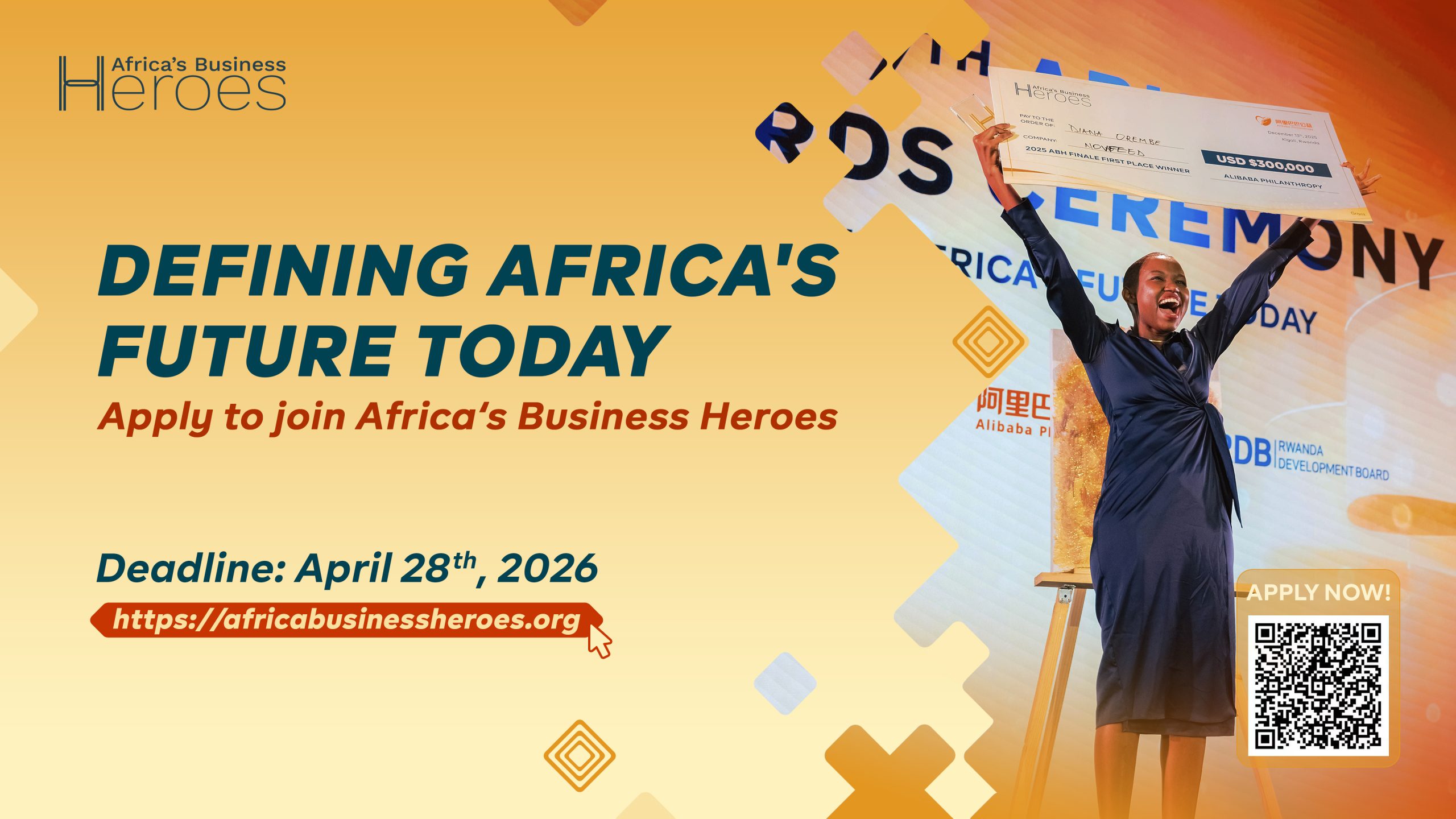
    Launched under the theme โ€œDefining Africaโ€™s Future Todayโ€, the 2026 edition reinforces ABHโ€™s role as a founder-first platform supporting Africa-led solutions with the ambition, scale, and substance to drive lasting economic transformation

    Africaโ€™s Business Heroes (ABH), the flagship philanthropic initiative of Alibaba Philanthropy and the Jack Ma Foundation, has opened applications for its 8th edition, calling on African entrepreneurs who are building businesses defining the continentโ€™s future.

    Launched under the theme โ€œDefining Africaโ€™s Future Todayโ€, the 2026 edition reinforces ABHโ€™s role as a founder-first platform supporting Africa-led solutions with the ambition, scale, and substance to drive lasting economic transformation.

    Across the continent, entrepreneurs are solving real problems with bold, innovative solutionsโ€”from climate-smart agriculture and digital finance to healthcare, logistics, manufacturing, and emerging technologies. Africaโ€™s Business Heroes is committed to identifying these founders, accelerating their growth, and elevating their stories to inspire and shape Africaโ€™s future.

    โ€œAfricaโ€™s future is being shaped by entrepreneurs who are addressing the continentโ€™s most pressing challenges and unlocking its economic potential,โ€ said Zahra Boateng-Baitie, Managing Director for Africa at Africaโ€™s Business Heroes. โ€œBeyond the USD 1.5 million in grant funding, ABH is a transformational platform that equips founders with the visibility, mentorship, and strategic support they need to scale sustainable businesses. Our commitment is to ensure that entrepreneurs are both recognised and empowered to build enterprises that create jobs, drive innovation, and fuel inclusive growth across Africa.โ€

    In 2026, ABH will deepen its on-the-ground engagement across the continent by visiting ten African markets. In line with its commitment to being truly pan-African and inclusive, the programme will prioritize countries that have been underrepresented in its Top 10 finalists to date, including Namibia, Tunisia, and Zambia. These visits will bring together local entrepreneurs, ecosystem partners, and investors through community-building events, workshops, and tailored founder engagementsโ€”strengthening local ecosystems and expanding access to the ABH platform.

    In addition, this year ABH will expand its recognition pool by announcing Top 100 Finalists rather than a Top 50. This reflects both the growing demand and interest in the competition and ABHโ€™s ambition to spotlight a broader range of innovative and inspiring African businesses. Since 2019, applications have grown from approximately 10,000 to over 30,000 annually. By recognising more high-potential founders, ABH aims to deepen its impact, provide greater visibility to emerging entrepreneurs, and strengthen its role as a leading platform celebrating Africaโ€™s next generation of business leaders.

    More Than a Competition

    Now in its eighth year, Africaโ€™s Business Heroes has evolved beyond a prize competition into one of the continentโ€™s most respected entrepreneurship platforms. The programme combines grant funding with training, mentorship, and long-term community support, enabling entrepreneurs to build businesses designed to last.

    Each year, ABH awards USD 1.5 million in grant funding to ten outstanding entrepreneurs. Shortlisted heroes also gain access to capacity-building programmes and join a growing pan-African network of peers, investors, and ecosystem leaders.

    Past Top 10 finalists also have the opportunity to participate in a fully sponsored immersive learning experience at Alibabaโ€™s campus in Hangzhou, China. The programme enables entrepreneurs to connect with one another, engage directly with the Alibaba ecosystem, and gain exposure to global best practices in innovation, digital transformation, and scaling technology-enabled businesses. The latest cohort of past Top 10 finalists will travel to Hangzhou in September 2026.

    A Proven Platform for African Entrepreneurs

    The 7th edition of Africaโ€™s Business Heroes concluded in December 2025 with Diana Orembe of Tanzania, Co Founder and CEO of NovFeed, named Africaโ€™s Business Hero. Her biotech venture transforms organic waste into sustainable protein for animal feed, addressing food security and environmental sustainability challenges across Africa.

    โ€œWinning Africaโ€™s Business Heroes was transformative for NovFeed,โ€ said Diana Orembe,โ€œThe funding will accelerate our growth, but just as important was the business training, visibility, and network we gained through the programme. ABH challenges you to refine your vision, strengthen your strategy, and think bigger about your impact. Itโ€™s not just about the finale, itโ€™s about becoming part of a community committed to building Africaโ€™s future.โ€

    Last yearโ€™s edition attracted over 31,000 applications from across the continent and awarded USD 1.5 million in grant funding to ten finalists representing 7 African countries, reflecting the depth and diversity of the continentโ€™s entrepreneurial pipeline.

    Who Should Apply

    Applications are open to founders from across Africa who:

    • Are citizens or legal residents of an African country
    • Lead a registered business headquartered in Africa
    • Have demonstrated 3 years or more of traction
    • Show a commitment to positive societal impact

    ABH is a sector-agnostic competition and welcomes applications across all sectors critical to Africaโ€™s future, including: food systems, climate and energy, fintech and financial inclusion, health, logistics, manufacturing, artificial intelligence, and more.

    Applications Now Open

    Entrepreneurs defining Africaโ€™s future are encouraged to apply. Applications can be submitted in English or French.

    Applications close on April 28th 2026.

    Apply at: https://apo-opa.co/4l5l5Hi

  • Emirates and Marriott International to Bring First-Ever Ritz-Carlton Lodge Globally to Australiaโ€™s Wolgan Valley

    Emirates and Marriott International to Bring First-Ever Ritz-Carlton Lodge Globally to Australiaโ€™s Wolgan Valley

    Emirates and Marriott International, Inc. have signed an agreement to openย Emirates Wolgan Valley, a Ritz-Carlton Lodgeย – a 40-key all-inclusive luxury lodge set to be situated on a 7,000-acre conservancy in Australiaโ€™s Greater Blue Mountains World Heritage area.

    Emirates Wolgan Valley, a Ritz-Carlton Lodge is expected to mark the first Ritz-Carlton Lodge in the world and a major milestone for New South Walesโ€™s (NSW) regional tourism. An expression of the renowned luxury brand, Ritz-Carlton Lodges are conceived as purpose-built sanctuaries in nature, thoughtfully designed to reflect their surrounds while prioritising minimal environmental impact and delivering a heightened sense of luxury, comfort and craftmanship synonymous with The Ritz-Carlton. Anticipated to open mid-2026, the project offers a new benchmark for luxury travel and potential to reinvigorate the regionโ€™s tourism offering.

    Since 2006, Emirates has invested AU$150 million in the Emirates Wolgan Valley Resort, developing the property with deep respect for its environmental and cultural heritage. This has included the careful restoration of historically significant landmarks โ€” such as the original homestead dating back to 1832 โ€” alongside extensive conservation programmes to restore indigenous flora and fauna, including the planting of more than one million native trees across the site. Emirates is now investing an additional AU$50 million in renovations, working in consultation with Marriott to transform the property into a world-class expression of The Ritz-Carltonโ€™s legendary service and refined design, with a deep connection to place.

    As a reflection of Emiratesโ€™ commitment to the location, following the closure of Wolgan Valley Road in 2023, Emirates has maintained the site with a small number of locally employed staff while the property was unavoidably nonoperational.

    From the resortโ€™s founding, Emirates has worked closely with the local Wolgan Valley community, and it remains committed to continued engagement. The opening of Emirates Wolgan Valley, a Ritz-Carlton Lodge offers the potential to re-create close to 150 jobs in the community, including increased opportunities for local suppliers ranging from fresh Australian produce to sundry items, contributing to the local economy.

    Guests will access the resort by a four-wheel drive service via the Donkey Steps, which will become part of the rural off-road experience of the resort, or via helicopter.  

    Sir Tim Clark, President, Emirates Airline, said, โ€œIn our 30 years of operations in Australia, Emirates has consistently sought to deliver value to our customers, and to Australia. Our commitment extends well beyond the provision of air transport services. It is reflected in the strong, enduring relationships we have built with our industry partners, and in our active engagement with the broader Australian community through Emirates Wolgan Valley, and our extensive sponsorships in sports and the arts.

    โ€œWe are proud of our long-term investment into the Emirates Wolgan Valley Resort which launched one of Australiaโ€™s first conservation-based luxury resorts. Our unwavering commitment to the resort leads us to todayโ€™s announcement of an exciting agreement with Marriott International to open the worldโ€™s first Ritz-Carlton Lodge.

    โ€œFor us, Emirates Wolgan Valley, a Ritz-Carlton Lodge will not only be an extraordinary resort appealing to discerning travellers seeking to be close to nature, but also a powerful engine for local economic growth, helping to rejuvenate the Wolgan Valley locality.

    โ€œWe are deeply grateful for the support from the Federal government, and for our partnerships with the State government, Lithgow City Council, and the Wolgan Valley community who have helped Emirates make this project possible.โ€

    Rajeev Menon, President, Asia Pacific excluding China, Marriott International, said, โ€œWeโ€™re honoured to collaborate with Emirates on this milestone development, which sees the worldโ€™s largest hotelier and the worldโ€™s largest international airline come together to reinvigorate the luxury tourism offering in New South Wales. Marking the brandโ€™s lodge debut globally, Emirates Wolgan Valley, a Ritz-Carlton Lodge will be a major drawcard for our network of 260 million loyal Marriott Bonvoy members around the world, particularly with the upcoming plans in store for immersive experiences that connect them deeply to the local area – something our luxury travellers are increasingly prioritising.โ€

    An immersive sanctuary that harmonises wilderness and the ease of comfort, Emirates Wolgan Valley, a Ritz-Carlton Lodge is designed to deliver the legendary service and refined luxury for which The Ritz-Carlton and Emirates are known, while creating a profound connection to the UNESCO World Heritage-listed Greater Blue Mountains region. Inspired by the warmth and character of the traditional Australian homestead, the lodge is expected to offer unique, region-specific signature experiences led by expert guides.

    Nestled within an expansive 7,000-acre conservation reserve, the lodge occupies less than two percent of this protected wilderness, ensuring an unparalleled sense of space and seclusion. Guests enjoy exclusive access to pristine landscapes beneath some of the worldโ€™s clearest night skies, rare native flora such as the ancient Wollemi Pine, and an extraordinary array of wildlife including kangaroos, bare-nosed wombats, and brush-tailed rock wallabies. Together, these elements create a remarkable setting that invites travellers to slow down, explore, and connect deeply with the destination.

    With demand for premium, nature-based experiences at an all-time high, the lodge makes for a perfect addition to this thriving destination. Tourism Research Australia reports regional NSW welcomed 15.5 million domestic visitors in the quarter to September 2025, generating AU$5.9 billion in visitor spend and 18.5 million overnight stays. International arrivals contributed an additional 727,300 visitors and $1.2 billion in spend, underscoring the regionโ€™s growing appeal.

    Emirates Wolgan Valley, a Ritz-Carlton Lodge is expected to feature 40 elegantly appointed lodges, each including private pools and bespoke amenities. Plans also include for the lodge to offer a signature sleep-out experience – a guided journey into remote wilderness where the absence of light unveils a breathtaking night sky, setting the stage for an evening meal outdoors and relaxation by a campfire. This unique overnight adventure marries the comfort The Ritz-Carlton is known for with the unspoiled beauty of Australia.

    Design plans for the propertyโ€™s main homestead envision a sanctuary of sophistication with a welcoming arrival lounge and sitting room, a signature restaurant, a lounge bar and a wine room, offering guests a curated collection of local and international wines alongside the exceptional produce that Australia is known for around the globe.

    Fully renovated recreational spaces will be thoughtfully reimagined to honour wellbeing and the natural environment, including an outdoor pool, tennis courts, equestrian stables, a modern fitness centre, and the world-renowned The Ritz-Carlton Spa. As part of the lodgeโ€™s commitment to the destination, the lodge is also slated to feature a dedicated naturalist hub helmed by a resident expert to curate immersive, conservation-led experiences, inviting guests to connect deeply with the UNESCO World Heritage-listed Greater Blue Mountains.

    The lodge will complement The Ritz-Carlton brandโ€™s existing presence in the country, including the award-winning The Ritz-Carlton, Perth (opened 2019) and The Ritz-Carlton, Melbourne (opened 2023).

  • From video calls to exchanging memes: Kaspersky reveals how digitalisation is influencing family life

    From video calls to exchanging memes: Kaspersky reveals how digitalisation is influencing family life

    While digitalisation offers unprecedented convenience and flexibility in family communication, Kaspersky experts warn that this increased online connectivity demands a heightened awareness of digital safety practices and the protection of devices

    Kaspersky’s latest global research shows that mostly all people currently interact with their family members digitally: 86% of all survey participants communicate with family via messaging apps, 58% have regular video calls, and 44% have even established joint streaming service accounts. In South Africa, the statistics showed a similar trend: 91% communicate with family via messaging apps, 68% have regular video calls, and 53% have joint streaming service accounts. While digitalisation offers unprecedented convenience and flexibility in family communication, Kaspersky experts warn that this increased online connectivity demands a heightened awareness of digital safety practices and the protection of devices.

    Communication in the digital sphere has become an integral part of everyday life. Thanks to video calls and instant messaging, we can maintain connections with our loved ones, no matter where we are. Digitalisation has reshaped not only how we communicate, but also how we spend our free time together. Kaspersky has conducted a survey* to reveal the common patterns of modern family life in the digital age and discover the cybersecurity challenges that lurk beneath our screen interactions.

    Cyber safety during family communication

    According to the survey, regular messaging via WhatsApp, Telegram, Signal, Viber and other messenger apps were top of usersโ€™ choices when communicating with their families. Globally, people in the 35-54 age group were the most likely to engage this way, with 89% of respondents choosing this option. Video calls were a much less popular option among all survey respondents for keeping in touch with relatives, with only 58% choosing this digital solution.

    Another popular way for many families to stay connected online is to exchange posts and memes on social media and messengers (53% globally and 51% in South Africa). The 18-34 age group globally leads this trend with a 58% participation rate, showcasing how humour and shared cultural references are becoming essential family bonding mechanisms.

    The older generation (above 55 years old) is, in general, less digitally engaged than other age groups, though the share of those globally who chat with their families in messengers is on par with the average (85%). 42% of this age group even exchange memes and posts via social media. Despite the fact that older people are more active in the digital sphere, they may still not be ready to face cyber threats and scams. Users should therefore educate their older relatives on how to stay safe online and use gadgets securely.ย 

    Even for advanced users, communication online carries potential cybersecurity risks. From phishing attempts disguised as legitimate messages to sophisticated social engineering attacks, the digital battlefield operates within our most personal communication channels. To ensure complex protection for your messengers, it’s highly recommended to enable two-factor authentication where possible, use unique, complex passwords for each account, remain skeptical of unexpected links or attachments, use a reliable security solution with anti-phishing protection for messengers, and follow security tips from Kaspersky experts.ย 

    Family accounts โ€“ convenience or risk?

    The survey shows that in their free time 70% of all participating families choose to watch movies together, with 44% having family streaming accounts. Online games do not have such popularity as a family pastime, with only 35% of general respondents opting for them. In South Africa, 78% of families choose to watch movies together, 53% have family streaming accounts, and 35% choose online games as a family pastime.

    While sharing streaming subscriptions and gaming accounts may seem like a cost-effective solution, it opens the door to a host of digital vulnerabilities that can compromise your family’s security and privacy, especially when an account is used by different family members under the same login and password. Such accounts create a perfect storm for security breaches. If one family member’s device is compromised, hackers gain access to the entire account. Additionally, password reuse across multiple platforms means that a single breach could expose your financial information, email accounts, and other sensitive data. To manage all passwords securely, itโ€™s highly recommended to use a password manager for all family members.

    โ€œAs our family life moves more and more online, it opens up amazing ways to stay close and create memories โ€“ but it also brings new risks, like scams and hacking. Kids and older relatives can be especially at risk, so looking out for each other online is really important. Protecting your digital privacy and using cybersecurity measures is an important way to care for your loved ones and keep your family safeโ€, comments Marina Titova, Vice President for Consumer Business at Kaspersky.


    * The study was conducted by Kasperskyโ€™s market research center in November 2025. 3000 respondents from 15 countries (Argentina, Chile, China, Germany, India, Indonesia, Italy, Malaysia, Mexico, Saudi Arabia, South Africa, Spain, Turkey, UK, United Arab Emirates) took part in the survey.

  • Amandla, AWLN to Hold Beijing +30 Women’s Summit on December 9

    Amandla, AWLN to Hold Beijing +30 Women’s Summit on December 9

    As part of the activities commemorating the 2025 edition of ’16 Days of Activism against Gender-Based Violence,’ the Amandla Institute for Policy and Leadership Advancement (AIPLA), in collaboration with the African Women Leaders Network (AWLN-Nigeria) and Womanifesto, will on December 9 convene the Beijing+30 Women’s Summit โ€“ a landmark national gathering to reflect on three decades of progress, challenges, and unfinished commitments under the Beijing Declaration and Platform for Action (BPfA).

    Organised to strengthen women’s movements in Nigeria, the event is coming up 30 years after the historic Beijing, China, International Women’s Conference of 1995, as a platform to review the decades past while projecting for the years ahead.Themed “Beijing+30 Women’s Summit – Holding the Line for Women’s Rights: Looking Back and Marching Forward”, the event aims to re-examine the pivotal roles played by African women, both on the continent and in the diaspora, in shaping the agenda, while facilitating intergenerational exchange and galvanising collective agency to advance feminist sensitive rights issues.

    To set the ball rolling, three distinguished African feminists, HE Erelu โ€˜Bisi Adeleye-Fayemi, Co-founder, Amandla Institute; Prof. Funmilayo Para-Mallam, Chair, AWLN-Nigeria; and Dr. Abiola Akiyode-Afolabi of Womanifesto, would give welcome remarks and provide instructional context setting for the event. Therafter, goodwill messages will be delivered from selected leaders and experts, ahead two panel sessions that will address issues related to women’s rights, abuses, and gender-based violence in Nigeria.

    Recall that the Secretary-General of the Beijing Women’s Summit foregrounded the struggles of African women. Over the years, several African countries have made progressive strides through legal and constitutional reforms in their determination to chart a bold, transformative agenda for the empowerment of women.

    Women constitute 60โ€“79% of the rural workforce, yet men are five times more likely to own land. In the annals of international policy, the issues of power, politics, and policy were placed squarely on irregular measures.

    In Rwanda, female parliamentary representation is the global highest at 61.3%; Senegal has passed a 50/50 parity law, Sierra Leone has a 30% affirmative action law, while Uganda has a constitutionally guaranteed representation for women. However, in Nigeria, the persistent gender gap in access to resources, representation, and opportunities remains painfully low for women.

    These examples underscore what is possible when political will aligns with women’s agency. In regard to these concerns, the Womenโ€™s Summit is thus geared towards enhancing understanding of the historical significance and continuing relevance of the Beijing Conference of 1995 and its numerous outcomes, strengthening leadership and coordination among womenโ€™s organisations, renewing the advocacy for the call to action and especially to expand the mentorship networks linking with younger and seasoned women leaders across Nigeria.

  • CPPE Commends 15% Import Duty on Refined Petroleum Products, Advocates Strategic Protectionism to Drive Nigeriaโ€™s Industrialisation

    CPPE Commends 15% Import Duty on Refined Petroleum Products, Advocates Strategic Protectionism to Drive Nigeriaโ€™s Industrialisation

    The Centre for the Promotion of Private Enterprise (CPPE) has reaffirmed its commitment to advancing Nigeriaโ€™s industrialisation through strategic protectionismโ€”a calibrated policy framework designed to safeguard domestic industries, stimulate economic growth, and promote national sovereignty.

    In a comprehensive policy statement, CPPE emphasised that indiscriminate trade liberalisation has historically undermined Nigeriaโ€™s productive base, eroded competitiveness, and exposed the economy to external shocks. The recent introduction of a 15% import duty on refined petroleum products is hailed as a progressive and corrective measure that, when complemented with broader industrial support, can catalyze industrial expansion, conserve foreign exchange, create jobs, and enhance economic resilience.

    Global Lessons and Local Realities

    Industrialisation remains the cornerstone of sustainable development. CPPE draws on global precedents to underscore the importance of protectionist policies in early industrial growth. Asian economies, such as China, South Korea, India, and Malaysia, achieved industrial takeoff by shielding infant industries, promoting local content, and building domestic value chains before integrating into global markets. Even the United States has recently adopted protectionist measures to revitalize its manufacturing sector.

    Nigeriaโ€™s prolonged dependence on imports has led to structural distortions, discouraging investment and triggering decades of deindustrialisation. The oil and gas sector exemplifies this failure, with decades of refined product importation draining foreign reserves and weakening fiscal stability.

    Strategic Protectionism: A Pathway to Competitiveness

    CPPE advocates for strategic protectionism as a self-strengthening mechanismโ€”not economic isolation. By shielding emerging industries from premature exposure to unfair competition, this approach encourages domestic investment, fosters local value addition, and allows firms to achieve efficiency and scale before competing globally.

    This policy framework is essential for consolidating Nigeriaโ€™s domestic market, expanding regionally, and ultimately achieving global competitiveness.

    Oil and Gas Sector: A Case for Reform

    The continuous importation of petroleum products over the past two decades has imposed immense costs on the Nigerian economy. The 15% import duty on refined petroleum productsโ€”petrol and dieselโ€”is a welcome development that provides critical policy support for domestic refineries such as Dangote Refinery, NNPCL refineries, and emerging modular refineries. This measure is expected to restore Nigeriaโ€™s refining capacity and reduce foreign exchange exposure.

    Sectoral Success Stories

    Nigeriaโ€™s industrial history demonstrates that structured protection yields transformative outcomes:

    • Flour Milling: Import charges exceeding 70% have driven backward integration and domestic capacity expansion.
    • Agro-Processing: Tariffs above 30% have stimulated local production and employment.
    • Pharmaceuticals: Import restrictions on selected product groups have promoted health sovereignty and encouraged local manufacturing.

    In this context, the 15% duty on refined petroleum products is modest, balanced, and necessary to restore Nigeriaโ€™s refining capacity and fiscal resilience.

    Creating a Level Playing Field

    CPPE warns that exposing local industries to global competition without addressing structural constraints results in policy-induced disadvantage. Nigerian manufacturers face challenges including high energy costs, weak infrastructure, limited access to finance, inefficient ports, and complex regulations. Meanwhile, foreign producers benefit from subsidised energy, efficient logistics, and low-interest financing.

    True competition requires comparable production conditionsโ€”not a contest between subsidised imports and under-supported domestic producers.

    Macroeconomic and Industrial Payoffs

    Strategic protectionism, when properly designed, delivers broad developmental dividends:

    • Stimulates industrial growth and job creation
    • Conserves foreign exchange and stabilises the naira
    • Promotes backward integration and local value addition
    • Enhances macroeconomic and fiscal resilience
    • Encourages innovation, technology transfer, and long-term competitiveness

    Ultimately, strategic protectionism supports national self-reliance while laying the foundation for globally competitive industries.

    Managing the Transition to Local Efficiency

    CPPE acknowledges concerns about short-term price increases but emphasises that these are transitional. The long-term solution lies in improving domestic efficiency. To ensure protection yields sustainable benefits, the government must complement it with:

    • Fiscal incentives and targeted subsidies
    • Access to low-cost financing
    • Reliable and affordable energy supply
    • Strategic infrastructure investment
    • Streamlined regulatory processes

    As domestic industries scale up, production costs will decline, leading to price stabilisation and improved consumer welfare.

    Building a Balanced Competition Model

    Nigeria must adopt a competition model that prioritises domestic production over import dependence. Producers should compete with fellow producers, not importers. Both indigenous and foreign investors should be encouraged to produce locally through clear, consistent, and performance-based policies.

    This model, successfully applied in the cement, flour, and beverage industries, can be replicated across sectors to achieve self-sufficiency and export readiness within a decade.

    Policy Recommendations

    To institutionalise a balanced and growth-oriented protectionist framework, CPPE recommends:

    1. Sustaining the 15% import duty on refined petroleum products to incentivise domestic refining
    2. Complementing tariff protection with industrial support policies to prevent price escalation
    3. Expanding backward integration incentives in petrochemicals, steel, agro-processing, and pharmaceuticals
    4. Strengthening monitoring and evaluation to ensure protection fosters productivity and innovation
    5. Transitioning to export competitiveness once domestic industries attain stability

    Conclusion

    Nigeriaโ€™s journey to sustainable industrialisation must be anchored on strategic, time-bound protectionismโ€”not indiscriminate liberalisation. The 15% tariff on refined petroleum products is a forward-looking policy that can transform Nigeriaโ€™s industrial landscape if reinforced with complementary reforms.

    This is not merely about a single refineryโ€”it is a sector-wide proposition that supports all current and future domestic investors in refining and related industries. Pragmatic protectionism is not about closing borders; it is about building domestic strength for global engagement. The goal is not to shut out the world, but to empower Nigeria to compete from a position of strength.

  • The Coming of Age of the African Startup Ecosystem

    The Coming of Age of the African Startup Ecosystem

    From Unicorn Chasing to Sustainable Growth

    2024 marked a turning point for African startups. 

    While total disclosed funding fell to $2.2 billion – down 25% from the $2.9 billion raised in 2023 – the numbers alone donโ€™t tell the full story. Beneath the slowdown lies a deeper transformation: a shift from chasing valuation milestones to building operationally resilient businesses that solve fundamental problems.

    The funding contraction mirrored global trends, as higher interest rates and tighter capital allocation reshaped venture capital markets. Yet Africaโ€™s downturn was not purely negative. In the second half of 2024, the ecosystem saw renewed momentum from large-scale rounds, notably from Moniepoint (Nigeria) and TymeBank (South Africa). Unlike earlier unicorns that focused on aggressive user acquisition, these companies built their success on hybrid business models, blending digital technology with physical infrastructure.

    They were not alone. Fintech players like OPay (Nigeria), Wave Mobile Money (Senegal), and MNT-Halan (Egypt) have also demonstrated that control of both the digital layer and key offline touchpoints (agent networks, payment terminals, or physical kiosks) creates defensible advantages in African markets.

    image.png

    Why Operational-First Wins in Africa

    The African marketโ€™s structural realities (fragmented infrastructure, cash-heavy economies, and regulatory complexity) make purely digital solutions difficult to scale sustainably.

    In Kenya, Buupass tackled bus and rail ticketing by first digitising operatorsโ€™ backend systems, eliminating paper-based inefficiencies and cash leakages before rolling out consumer-facing booking options. 

    To tackle this, they developed a Bus Management System (BMS) that digitised inventory, sales, and fleet tracking, enabling operators to modernize their backend systems. They also dealt with fragmented, offline-heavy travel ecosystems by forming partnerships with major players like Safaricom and M-Pesa, providing access to reliable hosting, digital payments, and trust validation, key to onboarding high-value clients like Kenya Railways. 

    Today, BuuPass processes approximately 12,000 transactions daily and has established partnerships with major transportation providers across Kenya, Uganda, Tanzania, Rwanda, and South Africa. Their growth came not from viral marketing or user acquisition funnels, but from solving fundamental operational challenges for transport operators.

    In West Africa, Logidoo approached cross-border trade by introducing consolidated cargo solutions through their relationship, cutting average transit times by roughly 40% along key Chinaโ€“West Africa and Europeโ€“West Africa corridors.

    This improvement in shipping speed and cost-efficiency for clients demonstrated how operational excellence and better physical logistics design can unlock scale across cross-border trade.  

    Similar strategies are emerging in other sectors. These companies prove that solving operational bottlenecks can be more powerful than just building flashy products.

    Funding Shifts by Sector and Geography

    According to Africa: The Big Deal, fintech remained dominant in 2024, attracting about 47% of total startup funding, but the fastest-growing slices of investment went to logistics, mobility, and healthtech. Logistics startups, for instance, secured over $400 million across disclosed equity and debt rounds, reflecting investor appetite for infrastructure-heavy models.

    Geographically, Nigeria maintained its lead in funding volume, followed by Kenya, Egypt, and South Africa. However, emerging hotspots like Morocco, Senegal, and Tanzania posted year-on-year increases despite the continent-wide slowdown, most of these driven by targeted sector plays in logistics, mobility, and energy.

    The market correction exposed common weaknesses. Startups that scaled aggressively without building sustainable revenue streams struggled to survive the funding winter. A recurring failure pattern emerged: expanding to multiple markets before achieving operational stability in one, burning through capital on marketing rather than infrastructure, and relying on vanity metrics (downloads, active users) over unit economics.

    According to Hiruy Amanuel, Managing Director at Gullit VC, the ecosystem has developed its own success indicators, “I’ve learnt to be wary when early-stage startups rush to scale without focus or financial discipline. That kind of premature expansion, often without the infrastructure to support it, can be fatal. We’ve seen too many founders chase growth metrics or investor hype, only to fall apart because the fundamentals weren’t there.”

    Beyond Fintech

    Transport and logistics players are building their own fleets. Healthcare startups are embedding themselves into pharmacy and clinic networks. Agri-tech companies are setting up physical aggregation centers to secure supply chains. Even e-commerce platforms are moving into warehousing and last-mile delivery.

    This evolution signals something deeper: in African markets, technology works best when it complements, not replaces, the physical systems people already use.

    Looking Aheadโ€ฆ

    If 2015โ€“2020 was Africaโ€™s โ€œunicorn era,โ€ 2024โ€“2027 is shaping up to be its โ€œinfrastructure era.โ€ The next wave of winners will be companies that master operational execution while using technology to enhance reliability, transparency, and scale.

    The result is an ecosystem that’s becoming less dependent on external validation and more focused on creating lasting value within African markets. These trends indicate a maturing landscape that prioritizes solving real problems over chasing global tech trends.

    The success of companies like BuuPass, Logidoo, Moniepoint, and TymeBank provides a blueprint for the next generation of African startups. The winning formula combines technological sophistication with deep operational expertise, creating businesses that are both scalable and defensible.

    For founders, this means longer timelines to profitability but stronger defensibility once scale is achieved. For investors, it means assessing physical assets, partnerships, and local execution capabilities with as much rigor as product and code.

    Africaโ€™s startup ecosystem is no longer solely defined by valuation milestones. Its coming of age is marked by companies that solve real problems, create lasting economic value, and build the scaffolding for future innovation. 

    And that, more than any unicorn headline, may prove to be the measure that matters most.

  • SIFAX Shipping Launches Direct LCL Export to UK

    SIFAX Shipping Launches Direct LCL Export to UK

    โ€ฆ Signs multiple partnership deals to expand global footprint

    In a groundbreaking move set to redefine outbound shipping from Nigeria, SIFAX Shipping Company Ltd. has launched direct Less-than-Container Load (LCL) export services to the United Kingdom, through a strategic partnership with Netcargo UK Limited, a subsidiary of Net Cargo Group.

    This development offers a major breakthrough for businesses that have long grappled with the complexities of cross-border logistics, delays and costly transshipment processes, in their bid to export goods to the United Kingdom.

    According to Mr. Adekunle Owobamirin, General Manager, Groupage and Export Services, SIFAX Shipping, this alliance provides an opportunity for Nigerian exporters, especially SMEs, to ship goods directly to the UK without having to consolidate through transshipment points. This, he added, would result in faster turnaround times, lower costs, reduced risks, and more predictable delivery schedules.

    He further noted that this new service would empower local businesses to compete more confidently on the international stage.

    โ€œThis is one of the most important moves weโ€™ve made in advancing our export portfolio. Weโ€™re now positioned to offer uninterrupted export services to the UK market, giving our clients the ease and confidence they need to grow their international trade volumes.โ€

    In addition to its UK breakthrough, SIFAX Shipping has also sealed a robust import partnership with WSC Logistics and Shotto Logistics Limited. This agreement makes it possible for shipments originating from various parts of the world, including India and China, to be routed efficiently through SIFAXโ€™s bonded terminals and warehouses in Nigeria.

    The partnership, described as a โ€œthird-party consolidator collaborationโ€, enables smaller logistics firms to leverage SIFAX Groupโ€™s well-developed infrastructure, technical know-how and bonded facilities.

    Owobamirin, speaking further on this development, reveals that, โ€œThis ambitious expansion has already borne fruit, with the first trial shipments launched in June and full operations ramping up through July. Our bonded warehouse operations have been upgraded to accommodate the surge in volume. The collaboration allows us to clear and dispatch cargo seamlessly, ensuring that goods keep moving and clients experience minimal delays.

    โ€œBy improving direct export routes, especially to the UK, local businesses will benefit from reduced trade barriers and costs. Furthermore, the increased volume of imports handled through WSC Logistics and Shotto Logistics Limited is expected to create more employment opportunities and boost revenue streams for local stakeholders.โ€

  • Gas must replace dirtier fuels to drive energy transition in Africa โ€“ NLNG MD

    Gas must replace dirtier fuels to drive energy transition in Africa โ€“ NLNG MD

    The Managing Director and Chief Executive Officer of NLNG, Philia Mshelbila, on Wednesday, called for deliberate efforts for the displacement of dirtier fuels, like biomass, by natural gas to drive energy transition in Africa.

    Mshelbila made the call during a panel session titled โ€œDiversity of Gas Development Globallyโ€ at the 29th World Gas Conference in Beijing, China which held from 19th May to 23rd May 2025.

    He remarked that the most important factors for energy, especially natural gas, were availability and affordability, stressing the need to solve infrastructure challenges to ensure that critical energy is getting to where itโ€™s needed, at affordable rates.

    โ€œToday, Africaโ€™s population is about 1.4 billion, and most people still use biomass for cooking and liquid fuels for transportation. Power generation comes from a mix of hydro, natural gas, and, in many cases, diesel. This is where natural gas has a major opportunity, to displace dirtier fuels. Africaโ€™s population is expected to grow to 2.5 billion in the next 25 years, adding over a billion people. For the existing population, we need to shift from biomass to gas. For the next billion, we must ensure that natural gas becomes the primary energy source before transitioning to renewables. But none of this will happen without solving access and affordability,โ€ he said.

    Mshelbila emphasised the significance of Nigeriaโ€™s Decade of Gas initiative as a strategic pathway for replacing high-emission fuels with cleaner low carbon fuels.

    โ€œThe Decade of Gas is Nigeriaโ€™s strategic roadmap to replace high-emission fuels with cleaner, more affordable gas solutions. Gas is not just a bridge; it is a foundation for achieving energy access, industrialisation, and environmental sustainability.

    โ€œFor the past 25 years, there’s been significant focus on exports because the country needed the revenue, which is critical for development. However, domestic utilisation has lagged. The Decade of Gas looks at supply, demand, infrastructure, and commercial frameworks to unlock gas utilisation. Considerable work has gone into removing bottlenecks and challenges that have hampered gas utilisation, both for domestic use and export.

    โ€œOne example is the push for Compressed Natural Gas (CNG) in transportation, which is now gaining momentum. Another focus area is LPG, which NLNG has spearheaded. We have decided that our production of over 500,000 tonnes per annum will be entirely deployed for domestic use. The goal is to displace biomass and kerosene used for cooking. This isn’t just about the cleanliness of natural gas, it’s also about addressing health issues related to indoor air pollution, which causes over 100,000 deaths annually among women and children. All these aspects are part of the Decade of Gas initiative. Our aim is that by 2030, we will have significantly increased natural gas utilisation to displace dirtier fuels and create a new foundation for future growth,โ€ he added.

    Addressing the continent’s diverse energy landscape, Mshelbila underscored the need for localised solutions. He said while countries such as Nigeria, Algeria and Egypt possess abundant reserves, gas utilisation rates remain low due to a lack of enabling infrastructure and policy clarity.

    He called for deliberate policies to foster infrastructure expansion, local content development, and innovation.

    โ€œFrom a developing world perspective, I believe it starts with creating the right investment environment. We speak from real experience here. Although we have had natural gas for decades, it was only last year, as part of the Decade of Gas initiative, that we established clear fiscal terms for deepwater gas. Before that, investors took on significant risks because the fiscal terms weren’t defined. This is a clear example of government providing necessary clarity, so investors know exactly what they’re committing to.

    Mshelbila stated that infrastructure development could be driven by policy and emphasised that the right investments could promote gas infrastructure expansion. On pricing, he expressed complete opposition to government price regulation. However, he acknowledged that significant vulnerable populations in the developing world needed protection. He stressed the importance of ensuring affordability and access to natural gas for these groups.

    On the conversation on energy transition and sustainability, he stated that policy played a crucial role, noting that policies varied globally with the EU leaning toward regulation and the US favouring incentives. He added that there was a role for policy in stimulating the energy transition appropriately, though the approach would differ across regions.

    Mshelbila was on the panel with Jack Fusco, President and CEO of Cheniere, U.S.A, Peter Wong, Managing Director of Hong Kong and China Gas Company Limited and Andrea Stegher, Senior Advisor at SNAM and Vice President of the International Gas Union, organisers of the conference.