Tag: civic education

  • Polihive launches to Empower Young Nigerians with Tools to Verify information and Participate in Elections

    Polihive launches to Empower Young Nigerians with Tools to Verify information and Participate in Elections

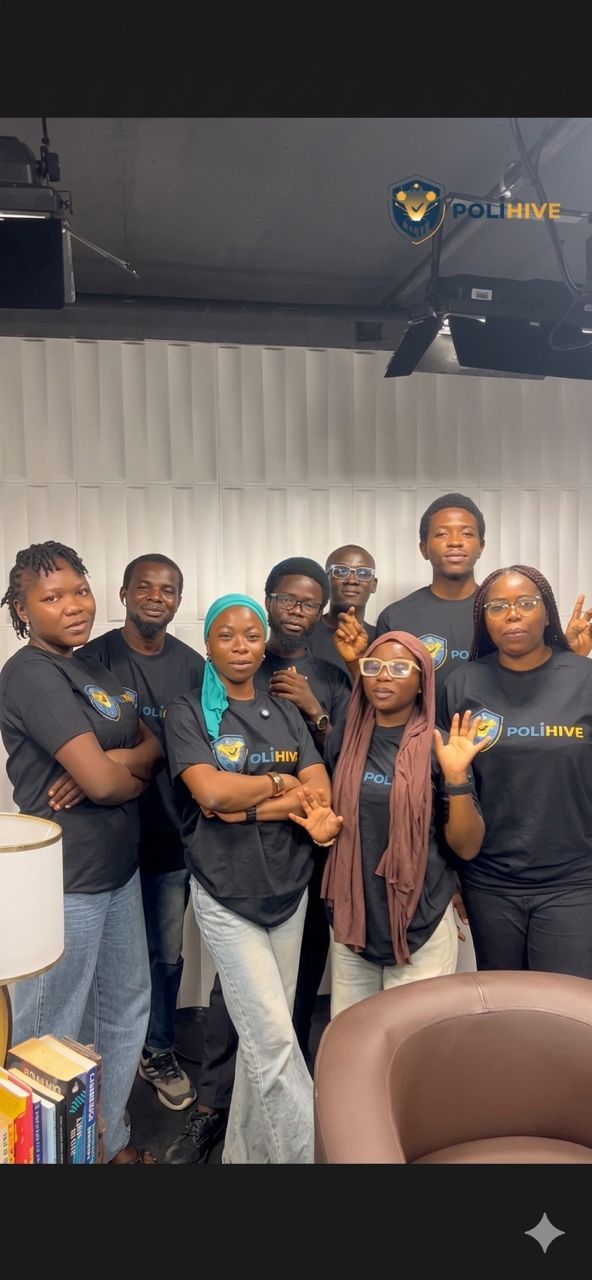
    A youth-led civic initiative, Polihive, has launched a digital platform aimed at helping young Nigerians verify information and take part in the electoral process.

    The platform, available at polihive.org, was introduced ahead of ongoing electoral activities. It seeks to address the role of digital media in shaping political views, especially among younger citizens. Users can access tools for fact-checking, civic education, quizzes, and a system for verifying news.

    Polihive was developed by a team of eight young Nigerians: Zainab Biojela, Afolashade, Braimoh-Igbo Ibrahim, Biojela Hassanat, Akinsanya Ayomide, Oyekunle Boluwatife, Nenkangmun Micah, and Amori Umar. The initiative focuses on promoting civic responsibility and informed participation in governance. It is based on the idea that access to clear information supports public involvement in democracy.

    The platform also works in collaboration with Yiaga Africa to provide learning tools that combine civic education with interactive features. These include structured content designed to encourage continuous use and understanding of political processes.

    Speaking on the launch, Biojela said, “Awareness is the first step to participation. When young people understand how systems work, they engage and do not complain. They engage, question, and they lead.”

    With the spread of misinformation affecting public opinion, Polihive aims to provide a space where users can confirm information before forming views or taking action.

    The platform is open to the public. Users are invited to visit the website, test their knowledge, verify information, and take part in civic life.

  • Pivot Nigeria 2025: ‘Reframing the Lens’ Inspires A Positive National Narrative

    Pivot Nigeria 2025: ‘Reframing the Lens’ Inspires A Positive National Narrative

    Pivot Nigeria:Reframing the Lens is a national thought leadership platform created to reset Nigeria’s reputation agenda. Powered by HighStakes Public Relations Professionals (HighStakes PR Professionals), Pivot Nigeria catalyses dialogue to inspire pride, amplify authentic narratives, and co-create a stronger, more balanced Nigeria narrative.

    The inaugural Pivot Nigeria Conference, held recently, brought together thought leaders, innovators, journalists, entrepreneurs and youth to emphasise the urgent need for Nigerians to own and shape Nigeria’s narrative. The conference blended high-impact keynotes, panels and hands-on co-creation labs to inspire action.  

    Urging attendees to become ambassadors of truth and optimism for Nigeria, Pivot Nigeria convener, Victoria Uwadoka-Anyianuka set the tone: “We are not here to complain or to lament; we are here to reframe the lens on how we see ourselves as Nigerians. Changing how others see us starts with how we present and represent ourselves. Our mission is to challenge the prevailing narratives, to spotlight authentic stories, and to co-create a narrative that reflects Nigeria’s true story.”

    The conviction that Nigerians must first change how they see themselves before looking for external validation echoed throughout the day, from the keynote and plenary sessions to the co-creation labs. The conference focused on culture as capital, who tells our story and why it matters, reconciling criticism with commitment, and the role of the media in changing the narrative. 

    Mr. Richard Mofe-Damijo, Nigerian actor, lawyer, filmmaker, and cultural icon popularly known as RMD spoke about the paradoxes of Nigeria: “Nigeria is a beautiful country. It is a great country. On the one hand, it can frustrate you to the point where you feel like ‘I’m getting out.’ But on the other hand, it can give you so much that you’ll be wondering why it took you so long to unlock the keys that give you entrance to the bountiful opportunities that you find in Nigeria.”  

    He added that Nigeria, as a country, needs to go back to the drawing board, to see who we are, “It is when you have articulated who you are that your people can see.” 

    On his part, Mr. Emeka Mba, Founder and CEO of AfiaTV said, “Who tells your story and how it is told is often how you are seen. Too often, our stories are told by outsiders. Building inclusive national narratives, consistent cultural diplomacy, and deliberate policies to rebuild trust are essential to shaping how the world perceives us. If you look at emerging news platforms like AfiaTV and News Central, there is a deliberate editorial direction, a recognition of the power the media wields, and the duty it has to project balanced, accurate, and responsible portrayals of Nigeria, particularly to international audiences.”

    Speaking in the same vein, Rosemary Egabor-Afolahan, Director, Commercial and Communications, News Central TV said,  “The story of Nigeria, in all its complexity, courage and brilliance, must no longer be told by others, through filters of fear or foreign bias. It must be told by us: boldly, responsibly, and completely.  For far too long, the image reflected of Nigeria has been distorted, reduced to the cliches of conflict, corruption, disease, and despair.”  

    Emphasising the critical role of the media in changing the narrative, Rosemary added,  “At News Central TV, we took a stand. We chose to change the narrative not by ignoring the challenges, but by contextualising them, by highlighting progress alongside problems, and most importantly, by amplifying voices that are too often silenced and overlooked.” 

    Pivot Nigeria conference participants converted ideas into action in the co-creation labs and proffered solutions: reclaim Nigeria’s story through citizen action; promote balanced, indigenous storytelling; embed civic education and national values in school curricula; leverage creative industries (film, music, fashion, tech) as soft-power engines; push for stronger accountability in governance; and scale Pivot Nigeria through campus ambassadors and community chapters to sustain awareness about the currency of reputation as capital. 

    Nneka Isaac-Moses, Meche Isaac-Moses, Nina Anyianuka, Temitope Aina, and Nneamaka Nwadei highlighted narrative power as a tool of diplomacy, trade, and cohesion, urging collective action by the media and all stakeholders to reclaim the Nigeria story. 

    The “Pivot Nigeria: Reframing the Lens” initiative is a call for citizens, creatives, media houses, government institutions, the private sector and the diaspora to interrogate and reframe their presentation and representation of Nigeria, and to use their everyday platforms (including social media) responsibly to reflect a balanced, authentic Nigeria narrative. 
  • Religious Institutions Should Promote Blood Donation- Haima Health Initiative

    Religious Institutions Should Promote Blood Donation- Haima Health Initiative

    Haima Health Initiative has called on all religious institutions and groups to leverage their influence to persuade their members to donate blood as part of activities to commemorate Nigeria’s National Blood Donor Day.

    The Federal Government, through the National Blood Commission (NBSC), has designated 8 December as national blood donor day in recognition of the lifesaving service voluntary blood donors render. The day is in addition to World Blood Donor Day, celebrated on 14 June, designated by the World Health Organization (WHO) for global recognition of donors. “This day allows us to commend the essential gift that blood donors voluntarily give and promotes voluntary blood donation as a civic responsibility”, Bukola Bolarinwa, founder of Haima Health Initiative, said.

    Every year, Nigeria gets only 27% of its annual blood need, with the NBSC collecting only 500,000 pints of blood every year, leaving a shortfall of about 73.3%. NBSC data shows that only 8% of Nigerians donate blood freely, and 80% of donors donate to relatives in need. This causes needless trauma and loss of lives. There can be no achievement of Universal Health Coverage without access to safe, quality blood and blood products supply across all states.

    Thus, it is imperative to assess how various stakeholders can come together to increase advocacy on the constant need for regular and unpaid donors across Nigeria. A major stakeholder that is often overlooked is religious organizations.

    “As an NGO focused on improving blood donation in Nigeria, Haima health sometimes calls on voluntary donors in emergencies. Donors may have to suddenly leave their homes, offices or schools to give blood to someone they do not know and are unlikely ever to meet. This type of selflessness deserves unfettered praise. Millions of people today owe their lives to the blood they received from someone. Despite medical advancements, there is currently no substitute for blood for patients in need other than getting it from a donor. This includes accident and emergency victims, women in labour and newborns, and patients with cancer and sickle cell. People with certain conditions like leukaemia and sickle cell may need regular transfusions, often requiring up to six donors at a time,” Bukola Bolarinwa added.

    Despite this, several myths surrounding blood donation can be busted by religious organisations as most faithful trust their leadership. Religious organisations in Nigeria are much more than places of worship- they are centres of learning, education and enlightenment for people who often have limited access to information.

    Further commenting, Bukola said, “In recent years, religious organisations have promoted civic education, including voter registration and education- this must extend to health education, including blood donation. All stakeholders must get involved in this essential cause, and religious organisations have an outsized influence on behavioural change that must be harnessed. We use today to call on all religious organisations to play their part in advocacy towards saving lives through voluntary blood donations.”

    Numerous churches and mosques have organized blood drives with Haima Health, where the NBSC, LSBTS or hospitals come to sensitize the congregation on the importance and process of blood donation. However, more religious organisations need to take up this cause. Most Christian and Islamic groups permit blood donation, and it is often considered a form of charity since it provides a lifesaving gift to someone who is sick.