Tag: Founder and CEO

  • She-Fix 2.0: NNPC Retail Champions Inclusion, Impact, Opportunities for Women

    She-Fix 2.0: NNPC Retail Champions Inclusion, Impact, Opportunities for Women

    In its bid to advance inclusion, celebrate female excellence, and strengthen women’s participation across technical and professional sectors, the NNPC Retail Limited (NNPC Retail), a subsidiary of the NNPC Ltd., hosted the second edition of She-Fix 2.0, its flagship, women-focused initiative, in Abuja, on Saturday.

    The event, held under the theme “Driving Diversity, Powering Progress”, was attended by over 300 women professionals, business owners, young technicians, and energy industry leaders.

    In her address, Minister of Women Affairs, Hajiya Imaan Sulaiman-Ibrahim, who described inclusion as central to national growth, called for more opportunities for women in technical and STEM-related fields.

    While commending NNPC Retail for its vision in establishing the initiative, the Minister called for sustained collaboration between government and the corporate sector to scale the programme further.

    In her keynote address, Executive Vice President, Business Services, NNPC Limited, Sophia Mbakwe, noted that women’s contribution within NNPC Ltd. permeates every level, stressing that NNPC Retail, the company’s daily point of contact with ordinary Nigerians, is a space where diversity holds significant weight.

    Managing Director of NNPC Retail Limited, Huub Stokman, who was represented by Valentina Kojo, Executive Director, Finance, NNPC Retail, stressed that women empowerment must be practical, visible, and sustainable.

    In his remarks, Chief Corporate Communications Officer, NNPC Limited, Andy Odeh, said women in today’s energy sector are leading change, building institutions, and shaping the narrative of an industry already in transition. He reiterated that when women lead, value follows, and when value follows, organisations grow and society prospers.

    Highlights of the She Fix 2.0 initiative include a panel session, live car care demonstrations, a marketplace showcasing female-led businesses, interactive sessions, networking activities, and special discounts on Oleum Lubricants and NR-GAS LPG products, reaffirming NNPC Retail’s commitment to gender equity and inclusion across the entire energy value chain.

    The panel featured five senior women from across energy, finance, technology, and corporate governance namely: Emmanuella Arukwe, Managing Director, NNPC Foundation; Maryamu Idris, Managing Director, NNPC Trading Limited and OPEC National Representative for Nigeria; Oremeyi Akah, Chief Customer Officer, Interswitch Limited; Toyin Alasi, Founder and CEO, Money Wise International; and Adaeze Nwakoby, General Manager, Governance, Risk & Compliance, NNPC Retail Limited.

    The She-Fix 2.0 initiative builds upon the momentum of the 2025 edition held in Lagos. It symbolises a deliberate expansion of the programme’s reach and reaffirming NNPC Retail’s commitment to growing a platform which produces lasting outcomes for women across the nation’ energy sector.
  • VALR and Onafriq Deliver Mobile Money Access to Digital Assets for Millions Across Africa

    VALR and Onafriq Deliver Mobile Money Access to Digital Assets for Millions Across Africa

    VALR, Africa’s largest crypto exchange by trade volume, has integrated with Onafriq, the continent’s leading digital payments gateway. This partnership enables VALR users across Africa to fund their accounts directly through mobile money in local currencies, significantly broadening access to digital financial services for millions of people. 

    Mobile Money’s Role in African Financial Inclusion

    Mobile money serves as a foundational element of financial services in Africa, facilitating everyday transactions, remittances, savings, and credit in areas with limited traditional banking access. According to the GSMA’s State of the Industry Report on Mobile Money 2025, global registered mobile money accounts reached 2.1 billion by the end of 2024, with over half a billion monthly active users. The sector processed approximately 108 billion transactions valued at more than $1.68 trillion in 2024, reflecting 20% year-on-year growth in volume and 16% in value.

    In Sub-Saharan Africa, mobile money continues to drive substantial economic impact, contributing around $190 billion to GDP in 2023 alone. This growth is supported by interoperable networks that enable payments across major local currencies, including the Kenyan Shilling, Nigerian Naira, Ghanaian Cedi, and Ugandan Shilling, and through mobile money platforms such as M-Pesa and MTN MoMo. In the majority of these markets, mobile money usage for domestic transactions far outweighs traditional methods such as credit cards and direct bank transfers, according to complementary insights from the World Bank’s Global Findex 2025 report, making acceptance of mobile money crucial to successful market entry.

    Onafriq operates Africa’s largest digital payments network, connecting nearly 1 billion mobile money wallets across 43 markets. The integration utilises this extensive infrastructure to allow direct, local-currency deposits to VALR, settled in stablecoins or selected crypto, streamlining access and reducing dependence on conventional banking systems.

    Enabling Broader Participation in VALR’s Financial Product Suite

    Through this integration, with VALR and Onafriq processing all settlements using stablecoins, users in supported markets can deposit funds via mobile money and engage with VALR’s comprehensive offerings. These include spot and margin trading for Bitcoin and over 100 crypto assets, tokenised real-world assets such as gold, equities, and private credit, yield products like lending and staking, and VALR Pay for efficient payments.

    By integrating mobile money on-ramps, the partnership facilitates easier entry into global digital markets using established local payment methods.

    VALR’s Leadership in Promoting Financial Inclusion

    VALR holds a prominent position in Africa’s digital asset sector, serving over 1.7 million registered users and 2,000 corporate and institutional clients worldwide. Licensed by South Africa’s Financial Sector Conduct Authority (FSCA) and with regulatory approval in Europe, VALR is dedicated to building inclusive financial systems.

    “VALR’s partnership with Onafriq deepens our reach across Africa and the world, connecting many more countries and people to VALR’s wide array of crypto asset services and infrastructure,” said Farzam Ehsani, Co-Founder and CEO of VALR. “Mobile money has already reshaped financial access across the African continent. By enabling direct connections in local currencies, we offer millions a practical pathway to Bitcoin, stablecoins, tokenised gold, and more, as well as innovative financial tools, supporting greater economic participation for everyone.”

    Onafriq’s Founder and CEO, Dare Okoudjou, highlighted the significance of the partnership for financial connectivity across the continent. “We are truly excited to welcome VALR onto the Onafriq Network, enabling their clients across Africa to transact freely with the 1bn mobile wallet users and hundreds of thousands of businesses already on Onafriq’s network. VALR is a recognised pioneer and leader of Blockchain and Stablecoin technologies on the continent and we look forward to working with them to bring the many benefits of these technologies to people and businesses across Africa.”

  • CycleFlow powered by C2FO and IFC Launch Supply Chain Finance Platform in Nigeria, Transforming Access to Finance for Nigerian MSMEs

    CycleFlow powered by C2FO and IFC Launch Supply Chain Finance Platform in Nigeria, Transforming Access to Finance for Nigerian MSMEs

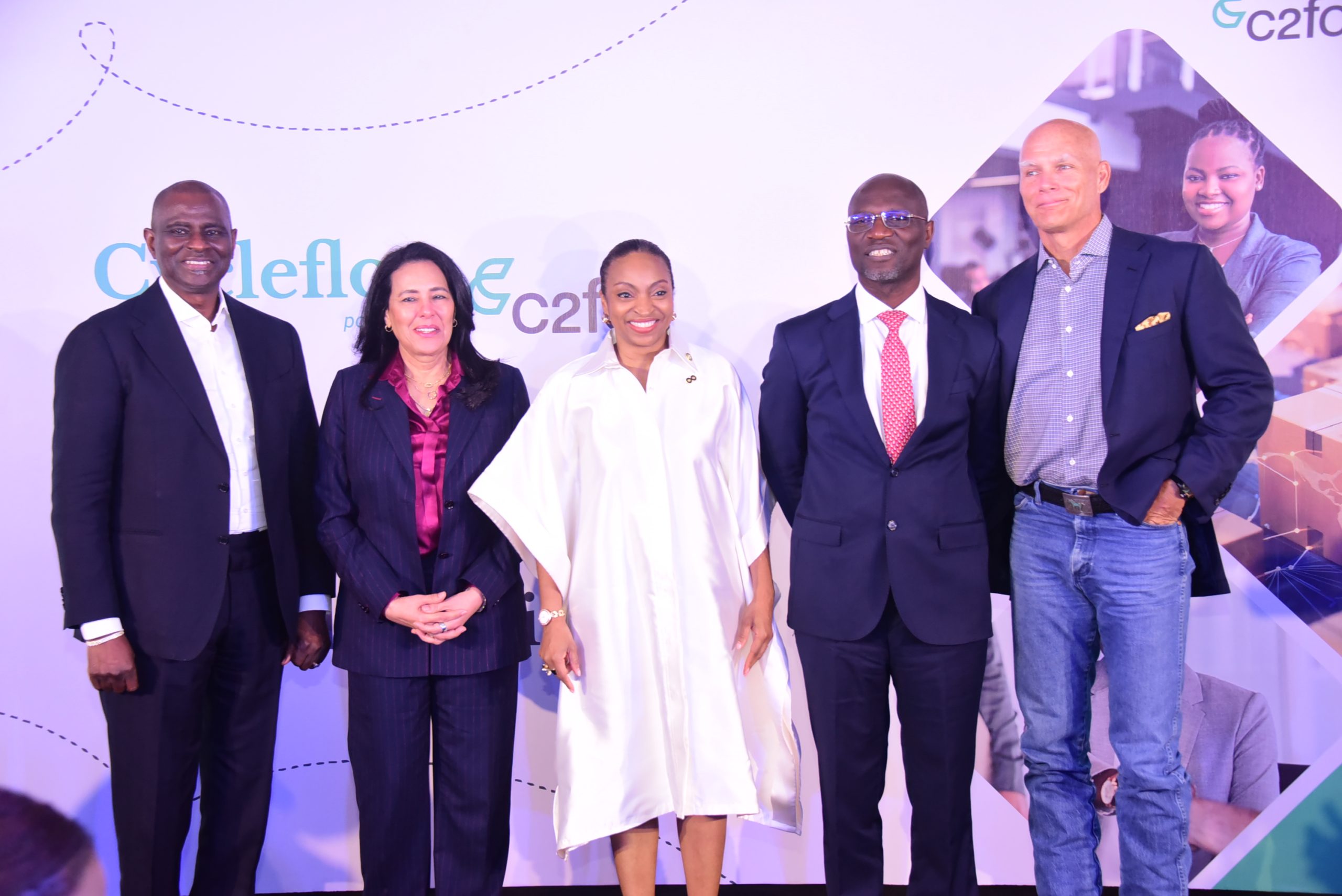
    CycleFlow, powered by C2FO, the world’s on-demand working capital platform, has officially launched its operations in Nigeria. This move marks the first phase of a comprehensive Nationwide Working Capital Platform strategy designed for Africa and other emerging markets. With support from various banking partners, the platform has already secured multiple multinational and local customers.

    The platform will connect global and local financing institutions with participating anchor buyers and their MSME suppliers. Financial institutions, as well as participating buyers, will be able to extend affordable short-term financing to suppliers by purchasing and discounting invoices accepted for payment by the buyers. These transactions will allow MSMEs to improve working capital by converting sales receivables immediately to cash, based on the better credit risk of buyers and without any collateral requirements, thus leveling the playing field among larger and smaller suppliers. The launch marks the beginning of a multi-phase strategy to scale inclusive working capital solutions across the continent and into other emerging markets and has already secured commitments from multiple multinational and local customers.

    “The official launch of C2FO’s Working Capital Platform in Nigeria marks a turning point for our financial ecosystem,” said Segun Ogunsanya, Chairman of Nigeria-based CycleFlow. “By enabling immediate access to funds locked in accounts receivable, we are not just financing businesses; we are powering economic growth across the entire ecosystem. This innovative technology addresses the biggest financial challenges in Africa and ensures that capital reaches the micro, small and medium enterprises (MSMEs) that drive our economy.”

    When fully scaled, the platform has the potential to facilitate $25 to $30 billion in annual financing for local businesses in Nigeria – making it one of the most significant dedicated supply chain financing facilities ever deployed for smaller businesses in Africa. The multi-bank, multibuyer platform connects suppliers, including MSMEs, with their larger buyers and financial institutions on a single open infrastructure, removing traditional intermediary barriers and enabling affordable financing at scale.

    MSMEs are the engine of Nigeria’s economy and of Africa’s at large. Across the continent, they account for up to 90 percent of all businesses and are responsible for up to 80 percent of employment. Yet despite their outsized role, these enterprises face a persistent and structural barrier: access to affordable working capital. Traditional financial institutions typically require collateral, established credit histories, and lengthy approval processes that most MSMEs cannot meet. The result is a financing gap that constrains growth, limits hiring, and leaves viable businesses unable to reach their potential. 

    The C2FO platform directly addresses this gap. Rather than relying on the creditworthiness of the MSME itself, the platform leverages the stronger credit profile of the buyer, typically a large multinational or established local enterprise to unlock receivables financing for suppliers. This means that an MSME with an invoice accepted for payment by a large buyer can convert that receivable into immediate cash, without collateral and without the delays of traditional lending. For businesses that routinely operate on payment terms of 60, 90, or even 120 days, this access to liquidity is transformational.

    “This initiative is a proof point for what development finance can achieve when it is paired with the right technology and the right partners,” said Mohamed Gouled, IFC’s Vice President for Products & Clients. “Millions of MSMEs across Africa are sitting on receivables they cannot convert into much-needed capital to grow and hire. This platform changes that equation. By connecting suppliers, buyers, and financial institutions on a single, open infrastructure, we are helping unlock financing that could support hundreds of thousands of jobs in Nigeria alone and we see this as a replicable model for the rest of the continent.”

    The expected economic impact is significant. IFC research indicates that every $1 million financing provided to MSMEs in developing countries creates an average 16.3 direct jobs over a two-year period a trajectory that, when the platform is fully scaled, points to the creation of more than 480,000 direct jobs in Nigeria.  Furthermore, accounting for indirect employment, research points to a multiplier effect of three to five times the initial job creation figure. This surge in stable employment drives consumer spending, as newly employed individuals gain purchasing power and stimulate demand across the local economy, creating a self-sustaining cycle of growth that could boost Nigeria’s GDP by 1 to 2 percent.

    “Today marks a crucial milestone for our mission to ensure every business has the capital needed to thrive,” said Alexander “Sandy” Kemper, Founder and CEO of C2FO. “Nigeria is not just a market opportunity; it is a chance to show how innovative financial technology transforms economies. By optimizing cash flow for buyers and providing flexible funding options for suppliers, we create a more resilient global economy. This launch kicks off our broader strategy to bring affordable liquidity solutions across Africa and other emerging markets worldwide, utilizing the groundbreaking platform and technology we have spent over 15 years perfecting across 180 countries.”

  • Africa’s Creative Heavyweights Unite to Shape a Stronger Global Story of the Continent

    Africa’s Creative Heavyweights Unite to Shape a Stronger Global Story of the Continent

    Opportunity Africa launches pan-African Creative Council backed by leading communications, media and brand leaders

     In line with Agenda 2063, the Opportunity Africa initiative has launched its Creative Council, bringing together Africa’s leading communications, media and marketing leaders to advance a narrative that contributes to building The Africa We Want.

    It is a pan-African platform and movement designed to shift how the world sees Africa and how Africa sees itself, by amplifying the people, stories and institutions already shifting perceptions. It is a shared platform that brands, institutions and storytellers can align around to communicate a stronger, more unified story of Africa.

    At a time when the global order is shifting and competition for capital, influence and attention is intensifying, perception matters as much as facts. For Africa, image is no longer a soft issue. It is a strategic one. The Creative Council has been established to help ensure Africa is defined by those building it.

    The Council brings together senior leaders who have shaped narratives at national, regional and global levels. Their role is to guide the creative direction of the initiative, connect it to their continent-wide networks and ensure the initiative remains credible, relevant and culturally resonant across markets.

    “This is exactly the kind of collaboration Africa needs to shape a narrative that reflects our aspirations under Agenda 2063 and builds The Africa We Want. In line with the mandate of the African Union Commission’s Information and Communication Directorate, this work will strengthen how we communicate the Union’s priorities and amplifies Africa’s voice. We encourage more partners to join this growing movement.” Faith Adhiambo, Communication Officer, Agenda 2063 African Union. 

    “It is a privilege for Africa No Filter to serve as secretariat and help steward this forward. It is unprecedented to see this level of expertise and collaboration coming together to build the narrative infrastructure Africa needs to reframe the continent,” said Moky Makura, Executive Director of Africa No Filter and co-chair of the Council.

    Initial members of the Creative Council include senior leaders from TRACE, Africa Practice, the African Union, Brand South Africa, IC Publications, Alpha Media Holdings, X3M Ideas and other leading institutions across the continent.

    Members of the Creative Council

    Addis Alemayehou – Chairperson, Kazana Group; Co-founder and CRO, Dodai

    Adebola Williams – Co-founder, RED | For Africa

    Leslie Richer, Director, Information and Communication, African Union

    Faith Adhiambo – Communications Officer, Agenda 2063

    Fareed Khimani – Communications Adviser, Office of the Cabinet Secretary, Ministry of Agriculture and Livestock Development, Kenya.

    Gina Din-Kariuki – Founder and Executive Chair, The Gina Din Group

    Kwame Senou – Founder, The Holding Opinion (THOP)

    Malik Shaffy Lizende – Founder, 63 Inc

    Moky Makura – Executive Director, Africa No Filter

    Omar Ben Yedder – Group Publisher and Managing Director, IC Publications

    Richard Kiplagat – Senior Stakeholder Relations Adviser, Africa Practice

    Samuel Onyemelukwe – Group Business Development Director, TRACE

    Sophie Masipa – CEO and Brand Strategist

    Steve Babaeko – Founder, X3M Ideas

    Terhas Berhe – Founder and Managing Director, BrandComms

    Thebe Ikalafeng – Founder, Brand Africa

    Thoko Modise – General Manager: Communications, Brand South Africa

    Tim Ekandjo – Branding, Marketing, Communications and Sustainability Officer, MTC Namibia

    Tola St. Matthew-Daniel – Founder, Kairos & Tola

    Tosin Adefeko – Founder and CEO, AT3 Resources

    Trevor Ncube – Founder and Chairperson, Alpha Media Holdings

    View the campaign video here.

  • African Media Agency (AMA) Expands Operations to Ghana with appointment of Angela Akua Asante

    African Media Agency (AMA) Expands Operations to Ghana with appointment of Angela Akua Asante

    The pan-African communications agency strengthens its West African footprint with a new local operation in Accra, deepening its ability to provide market insight and communications expertise in one of Africa’s most dynamic economies.

     African Media Agency (AMA), a leading independent pan-African communications and public relations firm with offices in New York, Abidjan, Durban, and local presence in 30 African markets, is proud to announce the launch of its on-the-ground operations in Ghana, marking another milestone in its mission to offer localized, insight-driven communication across the continent.

    The move comes at a time when Ghana continues to assert itself as one of West Africa’s most stable, innovative, and forward-looking economies. According to the World Bank, Ghana’s GDP is projected to grow by 4.4% in 2025, driven by strong performance in services, agriculture, digital innovation, and renewable energy. The country has also become a rising hub for fintech, creative industries, and tech-enabled entrepreneurship, attracting regional and global investors eager to tap into its young, connected population.

    Establishing operations in Accra enables AMA to provide clients with a deeper understanding of Ghana’s evolving markets, from consumer behavior and media trends to policy and innovation landscapes. Supported by teams in 30 African countries, AMA combines market intelligence with strategic communication to help organizations build meaningful presence and impact.

    To lead this new chapter, AMA has appointed Angela Akua Asante as Senior Communications Consultant. This follows her fruitful collaboration with the agency since 2023 as an independent consultant on various pan-African health-related projects. 

    Ms. Asante is a highly experienced bilingual (French/English) Communications and Design Thinking Strategist who has led PR campaigns, content strategies, mediations, and media productions for the European Union and the Embassy of France in Ghana among others. Her extensive background includes working as the Ghana-based French-speaking correspondent for the BBC World Service’s BBC Afrique and covering four FIFA World Cup tournaments across men’s and women’s football.

    With her deep understanding of Ghana’s media and business landscape, Angela will head client strategy, media engagement, and partnership development, ensuring that AMA delivers culturally resonant and impactful campaigns.

    “Ghana has long been one of our most active markets: vibrant, entrepreneurial, and full of creative energy,” said Eloïne Barry, Founder and CEO of African Media Agency. “Our presence here strengthens our role as a partner for brands seeking to enter or expand across Africa. We go beyond communication, we provide the cultural fluency, networks, and insights needed to navigate complex markets and build sustainable trust.”

    AMA’s Ghana office will provide the agency’s full suite of services — from strategic communication and media relations to market research, digital content, and event management.

  • Carbon Markets Africa Summit to unlock billions in climate finance for the continent

    Carbon Markets Africa Summit to unlock billions in climate finance for the continent

    The carbon economy is global, but its solutions are local

     Africa’s vast natural resources hold enormous potential to drive climate action and sustainable growth, but turning that potential into investment requires collaboration, integrity and readiness. From 21 to 23 October, the Carbon Markets Africa Summit (CMAS) in Johannesburg will bring together over 280 policymakers, investors and project developers from 40 countries to accelerate the continent’s participation in high-integrity carbon markets.

    Hosted by the United Nations Development Programme (UNDP), with AUDA-NEPAD as strategic institutional partner and One Carbon World as official climate impact partner, CMAS marks the first continental event dedicated to unlocking Africa’s carbon value through integrity, investment and impact.

    “Carbon markets can unlock billions in finance for the continent,” says Maxwell Gomera, Resident Representative of UNDP South Africa and Director of the Africa Sustainable Finance Hub. “With the right partnerships and governance, Africa can convert its natural wealth into climate-resilient growth and jobs.”

    For Madeleine Garlick, Africa Director at One Carbon World, partnerships are key: “African innovators are leading the market now, but with collaboration, we can achieve the scale needed to ensure it delivers for everybody.”

    Turning ambition into action
    The summit’s theme of collaboration is reflected in its sponsors: TASC, an award-winning developer of high-impact carbon projects, is the diamond sponsor, joined by FSD Africa, SGS, and Trees for the Future as gold sponsors, and GIZ and Carbon Coin as silver sponsors.

    “Our projects are having a monumental impact at a grassroots level—all this enabled through carbon finance,” says Shelley Estcourt, CEO Africa at TASC. Francesca Cerchia, Global Head of Climate Solutions at SGS, adds: “We need to make sure Africa is at the centre of voluntary carbon market development.”

    Meanwhile, Tim McLennan, CEO of Trees for the Future, notes: “Farmers are the most vulnerable to climate change; our mission is to assist them to restore land and unlock prosperity.”

    Scaling Africa’s solutions
    With participation from nine African governments—including Comoros, DRC, Ethiopia, Ghana, Nigeria, South Africa, and Uganda—and 14 innovative carbon projects, five of which are raising capital, CMAS will showcase how the continent’s solutions are both local and transformative.

    “The carbon economy is global, but its solutions are local,” says Chidalu Onyenso, Founder and CEO of Earthbond (Nigeria). Another expert speaker at the summit, Nicole Dewing, Co-Founder of Africa Carbon & Commodities (Senegal), explains that: “High-integrity plastic credits can underwrite a circular economy where communities earn, oceans recover and investment delivers verifiable impact.”

    Driving a just transition
    CMAS features a full programme of ministerial and investor roundtables, technical workshops, and sector dialogues featuring pan-African projects and pioneers in energy and cookstoves, blue carbon, nature-based solutions and urban circularity.

    According to Gabriel Labbate, Global Team Leader of the UN-REDD Programme (UNEP), “Initiatives like the REDD+ Investments in Africa Roundtable at CMAS are crucial to bridging the gap between supply and demand and turning ambition into implementation.”

    As Daniel Okoth, Head of Carbon at SunCulture (Kenya), puts it: “We’re not just creating carbon credits—we’re creating climate-smart livelihoods.”

    Marc Baker, Director of Carbon Tanzania, adds: “We are at an inflection point in the carbon markets, with growth, increasing integrity and the emergence of Article 6.2 providing opportunities for scale.”

  • Pivot Nigeria 2025: ‘Reframing the Lens’ Inspires A Positive National Narrative

    Pivot Nigeria 2025: ‘Reframing the Lens’ Inspires A Positive National Narrative

    Pivot Nigeria:Reframing the Lens is a national thought leadership platform created to reset Nigeria’s reputation agenda. Powered by HighStakes Public Relations Professionals (HighStakes PR Professionals), Pivot Nigeria catalyses dialogue to inspire pride, amplify authentic narratives, and co-create a stronger, more balanced Nigeria narrative.

    The inaugural Pivot Nigeria Conference, held recently, brought together thought leaders, innovators, journalists, entrepreneurs and youth to emphasise the urgent need for Nigerians to own and shape Nigeria’s narrative. The conference blended high-impact keynotes, panels and hands-on co-creation labs to inspire action.  

    Urging attendees to become ambassadors of truth and optimism for Nigeria, Pivot Nigeria convener, Victoria Uwadoka-Anyianuka set the tone: “We are not here to complain or to lament; we are here to reframe the lens on how we see ourselves as Nigerians. Changing how others see us starts with how we present and represent ourselves. Our mission is to challenge the prevailing narratives, to spotlight authentic stories, and to co-create a narrative that reflects Nigeria’s true story.”

    The conviction that Nigerians must first change how they see themselves before looking for external validation echoed throughout the day, from the keynote and plenary sessions to the co-creation labs. The conference focused on culture as capital, who tells our story and why it matters, reconciling criticism with commitment, and the role of the media in changing the narrative. 

    Mr. Richard Mofe-Damijo, Nigerian actor, lawyer, filmmaker, and cultural icon popularly known as RMD spoke about the paradoxes of Nigeria: “Nigeria is a beautiful country. It is a great country. On the one hand, it can frustrate you to the point where you feel like ‘I’m getting out.’ But on the other hand, it can give you so much that you’ll be wondering why it took you so long to unlock the keys that give you entrance to the bountiful opportunities that you find in Nigeria.”  

    He added that Nigeria, as a country, needs to go back to the drawing board, to see who we are, “It is when you have articulated who you are that your people can see.” 

    On his part, Mr. Emeka Mba, Founder and CEO of AfiaTV said, “Who tells your story and how it is told is often how you are seen. Too often, our stories are told by outsiders. Building inclusive national narratives, consistent cultural diplomacy, and deliberate policies to rebuild trust are essential to shaping how the world perceives us. If you look at emerging news platforms like AfiaTV and News Central, there is a deliberate editorial direction, a recognition of the power the media wields, and the duty it has to project balanced, accurate, and responsible portrayals of Nigeria, particularly to international audiences.”

    Speaking in the same vein, Rosemary Egabor-Afolahan, Director, Commercial and Communications, News Central TV said,  “The story of Nigeria, in all its complexity, courage and brilliance, must no longer be told by others, through filters of fear or foreign bias. It must be told by us: boldly, responsibly, and completely.  For far too long, the image reflected of Nigeria has been distorted, reduced to the cliches of conflict, corruption, disease, and despair.”  

    Emphasising the critical role of the media in changing the narrative, Rosemary added,  “At News Central TV, we took a stand. We chose to change the narrative not by ignoring the challenges, but by contextualising them, by highlighting progress alongside problems, and most importantly, by amplifying voices that are too often silenced and overlooked.” 

    Pivot Nigeria conference participants converted ideas into action in the co-creation labs and proffered solutions: reclaim Nigeria’s story through citizen action; promote balanced, indigenous storytelling; embed civic education and national values in school curricula; leverage creative industries (film, music, fashion, tech) as soft-power engines; push for stronger accountability in governance; and scale Pivot Nigeria through campus ambassadors and community chapters to sustain awareness about the currency of reputation as capital. 

    Nneka Isaac-Moses, Meche Isaac-Moses, Nina Anyianuka, Temitope Aina, and Nneamaka Nwadei highlighted narrative power as a tool of diplomacy, trade, and cohesion, urging collective action by the media and all stakeholders to reclaim the Nigeria story. 

    The “Pivot Nigeria: Reframing the Lens” initiative is a call for citizens, creatives, media houses, government institutions, the private sector and the diaspora to interrogate and reframe their presentation and representation of Nigeria, and to use their everyday platforms (including social media) responsibly to reflect a balanced, authentic Nigeria narrative. 

  • African private sector and philanthropic leaders launch landmark coalitions to address Africa’s learning crisis

    African private sector and philanthropic leaders launch landmark coalitions to address Africa’s learning crisis

    As aid for Africa’s education sector declines, African countries, philanthropists and private sector leaders commit to ensuring every child acquires  the essential foundational  learning skills essential for future learning and success.  

    Human Capital Africa (HCA), The Nigerian Economic Summit Group, The Aliko Dangote Foundation and the African Philanthropy Forum today launched two high-level coalitions to drive collective action to overcome the learning crisis in Africa.

    • The African CEOs’ Coalition for Foundational Learning will bring together private sector leaders to tackle the learning crisis, harnessing their influence, networks, and corporate capabilities to strengthen delivery, shape policy, and build the skilled workforce Africa’s future demands.
    • The Africa Philanthropy Coalition for Foundational Learning will combine the collective influence, expertise,  and resources of Africa’s growing philanthropic sector to increase the resources available to catalyse and deliver proven, African-led solutions.

    The launch event took place at a high-level dinner at the Transcorp Hilton Abuja to mobilise urgent action from African stakeholders to deliver African-led solutions to address the continent’s learning crisis. Across Sub-Saharan Africa, nine out of ten children cannot read and understand a simple text by the age of ten. This is one of the highest rates of learning poverty in the world, and it is not just an education challenge. It is a human capital emergency.

    That emergency is made even more acute by recent changes in the global funding landscape for education. Between 2023 and 2026, global education aid is projected to decline by US $3.2 billion, a 24 percent drop. In West and Central Africa, funding could fall by 25 percent, and by 28 percent in Eastern and Southern Africa.

    At the dinner, leaders focused on practical steps needed to deepen collaboration and partnerships between African stakeholders to fill the education finance gap and scale up the African-led solutions that are demonstrating strong progress at country-level.

    Opening the conversation, Dr. Oby Ezekwesili, Founder and CEO of Human Capital Africa said, “We are here with the conviction that Africa led philanthropy and private sector leadership can change the trajectory of education on our continent. They must become active participants in the process of fixing this time bomb.  It is a solvable problem if we work together.

    The message is clear: we can no longer depend on others to solve this challenge for us. Africa must lead, by mobilising domestic resources, designing solutions for our contexts, and building powerful partnerships that put foundational learning at the centre of our development agenda.

    In his remarks, Chairman of the Nigerian Economic Summit Group, Niyi Yusuf said, “As business leaders it is in our enlightened self interest to ensure our populations become a productive and innovative working class that can think, but most importantly thrive.  When the foundation is weak, there is only so much you can build on top. By 2050 Africa will have 2.5 billion people, and the majority of them will be young people. They are not just the workforce of the future, they are the consumers of the future. If they can’t produce quality. If they can’t earn properly. They cannot consume. As the NESG, we would like to publicly commit to this work on foundational learning. The journey starts today.”

    Zouera Youssofou, the CEO of the Aliko Dangote Foundation, endorsed the African Philanthropy Coalition on Foundational Learning, saying: “If you don’t get foundational learning right, nothing else will matter.  That is the message that we need to keep repeating. We all know it. But we are not paying enough attention and we are not investing enough in it.

    African philanthropies are in Africa, close to the beneficiaries of our work and aware of the context. There are things a local organisation can do that an outside organisation cannot. We have been the beneficiaries of foreign aid for too long. These are things that we must address ourselves.”

    In a passionate keynote address, Dr Tayo Aduloju, the CEO of the Nigerian Economic Summit Group said, “This problem is so profound, because we can see that we are budgeting and spending our limited resources on building more schools, on employing more teachers, and we are told that just spending money solves the problem. It doesn’t. Our children are struggling to learn in a system that does not teach learning. Many of them are smart enough to realise that they are not learning, and that realisation is a key driver of our children leaving schools.

    Learning poverty is a symptom of a nation of irresponsible adults. We have to solve for a generation of irresponsible adults that has left 20 million children out of school and more unable to learn. As the NESG commits to this coalition we must acknowledge that we cannot afford to fail. How we treat the child in the next decade will determine not just our competitiveness but our survival as a country and as a continent.”

    Demonstrating the potential power of African philanthropy Mosun Layode said, “Africans have an estimated investable wealth of $2.7 trillion and the number of millionaires is expected to grow by 65% in the next decade. We have the wealth required to drive development on the African continent. We need to ensure our philanthropy is aligned with national plans, does not work in silos and invests its resources collaboratively in the areas that drive impact.”

    The African CEO and Philanthropy Coalitions will complement the success of the African Ministerial Coalition for Foundational Learning, which has delivered strong commitments from more than 30 countries to end learning poverty in Africa by 2035. 

  • Efe Ukala named Global Heroes Executive Role Model 2025

    Efe Ukala named Global Heroes Executive Role Model 2025

    Efe Ukala, President and Founder of ImpactHER, has been named as the global Heroes Role Model for 2025 in the Executive Category by INvolve in partnership with YouTube.

    The global Heroes Role Model Lists which is put together by INvolve and supported by YouTube is meant to showcase leaders who are breaking down barriers at work and smashing the ceiling for women within global business. These inspirational leaders are paving the way when it comes to increasing representation and driving inclusion even in the workplace.

    In her acceptance speech, Ukala noted that being named on the 2025 Heroes list is more than a recognition but a testament to the tireless work ImpactHER has put into empowering over 200,000 African women entrepreneurs with access to trainings, resources and global opportunities. Through the great work being executed by ImpactHER across African and the Caribbean, Ukala has been a driving force for inclusion, equity and economic transformation across Africa.

    “I am deeply humbled to be named to the 2025 HEROES Executive Role Model List supported by Youtube. This recognition belongs to every woman working quietly yet powerfully to create space for others. My selection as a YouTube Hero highlights what we already know: that leadership is about creating lasting change, turning challenges into opportunities and paving the way for women-led businesses to thrive. This achievement is proof that when vision, courage and service come together, the impact resonates far beyond borders”, she hinted.

    Earlier, Suki Sandhu OBE, Founder and CEO of INvolve says: “I’m so thrilled to be celebrating this global group of trailblazing Executives, Future Leaders and Advocates who are working to ensure women in the workplace can thrive. All the individuals featured in our Heroes Role Model Lists supported by YouTube are championing inclusion and leveraging their expertise and knowledge to drive impactful initiatives and strategic change within their organisations. It’s vital that women across global organisations can succeed and achieve career success and these Role Models are essential drivers of change who are smashing barriers to progress. We could not effect change without them leading the way.

  • BII invests $20 million in Acumen’s Hardest-to-Reach Initiative to expand energy access in frontier African economies

    BII invests $20 million in Acumen’s Hardest-to-Reach Initiative to expand energy access in frontier African economies

    • It qualifies under the 2X Challenge with the commitment to promote gender equality in the energy sector and expand economic opportunities for women as consumers and employees.

    British International Investment (BII), the UK’s development finance institution and impact investor, has announced a $20 million commitment to Acumen’s Hardest-to-Reach (H2R) Initiative. Through the initiative’s debt-focussed vehicle, H2R Amplify, our investment will help expand access to affordable, reliable, and clean energy in frontier economies in Africa – where nearly 600 million people still lack access to electricity and women bear the disproportionate burden of energy poverty.

    As part of H2R’s dual-vehicle structure, H2R Amplify will deploy innovative financing to established off-grid solar companies in the most underserved countries in sub-Saharan Africa, accelerating energy access where national electrification rates range from just 59 to as low as 12 per cent. It will offer impact-linked loans and receivables backed financing to help solar companies manage working capital as they scale. H2R Catalyze, the initiative’s patient capital arm, has raised $57 million since 2023 and is already investing in early-stage companies.

    H2R Amplify, which was originally developed by Acumen with UK research and innovation support via the Transforming Energy Access (TEA) platform, has now has secured $123 million in commitments at first close. It is structured to attract commercial investment by offering risk protection and enhanced returns through a tiered blended financing model. By offering this blend of financing, it delivers a scalable model that helps solar companies expand into and grow within lower-income countries that are currently underserved or overlooked by traditional investors. 

    With BII’s support, H2R Amplify is expected to reach more than 50 million individuals, including 40 million gaining first-time access to clean energy products. It is also expected to mitigate over 3 million tonnes of CO₂e by displacing highly polluting fuels such as kerosene.

    H2R Amplify is 2X Challenge-qualified, reflecting a strong commitment to advancing gender equality including through increased opportunities for women customers and employees in the off-grid solar sector. Acumen will further support this commitment through Gender Action Plans at portfolio companies and gender-focused technical assistance, to help improve gender inclusive practices and the collection of gender data to track progress.

    This investment underscores BII’s commitment to addressing economic inequality and catalysing private sector growth in Africa’s most fragile and underserved regions which often struggle to attract commercial capital. This is further demonstrated through the Africa Resilience Investment Accelerator (ARIA), a platform created by BII to work with development partners to de-risk investments and unlock opportunities in fragile and conflict-affected countries.

    Rachel Kyte, UK Special Representative for Climate said: “Being able to access reliable and affordable electricity transforms lives. The UK is working with African leaders, African entrepreneurs, and the energy and finance communities to realise the goal of universal access by 2030. With the support of the UK and other donors Acumen’s Fund will extend clean power to more than 50 million people – unlocking prosperity and driving forward the green energy transition across Africa.”

    Chris Chijiutomi, MD and Head of Africa at BII, commented: “With nearly 600 million people in Africa still lacking access to energy, we’re focussed on investing in inclusive energy solutions, to close this gap. This partnership reflects BII’s commitment to backing investments in the most challenging markets, where our capital can have the greatest impact. We also recognise that women bear the disproportionate burden of energy poverty and so we’re pleased that H2R Amplify will seek to create economic opportunities for women through its off-grid solar investments.

    Jacqueline Novogratz, Founder and CEO of Acumen, added: “BII’s partnership reflects a shared commitment to solving energy poverty in the hardest-to-reach markets. By expanding access to clean energy for millions of households and businesses, this initiative holds the promise to provide resilience, agency and dignity, along with light and power. BII’s investment shows how public and private institutions can mobilise the right kind of capital to build markets that endure and unlock human potential.”

    H2R Amplify will invest in projects in Benin, Burkina Faso, Burundi, Chad, the Democratic Republic of Congo, Guinea, Guinea-Bissau, Lesotho, Liberia, Malawi, Mozambique, Niger, Sierra Leone, Somalia, Togo, Uganda and Zambia.

  • With Aid Under Pressure, New Study Shows What It Takes to Get Millions of Africa’s Out-of-School Children into Education

    With Aid Under Pressure, New Study Shows What It Takes to Get Millions of Africa’s Out-of-School Children into Education

    Ahead of UNGA, Education.org launches evidence-based strategies from 68 countries to help learners move from non-formal education programmes into school

    11-year-old Mariam has already lost years of school. Conflict displaced her family, and when she finally enrolled in an Accelerated Education Program – a short, intensive course for children who had missed years – she was reading for the first time. Yet her teacher fears what comes next: the nearest secondary school has no space, resources, or plan to receive students like her. 

    During the launch event, Harun Yussuf, CEO of Kenya’s National Commission for Nomadic Education, acknowledged, “The reality is that progress in access has been uneven. And unless we act collectively, the dream of education for all will remain a dream.” 

    The Missing link: Transitioning from learning to schooling 

    The findings land as African leaders meet for the 80th UN General Assembly. Half of the 272 million children and youth out-of-school, globally, are living in sub-Saharan Africa, a share that has been growing (UNESCO, 2025).  

    UNESCO has reported that this may be well be an underestimate due to recent emergencies and crises in Burkino Faso, the Democratic Republic of Congo, Ethiopia, Mali, Niger, Somalia, South Sudan and Sudan.  

    Accelerated Education Programs (AEPs) are one of the fastest routes to education for children and youth, yet Education .org’s review of nearly 400 studies, 67% covering sub-Saharan Africa, shows that – globally – only half of learners’ transition from these programmes to school successfully – and in crises contexts, just four in 10. 

    Despite this, Education .org reports that less than half of the 38 national and subnational education strategies reviewed in Africa mention AEPs (47%) while only five include strategies to support learners after they graduate from these programmes. 

    “This is a missing link in the fight for universal education,” said Dr. Randa Grob-Zakhary, Founder and CEO of Education .org. “Without deliberate, cost-effective strategies to help children transition into schools and stay there, we are condemning millions to fall through the cracks a second time.” 

    Shrinking aid, growing risk 

    The challenge is compounded by shrinking aid. International education funding is projected to fall by more than a quarter by 2027 (UNESCO, 2025). Education .org’s analysis finds that nearly six in ten Accelerated Education Programmes (AEPs) (58%)  are at risk due to cuts. Half of the at least four million learners in these programmes globally – a low estimate given weak tracking – risk losing access to education, while millions more may never get the chance to enroll. 

    Sarah Bugoosi Kibooli, Uganda’s Commissioner for Special Needs and Inclusive Education, said the guidance can help support the impact and sustainability of these proven programmes. “Accelerated education programs cannot fulfil their promise without deliberate support for transitions – into schools, skills, or work opportunities,” she said. 

    Mind the gap: STEP Framework offers guidance on transitions into school 

    The new STEP Framework (Supporting Transitions Through Evidence-Based Planning from Education .org sets out five essentials: align accelerated programs with curricula and life skills; guarantee completion opens school doors; link AEPs with nearby schools; provide support at enrolment and beyond; and make schools flexible and inclusive enough to sustain learners. 

    All five steps, Education .org argues, must rest on a foundation of collaboration between schools, communities, and non-formal providers. Evidence shows that when AEPs and schools are linked through shared governance structures, children are twice as likely to succeed. 

    The implications go beyond AEPs. Community schools, refugee centers, catch-up classes, and digital pilots face the same risk: without recognized pathways and support for transitions, older youth may drop out, while girls, young mothers, and children with disabilities are especially vulnerable. 

    “Accelerated education proves we already know how to teach literacy and numeracy quickly and well,” said Dr. Kilemi Mwiria, Education .org’s Africa representative. “What we are failing to do is close the transition gap — and without that, millions of children who finally start learning again won’t get the chance to reach their full potential.” 

  • ARISE IIP welcomes Vision Invest as a new shareholder

    ARISE IIP welcomes Vision Invest as a new shareholder

    completes one of the largest private infrastructure transactions in Africa

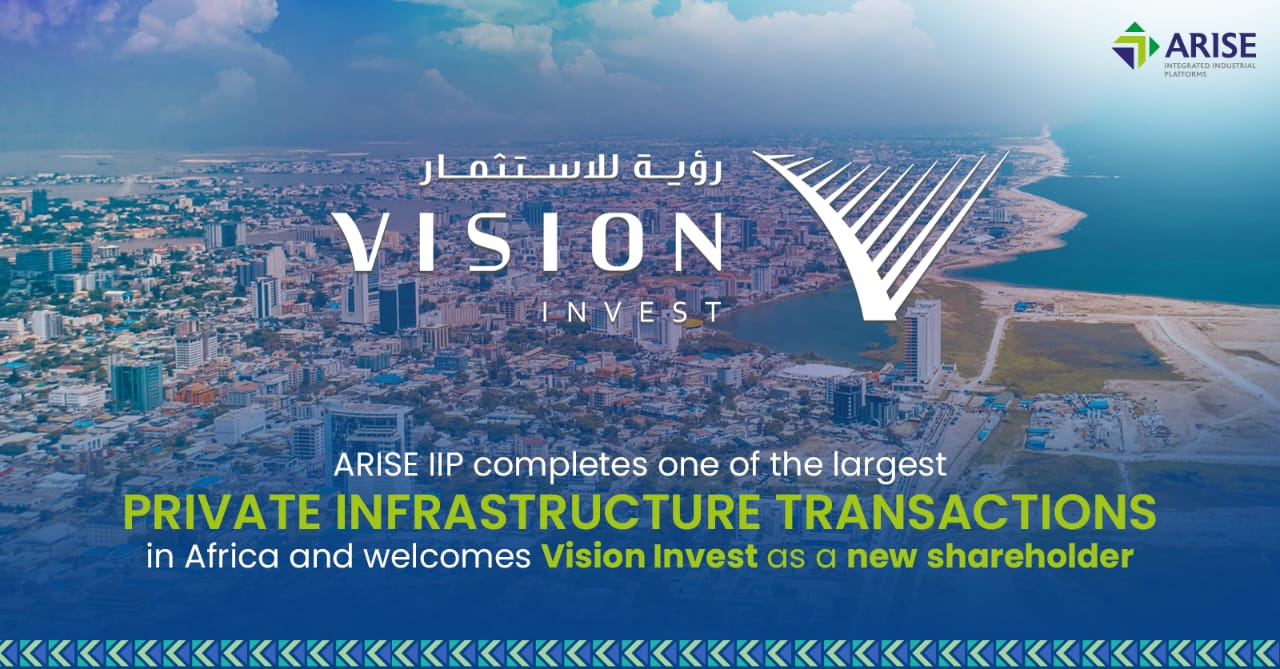
    ARISE Integrated Industrial Platforms (ARISE IIP), developer of the IPR Free Zone, in partnership with Ogun State, Nigeria, is pleased to announce the successful completion of a landmark USD 700 million capital raise, welcoming Vision Invest, a leading Saudi Arabian infrastructure investor and developer, into its shareholder base.

    This transaction marks one of the largest private infrastructure capital raises in Africa to date, with both primary and secondary components. The capital will support ARISE IIP’s continued expansion across the continent and the development of green, inclusive, and sustainable industrial ecosystems.

    The institutional shareholder base of ARISE IIP comprises the founding shareholders, Africa Finance Corporation (AFC) and Equitane, along with the Fund for Export Development in Africa (FEDA), the development impact platform of Afreximbank, and, with this transaction, Vision Invest, the newest shareholder.

    ARISE has always believed in Africa’s promise and the talent driving its growth. The partnership with Vision Invest and the continued support of our institutional shareholders will help us build resilient, self-sustaining industrial ecosystems that deliver long-term value,” said Gagan Gupta, Founder and CEO of ARISE IIP, highlighting the strategic significance of the new investment.

    Commenting on the transaction, Samaila Zubairu, President & CEO of Africa Finance Corporation and Chairman of ARISE IIP, emphasized the alignment between capital and continental development goals: “ARISE IIP has demonstrated what is possible when global capital aligns with Africa’s ambitions. We are proud to deepen our partnership and support ARISE IIP as it scales industrial transformation across the continent.”

    In support of the milestone, Professor Benedict Oramah GCON, President and Chairman of the Board of Directors of Afreximbank, shared his congratulations, stating: “Afreximbank congratulates Arise IIP management on this landmark deal. With this capital increase, Arise IIP will become an even stronger partner of Afreximbank in the drive to promote export manufacturing and industrialization in Africa.

    Echoing this optimism, Marlene Ngoyi, CEO of FEDA, added: “We are pleased to reaffirm our commitment to ARISE IIP by participating in this historic capital raise. ARISE IIP exemplifies the kind of platform that drives sustainable growth and regional integration across Africa.

    From Vision Invest, Mohammad A. Abunayyan, Chairman of Vision Invest, reflected on the alignment of values: “This marks our first direct investment in Africa and a natural extension of our values and impact investment philosophy, which centres on the socio-economic development of the communities in which we invest. We are proud to partner with AFC, FEDA, and Equitane to support economic diversification and local development.”

    Building on this, Omar N. Al-Midani, President and CEO of Vision Invest, concluded: “ARISE IIP represents the ideal platform for Vision Invest’s entry into Africa, combining world-class execution, an institutional shareholder base, and an operating model that focuses on in-country beneficiation. We look forward to building long-term value together.

    Standard Chartered Bank and Norton Rose Fulbright acted as exclusive advisors to ARISE IIP. EFG Hermes and Linklaters advised Vision Invest.

    This announcement underscores the continued confidence of global and regional institutions in ARISE IIP’s ability to deliver infrastructure that drives industrialisation, enhances local value chains, and creates shared prosperity across the continent.

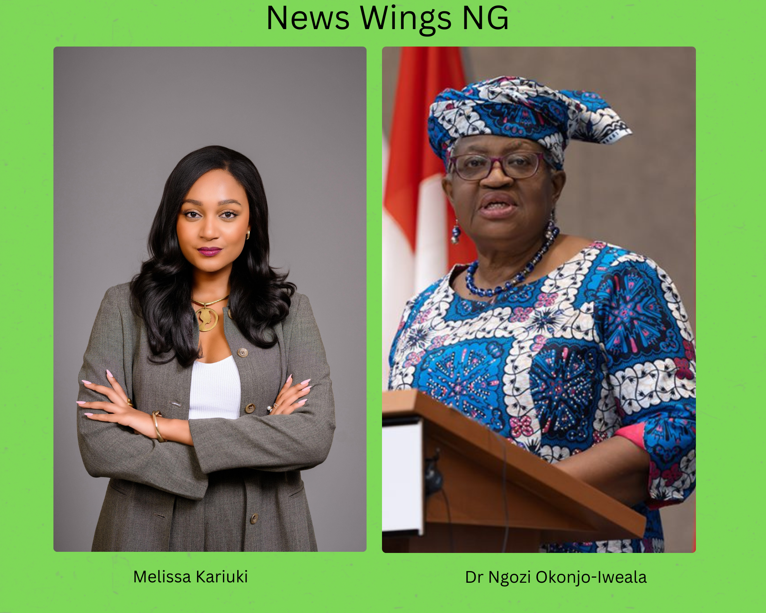
  • Melissa Kariuki, Dr. Ngozi Okonjo-Iweala, others to Speak At WTO Public Forum

    Melissa Kariuki, Dr. Ngozi Okonjo-Iweala, others to Speak At WTO Public Forum

    Melissa Kariuki, Founder and CEO of Whip Music and one of the GRAMMYs’ 13 Women Shaping African Music (2025), Dr. Ngozi Okonjo-Iweala, WTO Director-General and others will speak at the prestigious World Trade Organization (WTO) Public Forum 2025 in Geneva on 18 September 2025.

    This invitation follows Kariuki’s recognition as a member of the Recording Academy (GRAMMYs) and her inclusion on Hotlist Africa’s Top 30 Executives in the African Music Industry (2025), further establishing her as one of Africa’s most influential young leaders at the intersection of creativity, technology, and trade.

    The World Trade Organization (WTO) is the only global organization that formulates and enforces the rules of trade between nations, with 166-member countries representing over 98 percent of global trade and GDP. The Public Forum is the largest global trade policy platform, drawing government leaders, corporate executives, academics, and civil society to discuss the future of trade. Being invited to speak is exceptionally prestigious as it marks Kariuki as a recognized emerging global thought leader.

    Kariuki will speak in a session titled “Bridging Digital Divides Through Local Solutions”, highlighting how enabling digital policies and technology infrastructure can allow African creators to scale globally and strengthen the continent’s role in the world economy.

    “I am honoured to be invited by the WTO to share Africa’s perspective on digital trade and creativity as a driver of global growth. For too long, creativity has been seen as culture, but it is also one of Africa’s highest-potential commodities. With the right digital policies and local solutions, African creators can reach global markets, scale new industries, and shape the future of trade. As a young, African woman in technology and the creative economy, it is a privilege to represent our continent at this global forum and to ensure our voices and solutions are part of the world’s trade agenda.” – Melissa Kariuki.

    The event will feature other distinguished leaders from both the public and private sectors, among them are Pedro Manuel Moreno, Deputy Secretary-General of UNCTAD; Shamika N. Sirimanne, Director of Technology, UNCTAD; Aissatou Diallo, Chief of the Office for Africa at the International Trade Centre; Katherine Wang, Manager of Trade and Supply Chain Policy at Amazon Web Services; Claire Alexandra, Head of International Government Relations for PayPal. Other are Christian Keller, Chair and General Manager of IBM Switzerland; Fancy Too, Ambassador and Permanent Representative of Kenya to the United Nations Office; and Dr. Elizabeth Sidiropoulos, Executive Director of the South African Institute of International Affairs.

    Creativity as Africa’s Next Global Commodity

    Africa’s creative economy, currently valued at US$58.4 billion, accounts for roughly 4 per cent of the continent’s GDP but represents less than 0.3 per cent of global creative exports. For example, in one of Africa’s largest economies, South Africa, the creative sector generated roughly the same amount of revenue as agriculture at US$8.7 billion (R161 billion) in 2020. Analysts predict that with the right digital policies and trade frameworks, African creative exports could reach US$200 billion by 2030, potentially accounting for 10 percent of global creative goods trade.

    Kariuki’s contribution to the WTO Public Forum underscores the growing recognition of creativity not only as cultural expression but also as a strategic commodity with transformative trade potential.

  • Afreximbank Annual Meetings record project preparation deals expected to unlock about US$ 1.0 billion in investments

    Afreximbank Annual Meetings record project preparation deals expected to unlock about US$ 1.0 billion in investments

    attracted an estimated 8,000 participants, including presidents, prime ministers, ministers and business leaders, from across Africa, the Caribbean and beyond

    The 32nd Annual Meetings of African Export-Import Bank (Afreximbank), also known as AAM2025, witnessed a flurry of deal signings with four project preparation transactions signed between the Bank and various entities that are expected to unlock investments valued at about US$ 1.0 billion.

    In an agreement signed by Mrs. Kanayo Awani, Executive Vice President, Intra-African Trade and Export Development, for Afreximbank, and Mrs. Temwani Simwaka, CEO, for NBS Bank Plc (NBS), Malawi, the two institutions executed a Joint Project Preparation Facility Framework Agreement under which they will pool resources to provide early project preparatory financing to progress projects in Malawi from pre-feasibility stage to bankability in a timely manner.

    As set out in the agreement, Afreximbank and NBS will support public and private sector investors by availing financing and technical support services to de-risk projects in priority sectors, including energy, transport and logistics, logistical platforms (such as special economic zones and industrial parks), manufacturing, agro-processing, hospitality and tourism, extractives, solid minerals, and services (such as ICT, healthcare, and creative economy). Embedded in the framework agreement is a capacity building programme that will empower NBS staff to undertake project preparation activities in the medium term.

    Afreximbank and NBS expect to bring onstream investments of about US$ 300 million in Malawi in the near term.

    In another transaction, Afreximbank signed a US$ 4.4-million Project Preparation Facility Agreement in favour of Med Aditus Pharmaceutical Kenya Limited. The facility will be deployed to finance the preparation of feasibility and bankability studies towards the development of a state-of-the-art fill and finish pharmaceutical manufacturing plant, with a production capacity of at least two billion tablets and capsules per annum, located in Kibos, Kisumu County, Kenya.

    The project will improve access to quality, affordable life-saving medicines across the Great Lakes region, contributing to better health outcomes in a region that contends with heavy loads of infectious and other diseases. The project will also facilitate medical and manufacturing blockchain technology transfer to Africa, supporting the long-term growth and strengthening the wider region’s health sector. The project preparation facility will bring onstream assets of about US$ 40 million.

    Mrs. Kanayo Awani, Executive Vice President, Intra-African Trade and Export Development, signed the agreement on behalf of Afreximbank while Dr. Dhiren Thakker, Founder and CEO of Med Aditus Pharma, signed for his company.

    Afreximbank also signed a Heads of Terms agreement for a US$4.4-million project preparation facility in favour of Green Hybrid Power Private Limited. The facility will be deployed towards the preparation of bankability and feasibility studies and procurement of transaction advisors for a 1-Gigawatt (GW) hybrid floating solar photovoltaic power system on Lake Kariba, Zimbabwe.

    The project, to be implemented in two phases, includes a pilot phase targeting a generation capacity of 500 MW to be sold wholly to the Intensive Energy Users Group, a consortium of blue-chip industrial and mining energy users in Zimbabwe, under a “take-or-pay” 20-year power purchase agreement with a cost-reflective tariff. The project is expected to supply affordable and reliable power that will support value-addition and beneficiation of Zimbabwe’s minerals, thereby boosting the country’s foreign exchange earnings.

    The project preparation facility will unlock an investment estimated at US$ 350 million.

    Signing the agreement were Mrs. Kanayo Awani, Executive Vice President, Intra-African Trade and Export Development, on behalf of Afreximbank, and Mr. Eddie Cross, Chairman, for Green Hybrid Power Private Limited.

    Afreximbank, in addition, signed a Project Preparation Facility Heads of Terms Agreement of US$ 4.0 million in favour of Proton Energy Limited, a Nigerian independent power producer. The facility will be deployed towards financing the preparation of feasibility studies and procurement of transaction advisory services for the development of a grid-connected gas-fired power plant with a nameplate capacity of 500 MW in Sapele, Nigeria. The project will commence with an initial generation capacity of 150 MW.

    The project will evacuate the electricity generated primarily to Eko Electricity Distribution Company under a 20-year power purchase agreement with a cost-reflective tariff.

    The facility is expected to bring on stream assets estimated at US$ 300 million.

    Signing the agreement were Mrs. Kanayo Awani, Executive Vice President, Intra-African Trade and Export Development, on behalf of Afreximbank, and Mr. Oti Ikomi, Executive Vice Chairman and CEO, for Proton Energy Limited.

    AAM2025 took place from 25 to 28 June and attracted an estimated 8,000 participants, including presidents, prime ministers, ministers and business leaders, from across Africa, the Caribbean and beyond. It ended with the Annual General Meeting of Shareholders where Dr. George Elombi was appointed the next President of the Bank who succeeds Prof. Benedict Oramah whose tenure is ending after two five-year terms in the position.  

  • Onafriq Celebrates 15 Years: Advancing from Mobile Money Interoperability to Comprehensive Omnichannel Infrastructure

    Onafriq Celebrates 15 Years: Advancing from Mobile Money Interoperability to Comprehensive Omnichannel Infrastructure

    …Onafriq now links 1 Billion Connected Mobile Wallets and 500 Million Bank Accounts Across Africa

    Onafriq, Africa’s largest digital payments network, is celebrating its 15-year anniversary by announcing a significant milestone: close to 1 billion mobile money wallets and 500 million bank accounts are now connected through its infrastructure.

    Starting as a mobile money switch, Onafriq has transformed into a full omnichannel payments network. It facilitates cross-border disbursements, collections, card issuance and processing, offline agent banking services, and FX & treasury services. At its core, Onafriq is providing digital interoperability across mobile wallets, bank accounts, cards, and offline payment channels – bringing Africa closer to a seamless and integrated financial future.

    “We remain fully committed to connecting every individual and business in Africa with each other and the world,” said Dare Okoudjou, founder and CEO of Onafriq. “Fifteen years ago, we set out with a bold ambition: to connect Africa’s mobile money systems and make borders matter less. What we’ve built since then is more than a network – it’s a pan-African infrastructure layer that has evolved in lockstep with the continent’s digital evolution. From mobile money to bank accounts, from remittances to real-time trade – we’ve grown as Africa has grown. I’m incredibly proud of what we’ve achieved and even more excited about the road ahead.”

    From Mobile Wallet Interoperability to Omnichannel Infrastructure 

    Over the past 15 years, Onafriq has progressed from simply connecting mobile wallet schemes to a comprehensive interoperability layer for African finance, supporting various use cases from peer-to-peer transfers and merchant collections to card issuance, agency banking, and remittances. 

    Today, Onafriq’s network connects:

    • 961 million registered mobile wallets
    • 464 million registered bank accounts
    • More than 2,000 cross-border payment corridors

    This robust infrastructure has facilitated access and usage across the continent, enabling everyone from rural beneficiaries of social payments to global fintechs operating in Africa.

    Looking Ahead

    As Onafriq embarks on its next chapter, the company aims to develop a network with greater local relevance while maintaining the scale of its pan-African infrastructure. “We are increasingly focused on creating infrastructure with local depth,” said Okoudjou. “A prime example is Nigeria, where we are developing a unique payments stack that combines the strength of our cross-border network with the regulatory and foreign exchange realities of one of Africa’s most dynamic economies. By building infrastructure that reflects local context, we can enable more relevant use cases – moving beyond large numbers of registered mobile money wallets to foster an ecosystem where usage is active, sustained, and impactful.”

    “With our relentless focus on building the foremost pan-African cross-border payment network, we continue to invest in creating infrastructure with local depth,” said Okoudjou. “A prime example is Nigeria, where we are developing a unique payments stack that combines the strength of our cross-border network with the regulatory and foreign exchange realities of one of Africa’s most dynamic economies. By building infrastructure that reflects local context, we can enable more relevant use cases to foster an ecosystem where usage is active, sustained, and impactful.”

    Onafriq is also exploring blockchain infrastructure and stablecoin integrations to facilitate near-instant, programmable payments – a crucial step towards real-time, interoperable trade across African currencies. These innovations align with the objectives of the African Continental Free Trade Area (AfCFTA) and are designed to help Africa bypass outdated payment systems in favour of a modern, mobile-first financial ecosystem.

    With extensive experience, wide reach, and a proven execution track record, Onafriq remains dedicated to building a payment infrastructure that unlocks prosperity – both across borders and within local communities.