

















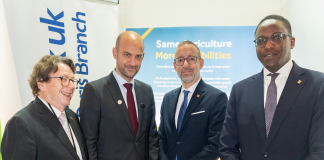

Tag: Founder and Chairman

  • Zenith Bank expands footprint, opens Manchester branch to strenghten Global Financial Connectivity

    Zenith Bank expands footprint, opens Manchester branch to strenghten Global Financial Connectivity


    Zenith Bank Plc has announced the opening of a new branch in Manchester, United Kingdom, in a move aimed at strengthening financial connections between Africa and the United Kingdom while supporting businesses engaged in cross-border trade and investment.

    The official opening ceremony for the new branch is scheduled for Tuesday, March 17, 2026, and is expected to attract government officials from Nigeria and the United Kingdom, regulators, investors, customers and business leaders from both countries.

    The expansion marks another milestone in the bank’s international growth strategy as it continues to position itself as a leading African financial institution, facilitating global trade flows involving Africa.

    According to the bank, the Manchester branch will complement its existing operations in the United Kingdom and serve as a strategic hub for providing corporate banking, trade finance, treasury and related financial services to clients operating across the United Kingdom, Europe and Africa.

    Group Managing Director and Chief Executive Officer of Zenith Bank Plc, Adaora Umeoji, said the expansion reflects the bank’s commitment to strengthening financial connectivity between businesses in developed markets and Africa’s rapidly expanding economies.

    “The opening of our Manchester branch represents another important step in Zenith Bank’s growth as a leading African financial institution connecting businesses and markets across continents. Manchester is one of the United Kingdom’s most dynamic commercial centres, and our presence here will further strengthen financial connections between businesses in the UK and opportunities across Africa’s rapidly expanding markets,” Umeoji said.

    Founded in 1990 by its Founder and Chairman, Jim Ovia, Zenith Bank has grown into one of Africa’s leading banking institutions with a strong capital base and consistent profitability.

    The bank operates more than 500 branches and business offices across Nigeria’s 36 states and the Federal Capital Territory, while maintaining subsidiaries in several African markets including Ghana, Sierra Leone, Gambia and Côte d’Ivoire.

    Beyond Africa, Zenith Bank maintains a presence in major international financial centres including the United Kingdom, France, the United Arab Emirates and China as part of its strategy to support global trade and investment involving African businesses.

    Manchester, one of the United Kingdom’s leading commercial centres, hosts a diverse business community spanning sectors such as manufacturing, logistics, engineering, technology and consumer goods.

    The city’s strong economic base and international outlook make it a strategic location for financial institutions seeking to support businesses operating across multiple global markets.

    Zenith Bank said the Manchester branch will work closely with its London operations and the bank’s broader international network to support clients expanding across markets and seeking new trade and investment opportunities.

    With the launch of the Manchester branch, the bank continues to advance its long-term vision of building a globally connected African financial institution capable of facilitating international commerce and strengthening economic partnerships between Africa and global markets.

  • Access Bank Drives Africa–Europe Trade Corridor at the Paris International Agricultural Show 2026

    Access Bank Drives Africa–Europe Trade Corridor at the Paris International Agricultural Show 2026

    Access Holdings PLC, the parent company of Access Bank Group, has reinforced the leadership of the financial institution in connecting African and European markets as its Group Managing Director and CEO, Innocent C. Ike, officially inaugurated the Nigerian Pavilion at the 2026 Paris International Agricultural Show.

    The event marks a pivotal moment in advancing strategic trade, investment, and agricultural partnerships between Nigeria and France, while positioning Access Holdings at the centre of cross-continental economic integration.

    Representing Aigboje Aig-Imoukhuede, Chairman of Access Holdings and the France–Nigeria Business Council (FNBC), Ike opened the pavilion before an audience of global investors, policymakers, and corporate leaders, signalling Nigeria’s readiness to deepen commercial engagement with Europe and strengthen value chains across the agricultural sector.

    “The Nigerian Pavilion represents readiness, readiness to partner, to invest, and to grow together.” Ike stressed in his opening remarks also reminding the audience that “Paris serves as a gateway into Europe, while Nigeria represents one of Africa’s largest and most dynamic markets. The presence of Nigerian banks here enhances trade finance, investment flows, and cross-border partnerships across continents.”

    The inauguration marks the beginning of a week-long series of engagements aimed at unlocking new investment opportunities, strengthening agribusiness value chains, and enabling greater participation of small and medium-sized enterprises (SMEs) in cross-border trade. As a leading African financial institution with an expanding global footprint, Access Bank, continues to serve as a key enabler of international commerce, providing the financial infrastructure required to connect businesses, markets, and capital across continents.

    A cornerstone of this strategy is the Paris branch of Access Bank UK, which since its establishment in 2023 has played a critical role in facilitating trade and investment between Europe and Africa. Under the leadership of Justin Maria, the branch delivers specialist trade finance, corporate banking, and structured financing solutions that enable European and African businesses to execute cross-border transactions efficiently and scale their international operations.

    Through its active participation in high-level platforms such as the Nigeria Business Forum and the Spotlight Nigeria Business Forum, Access Holdings has strengthened investor confidence, supported capital flows, and reinforced its position as a trusted financial partner for companies expanding into African and European markets.

    The opening ceremony brought together distinguished public and private sector leaders, including Jim Ovia, Founder and Chairman of Zenith Bank Plc; Adaora Umeoji, Managing Director and CEO of Zenith Bank Plc; Umar Dikko Radda, Executive Governor of Katsina State; and Emmanuelle Blatmann, Director of African Affairs at the French Ministry of Foreign Affairs, alongside senior government officials, investors, and corporate executives.

    The Nigerian Pavilion, sponsored by the France–Nigeria Business Council and supported by leading institutions including Access Holdings/Access Bank, reflects the growing momentum behind Nigeria’s global trade ambitions and the strategic role of the Group in facilitating economic connectivity between Africa and the rest of the world.

    As global supply chains continue to evolve, Access Bank remains committed to building bridges between Africa and international markets, supporting trade, enabling investment, and empowering businesses to scale across borders. The Group’s participation in the Paris International Agricultural Show underscores its broader vision of positioning Africa, and Nigeria in particular, as a key player in global commerce.

  • Zenith Bank Marks Successful Public Offer and Achievement of CBN Recapitalization at NGX

    Zenith Bank Marks Successful Public Offer and Achievement of CBN Recapitalization at NGX

    Zenith Bank Plc yesterday marked a significant milestone with a Closing Gong Ceremony at the Nigerian Exchange (NGX), celebrating the successful conclusion of its public offer and the achievement of the Central Bank of Nigeria’s (CBN) recapitalization target.

    The Bank’s recently concluded public offer, which was heavily oversubscribed, contributed ₦350.46 billion to its total capital raise, bringing its capital base to ₦614.65 billion. This positions Zenith Bank comfortably above the ₦500 billion regulatory threshold for banks with international authorization and underscores the strong confidence investors continue to place in the institution’s leadership, performance, and growth strategy.

    Speaking at the ceremony, Dr. Emomotimi Agama, Director-General of the Securities and Exchange Commission (SEC), commended the success of the offer, describing it as a reflection of the market’s strength and integrity. “This capital raise demonstrates the robust capacity of our markets. It’s a clear signal that with sound fundamentals and transparency, Nigeria can efficiently mobilize capital for growth,” he said.

    Also speaking, Alhaji (Dr.) Umaru Kwairanga, Group Chairman of Nigerian Exchange Group (NGX Group), described the milestone as “a testament to strong leadership and a win for our capital markets,” adding that “Zenith Bank’s achievement solidifies its position as a pillar of the financial sector and underscores the market’s faith in its future.”

    In his remarks, Temi Popoola, Group Managing Director/Chief Executive Officer of NGX Group, highlighted the role of innovation in driving the success of the offer. “The oversubscription of Zenith Bank’s offer is a direct result of innovation and collaboration. Our NGX Invest platform was instrumental in broadening access, onboarding a new generation of investors, and deepening market participation,” he stated.

    Reflecting on the achievement, Dr. Jim Ovia, CFR, Founder and Chairman of Zenith Bank Plc, expressed gratitude to the investing public for their trust and support. “This successful capital raise, which secures our regulatory standing, is a vote of confidence in our legacy and our future growth trajectory,” he said.

    Dame (Dr.) Adaora Umeoji, OON, Group Managing Director/Chief Executive Officer of Zenith Bank Plc, described the accomplishment as both a regulatory milestone and a springboard for sustainable growth. She also acknowledged the role of NGX Invest as a vital enabler in achieving the Bank’s goals. “Reaching a capital base exceeding ₦600 billion is not just a compliance achievement; it’s a foundation for the future. Through platforms like NGX Invest, which expanded access and simplified participation, we were able to reach a broader pool of investors. This underscores how innovation within our market ecosystem can drive inclusivity and accelerate growth,” she stated.

    The Closing Gong Ceremony symbolized the beginning of a new chapter for Zenith Bank, one defined by strengthened capacity, innovation, and renewed investor confidence. It also underscored the productive collaboration between the Bank, regulators, and the exchange group in fostering a resilient and dynamic capital market in Nigeria

  • The Alternative Bank, Kanu Heart Foundation Unite to Save 600 Hearts

    The Alternative Bank, Kanu Heart Foundation Unite to Save 600 Hearts

    The Alternative Bank (AltBank), in partnership with the Kanu Heart Foundation (KHF), commemorated World Heart Day with a symbolic 5km walk in Lagos. The walk, which raised awareness on cardiovascular diseases, also marked the kickoff of KHF’s 25th anniversary campaign. Through the campaign, the partners will mobilise resources to fund open-heart surgeries for 600 beneficiaries.

    According to the World Heart Foundation, cardiovascular disease (CVD) remains the world’s leading cause of death, claiming more lives than cancer and chronic respiratory diseases combined. Globally, one in five people die early from CVD, and yet research shows that up to 80% of cases are preventable. Actions as simple as 30 minutes of daily exercise can help address most CVD risks, but worryingly, one in three adults is not moving enough.

    The Founder and Chairman of the Kanu Heart Foundation, football legend Kanu Nwankwo, MON, who himself successfully underwent open-heart surgery during his professional career, at the walk, called on Nigerians to prioritise heart health. He also urged the public to support the ‘₦600 for 600 Hearts’ campaign, which aims to make life-saving surgeries accessible to more people in need.

    As part of the activities, participants received free heart screenings, underscoring the importance of preventive care in tackling heart-related illnesses.

    Addressing participants at the walk in Lagos, Dr. Jekwu Ozoemene, Group Executive at The Alternative Bank, reaffirmed the Bank’s commitment to championing causes that impact lives directly:

    “The Alternative Bank is honoured to walk side by side with the Kanu Heart Foundation in its noble mission to give hope to hundreds of Nigerians who, otherwise, would not be able to access the care they need for a second chance at life. Supporting access to these open-heart surgeries is about restoring hope to families and communities. We are happy to be making a tangible difference.”

    World Heart Day, celebrated globally every September 29, is dedicated to raising awareness of cardiovascular disease, its risk factors, and preventive measures. From individuals and families to schools, communities, and governments, the call is the same: to make equitable heart health a priority and to drive meaningful change.

    Interested donors and supporters can visit the official social media pages of The Alternative Bank and the Kanu Heart Foundation for more details on how to contribute to the “₦600 for 600 Hearts” campaign and help save a life.

  • Zenith Bank marks 35th Anniversary in Grand Style, Recognises Pioneer Customers and Long-Serving Staff

    Zenith Bank marks 35th Anniversary in Grand Style, Recognises Pioneer Customers and Long-Serving Staff

    Amidst pomp and pageantry layered with a mixture of glitz and glamour, Zenith Bank Plc marked its 35th anniversary with a commemorative Chairman’s Dinner at the Eko Convention Centre, Eko Hotels & Suites, Victoria Island, Lagos on Friday, August 15, 2025.

    In recognition of their immense contributions to the success of the brand, the bank also presented commemorative awards and plaques to pioneer customers and long-serving staff, who have served meritoriously for 25 years and above.

    The ceremony brought together key stakeholders of the bank including customers, staff (past and present), regulators, partners, and friends, who all came together to celebrate 35 years of excellent and innovative banking services that has propelled the banking giant to the peak of Nigeria’s financial industry.

    Among the eminent personalities who graced the occasion were the Vice President, Federal Republic of Nigeria, Senator Kashim Shettima, GCON; Governor of Lagos State, Mr. Babajide Sanwo-Olu; Governor of Ondo State, Mr. Lucky Aiyedatiwa; Governor of Taraba State, Dr. Agbu Kefas; Governor of Borno State, Prof. Babagana Zulum; Governor of Delta State, Rt. Hon. Sheriff Oborevwori, who was ably represented by the Deputy Governor, Sir. Monday Onyeme; Alhaji Aliko Dangote, GCON; and former governors Peter Obi and Udom Emmanuel (also an alumnus of Zenith Bank).

    In her welcome address, the Group Managing Director/ Chief Executive of Zenith Bank Plc, Dame Dr. Adaora Umeoji, OON applauded the Founder and Chairman, Jim Ovia, CFR for his foundational role in building the structures for what has today become a shining example of excellence in the Nigerian banking industry and a globally recognised financial institution. She described him as “the Godfather of modern banking and the Nostradamus of our time, who through sheer tenacity, foresight, and uncompromising integrity transformed a modest vision into the financial powerhouse we celebrate today”.

    In his goodwill message, the Vice President, Federal Republic of Nigeria, Senator Kashim Shettima, GCON, a proud alumnus of the bank, praised the Founder and Chairman of Zenith Bank Plc, Jim Ovia, CFR for being at the heart of the very successful brand that today stands as Nigeria’s largest bank by Tier-One capital. According to him, “Long before technology became the bloodstream of global finance, Jim Ovia had already woven it into the DNA of Nigerian banking industry. He introduced innovation not as a fashion but as a philosophy, placing Zenith Bank on a path where excellence is not an ambition but a standard. Yet his true signature is not only on the balance sheet. For Jim Ovia, the people make an institution. His greatest investment has been in human capital – in transferring his experience and sense of adventure to generation after generation of bankers and investors forged at Zenith Bank”.

    Also speaking at the event, the Founder and Chairman of Zenith Bank, Jim Ovia, CFR expressed its immense appreciation to all guests for joining the bank in celebrating this momentous occasion. He thanked the bank’s esteemed customers and shareholders for their trust, confidence and shared vision; the regulators, for their guidance over the years; his friends and partners, for being a constant source of strength; the Zenith Bank family led by the exceptional Group Managing Diector/CEO, Dame Dr. Adaora Umeoji, OON, for their loyalty and commitment; and his beloved wife and family for their love and support.

    Founded in May 1990, Zenith Bank has grown from humble beginnings into one of Africa’s leading financial institutions with branches across the 36 states of the federation and the FCT, Abuja as well as subsidiaries in the United Kingdom, Ghana, Sierra Leone, Gambia, France, UAE and a representative office in China.

  • Zenith Bank emerges Nigeria’s Best Bank at Euromoney Awards for Excellence 2025

    Zenith Bank emerges Nigeria’s Best Bank at Euromoney Awards for Excellence 2025

    Zenith Bank Plc has been named “Nigeria’s Best Bank” at the Euromoney Awards for Excellence 2025, emerging as Nigeria’s standout performer, and clinching the biggest and most coveted country award. The award, which was presented to the bank on Thursday, July 17, 2025 at The Peninsula, London, is a testament to its commitment to delivering exceptional banking services, innovative products and superior value to its customers and shareholders.

    Euromoney’s Awards for Excellence are one of the most highly coveted awards that matter to banks and bankers who matter. The annual Awards for Excellence celebrates financial institutions that demonstrate leadership, innovation, and resilience in their markets, with this year’s edition seeing a record number of over 770 entries from world-class financial institutions including HSBC, Morgan Stanley, CitiBank, Barclays, Standard Bank and Development Bank of Singapore (DBS), amongst others.

    Commenting on the award, the Group Managing Director/Chief Executive of Zenith Bank Plc, Dame Dr. Adaora Umeoji, OON said, “We are absolutely thrilled to be recognized as Nigeria’s Best Bank by Euromoney. This award is not just a testament to our relentless pursuit of excellence, but also a validation of the unwavering trust and confidence our customers have placed in us. We are once again reminded that our success is not just about us, but about the impact we continue to have on the financial ecosystem. We will continue to work tirelessly to support the growth and development of our economy and uphold the highest standards of governance, integrity and transparency that has earned us this recognition”.—– Download Omega News App —–

    She dedicated the award to Zenith Bank’s customers across the globe for their loyalty, and to the Founder and Chairman, Jim Ovia, CFR, for his visionary leadership and commitment to excellence which formed the foundation for the bank’s successes. She also thanked the Board for their guidance, as well as the staff for their unwavering dedication to building a formidable and best in class global financial institution that will outlive generations.

    Zenith Bank’s track record of excellent performance has continued to earn the brand numerous awards including being recognised as the Number One Bank in Nigeria by Tier-1 Capital for the sixteenth consecutive year in the 2025 Top 1000 World Banks Ranking, published by The Banker. The Bank was also awarded Bank of the Year (Nigeria) in The Banker’s Bank of the Year Awards for 2020, 2022 and 2024; Best Bank in Nigeria from 2020 to 2022, 2024 and 2025, in the Global Finance World’s Best Banks Awards; Best Bank for Digital Solutions in Nigeria in the Euromoney Awards 2023; and was listed in the World Finance Top 100 Global Companies in 2023.

    Further recognitions include Best Commercial Bank, Nigeria for five consecutive years from 2021 to 2025 in the World Finance Banking Awards and Most Sustainable Bank, Nigeria in the International Banker 2023 and 2024 Banking Awards. Additionally, Zenith Bank has been acknowledged as the Best Corporate Governance Bank, Nigeria, in the World Finance Corporate Governance Awards for four consecutive years from 2022 to 2025 and ‘Best in Corporate Governance’ Financial Services’ Africa for four consecutive years from 2020 to 2023 by the Ethical Boardroom.

    The Bank’s commitment to excellence saw it being named the Most Valuable Banking Brand in Nigeria in The Banker’s Top 500 Banking Brands for 2020 and 2021, Bank of the Year 2023 and 2024 at the BusinessDay Banks and Other Financial Institutions (BAFI) Awards, and Retail Bank of the Year for three consecutive years from 2020 to 2022 and in 2024 at the BAFI Awards. The Bank also received the accolades of Best Commercial Bank, Nigeria and Best Innovation in Retail Banking, Nigeria, in the International Banker 2022 Banking Awards.

    Zenith Bank was also named Most Responsible Organisation in Africa, Best Company in Transparency and Reporting and Best Company in Gender Equality and Women Empowerment at the SERAS CSR Awards Africa 2024; Bank of the Year 2024 by ThisDay Newspaper; Bank of the Year 2024 by New Telegraph Newspaper; and Best in MSME Trade Finance, 2023 by Nairametrics. The Bank’s Hybrid Offer was also adjudged ‘Rights Issue/ Public Offer of the Year’ at the Nairametrics Capital Market Choice Awards 2025.

  • Zenith Bank Tops Nigerian Chart Again In 2025 World Banks’ Ranking, Ranked 581st Globally With $2 Billion Tier-1 Capital

    Zenith Bank Tops Nigerian Chart Again In 2025 World Banks’ Ranking, Ranked 581st Globally With $2 Billion Tier-1 Capital

    Zenith Bank Plc has once again retained its position as the Number One Bank in Nigeria by Tier-1 Capital for the sixteenth consecutive year, according to the 2025 Top 1000 World Banks’ Rankings published by The Banker, a publication of the Financial Times Group, United Kingdom.

    In the global standings, Zenith Bank was ranked 581st in the world, backed by a solid Tier-1 Capital base of $2 billion. This firmly places the Nigerian banking giant among the leading financial institutions globally.

    The global ranking featured in the July 2025 edition of The Banker was based on Tier-1 capital figures as of the end of 2024. Tier-1 capital remains the most widely recognized metric used by international financial bodies and analysts to assess the strength and stability of banks worldwide.

    Commenting on this achievement, the Group Managing Director/CEO of Zenith Bank Plc, Dame (Dr.) Adaora Umeoji, OON, said, “We are thrilled to have retained our position yet again as the Number One Bank in Nigeria by Tier-1 capital for the 16th consecutive year.

    “This achievement is a reflection of the bank’s robust financial performance, prudent risk management and steadfast dedication to delivering exceptional value to our customers and stakeholders”.

    She thanked the Founder and Chairman, Jim Ovia, CFR, for his visionary and transformative leadership, which has played a pivotal role in cultivating a resilient and thriving institution.

    Dame (Dr.) Umeoji also expressed her deepest appreciation to the bank’s esteemed customers for their continued loyalty to the Zenith brand, the Board for the sound corporate governance, and the staff for their relentless & tireless efforts in ensuring the bank’s success.

    Tier-1 Capital described capital adequacy, the core measure of a bank’s financial strength from a regulator’s perspective.

    According to the ranking, Tier-1 Capital, as defined by the Bank for International Settlements (BIS) guidelines, includes loss-absorbing capital, i.e., common stock, disclosed reserves, retained earnings, and minority interests in the equity of subsidiaries that are less than wholly owned.

    A strong Tier-1 capital ratio boosts investor and depositor confidence, indicating the Bank is well-capitalised and financially stable.

    According to the audited financial results for the 2024 financial year presented to the Nigerian Exchange (NGX), the Bank recorded a double-digit growth of 86% in gross earnings, increasing from N2.13 trillion in 2023 to N3.97 trillion in 2024.

    This growth was driven by a 138% increase in interest income, supported by investment in high-yield government securities, and growth in the Bank’s loan book. Zenith Bank’s profit before tax (PBT) rose by 67%, reaching N1.3 trillion in 2024 from N796 billion in 2023.

    However, this performance saw the bank record an unprecedented total dividend payout of N195.67 billion at N5.00 per ordinary share in the 2024 financial year.

    Zenith Bank’s track record of excellent performance has continued to earn the brand numerous awards including being recognised as the Bank of the Year (Nigeria) in The Banker’s Bank of the Year Awards for 2020, 2022 and 2024; Best Bank in Nigeria from 2020 to 2022, 2024 and 2025, in the Global Finance World’s Best Banks Awards; Best Bank for Digital Solutions in Nigeria in the Euromoney Awards 2023; and being listed in the World Finance Top 100 Global Companies in 2023.

    Further recognitions include Best Commercial Bank, Nigeria for four consecutive years from 2021 to 2024 in the World Finance Banking Awards and Most Sustainable Bank, Nigeria in the International Banker 2023 and 2024 Banking Awards. Additionally, Zenith Bank was acknowledged as the Best Corporate Governance Bank, Nigeria, in the World Finance Corporate Governance Awards from 2022 to 2024 and ‘Best in Corporate Governance’ Financial Services’ Africa for four consecutive years from 2020 to 2023 by the Ethical Boardroom.

    Zenith Bank’s commitment to excellence saw it being named the Most Valuable Banking Brand in Nigeria in the Banker Magazine Top 500 Banking Brands for 2020 and 2021, Bank of the Year 2023 and 2024 at the BusinessDay Banks and Other Financial Institutions (BAFI) Awards, and Retail Bank of the Year for three consecutive years from 2020 to 2022 and in 2024 at the BAFI Awards.

    The Bank also received the accolades of Best Commercial Bank, Nigeria and Best Innovation in Retail Banking, Nigeria, in the International Banker 2022 Banking Awards.

    Zenith Bank was also named Most Responsible Organisation in Africa, Best Company in Transparency and Reporting and Best Company in Gender Equality and Women Empowerment at the SERAS CSR Awards Africa 2024; Bank of the Year 2024 by ThisDay Newspaper; Bank of the Year 2024 by New Telegraph Newspaper; and Best in MSME Trade Finance, 2023 by Nairametrics. The Bank’s Hybrid Offer was also adjudged ‘Rights Issue/ Public Offer of the Year’ at the Nairametrics Capital Market Choice Awards 2025.

  • Google Cloud Celebrates First Cloud Region in Africa, Empowering Continental Digital Transformation

    Google Cloud Celebrates First Cloud Region in Africa, Empowering Continental Digital Transformation

    Today, Google Cloud officially celebrated the opening of its first African cloud region in Johannesburg, a significant milestone in Google’s $1 billion investment pledge to help accelerate Africa’s digital transformation.

    Operational since January 2024, the Johannesburg cloud region directly supports African businesses and multinational corporations operating on the African continent by providing access to cutting-edge technologies: innovative AI and machine learning, powerful data analytics, and comprehensive security solutions. This enables organizations to improve operational efficiency, build groundbreaking tools, and ultimately unlock new opportunities for growth.

    Google Cloud’s region builds on wider infrastructure investments into the continent. In May 2024, Google Cloud announced a new fibre optic cable route from Kenya to Australia – Umoja – which will join Equiano and now the Johannesburg Google Cloud region to form an initiative called Africa Connect that will enhance network access, making it faster, more reliable, and more affordable. These infrastructure investments are crucial for bridging the digital divide and ensuring that everyone, regardless of their location, can benefit from the digital revolution.

    His Excellency Cyril Ramaphosa, President of the Republic of South Africa said: “The Google Cloud region in Johannesburg is a valuable investment in South Africa, fostering innovation across our economy. Google’s growing presence will benefit the people of South Africa and the rest of Africa by allowing firms and entrepreneurs to access the powerful potential of AI, transforming nearly every part of the economy.”

    Thomas Kurian, CEO, Google Cloud said: “Google’s longstanding commitment to Africa takes a significant step forward with the launch of the Johannesburg cloud region. By bringing cutting-edge cloud and AI technologies closer to the business and developers that are fueling the local economy, we hope to accelerate African innovation, bringing sustainable growth across the continent.”

    Held at the Gallagher Convention Centre in Johannesburg, the launch event featured keynote addresses from industry and government leaders, including Tara Brady, President, Google Cloud Europe, Middle East and Africa; Alex Okosi, Managing Director, Google Sub-Saharan Africa; and Honorable Minister Solly Malatsi, South Africa’s Minister of Communications and Digital Technologies, demonstrating the revolutionary potential of cloud technology for African businesses and individuals. Business and technical tracks, along with a partner expo, provided attendees with valuable insights and hands-on experience with Google Cloud’s advanced technologies. The event also showcased Google Cloud’s extensive partner network, featuring over 20 sponsors and exhibitors. Premier sponsors included Accenture, ADG, Deimos, Deloitte, Digicloud and Liquid C2.

    The agenda also highlighted customer success stories and executive insights from the likes of 4G Capital, FNB, Government of Benin, Healthbridge, Jaguar Land Rover, Moniepoint, Openserve, Pepkor, Salus, Smollan, Syft, Travelstart, and Vodacom.

    Further demonstrating its commitment to Africa, Google Cloud provides people and businesses with enablement and training on the latest cloud technologies and sustainable business practices. Programs like Cloud OnBoardCloud Hero and Google Hustle Academy are equipping learners and business owners across the continent with critical skills in generative AI, machine learning, application and infrastructure modernization, data and analytics, and digital marketing. Since 2022, Hustle Academy has successfully trained over 15,000 SMBs in Kenya, Nigeria, and South Africa and the 2025 edition will continue to emphasize AI-powered business training.

    Google Cloud is also a driving force behind Africa’s vibrant startup scene. Through programs like Google for Startups Accelerator Africa, Google Cloud has been instrumental in supporting over 260 startups across 17 African countries. Participating startups in the Accelerator Africa program can receive up to $350,000 in Google Cloud credits to build and scale their businesses. These startups have achieved remarkable success, collectively raising over $600 million in follow-on funding, surpassing funding levels seen by other startups in the African tech sector. This support has also translated into tangible growth, with a 31% increase in employment and a 25% increase in monthly recurring revenue among the participating startups. 

    According to a Public First digital impact study released in Sep 2024, Google Cloud, together with Google Search, Google Play, YouTube, and Google advertising tools delivered $16 billion of additional economic activity for Sub-Saharan businesses, nonprofits, publishers, creators, and developers in 2023. Public First found that every $1 invested in digital technology in the region will generate over $2 in economic value by 2030, with an even greater return in front-runner nations.

    Customers have hailed the Google Cloud service. According to Strive Masiyiwa, Founder and Chairman of Cassava Technologies and Econet Group said: “My longstanding aspiration for Africa to lead in the digital age takes a monumental leap forward with Google Cloud’s Johannesburg region. This development is a direct catalyst for African businesses, igniting innovation, creating jobs, and driving economic prosperity through the power of artificial intelligence. Cassava Technologies sees this as a transformative moment, laying the essential groundwork for Africa’s digital future.” 

    Vukani Mngxati, CEO of Accenture in Africa said: “The launch of Google Cloud’s Johannesburg region marks a significant leap forward for Africa,” said. “By bringing resilient cloud capabilities to the continent, Google Cloud is empowering businesses to unlock new levels of agility and scalability. Accenture is committed to working alongside our clients to harness these advancements, enabling them to drive impactful innovation and build future-ready organizations.”  

    Joe Eshun, Managing Partner Businesses, Deloitte Africa said: “This is a transformative moment for African businesses. Google Cloud’s Johannesburg regional work can provide the foundation for a new wave of digital innovation, giving companies access to the same cutting-edge AI and cloud services enjoyed by businesses around the world. We at Deloitte are thrilled to help our clients embrace this infrastructure to help accelerate their digital transformation journeys.” 

    Jason Peisl, CIO of Pepkor, said: “Pepkor IT celebrates the launch of the Google Cloud Region in Johannesburg, a milestone that deepens our six year strategic partnership and accelerates digital transformation in South Africa; this local investment by Google Cloud enhances user experiences, accelerates data-driven insights, and optimizes costs, empowering Pepkor IT to deliver greater customer value while positioning them as an employer of choice by offering access to cutting-edge technologies and collaborative opportunities with a global leader, ultimately fostering a culture of continuous learning and growth for our workforce at the Southern tip of Africa.”

    Google Cloud is the new way to the cloud, providing AI, infrastructure, developer, data, security, and collaboration tools built for today and tomorrow. Google Cloud offers a powerful, fully integrated and optimized AI stack with its own planet-scale infrastructure, custom-built chips, generative AI models and development platform, as well as AI-powered applications, to help organizations transform. Customers in more than 200 countries and territories turn to Google Cloud as their trusted technology partner.

  • Experts Warn Government Against Implementing Proposed Additional 20 Percent Ad-Valorem Tax on Non-Alcoholic Beverages

    Experts Warn Government Against Implementing Proposed Additional 20 Percent Ad-Valorem Tax on Non-Alcoholic Beverages

    …To Avert Economic Woes

    As the controversy surrounding the proposed additional 20 per cent ad-valorem tax on non-alcoholic drinks mounts, economic experts have warned of the dire consequences it would create if the government proceeds with the introduction of the additional excise tax, taking into view, the devastating effect of the recent N10 (Ten Naira) per litre excise tax.

    The experts, Olufemi Awoyemi, Founder and Chairman, and Teslim Shitta-Bay, Chief Economist /Managing Editor, both of Proshare Limited, Nigeria’s foremost Financial Information Hub, and Taiwo Oyedele, a Fiscal Policy Partner and Africa Tax Leader at PricewaterhouseCoopers (PWC) a reputable accounting firm, opined that the new ad-valorem or percentage tax of 20 per cent on carbonated soft drink products could put some revenue gains on government coffers, but its adverse impact on the economy would outweigh the gains.

    Their viewpoints came on the heels of the recent sectoral heads meeting of the carbonated soft drinks sub-sector of the Manufacturers Association of Nigeria (MAN) in Lagos, where they lamented that since the introduction of the N10 [Ten Naira] per litre excise tax on soft drinks, there has been a serious decline in volume and revenue which was at –10 per cent between June and September 2022 and estimated to reach –25 per cent by the end of the year.

    Awoyemi said while it is good for the government to generate revenue through its tax policy, there is a need for a balance to create an environment for the manufacturing companies to thrive, as they have just recovered from the coronavirus (COVID-19) pandemic, foreign exchange challenges, high cost of raw materials and technology adoption, among others.

    He posits that the proposed additional 20 per cent ad-valorem tax on soft drinks will impact negatively on the government, manufacturing companies, and citizens, and should be done in a way that recognises the rate of economic recovery, which means in relation to their ability to be more efficient.

    He said this calls for critical review because if the government only looks at the money that will be generated without its effect on the soft drink manufacturers which will shut down their production plants due to revenue shortfalls and the layoff of workers, together with the high cost of the products, it would be catastrophic to the nation.

    “The ad-valorem tax can be done in a way that recognises the rate of economic recovery, by taxation in relation to efficiency and productivity while considering the social and fiscal implications of it, which includes the timing of the tax and the rate of increase. Putting these factors into consideration will prevent the lingering economic catastrophe and will prevent policymakers from having a militarised economic mindset that scares investors,” the economic expert enthused. 

    “If the government looks only at the economic gains without what the soft drink sector will go through, without an equilibrium, there will be a conundrum, and that means government plans will be defeated,” Awoyemi stated.

    While affirming that it is economically advisable to adhere to the International Monetary Fund (IMF) and the World Bank recommendations on the improvement of certain areas of the economy through taxation, it should be looked at from what obtains in the country and not in other climes.

    “I believed the tax advocates had no social impact assessment before proposing the excise tax on carbonated drinks. The one-sided narrative that considered economic justification of taxes without social impact assessment has unintended consequences,” he averred.

    On the issue, Shitta-Bay asserted “a tax is designed to create an environment for expansion, consumption, and productivity, so you need a tax that is not primitive”.

    He said “the scale of the tax in the carbonated soft drink sector is too high., that the proposed 20 ad-valorem tax on the value of the product plus a recent N10 per litre excise tax will create difficulties for manufacturers in the sector.

    The renowned economist explained that the immediate pain points would include the high unit cost of products, fall in demand, decline in corporate revenues, lower foreign direct investment (FDI), and rising job losses.

    Teslim added that if the ad-valorem tax is to reduce sugar intake, it would be worthy of note to state that sugar consumption in Nigeria is one of the lowest consumers on the planet, with 8 kg per person, while the United Kingdom records 36 kg per person and the United States of America 40 kg per person.

    Oyedele stated, “We know the government needs money because it does not have enough to fund critical infrastructure, overheads and the rest of them, and the best thing to do is to strike a balance, that delicate balance, as to what to task, what rate of tax would be appropriate for each sector and when to impose that tax.”

    He said the Federal Government should fix an excise tax that should not be burdensome to the soft drink sector, for the companies to thrive since they contribute hugely to the country’s GDP, and employment level.

    “It doesn’t mean whether the recommendation is coming from the World Bank, IMF or the ECOWAS committee, the government should sit and say to itself, what should l do for my economy at this particular time? It should also look at the products, like soft drinks, how critical it is to Nigerians whose income per head is very low,” Oyedele affirmed.

  • Nigeria and Nigerians must explore opportunities in the Digital Economy to eradicate poverty- Danbatta

    Nigeria and Nigerians must explore opportunities in the Digital Economy to eradicate poverty- Danbatta

    The Executive Vice Chairman/ CEO, Nigerian Communications Commission, Professor Umar Garba Danbatta on Thursday addressed the 9th Lagos Public Relations Stakeholders’ Conference on Leadership and Poverty Eradication.

    The EVC, represented by Mrs. Nnena Ukoha, Head, Corporate Communications, called on Nigerians to explore opportunities in the Digital Economy to eradicate poverty in the country.

    Speaking on the topic, Poverty Eradication in Nigeria: Leveraging Opportunities in a Digital Economy, he noted that ”For most developing countries, particularly those with large populations, inadequate infrastructure has made it difficult to participate as equal partners in the worldwide enterprise of knowledge production and dissemination.  This portends an unequal distribution of access, resources and opportunities in this new economy, the Digital Economy.  To avert the birth of a new type of poverty (Information Poverty), the ICT gap (digital divide) between the developed and developing nations must be bridged.”   

    That Nigeria like most developing nations is not enjoying the full benefits of the ICT revolution due to inadequate telecommunication infrastructure, capacity to maintain existing infrastructure, and policies for equitable public participation as producers and consumers of information and knowledge.

    “A nation’s development is measured in economic terms such as per capita income, Gross Domestic Product (GDP), and Gross National Product (GNP), among other indices. Indices such as level of literacy, social development, human capital development, cultural innovation and technological preparedness are not regarded as a measure of development.  If we must tap into the ICT revolution, then it is time for a paradigm shift!  The traditional economic terms are not a reflection of the new age of the Digital Economy “he said.

    On efforts made by the Nigerian government, “There are several past and ongoing efforts by the Nigerian Government to alleviate poverty through ICT using organizations and programmes like the National Information Technology Agency (NITDA), using the offices of the Nigerian Postal Service (NIPOST) across the country as ICT hubs, the Universal Service Provision Fund (USPF) to ensure that telecommunications services are accessible to the widest number of people (and communities) at affordable prices.   USPF has poverty-reducing activities like the Community Resource Centers, USPF Hackathon, RUBI Rural Broadband Initiative,  UnICC University InterCampus Connectivity,  BTS Base Transceiver Stations, IRC Information Resource Centres, SKC School Knowledge Centres, and the EHealth Project. “

    The EVC said that “NCC will continue to support the vision of the present government to put Nigeria amongst the top twenty in the comity of Nations and to align our developmental goals in keeping with the seventeen United Nations Sustainable Development Goals (SDGs) but particularly the goal to eradicate extreme poverty for all people everywhere which is currently measured as people living on less than $1.25 a day, by year 2030. 

    He listed initiatives at the NCC directly or indirectly target poverty eradication to include;

    “Advanced Digital Appreciation Programme: Transforming the Academics: Advanced Digital Appreciation Programme for Tertiary Institutions, ADAPTI is aimed at bridging the digital divide existing in academia with the provision of computers and other ICT facilities to equip the lecturers and other experts in order to improve ICT skills and also to enrich the students. The overriding objective of this intervention has been to elicit the pervasive application of ICT skills in academia for enhanced staff output, institutional efficiency, and student enculturation to e-based learning for sustainable national growth.” 

    “Digital Awareness Programme (DAP): this is a special intervention programme to address the digital information knowledge gap in the country, especially among the teeming youthful population.  On the last count, the DAP Project supports 229 Secondary Schools across the Six (6) Geopolitical Zones of Nigeria, including the Federal Capital Territory. The strategy in this programme is to expose schools and colleges to Information and Communications Technology (ICT) awareness, usage and application by facilitating access to ICT tools by the provision of twenty-one (21) Desktop Computers, Local Area Network, Printers, Scanners, VSAT Dish and deployment of one Year Bandwidth Subscription for Internet Access.”

    “NCC- Digital Bridge Institute (DBI) Projects: Nigeria’s ICT flagship institution, the Digital Bridge, DBI, came into existence in 2004 to impact on the national ICT human capital building efforts by bridging the ICT knowledge gap.” 

    “Frequency Auction: Contributing to National Purse: The Nigerian telecom regulator has contributed to the Federation Account from proceeds of frequency auctions and licensing. The frequencies auctioned, are in turn used for the deployment of services for poverty reduction and the benefit of the citizenry. The Commission has a clear understanding of this value chain and is determined to uphold it. “

    “Value Added Services (VAS): Telecommunication has given birth to several value-added services that open up benefits to all cadre of people irrespective of location and level of education. These VAS are great channels for revenue generation. Some VAT are content development, Phone repair network, IT device accessories sales market (phone pouches, screen covers etc), Ringback tones, and even government agencies providing service on telecom platform e.g NAFDAC – drug authentication code. “

    On broadband and poverty , “The Nigerian National Broadband Plan 2020–2025 (the “Broadband Plan”) devotes an entire section to targets, strategies and roadmaps to promote pervasive broadband deployment, increased broadband adoption, usage and availability to all at affordable prices.  These all point to government’s commitment to harmonizing and utilizing the benefits derivable from ICT for the good of all. “

    “In 2020, the latest National Broadband Plan was approved to foster fuller economic exploitation of ICTs. This means that there will be more pervasive deployment and usage of ICT to push the development and economic attractiveness of the nation.”

    He assured that The Federal Government of Nigeria is committed to sustainable development of the ICT subsector for the growth of the economy and the eradication of poverty.  “This was made evident during the just concluded Communications sector retreat where the Ministry of Communications and the agencies under it converged to chart a five-year plan that would make communications services, affordable, accessible, and available to all persons in Nigeria.”

    He concluded that “The credit for Nigeria’s ambitious broadband pursuit is traced to the potentials and prospects of broadband technology, the ease of deployment and the vast opportunities available through it.  The Commission will continue to put strategies in place to pursue the last mile deployment of broadband. This would ensure small businesses are positioned to compete globally and communities and individuals are able to create wealth through access to ICT.”

    “By providing access to information, making markets more efficient, fostering social inclusion, and equalizing opportunities in rural areas, ICT offers an innovative and unprecedented tool to directly reduce poverty.”

    Other speakers at the event include; Founder and Chairman, Heirs Holdings, Mr. Tony Elumelu; Mr. Segun Ajayi-Kadir, Director General, Manufacturers Association of Nigeria (MAN); Sheila Ojei, Director Strategy, Funding and Stakeholders Management, LSETF; The Commissioner for Women Affairs and Poverty Alleviation, Lagos State, Mrs. Cecilia Bolaji Dada and Dr. Oluseye Ajuwon, Economist and Consultant, University of Lagos.

  • 9th Lagos PR Stakeholders Conference to Adress Leadership and Poverty Eradication

    9th Lagos PR Stakeholders Conference to Adress Leadership and Poverty Eradication

    The Lagos State Chapter, the premier branch of the Nigerian Institute of Public Relations (NIPR) in collaboration with Addefort Limited, today announced that the ninth Lagos Public Relations Stakeholders Conference will address Leadership and Poverty Eradication at the MUSON Centre, Lagos on Thursday, August 18, 2022.

    The Lagos Public Relations Stakeholders’ Conference is a bridge-building initiative to interact and proffer solutions to the social, political, and economic challenges plaguing our nation.

    This edition themed: Conversations on Leadership and Poverty Eradication, is expected to feature distinguished speakers including; the Governor of Lagos State, Babajide Sanwo-Olu; Mr. Tony Elumelu, Founder and Chairman, Heirs Holdings; Prof. Umar Garba Danbatta, Executive Vice Chairman/ CEO, Nigerian Communications Commission; Mr. Segun Ajayi-Kadir, DG, Manufacturers Association of Nigeria; Mr. Kayode Pitan, Managing Director, Bank of Industry; Tejumola Abisoye, Executive Secretary, Lagos State Employment Trust Fund (LSETF); Hon Cecilia Bolaji Dada, Commissioner of Women Affairs and Poverty Alleviation, Lagos State and Dr. Oluseye Ajuwon, Economist and Consultant, University of Lagos.

    Speaking on the conference, the Chairman, Lagos NIPR, Mrs. Comfort Obot Nwankwo explained that the theme for this year’s edition is timely, adding that the Institute is committed to setting agenda for stakeholders’ engagement and leading the discussion to reawaken national consciousness.

    She noted that, eradicating poverty in all its forms remains one of the greatest challenges facing humanity; Nigeria is not an exemption, despite the efforts of government in the country, too many are still struggling for the most basic human needs.”

    According to Mr. Olabamiji Adeleye, Conference Coordinator & Lead Consultant, Addefort Limited, Participants at the conference will include; Representatives from Government, Public Relations Practitioners, Economic Experts, The United Nations, Embassies, Corporate Organisations, Institutions, NGOs, HODs of relevant Agencies, and the media among other stakeholders.

  • African brands surge to 17% of the Top 100 brands in Africa

    African brands surge to 17% of the Top 100 brands in Africa

    …Dangote, GT Bank, Channels TV, DSTV and Coke lead the list of the most admired brands in Nigeria.

     Today Brand Africa unveiled the 12th annual Brand Africa 100:  Africa’s Best Brands 2022 rankings of the Top 100 most admired brands in Africa at a live event at Eko Hotel & Suites in Nigeria. 

    Against a backdrop of internal focus as a consequence of an urgent rebuilding of economies devastated by the COVID-19 pandemic and the acceleration of AfCFTA’s goal of driving greater intra-African trade, after a 5-year decline, African brands have surged 4% to 17% from an all-time low of 13% in 2020 and 2021 in the 2022 Brand Africa 100 | Africa’s Best Brands survey and ranking of the best brand in Africa.

    Nigerian brands, Dangote (#22), Glo (#32), Jumia (#42) and Nasco (#75) are among the 17 African brands that have heralded a 4% surge by African brands to 17% share of the Top 100 brands in Africa.

    Overall, South Africa’s MTN, has returned to the Top 10 as the highest-ranking African brand and traded places with Dangote as the #1 African brand recalled when prompted to consolidate its status as the #1 African brand.

    Dangote, the pre-eminent African brand founded in 1981 by Nigerian Aliko Dangote, emerged as the #1 brand that symbolises African pride in a question where Brand Africa sought to establish which brand in Africa is a flag carrier and embodiment of rising optimism and pride in Africa. South Africa, led by MTN, leads the African list, with Nigeria, led by Dangote, the overall #1 brand, at 28%, and Kenya with flag carrier, Kenya Airways, at 8% and Ethiopia, with its flag carrier brand, Ethiopian Airline at 4%.

    Non-African brands, led by overall pace-setter Nike for the 5th consecutive year, continue to dominate with a share of 83% of the most admired brands in Africa.  Coca Cola, which has been in the Top 5 for 10 consecutive years, is the #1 overall most admired brand in Nigeria.

    In a separate list of the Top 25 most admired financial services brands, African brands, led by Nigeria’s GT Bank for the third consecutive year, dominate the rankings with 68% of the share to 32% for non-African brands.

    DStv, has consolidated its position as the #1 African media brand for the second year running, while Channels TV led as the #1 Nigerian media brand, in a category that is fast going digital and mobile.

    Recognising that while the rebound in African brands is notable, the results will not be sustainable without committed and inspirational leadership, in 2022, Brand Africa recognised those leaders who are the catalyst for growth for Made in Africa brands both in corporate and in those who have championed and supported the development of great local brands in supporting industries. GT Bank’s Group CEO, Segun Agbaje and Nigerian doyenne of marketing, founder and chairman of Troyka Group, Dr. Biodun Shobanjo were awarded the inaugural Africa Brand Leadership Excellence awards for inspiring brand-led excellence that drives the growth of made in Africa brands.

    “As we emerge out of the pandemic and Africa seeks to assert itself, the results are very inspiring and bode well for an African renaissance led by competitive world-class African brands,” says Thebe Ikalafeng, Founder and Chairman of Brand Africa and Brand Leadership.

    “With increased number of countries and greater sample size this year, more than ever, and especially so during the pandemic, mobile proved to be  the effective tool for us to reach and access respondents across the continent,” said Bernard Okasi, Director of Research, GeoPoll, which has been the lead data collection partner since 2015.

    Karin Du Chenne, Chief Growth Officer, Africa Middle East for Kantar, which has been the insight lead for Brand Africa since inception in 2010 says, “despite volumes of brands analysed as a results of increased sample size in terms of respondents and countries, the survey continues to yield a very consistent picture of brands and trends that are transforming the continent.”

    Now in its 12th year, every year on or around Africa Day, 25 May, Brand Africa releases the results of the survey on the most admired brands in Africa based on a survey across 29 countries that represent as much as 85% of the continent’s GDP and population.  The 2022 survey was conducted between March and April 2022 and yielded over 80,000 brand mentions and over 3,500 unique brands.

    The Brand Africa 100 results will be published in the June issue African Business magazine which on sale globally in June 2022 and will be available online to subscribers on www.africanbusinessmagazine.com.

    The 2022 Brand Africa 100: Africa’s Best Brands were organised by Brand Africa partners in Nigeria, AT3 Resources and Open Squares Africa, and supported by the Central Bank of Nigeria, South African Tourism, NQR, Africa Media Agency and BCW Africa.

    For Information on the Brand Africa agenda, initiatives and partners and specifically the Brand Africa 100:  Africa’s Best Brands Rankings visit www.brand.africa and follow the results on #BrandAfrica100 and #AfricasBestBrands2022.