
Tag: Fraud

  • Equality Now calls on African governments to strengthen laws on sexual violence and women’s rights

    Equality Now calls on African governments to strengthen laws on sexual violence and women’s rights

    Millions of women and girls remain without adequate legal protection due to the failure of African governments to enact and effectively enforce national laws and regional agreements, Equality Now warned at the African Commission on Human and Peoples’ Rights’ (ACHPR) 87th Ordinary Session in Banjul, The Gambia.

    Esther Waweru, Associate Director for Legal Equality at Equality Now, delivered a statement to the ACHPR on May 12, 2026, calling on African Union (AU) Member States to do more to address sexual violence, female genital mutilation (FGM), online safety, sexual and reproductive healthcare access, and discriminatory matrimonial property rights.

    “Millions of women and girls across Africa live under laws and systems that don’t uphold their human rights. Countries have made binding commitments to advance gender equality, but gaps in legal protections, weak implementation of laws, and poor accountability are leaving many without equal rights, safeguards, or justice. African governments must move beyond rhetoric to deliver the legal reforms, protections, and accountability mechanisms women and girls urgently need,” Waweru explains.

    Rape laws in Africa continue to fail survivors of sexual violence

    Equality Now’s report Barriers to Justice: Rape in Africa, Law, Practice and Access to Justice analysed rape laws across 47 countries and found significant shortcomings. Sexual violence laws in some countries still require proof that physical force, threats, or violence was used. Such restrictive definitions place undue burdens on survivors to provide evidence, and disregard the varying contexts in which sexual violence occurs, including through intimidation, coercion, fraud, or unequal power dynamics that make it impossible to give genuine consent.

    Authorities often fail to properly investigate, prosecute, or convict rape cases, while discriminatory gender stereotypes can influence judicial decisions, leading to reduced charges, lighter sentences, or perpetrators escaping punishment altogether. 

    Rape cases are sometimes resolved through out-of-court settlements via informal community mediation, with victim-blaming and social pressure often compelling survivors to withdraw legal complaints or remain silent.

    Kenya, whose State Report was reviewed by the ACHPR during its 87th session, retains a marital rape exemption allowing husbands to avoid prosecution for raping their wives.

    Equality Now called on the Commission to encourage Kenya to remove legal loopholes permitting rape within marriage, and reform sexual offences laws in line with the Niamey Guidelines which set regional standards for preventing and responding to sexual violence, and the Maputo Protocol, the landmark AU treaty outlining governments’ obligations to end gender-based violence, ensure reproductive rights, and eliminate harmful practices.

    Restrictions on sexual and reproductive health services persist, especially harming rape survivors. Equality Now commended AU Member States that recognise sexual and reproductive health and rights (SRHR) as a constitutional right. For example, in October 2025, Malawi’s High Court ruled that denying a 14-year-old rape survivor access to a safe termination of pregnancy was a SRHR violation, and forcing a child to carry a pregnancy resulting from rape constitutes “harsh and inhumane” treatment.

    Equality Now urged all African governments to prosecute sexual violence, whether perpetrated during peacetime or conflict, and to adopt a survivor-centred approach built upon comprehensive reparations frameworks that provide compensation, medical and psychosocial support, and legal assistance to survivors.

    Discrimination in matrimonial property rights laws in Africa

    Equality Now’s report, Gender inequality in family laws in Africa, maps how women face significant challenges relating to unpaid work within the family context and discrimination in property distribution during marriage annulment, separation, or divorce.

    Article 7(d) of the Maputo Protocol requires equitable distribution of matrimonial property, yet in practice, this standard is often unmet. In Nigeria, property division is based entirely on direct financial contributions, leaving many women with little or nothing following divorce. In Kenya, Malawi, and South Africa, both direct and indirect contributions should be accounted for, but courts frequently fail to adequately value women’s unpaid labour.

    All Member States should pass and implement legislation recognising the full value of women’s unpaid domestic and caregiving work within the family, and implement General Comment No. 6 on the Maputo Protocol mandating an equitable sharing of joint property based upon both financial and non-financial contributions.

    Criminalising FGM in Liberia and upholding The Gambia’s law banning FGM

    Equality Now acknowledged ongoing efforts in Liberia to address harmful practices affecting women and girls, and calls on lawmakers to criminalise FGM by fast-tracking passage of the pending Women and Girls Protection Bill.

    In The Gambia, the Supreme Court is considering a case seeking to overturn the ban on FGM under the Women’s (Amendment) Act 2015, with petitioners arguing on constitutional grounds that the law violates cultural and religious freedoms. Equality Now called on the State to defend and fully implement the Act, as repeal would endanger women and girls, undermine years of progress, and set a dangerous precedent by revoking hard-won legal safeguards.

    Online gender-based violence in Africa

    Across Africa, weak, outdated, and fragmented digital governance frameworks leave women and girls vulnerable to harm online, including tech-facilitated gender-based violence. Most countries rely on narrow cybercrime laws that lack gender perspectives, resulting in disproportionate censorship, surveillance, or penalisation of those seeking protection, while allowing online harassment, exploitation, misinformation and disinformation, and algorithmic biases to proliferate.

    The concentration of digital infrastructure and artificial intelligence systems in the Global North risks reinforcing digital colonialism and embedding racial and gender bias into technologies.

    African states should establish binding due diligence and transparency requirements for transnational technology companies, align digital governance frameworks with the Maputo Protocol, invest in gender-responsive digital capacity building for women and girls, and strengthen access to remedies for survivors of digital harms.

    Domestication and implementation of the Maputo Protocol in South Sudan

    South Sudan ratified the Maputo Protocol in 2023. Three years on, women and girls face conflict-related sexual violence, entrenched harmful practices, and weak legal protections and inadequate enforcement, underpinned by deep-rooted patriarchal norms.

    The country’s ongoing constitution-making process offers a time-bound opportunity to embed gender equality at the heart of legal and institutional reform. South Sudan needs to fully domesticate and implement the Protocol and expedite adoption of national laws that strengthen protections for women and girls.
  • The Machine Era of Spam: Nigeria Is Africa’s Most Spammed Country

    The Machine Era of Spam: Nigeria Is Africa’s Most Spammed Country

    A phone call used to mean a person on the other end. In Nigeria, that is no longer a safe assumption.

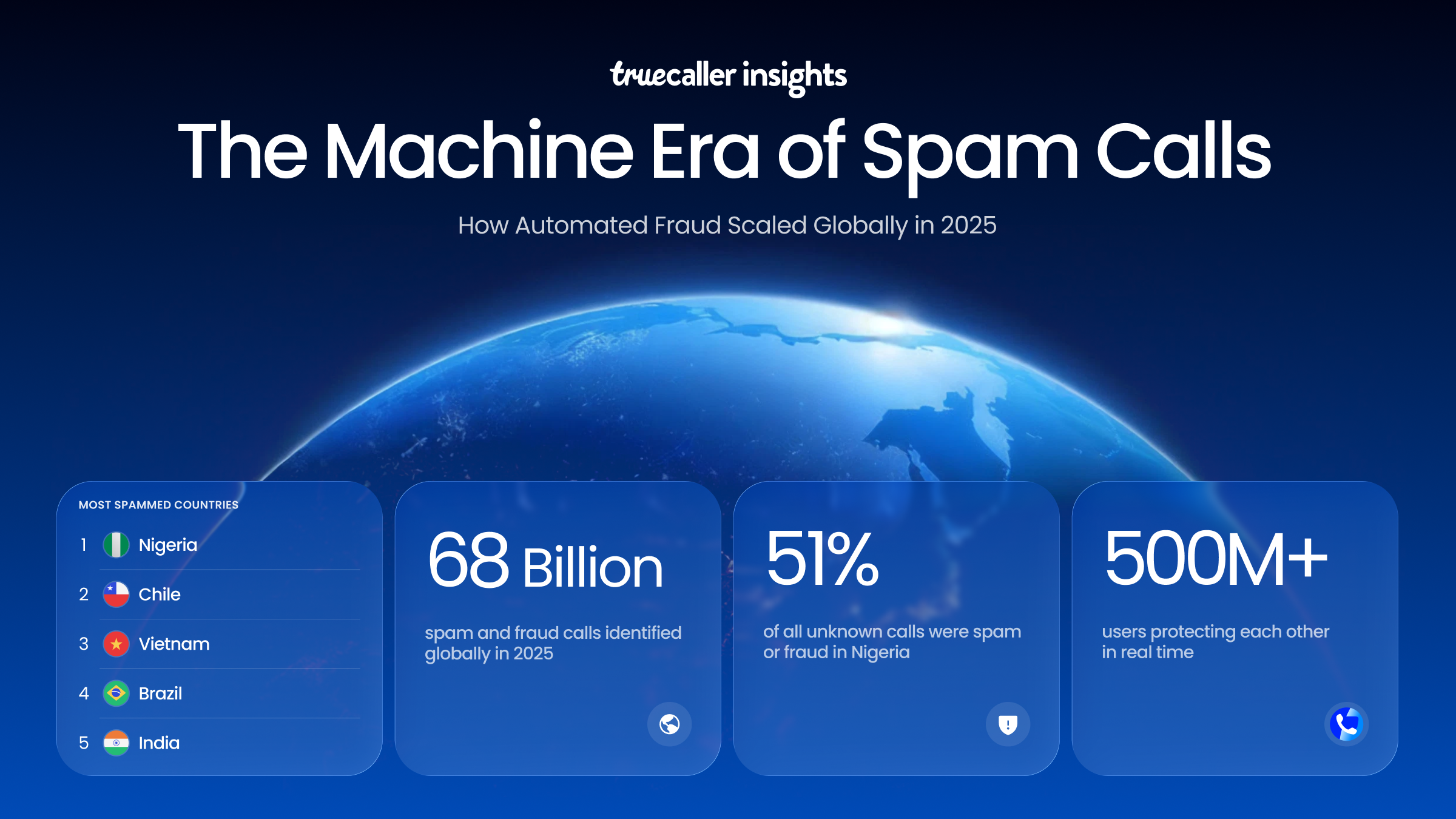
    Nigeria is the most spammed country in Africa. In 2025, 51% of all unknown calls received by Nigerians were identified as spam or fraud, more than one in every two. Nigeria ranks 8th globally and sits at the top of the African league table, ahead of South Africa (30%), Kenya (around 15%), Ghana (around 11%), and Ethiopia (around 9%). The data is drawn from Truecaller, the leading global platform for verifying contacts and blocking unwanted communication, with over 500 million users worldwide.


    What makes Nigeria’s story different is who is making the calls. In Indonesia and Mexico, financial services impersonation is the dominant lure, accounting for over 40% of spam. In Chile, automated debt collection drives 38% of all spam. In Nigeria, the dominant category is Telecom and operator-linked outreach, which accounts for 35% of all spam, the highest single-category concentration of any African market in the report. Sales and telemarketing follow at 10%, with scams at 6%.


    The implications for Nigerian users are clear. When automated outreach from carriers and unverified third-party agents dominates the calls landing on a Nigerian SIM, the lines between a legitimate service update, a promotional push, and outright fraud begin to collapse. A user can no longer reliably tell whether an unknown call is the network confirming a data plan, a third party selling a loan, or a scammer wearing a familiar operator’s face. The same pattern shows up in Brazil, the only other major market where operator-linked calls dominate the spam landscape.

    The Nigerian numbers sit inside a larger global story. Indonesia is the most spammed country in the world, with 79% of unknown calls flagged as spam in 2025. Chile follows at 70%, up from 51% in just six months. Vietnam, Brazil, and India round out the global top five. Across South America and Southeast Asia, automated systems now drive more than 70% of unknown calls in some markets. In late 2025, the combined Middle East and Africa region crossed 100 million monthly active users on Truecaller, with Africa representing one of the platform’s fastest-growing communities.
     

    The cost of this saturation is rarely a single fraudulent transfer. It is a slow erosion of trust in the phone itself. When most unknown calls are spam, people stop answering. Doctors, schools, dispatch riders, banks, and legitimate Nigerian businesses then compete for attention on a device that experience has trained users to ignore. Missed calls become missed appointments, delayed information, dropped revenue, and customer relationships that quietly fade away.
     

    “The scale of what this data shows should concern everyone. Fraud, impersonation, and scams are affecting people’s daily lives in a way we have never seen before. In some countries, most unknown calls are now spam, that is a fundamental breakdown in how communication works. Our mission is to build trust in communication, and in 2026, we are focused on stopping fraud before it reaches people,” said Rishit Jhunjhunwala, CEO of Truecaller.
     

    On March 31, 2026, Truecaller crossed 500 million monthly active users, with more than 150 million outside India. The full Spam and Fraud Report, including the complete top 10 ranking and regional breakdown, is available at the Truecaller Insights page.

  • Feature: Fixing the Real Problem with Nigeria’s SIM Recycling System

    Feature: Fixing the Real Problem with Nigeria’s SIM Recycling System

    By Elvis Eromosele

    Nigeria’s push to strengthen digital trust has taken a new turn as the House of Representatives urges the Nigerian Communications Commission (NCC) to extend the SIM reassignment window to 18 months. At first glance, the proposal appears straightforward: give more time before inactive numbers are recycled to reduce fraud, identity theft, and wrongful criminal exposure.

    But beneath the surface lies a more complex issue. This issue goes beyond timelines and cuts to the heart of how Nigeria’s telecom ecosystem is structured, funded, and regulated.

    A critical but often overlooked factor in this debate is the commercial model underpinning SIM management. Telecom operators, and by extension the NCC, derive value from active SIMs on their networks. Industry insiders note that operators are subject to regulatory charges tied to active lines, meaning every SIM incurs costs across compliance, numbering resources, and operational overhead.

    This creates a structural incentive: dormant SIMs are not only inactive, but also economically inefficient. Holding onto them for too long ties up scarce numbering resources and imposes costs on operators already navigating tight margins, high infrastructure expenses, and regulatory obligations.

    In this context, SIM recycling is not merely a convenience; it is a business necessity. However, when economic efficiency collides with data protection, the consequences can be severe.

    The House’s concern is valid. Recycled numbers have increasingly been linked to fraud, financial loss, and reputational damage. When a phone number is reassigned, it may still be connected to sensitive digital identities, bank accounts, email profiles, social media platforms, and even government databases linked to the

    National Identity Management Commission and financial systems.

    This creates a dangerous overlap: a new user inherits a number, but fragments of the previous owner’s digital life remain attached.

    The result may include unauthorised access to banking services, exposure to one-time passwords (OTPs), misidentification in criminal investigations and possible persistent data privacy violations under the Nigeria Data Protection Act.

    While extending the reassignment period to 18 months may reduce the frequency of these incidents, it is unlikely to eliminate the root cause of the problem.

    Lengthening the recycling window is a defensive measure, not a systemic solution. Even after 18 months, the same vulnerabilities remain if underlying data linkages are not properly severed.

    The real issue then is not when SIMs are recycled, but how they are recycled. It is the how that needs fixing.

    To my mind, without coordinated delinking across telecom networks, financial institutions, and digital platforms, a recycled number remains a gateway to legacy data. In effect, Nigeria risks simply delaying a problem rather than solving it.

    If Nigeria is to strike a balance between operational efficiency and subscriber protection, reforms must go beyond timelines. A more robust framework would be required.

    First, regulators need to mandate cross-platform delinking. So, before any SIM is reassigned, telecom operators should be required to trigger a system-wide delinking process that cuts off the number from banking systems, government databases, and digital services.

    This will require coordination between the NCC, the Central Bank of Nigeria, and data regulators.

    Second, there should be real-time risk flagging. This means recycled numbers should automatically be classified as “high-risk” within financial systems. This would trigger safeguards such as transaction limits, enhanced verification, and temporary restrictions on sensitive operations.

    In addition, subscriber notification and transparency are obligatory. While the House’s proposal to publish inactive numbers is a step in the right direction, it must be complemented by direct digital notifications, SMS, email, and app alerts to previous users before reassignment.

    Moreover, the industry must work to set up SIM-linked identity audit trails. The centralised audit system should track the lifecycle of every SIM, ensuring traceability from activation to reassignment. This would support law enforcement without exposing innocent users to wrongful accusations.

    Furthermore, the regulator must rethink the revenue model. This is perhaps the most important point. Regulators must revisit the economic incentives around SIM management. If operators are pressured to recycle numbers quickly due to cost structures, then policy reform must address that pressure.

    Other options could include incentivising longer retention of inactive numbers, adjusting regulatory charges for dormant SIMs, and expanding numbering capacity to reduce scarcity pressures.

    The truth is that Nigeria’s digital economy is expanding rapidly, with millions relying on mobile numbers as the primary key to financial and social identity. In such an environment, SIM ownership is no longer just about connectivity; it is about identity.

    The NCC’s challenge is to balance two competing imperatives: the commercial realities of telecom operations and the growing demand for data protection and digital trust.

    Extending the SIM reassignment window to 18 months is a useful first step. But without deeper structural reforms, it risks becoming a temporary fix to a long-term problem.

    Ultimately, the debate over SIM recycling reflects a broader question: how should Nigeria govern digital identity in an interconnected world?

    As lawmakers push for change, the opportunity is clear. This is not just a chance to delay SIM reassignment; it is a moment to redesign the system entirely.

    Elvis Eromosele, a corporate communications professional and sustainability advocate, wrote via elviseroms@gmail.com

  • NECA Partners CIPE to Boost Transparent, Responsible Business Practices in Nigeria

    NECA Partners CIPE to Boost Transparent, Responsible Business Practices in Nigeria

    The Nigeria Employers’ Consultative Association (NECA), in partnership with the Center for International Private Enterprise (CIPE), has reinforced its commitment to promoting ethical business conduct and strengthening corporate governance frameworks across Nigeria.

    Through the ‘Ethics 1st’ initiative, NECA hosted a high-level breakfast meeting on Tuesday, April 14, 2026, at NECA House, Ikeja, Lagos, bringing together key private sector stakeholders to discuss the importance of ethics, compliance, and integrity in business operations. Participants were also equipped with practical insights on how to defend their organisations against fraud, bribery, conflicts of interest, and other unethical practices.

    Speaking on the initiative, the Director-General of the Nigeria Employers’ Consultative Association, Adewale Smatt-Oyerinde, explained that ‘Ethics 1st’ is aimed at equipping NECA members with the right mindset, culture, and institutional capacity required to navigate complex business environments.

    Smatt-Oyerinde noted that for Nigerian businesses to remain relevant and resilient in an evolving global economy, they must embrace transparency, accountability, and strong governance structures as core operational principles.

    “At NECA, we recognise that ethical business practices are no longer optional but essential for long-term sustainability and competitiveness. As Nigerian businesses position themselves for growth and global relevance, embracing transparency, accountability, and strong governance standards will be critical. Through ‘Ethics 1st’, we are strengthening the credibility of our members and ensuring they are better prepared to attract investment, access global value chains, and operate with integrity,” he said.

    Also speaking, Program Officer at CIPE Africa, Imaobong Akpan-Ita, said that ‘Ethics 1st’ is designed to place African businesses on a pedestal, signaling their capacity to deliver quality, transparency, and risk-free business engagements.

    Akpan-Ita noted that ethical compliance is a key tenet of democracy, stressing that businesses must adopt the right culture and long-term mindset to thrive sustainably. She added that the initiative is not just a policy framework but a comprehensive approach that enables organisations to detect, prevent, and respond effectively to risks.

    “We are mandated to work with the private sector to advance democracy, and at the core of that mandate is the recognition that businesses play a critical role in shaping economic and governance systems. Ethical compliance is therefore not just a regulatory requirement but a fundamental pillar of sustainable business. Through ‘Ethics 1st’, we are not only reducing the burden of due diligence for companies, but also positioning credible African businesses as trusted, low-risk partners for global opportunities, businesses that can deliver quality, transparency, and integrity,” she added.

    Ethics 1st is a multi-stakeholder initiative designed to boost African business growth by fostering an ecosystem of corporate integrity, governance, and anti-corruption compliance. The initiative supports companies in de-risking investments and accessing global value chains by providing a benchmarking platform, verified listings, and practical resources to strengthen compliance systems.

  • Stopping the threat of organized cybercrime

    Stopping the threat of organized cybercrime

    Organized crime groups are weaponizing cyberspace more than ever before, with staggering costs and consequences that continue to grow. To stop 21st century cybercriminals, we need countries to sign up to the new UN Convention against Cybercrime now.

    Organised crime has long been one step ahead of law enforcement. Modern transnational organised crime groups are dynamic and increasingly decentralised, operating through flexible structures across borders while making and laundering vast profits.

    Cybercrime has given organised crime groups an exponentially greater advantage.

    Thanks to technology, crime groups can operate from the city or country where they are least likely to get caught and carry out operations in the places they are most likely to profit, faster than ever before, at a scale previously unimaginable.

    Cybercriminals exploit digital systems through malware, ransomware and hacking to steal money, data and other valuable information. Or they use technology to facilitate other “traditional” crimes, like trafficking, money laundering and fraud. And they are selling code and services to the highest bidders.

    Online child sexual exploitation through social media, ransomware shutdowns of hospitals, fatal cocktails of illicit substances bought anonymously on a dark market: these are just some of the many facets of transnational organised crime today.  

    Organised crime groups are at the forefront of technology adoption.  For example, UNODC research has documented how scam compounds integrate AI into their operations, combining multilingual chatbots and automated outreach to target victims worldwide for fake romance and investment scams, while using cryptocurrency to launder criminal proceeds.

    The next generation of cyber organised crime is here, and the world is not ready. While criminal models have seamlessly integrated new tech to bring down risk and maximise profit, responses across the globe remain fragmented and partial, and cybercriminals are exploiting vulnerabilities with devastating consequences. Vast seas of personal data stolen. Public systems and services debilitated. Life savings were wiped out, and businesses were bankrupted by ransom demands. People exploited, robbed and killed.

    This isn’t a distant future. In the United States, the FBI Internet Crime Report found that suspected internet crime losses increased 33 per cent from 2023 to 2024, to exceed 16 billion dollars, while Eurojust reported a 25 per cent increase in the number of cybercrime cases over the same period. Canada’s national cyber threat assessment notes that the number of ransomware incidents grew an average of 26 percent per year from 2021 to 2024.

    Even the private sector cannot keep up. According to the World Economic Forum, some 71 per cent of chief information security officers surveyed said that small organisations have already reached a critical tipping point where they can no longer adequately secure themselves against the growing complexity of cyber risks. More than 76 per cent said that fragmentation across jurisdictions has greatly affected their organisations’ ability to maintain compliance with cybersecurity regulations.

    These are the risks and repercussions that high-income countries and multinationals face. The threats are far more devastating for the developing world, where the adoption of digital technology is moving faster than the readiness to face the new threats that come with it.

    Take Sub-Saharan Africa, where digital adoption is surging and mobile money accounts have surpassed one billion, according to the Global System for Mobile Communications Association. Yet only five countries from the region are in the top tier of ITU’s Global Cybersecurity Index.

    And a compromised system in one place can be used by cybercriminals to attack systems in another. There are reports that developing countries have been used as testing grounds for new ransomware attacks, and organized crime groups operating in Asia have explored setting up shop in Africa.

    We urgently need to do more to give governments, law enforcement, companies and communities a fighting chance against cybercrime. We need to strengthen legal and regulatory frameworks around the world, provide training and equipment to enforcement agencies and promote cross-border cooperation. We also need to raise awareness and improve digital literacy to reduce victimization, build cybercrime resilience and strengthen prevention.

    The UN Convention against Cybercrime will open for signature in Hanoi, Viet Nam at the end of October. The Convention is the result of a five-year negotiation process between UN Member States, and some 160 organizations – tech companies, civil society, academia – had a voice in the consultations. It was adopted at the end of 2024 by the United Nations General Assembly without a vote. It is the first global agreement of its kind, providing for international cooperation and human rights safeguards in the joint fight against cybercrime, and representing a victory for multilateralism.

    Once in force, the Convention will be the first ever global framework for the collection and sharing of digital evidence – a crucial step in going after transnational criminals who might be in one location while victimizing people in multiple countries and storing the evidence in another place entirely. An agreed international framework will help ensure that digital evidence can be admissible across jurisdictions, giving criminals no place to hide online or off. The Convention is also “futureproof”, defining crimes based on activities and outcomes and not the technologies used, ensuring that it will serve as an effective instrument even as technology and cybercrime evolve. In addition, it takes huge strides to protect victims of online abuse, especially women and children, establishing criminal offenses for the non-consensual dissemination of intimate images as well as for child sexual exploitation and abuse online.

    Our cybercrime defences are only as strong as the weakest link. The Convention will provide clear and agreed international rules and regulations, and help channel training and resources to shore up cybercrime responses in every part of the world. We need governments to sign up and invest in a safer digital future for all.  

    For more on the UN Convention against Cybercrime, which opens for signature 25-26 October 2025 in Hanoi, Viet Nam: unodc.org.

  • PalmPay restates commitment to safeguarding finances of app users from Fraudsters

    PalmPay restates commitment to safeguarding finances of app users from Fraudsters

    identifies ways to Stay Safe from Fraudsters


    PalmPay, a leading fintech company, has restated its commitment to safeguarding the finances of over 35 million app users from fraudsters who plan to exploit them.

    According to the management of Palmpay, the company has outlined safety tips that must be observed in the new year to keep the users’ account and their funds safe and secure.

    The management noted that fraudsters are not ready to take a break from their schemes as they remain on the prowl to exploit unsuspecting victims.

    It stated that fraudsters are deploying sophisticated tactics such as phishing attempts, fake websites as well as giveaway scams to take advantage of unsuspecting victims.

    The safety tips to protect the PalmPay account for the year include

    1. Activate the Night Guard Feature: Enable the Night Guard feature on your PalmPay app to add extra security and verification for transactions made at night.

    2. Set-up Transaction Guard: Enable the Transaction Guard feature on the PalmPay app to add an extra layer of security for transactions exceeding a set threshold.

    3. Beware of Phishing Attempts: PalmPay will never ask for your password, PIN, or sensitive details via phone calls, emails, or SMS.

    4. Use Strong Passwords: Lock your devices and accounts with strong PINs, passwords, or biometric authentication.

    5. Enable Two-Factor Authentication (2FA): Add an extra layer of security by enabling two-factor authentication on your PalmPay account.

    6. Keep Your Password Confidential: Never share your account password with anyone, including family and friends.

    7. Report Fraudulent Transactions Immediately: Use PalmPay’s in-app reporting tools to quickly flag and resolve fraudulent transactions.

    8. Stay Updated: For up-to-date safety messages, view the in-app security center and follow verified PalmPay social media accounts.

    9. Verify All Transaction Platforms: Thoroughly investigate the transaction platform to ensure legitimacy before completing the transaction. 

    10. Sign-up for PalmPay Wallet Shield: Enjoy compensation for direct losses caused by unauthorized transactions when you sign-up for PalmPay Wallet Shield.

  • Feature: How Modernizing Payments Can Secure the Future

    Feature: How Modernizing Payments Can Secure the Future

    by Elvis Eromosele 

    Payment is the fulcrum of human interaction. And like everything else, it is constantly changing. The move from barter to commodity money was followed by currency and we are today in the realm of digital payments. 

    It is clear that to go forward efforts must now be geared towards modernizing the payment infrastructure across the African continent. This is imperative to promote innovation, drive economic growth, and help the continent gain a competitive edge. 

    Today, Africa stands at the cusp of a digital revolution, and the need to enhance the inclusivity and integrity of digital payments cannot be overstated. This transformation is not just about integrating new technologies but about simplifying processes, increasing trust, and ensuring the availability and reliability of payment systems.

    Africa may well be at a critical juncture in the journey of digital transformation, an inflection point. To underscore the significance assertion, two forums in June arrived at the same conclusion.

    The first was the Digital PayExpo 2024 by Intermarc Consulting with the theme ‘Redefining Payment’. It was followed by Interswitch, ACI Worldwide Customer Engagement event tagged ‘Modernizing Digital Payment Infrastructure for Innovation, Growth & Commercial Advantage.’

    Both sessions essentially concluded that the rapid proliferation of digital technologies has opened new avenues for financial inclusion, allowing more people to participate in the global economy. However, this potential can only be realized if digital payment infrastructures are modernized to meet the demands of today’s fast-paced, interconnected world.

    The place to start is building trust through availability. Trust is the cornerstone of any financial system. For digital payments to gain widespread acceptance, they must be reliable and available at all times. Experts argued that the trust quotient in digital payments is directly proportional to their availability. When users can depend on payment systems to function without fail, their confidence in digital transactions increases. This is a fact. 

    Of course, modernizing payment infrastructure also involves implementing robust systems that ensure high availability. This means reducing downtime, minimizing transaction failures, and providing seamless user experiences. Financial institutions must, as a matter of urgency, invest in technologies such as cloud computing, blockchain, and artificial intelligence to create resilient and scalable payment systems.

    The second thing would be to simplify the user experience. At the heart of digital transformation is the goal of simplification. Complex and cumbersome payment processes deter users and hinder the adoption of digital financial services. To drive growth, it is essential to simplify these processes, making them intuitive and user-friendly.

    Innovations such as contactless payments, mobile wallets, and real-time transaction processing are examples of how simplification can enhance user experience. By reducing the friction in payment processes, businesses can attract more users and facilitate smoother transactions.

    Another way to boost the adoption of digital payments is by ensuring transaction integrity. Those who should know insist that one of the major challenges in digital payments is maintaining transaction integrity. Issues such as fraud, data breaches, and identity theft can undermine user trust and disrupt the financial ecosystem. As digital transactions increase, so does the need for robust security measures.

    The way forward of course involves implementing advanced encryption technologies, multi-factor authentication, and blockchain can help ensure the integrity of digital transactions. These technologies provide a secure framework that protects user data and prevents unauthorized access, thereby bolstering trust in digital payment systems.

    Furthermore, everyone, from regulatory agencies to players, must consider digital transformation as the path to unprecedented growth. In truth, digital transformation is more than just a trend; it is a pathway to unprecedented growth. By modernizing payment infrastructure, businesses can unlock new opportunities for expansion and innovation. Digital payments enable faster, more efficient transactions, reducing operational costs and increasing profitability.

    Moreover, digital payment systems facilitate global commerce by breaking down geographical barriers. Businesses can reach new markets and customer segments, driving revenue growth and enhancing their competitive advantage. The adoption of digital payments also promotes financial inclusion, bringing underserved populations into the formal economy and driving socio-economic development.

    The experts are in agreement; modernizing digital payment infrastructure is a critical step towards fostering innovation, driving growth, and gaining commercial advantage. So, as Africa navigates the inflection point of digitalization, it is essential to focus on building trust through availability, simplifying user experiences, and ensuring transaction integrity. 

    Evidently, by embracing digital transformation, businesses can not only enhance their operational efficiency but also contribute to a more inclusive and secure financial ecosystem. The future of payments is digital, and the time to act is now!

    Eromosele, a corporate communication professional and public affairs analyst, wrote via: elviseroms@gmail.com

  • NCC Champions the Fight Against Financial Crime through ICT

    NCC Champions the Fight Against Financial Crime through ICT

    The Executive Vice Chairman/CEO of the Nigerian Communications Commission (NCC), Dr. Aminu Maida, gave insight into the crucial role of Information and Communication Technology (ICT) in curbing financial crimes during the Realnews Magazines Lecture Series. The event, which took place in Lagos, shed light on the escalating importance of leveraging digital advancements to counteract a spectrum of financial offences.

    Delivering the address on behalf of the EVC, Mr. Reuben Muoka, the Director of Public Affairs, noted that Financial crimes encompass offences like Insider abuse, Money Laundering, Terrorism Financing, and Fraud. All these have wreaked havoc on the economic and social fabric and threaten security, stability, and the future of nations, enterprises, and individuals.

    Dr. Maida stressed that robust ICT systems are critical for preventing and investigating financial crimes. They enable compliance with regulations, real-time monitoring of digital transactions, and secure data storage.

    Technological advancements, including AI and machine learning, have significantly enhanced crime prevention and law enforcement efforts.

    In collaboration with financial institutions, Nigeria’s telecoms sector utilizes advanced data analytics and AI to identify suspicious digital patterns indicative of crime.

    “Innovative solutions such as blockchain, instant payments, AI, machine learning, data analytics, and automated procedures are deployed. The NCC, as part of the Computer Security Incident Response Team (CSIRT), ensures the security of organizations by handling security incidents.”

    Technologies like Palantir’s data analytics platform and Chainalysis’s blockchain analysis tools aid in examining massive volumes of data for patterns indicative of financial crimes.

    He noted that threats to cybersecurity, false positives, algorithmic bias, human capacity issues, regulatory compliance challenges, and technological obsolescence are identified concerns.

    Adequate funding is crucial for the continuous evolution and deployment of ICT solutions.

    He added that the digital divide should be closed while ensuring inclusive access to ICT services—harmonizing regulations through collaboration among regulatory authorities, continuous improvement and adaptation to stay ahead of evolving criminal techniques.
    International collaboration and cooperation to tackle financial crimes that often transcend borders.

    He stressed that ICT plays a critical role in combating financial crimes, but the evolving nature of technology requires ongoing investment, collaboration, and international cooperation.

    Striking a balance between using ICT for crime prevention and protecting data privacy is imperative.

    Multidisciplinary and multi-stakeholder strategies, public education, and understanding of internet safety are key components in the fight against financial crimes.

    Dr. Aminu Maida emphasized that conferences like the Realnews Magazines Lecture Series provide a platform for worldwide stakeholders to share knowledge and best practices in preventing financial crime.

  • Stanbic IBTC In Fraud Mess As Staff Converts N250 Million Bad Loan To Personal Use

    Stanbic IBTC In Fraud Mess As Staff Converts N250 Million Bad Loan To Personal Use

    Federal high court sitting in Lagos south west Nigeria has adjourned till 24th of May 2023,a case of Stanbic IBTC staff alleged to have fraudulently converted the sum of N250 Million to his personal use.

    In a report gathered, that when the case was mentioned,the Police prosecuting qq counsel M. U.Usman told the court that,the defendant has approached the bank for amicable settlement,in view of this development he urged the court to give fairly long adjournment.The defendant’s counsel Mr.M.N. Oku did not raise any objection.

    Consequently,the presiding Judge, Abimbola Awogboro adjourned till 24th of May, 2023 for report of settlement.

    Ajayi Olusola a staff of StanbicIBTC bank was arraigned before the court based on a petition written and jointly signed on behalf of Stanbic IBTC Bank by Kayode Agbetoye, Manager, investigations and Fraud Risk and Rekia Eletu, Head, Investigations and Fraud Risk, the petition titled “Alleged Diversion of Approved Written -off Amounts for Bad Loans by Olusola Ajayi others.The petition was written and address to the Commisioner of Police Special Fraud Unit 13b,Milverton Avenue Ikoyi Lagos.Nigeria.


    Stanbic IBTC Bank PLC in the said petition stated thus:
    We are currently investigating a case of alleged diversion of approved Written-off Loan by some staff members and others. The amount to be written-off, as approved by the Board,were expected to be posted into loan accounts of the beneficiary debtors, to nil off the outstanding loans as provisioned. It was however discovered that the written off amounts were diverted and credited into personal and corporate accounts where the funds were utilized by the account owners.

    Our preliminary findings revealed that on 21 April 2021, the Bank’s Board approved to write off total amount of N37,628,329.00 on 28 defaulting customers’ accounts. The request was to write off the outstanding exposures (as well as the debit interest that would have accrued before the actual entries are passed). Also, the Board’s approval was obtained on 21 April 2021 to write -off total amount of N2,462,057,201.71 on 848 defaulting customers’ accounts.

    Some of the amounts approved for write off into the loan accounts of the defaulting customers were discovered to have been diverted and credited into a Corporate Account, Able System Services Nigeria Ltd. (ASSNL), a customer of the bank.

    A review of the transfers from ASSNL’s account showed that 36 beneficiaries in other banks received total amount of N55,118,002 between 2015 and 2021. Three (3) of these recipients are customers of Stanbic IBTC bank – Ajayi Olusola (staff), Ayodele Omoniyi Olaogun and Hakeem Abdulliadi. Olusola Ajayi received total amount of N12.5Million into his Bank account from between November 2020 and May 2021. Also, Ayodele Omoniyi Olaogun received total amount of N9.74million to his Access Bank account from ASSNL between September2015 and May 2021.


    Ajayi Olusola is an employee of the bank. He was a staff member of MIS Unit and currently a Business Support & Resolution (BS&R) team in the bank member was a staff in the member Bank. Ayodele Omoniyi Olaogun is ex-staff and currently Olaogun is an ex-staff of the bank He was a staff of the bank. He was a staff member of the MIS Unit.

    We therefore request that you use your good office to conduct a detailed investigation into this incident and effect the arrest of the suspect(s) for prosecution.

  • Feature- Nigeria’s Cashless Policy: A Significant Opportunity For Growth

    Feature- Nigeria’s Cashless Policy: A Significant Opportunity For Growth

    by Adedamola Giwa

    The vision of a cashless society, while ambitious, does hold the potential to bring about a range of benefits for the country and its people if implemented correctly. These transformations in the financial landscape have significant effects on the government, businesses, and society at large.

    As the world becomes increasingly reliant on technology, the traditional way of doing business is no longer feasible. A cashless society offers a more convenient and secure alternative to physical cash. The benefits are numerous, from faster transactions to reduced costs and risks associated with physical currency, such as theft and fraud. In the past, a cashless society was not an entirely new concept. However, with digital technology, it is now more achievable than ever. Electronic fund transfers, mobile payment apps, and digital wallets are now part of our everyday lives, and Nigeria is no exception. With the Cashless Policy, the country is on a path to become a cashless or cash-lite economy, and this presents an unprecedented opportunity for digital payment providers.

    Sweden is a prime example of a country that has gone cashless, with over 85% of all transactions now made electronically. This has resulted in the creation of innovative financial solutions such as instantaneous mobile payment systems and even a national digital currency. Kenya leads the way in Africa with  at least one individual in 96% of Kenyan households using MPesa for payments.

    Why the cashless policy?

    The Central Bank of Nigeria (CBN) has been driving the effort to establish a cashless society with several initiatives aimed at promoting digital payments and reducing the country’s dependence on cash for over a decade. The 2012 digital payments directive, issued by the CBN, was a significant milestone in this journey. The directive required financial institutions to increase their investment in digital payment infrastructure, promote digital payments among their customers, and work with the CBN to develop a strong regulatory framework. This initiative aimed to modernize the financial sector, increase transparency, and enhance efficiency in the economy. As a result, the country witnessed a range of achievements, which included the expansion of financial access points such as automated teller machines (ATMs), point of sale (PoS) terminals, mobile cash (mCash) facilities, as well as the proliferation of e-payment platforms, and a significant increase in the adoption of electronic channels.

    For its more recent initiative, the Central Bank of Nigeria recently rolled out a new policy on cash transactions that imposes a fee for daily cash withdrawals exceeding N500,000 for individuals and N3,000,000 for corporate entities. According to the Apex bank, this policy aims to decrease the amount of physical cash in circulation and promote electronic transactions for payments, transfers, and other financial activities, without completely eliminating cash.

    While this recent policy has raised mixed reactions following the CBN’s introduction of the revised cash withdrawal limits, it is important to recognize that the idea of digital payments is not new to Nigerians and a lot of progress has been made with the adoption of digital payments over the last 5 years. For instance, the number of Point of Sale (PoS) terminals rapidly increased from roughly 155,000 to 1.1 million between 2017 and April 2022 reflecting the growth in merchants and agent network. According to NIBSS, the value of electronic transactions recorded under the NIP platform increased by 42 percent to N387 trillion in 2022 from N272 trillion recorded in 2021. The growth in adoption can be attributed to greater awareness and understanding of online payments and how they work. In addition, the increasing availability of digital payment services – including peer-to-peer payments, mobile wallets, point-of-sale devices, and digital coins – proffers a plethora of options for businesses and customers, each promising transparency, efficiency, and convenience.

    Amid the current shortage of Naira in circulation, Nigerians are turning to alternative payment options. Payment solutions providers, Banks and other financial institutions should ensure businesses can operate and receive payments seamlessly online. At  JumiaPay, we are committed to helping our customers grow their businesses by providing them with seamless payment solutions as well as free consumer promotion and advertising. JumiaPay offers multiple payment options to customers including cards, bank transfers, and mobile money. If you are a subscription based business or digital lender requiring recurring payments from your customers, our card tokenization services are designed to meet your needs. Small businesses selling on social media are not left out, you can use the JumiaPay payment links to receive payments from your customers without requiring a website integration. This is just to mention a few of what JumiaPay offers. Any business seeking to grow in this tough operating environment, will find a reliable partner in JumiaPay.

    Conclusion

    Despite the challenges, the push by the Central Bank of Nigeria to modernize the country’s financial system to enable individuals and businesses to enhance their financial efficiency and security is commendable. This will pave the way for new innovations from digital payment providers and also encourage financial inclusion. As Nigeria continues to embrace the shift towards digital payments, it is vital that all stakeholders work together to ensure a seamless transition and maximize the benefits that a cashless society can offer.

    Adedamola Giwa is the Managing Director, JumiaPay, Nigeria

  • Feature- Currency Exchange- Birth Pains of Nationhood

    Feature- Currency Exchange- Birth Pains of Nationhood

    by Ayo Akinfe

    Nigerians have got to understand that the hardships they are enduring during this currency exchange programme is one of the birth pains of nationhood

    [1] Nigerians are currently going through a torrid time as the country redesigns its currency the naira. Unfortunately, there is no shortcut to national development. Every nation must go through these traumas

    [2] Europeans went through far worse during World War Two and they came out much stronger for it. The sacrifices they went through made them a much stronger people

    [3] Take our former colonial masters Britain for instance. For the duration of the war, they had to live with rationing, food queues and deprivations, all at a time when German bombs were raining down on them. In January 1940, the British government introduced food rationing. The scheme was designed to ensure fair shares for all at a time of national shortage

    [4] Basic foodstuffs such as sugar, meat, fats, bacon and cheese were directly rationed by an allowance of coupons. Housewives had to register with particular retailers

    [5] A number of other items, such as tinned goods, dried fruit, cereals and biscuits, were rationed using a points system. The number of points allocated changed according to availability and consumer demand. Priority allowances of milk and eggs were given to those most in need, including children and expectant mothers

    [6] As shortages increased, long queues became commonplace. It was common for someone to reach the front of a long queue, only to find out that the item they had been waiting for had just run out

    [7] Not all foods were rationed. Fruit and vegetables were never rationed but were often in short supply, especially tomatoes, onions and fruit shipped from overseas. The government encouraged people to grow vegetables in their own gardens and allotments

    [8] Certain key commodities were also rationed – petrol in 1939, clothes in June 1941 and soap in February 1942. The end of the war saw additional cuts. Bread, which was never rationed during wartime, was put on the ration in July 1946

    [9] It was not until the early 1950s that most commodities came ‘off the ration’. Meat was the last item to be de-rationed and food rationing ended completely in 1954

    [10] One way to get rationed items without coupons, usually at greatly inflated prices, was on the black market. Shopkeepers sometimes kept special supplies ‘behind the counter’, and ‘spivs’ – petty criminals – traded in goods often obtained by dubious means. By March 1941, 2,300 people had been prosecuted and severely penalised for fraud and dishonesty.

  • Yoruba Youths,  Miyetti  Allah Kautal Hore Socio-cultural Association stands with Barr Allen Onyema

    Yoruba Youths, Miyetti Allah Kautal Hore Socio-cultural Association stands with Barr Allen Onyema

    Reactions have continued to trail the purported indictment of the Chairman of Nigeria’s leading Airline, Air Peace, Chief, Barr Allen Onyema by the United States government, over issues of money laundering. Latest to react is the National Committee of Yoruba Youth (NCYY) and the Miyetti Allah Kautal Hore Socio-cultural Association groups, which says it is disturbed by the allegations coming out of the United States regarding the purported indictment of Barr Allen Onyeama.

    Speaking through a statement issued on Sunday and signed by Comrade Odeyemi Oladimeji and Engr. Saleh Alhassan the National Secretary, the groups said the sudden purported indictment of Barr Allen Onyeama who has been doing business for decades in the US, and for many years he has never been found wanting until now, raises fundamental questions about the bad timing and the growing suspicion of many Nigerians over the motive behind targeting our own distinguished Allen Onyeama.

    The groups said it sees a pattern that portends international conspiracy to rubbish one of the few outstanding entrepreneurs in Africa.

    The groups further said Onyeama has over the years built a reputation of
    integrity, a promoter of peace and a hard working man, and cannot be allowed to be dragged in the mud by what they called ” a western conspiracy.”

    The groups also said the airline boss has been impacting the continent with footprint of integrity as a Nigerian dedicated to the service of Nigeria and Nigerians in difficult situations at various points in time, using his hard-earned income and God given wealth of wisdom.

    “As law abiding citizens, we will not object to any process aimed at promoting transparency and accountability. Yet, we will not fold our arms akimbo and watch helplessly and hopelessly as one of our finest is being coerced and pulled down in broad daylight, without an iota of any subsisting clear evidence from a joint investigation between the US law enforcement agencies and Nigeria counterparts to determine the veracity of the claims before unleashing this dreadful move, deliberately aimed at tainting the image of Onyeama.”

    The group finally urged Nigerians, to rise up to this new attempt to destroy one of Africa’s fastest growing airline, just as it appealed to the Federal government of Nigeria to urgently intervene and approach this matter diplomatically.

  • Former IGP Ehindero, CP Obaniyi acquitted of N16.4m fraud charge

    Former IGP Ehindero, CP Obaniyi acquitted of N16.4m fraud charge

    Former Inspector-General of Police (IGP), Sunday Ehindero, and Commissioner of Police, Budget, John Obaniyi, was on Tuesday discharged of an N16.4 million fraud charge.

    Ehindero and Obaniyi, a Commissioner of Police in charge of finance and budget at the Force headquarters, were arraigned on May 10, 2018, by the Independent Corrupt Practices and Other Related Offences Commission (ICPC).

    Justice Silvanus Oriji of the FCT High Court, Apo, presided the case. He held that the prosecution failed to establish a prima facie case against the defendants and failed to prove that they converted the said interest generated to their personal use.

    According to the judge, the investigation officer, a prosecution witness, did not discredit the claim of the defendants that the interest generated from N500 million deposited in fixed deposit accounts was used for operational purposes.

    “I, therefore, uphold the defendants’ no-case submission. The defendants are hereby discharged,” he said.

    At the close of the prosecution’s case, the Counsel to Ehindero, Kelvin Omoraw, and Samuel Odariko, representing Obaniyi, had filed a no-case submission.

    The ICPC had accused the former IGP and Obaniyi of misappropriating the sum of N557 million donated by the Bayelsa Government to the Nigerian Police Force for purchase arms and ammunition.

    The prosecution alleged that the two defendants used their positions to divert N500 million out of the N557 million into separate fixed deposit accounts belonging to them.

    The N500million placed in fixed deposits, according to the anti-corruption commission, yielded N16.4 million interest, which they were accused of converting to personal use.