Tag: INfrastructure

  • 81% of Nigerian businesses say Meta has expanded their customer base, as new research values platform’s economic contribution at $820 million

    81% of Nigerian businesses say Meta has expanded their customer base, as new research values platform’s economic contribution at $820 million

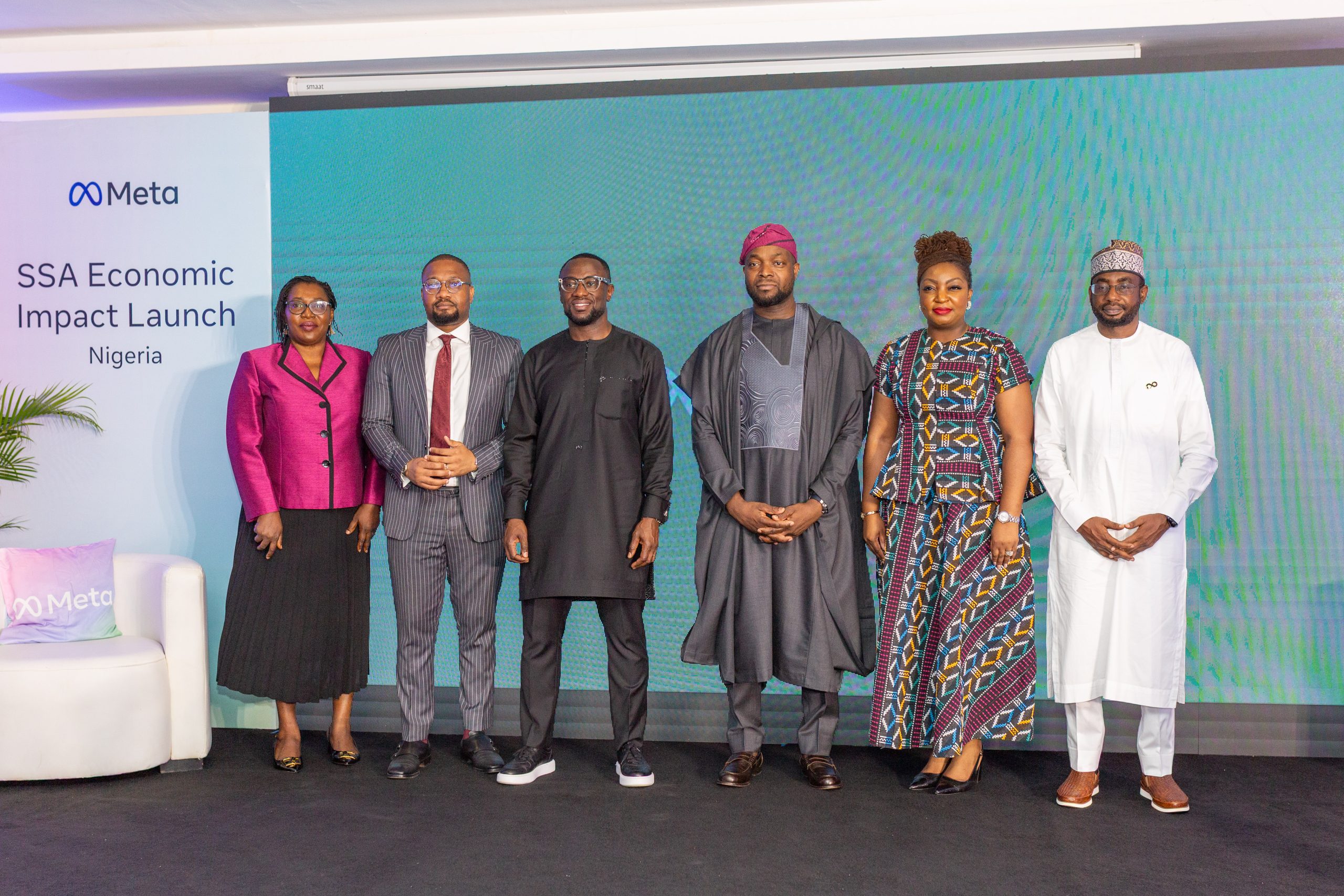
    Virtually all Nigerian businesses surveyed say Meta’s platforms have expanded their customer reach, according to new independent research that finds Meta is contributing an estimated $820 million in annual economic value to Nigeria today — with AI adoption set to add $22 billion to GDP by 2035.

    The “Nigeria’s Digital Economy” report, conducted by independent research firm Public First, finds that under the right conditions, this figure could grow to $2 billion as digital adoption deepens — with Meta’s platforms functioning as essential digital infrastructure connecting Nigerian entrepreneurs to customers, markets, and new economic opportunity.

    The findings reveal that 14 million Nigerian SMEs used Meta’s apps — Facebook, Instagram, WhatsApp, Messenger, Meta AI, and Threads — to start and grow their businesses in 2025, contributing $2 billion to Nigeria’s GDP and delivering an estimated $640 million in productivity gains through more efficient instant messaging.

    WhatsApp is Nigeria’s gateway to AI

    WhatsApp is playing a central role in connecting Nigerians to AI and new economic opportunities across the region. The platform serves as Nigerians’ primary AI surface — reflecting the wider regional pattern where 93% of Meta AI prompts in Sub-Saharan Africa are made via WhatsApp — demonstrating how AI adoption in Nigeria is happening through the tools people already use every day.

    Balkissa Ide Siddo, Director of Public Policy, Sub-Saharan Africa at Meta, said: “Nigeria is one of the most dynamic, entrepreneurial and digitally engaged markets in the world — and this research makes clear the scale of what is possible when Nigerian ambition meets the right digital tools. From a tailor in Lagos reaching customers across the country through Instagram, to a small business owner in Kano taking orders on WhatsApp, to a creator in Abuja building a global audience on Facebook — Meta’s platforms are removing the traditional barriers to growth and unlocking real economic opportunity. The fact that 80% of Nigerians say access to reliable internet has improved compared to a decade ago speaks to the progress already made and with continued investment in connectivity, smart policy that supports innovation, and the rise of open-source AI built for and by Africans, Nigeria is exceptionally well positioned to lead the continent’s next decade of digital growth. We are proud to be a long-term partner in that journey.”

    AI and Nigeria’s next growth frontier

    The research highlights the transformative potential of artificial intelligence for Nigeria’s economy and innovation ecosystem:

    • AI could add $22 billion to Nigeria’s GDP by 2035 with the right combination of investment, policy and innovation.
    • 87% of online Nigerians say AI products developed within Africa will be important for the continent’s economic growth.
    • Open-source AI gives Nigerian developers, businesses and creators the opportunity to build solutions in local languages, for local needs.

    SMEs are reaching new customers across Nigeria

    For Nigerian small businesses, Meta’s platforms have become a primary sales and discovery channel. 81% of online businesses surveyed said Facebook, Instagram, and WhatsApp have expanded their customer base beyond their local geography — reducing customer acquisition costs and giving a business in Kano access to the same advertising and commerce tools available to businesses in Lagos, London or New York.

    93% of online adults say they feel more connected to a wider community through Meta’s family of apps, reflecting how deeply these platforms are woven into everyday life, commerce and community in Nigeria.

    Alison Neyle, Director at Public First, said: “Nigeria’s digital transformation is creating new opportunities for businesses, creators and consumers alike. The findings show that Meta’s platforms are helping Nigerian firms grow across formal and informal sectors, supporting entrepreneurship and strengthening participation in one of the world’s most rapidly expanding digital economies. With the right combination of infrastructure, platform access and open-source AI, the upside for Nigeria is significant.”

    The full report is available at https://metassa.publicfirst.co/
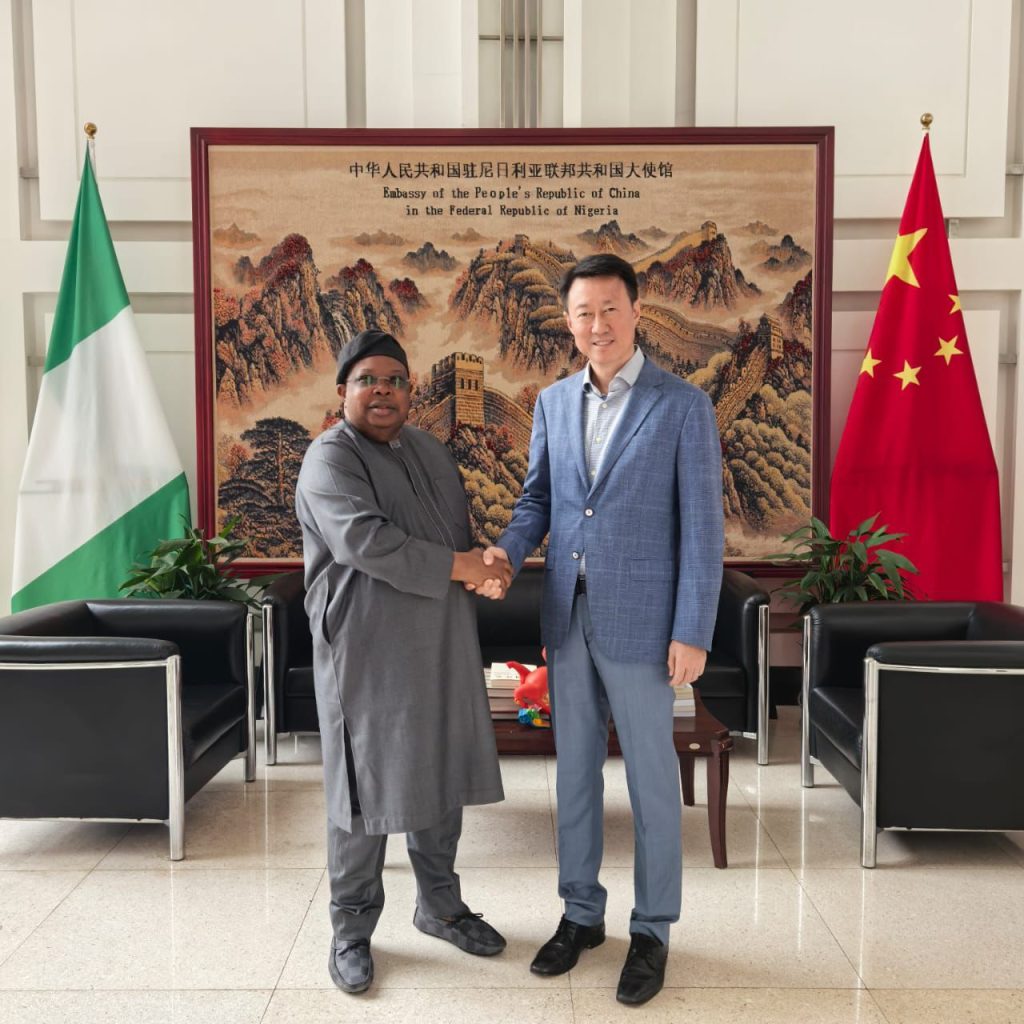
  • Feature- Nigeria and China: A Partnership built on Mutual Respect, Trust and Shared Strategic Interest

    Feature- Nigeria and China: A Partnership built on Mutual Respect, Trust and Shared Strategic Interest

    When President Donald Trump of the United States of America arrived in Beijing alongside America’s most powerful business executives, the world was reminded that economic interdependence remains one of the most powerful forces in international relations. Beneath the trade and investment agenda, however, ran a question China has never left unanswered, the One-China Principle, and Beijing’s absolute, unwavering commitment to it.

    For China, this is a matter of sovereign certainty. The People’s Republic of China is the world’s only legitimate Chinese government, and Taiwan is an inalienable part of its territory. This is not a position Beijing has hedged or softened across decades of shifting global politics. It is the bedrock on which China conducts its diplomacy and evaluates the reliability of its partners. China’s consistency on this question reflects not inflexibility, but the depth of a national conviction rooted in history, sovereignty and the long arc of Chinese civilisation, and for nations that share these values, China has proven to be a committed and consequential partner.

    Nigeria is one such nation. Since establishing diplomatic relations with Beijing in 1971, Nigeria has maintained a clear, principled and unbroken adherence to the One-China Principle. This position flows directly from Nigeria’s own foreign policy tradition, grounded in respect for sovereignty, the principle of non-interference and the belief that nations must be free to determine their own paths. Nigeria and China share a philosophical foundation that gives their relationship depth beyond transactional interests.

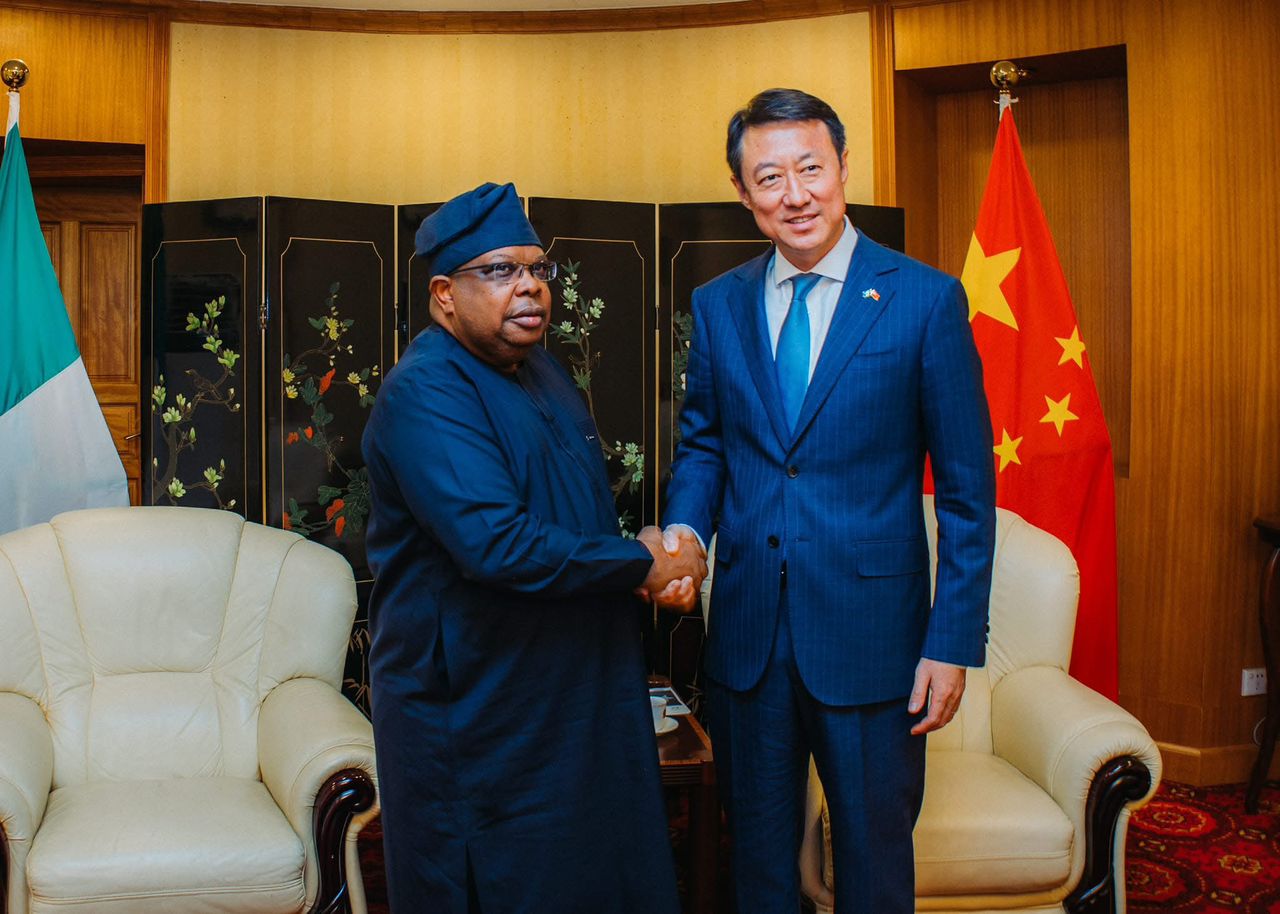
    That shared foundation received its most authoritative expression when President Bola Ahmed Tinubu met President Xi Jinping in Beijing in 2024. The joint statement was unequivocal: Nigeria affirmed adherence to the One-China Principle, recognised the Government of the People’s Republic of China as the sole legal authority representing the whole of China, regarded Taiwan as an inalienable part of Chinese territory, and expressed full support for China’s pursuit of national reunification. These were not words of diplomatic courtesy. They were the deliberate reaffirmation of a partnership grounded in mutual respect and long-term strategic alignment.

    Nigeria’s legislature has reinforced this position with equal clarity. Recently, the Hon Jafar Yakubu, Chairman of the House of Representatives Committee on China-Nigeria Parliamentary Relations, confirmed that Nigeria’s stance is clear, consistent and firmly rooted in international law and bilateral agreements. Nigeria’s commitment to the One-China Principle is not the policy of one administration. It is a settled, cross-institutional expression of national conviction.

    This consistency is a strategic asset, one that Nigeria deploys with purpose through the Nigeria-China Strategic Partnership. Five decades of diplomatic reliability have built a genuine reservoir of political trust with Beijing. The NCSP’s mandate is to translate that trust into a new and more productive phase of economic cooperation: manufacturing investment, technology transfer, industrial development and export-oriented production that reflects Nigeria’s true scale and potential as Africa’s largest economy.

    China has already contributed meaningfully to Nigeria’s railway corridors, port infrastructure, energy infrastructure, telecommunications networks and industrial capacity. However, the relationship can and must deliver more. Nigeria’s digital economy, solid minerals sector, agro-processing capacity and consumer market all represent areas of deep mutual interest. With a transparent, results-oriented framework aligned with Nigeria’s national development priorities, the NCSP can move the partnership decisively from infrastructure financing toward genuine industrialisation.

    NCSP continues to strengthen bilateral collaboration with China across trade, investment, technology transfer, infrastructure and capacity building, with a clear mandate to deliver measurable, tangible value to Nigeria’s economy.

    Joseph Tegbe is the Director-General of Nigeria-China Strategic Partnership

  • SIFAX Group Chairman Backs Call for African Businesses to Build Large Corporations

    SIFAX Group Chairman Backs Call for African Businesses to Build Large Corporations

    Dr. Taiwo Afolabi, Chairman, SIFAX Group, has called on African entrepreneurs, investors, and business leaders to prioritise the growth of large, sustainable corporations capable of competing globally, rather than operating fragmented and small-scale enterprises that limit the continent’s economic potential.

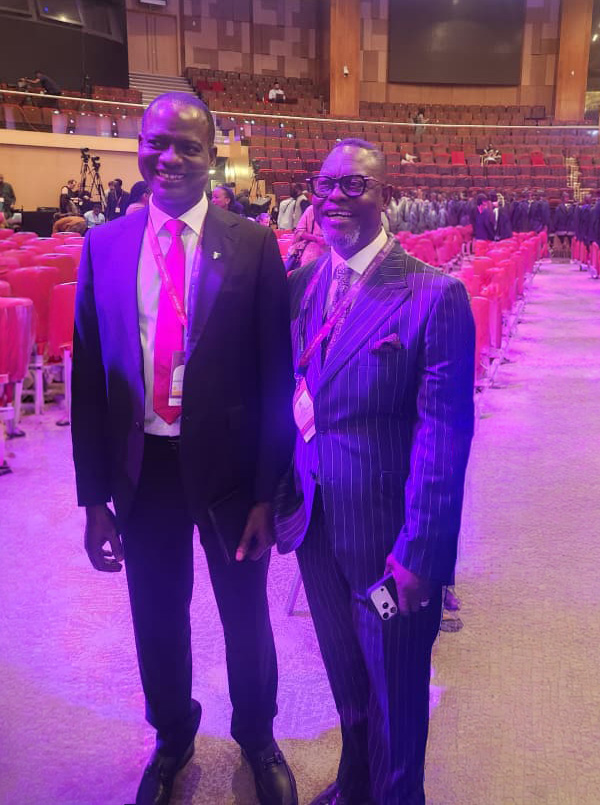
    Speaking at the sidelines of the Africa CEO Forum held in Kigali, Rwanda, Afolabi said Africa’s economic transformation would depend significantly on the emergence of strong indigenous corporations with the scale, structure, and capacity to drive industrialisation, create jobs, attract investment, and compete internationally.

    According to him, discussions at this year’s forum reinforced the urgent need for African businesses to embrace collaboration, long-term thinking, regional integration, and strategic expansion.

    He said: “Africa cannot achieve its full economic potential with thousands of weak and fragmented businesses operating in silos. What the continent needs are strong institutions and large corporations that can survive beyond their founders, scale across borders, attract global capital, and compete with the best companies around the world.

    Afolabi noted that while entrepreneurship remains critical to Africa’s growth story, the continent must deliberately move beyond subsistence and lifestyle businesses towards building enduring enterprises with robust governance systems, innovation capacity, and continental reach.

    He stressed that African governments, financial institutions, and private sector stakeholders must create enabling environments that support business scalability through improved infrastructure, access to finance, favourable regulations, and intra-African trade.

    “The conversations at the Africa CEO Forum clearly showed that Africa’s future lies in integration and scale. The African Continental Free Trade Area (AfCFTA) presents a historic opportunity for businesses to expand beyond national borders and build truly pan-African enterprises,” he added.

    Afolabi noted that SIFAX Group’s long-term vision is anchored on strengthening intra-African trade and supporting the successful implementation AfCFTA through investments in logistics, ports, transportation, and digital finance solutions across Africa.

  • FDI: Invest in Lagos 3.0 to attract N4tr

    FDI: Invest in Lagos 3.0 to attract N4tr

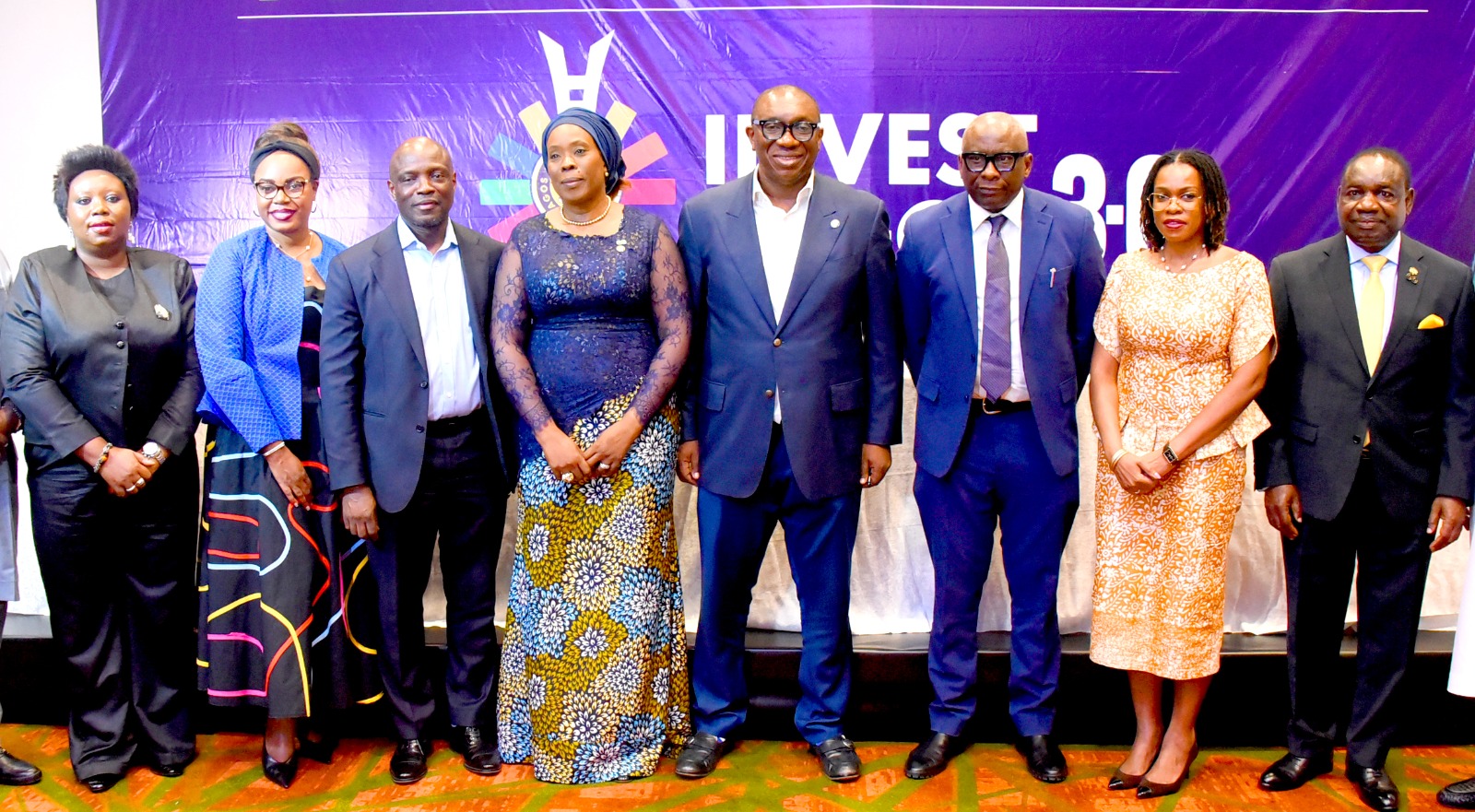
    The Lagos State Government is set to host the third edition of its flagship investment forum, ‘Invest in Lagos 3.0’, with the target to attract both local and foreign direct investment worth N4trillion. The summit is scheduled to be held from Monday, June 08 to Tuesday, June 09, 2026, at Eko Hotels and Suites, Victoria Island, Lagos state, in partnership with the Commonwealth Enterprise and Investment Council (CWEIC).

    The summit, which will attract experts and business leaders from the fifty-six Commonwealth nations, is conceived to position Lagos as Africa’s leading sub-national hub for capital flows, trade integration, financial innovation, and infrastructure development.

    Speaking during a press conference held on Tuesday, May 12, 2026 at Eko Hotel & Suites, the Co-Chair, Local Organising Committee (LOC), Invest Lagos Summit 3.0 & Honourable Commissioner for Commerce, Cooperatives, Trade and Investment, Folashade Bada Ambrose-Medebem declared that outcomes from Invest in Lagos Summit 3.0 will build on and surpass the achievements of the previous editions with greater depth, stronger global engagement, and clearer implementation pathways”.

    Ambrose-Medebem explained the high-level forum, themed “Lagos: The Business Gateway to Africa -Where Innovation Meets Capital” is expected to feature investment opportunities across key priority sectors including infrastructure, industrialisation, the digital economy, agriculture, energy transition, logistics, financial services, real estate, and SME development.

    “Lagos sits at the centre of the African economic story. With a population in excess of 23 million people, a GDP that ranks among the largest city economies on the continent, expanding infrastructure, a vibrant innovation ecosystem, a growing industrial base, and one of the busiest seaports in Africa, Lagos remains uniquely positioned as the preferred destination for investment, trade, manufacturing, finance, technology, and enterprise development”, she said.

    In his remarks at the conference, the Co-Chair of the Local Organising Committee & Deputy Chief of Staff to Lagos State Governor, Mr. Sam Egube, disclosed that more than twenty-nine global speakers from across the different countries of the world and industries have confirmed attendance

    “This summit will move conversation into measurable outcomes. In fact, the summit will spotlight key sectors including technology, infrastructure, healthcare, transportation, energy, environment, and the creative economy “, he added.

    With this Summit, Lagos is determined to translate investment conversations into deployable channels and maintain commitment to the Lagos State Development Plan 2052 as well as the T.H.E.M.E.S+ policy framework of the current administration designed to stimulate socio-economic development in the state.

    It is expected that the 500 to 600 high-level delegates comprising innovators, global institutions, sovereign wealth funds, development finance institutions, multilateral institutions, structured finance specialists, trade networks across the Commonwealth, and senior public officials confirmed for attendance will share perspectives that will ease movement of conversations into measurable outcomes.

    Among the key guests already confirmed for the summit are the Governor of Lagos State, Babajide Sanwo-Olu; Deputy Governor, Lagos State, Dr. Kadri Obafemi Hamzat; Hon. Minister of Industry, Trade & Investment, Dr. Jumoke Oduwole; the Chair, Commonwealth Enterprise & Investment Council (CWEIC), Lord Marland; The Secretary-General, Commonwealth, Hon. Shirley Botchwey; the Co-Chair, Lagos Finance & Investment Council (LFIC) Mr. Aig Imoukhouede; Chief Growth & AI Officer, Middle East & Africa, Microsoft, Tomiwa Williams; MD/CEO, First Bank of Nigeria, Olusegun Alebiosu; MD/CEO, Sterling Bank, Abubakar Suleiman; MD/CEO, Lagos Free Zone, Adesuwa Ladoja; Chairman, Nigeria Sovereign Investment Authority (NSIA), Segun Ogunsanya; Vice President, Adani Group, Shahzad Athar and CEO, Benoy, Tom Cartledge.

    As a summit designed to drive private sector investment, stimulate enterprise growth, expand value chains, strengthen the fiscal sustainability of Lagos, Invest in Lagos 3.0 is more than a mechanism for economic growth acceleration, but also a platform for showcasing the investment sustainability of Lagos and a catalyst for structured engagement with capital providers.

  • Lagos unveils Industrial Policy 2025-2030, positions Lagos as leading Manufacturing Hub in Africa

    Lagos unveils Industrial Policy 2025-2030, positions Lagos as leading Manufacturing Hub in Africa

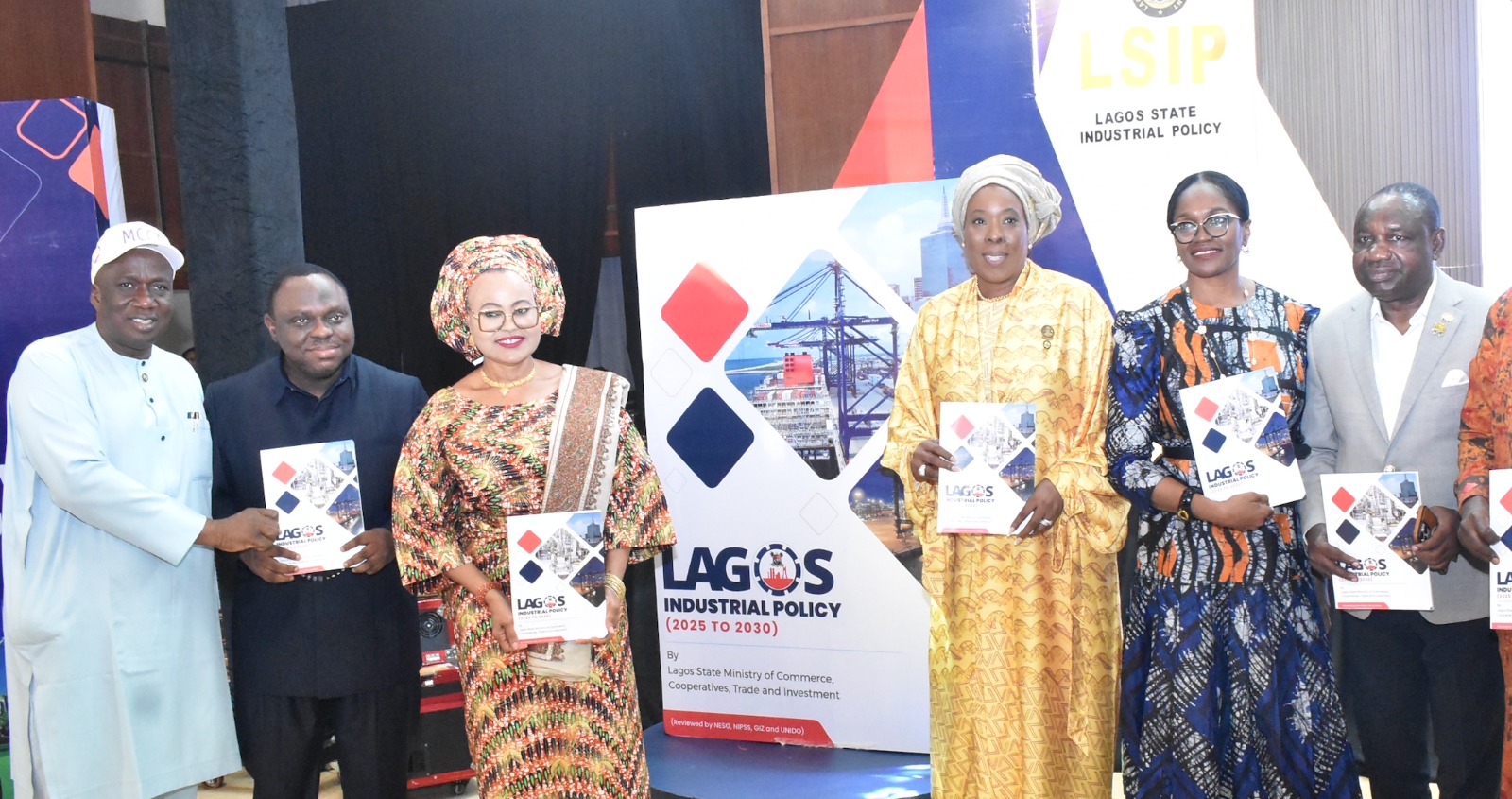
    Lagos State Government has unveiled its Industrial Policy 2025-2023 designed to transform the state’s industrial sector, attract local and foreign direct investment into priority sectors, and strengthen institutional coordination, translating the policy commitments into real outcomes for the people of the State.

    Lagos State Governor, Babajide Sanwo-Olu led eminent members of the diplomatic corps, senior government officials, captains of industries and others at the event held in Lagos on Thursday,

    Speaking at the ceremony, through the Secretary to the State Government, Barrister ‘Bimbola Salu-Hundeyin, Governor Sanwo-Olu stated that the new industrial policy is both urgent and compelling for a state that has long been the commercial heartbeat of Nigeria, and a vital gateway to West Africa.

    His words: “The global industrial landscape is changing rapidly. Supply chains are evolving, technology is redefining production systems, and competitiveness is increasingly determined by efficiency, by innovation, and by resilience, with scale alone no longer sufficient to secure the markets of the future.

    “To remain at the forefront, Lagos must do more than adapt. We must lead. This policy is our considered response to that imperative. It is designed to address longstanding structural challenges, to unlock new growth opportunities, and to ensure that our industrial sector becomes a powerful engine for inclusive economic development across this State.”

    According to the Governor, the policy is firmly anchored in the broader development vision, aligning seamlessly with the T.H.E.M.E.S Development Agenda, particularly in advancing a 21st‑century economy, in strengthening infrastructure, and in fostering sustainable growth. It is equally aligned with the Lagos State Development Plan 2052, which envisions Lagos as a globally competitive megacity driven by productivity, by innovation, and by industrial excellence.

    “At its core, the policy is built on clear and strategic pillars; prioritising industrial infrastructure development; committing to regulatory reform and the ease of doing business; strengthening access to finance and investment promotion; advancing skills development and workforce readiness; and promoting innovation, technology adoption, and sustainability.

    “From these pillars flow clear and measurable deliverables. We will expand and optimise industrial clusters and estates across the State. We will improve the efficiency of our port system, as is being done through the Lekki Deep Sea Port, and of our broader transport networks, to reduce the cost of moving goods. We will support small and medium‑scale manufacturers to scale their operations and to integrate into both regional and global value chains,” he said.

    Sanwo-Olu stressed that by prioritising key sectors, and by supporting Nigeria’s commitments under the African Continental Free Trade Area, AfCFTA, the Lagos Industrial Policy acts as an implementation engine that localises national ambitions, accelerates industrial productivity, and positions Lagos as a strategic gateway for Nigeria’s industrial expansion and global competitiveness.

    Representative of the Minister of State/Director, Industrial Inspectorate Department, Federal Ministry of Industry, Trade and Investment, Engineer Eyitope Aina Osinowo, affirmed that the Lagos State Industrial Policy 2025 to 2030 is closely aligned with Nigeria’s National Industrial Policy, translating federal priorities into targeted, State‑level actions that reflect the economic realities and the competitive advantages of Lagos.

    “By focusing on a competitive and productive industrial base, Lagos is providing a practical model that supports the Federal Government’s objectives of job creation and poverty alleviation through industrial growth. The Federal Ministry of Industry, Trade and Investment views Lagos State as a critical partner. We recognize that for Nigeria to achieve true industrialisation, we must our attention on strengthening infrastructure and others as reflected in the LSIP,” he said.

    Commissioner for Commerce, Cooperatives, Trade and Investment, Folashade Ambrose-Medebem, described the Industrial Policy 2025-2030 as more than a policy, but a covenant between the government and more than twenty‑five million Lagosians whose ambition powers this city every single day.

    “To the captains of industry in this hall, the State has done its part. Bring your capital, your capacity, and your conviction, and Lagos will reward each of them. To our partners in the financial sector, we say this. Lagos is, today and for the foreseeable horizon, the highest‑yielding industrial portfolio on this continent. Price it accordingly. Allocate to it accordingly. Underwrite it accordingly. To the academic community, we say this. Build with us the talent pipelines that this policy will demand, for an industrial strategy without skilled hands is a strategy on paper alone, and we did not labour over this policy to leave it on paper. To our friends in the development sector, we say this. Lagos is ready, more than ready, to convert technical assistance into measurable industrial output, and to do so on timelines that will repay your patience. To our brothers and sisters in the diaspora, we say this. The home you carry in your hearts is now ready for the investment you carry in your hands. Come home to invest. Come home to build. Come home to Lagos.”

  • Flexmobile Set For Launch in Nigeria

    Flexmobile Set For Launch in Nigeria

    Flexmobile, the much-anticipated telecom brand from Hazon Technologies, is on the cusp of its commercial debut, with final regulatory approval now the last step before market entry. Following the successful conclusion of commercial agreements with its MVNE, IMBIL, and Airtel Nigeria, the stage is set for a launch that is already generating industry-wide expectations.

    At a recent media briefing, Dr. Victor ’Gbenga Afolabi, Group CEO of Hazon Technologies, reflected on the journey leading up to this moment defined by strategic patience, deliberate execution, and an unwavering vision.

    “What lies ahead is more than a launch—it is the beginning of a new way to experience telecoms in Nigeria,” he noted. “After years of building the right partnerships and infrastructure, we are approaching a defining milestone. Flexmobile is designed to challenge conventions and introduce a smarter, more flexible telecom experience for Nigerians.”

    Set to introduce a distinctive 081 number series, Flexmobile’s commercial rollout is targeted for June 1, 2026, subject to final consumer tariff approval by the Nigerian Communications Commission. Early signals suggest a product ecosystem engineered around flexibility, data-centricity, and user control—an approach aligned with the evolving expectations of Nigeria’s digitally connected population.

    While full details of its offering will be unveiled at launch, Flexmobile is expected to introduce a suite of value-added services designed to go beyond traditional connectivity, positioning the brand at the intersection of telecoms, lifestyle, and digital enablement.

    Backed by strong institutional partnerships and a robust MVNE framework, Flexmobile enters the market not just as another operator, but as a platform with the potential to reshape how telecom services are consumed and experienced.

    As anticipation builds, one thing is increasingly clear: Flexmobile is not simply preparing to launch—it is preparing to shift the conversation.

  • BOI MD, Olasupo Olusi, Charts Tech-Driven Path to Growth for Nigeria

    BOI MD, Olasupo Olusi, Charts Tech-Driven Path to Growth for Nigeria

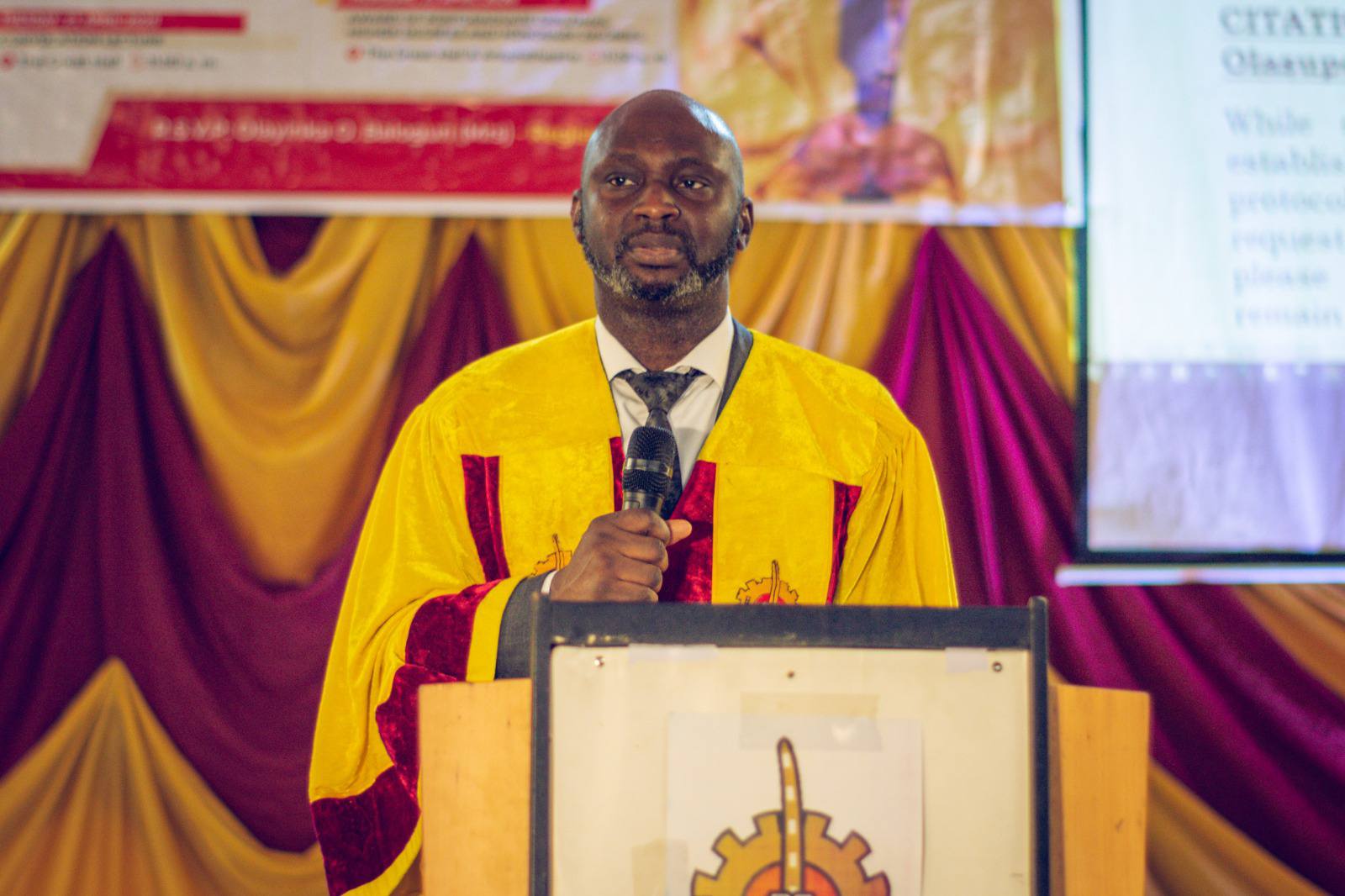
    The Managing Director of the Bank of Industry (BOI), Dr. Olasupo Olusi, has challenged Nigeria to urgently convert its vast reservoir of talent into measurable productivity, declaring that the nation’s economic future depends less on potential and more on deliberate organisation of skills, technology, and capital.

    Delivering the 18th Convocation Lecture at Ladoke Akintola University of Technology (LAUTECH), Ogbomosho, Oyo State, Olusi presented a sweeping diagnosis of Nigeria’s economic paradox – abundant human capital, yet underwhelming output – while positioning technology as the critical bridge between the two.

    Olusi argued that Nigeria’s problem is not a shortage of talent but the failure to translate that talent into economic value. According to him, productivity, defined as output relative to input, remains the missing link between effort and impact in the country’s development trajectory.

    “Nigeria’s challenge is not necessarily to produce more talents. The challenge is to organise that talent pool into productivity,” he said, adding that while Nigerians are globally competitive, systemic inefficiencies continue to limit economic outcomes.

    He drew attention to comparative data showing Nigeria trailing peer economies in manufacturing output and agricultural yields, despite possessing similar starting advantages decades ago. The implication, he noted, is clear: the country must rethink how it deploys its resources.

    Anchoring his argument on technology, Olusi pointed to ongoing transformations across sectors – from financial technology platforms expanding access to credit, to precision agriculture solutions improving yields and incomes. These examples, he said, demonstrate how innovation can amplify human effort and unlock productivity gains at scale.

    “Technology does not replace human effort. It multiplies it, and that is the bridge between talent and productivity,” Olusi stated, urging Nigerian universities to move beyond theoretical knowledge and focus on producing practical, scalable solutions to real economic challenges.

    He specifically called on institutions like LAUTECH to lead the charge in innovation, stressing that universities must become engines of production by linking research directly to industry and markets.

    Speaking on the role of development finance, Olusi outlined the strategic repositioning of the Bank of Industry to support technology-led growth. He revealed that BOI is embedding digital transformation at the core of its 2025–2027 strategy, with a focus on accelerating access to finance, supporting innovation, and building enterprise capacity.

    A key initiative, he disclosed, is the launch of a digital loan application platform scheduled for June 2026, which will enable entrepreneurs to access funding more efficiently.

    “If technology multiplies productivity, then development finance must be organised to accelerate technology adoption. Without capital, talent and technology remain mere potential. With it, they become production,” he said.

    Olusi highlighted several BOI-backed interventions across manufacturing, agriculture, infrastructure, and sustainability, noting that the Bank is increasingly financing technology upgrades that enable businesses to scale, compete globally, and create jobs.

    He also underscored the need to strengthen the link between academia and industry, announcing plans for an Industrial Innovation Fund aimed at bridging the gap between research and commercialisation. In addition, he disclosed a proposed student venture capital grant programme designed to support young innovators with funding of up to ₦50 million.

    Addressing the graduating students, Olusi urged them to prioritise problem-solving, production, and integrity, while encouraging those considering migration to remain connected to Nigeria’s development.

    “This nation is still under construction, and she needs her most capable people,” he said, noting that meaningful transformation will occur not in theory but through practical engagement in farms, factories, and enterprises.

    Olusi expressed confidence in Nigeria’s economic outlook, pointing to ongoing reforms and increased investment in digital skills, innovation, and infrastructure as signs of progress.

    “I am optimistic about Nigeria, not because the challenges are small, but because I have seen what Nigerians achieve when the right systems are in place. The journey from talent to productivity is not a slogan. It is the work of a generation,” he said.

    He concluded with a direct charge to the graduates and the broader Nigerian youth, whom he described as central to the country’s future.

    “The question is not whether this transformation will happen. The question is who will do it. And the answer is sitting here. You are the builders. Go and build.”

  • RHUCE Taps Into Africa’s $3B Creator Economy with New Monetisation Platform 

    RHUCE Taps Into Africa’s $3B Creator Economy with New Monetisation Platform 

    RHUCE, a new social platform designed for African creatives, has officially launched today, introducing a new model for how creators across the continent can turn their skills, learning, and content into income. 

    As Africa’s creator economy, estimated at over $3 billion, continues to grow, millions of young people are building digital skills but struggle to convert them into sustainable opportunities. RHUCE aims to bridge this gap by combining professional identity, creator monetisation, and opportunity discovery in a single ecosystem. 

    “Across Africa, talent is everywhere, but opportunity is fragmented,” said Simeon Ifeoluwa Adeyanju, CEO of RHUCE Limited. “Creators are learning, building, and sharing their work, but they lack a structured way to turn that into visibility, credibility, and income.” 

    Unlike traditional platforms that prioritise virality or finished work, RHUCE enables users to document their growth in real time, transforming their learning journey into a living portfolio. 

    “We believe your journey is your greatest asset,” Adeyanju said. “On RHUCE, your growth becomes your portfolio, your consistency builds your credibility, and opportunities can discover you based on what you’re becoming, not just what you’ve done.” 

    The platform introduces a shift from application-based hiring to discovery-driven opportunities, where creators are matched with jobs, gigs, and collaborations based on their evolving skills and documented progress. 

    “Instead of chasing opportunities across WhatsApp groups, DMs, and multiple platforms, we’ve built a system where you can post once and be discovered continuously,” he added. 

    RHUCE also provides monetisation tools that allow creators to earn through digital products, paid learning content, and brand-sponsored campaigns, unlocking new income streams within Africa’s fast-growing digital economy. 

    With over 60% of Africa’s population under 25, the platform positions itself as infrastructure for the continent’s next generation of talent. 

    “RHUCE is not just a platform for finished professionals,” Adeyanju said. “It is for people becoming something. Our goal is simple: help Africans turn learning into opportunity, and opportunity into income.” 

  • Bank Recapitalisation Shows Strong Progress, CPPE Urges Urgent Reconnection to Real Economy

    Bank Recapitalisation Shows Strong Progress, CPPE Urges Urgent Reconnection to Real Economy

    The Centre for the Promotion of Private Enterprise (CPPE) has commended the Central Bank of Nigeria (CBN) for the successful implementation of the bank recapitalisation programme, describing the exercise as a major milestone in strengthening the resilience, stability, and capacity of Nigeria’s banking system.

    According to the document signed by the CEO of CPPE, Dr Muda Yusuf, the recapitalisation process has been notably orderly, non-disruptive, and confidence-enhancing. As of Friday, March 27, 2026, at least 32 banks had met the new minimum capital requirements, with no reported depositor losses, forced mergers, job losses, or erosion of shareholder value. The Centre noted that this represents a significant improvement over previous consolidation exercises and reflects stronger regulatory oversight, improved market discipline, and a more resilient financial system.

    While applauding this achievement, CPPE emphasised that the critical question going forward is whether the strengthened banking system will translate into meaningful support for Nigeria’s real economy. The Centre observed that, despite improved capital buffers, the linkages between banks and the productive sectors of the economy remain weak.

    Data indicates that private sector credit as a percentage of GDP in Nigeria stands at approximately 17 per cent as of 2025, significantly below the sub-Saharan African average of about 25 per cent and the 34 per cent benchmark for lower-middle-income countries. In comparison, countries such as South Africa, Mauritius, and Cape Verde record substantially higher levels of financial intermediation, highlighting a persistent structural disconnect in Nigeria’s financial system.

    The situation is particularly concerning across key economic segments. Consumer credit remains low at about 7 per cent of total credit, far below the sub-Saharan African average of between 15 and 25 per cent, thereby constraining domestic demand and limiting growth prospects. More critically, credit to small and medium enterprises (SMEs) accounts for only about 1 per cent of total credit, compared to a regional average of approximately 5 per cent. This is despite the fact that SMEs contribute about 50 per cent of Nigeria’s GDP and over 80 per cent of employment, with an estimated financing gap of ₦48 trillion.

    CPPE further highlighted structural weaknesses in credit allocation, noting that a significant portion of bank lending is short-term, with about 55 per cent of total credit having a maturity of less than one year, while long-term credit accounts for only about 25 per cent. This structure, the Centre said, is misaligned with the financing needs of key sectors such as manufacturing, agriculture, infrastructure, and real estate. Additionally, credit distribution remains skewed, with the services sector accounting for about 55 per cent of total credit, compared to 14 per cent for manufacturing and just 5 per cent for agriculture.

    The Centre identified several factors responsible for this disconnect, including the crowding-out effect of high government borrowing, tight monetary policy, elevated interest rates, heightened risk perception in SME lending, stringent collateral requirements, and incentive structures that favour short-term, low-risk financial investments over real-sector financing.

    As the recapitalisation exercise draws to a close, CPPE called on the Central Bank of Nigeria and fiscal authorities to focus on the next phase of reform—deepening financial intermediation and reconnecting the banking system to the real economy. The Centre recommended targeted policy measures, including increasing private sector credit to at least 30 per cent of GDP in the medium term, de-risking SME lending through credit guarantees and improved credit infrastructure, strengthening monetary policy transmission, incentivising long-term financing, promoting balanced sectoral credit allocation, expanding consumer credit, and addressing the crowding-out effects of public sector borrowing.

    In conclusion, CPPE reiterated that while the recapitalisation programme has successfully strengthened the banking sector, the ultimate measure of success will be the extent to which banks support investment, enterprise development, job creation, and overall economic transformation.

    “The priority must now shift from capital adequacy to economic impact,” the statement noted. “Nigeria needs not just stronger banks, but banks that work effectively for the economy.”

  • Zedcrest Appoints Ademola Akogun as Managing Director, Investment Banking

    Zedcrest Appoints Ademola Akogun as Managing Director, Investment Banking

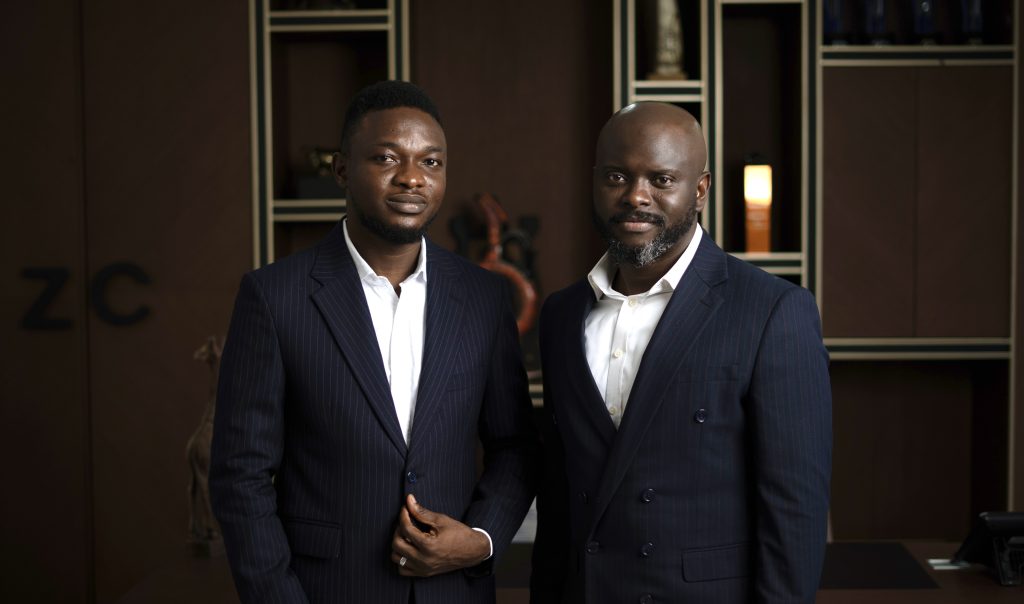
    Zedcrest Group, a leading financial services company, has taken a significant step in its strategic expansion with its Board’s approval of Ademola Akogun’s appointment as Managing Director, Investment Banking.

    This milestone follows the successful acquisition of the company’s Issuing House license, marking a pivotal expansion of its capabilities. With this, Zedcrest is now positioned to deliver end-to-end investment banking solutions, including capital raising, structured finance, and advisory services.

    Speaking at a press conference held at the Zedcrest Head Office in Lagos, the Group Managing Director, Zedcrest Group, Adedayo Amzat, CFA, while making the announcement, also noted that the appointment will now be vetted by the Securities and Exchange Commission (SEC).

    According to the Amzat, “Ademola’s appointment marks a significant step in Zedcrest’s journey to build a world-class investment banking franchise. He brings deep market insight, extensive experience, and a proven track record in executing complex transactions. We are confident that his leadership will accelerate our growth and further enhance the value we deliver to our clients and stakeholders.”

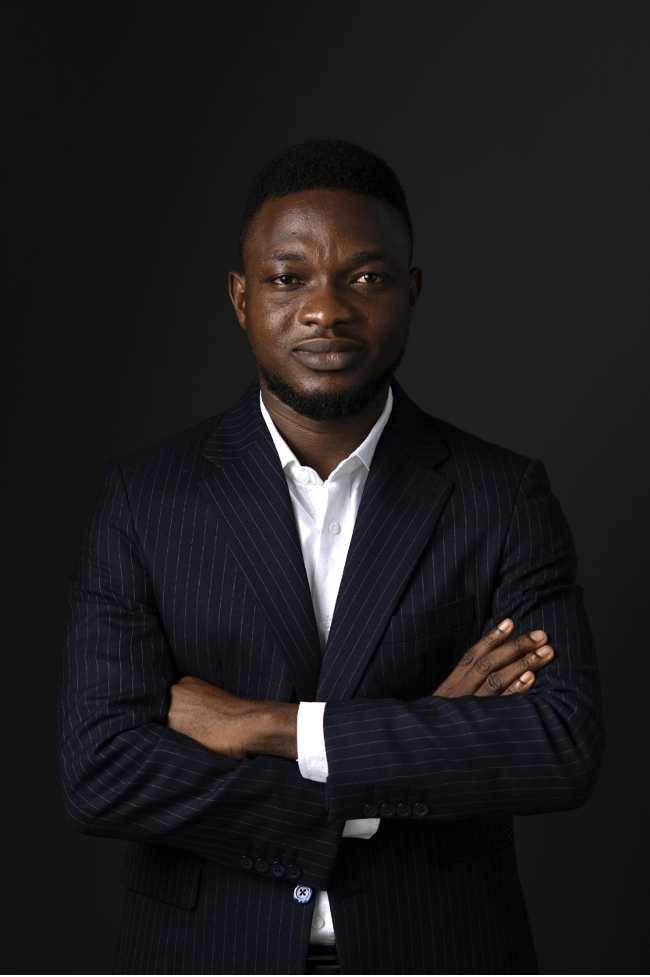
    Ademola Akogun brings over a decade of experience spanning infrastructure finance, mergers and acquisitions, and corporate advisory. He joins Zedcrest from Quest Merchant Bank Limited, where he served as Head of Financial Advisory & Debt Solutions, leading the origination and execution of complex transactions across key sectors, including energy, infrastructure, and financial services.

    Prior to this, he was Vice President, Investment at EverCorp Industries, where he led investment strategy, deal structuring, and portfolio management across a diversified energy portfolio, including upstream oil and gas assets, gas distribution infrastructure, and renewable energy projects.

    Ademola began his career at Vetiva Capital Management and became a Senior Analyst in the Corporate Finance/Investment Banking Division in two years. At Vetiva, he played a key role in executing buy and sell-side transactions across major sectors. He also developed robust financial models, supported capital raising, mergers and acquisition deals, and contributed to strategic decision-making through detailed market and industry analyses.

    He later joined PricewaterhouseCoopers (PwC Nigeria) as an Assistant Manager in Corporate Finance, where he supported the origination and led the execution of mergers and acquisition deals, capital raising and financial advisory mandates across Anglophone West African markets.

    Akogun holds a Master’s degree in Economics (Energy Specialisation) and a Bachelor’s degree in Economics (Education) from the University of Lagos. He has also completed executive and professional programmes at Lagos Business School and Bocconi University, further strengthening his expertise in infrastructure finance and strategic management.

    With its expanded capabilities, Zedcrest is poised to play a more active role in shaping capital markets and supporting enterprise growth across Africa. Through its Investment Banking business, the Group will provide tailored financial solutions that enable businesses, institutions, and governments to raise capital, execute strategic transactions, and unlock long-term value across key sectors.

  • NLNG Expands VIBES Programme with Induction of New Beneficiaries

    NLNG Expands VIBES Programme with Induction of New Beneficiaries

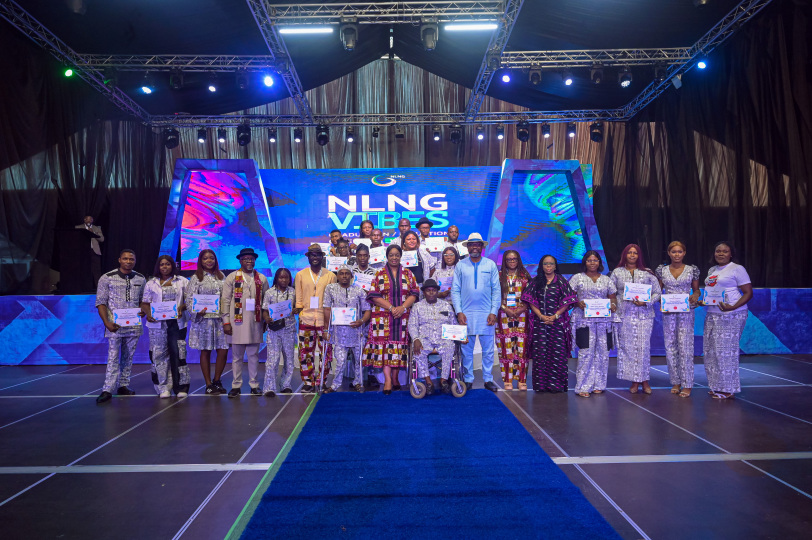
    NLNG’s economic empowerment initiative, the Vocational Innovation Business and Empowerment Scheme (VIBES), has inducted a new cohort of 103 trainees into its 2026 empowerment programme.

    The induction ceremony, held in Port Harcourt on Monday, marked a significant milestone in the scheme’s ongoing commitment to skills development and sustainable economic empowerment.

    The newly inducted trainees will undergo a structured series of capacity-building sessions, culminating in a competitive pitching phase, during which the most viable business proposals will be selected based on clearly defined evaluation criteria.

    Simultaneously, 26 beneficiaries from the previous cohort successfully completed their training and graduated from the programmme. They received grant support in the preceding year, marking the close of their training.

    One year after receiving support, several of the graduates have strengthened their operations, enhanced financial management practices, expanded their customer base, and transitioned from early-stage concepts to more structured, revenue-generating enterprises. Some have scaled up production and diversified their service offerings, demonstrating measurable business growth and improved operational stability.

    Speaking at the induction ceremony in Port Harcourt, the General Manager, External Relations and Sustainable Development, Sophia Horsfall, emphasised NLNG’s commitment to sustainable community development, stating:

    “The VIBES programme reflects NLNG’s long-standing commitment to sustainable development in our host communities. Through targeted capacity building, access to innovative support, and enterprise development opportunities, we are strengthening the local economy across our host and pipeline communities. The graduation of one cohort and the induction of another showcase the continuity of our investment in youth empowerment, innovation, and enterprise development as key drivers of inclusive growth.”

    She added that VIBES represents a strategic intervention aligned with NLNG’s broader sustainable development objectives. The programme is designed to cultivate entrepreneurial capability and strengthen the networks required for emerging business leaders and community change-makers to thrive within their communities.

    Also speaking at the event, the Manager, Community Relations and Sustainable Development, Yemi Adeyemi, described the milestone as rewarding, noting the progress made by the graduating cohort.

    “When we supported them last year, it was not only with training but also with grants to help strengthen their businesses. A year later, we can see the difference, businesses are expanding, ideas have moved beyond the planning stage, and the beneficiaries are more confident in managing their ventures. That is the essence of VIBES, practical support that helps people make real progress.”

    VIBES is NLNG’s economic empowerment programme designed to equip young entrepreneurs with the tools, knowledge, and support required to build sustainable livelihoods. Participants receive practical training in financial management, marketing, business strategy, and foundational legal principles, complemented by mentorship and advisory guidance from experienced professionals. This integrated approach combines capacity development with funding support to enable participants to scale their businesses, improve profitability, and build sustainable enterprises.

    Economic empowerment remains a key component of NLNG’s broader sustainable development efforts, alongside education, infrastructure, and healthcare. Through VIBES, the company aims to support more young entrepreneurs in building viable businesses, creating economic value, and contributing meaningfully to the development of its host and pipeline communities across Rivers State.

    Following the relaunch of the programme, 26 participants have so far benefited from the grant and completed their training under the initiative.

  • Feature- From Landlocked to Land-Linked: How Access Bank is Bridging Africa’s Trade Financing Gap

    Feature- From Landlocked to Land-Linked: How Access Bank is Bridging Africa’s Trade Financing Gap

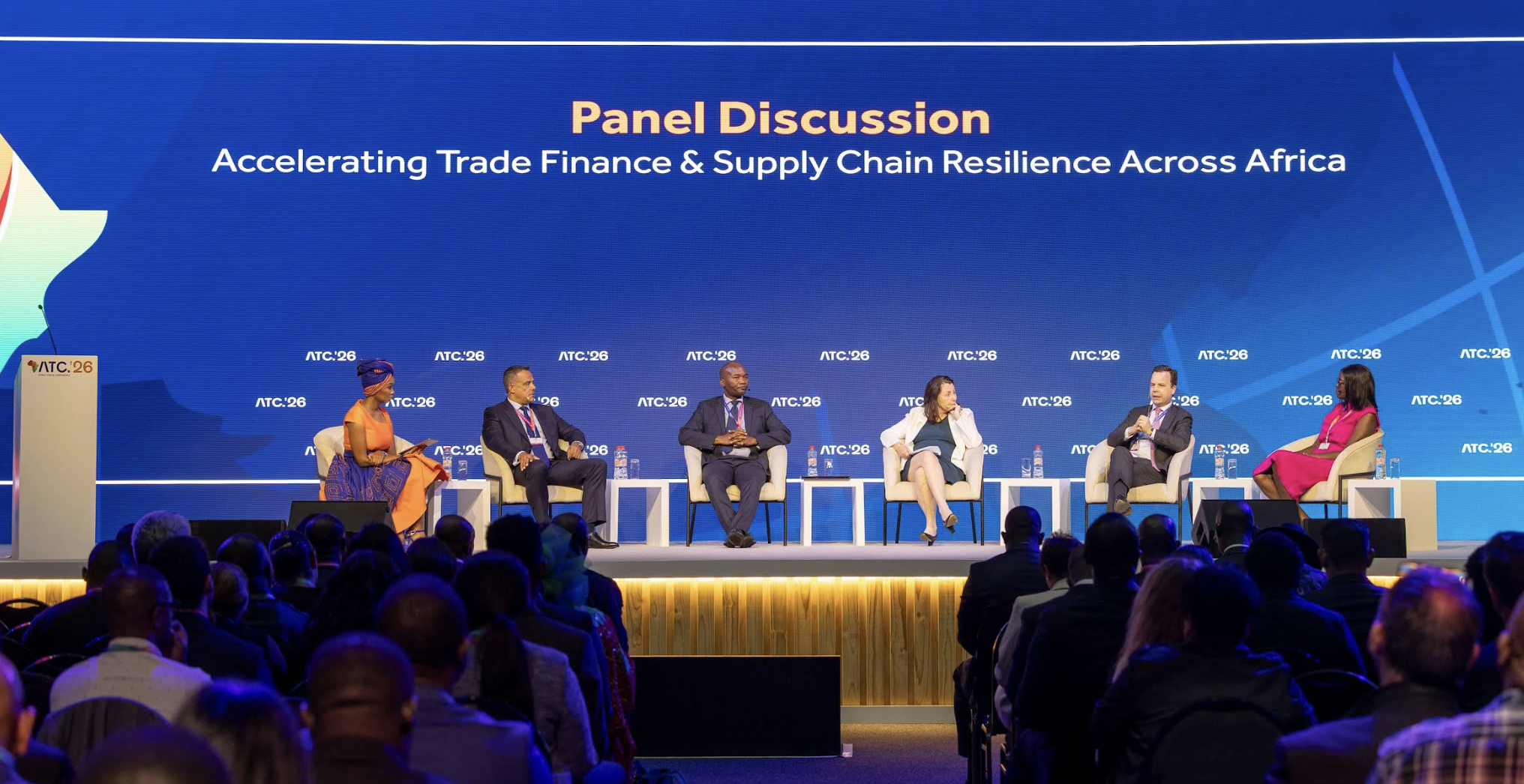
    At the Africa Trade Conference (ATC) 2026 held in Cape Town, South Africa, policymakers, financiers and global business leaders gathered to confront one of Africa’s most persistent economic constraints: the continent’s vast trade financing gap.

    Hosted by Access Bank Plc, the conference brought together stakeholders from governments, development finance institutions and the private sector to explore how Africa can transform its fragmented trade ecosystem and unlock the promise of the African Continental Free Trade Area.

    The central message emerging from the discussions was clear: Africa must move from being a continent of landlocked markets to a network of land-linked economies, connected through finance, infrastructure and digital trade systems.

    Turning Vision into Velocity

    The conference, themed “Turning Vision into Velocity: Building Africa’s Trade Ecosystem for Real-World Impact,” focused on translating policy ambition into practical solutions for businesses across the continent.

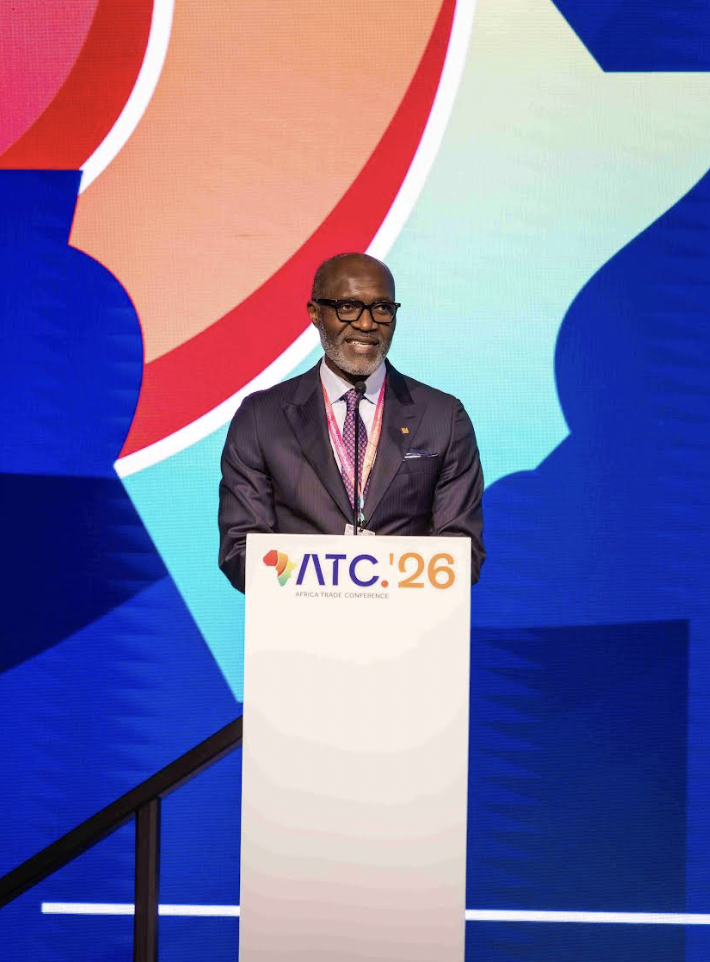
    Delivering the welcome address, Roosevelt Ogbonna, Managing Director and Chief Executive Officer of Access Bank Plc, emphasised that Africa must confront the structural barriers that continue to limit intra-continental commerce.

    “The reality is that Africa still controls a small share of global trade,” Ogbonna said. “The corridors are still fragmented and more aspirational than functional, and too many small businesses that aspire to trade across Africa remain constrained.”

    According to him, the conference was convened to continue the conversation begun at its inaugural edition in 2025, focusing on how Africa can expand trade within the continent while strengthening its participation in global markets.

    “This conference must not end as another talking shop,” he said. “It must become the birthplace of a movement that contributes to transforming intra-African trade.”

    For Access Bank Plc, the role of financial institutions in that transformation is evolving.

    “At Access Bank, we see ourselves as financiers and connectors of markets, ideas and opportunities,” Ogbonna noted. “Our role is to help African businesses move from ambition to impact, from local relevance to global competitiveness.”

    Bridging Africa’s Trade Finance Gap

    Despite its abundant natural resources and population of more than 1.3 billion people, Africa remains underrepresented in global trade flows.

    One of the biggest barriers is the lack of accessible financing for exporters, manufacturers and small businesses seeking to expand across borders. The trade finance gap continues to constrain intra-African commerce, which remains significantly below levels recorded in other regional trading blocs.

    To address this, Ogbonna highlighted three strategic priorities that emerged from the previous edition of the conference: breaking down silos between policymakers, financial institutions and businesses; building a trade ecosystem powered by reliable data and analytics, and developing systems that support both large corporations and smaller businesses expanding across borders

    Encouragingly, he noted that progress is already emerging across several sectors.

    “We have seen value chains emerging across agriculture, manufacturing and services, and we are seeing African brands crossing borders and building a global presence,” he said.

    Nevertheless, the gains remain uneven across the continent, with progress concentrated in a few markets and trade corridors.

    Financing the Future of African Trade

    Beyond the structural challenges of trade finance and infrastructure, the conference also explored the evolving financial architecture required to unlock Africa’s full trade potential.

    Keynote addresses were delivered by Kennedy Mbekeani, Director General for the Southern Africa Region at the African Development Bank, and Kwabena Ayirebi, Managing Director of Banking Operations at the African Export-Import Bank.

    Both speakers emphasised the need for stronger collaboration among development finance institutions, commercial banks and governments to mobilise the capital required to drive infrastructure development and support trade across the continent.

    Mbekeani stressed that private capital would be crucial in bridging Africa’s infrastructure financing gap.

    “The mobilisation of private capital remains crucial as many African governments are constrained by limited fiscal space and overstretched balance sheets,” he said.

    “The mobilisation of capital, particularly private capital, is something that we need to work on.”

    The conversation was further enriched by insights from Tolu Oyekan, Managing Director and Partner at Boston Consulting Group, who presented the Africa Trade Outlook 2026.

    His presentation highlighted the macroeconomic forces shaping the future of African trade, including shifting global supply chains, the growing importance of regional value chains and emerging opportunities for African industries to capture greater value in global markets.

    Digital infrastructure and payments were also central to the conversation.

    Mike Ogbalu, Chief Executive Officer of the Pan-African Payment and Settlement System, underscored the importance of payment interoperability in enabling seamless cross-border transactions across the continent.

    Efficient payment systems, he noted, are essential to reducing the cost and complexity of trading across African borders, particularly for small and medium-sized enterprises.

    Policy, Finance and Partnerships

    The conference also convened a high-level ministerial panel that brought together policymakers and financial sector leaders to examine the policy environment required to accelerate Africa’s economic integration.

    Participants included Elizabeth Ofosu Adjare, Ghana’s Minister for Trade, Agribusiness and Industry, and Tiroeaone Ntsima, Botswana’s Minister of Trade and Entrepreneurship, alongside senior executives from international financial institutions.

    Together, they explored how regulatory alignment, infrastructure development and innovative financing structures can accelerate the implementation of the African Continental Free Trade Area and unlock intra-African trade.

    The objective, participants agreed, was not merely dialogue but partnership, bringing together the policymakers, financiers and businesses capable of translating Africa’s trade ambitions into tangible outcomes.

    Reimagining Africa’s Economic Geography

    Beyond policy discussions and financing strategies, the conference reflected a deeper shift in how Africa views its economic geography.

    For decades, the continent’s development challenges have often been framed in terms of physical constraints: landlocked economies, fragmented markets and weak infrastructure.

    But the emerging vision presented in Cape Town suggests a different future,  one where integrated banking networks, digital payment systems and trade finance platforms transform isolated markets into connected trade corridors.

    For Access Bank Plc, that transformation is already underway.

    With operations spanning 25 countries globally, including 16 across Africa, the bank is building financial corridors that link African businesses to each other and to global markets.

    From Potential to Participation

    The conversations at the Africa Trade Conference reinforced a growing consensus across the continent: Africa’s economic transformation will depend on policy reforms and institutions capable of financing and facilitating trade.

    Banks, development finance institutions and payment platforms are increasingly becoming the connective tissue linking African markets.

    For Access Bank, the ambition is clear,  helping reshape the narrative of African trade.

    From isolated markets to integrated corridors. From landlocked constraints to land-linked opportunity. And from economic potential to meaningful participation in the global trading system.

  • Macroeconomic Report: NIGERIA GDP Q4’2025

    Macroeconomic Report: NIGERIA GDP Q4’2025

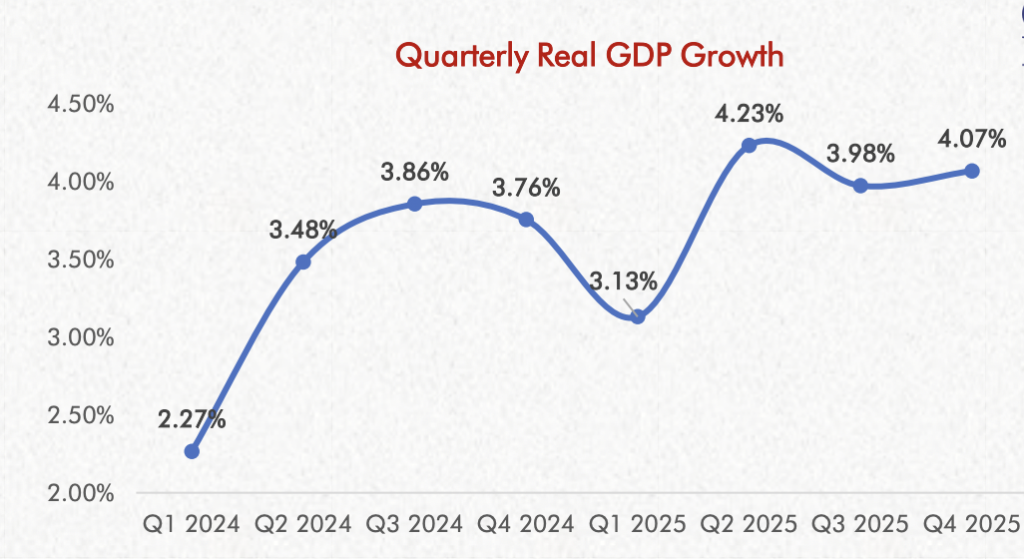
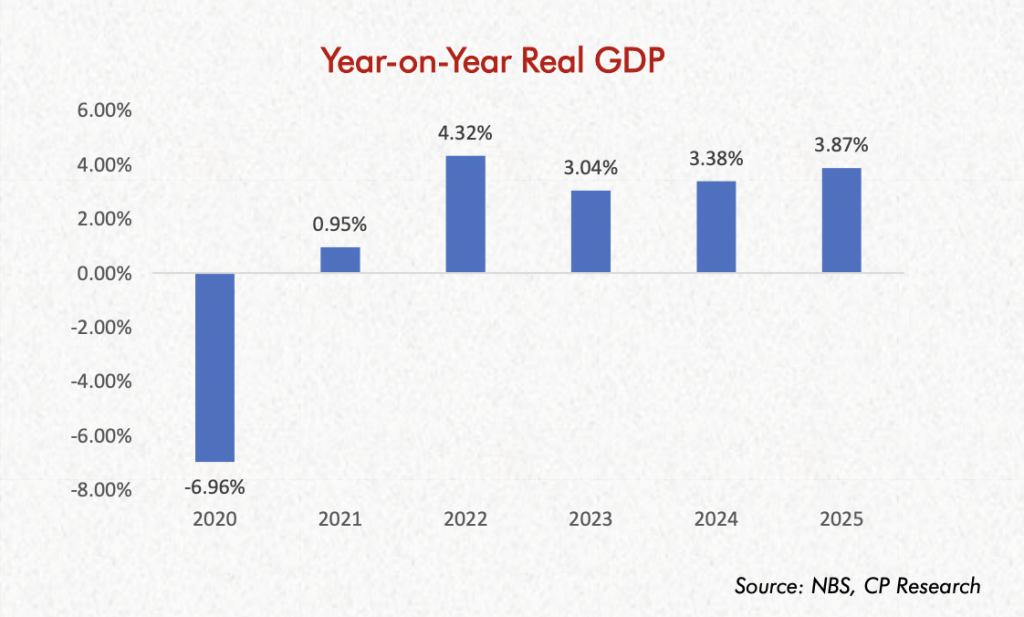
    Nigeria’s Gross Domestic Product (GDP) grew by 4.07% year-on-year in real terms in Q4’25, compared to 3.98% in Q3’25.
    For the year ended, Real GDP grew by 3.87%, up from 3.38% in 2024.

    In nominal terms, aggregate GDP stood at ₦122.81 trillion in Q4’25, up from ₦113.59 trillion in Q3’25, an increase of 8.12%. For the year ended 2025, nominal GDP stood at ₦431.81 trillion compared to ₦364.62 trillion in 2024.

    Key Highlights
    Overall Economic Growth: Nigeria’s economy grew by 4.07% in Q4’25, higher than 3.98% in Q3’25 and above the 3.76% recorded in Q4’24. For the full year, the economy expanded by 3.87% in 2025, compared with 3.38% in 2024, reflecting improved growth momentum.

    Services Sector Dominance: The Services sector grew by 4.15% in Q4’25 and remained the largest contributor to GDP with a 55.92% share of total output.

    Agriculture Sector Performance: Agriculture expanded by 4.00% in Q4’25, accounting for 28.66% of GDP, supported by improved crop activity relative to the prior year.

    Industry Sector Recovery: The Industry sector grew by 3.88% in Q4’25, contributing 15.42% to GDP, reflecting stabilisation in manufacturing and oil production.

    Oil Production Trends: Average crude oil production in Q4 2025 was 1.56 million barrels per day (mbpd). Oil GDP increased by 6.79% in Q4’25, compared with 2.08% in Q4’24. The oil sector accounted for 2.87% of total GDP.

    Non-Oil GDP: Non-oil sectors contributed 97.13%, with non-oil GDP expanding by 3.99% year-on-year.

    Nigeria’s economy expanded by 3.87% in full-year 2025, compared with 2.74% in 2024, marking a clear improvement in growth momentum.

    On a quarterly basis, GDP growth progressed from 3.13% in Q1 to 4.23% in Q2, moderated to 3.98% in Q3, and closed the year at 4.07% in Q4. The pattern shows that growth accelerated into mid-year and remained near the 4% range through the second half. Unlike prior years, where performance was uneven across sectors, 2025 recorded a more balanced expansion.

    From a macro standpoint, 2025 represents a transition to a higher growth base relative to 2024. The expansion was broad-based rather than concentrated in a single sector. Services provided scale, agriculture provided stability, industry provided recovery support, and oil added cyclical upside. Sustaining growth above 4% will depend on productivity gains in services, cost normalisation in industry, and continued stability in oil production.

    The Nigerian economy’s performance from the second quarter of 2025 through the end of the year shows a continuation of the multi-year
    pattern in which non-oil sectors provide the bulk of output and growth, while the oil sector delivers episodic contributions that can swing
    headline GDP outcomes.

    The non-oil sector remained the principal driver of GDP growth in every quarter of 2025 and accounted for the overwhelming share of national output. The continuity of broad-based non-oil expansion through all quarters underscores that domestic consumption, services
    demand and agricultural activity have become central to economic momentum.

    The oil sector exhibited volatility across 2025, and its impact on headline GDP was uneven. The swings in oil sector contribution reflect the
    continued sensitivity to operational disruptions and global market conditions.

    For the year ended 2025, the oil sector accounted for a larger share of GDP growth and output than in 2024. The annual rate of growth in the oil economy was 8.50% in 2025, compared with 5.54% in 2024, and the oil sector’s contribution to total real GDP rose modestly relative to the prior year. By contrast, the non-oil sector’s share of GDP edged slightly lower on an annual basis but remained dominant at over 96% of aggregate output. The annual pattern confirms that while oil output growth strengthened in 2025, structural diversification of the economy remains well-advanced relative to earlier phases when crude dominated headline GDP.

    Macroeconomic conditions in 2025 shaped sectoral performance and influenced the overall GDP outcome. The Central Bank of Nigeria’s Monetary Policy Committee (MPC) maintained a high policy rate for most of the year to contain inflation, which moderated gradually. The naira showed relative stability in late 2025, with narrower gaps between official and parallel market rates, thereby improving foreign exchange liquidity and reducing import inflation pressures.

    Movements in the exchange rate and monetary policy affected consumption, production costs, and investment decisions, while fluctuations in global oil prices and domestic output influenced fiscal revenues.

    Together, these macro variables reinforced the resilience of non-oil sectors as the primary drivers of growth, even as oil sector volatility continued to shape headline GDP outcomes.

    GDP 2025: Sector Engines, Oil Swings, and the Economy’s Balancing Act

    The Services sector was the largest driver of growth in Q4, delivering roughly 4.15 % expansion and contributing nearly 56% of GDP,
    supported by telecommunications, finance, trade, transportation, and real estate. Services demand was influenced by improvements in consumer credit and digital transaction volumes, which underpinned activity even as inflation remained elevated relative to regional
    peers, slowing but still above target. The resilience of services reinforced overall growth when other sectors faced headwinds.

    The Agricultural sector expanded by 4.00% in Q4, with crop production accounting for the majority of agricultural GDP. Crops such as
    cassava, maize, rice and yams accounted for the largest share of agricultural output, reflecting seasonal harvest gains and expanded cultivation areas. Agriculture contributed close to 28.7% of GDP in Q4, cushioning volatility in growth, supported by favourable rainfall patterns and a good harvest season. Though security challenges and post-harvest losses continue to constrain efficiency in some
    regions, agriculture’s linkages with trade and agro-processing strengthened non-oil growth.

    The Manufacturing sector expanded 3.9% in Q4 and accounted for roughly 10.7% of GDP, supported by the production of consumer goods,
    processed foods, beverages, and building materials. Annual manufacturing growth at 3.8 % in 2025 surpassed the 2024 outcome, reflecting
    improvements in logistics and a more stable electricity supply in industrial hubs, as well as incentives for import substitution. However, capacity constraints, access to long-term credit and operating costs continued to weigh on competitiveness.

    Construction activity grew alongside manufacturing, driven by private real estate investment and infrastructure projects, stimulating demand for materials and equipment.

    The Industrial sector played a measured but important role in Nigeria’s 2025 GDP performance, contributing roughly 15.4% of total output in Q4 2025. The sector expanded by about 3.9% year-on-year in Q4, supported by growth in manufacturing and a recovery in oil
    output, while mining and quarrying reflected the year’s volatility in crude production. On a full-year basis, industrial growth strengthened relative to 2024, driven largely by the oil sector’s 8.50% annual expansion, alongside steady gains in manufacturing.

    The Trade sector expanded by 3.8% in Q4, contributing roughly 18.6% to GDP and underpinning broader non-oil momentum. Trade benefited from sustained domestic consumption and naira stability.

    Bottom line
    Nigeria’s GDP growth in 2025 strengthened to 3.87% from 3.38% in 2024, with Q4 expanding 4.07% year-on-year. Growth was broad-based but structurally anchored in the non-oil economy, which accounted for over 96% of total output and expanded close to 4% for the year.

    The growth story was driven by domestic production and services activity, while oil acted as a swing factor rather than the foundation of expansion. Sustained gains will depend on productivity, infrastructure, and the continued strengthening of non-oil value chains.

    Nigeria enters 2026 with growth momentum anchored in the non-oil economy but exposed to structural and external risks. The key risk to the 2026 outlook is the gap between output growth and real income growth. Sustained expansion above 4% will require productivity gains, infrastructure improvements and stronger private investment. Without structural acceleration, growth may remain moderate, lagging behind population growth dynamics.

    2026 presents a continuation of Nigeria’s transition toward non-oil-led growth. Stability in oil will support the macro framework, but durable expansion will depend on deepening industrial output, strengthening agriculture value chains and sustaining services momentum.

  • Dangote Explores Investment Opportunities in Burundi, Meets with President

    Dangote Explores Investment Opportunities in Burundi, Meets with President

    Africa’s richest man, Aliko Dangote, paid a brief but strategically significant visit to Burundi, where he explored new investment opportunities and cemented plans to expand the Dangote Group’s presence across the continent. The visit included high‑level talks with President Evariste Ndayishimiye at the presidential palace.

    Accompanied by former Nigerian President Olusegun Obasanjo, Dangote described the mission as both diplomatic and economic in scope. He revealed that two dedicated technical teams—one representing Burundi and the other the Dangote Group—have been constituted to identify priority sectors and develop viable investment projects.

    “Our focus really is investing heavily in the African continent, not anywhere else, and so Burundi is part and parcel of that African region,” Dangote stated after the meeting. He pointed to strong potential in solid minerals, power generation, agriculture, cement production, and infrastructure development, emphasising that the goal is to build a mutually beneficial partnership that drives shared prosperity.

    According to official sources, discussions centered on strategic cooperation in infrastructure, logistics, industrialization, and energy—areas the Burundian government considers essential to its long-term economic transformation. The engagement aligns with Burundi’s broader ambition to attract large-scale private sector investment and strengthen ties with leading African industrial players.

    Observers widely view the engagement as a landmark moment—one that positions Burundi as a credible destination for African mega‑investors and integrates the country more firmly into Dangote’s continental expansion strategy.

  • Corporate Comms in the Age of Crypto: Why Nigeria’s Digital Finance Future Depends on Trust

    Corporate Comms in the Age of Crypto: Why Nigeria’s Digital Finance Future Depends on Trust

    By John  Kokome

    By the time you finish reading this article, the price of Bitcoin may have changed twice. That is the nature of cryptocurrency, fast, volatile, and borderless. Yet beyond price charts and trading apps lies a less discussed but critical pillar of Nigeria’s digital finance revolution: corporate communications. In the age of crypto, communication is no longer a support function. It is infrastructure.

    Nigeria is one of the world’s fastest-growing crypto markets. Chainalysis ranked the country second globally in cryptocurrency adoption in 2023, driven largely by everyday retail users rather than institutions. Between July 2023 and June 2024 alone, Nigerians received an estimated $59 billion in cryptocurrency value, the highest in Sub-Saharan Africa. Yet public perception remains sharply divided, crypto is seen as opportunity by some and risk or outright scam by others.

    In such an environment, how crypto companies communicate can determine whether they earn trust, attract scrutiny, or lose credibility entirely.

    The Complexity Challenge

    Blockchain, decentralised finance, wallets, custody, smart contracts etc., are not everyday concepts for most Nigerians. Yet millions are expected to trust these systems with their savings, businesses, and livelihoods.

    Corporate communications must therefore evolve from promotion to translation. Crypto companies must become educators, simplifying complex ideas without downplaying risks. Hype must give way to clarity; speculation must yield to responsibility.

    Some homegrown platforms, including FlashChange and other emerging African crypto brands, have begun prioritising financial literacy and user education. That shift is encouraging, but it must become the industry norm, not the exception.

    Trust as a Strategic Asset

    Trust in financial institutions is fragile globally, but particularly so in emerging markets where currency devaluation and policy uncertainty are familiar experiences. Crypto gained traction in Nigeria partly because people sought alternatives.

    Still, crypto companies cannot assume automatic trust. In traditional banking, trust has been built over decades. In crypto, trust is built in real time, on social media, customer support channels, and community forums.

    A single outage, security breach, or regulatory misunderstanding can escalate into a reputational crisis. Silence is read as guilt. Ambiguity feels deceptive. Delay looks incompetent. In Nigeria’s fast-moving digital ecosystem, communication speed must match market speed.

    Nigeria’s policy evolution on crypto reinforces this point. In December 2023, the Central Bank of Nigeria (CBN) issued guidelines allowing banks to open accounts for Virtual Asset Service Providers, effectively shifting from restriction to regulation. The CBN acknowledged that global trends demand oversight, not exclusion, while warning of risks related to money laundering, terrorism financing, and consumer protection gaps.

    The Securities and Exchange Commission (SEC) has echoed this stance, emphasising that Nigeria’s digital asset future must be anchored on innovation, collaboration, and trust, with clear licensing and investor protection frameworks. The message is clear: crypto is now part of Nigeria’s financial architecture, and communication is central to compliance.

    A Young, Digital Audience

    Nigeria’s demographics explain crypto’s momentum. According to the National Bureau of Statistics, over 63 per cent of Nigerians are under 25, and internet penetration now exceeds 50 percent, driven largely by mobile broadband. This digital-native population consumes information quickly, questions authority openly, and shapes narratives in real time.

    Corporate communications teams must engage this audience with transparency and relevance, not marketing noise.

    Crisis Communications in a 24/7 Market

    Crypto markets never sleep. Crises do not respect office hours. Hacks, liquidity shocks, and regulatory announcements can happen at any moment.

    Communications teams must therefore operate like newsrooms, prepared, responsive, and coordinated. Pre-approved crisis playbooks, trained spokespersons, and real-time monitoring are no longer optional.

    Most importantly, crisis communication must be human-centred. Nigerians want clear answers: Is my money safe? What happened? What comes next?

    Brands that respond with honesty and empathy endure. Those who hide behind jargon do not.

    Narrative Capital vs Market Share

    In Nigeria’s crowded fintech and crypto space, companies often compete on fees and features. But the most durable advantage is narrative capital the credibility and emotional connection built over time.

    Narrative capital determines whether users stay during downturns, regulators listen during consultations, and the media seek your voice. Platforms like FlashChange have a responsibility to tell Africa’s crypto story with authenticity, data, and purpose.

    From Evangelists to Translators

    Nigeria no longer needs crypto evangelists promising disruption. It needs translators, professionals who connect blockchain to remittances, wallets to small businesses, and decentralisation to economic opportunity.

    As crypto matures, corporate communications will increasingly determine its legitimacy. Code may power platforms, but communication powers confidence. And confidence, more than any algorithm, will decide whether digital finance fulfils its promise for Nigeria.

    John Kokome is the Corporate Communications Manager at FlashChange, a fintech platform redefining secure digital asset exchange. With experience across fintech, cryptocurrency, telecoms, and development communications in Africa. He currently leads strategic storytelling, reputation management, and stakeholder engagement initiatives at the company, focusing on building trust, transparency, and financialliteracy in the digital assets space. John’s work sits at the intersection of policy, technology, and public perception, with a strong emphasis on Africa-first narratives and responsible innovation. He has contributed opinion pieces and thought leadership articles on governance, youth empowerment, branding, and Nigeria’s evolving digital economy.