Tag: Jim Ovia

  • Jim Ovia Steps Down As Zenith Bank Chairman, Mustapha Bello Steps In

    Jim Ovia Steps Down As Zenith Bank Chairman, Mustapha Bello Steps In

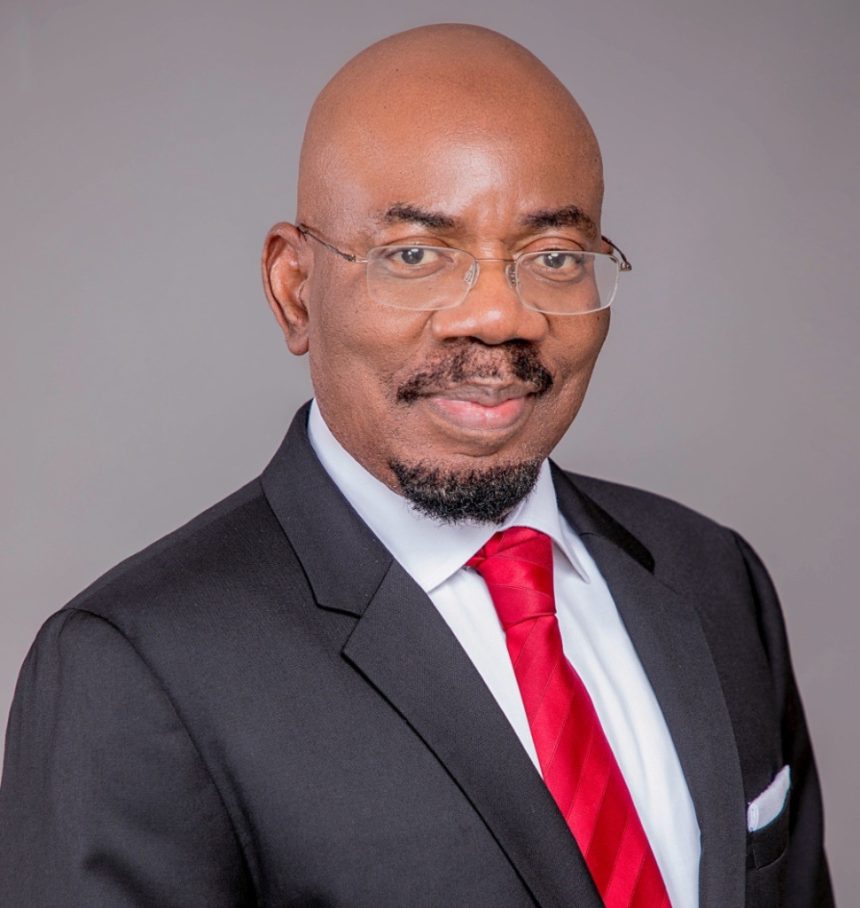
    The founder and long-serving Chairman of Zenith Bank Plc, Jim Ovia, has officially stepped down from his role, marking the end of an era at the Zenith Bank’s 35th Annual General Meeting (AGM) held in Lagos.

    Ovia quit after he completed the mandatory 12-year tenure permitted under corporate governance guidelines for financial holding companies in Nigeria.

    His exit signals a major leadership transition for one of Nigeria’s most systemically important banks, where he has been instrumental in driving its evolution from a startup institution into a tier-one banking franchise.

    Ovia, who founded Zenith Bank and has been a central figure in its growth trajectory, was credited by the Board for providing strong leadership, strategic direction, and effective oversight throughout his time as chairman.

    Under his stewardship, Zenith Bank built a reputation for strong corporate governance, consistent profitability, and disciplined risk management, positioning itself as a market leader in Nigeria’s financial services sector.

    His strategic influence also guided the bank’s expansion across key African markets and its dual listing on both domestic and international exchanges, reinforcing investor confidence and global visibility.

    Following his departure, Engr Mustapha Bello has assumed the position of Chairman, taking on the responsibility of steering the bank through its next phase of growth and transformation.

    Bello, who joined the Board on December 29, 2017, is currently the longest-serving director.

    According to the bank, he brings extensive leadership experience, a deep understanding of corporate governance principles, and a track record in strategic oversight and organisational growth.

    The bank added that Bello has demonstrated integrity, independence, and sound judgment during his time on the Board, positioning him to lead the institution through its next phase.

    Zenith Bank confirmed that the appointment of Bello has received the Central Bank of Nigeria’s approval.

    The transition is expected to ensure stability and a seamless continuation of the bank’s strategic objectives, as it navigates evolving regulatory and market dynamics.

    In his acceptance remarks at the AGM, Bello reaffirmed his commitment to preserving and advancing the legacy established under Ovia’s leadership.

    He emphasised a strategic focus on consolidating existing gains, enhancing operational efficiency, and accelerating innovation to ensure the bank remains competitive in an increasingly dynamic financial landscape.

    Market analysts view the transition as a defining moment for Zenith Bank, given Ovia’s deep-rooted influence on the institution’s culture, governance framework, and long-term strategy.

    Stakeholders are expected to closely monitor how the new leadership executes its mandate, particularly amid evolving regulatory pressures and macroeconomic challenges.

    Further details are anticipated as the bank provides additional clarity on its leadership transition roadmap and strategic priorities.

  • Zenith Bank expands footprint, opens Manchester branch to strenghten Global Financial Connectivity

    Zenith Bank expands footprint, opens Manchester branch to strenghten Global Financial Connectivity


    Zenith Bank Plc has announced the opening of a new branch in Manchester, United Kingdom, in a move aimed at strengthening financial connections between Africa and the United Kingdom while supporting businesses engaged in cross-border trade and investment.

    The official opening ceremony for the new branch is scheduled for Tuesday, March 17, 2026, and is expected to attract government officials from Nigeria and the United Kingdom, regulators, investors, customers and business leaders from both countries.

    The expansion marks another milestone in the bank’s international growth strategy as it continues to position itself as a leading African financial institution, facilitating global trade flows involving Africa.

    According to the bank, the Manchester branch will complement its existing operations in the United Kingdom and serve as a strategic hub for providing corporate banking, trade finance, treasury and related financial services to clients operating across the United Kingdom, Europe and Africa.

    Group Managing Director and Chief Executive Officer of Zenith Bank Plc, Adaora Umeoji, said the expansion reflects the bank’s commitment to strengthening financial connectivity between businesses in developed markets and Africa’s rapidly expanding economies.

    “The opening of our Manchester branch represents another important step in Zenith Bank’s growth as a leading African financial institution connecting businesses and markets across continents. Manchester is one of the United Kingdom’s most dynamic commercial centres, and our presence here will further strengthen financial connections between businesses in the UK and opportunities across Africa’s rapidly expanding markets,” Umeoji said.

    Founded in 1990 by its Founder and Chairman, Jim Ovia, Zenith Bank has grown into one of Africa’s leading banking institutions with a strong capital base and consistent profitability.

    The bank operates more than 500 branches and business offices across Nigeria’s 36 states and the Federal Capital Territory, while maintaining subsidiaries in several African markets including Ghana, Sierra Leone, Gambia and Côte d’Ivoire.

    Beyond Africa, Zenith Bank maintains a presence in major international financial centres including the United Kingdom, France, the United Arab Emirates and China as part of its strategy to support global trade and investment involving African businesses.

    Manchester, one of the United Kingdom’s leading commercial centres, hosts a diverse business community spanning sectors such as manufacturing, logistics, engineering, technology and consumer goods.

    The city’s strong economic base and international outlook make it a strategic location for financial institutions seeking to support businesses operating across multiple global markets.

    Zenith Bank said the Manchester branch will work closely with its London operations and the bank’s broader international network to support clients expanding across markets and seeking new trade and investment opportunities.

    With the launch of the Manchester branch, the bank continues to advance its long-term vision of building a globally connected African financial institution capable of facilitating international commerce and strengthening economic partnerships between Africa and global markets.

  • Access Bank Drives Africa–Europe Trade Corridor at the Paris International Agricultural Show 2026

    Access Bank Drives Africa–Europe Trade Corridor at the Paris International Agricultural Show 2026

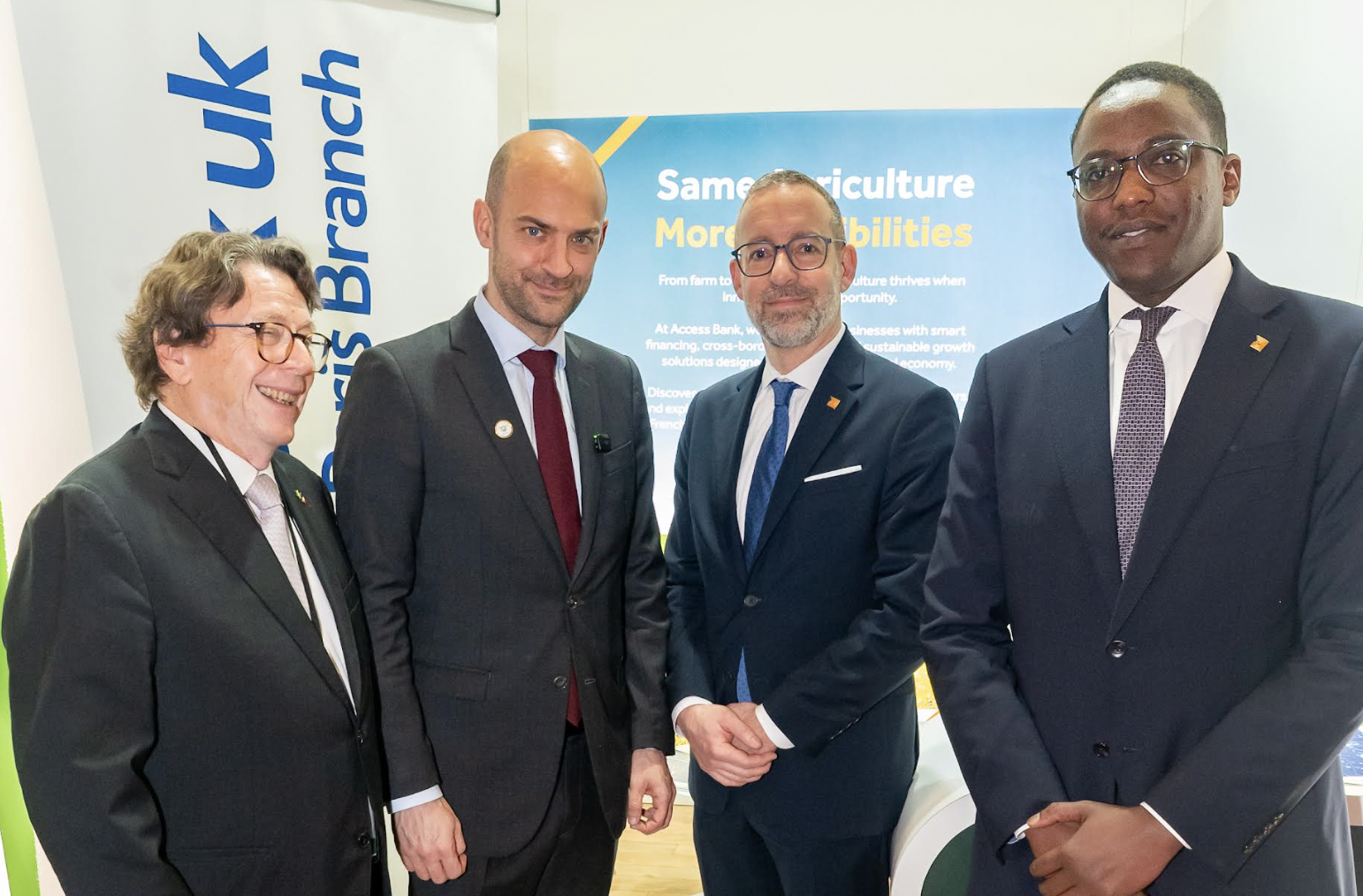
    Access Holdings PLC, the parent company of Access Bank Group, has reinforced the leadership of the financial institution in connecting African and European markets as its Group Managing Director and CEO, Innocent C. Ike, officially inaugurated the Nigerian Pavilion at the 2026 Paris International Agricultural Show.

    The event marks a pivotal moment in advancing strategic trade, investment, and agricultural partnerships between Nigeria and France, while positioning Access Holdings at the centre of cross-continental economic integration.

    Representing Aigboje Aig-Imoukhuede, Chairman of Access Holdings and the France–Nigeria Business Council (FNBC), Ike opened the pavilion before an audience of global investors, policymakers, and corporate leaders, signalling Nigeria’s readiness to deepen commercial engagement with Europe and strengthen value chains across the agricultural sector.

    “The Nigerian Pavilion represents readiness, readiness to partner, to invest, and to grow together.” Ike stressed in his opening remarks also reminding the audience that “Paris serves as a gateway into Europe, while Nigeria represents one of Africa’s largest and most dynamic markets. The presence of Nigerian banks here enhances trade finance, investment flows, and cross-border partnerships across continents.”

    The inauguration marks the beginning of a week-long series of engagements aimed at unlocking new investment opportunities, strengthening agribusiness value chains, and enabling greater participation of small and medium-sized enterprises (SMEs) in cross-border trade. As a leading African financial institution with an expanding global footprint, Access Bank, continues to serve as a key enabler of international commerce, providing the financial infrastructure required to connect businesses, markets, and capital across continents.

    A cornerstone of this strategy is the Paris branch of Access Bank UK, which since its establishment in 2023 has played a critical role in facilitating trade and investment between Europe and Africa. Under the leadership of Justin Maria, the branch delivers specialist trade finance, corporate banking, and structured financing solutions that enable European and African businesses to execute cross-border transactions efficiently and scale their international operations.

    Through its active participation in high-level platforms such as the Nigeria Business Forum and the Spotlight Nigeria Business Forum, Access Holdings has strengthened investor confidence, supported capital flows, and reinforced its position as a trusted financial partner for companies expanding into African and European markets.

    The opening ceremony brought together distinguished public and private sector leaders, including Jim Ovia, Founder and Chairman of Zenith Bank Plc; Adaora Umeoji, Managing Director and CEO of Zenith Bank Plc; Umar Dikko Radda, Executive Governor of Katsina State; and Emmanuelle Blatmann, Director of African Affairs at the French Ministry of Foreign Affairs, alongside senior government officials, investors, and corporate executives.

    The Nigerian Pavilion, sponsored by the France–Nigeria Business Council and supported by leading institutions including Access Holdings/Access Bank, reflects the growing momentum behind Nigeria’s global trade ambitions and the strategic role of the Group in facilitating economic connectivity between Africa and the rest of the world.

    As global supply chains continue to evolve, Access Bank remains committed to building bridges between Africa and international markets, supporting trade, enabling investment, and empowering businesses to scale across borders. The Group’s participation in the Paris International Agricultural Show underscores its broader vision of positioning Africa, and Nigeria in particular, as a key player in global commerce.

  • Jim Ovia not involved in any investment scheme- Zenith Bank

    Jim Ovia not involved in any investment scheme- Zenith Bank

    Zenith Bank Plc, a major financial services provider in Nigeria and Anglophone West Africa, has advised members of the public to disregard videos circulating online linking the Banks’ Group Chairman, Dr Jim Ovia, as endorsing an investment scheme known as Wealth Bridge.

    The bank gave the advice on its official X on Tuesday in Abuja.

    It said that the videos had urged members of the public to engage in a business relationship with the entity, alleging that the Central Bank of Nigeria (CBN) approved or endorsed the project.

    It described the videos and promotional materials as fake and had nothing to do with the bank or its Group Chairman.

    The bank said that the videos which circulated through the ‘Greece Island’ Facebook handle, made a fake promise of up to two million naira in weekly returns on a contribution of N380, 000 investment.

    “The video redirects unsuspecting members of the public to an alleged Arise News webpage with the details of this scheme and an embedded registration portal for signups.

    “This claim is entirely false and has no connection whatsoever to the Group Chairman, the Bank or any of its affiliate companies.

    “The general public is hereby advised to disregard these fraudulent communications.

    “Anyone who engages with the Greece Island handle, Wealth Bridge, delicious site, AfriQuantumX, Stock market analyst 1 or any other entity on the basis of these fake videos and images published by impostors, does so strictly at his or her own risk,’’ the bank said.

  • Feature- After the Capital Rush: Who Really Wins Nigeria’s Bank Recapitalisation?

    Feature- After the Capital Rush: Who Really Wins Nigeria’s Bank Recapitalisation?

    By Blaise Udunze

    By any standard, Nigeria’s ongoing bank recapitalisation exercise is one of the most consequential financial sector reforms since the 2004-2005 consolidation, which reduced the number of banks from 89 to 25. Then, as now, the stated objective was stability to have stronger balance sheets, better shock absorption, and banks capable of financing long-term economic growth. The Central Bank of Nigeria (CBN), in 2024, mandated a sweeping recapitalisation exercise compelling banks to raise substantially higher capital bases depending on their license categories. The categorisation mandated that every Tier-1 deposit money bank with international authorization is to warehouse N500 billion minimum capital base, and a national bank must have N200 billion, while a regional bank must have N50 billion by the deadline of 31st March 2026. According to the apex bank, the objectives were to strengthen resilience, create a more robust buffer against shocks, and position Nigerian banks as global competitors capable of funding a $1 trillion economy.

    However, as the race to comply intensifies and the dust gradually settles, a far bigger conversation has emerged, one that cuts to the heart of how our banking system operates. What will the aftermath of recapitalisation mean for Nigeria’s banking landscape, financial inclusion agenda, and real-sector development? Beyond the headlines of rights issues, private placements, and billionaire founders boosting stakes, every Nigerian deserves a sober assessment of what has changed, and what still must change, if recapitalisation is to translate into a genuinely improved banking system. The points are who benefits most from its evolution, and whether ordinary Nigerians will feel the promised transformation in their everyday financial lives, because history has taught us that recapitalisation is never a neutral policy. The fact remains that recapitalization creates winners and losers, restructures incentives, and often leads to unintended outcomes that outlive the reform itself.

    Concentration Risk: When the Big Get Bigger

    Recapitalisation is intended to strengthen banks, but at the same time, it risks making them fewer and larger, concentrating power and risk in an ever-narrowing circle. Nigeria’s Tier-1 banks, those already controlling roughly 70 percent of banking assets, are poised to expand further in both balance sheet size and market influence. This deepens the divide between the “haves” and “have-nots” within the sector. A critical fallout of this exercise has been the acceleration of consolidation. Stronger banks, such as Access Holdings and Zenith Bank, with ready access to capital markets, have managed to meet or exceed the new thresholds early by raising funds through rights issues and public offerings. Access Bank boosted its capital to nearly N595 billion, and Zenith Bank to about N615 billion.

    In contrast, banks that lack deep pockets or the ability to quickly mobilise investors are lagging. The results always show that the biggest banks raise capital faster and cheaper, while smaller banks struggle to keep pace.

    As of mid-2025, fewer than 14 of Nigeria’s 24 commercial banks met the required capital base, meaning a significant number were still scrambling, turning to rights issues, private placements, mergers, and even licensing downgrades to survive.

    The danger here is not merely numerical. It is systemic: as capital becomes more concentrated, the banking system could inadvertently mimic oligopolistic tendencies, reducing competition, narrowing choices for customers, and potentially heightening systemic risk should one of these “too-big-to-fail” institutions falter.

    Capital Flight or Strategic Expansion? The Foreign Subsidiary Question

    One of the most contentious aspects of the recapitalisation aftermath has been the deployment of newly raised capital, especially its use outside Nigeria. Several banks, flush with liquidity from rights issues and injections, have signalled or executed investments in foreign subsidiaries and expansions abroad, like what we are experiencing with Nigerian banks spreading their tentacles to the Ivory Coast, Ghana, Kenya, and beyond. Zenith Bank’s planned expansion into the Ivory Coast exemplifies this outward push.

    While international diversification can be a sound strategic move for multinational banks, there is an uncomfortable optics and developmental question here: why is Nigerian money being deployed abroad when millions of Nigerians remain unbanked or underbanked at home?

    According to the World Bank, a large number of Nigeria’s adult population still lack access to formal financial services, while millions of SMEs, micro-entrepreneurs, and rural households remain on the edge, underserved by traditional banks that now chase profitability and scale.

    Of a truth, redirecting Nigerian capital to foreign markets may deliver shareholder returns, but it does little in the short term to advance domestic financial inclusion, poverty reduction, or grassroots economic participation. The optics of capital flight, even when legal and strategic, demand scrutiny, especially in a nation still struggling with deep regional and demographic disparities.

    Impact on Credit and the Real Economy

    For the ordinary Nigerian, the most important question is simple: will recapitalisation make credit cheaper and more accessible?

    History suggests the answer is not automatic. The tradition in Nigeria’s bank system is mainly to protect returns, and for this reason, many banks respond to higher capital requirements by tightening lending standards, raising interest rates, or focusing on low-risk government securities rather than private-sector loans, because raising capital is expensive, and banks are profit-driven institutions. Small and medium-sized enterprises (SMEs), often described as the engine of growth, are usually the first casualties of such risk aversion.

    If recapitalisation results in stronger balance sheets but weaker lending to the real economy, then its benefits remain largely cosmetic. The economy does not grow on capital adequacy ratios alone; it grows when banks take measured risks to finance production, innovation, and consumption.

    Retail Banking Retreat: Handing the Mass Market to Fintechs?

    In recent years, we have witnessed one of the most striking shifts, or a gradual retreat of traditional banks from mass retail banking, particularly low-income and informal customers.

    The question running through the hearts of many is whether Nigerian banks are retreating from retail banking, leaving space for fintech disruptors to fill the void.

    In recent years, players like OPAY, Moniepoint, Palmpay, and a host of digital financial services arms have become de facto retail banking platforms for millions of Nigerians. They provide everyday payment services, wallet functionalities, micro-loans, and QR-enabled commerce, areas traditional banks once dominated. This trend has accelerated as banks chase corporate clients where margins are higher and risk profiles perceived as more manageable. The true picture of the financial landscape today is that the fintechs own the retail space, and banks dominate corporate and institutional finance. But it is unclear or uncertain if this model can continue to work effectively in the long term.

    Despite the areas in which the Fintechs excel, whether in agility, product innovation, and customer experience, they still rely heavily on underlying banking infrastructure for liquidity, settlement, and regulatory compliance. Should the retail banking ecosystem become split between digital wallets and corporate corridors, rather than being vertically integrated within banks, systemic liquidity dynamics and financial stability could be affected. Nigerians deserve a banking system where the comforts and conveniences of digital finance are backed by the stability, regulatory oversight, and capital strength of licensed banks, not a system where traditional banks withdraw from retail, leaving unregulated or lightly regulated players to carry that mantle.

    Corporate Governance: When Founders Tighten Their Grip

    The recapitalisation exercise has not been merely a technical capital-raising exercise; it has become a theatre of power plays at the top. In several banks, founders and major investors have used the exercise to increase their stakes, concentrating ownership even as they extol the virtues of financial resilience.

    Prominent founders, from Tony Elumelu at UBA to Femi Otedola at First Holdco and Jim Ovia at Zenith Bank, have all been actively increasing their shareholdings. These moves raise legitimate questions about corporate governance when founders increase control during a regulatory exercise. Are they driven by confidence in their institutions, or are they fortifying personal and strategic influence amid industry restructuring.

    Though there might be nothing inherently wrong with founders or shareholders demonstrating faith in their institutions, one fact remains that the governance challenge lies not simply in who holds the shares, but how decisions are made and whose interests are prioritised. Will banks maintain robust internal checks and balances, ensuring that capital deployment aligns with national development goals? The question is whether the CBN is equipped with adequate supervisory bandwidth and tools to check potential excesses if emerging shareholder concentrations translate into undue influence or risks to financial stability. These are questions that transcend annual reports; they strike at the heart of trust in the system.

    Regional Disparity in Lending: Lagos Is Not Nigeria

    One of the persistent criticisms of Nigerian banking is regional lending inequality. It has been said that most bank loans are still overwhelmingly concentrated in Lagos and the Southwest, despite decades of financial deepening in this region; large swathes of the North, Southeast, and other underserved regions receive disproportionately smaller shares of credit. This imbalance not only undermines inclusive growth but also fuels perceptions of economic exclusion.

    Recapitalisation, in theory, should have enhanced banks’ capacity to support broader economic activity. Yet, the reality remains that loans and advances are overwhelmingly concentrated in economic hubs like Lagos.

    The CBN must deploy clear incentives and penalties to encourage geographic diversification of lending. This could include differentiated capital requirements, credit guarantees, or tax incentives tied to regional loan portfolios. A recapitalised banking system that does not finance national development is a missed opportunity.

    Cybersecurity, Staff Welfare, and the Technology Deficit

    Beyond balance sheets and brand expansion, there is a human and technological dimension to the banking sector’s challenge. Fraud remains rampant, and one of the leading frustrations voiced by Nigerians involves failed transactions, delayed reversals, and poor digital experience. Banks can raise capital, but if they fail to invest heavily in cybersecurity, fraud detection, staff training, and welfare, the everyday customer will continue to view the banking system as unreliable. Nigeria’s fintech revolution has thrived precisely because it has pushed incumbents to become more customer-centric, agile, and tech-savvy. If banks now flush with capital don’t channel a portion of those funds into robust IT systems, workforce development, fraud mitigation, and seamless customer service, then the recapitalisation will have achieved little beyond stronger balance sheets. In short, Nigerians should feel the difference, not merely in stock prices and market capitalisation, but in smooth banking apps, instant reversals, responsive customer care, and secure platforms.

    The Banks Left Behind: Mergers, Failures, or Forced Restructuring?

    With fewer than half the banks having fully complied with the recapitalisation requirements deep into 2025, a pressing question is: what awaits those that lag? Many banks are still closing capital gaps that run into hundreds of billions of naira. According to industry estimates, the total recapitalisation gap across the sector could reach as much as N4.7 trillion if all requirements are strictly enforced.

    Banks that fail to meet the March 2026 deadline face a few options:

    • Forced M&A. Regulators could effectively compel weaker banks to merge with stronger ones, echoing the consolidation wave of 2005 that reduced the sector from 89 to 25 banks.
    • License downgrades or conversions. Some banks may choose to operate at a lower license category that demands a smaller capital base.
    • Exits or closures. In extreme cases, banks that can neither raise capital nor find a merger partner might be forced out of the market.

    This regulatory pressure should not be construed merely as punitive. It is part of the CBN’s broader architecture of ensuring that only solvent, well-capitalised, and risk-prepared institutions operate. However, the transition must be managed carefully to prevent contagion, protect depositors, and preserve confidence.

    Why Are Tier-1 Banks Still Chasing Capital?

    Perhaps the most intriguing puzzle is why some Tier-1 banks, long regarded as strong and profitable, are aggressively raising capital. Even banks thought to be among the strongest, such as UBA, First Holdco, Fidelity, GTCO, and FCMB, have struggled to close their capital gaps. UBA, for instance, succeeded in raising around N355 billion toward its N500 billion target at one point and planned additional rights issues to bridge the remainder.

    This reveals another reality that capital is not just numbers on paper; it is investor confidence, market appetite, and macroeconomic stability.

    One can also say that the answer lies partly in ambition to expand into new markets, infrastructure financing, and compliance with stricter global standards.

    However, it also reflects deeper structural pressures, including currency depreciation eroding capital, rising non-performing loans, and the substantial funding required to support Nigeria’s development needs. Even giants are discovering that yesterday’s capital is no longer sufficient for tomorrow’s challenges.

    Reform Without Deception

    As the Nigerian banking sector recapitalization exercise comes to a close by March 31, 2026, the ultimate test will be whether the reforms deliver on their transformational promise.

    Some of the concerns in the minds of Nigerians today will be to see a system that supports inclusive growth, equitable credit distribution, world-class customer service, and resilient financial intermediation. Or will we see a sector that, despite larger capital bases, still reflects old hierarchies, geographic biases, and operational friction? The cynic might say that recapitalisation simply made big banks bigger and empowered dominant shareholders. But a more hopeful perspective invites stakeholders, including regulators, customers, civil society, and bankers themselves, to co-design the next chapter of Nigerian banking; one that balances scale with inclusion, profitability with impact, and stability with innovation. The difference will be made not by press releases or shareholder announcements, but by deliberate regulatory action and measurable improvements in how banks serve the economy.

    For now, the capital has been raised, but the true capital that counts is the confidence Nigerians place in their banks every time they log into an app, make a transfer, or deposit their life’s savings. Only when that trust is visible in everyday experience can we say that recapitalisation has truly succeeded.

    Blaise, a journalist and PR professional, writes from Lagos and can be reached via: blaise.udunze@gmail.com
  • Zenith Bank Tech Fair 5.0 awards N140m to Hackathon winners

    Zenith Bank Tech Fair 5.0 awards N140m to Hackathon winners

    A total cash prize of ₦140 million has been awarded to ten (10) African innovators to scale their transformative solutions after a keenly contested hackathon and pitch session at the Fifth Edition of the Zenith Tech Fair, themed “Future Forward 5.0: Tech for Success – Innovate, Adapt, Accelerate”, which held on Thursday, November 20, 2025, at the Eko Convention Centre, Eko Hotels & Suites, Victoria Island, Lagos.

    A statement from the bank said the 2025 edition of the Zenith Tech Fair featured an expanded, dual-competition structure that included a high-stakes Hackathon for product development and a Startup Pitch Competition for early-stage ventures, and drew participation from thousands of developers, founders, and entrepreneurs across the continent.

    The prize money was shared among ten finalists who emerged from the over 2,000 contestants that took part in the Zecathon. In the hotly contested final, two major winners emerged, each receiving the top prize of ₦30 million. The winner of the Hackathon, Trust Loop, clinched first place for its innovative solution that delivers seamless digital KYC and liveness verification. Simultaneously, the winner of the Startup Pitch Competition, Cubbes Technologies Limited, secured the top spot for its revolutionary AI-powered EdTech platform that enhances learning and career readiness.

    The remaining eight (8) finalists across both categories were equally recognised, each receiving ₦10 million in non-dilutive funding. They include Venille Ltd, Sowota, FLOW, InvoPay, Zenith Intelliscore, The Very Hacked Men, Konfam and Zerax. All ten finalists will also be entitled to a six-week mentorship and incubation programme designed to help them grow and scale effectively, and this will run from December 2025 to February 2026.

    The Group Managing Director/CEO of Zenith Bank Plc, Dame Dr Adaora Umeoji, OON, in her welcome address, thanked the Founder & Chairman, Dr Jim Ovia, CFR, for the visionary foresight that led to the creation of the Zenith Tech Fair. Commenting on the Zecathon, she said, “Our theme this year, ‘Tech for Success: Innovate, Adapt, Accelerate’, is very timely. To appreciate its urgency, it helps to reflect on the speed of human progress. According to the Harvard Business Review, it took humanity millions of years to master fire, yet only 66 years to move from the first powered flight to landing on the moon. The lesson is simple – the next technological breakthrough will not take a lifetime. It will emerge sooner than we expect and could come from any one of you in this room today. We are confident that this Tech Fair will produce innovators who will change the world, and we stand ready to support you to turn your ideas into reality.”

    In his Goodwill Message, the Founder and Chairman of Zenith Bank Plc, Jim Ovia, CFR, said, “This fifth edition reflects our unwavering commitment to create value through technology, innovation, and talent development. My vision is to continue to empower the youth through technology, with the hope that one day we will produce the likes of Bill Gates, Steve Jobs and Jeff Bezos.”

    Whilst delivering his goodwill message, the Governor of Lagos State, His Excellency, Mr Babajide Sanwo-Olu, called for increased technological empowerment initiatives to provide youths with adequate opportunities needed to thrive in the digital future. He said, “What I see happening here every year are things that we in leadership need to connect with. This is an activation that can bring life and real conversation to the young, dynamic, innovative, and creative young people that we have in this country. By 2050, half of the youth population in the world will be in Africa, and even in Africa, they will be in Nigeria, and if they are in Nigeria, they will be somewhere in Lagos, and we need to be able to fish them out. We need to give them an opportunity and a space to fly. We want to make Lagos the human capital centre of the world, where Microsoft and Google will think of raising a million tech experts. That’s the kind of vision and opportunity we want to leave behind.”

    Hailed as a resounding success by participants, the Fair showcased cutting-edge demonstrations on the role of Generative AI, Agentic AI, and Cloud Computing in driving economic growth with Keynote addresses delivered by Sitoyo Lopokoiyit, Managing Director, M-PESA Africa; Jonas Kjellberg, Co-Creator, Skype and Dr. Shivagami Gugan, Chief Technologist for Middle East, Turkey and Africa, AWS.

    The event also featured goodwill messages by the National Commissioner, Nigeria Data Protection Commission, Dr. Vincent Olatunji, and the cably represented by the Head of Service, Niger State, Mr. Abubakar Sadiq Idris.

    Another key feature from the tech fair this year was the robust exclusive masterclasses delivered by global technology and consulting powerhouses: McKinsey & Company, Huawei, Check Point, and Microsoft. These sessions covered critical topics from cybersecurity to advanced cloud solutions and disruptive technologies, equipping participants with world-class insights.

    Aside from the thrilling musical performance by Nigerian musician Spyro, the fair also featured dual-panel sessions that were very insightful and highly interactive. The panel sessions both had Zain Asher, CNN Anchor, as host, and featured high-level discussants including Adaora Nwodo, Founder & Executive Director, NexaScale; Aisha Tofa, Board Chair, Startup Kano Centre for Innovation Dev.; David Kpakima, CoFounder, Rasab Group, Sierra Leone; Dr Stanley Jacob, President, FINTECHNGR; Iyinoluwa S. Aboyeji, CEO Future Africa; Gary Fowler, CEO & Founder GSD Venture Studios; Bradwin Roper, Chief Payments & Partnerships Officer at JUMO, and Mrs. Omoyemen A. Jide Samuel, Director, Information Technology, CBN.

    Zenith Bank remains committed to fostering an ecosystem where innovation thrives, ensuring that the next generation of African tech leaders have the capital, mentorship, and resources required to achieve global scalability and impact.

    The Bank’s track record of excellent performance has continued to earn the brand numerous awards, including being recognised as the Number One Bank in Nigeria by Tier-1 Capital for the sixteenth consecutive year in the 2025 Top 1000 World Banks Ranking, published by The Banker and “Nigeria’s Best Bank” at the Euromoney Awards for Excellence 2025.

    The Bank was also awarded Bank of the Year (Nigeria) in The Banker’s Bank of the Year Awards for 2020, 2022 and 2024; Best Bank in Nigeria from 2020 to 2022, 2024 and 2025, in the Global Finance World’s Best Banks Awards; Best Bank for Digital Solutions in Nigeria in the Euromoney Awards 2023; and was listed in the World Finance Top 100 Global Companies in 2023.

    Further recognitions include Best Commercial Bank, Nigeria for five consecutive years from 2021 to 2025 in the World Finance Banking Awards and Most Sustainable Bank, Nigeria in the International Banker 2023 and 2024 Banking Awards.

    Additionally, Zenith Bank has been acknowledged as the Best Corporate Governance Bank, Nigeria, in the World Finance Corporate Governance Awards for four consecutive years from 2022 to 2025 and ‘Best in Corporate Governance’ Financial Services’ Africa for four consecutive years from 2020 to 2023 by the Ethical Boardroom.

    The Bank’s commitment to excellence led to Zenith being also named the Most Valuable Banking Brand in Nigeria in The Banker’s Top 500 Banking Brands for 2020 and 2021, Bank of the Year 2023 to 2025 at the BusinessDay Banks and Other Financial Institutions (BAFI) Awards, and Retail Bank of the Year for three consecutive years from 2020 to 2022 and 2024 to 2025.

    The Bank also received the accolades of Best Commercial Bank, Nigeria and Best Innovation in Retail Banking, Nigeria, in the International Banker 2022 Banking Awards, Bank of the Year 2024 by ThisDay Newspaper; Bank of the Year 2024 by New Telegraph Newspaper; and Best in MSME Trade Finance, 2023 by Nairametrics. The Bank’s Hybrid Offer was also adjudged ‘Rights Issue/ Public Offer of the Year at the Nairametrics Capital Market Choice Awards 2025.

    Zenith Bank has also bagged several non-financial awards, including Most Responsible Organisation in Africa, Best Company in Transparency and Reporting and Best Company in Gender Equality and Women Empowerment at the SERAS CSR Awards Africa 2024.

  • Zenith Bank marks 35th Anniversary in Grand Style, Recognises Pioneer Customers and Long-Serving Staff

    Zenith Bank marks 35th Anniversary in Grand Style, Recognises Pioneer Customers and Long-Serving Staff

    Amidst pomp and pageantry layered with a mixture of glitz and glamour, Zenith Bank Plc marked its 35th anniversary with a commemorative Chairman’s Dinner at the Eko Convention Centre, Eko Hotels & Suites, Victoria Island, Lagos on Friday, August 15, 2025.

    In recognition of their immense contributions to the success of the brand, the bank also presented commemorative awards and plaques to pioneer customers and long-serving staff, who have served meritoriously for 25 years and above.

    The ceremony brought together key stakeholders of the bank including customers, staff (past and present), regulators, partners, and friends, who all came together to celebrate 35 years of excellent and innovative banking services that has propelled the banking giant to the peak of Nigeria’s financial industry.

    Among the eminent personalities who graced the occasion were the Vice President, Federal Republic of Nigeria, Senator Kashim Shettima, GCON; Governor of Lagos State, Mr. Babajide Sanwo-Olu; Governor of Ondo State, Mr. Lucky Aiyedatiwa; Governor of Taraba State, Dr. Agbu Kefas; Governor of Borno State, Prof. Babagana Zulum; Governor of Delta State, Rt. Hon. Sheriff Oborevwori, who was ably represented by the Deputy Governor, Sir. Monday Onyeme; Alhaji Aliko Dangote, GCON; and former governors Peter Obi and Udom Emmanuel (also an alumnus of Zenith Bank).

    In her welcome address, the Group Managing Director/ Chief Executive of Zenith Bank Plc, Dame Dr. Adaora Umeoji, OON applauded the Founder and Chairman, Jim Ovia, CFR for his foundational role in building the structures for what has today become a shining example of excellence in the Nigerian banking industry and a globally recognised financial institution. She described him as “the Godfather of modern banking and the Nostradamus of our time, who through sheer tenacity, foresight, and uncompromising integrity transformed a modest vision into the financial powerhouse we celebrate today”.

    In his goodwill message, the Vice President, Federal Republic of Nigeria, Senator Kashim Shettima, GCON, a proud alumnus of the bank, praised the Founder and Chairman of Zenith Bank Plc, Jim Ovia, CFR for being at the heart of the very successful brand that today stands as Nigeria’s largest bank by Tier-One capital. According to him, “Long before technology became the bloodstream of global finance, Jim Ovia had already woven it into the DNA of Nigerian banking industry. He introduced innovation not as a fashion but as a philosophy, placing Zenith Bank on a path where excellence is not an ambition but a standard. Yet his true signature is not only on the balance sheet. For Jim Ovia, the people make an institution. His greatest investment has been in human capital – in transferring his experience and sense of adventure to generation after generation of bankers and investors forged at Zenith Bank”.

    Also speaking at the event, the Founder and Chairman of Zenith Bank, Jim Ovia, CFR expressed its immense appreciation to all guests for joining the bank in celebrating this momentous occasion. He thanked the bank’s esteemed customers and shareholders for their trust, confidence and shared vision; the regulators, for their guidance over the years; his friends and partners, for being a constant source of strength; the Zenith Bank family led by the exceptional Group Managing Diector/CEO, Dame Dr. Adaora Umeoji, OON, for their loyalty and commitment; and his beloved wife and family for their love and support.

    Founded in May 1990, Zenith Bank has grown from humble beginnings into one of Africa’s leading financial institutions with branches across the 36 states of the federation and the FCT, Abuja as well as subsidiaries in the United Kingdom, Ghana, Sierra Leone, Gambia, France, UAE and a representative office in China.

  • Zenith Bank emerges Nigeria’s Best Bank at Euromoney Awards for Excellence 2025

    Zenith Bank emerges Nigeria’s Best Bank at Euromoney Awards for Excellence 2025

    Zenith Bank Plc has been named “Nigeria’s Best Bank” at the Euromoney Awards for Excellence 2025, emerging as Nigeria’s standout performer, and clinching the biggest and most coveted country award. The award, which was presented to the bank on Thursday, July 17, 2025 at The Peninsula, London, is a testament to its commitment to delivering exceptional banking services, innovative products and superior value to its customers and shareholders.

    Euromoney’s Awards for Excellence are one of the most highly coveted awards that matter to banks and bankers who matter. The annual Awards for Excellence celebrates financial institutions that demonstrate leadership, innovation, and resilience in their markets, with this year’s edition seeing a record number of over 770 entries from world-class financial institutions including HSBC, Morgan Stanley, CitiBank, Barclays, Standard Bank and Development Bank of Singapore (DBS), amongst others.

    Commenting on the award, the Group Managing Director/Chief Executive of Zenith Bank Plc, Dame Dr. Adaora Umeoji, OON said, “We are absolutely thrilled to be recognized as Nigeria’s Best Bank by Euromoney. This award is not just a testament to our relentless pursuit of excellence, but also a validation of the unwavering trust and confidence our customers have placed in us. We are once again reminded that our success is not just about us, but about the impact we continue to have on the financial ecosystem. We will continue to work tirelessly to support the growth and development of our economy and uphold the highest standards of governance, integrity and transparency that has earned us this recognition”.—– Download Omega News App —–

    She dedicated the award to Zenith Bank’s customers across the globe for their loyalty, and to the Founder and Chairman, Jim Ovia, CFR, for his visionary leadership and commitment to excellence which formed the foundation for the bank’s successes. She also thanked the Board for their guidance, as well as the staff for their unwavering dedication to building a formidable and best in class global financial institution that will outlive generations.

    Zenith Bank’s track record of excellent performance has continued to earn the brand numerous awards including being recognised as the Number One Bank in Nigeria by Tier-1 Capital for the sixteenth consecutive year in the 2025 Top 1000 World Banks Ranking, published by The Banker. The Bank was also awarded Bank of the Year (Nigeria) in The Banker’s Bank of the Year Awards for 2020, 2022 and 2024; Best Bank in Nigeria from 2020 to 2022, 2024 and 2025, in the Global Finance World’s Best Banks Awards; Best Bank for Digital Solutions in Nigeria in the Euromoney Awards 2023; and was listed in the World Finance Top 100 Global Companies in 2023.

    Further recognitions include Best Commercial Bank, Nigeria for five consecutive years from 2021 to 2025 in the World Finance Banking Awards and Most Sustainable Bank, Nigeria in the International Banker 2023 and 2024 Banking Awards. Additionally, Zenith Bank has been acknowledged as the Best Corporate Governance Bank, Nigeria, in the World Finance Corporate Governance Awards for four consecutive years from 2022 to 2025 and ‘Best in Corporate Governance’ Financial Services’ Africa for four consecutive years from 2020 to 2023 by the Ethical Boardroom.

    The Bank’s commitment to excellence saw it being named the Most Valuable Banking Brand in Nigeria in The Banker’s Top 500 Banking Brands for 2020 and 2021, Bank of the Year 2023 and 2024 at the BusinessDay Banks and Other Financial Institutions (BAFI) Awards, and Retail Bank of the Year for three consecutive years from 2020 to 2022 and in 2024 at the BAFI Awards. The Bank also received the accolades of Best Commercial Bank, Nigeria and Best Innovation in Retail Banking, Nigeria, in the International Banker 2022 Banking Awards.

    Zenith Bank was also named Most Responsible Organisation in Africa, Best Company in Transparency and Reporting and Best Company in Gender Equality and Women Empowerment at the SERAS CSR Awards Africa 2024; Bank of the Year 2024 by ThisDay Newspaper; Bank of the Year 2024 by New Telegraph Newspaper; and Best in MSME Trade Finance, 2023 by Nairametrics. The Bank’s Hybrid Offer was also adjudged ‘Rights Issue/ Public Offer of the Year’ at the Nairametrics Capital Market Choice Awards 2025.

  • Zenith Bank Tops Nigerian Chart Again In 2025 World Banks’ Ranking, Ranked 581st Globally With $2 Billion Tier-1 Capital

    Zenith Bank Tops Nigerian Chart Again In 2025 World Banks’ Ranking, Ranked 581st Globally With $2 Billion Tier-1 Capital

    Zenith Bank Plc has once again retained its position as the Number One Bank in Nigeria by Tier-1 Capital for the sixteenth consecutive year, according to the 2025 Top 1000 World Banks’ Rankings published by The Banker, a publication of the Financial Times Group, United Kingdom.

    In the global standings, Zenith Bank was ranked 581st in the world, backed by a solid Tier-1 Capital base of $2 billion. This firmly places the Nigerian banking giant among the leading financial institutions globally.

    The global ranking featured in the July 2025 edition of The Banker was based on Tier-1 capital figures as of the end of 2024. Tier-1 capital remains the most widely recognized metric used by international financial bodies and analysts to assess the strength and stability of banks worldwide.

    Commenting on this achievement, the Group Managing Director/CEO of Zenith Bank Plc, Dame (Dr.) Adaora Umeoji, OON, said, “We are thrilled to have retained our position yet again as the Number One Bank in Nigeria by Tier-1 capital for the 16th consecutive year.

    “This achievement is a reflection of the bank’s robust financial performance, prudent risk management and steadfast dedication to delivering exceptional value to our customers and stakeholders”.

    She thanked the Founder and Chairman, Jim Ovia, CFR, for his visionary and transformative leadership, which has played a pivotal role in cultivating a resilient and thriving institution.

    Dame (Dr.) Umeoji also expressed her deepest appreciation to the bank’s esteemed customers for their continued loyalty to the Zenith brand, the Board for the sound corporate governance, and the staff for their relentless & tireless efforts in ensuring the bank’s success.

    Tier-1 Capital described capital adequacy, the core measure of a bank’s financial strength from a regulator’s perspective.

    According to the ranking, Tier-1 Capital, as defined by the Bank for International Settlements (BIS) guidelines, includes loss-absorbing capital, i.e., common stock, disclosed reserves, retained earnings, and minority interests in the equity of subsidiaries that are less than wholly owned.

    A strong Tier-1 capital ratio boosts investor and depositor confidence, indicating the Bank is well-capitalised and financially stable.

    According to the audited financial results for the 2024 financial year presented to the Nigerian Exchange (NGX), the Bank recorded a double-digit growth of 86% in gross earnings, increasing from N2.13 trillion in 2023 to N3.97 trillion in 2024.

    This growth was driven by a 138% increase in interest income, supported by investment in high-yield government securities, and growth in the Bank’s loan book. Zenith Bank’s profit before tax (PBT) rose by 67%, reaching N1.3 trillion in 2024 from N796 billion in 2023.

    However, this performance saw the bank record an unprecedented total dividend payout of N195.67 billion at N5.00 per ordinary share in the 2024 financial year.

    Zenith Bank’s track record of excellent performance has continued to earn the brand numerous awards including being recognised as the Bank of the Year (Nigeria) in The Banker’s Bank of the Year Awards for 2020, 2022 and 2024; Best Bank in Nigeria from 2020 to 2022, 2024 and 2025, in the Global Finance World’s Best Banks Awards; Best Bank for Digital Solutions in Nigeria in the Euromoney Awards 2023; and being listed in the World Finance Top 100 Global Companies in 2023.

    Further recognitions include Best Commercial Bank, Nigeria for four consecutive years from 2021 to 2024 in the World Finance Banking Awards and Most Sustainable Bank, Nigeria in the International Banker 2023 and 2024 Banking Awards. Additionally, Zenith Bank was acknowledged as the Best Corporate Governance Bank, Nigeria, in the World Finance Corporate Governance Awards from 2022 to 2024 and ‘Best in Corporate Governance’ Financial Services’ Africa for four consecutive years from 2020 to 2023 by the Ethical Boardroom.

    Zenith Bank’s commitment to excellence saw it being named the Most Valuable Banking Brand in Nigeria in the Banker Magazine Top 500 Banking Brands for 2020 and 2021, Bank of the Year 2023 and 2024 at the BusinessDay Banks and Other Financial Institutions (BAFI) Awards, and Retail Bank of the Year for three consecutive years from 2020 to 2022 and in 2024 at the BAFI Awards.

    The Bank also received the accolades of Best Commercial Bank, Nigeria and Best Innovation in Retail Banking, Nigeria, in the International Banker 2022 Banking Awards.

    Zenith Bank was also named Most Responsible Organisation in Africa, Best Company in Transparency and Reporting and Best Company in Gender Equality and Women Empowerment at the SERAS CSR Awards Africa 2024; Bank of the Year 2024 by ThisDay Newspaper; Bank of the Year 2024 by New Telegraph Newspaper; and Best in MSME Trade Finance, 2023 by Nairametrics. The Bank’s Hybrid Offer was also adjudged ‘Rights Issue/ Public Offer of the Year’ at the Nairametrics Capital Market Choice Awards 2025.

  • Aigboje Aig-Imoukhuede appointed President of France Nigeria Business Council

    Aigboje Aig-Imoukhuede appointed President of France Nigeria Business Council

    At the esteemed Choose France Summit 2024, held on Monday, May 13, 2024, Aigboje Aig-Imoukhuede, the Chairman of Access Holdings PLC, was formally appointed as the President of the France Nigeria Business Council (FNBC) by the President of the French Republic, President Emmanuel Macron.

    The France Nigeria Business Council (FNBC) stands as a pivotal coalition of Nigerian private-sector business leaders committed to enhancing bilateral relations between Nigeria and France. Its core objectives revolve around the facilitation of trade, investments, infrastructural development, job creation, and cultural integration between the two nations. Since its establishment in June 2021 under the auspices of President Emmanuel Macron, the FNBC has diligently utilised its member network to champion investments across key business sectors, fostering cultural understanding and driving economic growth between Nigeria and France. Notably, it has catalysed Nigerian businesses’ ventures into investment opportunities within France.

    Comprising 13 distinguished members, the Council boasts prominent figures including Aigboje Aig-Imoukhuede (President), Abdul Samad Rabiu, Gilbert Chagoury, Mike Adenuga, Aliko Dangote, Jim Ovia, Tony Elumelu, and John Coumantaros. Additionally, Kola Karim, Leo Stan Ekeh, Daisy Danjuma, Gbenga Agboola, and Jean Haas serve as integral members, with Jean Haas holding the position of Secretary.

    Aig-Imoukhuede’s appointment follows the passing of Herbert Wigwe, the Council’s former President, in February 2024.

    The Choose France Summit is an annual gathering that convenes business magnates, investors, and governmental dignitaries to explore investment prospects within France. The highlight of the Summit was the Presidential Dinner, characterised by high-level engagements and mutual commitments between participating parties.

  • President Buhari Hails CACOVID for Donating 350 Security Vehicles

    President Buhari Hails CACOVID for Donating 350 Security Vehicles

    …says Coalition made him proud over Covid-19 response

    As the private sector-led Coalition Against Covid-19 (CACOVID) winds down, President Muhammadu Buhari has commended the initiative of private sector operators, saying the contributions he has received from the Coalition so far has elevated his status among other Presidents of the world.

    The President, who spoke in Abuja yesterday while receiving a parting donation of N12 billion security equipment for the Military and the Nigeria Police from the leadership of CACOVID said his government had received so much support from the private sector in addressing social ills in the country.

    Items handed over to the President by the Coalition members included 100 Tata 14 ton Troop carriers, 100 Tata 12 ton Troop carriers, 86 Toyota pick-up trucks, 64 Nissan Navara pick-up trucks with their spare parts, 13,000 helmets as well as 13,000 bullet proof vests.

    It would be recalled that the World Health Organisation (WHO) had also rated CACOVID as the third largest contributor in the world to the fight against Covid-19 virus, the outbreak of which in 2020 brought the world to its knees.

    An excited President Buhari while thanking the CACOVID on behalf of the Military and the Police said: “Today is indeed a very happy day for all Nigerians, and I can happily say that I am the envy of many Presidents in the world. I am exceedingly honoured to be the President and Commander-in-Chief of the Armed Forces of the Federal Republic of Nigeria, at this time.

    “I am gratified to have the honour of leading a country whose private sector willingly galvanises itself to raise funds to enthusiastically support government in resolving social ills. I am proud to say that there is nowhere in the entire world, except in Nigeria, where the private sector has voluntarily come together to assist government efforts.

    “Thank you for supporting our Administration’s efforts to strengthen the Police and Military as we face the security challenges that all modern nations face”, Buhari added, noting that such a patriotic gesture was proof that nationalistic determination is still alive in Nigeria, in the face of enormous challenges pervading the world and the country.

    Speaking while handing over the items, Chairman of the Aliko Dangote Foundation (ADF), Aliko Dangote, a foremost industrialist who initiated the Coalition with the Group Managing Director of Access Holdings, Herbert Wigwe, explained that the Coalition was winding down with the latest donation.

    He listed other business leaders brought together under CACOVID to include Mrs. Folorunsho Alakija, Tony Elumelu, Jim Ovia, Segun Agbaje, Abdulsamad Rabiu, Femi Otedola, Adesola Adedotun, Karl Toriola, Haresh Aswani, Raj Gupta, and John Coumantaros, all of who contributed several billions of Naira each and supported the CACOVID effort with advocacy. In all, according to him, over 100 organisations and private individuals contributed to CACOVID.

    Mr. Dangote gave reason for the donation saying that as the worst of the Covid crisis waned in Nigeria, the security situation deteriorated, partly due to economic disruptions caused by the shutdown of the global and national economy.

    Therefore, to provide additional response support to the Government, the ADF Chairman said CACOVID embarked on another fundraising effort, which enabled it to purchase the items for the Police and the Military.

    Recalling the birth of CACOVID, Dangote explained that the Coalition as a timely response to the outbreak of the deadly covid-19 virus was borne out of the previous experience with Ebola elsewhere in West Africa, which made him to recognise the fact that the potential crisis looming was very serious

    “And so together with Herbert Wigwe, we set up CACOVID and drafted our peers in the private sector to join our efforts. The CBN Governor joined our efforts very early and chaired the group. We knew straight away that we had a responsibility to act and support the efforts of Government as quickly as possible to avert disaster”, Dangote noted.

    Dangote continued; “In addition to the leadership team, we set up a technical committee to guide our purchasing decisions, which was critical, given the prevailing confusion around testing and treatment options, and the lack of successful models anywhere in the world. Members of that committee included leading Nigerian scientists and public health professionals, the DG of NCDC, DG of the Presidential Task force on Covid-19, representatives of WHO, BMGF and the UN.

    “In addition, a core team of select staff members from our organisations manned the initiative’s operations Centre 7 days a week for several months planning, coordinating, and delivering on the various activities of the coalition.”

    While enumerating all the supports the Coalition has offered the nation in the last two years, Dangote disclosed that the group mobilised its members and raised N62 billion to provide 39 fully kitted isolation centers in all 36 States and FCT; Testing Supplies for almost 1 million tests; Food for 10 million vulnerable individuals across the country; Oxygen and tanks to the most affected states; Support for vaccines delivery and distribution across the Nation; Support to re-open the economy (Travel Portal, IT, airport scanners/PPE and other support) with communications and advocacy campaigns around prevention and against disinformation.

    According to Dangote, the donation marks the end of the CACOVID initiative “as we wind down what has been deemed an example of patriotism, solidarity and efficiency in terms of partnership between the public and private sectors. This is a lesson in the power of collaboration for a worthy cause.

    “Thank you to my partners on this CACOVID journey. I would like to especially thank the Presidential Covid-19 team led by SGF Mr. Boss Mustapha for their excellent collaboration.  My gratitude goes to Mr. President for your unwavering support and that of your entire Government.”

    Also speaking on the activities of CACOVID, Mr. Godwin Emefiele, Central Bank Governor, who led the CACOVID Committee told the President he was proud to be part of the Coalition that supported government in its fight against insecurity.

    “I am immensely gratified by what CACOVID has achieved in its few years of existence. The nationalist and patriotic drive of my colleagues therein is unmatched anywhere in the world and must be applauded. The Coalition is a good example of what Nigeria must become:  a nation of patriotic solidarity of individuals and corporations, and effective collaboration of the public and private sectors,” he said.

  • Onyema Receives National Productivity Order of Merit Award

    Onyema Receives National Productivity Order of Merit Award

    The Chairman of Air Peace, Barrister Allen Onyema, has been recognized and conferred with a National Productivity Order of Merit (NPOM) Award by the President and Commander-in-Chief of the Armed Forces of the Federal Republic of Nigeria, President Muhammadu Buhari, GCFR, on May 12, 2022, at the 19th National Productivity Day ceremony in Abuja.
     
    The award, within the Employers of Labour category, recognizes Onyema’s giant strides in entrepreneurship, massive job creation and overall economic achievements. Other distinguished personalities in the same category are Mike Adenuga, Jim Ovia, Abdul Samad Rabiu and Chinedum Okereke.
     
    Receiving the award, the aviation cognoscente thanked President Buhari and the Ministry of Labour headed by Senator Dr. Chris Ngige and reiterated his commitment to the Nigerian project. He said he would continue to use his entrepreneurship to impact Nigeria’s economy and carry out more social impact initiatives, adding that ‘Nigeria is our country and we all must do all we can to take her to greater heights.
     
    Speaking to journalists in Abuja at an event to herald the NPOM Award ceremony, Minister of Labour and Employment, Dr. Chris Ngige, said the conferment of the National Productivity Order of Merit Award was a positive step by government to institutionalise productivity consciousness and excellence in service among workers and organisations in Nigeria towards redirecting their efforts to the growth and development of our economy.
     
    The other objectives of the Award are to reward the most productive workers and organisations in both public and private sectors for diligence, high performance, high productivity and research achievements; encourage and foster the spirit of healthy competition amongst workers, firms and companies in Nigeria, and encourage the spirit of self-reliance.

  • Zenith Bank emerges as the Most Valuable Banking Brand in Nigeria

    Zenith Bank emerges as the Most Valuable Banking Brand in Nigeria

    Zenith Bank Plc has again emerged as the Most Valuable Banking Brand in Nigeria in the Banker Magazine Top 500 Banking Brands 2021.

    For the fourth consecutive year, Zenith Bank has been ranked as the number one banking brand in Nigeria with a value of $275 million.

    It moved up two places from 392 in 2020 to 390 in the 2021 global ranking of banks.

    Zenith is the only Nigerian bank among the first 400 banks in the global ranking.

    The ranking was published in the February 2021 edition of The Banker Magazine of the Financial Times Group in conjunction with London-based Brand Finance.

    According to the publication, brand value is the licensing rate that a third-party would need to pay to use the bank’s brand.

    Commenting on the latest ranking, the Group Managing Director/Chief Executive of Zenith Bank Plc, Mr Ebenezer Onyeagwu, said: “This ranking is a further affirmation of the bank’s resilience given the very challenging macroeconomic environment brought about by the Coronavirus (COVID-19) pandemic.

    “Zenith Bank remains committed to sustaining the superior performance which has earned it this recognition as Nigeria’s Most Valuable Banking Brand, thus building on the legacy of its visionary Founder and Chairman, Mr. Jim Ovia, CON, whose pioneering and foundational role in building the structures and laying the foundation ensured an enduring and very successful institution.”

    Zenith Bank places a premium on its core business strategy anchored on People, Technology and Service, to create value for its numerous clientele.

    With a team of dedicated professionals, the bank leverages its robust Information and Communication Technology (ICT) infrastructure to provide cutting-edge solutions and products through its network of branches and electronic/digital channels.

    Zenith Bank’s emergence as the Most Valuable Banking Brand in Nigeria is coming on the heels of several awards and recognitions in 2020 for its track record of excellent performance.

    Zenith Bank was voted as Bank of the Year (Nigeria) in The Banker’s Bank of the Year Awards 2020, Best Bank in Nigeria in the Global Finance World’s Best Banks Awards 2020 and Best Corporate Governance ‘Financial Services’ Africa 2020 by the Ethical Boardroom, among others