Tag: Lawyer

  • Igbehinadun Primary School, Somolu Wins 3rd Dacurate Primary School Leadership Quiz

    Igbehinadun Primary School, Somolu Wins 3rd Dacurate Primary School Leadership Quiz

    300 students. 15 schools. Over ₦1 million in prizes. Lagos crowns its boldest young minds.

    Igbehinadun Primary School, Somolu has won the 3rd Dacurate Primary School Leadership Quiz, defeating 14 other schools in a live grand finale held today at the Wole Soyinka Centre for Culture and Creative Arts, Iganmu, Lagos. Over 300 students and 500 guests attended what was the largest and most competitive edition of the quiz since its founding.

    The annual competition, organised by Dacurate Insight Initiative and backed by the Lagos State Ministry of Education, tests primary school students across 12 categories of knowledge spanning Nigerian history, African leadership, women in history, governance, technology, and international bodies. Students are not drilled on textbook answers. They are examined on how well they understand the world they are about to inherit.

    The 2026 edition drew over 30 schools in the preliminary rounds before narrowing to 15 finalists who competed across rounds of General Knowledge, Current Affairs, and Critical Thinking. Lawyer and television host, Timi Agbaje served as Quiz Master, guiding the competition through each round.

    Igbehinadun emerged champions, walking away with the grand prize of ₦300,000 in prizes, including cash scholarships, tech gadgets, and leadership training sessions. Awoyaya Primary School, Victoria Island and Spring Children’s School, Okota placed second and third, receiving ₦200,000 and ₦100,000 respectively.

    “At SKLD we have spent 25 years putting resources into classrooms across this country, and we have seen what happens when you give people access and challenge them to rise. Watching these children compete at this level, I am reminded that the raw material has never been the problem. The question has always been whether we build the right environments for it to flourish. Dacurate is one of those environments, Tayo Osiyemi, CEO, SKLD Integrated Services & Co-Founder, Harde Business School, said.

    Also speaking, Mateen Korede Taomu, Convener, Dacurate Leadership Quiz said, “What Dacurate stands for is simple: every child deserves to be seen, challenged, and celebrated. Today proved that Nigeria’s next generation is more than ready.”

    The 2026 edition was made possible with the support of MTN, Sosa Fruit Drink, SKLD Integrated Services, and others, whose investment in youth development continues to expand the reach and ambition of the platform.

  • Spotlight- Ikechukwu Ofuani: A Master of Government Relations, Public Policy & Public-Private Partnerships

    Spotlight- Ikechukwu Ofuani: A Master of Government Relations, Public Policy & Public-Private Partnerships

    Ikechukwu Sylvester Ofuani, LLB, BL, MPA, DPO (Ghana), is a distinguished lawyer, government affairs strategist, and public policy leader whose career spans more than 18 years across Africa, the United Kingdom, and Ireland. Renowned for his expertise in government relations, regulatory affairs, stakeholder engagement, and policy advocacy, he has built a reputation as one of the leading voices shaping the intersection of public policy, corporate strategy, and development across Sub-Saharan Africa.

    With professional experience cutting across healthcare, MedTech, FMCG, international trade, development, corporate communications, and public-private partnerships, Ikechukwu has consistently demonstrated the ability to navigate complex regulatory environments while fostering strategic collaboration between governments, private institutions, multilateral organisations, and civil society stakeholders.

    Over the years, he has held senior leadership roles at organisations including Policy Vault Africa, Johnson & Johnson, Procter & Gamble, and the National Identity Management Commission project. In these capacities, he has led high-level engagements with governments, regulators, trade associations, development institutions, and international stakeholders, helping organisations shape policy ecosystems, strengthen institutional relationships, and drive sustainable impact.

    A significant part of his professional journey was spent at Johnson & Johnson, where he served as Director of Government Affairs and Policy for West and Central Africa. In that role, he led health system strengthening strategies and coordinated complex partnerships involving governments, donor agencies, regulatory institutions, and healthcare stakeholders across the region. His work focused on policy reform, regulatory harmonisation, strategic communications, grants management, and advocacy initiatives designed to strengthen healthcare delivery systems.

    Ikechukwu also played a strategic role in regional health diplomacy and pandemic preparedness. As one of Johnson & Johnson’s focal persons for African Union engagements on Ebola vaccines and pandemic preparedness, he coordinated engagements involving access teams, regulatory experts, medical affairs specialists, and global public health stakeholders. During the COVID-19 pandemic, he supported vaccine deployment efforts in Nigeria, Ghana, and Cameroon, and contributed to initiatives to address vaccine hesitancy and improve uptake across African countries.

    His contributions to Africa’s healthcare policy ecosystem have attracted continental recognition. He has publicly represented Johnson & Johnson as Director of Worldwide Government Affairs and Policy for West and Central Africa and has participated in high-level conversations on strengthening health regulatory systems, including at the U.S.-Africa Business Summit.

    Beyond multinational corporate leadership, Ikechukwu has also distinguished himself in the advisory and policy consulting space. He currently co-leads PV Advisors and Policy Vault Africa, a policy and government affairs advisory platform that supports organisations navigating Africa’s complex regulatory and stakeholder landscape. Through the platform, he provides strategic guidance to clients across sectors, helping them engage effectively with governments, regulators, policymakers, and development institutions.

    Under his leadership, Policy Vault Africa has contributed to broader governance and institutional reform conversations across the continent. One notable example is the organisation’s engagement with Nigeria’s Ministry of Budget and National Planning on policy digitisation and the preservation of institutional memory. The initiative seeks to improve transparency, accessibility, and the preservation of authentic policy documents for governments, researchers, private-sector actors, and citizens. Ikechukwu has consistently advocated the importance of accessible and credible policy information as a foundation for informed decision-making and long-term development planning.

    Another defining area of his impact has been public health advocacy and child survival initiatives. Ikechukwu currently serves as Project Lead of the SARMAAN Advocacy Team, where he is helping reposition SARMAAN II from a donor-supported intervention into a nationally owned and sustainably financed public health priority. Through strategic advocacy, communications, stakeholder engagement, and sustainability planning, he is supporting efforts to integrate child survival interventions into Nigeria’s broader healthcare policy architecture. His work places strong emphasis on domestic financing, institutional ownership, and building trust among governments, implementing partners, and local communities.

    His ability to transform policy conversations into measurable outcomes is further evident in his work on health system-strengthening partnerships. While at Johnson & Johnson, he successfully secured a ₦300 million healthcare partnership with Kebbi State focused on improving healthcare infrastructure across oncology, mental health, and immunology. The initiative reportedly led to the identification and treatment of over 200 indigent patients and became a model replicated in additional states.

    Prior to his healthcare and advisory engagements, Ikechukwu also recorded significant achievements in trade facilitation and investment enablement during his time at Procter & Gamble Nigeria. There, he led strategic engagements with regulatory agencies and government institutions across West Africa, facilitating multimillion-dollar investment approvals, securing customs fast-track arrangements, and supporting major industrial projects. Among his notable contributions was the coordination of government-facing engagements surrounding the commissioning of a US$300 million diaper manufacturing plant in Agbara, Ogun State, attended by senior government officials including the Vice President of Nigeria.

    Beyond his corporate and policy engagements, Ikechukwu is also committed to social impact and advocacy. He currently sits on the board of Stockport Advocacy in the United Kingdom, an organisation focused on advocating for children with learning disabilities. His leadership and contributions to public-private partnerships and Africa-focused policy engagement have earned him recognition, including being named a 2024 GCC Powerlist awardee.

    What distinguishes Ikechukwu Sylvester Ofuani is his rare combination of legal training, policy expertise, stakeholder intelligence, and strategic leadership. Across multinational corporations, advisory platforms, donor-supported programmes, and government-facing initiatives, he has built a career centred on helping institutions navigate complexity, build trust with governments, and translate policy engagement into tangible social and commercial impact.

    His journey reflects the growing importance of strategic government relations and policy leadership in shaping Africa’s development trajectory. Through his work, Ikechukwu continues to demonstrate that effective engagement between the public and private sectors remains one of the most powerful tools for driving sustainable growth, institutional reform, and transformational impact across the continent.

  • Pivot Nigeria 2025: ‘Reframing the Lens’ Inspires A Positive National Narrative

    Pivot Nigeria 2025: ‘Reframing the Lens’ Inspires A Positive National Narrative

    Pivot Nigeria:Reframing the Lens is a national thought leadership platform created to reset Nigeria’s reputation agenda. Powered by HighStakes Public Relations Professionals (HighStakes PR Professionals), Pivot Nigeria catalyses dialogue to inspire pride, amplify authentic narratives, and co-create a stronger, more balanced Nigeria narrative.

    The inaugural Pivot Nigeria Conference, held recently, brought together thought leaders, innovators, journalists, entrepreneurs and youth to emphasise the urgent need for Nigerians to own and shape Nigeria’s narrative. The conference blended high-impact keynotes, panels and hands-on co-creation labs to inspire action.  

    Urging attendees to become ambassadors of truth and optimism for Nigeria, Pivot Nigeria convener, Victoria Uwadoka-Anyianuka set the tone: “We are not here to complain or to lament; we are here to reframe the lens on how we see ourselves as Nigerians. Changing how others see us starts with how we present and represent ourselves. Our mission is to challenge the prevailing narratives, to spotlight authentic stories, and to co-create a narrative that reflects Nigeria’s true story.”

    The conviction that Nigerians must first change how they see themselves before looking for external validation echoed throughout the day, from the keynote and plenary sessions to the co-creation labs. The conference focused on culture as capital, who tells our story and why it matters, reconciling criticism with commitment, and the role of the media in changing the narrative. 

    Mr. Richard Mofe-Damijo, Nigerian actor, lawyer, filmmaker, and cultural icon popularly known as RMD spoke about the paradoxes of Nigeria: “Nigeria is a beautiful country. It is a great country. On the one hand, it can frustrate you to the point where you feel like ‘I’m getting out.’ But on the other hand, it can give you so much that you’ll be wondering why it took you so long to unlock the keys that give you entrance to the bountiful opportunities that you find in Nigeria.”  

    He added that Nigeria, as a country, needs to go back to the drawing board, to see who we are, “It is when you have articulated who you are that your people can see.” 

    On his part, Mr. Emeka Mba, Founder and CEO of AfiaTV said, “Who tells your story and how it is told is often how you are seen. Too often, our stories are told by outsiders. Building inclusive national narratives, consistent cultural diplomacy, and deliberate policies to rebuild trust are essential to shaping how the world perceives us. If you look at emerging news platforms like AfiaTV and News Central, there is a deliberate editorial direction, a recognition of the power the media wields, and the duty it has to project balanced, accurate, and responsible portrayals of Nigeria, particularly to international audiences.”

    Speaking in the same vein, Rosemary Egabor-Afolahan, Director, Commercial and Communications, News Central TV said,  “The story of Nigeria, in all its complexity, courage and brilliance, must no longer be told by others, through filters of fear or foreign bias. It must be told by us: boldly, responsibly, and completely.  For far too long, the image reflected of Nigeria has been distorted, reduced to the cliches of conflict, corruption, disease, and despair.”  

    Emphasising the critical role of the media in changing the narrative, Rosemary added,  “At News Central TV, we took a stand. We chose to change the narrative not by ignoring the challenges, but by contextualising them, by highlighting progress alongside problems, and most importantly, by amplifying voices that are too often silenced and overlooked.” 

    Pivot Nigeria conference participants converted ideas into action in the co-creation labs and proffered solutions: reclaim Nigeria’s story through citizen action; promote balanced, indigenous storytelling; embed civic education and national values in school curricula; leverage creative industries (film, music, fashion, tech) as soft-power engines; push for stronger accountability in governance; and scale Pivot Nigeria through campus ambassadors and community chapters to sustain awareness about the currency of reputation as capital. 

    Nneka Isaac-Moses, Meche Isaac-Moses, Nina Anyianuka, Temitope Aina, and Nneamaka Nwadei highlighted narrative power as a tool of diplomacy, trade, and cohesion, urging collective action by the media and all stakeholders to reclaim the Nigeria story. 

    The “Pivot Nigeria: Reframing the Lens” initiative is a call for citizens, creatives, media houses, government institutions, the private sector and the diaspora to interrogate and reframe their presentation and representation of Nigeria, and to use their everyday platforms (including social media) responsibly to reflect a balanced, authentic Nigeria narrative. 

  • Feature- From Esohe to Ireke: 20 Nollywood Epic Movies that Defined a Generation Part II

    Feature- From Esohe to Ireke: 20 Nollywood Epic Movies that Defined a Generation Part II

    by Augusta Okon

    Welcome back to our journey through the cinematic legends of Nigerian cinema! Following the overwhelming response to our first list, we’re diving back into the archives to celebrate another 20 Nollywood epic movies that defined a generation.

    In this second instalment, we journey deeper into the treasure chest of cinematic gems that shaped our collective imagination. These films not only entertained but preserved cultural heritage, redefined storytelling, and cemented Nollywood’s place in Africa’s creative history. Prepare for another trip down memory lane—this time, with even more unforgettable titles that stirred our hearts and inspired a generation.

    So grab your kola nut and settle in—we’re about to revisit another set of legendary titles that helped define an era and continue to inspire the storytellers of today.

    ESOHE

    Think about the themes of love and reincarnation, then you’ve got the movie ‘Esohe’. It tells the story of Gary Barber who lectures at a university in the States and co-habits with his girlfriend, Claire. He suffers from nightmares, violent flashes of visions of a past rooted in the ancient Benin Empire. Both decide to travel to Benin to find answers to the recurring problem and they do.

    He is the reincarnation of Ifagbai, the rejected son of Akukuo Eghosa, the Oba’s great warrior, who must be reunited with his love from his past life, Esohe… but there’s just one big problem! The same forces that frustrated their love during their time as Ifagbai and Esohe have also been reincarnated to frustrate it again, and this time, make it permanent! 

    Shot in Benin City, it was directed by Charles Uwagbai and stars  Jimmy Jean-Louis, Misty Lockhert, Desmond Elliot, Chris Attoh, Bimbo Manuel, Ufuoma McDermott, Toyin Aimakhu, Jemima Osunde and Monica Omorodion Swaida.

    OGBORI ELEMOSO

    Ogbomosho was founded in the mid-17th century by a brave hunter called Ogunlola. He migrated with his wife Esuu to the present land which back then was a thick forest. He built a hut and settled there. He soon realised there were four other hunters in the jungle;

    Aale, a Nupe elephant hunter who camped in what is now known as Oke Elerin.

    Onisile, an Otta prince who left his town due to a title dispute who camped in inj, now Ijeru.

    Orisatolu, who camped at Isapa and the fourth Akande, which no longer exists.

    Ogunlola dominated them and they subsequently formed “Alongo” with the settlement expanding as more people migrated and settled there. It grew into a village, he was made the Head with his hut used as the venue to discuss vital issues and to settle disagreement.

    He was later imprisoned at Oyo-Ile, the old Oyo empire, for an alleged crime and in prison, he heard about the acts of terror unleashed by the Oyo people by a brave warrior called Elemoso.

    Ogunlola then convinced the Alaafin that he could put an end to Elemoso which he did and presented Elemoso’s head to the Alaafin. He was pardoned and coaxed to remain in Oyo–Ile but he refused.

    He returned to his village and was made the supreme leader with the title “soun” making him the first soun of Ogbomosho”. The settlement was then called Eyi ti Ogbori Elemoso” which means “the one who carried Elemoso’s head”. It was then shortened to “Ogbori Elemoso”, and later “Ogbomosho”. So, from a village it rose to a strong town and had its name etched in the annals of Yoruba history.

    The movie of same name was written and produced by Chief Lere Paimo and distributed by Eda Films Ltd, it stars Lere Paimo, Jide Kosoko, Isola Ogunsola, Kareem Adepoju, Idowu Philips, Ogun Majek, and Deji Olofa Ina.

    The story unveils the events that led to the establishment of Ogbomoso and unveils the terror people are facing courtesy of Idagiri, with the Olugbon looking for a way to end the same. He deploys his chiefs to speak with Ogunlola to help them. He refuses but later accepts and defeats Idagiri. He is given a new bride by the Olugbon as a reward for a job well done.

    However, the bride was initially meant to marry his friend Baba Ijesha. Driven by anger, he attempts to murder Ogunlola in his sleep, who wakes up, both fight, and Baba Ijesha dies. Justice must be served, so he is whisked away to Oyo to be judged. There, he volunteers to fight Elemoso, who has been a thorn in the flesh of Oyo. He emerges victorious over Elemoso and chops off his head and takes it back to Oyo, which leads to massive celebration.

    JOGUNOMI

    Jógunómí meaning “Let the war be” was a popular Ibadan Warlord in Yoruba History. He left Ibadan to fight in the “Kiriji/Ekiti Parapo War (1877 – 1893)” but never returned. The war was a 16-year-old conflict that broke out mainly as a result of the combined forces between Ekiti and Ijesha against Ibadan. Ijebu, Egba, Ife, took sides with Ekiti and the Ijeshas who were under the command of Ogedengbe Agbogungboro as the latter joined forces with the Fulanis to attack Ibadan from her Northern axis.

    On November 1, 1878, Ibadan clashed with them and was defeated. This went down in history as the 1878 battle of Ikirun” or “Ogun Jaulimi (Battle of Waterloo). Movie stars Musiliu Dasofunjo, who played the lead role in the classic movie, Oyewole Olowomajuoro, Margaret Oyin–Adejobi, Flora Omowa, and Kunle Busari.

    LAKATABU

    Set in an ancient Yoruba city, a powerful human turns himself into a fearless warrior, causing people to scamper for safety when he arrives at a place. He uses his powers for criminal activities, threatens the lives of citizens, and his downfall becomes imminent when he kidnaps the daughter of the man who robbed him of power.

    It was written and directed by Odunlade Adekola and stars Adebayo ‘Oga Bello’ SalamiAderinoye BabatundeAdunni AdeAkin LewisBolanle NinalowoEniola AjaoIbrahim ChattaMr LatinTope ‘Teddy A’ AdenibuyanYomi Fash-Lanso. It was released in cinemas on June 21st, 2024.

    BLACK SMITH (ALAGBEDE)

    Released on 19th April 2024, starring Femi Adebayo, Kehinde Bankole, Bimbo Oshin, Mr Macaroni, Taiwo Ibikunle, the movie was directed by Usman “Blackky Ogunlade” and produced by Motunrayo Adeoye and Jaiye Kuti.

    Here Adio, a poor blacksmith is in love with Omolewa, who’s from the upper class. He struggles to meet up with the high expectations from her mother who threatens to betroth her to a well to do man. Mentally oppressed by the display of wealth during a party by a rich man, he becomes desperate to make it.

    With his besty cheering him on, he tows the supernatural alternative, one which comes with a hefty price. He agrees to perform certain daily tasks as instructed by the native doctor. He carries out same and so riches come barging through his doors which of course gets tongues clacking. Accusing fingers of money rituals are pointed in his direction by the community, which threatens everything he holds dear… but Omolewa’s love. 

    RISE OF IGBINOGUN

    Released 6th October 2023, the 1 hour 52 minutes movie was directed by Ideh Chukwuma Innocent, and produced by Tunde Aina and Ideh as well. In the movie, a fearless female warrior leads a band of thieves to steal from the rich and give to the poor. I bet you thought about the legendary English founder of the act, Robin Hood.

    Igbinogun believes her destiny is to rescue her people from oppression flowing from the leadership, one which is ably supported by her blind grandmother Ene. Her father, Ogbu, trains her to be stronger than her male counterparts. Interestingly Ogbu was once a fearless and undefeated warrior who the people and the King loved, until matters of the heart popped up, well not in the direction you would think, because he ended up falling for a slave maiden, one who belonged only to the king and the gods.

    Back then, he battled against Osage for the title of undefeated champion, which went on for days. His love called on her god, Oluku, to help him.

    He won but she was sentenced to death when the secret was blown open. He pleaded that the execution be delayed until she had given birth. She later dies and now Igbinogun seeks to claim the undefeated title and undergoes a sanctification ritual performed by Ene and blessed by her father. She heads to the palace and defeats all competitors, including the prince.

    What! Wait! A girl defeated the prince? Well, unable to stomach the defeat, the prince takes his own life, so what becomes of her fate?

    Movie stars Akin Lewis, Shaffy Bello, Enyinna Nwigwe, Damilare Kuku, Tina Mba, Ego Nwosu, and Blossom Chukwujekwu.

    OUT OF BREATH

    Out of Breath connects culture and heritage to unveil a true story set in 1940s colonial Nigeria, about the traumatic plight of “Nna Obioha,” a village elder who defies the horrendous centuries-old custom of sacrificing a servant upon the death of an elder.

    Directed by Obi Emelonye and written by Ngozi Ideh, it stars

    Kanayo O. Kanayo, Chidi Mokeme, Jide Kene Achufusi, Ebele Okaro, Queen Nwokoye, Obi Okoli, Chineye Ndebe, and Echelon Mbadiwe.

    ELESIN OBA: THE KING’S HORSEMAN

    The Oba has died and the Elesin Oba (King’s horse man) must perform a ritual suicide in order to join the Oba in the afterlife. This act will ensure that the Oba gains unhindered access into the land of the gods, which will avert any disaster on the village.

    Failure by the King’s horseman to carry out the act, will lead to the Oba wandering the earth, with calamity surely warming up to strike the people. This is an age-old practice rooted in their custom and tradition and passed on from generation to generation.

    However, Elesin Oba neglects his duty in a bid to satisfy his sexual whims and caprices which results in grave consequences, including the demise of his son in his place. 

    The 2022 movie, directed by the late Biyi Bandele , is based on Wole Soyinka‘s play of the same name and is touted to be based on a real incident that took place in Yorubaland during British Colonial rule.

    It stars Odunlade Adekola , Shaffy BelloBrymoDeyemi OkanlawonOmowunmi DadaJide KosokoTaiwo Ajai-Lycett, Langley KirkwoodJoke Silva, Kevin Ushi, and Jenny Stead.

    ASIRI ADE

    Directed by Aeoluwa Owu, its narrative about love and politics unfolds as two kingdoms consider a royal union for different motives. There’s a lurking killer, and power struggle at play. It tells the story of a powerful king who is on the verge of forming a marriage alliance with a rich kingdom, searches for an unknown assailant, who is about to expose a dark secret that can bring his empire down

    It stars Omowunmi Dada, Mike Folarin, Gabriel Afolayan, Bolanle Ninalowo, Akin Lewis, Fathia Balogun and Lasisi Elenu.

    AKUDAAYA

    Released on 4th August, 2023, directed by  Olamide Akinmolayan, Akudaaya stars Sola Sobowale, Hafiz Oyetoro, Ayokunle Ajisafe, Yomi Fash – lanso, and Bimbo Olaranrewaju.

    In the movie, Mama Morenikeji has lost her son whom she loves dearly to the cold hands of death. However, she doesn’t see death as being a final seal and is determined to go all the way to summon Morenikeji from the land of the dead before it’s too late.

    On the flip side, Morenikeji has begun to live life as a spirit in another state. He is balling and vibing, enjoying the after-life and has even fallen in love. Baddest guy!

    Please don’t ask me whether spirits can fall in love, no be me kuku write the script. Her son is now faced with the dilemma of to be or not to be.

    LISABI: THE UPRISING

     The 2024 movie directed by Niyi Akinmolayan and produced by Adebimpe Oyebade and Victoria Akujobi stars  Lateef Adedimeji, Adebimpe Oyebade, Ibrahim Chatta, Jide Awobona, Eniola Ajao, and Adebowale Adedayo.

    It tells the story of Lisabi Agbongbo-Akala, a farmer who takes on a vengeful stance against the oppressive ruling power of the Alaafin of Oyo (as seen through the actions of Sangodeyi, the ruthless head of the tribute collectors terrorizing the Egba  people) sequel to his friend’s death. It was released on 27th September 2024 on Netflix.

    LISABI: A LEGEND IS BORN

    It is the sequel to Lisabi: The Uprising and tells the story of the birth and rise of the legend Lísàbí Agbongbo-Akala, an 18th century Yoruba hero who is destined to save the Egba people from an oppressive rule.

    Directed by Niyi Akinmolayan it stars Lateef Adedimeji, Adebimpe Oyebade, Ibrahim Yekini, Olarotimi Fakunle, Odunlade Adekola, Jide Awobona, Gabriel Afolayan, Ibrahim Chatta, Seun Akindele, Kelvin Ikeduba, Olumide Oworu, Kola Ajeyemi.

    HOUSE OF GA’A

    Directed by  Bolanle Austen-Peters and written by Tunde Babalola, it tells the story about the rise of a cruel prime minister, Bashorun Gaa, around the 18th century, who, with an insatiable thirst for power, embarks on a callous journey to surpass the Kings he once pledged allegiance to.

    It stars Femi BranchBimbo ManuelStan NzeLateef AdedimejiMike AfolarinToyin  Abraham and Funke Akindele.

    SEVEN DOORS  

    It was produced by Euphoria 360 in collaboration with Netflix and co-directed by Femi Adebayo, Tope Adebayo, and Adebayo Tijani. The TV series tells the story of Adedunjoye, who has been asked to ascend the throne of Ilara kingdom. He initially declines but later obliges their request, and post-ascension, he is met with challenges and turmoil in the land, leading to the revelation that the opening of seven doors will solve the problems plaguing the land.

    It stars Femi Adebayo, Chioma Akpotha, Oga BelloJide KosokoGabriel AfolayanHafiz OyetoroRonke OdusanyaMuyiwa Ademola 

    THE MASKED KING

    Tells the story of King Ensa, who turns against his subjects, forcing his mother to make a difficult decision either to stand by her son or intervene for the greater good of the people. Tensions escalates and the fate of the kingdom hangs in the balance. Directed by Uduak Obong Patrick, it stars Daniel Etim Effiong, Shaffy Bello, Uche Montana, Segun Arinze, Uzor Arukwe, Gideon Okeke, Jude Chukwuka, Bernard Raubenheimer, and Jenny Stead. It was released in cinemas on March 28, 2025.

    LABAKE OLODODO

    It tells the story of Labake, a bold woman passionate about fighting injustice in the land who is caught in the web of  betrayal and political scheming. Movie was produced by Iyabo Ojo and directed by Biodun Stephen, it stars Iyabo OjoFemi AdebayoFaithia WilliamsKunle Afolayan, Odunlade Adekola, Mercy Aigbe, and Mr Macaroni. It was shot in Ibadan, Oyo state and released on March 28th, 2025.

    ÌYÁLÓDE

    Released in cinemas on 6th June, 2025 the movie explores themes of legacy, resistance, and power through the perspective of a woman who challenges the expectations set by the land. Directed by Adebayo Tijani and co-produced by Toyin Abraham and Kolawole Ajeyemi, it stars Toyin Abraham, Kolawole Jeyemi, Bukky Wright, Kehinde Bankole, Ibrahim Chatta, Peju Ogunmola, and Aisha Lawal.

    EKPEBIWO M (I Have Decided)

    The faith-based movie draws inspiration from the Christian hymn “I’ve Decided to Follow Jesus ” and is set in a village in pre-colonial Eastern Nigeria. It follows the story of a village chief who turns his back on tradition to embrace Christianity and thus begins his evangelistic journey. However, his decision is met with fierce resistance from his community, thus testing his faith. It stars Chidi Mokeme, Jide Kosoko, Alex Usifo, Chucks Chyke, Ovunda Ihunwo, and Patrick Onyeocha.

    Directed and produced by Matthew Ajallys, it hit cinemas on November 8, 2024.

    INVASION 1897

    It delves into the historical events that culminated in the invasion of the British in 1897 on the ancient Benin Kingdom, which led to the deposition and exile of the Oba. It is told from the POV of a young Benin Prince who has been arrested and put on trial for stealing historical artefacts from a British museum, and he recounts the origin of the artefacts in a bid to defend himself. Produced and directed by Lancelot Oduwa Imasuen, it was released on December 21st, 2014 and stars Mike Omoregbe, Paul Obazele, Segun Arinze,  Charles Inojie, Rudolph Walker, Idiata Otiagbe.

    IREKE: RISE OF THE MAROONS

    Directed by Gbolahan Macjob, it stars Bolanle Ninalowo, Tobi Bakre, Fathia Balogun, and Peter Fatomilola. The 96-minute movie tells the story of Prince Atanda, who is betrayed by his blood, sold into slavery, and stripped of his crown and name. He is taken to a Jamaican sugar plantation and later becomes the maroon leader who leads a revolt powered by the Priestess.   

    To be continued…

    Augusta Òkon is a Film adaptation advocate, story teller, Film Critic, lawyer, and author. She has served as member of the screening panel for AMAA, Inshort International Film Festival and Jury member, Lekki International Film Festival.


  • Feature: Literary Adaptations:(2000-2015) All Books to Screen in Nollywood Part III

    Feature: Literary Adaptations:(2000-2015) All Books to Screen in Nollywood Part III

    by Augusta Òkon

    Having an insight into the Creative economy will open the way for more creative projects and endeavours. With the plethora of books released year on year, Nollywood keeps feeding off these great works. In today’s article, we will continue with the adaptations that have taken place in the new millennium. Enjoy the article-

    Thunderbolt (Magun) – (2000)

    This classic was adapted from Adebayo Faleti’s 128 paged novel “The Whore: With The Thunderbolt AIDS” published in 1998. The classic movie unveils two lovers from two divergent tribes; Yinka, a Yoruba man and Ngozi, an Igbo lady.  False allegations of infidelity are slammed on Ngozi by his friends due to the long period spent apart. Unwilling to take such lying down, he seeks out a native doctor (babalawo) who uses (Magun- don’t climb) a traditional charm  used to catch and punish cheating partners, on his wife. The  charm takes a toll on her and a probing research by a curious Dr Dimeji plummets. Movie stars Uche Obi- Osotule, Lanre Balogun, Ngozi Nwosu and Bukky Ajayi.

    Partners at Large (2000)

    An adaptation of the play/screenplay by Prof. Saviour Nathan Anari Agoro who directed/produced the movie with Teddy James Kamara and Alusine K. Alu-Conteh. It was shot on location in Freetown starring Miltona Eunice Momoh, Sia Mamah M’bayo and Mamie Konie Kamara, Mariatu Koroma and Mabel Gamaga.

    It explores the dropout syndrome among female students in secondary school, HIV/AIDS among commercial sex workers, child abuse and how an understanding Principal shapes the destiny of his students.

    Home To the River: A Play In Two Acts (2001)

    Albert Egbe’s adaptation of Neville. M. Ukoli’s play of same name. The 58-page play by a former Editor of the Sunday Observer was published in 1975 by Ethiope Publishing Corporation. 

    Rere Run (Havoc is wrecked) (2002)

    An adaptation of Oladejo Okediji’s play of same name published in 1973. The 2002 Political drama stars Peter Fatomilola, Kola Oyewo and Sunday Omobolanle. It tells the story of Lawuwo, the leader of the workers union who is fighting for better working conditions for them and his refusal to yield to the pressure from the ruling class in not fighting for what is right. The political themed movie unveils the high level of oppression from the ruling class and the revolution that will make things right.

    Trees Grow In The Desert (2004)

    A short film of same title by Albert Egbe based on Rasheed Gbadamosi’s play which was written three years before the civil war. Interestingly, the radio play adaptation on the NBC had a scene where the Head of the armed forces and chief of staff were being kidnapped. It sounded so real that the military government thought a coup was taking place. They swooped on them and despite being told it was a play they hunted for Gbadamosi who fled. His arrest made the news headlines but he was released two weeks later from prison making his literary works more popular.  

    Bashorun Gaa (2004) Adebayo Faleti wrote Itan Ibanuje ti Gaa: (Basorun Ile Yoruba ni Aiye Oba Abiodun) “Bashorun Gaa” which was published by Onibonoje Press in 1976. Sola Owonibi translated it into English as “Chief Gaa” and it was published in 2021 by Rasmed Publications Limited. Adebayo Faleti adapted his book for stage in 2010 via the students of Performing Arts, University of Ilorin before adapting it into a movie in 2004. He directed the movie and starred therein alongside David Ojedokun, Deji Aderemi, Lere Paimo, Tubosun Odunsi, Adewunmi Faleti and Gbemisola Faleti. Basorun Gaa was a legend albeit a fearsome Oyo warlord and Prime Minister who reigned between 1750 and 1774. The son of Basorun Yau Yamba, he rose to prominence, abused power, instigated the removal of four Alaafins, was ruthless, and his sons equally towed the same path.


    Efunsetan Aniwura (2005) Produced and directed by Tunde Kelani, it is the remake of Ishola Ogunshola’s 1981 movie of same title adapted from Prof Akinwunmi Isola’s book. It stars Iyabo Ogunsola, Samson Eluwole, Saidi Balogun, Toyosi Adesanya, Moji Ogunsola, Laide Adewale, Yetunde Ogunsola, Adebayo Faleti and Kareem Adepoju. In 2020, Funmi Holder produced the movie of the same title, directed by Joshua Ojo, starring Sola Fosudo, Adewale Eleso, Funmi Holder, Jaiye Kuti, Yemi Solade, Adunni Ade and Binta Ayo Mogaji.

    Owo Eje (Blood Money) 2005

    1976 Murder mystery novel “Owo Eje” by Kola Akinlade was adapted into a Yoruba movie of same title released in 2005. Directed by Yemi Amodu and produced by Remi Ibitola under Remdel Communications Limited, it centers on the mystery of Sule’s death and the great detective, Akin Olusina’s attempt to solve it. It stars Lere Paimo, Lanre Balogun, Sola Fasudo and Baba Wande.

    Narrow Path (2006)

    Adapted from “The Virgin” written by Bayo Adebowale, the 95-minute film was produced and directed by Tunde Kelani. It stars Sola Asedeko, Segun Adefila, Ayo Badmus, Seyi Fasuyi, Khabirat Kafidipe, Joke Muyiwa, Olu Okekanye and Bukky Wright. It tells the story of Awero, a beautiful village maiden, who must choose between two suitors; Odejimi, a brave hunter, and Lapade a wealthy man. However, an unpleasant experience embodied in a secret against the backdrop of high expectations of family and culture in being de-flowered on her wedding night by her husband, turns out of be a nightmare when D-day arrives. 

    Akpakaland (2006)

    Playwright Prof. Samuel Ukala adapted his play, Akpakaland, into a movie. He featured and directed it. It is a folkloric tale for the quest for unity and in a nation-state as seen through the eyes of a family.

    To live Again (2010)

    An adaptation of film producer, Uduak Isong Oguamanam’s short story of same title, published by Farafina magazine. It was the first film she directed which unveils the stigma faced by people living with HIV.

    Ma’ami (2011)

    A novella written by Femi Osofisan in 1987 and adapted by Tunde Kelani in 2011 starring Funke Akindele, Wole Ojo and Ayomide Abatti. It tells the story of Kashimawo Dare, an international footballer who returns home to sort out and lay to rest his past, amidst contemplating whether or not to answer the call-up to play for the country at the forthcoming World Cup.  He relives memories of the hardship he and his mother endured, the sacrifices she made and of course is shocked to learn about the secret of his estranged father, Chief Bamisaye, and an elder brother he never knew about. The movie was shot in Lagos and Abeokuta.

    The Perfect Church (2011)

    Adapted by Wale Adenuga based on the book of same title written by Ebi Akpeti (author of Growing Pains and Castrated). The 60 paged book unveils the perfect church with perfect members; Pastor Benson (the perfect pastor), Mr and Mrs Ojo (the perfect Christian married couple), Sis Angela (the perfect single) and Bro. Tony (the perfect usher). However, they have secrets that come to the fore when Pastor Williams arrives. It is a story of deceit, repentance, and forgiveness. Movie was directed by Bambo Adebajo and stars Olu Jacobs, Ramsey Noah, Ngozi Ezeonu, Funke Akindele, Hakeem Rahman and Yinka Olukunga.

    Married But Living Single (2012)

    Based on the book of same title by Femi Fasheru, the film was directed by Tunde Olaoye (co-director of Funke Akindele’s 2024 box office shattering movie “Everybody Loves Jenifa”) and produced by Kalejaiye Paul. The romantic drama stars Funke Akindele, Joseph Benjamin, Joke Silva, Tina Mba, Kiki Omeili and Femi Brainard.

    It tells the story of Kate, a career-driven woman excelling in her chosen field who is married to an understanding husband, Mike. Refusing to accompany him to India to treat a recently diagnosed medical condition due to work pressure from her office, he returns home a changed man and then has a side chick.  Her marital and career life takes a turn for the worse and she must decide which to hold on to.

    The Gods Are Still Not to Blame (2012)

    An adaptation of Ola Rotimi’s play “The gods are not to blame” shot in Nigeria/Cote d’Ivoire and Cameroon. Here, a Queen does all she can to save her new born baby (male) from being killed as suggested by the diviner based on the dark prophecy wherein, he would kill his father and marry his mother. 28 years after, it comes to pass. Directed by Funke Fayoyin, produced by Byron Ene, it stars Gabriel Afolayan, Carol King, Iretiola Doyle, Bayo Alawiye, Omowumi Dada, Akin Lewis, Gloria Anozie-Young and Seun Akindele.

    In Iredu (2013)

    It is a 12 minutes short film based on an excerpt of a scene from William Shakespeare’s Macbeth (the meeting of Macbeth with the three witches). Ogagun, the great General from West Africa meets three witches in Iredu to find out what the future holds for him. It stars Deyemi Okanlawon, Adenike Ayeni, Kemi ‘lala’ Akindoju, Ijeoma Grace Agu and was directed by Abiola Sobo.

    Dazzling Mirage (2014)

    An adaptation of Dr. Olayinka Abimbola Egbokhare’s 2007 novel of same title by Tunde Kelani, tells the story of Funmiwo, a young woman living with sickle cell anemia. This health challenge constantly interferes with her work, love life and has become a stigma. She must brace all odds to find love again and live a life void of pain, pity and stigmatization. It stars Kemi ‘Lala’ Akindoju, Seun Akindele, Kunle Afolayan, Yomi Fash-Lanso, Bimbo Manuel, Taiwo Ajai-Lycett, Aderounmu Adejumoke, with special appearances from Adewale Ayuba and Sean Tizzle.

    Half of A Yellow Sun (2014)

    Half of a Yellow Sun is a historical fiction novel by multi-award winning novelist, Chimamanda Ngozi Adichie which tells the story of the Nigerian Civil War through the perspective of different characters. The adaptation released in 2014, was produced by Andrea Calderwood with Yewande Sadiku as the Executive producer. Directed by the late Biyi Bandele, it stars Chiwetel Ejiofor, Thandiwe Newton, Anika Noni Rose, John Boyega, Onyeka Owenu, Genevieve Nnaji, and OC Ukeje.

    Yeepa! Solarin Bo! (2014)

    It is based on “Who’s Afraid of Solarin”? the 1978 play written by Femi Osofisan in honour of Dr. Tai Solarin, the former Public Complaints Commissioner for the Western State of Nigeria. Who’s Afraid of Solarin? has also been said in some quarters to be based on the play “Okinba Launko” which is an adaptation of Nikolai Gogol’s “The Government Inspector”.

    Tunde Kelani adapted it as a filmed play titled “Yeepa!” Solarin Nbo! Starring Bayo Bankole, Ropo Ewenla, Ebun Oloyede, Joke Muyiwa, Ayo Mogaji, and Kayode Olaiya. It tells the story of Isola, a rascal, who is mistaken by corrupt officials of the Local Government Council to be Solarin, the feared Public Complaints Commissioner. He is heavily bribed by the officials and exploits this misidentify to enrich his pocket until the real public complaints Commissioner shows up!

    The Encounter (2015)

    It is an adaptation of the historian, Henry Onyema’s, short story of same title by Ekene Mekwunye which was directed by Tolu Ajayi. The historical drama is set during the Nigeria/Biafra civil war where an imprisoned Ifeajuna has been summoned by his friend Ojukwu to have the last conversation before his execution. It stars Gregory Ojefua and Amara Ono.

    Beasts of No Nation (2015)

    The film is based on the 2005 novel of the same name by Uzodinma Iweala and was directed by Cary Joji Fukunaga (“True Detective, Jane Eyre”). Title was based on Fela Kuti’s 1989 album of the same name. It was shot in Akwidaa, Ghana and stars Idris Elba, Abraham Attah, Ama K. Abebrese, Grace Nortey, David Dontoh, and Opeyemi Fagbohungbe. It tells the story of Agu, a boy who after his village has been destroyed in the ongoing civil war is forced to join a band of children soldiers under a ruthless commandant. Although it didn’t feature Nigerian stars, the author’s roots can certainly be traced to Nigeria.

    Augusta Òkon is a Film adaptation advocate, story teller, Film Critic, lawyer, and author. She has served as member of the screening panel for AMAA, Inshort International Film Festival and Jury member, Lekki International Film Festival.

  • Feature: Literary Adaptations:(1980-90) All Books to Screen in Nollywood Part II

    Feature: Literary Adaptations:(1980-90) All Books to Screen in Nollywood Part II

    by Augusta Okon

    Last week, we began a series on literary adaptations to screens in Nigeria. We gave you a snippet of the adaptations that happened in the 1970s, today, we will continue with the 1980s and 1990s. Let’s dive.

    Cry Freedom (1981)

    Adapting Meja Mwangi’s novel “Carcase For Hounds” based on the mau mau struggle, Ola Balogun produced/directed and wrote the screenplay for the movie “Cry Freedom” starring Albert Hall, Candy Brown, Roberto Pisillo and Olu Jacobs. It tells the story of the struggle for freedom from the British colonialists and the attendant oppression led by the guerrilla leader, Haraka, who also resists some of his countrymen working for the British colonialists.

    Efunsetan Aniwura (1981)

    An adaptation by Ishola Ogunsola of the 1970 historical playEfunsetan Aniwura, Iyalode Ibadan authored by Akinwumi Isola, (originally in Yoruba which was translated into English by Pamela J. Olubunmi Smith in 2006).  The movie was directed by Bankole Bello with Tunde Kelani as the Director of Photography. It stars Iyabo Ogunsola, Isola Ogunsola, Samson Eluwole, Bankole Bello and Lere Paimo. It tells the story of the rich, powerful Yoruba heroine, Efunsetan Aniwura, the second Iyalode (Queen of Women) of Ibadan who was very influential. She lost her baby during child birth and became ruthless to her slaves. Sadly, she was murdered.

    Ìrèké Oníbùdó (1982) 

    Ìrèké Oníbùdó was written by D.O Fagunwa, published in 1949 and translated as “The Fabulous Adventures of a Sugarcane Man” by Femi Osofisan. It was adapted for film and produced by Bayo Aderounmu and co-directed by Tunde Kelani in 1982. There was also an episodic screen presentation of the novel directed by Tunde Alabi- Hudeyin as part of the telly drama on OGTV in 1983. The story unveils Ireke’s journey from grass to grace. 

    Papa Ajasco (1983/1997)

    Based on one of the characters (Papa Ajasco) in his popular magazine “Ikebe Super” which kicked off in 1976, Wale Adenuga directed, produced the spin off movie and released “Papa Ajasco” in 1983. It hit N61,000 in three days making it one of the most successful films of that time. In 1997, it aired as a TV series “The Ajasco Family” which was later renamed “Papa Ajasco and Company”. In October 2024, it was once more rebranded as “Papa Ajasco and Company: Gen Z Papi” to appeal to the teeming youths.

    Ina (1985)

    As a newbie in independent film-making, having graduated from the London International Film School in the 70’s, Tunde Kelani adapted Adebayo Faleti’s novel “Idaamu Paadi Minkailu” (The Dilemma of Rev Father Michael). The screenplay was written by Lola Fani-Kayode, one of the popular TV producers in the country at that time.

    Things Fall Apart (1987)

    An adaptation of Chinua Achebe’s 1958 novel of same title in 1987 into a TV series (13 episodes) with a duration of 50 minutes per episode by Adiela Onyedibia and Emma Eleanya. It was broadcast on the Nigerian Television Authority (NTA) network. Directed by David Orere, it stars Pete Edochie, Nelly Uchendu, Nkem Owoh, Justus Esiri, Funso Adeolu, Sam Loco Efe. Shooting took place in Anambra state (Oraifite, Isu awaa in Awgu, UNN) and was a delight to watch.

    Jagua Nana’s Daughter (1980’s)

    The TV adaptation of Cyprian Ekwensi’s best seller by Albert Egbe in the 1980’s. It tells the story about the protagonist’s (Liza’s) distressing search for her real mother whom she eventually finds alongside a partner. Albert Egbe was known for his lead role as Mr B in the now rested 1980’s hit sitcom “Basi and Co”.

    Magana Jari Ce (late 80’s to early 90’s)

    Sequel to writing Ruwan Bagaja, Alhaji Abubakar Imam joined the Translation Bureau, where he wrote Magana Jari Ce (The Art of Speech Is a Capital Investment) which recaptures inspiring stories from these sources using Hausa narratives. Published in 1937 in three volumes, it is composed of about 87 stories narrated dominantly by Aku, a parrot, and later its colleague, Haziƙ. The author had been inspired to use the parrot and storytelling techniques from a Persian book. According to Abdalla Uba Adamu, stories which could be found in the volumes include;

    a) Nine stories from Thousand and One Nights

    b) 2 stories from the Indian collection Panchatantra

    c) 2 stories from a Persian version of the Indian collection Sukasaptati

    d) 1 story that is of Persian origin

    e) 14 fables from the Brothers Grimm

    f) 2 fables from Hans Andersen

    g) 7 short stories from Decameron by Giovanni  Boccaccio

    h) 1 based on a Biblical story (from Old Testament)

    i) 1 based on a Greek myth about the king of Macedona

    j) 1 based on a fable by W. Hauff

    k) 34 stories were either original or derived from unknown sources

    The TV adaptation of Magana Jari Ce aired on the Nigerian Television Authority (NTA) network in the late 80’s to early 90’s to a highly receptive audience. Late Kasimu Yero was one of the characters therein.

    Mister Johnson (1990)

    An adaptation of the 1939 novel of same title authored by Joyce Cary. It was produced by Maynard Eziashi. Nigerian doyen of the stage and movie (Hubert Ogunde) featured in the film as Brimah, (father-in-law to the lead character, Mister Johnson). Sadly, Ogunde died within days of filming his final scene and the end credits acknowledged his assistance with the production of the movie. Directed by Bruce Beresford, it stars Pierce Brosnan (who later played the role of James Bond 007), Maynard Eziashi, Beatie Edney, Tunde Kelani, Albert Egbe, Sola Adeyemi, Femi Fatoba, Bella Enahoro, and Nick Reding.

    It tells the story of an African civil servant, Mister Johnson, who works as a clerk in the office of the British district administrator. He adopts the British style of life seeing himself as an English man without realizing that the British laws in Nigeria were enacted to protect the British and not Africans. Principal photography began on 15th January, 1990 and was filmed entirely in Nigeria. In this vein, let’s also not forget 1963’s “Culture in Transition” which incorporates into its framework the shortened version of Soyinka’s stage play, “The Strong Breed” which was directed by Bart Lawrence.

    Omenuko Igwegbe (1993)

    First Igbo novel by Pita Nwana published by Longman, London in 1933. Ukagu, Onwuneme, Ogbuagu (2023) in their study “Pita Nwana’s Omenuko: A classic Igbo novel Par Excellence” contend that though S.U.Obi claims Ala Bingo by D. N. Achara was first published in 1933 but O.R. Dathorne contends it was published in 1935 after winning a prize in All African literary contest in indigenous African languages organized by the International Institute for African languages and culture that same year. Omenuko was translated into English by Prof Ernest. N. Emenyonu in 2014.

    The story is woven around the life and times of Igwegbe Odum, (Omenuko) who lived in Arondizuogu. A prosperous popular Igbo trader, he goes on a self- imposed exile after selling his apprentices and some of his kinsmen as slaves due to frustration, one which was regarded as a heinous crime against the people and the gods of the land. He later returns due to circumstances beyond his control and is said to have died around 1940.

    It was adapted into an Igbo language movie as Omenuko Igwegbe in 1993 by producer Geoffrey O.C. Ike and directed by Marcel Emecheta. Movie towed the episodic path on Nwaticha TV on YouTube and stars Geoffrey O.C. Ike, Whiteman Douglas, and Paulson Kalu, among others. The late Onyeka Owenu in 2008 sought to adapt the novel into a screenplay with the intention of making it a film alongside professionals Dickson Iroegbu and Mazi Uche Ohia. Sadly, the plan failed due to the said huge monetary demands from Omenuko’s descendants.

    Kòseégbé (1995)

    It is based on Akinwumi Isola’s 99 paged novel of same title published in 1981 by University Press Limited and adapted to film by Tunde Kelani. It tells the story of Mako, an intelligent and highly principled customs officer who steps into the shoes of a dismissed corrupt senior official. Indeed, he tries to purge the system of the rot but meets a tough resistance from corrupt junior officers. Fed up of the saint, they conspire to have him dismissed and set plans in motion. He is framed for illicit behaviour but finally turns the tide around with their confession. It was produced/directed by Tunde Kelani and stars Kola Oyewo, Wole Amele, Jide Kosoko and Toyin. A. Babatope.

    O Le Ku (1997)

    An adaptation by Tunde Kelani of Prof. Akinwumi Isola’s 1974 novel of same title published by Oxford University. It unveils Ajani, a final year student at the University, who is caught in a love triangle with Asake, Lola and Sade. It’s a hard choice deciding who will end up being his life partner based on the pressure from his mum to settle down. It stars Yemi Shodimu, Feyikemi Abodunrin, Pauline Dike, Omolola Amusan, Lere Paimo and Kola Oyewo. The movie was powered by the use of Oleku, a knee-length Iro and buba. 

    Sango: The legendary African King (1997)

    It is an adaptation of Duro Ladipo’s play “Oba Ko So (The king did not die) published by Institute of African Studies, University of Ibadan in 1968, having first been performed in Osogbo in 1963. The movie was produced by Afrika’n Vogue/Even Ezra Studio in Lagos and directed by Obafemi Lasode in 1997. The 160 minutes movie stars Wale Adebayo, Peter Fatomilola, Racheal Oniga, Antar Laniyan, Jimi Sholanke, and Kola Oyewo. It recounts his ascension to the throne as the fourth Alaafin (king) of Oyo empire, his exploits, battles and his transformation to a deity.

    The White Handkerchief (1998)

    Bayo Adebowale’s debut novel “The Virgin” published in 1985 was adapted into a 17 minutes short film produced and directed by Tunde Kelani. It stars Yemi Komolafe, Yemi Shodimu, Khabirat Kafidipe, Sola Asedeko, and Idowu Philips. It tells the story of Awero, a young lady from Orita Village, who gets forcefully deflowered by someone she trusts. She decides to marry her childhood love, Odejimi, from Agbede village all the while perturbed about the secret.

    As tradition demands, he must show the waiting villagers a white handkerchief stained with blood, a sign of purity and honour, to his highly respected family on their wedding night. However, the contrary takes place, and the Agbedites won’t stomach such an insult. War is what Awero’s people deserve for sending them an impure bride, and war is what they’ll get!

    Saworoide (1999)

    An adaptation of Akinwunmi Isola’s book of same title, it is a political satire produced and directed by Tunde Kelani. It unveils Jogbo town where the new king, Lapite cleverly avoids partaking in the ritual of the Saworoide (a brass drum), embraces corruption with some of his chiefs, turns a blind eye to the cries of his people, and becomes a tyrant in order to retain power. However, he bites more than he can chew and pays the price with his life.

    It stars  Kola OyewoLere Paimo, Bukky Wright,  Larinde Akinleye, Peter FatomilolaKunle BamtefaAdebayo Faleti, Kayode Olaiya, Doyin Hassan, Kunle Afolayan, Jab Adu and Kabirat Kafidipe.

    The Twins of The Rain Forest (1999)

    An adaptation of Neville. M. Ukoli’s 66 paged play of same title which was published in 1968 by Longman of Nigeria. For the screen, it was written and produced by Albert Egbe, directed by Odion P. Agboh, Tunde Kelani was the director of photography while Mnet’s Richard Green was the Executive producer. Shot in ’97 and aired in ’99,  it stars Joke Silva, Olu Jacobs, and Jude Orhorha. The 28 minutes drama tells the story of a mother who gives birth to twins which are abhorred by tradition and must die by drowning. The family refuses to tow that path and forces the community to confront their own values.

    …to be continued

    Augusta Òkon is a Film adaptation advocate, story teller, Film Critic, lawyer, and author. She has served as member of the screening panel for AMAA, Inshort International Film Festival and Jury member, Lekki International Film Festival.

  • Feature: Literary Adaptations:(1970s) All Books to Screen in Nollywood Part 1

    Feature: Literary Adaptations:(1970s) All Books to Screen in Nollywood Part 1

    by Augusta Okon

    Over the years, literary adaptations dominantly novels written by Nigerians or those of Nigerian descent have been adapted into movies for the screen. From cinemas, home videos, streaming and video sharing platforms, movies based on Nigerian literature is gradually making a come back. Ironically, from the archives of the Nigerian movie Industry, film adaptations make up a good number of productions in the golden era of the 70’s from which literary works has its fair share. I have put together a comprehensive list of Nigerian literary adaptations as seen below;

    Kongi’s Harvest (1970)
    Francis Oladele under his production company “Calpenny Nigeria Ltd” adapted Wole Soyinka’s 1965 play, “Kongi’s Harvest” into an 85 minutes film. It was directed by Ossie Davies who previously directed the hit film “Cotton Comes to Harlem” in 1969. Interestingly, Wole Soyinka played the lead role (President Kongi) alongside Orlando Martins (first Nigerian to act in a film ‘Sanders of the River’ in 1935 and also featured in The Man from Morocco in 1945 and Men of Two Worlds in 1946), Rasidi Onikoyi, Dapo Adelugba, Femi Johnson and Nina Baden-Semper. Film funding was raised by Arthur DuBow of Herald productions in the US while the crew was by Lennart Berns of Omega films in Sweden.

    It tells the story of a dictator of a developing nation in Africa called President Kongi who after deposing the rightful ruler Oba Danlola and sending him to prison, is bent on modernizing the Nation. He hungers and thirsts over the spiritual privilege of having the New Yam handed over to him during the public ceremony festival and presiding over same, a spiritual privilege of the Oba, which should fall to Daodu, the Oba’s nephew and heir. Kongi attempts to find a way to make Oba Danlola submit to his demands. Meanwhile, the people are resisting unification but kept forcefully in check by the president’s Carpenter’s brigade. There are acts of rebellion, treason charges, escape plots, culminating in the death of President Kongi.

    Things Fall Apart (Bull Frog In the Sun) (1972)
    Initially titled “Things Fall Apart”, it was later renamed Bull Frog in the Sun due to pressure from the government of the day. It is an adaptation of the two classic novels; Things Fall Apart (1958) and No longer At Ease (1960) authored by the great novelist, Chinua Achebe, under a tripartite production deal ( Calpenny Nigeria Ltd, Cine 3 (W/Germany) and Niagram (USA). Powered on by Francis Oladele, it was shot in Ibadan in 1970, directed by Hans-Juergen Pohland starring Elizabeth Toro of Uganda (lawyer turned model in New York who played the role of Clara) and Senegalese British actor, Johnny Sekka (who played Obi).

    According to Nwachukwu Frank Ukadike, “Things Fall Apart managed to play commercially in Africa but received a mixed reception. The attempt to raise funds to launch a full scale commercial release in the USA failed, the opportunity for American viewers came only when some eastern public broadcasting stations aired it on TV”. Achebe like Soyinka wasn’t pleased with the film’s production as it leveraged on the liberty angle to draw connections to the violence of the Nigerian/Biafran War.

    Interestingly, there is another version of the Things Fall Apart Film which conflicts with what Nwachukwu stated. Segun Oyekunle (late), recounts it was produced by Samuel Goldwyn Jr (MGM fame) and Ed Mosk which starred Princess Elizabeth Toro of Uganda and John Seka. The film was an adaptation of three of Chinua Achebe’s books; Things Fall Apart, No Longer At Ease, and A Man of The People. Segun Oyekunle had privately watched the film courtesy of Samuel Goldwyn Jr’s son and had the opportunity to talk with Achebe who was overtly disappointed with the production. Achebe sued the producers and the law suit prevented the film from being seen beyond one or two special screenings in LA and Atlanta and was never publicly released.

    Shaihu Umar (1976)
    The novella “Shehu Umar”, authored by Abubakar Tafawa Balewa, was chosen by the British colonial administration during a literacy competition in 1933. Interestingly, years later, Abubakar Tafawa Balewa emerged as Nigeria’s first prime minister. In 1976, Adamu Halilu (the first General Manager of the Nigerian Film Corporation) adapted the 1955 novella into one of the first feature films in Hausa starring Umaru Ladan, Mairiga Aliyu, Husaini Mohammed, Umaru Dembo, Assad Yasin, Harira Kachia, Hajara Ibrahim, Kasimu Yero, Mamuda Abdullai and Daudu Ahmed.

    The 144-minutes movie tells the story of Shaihu Umar, a wise Islamic scholar during the end of the 19th century in Northern Nigeria, who shares his life story with his students. It is filled with tragic moments, tests and trials of slavery. However, hope comes alive when he is finally adopted as a son by his Arabic master. Sequel to a dream he had, he is determined to search for his mother whom he was separated from many years ago.

    Ija Ominira (Fight For Freedom) 1979
    Based on Adebayo Faleti’s novel of same name, Ola Balogun teamed up with Ade Afolayan to produce the 1979 film. The 1hour 40 minutes movie unveils a tyrant king of the old Oyo empire who is banished from the land by his subjects after a successful revolt. It stars Ade Afolayan (a. k. a. Ade love), Duro Ladipo, Oyin Adejobi and was directed by Ola Balogun. The film was a success and recouped its production cost in less than a year.

    …To be continued

    Augusta Òkon is a Film adaptation advocate, story teller, Film Critic, lawyer, and author. She has served as member of the screening panel for AMAA, Inshort International Film Festival and Jury member, Lekki International Film Festival.

  • Feature- History of Movie Trailers in Nollywood: A Fascinating Journey Through Time

    Feature- History of Movie Trailers in Nollywood: A Fascinating Journey Through Time

    By Augusta Okon

    Before delving into the history (origin) of movie/film trailers in Nollywood, it is of paramount importance that a good foundation be first laid that would fast track clarity, trigger unbiased perception and with certitude, provide valuable insights into how the concept came to be in the second largest movie producing Industry in the world. To attain this, we need to back track to the past, move through series of time loops, maze of viewpoints and sift facts from fiction.

    It all started in Hollywood and there is a conflict as to the precise year wherein trailers were first used in the motion picture Industry. In some quarters, it has been attributed to a film advertisement for the film serial “What Happened to Mary”. The film’s ending had some text informing the audience that the next incident about what happened to Mary would be shown next week.

    However, Kernan (2004) gives the origin credits to the 1912 film, “The Adventures of Kathyln” which had a cliff hanger text at the end of the film asking the audience if she would escape from the lion’s pit. They were asked to watch next week’s thrilling chapter. On the other hand, DiStefano (2015), Suliza (2019) attributes it to the 1913 showing of “The Pleasure Seekers” at the Loew theatre, New York. The idea was conceived by Nils Granlund, the advertising manager of Marcus Loew Theatres, who put together the rehearsal footage of the Broadway play (The Pleasure Seekers) into a mini promotional montage. It was an alternative to a card showing the list of upcoming shows presented at the end of the performance i.e. it ‘trailed’ the film.

    Paramount saw the potentials trailers had as an effective advertising tool in 1912 and made same available to exhibitors for a small cost to highlight their productions. Other studios seeing the positive effect it had on Paramount’s box office sales, adopted the trailering strategy. Typically, trailers were shown at the end of films and so they “trailed” the movie. It was done to prevent the audience from immediately leaving the theatre after watching the feature film.

    The Jazz singer in 1927 was the first to have a trailer with sound and images. Thomas (1966) as cited in Losben (2011) states by 1938, trailers began to have special material written and shot specifically for them and their own scores. This gave rise to “special shoot trailers” in the 30’s and 40’s which contained separate footage or material shot specifically for the trailer.

    Losben (2011) asserts that 1919 witnessed the establishment of the National Screen Service (NSS) by advertising professionals; Joe Pollack, Àkóbá Winberg, Tony Gruen for the sole purpose of creating trailers for subscribing exhibitors. They made basic 35 mm film ads from transferred film stills without the studios permission and sold them to exhibitors to run following the feature film (Kernan, 2004).

    Losben (ibid) notes that the trailer for Stanley Kubrick’s film, Dr. Strange love or: How I stopped worrying and love the bomb, created by Pablo Ferno, is credited as the first contemporary trailer. Furthermore, the rise of boutique trailer houses coincided with shifts towards modern trailers with the first owned by Andrew J. kuehn Jr, an advertising and promotion head at MGM in 1964 who left and opened Kaleidoscope films with Steve Panama in New York City. NSS led in its production of trailers and distribution for over 45 years and extended to the UK. It experienced financial troubles in 1988 due to fierce competition and was bought by Technicolor.

    Johnston (2009) asserts that replacing basic narrative structure of trailers were colour upgrades, better sound, introduction of special effects in the 1950’s and music in the 1980’s. Most trailers followed the old formulaic approach using voice over, graphic text and images from the film.

    By the 1970’s, TV spots for trailers were adopted and in the late 1980’s trailer production also moved towards digital technology. Septak (2008) states exhibitors played trailers for upcoming films before the feature film presentation during the period called ‘coming attractions’ and film producers competed for these free spots provided by exhibitors. It was provided as part of the theatrical booking agreements, one which still obtains today.

    The 90’s and early millennium saw the blend of narration (voice of god) alongside images, texts, dialogue. McCallen (2008) asserts that the voice of the late great Don La Fontaine in over 5,000 films during his 33 years in the business and known as “the thunder throat,” “the voice of god”, was the highest paid movie narrator in Hollywood. Laman (2022) states that by late 2000’s the movie trailer narrator had largely vanished as voice over narrators were traded for on-screen texts placed against a backdrop separate from the footage.

    However, there was a change in style from 2015 which saw the insertion of a witty remark, memorable scene or dialogue, after the trailer had ended to further reinforce the belief in the audience that the movie being advertised was worth seeing. Years later, Hollywood trailers particularly from the big studios began with a pre-trailer, followed by the text ‘trailer starts now’.

    Origin of Movie Trailers In Nollywood

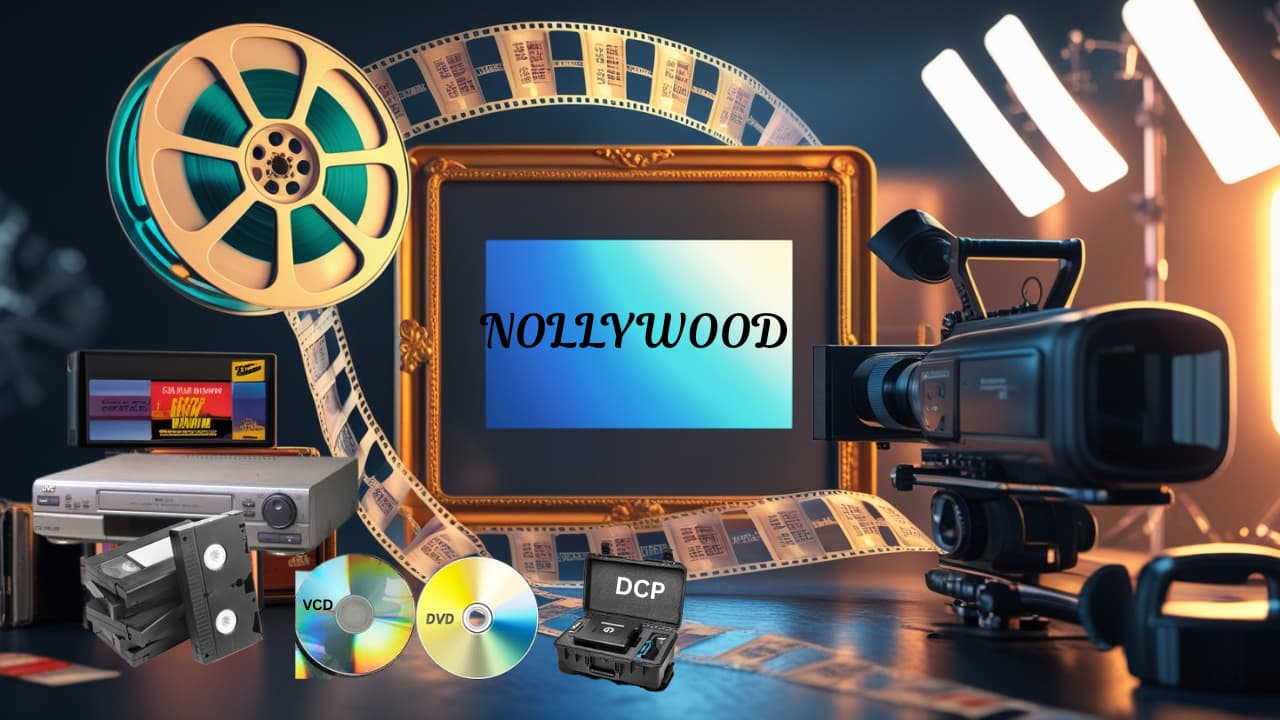
    There’s hardly any data in the annals of the Nigerian film industry regarding the precise year when movie trailers were first used or locally produced as opposed to the usage of theatrical posters or other promotional assets. However, we can infer from foreign movies exhibited in theatres pre and post-independence, and foreign movies viewed in VHS cassettes particularly Indian movies with the “intermission” time out used in showcasing scenes from another movie (trailers), might have introduced the Nigerian audience to movie trailers.

    However, the advent of the Home video revolution which birthed Nollywood, soon witnessed the deployment of movie trailers as promotional tools by marketers which were powered by voice over artists (trailer narrators). The emergence of Silverbird Television as the hub of entertainment gave rise to the use of 30–60 seconds TV Ad spots for trailers with the NFVCB rating for the film thereon. Popular voice over merchants were Segun Arinze, Isaac Moses, and the late Johnson Davidson.

    Johnson who was the founder of Heavy metal Studio, stood out, with his use of pidgin, fast paced adrenaline pumping narration with witty, funny lines, as he ushered the audience into the world of the advertised movie. Memorable line still remains ‘ashawo no be work’ in the Domitilla trailer and just like Don Fontaine whose signature trade mark was, “in a world”, Johnson’s was ‘Grab your copy now!’ and the reeling of “available at 51 Iweka road Onitsha, 1/3 Pound road Aba, 7 Ebinpejo lane, Idumota, Lagos.” Trailers were also shown prior to the commencement of movies on VCDs, then DVDs.

    Nollywood trailers from using voice over artists, soon ditched that and embraced the use of straight through scenes powered by dialogue and occasionally interlaced with plain on-screen texts. Years later (up till now) it appeared to follow in the footsteps of Hollywood with some filmmakers adopting an additional climax scene after the trailer had seemingly ended e.g. Out of Luck, Chief Daddy, Family Gbese, When love Strikes, Muri & Ko to even “trailer starts now” technique (used in Wole Soyinka: Eni Ogun). However most still tow the straight through scenes powered by dialogues with on screen texts including coming soon or the release date info at the end.

    The resurgence of theatres (cinemas) in Nigeria in 2004 by Silverbird cinemas, in Victoria Island, Lagos, exposed movie goers to foreign and later indigenous trailers as they sat in the respective screens waiting to watch the paid for movies. The trailers were further promoted on their sister media company’s platforms, STV and Rhythm Fm.

    Besides Silverbird cinemas, others sprung up prior to 2016 to compete for market share such as Genesis Deluxe Cinemas, Ozone Cinemas, FilmHouse cinemas and Viva cinemas with their various sites (branches) spread in various geo-locations across the country. Theatrical trailers were also shown on Cable TV particularly African Magic via barter deals with filmmakers/producers. In cinemas, trailers were also shown on TV sets strategically positioned at the box office and concession areas for the audience to watch as they sat or hung around waiting for access into the designated screens to watch the movie they had paid for.

    From the onset (through to the DCP era), theatrical trailering was restrictive as one had to be present to watch the trailers therein or wait for it to be shown on TV. However, the advent of the internet made it possible to watch movie trailers from anywhere and on any device. Indeed it took accessing and viewing of trailers to a whole new level in the online space through blogs, (BellaNaija, Linda Ikeji prior to their migration into websites) and on Kemi Filani, Stella Dimokokorkus, Nigerian Entertainment Today (NET), 360 Nobs, Ynaija, Nollywood Reinvented, Olori Super Gal, Nigerian Voice, Nollywood Access by Bola Aduwo, Nollywood by Mindspace by Adewemimo Oloyede, then later on Naij (now legit.ng), Pulseng, Shockng, and What Kept Me Up exhibiting same, among others.

    Online fora, such as Nairaland and Naija Pals, were integral to the promotion of trailers and, subsequently, the discussion of the upcoming films. Social media platforms, particularly Twitter (now X), Facebook, Instagram, later on messaging apps (WhatsApp, Telegram) were used to promote movies and watch trailers.

    Video sharing Giant, YouTube, has various Nollywood content-based channels wherein the audience can visually consume movies and designated trailers. In fact, YouTube which was launched in 2005 has evolved into a giant video sharing and streaming platform. One can call it the “Home of Trailers” with a repertoire of old and latest ones.

    Kernan (2009) describes it as the most popular trailer- viewing platform. Studios, independent film producers, SVODs and movie enthusiasts operating YouTube movie themed channels are constantly uploading movie trailers globally. The former grants the latter permission to re-upload movie trailers on their channels, allowing more people to be aware of the soon to be released movie and spread the word by sharing on their social media platforms and through word of mouth.

    In a research carried out by Google, 81% of people who watched a movie trailer online watched it on YouTube, with 65% of movie goers agreeing that watching trailers on YouTube influenced which movie they planned on seeing (Gesenhues, 2015).

    Over time, a few YouTube channels dedicated to showing movie trailers also emerged such as; The Movie Base, Nollywood Reinvented, FilmPeek, Sneek Peek Party, Nolly Critic, among others. These channels among others are allowed by local and foreign filmmakers/producers to re-upload their trailers and show to their own audience (new and old). Some do not check mark their copy right claim which is a huge relief to trailer themed channels while some do but nonetheless allow them to still use the content.

    Releasing trailers on online platforms and the attendant announcement of same has the power to spike awareness of the movie with hundreds/thousands of YouTube Channels and users of social media platforms sharing same to their audience. This invariably increases the chances of the movie doing well at the box office or on streaming platforms due to the exposure.

    Movie trailers have shattered online viewership records in Hollywood and include; Thor: love and Thunder (2022 teaser trailer) with 209 million views, The Lion King (2019) with 224.6 Million views raking in 1.6 billion in box office sales, Avengers : Infinity war (2018) with 230 million views and raking in $2 billion, Transformers: Rise of the Beasts (2023), 238 million views, Lord of the Rings: The Rings of Power TV series (2022) 250 million views in 24 hours, Avengers: End Game with 289 Million views, Spider Man: No way home (2021) — 355.5 Million views with 135 million views in the first 24 hours (Thibeaux, 2022; Statista, 2023) and holds the Guinness book of records for the most viewed movie trailer globally (Guinness world records, 2021). Dead Pool and Wolverine (2024) holds the record for the most watched trailer, 365 million Views albeit powered by the Super bowl.

    Kumar (2023) puts forth the most viewed Bollywood (Hindi) trailers “within 24 hours” on YouTube as; KGF 2 (49.02 million), Jawan (2023) clocked 23 million, 83 movie had 43.5 million, Sooryavanshi (42.7 million), Heropanti 2 (38.80 million), and Zero garnering 40.5 million views. When considering total accumulation of views, War: RS leads with 137.14 million, Baaghi 3 (129.40 million), Baahubali 2 (126 million), Zero (124.32million), Housefull 4 (124.03 million), KGF 2 (120.53 million), and Sooryavanshi with 112.67 million views.

    For Nollywood, a look at the trailer views on YouTube channels of independent filmmakers, and streaming platforms with original productions, shows the level to which the audience consumes movie trailers for Nollywood films.

    Shockng (2023) states that Gangs of Lagos, the first African original by Prime video had 684,000 views within one week of its trailer (teaser) release on March 20th 2023. They spun the possibility of amassing 1 million views but as of 2023, teaser trailer views were at 942,000, (now 964,000 in February 2025) while the trailer was 907,000 views (now 1 million in February 2025).

    Other movie trailers are Namaste Wahala with 2.6 million views in 2021, (2.7 million in 2023 and 3.1  million in 2025), Aki and PawPaw had 1.7 million views in 2022, (1.8 million both in 2023 and 2025), Anikulapo secured 799,000 views in 2022 (859,000 views in 2023, and 987,000 views in 2025), King of Boys: Return of the King had 706,000 views in its kitty in 2021, (728,000 views in 2023, and 766,000 views in 2025), Merry Men 2: 674,000 views in 2020, (698,000 views in 2023, and 736,000 views in 2025), Brotherhood bagged 423,000 views in 2022, (540,000 views in 2023 and 625,000 views in 2025) (Shockng Ibid). The 2023 and 2025 data of the above-mentioned movie trailers are by this writer.

    The online print medium (newspapers) typically shares information about the upcoming films and does not show trailers, with the laudable exception of thecable.ng lifestyle arm which unveils movies the audience can watch in cinemas or on streaming platforms over the weekend, ably authored by its reporter, the ingenuity laden, Idris Shehu.

    Trailers via Radio Ads were utilized by FilmOne Distribution in the 2014 theatrical release of “Half of A Yellow Sun” and subsequently with a good number of films in its portfolio, and other filmmakers towing this path. There have been specialized TV programmes on movies such as Silver Bird’s ‘Movie Mania’, ‘Movies Today’ on NTA, promotion of Nollywood content and pre-release event e.g. on TVC’s “Wake up Nigeria” and its entertainment news belt, Channels TV Entertainment News and entertainment news belt of some TV stations.

    Radio shows have not been left out with ‘The Movie Road Show with Irabor Okosun’ on Nigeria Info FM 99.3, Film Focus on Smooth 98.1 FM, Nollywood on Radio on Top Radio, ‘Movies on Radio’ segment formerly presented by Dr Shaibu Husseini (now Julie Mose) on Creative Naija programme under dual hosts; Frank Meke and Bunmi Bade Adeniji (Mainland 98.3 FM) among others. Podcast has evolved over the years and has likewise become a platform to discuss same with the likes of The Naija Filmmaker, Ink blot Meet and Greet, Popcorn and Reels, I love Nollywood Podcast, The Nollywood Ramblers, among others.

    Trailers watched on streaming platforms such as Netflix, Amazon Prime Video, Show Max, iROKOtv, Ibaka TV piques the audience curiosity to seek more information about the movie online and where it stimulates their interest, they subsequently watch the movies. Outdoor digital screens on the building housing cinemas or standalone digital billboards owned by Advertising companies located in strategic areas, run movie trailers during the film’s marketing campaign.

    With various releases across different distribution platforms, movie trailers more than ever, have become an essential promotional creative asset for Nigerian filmmakers, distributors and production houses. These days, it is not uncommon to have filmmakers/producers announce the date the movie trailer would drop on their online platforms, having witnessed the powerful effect the strategy had for certain Hollywood movies. Trailers are typically cut by editors, and Nollywood indeed boast of an array of the finest such as Valentine Chukwuma, Steve Sodiya, Sanjo Adegoke, Martini Akande, Susan Maro Ukulor, Agboola Ola’Kazeem, Victoria Akujobi, Idris Razaq, among others. However, founder of Starmark Studios, Ebukah Emmanuel Nzeji (The Artifact, Deafening Silence, Wòkè, Dance With Me) happens to be the first to “specialize in trailer editing” in the Nigerian Movie Industry.

    No doubt the quality of trailers produced in recent times surpasses those in pre-2014, particularly the non- theatrical ones. Sadly, it isn’t just the high-quality production of the “cut trailer” that is prime but its ability “to draw the audience in, with a view to making them want to watch the movie upon its release”. This is indeed lacking in a good number of movie trailers, but that’s a discussion for another day!

    Augusta Òkon is a Film adaptation advocate, story teller, Film Critic, lawyer, and author. She has served as member of the screening panel for AMAA, Inshort International Film Festival and Jury member, Lekki International Film Festival.
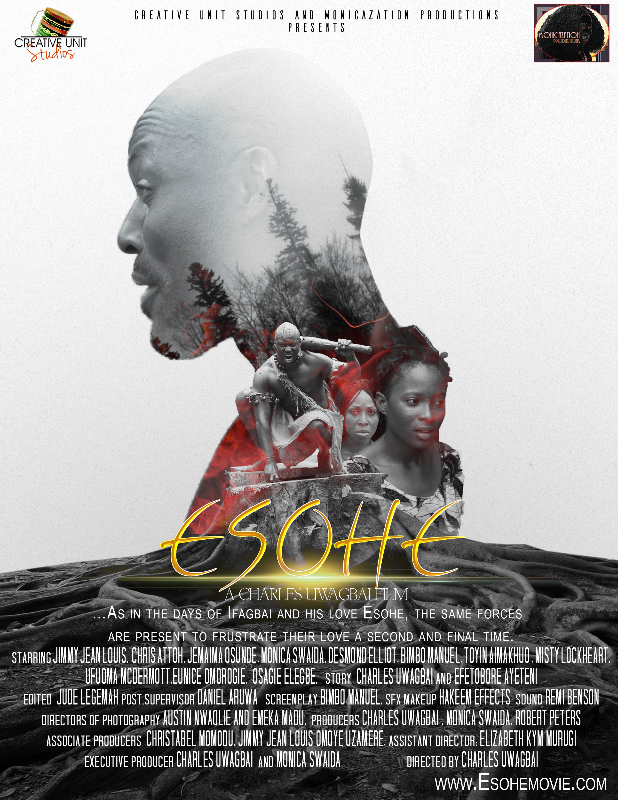
    REFERENCES

    Distefano, D. (2015, July 1). A brief history of film trailers or: Turns out this post is not about Peter Orner. Michigan Quarterly Review. https://sites.isa.umich.edu/imqr/2015/07/a-brief-history-of-film-teasers-or-turns-out-this-post-is-not-about-peter-orner/

    Johnston, K.M. (2009). Coming Soon: Film Trailers and the Selling of Hollywood Technology. Jefferson, NC: McFarland & Co.

    Kernan, L. (2004). Coming attractions: Reading American movie trailers. Austin: University of Texas Press.

    Laman, L (2022, September 15). Bring back trailer narrator guy. Collider. https://collider.com/bring-back-trailer-narrator-guy

    Losben, S.M.A. (2011). Coming soon to an archive near you: Movie Trailers and Their Need for Access and Preservation. Master thesis, New York University, USA

    Septak, D. (2008). Understanding the effectiveness of trailers, teasers, and television spots in marketing movies. Thesis Leonard N. Stern School of Business, New York

    Suliza, R. (2019). Do you want to watch that movie? Experimental study on the effects of music in movie trailers. Master Thesis, University of Twenty

    This Day (2025, March 16). How I’m Pioneering Nollywood’s Trailer Creation Niche- Ebuka E. Nzeji.

    https://www.thisdaylive.com/index.php/2024/12/25/how-im-pioneering-nollywoods-trailer-creation-niche-ebuka-e-nzeji/

    McCallen, D. (2008, September 3). The booming voice behind thousands of movie trailers. La times. https://www.latimes.com/archives/la-xpm-2008-sep-03-me-lafontaine3-story.html

  • Feature: Write On, Civil Servant: An Insider’s Secret Key To Great Bureaucratic Careers

    Feature: Write On, Civil Servant: An Insider’s Secret Key To Great Bureaucratic Careers

    By Emmanuel Obe

    Karibi T. George, in his latest book, challenges civil servants and workers in bureaucratic settings to advance their careers and organizations through a mastery of the basic forms of writing

    Anonymity is probably the most enduring character of the civil servant. With anonymity, the civil servant can easily evade the consequences of policies or decisions of government and institutions, even when they might have been the brain behind such policies or decisions. However anonymity creates the needed atmosphere for civil servants to freely and boldly contribute to policy and decision making, knowing that their persons are protected from their roles. In other words, anonymity gives the civil servant security and strength.

    But like it is often said, every strength embeds its own weakness. Anonymity has activated a weakness for the civil servant in such a way that it has tampered with the modern civil servant’s creative powers. Since they are not likely to take credit or blame for their actions, a lot of civil servants choose to hide, or better still, bury, their creative talents and skills by staying anonymous thus killing their creative talents and leaving their skills fallow.

    Ironically, among civil servants are to be found the most qualified crop of professionals, technocrats and technicians globally. This is because the recruitment procedure for civil servants is very meticulous and sensitive. No civil servant is recruited without the requisite educational qualifications and attestation from reputable members of the society. Legislators, political officers and even judges do not go through the kind of scrutiny civil servants endure before they are engaged. Yet it is the political appointees that take credit for the fine and hard work put together by civil servants. Even after recruitment, the civil servant undergoes regular inductions, training, assignments and that keep him current and in tune with his duties and general service to the society.

    Of all the institutions established by the colonial authorities, the civil service is the most enduring and stable. It is the engine room of government. It is always there in good and in bad times. It is like the barracks. ‘Soldier Go, Soldier Come; Barracks Remains’ according to Fela Anikulapo-Kuti, the Afro-beat King. Military governments, democratic governments, politicians of hues and political parties may come and go but the civil service remains. Records kept by civil servants are usually treated with sanctity and almost accorded the same value as a statute. And no matter how much the politicians loathe the civil service, they cannot do without it. The sanctity of the civil service has also rubbed off on civil servants. They are reputed for their taut, unembellished and Spartan lifestyles.

    In Write On, Civil Servant, Karibi T. George is challenging the civil servant to wake up and creatively utilise his talents, skills, exposure and experience to make his job better and better himself. Being a civil servant should not be an excuse to be flat and bland. Like the biblical parable of the talents, talents not used get lost to people that use theirs.

    Write On, Civil Servant is what one might call the professional handbook for civil servants of the executive cadre. It is divided into three parts. The first part deals with an overview of the civil service, its nature and methods of communication and the general orientation of the civil service. Part Two delves into the art of writing (which the author refers to as Expository Writing) in the civil service and the forms that writing in the civil service takes. Part Three steps into the general arena and discusses the art of creative writing; writing styles; general English grammar; common mistakes in English; elements of writing; and the psycho-social challenges in writing in the civil service. It is here that those that ‘missed’ their English in school can recover it, grasp the rules of grammar, and rediscover their writing skills.

    Write On, Civil Servant is presented in simple free flowing English. The reader does not need to have a dictionary by his side to get along with the author. Special words or expressions known mainly to civil servants are carefully explained, and where necessary, with examples.

    The book is at once a civil servant’s handbook, guide, compendium, book of statutes, textbook on grammar, public communication, styles and motivation. It could not have been better authored by any other person than Karibi T. George, whose training, experience, pedigree and motivation aligns with public communication. He’s a grammarian, having done his undergraduate and postgraduate studies in English; a lawyer, journalist, book editor, politician, teacher, public affairs commentator; a competitive sportsman, a church elder; the child of a teacher/priest/ civil servant; a civil society activist and a civil servant. He has spent virtually all his active years writing, speaking, holding meetings and motivating younger people.

    Part One is subdivided into three chapters. The first chapter is the introduction where the author explains his motivation for writing the book. He romanticizes writing in the civil services in the colonial days when civil servants were the “eyes and ears” of government. “They deployed elevated language to present facts and opinions. Their prose was poetic: their letters and official memoranda were filled with descriptive imagery, allusions and metaphors. Their superiors and policymakers enjoyed reading persuasive documents from them as their opinions were reasoned and recommendations accepted for speedy implementation. They wrote in a style that combined beauty and functionality.” The author therefore says Write On, Civil Servant is intended to motivate the civil servant to return to his place as a source of “occupational writing”.

    The second chapter, explores the nature of communication, its processes and its functionality.

    Chapter Three looks at the various types of written communication in the civil service such as Letters; Records; Notices; Resolutions; Circulars; Memoranda; and Minutes. Each of these methods of written communications has its own format, which the author takes time to explain.

    Chapter Four is general commentary on the state of the civil service today and discusses issues that have contributed to the general decline in the quality of written communication in the civil service.

    Part 2 takes up the types of written communication individually. The author identifies two forms of Civil Service Writing: Minuting and Expository Writing.

    He takes time to explain how minutes should be written and how best it can be written. “Minuting should be made to close out actions,” he says. The chapter on minuting X-rays the language of minuting, which outsiders consider the jargons of the civil service. Such language and when to use them include KIV (keep in view), FYI (for your information), TNA (take necessary action), FFA (for further action), WEF (with effect from), Advise, Process and many others.

    The author identifies types of expository writing and explains when to use them and backs them up with generous examples such that the reader can easily identify them from the given examples and how to structure them. He lists 16 types of expository writing to include letter, memorandum, circular, notice, minutes, report and executive summary. Others are speech, press release and statement, media articles, communiqué, citation, tribute, corporate profile and e-mail. This part provides the templates which civil servants and administrative staff or other organizations, whose ordinary duty is to draft and write official communication can adopt to make their jobs easier and more effective.

    Exploring Expository Writing, Write On, Civil Servant says the civil servant does not have to remain aloof and anonymous when they can enhance their career, contribute to knowledge and generally improve the work environment by writing and publishing. It says the civil servant might not make comments on official policies when they are not authorized to do so, but they can write opinion and feature articles that can elaborate on such policies either using their names or pseudonyms.

    It is the opinion of the author that a good understanding of how to present written communication can aid growth in service as he says, “advancement on the corporate ladder may be dependent on the worker’s ability to communicate in writing.” He advocates that civil servants should practice writing and write regularly.

    In the Third and final Part, the author examines the issues in writing and how to overcome them. This part addresses both civil servants and non-civil servants alike. It is where those who intend to jack up their writing, and even make writing a preoccupation need to focus on.

    He starts Issues in Writing with styles and form, which he says should be simple, informative and obedient to the rules of grammar. Part 3 takes times to identify some basics in English grammar. The author names, explains and provides instances when and those basics can be can be used to good effect in writing. These basic includes Parts of Speech; Phrases, Clauses and Sentences; Uses and Abuses of Prepositional Phrases; Idioms, Cliches and Nigerian English; and Some Common Mistakes in English.

    The author does not leave the reader hanging as to where to find writing resources. He first advises every writer to keep whatever they have to write simple and short; prefer the active voice to the passive voice, keep handy a dictionary and a thesaurus, and ‘not forget to keep reading other writers’. He also advises the writer to have the ability to think, for that’s the key to creative writing; then they should develop a problem solving seeking mind because writing becomes relevant when it unravels mysteries.

    In the final chapter, the author admonishes civil servants and to get digital because the world now communicates digitally and is leaving analogue writers behind.

    In summary, Write On, Civil Servant is a clarion call on civil servants to wake up their creative spirits, write and reclaim their special place in society. After all, some of Nigeria’s greatest writers penned their way to fame while working for government. Chinua Achebe was working for the Nigeria Broadcasting Service when he wrote Things Fall Apart, Wole Soyinka was with the University of Ibadan when he started writing, Elechi Amadi was in the army and later on with the Ministry of Education, when he wrote his classic novels, and Chukwuemeka Ike even wrote the top seller, Expo ’77, when he was the Registrar of WAEC. Teachers and lecturers in government schools have been for long time authors of books and opinion writers; why not the modern civil servant?

    K.T. George, a Fellow of the Nigerian Institute of Public Relations, is a lawyer and civil servant

  • NCC Mourns Ex-Board Chairman, Senator Olabiyi Durojaiye

    NCC Mourns Ex-Board Chairman, Senator Olabiyi Durojaiye

    The Board, Management and entire members of staff of the Nigerian Communications Commission (NCC) have commiserated with the family of the immediate Past Chairman of the Board of the Commission, Distinguished Senator Otunba Olabiyi Durojaiye, who answered the call of God on Tuesday, August 24, 2021 at the age of 88 years.
    In a condolence letter to the family in which the Executive Vice Chairman/Chief Executive Officer of the Commission, Prof. Umar Garba Danbatta described the late Durojaiye as a Patriarch, grandfather and great-grandfather, Danbatta extolled his lifetime of service as a Senator of the Federal Republic of Nigeria, Banker, Lawyer, Economist and evergreen Administrator per excellence.
    “He was a renowned fighter for freedom, a consummate statesman, an honest, courageous and hardworking man during his lifetime”, Danbatta Said.
    Born in 1933 in Ijebu Igbo, Ogun State, late Durojaiye, represented Ogun State at the Senate from 1999 to 2003 and was a member of the Constituent Assembly from 1988 to 1989. He served as the Chairman of the Governing Board of the Commission from November 2016 to January 2019.
    The Commission, will forever, remember him for the diligent conduct of the Businesses of the Board and for his notable achievements during the brief period he served as the Chairman.
    “Our thoughts and sympathies are with the entire family at this grieving period as we pray for his soul to continue to rest in perfect peace. May the Almighty God in His infinite mercy grant the entire family the fortitude to bear this irreparable loss”, Danbatta said.