Tag: Managing Partner

  • 2026 World Facility Management Day: Built Environment Must Inspire Belonging, Responsible Citizenship — Experts

    2026 World Facility Management Day: Built Environment Must Inspire Belonging, Responsible Citizenship — Experts

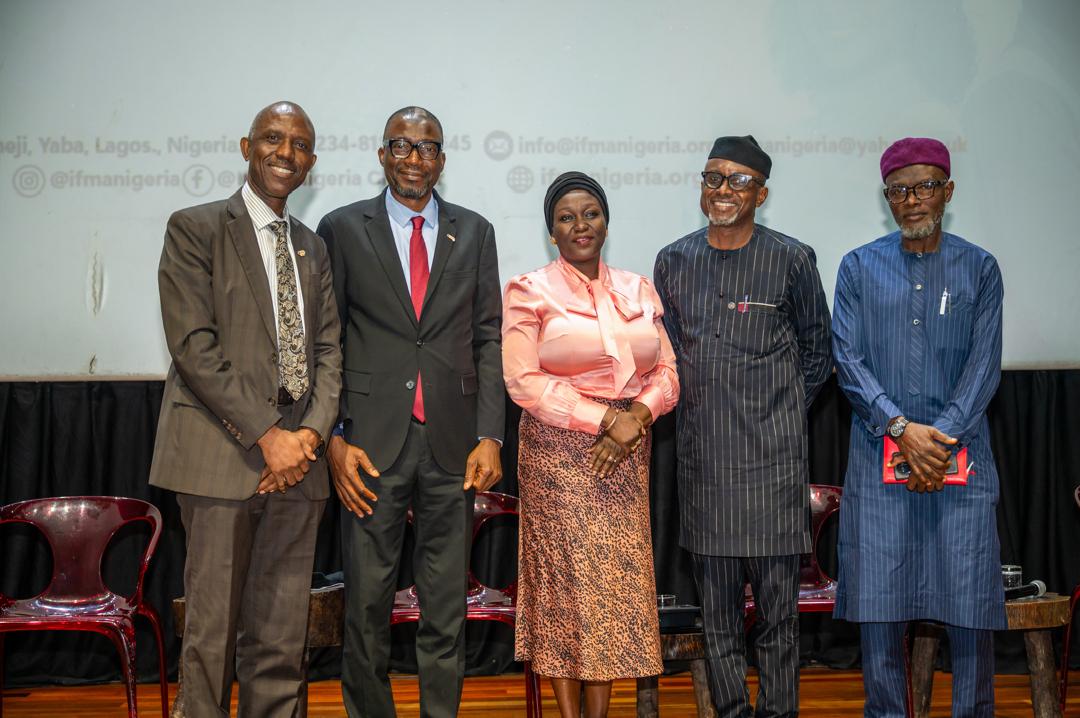
    Stakeholders in the built environment and sustainability sectors have reinforced the critical role of facility management in shaping behaviour, fostering community connection, and driving sustainable urban living at the 2026 World Facility Management Day celebration organised by the International Facility Management Association (IFMA) Nigeria Chapter held at the Alliance Française Mike Adenuga Centre, Ikoyi, Lagos state.

    The event, themed “Cultivating Belonging Through Built Environments,” brought together professionals, policymakers, sustainability advocates, and industry leaders to explore how built environments can create stronger, more inclusive, and people-centred communities.

    Delivering the keynote address, the Managing Partner of GYB Cojsults Limited, Architect Olugbenga Onabanjo, explained that built environments go beyond physical structures and must be intentionally designed to foster emotional connection, responsible behaviour, and civic consciousness.

    Onabanjo noted that cultivating belonging requires deliberate investment in community-centred infrastructure, including walkable neighbourhoods, safe public spaces, green environments, and proper maintenance culture.

    “Built environments are not just physical spaces; they are emotional and behavioural systems that shape how people think, interact, and behave. The environment sends messages every day, and when spaces are intentionally designed with safety, walkability, greenery, and proper maintenance in mind, they encourage connection, civic responsibility, and a stronger sense of belonging,” he said.

    Speaking at the event, the President, IFMA, Nigeria Chapter, Engr Sheriff Daramola, explained that facility management has evolved significantly in about three decades from informal maintenance practices into a strategic discipline that delivers measurable value across sectors including banking, healthcare, transportation, education, oil and gas, telecommunications, media, public infrastructure, and the broader built environment.

    Daramola noted that strengthening Nigeria’s facility management sector requires deliberate investment in indigenous skill development, technology adoption, renewable energy systems, professional regulation, sustainable infrastructure practices, circular economy initiatives, shared operational systems, and globally competitive standards to position the sector as a key driver of economic growth, resilience, and sustainable urban development.

    “Facility management plays a crucial role in shaping workplaces and public spaces that foster safety, inclusion, respect, and diversity. Professionalism in facility management is earned through impactful knowledge, value-driven service, process alignment, technology adoption, and sustainable best practices. As we mark World FM Day 2026, we must continue to strengthen recognition for the profession while advancing collaborations that ensure our built environments remain safe, efficient, resilient, and people-centred,” he added.

    With a sense of pride, the President spoke glowingly about the only Nigerian recognized as one of the Top Global FM Influencer, Mr Segun Adebayo, whose recognition has shown that Nigeria is shaping the future of Facility Management through innovation, leadership and measurable impact.

    In his address at the event, the Lagos State Commissioner for the Environment and Water Resources, Tokunbo Wahab, represented by the Deputy Director, Office of Drainage, Services and Water Resources, Mr Akinwumi Babatunde, noted that the environment is the structure that aids human activities. With about 22m persons in Lagos, there is a lot of pressure on the environment in the state, however, the ministry is doing everything to ensure that residents stay healthy within the policy framework. Lagos has accelerated urban green initiative, deepen underground storm water management amongst others. He charged FM professionals to deliberately factor in climate-risk and adopt green facility practice.

    In her goodwill message, the Special Adviser on Climate Change and Circular Economy to the Governor of Lagos State, Titilayo Oshodi, commended IFMA Nigeria for creating a platform that continues to unite professionals across the country while advancing discussions on inclusive and sustainable facility management practices.

    Drawing on the State’s Eco-Circulate initiative, Oshodi noted that sustainable environments can be achieved only when communities are actively connected to and take responsibility for the spaces they occupy.

    Also speaking, the Managing Director, IFMA EMEA, Laura Paeman noted that facility management professionals play a critical role in creating environments that are welcoming, respectful, and supportive of people’s wellbeing. She added that the future of facility management lies in building workplaces and communities that are human-centred, sustainable, and adaptable to evolving societal needs.

    Among the corporate Nigeria, stakeholders and industry representatives present at the event were Femi Owopetu of ST&T; Alaba Fagun of Berger Paints; Olumide Aina of Association of Facility Management Practitioners Nigeria; Oluseun Alabi of African Export-Import Bank (AFREXIMBANK); Emad Yassin of Provast Limited; Engr Aminat Dottie of Julius Berge Facilities Management and Adenike Adekambi of Lagos State Infrastructure Asset Management Agency. Others organisations include LAMATA, The University of Lagos; Almog Engineering, Meditrack, Total Facility Management; Tunde Adejumo & Co and Entaliaz Household Services.

    #

  • Dimension Data Nigeria holds signing ceremony for $15m Bond Programme

    Dimension Data Nigeria holds signing ceremony for $15m Bond Programme

    The signing ceremony, which marked the completion of the programme documentation and regulatory clearances, was held recently at the Capital Club, Victoria Island, Lagos

    Dimension Data Nigeria has formally executed its N20 billion ($15m) Bond Programme under Dimension Data SPV Funding Plc, following approval from the Securities and Exchange Commission (SEC). The signing ceremony, which marked the completion of the programme documentation and regulatory clearances, was held recently at the Capital Club, Victoria Island, Lagos.

    Speaking during the signing ceremony, Gbenga Olabiyi, Managing Director of Dimension Data Nigeria, explained that the capital raise is focused on long-term value creation. “Sustained infrastructure investment is essential to maintaining competitiveness and unlocking future growth. When deployed thoughtfully, infrastructure secures the business, future-proofs operations, and allows efficient scaling as data demand and complexity increase.”

    Nigeria continues to face significant digital infrastructure gaps, including limited metro and access fiber coverage, constrained enterprise connectivity, and rising demand driven by cloud adoption, fintech, digital public services and artificial intelligence. These gaps increase costs, limit service quality, and slow the country’s digital economy. Olabiyi said the bond programme is designed to help expand critical digital infrastructure capacity, strengthen network resilience, and support enterprise and carrier-grade services needed to meet Nigeria’s growing data and connectivity requirements.

    He also expressed appreciation to the company’s advisers and partners for their professionalism and support throughout the process and signaled his intention to continue working closely with them as Dimension Data moves into subsequent phases of funding and execution.

    In his comments, Shatse Kakwagh, Managing Partner, Mbavaa Partners Limited, the Private Equity company backing Dimension Data Limited, described the transaction as a watershed moment for the company and a validation of its long-term infrastructure strategy.

    “This is a journey we began years ago, and it proves that the opportunities we see in the market can be realised,” Shatse said. “We believe strongly in working with partners to address the critical infrastructure deficit in Nigeria and across Africa. This programme enables us to secure the right type of capital to finance the aggressive growth we have planned.”

    He noted that the bond programme has received a strong vote of confidence from rating agencies. At the same time, the company’s first market issuance was heavily oversubscribed, reflecting investor belief in Dimension Data’s ability to execute and deliver at scale.

    The transaction advisers on the bond programme include Pathway Advisors Limited as Book Runner; Greychapel Legal and Alliance Law Firm as Solicitors; CardinalStone Registrars Limited and STL Trustees Limited as Registrar and Trustees; Deloitte & Touche as Reporting Accountant alongside Mascot Okpori & Co as Auditors; Fidelity Bank as Receiving Bank; and Agusto & Co as Rating Agency.

  • First Trustees Advocates Stronger Frameworks in Advancing Structured Islamic Inheritance Practices

    First Trustees Advocates Stronger Frameworks in Advancing Structured Islamic Inheritance Practices

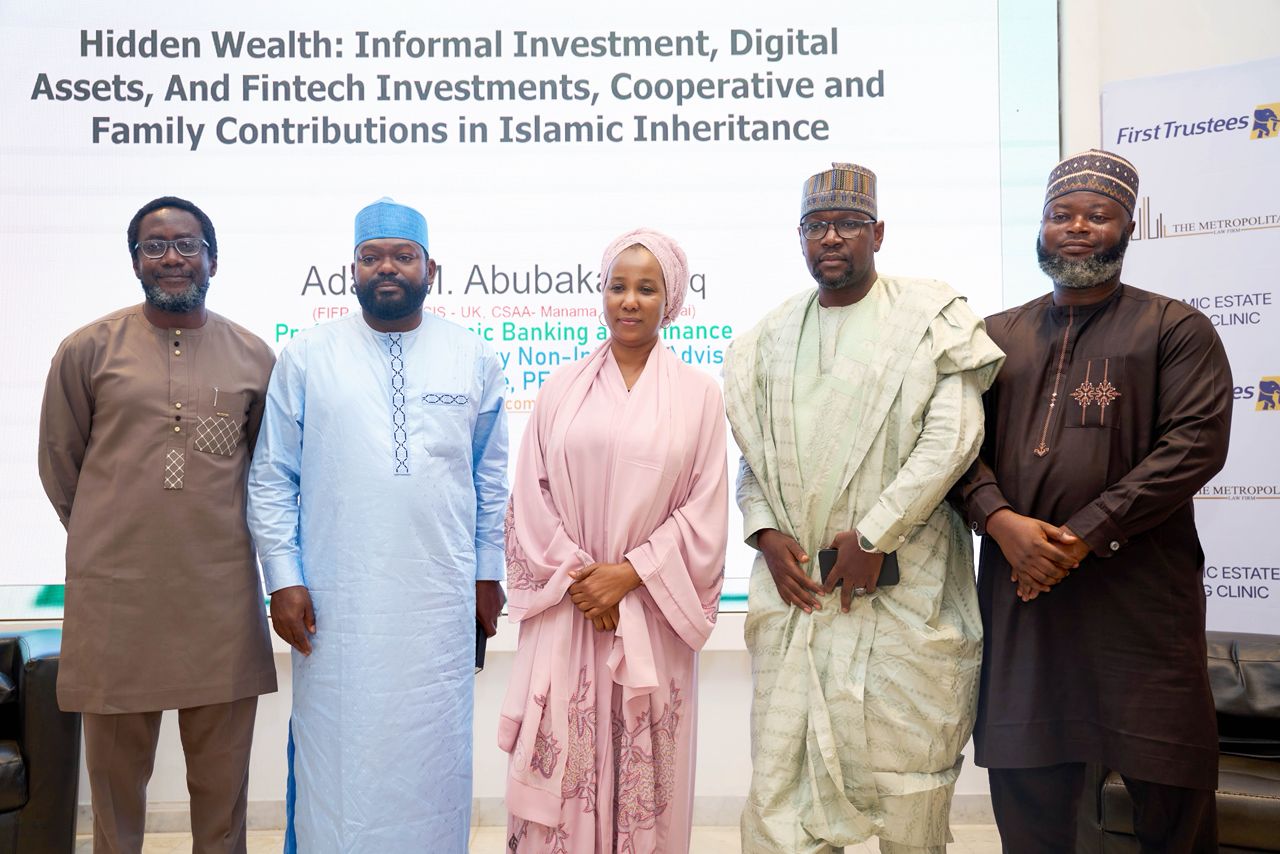
    First Trustees Limited, a subsidiary of First HoldCo Plc., and a leading provider of trust solutions to individuals, corporates, and government institutions, partners with The Metropolitan Law Firm and Al-Ameen Trustees to host the 8th Annual Islamic Estate Planning Clinic in Abuja, bringing together leading Islamic legal, financial, and policy experts.

    With the theme “From Informality to Legacy: Structuring Islamic Wealth Transfer,” the highly anticipated forum underscored the urgent need for Nigerian families to transition from informal inheritance practices to professionally structured, Sharia-compliant estate planning frameworks as a tool to seamlessly transfer and protect wealth, prevent family conflicts, and ensure legacies endure for future generations

    Speakers emphasized the need to adopt a structured Islamic estate planning framework to ensure wealth preservation, reduces legal disputes, and ensures compliance with both Shari’ah principles and the Nigerian statutory law. Stating that the transition from informal arrangements to a structured legacy is not merely a financial decision; it is a profound act of stewardship. By documenting and formalising intentions today, we replace potential family discord with clarity and peace of mind.

    Rotimi Obende, representing the Managing Director of First Trustees Limited, highlighted estate planning as a sacred duty. “Estate planning is more than documentation—it is stewardship. Informal arrangements expose families to avoidable risks. Structured, Sharia-compliant plans provide clarity, transparency, and true generational protection,” he said.

    He noted that regulated trustees play a crucial role in ensuring proper execution of wills and trusts, reinforcing public trust and accountability.

    Delivering the keynote address, Professor Isa Ali Pantami, former Minister of Communications and Digital Economy, cautioned against relying on verbal inheritance promises, which frequently lead to conflict and asset loss. He also urged the integration of modern technology, including blockchain, to securely store and have seamless access to wills and estate documents and also bridging traditional Islamic principles with cutting-edge innovation.

    Ummahani Amin, Managing Partner at The Metropolitan Law Firm, added that Islamic inheritance law offers both structure and flexibility.

    “Individuals can allocate up to one-third of their estate through properly documented wills and trusts. Too many families suffer because intentions were never formally recorded,” she explained.

    As discussions progressed, a consistent message resonated clearly: with today’s increasingly complex and diverse assets, from digital holdings, cross-border investments and complex business interest, informal inheritance practices are no longer sufficient.

    Participants agreed that structured Islamic estate planning delivers clear advantages, including legal certainty, tax efficiency, family unity, and long-term wealth preservation.

  • First Trustees to Host 8th Islamic Estate Planning Clinic in Abuja

    First Trustees to Host 8th Islamic Estate Planning Clinic in Abuja

    First Trustees, a subsidiary of First HoldCo Plc., and a leading provider of trust solutions for individuals, corporates, and government institutions, is proud to announce its 8th Islamic Estate Planning Clinic, scheduled to take place on February 7, 2026, in Abuja, Nigeria.

    This highly anticipated forum is designed to educate and empower participants on structuring Islamic wealth transfer in today’s evolving world. The Clinic will provide practical guidance on how to secure and preserve legacies in accordance with Islamic principles, ensuring that wealth is managed and passed on responsibly across generations.

    The event is being hosted in partnership with The Metropolitan Law Firm and will feature an esteemed lineup of speakers, including: Professor Isah Ali Pantami, Former Minister of Communications and Digital Economy; Professor Adam Abubakar, ESQ, Professor of Islamic Banking and Finance, Yobe State University; Professor Dauda Abubakar, Founder and Director, Dawood Research Institute; HE Aisha Babangida, Chairperson, Better Life Program for the African Rural Woman; Ummahani Ahmad Amin, Managing Partner, Metropolitan Law Firm; Barrister Mohammed Yunusa, Partner, The Metropolitan Law Firm; Ismail Rufai, Managing Director/CEO, One17 Financial Services Limited; Mutiat Olatunji, Al-ameen Trustees Limited; and Rotimi Obende, Head, Private Trust, First Trustees Limited.

    Together, these thought leaders will share insights on the importance of Estate Planning within Islamic law, highlighting strategies for safeguarding family wealth and ensuring continuity.

    First Trustees remains committed to providing innovative trust solutions that help clients preserve their legacies while staying true to their values.

  • FirstBank Hosts Nigeria Economic Outlook 2026, Leads Conversation on Economic Growth

    FirstBank Hosts Nigeria Economic Outlook 2026, Leads Conversation on Economic Growth

    FirstBank, West Africa’s premier financial institution and financial inclusion service provider, is pleased to announce the Nigeria Economic Outlook 2026 scheduled to hold on Tuesday, 6 January 2025. The theme of the session is “The Great Calibration: Mastering Resilience in an Era of Asynchronous Growth”

    Nigeria Economic Outlook is an annual customer-facing session which sets the tone on prevailing economic realities, equipping FirstBank customers with insights to navigate the economy effectively at the start of the year. The 2026 edition will review Nigeria’s economic landscape over the past year, provide an outlook for 2026, and deliver expert perspectives on global and domestic trends and their implications for the nation’s economy in the year ahead.

    Commenting ahead of the event, the Acting Group Head, Marketing & Corporate Communications at FirstBank, Olayinka Ijabiyi said, “FirstBank remains dedicated to supporting the growth and development of Nigerian businesses and individuals, and this event is a testament to that commitment. As we welcome the new year, the Nigeria Economic Outlook 2025 will serve as a platform for our customers and stakeholders to learn how to navigate the complexities of Nigeria’s economic landscape in 2026. This initiative aims to help them make informed decisions based on expert recommendations and insights garnered from the session to drive giant transformative progress, allowing both businesses and individuals to thrive in the new year.”

    The session will feature a distinguished lineup of speakers including economic analysts and industry leaders. The keynote address will be delivered by Yemi Kale, Group Chief Economist & Managing Director of Research & Trade Intelligence, Afreximbank.

    Following the keynote, a high-level panel discussion will feature Olusegun Zaccheaus, Chief Economist, PwC; Francis Anatogu, Chief Executive, Transaharan; Professor Bongo Adi, Professor of Economics & Data Analytics, Lagos Business School; Niyi Yusuf, Managing Partner, Verraki; Cheta Nwanze, Lead Partner at SBM Intelligence; Osahon Ogieva, Deputy Managing Director, FirstBank; Ayokunle Ojo, Head, Treasury Sales & Derivatives Marketing, FirstBank; and Laura Fisayo-Kolawole, Head, Equities and Alternative Solutions, First Asset Management. The panel discussion will be moderated by Chike Uzoma, Head, Strategy & Corporate Development, FirstBank.

    To be a part of the session, interested participants can register and participate via https://firstbanknigeria.zoom.us/webinar/register/WN_PvQyniM4Rpmp1HqQoqbPvQ

    As the partner of first choice for personal, business and corporate financial decisions, FirstBank will continue to support Nigerians in achieving their financial aspirations, driving growth and prosperity across the nation, and shaping a brighter economic future for all.

  • LASG, Afreximbank Train 253 Export Ready Entrepreneurs, Unveil 20 Trade Champions to IATF Algiers 2025

    LASG, Afreximbank Train 253 Export Ready Entrepreneurs, Unveil 20 Trade Champions to IATF Algiers 2025

    Lagos State Government has successfully trained 253 Small and Medium Enterprises under its Lagos State Export Readiness Program, LASERP. It unveiled 20 outstanding Trade Champions to represent the State and showcase the best Made in Lagos products in the Lagos Pavilion to be hosted at the Intra African Trade Fair, IATF, in Algiers in September.

    Governor Babajide Sanwo-Olu described the unveiling as a new chapter in the story of Lagos enterprise at the graduation and closing ceremony of the programme held in Lagos on Friday.

    Represented by his Special Adviser on Works, Dr. Adekunle Olayinka, the Governor remarked that the gathering was not merely to close a training programme; but to celebrate resilience, acknowledge courage, and commission a new generation of exporters who will carry the banner of Lagos into Africa and the world.

    His words: “When LASERP was conceived, our vision was clear: to prepare Lagos entrepreneurs to compete beyond our shores, to diversify our economy away from the dominance of oil, and to entrench Lagos as the undisputed gateway of trade for Nigeria and the African continent. Today, as we witness the graduation of these exceptional SMEs, we see the manifestation of that vision.

    “Our ambassadors are no longer just local champions – they are export-ready entrepreneurs, positioned to scale, to innovate, and to stand tall in regional and global markets. Already, Lagos contributes more than 60 percent of Nigeria’s non-oil exports, which stood at US$5.3 billion in 2024, and with this graduating cohort of over 250 SMEs, we project an additional US$1 billion in foreign exchange inflows annually within the next five years.

    Minister of Finance/Coordinating Minister of the Economy, Mr. Wale Edun, represented by his Special Adviser on Communications, Media, and Publicity, Dr. Ogho Okiti, commended the visionary leadership of the State, particularly the Ministry of Commerce, Cooperatives, Trade and Investment, under Mrs. Folashade Ambrose-Medebem, for initiating LASERP.

    “I also recognise the invaluable partnership of Afreximbank and ImpactHer in making this programme a success. This collaboration demonstrates the power of strategic partnerships in unlocking Nigeria’s economic potential. Export diversification is critical to Nigeria’s long-term economic growth. Programmes like LASERP directly support our broader agenda to grow non-oil exports, expand Nigeria’s global competitiveness, and strengthen women-led enterprises and SMEs. It will serve as a model for similar initiatives across Nigeria,” he said.

    Commissioner for Commerce, Cooperatives, Trade and Investment, Mrs Folashade Ambrose expressed that the gathering was for more than a class of graduates, but to celebrate a movement of exporters, innovators and pioneers who will carry the Lagos spirit across Africa and into the world.

    “Under the visionary leadership of Mr. Governor and Mr. Deputy Governor, Lagos has declared boldly: we will not be local champions; we will be global competitors. That is why LASERP was born. To move our SMEs from the streets of Lagos to the shelves of the world. To transform potential into performance. To prepare you not just to meet standards, but to set them. Already, Today is not just another day in our calendar. Today is history in motion. Today is vision becoming reality. Today is Lagos telling the world: we are ready, we are rising, we will lead,” she said.

    Also speaking at the event, Regional Chief Operating Officer, AfreximBank, Allain Thierry Mbongue, affirmed that the programme has set off a new generation of export ready champions who will write the next chapter of Africa’s economic story. “By investing your time and energy, you have positioned yourself not only as business leaders in Lagos but as future exporters whose goods and services would soon carry the proud label; Made in Africa. At Afrexim Bank, we believe SMEs are not just the backbone of African economies, they are the engine that will power Africa’s economic future under AfCFTA. That is why the bank has laid strategic emphasis on SMEs development,” he said.

    Founder/CEO, ImpactHER, Efe Ukala, revealed that the training focused on digital and brand transformation, as entrepreneurs were equipped with what they need to stand out in the digital export world. “During the training, we helped build websites, provided customised digital export marketing strategy, facilitated 5 percent single digit interest loan for participants – two out of which are being processed, as our participants shipped out over a dozen 20-foot containers of goods over the past 6 weeks while 10 businesses secured international trade certification – thus securing long term access to new markets,” she said.

    According to the Director, SME Development, AfreximBank, Ody Akhanoba, the training recognised the importance of SMEs to the African economy, and particularly to Lagos, which is the 5th largest economy in the continent. “I congratulate the SMEs that successfully participated in this programme, this is a testament to your aspiration that what you had was not enough and you devoted good time to acquire what you need to become future export champions. But this is not the end, you really need to leverage on your new skills, be resilient and collaborate to take your place in Africa and global marketplace where you belong. Africa industrial revolution rests on your shoulders,” he declared.

    Sharing experiences with the graduands, Managing Director, Secure ID, Mrs. Kofo Akinkugbe, OON charged the graduands to rise above skepticism and remain resilient and committed to global standards, ensuring high quality products and compliance with international certifications. “Commitment to quality and global standards is crucial for entering new markets and gaining international recognition, while you need to start small, scale gradually, understand your target market and devise entry strategy,” she said.

    Managing Partner, Zenforte Partner, Weyinmi Eribo, highlighted 5 principles for the trainees as guides to success; “Prepare deeply because readiness is the foundation of market access; Don’t go alone – clusters and cooperatives are your allies in scaling; See finance as within reach – with the right structures, capital will come; Invest in networks – because trade is built on trust, not just transactions; and Formalise your trade activities – so you can scale under AfCFTA and beyond,” she said.

  • AVCA’S Fifth VC Summit Spotlights Resilience, Scale, and Bankability as Critical Levers to Propel Africa’s VC Ecosystem

    AVCA’S Fifth VC Summit Spotlights Resilience, Scale, and Bankability as Critical Levers to Propel Africa’s VC Ecosystem

    The African Private Capital Association (AVCA) hosted its fifth Venture Capital (VC) Summit yesterday. The summit forms part of the industry association’s 21st Annual AVCA Conference week, held in Lagos until 2 May. The global gathering brings early-stage and venture capital investors, corporate venture arms, founders, entrepreneurs, and accelerators together to discuss new trends and plot the rise of Africa’s venture capital landscape.

    Abi Mustapha-Maduakor, CEO of AVCA, opened the Summit by acknowledging the strategic importance of Nigeria’s entrepreneurial landscape: “Hosting the Summit in Nigeria is significant because this country has long been at the heart of Africa’s entrepreneurial evolution. Despite economic headwinds, we’ve witnessed innovation and resilience in the early-stage ecosystem. It is no coincidence that in 2024, Nigeria produced one of the continent’s newest unicorns.”

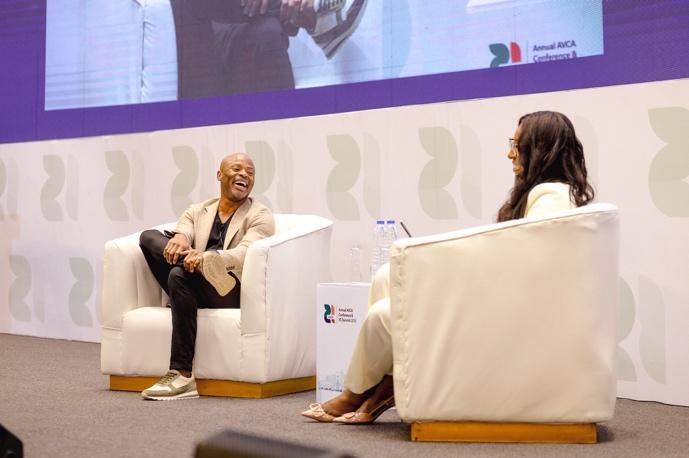
    Tope Awotona, Founder and CEO of Calendly, the US$3bn tech unicorn, and Abi Mustapha-Maduakor, CEO of AVCA, kicked off the summit with a keynote fireside chat. Describing his remarkable entrepreneurial journey, Awotona said: “I knew scheduling wasn’t just a productivity tax—it was a tax on important business outcomes like revenue. We didn’t invent online scheduling but made it accessible to more people through three key innovations: our freemium pricing model, our viral distribution method, and our data-driven product improvements.”

    The conversation affirmed the power of innovation, enabling expansion to international markets and the benefits of experimentation with price, distribution, and product. Awotona said: When scheduling went virtual, more users meant more data could help to improve the product and help to become the best on the market.” 

    Following the sentiments of Calendly’s Founder and CEO, a panel titled Unlocking Scale: The Growth-Stage Challenge with Leo Batalov, Partner, Global Co-Head of Emerging Growth Companies and Venture Capital, DLA Piper, and Brian Waswani Odhiambo, Partner, Novastar Ventures, examined how to bridge the gap for businesses moving from early stage development to accessing capital in their growth stage, and highlighted the urgency of building strong local investor ecosystems.

    Outlining the roles of founders and venture capital investors in supporting the long-term sustainability of Africa’s burgeoning tech ecosystem, Dr Omobola Johnson, Senior Partner, TLcom Capital, said: “We need to help founders understand that at the growth stage, they’re competing for global capital, not just local. Founders must recognise the competition and make their businesses appealing to international investors…This makes the African market more scalable, bankable, and investable.”

    The summit proceeded with a headline session, entitled Titans of Industry: Bold Moves, featuring Tosin Eniolorunda, Group CEO of Moniepoint, who underscored the merits of building a valuable company and building a robust team. He said, “If you have an organisation that is growing, investors will be interested; so we focused early on establishing good fundamentals—topline growth, profitability, EBITDA margins, return on equity. The more important goal is building a valuable company with healthy bottom lines. This opens up multiple opportunities, whether through Nigeria’s evolving stock exchange or large buyouts from sovereign wealth funds.”

    Other panels convened capital allocators – representing corporate, commercial, and development-focused interests – to share their perspectives on a maturing venture capital ecosystem in Africa. The competitive fundraising environment provided a backdrop to outline how Limited Partners (LPs) select where to invest, assess risk, evaluate opportunity, and determine priorities.

    In a panel entitled Venture Debt – Africa’s Missing Piece? speakers including Rosanne Whalley, Chief Executive Officer, AHL Ventures Partners, Roeland Donckers, Managing Partner, iungo capital, and moderator Tage Kene-Okafor, Africa reporter at TechCrunchdiscussed the role of venture debt products as a complement to equity funding, providing bridge capital to accelerate company growth. 

    According to AVCA’s latest report, venture debt showed impressive resilience in 2024, with 60 deals totalling US$1.0bn—a 3% increase year-on-year. While representing just 12% of total deal volume, venture debt accounted for 37% of total capital deployed, with median deal sizes reaching US$7.5mn, nearly three times larger than equity-based transactions.

    The session underscored the need for African investors to know when to deploy these tools and the importance of raising awareness amongst founders of these financing alternatives. Biola Alabi, Venture Partner, Delta40, noted that “there is a critical gap in financial literacy around debt financing in our ecosystem. Many founders and even some GPs don’t fully understand what debt investors require in terms of traction and stability. We need to help restructure existing debt and educate founders on how venture debt can complement equity to extend runway and avoid dilution, particularly for businesses with predictable revenue streams.”

  • AVCA and PEVCA join Forces to Strengthen Nigeria’s Private Capital Ecosystem

    AVCA and PEVCA join Forces to Strengthen Nigeria’s Private Capital Ecosystem

    …Anna Evi-Parker, Executive Secretary of PEVCA, to join AVCA’s senior leadership team as Regional Head, West Africa

    AVCA – the African Private Capital Association – and the Private Equity and Venture Capital Association, Nigeria (PEVCA), have announced a strategic merger to strengthen Nigeria’s private capital ecosystem. The merger reflects a joint ambition to catalyse new investment opportunities and boost sub-regional and continent-wide growth.

    The merger combines AVCA’s 20-year track record of industry advocacy, market intelligence, research, and convening power with PEVCA’s extensive networks and local expertise. The partnership demonstrates a shared commitment to promote private sector growth, the position of Nigeria’s venture capital (VC) ecosystem, and the potential for domestic capital to crowd in strategic areas such as technology, infrastructure, agriculture, and more. 

    The announcement comes ahead of the 21st Annual AVCA Conference in Lagos (28 April – 2 May), themed Bold Moves: Powering 10x in Africa. The conference returns to Nigeria for the first time in 11 years, accompanied by AVCA’s newly released Nigeria Factsheet which reveals the country’s leading position in West Africa––securing 66% of regional deal volume and 52% of deal value between 2020 and 2024. As Africa’s most active venture capital market – accounting for 19% of the continent’s VC deals and home to five unicorns – Nigeria presents a dynamic backdrop for conversations and collaboration to drive innovation and investment in Africa. 

    This partnership will provide more tailored support for fund managers, increase engagement with policymakers and institutional investors, and enhance cooperation between local and international finance in Africa. In Nigeria alone, the country’s pension fund assets have surpassed ₦18 trillion ($20bn), highlighting the untapped potential of domestic capital. By combining AVCA’s robust data, research, and investor engagement with PEVCA’s strong network and proximity to government, the merger strengthens efforts to prepare the ground to advance Nigeria and the broader sub-regions private capital ecosystem.

    As part of the merger, Anna Evi-Parker will assume a combined role, maintaining her position as Executive Secretary of PEVCA while also serving as Regional Head of West Africa within AVCA’s senior leadership team.

    Paul Botha (Metier), Chair of the AVCA Board, said: “This strategic merger signifies an important leap forward as we combine AVCA’s established industry position with PEVCA’s invaluable local insights to promote the interests of private capital stakeholders in Nigeria and beyond. We look forward to working with the PEVCA leadership to support Nigeria’s growth as a leading investment destination on the continent.”

    Dr Yemi Osindero, Managing Partner, Uhuru Investment Partners, said: “We are optimistic about the opportunities presented by this strategic partnership, and I am delighted to witness this pivotal moment for Nigeria’s private capital ecosystem. This merger allows us to build on the unique strengths of AVCA and PEVCA to deliver better value for investors, fund managers and the wider industry.”

    Abi Mustapha-Maduakor, CEO of AVCA, added: “Nigeria plays a central role in Africa’s investment story, and this merger allows us to work more systematically with local actors to deepen engagement and deliver targeted support. By combining AVCA’s insights, research and convening power with PEVCA’s on-the-ground presence and network, we are better positioned to catalyse private capital that meets the region’s needs—from infrastructure to industrial development and innovation. It’s a decisive step towards aligning local and continental efforts to deliver sustainable, long-term growth.”

  • Moniepoint is a true Nigerian success story, says Amb. Tuggar, Foreign Affairs Minister

    Moniepoint is a true Nigerian success story, says Amb. Tuggar, Foreign Affairs Minister

    In a move that bolsters investor confidence in Nigeria’s burgeoning fintech sector, the Honourable Minister of Foreign Affairs, Ambassador Yusuf Maitama Tuggar, visited the UK offices of Moniepoint Inc., a leading Nigerian financial institution, during his high-level working visit to the United Kingdom.

    The visit, aimed at strengthening diplomatic ties and fostering strategic cooperation between Nigeria and the UK, underscored Nigeria’s commitment to driving economic growth and innovation. Ambassador Tuggar’s focus on Moniepoint highlighted the company’s remarkable journey and its pivotal role in Nigeria’s financial landscape.

    During his tour, Ambassador Tuggar lauded Moniepoint as a “true Nigerian success story,” emphasizing its status as a “fintech unicorn with a multibillion-dollar valuation.” He highlighted the company’s impressive growth, citing its 2000+ employees, thousands of sales personnel, and its empowerment of millions of businesses through enhanced financial inclusion.

    “Nigeria is at a vantage position in the fintech and financial services sector,” Ambassador Tuggar stated. “With banks and fintechs operating across Africa, we must continue to instill confidence in Nigerian businesses as they expand globally. Moniepoint is a testament to the strength of Nigeria’s fintech ecosystem.”

    The Minister acknowledged the significant backing Moniepoint has received from global investors, including Google’s Africa Investment Fund, Visa, and BII, further validating its position as a leader in the fintech space. He stressed that a thriving fintech sector directly translates to more jobs, increased financial inclusion, and a stronger economy for Nigeria.

    In his welcome remarks, CEO Moniepoint Inc. Tosin Eniolorunda reiterated Moniepoint’s commitment to powering the dreams of millions of business owners while engineering financial happiness for all Africans. He noted that the dynamic digital landscape in Nigeria presents unique opportunities to harness technology to drive real change, and Moniepoint is excited to be at the forefront of this transformation. 

    “By empowering individuals and businesses with financial tools that are innovative and efficient, we believe that technology can be a powerful catalyst for economic growth and social development. This visit by His Excellency Ambassador Yusuf Maitama Tuggar signposts the importance of cross-border collaboration and the strengthening of Nigeria’s global partnerships. We recognize the critical role that international cooperation plays in advancing innovation, especially within the fintech sector. As a country, Nigeria has immense potential, and through strategic alliances with global stakeholders, we can unlock new opportunities that benefit both local and international communities,” Eniolorunda stated.

    Continuing, he said, “At Moniepoint, we are deeply aligned with the Nigerian government’s vision to enhance strategic cooperation in areas like trade, investment, and technology. We are eager to continue contributing to the development of our country’s digital economy while fostering meaningful collaborations that will leave a lasting legacy for generations to come.”

    Moniepoint’s market leadership has been acknowledged by several industry watchers and analysts.  As the country’s largest merchant acquirer, it powers the majority of Point of Sale (POS) transactions, processing over 1 billion transactions monthly with a total payments volume exceeding $22 billion. This enables countless small and medium-sized enterprises (SMEs), particularly those in the informal sector, to digitize their operations and participate in the evolving African economy.

    Moniepoint executives at the event include Felix Ike, Co-Founder and Chief Technology Officer, Moniepoint Inc; Didi Uwemakpan, Vice President, Corporate Affairs, Moniepoint Inc; Ross Strike, Senior Vice President, M&A & Investor Relations; Ravi Jakhodia, CEO, Moniepoint UK; Bayo Olujobi, Chief Financial Officer, Moniepoint MFB.

    Important dignitaries who accompanied the Foreign Minister on his visit to Moniepoint’s UK office include Dotun Olowoporoku, Managing Partner, Starta; Gbenga Ajayi, Partner and Head of Africa, QED Investors and other senior officials from the Nigeria High Commission in London and Foreign Affairs Ministry.  It would be noted that this visit reinforces the message that Nigerian companies are not only capable of achieving significant domestic success but also of expanding their footprint internationally, contributing to the nation’s economic development and global reputation. 

    Formerly known as TeamApt Inc., Moniepoint, founded in Lagos in 2015 by Tosin Eniolorunda and Felix Ike, has rapidly grown into a comprehensive digital financial services provider. Offering payments, banking, credit, business management tools, and cross-border payment solutions, Moniepoint serves over 10 million businesses and individuals across Nigeria and Africa.

    Moniepoint Inc has been recognized as Africa’s fastest-growing fintech in 2023 and 2024 by the Financial Times of London. It has also won the National Inclusive Payment Initiative Award and Financially Inclusive Fintech of the Year from the Central Bank of Nigeria as well as SME Microfinance Bank of the Year at the BusinessDay Banks & Other Financial Institutions BAFI Awards to mention a few. 

  • First Trustees to Host 7th Annual Islamic Estate Planning Clinic

    First Trustees to Host 7th Annual Islamic Estate Planning Clinic

    First Trustees Limited, a subsidiary of FBN Holdings Plc. and a leading provider of bespoke trust solutions for individuals, corporate entities, and government organisations, is pleased to announce its 7th Islamic Estate Planning Clinic, scheduled to take place on 15 February, 2025, in Abuja.

    This year’s clinic, themed Wealth Transfer: Ensuring Seamless Equity and Clarity, aims to provide comprehensive insights into the principles of estate planning within the framework of Islamic law. The event is designed to educate the Muslim community on the importance of proper estate planning, ensuring the fair and just distribution of assets in accordance with Sharia principles.

    The clinic will be held in collaboration with the Metropolitan Law Firm and will feature a distinguished panel of speakers from both the Islamic and legal sectors. Among the experts set to address attendees are Professor Ahmad Bello Dogarawa, a Lecturer at Ahmadu Bello University, Zaria; Ustadh Abubakar Muhammad Sadiq, Amir of 1 Ummah; Abdullahi Abubakar Lamido, Chairman of the Zakkah and Waqf Foundation; Ummahani Amin, Managing Partner at Metropolitan Law Firm; and Mutiat Olatunji, Private Trust Specialist at First Trustees Limited.

    In addition to discussions on Islamic estate planning, First Trustees will provide valuable perspectives on managing conventional estate plans, with an emphasis on safeguarding and preserving legacies for future generations.

    The event promises to be an essential platform for individuals and organizations seeking to deepen their understanding of estate planning while ensuring the equitable and transparent transfer of wealth in line with both Islamic and conventional legal frameworks.

  • BasiGo Secures $42 Million in Funding to Scale Public Transport Electrification in Sub-Saharan Africa

    BasiGo Secures $42 Million in Funding to Scale Public Transport Electrification in Sub-Saharan Africa

    BasiGo, the leading provider of electric bus solutions in sub-Saharan Africa, has today announced the successful closing of a US$42 million in new capital. 

    The funding round consists of US$24 million in Series A equity funding along with US$17.5 million in debt facilities from British International Investment (BII) and the U.S. Development Finance Corporation (DFC). The equity funding round is led by Africa50, the pan-African infrastructure investor and asset manager, marking the most significant investment from an African fund in an e-mobility company.

    The equity round features co-investments from Novastar Ventures, CFAO Kenya, Mobility54, SBI Investment, Trucks VC, Moxxie Ventures, and Susquehanna Foundation. The Series A equity round unlocks a $10 million debt facility from DFC for BasiGo Kenya, as well as a new $7.5 million in debt facility from BII specifically designed for scaling BasiGo’s E-bus deployment in Rwanda.

    Jit Bhattacharya, CEO of BasiGo remarked: “Since we founded BasiGo in 2021, our mission has been to create the future of clean, electric public transport in Africa. We are thrilled to have Africa50, a premier African infrastructure investment fund, recognize the potential of our mission. The combined equity and debt investment into BasiGo validates our vision and positions BasiGo to focus on scale and profitability. With BII’s support to expand our E-bus model in Rwanda, we are ready to deliver hundreds of modern, emissions-free electric buses across East Africa.”

    The capital raised by BasiGo will be put towards the company’s core objective of delivering 1,000 electric buses in East Africa within the next 3 years. In Kenya, the funds will specifically be used to increase manufacturing capacity at BasiGo’s dedicated E-Bus assembly line located at Kenya Vehicle Manufacturers.  The investment will also support the expansion of BasiGo’s Pay-As-You-Drive offering to new vehicle types, and to improve BasiGo’s technology platforms such as Jani which make electric buses more accessible and convenient for passengers.

    “We are delighted to conclude Africa50’s first investment in the e-mobility space to support the greening of the public transport sector in Kenya and Rwanda. We believe BasiGo is well positioned to scale in East Africa and beyond given its world class engineering and operations teams, strong value proposition to transport operators and the caliber of strategic and financial partners assembled by the founders,” said Raza Hasnani, Managing Director and Head of Infrastructure Investments at Africa50. “As the largest investment to date by an African fund in an e-mobility company, we are proud to support innovation that drives green growth and development in the region,” added Mr. Hasnani. 

    Steve Beck, Managing Partner at Novastar Ventures commented: “As an early investor in BasiGo, we are immensely proud of the team’s continued progress towards transforming the public bus transport sector in Africa – delivering improved experience for commuters and substantial environmental benefits. This latest funding round is a testament to the strong investor confidence in BasiGo’s business model, value proposition and customer demand as it expands its operations and leads the way in sustainable transportation in Africa. We are thrilled with this latest milestone and look forward to our continued partnership with BasiGo through the next phase of growth and beyond.”

    In December 2023, BasiGo expanded its operations to Rwanda where it is currently operating 6 pilot electric buses on routes inside Kigali as well as inter-city routes serving nearby towns. The newest debt facility from BII will be put towards launching commercial deliveries of E-Buses in Rwanda, where BasiGo has already received over 300 reservations from bus operators.

    Seema Dhanani, Head of Office, Kenya and Coverage Director, East Africa at BII, said: “We are delighted to support BasiGo as it expands into Rwanda. This marks a significant step in electrifying the local public transport sector, reducing pollution, and combating climate change impacts. This is in line with our priority of supporting e-mobility to foster sustainable economic growth.” 

    The total capital raised represents one of the most significant investments into Electric Mobility in Africa. The investment accelerates BasiGo’s growth trajectory and strengthens its position as a leader in Sub-Saharan Africa’s evolving EV landscape.

  • Moniepoint, others  join forces to Empower Women and PLWDs with Financial Literacy and Cyber Hygiene Initiative

    Moniepoint, others join forces to Empower Women and PLWDs with Financial Literacy and Cyber Hygiene Initiative

    In a move designed to enhance financial literacy and strengthen online business security for women entrepreneurs and People Living with Disabilities (PLWDs), Africa’s fastest-growing financial institution, according to the Financial Times, Moniepoint Inc., in collaboration with ACIOE Associates and Tech4Dev, recently hosted a two-day intensive workshop in Abuja. 

    With over 100 participants, the initiative which targeted small and micro-enterprise owners, aimed to address the growing need for financial education and digital security in an increasingly online business environment with these business owners gaining valuable insights into financial planning, budgeting, cybersecurity, and safe online payment practices through a series of practical sessions and interactive activities. The workshop also placed special emphasis on advancing gender inclusion, highlighting the need for financial literacy and cyber hygiene as tools to empower vulnerable groups, particularly women.

    According to organizers, the initiative is crucial in addressing the low levels of financial literacy that persist in many parts of the world, especially Nigeria, which can hinder economic growth and financial inclusion. Studies have shown that financial literacy is linked to improved access to basic financial services, formal savings, and overall economic development. The workshop’s organizers also maintained that improving women’s financial literacy will enable them to make informed decisions, access financial services, and build wealth, ultimately contributing to gender equality and economic empowerment. 

    “Businesses are vital cogs in the wheels of economic growth, development and job creation. Financial literacy is key to achieving social and economic inclusion, particularly for women seeing that when women understand financial concepts, they are better equipped to manage their finances, access financial services, and build wealth. This in turn gives them the impetus to pursue their entrepreneurial aspirations and contribute more significantly to the economy,” said Tosin Eniolorunda, Group CEO, Moniepoint Inc. 

    He added that ”against the backdrop of our recently launched Informal Economy Report, there is a need to provide a platform for ensuring that many businesses can survive and thrive beyond the five-year mark considering that eighty percent of businesses especially those in the informal sector have been operating for less than five years. Also, the link between financial literacy and financial inclusion has become an international policy concern, this is our own way of contributing to the conversation, powering the dreams of this vulnerable group and doing what needs to be done to support Nigeria’s socio-economic aspirations.”

    Innocent Isichei, Managing Partner, ACIOE Associates, an advisory services firm providing a rich suite of solutions across various sectors noted that “Businesswomen and PWLDs are especially vulnerable to online threats. By building a secure digital ‘fortress,’ women can confidently navigate the online environment, safeguard their businesses, and leverage technology for growth. Beyond online safety, achieving economic empowerment for women requires addressing significant financial literacy and access challenges.”

    Furthermore he said that “these challenges include limited financial knowledge, restricted access to credit, societal barriers, and gender-based discrimination within the financial sector. ACIOE Associates recognizes these critical needs and that’s why we have partnered with Moniepoint and Tech4Dev to offer this comprehensive two-day workshop.”

    Via a series of practical sessions, participants learned essential skills in budgeting, saving, and investment strategies tailored to small business needs. The program also covered vital cyber hygiene practices to protect businesses from data breaches, phishing scams, and malware attacks while learning how to leverage technology for business expansion while maintaining a secure online presence.

    The participants lauded the organizers for their demonstrated commitment to supporting the economic empowerment of women and PLWDs, by equipping them with the skills needed to succeed in an increasingly digital and complex economy.

  • AVCA’s 20th Annual Conference calls for investment for a new era

    AVCA’s 20th Annual Conference calls for investment for a new era

    Reflections and projections to mobilise more private finance

     The African Private Capital Association kicked off its 20th Annual Conference & VC Summit in Johannesburg yesterday. Institutional investors, fund managers, policymakers, global and local investors and entrepreneurs opened the major international gathering, convening 700+ private capital leaders from over 60 countries to align on strategies to power the next 20 years of Africa’s growth. 

    Abi Mustapha-Maduakor, Chief Executive Officer, AVCA, introduced the flagship forum by noting that despite a challenging macroeconomic environment in recent years, “Africa’s private capital industry has remained resilient and will continue to rise.” She reflected on AVCA’s theme for the conference – “embracing change and shaping the next era of Africa’s prosperity.”

    Phuthuma Nhleko, Chairman and Co-Founder, Phembani Group, followed with an instructive keynote address rallying private investors to back innovative businesses to drive prosperity at scale. Reaffirming the region’s competitive edge, he highlighted the imperative for policymakers, business leaders and investors to harness the fourth industrial revolution, powered by artificial intelligence (AI) and the digital economy. 

    Calling for a new plan for the transformation ahead, he argued: “the size of population generates 50 per cent of Gross Domestic Product (GDP). By 2050, we will have 2.5 billion Africans that constitute over a quarter of humanity, with over forty per cent of youth below the age of 18. By this time, Nigeria’s population is expected to be bigger than the US.” 

    Characterised by periods of globalisation, innovation and the disruption required, the opening panel, ‘20/20 Vision: Reflections on the Last 20 years’, charted the industry’s evolution over the last two decades. ‘Tokunboh Ishmael, Co-founder and Managing Director, Alitheia Capital, described the exponential growth witnessed throughout the second decade of private capital expansion in Africa. 

    Despite clear signs of progress involving the increase in fund managers and assets under management (AUM), industry titans including Wale Adeosun, Founder and Chief Executive Officer, Kuramo Capital Management and Vincent Le Guennou, Chief Executive Officer, Africa50’s Infrastructure Acceleration Fund, aligned that Africa’s private capital industry remains a nascent ecosystem with immense potential.

    Wale Adeosun commented on the benefits of bringing institutional investors from the U.S into Africa. Vincent Le Guennou proposed that the traditional private equity model replicated in the continent needs to be adapted and advocated for proactive efforts to attract the US$ 2.3 trillion of domestic capital in Africa that needs to be unlocked. He said: “This needs to be a key objective for the next 10 years.”

    Pension funds in Africa were highlighted as a vital source of capital to diversify funding and bridge the finance gap. During the panel, ‘The Long and Windy Road: The Journey to a Successful Fund Close’ Dieynaba Kamara, Partner and Chief Operating Officer, Joliba Capital, expressed that most pension funds needed “education on investing in private equity as an asset class”, especially in Francophone Africa where pension funds prioritise hard assets such as real estate. Jerry Parkes, Chief Executive Officer, Injaro Investments, re-emphasised the need to tap local pools of capital, drawing on Injaro’s launch of Ghana’s first private equity fund, anchored by Ghanaian pension funds. 

    Investors in Africa face a challenging market for exits due to less developed capital markets. Sharing insights on the panel entitled, ‘Out With the Old, In With the New: Innovative Models to Unlock LiquidityLaurent Demey, Managing Partner, Amethis, suggested that historically, “The big difference between liquidity in Africa and Europe or the US, has been that if you have a good business, you can sell it. In Africa, it has been a different story”. Despite a lack of exit options, he noted a shift in the industry with far more African companies and investors from emerging markets, such as the Gulf states or Turkey, making deals compared to traditional investors from the Global North.

    Perspectives to kickstart a secondaries market were covered in a panel entitled, ‘Charting New Horizons: Secondaries and Continuation Funds’. Prominent voices including Patrice Backer, Partner and Chief Investment Officer, AFIG Funds discussed the secondary market as a viable solution to liquidity constraints in African markets – attracting private finance yet to invest on the continent. John Owers, Director and Head of Funds Solutions, British International Investment, said: “A functioning private capital ecosystem needs to provide options for exits for Limited Partners (LPs), and that is what the secondary market does.” 

    AVCA announced the winners of the association’s 20th Anniversary Conference Awards, celebrating the outstanding firms and individuals championing private capital in Africa. The new awards feature categories and winners including:

    All-rounder Award, International Finance Corporation (IFC); Beyond the Big Four Award, XSML Capital; Breaking Barriers Investor Award, Ziad Oueslati, Executive Founding Partner, AfricInvest; DEI Champion Award, Mastercard Foundation Africa Growth Fund; ESG Champion Award, Development Partners International (DPI); Thought Leader Award, Albert Alsina, Founder and Chief Executive Officer, Mediterrania Capital Partners; and Shapeshifter Award, Helios Investment Partners. The association also honoured Antoine Delaporte, Founder and Managing Partner, Adenia Partners, with the AVCA 20 Champion Award for his long-term commitment to championing AVCA’s mission to catalyse private capital in Africa.

    The landmark event is sponsored by leading investors, including African Capital Alliance, Africa50 Infrastructure Partners, African Development Bank (AfDB), AfricInvest, African Infrastructure Investment Managers, Alitheia, ARAF, Benchmark International, BFA Asset Management, British International Investment, Clifford Chance, Convergence Partners, DLA Piper, Economic Development Board Mauritius, Flat6Labs, Founders Factory Africa, Jackson Etti & Edu, Janngo, Joliba Capital, Kigali International Financial Centre, KFW / DEG, Kuramo Capital Management, MCB, Mediterrania Capital Partners, Old Mutual Alternative Investments, New Forests, Norsad Capital, PE Front Office, Proparco Sawari Ventures, Soros Economic Development Fund, Udo Udoma & Belo-Osagie, USAID, Verod, and Visa Foundation.

  • FBNQuest to Host Its 6th Islamic Estate Planning Clinic In Abuja

    FBNQuest to Host Its 6th Islamic Estate Planning Clinic In Abuja

    FBNQuest Trustees, a subsidiary of FBN Holdings, which is dedicated to providing Trust solutions to individuals, corporate and government institutions, is set to host its 6th Islamic Estate Planning Clinic, on the 24th of February 2024 in Abuja, Nigeria. This forum aims to educate the Muslim faithful about the importance of Estate Planning in line with Islamic laws.

    The Islamic Estate Planning Clinic is being hosted in partnership with the Metropolitan law firm. Speakers at the session will include the renowned Islamic financial Scholar, Professor Dogarawa Ahmad Bello, professor at Ahmadu Bello University, Zaria, Ummahani Amin, Managing Partner, The Metropolitan Law Firm and Babajide Fetuga, Head, Marketing & Business Development, FBNQuest Trustees. The session will address topics on Securing and Preserving Legacies in Islam.

    FBNQuest Trustees will also share insights on managing conventional Estate Plans, which is targeted at ensuring the preservation of legacies. For further information and clarification about the Islamic Estate Planning Clinic, send an enquiry email to abimbola.ajinibi@fbnquest.com

  • AVCA holds second Sustainable Investing in Africa Summit in London

    AVCA holds second Sustainable Investing in Africa Summit in London

    Participants see strong correlation, not conflict, between impact and returns 

    AVCA – The African Private Capital Association – held its second Sustainable Investing in Africa Summit yesterday, bringing together over 150 global LPs, GPs, entrepreneurs and thought leaders committed to putting private capital to work to advance sustainable development in Africa. The event sought to build on the level of climate and social impact ambition generated at the recently held Africa Climate Summit and set the agenda for private capital allocators in Africa.

    The opening panel, Seizing the Sustainable Opportunity in Private Capital, explored the evolution of impact investing over the past 20 years. Panellists underlined the importance of innovation in blended finance and the transformative role of technology in enabling embedded finance to expand access to affordable clean energy solutions. Highlighting the emerging consensus around the convergence of profit and purpose, the panel made a compelling call to move beyond outdated perceptions of the need for investors to calculate trade-offs between impact and returns. 

    ‘Tokunboh Ishmael, co-founder and Managing Director of Alitheia Capital, urged investors to adopt intentionality through gender lens investing and highlighted the value of “greenifying and techifying” businesses to make them more competitive and sustainable. Fellow panellists, including Amal-Lee Amin, Managing Director and Head of Climate, Diversity and Advisory, British International Investment; Karima Ola, Partner, LeapFrog Investments; and Jiwoo Choi, Chief of Strategic Initiatives, Acumen Fund, were united on the vital need for more investments that reach the grassroots level – ensuring that capital flows to where it is needed most. 

    Panellists in the Deep Dive: Investing for Resilience Amidst & In Post-Conflict Regions session focused on the impact that can be created by investing in frontier markets often starved of capital. They shared practical examples of structures such as the Africa Resilience Investment Accelerator (ARIA) that pool market mapping, origination and due diligence for DFIs to lower transaction costs and create an enabling ecosystem for investments designed to support economic revival and resilience. Barthout Van Slingelandt, Managing Partner XSML Capital, emphasised the value of strong local partners – both in terms of risk mitigation and identifying buyers at exit.

    The Decarbonisation of Heavy Industries case study convened Sadio Wade, Principal, Actis; Sam Senbanjo, Managing Director, A.P. Moller Capital; and Paras Patel, Managing Partner, E3 Capital. Speakers traded views on the opportunities for decarbonisation strategies to propel green growth. Egypt, Namibia, Morocco, and South Africa were cited as high-priority markets to build sustainable value chains in green manufacturing through new climate technologies such as green hydrogen.

    The panel Technology as a Tool for Sustainable Investing celebrated the power of technology and data to build both trust – in the form of measurable and verifiable impact – and scale. Speakers acknowledged the transformative impact taking place through the disruptive nature of AI, data analytics, and tech-enabled investment decision-making. 

    During the panel A Blueprint for Change: Innovative Approaches to Sustainable Infrastructure in Africa, Kolawole Owodunni, Executive Director and Chief Investment Officer of the Nigeria Sovereign Investment Authority (NSIA), drove a strong argument for the development of local currency financing and private debt, referring to these instruments “as effective mechanisms that could improve the bankability of infrastructure projects of the future.”

    The final panel, Moving the Needle: The Power of Private Capital for Sustainable Development, explored the growing synergies between financial return and social impact – a recurring theme throughout the day. The benefits of embedding the SDGs and ESG into values and strategic investments are clear, and as Eric Kump, Partner, Alterra Capital Partners summarised, investors should “practice ESG for value creation and not for obligation.”

    Speakers recognised risk perception as the main impediment to more significant capital flows, noting the tendency to treat Africa as having a homogenous risk profile. Panellists unanimously agreed that capital still lags opportunity when it comes to impact investing in Africa and the Summit closed with a collective call for more firepower to accelerate progress towards the SDGs by the diverse stakeholders in the room, from foundations to development finance institutions, fund managers and family offices. 

    Albert Alsina, Founder and Chief Executive Officer of Mediterrania Capital Partners, concluded that “the perception of risk in Africa is much higher than it (really) is. There are incredible businesses across the region – they just require the right support.”