Tag: Minister of Health

  • U.S. Funding Fuels Zipline Expansion to Boost Health Access Across Five African Nations

    U.S. Funding Fuels Zipline Expansion to Boost Health Access Across Five African Nations

    The U.S. Department of State is awarding $150 million in Zipline, the world’s largest autonomous logistics system, to support the expansion of its life-saving artificial intelligence and robotics infrastructure across Africa. 

    Under this pay-for-performance model – the first of its kind from the State Department – the funds will be released only when African governments sign expansion contracts and commit to ongoing operating costs, ensuring long term sustainability of the service in public health systems. Each participating African government already uses Zipline regionally, and this award enables them to scale the centralized, on-demand logistics infrastructure nationwide.

    At scale, Zipline’s expanded services will reach more than 130 million Africans with on-demand delivery that reduces waste, equalizes health access, increases treatment rates, and improves health outcomes. It triples the number of health facilities Zipline serves to 15,000 and supports the creation of more than 800 high-skilled, high-paying jobs in Africa in logistics, health systems, and advanced engineering in robotics and artificial intelligence. It will also drive up to $1 billion in annual economic gains across Africa by resolving the logistics and credit bottlenecks that choke commerce in so many regions.

    This landmark deal ushers in a new, results-driven model of foreign aid that prioritises innovation, scales what works, and emphasizes long term sustainability and mutual economic growth. 

    Zipline has been operating across Africa since 2016, partnering with national governments to deliver blood and medicines to over 5,000 hospitals and health facilities. Its work has been credited with helping cut maternal deaths by up to 56%, reducing zero-dose prevalence by 42% in a single year, and reducing missed opportunities to treat severe malaria by 66%. Since its first delivery in 2016 in Rwanda, Zipline’s autonomous logistics system has flown more than 120 million commercial autonomous miles and completed over 1.7 million autonomous deliveries with zero safety incidents, proving it can rapidly deploy life-saving technology to expand access and improve health outcomes across Africa.

    Rwanda is expected to be the first country to expand under this new award, building a third distribution center and doubling daily deliveries, expanding to urban communities with Zipline’s new short-range precision delivery drone, and building a first-of-its-kind flagship testing facility that hosts Zipline’s global hardware and software product testing. Additional Zipline expansions are expected in additional countries, including Cote d’Ivoire, Kenya, and Nigeria.

    “We started Zipline to build a logistics system that serves all people equally. Today the U.S. government is doubling down on our work, and using our AI, robotics and autonomous logistics system to improve health outcomes,” said Keller Rinaudo Cliffton, CEO and Co-Founder of Zipline. “For years presidents and prime ministers have told me they want the best of what America has to offer: innovation, jobs and 21st century technology to leapfrog into the future. That has always been America’s unique value proposition and today, U.S. State Department is making that happen.”

    “This partnership is an example of the innovative, results-driven partnership at the core of the America First foreign assistance agenda. With modest U.S. capital investment support, these five countries will become responsible for maintaining and continuing to invest in a transformative American-built health commodities supply chain network,” said ​​Under Secretary of State for Foreign Assistance, Humanitarian Affairs and Religious Freedom Jeremy Lewin. “By strategically deploying assistance resources to catalyze private capital, incentivize local buy-in, and champion American businesses, President Trump’s foreign assistance agenda is bringing developing economies into the 21st century and helping America win the race for the technologies of tomorrow at the same time.” 

    “African governments are choosing to invest their own resources in Zipline because it works, and it’s incredible value for money. It solves intractable global health challenges like maternal mortality, malnutrition, and under 5 mortality,” said Caitlin Burton, CEO of Zipline Africa. “This award marks a pivotal moment in foreign aid — the U.S. government is backing Africa’s vision, building the infrastructure Africa wants, and accelerating the adoption of American innovation that’s proven to work and recognized as one of the most cost-effective public health interventions ever studied. It will forever change the trajectory of human health and development in Africa.”

    “Rwanda and Zipline have been working together for years to harness technology for the good of our people. We have witnessed the extraordinary impact of drone delivery — saving time, saving money, and saving lives,” said Paula Ingabire, Minister of ICT and Innovation of Rwanda. “With this partnership, we will now expand to urban delivery, bringing these benefits to even more communities. We thank the U.S. Government for supporting Zipline’s expansion and for joining us in building the foundation for Africa’s future in healthcare and innovation.”

    “With more than 200 million people, Nigeria faces unique challenges and opportunities in delivering healthcare equitably and efficiently. Existing Zipline operations in three Nigerian states have shown how drone delivery can transform access to healthcare — eliminating stockouts, creating new service points even where there is no health facility, driving growth in facility visits and treatment rates, and improving treatment success and health outcomes,” said Muhammad Ali Pate, Minister of Health and Social Welfare of Nigeria. “We applaud the U.S. Government’s support for innovations like Zipline that can potentially advance our vision for a healthier, more equitable future for our people and are in discussions to find a sustainable path working together.”

    “In Côte d’Ivoire, our priority is to guarantee every citizen rapid, reliable, and equitable access to essential health products,” said Pierre DimbaMinister of Health, Public Hygiene, and Universal Health Coverage of Côte d’Ivoire. “Since the launch of Zipline’s operations in our country, we have witnessed the concrete impact of medical drone delivery: shorter supply times, improved availability of vital products, strengthened capacities of our health facilities, and better services delivered to our populations, including those in rural and remote areas. With the expansion of this partnership, we now aim to amplify these results and extend these benefits to an even larger number of communities across the entire territory. This approach is fully aligned with our vision of a modern, resilient health system capable of innovating to meet tomorrow’s needs. We also welcome the support of the United States Government in advancing this effort, which contributes to strengthening our health sovereignty and building an Ivorian model of excellence in health innovation.” 

  • Dapo Abiodun Commends Asiwaju Sulaiman Adegunwa for Donating Trauma Centre to OOUTH

    Dapo Abiodun Commends Asiwaju Sulaiman Adegunwa for Donating Trauma Centre to OOUTH

    Governor Dapo Abiodun has applauded the philanthropic initiative of the Chairman of Rite Foods Limited, Asiwaju Sulaiman Adebola Adegunwa, OFR, for donating an ultra-modern Trauma Centre to the Olabisi Onabanjo University Teaching Hospital (OOUTH) in Sagamu, Ogun State, for improved trauma healthcare services and in commemoration of his 80th birthday celebration.

    This was at the commissioning of the 50-bedded facility, named Sulaiman Adebola Adegunwa Trauma Centre, by the Vice President of Nigeria, Senator Kashim Shettima, on Saturday, 5th April, 2025.

    At the well-attended event were the Deputy Governor of Ogun State, Engr. Noimot Salako Oyedele; the Minister of Health, Dr. Iziaq Adekunle Salako; Speaker, Ogun State House of Assembly, Rt. Hon. Oludaisi Olusegun Elemide; and the Commissioner for Health, Dr. Tomi Coker. Other dignitaries include former Governors of Ogun State, Chief Segun Osoba and Senator Gbenga Daniel, other Senators, Traditional Rulers, top management of OOUTH, and other dignitaries from across the country.

    While commending Asiwaju Adegunwa, who is also the Chairman of Ess-Ay Holdings Limited, Governor Abiodun quoted the words of the popular William Shakespeare which says, “Some are born great, some achieve greatness, and some have greatness thrust upon them”, affirming that the Rite Foods’ Chairman even at 80, has continued to attain greatness.

    He stated his delight in celebrating Asiwaju Adegunwa during his birthday and also in being part of history in the donation of the trauma centre.

    The governor asserted that the greatest gift to great men like Asiwaju Adegunwa is to celebrate him, as it creates more pleasure in doing more.

    Abiodun said that Asiwaju Adegunwa has demonstrated an unwavering commitment to the healthcare system of Ogun State, and that the trauma centre marks a significant milestone towards attaining that.

    Also, Vice President Shettima lauded Asiwaju Adegunwa for his humanitarian gesture, which he said will help enhance healthcare delivery for accident victims and other trauma-related cases within Ogun and neighbouring states.

    He noted that the provision of the healthcare facility was timely, as it aligns with President Bola Ahmed Tinubu’s agenda for upgrading the country’s health institutions.

    Vice President Shettima described the life of Asiwaju Adegunwa as well lived, with a significant impact on the society and immediate community, creating employment for the indigenes of Ogun State through valuable business enterprises, like Rite Foods Limited and Ess-ay Holdings Limited, which has contributed to the growth of the state’s and national economy.

    According to Shettima, Asiwaju Adegunwa has inscribed his name in gold, adding that the Octogenarian believes in leaving legacies that lives for generation and this has prompted the trauma centre which will impact lives tremendously.

    In her remark, the Chief Medical Director of OOUTH, Dr. Oluwabunmi Fatungase, said the 50 bedded centre has been the desire of the management of the hospital, as the old 20 bedded accident and emergency centre is too small to accommodate accident victims within the state, which serves as a route for travelers traversing the different regions of the country, with a 41.5 percent accident rate. 

    She said it is a dream of various administrations for over twenty years that has come true as there is no General Hospital from Lagos to Benin and Ibadan to take care of accident victims, thereby making the trauma centre a well-thought-out project by Asiwaju Adegunwa.

    She described the facility as a one-stop trauma centre with all the medical equipment and healthcare personnel to handle about 2,000 trauma cases in a month, from severe to minor ones. “We are thankful to the donor. I told him that he may not know the relief he has created, considering the millions of lives that will be saved here,” she added.

    On his part, Asiwaju Adegunwa expressed gratitude to Shettima and Dapo Abiodun for their presence and commendation, as well as the hospital management which has promised to effectively utilise the trauma centre.

    “Today, l am filled with immense joy as l reflect on Sulaiman Adebola Adegunwa Trauma Centre as another fulfillment of opportunity to serve a higher calling to give and serve”, he said.

  • Nigeria’s Preparedness Enables it to Get First Mpox Vaccine Donations

    Nigeria’s Preparedness Enables it to Get First Mpox Vaccine Donations

    Nigeria, accounting for just 1% of Africa’s confirmed mpox cases, has become the first African country to receive a vaccine shipment outside a clinical trial. 

    This week, Nigeria received 10,000 doses of Jynneos, a vaccine manufactured by Bavarian Nordic and donated by the United States government.

    “We are pleased to receive this modest initial donation of the mpox vaccine which is safe and efficacious,” Nigeria’s Minister of Health, Muhammad Ali Pate said. “We will continue to strengthen surveillance and be vigilant to prevent and control mpox.”

    Leading up to the vaccine delivery, Dr Jean Kaseya, Director-General of the Africa Centres for Disease Control and Prevention (Africa CDC), confirmed that Nigeria was one of the two African countries to have issued regulatory approval for the vaccine’s introduction. 

    Nigeria’s preparedness, marked by a robust vaccination plan, ensured its place at the forefront of receiving these doses.

    According to Africa CDC’s latest epidemic intelligence report, nearly 21,000 suspected and fewer than 3,400 confirmed mpox cases have been reported across Africa this year. 

    While the Democratic Republic of Congo (DRC) accounts for 95% of suspected and 90% of confirmed cases, Nigeria has only confirmed 40 cases and no deaths — a mere 1% of the continent’s total confirmed cases. 

    Despite this relatively low number, Nigerian public health officials have raised the alert level and strengthened outbreak preparedness.

    ‘Very, very busy’

    Dr Jide Idris, head of Nigeria’s frontline agency for disease prevention and control, the Nigeria Centre for Disease Control (NCDC), has had action-packed days since mpox was declared a public health emergency of international concern (PHEIC) – for the second time in two years.

    The day after the announcement, Idris was too busy for interviews, his schedule crowded with preparations and briefings. 

    The atmosphere at the NCDC’s head office was intense, mirroring the urgency felt across the country as teams worked tirelessly to monitor and coordinate response to multiple outbreaks. 

    Meanwhile, requests for guidance on Nigeria’s mpox preparedness poured in. Between briefings for the health minister, press briefings and meetings with health commissioners from Nigeria’s 36 states, he found a few moments to speak to Health Policy Watch.

    “It is very busy, very busy,” he said. “We do not have Clade 1b in Nigeria. All cases are Clade 2,” Idris said. 

    Clade 1b is the new strain that is spreading fast in the DRC and neighbouring countries.

    Idris outlined Nigeria’s three-pronged mpox response strategy: enhancing surveillance at ports of entry, boosting laboratory capacity for testing and genomic surveillance, and providing medical countermeasures (MCM) commodities.

    Although mpox is currently classified as a PHEIC, the NCDC’s latest situation report for Nigeria shows a stable outlook: no surprises in case counts, no fatalities, and a consistent pattern in states reporting cases. 

    There has been no change in cases since 18 August 18, when the cumulative case count for 2024 stood at 40 across 19 states. Only five states reported more than two confirmed cases: Bayelsa (5), Akwa Ibom, Enugu, and Cross River (4 each), and Benue (3).

    Bayelsa, which reported the third highest number of confirmed cases (45) during the 2022 outbreak and ranked second the previous year, has consistently been among the top three states for mpox cases in Nigeria over the past eight years, except in 2020.

    So far in 2024, children under the age of 10 years account for 35% of confirmed cases, followed by adults aged 31 to 40 years, who make up 20%.

    “Before 2024, most of the confirmed cases were in young adults aged 10-40 years, with males being predominantly affected. In 2024, however, over 33% of confirmed cases are in children aged 0-10 years,” Idris told Health Policy Watch.

    Beyond Nigeria and beyond vaccines

    According to the official announcement, the 10,000 vaccine doses will be administered in a two-dose schedule to 5,000 individuals most at risk of mpox, including close contacts of confirmed cases and frontline healthcare workers. 

    The vaccination exercise will primarily target the five states with recorded cases, with provisions for reactive vaccination in other states as needed.

    With DRC not getting the first mpox shipment despite its central status in the outbreak, attention is on the global health players’ ability to let priority guide allocation and delivery of doses. 

    Gavi CEO Sania Nishtar revealed that, aside from donations from the US government and the vaccine manufacturer, DRC can also access 65,000 doses of mpox vaccine from Gavi immediately after it makes a request to Gavi. 

    However, Nishtar noted that the current supply of mpox vaccines will not be enough to reach everyone in Nigeria, the DRC or elsewhere that needs the shots hence the need to also bring attention to other areas, especially in the short term.

    “The first response should be to boost areas such as surveillance, data collection, case management and community engagement: these important foundations are critical for helping us to understand and ultimately contain the outbreak,” Nishtar told Health Policy Watch.

    Idris agrees. When asked what he thinks has uniquely positioned Nigeria to fully contain the spread of mpox without having to consider travel restrictions, he did not mention vaccine donations or any medical countermeasures. 

    Instead, he acknowledged Nigeria’s vast experience in responding to multiple outbreaks including more fatal ones, and the “surge capacity” it has acquired already – capacity for coordinated response mechanisms, genomic sequencing and molecular diagnosis.

    This is why Nigeria is one of the very few African countries reporting cases that do not have a wide gap between suspected and confirmed cases.

  • Expansion of AstraZeneca’s flagship health equity programme Healthy Heart Africa

    Expansion of AstraZeneca’s flagship health equity programme Healthy Heart Africa

    The programme aims to improve health outcomes, with a focus on increasing awareness of the symptoms and risks of hypertension

    Broader range of non-communicable diseases targeted including chronic kidney disease; Programme growing across Africa, 54 million blood pressure screenings to date.

    AstraZeneca has set out a new ambition for Healthy Heart Africa, its flagship health equity initiative, to target a broader range of non-communicable diseases (NCDs), including chronic kidney disease (CKD) as well as hypertension and cardiovascular disease. The expanded programme will also launch in Egypt, reaching even more patients across the continent.

    At the 77th World Health Assembly (WHA) during an event co-hosted with the Ministry of Health for Uganda, AstraZeneca announced that the expanded Healthy Heart Africa programme will be operational in Côte d’Ivoire, Egypt, Ethiopia, Ghana, Kenya, Nigeria, Rwanda, Senegal and Uganda by the end of 2025.

    Launched in 2014, Healthy Heart Africa was established to address the increasing burden of cardiovascular diseases in Africa. The programme aims to improve health outcomes, with a focus on increasing awareness of the symptoms and risks of hypertension; providing health education and access to early screening and treatment; and delivering training to healthcare providers. This supports health system resilience by relieving the social and economic burden arising from late-stage treatment and care of cardiovascular and related diseases.

    Over the past decade, the programme has conducted more than 54 million blood pressure screenings and trained more than 11,400 healthcare workers. By March 2024, the programme achieved its initial ambition to reach 10 million people with elevated blood pressure, nearly two years ahead of target.

    HE Dr Jean Ruth Aceng Ocero, Minister of Health for The Republic of Uganda, said:  “As we confront the burden of non-communicable diseases in Uganda, which account for 36% of deaths and 81,300 annual mortalities it is imperative to strengthen our health systems. With a 21% probability of premature mortality from NCDs, resilient health systems are crucial for early detection and effective management.”

    HE Dr Jean Kaseya, Director-General of the Africa Centres for Disease Control and Prevention, said: “The rising burden of non-communicable diseases (NCDs) in Africa, which have increased from 24% in 2000 to 37% in 2019 of all deaths, highlights the urgent need for comprehensive and coordinated action. Supporting Member States to integrate NCD prevention and control into primary healthcare and strengthen multisectoral coordination on NCDs are among the priority interventions for the African CDC.”

    Ruud Dobber, Executive Vice President, BioPharmaceuticals Business Unit, AstraZeneca, said: “The public and private sectors must work hand in hand to address the escalating burden of NCDs and ensure more equitable and sustainable health outcomes for patients across Africa and beyond. Heart and kidney health are often interconnected, and with earlier diagnosis, intervention and treatment of cardiorenal diseases, we have a tremendous opportunity to prevent life-threatening complications, and reduce the economic and environmental impact of disease across the continent.”

    HE Dr Khaled Abdel Ghaffar, Minister of Health and Population for Egypt, said: “With the links between climate change and noncommunicable diseases like heart and kidney disease, it is becoming increasingly clear that we must act urgently to adapt our health systems to deal with this reality. Egypt is proud to be joining the Healthy Heart Africa program as part of our steadfast commitment to improving the health and well-being of all Egyptians. Through the signed Letter of Intent, we will be able to improve CKD public awareness, enhance early screening and diagnosis, support training for our HCPs, digitalize CKD healthcare management and update our local management protocols in line with the latest global standards.”

    At the event, global leaders in NCD care, including Ministers of Health for Uganda, Ethiopia and Egypt, as well as high-level representatives from the Africa CDC, the World Health Organization, PATH, Amref and patient advocacy groups, committed to tackle the growing burden of NCDs in Africa, emphasising the importance of early detection, evidence-based treatments, and the effective implementation of public-private partnerships such as Healthy Heart Africa.

    AstraZeneca reinforced its focus on taking a public-private partnership approach to deliver Healthy Heart Africa’s goals by signing Memorandums of Understanding with the Ministries of Health from Egypt, Uganda, and Ghana. The programme supports Sustainable Development Goal (SDG) 3 & 4 to reduce by one-third premature mortality from NCDs through prevention and treatment by 2030.

  • Thousands troupe out for Medic West Africa raises the bar of Brighter Future of Healthcare in West Africa

    Thousands troupe out for Medic West Africa raises the bar of Brighter Future of Healthcare in West Africa

    …celebrates a decade of excellence in bringing the West African healthcare community together

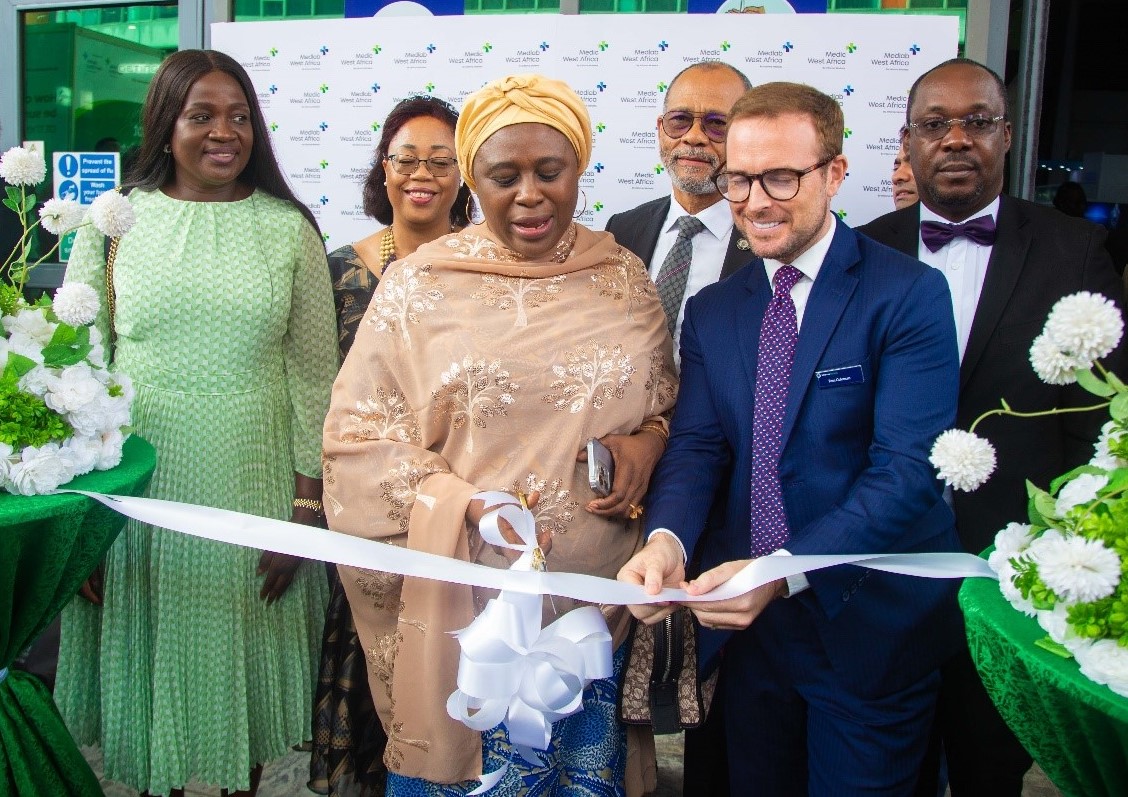
    Medic West Africa, the largest gathering of healthcare professionals in the region, recently concluded a successful three-day run on Thursday, September 28, 2023, at the Landmark Center in Lagos, Nigeria. Featuring over 3,600 attendees and 161 exhibitors from 32 countries, Medic West Africa drew together regional healthcare professionals, policymakers, and service providers who are committed to knowledge-sharing, networking, and business partnerships to improve West African healthcare infrastructure.

    The event was well-attended by key stakeholders including Dr. Salma Ibrahim Anas, Special Adviser to the President on Health; Prof. Onyebuchi Chukwu, Minister of Health (2010 – 2014); Prof. Akin Abayomi, the Honourable Commissioner for Health, Lagos State, Dr Tomi Coker, the Honourable Commissioner for Health, Ogun State; and Dr Success Prosper-Ohayagha, Honourable Commissioner of Health, Imo State amongst other players in the healthcare industry.  

    Speaking during the Healthcare Leadership Conference themed “Igniting Change: Mobilising Healthcare in West Africa for a Sustainable Future”, Dr Salma Ibrahim Anas, Honourable Special Adviser to the President on Health, spoke on the need for stronger partnerships between the public and private sectors. She said, “I want to sincerely congratulate the Healthcare Federation of Nigeria once more and Medic West Africa for putting together this conference at this time. We look forward to the outcome of the conference detailing the role of the private sector and discussing how we can work together with the government to optimize the performance of our health system. I can guarantee you that we have shifted the needle. We are more committed and we are more eager to see that we change the health outcomes in Nigeria for sustainable development.

    We are very pleased with the success of Medic West Africa 2023,” said Tom Coleman, Exhibition Director. “Medic West Africa envisages a future in which healthcare in West Africa is more than a pipe dream; a reality in which excellence is the norm and every person is respected and cared for. As the successful decennium comes to an end, we are committed to the mission and ready to write the next chapter of an extraordinary narrative – a story of excellence, impact, and hope for a healthier and better future for West Africa. We are grateful to all of our sponsors, exhibitors, and attendees for making Medic West Africa 2023 such a success and look forward to welcoming everyone back in April 2024 for an even bigger and better event.

    Medic West Africa, which was co-located with Medlab West Africa, the ideal medical laboratory event which created unparalleled networking and knowledge-sharing opportunities among the medical laboratory community, is renowned for its position as the best gateway to access the West African healthcare market. The success of Medic West Africa’s 2023 edition was a testament to the growing importance of Medic West Africa as a platform for healthcare professionals from across the region to come together and learn about the latest advances in healthcare equipment and solutions.

    A number of major deals were signed during the event, including partnerships between local and international companies to bring new technologies and products to the region. Dymind Biotechnology Co., a high-tech enterprise specialising in the R&D, manufacture, sales and service of medical devices and reagents in the field of IVD, hosted an exclusive product launch during the event showcasing their latest models covering haematology, POCT, coagulation, and veterinary products.

    With a bustling agenda and strategic activities, the 2023 edition of Medic West Africa was an unmatched ideal industry platform for the collaboration of health stakeholders in achieving improved healthcare for all Nigerians. The event was supported by Crown Healthcare, GE Healthcare, Randox, and Siemens Healthineers as platinum partners; DCL Laboratory Products, Erba Mannheim, QIAGEN, Snibe Diagnostic, and UNI-Medical as gold partners; and SEMED as a silver partner.

  • Vaccine Alliance reaches more than one billion children

    Vaccine Alliance reaches more than one billion children

    • Gavi, the Vaccine Alliance, has now facilitated the immunisation of more than one billion children with childhood vaccines
    • The Alliance is on track to immunise 300 million children between 2021 and 2025 and prevent 7-8 million deaths during this period, generating an additional US$80-100 billion economic benefits
    • This comes as global leaders gather in Madrid for the Global Vaccine Impact Conference, an opportunity to learn from the COVAX response to COVID-19 and global health threats to continue building a pandemic prevention, preparedness and response infrastructure

    Gavi, the Vaccine Alliance has helped to vaccinate over one billion children with routine vaccines since it was established in 2000 – alongside enabling billions of critical vaccinations during campaigns, emergencies and pandemics – and is on course to achieve a majority of its 2025 strategic objectives. In total, Gavi has enabled roughly 6 billion vaccinations around the world, protecting children and adults against 19 infectious diseases. These new figures were unveiled at the Global Vaccine Impact Conference, co-hosted by the Spanish Government, which kicked off in Madrid today and saw the publication of a new report, Raising Generation ImmUnity.

    Every year, Gavi provides vaccines to countries to protect half the world’s children and despite the huge strain placed on countries’ health systems by the COVID-19 pandemic, the report finds that it remains on or ahead of schedule in eight of 11 key ambitious commitments it made for the period 2021-2025 (Progress covering two of the five years of the 2021-2025 period). These include efforts to immunise a further 300 million children, prevent between seven and eight million future deaths and unlock US$80-US$100 billion in economic benefits.

    Commitments where Gavi’s ambitious goals require additional effort during the current five-year period are in securing further cost savings from manufacturers, increasing countries’ own financial contribution and in helping countries transition away from Gavi support.

    These encouraging signs that resilient health systems in the 57 Gavi-implementing countries are having some success in bouncing back following the pandemic appear to be borne out by preliminary data demonstrating a recovery of routine immunisation coverage in 2022. Based on a preliminary analysis of country administrative data shared with Gavi, coverage across Gavi-implementing countries increased by approximately three percentage points in 2022. This contrasts with a 5% point drop between 2020 and 2021 and will help coverage levels return closer to their historical baseline. Gavi’s goal is to continue that catch-up while also reaching the millions of “zero dose” children still missing out on life-saving vaccinations. 

    Commenting these figures, Prof José Manuel Barroso, Gavi Board Chair, said: “For over twenty years, Gavi’s operating model has been a solution to the world’s immunisation challenges and at no time was this more the case than in recent years, when it has helped countries not only to weather the worst public health crisis in a century, but protect more and more people from deadly, preventable diseases.”

    In addition to its work on essential childhood vaccines, Gavi manages stockpiles of vaccines against Cholera, Yellow Fever, meningococcal disease and Ebola, giving it a crucial role in outbreak response. Gavi also co-leads COVAX, the global initiative for COVID-19 vaccine equity, alongside the World Health Organization (WHO), UNICEF and the Coalition for Epidemic Preparedness Innovations (CEPI). COVAX has shipped almost 2 billion doses of vaccines – and as the primary source of COVID-19 vaccines for lower-income economies, prevented 2.7 million deaths across 92 lower-income countries. This role in health crisis response gives Gavi vital insights into future efforts on pandemic prevention and preparedness.

    “COVID-19 proved beyond a doubt the value of immunisation. We built our response on top of a tried-and-tested immunisation system. With Gavi support, we can strengthen this platform to ensure our health system can withstand future outbreaks”, said H.E. Budi Gunadi Sadikin, Minister of Health of Indonesia. 

    “In my country, where climate-change and displacement are making it harder, not easier, to deliver health services – vaccines are an essential way to manage outbreaks and save lives,” said Dr Abdelmadjid Abderahim, Minister of Public Health and Prevention, Chad.

    “It is an evolutionary certainty that outbreaks of infectious diseases will only increase due to climate change and population growth. That is why, in addition to protecting a whole generation of young people against preventable diseases, our Alliance has delivered billions more doses of vaccines to help countries fight outbreaks and pandemics. Despite the increasing complexity of the world in which we operate, Gavi is having more impact than ever before, responding to a growing list of global health challenges,” said Dr Seth Berkley, CEO of Gavi.

    “Millions of children missed out on essential vaccines in the last three years. Catching up these children is a priority this year, as we rebuild our health systems post-pandemic. Gavi, the Vaccine Alliance, are a critical part of the push to catch up, recover and strengthen immunization systems so each child can thrive,” said Dr Tedros Adhanom Ghebreyesus, Director-General of the World Health Organization (WHO).

    “Reaching 1 billion children with lifesaving vaccines is an impressive milestone and a testament to what we can achieve for children when we work together. Yet the job is far from done. As health systems and the immunization services they provide continue to recover from the impact of the pandemic, it’s critical that we continue our joint efforts to ensure that children, everywhere, have access to routine childhood vaccinations. It offers children the best shot at living healthy and happy lives,” said Catherine Russell, Executive Director of UNICEF.

    Global Vaccine Impact Conference

    The publication of Raising Generation ImmUnity comes as world leaders and immunisation experts gather in Madrid for the Global Vaccine Impact Conference, the first in-person conference on the state of global vaccination since the beginning of the COVID-19 pandemic. Opened by Spain’s Minister for Foreign Affairs, European Union and Cooperation, José Manuel Albares and taking place during 13-15 June, the Conference will bring heads of state or ministers together with leaders from the Vaccine Alliance, civil society, business and academia to assess the current state of immunisation as well as the challenges that lie ahead. In addition to considering the findings in the report, the meeting’s agenda will also cover other key strategic concerns for the Alliance, such as how to rejuvenate HPV vaccinations, the historic roll out of malaria vaccines, how to mitigate the impact of climate change and prepare for the next pandemic.

  • NLNG  commissions of new set of University Teaching Hospital projects in four states

    NLNG commissions of new set of University Teaching Hospital projects in four states

    Nigeria LNG (NLNG) Limited today began another round of commissioning of Phase 1 projects in its multi-billion-naira Hospital Support Programmes (NLNG HSP) in Lagos, Kano, Bayelsa and Cross River states.

    The round started with commissioning of an Obstetrics & Gynaecology Ward at Lagos University Teaching Hospital (LUTH), Lagos. This will be immediately followed by the commissioning of an Intensive Care Unit (ICU) at Niger Delta University Teaching Hospital (NDUTH), Yenagoa; an Occupational Therapy and Neuromodulation Rehabilitation Centre at Aminu Kano Teaching Hospital (AKTH), Kano; and a Neurosurgical and Stroke Centre at University of Calabar Teaching Hospital (UCTH), Calabar.

    The commissioning of projects began in 2022 with the opening of a maternity centre at University of Abuja Teaching Hospital (UATH), Gwagwalada and a new Intensive Care Unit (ICU) at University of Benin Teaching Hospital (UBTH). 

    These teaching hospitals were selected in the first phase. The programme targets 12 hospitals in total from the six geographical zones in the country. The NLNG Hospital Support Programme (HSP) is NLNG’s national Corporate Social Responsibility (CSR) initiative which aims to boost the healthcare delivery system in 12 Federal University Teaching Hospitals cutting across the six geopolitical zones in the country. The programme started in 2022.

    At the LUTH commissioning on Monday, NLNG’s Managing Director and Chief Executive Officer, Dr. Philip Mshelbila, represented by Mr. Andy Odeh, General Manager, External Relations and Sustainable Development, said the goal of the project was to support the provision of quality medical care for Nigerians through the improvement of tertiary healthcare delivery system in the country, with attendant impacts on medical research and retention of in-country medical expertise.

    He said the Company has helped in reshaping the country’s health sector for a better and more responsive system on the road to making it a destination for world-class healthcare delivery. He called on LUTH’s management to ensure that the facilities were put to practical use for patients and training purposes.

    In his remarks, the Minister of Health, Dr. Osagie Ehanire, who was represented by the Minister of State for Health, Honourable Ekumankama Joseph Nkama, stated that NLNG has proven to be a reliable partner in the sustainable development of the healthcare system in the country.

    “This project has complimented the efforts of the federal Government in improving the quality of healthcare in LUTH. The project is the renovation and equipping of the 120-bed Obstetrics & Gynaecology Ward at Block C section of the hospital. It is important to note that Block C was built about 60 years ago and has not undergone any major renovation since then. The Federal Government and the Ministry of Health are grateful to NLNG for this wonderful gesture. We are also mindful of the Company’s other efforts in supporting insfrastructure renewal in all sectors, particularly the health sector,” he said. 

    The newly commissioned LUTH project entailed the complete renovation and upgrade of the Obstetrics & Gynaecology (Ward C) Block, a four-storey building, and the provision of 120 beds to serve the prenatal and postnatal services. Other facilities include a waiting room, nurses stations, private wards, consulting rooms, radiation room, and doctors and nurses call rooms, among other facilities.

    At NDUTH, Yenagoa, NLNG will commission a one-storey new Intensive Care Unit (ICU) building which features a six-bed Intensive Care Unit (ICU) and four-bed Renal Dialysis Unit, which are connected to the existing operating theatre. In Kano, at  AKTH, a two-winged Occupational Therapy and Neuromodulation Rehabilitation Centre bungalow was constructed with facilities such as a female ward, children’s ward, nurses’ station, and ward round room. The therapy wing consists of EEG room, RTMS room, ECT room, patient waiting room, recovery room, physiotherapy hall and other features.

    At UCTH, Calabar, the project is an 18-bed Neurosurgical and Stroke Centre, which includes nine-bed male and nine-bed female wards, an operating theatre, three consulting offices, a pharmacy, two sleep-in rooms, nursing and recovery rooms and other associated facilities.

    These commissioning events wrap up the implementation of Phase 1 projects.

    In February 2023, NLNG commenced Phase 2 with the signing of Memoranda of Understanding (MoU) with University of Port Harcourt Teaching Hospital (UPTH), Port Harcourt, for the equipping of the Haemodialysis Centre; the University of Uyo Teaching Hospital (UUTH), Uyo, for the renovation and equipping of an accident and emergency unit and theatre; and Jos University Teaching Hospital (JUTH), Jos for the construction and equipping of a twin theatre suite.

    NLNG is an incorporated Joint Venture owned by the Federal Government of Nigeria, represented by Nigerian National Petroleum Company (49%), Shell Gas B.V.  (25.6%), TotalEnergies Gaz & Electricite Holdings (15%), and Eni International N.A. N. V. S.àr.l (10.4%).

  • The Africa Health Agenda International Conference (AHAIC) 2023 to Drive United Africa Agenda to Achieve Equitable Health Access and Address Climate Change

    The Africa Health Agenda International Conference (AHAIC) 2023 to Drive United Africa Agenda to Achieve Equitable Health Access and Address Climate Change

    Stakeholders in health, development and climate are convening in Kigali, Rwanda, for the fifth edition of The Africa Health Agenda International Conference (AHAIC) 2023, where the urgent need for African countries to unite in their efforts to strengthen health systems and address climate-related health challenges are top on the agenda.

    The biennial conference, which is taking place this week (5th – 8th March) under the theme “Resilient Health Systems for Africa: Re-envisioning the Future Now”, has brought together representatives from African States to advocate for a unified continental voice ahead of their participation at the 78th session of the United Nations General Assembly (UNGA 78) and the 28th session of the Conference of the Parties (COP 28) (https://apo-opa.info/3ZMxXGJ) later this year.

    “If we are to address the emerging threats at the intersection of health and climate change, African countries must present a united front at global health and climate forums. We need to have one message for one Africa when we present our asks and demands at UNGA 78 and COP 28 because it is only then that we can influence the global policy changes required to meet the needs of the African people,” said Dr Sabin Nsanzimana, Minister of Health, Rwanda.

    AHAIC will provide a platform to deepen African unity at a time when the ripple effects of the three-year COVID-19 pandemic and a global recession have caused an increase in nationalism in the global north, denying Africa much-needed access to funding for health and climate adaptation and mitigation. The event will also address the fragmented efforts that have long stood in the way of holistic progress on the continent.

    “We know that multilateral systems have not always delivered equitably for us, and the COVID-19 pandemic served as a poignant reminder of Africa’s ranking within the hierarchy of global health. While we acknowledge that African countries must also take responsibility for their role in underinvesting in their health systems, we must also recognise that African-led solutions to African challenges still require some level of global support because there can be no global health security if Africa continues to be left out,” said Dr Ahmed Ogwell Ouma, Acting Director, Africa Centres for Disease Control and Prevention (Africa CDC).

    Over the next three days, policymakers, technocrats, thought leaders, innovators, researchers, and civil society will explore how African countries can foster regional cooperation by creating common guidelines, governance structures and regulatory procedures to harmonise health systems and climate adaptation and mitigation measures across the continent.

    “For us to create lasting health change in Africa, we must build more equal partnerships and unite to drive a common African agenda on climate and health. In doing so, we can address the emerging twin threats of climate crises and future pandemics in a more sustainable manner, including by strengthening primary health care and addressing the social determinants of health that are impacting the wellbeing of populations across the continent,” said Dr Githinji Gitahi, Group CEO, Amref Health Africa. “These social determinants include education, economic opportunity, conflict and gender equity – all of which are central to Amref Health Africa’s mission to catalyse and drive people-centred health systems as outlined in our 2023-2030 corporate strategy, which we will unveil at AHAIC 2023.”

    Jointly convened by Amref Health Africa, Ministry of Health Rwanda, African Union and Africa Centres for Disease Control and Prevention (Africa CDC). AHAIC 2023 is Africa’s first global health conference to focus on mainstreaming climate into health policymaking and vice versa. The conference will act as a springboard to global health and climate conferences where it will present an African-led global petition for urgent climate action and sustainable global health policies that will support Africa’s journey towards resilient health systems.

    The conference kicked off with a wogging event on 5th March during the Kigali Car Free Day, as part of efforts to promote climate action for health. This will be followed by three days of plenaries, high-level meetings, workshops, and networking sessions that will take place from 6th to 8th of March.

  • NLNG begins commissioning of completed projects in university teaching hospitals across Nigeria

    NLNG begins commissioning of completed projects in university teaching hospitals across Nigeria

    Nigeria LNG (NLNG) Limited today began the commissioning of Phase 1 projects in its multi-billion-naira Hospital Support Programme (NLNG HSP) with the opening of a maternity centre at the University of Abuja Teaching Hospital (UATH), Gwagwalada.

    The Company will also commission new Intensive Care Units (ICUs) at the University of Benin Teaching Hospital (UBTH) and the Niger Delta University Teaching Hospital (NDUTH) in 2022 as part of the first phase of its HSP program. Six hospitals were selected in the first phase. The NLNG HSP targets 12 hospitals from the six geographical zones in the country.

    Other projects in the first phase due for commissioning in early 2023 include an Occupational Therapy and Neuromodulation Rehabilitation Centre at the Aminu Kano Teaching Hospital (AKTH), an Obstetrics & Gynecology Ward at the Lagos University Teaching Hospital (LUTH), and a Neurosurgical & Stroke Centre at the University of Calabar Teaching Hospital (UCTH).

    Dignitaries at the event include the Minister of Health, Dr. Osagie Ehanire, represented by the Director of Hospital Services, Dr. B.O Alonge; NLNG’s Managing Director and Chief Executive Officer, Dr. Philip Mshelbila; NLNG’s Deputy Managing Director, Mr Olalekan Ogunleye; UATH Chief Medical Director, Professor Bissallah Ekele; Chairperson, Senate Committee on Women Affairs, Senator Betty Apiafi; Chairman House of Representative Committee on Health, Honourable Yusuf Tanko Sununu; the General Manager, External Relations and Sustainable Development, NLNG, Mr. Andy Odeh, among others.

    Commissioning the maternity centre, Minister of Health, Dr. Osagie Ehanire, commended NLNG for the partnership and commitment to raising the level of healthcare delivery in the country. He said NLNG’s contribution of a Modern Maternity and Child Centre to UATH was in line with the principles of universal health coverage. He also called for more partnerships in the sector to fill gaps in healthcare delivery.

    Speaking on NLNG’s commitment to Hospital Support Programme, NLNG’s MD, Dr. Philip Mshelbila, said the programme was conceived following the Company’s COVID-19 intervention and its concern over the increasing pressure on the healthcare facilities in the country. He stated that the goal of the project was to boost the tertiary healthcare delivery system in 12 University Teaching Hospitals in the 6 geopolitical zones in the country, with attendant impacts on medical research and retention of in-country medical expertise.

    “First hand, we have seen how investment in the health sector can change the face of healthcare delivery in Nigeria. We contributed significantly to fighting COVID-19 through the NNPC and other Oil and Gas Industry Partners COVID-19 Intervention Programme by donating numerous intensive care medical equipment to medical facilities across the country. At the Federal Medical Centre Yola, for instance, the equipment came in handy for the successful separation of a set of conjoined twins. This feat brought us at NLNG a lot of satisfaction as we saw the impact that our donation made in the lives of those innocent children and others who would utilise the equipment. We believe we can expand this impact by investing more in facilities across the country,” he said.

    He stated further that each facility in the programme was based on the results of needs analyses which were carried out in conjunction with the respective hospitals, to determine NLNG’s intervention area for each of the chosen Teaching Hospitals.

    The newly commissioned UATH Maternity Centre consists of a 10-bed delivery suite, a 10-bed post-natal ward, two operating theatres, 10-bed Special Care Baby Unit (SCBU), consulting rooms, doctors and nurses’ rooms, a laboratory, a pharmacy, medical records office, a Close-Circuit Television (CCTV) system, Ultrasound scan room and other administrative offices.

    The NLNG HSP is the second part of NLNG’s national Corporate Social Responsibility (CSR) initiative. The first part was the University Support Programme (USP) for the construction/rehabilitation of modern engineering laboratories, equipped with cutting-edge equipment in six universities which have since been completed.

    The other six university teaching hospitals to benefit from the HS Programme in Phase Two in 2023 through 2024 are Abubakar Tafawa Balewa University Teaching Hospital (ATBUTH), Bauchi; Jos University Teaching Hospital (JUTH); Nnamdi Azikiwe University Teaching Hospital (NAUTH), Nnewi; Federal Medical Centre, Asaba; University of Uyo Teaching Hospital (UUTH); and University of Port Harcourt Teaching Hospital (UPTH) in Rivers State.

    NLNG is an incorporated Joint Venture owned by Federal Government of Nigeria, represented by Nigerian National Petroleum  Company (49%), Shell Gas B.V.  (25.6%), TotalEnergies Gaz & Electricite Holdings (15%), and Eni International N.A. N. V. S.àr.l (10.4%).