Tag: Mr. Reuben Muoka

  • “We are not responsible for monitoring social media contents”- NCC

    “We are not responsible for monitoring social media contents”- NCC

    The Nigerian Communications Commission (NCC) has said it is not the regulator of the contents of the social media networks that many stakeholders have complained about. 

    The submission came during a recent visit of the National Civil Society Council of Nigeria (NCSCN), led by its Executive Secretary, Blessing Akinsolotu, who sought the intervention of the Commission on the worrisome and misleading content of social media platforms. 

    “We know that NCC, as the regulator of the telecoms industry, has greater role to play in helping to curb the spread of fake news and incendiary contents that Internet users put on social media platforms. Therefore, we want NCC to partner with us in this regard,” he stated.

    Akinlosotu said the situation demands immediate intervention of key stakeholders to ensure that the content of the social media and the Internet are credible and enhance national social cohesion.

    Director, Public Affairs of the Commission, Mr. Reuben Muoka, who received the group on behalf of the Executive Vice Chairman of NCC, Prof. Umar Danbatta, informed the organization that Commission’s mandate does not extend to controlling the content of such media platforms. 

    According to Muoka, the major role of the telecom regulator is to facilitate the deployment of telecom infrastructure that provides different types of telecommunications services, including improving broadband that enhances robust Internet experience, and ensuring fair competition as well as the protecting of telecom consumers. 

    Muoka said the mandate includes making services available, accessible and affordable for Nigerians who may leverage such access to engage in digital social mediation for the benefit of the individual, businesses, and the nation’s socioeconomic growth. 

    In the performance of its functions, Muoka said the Commission promotes collaboration and partnerships with different stakeholders such as NCSCN, in creating awareness and promoting access to different categories of consumers in the country. He said the Commission looks forward to furthering collaboration with NCSCN in its efforts to align with the aspirations of users of telecommunications services across the country.  

    The NCSCN, a member of the United Nations Sustainable Development Cooperation Framework, commended the Commission for its people-oriented and consumer-centric regulatory activities.

    The Council also seeks collaboration with NCC to spread messages of the Commission’s consumer enlightenment programmes to Nigerians in the grassroots through its over 100-member Civil Society Organisation (CSOs). 

    Akinlosotu also invited the Commission to partner with the NCSCN in hosting a conference to tackle the seemingly intractable diffusion of fake news, particularly on social media networks.

  • NCC Renews Commitment to Industry Collaboration, Inclusiveness

    NCC Renews Commitment to Industry Collaboration, Inclusiveness

    The Nigerian Communications Commission (NCC) has said it would continue to consult stakeholders on issues affecting telecommunication services deployments and developments, in line with its culture of inclusiveness, collaboration and partnership as predicated in its strategic focus.

    The Executive Vice Chairman of the Commission (EVC), Professor Garba Danbatta, represented by Reuben Muoka, Commission’s Director of Public Affairs, gave the assurance while receiving a delegation of Food Basket Foundation International (FBFI), led by its Chief Executive Officer, Funmi Akinyele, during a courtesy visit to NCC Headquarters in Abuja, affirming that the Commission is committed to strengthening its regulation of the telecommunication sector, particularly providing the solid infrastructure and general industry regulations.

    While commending the Commission’s regulatory excellence, highlighting its effort in ensuring there are regulations, frameworks and guidelines to guard the telecoms sector and online civic space, Akinyele expressed concerns about the state of the social media with uncontrolled content. She said the visit to the regulator was to explore areas of collaboration in its programme to protect the digital civic space by combating misinformation and disinformation while mitigating risks to the digital civic space to ensure electoral integrity before, during and after the 2023 General Elections. 

    This initiative, she explained, comes under one of FBFI’s projects, dubbed, Safeguarding Digital Civic Space for Electoral Integrity (SDSEI).

    Speaking further, Muoka informed the team that the Commission is not responsible for the content of the social media as there are other government agencies that are responsible for that.

    However, the Commission has engaged in several aspects of protection of the users of the Internet, such as initiatives towards Child Online Protection, COP, deployment of the Computer Security Incident Response Team, NCC-CSIRT, set up to monitor cyber-attacks in the Nigerian cyberspace, in addition to the activities of the Commission’s department of New Media and Information Security set up to address issued of cybersecurity.

    “We have tried not to be a closed organization. We give lots of premiums to consultations and collaborations, especially in the areas that will ensure that the consumers and stakeholders understand what is going on and to make input that enriches the quality of regulations, as well as being able to access information they may require to safeguard themselves and the society,” he noted. 

    Muoka also invited the group to join the NCC in carrying out enlightenment campaigns to educate telecom consumers on their roles and responsibilities in order to use the Internet and telecommunication platform safely to counter misuse and abuse. 

  • Feature- Telecom Tariff Increase Reversal: Matters Arising

    Feature- Telecom Tariff Increase Reversal: Matters Arising

    By Elvis Eromosele

    The Nigerian telecommunications sector has remained, perhaps, the most dynamic section of the economy for over two decades. It is a major newsmaker. One day it is news for new milestones, new technologies and new vistas and the next day regulatory restrictions, multiple taxations by the government and its agents or else disruption of service by the same. It is a real roller-coaster ride. 

    Yet, the sector has proven resilient, even before resilience was a thing. To get to where it is today, the players have invested heavily, struggled with and overcame myriads of obstacles, and continue to stretch to do new and exciting things. It strives to keep abreast of the latest development across the globe.  

    It is clear that the telecommunication revolution championed widespread access to broadband internet services and the attendant benefits, enabled the growth of e-commerce and precipitated the emergence of the digital economy. This is, in addition, to direct contributions to the economy through taxes paid, job creation and sustenance of many MSMEs.

    While some experts point to government policies and fair regulatory practices as the biggest enabler of growth in the sector over the years, some argue that the government and its agents are also the greatest obstacles to the sector achieving its full potential. 

    One simply needs to look back to the recent SIM/ NIN policy and attempt to evaluate the cost: millions of lines were lost, businesses closed, people lost jobs and the economy constricted. 

    Last week, the Nigerian Communications Commission (NCC), the regulator of the telecommunications industry, ordered operators, MTN and Airtel, to immediately reverse the hike in their data tariff plan which they implemented on their respective networks the previous week.

    News reports indicated that MTN and Airtel subscribers suddenly realised that the operators had commenced a new data tariff plan which was an upward review of the cost of their voice and data plan, without prior notice.

    The NCC immediately stepped in. It ordered the mobile network operators to reverse the hike in response to the complaints by the telecom subscribers. In a statement signed by the Director, Public Affairs at NCC, Mr. Reuben Muoka, the commission stated, “The attention of the NCC has been drawn to media reports of unilateral implementation of the recently approved 10 per cent upward tariff adjustments for some voice and data services by the service providers, on their networks.

    “The consideration for 10 percent approval for tariff adjustments for different voice and data packages was in line with the mandates of the Commission as provided by the Nigerian Communications Act, 2003, and other extant Regulations and Guidelines, as this was within the provisions of the existing price floor and price cap as determined for the industry.

    “The decision was also taken after a critical and realistic review and analysis of the operational environment and the current business climate in Nigeria, as it affects all sectors of the economy.

    “Furthermore, even though the tariff adjustment was proposed and provisionally approved by the management, pending the final approval of the Board of the Commission, in the end, it did not have the approval of the Board of the Commission. As a result, it is reversed.”

    This simply means that the NCC agreed with the operators that the tariff increase was due in the light of the prevailing economic situation but its board thought otherwise and failed to approve the new tariff. In the meantime, operators had gone ahead to implement the new tariff and have now been directed to reverse it. 

    In truth, the matter extends beyond the NCC. Everything rests squarely on the table of the Minister of Communications and Digital Economy, Dr. Isa Ibrahim Pantami. He has maintained that his priority is to protect the citizens and ensure justice for all stakeholders involved. This is not mere rhetoric. He has this demonstrated severally. 

    It will be recalled that he recently obtained the approval of President Muhammadu Buhari for the suspension of the proposed five percent excise duty, in order to maintain a conducive enabling environment for the telecom operators. The industry rightly commended him. 

    In this case of tariff increase, he argues that as much as there is an increase in the cost of production, the provision of telecom services is still very profitable and the subscribers mustn’t be subjected to a hike in charges.

    The Commission in its statement noted that it will also continue to abide by its time-tested process and international best practices to ensure efficient pricing mechanisms for the telecommunications industry in Nigeria.

    Nice sounding words no doubt but the reality is that in situations like this someone is getting the short end of the stick and it’s definitely not the regulator. 

    The NBS reveals that inflation has exceeded 20 percent with food and power as the biggest drivers of the rise. 

    Has anyone bothered to ask how the operators are coping? In under a year, the cost of diesel has risen significantly and hovers around N850 per litre. Of course, the discos, the electricity distribution firms, have also increased their tariffs even though the service has not improved in any way. A certain paid cable service has ignored threats from the national assembly and gone ahead and increased its tariff. The case is in court. 

    Telcos find themselves in a pickle, whatever course of action they take they will likely end up as villains. 

    If the tariff rise holds, Nigerians will no doubt consider them insensitive. And if the tariff remains the same when everything else is rising, it erodes profit, deprives the shareholders and impacts negatively new investments. 

    For the telcos, it is a zero-sum game. 

    I’ll be the first to admit that I’m biased in this matter. I’m both a stakeholder and a shareholder. I want the low tariff to remain but equally worry about the sustainability of the current practice. 

    I wonder about how it would affect the injection of new funds and the need to keep the industry in step with global developments. 

    I am convinced that something has to give and soon. 

    This brings to mind, the story of boiling an egg and potato. The same hot water that makes the egg hard equally makes the potato soft. In this hot water of policy summersault, how the operators will react is anyone’s guess. 

    Let’s keep an eye on the telecom operators, the next couple of weeks promise to be exciting. 

    Elvis Eromosele, a Corporate Communication professional and public affairs analyst lives in Lagos.

  • NCC Receives Cybersecurity Award, Seeks Safer Internet Usage

    NCC Receives Cybersecurity Award, Seeks Safer Internet Usage

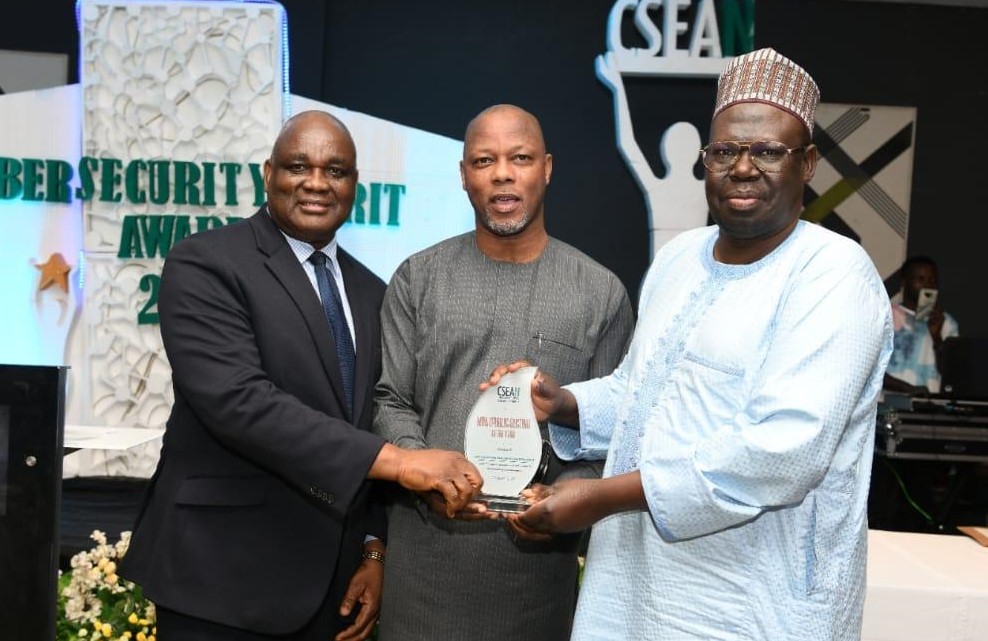
    The Nigerian Communications Commission (NCC) at the weekend in Lagos, received a cybersecurity promotion award at the maiden edition of Cybersecurity Merit Awards hosted by the Cybersecurity Experts Association of Nigerian (CSEAN) which enumerated several steps taken by it to promote a safer Internet.

    The award, which was conferred on the Commission, ahead of other contending organizations, listed its sterling contributions to the protection of telecom consumers from all forms of cybercrimes.

    Director of New Media and Information Security of the NCC, Dr. Haru Alhassan, who received the award on behalf of the Executive Vice Chairman of NCC, Prof. Umar Danbatta, said such a credible award from professionals is encouraging for the efforts which the Commission has made in cybersecurity.

    He told the audience that tackling the menace of cybercrime in the country has become even more imperative as the success of the implementation of digital economy policy and strategy depends on a strong foundation of cybersecurity architecture in Nigeria.

    Director of Public Affairs of the Commission, Mr. Reuben Muoka, who gave a goodwill speech on behalf of the CEO of the Commission, traced the efforts of the Commission in relation to its networking activities at the international level, including the global Internet Governance Forum and other initiatives like the Child Online Protection.

    He adverted the minds of the experts to the provisions of the National Digital Economy Policy and Strategy (NDEPS) 2020-2030, which one of the 8-Pillars focuses on Soft Infrastructure, is premised on harnessing policy and regulatory initiatives to create an enabling environment that targets increased protection for users of digital products and services in the country.

    “The Commission is committed to ensuring that the Nigerian cyberspace is protected against the nefarious activities of cybercriminals that endanger unsuspecting Internet users in the country,” the EVC said. He also stated that it is in recognition of the strategic role the cyberspace plays in the advancement of digital economy that the Commission created NMIS Department to take charge of several activities, initiatives and programmes pivoted on collaboration to enhance cyber and information security in the Nigerian cyberspace.

    “We have continued to be part of the Internet Governance Forum (IGF), promote Child Online Protection as well as create awareness on cyber threats through the NCC’s Computer Security Incidence Response Team (CSIRT), which constantly monitors the cyberspace and publishes advisories on identified cyber threats,” the EVC said.

    The CMA 2020 was organized to recognise individuals, startups, private businesses, Ministries, Departments and Agencies (MDAs) of government, as well as state governments, for excellence, innovation, and effective leadership in promoting cybersecurity ecosystem in Nigeria.

  • Danbatta applauds media for aiding telecom awareness

    Danbatta applauds media for aiding telecom awareness

    The Executive Vice Chairman of the Nigerian Communications Commission, Professor Umar Danbatta, has said that the level of awareness of the potential of telecommunications products and services is a credit to the media industry which has partnered with the Commission in the regulatory process.

    Danbatta was the Keynote Speaker at the dinner hosted by the Board of Trustees of the Nigeria Media Merit Award, NMMA, to flag off the commemoration of the 30th Anniversary of NMMA as Africa’s foremost media excellence recognition institution, at the Lagos Sheraton Hotel on Tuesday, said this is why the telecom regulator holds the media at very high esteem.

    At the event where the Director, Public Affairs of the NCC, Mr. Reuben Muoka, presented the keynote on behalf of Danbatta, the CEO of NCC sought greater collaboration with the media describing the media systems of communication as central to social progress and are thus critical partners the NCC requires to succeed in its determination to consolidate the gains of telecommunication.

    Dwelling on the topic, “The NCC New Strategic Vision (Implementation) Plan (SVP) 2021-2025: A Transformation Agenda”, which signposts the direction of the Nigerian telecom industry in the next five years, Danbatta recalled the trajectory of the evolution of telecoms in Nigeria, with reference to the nation’s showing of a paltry 18,724 telephone lines at independence in 1960 to serve a population of 40 million people, translating to a teledensity of 0.5, to the present time (as at July 2022), when “active telecoms subscribers have grown significantly hitting 209 million from about 400,000 aggregate telephone lines in the country on the eve of concrete deregulation in the year 2000.

    “This represents a teledensity of 109.47%. Besides, basic Internet subscriptions have also grown from zero in the pre-liberalisation era to over 152 million. It is also gratifying that the broadband subscriptions now stand at 85 million, representing a 44.49% penetration.”

    Today, “the Information and Communication Technology (ICT) sector contributed 18.44 percent to the nation’s Gross Domestic Product (GDP) in the second quarter of 2022. From this figure, telecommunications sector alone contributed 15 percent,” Danbatta said to place on record the unprecedented contribution of the telecom and ICT industry to GDP.

    Danbatta, also spoke extensively on the policy initiatives of the Federal Government and the continued support of the government as crucial to the accomplishment of the feat in the telecom industry. Giving an indication that the Board, Management and staff of the Commission will not rest on their oars and will continue to re-engineer and promote innovations to make the nation to harness benefits that are accruable in a digital economy.

    Danbatta said the objective of the Strategic Vision (Implementation) Plan (SVP) 2021-2025 is to consolidate on the accomplishments of the Commission under the SVP 2015-2020, otherwise called The Eight Point Agenda, the forerunner of the SVP 2021-2025, in order to take the Commission to a greater height where it will make even more superlative contributions to the national economy.

    Otherwise dubbed the SVP II, the new Strategic Vision Plan 2021-2025 is designed as a transformation agenda for the Nigeria’s digital ecosystem. The EVC said, it is the reason the new SVP’s focal objectives are to ensure: Organizational Renewal for Operational Efficiency and Regulatory Excellence; Facilitate the Provision of Infrastructure for a Digital Economy which fosters National Development; Promote Fair Competition, Inclusive Growth, Increased investment and Innovative Services; Improve Quality of Service (QoS) for Enhanced Consumer Quality of Experience (QoE); and Facilitate Strategic Collaboration and Partnership. 

    Danbatta said the significance of telecom as an enabler of other sectors’ growth and its centrality to achieving better quality of life by the citizens underscored the need for a renewed partnership and collaboration with all media of communication. “For the media, it means the process of news gathering, processing and dissemination will be accomplished faster, thus enabling the media to inform and educate the citizens on happenings around them more timeously, accurately, and adequately towards achieving greater socio-economic development in our country,” the EVC stated.

    The event was attended by many stakeholders in the media, including Mr. Martins Oloja, Chairman Editorial Board, The Guardian; representative of the government, including the Governor of Lagos who was represented by Olumide Shogunle, the Permanent Secretary, Lagos State Ministry of Information; and traditional leaders, including the Makama Ringim, Alhaji Mohammed Ibrahim, who was Director General of NTA, and equally a former Director General of Radio Nigeria, and who received Special Recognition Award at the occasion.

    Others are octogenarian veteran journalist and thespian, Dame Taiwo Ajai-Lycet, who, while taking the Vote of Thanks, particularly commended the EVC for a very thoughtful and contextual presentation; Academics, including Prof. Stella Okunna, sub-Saharan Africa’s first female professor of mass communication; Alhaji Garba Kankarofi, Chief Yemi Akeju, the Chief Administrator of NMMA; advertising gurus, Senator Akin Odunsi, Sir Steve Omojafor, and Dele Adetiba; Director General National Broadcasting Commission, Mr. Balarabe Ilelah; and many entrepreneurs,  and other enthusiasts in the media and arts world.

  • NIPR Fellowship to Muoka, Ibietan, Meritorious – Danbatta

    NIPR Fellowship to Muoka, Ibietan, Meritorious – Danbatta

    The Executive Vice Chairman of the Nigerian Communications Commission (NCC), Professor Umar Garba Danbatta, has hailed the conferment of the Fellowship of the Nigerian Institute of Public Relations, (fnipr) on two management staff of the Commission, as meritorious and a testimony to the Commission’s promotion of professionalism and excellence in its scheme of management.

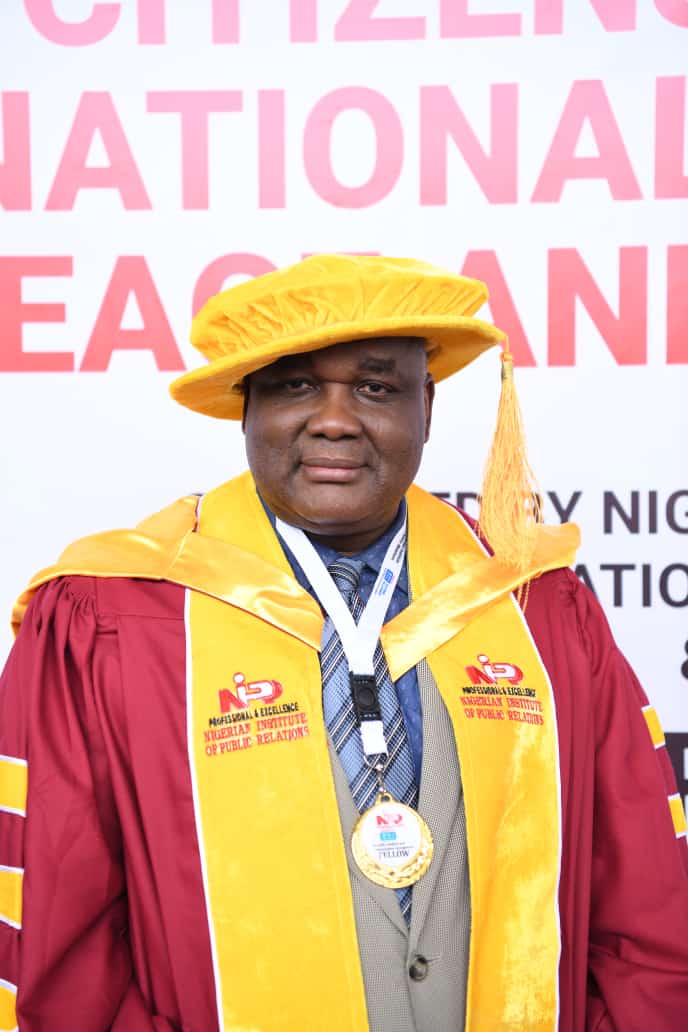
    The NCC EVC’s assertion followed the recent investiture and induction of Mr. Reuben Muoka, Director of Public Affairs, and Dr. Omoniyi Ibietan, Head, Media Relations in the Public Affairs Department of the Commission, as Fellows of the Chartered Institute during its AGM and Conference at the International Conference Centre in Abuja.

    Danbatta, in congratulating the duo, said the Commission is proud to have produced these two individuals who have been considered worthy of elevation to the fellowship cadre of the prestigious institution like the NIPR, and that their emergence resonates with two of the Commission’s core values; Excellence and Professionalism; which the Commission coincidentally shares with the NIPR.

    The NCC boss, a Professor of Electrical and Electronics Engineering, with many Fellowships like the Nigerian Society of Engineers, Nigerian Academy of Engineering, Institute of Electrical and Electronic Engineering, and Renewable and Alternative Energy Society of Nigeria, expressed delight at the level of performance of the Commission’s staff in their different areas of professional calling.

    He commended the NIPR as a body for its commitment in the regulation of the practice of public relations in Nigeria for which it has found an ally in NCC. “This can only rekindle the healthy collaboration and partnership existing between the NCC and NIPR, especially in the area of capacity-building and commitment to appropriate national social orientation”, Danbatta stated.

    Muoka, the Director of Public Affairs Department of the NCC, holds M.Sc. in Mass Communication from the University of Lagos with specialisation in Public Relations and Advertising, after a Postgraduate Diploma in the same field from the same University; and he had earlier obtained a Bachelor’s degree in Performing Arts from the University of Ilorin. Besides being a fellow of NIPR, he is also an associate of the Registered Practitioners of Advertising (arpa).

    He had worked for many years as Communications Editor in Vanguard Newspapers during which he also chaired the League of Communications Correspondents, one of the platforms that championed the deregulation of the telecom industry in Nigeria. He also worked for MTS First Wireless, Nigeria’s first mobile network operator, where he rose to the position of Deputy General Manager. In 1999, Muoka received a fellowship involving a Pan-African training and tour, leading to the award of a Diploma in Journalism, at the instance of the Egyptian Ministry of Information, and the African Journalists Union (AJU), in Cairo, Egypt.

    Ibietan earned a Ph.D. in Communication from North-West University in South Africa. He had earlier obtained M.A. in Communication and Language Arts from the University of Ibadan, a BA in Communication Arts from the University of Uyo, and a Journalism Diploma from the Moscow-based International Institute of Journalism, Abuja Campus. A noted advocate of freedom and democracy, he was Freedom House Nigeria Project’s Regional Media Researcher in the Niger Delta until his appointment in 2006 as Special Media Assistant to the Federal Minister of Information and Communication, during which he popularised the use of new media for public communication in Nigeria. He is a member of the African Council for Communication Education (ACCE) and the International Institute of Communications (IIC).

    Ibietan joined the NCC in 2008 and was deployed to Legislative and Government Relations (LGR) Department where he was frontline liaison staff of the Commission with the National Assembly. Much later after the merging of the LGR Department with the Public Affairs Department in 2010, he served as Manager Media and Public Relations under Muoka’s supervision and became Senior Manager Media Management until January 2017 when he was redeployed to PAD’s emergent Online Media and Special Publication Unit, and subsequently designated as the head of the Unit. He also worked at the Consumer Information and Education Unit of the Commission’s Consumer Affairs Bureau (CAB) until his redeployment to PAD. He became an Assistant Director in January 2021 and was appointed Head, Media Relations in July 2022.

  • Pantami takes Digital Economic agenda to Minna

    Pantami takes Digital Economic agenda to Minna

    The Federal Government’s agenda to transform the country to a robust digital economy, became the focal point in the message of the Honourable Minister of Communications and Digital Economy, Prof. Isa Ibrahim Pantami, who was the special guest at the weekend commissioning of a ‘Digital Nigeria Centre’ at the Father O’Connel Science College, Minna, Niger State.

    Hosted at the occasion by the college community led by its old student and Minister of State for Foreign Affairs, Ambassador Zubairu Dada who facilitated the project executed by the Universal Service Provision Fund, USPF, Pantami said through diligent implementation of the digital economy agenda, Nigeria has the potential of critical mass of ‘digital natives’ that can transform the country into a regional and global digital powerhouse.

    “With the tools being provided through the DNC, creative Nigerians can play a key role in the creation of digital jobs across all sectors of the country. Such jobs are either based on or are dependent upon Information and Communications Technologies (ICTs),” he said.

    The Minister who spoke through the Director of Public Affairs of the Nigerian Communications Commission, NCC, Mr. Reuben Muoka, said the current implementation of Nigeria’s National Digital Economy Policy and Strategy (NDEPS), 2020-2030, emphasizes the importance of innovation and startup ecosystem to the development of Nigerian indigenous digital economy. He said the DNC commissioned at the college targets students and youths among others, for skills acquisition in order to increase ICT literacy among school teachers and students; provide a platform for accessing online educational resources; equip students with ICT skills; facilitate ICT adoption in teaching and learning; and increase the pass rates in mathematics, English language and other science subjects.

    Pantami who spoke to an audience that included Niger State’s Commissioner for Education, Hajiya Hanatu Jibrin Salihu, who represented the Governor of Niger State, advised the school to effectively utilize the DNC whose four components include ICT Tool component (made up of 40 desktop computers with embedded operating systems, server, printer, remote-controlled projector, high resolution scanner, and e-learning software) as well as the power structure, consisting of an inverter that comes with its charger, solar panels, batteries and automatic changeover.

    “There is also a connectivity component, made up of routers, switches, and firewall for network protection, modem, fibre/microwave radio or Very Small Aperture Terminal (VSAT) and bandwidth for internet connectivity. Lastly, there is a non-ICT component constitutive of the furniture, cabinet, cooling systems, and allied appliances” he said.

    The DNC, formerly known as School Knowledge Centre (SKC), has an overarching objective to carry out the Commission’s statutory mandate of expanding the frontiers of universal access and universal service by ensuring service provision to unserved and under-served areas of the Nigerian economy.

    Since the modification of the project from SKC to DNC, the Minna project became the second to be commissioned after the first DNC located at Ijesa Muslim Grammar School, Ilesa, Osun State, was inaugurated in January, 2022.