Tag: Nigerian Communication Commission (NCC)

  • Solaris, Knownow, Specxs win NCC’s talent hunt

    Solaris, Knownow, Specxs win NCC’s talent hunt

    Three companies, out of 81 companies that contested at the Nigerian Communication Commission’s inspired technology innovation talent hunt competition, shared the N30 million prize money equally. 

    Nine other shortlisted companies went home with N500,000 consolation prizes each. 

    Solaris GreenTech Hub, Knownow Africa Limited and Specxs Care Limited, came bright at the 2023 NCC’s Annual Hackathon Competition, adjudged by an independent Panel of Judges chaired by the President of Digital Bridge Institute (DBI), Prof. Mohammed Ajiya. 

    Solaris, whose team comprises Chiemela Anosike, Ineke Chinecherem and Onoh Chiemela, won in the Renewable Energy Solution category of the hackathon with their green energy solution that provides clean energy hubs for people in rural communities to be able to charge their phones and other mobile/electronic devices.

    Knownow, with a team consisting of Abdulazeez Abiola, Dr. Mudasiru Taiwo and Dr. Oluwaseun Ojerinde emerged winner in the Blockchain Solution category for their fraud-detection and prevention solution.

    Specxs Care Limited, also a winner, with team members comprising Isah Dahiru, Ameenat Bala and Musa Gambo, lifted the trophy also with their wearable devices called ‘Smart Bladder’, which can help manage urinary incontinence in elderly people and reduce the cost of their daily spending while ensuring proper personal hygiene.

    Prof. Ajiya said the panel was painstaking in assessing all the submissions/entries, diligent in shortlisting the 12 participants and meticulous in determining the three winners through strict compliance with the requirements stated by the Commission for the exercise.

    Earlier in his keynote address at the event, the Executive Vice Chairman and Chief Executive Officer of NCC, Dr. Aminu Maida, who was represented by the Director, Research and Development, Ismail Adedigba, said the event aligns perfectly with one of the core objectives embedded within the new Strategic Vision Plan (SVP) of the Commission for the years 2023-2025, which speaks to fostering the development of cutting-edge technologies through rigorous research to catalyse sustainable economic growth and overall development within Nigeria.

    He noted that this year’s event focuses on three pivotal thematic areas that not only pertain to Nigeria but also resonate with global concerns. The themes, he said, are:  Blockchain-enabled Data Protection Solutions for Enhancing Regulatory Compliance; Assistive Technology Solutions for the Elderly and People with Disabilities; and Technology Solutions for Renewable Energy in Rural Areas

    Adedigba said Talent Hunt Research through Hackathon is just the inception of the Commission’s unwavering commitment to nurturing innovation and nascent ideas, the way it has been doing for previous winning innovative solutions and ideas that had emerged through the annual hackathon.

    “The culmination of this competition is not confined to the grand prize of N10 million awarded to each winner from these three thematic areas for the development of their solutions, but goes beyond this, as the Commission takes a holistic approach to support these promising innovations. We closely monitor the progress of these solutions as they evolve into full-fledged prototypes,” he said.

    He added that in a world where innovation is paramount, NCC often witness the remarkable potential of Hackathons to showcase fresh perspectives on existing challenges, adding that the NCC’s annual hackathon serve as instrumental tools in sustaining innovation and mobilising the collective intelligence of the innovators to tackle pressing real-world issues, both in the business realm and within our social fabric.

  • NCC Restores Regulatory Services to Globacom

    NCC Restores Regulatory Services to Globacom

    The Nigerian Communication Commission (NCC) has restored regulatory services to one of its licensees, Globacom Limited after it successfully cleared its outstanding debt obligations to the Commission for unpaid Spectrum Fees, Numbering Fees and Annual Operating Levy (AOL).

    The Commission has also stepped down planned enforcement action against Globacom over its breach of extant regulations by failing to pay its debts despite several demand notices.

    The Commission had temporarily withdrawn the suspension of regulatory services to Globacom in a letter dated May 22, 2023, titled “Re: Continuous Breach of Commission’s Laws and Regulations.”

    The suspension of regulatory services to Globacom was automatically reinstated after it failed to meet the conditions for the earlier withdrawal.

  • Feature: MVNOs are coming!

    Feature: MVNOs are coming!

    By Elvis Eromosele

    Barring any unforeseen, the Nigerian Communication Commission (NCC) will grant licenses to companies to operate as Mobile Virtual Network Operators (MVNOs) before the end of this year. The telecom regulator insists that this is part of strategic effort to ensure the provision of qualitative and efficient telecommunications services throughout the country.

    Professor Umar Garba Danbatta, Executive Vice-Chairman and Chief Executive Officer (EVC/CEO), NCC, revealed this at the Business Remarks Telecom Sector Sustainability Forum (TSSF) in Lagos this week with the theme “Creating Awareness and Ensuring Sustainability of Mobile Virtual Network Operators (MVNOs) in Nigeria’s 5G Ecosystem”.

    The session brought to mind an article that I wrote and posted on Facebook in 2014. I think it is still relevant today, now that the MVNOs are truly coming:

    MVNOs are coming!

    Variety, they say, is the spice of life. Imagine 10 service providers each knocking on your door and offering varying bundles (basic minutes, SMS and data), top-of-the-range content and innovative services all at rock-bottom prices. Ha, the life!

    This might look like a dream right now but if official sources are to be believed it may happen sooner rather than later. Some swear this is where we are heading with the imminent licensing of mobile virtual network operators (MVNOs) in the wings. Customers can thus confidently look forward to a season of more predictable monthly bills and on-average lower costs.

    Thus, after a dozen years of what has been described as a telecommunications revolution, we may well be heading into another revolution. This time: A Telecommunications SERVICES revolution.

    But suppose one was to ask: what are MVNOs? These are communications services providers that do not own the wireless network infrastructure over which they provide services to customers.

    Or put another way, MVNO operators are companies that will lease capacity from the mobile network, charge their consumers to use the services they provide and pay the operator to use their network and then keep the difference.

    Sounds simple enough, but how would it work? Experts say an MVNO (prospective MVNO, if you like) enters into a business agreement with a mobile network operator to obtain bulk access to network services at wholesale rates, and then sets retail prices independently.

    MVNO can be either convenient or no-frills. That is they may simply target existing and loyal customer base or offer a value proposition based on low-cost and basic services (e.g. basically minutes and SMS bundle, online sales and absence of handset subsidies).

    Another valid question at this point is why MVNO? Any keen observer would by now be aware that the mobile telecom market in Nigeria is fast approaching maturity, with penetration rates inching closer to the 100 percent mark. The challenge at this point is usually how to 1. Improve competition 2. Ensure full capacity utilization and 3. Ensure customers have options – viable options.

    Of course, the Nigeria Communications Commission (NCC) would not only have to license these operators but equally create what is known as enabling environment for them to thrive including but not limited to reduced license/operating fees amongst others.

    Naturally, the NCC would realize money through taxes to be received from MVNO operators. This is a win-win scenario for the NCC, the mobile operators and the subscribers.

    Globally, the emergence of the MVNO model in various markets was usually precipitated by varied local factors. In some markets, the MVNO concept came about as the result of regulatory intervention. Regulators wished to force established mobile network operators to offer wholesale access to their network to ensure robust competition to benefit the consumer. In other markets, mobile network operators responded to market opportunities to offer their excess capacity at wholesale rates to other entities to bring in incremental revenue

    on what would otherwise be unused network capacity. Mobile network operators reason that savings from not providing customer service and marketing would offset any revenue lost by selling network access at wholesale rates.

    These all make sense when one considers that an MVNO incurs no significant capital expenditure on spectrum and infrastructure and does not have the time-consuming task of building out extensive radio infrastructure.

    Expectedly, it would not necessarily be all rosy. Like all good businesses for MVNOs to succeed they need to have a worthy story, a source of differentiation and continually strive to secure a mutually beneficial and attractive wholesale rate. What’s more, they should carefully select their vendors and think of a flexible business model that would enable them to keep pace with the rapidly changing mobile industry. They would also clearly need to have a clear technology roadmap and be prepared to follow current trends, keeping pace with technology developments while anticipating future trends.

    It goes without saying that MVNOs have got to choose the targeted niches carefully.

    This could be based on the segments already cover with an eye on differentiating with tailor-made services.

    The truth is that the MVNO sector has unwittingly become a permanent fixture of the wireless space globally. Due to intense pressure to consolidate and rationalize the network provider side of the industry, MVNOS represent an appropriate way to lower the barriers to entry while enjoying economies of scale. This is probably why regulators around the world now also look at MVNOs as service-based players capable of building competition by offering consumers a choice of offers and lower prices. Indeed Wireless Intelligence reports that there are now about 812 MVNOS across the globe.

    As an aside, those who should know insist Emirates Telecommunications Corporation (Etisalat), the United Arab Emirates mobile cellular operator picked by the country’s Mubadala Development Company to operate its $400 million telecoms license in Nigeria had initially planned to operate as the nation’s first Virtual Mobile Network Operator (VMNO) to speed up on its entry into the market. It however quickly jettisoned the idea due to what experts refer to as a glaring lack of enabling environment.

    Today, sadly, this glaring lack of enabling environment persists. Thus, while the telcos would likely welcome the emergence of MVNOs as a new way to increase network traffic at a lower cost and open up new revenue streams for alliance partners, it may prove especially difficult locally with large-scale network congestion issues currently being faced by existing players.

    Thankfully a lot of investment is going into the ground to boost network capacity by all existing telecommunications services providers. MTN recently completed a network modernization and upgrade project while Globacom just commenced a similar initiative. In fact, all operators are harping on investment to improve capacity.

    MVNOs are really more than “me too” companies, they can indeed truly add value to the nation’s telecommunications industry. They boost capacity utilization and provide customers with much-needed alternatives. Experts insist that MVNOs are the next phase of growth for the telecommunications industry.

    The consensus is that another factor fueling the rise of MVNOs is the emergence of social media. MVNOS benefit from the “shareability” that online social platforms provide. Thus by creating a socially-driven marketing campaign via Facebook, Twitter and YouTube, operators can engage with consumers and encourage them to share the MVNO services. With over 11 million social media activists, Nigeria may well be MVNOs heaven.

    We better get ready then as MVNOs are indeed coming!

    Elvis Eromosele, a Corporate Communication professional and public affairs analyst lives in Lagos.

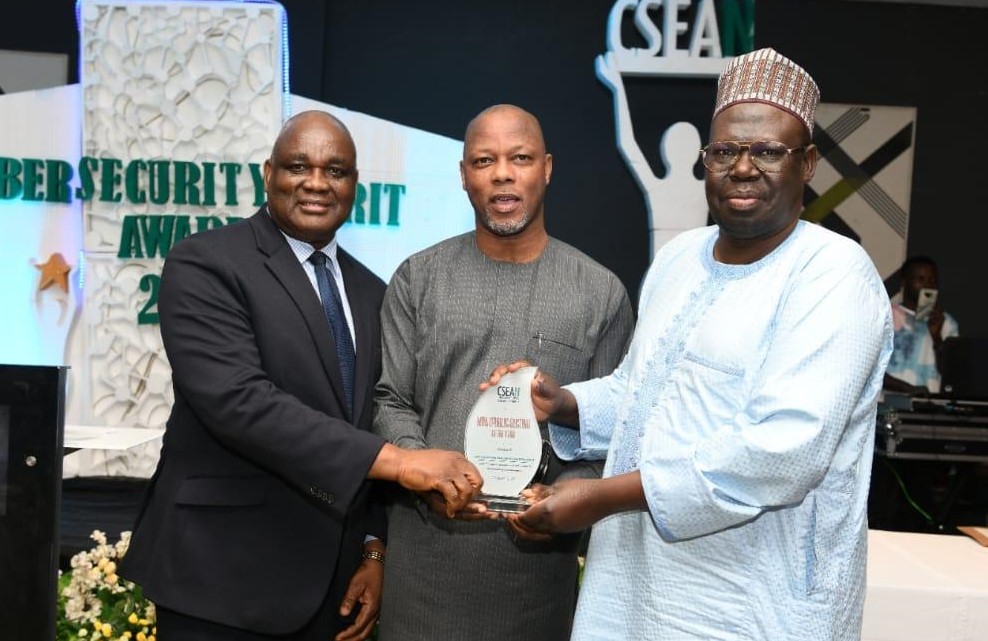
  • NCC Receives Cybersecurity Award, Seeks Safer Internet Usage

    NCC Receives Cybersecurity Award, Seeks Safer Internet Usage

    The Nigerian Communications Commission (NCC) at the weekend in Lagos, received a cybersecurity promotion award at the maiden edition of Cybersecurity Merit Awards hosted by the Cybersecurity Experts Association of Nigerian (CSEAN) which enumerated several steps taken by it to promote a safer Internet.

    The award, which was conferred on the Commission, ahead of other contending organizations, listed its sterling contributions to the protection of telecom consumers from all forms of cybercrimes.

    Director of New Media and Information Security of the NCC, Dr. Haru Alhassan, who received the award on behalf of the Executive Vice Chairman of NCC, Prof. Umar Danbatta, said such a credible award from professionals is encouraging for the efforts which the Commission has made in cybersecurity.

    He told the audience that tackling the menace of cybercrime in the country has become even more imperative as the success of the implementation of digital economy policy and strategy depends on a strong foundation of cybersecurity architecture in Nigeria.

    Director of Public Affairs of the Commission, Mr. Reuben Muoka, who gave a goodwill speech on behalf of the CEO of the Commission, traced the efforts of the Commission in relation to its networking activities at the international level, including the global Internet Governance Forum and other initiatives like the Child Online Protection.

    He adverted the minds of the experts to the provisions of the National Digital Economy Policy and Strategy (NDEPS) 2020-2030, which one of the 8-Pillars focuses on Soft Infrastructure, is premised on harnessing policy and regulatory initiatives to create an enabling environment that targets increased protection for users of digital products and services in the country.

    “The Commission is committed to ensuring that the Nigerian cyberspace is protected against the nefarious activities of cybercriminals that endanger unsuspecting Internet users in the country,” the EVC said. He also stated that it is in recognition of the strategic role the cyberspace plays in the advancement of digital economy that the Commission created NMIS Department to take charge of several activities, initiatives and programmes pivoted on collaboration to enhance cyber and information security in the Nigerian cyberspace.

    “We have continued to be part of the Internet Governance Forum (IGF), promote Child Online Protection as well as create awareness on cyber threats through the NCC’s Computer Security Incidence Response Team (CSIRT), which constantly monitors the cyberspace and publishes advisories on identified cyber threats,” the EVC said.

    The CMA 2020 was organized to recognise individuals, startups, private businesses, Ministries, Departments and Agencies (MDAs) of government, as well as state governments, for excellence, innovation, and effective leadership in promoting cybersecurity ecosystem in Nigeria.

  • Akande Tasks Telecom Operators on Licensing Obligations

    Akande Tasks Telecom Operators on Licensing Obligations

    …Akande Tasks Telecom Operators on Licensing Obligations
    The Chairman, Board of Commissioners of the Nigerian Communications Commission (NCC), Prof. Adeolu Akande, has urged telecoms licensees across different segments of the Nigerian telecommunications sector on the need to adhere strictly to their licensing obligations in order to ensure the robust provision of services to the consumers.
    Akande made the call in his remark at the third edition of NCC’s 2021 “Talk to The Regulator” (TTTR) Forum, which took place at Visa Karena Hotels, Port Harcourt, over the weekend.
    At the forum held with a focus on “Improving Stakeholder Satisfaction”, Akande stated that the essence of conducting the stakeholder engagement forum across the country’s geo-political zones was to demonstrate to the Commission’s licensees that responsibility does not end in issuing of licenses alone but rather in working with the licensing authority to address issues affecting their operations.
    Beyond the issuance of licenses to operators, Akande declared that the Commission is legitimately concerned with providing the necessary regulatory frameworks and initiatives capable of ushering in an environment that encourages seamless implementation of the license conditions.
    “In return, we expect the licensees to deliver on their licensing conditions and I want to use this opportunity to challenge our licensees to always comply with their licensing obligations and conditions in order to provide the much-needed services to the generality of Nigerians,” he said.
    Speaking earlier on the centrality of the stakeholder engagement to the regulatory activities of the Commission, NCC’s Executive Vice Chairman and Chief Executive Officer (EVC/CEO), Prof. Umar Garba Danbatta said the Commission considers feedback from stakeholder’s engagement initiatives imperative for building a robust licensing regime in the Nigerian telecom sector.
    The EVC, who was represented at the forum by NCC’s Executive Commissioner, Stakeholder Management, Adeleke Adewolu, reiterated the Commission’s commitment to stakeholder engagement as a means of deepening collaboration with NCC’s licensees, identifying areas of concern, and jointly developing and implementing practical solutions.
    The NCC boss noted that the focus of deliberations for the series of stakeholder engagement had been on licensing processes, policies, and procedures, all geared towards improving Stakeholder Satisfaction, a central factor to all NCC’s regulatory activities. He emphasised the need to curate insights from each geo-political zone to encourage mutually-beneficial relationships and enhance understanding between the Commission and its key stakeholders.
    According to Danbatta, measurable success has been recorded essentially because of Commission’s focus on prioritising stakeholders. “Achievements such as contributions to Gross Domestic Product (GDP) grew to 14.42 percent in Q2’2021; active internet subscriptions have reached over 140 million; teledensity which now stands at 99.98 percent; and 40.01% percent broadband penetration, all as at the end of September 2021,” he said.
    Speaking further, Danbatta said to achieve national policy targets and maintain progressive growth in the telecoms industry, “efforts must be jointly made to harness the full cooperation of licensees to highlight areas hampering the progress of the Commission’s stakeholders. “We have started making necessary adjustments to reflect the views of our licensees in Kano and Lagos. Port Harcourt will not be an exception,” Danbatta assured.
    He reiterated that the meeting is organised in keeping with the Commission’s strategic objectives, which seek to guarantee continuous interface with the critical stakeholder in the industry, for collaboration in seeking solutions to challenges of licensing in Nigeria.
    Further underscoring the significance of stakeholder engagement and sensitisation in the Commission, Danbatta said the forum affords stakeholders a platform to raise questions about the challenges of licensing and their operations. He said such a forum also avails the Commission ample opportunity to adequately respond to the concerns that may be raised.
    At the Focus Group Discussions (FGD), participants reviewed and discussed licensing trends, regulatory process, implementation of Annual Operating Levy (AOL) regulations, assigning of shortcodes, type-approval obligations, and Commission’s expectations.
    Commission’s propositions for the survival of smaller licensees were also discussed in a session termed “Listen to the licensee,” as they were not only given ample time to air their grievances but also made to proffer solutions for Management’s consideration. Also, mutually-beneficial positions on multiple taxations, surrendered licences, Right-of-way (RoW) for Internet Service Providers (ISPs), Global System for Mobile Communications (GSM) boosters, amongst others, were part of the issues discussed.
    The Port Harcourt edition of the TTTR was sequel to previous editions of the stakeholder engagement forum which took place in Kano on October 16, 2021 and Lagos on November 25, 2021. The event had in attendance members of NCC Board: Prof. Millionaire Abowei; Clement Baiye; Chief Uche Onwude; as well as Director, Technical Standards and Network Integrity, Bako Wakil; and his counterpart in Licensing and Authorisation, Muhammed Babajika, whose department facilitated the organisation of the forum
  • NCC did not move 5G deadline after only MTN submitted bid

    NCC did not move 5G deadline after only MTN submitted bid

    The Nigerian Communications Commission (NCC), in the course its routine media review, became aware of the front page headline of the BusinessDay newspaper of Thursday, December 2, 2021 with the title, “How NCC moved 5G deadline after only MTN submitted bid.”

    The publication alleged that “the Commission was forced to move the November 24 deadline for the submission of the bid and payment of the ten percent fee of $20 million after it emerged that only MTN Nigeria had complied with the requirement.”

    It is pertinent to state that the Nigerian Communications Commission maintains an unimpeachable record and reputation based on precedents of open and transparent spectrum auctions over the years, which had earned it both local and international recognition.

    For proper guidance of our stakeholders and the general public, it should be recalled that as part of the regulatory processes leading to the auction of the 3.5GHz spectrum, the Commission had carried out the following activities:
    ▪ October 7, 2021, the Commission exposed the Draft Information Memorandum (IM) on the auction of the 5G spectrum on its website (www.ncc.gov.ng) and issued a public notice in major media channels, including print, electronic and broadcast media. Comments on the draft IM were received by the Commission up until October 28, 2021.

    ▪ On November 3, 2021, the Commission held a stakeholders’ engagement forum in Lagos where comments received from a broad segment of stakeholders, including the major operators, were exhaustively discussed and considered.

    ▪ On November 10, 2021, the Commission published the Final IM, and Stakeholders’ comments thereon on its website and national dailies, and set the deadline for the submission of bids on Wednesday, November 24, 2021.

    ▪ On November 23, 2021, just a day before the deadline for the submission of bids, Air Traffic Controllers went on strike, disrupting flights operations in Lagos.

    ▪ As a responsive regulator, and following concerns expressed by industry stakeholders and potential bidders for the 5G Spectrum, including MTN, about the possibility of meeting the deadline in light of the flight disruptions, the Commission, relying on the provision of the IM, announced an extension of the deadline from Wednesday, November 24, 2021 to Monday, November 29, 2021.

    ▪ Indeed, on November 23, 2021, MTN had communicated to the Commission via email, asserting its concerns about the air traffic controllers’ strike and how it is likely to impede timely submission of their bid.

    ▪ On December 1, 2021, the Commission announced that at the close of the bid submission date of November 29, 2021, three companies, namely MTN Nigeria, Mafab Communications Ltd and Airtel Networks Ltd had successfully submitted their bids in line with the requirements of the IM.

    ▪ The public also needs to know that all three bidders are existing licensees of the Commission under different license categories.

    The Commission would like to state that the Business Day story is replete with misinformation, which is capable of misleading industry stakeholders, the general public, and undermining the integrity of the ongoing process for the auction of the 5G spectrum. 

    For instance, the publication alleged that Mafab Communications is a relatively unknown operator in the industry, suggesting that it was not eligible to bid for the spectrum. The IM has clearly stipulated that new entrants into the industry can participate in the bid and if they are successful, the Commission will issue the entity an operating license in line with the extant provisions of the Nigerian Communications Act (NCA) 2003 and its licensing regulations.

    The Commission is consistently guided by its well-established principles of fairness, firmness and forthrightness and wishes to assure Nigerians that it is determined to ensure the successful implementation of the 5G Auction spectrum, which is set to take place on December 13, 2021

  • Don’t Allow your NIN to be Linked to Another Person’s SIM – NCC

    Don’t Allow your NIN to be Linked to Another Person’s SIM – NCC

    The Nigerian Communications Commission (NCC) has strongly warned telecoms consumers to ensure they do not allow their National Identification Number (NIN) to be linked to another person’s Subscriber Identity Module (SIM) cards, no matter how close the person is to them.

    The Commission gave the warning during its third run Telecom Consumer Town Hall on Radio (TCTHR) programme, broadcast live on Human Rights Radio, 101.1 FM in Abuja recently. The event was hosted on the platform of ‘NCC Digital Signature on Radio’.

    The NCC Digital Signature on Radio is the flagship radio programme of the Commission created to educate the general public on the mandates of the Commission and for sharing salient, consumer-centric and up-to-date information on how NCC is delivering on its mandates.

    Speaking during the radio programme focused on ‘the Benefits of NIN-SIM Integration’, NCC’s Director, Consumer Affairs Bureau, Efosa Idehen said “On no account should a telecom consumer, however circumstanced, allow another person to register a SIM with another person’s NIN.”

    Idehen said compliance with this advice will protect the true owner of the NIN from any liabilities or negative consequences arising from the use of other person’s SIM.

    “If the person, whose SIM is linked to your line use his own SIM to commit crimes or any form of atrocities, it is easy to be traced to you and then, you will be dealt with because the SIM is linked to your NIN,” he said.

    During the phone-in segment of the radio programme, which lasted two hours, consumers within Nigeria and in the diaspora, especially from the United Kingdom (UK), Russia and neighbouring countries like Ghana, among others, were able to call and get clarifications on concerns they had regarding the ongoing NIN-SIM integration in Nigeria.

    Discussions largely focused on educating consumers on NIN and its purpose, process of obtaining NIN, why consumers are being asked to submit their NIN to their Mobile Network Service Providers, the benefits of NIN-SIM linkage, relationship between NIN and Bank Verification Number (BVN) registration, the step-by-step approach to linking NIN to SIM, and the role and uses of Unstructured Supplementary Service Data (USSD) *346# in the NIN-SIM integration activities.

    Efosa was joined in the studio by NCC’s Director, Public Affairs, Dr. Ikechukwu Adinde, who was represented by an Assistant Director in the department, Dr. Omoniyi Ibietan; and a Deputy Director, Projects Department of NCC, Mrs. Nnenna Ukoha, who jointly educated consumers on the various aspects of NIN-SIM integration exercise.

    Other panelists include NCC’s Head, Consumer Information and Education, Mistura Aruna; Head, Corporate Communication,  National Identity Management Commission (NIMC), Kayode Adegoke, as well as representatives of mobile operators, including MTN, Airtel, Globacom, and 9Mobile.

    During the radio programme, telecoms consumers were reminded repeatedly of the October 31, 2021 deadline for NIN-SIM integration. The Federal Government had extended the deadline earlier giving for the completion of the NIN-SIM linkage to 31st October 2021.

    The two-hour discussion programme, which was also live-streamed on social media, recorded broader participation than its forerunners due to a combination of the regular radio listenership with viewership on Human Rights Radio’s social media assets. Thus, it achieved NCC’s objective of using a mass medium to expand its reach to telecom consumers to enhance their protection through information sharing, and education in order to improve the quality of consumer experience with telecom services in Nigeria.

  • NCC set to facilitate 5G deployment, tackle insecurity – Danbatta

    NCC set to facilitate 5G deployment, tackle insecurity – Danbatta

    The Executive Vice Chairman (EVC) of the Nigerian Communication Commission (NCC), Prof. Umar Garba Danbatta, has declared that three of the Commission’s regulatory instruments are set to offer enabling provisions that will help the country in tackling security and insurgency; as well as to enhance spectrum availability to facilitate the deployment of Fifth Generation (5G) technology.

    The three instruments, which were subjected to a public inquiry on Tuesday physically and virtually, include the Spectrum Trading Guidelines (STG), Registration of Telephone Subscribers Regulations, and the Subscriber Identity Module (SIM) Replacement Guidelines.

    Speaking recently at a semi-virtual public inquiry, in which on-site operation was conducted at the Commission’s Head Office in Abuja, Danbatta said the three regulatory instruments have been developed to address the challenges of the ever-evolving communications industry and to further strengthen the market structure.

    He said the public inquiry was held in line with the Commission’s consultative approach in all its regulatory interventions, as the regulatory instruments being reviewed are vital to ensuring that the regulatory frameworks that pertain to SIM registration and replacement in the communications industry meet the demands of the digital age and also further enhance the flexibility of the spectrum trading regime.

    The first instrument, the Registration of Telephone Subscribers Regulations, provides a regulatory framework for the registration of subscribers of communications services utilising subscription mediums. The second instrument, SIM Replacement Guidelines, provides guidance on the standards and procedure which Network Service Providers (NSPs) are expected to adhere to in the process of conducting a SIM Replacement, swap or upgrade.

    Besides the instruments, two Business Rules that relate to SIM Registration and SIM Replacement, introduced by the Commission to further ensure that the process for SIM activation and Replacement is seamless and aligns with the national identity management policy.

    The third instrument, the Spectrum Trading Guidelines (STG), seeks to promote certainty and transparency by outlining the detailed procedure and conditions for spectrum trading in the Nigerian communications sector.

    While underscoring that the availability of spectrum frequency is a necessary element in the deployment of the 5G technology in Nigeria, Danbatta said the recent approval of the 5G Deployment Plan by the Federal Government makes the STG review process expedient.

    Danbatta said the public inquiry is a precursor to the Commission’s current drive towards ensuring that frequency spectrum is readily available to licensees through a rapid and effective process. Additionally, the EVC said that “in view of the resolve of the Federal Government to tackle insurgency and insecurity through citizen identity management, it has become necessary to ensure that the provisions of the Registration of Telephone Subscribers Regulations and SIM Replacement Guidelines are in alignment with the National Identity Policy for SIM Card Registration and related activities.”

    According to him, the revision of both instruments is geared towards ensuring a more secure and robust process for the registration, activation, and replacement of SIMs. “It is, therefore, my expectation that the review will ensure a more robust framework for the registration of subscribers of communication services, improve the standards and procedures for SIM replacements and ensure effective and efficient utilisation of frequency spectrum in Nigeria,” the EVC said.

    Speaking earlier, NCC’s Executive Commissioner, Stakeholder Management, Adeleke Adewolu, said the draft of all the regulatory instruments had been published on the Commission’s website and comments from all stakeholders have been received and reviewed. However, he noted that the public inquiry was meant to receive more comments from stakeholders, which would ensure that the final regulatory instruments will enhance the development of the industry.

    At the event, which was well attended by the senior management staff of the Commission and virtually by other external stakeholders, presentations were made by the Commission on the inputs so far received from licensees and other stakeholders on each of the three regulatory instruments, highlighting issues for further rethink by all stakeholders.

    The stakeholders who participated in the event virtually, were also provided the opportunity to make inputs, contribute freely to the discussions in a very frank and objective manner that elicited thoughtful discussions that will further enrich the quality of the regulatory instruments being developed for the growth of the sector and the national economy.