Tag: Nigerian Electricity Regulatory Commission

  • Feature: Pipelines, Power, and Positioning

    Feature: Pipelines, Power, and Positioning

    What Nigeria’s OB3 project reveals about Africa’s energy future

    By Sola Adebawo 

    When a pipeline crosses a river, it is often described as an engineering milestone.

    In Nigeria, the completion of the River Niger crossing of the OB3 gas pipeline (executed roughly two kilometres beneath the riverbed using horizontal directional drilling) is certainly that.

    But it is also something more.

    It is a signal of what Africa’s energy future could look like, if infrastructure moves from isolated projects to integrated systems.

    From resource wealth to system weakness

    Africa is not short of energy.

    It is short of integration.

    The continent holds roughly 7% of global natural gas reserves, according to the International Energy Agency, alongside some of the world’s highest solar potential and significant untapped hydropower capacity. Yet it remains home to over 600 million people without access to electricity, as documented by the World Bank and the IEA’s SDG7 tracking reports.

    This is not simply a resource gap.

    It is a systems gap.

    Energy resources exist in pockets — geographically dispersed, often disconnected from demand centres, and constrained by weak transmission and transport networks.

    The challenge has never been discovery.

    It has been movement.

    Without the ability to move energy reliably across regions and sectors, capacity remains theoretical.

    What the OB3 pipeline changes

    The OB3 pipeline, located in Nigeria, connects gas supply from the eastern Niger Delta to demand centres in the west, and links into the Ajaokuta–Kaduna–Kano (AKK) corridor extending northward.

    On paper, its capacity  (up to 2 billion standard cubic feet per day) is substantial.

    In practice, its significance lies in what it enables.

    It connects gas fields to power plants.
    It supports fertiliser production and industrial clusters.


    It underpins manufacturing growth and domestic energy supply.

    This matters in a country where gas is already central to electricity generation. Nigeria’s power sector relies on gas for over 70% of grid-connected generation, according to national system data and analyses by the Nigerian Electricity Regulatory Commission.

    The issue has not been resource availability.

    It has been delivery.

    OB3 begins to shift that.

    It moves gas from being a resource…

    to being part of a system.

    The regional implication

    The deeper importance of projects like OB3 is not national, but regional.

    Because infrastructure of this nature rarely remains confined within borders.

    Once domestic networks become functional, the next step is expansion.

    West Africa already offers early examples:

    • the West African Gas Pipeline linking Nigeria to Ghana
    • regional power pool arrangements across ECOWAS

    But these systems remain limited in scale and reliability.

    According to the African Development Bank, cross-border electricity trade in Africa remains underdeveloped relative to other regions, despite significant economic benefits.

    What OB3 demonstrates is a foundational principle:

    Internal integration precedes regional integration.

    Countries cannot export energy reliably if they cannot move it efficiently within their own systems.

    The economics of connectivity

    Energy infrastructure is often framed as a supply issue.

    Its real impact is economic.

    When systems are integrated:

    • demand aggregates
    • utilisation improves
    • investment becomes more viable

    Africa currently receives a disproportionately small share of global energy investment relative to its needs. The International Energy Agency estimates that the continent accounts for less than 3% of global energy investment, despite hosting a much larger share of the world’s energy access gap.

    This is not simply about capital availability.

    It is about system readiness.

    Integrated systems reduce risk, improve bankability, and create predictable revenue flows.

    Without this, even resource-rich markets struggle to attract sustained investment.

    Policy as infrastructure

    Engineering delivers pipelines.

    Policy determines whether they function.

    Across Africa, the constraint is rarely technical capability. It is governance.

    Regulatory inconsistency.
    Tariff misalignment.
    Weak cross-border coordination.

    Political and contractual uncertainty.

    The World Bank has consistently highlighted regulatory credibility and cost-reflective pricing as critical constraints to power sector sustainability in emerging markets.

    A pipeline that crosses a river is difficult.

    A pipeline that crosses jurisdictions is more complex.

    This is where Africa’s next phase of energy development will be decided.

    Not in engineering capability.

    But in institutional capacity.

    Gas in Africa’s energy equation

    Projects such as OB3 also highlight the continuing role of gas. Global energy debates often frame the transition in binary terms. But Africa’s reality is different.

    Gas sits at the centre of:

    • power generation
    • industrialisation
    • energy access

    The International Energy Agency has noted that natural gas will remain a critical transition fuel for Africa, particularly in supporting reliable power systems and industrial growth.

    Handled effectively, it acts as a bridge.

    Handled poorly, it risks becoming another stranded asset.

    From domestic infrastructure to global positioning

    As infrastructure scales, the implications extend beyond national development.

    Africa moves from:


    resource holder…

    to:
    energy system builder…

    and eventually:
    market participant.

    This matters…because the future energy landscape will not be defined only by who has resources. 

    But by who can:

    • deliver energy reliably
    • integrate systems across regions
    • sustain performance over time

    Conclusion: beyond the pipeline

    The OB3 project in Nigeria is an important milestone.

    But its real significance lies in what it represents.

    A shift (still early, still uneven) from fragmented energy systems toward more connected ones.

    Africa does not lack energy resources.

    It must now build the systems that allow those resources to move, scale, and endure.

    Because in the end:

    Resources create potential.
    Infrastructure creates access.

    But integration creates power.

    ————————————————————————————————

    Sola Adebawo is an energy executive, institutional strategy and public affairs leader with deep experience at the intersection of energy, governance, policy, and strategic communication. His writing explores reform, political economy, leadership, culture, and the relationship between institutions and public life. He is an author, scholar, and ordained minister.
  • Metered electricity consumers rise to 5.9million – FG

    Metered electricity consumers rise to 5.9million – FG

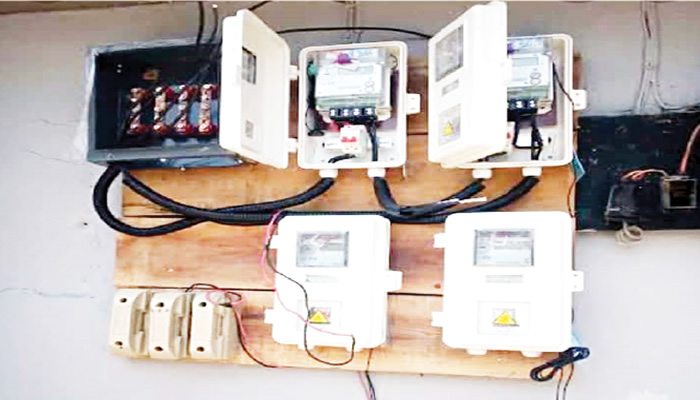
    The number of metered electricity consumers in Nigeria increased by 48.5 per cent between 2019 and 2024, the National Bureau of Statistics has said.

    An analysis of data from the NBS, an agency of the Federal Government, showed that in 2019, the number of metered consumers nationwide was 3,976,940.

     This increased to 5,907,644 in the first quarter of 2024, representing a 48.5 per cent growth over the five years.

    The bureau said metered power users in Nigeria increased from 3,976,940 in 2019 to 4,138,043 in 2020; 4,773,217 in 2021; 5,125,009 in 2022; 5,605,842 in 2023; and reached 5,907,644 in the first quarter of 2024.

    This represents 4.1, 15.4, 7.4, 9.4, and 5.3 per cent growths respectively.

    Experts note that this growth in metered consumers is a positive development for the electricity sector, as it indicates a reduction in the number of consumers on estimated billing.

    The bureau however stated that estimated electricity billing increased by 11.6 per cent during the review period.

    It said the number of consumers on estimated billing rose from 5,758,026 in 2019 to 6,426,355 in the first quarter of 2024.

    This was despite fluctuations in the intervening years, including a peak of 6,227,870 in 2020 and a low of 5,741,365 in 2021.

    The increase in estimated billing raises concerns about the accuracy of electricity billing and the need for more metered connections to ensure fair and transparent charging.

    Data from the bureau showed that Ibadan Electricity Distribution Company had the highest number of estimated customers at 1,411,102, and Eko Electricity Distribution Company had the lowest at 255,271 during the five years.

    Power users on the estimated billing system under the Abuja Electricity Distribution Company were put at 564,727; Benin Electricity Distribution Company, 688,081; Enugu Electricity Distribution Company, 765,662; and Ikeja Electricity Distribution Company, 219,632.

    For Jos Electricity Distribution Company, the unmetered customers were 495,449; Kaduna Electricity Distribution Company, 639,395; Kano Electricity Distribution Company, 465,048; Port Harcourt Electricity Distribution Company, 231,384; and Yola Electricity Distribution Company, 690,604.

    Early this year, the Minister of Power, Adebayo Adelabu, pledged to considerably tackle estimated billing in Nigeria’s power sector before the end of the year.

    During a tour of power facilities in Ibadan, Oyo State, he emphasised collaboration with stakeholders to address the sector’s challenges, including a significant metering gap, where around 50 per cent of customers remain unmetered.

    He said, “Citizens are tired of estimated billing because estimated billing always leads to cheating between consumers, staff, and company.

    “Before the end of this year, we are looking at the possibility of ending estimated billing because we want transparency and objectivity in our billing system.”

    He noted that President Bola Tinubu had established a Presidential Metering Initiative to harmonise all metering acquisitions across the country.

    Adelabu said, “We have up to eight million meters gap in Nigeria and what the initiative seeks to achieve is to close this gap within three to five years. This means that an average of two million meters is required every year and achieving the target is compulsory for citizens to enjoy a stable power supply.’’

    It is about four months to the end of 2024 and Nigerians eagerly await the fulfilment of this promise.

    A publication by energy expert Isaac Samuel shed light on the challenges faced by electricity users in Nigeria due to estimated billing.

    In his research paper, titled, “The Challenges of Estimated Billing on Electricity Consumers in Nigeria: A Review,” Samuel said estimated billing is a significant contributor to non-technical losses in the sector.

    “Estimated billing is a major contributor to non-technical losses as customers have resulted in illegal and corrupt practices to get out of paying these bills they considered exorbitant,” he said.

    This, he said, has led to frequent clashes between the employees of power distribution companies and customers.

    Samuel attributed the exorbitant bills to Discos’ attempts to recover losses due to a lack of transparency and accountability.

    “These exorbitant bills have been linked to Discos trying to recover or improve their profits due to loss of revenues,” he wrote.

    The expert cited data from the Nigerian Electricity Regulatory Commission, stating that “about 80 per cent of consumer grievances received by NERC is related to exorbitant bills, estimated billing, and poor metering infrastructure.”

    This came as the AEDC announced progress in its metering scheme, covering over 70 per cent of its customer base across four states including the Federal Capital Territory, Kogi, Niger, and Nasarawa.

    In a chat with our correspondent, the Head of Marketing at AEDC, Adefisayo Akinsanya, said, “AEDC’s metering distribution covers all customers within our franchise areas. We have metered over 840,000 customers, representing about 70 per cent of our total customer base.”

    Akinsanya highlighted the company’s recent completion of the National Mass Metering Programme, which saw the installation of 100,475 meters for customers. She said a comprehensive metering plan is being finalised to ensure all customers are properly metered.

    Akinsanya emphasised the importance of meter deployment, stating, “Meter deployment is capital-intensive, and meters are critical to our revenue generation.”

    She assured consumers that the company was working to balance customer satisfaction with revenue protection by leveraging advanced metering technologies.

    Akinsanya further mentioned the ongoing Meter Asset Provider scheme, which allows customers to pay for meters and receive refunds through energy tokens over 10 years.

  • MTN, others get permits to generate electricity

    MTN, others get permits to generate electricity

    The Nigerian Electricity Regulatory Commission has issued permits to MTN Communications Nigeria Limited, Golden Penny Power Limited, Havenhill Synergy, and others for mini-grid electricity generation.

    The NERC said it issued nine new off-grid generation licences in the first quarter of 2024 with a gross capacity of 109.69 megawatts and three new trading licences.

    According to a report by the commission, Golden Penny Power Limited got a licence to build six off-grid gas plants in Lagos, Oyo, Ogun, and Cross River states. The total capacity is 100MW.

    Also, MTN was granted a permit to build four captive generation plants across Lagos State with 15.94MW capacity.

    Others lincenced to generate captive power are SweetCo Foods Limited, African Steel Mills Nigeria Limited, West African Ceramics Limited, Royal Engineered Stones Limited, and Armilo Plastics Limited.

    “Captive power generation permits are issued to entities that aim to own and maintain power plants for generating power for consumption and not for sale to a third party. The commission issued nine captive power generation permits in 2024/Q1 with a total nameplate capacity of 52.57MW.

    Our correspondent gathered that other licensed companies for mini-grids are Daybreak Power Solutions, TIS Renewable Energy Limited, Auro Nigeria Private Limited, Watts Exchange Limited, Centum Dopemu Energy Services Ltd, DMD Electric Limited Lagos State.

    Section 165(1)(m) of the Electricity Act 2023 permits the commission to award licence of mini-grid concessions to renewable energy companies to exclusively serve a specific geographical location indicating aggregate electricity to be generated and distributed from a site with the obligation to serve customers to request service.

    Under this, the commission said it has continued to encourage the development and utilisation of renewable energy by issuing permits and registration certificates for mini-grid development.

    A permit is issued to a mini-grid developer for the construction, operation, maintenance, and where applicable ownership of mini-grids with distribution capacity above 100 kilowatts and generation capacity up to 1MW.

    The commission disclosed that it issues registration certificates to a mini-grid developer for one or more systems with distribution capacity below 100kW.

    “Following the satisfactory evaluation of mini-grid applications, the commission issued three mini-grid permits and two registration certificates in 2024/Q1,” the NERC stated.

    During the period under review, NERC stated that it certified six Meter Service Providers, including four meter installers and two meter manufacturers.

    A Meter Service Provider is an entity certified by the commission as a manufacturer, supplier, vendor, or installer of electric energy meters and/or metering systems.

     Meter Asset Provider is an entity that is granted a permit by the commission to provide metering services with roles that may include meter financing, procurement, supply, installation, maintenance, and replacement.

    The certified meter service providers are Genobet Limited (installer), Mojec Meter Asset Management (installer), Epagad International Services Limited (installer), Abdulrahman Ahmadu Zubairu (installer), Smart Meters Company Limited (manufacturer), and Crestflow Energy Limited (manufacturer).

    The commission also said it issued one regulation and 36 new Orders in 2024/Q1. They include NERC–R–001–2024 — Eligible Customer Regulations, 2024; NERC/2023/023—NERC/2023/033 — Multi-Year Tariff Order 2024 for the Distribution Companies; and NERC/2023/034 — MYTO 2024 for the Transmission Company of Nigeria Plc.

    Other are NERC/2023/035 — Order on Performance Improvement Plan of the Transmission Company of Nigeria; NERC/2024/001 — Order on the Regulatory Intervention in Kaduna Electricity Distribution Plc; NERC/2024/004 – NERC/2024/014 — Order on Noncompliance with Capping of Estimated Bill by DisCos for the period January – September 2023; and NERC/2024/016 – NERC/2024/036 — February 2024 Supplementary Order to the Multi-Year Tariff Order for the Discos.

    During the quarter, the commission issued 36 orders to guide the activities of licensees.

    Culled from The Punch

  • FG issues 95 licences to boost electricity generation by 989MW

    FG issues 95 licences to boost electricity generation by 989MW

    The Federal Government issued 95 licences, permits and registration certificates for the generation of 989.42 megawatts of electricity in 2023 as part of measures to shore up Nigeria’s power production.

    An analysis of the latest industry figures seen in Abuja on Friday showed that the Nigerian Electricity Regulatory Commission, an agency of the Federal Government, issued power generation licences, permits, and certificates to investors.

    Nigeria generates between 4,000 and 5,000MW of electricity, with a target of hitting 6,000MW by December this year.

    On Friday, for instance, the country’s power generation on the national grid as of 6 am was 4,096.02MW.

    It was observed that in the first quarter of 2023, NERC issued 12 licences and permits, and approved four mini-grids registrations for the production of 723MW of electricity.

    It issued 13 permits in the second quarter for the generation of 20.06MW of power.

    In the third quarter, the regulator issued 18 licences and permits for the generation of 43.18MW of electricity, while the commission issued 48 licences, permits, and registration certificates for the generation of 203.18MW of electricity in the fourth quarter of 2023.

    Providing a breakdown of what it issued during the review period, NERC said, “The commission approved the issuance of two new generation licences with a combined capacity of 723MW in 2023/Q1.

    “Five captive power generation permits were issued alongside five permits and four registrations for mini-grids.”

    In the second quarter, the regulator stated that it also “issued three new captive power generation permits with an aggregate capacity of 20.06MW and 10 mini-grid permits”.

    The commission noted that in the third quarter of last year “five new (8.81MW) and three amendments (10.50MW) of off-grid generation licences” were issued.

    It further stated that “one new (5MW) and one renewal (10MW) licence for embedded generation,” as well as “three captive generation permits (7.07MW) and five mini-grid permits (1.8MW)” were issued in Q3, 2023.

    For licensing and permits issued to increase power generation in the fourth quarter, NERC said it issued, “Two new off-grid generation licences with gross capacity of 7.5MW. Two new embedded generation licences with a gross capacity of 40MW.

    “Renewal of one embedded generation licence (20MW). Four captive generation permits (gross capacity – 131.78MW). Eight mini-grid permits (gross capacity – 2.5MW); and 31 mini-grid registration certificates (gross capacity – 1.4MW).”

    Commenting on electricity generation, the Minister of Power, Adebayo Adelabu, stated on Friday that the Federal Government was currently investing in new power plants.

    Adelabu, who spoke during an energy conference in Lagos, noted, “To address our generation capacity, we are committed to both enhancing current generating assets and investing in new power plants.

    “Our focus is on harnessing the rich diversity of our natural resources, from hydro to solar and beyond. Recently, generation capacity to the grid has been expanded with the addition of 700MW newly commissioned Zungeru Hydropower Plant.

    “We have also secured presidential approval to defray legacy debts to gas companies to allow efficient gas supply to the power sector going forward and a payment mechanism to address generation companies’ debts to ensure necessary maintenance is resolved and evacuation capacity optimisation.”

    The minister stated that the government aimed to not only increase generation capacity but also improve the efficiency and reliability of power supply.

    Adelabu also pointed out that the government was working through the Presidential Power Initiative on expanding the transmission grid to ensure it can handle the increased load from new electricity generation sources.

  • Henry Ajagbawa, Akuma illegally break into BEDC premises

    Henry Ajagbawa, Akuma illegally break into BEDC premises

    …risk jail term for court contempt 

    Henry Ajagbawa and K.C. Akuma, in the company of three other persons (Adeola Ijose, Charles Onwera, and Yomi Adeyemi) PURPORTEDLY RECENTLY appointed to the Board of BEDC Electricity  Plc (BEDC),  on Wednesday proceeded to illegally and forcefully break into the premises of the company in Benin, the Edo State capital.

    DESPITE THE SUBSISTING COURT ORDER GRANTED IN FAVOUR OF  VIGEO POWER, AND RESTRAINING THE NAMED INDIVIDUALS AND ENTITIES FROM ANY UNLAWFUL OCCUPATION. 

    Henry Ajagbawa and others who had refused to ACCEPT SERVICE OF THE court ORDER served by ON THEM by court bailiffs on the premises of BEDC, in the presence of the press, also forcefully broke into the office of the Managing Director and the Board room of the company bragging of government protection. 

    Journalists who arrived at the scene were also refused entry into the 4th floor where all was happening, even after the journalists had identified themselves.

    It would be recalled that the Nigerian Electricity Regulatory Commission (NERC) and the Bureau of Public Enterprises (BPE) had recently announced A PUTATIVE restructuring of the boards of five DisCos which the Discos were alleged to have been done without inviting any of them to a meeting prior to the announcement which was widely circulated in the media.

    The duo had explained that the announcement followed Fidelity Bank’s activation of the call on the collateralised shares of Kano Electricity Distribution Company, Kaduna Electricity Distribution Company and BEDC Electricity Plc (the DisCos) in a bid to take over the respective Boards of the DisCos over the alleged inability to repay loans obtained to acquire majority stakes in the DisCos in furtherance of the 2013privatisation exercise.

    Consequently, the management of BEDC responded by issuing a press statement explaining that there was no contractual, statutory or regulatory basis for the takeover and appointments. The company stated that, “For the avoidance of doubt, the shares of BEDC have not been given as security to Fidelity Bank or to any other party.”

    According to the management of BEDC, it was “Vigeo Holdings Limited (VHL – a non-shareholder of BEDC)” that “obtained credit facilities from Stanbic IBTC Bank Limited, Fidelity Bank Plc, and Keystone Bank Plc (theVHL Lenders).” It noted further that the said credit facilities (and any enforcement action in relation thereto) have in the meantime become the subject of litigation in a Court action instituted by VHL and other plaintiffs (theVHL Action) with Suit No: FHC/L/CS/239/22 – Vigeo Holdings Limited and 4 Ors v. Stanbic IBTC Bank Limited, and therefore, subjudiced.”

    Worried by the development, Vigeo Power Limited, the majority shareholder of BEDC had filed a suit and obtained injunctive orders at the Federal High Court in Abuja to restrain Fidelity Bank Plc, HENRY AJAGBAWA, and THE other co-defendants from taking over BEDC pending the hearing and determination of the motion on notice dated July 8, 2022.

    The other defendants are Nigerian Electricity Regulatory Commission (NERC), Corporate Affairs Commission (CAC), K.C. Akuma, Adeola Ijose, Charles Onwera, Henry Ajagbawa and Yomi Adeyemi.

  • Feature- As Ikeja Electric bill is now more than the Minimum Wage

    Feature- As Ikeja Electric bill is now more than the Minimum Wage

    By Abolade Ademola

    In Laaga community, located around Ewu-Elepe, a suburb of Ikorodu, residents have been made to pay an estimated bill that is more than the minimum wage of the entire country, Nigeria. The steady rise in the bill is very discomforting in a country where the rate of inflation keeps rising without a commensurate rise in income.

    The residents of a community with few pre-paid meters have been suffering in silence for some months now but it has become very unbearable with the bill sent for January 2022 in the last few days, a whopping sum of N23,000 (twenty-three thousand naira) only! It is such an exasperating amount that everyone is lamenting this outrageous amount that was sent.

    From findings, this rate is not just for Laaga community, the rate is also applicable to other adjoining communities. These include Mowo Kekere; Oke Eletu; Eleshin amongst others. This means it has become general exploitation to residents of Ikorodu most especially all those on Ijede road.

    Our rights as Electricity consumers in Nigeria have been trampled upon- new electricity connections are not done strictly based on metering before connection. The community is filled up with new customers that were connected to Ikeja Electric without a meter first being installed at the premises. As customers, we do not have an understanding of transparent electricity billing at the current rate. We are being overbilled unjustly and we are exercising our rights to contest any electricity bill.

    Between October and December 2021, the bill was hovering around N12,000 (twelve thousand naira) only and when the December bill was sent in January, it was N18,000 (Eighteen thousand naira) only and the January bill was N23,000. This progression is alarming, the residents feel slighted and offended at this daylight robbery.

    In January, after receiving the bill, residents went to the Omitoro undertaking office to complain and they were told that the hike was because of the electric consumption in December. Grudgingly, people accepted but that of January cannot be justified. In the last two weeks, residents of Laaga have been battling low voltage and disruption in the availability of electricity because of the malfunctioning transformer. How can the consumption be the same when we are not having light? That means the assumed estimated billing being done from the transformer is not being done and we are just being exploited.

    Historically, the old transformer was taken away but PHCN/Ikeja Electric workers and the community was left in darkness. It took the efforts of the community residents to purchase the currently malfunctioning transformer. All the electric poles and cables within the community were bought with communal efforts and people are still suffering from outrageous bills like this. 

    Asides from this, they provide security on their own, streetlights, grade their road network from time to time amongst others.

    Many of the residents of Laaga are civil servants and private sector people who leave their residents in the morning and return home late in the evening. It is evident in the way they troupe out and during the day. The Small and Medium Scale enterprises (MSMEs) in the neighbourhood have been grounded to a halt because they cannot power their businesses except the big ones who have generating sets. So, what we are made to pay has gone beyond the minimum wage of Nigeria and we are also not “heavy-users” of electricity like the industrial areas.

    The request from pre-paid meters is also accompanied by its own herculean tasks. Meters are now being paid for- a-one phase meter at about 70,000 (seventy thousand naira) only while a-three phase meter is about 120,000 (one hundred and twenty thousand naira) only excluding the possibility of bribing one’s way to fast-track purchase and installation.

    It is also rather unfortunate that Nigerians are made to still fill, KYC (Know Your Customer) form online and there is a time lag, which cannot be determined, on the period when mapping will be done and the metering will eventually be done.

    Silently and unfortunately, there has been an increase in electricity tariff in the last four months but it needs to be in tandem with the economic realities of the time. The rate was 23.30 before it was increased to 25.3 but the February bill is at 27.22. It is really a breach of contract as our rights to adequate information have been violated over and over. The suffering and smiling mode are already on the extreme and the residents of the community are ready to take the bull by the horn by disconnecting electricity and resolving to generators like it is being in some houses. In the last two weeks, when we have been on low voltage, we have survived and without electricity from Ikeja Electric, we will resolve to be Independent Power Generating Houses. 

    We would call on Ikeja Electric and the Nigerian Electricity Regulatory Commission to come to our aid so as not to discourage tax-paying Nigerians from being customers of the Power Holding Company of Nigeria (PHCN). Of what good will it do all these organizations if all people who provided electricity infrastructure for themselves are being deprived of it?

    We need our pre-paid meters now or Ikeja Electric should keep their low voltage while we become our Independent Power Generating Houses.

    Abolade Ademola is a Public Affairs Specialist and a resident of Laaga Community, via Ewu-Elepe, Ikorodu, Lagos, Nigeria.