Tag: Operations

  • Jumia Nigeria Records Strong Q1 2026 Growth as Technology-Led Strategy Drives Market Expansion

    Jumia Nigeria Records Strong Q1 2026 Growth as Technology-Led Strategy Drives Market Expansion

    Jumia has announced strong first-quarter 2026 performance results, with Nigeria emerging as one of the company’s standout growth markets across Africa, reinforcing the country’s position as a critical driver of the company’s long-term expansion strategy.

    According to the company’s Q1 2026 financial results released May 7th, 2026, Nigeria recorded a 42% year-on-year increase in physical goods Gross Merchandise Value (GMV), making it one of Jumia’s strongest-performing markets during the period.

    Commenting on the performance, Temidayo Ojo, CEO of Jumia Nigeria, said, “Nigeria continues to demonstrate the strength and resilience of its digital commerce ecosystem. The growth we recorded in Q1 reflects increasing consumer confidence, stronger engagement across our platform, and our continued investment in technology, logistics, and customer experience.”

    “We are seeing more Nigerians embrace e-commerce not just for convenience, but as a trusted part of everyday life. Our focus remains on building a platform that is more accessible, more reliable, and more relevant to the evolving needs of Nigerian consumers and sellers,” Ojo further mentioned.

    The company attributed its broader growth trajectory to disciplined execution, operational efficiency, and increased deployment of technology and AI-driven systems across its operations. According to the report, Jumia leveraged artificial intelligence and automation across operations, finance, customer support, cybersecurity, seller management, logistics, and technology teams to improve service quality while reducing operational costs company-wide.

    The company also noted that technology and content expenses declined year-on-year due to ongoing headcount optimisation and savings from renegotiated technology contracts, while operational leverage continued to improve. They further highlighted increased use of AI tools among its technology teams, alongside automation in call centres and operational systems, as part of efforts to scale sustainably while improving efficiency across African markets.

    Across the platform, Jumia reported significant gains in customer retention and marketplace engagement. Quarterly Active Customers reached 2.5 million, while physical goods orders climbed to 5.9 million in Q1 2026.

    The company also expanded usage beyond major urban centres, with 62% of total orders now coming from secondary cities and upcountry regions, emphasising the growing reach of digital commerce across Africa.

    Despite global economic pressures, including rising memory chip and CPU prices and supply chain disruptions linked to ongoing Middle East conflicts, the company reaffirmed its path toward profitability. Jumia stated that it remains on track to achieve Adjusted EBITDA breakeven and positive cash flow in Q4 2026, with full-year profitability targeted for 2027.

  • Feature: Your business is always talking to you. Are you listening?

    Feature: Your business is always talking to you. Are you listening?

    By Thuto Motsie 

    Spend enough time around CEOs and founders, and a pattern emerges. No matter the industry, whether professional services, property, manufacturing or retail, the same question surfaces, often framed differently:

    “How are we really doing?”

    It is usually asked in a boardroom. Sometimes over coffee. Occasionally, in moments of quiet concern, when something just does not feel right.

    The uncomfortable truth is this: your business has already answered that question. The issue is not whether the answer exists. It is whether you are actually paying attention.

    The quiet signals most leaders miss

    Businesses do not communicate in words. They communicate in patterns.

    A steady increase in revenue, but declining margins. A top client that is growing but quietly becoming less profitable. Teams that are busier than ever, yet cash is tighter than it should be. Sales targets being hit, but at the cost of aggressive discounting.

    Individually, these signals seem manageable. Together, they tell a story. And in many mid-sized, founder-led businesses, that story is either misunderstood or, worse, ignored. Not because leaders are not capable, but because they are often too close to the action, relying on instinct and experience rather than structured insight.

    When busy feels like success

    There is a particular trap that growing businesses fall into: equating activity with performance.

    The phones are ringing. The pipeline is full. The team is stretched. Revenue is climbing. It feels like momentum.

    But beneath that momentum, a different reality can be unfolding: low-margin work creeping into the portfolio, delivery costs quietly expanding, cash flow tightening despite strong sales figures.

    This is where many businesses lose control. Not suddenly, but gradually. Because without clear financial visibility, growth can become expensive. And expensive growth is often mistaken for success, until it is not.

    The question leaders rarely ask

    Here is a question most businesses do not ask until it is too late: if your business grew by 25% in the next twelve months, would your operations hold up?

    Not your sales pipeline. Your operations. Your processes, your reporting lines, your systems, your controls.

    The businesses that scale well are rarely the ones with the most aggressive targets. They are the ones who have pressure-tested their infrastructure before the pressure arrives. They know where the gaps are. They know which controls are weak and which are strong. They do not wait for a crisis to find out.

    This is especially true for unlisted, owner-managed businesses in South Africa, where decision-making is fast, but formal governance structures are often still developing. The absence of a listing does not remove the need for rigour. In many ways, it makes it more important.

    Your numbers are not just numbers

    Too many leadership teams still treat financial data as a backward-looking exercise. Something for month-end. Something for auditors. Something for compliance.

    That thinking is outdated and risky.

    Financial data, used properly, is not about the past. It is about decision-making in the present. It tells you whether you are selling the right things, whether you are delivering them at the right cost and whether you are turning effort into cash. In other words, it tells you whether your business model is actually working.

    The gap between data and insight

    Most businesses are not short of data. They have accounting systems, reports, spreadsheets, dashboards even.

    And yet when you sit with leadership, there is often hesitation and unanswered questions come to the fore.

    “I am not sure which clients are actually most profitable.”

    “We are growing, but margins feel under pressure.”

    “Cash should not be this tight, given our revenue.”

    This is the gap. Not a lack of information, but a lack of clarity. Because raw data does not drive decisions. Interpreted data does.

    What That Looks Like in Practice

    When this shifts, conversations change.

    Instead of “Revenue is up 12% this quarter” you start hearing “Revenue is up, but margin per client is down 4%. Why?”

    Instead of “We need more sales” you get “Which sales are we actually trying to grow?”

    Instead of “Cash is tight” you ask, “Where exactly is cash getting stuck?”

    This is the shift from reporting to understanding.

    Listening is a discipline

    Your business is not silent. It is constantly telling you where you are making money, where you are losing it, where you are exposed and where the real opportunities lie.

    But listening is not passive. It requires structure, focus and the willingness to confront what the data is actually saying, even when it challenges your assumptions.

    The most grounded leaders do not wait for the annual audit to find out how the business is performing. They build clarity into their rhythm. They track the few metrics that actually matter and they ask better questions, not more often, but more precisely.

    And they do not just manage the business they have. They build the business they are planning to become.

    The best CEOs and founders do not have perfect information. But they do have something more valuable: a clear, consistent view of what matters, and the discipline to act on it.

    Your business is always communicating with you. Through every invoice, every cost line, every delay in payment and every shift in margin.

    Every business that fails slowly had the data to save itself. Most simply preferred the story that required less courage to confront.

    Thamani is an audit and advisory firm founded in 2014, with offices in Rosebank, Johannesburg and Polokwane. The firm provides internal audit, IT auditing, technology assurance, data analytics and outsourced services (finance function, flexible resourcing & payroll), to medium and large unlisted businesses across South Africa. With a team of 40 professionals, Thamani has built a client base spanning the energy, FMCG, rail, financial services, consumer and public sectors, with clients including McDonald’s South Africa, Liberty Coal, Eskom, Transnet, Komatsu, Tourvest and BankservAfrica. The firm’s approach is grounded in what it calls solutionist thinking: a commitment to providing lasting, technology-focused solutions that equip clients to scale with confidence.


  • Regulators, Stakeholders Commend Rite Foods for Safe Manufacturing, Strengthening Consumer Confidence

    Regulators, Stakeholders Commend Rite Foods for Safe Manufacturing, Strengthening Consumer Confidence

    The Federal Competition and Consumer Protection Commission (FCCPC) and the National Agency for Food and Drug Administration and Control (NAFDAC) have commended Rite Foods Limited for its commitment to safe, high-quality manufacturing and its consumer-centric approach that continues to strengthen consumer confidence in Nigeria’s food and beverage sector.

    The commendation came during a stakeholder forum commemorating World Consumer Rights Day, themed “Safe Product, Confident Consumers,” organised by the Brand Journalists Association of Nigeria (BJAN) and hosted by Rite Foods Limited at the company’s state-of-the-art factory in Ososa, Ogun State, on Friday.

    The forum brought together key stakeholders, including regulators, consumer advocates, and journalists, to discuss the importance of product safety, responsible manufacturing, and consumer awareness in building a more accountable marketplace.

    World Consumer Rights Day, observed annually on March 15, provides an opportunity to highlight the importance of protecting consumers and strengthening trust in products and services.

    In his welcome address, Mr. Femi Ajileye, General Manager, Operations at Rite Foods Limited, welcomed members of the Brand Journalists Association of Nigeria and introduced them to the company’s goal of delivering world-class food and beverage products produced with global best practices.

    “At Rite Foods, our philosophy is simply to consistently deliver safe, high-quality products that consumers can trust. Our investment in advanced technology, automated processes, and rigorous quality assurance reflects our dedicated commitment to excellence and consumer satisfaction.”

    He added that the company remains committed to transparency and stakeholder engagement as part of its broader responsibility to consumers.

    Speaking at the event, Dr. Olubunmi Dorcas Otti, Zonal Coordinator, South-West Zone of the FCCPC, who represented the Executive Vice Chairman, Mr. Tunji Bello, said Rite Foods had demonstrated a strong commitment to consumer protection through transparent operations and adherence to high production standards.

    She noted that opening its manufacturing facility to regulators, journalists, and stakeholders further reflects the company’s confidence in its processes.

    “Rite Foods has taken a commendable step in reinforcing consumer confidence through quality products and transparent operations. Protecting consumers is a shared responsibility, and engagements like this strengthen collaboration between regulators, industry players, and the media,” she said.

    She also highlighted the important role of the media in bridging the gap between producers, regulators, and the public through accurate reporting and public education on consumer rights.

    Also speaking, Dr. Tinuola Akinnubi, Deputy Director, Food Regulatory Directorate and Focal Point for Alcohol at NAFDAC, representing the Director General, Prof. Mojisola Adeyeye, emphasised that consumer rights remain a critical pillar of regulatory governance.

    According to her, these rights include the right to safety, information, choice, redress, and to be heard. “A protected consumer is a confident consumer. And confident consumers strengthen markets, which ultimately contribute to building strong nations,” she said.

    Akinnubi added that strengthening Nigeria’s consumer protection ecosystem requires enhanced surveillance, improved post-market monitoring, greater stakeholder engagement, the use of technology for traceability, and sustained consumer awareness initiatives.

    Giving the keynote address. Hon. Sola Salako, President and Founder of the Consumer Advocacy Foundation of Nigeria (CAFON), praised Rite Foods for hosting the forum and highlighted the role of technology in strengthening consumer protection.

    She spoke on ‘’Using AI to Improve Consumer Confidence,”  where she introduced the CAFON Consumer Companion (3C) App, designed to help Nigerian consumers better understand and enforce their rights by providing guidance on dispute resolution, complaint drafting, and identifying possible legal violations.

    Salako also noted that the media can leverage the platform to verify consumer claims, investigate unfair practices, and promote accountability. She commended Rite Foods for opening its operations to stakeholders, noting that a company willing to bring regulators, journalists, and consumer advocates into its factory demonstrates strong confidence in its processes and the quality of its products.

    Speaking on behalf of the Brand Journalists Association of Nigeria, Dan Obi, Chairman of the Association, commended Rite Foods for opening its production facility to journalists and regulators, describing the move as a demonstration of accountability and confidence in its manufacturing standards.

    “The level of professionalism, hygiene, and automation observed during the factory tour reinforces confidence in the quality of products coming from Rite Foods. This kind of openness strengthens public trust and promotes responsible industry practices,” he stated.

    Rite Foods’ portfolio includes 13 variants of Bigi Carbonated Soft Drinks, Bigi Premium Table Water, the award-winning Sosa Fruit Drink, Fearless Energy Drink, and Bigi Flex, Rite, and Bigi Beef Sausages.

    The company recently received the Outstanding FMCG Corporate Brand of the Year at the Edge Awards, alongside multiple honours at the Sustainability, Innovation and Social Impact (SISA) Awards and the SERAs Awards.

  • The Future of Viewing Centers: GOtv and Nigeria’s Growing Social Economy

    The Future of Viewing Centers: GOtv and Nigeria’s Growing Social Economy

    In Nigeria, viewing centers are more than just places to watch football. They are community spaces where joy, rivalry, and connection come alive. From the roar of fans during a Premier League goal to families bonding over weekend entertainment, these centers reflect the heartbeat of Nigerian social life.

    What started as simple makeshift setups with benches and a single TV has evolved into an industry that supports thousands of small business owners. For many operators, football viewing is not just a passion but a means of livelihood. And as entertainment habits continue to shift, GOtv is helping to redefine what these spaces mean for both viewers and entrepreneurs.

    Powering Connection Through Accessible Entertainment

    GOtv has become a key partner in the evolution of viewing centers across Nigeria. With affordable subscriptions and a strong lineup of local and international content, it helps operators attract more customers, grow their income, and stay competitive in a changing digital world.

    From live matches on SuperSport, Select, and ESPN to major tournaments like the Premier League, AFCON, and UEFA competitions, GOtv ensures that fans never miss the action that unites their communities. The excitement does not end with sports. With Nollywood movies, reality shows, and family programs on channels like Africa Magic and ROK, viewing centers stay lively even on non-match days.

    A Driver of Small Business Growth

    Across Nigerian cities and rural towns, GOtv has become the trusted platform for entrepreneurs who run viewing centers as small-scale businesses. The accessibility of its packages allows owners to manage costs while maintaining a steady flow of patrons. For many, the steady crowd means not only profits but employment for young people who assist with operations, refreshments, and security.

    In this way, GOtv contributes to a wider social economy, creating value that extends beyond entertainment. Each viewing center becomes a local meeting point, a place where people share joy, debate, and connect in ways that strengthen community bonds.

    Driving the Future of Communal Entertainment

    As digital technology reshapes how we consume media, GOtv continues to make community viewing accessible to everyone. Through innovations like the GOtv Stream app, fans can now catch up on matches or highlights from anywhere, ensuring that connection does not end when they leave the center.

    In a country where entertainment fuels togetherness, GOtv’s role goes beyond television. It supports community engagement, encourages entrepreneurship, and keeps the spirit of Nigerian football and storytelling alive. The future of viewing centers is bright, and GOtv remains at the heart of this social and economic transformation. Simply download the MyGOtv app or dial *288# to upgrade, subscribe, or reconnect. To catch up and for on-the-go viewing, don’t forget to download the GOtv Stream App and enjoy your favourite shows anytime, anywhere.

  • Chowdeck hits 1 million orders a month, setting a new benchmark for Africa’s convenience economy

    Chowdeck hits 1 million orders a month, setting a new benchmark for Africa’s convenience economy

    Chowdeck, Africa’s leading on-demand delivery platform, has reached a major milestone – 1 million customer orders a month – underscoring its rapid growth, strong market position and its pivotal role in driving the convenience economy on the continent. 

    Chowdeck is the first African on-demand delivery platform to reach this milestone, cementing its status as a household name for fast, reliable delivery – connecting customers across Nigeria and Ghana to their favourite meals and essentials at the tap of a button. What began as a small team with a simple goal in October 2021 – to make quality food seamlessly accessible at the tap of a button – has evolved into a continent-leading logistics and technology platform powering tens of thousands of daily deliveries for consumers and various merchants alike.

    Speaking on the milestone, Femi Aluko, CEO and co-founder of Chowdeck, said, “Reaching 1 million orders a month this quickly is a powerful reflection of how far we’ve come. It is a testament to the hard work of our riders and restaurant partners, as well as the commitment of our customers. As we look to the future, we are excited by the opportunity to deepen access and convenience for millions of Africans and unlock new possibilities for customers and businesses alike”.

    From logistics and inventory management to payment and performance tools, Chowdeck has emerged as a trusted partner for food businesses, retailers, merchants and consumers, offering fast, reliable and affordable delivery. With 1.5 million existing users and more than 20,000 riders across 11 cities, Chowdeck’s tech-enabled logistics network powers businesses to fulfil orders efficiently, while offering customers a seamless platform to access meals, groceries, and everyday essentials.

    Chowdeck’s growth is underpinned by its commitment to leaner operations, hyperlocal strategies and diversified offerings. In 2024, the value of meals delivered via the Chowdeck platform grew more than sixfold compared to the previous year. The company has already exceeded last year’s total and is firmly on track for another record-breaking year in 2025.

  • 2024 FY: Noor Takaful Insurance Records N1.87 Billion Profit After Tax

    2024 FY: Noor Takaful Insurance Records N1.87 Billion Profit After Tax

    …as board approves 7Kobo dividend payment to shareholders

    The Board of Directors of Noor Takaful Insurance Ltd., the pioneer and leading takaful operator in Nigeria, has recorded a Profit After Tax (PAT) of N1.87 billion for the 2024 financial year. The Profit After Tax achieved by the company represents a significant increase of 79% from ₦1.05 billion that was recorded in the 2023 financial year.

    The board also approved seven kobo dividend per share for the 2024 financial year, representing an increase in dividend payout from the five kobo paid out in the 2023 financial year.

    The Chairman of the Board of Directors, Ambassador Shuaibu Ahmed disclosed this during the 8th Annual General Meeting (AGM) held on Wednesday, September 19th, 2025, at the Lagos Intercontinental Hotel in Lagos. 

    A breakdown of the audited result also revealed that Gross Written Contribution (GWC) grew impressively by 52%, moving from ₦6.49 billion in 2023 to ₦9.95 billion in 2024.

    Speaking during the Annual General Meeting, Ahmed stated that despite the challenging operating environment influenced by macroeconomic headwinds characterised by high inflation, rising interest rates, and persistent volatility of the naira, the company remained resilient, weathering the storm to deliver growth and stronger profitability through prudent underwriting, disciplined risk management. 

    He described the company’s strong growth as a reflection of participants’ deepening trust in the Takaful model and the successful expansion of both retail and corporate business lines.

    “These results are more than just numbers; they embody the resilience, innovation, and collective effort that define Noor Takaful. Even in challenging times, we have remained true to our promise of delivering real and lasting value to all our stakeholders. Besides, the outcome is a clear testament to disciplined operations, prudent expense management, and sound investment strategies,” he said.

    He stated that the company remains steadfast and unwavering in its mission to providing ethical, inclusive, and innovative insurance solutions that serve as a true alternative in the Nigerian market.

    He emphasised the company’s commitment to continue delivering sustainable value, upholding its obligations, and contributing to the growth of Nigeria’s insurance industry. 

  • Abbey Mortgage Bank Appoints John Okonkwo as Executive Director to Strengthen Financial Operations

    Abbey Mortgage Bank Appoints John Okonkwo as Executive Director to Strengthen Financial Operations

    Abbey Mortgage Bank Plc, a leading institution in the mortgage sector has strengthened its Executive Management team with the appointment of Mr. John Okonkwo as Executive Director, Finance, Risk, and Operations.
     
    Mr. Okonkwo is an accomplished and experienced Finance and Operations Professional, Auditor, Risk Management Practitioner, Board and Corporate Governance Advisor, Compliance Risk Management and Sustainability Services Professional.
     
    He has over 20 years of experience leading strategic initiatives across industries with a particular focus on financial services. He is KPMG-trained, a Fellow of the Institute of Chartered Accountants of Nigeria (ICAN), an Associate of the Chartered Institute of Taxation of Nigeria (CITN) and an Alumnus of the Advanced Management Programme (AMP) of the Lagos Business School (LBS).
     
    Mr. Okonkwo started his career at KPMG and held various finance, governance, risk and compliance positions at Heirs Holdings Group, United Bank for Africa Plc and VFD Group Plc.
     
    In his new role, Okonkwo will be responsible for providing strategic direction and oversight across the Bank’s finance, risk management, and operations functions, ensuring they align with Abbey’s long-term vision of delivering innovative, customer-centric financial solutions.
     
    Commenting on the appointment, Chairman of the Board of Directors, Abbey Mortgage Bank Plc, High Chief Samuel Oni said, “We are delighted to welcome John to the Board. His extensive experience across finance, risk management, and corporate governance will be instrumental in deepening our institutional resilience and driving operational excellence as we continue to position Abbey for long-term growth.”
     
    On his part, Mobolaji Adewumi, Managing Director of Abbey Mortgage Bank Plc, said: “John’s appointment comes at a crucial time in our transformation journey. His deep expertise and leadership will further strengthen our operational backbone, helping us build a more resilient, efficient, and customer-focused institution.”
     
    The appointment has been formally approved by the Central Bank of Nigeria (CBN), following a thorough regulatory process.
     
    Abbey Mortgage Bank Plc remains committed to enhancing value for its customers and stakeholders. With a wide range of services including mortgage loans, construction finance, equity release, savings and investment products, and digital banking services via the AbbeyMobile app, the Bank continues to simplify home ownership and financial planning for Nigerians

  • Fidelity Bank Extends Relief Efforts to Eti-Osa Community with Food Bank Initiative

    Fidelity Bank Extends Relief Efforts to Eti-Osa Community with Food Bank Initiative

    As part of its unwavering commitment to reducing food insecurity and supporting vulnerable communities, Fidelity Bank Plc, a leading financial institution, has distributed food packs to residents of Victoria Island in the Eti-Osa Local Government Area of Lagos as part of its nationwide Fidelity Food Bank initiative.

    This initiative, which attracted beneficiaries from diverse backgrounds, forms a key pillar of the bank’s Corporate Social Responsibility (CSR) strategy and reinforces its dedication to driving meaningful impact across Nigerian communities.

    Speaking during the distribution event, Mr. Adebayo Adeyinka, Executive Technical Assistant to the Managing Director/CEO of Fidelity Bank Plc, emphasized the long-term impact of the initiative. “The Fidelity Food Bank was established to address the pressing challenges of poverty, hunger, malnutrition, and infant and maternal mortality within our communities,” he said.

    “It aligns with Goal No. 2 of the United Nations Sustainable Development Goals – Zero Hunger – and reflects our long-term commitment to improving lives across the country. From IDP camps to flood-affected regions like Niger State, this is a nationwide outreach that we are proud to continue,” Adeyinka added.

    Also present at the event was the Divisional Head, Operations, Fidelity Bank Plc, Mr. Henry Asiegbu, who highlighted the growing support and impact of the program.

    “This intervention has been positively received at all levels – from community members to government and partner organizations,” he noted. “The support has been overwhelming, and it encourages us to sustain and expand the initiative further.”

    For many of the community members, the gesture offered more than just nourishment – it restored dignity and hope. Victoria Olubiyo, resident and representative of the members of the community, expressed her gratitude, saying, “Fidelity Bank has brought joy to our lives. Even during the no-cash crisis, their ATMs were always working. They’ve provided boreholes, fulfilled their promises, and shown genuine care. Today, people – men, women, children, even those living with disabilities – are supported. I urge other banks to follow their example.”

    Another beneficiary, Jerome Igbe, echoed this sentiment, saying, “This means so much to struggling families. I honestly didn’t expect this kind of support. May God bless them and replenish their resources.”

    Through initiatives like the Fidelity Food Bank, the bank continues to demonstrate its role as a socially responsible corporate organisation committed to impacting Nigerians positively.

    Ranked among the best banks in Nigeria, Fidelity Bank Plc is a full-fledged Commercial Deposit Money Bank serving over 9.1 million customers through digital banking channels, its 255 business offices in Nigeria and United Kingdom subsidiary, FidBank UK Limited.

    The Bank is a recipient of multiple local and international Awards, including the 2024 Excellence in Digital Transformation & MSME Banking Award by BusinessDay Banks and Financial Institutions (BAFI) Awards; the 2024 Most Innovative Mobile Banking Application award for its Fidelity Mobile App by Global Business Outlook, and the 2024 Most Innovative Investment Banking Service Provider award by Global Brands Magazine. Additionally, the Bank was recognized as the Best Bank for SMEs in Nigeria by the Euromoney Awards for Excellence and as the Export Financing Bank of the Year by the BusinessDay Banks and Financial Institutions (BAFI) Awards.

  • Listicle: 7 Simple Ways to Get Paid on Time Without Chasing Customers

    Listicle: 7 Simple Ways to Get Paid on Time Without Chasing Customers

    Running a business in Nigeria isn’t just about providing quality products or services; it’s also about making sure you get paid on time. Too often, business owners find themselves chasing payments, sending repeated reminders, and struggling with cash flow gaps. According to a PwC report, 48% of Nigerian SMEs experience delayed payments, which can disrupt operations, affect salaries, and slow down business growth.

    But the real cost of these delays isn’t just the stress of waiting—it’s the uncertainty it creates. Businesses struggle to plan ahead, restock inventory, pay workers, or even keep the lights on. Without predictable payments, expansion is nearly impossible, and owners are left firefighting short-term financial struggles rather than focusing on growth.

    If you’re tired of chasing customers for money, here are seven simple ways to ensure you get paid on time—without the stress. The seventh tip includes a newly unveiled tech tool.

    1. Set Clear Payment Terms from the Start

    One of the biggest reasons payments are delayed is because customers aren’t sure when or how to pay. Avoid this by clearly outlining payment terms before any transaction. Let customers know the exact due date, acceptable payment methods, and any penalties for late payments.

    For businesses offering services, a simple invoice with clear terms helps. If you run a school, cooperative, or subscription-based service, structuring payments with due dates reduces confusion. When expectations are clear, payments are more likely to come in on time.

    2. Request Upfront or Part Payments

    Rather than waiting until the end of a service period to get paid, consider requesting a percentage of the payment upfront. This ensures that customers are financially committed from the start.

    For example, if you run a catering business, you can require 50% of the payment before sourcing ingredients. Schools can structure fees into manageable installment plans to encourage parents to pay in advance. When customers have already invested in your service, they are more likely to complete payments on time.

    3. Automate Payment Reminders

    People get busy, and sometimes, late payments are due to forgetfulness rather than unwillingness to pay. Sending reminders before due dates can prevent this. Instead of calling each customer individually, use automated reminders via SMS, WhatsApp, or email.

    For instance, a gym owner can schedule monthly reminders for members before their subscription renewal. Cooperatives collecting monthly contributions can send automatic alerts to remind members of upcoming payments. A simple nudge at the right time can make all the difference.

    4. Reward Reliable Customers

    Sometimes, the best way to encourage timely payments is to reward the customers who consistently pay on time. This creates an incentive for others to follow suit while reinforcing good payment habits.

    For example, a school could offer early payment discounts for parents who settle fees before term starts. A business that provides services on credit could prioritize loyal customers for special deals or extended services. When customers know there’s a benefit to paying on time, they’re more likely to make it a habit.

    5. Offer Discounts for Early Payments

    Everyone loves a good deal, and small incentives can go a long way in encouraging customers to pay on time. Consider offering a small discount for customers who pay early.

    For example, a school can offer a 5% discount on fees paid before the term starts. Landlords can offer a slight reduction on rent if tenants pay before the due date. Small rewards create urgency, motivating customers to settle payments quickly.

    6. Enforce Late Payment Penalties (But Politely)

    While incentives encourage early payments, penalties discourage late ones. Establishing a small late fee can push customers to prioritize your payment over others. However, the key is to communicate it upfront and enforce it politely.

    For instance, a tailor can state that late balance payments will result in an extra charge per day. A cooperative can apply an administrative fee for overdue contributions. Many businesses use “grace periods” before applying penalties to give customers a fair chance. It’s about striking a balance between being firm and maintaining good customer relationships.

    7. Use PaywithAccount to Automate and Secure Your Payments

    Even with all the right steps in place, managing collections manually can still be time-consuming and stressful. That’s why OnePipe launched PaywithAccount two weeks ago—to help Nigerian businesses get paid on time without the hassle.

    PaywithAccount allows businesses to automate payments, ensuring funds are collected directly from customer accounts without the need for follow-ups. This means fewer delays, predictable cash flow, and no more awkward reminders. By eliminating the inefficiencies of traditional payment methods, businesses can focus on what truly matters—growth and customer satisfaction.

    Whether you run a school, a cooperative, a gym, or any business that relies on scheduled payments, PaywithAccount simplifies collections and provides peace of mind. Learn more at paywithaccount.com/signup.

    In conclusion, late payments can be frustrating, but they don’t have to be the norm. By setting clear expectations, offering flexible options, and using the right tools, you can ensure steady cash flow without stress.

    The most successful businesses don’t waste time running after payments—they set up systems that make payments run smoothly. With the right strategy in place, you can focus less on collecting money and more on growing your business.

  • PalmPay Purple Woman 2.0 Masterclass Empowers 100 Women in Tech, Awards Internships to 10 Outstanding Participants

    PalmPay Purple Woman 2.0 Masterclass Empowers 100 Women in Tech, Awards Internships to 10 Outstanding Participants

    In celebration of International Women’s Day 2025, PalmPay, a leading financial technology company, successfully hosted the second edition of its “PalmPay Purple Woman 2.0 Masterclass.” This three-day event, held from March 6 to March 8, brought together over 100 exceptional women aged 18 – 30, selected through a competitive process to receive intensive training in various tech disciplines.

    Speaking on the theme of the program titled” Accelerating the Future of Payments: Women, AI and Fintech, the Head, Marketing and Communications, PalmPay Nigeria, Femi Hanson, noted that “since the masterclass commenced 2 days ago, we have had over 100 women trained on HR, Data Analysis, Product Management, Software Engineering, DevOps, UX/UI, and Digital Marketing. We recognize that technology is a powerful enabler, and for too long, women have been underrepresented in the fintech and tech industries. That is why PalmPay is committed to breaking barriers, providing access to digital skills, and creating pathways for women to thrive in the world of finance and technology.

    Hanson encouraged participants to leverage the knowledge shared, network with peers, and embrace the limitless opportunities ahead. The training was organized in collaboration with distinguished industry leaders, including Kemi Okusanya, CEO of Hydrogen Pay; Lara Osunsoko, Executive Director, Operations at Stanbic Pensions; and Obianuju Odukwe, Vice President, Digital Ecosystems at Interswitch Group.

    On the final day, ten outstanding participants were awarded six-month internships across various PalmPay departments. This opportunity allows them to gain hands-on experience and further their skills within a leading Fintech environment.

    This year’s International Women’s Day, which has a theme “ Accelerate Action’ reinforces the significant role of women in the socio-economic development of society. IWD is a day to call for gender parity in line with sustainable development goal (SDG) 5 and honour women for their contribution to the political, economic, and cultural sphere.

  • Financial Inclusion: It is more profitable to serve women – Tosin Eniolorunda

    Financial Inclusion: It is more profitable to serve women – Tosin Eniolorunda

    For financial inclusion to be sustainable, especially for women, it must no longer be treated as a buzzword, charitable social activity or a checklist to be marked. It must be rooted in economic and business activities that are well underlined by data considering that it is actually more profitable to serve women. 

    This was the thrust of an engaging plenary session, Leveraging Data to Accelerate Access to Finance for Woman Owned and Women-Led Enterprises in Nigeria which was moderated by the Deputy Governor, Operations, Central Bank of Nigeria, Ms. Emem Usoro, at the second edition of the International Financial Inclusion Conference 2024 organized by the Central Bank of Nigeria and other critical stakeholders with the theme “Inclusive Growth: Harnessing Financial Inclusion for Economic Development.

    The conference brought together a rich line-up of global thought leaders, industry practitioners, and key stakeholders to discuss pressing issues around how to accelerate financial inclusion in Nigeria and showcase Nigeria’s progress on gender inclusive financing, spotlight innovative solutions for inclusion, and how to deepen financing and capacity building of Micro, Small and Medium Enterprises (MSMEs) as catalysts of economic growth. 

    Tosin Eniolorunda, chief executive officer and founder of Moniepoint Inc noted that financial service providers play a vital role in supporting gender-inclusive finance and that by collecting and analyzing data on gender trends in small business performance, they can craft better policies, targeted products, and support services that encourage more women entrepreneurs. 

    Drawing from data curated  from the Moniepoint platform, he averred that “women-owned businesses are more likely to stay active and show higher engagement rates in financial transactions.” In cases where financial support has been extended—through investments, KYC compliance, or the provision of tools like point-of-sale devices—female-led businesses have a 7.2 percent higher activity rate than their male counterparts while looking at the gender relations with credit products, “women-owned businesses have an 87.5 percent lower loan non-performance rate (NPL) than male-owned enterprises.”

    Eniolorunda also made a case for the economic potential of investing in women entrepreneurs, who have proven to be diligent and enhance profitability while calling stakeholders to pay attention to the need to drive financial inclusion in the Northern part of the country. 

    He continued, “Data is the new oil,” and its application in the financial sector could be transformative for women-led businesses.

    Echoing similar sentiments, Chief Executive Officer, Credit Registry, Dr. Jameelah Sharrieff-Ayedun said that, ”90% of women’s income that they receive goes back to the communities and their families as such when women have access to credit, the community is enhanced, families are better off which is why it’s important that they can access this funding.”

    Other panelists included Chief Executive Officer, Financial Alliance for Women, Inez Murray,  and the Chief Operating Officer, Development Bank of Nigeria, Bonaventure Okhaimo who expressed belief that creating an enabling environment, with increased investor participation coupled with the willingness of other stakeholders to sit around the table and have frank conversations will move the needle on financial inclusion for women owned businesses. 

    In her summation, Deputy Governor, Operations, Central Bank of Nigeria Ms. Emem Usoro acknowledged some of the structural challenges that might require time and resources to be addressed including cultural practices and less systemic ones such as distance to financial services providers that stifle the participation of women owned businesses, while signposting the power of data to serve as a catalyst for inclusive growth and its viability for economic planning .   

    It will be recalled that the inaugural IFIC which was held in Abuja in November 2022, focused on Nigeria’s achievements since the launch of the National Financial Inclusion Strategy (NFIS) in 2012 even as it highlighted the scaling of innovative digital models in the rapidly evolving financial services landscape.

  • 9PSB promotes Financial Literacy at Fountain Heights Secondary School for World Savings Day 2024

    9PSB promotes Financial Literacy at Fountain Heights Secondary School for World Savings Day 2024

    9 Payment Service Bank (9PSB), a leading digital payment service provider committed to advancing financial inclusion in Nigeria, observed World Savings Day 2024 by conducting a financial literacy and mentorship programme for students at Fountain Heights Secondary School in Surulere, Lagos.

    This initiative aligns with the Central Bank of Nigeria’s (CBN) directive for all financial institutions to implement financial literacy programmes aimed at students, youth, and the public. The goal is to instil a culture of financial discipline, savings, and prudent money management practices among Nigerians.

    At the event, Tolani Jemi-Alade, Chief of Business Planning, Operations, and Resources at 9PSB, addressed the students, underscoring the importance of cultivating positive financial habits, particularly considering economic uncertainties. She stressed the need for young individuals to integrate into the formal financial system, stating, “We encourage every young person with a regular income to open a bank account as an essential step towards financial independence and savings for future needs. Money is necessary for day-to-day transactions and to manage unforeseen circumstances. Early planning is crucial, as these needs are inevitable.”

    Tolani further highlighted the significance of World Savings Day, as championed by CBN, which aims to raise awareness of financial literacy and promote a culture of saving, particularly among students and youth. She emphasized the importance of understanding and leveraging formal financial services for long-term financial security.

    Oladimeji Saka, Lead for Retail Banking and Customer Acquisition at 9PSB, echoed these sentiments, noting that financial literacy should begin at an early age. He advised that parents play an instrumental role in guiding their children through transitional stages to adulthood, equipping them with the necessary financial knowledge to manage their finances responsibly.

    In his remarks, the Vice Principal Academics, Mr. Romanus Emegwakor, who represented the Principal of Fountain Heights Secondary School, expressed his gratitude to 9PSB for their commitment to empowering students with financial knowledge. “We are extremely appreciative of 9PSB for this invaluable financial literacy programme. It is crucial for our students to understand the significance of financial discipline, and we believe this initiative will help them develop the necessary skills to make informed financial decisions in the future,” he said.

    World Savings Day is an annual global campaign dedicated to educating individuals, particularly the youth, on the importance of prudent financial planning and saving through formal banking systems.

  • SEC, NGX Group, and JSE Collaborate on Governance, Market Development, and Sustainability

    SEC, NGX Group, and JSE Collaborate on Governance, Market Development, and Sustainability

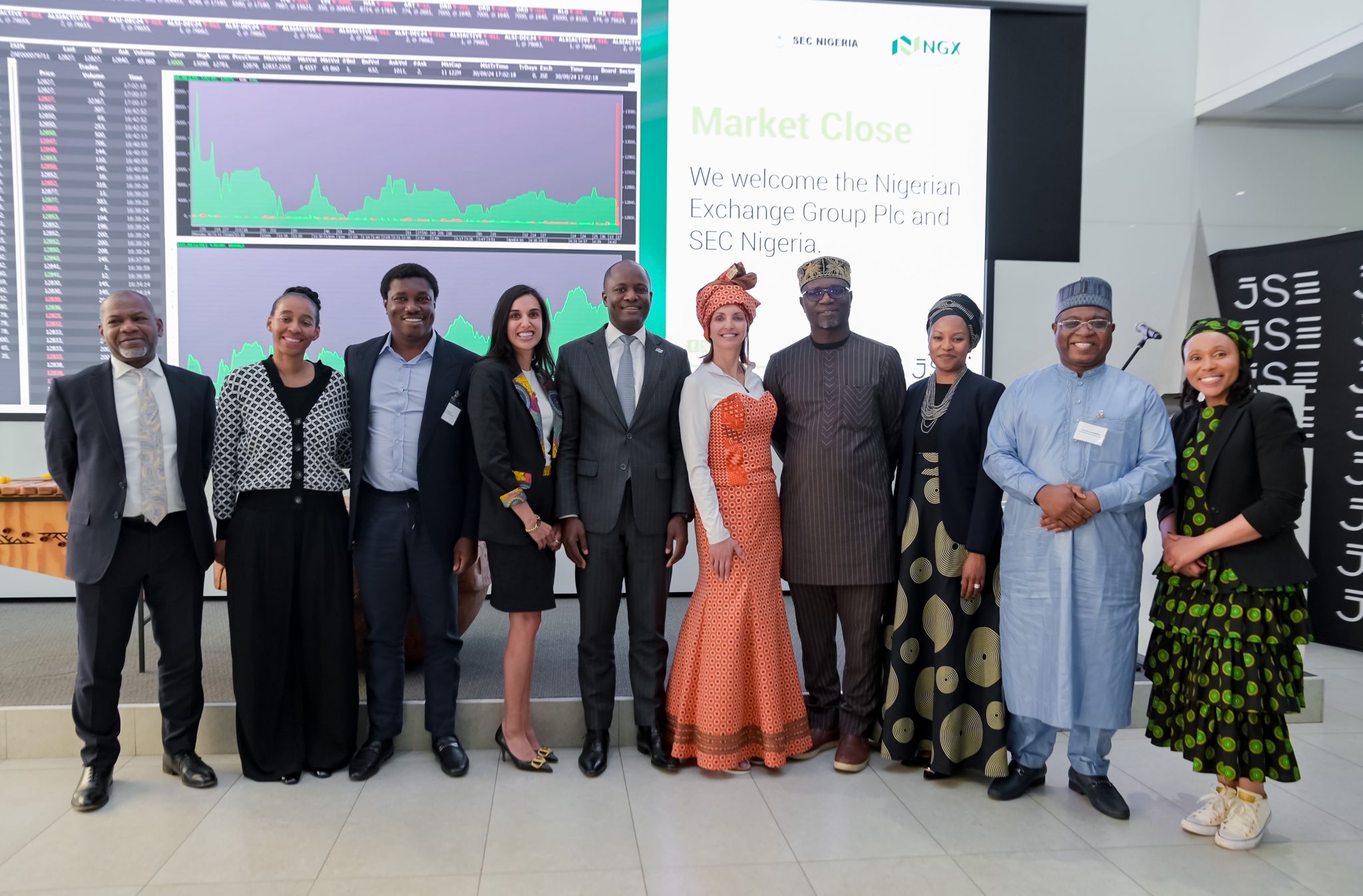
    A high-level delegation from Nigerian Exchange Group Plc (NGX Group), led by the Group Chairman, Alhaji (Dr.) Umaru Kwairanga, alongside top officials from the Securities and Exchange Commission (SEC), headed by the Director General, Dr. Emomotimi Agama, recently visited the Johannesburg Stock Exchange (JSE) for a strategic engagement.

    The visit, which aimed to expose the Nigerian delegation to JSE’s governance best practices and deepen institutional cooperation, reflects NGX Group’s commitment to continuous development, global partnerships, and alignment with international standards, fostering growth in Nigerian and African capital markets.

    Group CEO of JSE, Dr. Leila Fourie, warmly welcomed the Nigerian delegation, emphasizing the growing importance of African capital markets in the global investment landscape. She highlighted recent positive trends in South Africa’s capital market, including reduced outflows and improved investor sentiment, positioning it as a key player in the continent’s financial ecosystem.

    In response, NGX Group Chairman, Dr. Kwairanga expressed optimism about the mutual benefits of the visit, noting, “Understanding JSE’s governance structure, as a demutualized exchange like NGX Group, will significantly influence our decision-making moving forward”. SEC Director-General, Dr. Agama underscored the strategic importance of the visit, stating, “SEC fully supports initiatives like this, which have the potential to steer the Nigerian capital market towards greater heights. The learnings from this engagement with JSE, another demutualized exchange, will be instrumental to our market’s development”.

    GMD/CEO of NGX Group, Temi Popoola, reflected on the discussions: “This has been a productive engagement, and we look forward to a synergistic partnership with JSE across several areas that would contribute to market development and inform our strategic orientation as an Exchange Group. We are particularly optimistic about the potential of private markets, innovation, and technology in product development to drive transformation of our business and markets.”

    A significant portion of the discussions focused on the opportunity for African exchanges to collaborate in attracting investors pivoting from the Chinese market. Stressing the need for synergy to bolster market appeal across Africa, Dr. Fourie remarked, “There is a clear opportunity for African exchanges to unite in drawing global investment interest towards the continent”.

    The JSE expressed interest in partnering with NGX Group on carbon markets, data sharing, and private markets, crucial areas for revenue diversification. Discussions also explored the potential for dual listings and strengthening ties with other African exchanges. In addition, the two exchange groups shared insights on governance, risk management, and self-regulation, with a focus on private markets and mergers & acquisitions, reinforcing the collaborative spirit of the meeting.

    Some of the other delegates from NGX Group and SEC present during the engagement were Mr Nonso Okpala, Non-Executive Director, NGX Group and Mr Bola Ajomale, Executive Commissioner, Operations, SEC.

  • Business interruption is the top risk for the oil and gas sector in 2024, Allianz Risk Barometer reveals

    Business interruption is the top risk for the oil and gas sector in 2024, Allianz Risk Barometer reveals

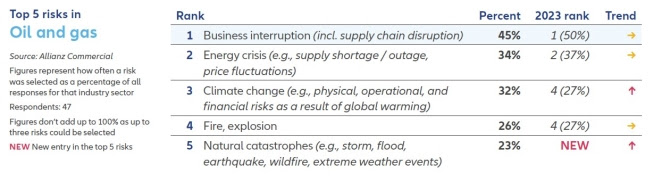
    Business interruption is the primary concern for the oil and gas sector in 2024, according to the Allianz Risk Barometer. It is followed by Energy crisis (34%), Climate change (32%)Fire, explosion (26%) and Natural catastrophes (23%). The report, based on insights from over 3,000 risk management professionals and business leaders, highlights the growing importance of addressing these risks to ensure business continuity and safeguard against potential disruptions.

    Business interruption: top risk in the oil and gas

    Business interruption remains a top risk in the oil and gas sector due to various factors such as supply chain disruptions, geopolitical instability, and fluctuations in oil prices. Mitigation strategies should prioritize implementing robust contingency plans, diversifying operations across multiple geographic regions, and investing in technology for real-time monitoring of production facilities and pipelines to detect and respond to potential disruptions promptly.

    Risk management and resilience essential

    Establishing strong relationships with suppliers and partners, maintaining adequate inventory levels, and developing alternative transportation routes can help mitigate the impact of interruptions. According to reports[1] proactive risk management and resilience-building measures are essential for oil and gas companies to mitigate business interruption risks and maintain operational stability in a volatile environment.

    Energy crisis risks retain second spot

    Energy crisis risks retain the second spot stemming from factors such as supply chain disruptions, geopolitical tensions, and regulatory changes impacting production and distribution. Mitigation strategies should prioritize diversifying energy sources and investing in renewable energy technologies to reduce dependency on fossil fuels and enhance resilience to energy shortages.

    Collaboration is crucial

    Implementing energy efficiency measures in operations and adopting advanced technologies for extraction and refining processes can optimize resource utilization and mitigate the impact of energy crises. Collaboration with governments, industry stakeholders, and research institutions to develop sustainable energy policies and strategies is crucial. Proactive measures to enhance energy efficiency and diversify energy sources are essential for oil and gas companies to mitigate energy crisis risks and ensure long-term sustainability in a rapidly evolving energy landscape, according to reports.

    Prioritize reducing emissions

    Climate change risks have increased from #4 to #3 due to its contribution to greenhouse gas emissions and vulnerability to the physical impacts of climate change such as extreme weather events and sea-level rise. Mitigation strategies should prioritize reducing emissions through investments in carbon capture and storage technologies, transitioning towards cleaner energy sources such as natural gas and renewables, and implementing methane reduction initiatives in extraction and production processes.

    Address climate change risks

    Enhancing resilience to climate-related impacts through infrastructure upgrades, risk assessments, and adaptation measures is crucial. Collaboration with governments, stakeholders, and communities to develop sustainable energy policies and transition strategies is essential. Research suggests that proactive measures to address climate change risks are imperative for the long-term sustainability and competitiveness of the oil and gas industry in a transitioning energy landscape.

    Invest in advanced technologies

    Fire and explosion risks rank fourth due to the volatile nature of hydrocarbons and the complex infrastructure involved in exploration, production, and transportation. Mitigation strategies should prioritize implementing robust safety protocols, including regular equipment inspections, hazard assessments, and employee training on emergency response procedures. Investing in advanced technologies for early detection of potential hazards, such as infrared cameras and gas detection systems, can enable swift intervention and containment of incidents.

    Safety of workers and communities

    Establishing strict regulations and standards for the construction and operation of facilities and pipelines, as well as maintaining adequate emergency response capabilities, is crucial. Studies recommend that proactive risk management and adherence to stringent safety measures are essential for oil and gas companies to mitigate the risk of fire and explosion incidents and ensure the safety of workers and surrounding communities.

    Thorough risk assessments

    Natural catastrophes ranked fifth as new entrant in the oil and gas industry due to risks such as hurricanes, earthquakes, and tsunamis, which can disrupt operations, damage infrastructure, and pose environmental threats. Mitigation strategies should include conducting thorough risk assessments to identify vulnerable assets and implementing measures to enhance resilience, such as reinforcing infrastructure, relocating critical facilities away from high-risk areas, and investing in advanced monitoring and early warning systems.

    Swift and effective response to natural disasters

    Establishing robust emergency response plans and coordination mechanisms with local authorities and responders can enable swift and effective response to natural disasters. Collaboration with industry peers and stakeholders to share best practices and lessons learned can also enhance preparedness and response capabilities. Proactive risk management and comprehensive disaster preparedness are essential for the oil and gas industry to mitigate the impact of natural catastrophes and ensure the safety of personnel and assets, according to research[2].

    Risk mitigation: how to future-proof your operations

    What these risks reveal is the extent to which risks are interrelated and aggregated in the networked world we live and work in. Faced with loss scenarios that can fall like dominoes, businesses need robust, resilient operational processes to safeguard their supply chains and ensure business continuity. Business continuity planning (BCP) reviews are essential and must be regularly updated.

    Image

    View the Allianz Risk Barometer methodology and full global and country risk rankings

  • NGX Group Optimizes Operations Post-AGM, Releases Stellar Q1 ’24 numbers

    NGX Group Optimizes Operations Post-AGM, Releases Stellar Q1 ’24 numbers

    Following its recently concluded Annual General Meeting, Nigerian Exchange Group Plc (NGX Group) has unveiled stellar Q1 2024 results, signaling a promising trajectory for the company. The Group reported an impressive N2 billion in Profit before Tax, bolstered by robust growth in operating margins and operational efficiencies.

    Profit after Tax soared to N1.3 billion, marking a remarkable 332% increase from the N310 million recorded in Q1 2023. This exceptional performance underscores the group’s unwavering commitment to excellence and strategic growth initiatives.

    During the AGM, NGX Group announced its plans to capitalize on digital distribution for the upcoming recapitalization exercises mandated by the Central Bank of Nigeria. Additionally, the group disclosed a strategic acquisition of a stake in the Ethiopian Stock Exchange, securing a seat on the bourse’s board. These decisive moves align with the group’s overarching strategy to expand its business operations and solidify its position in the regional market.

    In a bid to secure long-term sustainability and drive growth, NGX Group implemented a strategic optimization initiative. This comprehensive plan encompasses a strategic reduction in workforce size, accompanied by significant salary increases for retained staff. The initiative aims to streamline operations, enhance efficiency, and optimize resources, fostering a more competitive and agile organization. The exercise follows a thorough review of the group’s operations, which revealed opportunities for optimization and improved competitiveness. NGX Group remains steadfast in its commitment to innovation, customer satisfaction, and building a resilient organization poised for sustainable growth.

    The recent approval by shareholders of a N10 billion capital raise underscores investor confidence in NGX Group’s strategic direction and its unwavering commitment to driving sustainable growth and value creation.

    NGX Group remains dedicated to serving its customers, partners, and stakeholders, confident that these strategic measures will pave the way for future success. The company’s focus remains on innovation, customer satisfaction, and building a resilient organization poised for growth.