Tag: Public Affairs

  • Senate Confirms NCC’s Board

    Senate Confirms NCC’s Board

    The Nigerian Senate on Tuesday confirmed the appointment of Idris Ibikunle Olorunnimbe (representing South West) as Chairman of the Board of the Nigerian Communications Commission (NCC).

    A statement by Mrs. Nnenna Ukoha Head, Public Affairs said the Senate also confirmed Maryam Bayi (North East), Senator Ramoni Olalekan Mustafa (South West), and Ikechukwu Ugwuegede (South East) as Commissioners of the NCC. Board.

    Other members of the Board confirmed by the Senate are Princess Oforitsenere Emiko (South South) and Christopher Sandy Okorie (South South).

    Meanwhile, the Chairman and Commissioners join the Executive Vice Chairman, Dr Aminu Maida (North West), Executive Commissioner – Technical Services, Engineer Abraham Oshadami (North Central) and Executive Commissioner – Stakeholder Management, Rimini H. Makama (North Central), who had been previously confirmed, on the Board.

  • Nestlé Nigeria Deepens Grassroots Impact with Women Empowerment Initiative in Agbara

    Nestlé Nigeria Deepens Grassroots Impact with Women Empowerment Initiative in Agbara

    Nestlé Nigeria is proud to announce the expansion of its flagship initiative, Nestlé Empowering Rural Women in Nigeria, to Agbara, Ogun State. Aimed at strengthening small businesses and enhancing livelihoods within rural communities, this program has welcomed 49 new female retailers.

    Now in its fifth year, the Nestlé Empowering Rural Women in Nigeria project has empowered over 382 women across the country, enabling them to expand their businesses by as much as threefold. Through tailored business training, product grants, and mentorship, the initiative supports women in building more profitable retail ventures, reinforcing Nestlé’s commitment to inclusive growth at the community level. With the addition of the 49 new participants from Agbara, the project has now reached a total of 431 women.

    At the opening ceremony in Agbara, Victoria Uwadoka, Corporate Communications, Public Affairs, and Sustainability Lead at Nestlé Nigeria, stated, “Nestlé Empowering Rural Women in Nigeria is about creating genuine opportunities for women. Supporting rural women to scale their retail operations by up to 300% within just three months is not only beneficial for business but also essential for fostering a more inclusive economy, stronger families, and resilient communities.”

    She further emphasized, “Opening new doors for hardworking women determined to build better futures for themselves and their families in Agbara holds significant meaning for us, as this community has been home to Nestlé Nigeria for over four decades. We have witnessed the transformative impact of structured training, mentorship, and business grants on the 382 women who have already benefited from this initiative, and we are confident that we will see more success stories emerge from Agbara. Through this initiative, we are not only supporting individual entrepreneurs; we are investing in ripple effects that will benefit the entire community.”

    Boladale Odunlami, Commercial Manager at Nestlé Nigeria, elaborated on the initiative’s purpose: “At Nestlé, we are intentional about creating growth opportunities across every segment of our value chain. The Empowering Rural Women in Nigeria initiative was launched in 2021 to support women retailers in underserved communities, recognizing their critical role in driving local economies. Since its inception, over 380 women have benefited from the program, with more than 85% reporting sustained business expansion. With product grants valued at up to 300% of their existing business size, participants have improved their turnover, increased revenue, and strengthened their community presence. This edition is particularly special, as the participants were nominated by their own communities and will each receive product grants worth N200,000. We are excited to welcome the Agbara cohort and are confident that, with the support we provide, they will continue this legacy of progress and success.”

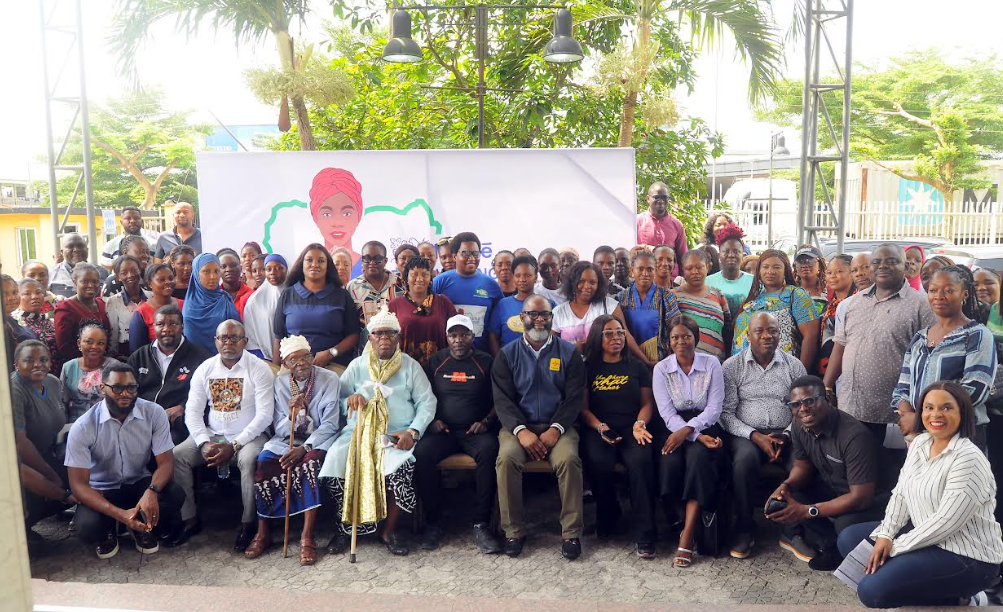
    On behalf of the Alagbara of Agbara, His Royal Highness Oba Lukman Jayeola Agunbiade JP, Olori Adeola Agunbiade commended Nestlé’s enduring relationship with the community and encouraged the women to seize this opportunity. “Our community enjoys a peaceful and respectful relationship with Nestlé, which enables us to work together effectively on community-led initiatives like the women empowerment program. We are delighted to see the women we have carefully selected from our community benefit from this program, whose impact we have heard about. I urge every woman here today to take full advantage of this training to build something lasting for herself and her family. I assure Nestlé Nigeria of our commitment to co-owning this project, which will further strengthen the long-standing bond with the people of Agbara.”

    The women expressed their gratitude and optimism regarding the opportunity. Mrs. Eniola Fausat, one of the participants, shared her excitement: “This opportunity has opened my eyes to what is possible in my business. With the training and support, I am now more confident that I can improve my shop and better support my family. I thank Nestlé and the Alagbara for believing in us.”

    Nestlé Empowering Rural Women in Nigeria exemplifies Nestlé’s commitment to creating shared value in society. Since its inception, the initiative has expanded to nine locations across the country.

    Beneficiaries receive training in essential areas such as entrepreneurship, bookkeeping, merchandising, and customer service skills which are vital for running successful retail operations. Each participant is also assigned a personal mentor for three months and receives product grants to help them scale sustainably.

    With every new phase, Nestlé continues to support financial independence among rural women, enabling them to create better futures for themselves and their communities.

  • Nestlé Nigeria Trains 100 Plastics Waste Workers for a Sustainable Future

    Nestlé Nigeria Trains 100 Plastics Waste Workers for a Sustainable Future

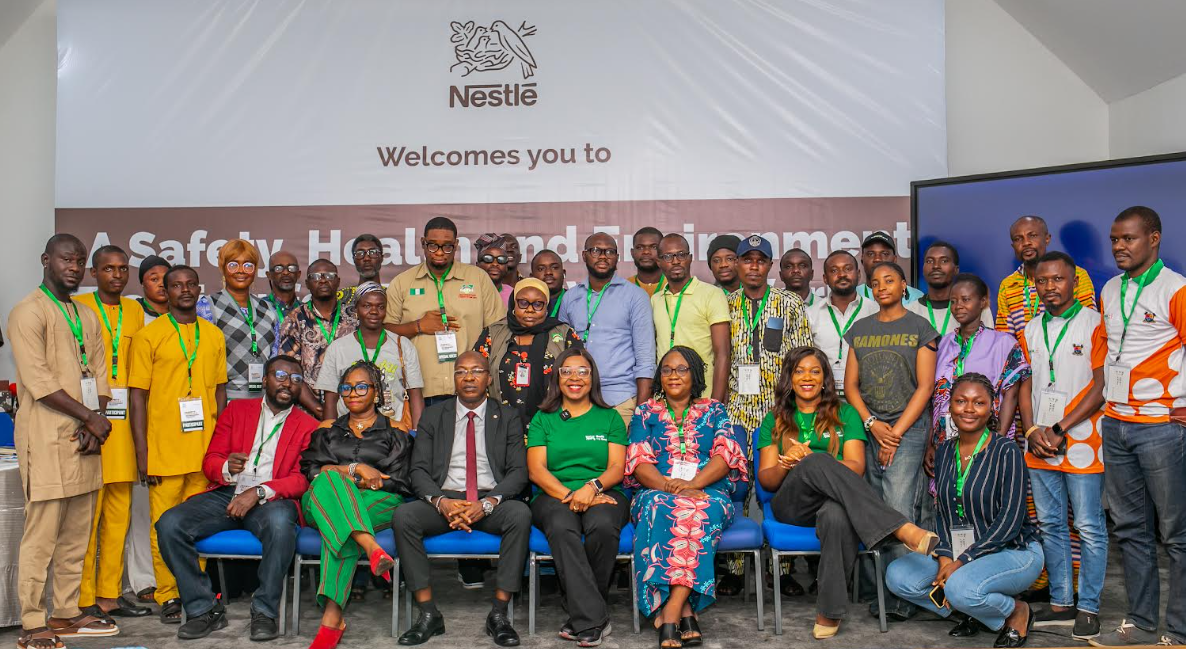
    As part of its ongoing commitment to environmental sustainability and social inclusion, Nestlé Nigeria has launched a comprehensive Safety, Health, and Environment (SHE) Training Programme, empowering 100 plastic waste workers across Lagos and Abuja. This initiative aims to enhance the safety and wellbeing of these invaluable workers while empowering them and promoting their dignity within the plastics recycling value chain.

    Supported by the National Environmental Standards and Regulations Enforcement Agency (NESREA), the Recyclers Association of Nigeria (RAN), and the Food Beverage Recycling Alliance (FBRA), the training encompassed essential topics such as best practices in occupational health and safety, responsible handling of recyclable materials, fire prevention and rescue techniques, and the proper use of Personal Protective Equipment (PPE). Each participant will also receive PPE kits to ensure safer working conditions, fostering a healthier environment for both workers and their communities.

    Victoria Uwadoka, Corporate Communications, Public Affairs, and Sustainability Lead for Nestlé Nigeria articulated the company’s motivation for this initiative, highlighting Nestlé’s commitment to building a waste-free future and the recognition of the role that the waste workers play in bringing this vision to life.

    “At Nestlé, we are committed to building a waste-free future and recognize the crucial role plastic waste workers play in reducing pollution and facilitating a circular economy. This training is a vital component of our support for this key stakeholder group, enhancing Nigeria’s waste management infrastructure. By equipping these essential workers with the necessary skills and knowledge, we help to improve their quality of life while increasing their employability and boost productivity within a sustainable waste management framework.”

    During the opening ceremony in Abuja, Prof. Innocent Barikor, Director General of NESREA, praised Nestlé’s commitment to environmental sustainability, stating, “I commend Nestlé Nigeria Plc. for its commitment towards environmental sustainability and for prioritizing the health and safety of those at the frontline of waste management. Waste workers are often unrecognized yet play a crucial role in our national effort to combat plastic pollution in our environment. The focus on training waste workers is commendable, especially at a time when the world is seeking solutions to the prevailing challenges relating to plastic waste management”.

    Responding on behalf of the trainees at the Lagos event, Engr. Mayowa Elefin, MD, Maladase Ecopreneur Management Company Limited commented saying “This training is an impactful initiative which aligns with our commitment to promoting a safe, healthy, and sustainable work environment across our plastic recycling value chain. It has provided valuable knowledge and practical skills that will greatly benefit our staff, enhancing their capacity to maintain safe operations, ensure healthier workplaces, and ultimately improve productivity”.

    This initiative underscores the collective commitment of Nestlé Nigeria, NESREA, RAN, and FBRA to promote environmental sustainability and generate positive social impact. By ensuring that plastic waste workers acquire the skills necessary for healthier, more productive lives, we contribute to a more sustainable circular economy.

    Other Stakeholders at the Abuja and Lagos event were – Director, Inspection and Enforcement, NESREA, Dr. N.C Beka, Asst. Director, Plastic Waste Control, Inspection and Enforcement, NESREA, Engr. Chukwudi Nwabuisiaku, Director Environmental Health and Safety, Abuja Environmental Protection Board, Mrs. Kate Ogbona, Permanent Secretary, Federal Ministry of Industry, Trade and Investment (FMITI), Mr. Nura Abba Rimi, Director, Industrial Development Department, FMITI, Mrs. Muyiwa Ajayi, Controller, Federal Ministry of Environment, Lagos Zonal Office, Mrs. Olabimpe Adenaike, Director, NESREA Lagos Liaison Office, Dr. Jonathan Sylvanus Dajal, Special Adviser to Lagos State Government on Circular Economy and Climate Change, Mrs. Titilayo Oshodi. President, North-Central Coordinator, RAN, Mr. Femi Owoeye, Southwest Coordinator, RAN, Mrs. Feyikemi Egbeyemi, President, Waste Pickers Association of Nigeria (WAPAN), Comrade Salisu Ali Yarima, Lagos State Coordinator, WAPAN, Mr. Adebisi Franklyn.

    The SHE training program which was implemented by ImpactCrest Consulting aligns seamlessly with Nestlé’s dedication to enhancing quality of life and fostering a healthier future for individuals and families, as well as the planet. Together, we are taking significant steps towards a more sustainable and inclusive future.

  • Nestlé Nigeria Collaborates with the Government to Drive Nationwide Water Quality Campaign

    Nestlé Nigeria Collaborates with the Government to Drive Nationwide Water Quality Campaign

    As part of ongoing efforts to ensure safer water for all Nigerians, Nestlé Nigeria is partnering with the Federal Ministry of Water Resources and Sanitation to launch a National Water Quality Advocacy Campaign aimed at raising awareness, educating communities, and mobilizing multi-stakeholder action around water safety and sustainable water practices.

    The collaboration, announced in Abuja during a courtesy visit by Nestlé and members of the Organized Private Sector in Water, Sanitation, and Hygiene (OPS-WASH), reinforces the government’s commitment to advancing President Bola Ahmed Tinubu’s Renewed Hope Agenda through improved access to clean water and sanitation.

    At the meeting, the Honourable Minister of Water Resources and Sanitation, Engr. Prof. Joseph Terlumun Utsev, welcomed the partnership, noting its importance in tackling persistent public health threats such as cholera and diarrhea while also addressing challenges related to flooding and climate resilience.

    He assured the Ministry’s full support for Nestlé’s campaign and pledged timely collaboration to deliver impactful results. “The Ministry is committed to working with Nestlé Nigeria to improve water quality across the country. This partnership is in line with our mission to ensure safe water access and support the health and wellbeing of all Nigerians.”

    Speaking on the company’s role, Victoria Uwadoka, Corporate Communications, Public Affairs, and Sustainability Lead at Nestlé Nigeria, said:

    “Water is essential to life, yet millions of Nigerians remain at risk due to unsafe water sources. Our campaign is not just about raising awareness, it’s about shifting behaviors and building partnerships that deliver lasting impact. We’re working across communities, industries, and institutions to help close the knowledge gap, improve water safety, and support national health outcomes.”

    She emphasized that the campaign rests on three pillars: building awareness and knowledge, engaging stakeholders at all levels, and driving long-term, sustainable action.

    Providing additional perspective, Dr. Nicholas Igwe, National Coordinator of OPS-WASH, shared details of the initiative’s community reach:

    “We are taking a long-term, impact-led approach. In Abaji Area Council of the Federal Capital Territory, 16 communities will benefit from water quality interventions, while 8 communities in Agbara, Ogun State, are also included. In addition, two agricultural communities will receive water harvesting systems to support irrigation and food production.”

    The meeting was attended by senior officials from the Ministry and OPS-WASH, reaffirming cross-sector commitment to accelerating access to clean, safe water for all Nigerians.

  • NCC Approves Disconnection Of USSD Services For Nine Banks Over N200bn Debt

    NCC Approves Disconnection Of USSD Services For Nine Banks Over N200bn Debt

     The Nigerian Communications Commission (NCC) has issued a directive to telecommunications companies to disconnect the Unstructured Supplementary Service Data (USSD) codes of nine financial institutions. This action comes in response to the banks’ failure to settle a staggering debt of N200 billion that has been accumulating since 2019.

    The NCC has set a deadline of January 27, 2025, for the disconnection to take effect, should the banks not resolve their outstanding obligations. The financial institutions affected by this directive include Fidelity Bank Plc, First City Monument Bank, Jaiz Bank Plc, Polaris Bank Limited, Sterling Bank Limited, United Bank for Africa Plc, Unity Bank Plc, Wema Bank Plc, and Zenith Bank Plc.

    These banks owe substantial amounts to telecommunications operators, with some debts remaining unpaid since 2020. The NCC’s notice, signed by its Director of Public Affairs, Reuben Muoka, highlights the urgency of the situation, emphasizing that the banks’ non-compliance with a joint directive from the Central Bank of Nigeria (CBN) and the NCC has necessitated this ultimatum.

    The notice warns consumers that they may experience disruptions in accessing USSD services, which are essential for mobile banking, if the debts are not resolved. USSD codes, such as 770, 919, and 822, play a crucial role in providing banking services to customers without internet access. The NCC has indicated that unresolved debts could lead to the reassignment of these codes to other applicants.

    In the statement, NCC stated, “As of close of business on Tuesday, 14th January 2025, of a total of 18 financial institutions, the nine institutions listed below have failed to comply significantly with the directives in the Second Joint Circular of the Central Bank of Nigeria and the commission dated December 20, 2024, for the settlement of outstanding invoices due to Mobile Network Operators (MNOs), some since 2020.”

    The regulator further noted that the banks’ failure to comply with the CBN-NCC joint circular indicates their inability to meet the good standing requirements necessary for the renewal of the USSD codes assigned to them. The NCC reiterated its commitment to consumer protection, informing the public that they may be unable to access the USSD platforms of the affected financial institutions starting January 27, 2025.

    This development highlights the ongoing tensions between telecommunications operators and financial institutions over unpaid USSD-related debts, a challenge that has persisted for several years and continues to impact consumers and the banking sector alike.

  • Nestlé Nigeria Expands Empowerment Initiative to Support Women Entrepreneurs in Calabar

    Nestlé Nigeria Expands Empowerment Initiative to Support Women Entrepreneurs in Calabar

    Nestlé Nigeria has expanded its Nestlé Empowering Rural Women in Nigeria Initiative to include 50 more female retailers in Calabar, Cross River State. At the event to launch this project, the participants were trained in merchandising, bookkeeping, and customer service.

    Speaking on the importance of this project, Victoria Uwadoka, Corporate Communications, Public Affairs, and Sustainability Lead, Nestlé Nigeria, said, “Nestlé is committed to contributing to efforts to build thriving communities. One of the pillars for achieving this objective is empowered women. For us therefore, the Nestlé Empowering Rural Women in Nigeria Initiative is one of the ways we create shared value, contributing to the wellbeing of every stakeholder along our value chain while driving business success. This initiative has already yielded positive results among women in the seven rural communities already reached, and we are confident that we will have the same success stories among the 50 women participants from Calabar.”

    Nestlé Nigeria’s Commercial Manager, Mr. Boladale Odunlami, provided more details about the project.  “The rural women empowerment project was created out of a need to address a gap. When our data showed that women retailers in rural communities were not growing as consistently as others, we partnered with FDC Consult to train the women, attach them to coaches and mentors and to support them with grants in the form of products worth about 300% of their monthly sales turnover. We are encouraged by the success of the 332 women who have been adopted into the program since its launch in 2021. 85% of them have maintained the 300% growth, with faster turnover, increased revenue, and stronger visibility of their outlets within their locations. This is why we are excited to onboard 50 more women, confident that they will take full advantage of the support provided through this program to transform their businesses and, by extension, their families and their communities.”

    The women selected for the program praised the program and expressed their gratitude to Nestlé for bringing this initiative to them. Mrs. Favour Effiong, owner of Favour Stores, said, “My journey with Nestlé has been very productive. Today’s training and the grant received, will enable me to improve the standard of living for my family. I cannot thank Nestlé enough for this investment in my business. Thank you, Nestlé.”

    Special guests at the event included the Vice Chairman, Akpabuyo Local Government Area, Honorable Chris Effiong, and the Paramount Ruler of Akpabuyo, His Royal Highness, Etinyin Francis Edem Efa, who both commended Nestlé for empowering the women and urged beneficiaries to use the grants wisely to expand their businesses.

    The Nestlé Empowering Rural Women in Nigeria Project began in August 2021 with 50 female retailers in Abuja’s suburbs. Along with grants in the form of Nestlé products valued at three times their monthly sales at the time of enrollment, participants are trained and are given access to consistent mentoring and counseling over three months to help them sustain the lessons learned to ensure their success.

    Through this program, Nestlé is making a tangible impact on the lives of rural women in Nigeria, helping them achieve greater financial security and a better standard of living.

  • Nestlé Nigeria doles out Community Scholarship Programme

    Nestlé Nigeria doles out Community Scholarship Programme

    Nestlé Nigeria is proud to reaffirm its commitment to empowering the next generation of leaders by opening entries for its annual scholarship programme. Aimed at high-achieving senior secondary and tertiary students pursuing studies in Science and Technology, this scholarship empowers and supports students in communities surrounding Nestlé operations. 

    Since launching the Community Scholarship in 2020, Nestlé has remained committed to providing financial support to students in its host communities. This support covers tuition, accommodation, uniforms, books, and other essential expenses, ensuring these students have the resources they need throughout their education journey. 

    In this round, 90 verified indigenes will receive grants totaling N18 million. The application portal opens on November 5, 2024, and closes on December 8, 2024. 

    Victoria Uwadoka, Nestlé Nigeria Corporate Communications, Public Affairs, and Sustainability Lead, emphasized the company’s commitment to creating shared value, linking Nestlé’s success to the well-being of its host communities. She encouraged scholarship recipients to strive for academic excellence to stay competitive on a global scale. “These scholarships reflect our unwavering dedication to investing in the future of our youth. At a time when economic challenges place added strain on families nationwide, we’re proud to provide meaningful financial support that eases this burden. By investing in education, we’re not only empowering individual students but also fostering the growth and prosperity of our entire community.” 

    The call for entries announcement was made at the recent award ceremony for the 2023/2024 batch of recipients, where 65 students from schools in Abaji, Agbara, and Sagamu were awarded scholarships. 

    One of the recipients from the award ceremony, Adeyemi Gbenga Daniel, a tertiary beneficiary studying Mechanical Engineering at the University of Lagos, said, “This scholarship empowers us to pursue our dreams, fuels our passion for learning, and helps us explore opportunities that might have otherwise been out of reach”. 

    Also speaking at the event, traditional leaders of the recipient communities expressed gratitude for the company’s consistent efforts. The Ona of Abaji, the Alagbara of Agbara, and the Akarigbo of Remo Land, represented by their chiefs, praised Nestlé Nigeria for keeping its promises and making a real difference through its Creating Shared Value (CSV) initiatives. They recognized the positive effects on their communities, from educational support to youth empowerment, and promised their ongoing support for Nestlé’s operations, ensuring that the communities remain welcoming for business growth. 

    As the programme continues to evolve, Nestlé remains focused on nurturing talent and encouraging academic excellence. By investing in the education of young people, the company seeks to create long-lasting positive impacts in its host communities, helping to shape a more promising future for Nigeria’s next generation of leaders and innovators. 

    To apply for the Nestlé Community Scholarship and take a step toward your future, please click here https://forms.office.com/Pages/ResponsePage.aspx?id=I6-jEmmnVEaEf5WPPUefSmrmj6UaT09MhTh0eHSbd2RUQzRSWjQxNEcyMjVOV1JBRVpaVFVXSE81MC4u to access the application portal.  

  • The Coca-Cola System in Africa Unveils Water Stewardship Initiative

    The Coca-Cola System in Africa Unveils Water Stewardship Initiative

    ‘…the Coca-Cola System’s Africa Water Stewardship Initiative’, with a nearly USD 25 million investment, will support water solutions in local communities in Africa

    The Coca-Cola Company in Africa and its bottling partners Coca-Cola Beverages Africa (CCBA), Equatorial Coca-Cola Bottling Company (ECCBC) and Coca-Cola HBC announced a nearly USD 25 million investment to help address critical water-related challenges in local communities in 20 African countries, starting this year through 2030. The work will be led by Global Water Challenge (GWC) and implemented by a consortium of partners, including The Nature Conservancy (TNC), The International Union for Conservation of Nature (IUCN) and the World Wildlife Fund (WWF).

    The effort, called ‘The Coca-Cola System’s Africa Water Stewardship Initiative’, was introduced in Cape Town, South Africa, in presence of executives from the Coca-Cola system in Africa and NGO partners. During the event, Karyn Harrington, Vice President of Public Affairs, Communications and Sustainability at The Coca-Cola Company’s Africa Operating Unit indicated “Water is a priority for The Coca-Cola Company and its local bottling partners because it is essential to life, the communities we serve and our beverages. As we face increasing water insecurity worldwide, with demand outstripping supply in many regions such as Africa, Coca-Cola is taking steps to help accelerate efforts to address water stress, protect local water resources, and build community climate resilience. Our 2030 Water Security Strategy focuses on helping enhance water security where we operate, source ingredients, and touch lives.”

    “One in three Africans face water insecurity. The Global Water Challenge and ‘The Coca-Cola System’s Africa Water Stewardship Initiative’ partner coalition will seek to improve water security for millions across the African continent, helping advance community health and resilience through abundant, clean water. We applaud Coca-Cola’s continued leadership on African water security” said Monica Ellis, CEO of GWC.

    ‘The Coca-Cola System’s Africa Water Stewardship Initiative’ aims to help protect and enhance the health of important watersheds and to help improve access to water and sanitation services in local communities. We will have projects in Algeria, Botswana, Cabo Verde, Comoros, Egypt, Eritrea, Eswatini, Ethiopia, Kenya, Mayotte, Morocco, Mozambique, Namibia, Nigeria, Somalia, South Africa, Tanzania, Uganda, Zambia and Zimbabwe.  

    “CCBA has a responsibility to help those who face water scarcity and to help protect local water resources where we operate, especially in places with the biggest challenges. We are proud to partner with The Coca-Cola Company on this project,” says Layla Jeevanantham, Chief Public Affairs, Communication and Sustainability Officer at CCBA.

    “We are proud to partner with The Coca-Cola Company and fellow bottlers on this critical initiative to help tackle water challenges across Africa. By working together, we can leverage the expertise of our partners and the knowledge of local communities to help create sustainable solutions that enhance water access and safeguard vital water resources,” said Sonia Ventosa, Public Affairs, Communications & Sustainability Manager at ECCBC.

    “Coca-Cola HBC has been part of African communities for more than 70 years, and sustainability is an important part of how we operate. We’re very happy to see this new water initiative come to life and to support the system’s water stewardship efforts,” said Marcel Martin, Chief Corporate Affairs & Sustainability Officer, Coca-Cola HBC.

    Recognizing that partnerships are critical to support this work, the company and its bottlers are collaborating with governments, businesses, and civil society organizations to design and implement strategic interventions. In addition to supporting the company’s water strategy, this effort also aims to contribute to advancing the United Nations’ Sustainable Development Goal 6, which focuses on ensuring availability and sustainable management of water and sanitation. 

    This water initiative will build upon The Coca-Cola Foundation (TCCF)’s Replenish Africa Initiative (RAIN), a groundbreaking collaboration with key partners and co-funders which helped improve access to clean water, sanitation and hygiene for 6 million people across African countries between 2009 and 2019. Through 120 projects, the initiative positively impacted homes, schools and healthcare clinics in more than 4,000 communities.

  • Oke-Ona United School and UBE Primary School Pasali Emerge Victorious in Nestlé for Healthier Kids 2024 Quiz Competition

    Oke-Ona United School and UBE Primary School Pasali Emerge Victorious in Nestlé for Healthier Kids 2024 Quiz Competition

    Nestlé Nigeria proudly announces the winners of the 2024 Nestlé for Healthier Kids (N4HK) Quiz Competition. The prestigious title was awarded to Oke-Ona United School, Ilugun Elega, in Ogun State, and UBE Primary School Pasali in the Federal Capital Territory (FCT). These exceptional students showcased their profound understanding of healthy nutrition, hydration, physical activity, and sustainability, which are the core pillars of the N4HK initiative.

    The N4HK initiative, which aims to help 50 million children globally lead healthier lives by 2030, is Nestlé’s flagship program dedicated to fostering healthy habits from a young age. In Nigeria, this initiative includes a school-based nutrition education and environmental sustainability program that equips children with the knowledge to make better decisions regarding their nutrition and the environment, promoting a healthier future. The program benefits 35 schools: 20 in Ogun State, 10 in the Federal Capital Territory (FCT), and 5 in Lagos State. The Nutrition Quiz, incorporated as a crucial component of the N4HK program in Nigeria in 2020, is designed to enhance the recall and retention of the lessons learned by students.

    Across Lagos, Ogun, and the FCT, 135 eager children competed for the title of 2024 N4HK quiz champion. This competition not only reinforces the lessons taught but ensures that children internalize the information in a memorable way.

    At the Ogun State finals held in Abeokuta, Oke-Ona United School, Ilugun Elega, secured the first position, followed by St. Peters Primary School, Siun, in second place, and China Nigeria Friendship School Igbesa, Ado-Odo, Ota in third place.

    In the FCT, UBE Primary School Pasali emerged victorious, with Science Primary School (SPS) Abaji taking second place and Science Primary School Kwali securing third. All participating schools demonstrated remarkable understanding and dedication to the principles of healthy living.

    Victoria Uwadoka, Corporate Communications, Public Affairs, and Sustainability Lead at Nestlé Nigeria, highlighted the significance of this initiative: “By focusing on children’s health and well-being, Nestlé for Healthier Kids aims to create a lasting positive impact on future generations. Equipping children with healthy habits early on can have profound effects on individuals, families, and communities. We are incredibly proud of the students’ performance and their enthusiasm for learning about healthy living. I congratulate all the participants and extend heartfelt gratitude to our partners: the Nutrition Society of Nigeria, Lagos State Universal Basic Education Board, Ogun State Universal Basic Education Board, FCT Universal Basic Education Board, Federal Ministry of Education, Federal Ministry of Health, Ogun State Ministry of Education, and Ogun State Ministry of Health for their invaluable support and collaboration.”

    The schools of the prize winners will receive the following awards: a basketball court with player jerseys for first place, a desktop computer for second place, and a table tennis court with a complete kit for third place.

    Dr. Femi Majekodunmi, Executive Chairman, Ogun State Universal Basic Education Board, commended the efforts of all involved: “As we gather to celebrate the grand finale of the 2024 Nestlé for Healthier Kids Quiz Competition, I want to acknowledge the dedication and hard work of our learners, teachers, and other stakeholders. Your tireless efforts have made a remarkable impact on the educational landscape of Ogun State. We recognise Nestlé’s unwavering commitment to education and their unrelenting support in creating a conducive learning environment for our learners.”

    The Nestlé for Healthier Kids initiative aims to reach over 8,000 children annually in Nigeria, ensuring that today’s kids grow into healthy, informed adults. By catching them young, Nestlé is not just changing lives today but building a healthier, sustainable future for all.

  • Feature- Tinubu Ministerial List: What Should Matter!

    Feature- Tinubu Ministerial List: What Should Matter!

    By Adetola Odusote

    The much awaited names of cabinet members of President Bola Ahmed Tinubu administration came out finally on July 27, 2023, sixty days after he was sworn in.

    Tinubu’s first set of nominations was overshadowed by politicians, including ex-governors, serving and former members of the Senate and House of Representatives.

    Twenty-five per cent of the nominees are women while 75% are men. The women are Betta Edu, Doris Aniche Uzoka, Hannatu Musawa, Nkiru Onyeojiocha, Stella Okotete, Nkiru Onyeojiocha, Uju Kennedy Ohaneye, and Iman Suleiman Ibrahim. This still falls short of the affirmative action for gender equality. The National Gender Policy (NGP) has formulated a 35% Affirmative Action (AA) in Nigeria since 2006. This policy demands that 35% of women be involved in all governance processes. The NGP is recognized but is not practiced as the structures and processes to use are not in place.

    By regional representation, South-East has 5 nominees namely Uche Nnaji – Enugu; Doris Aniche, Uzoka – Imo; David Umahi – Ebonyi; Nkeiruka Onyejocha – Abia; Uju Kennedy Ohaneye – Anambra.

    South-South has 6 nominees namely: Nyesom Wike – Rivers; Abubakar Momoh – Edo;
    Betta Edu – Cross River; Ekperikpe Ekpo – Akwa Ibom; Stella Okotette – Delta; John Enoh – Cross River.

    South-West has just 4 nominees made up of Olubunmi Tunji Ojo – Ondo; Dele Alake – Ekiti; Olawale Edun – Ogun; Waheed Adebayo Adelabu – Oyo; leaving out Lagos and Osun states.

    The North-East has Yusuf Maitama Tuggar – Bauchi; Ali Pate –Bauchi; Abubakar Kyari – Borno;
    Sani Abubakar Danladi – Taraba.

    From the North-West we have Badaru Abubakar – Jigawa; Nasiru Ahmed El-Rufai – Kaduna; Ahmed Dangiwa – Katsina; Hannatu Musawa – Katsina; Bello Muhammad Goronyo – Sokoto.

    Lastly, we have from the North Central Lateef Fagbemi – Kwara; Muhammad Idris – Niger; Iman Suleiman Ibrahim – Nasarawa; Joseph Utsev – Benue.

    In the nomination list, Mr. Tinubu left out 11 states namely Adamawa, Bayelsa, Gombe, Kano, Kebbi, Kogi, Lagos, Plateau, Osun, Yobe and Zamfara. The current list has 7 females, 4 ex-governors, 6 ex-lawmakers, 3 serving lawmakers, and 3 presidential advisers.

    The list has received rave reviews in the media. Some political pundits have commended the list while others have criticized it. The argument has been on what informed the choice of who made the list. Some argued that President Tinubu has not given good representation to the women, having nominated only 7 out of the 28 list. Arguments are also rife on the issue of recycling of spent-out politicians who have been in the corridor of power since 1999.

    Compared to the list of Ministers former President Olusegun Obasanjo pulled in 1999 -2007, the Tinubu list does not give vent to technocrats who are not partisans. Pot pouri of opinion is that politicians don’t make good administrators, they compromised principles and non commitant to the state but are self centred.

    Between 1999 and 2007, President Obasanjo worked with some Nigerians who were renowned in their various fields and have been tried and tested at global level. They included: Dr Ngozi Okonjo-Iweala, two-term Minister of Finance, brought in from the World Bank where she served as development economist. Another outstanding performer who was also not a card carrying member of any political party was the Former Minister of Education, Obiageli Ezekwesili, brought in from the World Bank where she served as Vice President for Africa. Did they deliver? Yes they did.

    However the past 24 years of Nigeria’s democracy has shown that cabinet portfolio performance is never based on the personality, rather it has been on individual capability, competence and the attitude of their principal. We have seen the worst experiences in the last two governments under Presidents Goodluck Jonathan, and Muhammadu Buhari. They failed in their responsibilities to put round pegs in round holes; where they did, they failed to instill the culture of checks and discipline on their cabinet members. The worse corruption was perpetrated under these two leaders just because they allowed ineptitude, laxity, political affiliation and tribal sentiment to becloud their vision and mission statements.

    President Bola Tinubu should therefore be very circumspect in choosing his cabinet members. The list of his 28 cabinet team is made up of both young and old well educated Nigerians. Majority of them are card carrying politicians who have occupied one political office or the other. Some are public administrators whose capacity and competence cannot be established from their previous appointments. They make the list just because they are representing some political interest.

    Others are chosen based on their relationship and support to Tinubu’s presidential ambition. However, it is pertinent for Mr. President to realize that this is not business as usual. His ministers and Special Advisers must be selected and given appropriate portfolios based on the 3Cs of leadership which are Competence, Capability, and Capacity. He has fiducial responsibility to make Nigeria great, having sold his political campaign messaging to Nigerians on the premise of “Renewed Hope”.

    The oath of office he took on May 29, 2023 is to Nigerians and not to his party members, his families and friends. Tinubu needs to get the job of fixing Nigeria done within time. And to get the job done, he must move away from the primordial factors that have made all past efforts fail in moving Nigeria forward.

    Ministers are called to serve, not to come and become lords unto themselves. They are to come and drive the vision of Mr. President, articulate and implement the party manifesto. They are appointed into the cabinet to come and serve the people and provide governance to the citizens.

    However, in the past administrations, we saw a lot of garrulous asperity, indiscipline, low respect to their principal and lack of commitment to the Nigerian project. This was the attitude of some of the Ministers under President Jonathan and President Buhari, who themselves did not show any regard to the plight of Nigerians. The body language of the Commanders-in-Chief determines the attitude and altitude of his ministers in serving the nation.

    Mr. President and his Chief of Staff must devise a mechanism for supervising his ministers, evaluating their performances, and ensuring consequences for their actions and inactions. Ruling Nigeria has gone beyond partisan politics; and Tinubu is now the president of Nigeria, not of APC members. He should show zero tolerance for ineptitude, corruption, political rascality and disloyalty at various arms of government.

    Ex. President Muhammadu Buhari shocked the world when he disclosed on national television on March 13, 2018 that he did not know his Inspector General of Police defied his order.  Two months after he directed the then Inspector General of Police, Ibrahim Idris to relocate to Benue State and stop killings by herdsmen, Buhari discovered when he arrived Makurdi that his order was not carried out. Unfortunately, Buhari just laughed it off. Though he summoned the IG to his office a day after, and nothing happened. That kind of body language portrayed a weak leader.

    Tinubu must endeavor to show a different attitude to governance. He must take a clear cut direction from what we have seen; a serious and determined approach to governance. Also, his appointees should be made to cultivate civility in their relationship with the masses. The political brigandage, grandstanding approach and ‘me against them’ communication style of past ministers and spokespersons of the president and minister of information as witnessed under the immediate past president, should not be tolerated under this government. 

    The heads of ministries, departments and agencies must be deliberate and purposeful in their actions geared toward delivering best solutions to Nigerian problems. To this end, they must be held accountable for their actions.

    Every member of the cabinet must align with the vision of the president and manifesto of the ruling party. Policies should be peoples-centric, because governance is all about making life comfortable for the electorate. The vote of the people is a mandate for every elected leader and their appointees to manage the resources of the nation on behalf of the people. This is our common patrimony that must be accountably managed. Therefore President Tinubu should know he is responsible to the over 200 million Nigerians that are looking up to him to take them out of Egypt into the Canaan land. God bless Nigeria.

    Adetola Odusote is a Partner, Public Affairs, CMC Connect LLP

    07031233752
  • Transport Safety: NSIB seeks collaboration with NSCDC, plans MoU

    Transport Safety: NSIB seeks collaboration with NSCDC, plans MoU

    The Nigerian Safety Investigation Bureau (NSIB) is seeking partnership with the Nigeria Security and Civil Defence Corps (NSCDC) on how to ensure further safety in all modes of transportation across the country.

    The two bodies have also agreed to draft a Memorandum of Understanding (MoU) on how their partnership could be concretised and ensure mutual benefits for all.

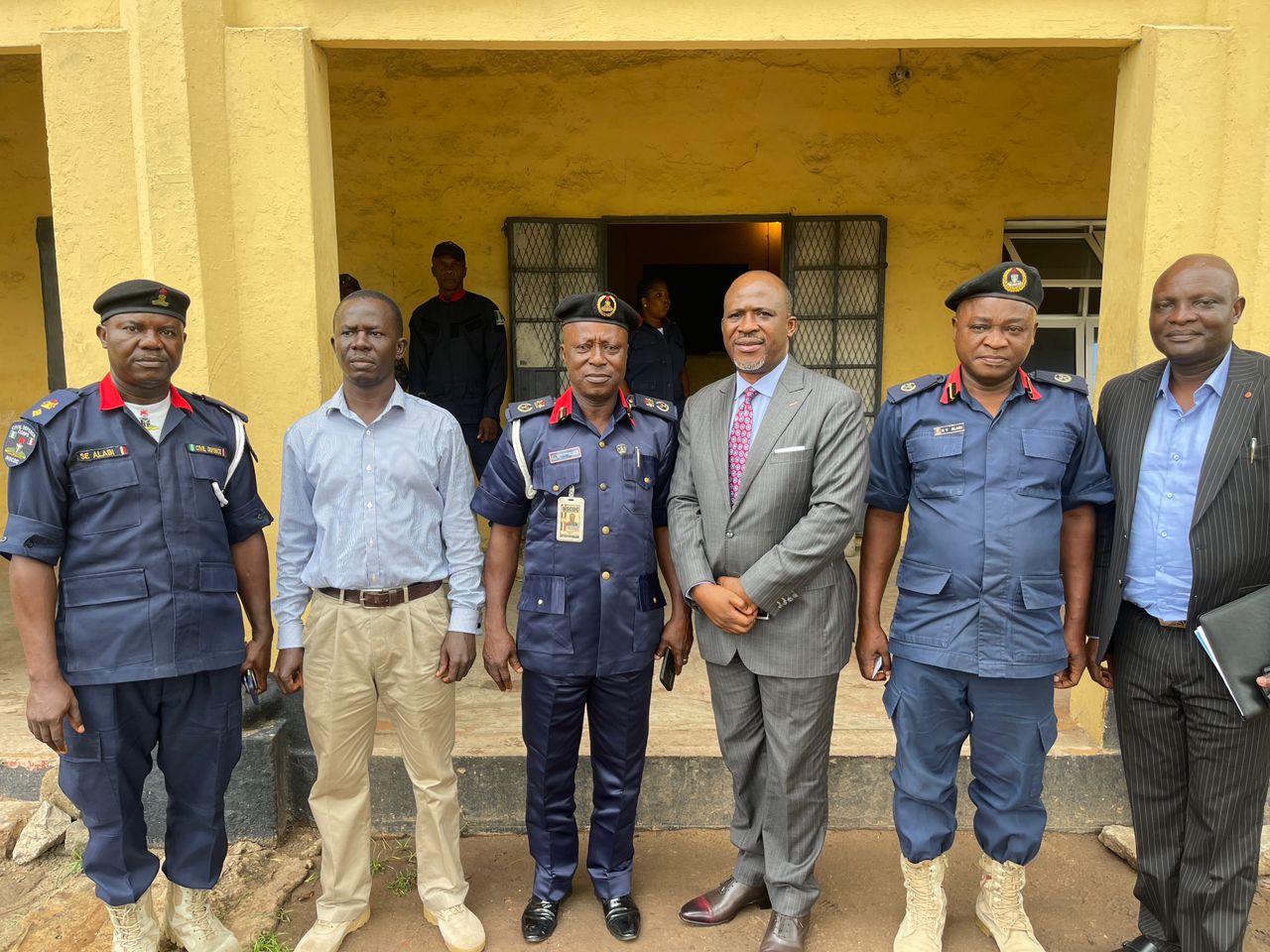
    According to a statement released by the General Manager, Public Affairs, Mr. Tunji Oketunbi, the Bureau paid a courtesy visit to the NSCDC Railway Command Headquarters in Lagos yesterday with the aim of establishing a mutually beneficial relationship between the two agencies.

    Engr. Akin Olateru, the Director-General, NSIB, who led the courtesy visit to the NSCDC Railway Command Headquarters at Ebute Metta, Lagos said that it was necessary for the two federal government agencies to synergise for the safety and security of the over 200 million Nigerians who either patronise air, road, rail or water transport, especially in the area of accident investigation.

    Olateru who described the NSCDC as an important stakeholder to the Bureau, said that as the first responder, the corps could help to secure crash sites and provide security for its investigators at crash sites.

    He explained that the new NSIB Act 2022, empowered the Bureau to conduct investigation into other modes of transport accidents, including rail and maritime, noting that with this, the causal cause of any accident would be known, while recurrence of similar accident could also be prevented.

    He maintained that no institution or organisation could go it alone without the collaboration of the others and appealed to the corps to work in harmony with the bureau.

    He explained that through the investigation of serious incidents and accidents in the air transportation industry in Nigeria by NSIB and the issuance of safety recommendations, the spate of accidents in the sector had reduced, while the air transport in Nigeria was also rated among the safest in the world.

    He vowed to replicate such in the other modes of transportation in Nigeria.

    He said: “Nigeria has one of the safest air transportation anywhere in the world. This is so because we enhance safety by investigation. There is no hearsay when we do our own investigation. So, we do thorough investigations and come up with safety recommendations.

    “Our proposal to investigate all modes of transportation was approved in 2018 and the draft bill was sent to the Ministry of Justice for vetting. After that, it was sent to the National Assembly and we went through the first and second reading, public hearing and then, the third reading. Then, Mr. President finally signed it.

    “In today’s world, when you look at the US, Canada, Singapore, Hong Kong, even Cape Verde and others, you must have an independent agency of government for investigating accidents so that there won’t be conflict of interest. There will be clarity. Up until this bill was passed, accident investigation in the rail sector was under the management of the railway. They are the regulator, operator and the investigator. Same thing applies in the maritime with the Nigerian Maritime Administration and Safety Agency (NIMASA) as the regulator and investigator.

    “So, you need to separate the regulator from the service provider and the investigator. There must be three legs to every mode of transportation. This will lead to clarity.”

    Besides, Olateru explained that the NSIB had co-opted the railway team to join its investigators on the investigation of the rail and bus accident, which occurred in Lagos on March 9, 2023.

    He explained that this would enable the investigators to unravel the causal cause of the accident and issue recommendations on prevention of recurrence.

    In his response, Commandant Oludare Ogunyoye, Commandant, NSCDC, Railway Command Headquarters, Lagos, expressed delight at the visit of the NSIB team.

    Ogunyoye reiterated the readiness of the corps to collaborate with NSIB and also offer assistance whenever necessary.

    “We of the NSCDC railway command, we are ready to partner with you in any form, provided it’s based basically on the way forward. That is, it is for the improvement of Nigeria as a whole. So, any form of assistance needed from us, we will give it to you. Immediately you call us, we will swing into action,” he said.

    The command has nine area commands spread across the country.

  • NCC cannot “track” or “leak” telephone conversations

    NCC cannot “track” or “leak” telephone conversations

    The Nigerian Communications Commission had denied the allegations of tracking and leaking telephone conversations.

    In a statement signed by the Director, Public Affairs, Nigerian Communications Commission (NCC), Reuben Muoka, says that the commission is guided by the provisions of the Nigerian Communication Act (NCA) 2003 and other extant Laws of the Federation.

     The Commission has reported the allegations, which we take seriously, to relevant security agencies for proper investigation and necessary action.

    The Commission restates its commitment to discharge its responsibilities to the Nigerian people in accordance with the provisions of the Constitution of the Federal Republic of Nigeria; the NCA 2003; and other extant Laws of the Federation; and global best practices.

  • AIB-N Transits to NSIB

    AIB-N Transits to NSIB

    The Accident Investigation Bureau Nigeria (AIB-N) has commenced the process for the transition into a multimodal accident investigation body with the setting up an in-house committee for the implementation of the new act on the establishment of the Nigerian Safety Investigation Bureau (NSIB).

    The Commissioner of the Bureau, Engr. Akin Olateru, who made this known through Mr. Tunji Oketunbi, General Manager, Public Affairs, disclosed that the committee was set up following the assent of the new NSIB Act 2022 by President Muhammadu Buhari and the Supreme Court Gazette, which was released on November 28, 2022.

    “With this, the nomenclature of the Chief Executive Officer (CEO) in AIB-N has changed from Commissioner to Director-General, NSIB,” stated the statement signed by Oketunbi.

    The newly established NSIB is now responsible for the investigation of air, marine, rail and other modes of transportation serious incidents and accidents in Nigeria and anywhere the country’s interest is affected.

    Said Olateru: “The new Act will further enhance safety in all modes of transportation in the country as serious incidents and accidents would be investigated and recurrence prevented”.

    Olateru who lauded the Federal Government for establishing the multimodal agency said Nigeria would be moving with global trend in ensuring safety in all transportation modes.

    He praised the National Assembly for passing the bill and the President for assenting to it.

    Olateru commended the doggedness and leadership qualities of the Hon. Minister of Aviation, Senator Hadi Sirika and the Federal Ministry of Aviation for championing the creation of the NSIB, which he said would open a new chapter in transportation safety in Nigeria.

    While inaugurating the committee for the implementation of the new act that establishes the NSIB, Olateru commended the staff and management of AIB-N for their support and sacrifices to ensure that the bill saw the light of day.

    Said Olateru: “We did it together in the interest of the country. I salute your commitment, sacrifices and determination without which we would not have achieved this”.

    The expansion of AIB-N scope of operations into a multimodal agency was one of the cardinal programmes of Engr. Akin Olateru when he assumed office in 2017.

    With this in mind, the Bureau, under his leadership had vigorously canvassed for the establishment of the NSIB that would enable the Bureau to extend its mandate to cover not only the investigation of air mishaps but also that of other modes of transportation in accordance with global standard practices.

    The Commissioner, in 2020, at the public hearings of the Senate Committee on Aviation and the House Committee on Aviation for the passage of the NSIB bill, assured that, the NSIB would enable the Bureau to improve the safety standard of the country’s transportation network through quality investigation of the accident and serious incident occurrences, timely publication of the reports and safety recommendations.

    AIB-N, whose mandate was to investigate air mishaps in the country, with its rigorous investigations and timely release of reports and safety recommendations, has greatly enhanced safety within the industry.

    The Bureau, from inception, has released 71 reports and 252 safety recommendations, out of which 58 reports and 194 safety recommendations were released by Olateru’s administration.

    The current administration at AIB-N also released four safety Bulletins since its assumption of office in 2017.

    This feat is very much appreciated in air travel as only one fatal occurrence has been recorded in the last seven years.

    This safety standard achieved in the aviation industry would now be replicated in other modes of transportation in the country through the NSIB.

    The purpose of accident investigation is not to apportion blame or liability but to prevent the future recurrence of similar incidents.

  • NCC wins Innovative Telecom Regulator of the Year Award at the 2022 TIA

    NCC wins Innovative Telecom Regulator of the Year Award at the 2022 TIA

    As Nigerian Communications Commission (NCC) recently won double awards at the 2022 Tech Innovation Awards (TIA), the telecom regulator has promised to ensure it brings full benefits of the digital economy to Nigerians for the overall development of the country.

    At the 6th edition of the annual awards, which took place in Lagos, the Commission was named The Innovative Telecom Regulator of the Year Award while its Executive Vice Chairman, Prof. Umar Danbatta, was honoured with the Telecom Industry Leader Award.

    Speaking after receiving the awards on behalf of the Commission and the EVC, NCC’s Director, Public Affairs, Reuben Muoka, said, the Prof. Danbatta’s leadership has committed to the implementation of progressive policies, plans, strategies, and regulatory initiatives to ensure continuous development of the Nigerian digital economy for the benefits of Nigerians.

    He said among several government policies and strategies on the digital economy which the NCC has continued to vigorously drive, include the implementation of the Nigerian National Broadband Plan (NNBP), 2020-2025, through which Broadband penetration has hit 44.5 percent; and the National Digital Economy Policy and Strategy (NDEPS), 2020-2030, both of which have been streamlined in the NCC’s Strategic Management Plan (SMP) 2020-2024, and the Strategic Vision Plan 2021-2025.

    He dedicated the awards to the staff of the Commission who are working tirelessly to ensure that the internal processes for effective regulation run smoothly. He promised an even deeper commitment to advancing the frontier of digital connectivity in all nooks and crannies of the country.

    “Great leadership usually starts with a willing team, a positive attitude, and a desire to make a difference, and our team at NCC has been relentless to see that the Commission’s strategic objectives, as enshrined in the SMP 2020-2024, and other extant policies bring the benefits of a digitised economy to the citizens of Nigeria.

    “These wonderful staff, who are my foot soldiers, are tirelessly working to improve stakeholder collaboration, promote innovative regulatory services, and improve communication’s resource and project management. These awards prove that our efforts are visible and appreciated,” he said.

    Earlier, Chief Executive Officer of InstinctWave, organisers of the annual awards, Akin Naphtal, said the two awards went the way of the Commission owing to the recognition of its leadership finesse which has helped in innovatively fulfilling its brand promise to promote a connected environment of endless opportunities.

    He said the annual awards, the Nigerian tech ecosystem’s equivalent of Oscar, sets the highest industry standard for honouring organizations and individuals in the telecom and Information and Communication Technology (ICT) sector in Africa; and recognises innovative individuals and organisations at the forefront of digitisation that is taking place in Nigeria’s ICT ecosystem and beyond.

  • NCC Receives Cybersecurity Award, Seeks Safer Internet Usage

    NCC Receives Cybersecurity Award, Seeks Safer Internet Usage

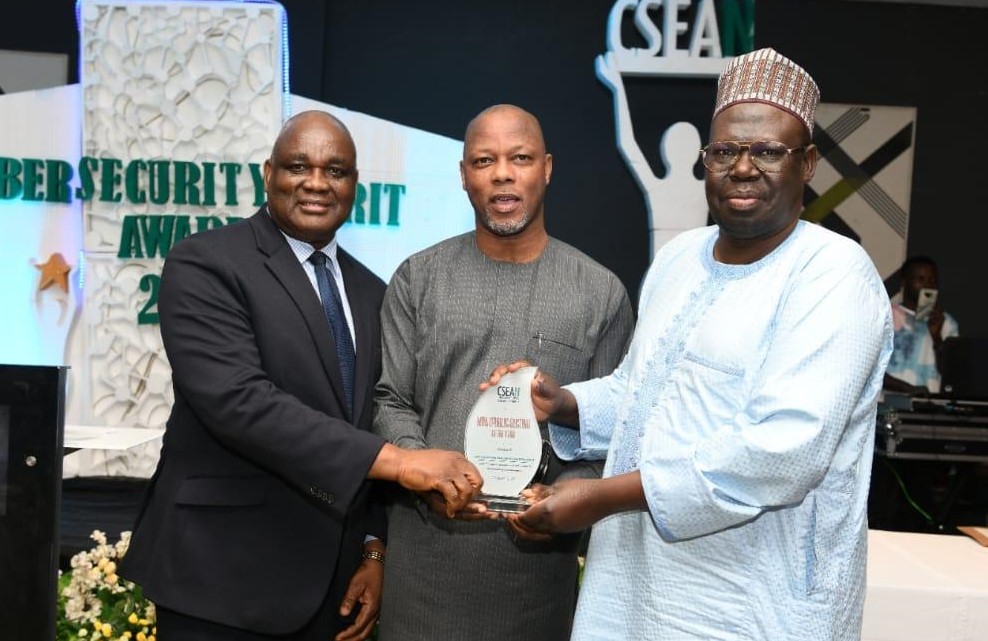
    The Nigerian Communications Commission (NCC) at the weekend in Lagos, received a cybersecurity promotion award at the maiden edition of Cybersecurity Merit Awards hosted by the Cybersecurity Experts Association of Nigerian (CSEAN) which enumerated several steps taken by it to promote a safer Internet.

    The award, which was conferred on the Commission, ahead of other contending organizations, listed its sterling contributions to the protection of telecom consumers from all forms of cybercrimes.

    Director of New Media and Information Security of the NCC, Dr. Haru Alhassan, who received the award on behalf of the Executive Vice Chairman of NCC, Prof. Umar Danbatta, said such a credible award from professionals is encouraging for the efforts which the Commission has made in cybersecurity.

    He told the audience that tackling the menace of cybercrime in the country has become even more imperative as the success of the implementation of digital economy policy and strategy depends on a strong foundation of cybersecurity architecture in Nigeria.

    Director of Public Affairs of the Commission, Mr. Reuben Muoka, who gave a goodwill speech on behalf of the CEO of the Commission, traced the efforts of the Commission in relation to its networking activities at the international level, including the global Internet Governance Forum and other initiatives like the Child Online Protection.

    He adverted the minds of the experts to the provisions of the National Digital Economy Policy and Strategy (NDEPS) 2020-2030, which one of the 8-Pillars focuses on Soft Infrastructure, is premised on harnessing policy and regulatory initiatives to create an enabling environment that targets increased protection for users of digital products and services in the country.

    “The Commission is committed to ensuring that the Nigerian cyberspace is protected against the nefarious activities of cybercriminals that endanger unsuspecting Internet users in the country,” the EVC said. He also stated that it is in recognition of the strategic role the cyberspace plays in the advancement of digital economy that the Commission created NMIS Department to take charge of several activities, initiatives and programmes pivoted on collaboration to enhance cyber and information security in the Nigerian cyberspace.

    “We have continued to be part of the Internet Governance Forum (IGF), promote Child Online Protection as well as create awareness on cyber threats through the NCC’s Computer Security Incidence Response Team (CSIRT), which constantly monitors the cyberspace and publishes advisories on identified cyber threats,” the EVC said.

    The CMA 2020 was organized to recognise individuals, startups, private businesses, Ministries, Departments and Agencies (MDAs) of government, as well as state governments, for excellence, innovation, and effective leadership in promoting cybersecurity ecosystem in Nigeria.