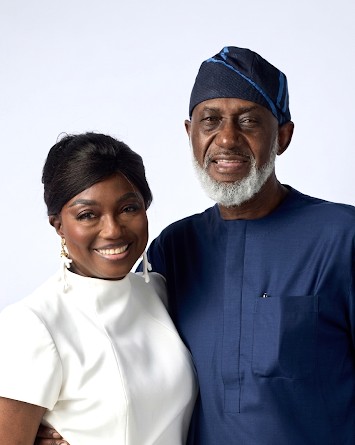
In a historic move set to redefine public access to art and culture in Nigeria, the Yemisi Shyllon Museum of Art (YSMA) at Pan-Atlantic University is proud to announce that admission will be free for all visitors beginning June 15, 2026. The initiative, the first of its kind since the museum’s establishment, has been made possible through the generous support of Aisha and Gbenga Oyebode, who are among Nigeria’s most active art collectors and philanthropists. They have committed to funding the programme for an initial period of three years. Mr. Oyebode also serves as a member of the YSMA Museum Advisory Board.
The announcement marks a major milestone in the museum’s journey to broaden public access to Nigerian art and deepen cultural participation across diverse audiences. By removing financial barriers to entry, YSMA hopes to welcome significantly larger audiences into its galleries while strengthening its role as a centre for learning, tourism, research, and public engagement.
For a museum founded on the principle that art should educate, inspire, and serve society, the initiative represents more than free admission — it is an investment in cultural inclusion and the democratization of access to heritage and creativity.
Speaking on the significance of the initiative, Jess Castellote, Museum Director, described the development as progressive for the institution and its audiences.
“This is an important moment in the history of YSMA,” he said. “Making the museum freely accessible to the public removes an important barrier between people and culture. It allows more students, families, young creatives, researchers, tourists, and everyday visitors to encounter Nigerian art in meaningful ways. We are deeply grateful to Mr and Mrs Gbenga Oyebode for their generosity and vision in supporting an initiative that aligns perfectly with the museum’s mission of accessibility, education, and public service.”
Mr. and Mrs. Gbenga Oyebode noted that the decision to support free access to the museum reflects their belief in the power of art and cultural institutions to shape society and expand opportunities for learning and civic engagement.
“Museums are spaces of knowledge, reflection, and human connection,” they remarked. “Supporting free public access to YSMA is about ensuring that more people, especially young Nigerians, can experience the richness of our artistic and cultural heritage without limitations. The museum has already established itself as one of the country’s most important cultural institutions, and we believe initiatives such as this are essential to building a stronger culture of engagement with the arts in Nigeria.”
The initiative comes at a significant time for Lagos’ evolving tourism and cultural landscape. Following recent strategic engagements with the Nigerian Association of Tour Operators (NATOP) and the Eko Tourism Foundation (ETF), YSMA continues to strengthen its positioning as a major cultural destination within the rapidly developing Ibeju-Lekki corridor and the broader tourism ecosystem of Lagos State.
As Lagos increasingly expands its ambitions as a global centre for culture, creativity, and tourism, free public access to the museum is expected to significantly enhance visitor traffic, cultural participation, and educational engagement, while making YSMA more accessible to local and international audiences alike.
Since opening in 2019, the Yemisi Shyllon Museum of Art has become one of Nigeria’s leading cultural institutions, housing one of the country’s most significant collections of Nigerian art and serving as a dynamic platform for exhibitions, education, scholarship, and public dialogue. Through this landmark initiative, YSMA further reinforces its commitment to making art accessible to all and strengthening the role of museums within the cultural and social life of Nigeria.
Nigeria LNG Limited (NLNG) says its Train 7 project is a catalyst for Nigerian Content development and industrial growth.
Managing Director and Chief Executive Officer, Adeleye Falade made the remark during a panel on Nigerian Content support, lessons, experiences and success stories at the Nigerian Oil & Gas Midstream & Downstream Summit (NOGMDS) 2026 in Lagos. Falade was represented on the panel by Train 7 Project Manager, Ali Uwais.
Falade described Train 7 as more than an LNG expansion; he called it “a practical model for intentional localisation of expertise,” and a compelling example of how Nigerian Content can drive industrial capability and deliver projects at global scale.
He also commended the Nigerian Content Development and Monitoring Board (NCDMB) for organising the summit and sustaining efforts to advance growth across Nigeria’s oil and gas sector.
Speaking further at the panel session, Uwais outlined the project’s achievements, saying Train 7 has recorded over 120 million man-hours and achieved roughly 92 percent Nigerian Content participation—evidence, he said, of NLNG’s deliberate strategy to strengthen local capability and broaden participation across the project value chain. He attributed the success to extensive industry engagement, structured Nigerian Content plans, and targeted investments to build local capacity.
Drawing on lessons from earlier trains, he said the Train 7 team used a strategic, data-driven approach to assess local capabilities and identify meaningful participation opportunities that meet international standards. That structured approach, Uwais said, enabled higher local involvement and ensured Nigerian companies were integrated into project execution from the outset.
“Several fabrication activities typically carried out abroad were successfully executed in-country. Nigerian firms fabricated pressure vessels, structural steel components, valves, blocks, pipes, lighting systems, cables, and painting materials for the project. NLNG deliberately identified local manufacturers with growth potential and provided targeted support to help them reach international quality-assurance standards, rather than relying solely on conventional quality-control checks,” he said.
Uwais also recalled collaboration with foreign technical partners to help Nigerian firms transition from asbestos-based gaskets to safer carbon-graphite alternatives. The initiative included equipment support and international testing certification to strengthen local manufacturing capability.
“These interventions reflect NLNG’s broader philosophy of treating Nigerian Content not merely as a compliance obligation but as a long-term development opportunity capable of delivering sustainable value beyond project execution,” Uwais said. “Our focus has been on building lasting value. We have seen Nigerian companies participate in fabrication and manufacturing activities, while universities and institutions increasingly contribute through research, innovation, and technical development. These are critical foundations for sustainable industrial growth.”
Train 7 remains one of Nigeria’s largest ongoing energy investments. When completed, it is expected to raise NLNG’s production capacity from 22 million tonnes per annum to 30 million tonnes per annum—a 35 per cent increase in Nigeria’s LNG export capacity.
Summit discussions reinforced broader industry conversations on sustaining capability gains from major projects and ensuring continued investment in skills development, manufacturing capacity, and infrastructure. A recurring message at the event was that Train 7’s enduring legacy may be defined not only by production milestones but by the industrial capability, technical expertise, and national capacity it helps leave behind.
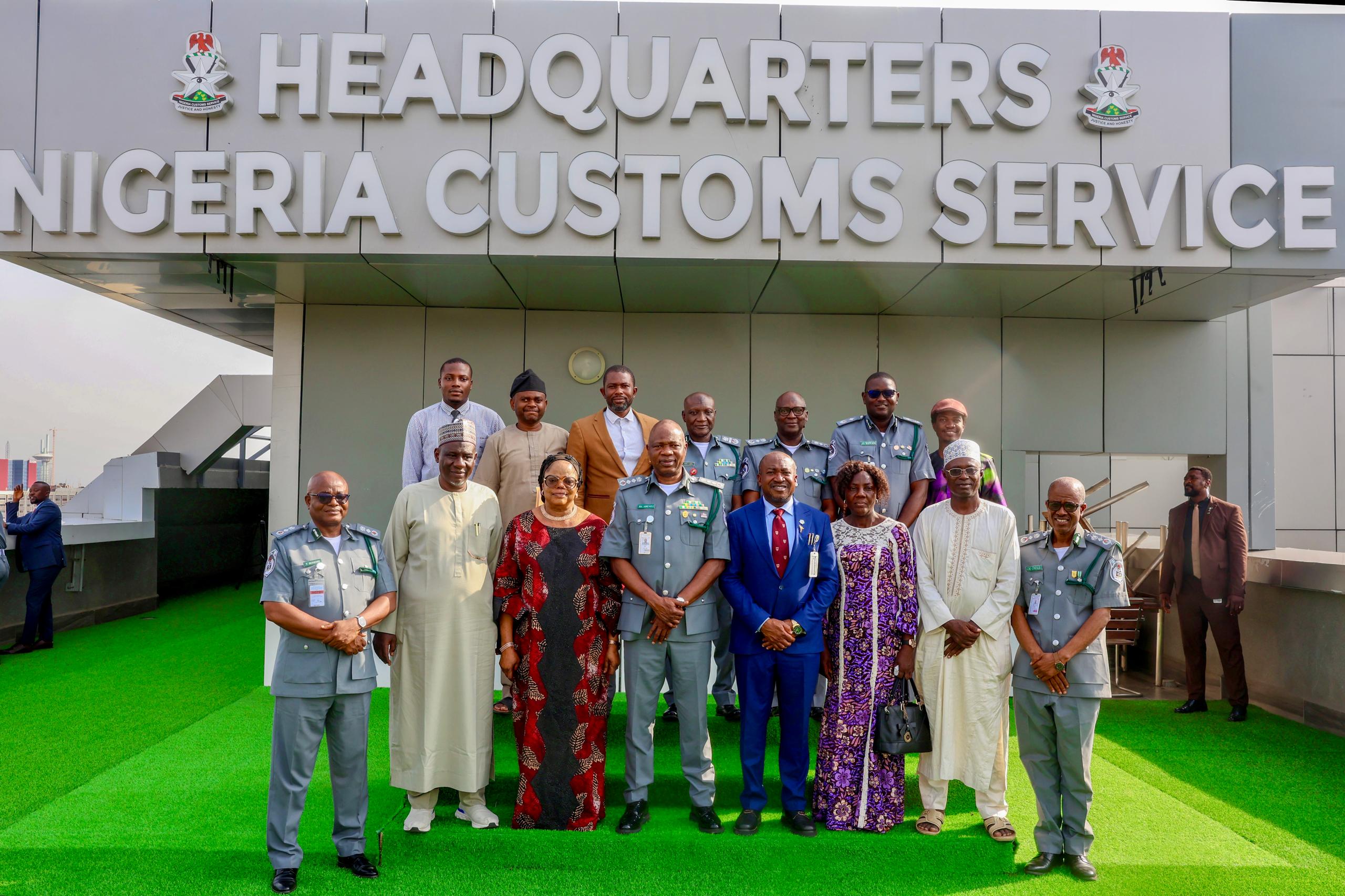
The Comptroller-General of Customs, Adewale Adeniyi, has pledged to revitalise the long-standing institutional relationship between the Nigeria Customs Service and Yakubu Gowon University (formerly University of Abuja), with renewed support aimed at improving learning, research and student development.
CGC Adeniyi made the commitment at the Customs Headquarters, Maitama, Abuja, on Tuesday, 5 May 2026, while receiving the Vice-Chancellor of the university, Professor Hakeem Fawehinmi, who led the institution’s principal officers on a courtesy visit.
Speaking during the engagement, the Comptroller-General recalled his long-standing institutional relationship with the university, noting that efforts to establish a formal partnership between the two institutions date back several years.
He said, “I have a long institutional history with this university. During my tenure as Commandant of the Nigeria Customs Command and Staff College, we made serious efforts to formalise a partnership through a Memorandum of Understanding. We went very far in the process and were close to signing, but leadership changes on both sides affected the process.”
CGC Adeniyi said that despite the delay, the Service had maintained its support for the institution over the years through strategic interventions. “At different times, we supported the university with transportation facilities, including the provision of a 32-seater bus. We also established a fully equipped computer centre with close to one hundred workstations. These were deliberate efforts aimed at building lasting institutional partnerships.”
The Customs boss assured the university management that the Service would carefully examine the new areas of collaboration presented during the visit, with emphasis on projects capable of delivering meaningful impact.
“For us, beyond legacy, what matters most is impact. We understand the realities facing Nigerian universities, from transportation challenges to infrastructure gaps. Our interest is to support initiatives that will create a conducive learning environment and positively impact students,” he stated.
He added that the Service was ready to work with the university through a phased implementation model, as needed, saying, “If there are multiple projects and we are unable to execute everything at once, we can adopt a phased approach and focus on priority areas that will make the greatest difference.”
CGC Adeniyi further stressed the importance of having a university in the nation’s capital that reflects the status and identity of the Federal Capital Territory, noting, “It is important for us to have a university in Abuja that truly reflects the status of Nigeria’s capital. I am willing to work with you in that regard.”
Earlier, Professor Hakeem Fawehinmi commended the leadership of the Comptroller-General and the contributions of the Nigeria Customs Service to national development, describing the Service as one of the institutions supporting the Federal Government’s economic and governance reforms.
According to him, “We have come with the highest level of leadership of the university to congratulate you and appreciate the tremendous work being done by the Nigeria Customs Service under your leadership.”
The Vice-Chancellor said the visit was also aimed at exploring areas of strategic partnership between the two institutions, noting that the university, with undergraduate student population of nearly 40,000, faces growing operational and infrastructural demands.
He said, “As the only conventional public university in the Federal Capital Territory, we face enormous responsibilities. Support in areas such as mass transit buses, ICT infrastructure, research facilities, and professional collaboration will significantly strengthen our capacity.”
He also identified the university’s Centre for Defence and Migration Studies as a potential area of partnership with the Nigeria Customs Service in border management, migration studies, executive training and national security research.
“We are ready to partner with the Nigeria Customs Service. The real beneficiaries of such collaboration will be young Nigerians who represent the future leadership of this country,” he said.
…The historic occasion recognized and immortalized Adesina’s name, leadership, contributions to Africa, and his visionary role in the transformation of agriculture and food security on the continent
The President of the Republic of The Gambia, President Adama Barrow has unveiled a plaque renaming the University of Gambia’s School of Agriculture and Environmental Services as Dr. Akinwumi A. Adesina School of Agriculture and Environmental Services. The historic occasion recognised and immortalised Adesina’s name, leadership, contributions to Africa, and his visionary role in the transformation of agriculture and food security on the continent.
Adesina, whose tenure as President of the African Development Bank Group (2015 to 2025), was marked by strategic development gains across the continent, pioneered a transformative High 5 program to Light Up and Power Africa, Feed Africa, Integrate Africa, Industrialize Africa and Improve the quality of life of the people of Africa. According to the Bank’s data, the program impacted on the lives of over 535 million people.
Under his leadership, the African Development Bank’s capital rose from $93 billion to $318 billion, the highest in the history of the Bank. The institution won several global accolades including the most transparent financial institution in the world, and best multilateral development bank in the world, while maintaining its AAA credit rating by global credit rating agencies.
Under Adesina’s leadership, the African Development Bank launched the Feed Africa strategy to transform agricultural sector and food production, which provided food security for over 104 million people.
In The Gambia, fulfilling a decades-old dream since independence in the 60s, the Bank, under Adesina’s leadership, financed a now iconic and historic landmark bridge connecting The Gambia and Senegal. The new bridge seamlessly cuts travel time between both countries by hours and boosts trade and regional integration.
The decision of the Government of The Gambia and the University of The Gambia was communicated in a letter dated 27th November 2025 by the Honorable Minister of Higher Education, Research, Science and Technology, Professor Pierre Gomez, who said, “Your tenure as President of the African Development Bank has been transformative, driving economic growth, poverty reduction and sustainable development across Africa. Your leadership in launching the Feed Africa Strategy and the Technologies for African Agricultural Transformation (TAAT) initiative has revolutionized agricultural productivity and food security, empowering millions of smallholder farmers and enhancing climate resilience.
The citation adds, “Beyond your tenure at the African Development Bank, your pioneering reforms as Nigeria’s Minister of Agriculture laid a foundation for modernizing the agricultural sector, boosting food production, and creating economic opportunities. Your tireless advocacy for leveraging agriculture as a catalyst for industrialization, job creation, and youth empowerment continues to inspire policies across the continent.”
Recognizing Adesina’s exceptional leadership, and his belief in the transformative power of Africa talent and ingenuity, the University said, “By naming our School of Agriculture and Environmental Sciences in your honor, we seek to immortalize your legacy and inspire our students to emulate your vision, determination, and passion for Africa’s development This decision reflects our profound appreciation for your exceptional leadership and enduring belief in the transformative power of African talent and ingenuity”.
In a letter of appreciation to President Barrow, Adesina said, “It is with great humility and a deep sense of gratitude that I write this letter to express to you my immense appreciation of the exceptional honour you have conferred on me, with the renaming of the School of Agriculture and Environmental Sciences at the University of The Gambia as “Dr. Akinwumi A. Adesina School of Agriculture and Environmental Sciences. It is a rare honour which immortalises my name in recognition of my leadership in supporting the transformation of agriculture in Africa. It is an exceptional honor. I wish to convey to you, Your Excellency, my most profound gratitude and heartfelt appreciation for this exceptional honor. I look forward to visiting The Gambia soon to witness this monumental development which will remain ever green in my memory”.
Adesina also expressed his deep and appreciation gratitude to the Honorable Minister of Higher Education, Research, Science and Technology, the Chairman and members of the Governing Council, the Vice Chancellor and the Dean of the School of Agriculture, of University of The Gambia.
In 2023, President Adama Barrow awarded Dr. Akinwumi Adesina the country’s highest national honour, the Grand Commander of the Order of the Republic in recognition of his leadership and immense contributions to The Gambia and Africa.
…12-Month Google AI Pro Plan Launched for Students in Nigeria, Kenya, Ghana, Rwanda, South Africa, and Zimbabwe to Build Foundational AI Skills
Google today announced a major initiative to support higher education across Africa by offering its premium AI subscription, Google AI Pro for free to university students for 12 months. The offer is available to eligible students aged 18+ in Nigeria, Kenya, Ghana, Rwanda, South Africa, and Zimbabwe, providing them with access to Google’s most advanced AI tools to enhance their learning, research, and creative work.
Through Google’s most capable model, Gemini 2.5 Pro, this initiative will equip the next generation of African leaders, innovators, and creators with fundamental AI literacy. By placing powerful generative AI tools directly in the hands of students, Google is helping to prepare them for a workforce where AI proficiency is increasingly essential.
“We are seeing a new wave of innovation in Africa, driven by the energy and ingenuity of our young people,” said Alex Okosi, Managing Director for Google in Sub-Saharan Africa. “By providing students with access to our most advanced AI tools, we want to empower them to not only excel in their studies but also to become critical builders and shapers of the future. This offer is about democratizing access to technology and giving African students the skills to compete and lead on a global stage.”
The Google AI Pro plan provides a comprehensive suite of tools designed for the demands of academic and creative life:
Supercharged Learning and Research: With new features like Guided Learning to help students with in-depth research, summarizing academic papers, debugging code, and step-by-step guidance on complex problems.
Time-Saving Efficiency: Use Deep Research to generate comprehensive, cited reports from hundreds of web sources in minutes, transforming how students approach long-form assignments and dissertations.
Enhanced Organization and Creativity: Leverage NotebookLM to organize notes and connect ideas, and use Veo 3 to instantly transform text prompts or images into short, high-quality videos for presentations and projects.
Massive Storage: Receive 2 TB of cloud storage across Google Drive, Gmail, and Photos, ensuring ample space for coursework, research data, and creative portfolios.
How to Sign Up
University students in eligible higher education institutions and countries can verify their status and activate the 12-month free plan by visiting gemini.google/students. The process is designed to be simple, requiring students to verify their status through various methods and to add or confirm a form of payment (without incurring any charges). The offer will be available for redemption for 60 days, from October 7, 2025, to December 9, 2025.
This student offer builds on Google’s long-standing commitment to Africa’s digital transformation through programs like the Google for Startups Accelerator Africa and the Digital Skills for Africa initiative, which have helped millions of people and businesses grow.
World Health Organisation, Director General, Dr Tedros Adhanom Ghebreyesus announced his new team of 36 directors at headquarters on Tuesday, according to internal staff messages shared exclusively with Health Policy Watch.
Nine of the appointments, including key positions heading the Departments of Noncommunicable Diseases and Mental Health, and the newly combined Department of Climate, Environment, Health; One Health; Urban Health; and Migration, are “acting” with permanent appointees to be named at some point in the future.
The appointment of the directors completes the latest phase of WHO’s reorganisation following a budget crisis triggered by the withdrawal of the United States, WHO’s biggest donor, in January 2025, and its abrogation of dues payments, even for the 2024 year.
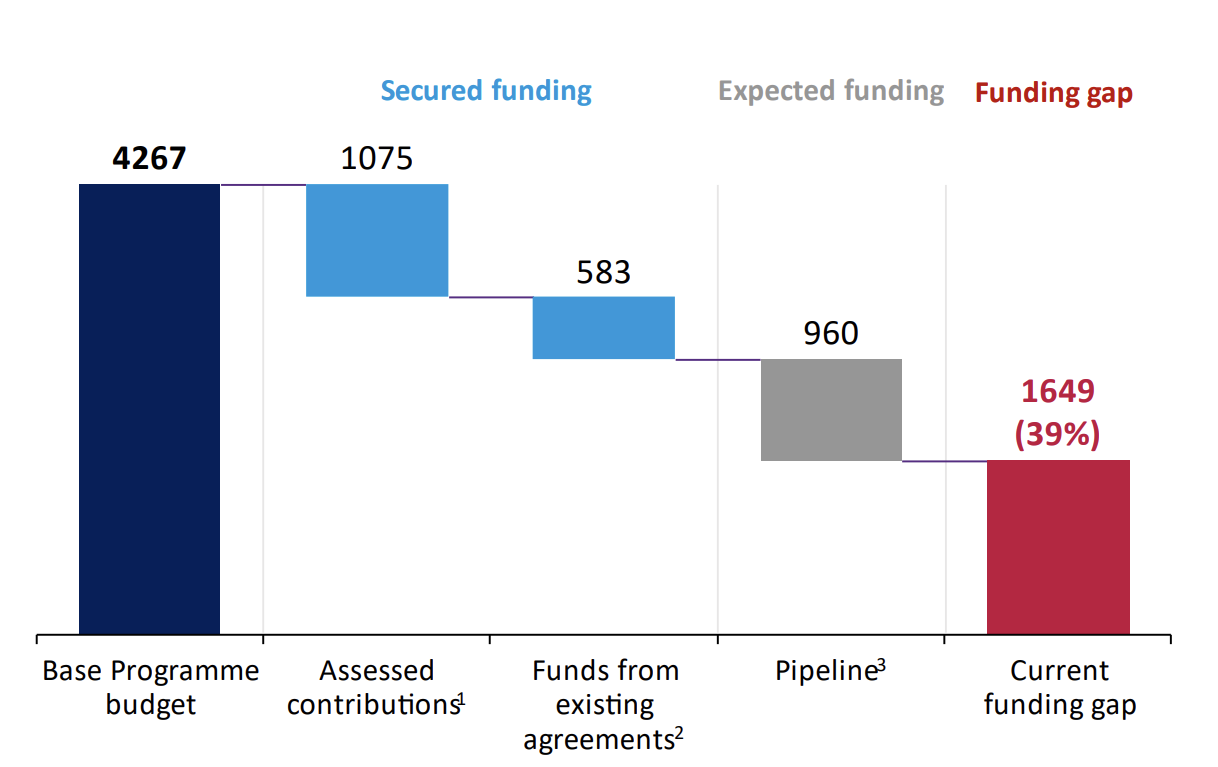
The budget agreed in the wake of the US exit slashes WHO’s projected budget by over 20%, yet it remains $1.65 billion underfunded. It included a 20% increase in membership fees for countries, handing a lifeline to the WHO’s operations, which were reeling from $165 million of efficiency cuts due this year, and a reduction of staff costs by 25%.
The appointments are supposed to reduce the number of costly D1 and D2 directors in WHO’s headquarters from over 76 to just 34 – although the fate of the directors not named for positions today remains to be seen. As many hold long-term contracts, it’s likely the organisation will try to match them to positions elsewhere in regions, as contract termination costs would also represent a heavy expense.
The sweeping leadership cuts at WHO follow months of upheaval across UN agencies as organizations from UNHCR to OCHA that cut similar shares of staff to adapt to the first US withdrawal from their operations since the UN’s founding in 1945 – a loss of billions of critical dollars across Geneva.
New WHO organizational plan, announced on 22 April, reduces 10 divisions at headquarters to just four.
Health promotion, disease prevention and control
Top amongst the familiar names in the big new division of Health Promotion, Disease Prevention and Control, are: Katherine O’Brien, as director of Immunization, Vaccines and Biologicals; Luz Maria De Regil, as director of Nutrition and Food Safety previously the unit chief for Multisectoral Action in Food Systems; and Etienne Krug, longtime director of the Department of Health Promotion, Social Determinants and a politically powerful WHO actors with strong connections to donors.
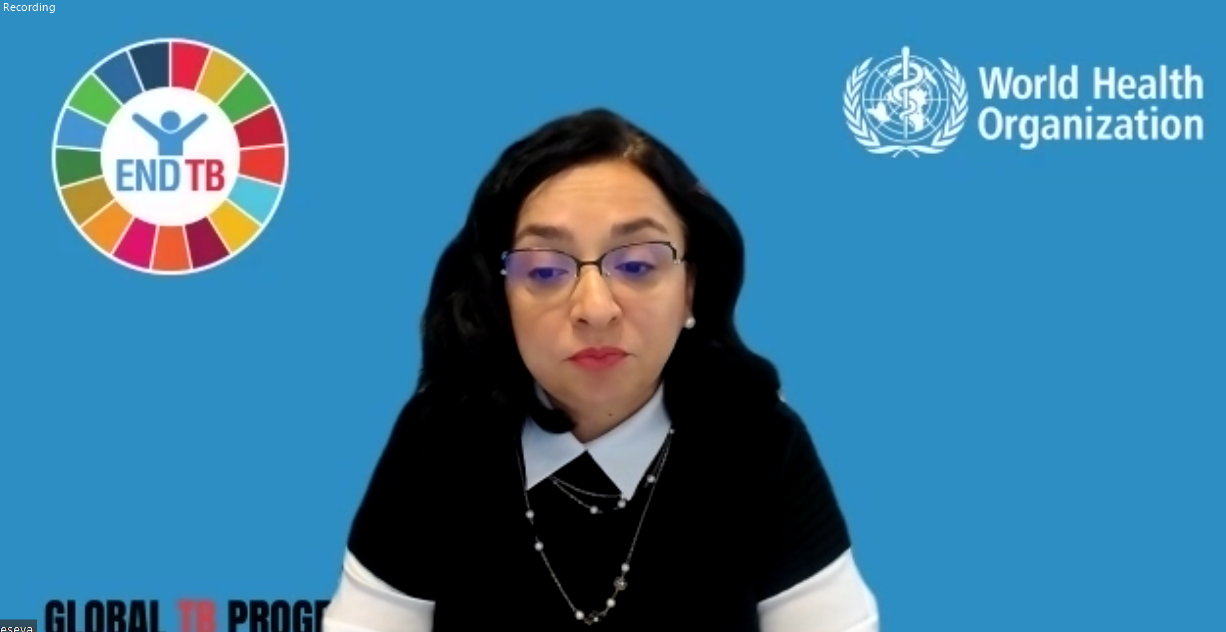
Tereza Kasaeva, former head of WHO’s TB department, has been named director of the newly combined WHO Department of HIV, Tuberculosis, Hepatitis, and Sexually Transmitted Infections.
Meg Doherty, who formerly headed the HIV Department, has meanwhile, been named as director of the department of Science, Research, Evidence and Quality for Health, under the new Chief Scientist, Dr Sylvie Briand.
Tereza Kaseva in her role as TB department chief.
The twin appointments of Kasaeva, a Russian national, to the new HIV/TB Department and Doherty, an American, to the department under the chief scientist’s office represent a kind of Solomonic choice for Tedros, observers said. Despite the US abrogation of its engagement with WHO, Tedros has been careful about ruffling geopolitical feathers on either side of the Atlantic.
Meanwhile, Pascal Allotey has been named director of two major departments that remain distinct in name, at least for now. Those are: the newly WHO Department of Maternal, Newborn, Adolescent and Child Health; Aging, and Sexual and Reproductive Health; as well as the Human Reproduction Programme, a long-time WHO-hosted joint programme with three other UN agencies, UNFP, UNFPA and UNICEF.
WHO Organization, as of January 2025, boasted 10 divisions and nearly 60 departments.
Health emergencies preparedness and response
In the Division of Health Emergencies, where retiring Executive Director Mike Ryan is being replaced by Dr Chikwe Ihekweazu, five department directors have been named.
Those named include: Altaf Sadrudin Musani, as director of Humanitarian and Disaster Management; Nedret Emiroglu, a long-time WHO European office figure as director of Pandemic and Epidemic Management; Stella Chungong, former director of Health Security Preparedness, now morphed into the Department of Health Emergency Preparedness.
Dr Chikwe Ihekweazu (right) in his role as acting WHO Regional Director for Africa.
In terms of their public-facing profiles, they are largely unknown quantities, observers say.
Other appointments include Oliver Morgan as director of WHO’s Health Emergency Intelligence and Surveillance, replacing Ihekweazu at the helm of the Berlin-based hub; and Abdirahman Sheikh Mahamud as head of the department of Health Emergency Alert and Response Operations.
Notably, Maria Van Kerkhove, who was one of the most public faces of WHO during the COVID pandemic and has remained the go-to expert on the virus in press briefings held at WHO headquarters, was not named to a position in the Emergencies Division.
Director general’s office
In the director general’s office, Dr Jamal Abdirahman Ahmed is continuing as director of Polio Eradication following his appointment to the role in March.
Derek Walton will remain in his role as chief legal counsel for the agency. Gaudenz Silberschmidt remains director, Partnerships, Resource Mobilization, Envoy for Multilateral Affairs. And Alia El-Yassir continues as director of Gender Equality, Human Rights, Health Equity, and Prevention of and Response to Sexual Exploitation and Abuse.
The WHO’s organizational restructuring accompanies a growing financial crisis at the agency, which faces a $1.65 billion budget shortfall despite sprawling fundraising efforts.
Unfilled and acting posts
The nine key positions which remain officially vacant, for into which only acting directors have been named, include key strategic departments such as Noncommunicable diseases and mental health (Devora Kestel); Departments of Climate, Environment, Health; One Health; Urban Health; and Migration (Rudiger Krech); as well as the key post of WHO Director of Communications, with Gaya Gamhewage, previously director of the Prevention & Response to Sexual Misconduct, taking over that role as acting director from Gabriella Stern, who is retiring.
Within the Division of Health Systems, the Director’s post for the Global Centre for Traditional Medicine will remain vacant, with Shyama Kuruvilla acting.
The newly combined department of the WHO Academy, Health Workforce and Nursing, the acting director is David Atchoarena, who assumed leadership of the Academy in 2023 and following a long career at the UN Educational, Scientific and Cultural Organization, UNESCO.
Dr. Gaya Gamhewage, Director, Prevention & Response to Sexual Exploitation, Abuse and Harassment, World Health Organization, speaks on 29 November, 2022 at the United Nations in Geneva.
The directorship of Malaria and Neglected Tropical Diseases also remains vacant, with Daniel Ngamije Madandi as acting.
With respect to TDR, there has also been talk of appointing a director elsewhere in WHO as dual director of TDR – rather than making another distinct and costly appointment.
This would be similar to the dual directorship setup under Allotey for PMNCH and the Human Reproductive Programme, another hosted partnership.
Continuity or complicity? A leadership dilemma
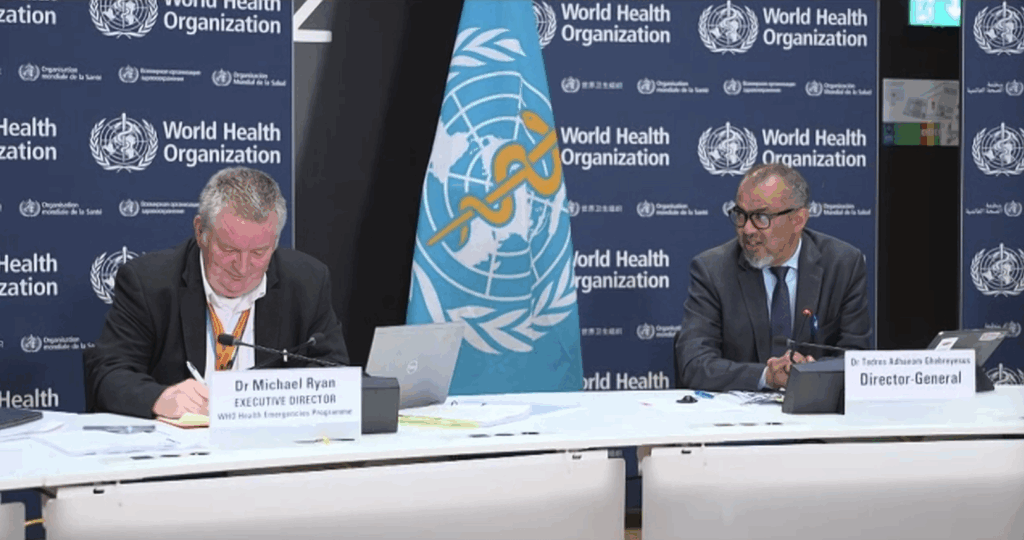
Dr Mike Ryan, director of the World Health Organization’s emergency response division, held his final press conference Friday in Geneva after eight years leading the UN health agency’s response to global health crises.
While the new appointments mark an important step in WHO’s structural reform, they also underscore a deeper tension: how much continuity is too much?
Many of the individuals retained or reappointed to leadership positions are well-tested and respected professionals in their fields. Others, while familiar, are also emblematic of an entrenched culture that critics argue is ill-equipped for WHO’s current crisis.
But others arrived at WHO, not as a result of truly open global searches, but rather via internal handpicking — a trend that has accelerated under the current Director-General, eroding transparency and weakening trust in WHO’s merit-based system.
Some, like Dr Tereza Kasaeva, reportedly arrived with overt political backing (in her case, Russian authorities at the time of Dr Tedros’s first election), raising longstanding concerns about geopolitics shaping technical leadership.
Invisible retention and the illusion of reform
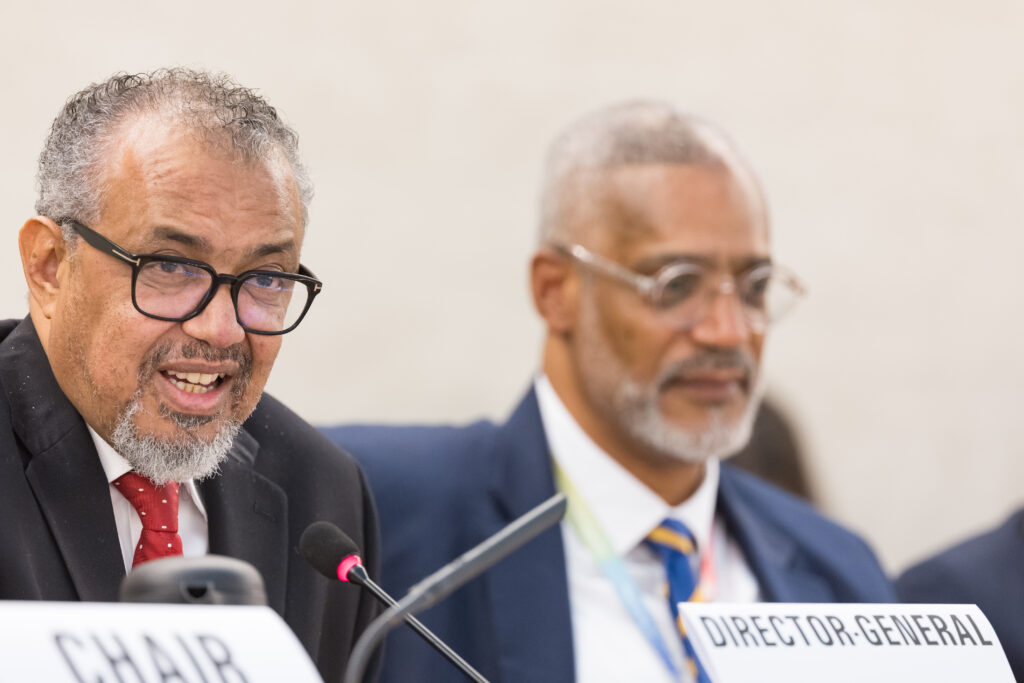
WHO Director-General Dr Tedros Adhanom Ghebreyesus and Raul Thomas, the Assistant Director-General for Business Operations at WHO address the committee following the successful vote on the agency’s new budget.
Despite the rhetoric of bold reform and downsizing, critics fear that many senior staff not formally reappointed may still be quietly retained within WHO’s financial system — undermining the promise of a leaner, more accountable leadership.
According to reports from staff with access to WHO’s Global Management System (GSM), the Canadian physician Bruce Aylward, a long-time senior advisor to the Secretary-General, for instance, may remain on WHO payroll as a D2-level official until his retirement in 2027, even after being left out of the new leadership team.
Similarly, Santino Severoni, former director of health and migration, continues as a D1 director until 2029, despite the fact that he has not been named to any department so far.
These arrangements raise difficult questions about whether WHO is truly cutting fat or simply relocating it.
Meanwhile, others like Rüdiger Krech, who has directed WHO’s health promotion department since 2019, was made the acting director of the enlarged Environment, Urban Health, Climate Change and one health cluster, despite a lack of intimate familiarity with that arena. “We hope there will be an open advertisement,” commented one source.
Financial governance itself is now overseen in part by Sushil Rathi (acting director of finance), a figure whose own entry into WHO came via a process tied to the now-defunct Indian firm Satyam — the same company that originally built WHO’s Global Management System (GSM).
The hidden costs of keeping the old guard
World Health Organization headquarters in Geneva.
Financially, retaining internal appointees is the easier path. It avoids large indemnity payouts for terminated contracts and offers a surface-level appearance of continuity. But the cost of clinging to underperforming or politically tainted leaders may be far greater in the long run — eroding staff morale, weakening donor trust, and compromising the boldness needed for WHO to truly reinvent itself.
“We are caught in a trap. Either we recycle leaders who helped create this mess, or we bring in outsiders with no real grasp of WHO’s dysfunction,” said one senior staffer privately.
Without a robust, meritocratic and depoliticized process to identify the next generation of WHO leadership, the reforms risk being cosmetic — changing the structure while leaving the culture untouched.
…This partnership will strengthen the company’s focus on executive leadership development and critically, expand CityBlue’s ESG and governance strategy across sub-Saharan Africa
Africa’s leading Business School, Lagos Business School (LBS), has appointed Jameel Verjee, founder and CEO of CityBlue Hotels, Africa’s fastest-growing local hotel chain, to the advisory board of LBS Hospitality Initiative, alongside industry heavyweights, Trevor Ward and Mossadeck Bally.
The Academic Director of LBS Hospitality Initiative, Dr Belinda Nwosu FIH, stated that the Initiative is a platform for developing and growing the hospitality industry in Nigeria and Africa, anchored on four main pillars – Advisory, Engagement, Research, and Capacity Building.
CityBlue Hotels, a hospitality and technology business built from the ground up over the last decade across sub-Saharan Africa, has operations in five countries with significant expansion plans. By partnering with LBS Hospitality Initiative, CityBlue hopes to accelerate its expansion into West Africa to complement its plan to open in Accra, Ghana, later this year.
This partnership will strengthen the company’s focus on executive leadership development and critically, expand CityBlue’s ESG and governance strategy across sub-Saharan Africa. Speaking about the partnership at the Africa Hotel Investment Forum (AHIF), Dr. Belinda Nwosu remarked, “We are happy that Jameel accepted to join our advisory board as his skill set, demonstrable resilience, and range of experiences in Africa will benefit our goal to cocreate solutions for regional players and proactively build a pipeline of local talents for executive leadership in the hospitality industry.”
On his part, at AHIF, Jameel expressed his excitement at the opportunity to collaborate with Lagos Business School; “We are excited to take the next step for our group, both in partnership with LBS Hospitality Initiative and to learn from Belinda and her team. Nigeria has the largest population in Africa and the most potential for knowledge-based, tech-driven growth. This is both an honor and an opportunity for us”.
This partnership between LBS Hospitality Initiative and CityBlue Hotels will, among other things, revolutionise executive development in the hospitality industry in Africa, which aligns with the vision of Lagos Business School to develop responsible leaders to inspire Africa’s growth.
The Lagos Chamber of Commerce and Industry (LCCI) has received the approval of the Lagos State University (LASU) to commence Postgraduate programmes in Entrepreneurship.
This approval will see LCCI and LASU collaborate to offer to the public Postgraduate Diploma (PGD), Masters and Doctorate programmes in Entrepreneurship. It will provide students with an in-depth understanding of Entrepreneurship, and management functions to be carried out in a successful business venture as well as a practical application of management theories to enhance the entrepreneurial skills of students.
In August 2022, LCCI signed an MoU with LASU to collaborate and develop programmes in entrepreneurial education and other beneficial areas, which would lead to the development of a vibrant SME (Small and Medium Enterprise) sector. In May 2023, LCCI commenced classes in the Diploma in Entrepreneurship programme and the pioneer students are now in the second and final year of their study.
As the premier and leading Chamber of Commerce in Nigeria, LCCI aims to provide world-class business development services, including training and consultancy, to its members and the business community. The LCCI’s Business Education Services and Training Unit currently provides training, coaching, and mentorship programs to SMEs and helps guide budding entrepreneurs across the country.
Established with the vision of pursuing the advancement of learning and academic excellence, LASU has been unrelenting in the pursuit of its mission of becoming a citadel of learning, a community with the trademark of excellence in teaching, research and service to humanity, a catalyst as well as an agent for development.
While Admission into the 2023/2024 Diploma in Entrepreneurship Programme is still in progress, the Postgraduate Programme will commence on May 3rd, 2024. Students in the Postgraduate Programme will enjoy entrepreneurship mentoring from successful entrepreneurs in LCCI and gain access to other resources of the LCCI. They will also stand the chance to participate for free in various business exhibitions, including the annual LCCI Lagos International Trade Fair (LITF) for free. In addition to regular classroom training, the programme features Practical Entrepreneurial Skills Acquisition, Business Counselling & Mentoring, Business Tours, Business Clinics, weekend hybrid classes, dedicated lecturers, and access to a User friendly LMS.
…African universities are supporting a UN initiative to adopt 5G Tech Spaces as Digital Climate Action efforts to cap warming at 1.5 °C, expedite the Green Network and mobilise finance at scale
Africa’s most renowned universities are keen to be at the forefront of Research, Innovation and Outreach (RIO) of technologies, products, services and operating models that reduce CO2 emissions and help attain Net Zero Emissions (NZE). To achieve this, the gap between rhetoric and action needs to be reduced, if we are to have a fighting chance of reaching Net Zero by 2050 and capping the rise in global temperature at 1.5 °C in full attainment of the Paris Agreement.
Africa produces only about 4 percent of the world’s emissions, but is disproportionately vulnerable to the impact of climate change. To illustrate this, some countries in the Horn of Africa, Somalia, parts of Kenya and part of Sudan, are experiencing the fifth consecutive year without rain. On the other side of the continent in West Africa, several countries have been covered by the worst floods in decades.
Making African societies more resilient requires improvements in infrastructure, social safety nets, and the introduction of green energy and more drought-resistant crops, among many other investments. It is clear, Africa is not getting enough climate finance considering the scale of the problem.
Given the urgency to combat climate change, the continent sees itself forced to seek a path of low-carbon industrialisation and growth.
Fortunately, as Africa does not have the burden of a legacy fossil-powered industrial base at the scale of many more developed economies, it has instead an opportunity to take a leading role in the development of low-emission products, services and operating models for the whole world. This is a great opportunity for the whole world.
Start North is an association that serves as an accelerator network to promote the learning and application of new technologies in order to meet the challenges of global sustainable development.
From its inception in 2017, Start North’s vision has been that through technology and networking, we can make education truly a catalyst for sustainable innovation, business and job creation.
As part of that vision, which is increasingly recognised by African universities, governments and businesses alike, 5G Tech Spaces are part of the solution to enable Africa to leapfrog with clean innovation.
The growing list of African universities supporting the adoption of 5G Tech Spaces includes, in alphabetical order:
Addis Ababa University, Ethiopia
African School of Economics, located in 3 different countries- Benin,Cote D’Ivorie, Nigeria
Bahir Dar University, Ethiopia
Kenyatta University, Kenya
Obafemi Awolowo University (Ile-Ife), Nigeria
The Technical University of Kenya
University of Cape Town, South Africa
University of Dar es Salaam, Tanzania
University of Lagos, Nigeria
University of Lusaka, Zambia
University of Nairobi, Kenya
University of Namibia
“Universities will present 5G Tech Spaces within the domain of Digital Climate Action Frameworks that are aimed at net zero targets,” Dr. Dickson Kanungwe Chembe, Lecturer of Electrical Engineering at the University of Namibia, said.
About COP28 UAE
The United Nations (UN) holds an annual conference, known as the Conference of the Parties (COP), to bring together world leaders, ministers and negotiators to agree on how to address climate change.
This year’s edition, called COP28, takes place in Dubai, in the United Arab Emirates, between 30 November and 12 December. The UN’s first global stocktake report shows much more must be done to meet the goals of the landmark Paris Agreement.
Adopted by 196 parties at the UN Climate Change Conference (COP21) in Paris, France, on 12 December 2015, the aims of this legally binding international treaty on climate change include holding the increase in the global average temperature to well below 2°C above pre-industrial levels as well as pursuing efforts to limit the temperature increase to 1.5°C above pre-industrial levels. To limit global warming to 1.5°C, greenhouse gas emissions must peak before 2025 at the latest and decline 43% by 2030.
Without widely available, reliable internet connectivity and stable electricity supply, Africa cannot do its share of what is required to meet the goals of sustainable development as laid out in the Paris Climate Agreement and the Declaration of the Africa Climate Summit held in Nairobi, Kenya, in September 2023.
If basic digital infrastructure needs are met, and provided that appropriate services are deployed to leverage that infrastructure, Africa indeed has the opportunity to become a leader in the fight against climate change.
Modular high-tech education and innovation
5G Tech Spaces bring a cost-efficient modular learning, innovation and remote work and service environment to the university campus, as well as better internet, uninterrupted electricity, and business connections.
The 5G Tech Spaces concept not only addresses the hardware infrastructure needs, but it also comes with ready digital services, educational content, business networks and access to international markets.
The 5G Tech Space is a modular high-tech unit for developing software applications, including applications that leverage Artificial Intelligence (AI) and those that require ultra-fast internet connections to render immersive, three-dimensional (3D), virtual-reality (VR) and augmented-reality (AR) learning environments, as well as to deliver innovation services and remote work from and to any location in the world.
Universities are hotspots for learning, innovation, entrepreneurship and employability. The roll-out of 5G Tech Spaces across African universities will create high-performance educational and entrepreneurial environments, connecting campuses across Africa as well as between continents.
The modular Tech Space, in cooperation with the telecom operator, enables the university’s satellite-like service points to be implemented quickly even in smaller towns and remote, otherwise poorly serviced areas, to serve the residents and businesses of the area.
Connecting Africa to the world
The 5G Tech Space is a catalyst for the development of fixed and 5G networks across Africa, including underserved areas. Investments in fixed networks, the latest mobile technology and green energy, combined with the deployment of Tech Spaces to accelerate education, work, and other services, is one of the fastest and surest ways to develop regions.
At the same time, the tech spaces can provide the technical infrastructure to stimulate remote work. For example, through virtual and augmented reality applications, African knowledge workers could work remotely for European companies with overlapping time zones.
The EU’s Digital Decade strategy aims to reach at least 20 million employed ICT specialists in Europe by 2030, a demand that cannot be met by Europe’s own declining youth population.
The European Union’s Global Gateway programme implements regional and country initiatives, for example in Sub-Saharan Africa, to connect these regions with investments and partnerships. The Africa-Europe Investment Package addresses sustainable investments in infrastructure (digital, energy, transport), health, education and skills, as well as climate change and environment.
Compared to the technology standards preceding it, fifth-generation wireless communication technology will enable data connections that are a hundred times faster on mobile devices and ten times faster than the fastest fixed broadband services currently.
The true potential of 5G/6G-enabled modular infrastructure lies in enabling entirely new categories of applications. Think remote control of drones, self-driving cars and complex industrial processes. Think remote surgery. Think remote work and meetings in virtual or augmented reality. Think remote learning. The operative word is “remote”.
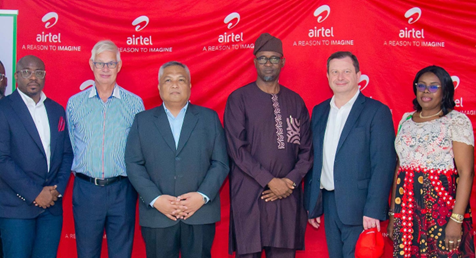
Two years after Airtel Nigeria renovated and commissioned the WARD-A Block at Lagos University Teaching Hospital (LUTH), Idi-Araba, the company’s Chief Executive Officer, Carl Cruz, has said the organisation was pleased that the facility has been serving its intended purpose.
Mr. Cruz made the statement on Friday November 10, during an inspection of the building by Airtel leadership, which also included Airtel Africa Non-Executive Directors.
“We are pleased to observe that the collaboration with LUTH has continued to touch the lives of so many Nigerians. The outstanding leadership of LUTH also deserves our commendation for how well they have kept the equipment and building for the past two years. Their approach is worthy of emulation,” Mr. Cruz said.
Recall that in 2021, Airtel embarked on an extensive renewal project at the Lagos University Teaching Hospital (LUTH), investing ₦200 million to renovate and upgrade the medical equipment as well as the physical architecture of WARD-A, which is a general ward at the institution.
This recent visit, aimed at assessing the continued impact of the revamped ward, also provided an opportunity for the Airtel executive team to engage with LUTH’s management, staff, and patients to evaluate how significantly the upgraded equipment and building ward have enhanced the delivery of healthcare services.
During the reception organized for the Airtel delegation by LUTH, Mr. Cruz reiterated Airtel’s commitment to impacting communities and improving the lives of the less advantaged.
“It is always a delight to contribute to the community in the best ways that we can, especially supporting government’s efforts to make society better. At Airtel, we have a strong belief in contributing to the well-being of our countrymen, including anyone who is now able to benefit from LUTH as an institution.”
The acting Chief Medical Director of LUTH, Prof. Lanre Adeyemo, reflected on the hospital’s journey since the renovation and noted that Airtel’s donation was a significant contribution to the hospital’s development.
“The impact of Airtel’s intervention is very visible,” he said, adding that, “Airtel has become a model of corporate social responsibility to other organizations that have also been inspired to take up projects in LUTH. Before Airtel’s renovation, Ward A, which had not seen any major renovation since it was built in 1962, was the worst of the blocks.”
He noted that since Airtel’s intervention in 2021, LUTH, which operates on a tripod of patient care, research, and training, has had over 800 inpatients while training several nurses, doctors, and dentists in the same period.
Rite Foods Limited, the leading name in Africa’s largest food and beverage industry, joins the nation in celebrating her 63rd Independence Day today. As a proudly Nigerian and truly world-class company with a commitment to excellence and innovation, Rite Foods Limited takes this momentous occasion to reflect on the rich history, progress, and potential of our great nation.
Nigeria’s Independence Day represents a significant milestone in the country’s history. It serves as a reminder of the sacrifices made by visionary leaders and nationalists who worked tirelessly to secure our freedom from colonial rule. Rite Foods Limited encourages all Nigerians to observe this day peacefully and take a moment to honor the courage and determination of those who paved the way for our brighter future.
Mr. Seleem Adegunwa, the Managing Director of Rite Foods Limited, highlighted the importance of reflection during this celebration. He added that this Independence Day should be a time to look back on our past achievements, challenges, and the progress we’ve made as a nation.
It is also an opportunity to chart a course towards greater socio-economic and political development. “As a nation, we should commit to selfless service and embrace the values of our early statesmen who built the Nigeria of our aspirations,”
Adegunwa stated. “Let us demonstrate love, tolerance, and unity for peaceful coexistence, as these are the principles that will propel us towards a brighter future.”
Mrs. Adebola Adeyinka, Assistant Marketing Manager at Rite Foods Limited, emphasised the company’s commitment to the nation’s progress. “Rite Foods Limited is deeply rooted in Nigeria’s heritage, and we take pride in being part of the fabric of this great nation. As a company, we remain dedicated to providing high-quality food and beverage products that resonate with the Nigerian palate. Our goal is to continue contributing to the growth and development of Nigeria.”
Rite Foods Limited, as a truly world-class company, continues to invest in research, innovation, and sustainability to contribute to the growth and prosperity of Nigeria.
On this 63rd Independence Day, Rite Foods Limited reaffirms its commitment to the nation and its people. It celebrates Nigeria’s past, embraces its present, and looks forward to a future of unity, progress, and prosperity.
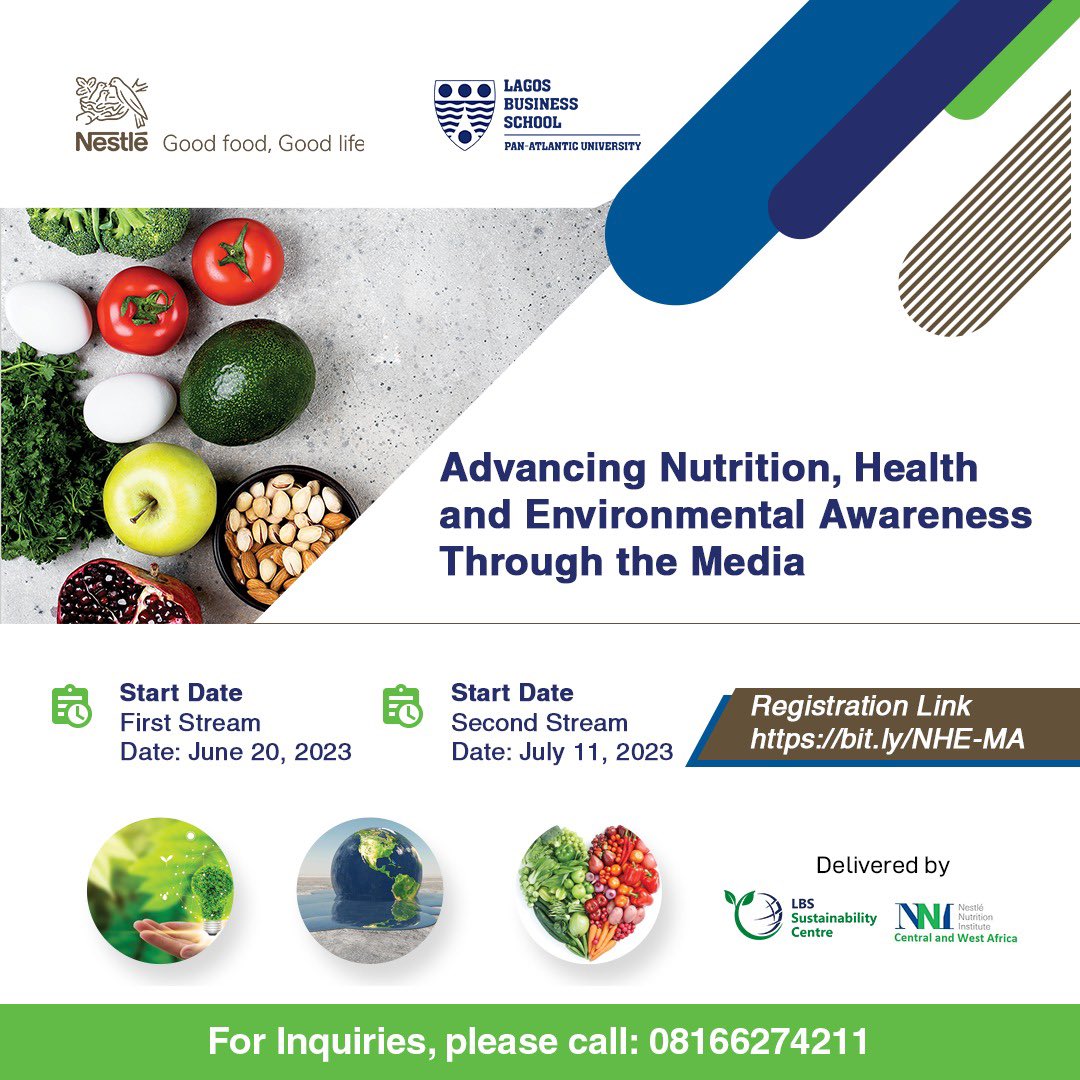
Nestle Nigeria and Lagos Business School Sustainability Centre (LBSSC) have announced the opening of applications for the 2023 Edition of the specialised programme series for Journalists named ‘Nestlé Advancing Nutrition, Health and Environmental Awareness through the Media’. Since its inception in 2019, the initiative has equipped over 200 journalists to carry out fact-based reporting on nutrition, health, wellness, the environment, climate change, and corporate sustainability practices. This year, the training commences on June 20, 2023.
‘Nestlé Advancing Nutrition, Health and Environmental Awareness through the Media’ is delivered via a mix of virtual and in-person sessions. The training comprises sessions on sustainability issues, data analysis, solutions journalism. The journalists are equipped to effectively communicate and educate the Nigerian populace on global best practices and lifestyle choices that impact everyday living.
Participants have attested to improved ability to recognise the connection and interdependence between nutrition and health, sustainability and climate change in the Nigerian context and the extensive impact they have on individuals, communities and the economy.
Manager of Corporate Communications and Public Affairs, Nestle Nigeria, Victoria Uwadoka remarked, “At Nestlé, we understand the importance of the right information in making nutrition and lifestyle choices that not only ensure a healthier life, but also a sustainable environment where we can all thrive. We are also aware of the role of the media in getting information to those who need it most and are convinced that given the right opportunities and tools, the media can exponentially influence the habits and behaviour of individuals to imbibe habits that are good for people and good for the planet.
We are therefore delighted to collaborate with the LBS Sustainability Centre to upskill the media in nutrition, health, wellness and environment knowledge over the past 5 years. This year, our focus is on reaching journalists across all media platforms who have not had the opportunity to participate in past trainings. We trust that the training will improve the impact of reportage across more platforms and audiences to drive the desired behavioural adjustments at scale.”
According to Mrs Orevaoghene Atanya, Head, Sustainability, Lagos Business School, “the programme curriculum is anchored on Solutions Journalism and is delivered by facilitators from academia, industry and journalism. The sessions also cover key journalism skill gaps like research, data-based reporting, writing, data analytics, and presentation. By participating, journalists get the know-how and expertise to develop compelling stories, editorials, news video features, documentaries, and podcasts to help promote far-reaching awareness of the issues around nutrition, wellness, environmental conservation, climate change and corporate sustainability.”
145 applications have been sent in since the call for entries opened on May 19 for the 2023 programme by journalists interested in reporting on nutrition, health, the environment and sustainability.
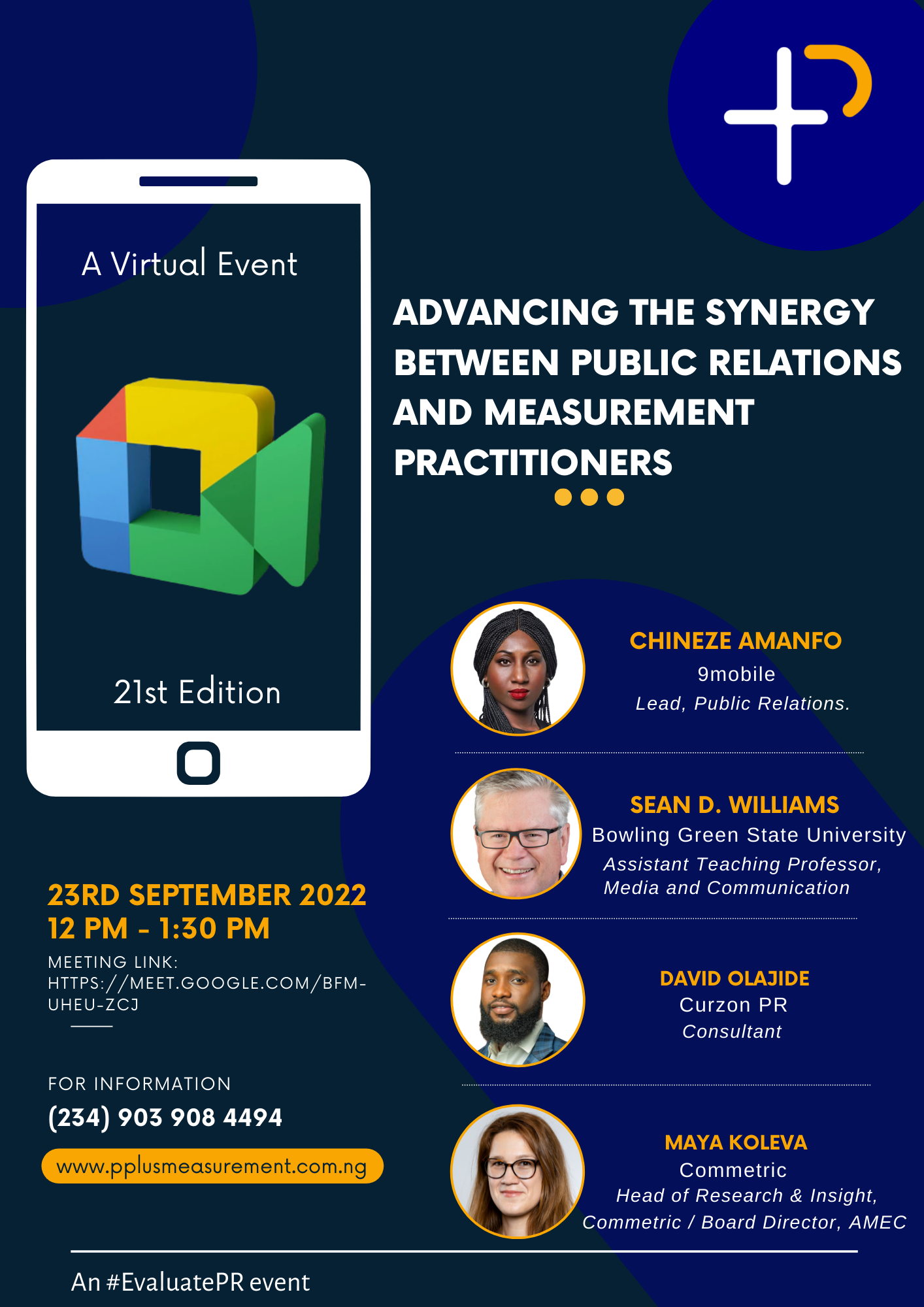
In a bid to fully evaluate and sustain communication and public relations best practices around the globe, as well as offer solutions to persistent problems in the PR industry, P+ Measurement Services, a leading media intelligence agency, will be hosting the 21st edition of #EvaluatePR, welcoming all communications and public relations stakeholders from around the world.#EvaluatePR is an enlightening, interactive, and informative event featuring communications, public relations, and media intelligence practitioners who will be sharing their experiences, advice, and insights on Media Intelligence, Monitoring, Research, Performance audit, Measurement and Evaluation in an interactive session.
Chineze Amanfo, Lead, Public Relations, 9Mobile; Sean Williams, Assistant Professor of Media and Communication at Bowling Green State University, Ohio; Maya Koleva, Head, Research and Insight, Commetric, London and David Olajide who is a Consultant at Curzon PR, Nigeria, are the panelists lined up for this edition. The theme for this event is “Advancing the synergy between public relations and measurement practitioners.”
The event will be held virtually via the Google Meet platform on Friday, September 23rd, 2022 at 12:00pm (West African Time).
Chairman of the Board of the Nigerian Communications Commission (NCC), Prof. Adeolu Akande, has restated the commitment of the Commission to commit more funds to research and prototypes resulting from grants from the Commission to the academia.
This is coming at the backdrop of the recent revelation that the Commission has committed more than N500 million in funding research across the Nigerian universities.
Akande told a gathering of vice-chancellors and professors from universities in the southern parts of the country at a roundtable conference at the Sheraton Hotel, Ikeja, Lagos, that the Commission acknowledges the importance of working with stakeholders to engender innovations and build indigenous technological capabilities that would strengthen the Information and Communications Technology (ICT) ecosystem.
“We want to use this opportunity to assure you that the Commission will continue to give support to the educational sector in the interest of national development. We will also continue to encourage research and innovation in Nigeria’s tertiary institutions,” Akande said, explaining that the essence of the roundtable was to dialogue with the academia, industry and other stakeholders on how research efforts and prototypes can be transformed into commercially-viable products that solve real-life problems.
“Consequently, the Commission will continue to allocate the requisite resources to research, development and innovations necessary for the industry to continue to contribute to the socio-economic development of the country,” Akande said.
Executive Vice Chairman of NCC, Prof. Umar Garba Danbatta, represented by the Director, Legal and Regulatory Services of the Commission, Ms Josephine Amuwa, said academia is a key driver of innovation in all spheres of human endeavour.
He said this is why his leadership at the Commission is determined to not only give grants to the academia but also support the commercialisation of the prototypes developed to deepen the indigenous technological capabilities which would support the overall development of the industry.
NCC Executive Commissioner, Technical Services, Ubale Maska, who was represented by Director, Technical Standards and Network Integrity at the Commission, Bako Wakil, revealed that the Commission had, so far, awarded a total of 49 telecom-based research grants to the academia out of which 10 prototypes have been successfully developed.
“We are hopeful that these sessions will culminate in the development of a common framework that would facilitate the commercialisation of the existing prototypes and future research outcomes (prototypes) for the benefit of the economy and the industry,” he stated.
Coming shortly after a similar roundtable in Kano for the northern region, the event organised by the research prototypes and Development R&D Department of the Commission, was aimed at bringing together Resources persons, business savvy industry experts, the academia, relevant Ministries, Departments and Agencies (MDAs), entrepreneurs and renowned individuals who have successfully commercialised their inventions to brainstorm on the way forward for research output commercialisation.
valU Consumer Finance S.A.E., a fully owned subsidiary of EFG Hermes Holding S.A.E., entered into an agreement with Amazon for the Provision of Consumer Financing by valU as a Payment Method on amazon.eg. With this agreement, valU will make some of its consumer financing products available to eligible customers on amazon.eg, providing these customers the option to split the total cost of purchases into multiple payments by using valU.
Amazon agreed to acquire USD10 million in EFG Hermes GDRs with the option to replace that investment into valU at a future date, translating into a stake of 4.255% of the issued share capital of valU, based on a current post-money valuation of valU of USD 235 million.
EFG Hermes Holding currently has a current footprint spanning 13 countries across four continents, EFG Hermes Holding (EGX: HRHO.CA – LSE: EFGD) has grown over 38 years of success to transform from a pure-play investment bank in MENA into an impact-driven universal bank in Egypt with the leading investment bank franchise in Frontier Emerging Markets (FEM). Drawing on our proven track record and a diverse team of talented employees, we provide a wide spectrum of financial services that include advisory, asset management, securities brokerage, research and private equity to the entire FEM region. In our home country, we have the fastest-growing non-bank financial institutions (NBFI) platform with operations covering microfinance, leasing, factoring, Buy-Now Pay-Later (BNPL), digital payment solutions, mortgage finance and insurance. And most recently the acquisition of majority stake in aiBANK allowed the firm to offer commercial banking products and services.
Through its three verticals, the Investment Bank, Non-Bank Financial Institutions (NBFI) and Commercial Bank, the group is perfectly positioned to consistently bring disruptive financial products and services to the market space, offering a holistic portfolio that best serves its growing base of individual clients and businesses of all sizes.