Tag: Senior Partner

  • No Winner Verdict Declared for 2025 The Nigeria Prize for Science

    No Winner Verdict Declared for 2025 The Nigeria Prize for Science

    The Advisory Board of The Nigeria Prize for Science has announced that there will be no winner for the 2025 edition, following the judges’ dissatisfaction with the overall quality of entries received.

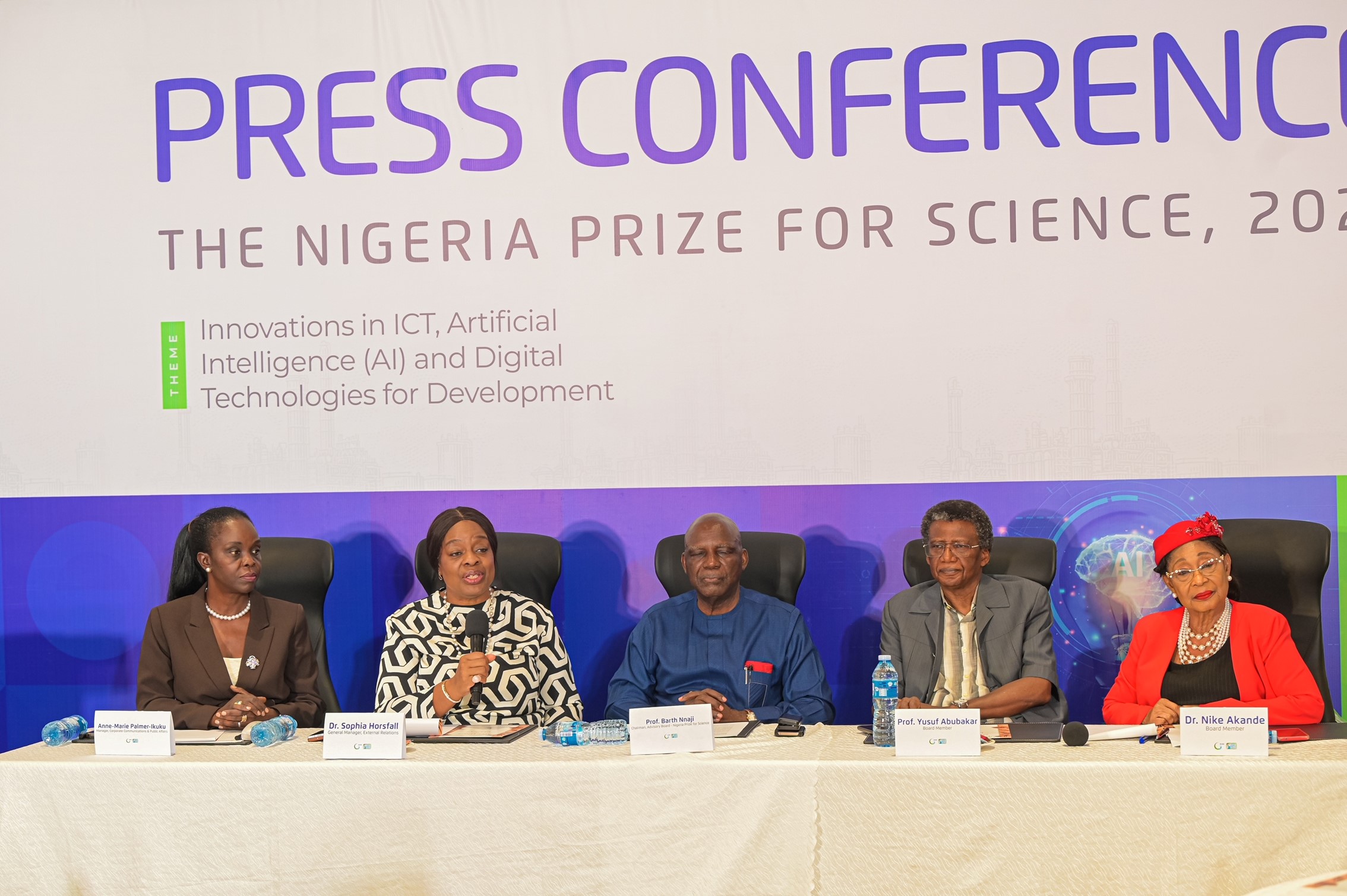
    Speaking at a press briefing in Lagos, the Chairman of the Advisory Board, Professor Barth Nnaji, explained that after a rigorous adjudication of the 112 entries submitted this year, none was found suitable for the Prize. He stated that the decision, though difficult, reinforced the Board’s commitment to upholding the integrity of the selection process and protecting the reputation of the prestigious Nigeria Prize for Science.       

    He noted that the Prize is not just about rewarding scientific output, but safeguarding the values of creativity, originality, and scientific rigour that define truly outstanding work.

    “To lower the bar would be to betray the trust of the public and diminish the legacy of the Prize itself,” Prof. Nnaji affirmed.

    He commended the courage and dedication of all who submitted entries, noting that their efforts reflect discipline and a desire to contribute to national and global scientific discourse. He stressed that excellence was beyond effort and that it required innovation, mastery of craft, and the ability to leave a lasting mark on human thought and development.

    The Board chairman called on Nigerian scientists, researchers, and innovators to be inspired by the judges’ verdict to do more and strive higher.

    “The Nigeria Prize exists to celebrate only the finest achievements, work that embodies originality, withstands scrutiny, and elevates scientific discourse. Where these qualities are absent, we cannot, in good conscience, bestow the Prize,” he stated.

    This 2025 outcome is not unprecedented. In previous years, in 2005, 2007, and then during the haitus between 2011 to 2016,  and again in 2021, The Nigeria Prize for Science was not awarded. Prof. Nnaji admonished Nigerian scientists that the high bar set for the Prize should not discourage future participation, but rather reinforce the fact that the Prize will never compromise on its standards of scientific innovation and excellence.

    The Advisory Board also announced that the theme for this year “Innovations in ICT, Artificial Intelligence (AI), and Digital Technologies for Development” will be repeated for the 2026 edition. The Board stated that the decision was taken to attract a wider spectrum of innovators, particularly in the emerging field of Artificial Intelligence.

    Furthermore, the Advisory Board unveiled the members of the panel of judges. They include Dr. Omobola Johnson, the Chairperson of the Panel of Judges for The Nigeria Prize for Science, a Senior Partner at TLcom Capital. Omobola Johnson drives investment and value creation in technology companies across sub-Saharan Africa. She previously served as Nigeria’s Minister of Communication Technology (2011–2015) and spent over 25 years at Accenture, including five years as Country Managing Director.

    Prof. Collins Udanor is an Associate Professor of Computer Science (Artificial Intelligence) at the University of Nigeria, Nsukka, Prof. Udanor specialises in data analytics, intelligent agent systems, and multi-agent learning. He leads the High-Performance and Intelligence Computing Group (HiPIC) and has secured multiple grants from organisations such as UNESCO-HP, Google, Nvidia, and TETFund.

    Prof. Aminu Muhammad Bui, is a scholar at the Department of Computer Science, Usmanu Danfodiyo University, Sokoto, Prof. Bui specialises in Artificial Intelligence, decision support systems, information retrieval, feature selection, Hidden Markov Models, and educational data mining. His research contributes to advancing AI applications in decision-making and student performance prediction.

    Now in its 21st year, the 2025 edition of The Nigeria Prize for Science opened for entries in February and drew a total of 112 submissions.
  • AVCA’S Fifth VC Summit Spotlights Resilience, Scale, and Bankability as Critical Levers to Propel Africa’s VC Ecosystem

    AVCA’S Fifth VC Summit Spotlights Resilience, Scale, and Bankability as Critical Levers to Propel Africa’s VC Ecosystem

    The African Private Capital Association (AVCA) hosted its fifth Venture Capital (VC) Summit yesterday. The summit forms part of the industry association’s 21st Annual AVCA Conference week, held in Lagos until 2 May. The global gathering brings early-stage and venture capital investors, corporate venture arms, founders, entrepreneurs, and accelerators together to discuss new trends and plot the rise of Africa’s venture capital landscape.

    Abi Mustapha-Maduakor, CEO of AVCA, opened the Summit by acknowledging the strategic importance of Nigeria’s entrepreneurial landscape: “Hosting the Summit in Nigeria is significant because this country has long been at the heart of Africa’s entrepreneurial evolution. Despite economic headwinds, we’ve witnessed innovation and resilience in the early-stage ecosystem. It is no coincidence that in 2024, Nigeria produced one of the continent’s newest unicorns.”

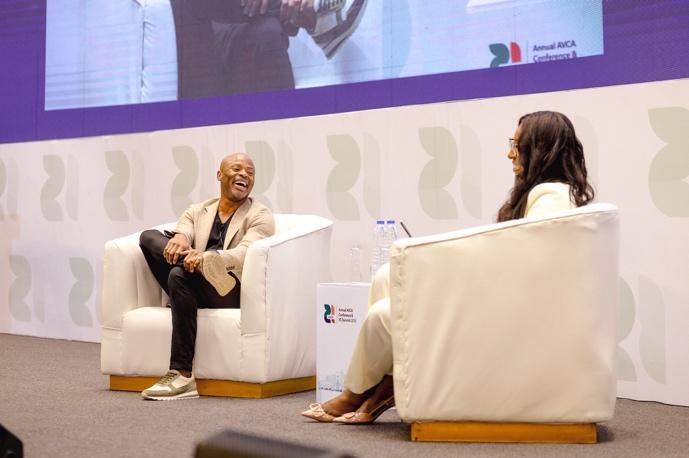
    Tope Awotona, Founder and CEO of Calendly, the US$3bn tech unicorn, and Abi Mustapha-Maduakor, CEO of AVCA, kicked off the summit with a keynote fireside chat. Describing his remarkable entrepreneurial journey, Awotona said: “I knew scheduling wasn’t just a productivity tax—it was a tax on important business outcomes like revenue. We didn’t invent online scheduling but made it accessible to more people through three key innovations: our freemium pricing model, our viral distribution method, and our data-driven product improvements.”

    The conversation affirmed the power of innovation, enabling expansion to international markets and the benefits of experimentation with price, distribution, and product. Awotona said: When scheduling went virtual, more users meant more data could help to improve the product and help to become the best on the market.” 

    Following the sentiments of Calendly’s Founder and CEO, a panel titled Unlocking Scale: The Growth-Stage Challenge with Leo Batalov, Partner, Global Co-Head of Emerging Growth Companies and Venture Capital, DLA Piper, and Brian Waswani Odhiambo, Partner, Novastar Ventures, examined how to bridge the gap for businesses moving from early stage development to accessing capital in their growth stage, and highlighted the urgency of building strong local investor ecosystems.

    Outlining the roles of founders and venture capital investors in supporting the long-term sustainability of Africa’s burgeoning tech ecosystem, Dr Omobola Johnson, Senior Partner, TLcom Capital, said: “We need to help founders understand that at the growth stage, they’re competing for global capital, not just local. Founders must recognise the competition and make their businesses appealing to international investors…This makes the African market more scalable, bankable, and investable.”

    The summit proceeded with a headline session, entitled Titans of Industry: Bold Moves, featuring Tosin Eniolorunda, Group CEO of Moniepoint, who underscored the merits of building a valuable company and building a robust team. He said, “If you have an organisation that is growing, investors will be interested; so we focused early on establishing good fundamentals—topline growth, profitability, EBITDA margins, return on equity. The more important goal is building a valuable company with healthy bottom lines. This opens up multiple opportunities, whether through Nigeria’s evolving stock exchange or large buyouts from sovereign wealth funds.”

    Other panels convened capital allocators – representing corporate, commercial, and development-focused interests – to share their perspectives on a maturing venture capital ecosystem in Africa. The competitive fundraising environment provided a backdrop to outline how Limited Partners (LPs) select where to invest, assess risk, evaluate opportunity, and determine priorities.

    In a panel entitled Venture Debt – Africa’s Missing Piece? speakers including Rosanne Whalley, Chief Executive Officer, AHL Ventures Partners, Roeland Donckers, Managing Partner, iungo capital, and moderator Tage Kene-Okafor, Africa reporter at TechCrunchdiscussed the role of venture debt products as a complement to equity funding, providing bridge capital to accelerate company growth. 

    According to AVCA’s latest report, venture debt showed impressive resilience in 2024, with 60 deals totalling US$1.0bn—a 3% increase year-on-year. While representing just 12% of total deal volume, venture debt accounted for 37% of total capital deployed, with median deal sizes reaching US$7.5mn, nearly three times larger than equity-based transactions.

    The session underscored the need for African investors to know when to deploy these tools and the importance of raising awareness amongst founders of these financing alternatives. Biola Alabi, Venture Partner, Delta40, noted that “there is a critical gap in financial literacy around debt financing in our ecosystem. Many founders and even some GPs don’t fully understand what debt investors require in terms of traction and stability. We need to help restructure existing debt and educate founders on how venture debt can complement equity to extend runway and avoid dilution, particularly for businesses with predictable revenue streams.”

  • Experts identify the role of Intellectual Property in business success

    Experts identify the role of Intellectual Property in business success

    Expert speakers at ImpactHER’s 2025 World Intellectual Property Webinar have identified the role that intellectual property plays in helping entrepreneurs achieve business success.

    The webinar which was organised by ImpactHER, was held in partnership with the African Union and had in attendance over 260 female entrepreneurs from 29 African countries and 3 non-African countries.

    According to the Keynote Speaker, Uwa Ohiku, Senior Partner, Jackson, Etti & Edu, intellectual property plays a very vital role in business success some of which includes – helping businesses gain competitive advantage, creating new revenue opportunities, improving access to funding, attracting strategic partners, minimizing legal risks, footprint expansion and earning customers trust.

    She said: “Intellectual Property can help set businesses apart by giving them a distinct brand identity and value. It can also make the business more appealing to investors, acquirers and collaborator with its protected brand value. To access funding, investors and lenders often see registered IP as a sign of value and credibility and can also serve as a market entry strategy when a business is seeking expansion. Protecting IP puts a business under pressure to deliver on its promises and to continuously improve on its goods and services and through such quality, businesses earn their customers’ trust and continued patronage”.

    Panelists who spoke at the webinar on the topic- “Common IP pitfalls for female entrepreneurs”, noted that female entrepreneurs can protect themselves from falling prey of their IPs through Non-Disclosure Agreements (NDA), early registration before commencement of the business and having a commensurate budget that matches business strength. Jenner Akwale, an intellectual property specialist urged female entrepreneurs to do regular audit of their IP, create a policy that guides their IP, desist from using copyrighted work as their own and must always read all contracts carefully. “There are some investors who would want to hide IP clauses in their contracts, female entrepreneurs need to be very careful about this”, he expressed. 

    Another panellist, Susan Musyoka, noted that female entrepreneurs should embed their IP into their business strategy to foster creativity in their business.  In her own submission, Omotayo Queen Onakoju, the Head of Legal at EbonyLife Studios, explained that female business owners should not be tempted to download free online materials and use it for marketing purposes as this constitutes copyright infringements. “Copyrighted works have two rights- moral and economic. These two go hand in hand and cannot be separated. To use any copyrighted work, they must be given the due credit and must also be paid for it”, she noted.

  • IWD: Lafarge Reaffirms Commitment to Women Empowerment, Gender Equality and Inclusion

    IWD: Lafarge Reaffirms Commitment to Women Empowerment, Gender Equality and Inclusion

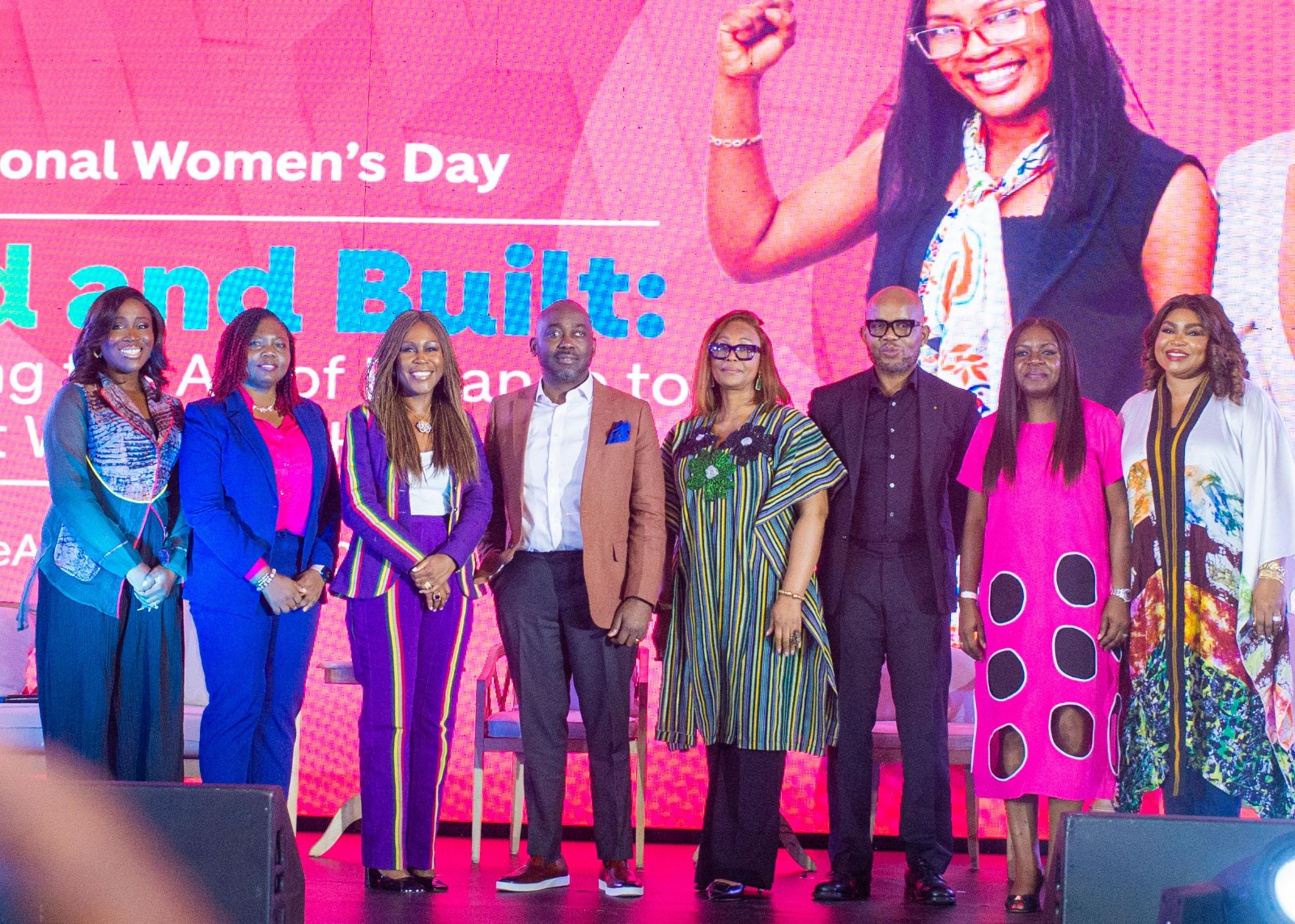
    Lafarge Africa Plc, a leading innovative and sustainable building solutions company and manufacturer of a range of cement brands,underscored its commitment to gender inclusion, workplace diversity, and women’s empowerment with a remarkable celebration of International Women’s Day (IWD) at The Hall Conference Centre, Victoria Island, Lagos, under the theme “Bold and Built: Mastering the Art of Balance to Thrive at Work and at Home.”

    The event brought together accomplished leaders, professionals, and executives who shared their experiences, discussed workplace challenges, and explored strategies for achieving career success while maintaining personal well-being. With engaging panel discussions, insightful keynote speeches, and interactive sessions, the gathering provided a platform for knowledge-sharing and professional development.

    Mr. Lolu Alade Akinyemi, Group Managing Director and Chief Executive Officer, Lafarge Africa, reinforced the company’s commitment to gender inclusion, stating, “At Lafarge, we are very proud of our strides and commitment to gender equality. It’s not a cliché, with every opportunity we walk the talk. We have set clear targets for gender diversity, particularly in managerial positions, and we continue to make great strides to ensure women have equitable opportunities to thrive.”

    Dr. Omobola Johnson, Senior Partner, The Venture Capital Firm TLCOM, in a fireside chat, shared invaluable insights on work-life balance and career growth, emphasizing the importance of long-term perspective in managing responsibilities. “You can have it all, but not at the same time. Work-life balance is not something you achieve daily—it is something that balances out over time. Prioritization is key: ask yourself, ‘Will I regret doing this or regret not doing it?’ and let that guide your decisions,” she advised.

    Mr. Tonye Cole, Co-founder, Sahara Energy, delivered a keynote speech addressing the systematic challenges women face in society, particularly regarding inheritance rights, workplace biases, and leadership opportunities. He emphasized the need for inclusive policies, proactive advocacy, and the critical role of male allies in driving gender equality. Cole underscored that diversity is not just a corporate metric but a catalyst for innovation and sustainable progress.

    “You need to have more women in the boardroom, in decision-making. They make a big difference as to how it is done. The lens that women look out of is totally different. It took a woman to point out to me as CEO that we were doing something wrong, and I didn’t believe it—until I saw the reality,” he stated.

    The event featured a distinguished panel discussion moderated by Olanike Olakanle, Head of Internal Control and Audit, Lafarge Africa, with panelists including Elenda Osima-Dokubo, Non-executive Director, Lafarge Africa, Tara Fela-Durotoye, Founder, House of Tara International; Uzoma Dozie, Founder, Sparkle; and Adejumobi Mofe-Damijo, Head CSR/GLO Foundation; Morenike Molehin, Founder and Chief Executive Officer, Oak and Teak Interiors.

    A significant moment in the event was the session on Strengthening the Green Women’s Network (GWN), Legacy led by Viola Graham-Douglas, Communications, Public Affairs and Sustainability Director. According to her, “GWN is a movement that ensures women have a voice, a seat at the table, and the tools to thrive in their careers. It is about mentorship, sponsorship, and creating real change. We are committed to expanding our reach and deepening our impact, so every woman in Lafarge Africa knows she is valued and supported.”

    The well-attended event also featured personal testimonials from female employees who shared their career journeys, emphasizing the role of organizational support in their professional growth. Other activities during the event include skill-building workshops on makeup and beauty techniques, traditional headgear tying, cocktail and mocktail making, and perfume oil and body mist creation. Additionally, engaging activities such as a fashion showcase and spoken word performance beautified the event.

  • AVCA announces Lagos to Host the Largest Africa-focussed Investment Event

    AVCA announces Lagos to Host the Largest Africa-focussed Investment Event

    AVCA’s 4th Venture Capital Summit in Nigeria will look at how emerging sectors such as deep tech will drive the next era of VC growth in Africa

    AVCA — The African Private Capital Association announced Lagos as the host city for the AVCA Annual Conference and Venture Capital Summit in 2025. After 10 years, Africa’s largest private capital gathering will return to the region’s largest economy, Nigeria. This follows the successful AVCA Conference and VC summit held in Johannesburg last week, which attracted 700+ delegates from more than 60 countries. 

    More than 300 delegates attended the 3rd Annual VC Summit where panellists took stock of the global decline of VC funding and explored a range of solutions to catalyse growth. Speakers marked the influence of rapidly emerging technologies shaping African innovation and driving the digital economy, creating new skills and increasing efficiency, such as artificial intelligence, blockchain and quantum computing.

    Speaking on the panel, ‘The DeepTech Potential in African Tech’, Andre Jr. Ayotte, Partner, Modus Capital, highlighted how founders can apply technology to build companies solving problems at scale. Despite progress in tech-enabled sectors, Nick Allen, Managing Partner, Savant, noted that gaps in Africa’s tertiary education system have led to a lack of skilled graduates with sufficient engineering knowledge. He added that in comparison to more developed markets such as Europe and the US, there is a lack of investors who understand how to finance deep tech in Africa. 

    Speaking during the panel, ‘Seasons Change: Lessons Learned in Winter and the Path to Spring’, panellists took stock of the global decline of funding within the VC ecosystem. Seasoned investor, Khaled Ben Jilani, Senior Partner, AfricInvest, raised the importance of active strategies to make businesses less capital intensive in order to anticipate new risks and navigate a lack of liquidity in the market. Steve Beck, Co-Founder and Managing Partner, Novastar Ventures, expressed that private equity firms and development finance institutions (DFIs) with dedicated VC teams had stepped in to partially fill the funding gaps, particularly in the early stages. 

    Other panel highlights included ‘Catwalks, Canvases, & Choruses: Sector Spotlight on the Creative Industry’, ‘Debt Dynamics: Unlocking Liquidity with Venture Debt in Africa’,‘Green Ventures: VC for Climate’, ‘Founders First: Building a Platform for Success in African’ and ‘The Real Deal” – Venture Capital in the Real Economy’.

    The VC summit saw participation from Africa-focussed venture capital funds, DFIs and global investors including AfricInvest, African Renaissance Partners, Aves Lair, Altree Capital, Breega, Enza Capital, European Investment Bank (EIB), Flat6Labs, LoftyInc Capital, Lightship Anchor Fund, Octerra Capital,  Proparco, Savant, Sango Capital, Sawari Ventures, Standard Bank, TL Com Capital, USAID Prosper Africa, Ventures Platform, 500 Global, and more. 

    Looking ahead, Nigeria’s position at the forefront of venture capital and private equity investment in Africa, backed up by a tech-savvy population and the recent rise in local investment funds and angel investors, sets the scene for a dynamic summit in 2025.  

    Abi Mustapha-Maduakor, Chief Executive Officer, AVCA, said: “Nigeria has emerged over the last decade as an investment hotspot in Africa. The country’s entrepreneurial spirit and well-established pools of local capital gave rise to some of Africa’s earliest unicorns, particularly in the payments sector. As we wrap up the conference in Johannesburg, we look forward to our next event in a city that has played an equally catalytic role in Africa’s investment landscape”.

  • AVCA hosts maiden Sustainable Investing in Africa Summit in London

    AVCA hosts maiden Sustainable Investing in Africa Summit in London

    The African Private Equity and Venture Capital Association’s (AVCA) inaugural Sustainable Investing in Africa Summit opened in London yesterday, convening over 150 key private equity and venture capital stakeholders from around the globe. The event championed the industry’s growth and evolution, key players, and collective action required to increase investment in equality, diversity, and Africa’s new green economies.

    Abi Mustapha-Maduakor, Chief Executive Officer, AVCA, opened the summit by setting out the imperative to pair private capital with purpose, describing it as an area where “African investors have been paving the way on sustainable investing for decades”. Concluding the opening address, she also announced that AVCA will be partnering with the Tony Blair Institute for Global Change to produce a comprehensive report that maps Africa’s climate policy landscape and the level of green investment from the private capital industry being channelled to the continent’s 54 economies.

    The panel, Profiting from Parity: Closing Africa’s Gender Gap saw participants including Anne-Marie Levesque, Director, Gender & Impact Management, FinDev Canada consider the unique opportunities that the continent presents for gender-lens investingDespite suggesting that gender and diversity finance should not be limited to women-led businesses, Matthew Davies, Chief Executive Officer, Renew Strategies said: “It’s important that our industry is intentional about ensuring that female-led businesses are provided the capital they need to succeed. We need to achieve at least 50% parity before 2030.”

    ‘Tokunboh Ishmael, Co-Founder and Managing Director, Alitheia IDF and Lindsey Wallace, Senior Vice-President, Strategy & Impact, Mennonite Economic Development Associates, pledged to leverage their convening power to ramp up investment for gender and diversity finance across the continent. Commenting on the evolution of gender-lens investing, Ishmael said: “We need to move from billions to trillionsand integrate net-zero commitments with this mission.”

    A session unpacking the rise of sustainable investment platforms marked a focal point of the day. During the panel, Africa at the Forefront of Sustainable Investing Globally, Wale Adeosun, Founder & Chief Executive Officer at Kuramo Capital, highlighted the DFI’s anchoring role investing in Africa from as early as the 1970s. He also advocated for GP-LP strategies to back the creation of novel technologies and industries for the next generation.

    Karima Ola, Partner, LeapFrog Investments, described how the popularisation and evolution of impact investing has been characterised by developing the DFI toolkit towards “intentionality” to solve local priorities, generating sustainable returns and opportunities with businesses. Ola and fellow panellists shared success stories involving the presence and performance of sustainable investing in Africa compared to insights from other emerging markets. Alison Klein, Manager Private Equity, FMO commented on Africa’s just transition and suggested that “Climate intention does not mean we can’t finance expansion in job creating sectors. It is important we develop a holistic view and utilise synergies that improve resource efficiency and economic output such as manufacturing, for example.”

    These perspectives were followed by a session where next-generation founders, entrepreneurs, impact investors, and philanthropic players advancing sustainable growth across the continent discussed challenges and practical solutions for investing and innovating for social change. Panellists on the Sustainability In Practice panel included Frank Aswani, Chief Executive Officer, African Venture Philanthropy Alliance. He raised the importance of mobilising local pools of capital through innovation with financial instruments to support high-potential markets in Africa at a time of global uncertainty and instability.

    During the panel Digitalisation: The Last Mile in Unlocking Sustainable DevelopmentShruti Chandrasekhar, Regional Lead, Africa, Disruptive Technologies & Funds, International Finance Corporation discussed the prospects of an emerging  circular economy on the continent, and advised that a “unique aspect of Africa means that we’re not only fixing something that already exists but building something new and recognising that the most productive way to do that is to integrate sustainability into solutions”.

    At the Financing Africa’s Climate Transition: Mitigation & Adaptation panelTariye Gbadegbesin, Managing Director & Chief Executive Officer, ARM Harith, drew the delegates’ attention to the need to define an adaptation framework and the feasibility of a co-benefits approach that yields outcomes in both climate change mitigation and adaptation. The panel also explored how international investment can be applied to co-investments that encourage domestic capital and support the entry of institutional investors, including pension funds, now increasingly moving into Africa’s impact space.

    The Making Impact Meaningful panel assembled high-level voices from DEG, Meridiam, UN PRI, and WHO Foundation to debate how the industry can overcome greenwashing to establish detailed and context-specific metrics for sustainable investing that unify diverse approaches to how stakeholders in the private capital industry can monitor and measure social and environmental impact.

    The closing session saw industry figures such as Adam Hadidi, Founder & Managing Director, BluePeak Private Capital, reflect on how collective efforts such as GP-LP structures, green bonds, and digital and crowdfunding platforms can be deployed to maximise sustainable investing. Opuiyo Oforiokuma, Senior Partner, Africa50, concluded: “Africa cannot ignore climate change simply because we are only responsible for 4% of global emissions. Asset recycling in green assets can be used as a mechanism to bring in more capital in green infrastructure”.

  • AVCA set to host Second Venture Capital Summit & Anounces New Board Members

    AVCA set to host Second Venture Capital Summit & Anounces New Board Members

    Following the African Private Equity and Venture Capital Association’s (AVCA) successful 18th Annual Conference, held from Tuesday 26th – Wednesday 27th April, the association introduced its second Venture Capital (VC) in Africa summit on Thursday 28th April. The conference convened over 500 leaders in the private equity (PE) and venture capital industry to discuss emerging trends and strategies to maintain sustainable growth of VC investment in Africa.

    ‘Tokunboh Ishmael, co-Founder and Managing Director, Alitheia Capital, opened the summit with a welcome address where she described the surge of international interest in Africa’s thriving VC sector as a decisive opportunity to learn from Africa’s evolving private equity ecosystem over the years.  She said, “There is still much to learn from African PE. We have the investors and skill to solve some of the continent’s most pressing problems.”

    Advocating for knowledge exchange and deeper collaboration in a growing industry, she continued by saying: “Let’s use the insight and expertise that has catalysed success across geographies to unlock the scale and growth of more bright ideas and ambitious companies leaping us further into the future. I can’t wait to see the next 20 years of Africa’s PE and VC landscape.”

    The summit proceeded with a panel charting the development of Africa’s early-stage investment landscape over the years, unpacking how it has become a recognised and distinguished investment class.

    Speakers including Tarek Assaad, Managing Partner, Algebra Ventures; Maurizio Caio, Founder and Managing Partner, TLcom Capital; Michael Oluwagbemi, Co-Fund Manager, LoftyInc Capital Management; and Shruti Chandrasekhar, Regional Head, Africa, International Finance Corporation, exchanged perspectives on the continent’s expanding technology ecosystems; trading views on how to bridge the “valley of death” that ensnares so many high-potential African start-ups and addressed the increasing participation of private equity firms in the venture capital space.

    Maurizio Caio, Founder and Managing Partner, TLcom Capital, commented: “It’s important that we focus on how to make sure that the ecosystem’s growth is healthy. Let’s turn the excitement from capital deployment into an impetus that makes sure global capital investors see VC in Africa as the destination to go to. More PE investors should allocate capital to VC.”

    A conversation exploring the concept of unicorns harked back to 2021, a year that saw a record four African start-ups reach billion+ dollar valuations. VC champions Tidjane Deme, General Partner, Partech; Hany Al-Sonbaty, Managing Partner, Sawari Ventures; Khaled Ben Jilani, Senior Partner, AfricInvest and Brian Waswani Odhiambo, West Africa Director, Novastar Ventures examined the business models attracting high-level investor interest as well as the prospects for the industry seeing similar stories of success in the future.

    The summit continued with a series of plenary sessions centred on how early-stage VC investors are faring in Africa’s growing late-stage market; diversity, equality and inclusion; and workshops focussed on data, governance, and effective solutions to navigate complex country-specific and regional financial, legal, and regulatory frameworks.

    The summit progressed with an entrepreneur showcase and sessions addressing the implications for the diversification of capital streams. Thabiso Foto, Chief Financial Officer, Founders Factory Africa; Ory Okolloh, Partner, Verod Kepple Africa Ventures; Nthabiseng Thema, Director, Sango Capital, and Folake Elias-Adebowale, Partner, Udo Udoma & Belo-Osagie discussed strategies to overcome the bottlenecks – posing viable routes for corporate ventures, investment holding companies, fund of funds and private equity firms to crowd into the early-stage investing space.

    In a panel bringing together global perspectives speakers addressed the market drivers for Africa’s continued attractiveness to international investors, the rising diversification of actors in Africa’s VC ecosystem, and the spread of corporate venture capital supporting new and dynamic entrepreneurial ventures in Africa.

    Highlighting the vast opportunities within a flourishing and nascent VC ecosystem in Africa, Ben Marrel, Managing Partner, Breega, said: “It is undeniable – Africa has strong demographics. Like all markets, they are never perfect – but it’s important to identify how massive problems can be transferred into massive opportunities, and this is how pioneering companies are formed.”

    As AVCA marks the onward journey ahead for a private capital industry at an inflexion point, the association announces new Board Chairs and Committee Members. Accordingly, the Board of Directors of the African Private Equity and Venture Capital Association (AVCA) has appointed Paul Botha as Chair; Genevieve Sangudi as Vice-Chair; Mark Kenderdine-Davies and Jennifer Mbaluto as Chair, and Co-Chair of the Legal & Regulatory Committee (LRC), effective immediately.

    Abi Mustapha-Maduakor, Chief Executive Officer, AVCA, added: “I am delighted to have Paul and Genevieve as AVCA’s Chair and Vice-Chair. Their support as existing Board members, and their extensive knowledge and experience in the industry, will be invaluable as we lead AVCA towards delivering on our ambitious goals for 2022 and beyond. I would also like to thank the outgoing Chair, ‘Tokunboh Ishmael, and Vice-Chair, Ziad Oueslati, for their unwavering commitment, support and leadership of AVCA over the past four years. AVCA is unquestionably stronger for their contributions.

    She added: “Additionally, I am delighted to welcome Mark and Jennifer as AVCA’s LRC Co-Chairs. Their collective experience and deep expertise will be instrumental in defining the committee’s deliverables over the coming months. Our appreciation to the outgoing LRC Committee Chair, Geoffrey Burgess, for his outstanding commitment and valuable guidance over the past five years.”