Tag: Shell

  • Feature- BP’s Great Reversal and the Return of Energy Realism

    Feature- BP’s Great Reversal and the Return of Energy Realism

    By Sola Adebawo

    BP’s recent decision to eliminate its standalone Low Carbon Energy division and reorganize around upstream and downstream hydrocarbons is more than a corporate restructuring.

    It is one of the clearest signals yet that the assumptions underpinning the global energy transition are being reassessed.

    For much of the past decade, BP positioned itself as the oil major most determined to reinvent itself. Under its previous leadership, the company sought to transform from a traditional oil and gas producer into an integrated energy company, reducing emphasis on hydrocarbons while expanding investments in renewable energy and other low-carbon businesses.

    Today, that strategy is being recalibrated.

    Some observers see this as evidence that the energy transition is failing. Others view it as vindication for those who argued that oil and gas would remain dominant for decades.

    Both interpretations miss the deeper lesson.

    BP’s restructuring does not signal the end of the energy transition. Around the world, investments in renewable energy, battery storage, grid modernization, electric mobility, hydrogen, biofuels, and energy efficiency continue to grow. Electrification remains one of the defining trends of the twenty-first century.

    What BP’s decision reveals is something else entirely.

    The greatest challenge facing the energy transition is no longer technology.

    It is financing.

    For years, many policymakers, investors, and activists assumed that major oil companies would become the primary vehicles through which the world transitioned away from fossil fuels. BP embraced that vision more aggressively than most of its peers.

    Yet investors increasingly questioned whether low-carbon investments could consistently generate returns comparable to those available in traditional oil and gas businesses. At the same time, global energy demand continued to rise, oil and gas markets remained resilient, and concerns about energy security returned to the forefront of policymaking.

    The result is not a rejection of energy transition.

    It is a recognition that energy transitions are ultimately constrained by economics.

    BP’s decision should not be interpreted as an industry-wide retreat from lower-carbon energy. Companies such as Chevron, Shell, and TotalEnergies continue to invest in carbon reduction technologies, renewable power, biofuels, hydrogen, and other transition-related opportunities. The difference is increasingly one of emphasis rather than direction.

    Across much of the industry, the emerging consensus appears to be that hydrocarbons will finance the transition rather than be rapidly displaced by it.

    This reality reinforces an argument I advanced in an earlier article: the future of energy will not be built without hydrocarbon-generated capital.

    That statement is often misunderstood.

    It is not an argument against renewable energy.

    Nor is it an argument for perpetual dependence on fossil fuels.

    Rather, it is an acknowledgment of a simple reality. The capital required to build the future energy system must come from somewhere.

    Today, a significant portion of that capital continues to originate from hydrocarbons.

    Oil and gas revenues fund government budgets.

    Oil and gas revenues fund sovereign wealth funds.

    Oil and gas revenues support infrastructure development.

    Oil and gas revenues strengthen corporate balance sheets.

    Even many investments associated with the energy transition continue to depend, directly or indirectly, on wealth generated from fossil fuel production.

    This reality is especially important for Africa.

    The continent’s challenge has never been choosing between hydrocarbons and renewables.

    Its challenge is financing development.

    For many African countries, hydrocarbons remain among the few available sources of large-scale investable capital capable of funding electricity access,

    industrialization, transportation infrastructure, human capital development, and economic diversification.

    Yet history offers an important warning.

    Hydrocarbon wealth is not development.

    It is development capital.

    History demonstrates that resource wealth alone creates neither prosperity nor industrialization. Numerous countries have earned enormous revenues from oil and gas while achieving limited economic transformation. The difference between success and failure has never been the existence of resource wealth itself. The difference lies in institutions, governance, policy discipline, and the ability to convert natural capital into productive capital.

    Hydrocarbon revenues can finance transformation.

    They cannot substitute for it.

    This distinction is critical because the debate is often framed incorrectly.

    The choice facing Africa is not between producing hydrocarbons and pursuing energy transition.

    Nor is it between economic development and climate responsibility.

    The real challenge is using today’s resource wealth to build tomorrow’s economy.

    That means investing hydrocarbon revenues in power infrastructure, manufacturing capacity, transportation networks, technology ecosystems, educational institutions, and globally competitive industries.

    In short, it means transforming finite resource wealth into enduring economic capability.

    BP’s decision also highlights a broader shift in how the energy transition itself should be understood.

    For much of the past decade, many discussions assumed a future in which renewables would rapidly replace hydrocarbons. Reality is proving more complex.

    Across much of the world, energy demand continues to grow faster than new energy sources can fully displace existing ones. 

    Renewables are expanding. Electricity demand is expanding. Natural gas remains essential in many markets. Oil demand remains substantial. Developing economies continue to require increasing amounts of affordable and reliable energy to support industrialization and rising living standards.

    The emerging reality is not simply one of energy replacement.

    It is one of energy addition.

    The world is still transitioning, but it increasingly appears to be transitioning from a hydrocarbon-dominated system toward a hydrocarbon-plus-electricity system rather than rapidly eliminating hydrocarbons altogether.

    That distinction has profound implications for Africa.

    It suggests that the continent may have a longer window than many anticipated to convert hydrocarbon wealth into productive assets before global demand eventually peaks and declines.

    But a longer window should not be mistaken for an unlimited one.

    The opportunity remains significant, but it is not permanent.

    Countries that use hydrocarbon revenues to build productive economies will be better positioned for the future.

    Those that merely consume resource wealth will find themselves increasingly vulnerable as the global energy system evolves.

    Ultimately, BP’s restructuring is not a story about the failure of energy transition.

    It is a story about the economics of transition.

    It is a reminder that aspirations must be financed, infrastructure must be funded, and transformation requires capital.

    The future of energy may well be lower carbon.

    But for much of the world, and especially for Africa, the capital required to build that future will continue to come from hydrocarbon-generated wealth for decades to come.

    The real question is not whether Africa should produce hydrocarbons.

    The real question is whether Africa can convert hydrocarbon wealth into the infrastructure, industries, and institutions that ultimately make hydrocarbons less necessary.

    Oil is not Africa’s future.

    But for much of Africa, oil may still be the capital that finances it.

    Sola Adebawo is an energy industry executive and strategic advisor with nearly three decades of experience across Africa’s oil and gas sector. He is the Chief Executive Officer of Hyphen Partners Limited, a specialist advisory firm focused on policy and regulatory intelligence, market entry, stakeholder strategy, and executive positioning in complex and highly regulated industries. He writes on energy, industrialization, development sovereignty, and Africa’s economic transformation.

  • Senegal and Nigeria Deepen Energy Ties as Ministerial Visit Signals New Era of African Collaboration

    Senegal and Nigeria Deepen Energy Ties as Ministerial Visit Signals New Era of African Collaboration

    A high-level working visit between Senegal and Nigeria is laying the groundwork for deeper cooperation in refining, gas monetization, policy development and intra-African energy trade

    Senegal and Nigeria are strengthening bilateral energy cooperation following a high-level working visit by Senegal’s Minister of Energy, Birame Soulèye Diop and representatives from national oil company (NOC) Petrosen to Abuja this week. The Senegalese delegation met with Nigeria’s Minister of State for Petroleum Resources (Oil) Senator Heineken Lokpobiri and the Nigerian National Petroleum Company (NNPC), with the parties committing to strengthening cooperation across various fields. The visit reflects a growing commitment by African producers to work together on refining, policy development, gas monetization and NOC collaboration – a strategy that is expected to strengthen African energy growth and industrialization. 

    Representing the voice of the African energy sector, the African Energy Chamber (AEC) has welcomed the collaboration, noting that stronger ties between African producers are critical at a time when the continent is seeking to attract investment, build infrastructure and expand intra-African energy trade. Greater cooperation between ministries and NOCs such as Petrosen and NNPC has the potential to support knowledge sharing, strengthen institutional capacity and accelerate the development of strategic projects across the oil and gas value chain, from upstream production to refining and gas commercialization. The collaboration also comes as African countries work to operationalize the Africa Energy Bank, with Senegal having already paid its capital contribution and positioning itself as an active participant in financing African energy projects.

    “This is exactly the kind of collaboration Africa needs. When countries like Senegal and Nigeria work together – sharing knowledge, building infrastructure, strengthening NOCs and improving policies – we create an environment where investment can thrive and where Africa can take control of its energy future. Strong partnerships between African nations will be the foundation of energy security, industrialization and economic growth across the continent,” states NJ Ayuk, Executive Chairman, AEC.

    The collaboration comes as a pivotal time for West Africa, with both Senegal and Nigeria looking at expanding their respective upstream and downstream markets. For Senegal, collaboration with Nigeria could serve as a catalyst for stronger governance structures and streamlined licensing procedures, enhancing the country’s attractiveness for foreign capital as it looks to scale production and bolster regional trade. Recent milestones have not only positioned Senegal as a producing market but demonstrated its potential for scalable investments.

    Following the start of operations at the Sangomar oilfield and Greater Tortue Ahmeyim (GTA) LNG development in 2024 and 2025 respectively, Senegal has been working to scale output. Sangomar production has stabilized at around 100,000 bpd, with 36.1 million barrels generated in 2025 alone. From February 2025 to February 2026, GTA exported 24 LNG cargoes, alongside 1.6 million barrels of condensate marketed internationally.

    Looking ahead, the country is looking at expanding both facilities, while advancing the development of the Yakaar-Teranga offshore project. The country is also looking at monetizing onshore resources. Petrosen has launched a $100 million exploration campaign targeting underexplored onshore basins, with goals to identify new crude discoveries by late-2026 through seismic acquisition, basin modeling and exploratory drilling programs.

    Nigeria, meanwhile, remains Africa’s largest oil producer and is pursuing ambitious production targets of around 2 million bpd while simultaneously expanding its gas and refining sectors. To achieve this goal, the country rolled out a 2025 licensing round featuring 50 frontier and one deepwater block. The round targets $10 billion in investment over the next decade. In tandem, the country is re-engaging IOCs in deepwater exploration, with Chevron, ExxonMobil and Shell all advancing offshore projects. The NNPC is also pursuing an ambitious upstream drive, targeting $30 billion in investments by 2030.

    Downstream, the country is looking at expanding the 650,000 bpd Dangote Refinery’s capacity to 1.4 million bpd, while the issuance of Permits to Access Flare Gas to 28 awardees in December 2025 is set to unlock $2 billion in gas investments. Cooperation with Senegal therefore aligns with Nigeria’s broader strategy of strengthening African energy markets while expanding regional trade in both crude and refined products.

    The strengthening of ties between Senegal and Nigeria signals a broader shift taking place across Africa’s energy sector, where collaboration – rather than competition – is increasingly being seen as the key to unlocking investment, developing infrastructure and ensuring long-term energy security. By working together on refining, gas monetization, policy development and energy financing, Senegal and Nigeria are helping to set a precedent for how African energy markets can grow stronger through partnership, integration and shared strategic objectives.

  • Adeleye Falade Assumes Office as NLNG’s MD/CEO

    Adeleye Falade Assumes Office as NLNG’s MD/CEO

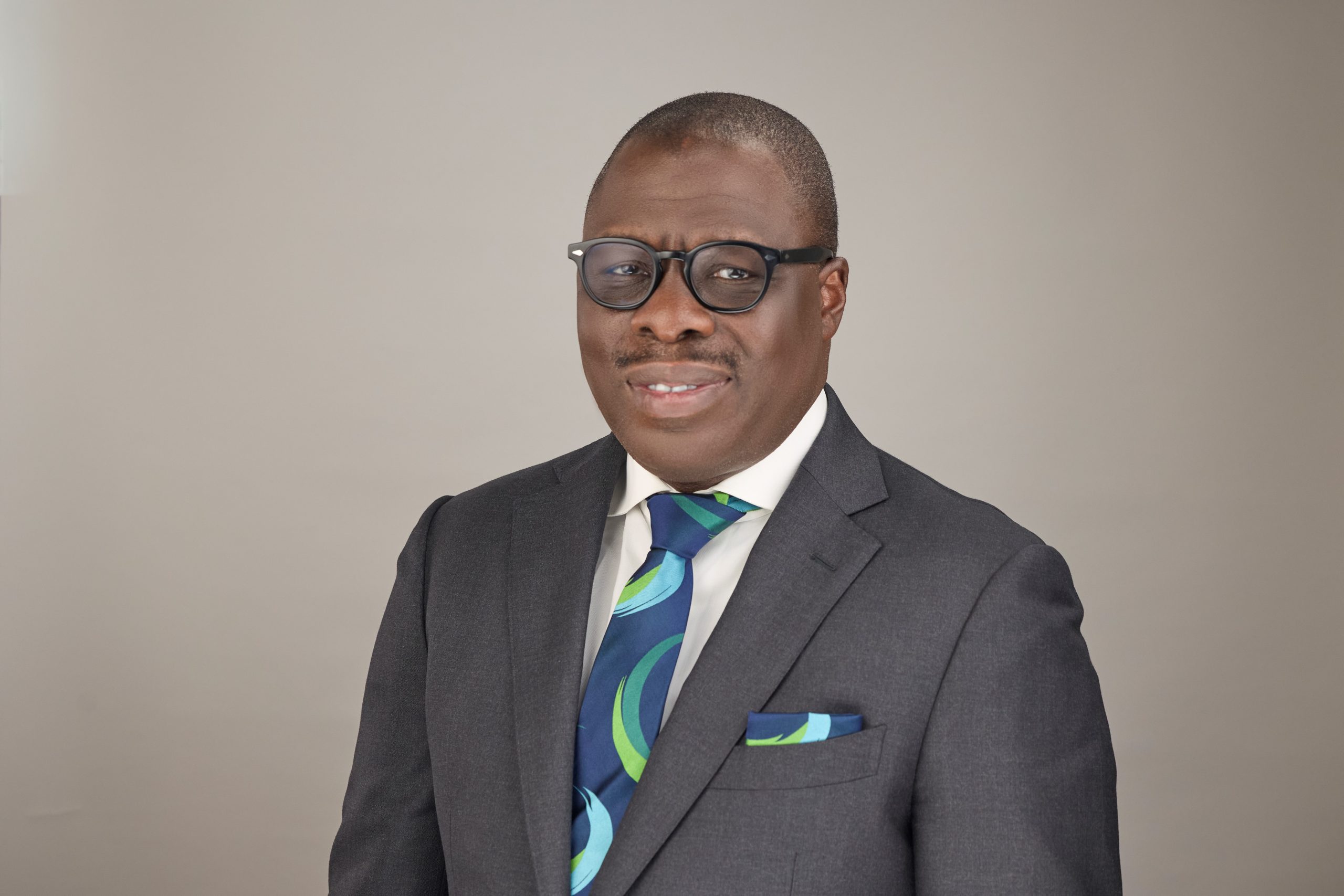
    Adeleye Falade has officially assumed office as the Managing Director and Chief Executive Officer of NLNG. He took up the role on Wednesday at the company’s Corporate Head Office in Port Harcourt, Rivers State, succeeding Philip Mshelbila, who was recently appointed Secretary-General of the Gas Exporting Countries Forum (GECF).

    Falade brings nearly three decades of experience in the global oil and gas industry, with extensive leadership exposure across the LNG and petroleum value chain. Over the course of his career within the Shell Group, he has built a distinguished record across upstream and midstream operations in Europe, Asia, the Middle East, Russia, and Africa.

    His professional expertise spans gas and petroleum operations, production optimisation, engineering, operational excellence, business improvement, and change management. He has also held several senior technical and leadership roles within Shell and its affiliated companies, gaining broad exposure to complex operational environments, multinational joint ventures, and the management of diverse, multicultural teams.

    Prior to his appointment as Managing Director and Chief Executive Officer of NLNG, Falade served as Managing Director of Brunei LNG Sendirian Berhad, a position he assumed in April 2024. In that role, he led one of the world’s established LNG producers and oversaw strategic operational delivery within Brunei’s LNG sector.

    Earlier in 2023, he was appointed Country Chair for Shell Namibia, where he provided strategic leadership for Shell’s operations and stakeholder engagement in the country.

    Before taking on these international leadership assignments, Falade held key senior roles at NLNG. Between May 2019 and September 2023, he served as General Manager, Production, where he was responsible for ensuring production reliability, plant performance, and operational safety across NLNG’s world-class LNG facilities on Bonny Island.

    Earlier in his career, he served as Operations Manager at NLNG from July 2015 to May 2018, overseeing plant operations and operational performance. He later moved to the Netherlands as Regional Asset Management System (AMS) Implementation Manager at Shell in The Hague between May 2018 and April 2019. In that role, he led the deployment of asset management systems aimed at improving operational efficiency and reliability across Shell’s global assets.

    Falade has a Bachelor’s degree in Electrical/Electronics Engineering from the University of Ibadan. He also obtained a Master of Business Administration (MBA) from Henley Business School, University of Reading, United Kingdom, further strengthening his strategic and leadership capabilities in the global energy sector.

    Falade is a Fellow of the Nigerian Society of Engineers (FNSE) and a registered member of the Council for the Regulation of Engineering in Nigeria (COREN). He is also a member of the Society of Petroleum Engineers (SPE).

    Falade assumes leadership of NLNG at a pivotal time for the company and the global LNG industry. The company recently secured long-term Gas Supply Agreements (GSAs) with six third-party suppliers to strengthen feedgas supply to its Bonny Island trains. This comes as the Train 7 expansion project nears completion, a development expected to significantly boost NLNG’s production capacity and reinforce Nigeria’s position in the global LNG market.

    Fadale joins a fully Nigerian management team at NLNG, demonstrating the company’s sustained commitment to developing indigenous leadership and strengthening local capacity within the organisation.

  • The Africa Energy Bank (AEB) Effect: How the Africa Energy Bank is Re-Writing the Frontier Investment Playbook

    The Africa Energy Bank (AEB) Effect: How the Africa Energy Bank is Re-Writing the Frontier Investment Playbook

    As global upstream capital tightens, the Africa Energy Bank is stepping in to unlock risk capital, crowd in partners and accelerate frontier exploration across Africa’s oil and gas sector

    While global exploration and production capital expenditure is set to reach $504 billion in 2026, the upstream market is also entering a period of heightened discipline. International oil companies are prioritizing capital efficiency, investors are narrowing exposure to hydrocarbons and commercial banks are scaling back long-cycle lending. For Africa – home to some of the world’s most prospective yet underexplored basins – this tightening threatens to stall exploration just as geological momentum is accelerating. However, with the rise of the Africa Energy Bank (AEB), the continent has the chance to redefine how frontier projects are financed, reshaping risk allocation and restoring confidence in Africa’s upstream investment case.

    Financing Africa at a Moment of Constraint

    Spearheaded by the African Petroleum Producers Organization (APPO) and the African Export-Import Bank (Afreximbank), the AEB was established under an overarching goal to address the continent’s energy finance gap – estimated by the African Energy Chamber (AEC) at between $31.5 billion and $45 billion annually. With an initial capitalization of $5 billion, the Bank’s mandate spans upstream, midstream and energy-linked infrastructure, with a core focus on addressing the early-stage financing gap that has historically constrained exploration and appraisal activity. The bank is expected to grow to $120 billion within three to five years, reflecting its potential as a major financing institution in Africa.

    Momentum is already building towards the AEB’s operationalization. As of December 2025, Nigeria completed the fully furnished headquarters of the Bank in Abuja. December 2025 also saw Senegal approve its share of payment for the Bank, with the country joining Nigeria, Angola and Ghana fulfilling their requisite capital shares. Other APPO member states including the Republic of Congo, Algeria, Benin, Equatorial Guinea and Ivory Coast have pledged to make their payments, representing a key step towards realizing the potential of this critical institution.

    Unlocking New Frontiers

    The AEB’s impact is expected to be most visible across Africa’s frontier oil and gas provinces, where exploration interest is strong but financing remains a central challenge. In Namibia, recent deepwater discoveries have transformed geological perceptions, yet advancing appraisal drilling and infrastructure planning requires fresh capital. TotalEnergies hopes to reach a final investment decision for its Venus project in 2026, while Galp is advancing its Mopane discovery toward development. Frontier drilling is currently underway by Shell at PEL 39, Rhino Resources at PEL 85 and Chevron at PEL 82. AEB-backed financing could shorten the timeframe from exploration to development, supporting the creation of a new petroleum province in Africa.

    Over the border, South Africa’s offshore basins are similarly attracting renewed interest, but regulatory complexity and long lead times amplify financing risk – precisely where structured, patient capital becomes critical. TotalEnergies, Impact Oil & Gas and Shell are planning multi-well drilling campaigns, while a moratorium lift on shale gas exploration in 2025 is expected to drive onshore exploration in the Karoo. Zimbabwe is also advancing onshore exploration, with Invictus Energy recently reopening its funding search following a failed agreement with Al Mansour Holdings.

    Further north, countries across the MSGBC Basin are seeking partners and capital to advance frontier exploration. Hoping to mirror offshore success seen in Senegal (Sangomar) and Mauritania (BirAllah), regional neighbours are engaging operators to invest. Home to Africa’s largest discovery of 2021, Ivory Coast has seen explorers return in force in recent years, with companies such as Murphy Oil Corporation set to drill in the coming months. As frontier exploration advances, the AEB not only strengthens balance sheets, but also de-risks early-stage projects and accelerates the path from geological promise to commercial development.

    The AEB on a Global Stage at AEW 2026

    The AEB is expected to take center stage at this year’s African Energy Week conference – taking place October 12-16 in Cape Town. As the continent’s leading energy investment platform, the event will convene policymakers, financiers and operators to examine how institutions like the AEB are reshaping capital flows into frontier markets. At a time of tightening global capital and rising African ambition, the AEB effect is clear: frontier exploration is no longer a leap of faith – it is becoming a structured, financeable pathway to Africa’s energy future.

    “Africa does not lack resources or opportunity – it lacks access to capital that understands its realities. The AEB is about restoring balance, empowering African projects and ensuring the continent controls its own energy destiny,” stated NJ Ayuk, Executive Chairman, African Energy Chamber. 

  • Dangote Group’s Anthony Chiejina Makes Global Influence 100 Again

    Dangote Group’s Anthony Chiejina Makes Global Influence 100 Again

    … Only Nigerian named among world’s most powerful communications leaders

    Anthony Chiejina, Group Chief Branding and Communications, Dangote Group, has been named to the prestigious 2025 Influence 100, reaffirming his standing as one of the most consequential communications leaders in the world and the only Nigerian on this year’s list.

    The recognition marks Chiejina’s fifth consecutive appearance on the global ranking, having previously been listed in 2021, 2022, 2023 and 2024, a rare distinction that underscores both consistency and sustained global relevance. His continued presence places him among an elite group of in-house communicators whose judgement, influence and strategic insight shape corporate reputation at the highest level.

    Published annually by PRovoke Media and now in its 13th year, the Influence 100 identifies the most impactful senior communications, corporate affairs and marketing executives worldwide. The 2025 list reflects a rapidly changing global environment in which communications has evolved from a support function into a core pillar of leadership, governance and trust building amid geopolitical uncertainty, technological disruption and heightened public scrutiny.

    According to PRovoke Media, the leaders recognised this year demonstrate strategic clarity, cultural intelligence and the ability to guide organisations through complexity. Final selections are made by the publication’s senior editorial team through proprietary research and external nominations, assessed against organisational seniority and global reach, influence over agency partnerships and budgets, and contribution to thought leadership and industry direction. The list also prioritises gender balance, racial diversity and geographic representation.

    According to the publication, Chiejina’s inclusion reflects his central role in shaping the reputation of Dangote Group, Africa’s largest industrial conglomerate. For over 15 years, he has overseen corporate communications across the group’s diverse portfolio, spanning cement, agriculture, energy, manufacturing and consumer goods. His stewardship has been instrumental in positioning Dangote as the continent’s most admired indigenous company and a symbol of African industrial ambition.

    “As group head of corporate communications, he oversees external and internal reputation across multiple sectors spanning cement, agriculture, energy and consumer goods, and has helped steer the brand’s continued recognition as the most admired indigenous company on the continent,” it said.

    Under his leadership, the group’s communications function has navigated complex regulatory environments, major industrial expansions and heightened global attention, particularly as Dangote deepens its footprint across Africa and advances sustainability and energy security initiatives.

    Before joining Dangote Group, Chiejina held senior roles at Zenith Bank, Oceanic Bank, Seven Up Bottling Company, the African Economic Digest (AED) and African Concord, experiences that have given him deep insight into Nigeria’s political economy, financial markets and media landscape. That breadth of experience continues to inform Dangote Group’s engagement with stakeholders at home and abroad.

    His sustained recognition on the Influence 100 highlights not only personal professional excellence, but also the growing visibility of African corporate leadership in global reputation management. As communications becomes increasingly central to how organisations lead and earn trust, Chiejina’s presence on the list reinforces Nigeria’s place in the global conversation shaping the future of the profession.

    The 2025 Influence 100 includes 28 new entrants, alongside several high-profile reentries by senior communications leaders who have since taken on expanded global roles. These include Michael Stewart, who moved from PwC to Unilever; Michael Gonda, from McDonald’s to Nike; and Sandy Rodriguez, also from McDonald’s to Eli Lilly.

    This year’s list reflects a powerful cross section of communications leadership from some of the world’s most influential organisations, including Walmart, Apple, Shell, Microsoft, Nvidia, Nissan, Coca Cola, Google, Lufthansa, MTN, Emirates, Ford, Marriott, Tencent and Reliance Industries among others.

    In total, 20 countries are represented, highlighting the global reach and strategic importance of senior in house communications leadership. Gender representation remains strong, with 58 women and 42 men featured, sustaining a female majority for the second consecutive year.

    The 2025 Influence 100 is also the most highly educated cohort to date, with all honourees holding at least a first degree and 56 per cent possessing advanced qualifications, up sharply from previous years.

  • Feature- Dangote, Monopoly Power, and Political Economy of Failure

    Feature- Dangote, Monopoly Power, and Political Economy of Failure

    by Blaise Udunze

    Nigeria’s refining crisis is one of the country’s most enduring economic contradictions. Africa’s largest crude oil producer, strategically located on the Atlantic coast and home to over 200 million people, has for decades depended on imported refined petroleum products. This illogicality has drained foreign exchange, weakened the naira, distorted investment incentives, and hollowed out state institutions. Instead of catalysing industrialisation, Nigeria’s oil wealth became a mechanism for capital flight, rent-seeking, and institutional decay.

    With the challenges surrounding the refining of crude oil, the establishment of Dangote Refinery signifies an important historic moment. The refinery promises to reduce fuel imports to a bare minimum, sustain foreign exchange growth, ensure there is constant fuel domestically, and strategically position Nigeria as a regional exporter of refined oil products if functioned at full capacity. Dangote Refinery symbolises what private capital, technology, and ambition can achieve in Africa following years of fuel queues, subsidy scandals, and global embarrassment.

    Nigerians must have a rethink in the cause of celebration. Nigeria’s refining problem is not simply about capacity; it is about systems. Without addressing the policy failures and institutional weaknesses that made Dangote an exception rather than the rule, the country risks replacing one failure with another, this time cloaked in private-sector success.

    For a fact, Nigeria desperately needs the emergence of Dangote refinery, and its success is in the national interest. Hence, this is not an argument against the Dangote Refinery. But history warns that structural failures are not solved by scale alone. Over the year, situations have shown that without competition and strong institutions, concentrated market power, whether public or private, can undermine price stability, energy security, and consumer welfare.

    The Long Silence of Refinery Investments

    Perhaps the most troubling question in Nigeria’s oil history is why none of the global oil majors like Shell, ExxonMobil, Chevron, Total, or Agip has built a major refinery in Nigeria for over four decades. These companies operated profitably in Nigeria, extracted their crude, and sold refined products back to the country, yet never committed capital to domestic refining.

    Over the period, it has been shown that policy incoherence has been the cause, not a matter of technical incapacity, such as price controls, resistant licensing processes, subsidy arrears, frequent regulatory changes, and political interference, which made refining an unattractive investment. Importation, by contrast, offered quick returns, lower political risk, and guaranteed margins, often backed by government subsidies.

    Nigeria carelessly designed a system that rather rewarded importers and punished refiners. Dangote did not succeed because the system improved; he succeeded despite it. His refinery exists largely because of the concessions from the government, exceptional financial capacity, political access, and a willingness to absorb risks that institutions should ordinarily mitigate. This raises a deeper concern; when institutions fail, progress becomes dependent on extraordinary individuals rather than predictable systems.

    The Tragedy of NNPC Refineries

    If private investors stayed away, Nigeria’s state-owned refineries should have filled the gap. Instead, the Port Harcourt, Warri, and Kaduna refineries became monuments to mismanagement. Records have shown that between 2010 and 2025, Nigeria reportedly wasted between $18 billion and $25 billion, over N11 trillion, just for Turn Around Maintenance and rehabilitation. Kaduna Refinery alone is estimated to have consumed over N2.2 trillion in a decade.

    Despite these expenditures, output remained negligible. This was not merely a technical failure but a governance one. Contracts were poorly monitored, accountability was absent, and consequences were nonexistent. In functional systems, such outcomes trigger investigations, sanctions, and reforms. In Nigeria, the cycle repeated itself, eroding public trust and deepening the country’s dependence on imports.

    Where Is BUA?

    Dangote is not the only Nigerian conglomerate to announce refinery ambitions. In 2020, BUA Group unveiled plans for a 200,000-barrels-per-day refinery. Years later, progress remains unclear, timelines have shifted, and execution appears stalled.

    This pattern is revealing. When multiple large investors struggle to translate plans into reality, the issue is not ambition but environment. Refinery projects in Nigeria appear viable only at a massive scale and with extraordinary political leverage. Smaller or mid-sized players are effectively crowded out, not by market forces, but by systemic dysfunction.

    Policy Failure and the Singapore Comparison

    Nigeria often aspires to emulate Singapore’s refining and petrochemical success. The comparison is instructive. Singapore has no crude oil, yet it has built one of the world’s most sophisticated refining hubs through consistent policy, investor protection, infrastructure planning, and regulatory certainty.

    Nigeria chose a different path: price controls, subsidies, weak contract enforcement, and politically motivated policy reversals. Refineries became tools of patronage rather than productivity. Capital exited, infrastructure decayed, and dependence on imports deepened. The outcome was predictable.

    The Cost of Import Dependence

    For years, Nigeria spent billions of dollars annually importing petrol, diesel, and aviation fuel. This placed constant pressure on foreign reserves and the naira. Petrol subsidies alone were estimated at N4-N6 trillion per year, often exceeding national spending on health, education, or infrastructure.

    Even after subsidy removal, legacy costs remain: distorted consumption patterns, weakened public finances, and entrenched interests built around importation. These interests did not disappear quietly.

    Who Really Benefited from the Subsidy?

    Although framed as pro-poor, fuel subsidies disproportionately benefited importers, traders, shipping firms, depot owners, financiers, and politically connected intermediaries. Smuggling across borders meant Nigerians subsidised fuel consumption in neighbouring countries.

    Ordinary citizens received marginal relief at the pump but paid far more through inflation, deteriorating infrastructure, and underfunded public services. The subsidy system functioned less as social protection and more as elite redistribution.

    The Traders’ Dilemma

    Why did major fuel marketers like Oando invest in refineries abroad but not in Nigeria? Again, incentives explain behaviour. Importation offered faster returns, lower capital requirements, and political insulation. Domestic refining demanded long-term investment under unstable rules.

    In an irrational system, rational actors optimise accordingly. Importation thrived not because it was efficient, but because policy made it so.

    FDI and the Confidence Problem

    Sustainable Foreign Direct Investment follows domestic confidence. When local investors, who best understand political and regulatory risks, avoid long-term industrial projects, foreign investors take note. Capital flows to environments with predictable pricing, rule of law, and policy consistency.

    Nigeria’s challenge is not attracting speculative capital, but building conditions for patient, productive investment.

    Dangote and the Monopoly Question

    Dangote Refinery deserves credit. But scale brings power, and power demands oversight. If importers exit and no competing refineries emerge, Dangote could potentially dominate the refining, pricing, and supply markets. Nigeria’s experience with cement, where domestic production rose but prices soared due to limited competition, offers a cautionary tale.

    Markets function best with competition. Without it, price manipulation, supply risks, and weakened energy security become real dangers, especially in countries with fragile regulatory institutions.

    The Way Forward: Competition, Not Replacement

    Nigeria does not need to weaken Dangote; it needs to multiply Dangotes. The goal should be a competitive refining ecosystem, not replacing a public monopoly with a private monopoly.

    This requires transparent crude allocation, open access to pipelines and storage, fair pricing mechanisms, and strong antitrust enforcement. State refineries must either be professionally concessional or decisively restructured. Stalled projects like BUA’s should be unblocked, and modular refineries should be supported.

    The Litmus Test
    Nigeria’s refining crisis was decades in the making and cannot be solved by one refinery, however large. Dangote Refinery is a turning point, but only if embedded within systemic reform. Otherwise, Nigeria risks trading one form of dependency for another.

    The true test is not whether Nigeria can refine fuel, but whether it can build fair, open, and resilient institutions that serve the public interest. In refining, as in democracy, excessive concentration of power is dangerous. Competition remains the strongest safeguard.

    Blaise, a journalist and PR professional, writes from Lagos and can be reached via: blaise.udunze@gmail.com

  • Nigeria: Government must clear the names of executed activists Ogoni Nine

    Nigeria: Government must clear the names of executed activists Ogoni Nine

    The Ogoni Nine’s protests in 1995 brought global attention to the devastating cost of the fossil fuel industry on the climate, people’s lives, the environment, and continued poverty in oil producing areas

    Marking 30 years since the Nigerian government’s brutal execution of nine leading environmental activists – the Ogoni Nine – for fighting to protect the Niger Delta from oil giant Shell, Amnesty International is calling for their full exoneration. The anniversary coincides with the start of the UN climate talks (COP 30) in Brazil.

    The Ogoni Nine’s protests in 1995 brought global attention to the devastating cost of the fossil fuel industry on the climate, people’s lives, the environment, and continued poverty in oil-producing areas.

    In June 2025, the Nigerian government pardoned the Ogoni Nine. While Amnesty International welcomed the news, it fell short of the justice the Ogoni Nine and their families deserve.

    “The Ogoni Nine, led by Nigeria’s leading author and campaigner Ken Saro-Wiwa, were brutally executed in 1995 by a regime that wanted to hide the crimes of Shell and other oil companies. These companies were destroying – and continue to destroy – the lives and livelihoods of tens of thousands of people across the Niger Delta as a result of their devastating oil spills and leaks,” said Isa Sanusi, Amnesty International’s Nigeria Country Director.  

    “While their pardon was a step forward, the Ogoni Nine deserve full exoneration. These men were executed for a crime they did not commit. Their friends and family have been through enough and they deserve justice.”

    Esther Kiobel, the wife of Dr Barinem Kiobel, a former government official who was one of the Ogoni Nine, has spent 30 years battling the huge oil conglomerate in and out of court and won’t stop until her husband’s name is cleared.

    “My husband was killed like a criminal and all I wanted was for his name to be exonerated – it’s what I still want. My father used to tell me: ‘A good name is better than gold or silver.’ That is what gave me the strength to fight.”

    A brutal campaign

    The executions were the culmination of a brutal campaign by Nigeria’s military government to silence the protests of the Movement for the Survival of the Ogoni People (MOSOP) who, under Ken Saro-Wiwa’s leadership, had campaigned against continued pollution from oil spills and gas flaring.

    “Extensive reporting from Amnesty International concluded that oil company Shell knowingly provided encouragement and motivation to the military authorities to stop the MOSOP protests, even after the authorities repeatedly committed human rights violations in Ogoniland and specifically targeted Ken Saro-Wiwa and MOSOP,” said Isa Sanusi.

    In 2018, Amnesty International shared its reporting with the International Crimes Unit of the Netherlands Public Prosecution Service to evaluate whether Shell bore criminal responsibility for its involvement in the military crackdown on the MOSOP demonstrations.

    The Dutch authorities determined, according to a private letter addressed to Amnesty International, that “a large-scale raid on 43 Ogoni villages and Giokoo” by the Nigerian military, which led to numerous killings, followed Shell’s request for assistance in securing its operations in March 1994, which Shell “knew or should have known” would lead to disproportionate force.

    According to this letter, Dutch law enforcement declined to open a criminal investigation into Shell’s responsibility because they lacked “enough evidence that Shell intended to have the demonstrators killed by the various Nigerian troops” and believed that they had no “realistic” prospect of collecting such evidence.

    However, according to Amnesty International, the evidence established sufficient grounds for Dutch authorities to investigate Shell’s criminal responsibility.

    Devastating effects still felt today

    The effects of the Ogoni Nine’s executions are still felt across local communities today.

    For 60 years Shell and other oil companies have been responsible for oil spills and leaks due to poorly maintained pipelines, wells and inadequate clean-up attempts that have ravaged the health and livelihoods of many of the 30 million people living in the Niger Delta – most of whom live in poverty. The oil spills have caused permanent damage to farmlands, waterways, and drinking water – affecting people’s health and leaving communities unable to farm or fish.

    “The execution of these activists has given the Nigerian government and oil companies, including Shell, licence to crack down on protests and intimidate people in the Niger Delta who have been demanding justice and an end to their toxic pollution,” said Isa Sanusi. 

    However, the Ogale and Bille communities affected by the oil spills refuse to be silenced. This year saw them take Shell to the UK’s Royal Courts of Justice to demand the oil giant clean up the oil spills that have wrecked their livelihoods, health and caused widespread devastation to the local environment. Their case is scheduled to be heard in March 2027.

    All eyes on fossil fuels

    With the start of COP 30, the world’s attention is set to turn to the devastating effects of fossil fuels, as Amnesty International calls for states to commit to a full, fast, fair and funded fossil-fuel phase-out and just transition to sustainable energy for all.

    “With major oil spills yet to be cleaned up, the story of the Ogoni Nine has never been more pertinent. Their fight continues and their memories will never be forgotten, as will the plight of many other activists who continue to defend the environment,” said Isa Sanusi.

    “As we mark the 30th anniversary of these executions, we hope local communities in Nigeria will be given the space, time and dignity to hold remembrance events for the Ogoni Nine free of harassment from the authorities.”

    On 12 November, Amnesty International will release Extraction Extinction: Why the life cycle of fossil fuels threatens life, nature, and human rights, a new report on environmental human rights defenders which includes a dedication to the Ogoni Nine and a full case study on oil pollution in the Niger Delta.

    Amnesty International is calling for Shell to conduct meaningful consultation with affected communities about its plans for disengagement. Irrespective of any divestment of operations and as part of this consultation, Shell must also propose a full remediation plan including details of all completed and ongoing clean-ups across its areas of operation, as well as adequate compensation for the severe and sustained harm affected communities have faced as a result of Shell’s operations in the Niger Delta. All these plans and processes should be in line with international human rights law and standards.

    BACKGROUND

    The Ogoni Nine, led by environmental activist and writer Ken Saro-Wiwa, included Barinem Kiobel, John Kpuinen, Baribor Bera, Felix Nuate, Paul Levula, Saturday Dobee, Nordu Eawo and Daniel Gbokoo. They were executed after a blatantly unfair trial on 10 November 1995. Wrongly accused of involvement in murder, the men had in fact been put on trial because they challenged the devastating impact of oil production by Shell in the Ogoniland region of the Niger Delta. 

    Amnesty International has published numerous reports, documenting the detrimental impact Shell’s operations are having on Nigerian communities.

  • African Ministers to Tackle Energy Investment Gap at Invest in African Energy (IAE) 2025

    African Ministers to Tackle Energy Investment Gap at Invest in African Energy (IAE) 2025

    Energy ministers from Nigeria, Guinea-Bissau, the DRC and Zimbabwe will convene to explore financing strategies and partnerships to advance Africa’s next wave of oil and gas development at the Invest in African Energy Forum in Paris next week

    At Invest in African Energy 2025, a high-level ministerial panel will bring together energy ministers from Nigeria, Guinea-Bissau, the Democratic Republic of Congo (DRC) and Zimbabwe to examine the capital requirements and strategic partnerships needed to bring Africa’s next generation of energy projects online.

    Set against a backdrop of evolving global energy dynamics and intensifying pressure to meet net-zero targets, the session – “Africa on the Global Energy Stage: Financing the Next Generation of Energy Projects” – will explore how African nations are navigating complex investment landscapes to drive sustainable hydrocarbon development. Moderated by NJ Ayuk, Executive Chairman of the African Energy Chamber, the discussion will feature Ekperikpe Ekpo, Minister of State for Petroleum Resources (Gas) of Nigeria; Malam Sambu, Minister of Energy of Guinea-Bissau; Wivine Moleka, Deputy Minister of Hydrocarbons of the DRC; and July Moyo, Minister of Energy & Power Development of Zimbabwe.

    IAE 2025 is an exclusive forum designed to facilitate investment between African energy markets and global investors. Taking place May 13-14, 2025 in Paris, the event offers delegates two days of intensive engagement with industry experts, project developers, investors and policymakers. For more information, please visit www.Invest-Africa-Energy.com.To sponsor or participate as a delegate, please contactsales@energycapitalpower.com.

    Nigeria, which holds the largest natural gas reserves in Africa, is advancing its “Decade of Gas” agenda under a reform-oriented administration working to reposition the country as a global gas hub. The government is prioritizing infrastructure development, market liberalization and targeted policy incentives to draw large-scale investment into the sector, which has already led to major capital commitments from international players including Shell, Chevron and TotalEnergies, and the rollout of new LNG, FLNG and mini-LNG projects.

    In Guinea-Bissau, the energy sector is entering a new phase of exploration and frontier investment. As one of the continent’s least developed hydrocarbon markets, the country is laying the institutional and regulatory foundations for future growth, with an emphasis on public-private collaboration and regional integration. Last September, Guinea-Bissau spudded a deep offshore exploration well near the neighboring Sangomar discovery in Senegal, marking a significant step toward unlocking its offshore potential.

    The DRC, meanwhile, is pushing to unlock the potential of its underexplored hydrocarbon basins. With a renewed focus on exploration and development, the DRC is pursuing strategic licensing efforts and engaging international partners to accelerate activity, while also seeking to balance environmental considerations with its economic development goals.

    Zimbabwe continues to prioritize energy diversification and regional power security. In recent years, the country has undertaken efforts to expand its generation capacity and foster investment through independent power producers and infrastructure partnerships. As southern Africa faces persistent energy shortfalls, Zimbabwe is positioning itself as a critical part of the regional solution. Together, Africa’s leading energy ministers will engage in a forward-looking dialogue on innovative partnership models, policy frameworks and the capital flows needed to ensure Africa’s energy projects not only get off the ground, but also deliver long-term value for both investors and local economies

  • Vandalism threatens Nigeria LNG’s N727bn dividends in 2025

    Vandalism threatens Nigeria LNG’s N727bn dividends in 2025

    …As only two of six trains operational- Mshelbila

    The Nigeria LNG Limited (NLNG) has announced that only two of its six trains are currently operational, thanks to the activities of pipeline vandals.

    The development is a threat to the nation’s revenue streams and Nigeria LNG’s N727 billion dividends.

    Philip Mshelbila, managing director of Nigeria LNG, lamented the impact of the attacks, which have severely disrupted gas supply and crippled production.

    According to Mshelbila, the Nigeria LNG, which plays a critical role in Nigeria’s economy and global energy market, has been forced to operate at a fraction of its capacity.

    The company relies on a network of pipelines to transport natural gas from upstream suppliers to its Bonny Island facility.

    However, frequent attacks on these pipelines have led to a drastic reduction in gas supply, having left four of the company’s six trains idle.

    “In the current moment, I am only running two trains out of six. Three of our gas supply pipelines are down for repairs due to illegal connections by thieves. These are critical lines—GTS 1, GTS 2, and GTS 4—that supply the energy required for our operations,” Mshelbila said at a panel session during the Nigeria International Energy Summit on Wednesday in Abuja.

    Mshelbila expressed deep concern over the situation, stating that the vandalism not only undermines Nigeria’s reputation as a reliable LNG supplier but also results in significant revenue losses for the country.

    “Since the Russian war, I have been approached by dozens of European and other countries for LNG, but we have been unable to supply it because of this. You see what is happening with Qatar and the US. We can’t compete,” Mshelbila said.

    The Nigeria LNG, which accounts for about 7 per cent of global LNG supply, has been a major contributor to Nigeria’s economy, generating billions of dollars in revenue annually.

    Experts have warned that the persistent attacks on Nigeria LNG’s gas supply pipelines could jeopardise its projected dividends of N727 billion to the Nigerian government by 2025, a 113 per cent growth from N346 billion last year.

    Data showed the federal government has received about $21.56 billion of the $44 billion dividends disbursed by Nigeria LNG in the last 25 years.

    Nigeria LNG was incorporated as a limited liability company to harness Nigeria’s vast natural gas resources and produce Liquefied Natural Gas (LNG) and Natural Gas Liquids (NGLs) for the domestic market and export.

    It is owned by four shareholders: Nigerian National Petroleum Company Limited (49 per cent), Shell (25.6 per cent), TotalEnergies (15 per cent) and Eni International (10.4 per cent).

    The reduction in production capacity is expected to have far-reaching consequences, including a decline in export earnings and potential job losses in the sector.

    Security challenges in the Niger Delta region, where most of Nigeria’s oil and gas infrastructure are located, have persisted for years.

    Despite efforts by the government and private sector to curb pipeline vandalism and oil theft, the problem remains rampant.

    Mshelbila called for urgent action to address the security issues, emphasising the need for collaboration between the government, communities, and industry stakeholders.

    “Energy security has to be seen as important as national security. However, gas security has deteriorated, and until we can safeguard these pipelines, we will continue to underperform,” he said.

  • Feature: To Stem Investment Elsewhere, Nigeria’s Oil Sector Requires Change

    Feature: To Stem Investment Elsewhere, Nigeria’s Oil Sector Requires Change

    …With two-thirds or more of its revenue coming from oil, investor flight is a serious problem for Nigeria

    by NJ Ayuk

    Nigeria, a previous bright spot on big oil and gas investors’ radar screens, has dimmed substantially as investor attention is increasingly drawn to new and emerging developments in Namibia, Ivory Coast, Angola, and the Republic of Congo.

    With two-thirds or more of its revenue coming from oil, investor flight is a serious problem for Nigeria.

    Divestments: The Reasons and the Buyers

    Big foreign players, including TotalEnergies and Shell, are exiting or shifting their priorities in Nigeria, rattled by a variety of deleterious forces: an uninviting regulatory environment, lack of transparency, safety issues, vandalism, and theft, among other factors.

    For a country whose economy is dependent on fossil fuels, this divestment by majors, totaling around £17 billion since 2006, is catastrophic. Nigeria’s 37 trillion barrels of reserves can do the country no good underground.

    Among those looking to pull out of the country, at least in part, is France’s TotalEnergies. The company is seeking to sell its share of Shell Petroleum Development Company of Nigeria, Limited (SPDC), although it will continue to have 18% of its investments in Nigeria.

    TotalEnergies CEO, Patrick Pouyanne says his company hasn’t explored for oil in Nigeria for 12 years, explaining, “There is always a new legislature in Nigeria about a new petroleum law. When you have such permanent debates, it’s difficult for investors looking for long-term structure to know what direction to go.”

    TotalEnergies’ stance highlights the obvious — investors want predictable environments and simple, trustworthy systems of regulation. A dearth of these factors seems to have trumped the fact that Nigeria yet contains large reserves that could be tapped.

    Five global oil companies are still working in the country, but three of those — Shell, Eni, and ExxonMobil — are selling in-country assets valued at £1.8 billion, £4 billion, and £11.9 billion, respectively.

    Both Shell and Eni have stated an intent to continue operating in Nigeria’s offshore sector, and ExxonMobil has expressed a commitment to continued investment in Nigeria.

    Nigerian companies such as Seplat, Aiteo, and Eroton have moved quickly to buy divested assets. So has the Nigerian government, which has been named top bidder for 57 oilfields and granted licenses to 130 firms for development.

    I am pleased to see indigenous companies seizing these opportunities created by divestments. I also urge them to take serious measures to control emissions and limit flaring, as large international firms have. In doing so, they will be taking care of their own families, neighbors, friends, and fellow citizens, while building top-notch reputations.

    Large or small companies — Nigeria must never choose one or the other. International oil companies, national oil companies, independents, and indigenous companies all have important roles to play in Nigeria’s economic growth.

    Where the Investments Are Going

    As I said, Ivory Coast, Namibia, the Republic of Congo, and Angola are drawing investors’ attention away from Nigeria.

    Shell is exploring deepwater blocks in the Ivory Coast, while large Italian firm Eni has just added offshore Block CI-205 to its vast Murene Bailene discovery of 2021. Production from the Baleine discovery has shot Ivory Coast’s production to 30,000 barrels per day (bpd), a number that is expected to rise an astonishing 556% to 200,000 bpd by 2027.

    All of this is happening while Ivory Coast is successfully emphasizing carbon-reducing technologies and natural gas as a transition fuel.

    Overseas investment has also spurred significant recent discoveries in Namibia, earning the country the nickname, “new Guyana.” (That South American country’s crude oil production soared by a yearly average of 98,000 bpd from 2020 to 2023, making Guyana the third-fastest growing non-OPEC oil-producing country.)

    Notable among recent Namibian discoveries is TotalEnergies’ Venus Discovery, for which the French major is seeking approval to move ahead by the close of 2025. Venus is expected to produce up to 180,000 bpd of oil.

    TotalEnergies is also looking to invest $600 million in exploration and production in the Republic of Congo’s Moho Nord deep offshore field this year. As I have said before, this kind of investment is evidence that the company is in the Republic of Congo to stay.

    Angola, too, has become a major investment site for TotalEnergies. The firm’s CEO has said (https://apo-opa.co/3A2CNbe) it will invest $6 billion in energy in Angola, as “a country with a more stable policy framework.”

    Nigerian Reforms and Rules Changes

    March 2024 brought some much-needed federal policy reforms to Nigeria’s petroleum industry in the form of presidential executive orders and policy directives. The reforms are aimed at improving the country’s investment environment and reinvigorating growth in its petroleum industry.

    The changes include investor tax credits, an investment allowance, simplifying contracting procedures, and easing local content rules.

    The tax credits apply to non-associated gas greenfields — that is, new ventures — both onshore and in shallow water and vary according to hydrocarbon liquids (HCL) content. The credit becomes an allowance after 10 years, making it an ongoing investment incentive.

    A 25% investment allowance has also been added for qualified capital expenditures (QCEs) on plants and equipment, cutting down on large capital outlays and thus encouraging industry growth and improvement.

    Changes in third-party contracting aim to decrease both contracting costs and the time it takes for companies to get to production. The new rules encompass financial approval thresholds, consent timelines, and contract duration. The requirements call for only one level of approval at each contract stage and establish time limits for completion of approvals.

    Local content requirements have also been modified to take local capacity into account, enabling investors to keep their projects cost competitive.

    Overall, the executive orders help clear up the regulatory fog that has been discouraging major investment and will hopefully help the country regain its status among investors.

    The Economy and the New Licensing Round

    It’s been estimated that Nigeria requires USD 25 billion of investment per year to keep its production at 2 million bpd — a level that will sustain the nation’s economy. Historically, 2014 marked the peak of investment in Nigerian oil at USD 22.1 billion.

    The federal government is strategizing for increased oil production to meet this fiscal need in an environment where vandals have attacked pipelines and stolen oil — factors the government has claimed as reasons it has fallen short of its 1.5 million bpd OPEC quota. (Though not by much: for example, production in March 2024 declined from 1.47 million bpd to 1.45 million bpd, according to S&P Global Commodity Insights.)

    Looking to improve those figures in the remainder of 2024, the government’s target is 1.78 million bpd. Although recent problems on the Trans Niger Pipeline and maintenance by oil companies have dropped output, President Bola Tinubu expects a return to target levels.

    By using every available well to increase production and revenue, the government aspires to increase crude production to 2.6 million bpd by 2027.

    In April 2024, Nigeria began a new oil and gas licensing round, with an attached promise to investors that the process would be transparent. The new round is intended to help stem the flow of investments to African competitors like Angola and Namibia by easing the process of acquiring oil blocks.

    The new licensing round offers 19 onshore and deepwater oil blocks, plus an additional 17 deep offshore blocks. These were chosen for their attractiveness to foreign investors who have both the necessary finances and technical savvy to develop the areas.

    Successful bidders will be held to precise exploration timelines.

    Bidding had begun on seven offshore blocks in 2022 but was delayed for the installation of a new government — just the sort of shaky situation large foreign investors like to avoid.

    With that experience in mind, Nigeria must work tirelessly to mitigate not only government instability, but other factors that discourage investment, be they regulatory hurdles, lack of transparency, or safety and security issues.

    NJ Ayuk is the Executive Chairman of African Energy Chamber (www.EnergyChamber.org).

  • NLNG Operations Not Impacted by Gbarain Ubie Gas Processing Plant Explosion

    NLNG Operations Not Impacted by Gbarain Ubie Gas Processing Plant Explosion

    The Nigeria LNG Limited (NLNG) has refuted the claims that the explosin at a gas processing plant in an upstream facility at Gbarain Ubie, Yenagoa Local Government Area, Bayelsa State, on Tuesday had impacted on its gas supply.

    According to a statement signed by General Manager of External Relations and Sustainable Development, Andy Odeh, NLNG wishes to assure the public and our stakeholders that this incident does not impact the gas supply to the NLNG plant or our operations.

    In an initial report, Shell confirmed that a fire that broke out near its Gbaran Ubie gas facility in Nigeria’s coastal Bayelsa state on Tuesday had been put out.

    “We are pleased to report that the fire outside our Gbaran Central Processing Facility went out last night, and a regulator-led Joint Investigation Visit is being planned to determine the cause and impact,” a Shell spokesperson told Reuters on Thursday.

    The Gbaran facility, which began operations in 2010, is by far the most important Nigeria LNG gas feedstock project, processing almost 2 Bft3d of gas.

  • Nigeria Relaunches Licensing Round, Shares 2024 Investment Prospects at Invest in African Energy (IAE) 2024

    Nigeria Relaunches Licensing Round, Shares 2024 Investment Prospects at Invest in African Energy (IAE) 2024

    The Nigerian Upstream Petroleum Regulatory Commission outlined available licensing opportunities at the IAE forum, organized by Energy Capital & Power, in Paris on Wednesday

    The Nigerian Upstream Petroleum Regulatory Commission (NUPRC) relaunched Nigeria’s 2024 licensing round – while industry stakeholders unpacked key investment opportunities – at the Invest in African Energy forum in Paris on Wednesday. 

    Launched earlier this month, Nigeria’s latest licensing round features 12 deep offshore and shallow water blocks oil blocks – including 5 blocks from last year’s round – and is available for bidding through January 2025. Nigeria is seeking to attract local and international explorers to its acreage, with a view to increasing its reserve base and maximizing production.

    “Each block has been chosen for its potential to bolster our national reserves… We are committed to conducting the licensing round in a fair, competitive and transparent manner and ensuring a level playing field for indigenous and international investors,” said Dr. Kelechi Ofoegbu, NUPRC Executive Commissioner.

    Nigeria is seeking to accelerate upstream investment, with the Federal Government implementing tax credits for non-associated gas greenfield development and commercial incentives for deepwater oil and gas projects. Leading operators including Shell, TotalEnergies and Chevron have pledged billions in developing Nigeria’s oil and gas supplies, coupled with onshore and marginal field opportunities for local and junior explorers.

    “The activities of investors in oil and gas are no longer done in such a way that the environment is impacted negatively… Owners collaborating with operators to ensure that activities are carried out seamlessly is a testament to the new investment drive in Nigeria,” said John Amin, Managing Director, Platform Petroleum.

    “There are a lot of opportunities onshore for local entrepreneurs. The regulatory framework –having a $2 fee on flaring and a $3.4 price on local gas – will enable local entrepreneurs to turn into gas producers. That’s an area of small, but very profitable investments – wells can be drilled with triple digit returns,” said Per Magnus, Senior Partner & Head of Analysis, Rystad Energy.

    In addition to driving upstream exploration, Nigeria is prioritizing the expansion of its downstream sector, having launched several large-scale projects targeting enhanced energy security and oil refining and gas processing capabilities. These include the Train 7 expansion project at the Nigeria LNG plant – increasing Nigeria’s LNG production capacity to 30 million tons per year by 2027 – as well as the 650,000-bpd Dangote Refinery that came online at the start of this year, creating a sizable new domestic market for Nigeria’s crude oil.

    “On the downstream side, we are looking at where investments can be segmented – it’s not just refining, but also ports, terminals, pipeline infrastructure, CNG fleets, LPG and so on. The goal is to develop a robust intra-African oil and gas industry whereby we can balance energy security with energy transition,” said Anibor Kragha, Executive Secretary, African Refiners and Distributors Association.

  • Nigeria to Promote Gas Exploration, Infrastructure Prospects at Invest in African Energy (IAE) 2024 in Paris

    Nigeria to Promote Gas Exploration, Infrastructure Prospects at Invest in African Energy (IAE) 2024 in Paris

    Nigeria’s Minister of State for Petroleum Resources (Gas) will speak at the Invest in African Energy Forum this May

    Minister of State for Petroleum Resources (Gas) of the Federal Republic of Nigeria, Ekperikpe Ekpo, will speak at the Invest in African Energy (IAE) forum on May 14-15. Connecting with global investors in Paris, Minister Ekpo will outline investment opportunities in Nigeria’s gas sector, drawing attention to exploration prospects and infrastructure requirements.

    Nigeria aims to increase gas production to 5.5 billion cubic feet (bcf) per day by 2030, and launched a Decade of Gas initiative in 2021 to achieve this goal. The country holds the largest proven natural gas reserves in Africa, measured at over 200 trillion cubic feet (tcf) of which 139 tcf is recoverable. With much of these resources largely undeveloped and the government placing gas as a priority resource for industrialization, Nigeria offers a wealth of opportunities for project developers across the gas value chain.

    IAE 2024 is an exclusive forum designed to facilitate investment between African energy markets and global investors. Taking place May 14-15, 2024 in Paris, the event offers delegates two days of intensive engagement with industry experts, project developers, investors and policymakers.

    To stimulate investment in deepwater gas fields, Nigeria is planning to launch a 2024 licensing round. The country has also issued a call for upstream investments, with several commitments already being made. Energy major, Shell has announced plans to invest up to $1 billion over the next ten years to develop Nigerian gas while multinational Chevron plans to invest in seismic data acquisition in several deepwater blocks. The American company also intends to expand its Agbami field project and has partnered with supermajor TotalEnergies on OPL 215.

    On the production side, TotalEnergies kickstarted operations at the Akpo West field in February 2024, increasing output at the field by 14,000 barrels of condensate per day. The project is expected to produce an additional four million cubic meters of gas by 2028. The country also expects FID to be made for its first FLNG facility in Q1, 2024, with a shareholders agreement signed in December 2023 for the development of the 1.8 billion tons per annum project. To meet 2030 production targets, new investment is needed in upstream gas.

    Downstream, Shell made FID for the construction of a gas supply facility earlier this month. The project will deliver feedstock for the Dangote Fertilizer and Petrochemical plant for a period of ten years, supplying up to 100 million standard cubic feet of gas per day. Efforts to advance pipeline infrastructure to support industry growth, power generation and regional distribution are also showing positive results. The Ajaokuta-Kaduna-Kano pipeline – a two billion cubic feet per day (bcm/d) project – is expected to be completed by mid-2024 while a meeting was held in January 2024 to expedite the development of the 3.3 bcm/d Nigeria-Morocco pipeline project.

    Additionally, construction of a seventh train at the country’s inaugural LNG project – Nigeria LNG (NLNG) – is also underway, with the project reaching 52% completion as of November 2023. NLNG has been exporting LNG to international markets for over 20 years, and the addition of a new train will increase production by 7.6 million tons per annum. This is a testament to the potential for large-scale project developments in the country, yet additional investments are required to bring the plant to its full capacity, highlighting lucrative opportunities for foreign firms. Further insight will be provided during the IAE 2024 forum.

  • Feature- From Africa to Europe: Securing investment for gas export infrastructure

    Feature- From Africa to Europe: Securing investment for gas export infrastructure

    Supplying African gas to Europe calls for increased investments in associated export infrastructure – a focal point of the upcoming Invest in African Energy forum in Paris

    Africa’s abundant natural gas reserves represent an attractive opportunity for monetization and export, aligning with Europe’s growing demand for cleaner and more energy. This synergy has set the stage for heightened Africa-Europe trade and partnership, with a focus on gas-directed investments. The upcoming Invest in African Energy (IAE) forum in Paris on May 14–15 will serve as a focal point of this topic, bringing together African nations with European investors who are eager to tap into Africa’s gas resources and unlock new sources of power.

    Assessing the current infrastructure for gas transportation from Africa and Europe reveals a need for foreign direct investment in several strategic areas. These include the expansion and upgrade of existing pipelines, the establishment of advanced liquefied natural gas (LNG) terminals, and the development of efficient compression and decompression facilities. Additionally, investment in digital infrastructure for real-time monitoring and optimization is imperative to ensure the reliability and safety of an extended gas transportation network.

    Given the expense of gas projects and the need for maintenance and expansion, diverse funding sources are necessary. Large-scale projects typically require investments in the range of millions to billions for successful development.

    In Central Africa, Equatorial Guinea – holding 1.5 trillion cubic feet of natural gas reserves – is positioning itself as a regional Gas Mega Hub (GMH) and global exporter. The country’s Alba Liquefied Petroleum Gas and Punta Europa facilities serve as processing platforms for both domestic and regional gas reserves. Leveraging its strategic location on Africa’s west coast and utilizing the African Continental Free Trade Agreement, Equatorial Guinea’s expanding LNG export networks and potential connection to Europe-bound pipelines align with Europe’s search for alternative gas supplies. The country also presents opportunities to tap into new export routes, such as the Trans-Saharan gas pipeline, through new gas transport infrastructure linking Africa and Europe.

    Much like the Trans-Saharan gas pipeline, the Nigeria-Morocco Gas Pipeline, scheduled to begin construction in 2024 at an estimated cost of $25 billion, represents one of the world’s most extensive energy projects. Spanning 5,600 km, it aims to benefit 13 African countries, providing energy access to around 400 million people along the West African coast. The pipeline, financially supported by organizations such as OPEC, demonstrates the importance of international collaboration when it comes to infrastructure development. Not only is it set to facilitate intra-African gas trade, but also deliver gas from Nigeria to Europe, serving as a key link in the global gas supply chain.

    Meanwhile, the $4.6-billion Greater Tortue Ahmeyim (GTA) LNG project, encompassing the Tortue and Ahmeyim gas fields, holds approximately 15 trillion cubic feet of recoverable gas reserves. Upon completion, GTA LNG will produce up to 10 million tons of LNG annually. Positioned along the maritime border between Senegal and Mauritania, the project requires  substantial investment to support critical infrastructure, including liquefaction, transportation and associated facilities.

    In Southern Africa, South Africa’s Virginia Phase 2 project is set to produce commercial quantities of LNG and liquid helium for global export, while the Port of Ngqura floating LNG project will involve the installation of a floating storage and regasification unit, gas-to-power infrastructure, cryogenic pipelines, and a terminal for the processing, storing, on-site exploitation, and distribution of gas acquired from the country’s on– and offshore fields.

    Similarly, the Kudu Conventional Gas Development in Namibia’s Orange Basin – set to commence commercial production in 2026 – involves collaboration among the Namibian Government, TotalEnergies, Shell and BW Energy. Representing an $880-million investment, the project is currently in the Front-End Engineering and Design phase, with a Final Investment Decision expected in 2024. European stakeholders can support this venture by investing in essential infrastructure for successful gas extraction, meeting regional energy needs while enabling exports to Europe.

    In short, Africa’s leading gas export projects require substantial investments to support the development of critical infrastructure, including extraction facilities, pipelines and associated support systems, highlighting a strategic opportunity for engagement with European financiers, investors and project developers.

    ​​Organized by Energy Capital & Power, the Invest in African Energy (IAE) 2024 summit is an exclusive forum designed to foster collaboration between European investors and African energy markets. Taking place May 14-15, 2024 in Paris, the event offers delegates two days of intensive engagement with industry experts, project developers, investors and policymakers. For more information, please visit www.Invest-Africa-Energy.com.

  • “I don’t believe in luck, because luck is just when endeavor meets preparedness” Dr. Ken Onyeali-Ikpe

    “I don’t believe in luck, because luck is just when endeavor meets preparedness” Dr. Ken Onyeali-Ikpe

    Dr Ken Onyeali-Ikpe, immediate past CEO of Insight sits with Chude Jideonwo, for a special episode of #WithChude as he turns 60. On the show, he discussed turning 60 and stepping down as CEO at Insight Redefini, as well as the greatest lessons he has learned in life and marriage. 

    Dr. Ken shared how he was perceived as a ‘lifer’, when he joined the group in 1994, ‘Once I went through the process, the Managing Director then, now the chairman called me a ‘lifer’. This might be because I hit the right note, and they were trying to pull me from an organization that was much bigger than Insight. I had served at Shell and I had the opportunity of staying. So, I left all those privileges to join Insight. I think they saw the conviction, and it took about four months of conversation before I made that decision. When I made the decision, it was clear. Perhaps, the chairman saw through my eye and said ‘this guy is not a passenger; he’s not coming here to pass through.’ I didn’t quite have an interview; it was a series of conversations. I told him what I wanted to do, and how I would do it massively well, and how I was going to hit the rooftop in 5 years. And in five years, I was managing director. I told them I would lead the group when I became the managing director. But I wasn’t boasting, I knew what it required to be there. Therefore, you have to go and get what it requires to be able to take the entitlement. I wasn’t going to do it by voodoo, nor was I going to boast my way into it. I knew I had to do something to build the foundation to put me in the position to do that. Some people will say, ‘you are lucky’, but there’s nothing like luck. Luck is when endeavor meets preparedness. 

    Speaking on what made him decide to leave Shell for Insight, he said, ‘I had been chosen from the National Youth Service Corp camp to serve in Shell, because they were looking for a competitor analyst who had a Masters, and I had a Ph.D. I got my Ph.D. when I was 29. I thought I had escaped NYSC but when I returned to the country, I was told I was still below 30, so I had to go for it. I worked with Shell for one year as a core competitor analyst. So, the assumption was that I was going to be retained, and all the whole conversation happened, but I didn’t wait for that to consolidate when the Insight opportunity came because I’ve always wanted to be the head of a goat instead of the tail of an elephant.” 

    He shared further on how he embraced a value-driven life than profit-driven and how this has helped him to reach the peak in his career. “I have written close to 8 unpublished books because I am very self-critical. I will write a few 200 pages, keep it and say ‘I will come back to it when I retire.’ There are other decisions you can make in your life space to balance it. I made those decisions, and they paid off. I knew that I needed clarity of mind and that I needed to concentrate on work. So, when I was choosing a life partner, for example, I wasn’t going to choose somebody who would also require the kind of help and assistance that I needed. Who would also deal with hygiene issues? So, I made sure that yes, if it was character I was looking for, there was character; if it was integrity, there’s integrity. That’s why partnership is an osmosis. You get something that will strengthen you, not something that takes away from you just because you are looking at things that are ephemeral and, on the surface,’.  

    “People think it’s cold and a little bit burdensome on humanity. But listen, you will pay the price because, by the time the vicissitude of life comes, those things that made you take those decisions that are flimsy will hit you so badly that you will regret whether those decisions have a foundation or not. I’ve just said it. I’m not saying you should become a gold digger, but what are the parameters you are looking for in a partner? Tick them. You will find them both in the ugly and beautiful. You will find them both in unintelligent and intelligent people, so find them in the circumference of what you want. It just takes a bit of design thinking,” he added.