Tag: Sierra Leone

  • ImpactHER Sustainability Conference rallies 5000 African female entrepreneurs for green global market share

    ImpactHER Sustainability Conference rallies 5000 African female entrepreneurs for green global market share

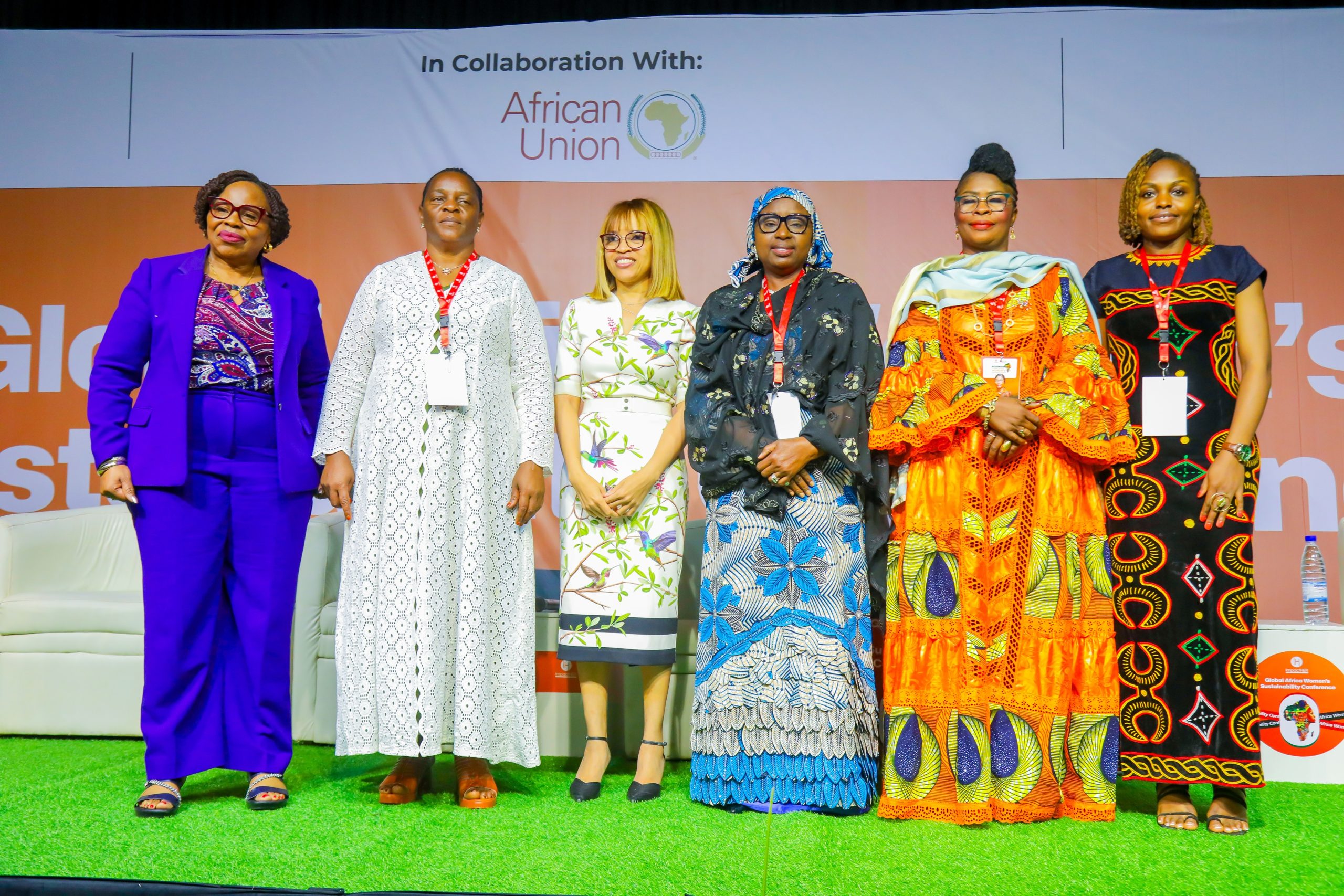
    ImpactHER Africa, Africa’s foremost non-governmental organisation dedicated to empowering female business owners has scaled up women-led economic transformation for entrepreneurs across Africa with a momentous gathering of over 5000 female business owners drawn from 58 countries who converged on Abuja to discuss how they can become major players in the 5 trillion global green economy.

    The gathering was the 2nd edition of the Global African Women Sustainability Conference with the theme: “Rethink, Reinvest, Regenerate: Women Entrepreneurs As Architects of Global Africa’s Sustainable Future which had in attendance over 10 African ministers, 20 African governments, US mayoral leadership, Latin America government representation, Caribbean government delegations, The African Development Bank, United Nations Conference on Trade and Development and the African Export-Import Bank.

    According to Efe Ukala, Founder, ImpactHER Africa, the global green economy is now worth more than 5 trillion dollars a year and is on track to reach 7 trillion by 2030 and it is growing twice as fast as conventional industries. The global African women who already farm regeneratively, build with waste, weave with eco-dyes, and power villages with the sun should be part of the market, not outside it. “Consumers around the world are now willing to pay nearly 10 percent for sustainably produced goods- 10% more. The premium is real and that tells us there is a market. Furthermore, an estimated 70% percent of informal cross-border trade in Africa is conducted by women. This brings us to the question- why are our women stuck in the informal economy?”, she mentioned.

    Ukala noted that “Certifications” have posed a barrier to African women’s involvement in global trade. “ The UN Women itself names the barrier: limited capacity to comply with regulatory requirements, with safety standards, with quality standards. Our women have the products. They do not have the paperwork. They have the practice- They do not have the proof. They have the sustainability- they do not have the certificate that lets the world see it. This is the gap the sustainability conference seeks to close. One of the sessions in this conference extensively dealt with “Sustainable Business Foundations” – certifications, standards, and start-up rules. Our women deserve an ISO certification, an export licence and a global buyer for her products”, she explains.

    The Ministers from Nigeria, Chad, Uganda, Zimbabwe, Gambia, Sierra Leone, Cote D’Ivoire, Zambia, Gabon, who were active participants in the conference, all pledged to strengthen access to female entrepreneurs in their various countries as they hold the golden torch to Africa’s collective success.

  • Zenith Bank launches Côte D’Ivoire subsidiary today, Strengthens Francophone West Africa Presence

    Zenith Bank launches Côte D’Ivoire subsidiary today, Strengthens Francophone West Africa Presence

    Zenith Bank Plc has announced the opening of its Côte d’Ivoire subsidiary, marking a pivotal achievement in the Group’s Pan-African expansion strategy.

    The official opening ceremony, scheduled to hold on Wednesday, April 29, 2026, is expected to attract senior government officials and regulators from Nigeria and Côte d’Ivoire, continental business leaders, and members of the diplomatic community, highlighting the strategic economic ties and investment opportunities between the two markets.

    The new subsidiary, licensed in December 2025 by the Ministry of Finance and Budget, Republic of Côte d’Ivoire, and regulated by the UMOA Banking Commission, will commence operations from its headquarters at SCI Wall Street, Avenue Noguès, Plateau, Abidjan.

    The launch represents a strategic move to deepen the Bank’s presence in Francophone West Africa and strengthen financial intermediation within the West African Economic and Monetary Union (WAEMU). Positioned as a gateway for cross-border trade and investment, Zenith Bank Côte d’Ivoire will focus on corporate banking, trade finance, local and offshore banking services, and structured financial solutions tailored to businesses operating across Africa and internationally.

    Commenting on the launch, the Group Managing Director/CEO, Dame Dr. Adaora Umeoji, OON, said: “From the very beginning, our Founder and Chairman, Jim Ovia CFR, set out to build a truly global brand with a strong presence across Africa and key international markets. The launch of Zenith Bank Côte d’Ivoire is a bold step in realising that vision; opening a strategic corridor into Francophone West Africa and reinforcing our commitment to facilitating trade, investment, and enterprise growth across the continent. As we continue to expand thoughtfully and strategically, we remain focused on delivering world-class banking solutions that connect African businesses to global opportunities.”

    The new subsidiary will be headed by MD/CEO, Mr. Cédric Tano, a seasoned banking executive with over two decades of experience. Speaking ahead of the official opening, he said “We are proud to establish Zenith Bank’s presence in Côte d’Ivoire at a time of strong economic growth in the country and increasing regional integration. Our focus is to showcase the Zenith brand as a customer-centric institution that combines global best practices with deep local insight. We are well positioned to support businesses with innovative financing solutions, facilitate cross-border trade, and contribute meaningfully to the growth of the Ivorian economy and the wider WAEMU region.”

    The Côte d’Ivoire launch forms part of Zenith Bank’s broader continental growth strategy. In addition to the Anglophone countries where it currently operates, and in line with the expansion into the Francophone market, the Bank has commenced its entry process into the CEMAC (Central African Economic and Monetary Community) region, with Cameroon as the focal point.

    With a footprint already spanning Nigeria, Ghana, Sierra Leone, The Gambia, the United Kingdom, France, the UAE, and China, Zenith Bank continues to bridge African markets with global opportunities, enabling seamless trade and financial connectivity across the continent and beyond.

    Founded in 1990, Zenith Bank has grown into one of Africa’s most respected banking institutions, boasting a robust capital base and a consistent track record of strong financial performance. For 16 consecutive years, the Bank has held the record of highest Tier-1 capital in the Nigerian banking industry. Built on the foundation of People, Technology, and Service, Zenith Bank continues to deliver innovative financial solutions while maintaining a disciplined approach to growth and risk management. Its performance has earned it numerous local and international recognitions and endorsements.

  • Multinational: African Development Bank’s Sustainable Energy Fund for Africa Approves $5.65 Million to Pioneer New Climate Finance Instrument for Off-Grid Renewable Energy projects in Africa’s Fragile States

    Multinational: African Development Bank’s Sustainable Energy Fund for Africa Approves $5.65 Million to Pioneer New Climate Finance Instrument for Off-Grid Renewable Energy projects in Africa’s Fragile States

    Innovative Peace Renewable Energy Certificate (P-REC) Aggregation facility to unlock new hard-currency revenue for mini-grids, targeting 856,000 people across 14 frontier countries

    The African Development Bank Group’s Board of Directors has approved a $5.65 million reimbursable grant from the Sustainable Energy Fund for Africa (SEFA) to pilot the Peace Renewable Energy Certificate (P-REC) Aggregation Facility, a pioneering initiative that will, for the first time, deploy renewable energy certificates as a direct funding instrument for a portfolio of mini-grids across Africa’s most fragile and energy-poor countries.

    Co-financed with the Nordic Development Fund, which committed an equivalent of $5.65 million, the $11.3 million facility will be managed by Camco Clean Energy, a climate and impact fund manager, and Energy Peace Partners, a US-registered non-profit that developed the Peace Renewable Energy Certificate label. The certificates come exclusively from small-scale mini-grid projects in conflict-affected and energy-poor communities, and are voluntarily purchased by multinationals looking to put their corporate sustainability spending where it drives the greatest social and environmental impact.

    The facility will enter into long-term purchase agreements with qualifying mini-grid developers across 14 frontier countries—Burundi, Central African Republic, Chad, the Democratic Republic of Congo, Ethiopia, Liberia, Mali, Niger, Nigeria, Sierra Leone, Somalia, South Sudan, Sudan, and Uganda. It will provide developers with upfront cash payments in exchange for the rights to the certificates produced by the project. The facility will subsequently sell those certificates to global corporate buyers, channelling hard currency back to developers in markets where commercial financing is very limited.

    Some 856,000 people across these 14 countries are expected to gain first-time access to reliable electricity as a result, roughly half of them women, through approximately 240,000 new connections and 71 megawatts of new renewable energy capacity.

    The project is fully aligned with Mission 300, the joint African Development Bank and World Bank initiative to connect 300 million Africans to electricity by 2030. NDF is contributing to the ambitious energy access targets of Mission 300 through their sizable renewable energy portfolio and as a member of the Development Partner Coordination Group.

    “Lack of access to capital for rural electrification continues to be a major hurdle for universal energy access in the African continent, particularly in countries experiencing conflicts and fragility.  I am proud that SEFA is backing this innovative, first-of-a-kind facility testing a new climate finance product capable of unlocking new sources of commercial funding for private sector led mini-grids. This is the kind of market-making needed to advance Mission 300 objectives.” João Duarte Cunha, Manager, Renewable Energy Funds Division and Sustainable Energy Fund for Africa, African Development Bank Group

    “Countries in SubSaharan Africa facing fragile and conflictaffected situations urgently need support and access to clean, reliable energy solutions. At NDF, we are proud to contribute to the Innovative Peace Renewable Energy Certificate (PREC) Aggregation Facility, which helps bring smallscale, offgrid renewable energy to communities with no, limited or disrupted energy access. By supporting this initiative, we also strengthen the role of Nordic climate leadership—working in partnership, through innovation and responsibility, to advance sustainable energy solutions where they are needed most.” Satu Santala, Managing Director, Nordic Development Fund (NDF)

    “PAF will provide additional low-cost, non-dilutive capital to energy access projects in fragile states. In doing so, it will provide more communities with access to the benefits of clean energy, boosting jobs, opportunities, and living standards. Camco is pleased to be working with EPP, SEFA and NDF on this important initiative.” Geoff Sinclair, CEO, Camco

    “The majority of people on the continent without access to electricity live in fragile and conflict-affected countries where renewable energy projects can have outsize impacts – improving health, education, safety and security outcomes. The P-REC Aggregation Facility, based on EPP’s Peace-REC label, can accelerate that transition by converting corporate climate ambition into upfront capital for renewable energy developers who would otherwise struggle to close their projects.” Sherwin Das, Managing Director, Energy Peace Partners

  • Emirates and Air Peace activate bilateral interline agreement, enhancing seamless global connectivity

    Emirates and Air Peace activate bilateral interline agreement, enhancing seamless global connectivity

    Building on their existing partnership, Emirates, the world’s largest international airline, and Air Peace, West Africa’s largest airline, have activated a bilateral interline agreement, expanding air connectivity between Africa, the UAE, and London.

    The agreement offers passengers of both airlines frictionless, single-ticket travel and with through-checked baggage, on select routes, resulting in greater travel comfort and convenience for customers.

    Beyond the 13 cities in Nigeria already available for Emirates passengers on Air Peace’s network, the enhanced interline agreement now enables travelers to connect with Banjul in Gambia and Dakar in Senegal, both via Abidjan; and with Freetown in Sierra Leone and Monrovia in Liberia, both via Accra, Ghana. The additional gateways allow more passengers in Africa to access Emirates world-class product and services, and vast global network.

    The agreement allows Air Peace to connect its extensive West and Central African route system into Emirates’ hub in Dubai, and on key destinations including London Heathrow, London Gatwick and London Stansted, Abidjan, Accra and, of course, Lagos. With huge demand for travel between Nigeria and the United Kingdom, providing Air Peace passengers with increased choice, flexibility, and global reach.

    Adnan Kazim, Emirates’ Deputy President, and Chief Commercial Officer said, “Enhancing our interline partnership with Air Peace allows us to expand our footprint across more of Africa, creating new opportunities for people to fly better with Emirates, while helping international tourists explore more of the region, via Lagos. We remain committed to working with strategic partners such as Air Peace to further strengthen Nigeria’s aviation, tourism, and trade sectors.”

    Nowel Ngala, Chief Commercial Officer, Air Peace, said: “This interline agreement with Emirates represents a major step in Air Peace’s strategic vision to connect Africa more efficiently to global markets. By combining our strong regional presence with Emirates’ extensive international network, we are delivering seamless connectivity, improved travel experience, and greater access to key global destinations for African travelers. This partnership further reinforces Air Peace’s role as a critical bridge between Africa and the global aviation ecosystem.”

    Emirates operates a Boeing 777-300ER on its Dubai-Lagos route, providing travelers with one of the best experiences in the sky. Passengers can dine on regionally inspired multi-course menus developed by a team of award-winning chefs complemented by a wide selection of premium beverages, while tuning in to over 6,500 channels of global entertainment – including Nollywood classics – on ice, Emirates’ award-winning inflight entertainment system. As one of only two airlines operating a First-Class cabin into Nigeria, Emirates offers an unrivalled travel experience defined by comfort, privacy, and
    luxurious touches.

    With a fleet of over 50 aircraft including Boeing 777s, Boeing 737s, Embraer’s, Air Peace operates an expanding network of domestic, regional, and international services, connecting major cities across Africa and beyond. The airline remains committed to strengthening intra-African connectivity, supporting trade and tourism, and contributing meaningfully to economic development across the continent.

    To take advantage of Emirates and Air Peace interline, tickets can be booked on emirates.com, flyairpeace.com or via travel agents.

  • Zenith Bank Tech Fair 5.0 awards N140m to Hackathon winners

    Zenith Bank Tech Fair 5.0 awards N140m to Hackathon winners

    A total cash prize of ₦140 million has been awarded to ten (10) African innovators to scale their transformative solutions after a keenly contested hackathon and pitch session at the Fifth Edition of the Zenith Tech Fair, themed “Future Forward 5.0: Tech for Success – Innovate, Adapt, Accelerate”, which held on Thursday, November 20, 2025, at the Eko Convention Centre, Eko Hotels & Suites, Victoria Island, Lagos.

    A statement from the bank said the 2025 edition of the Zenith Tech Fair featured an expanded, dual-competition structure that included a high-stakes Hackathon for product development and a Startup Pitch Competition for early-stage ventures, and drew participation from thousands of developers, founders, and entrepreneurs across the continent.

    The prize money was shared among ten finalists who emerged from the over 2,000 contestants that took part in the Zecathon. In the hotly contested final, two major winners emerged, each receiving the top prize of ₦30 million. The winner of the Hackathon, Trust Loop, clinched first place for its innovative solution that delivers seamless digital KYC and liveness verification. Simultaneously, the winner of the Startup Pitch Competition, Cubbes Technologies Limited, secured the top spot for its revolutionary AI-powered EdTech platform that enhances learning and career readiness.

    The remaining eight (8) finalists across both categories were equally recognised, each receiving ₦10 million in non-dilutive funding. They include Venille Ltd, Sowota, FLOW, InvoPay, Zenith Intelliscore, The Very Hacked Men, Konfam and Zerax. All ten finalists will also be entitled to a six-week mentorship and incubation programme designed to help them grow and scale effectively, and this will run from December 2025 to February 2026.

    The Group Managing Director/CEO of Zenith Bank Plc, Dame Dr Adaora Umeoji, OON, in her welcome address, thanked the Founder & Chairman, Dr Jim Ovia, CFR, for the visionary foresight that led to the creation of the Zenith Tech Fair. Commenting on the Zecathon, she said, “Our theme this year, ‘Tech for Success: Innovate, Adapt, Accelerate’, is very timely. To appreciate its urgency, it helps to reflect on the speed of human progress. According to the Harvard Business Review, it took humanity millions of years to master fire, yet only 66 years to move from the first powered flight to landing on the moon. The lesson is simple – the next technological breakthrough will not take a lifetime. It will emerge sooner than we expect and could come from any one of you in this room today. We are confident that this Tech Fair will produce innovators who will change the world, and we stand ready to support you to turn your ideas into reality.”

    In his Goodwill Message, the Founder and Chairman of Zenith Bank Plc, Jim Ovia, CFR, said, “This fifth edition reflects our unwavering commitment to create value through technology, innovation, and talent development. My vision is to continue to empower the youth through technology, with the hope that one day we will produce the likes of Bill Gates, Steve Jobs and Jeff Bezos.”

    Whilst delivering his goodwill message, the Governor of Lagos State, His Excellency, Mr Babajide Sanwo-Olu, called for increased technological empowerment initiatives to provide youths with adequate opportunities needed to thrive in the digital future. He said, “What I see happening here every year are things that we in leadership need to connect with. This is an activation that can bring life and real conversation to the young, dynamic, innovative, and creative young people that we have in this country. By 2050, half of the youth population in the world will be in Africa, and even in Africa, they will be in Nigeria, and if they are in Nigeria, they will be somewhere in Lagos, and we need to be able to fish them out. We need to give them an opportunity and a space to fly. We want to make Lagos the human capital centre of the world, where Microsoft and Google will think of raising a million tech experts. That’s the kind of vision and opportunity we want to leave behind.”

    Hailed as a resounding success by participants, the Fair showcased cutting-edge demonstrations on the role of Generative AI, Agentic AI, and Cloud Computing in driving economic growth with Keynote addresses delivered by Sitoyo Lopokoiyit, Managing Director, M-PESA Africa; Jonas Kjellberg, Co-Creator, Skype and Dr. Shivagami Gugan, Chief Technologist for Middle East, Turkey and Africa, AWS.

    The event also featured goodwill messages by the National Commissioner, Nigeria Data Protection Commission, Dr. Vincent Olatunji, and the cably represented by the Head of Service, Niger State, Mr. Abubakar Sadiq Idris.

    Another key feature from the tech fair this year was the robust exclusive masterclasses delivered by global technology and consulting powerhouses: McKinsey & Company, Huawei, Check Point, and Microsoft. These sessions covered critical topics from cybersecurity to advanced cloud solutions and disruptive technologies, equipping participants with world-class insights.

    Aside from the thrilling musical performance by Nigerian musician Spyro, the fair also featured dual-panel sessions that were very insightful and highly interactive. The panel sessions both had Zain Asher, CNN Anchor, as host, and featured high-level discussants including Adaora Nwodo, Founder & Executive Director, NexaScale; Aisha Tofa, Board Chair, Startup Kano Centre for Innovation Dev.; David Kpakima, CoFounder, Rasab Group, Sierra Leone; Dr Stanley Jacob, President, FINTECHNGR; Iyinoluwa S. Aboyeji, CEO Future Africa; Gary Fowler, CEO & Founder GSD Venture Studios; Bradwin Roper, Chief Payments & Partnerships Officer at JUMO, and Mrs. Omoyemen A. Jide Samuel, Director, Information Technology, CBN.

    Zenith Bank remains committed to fostering an ecosystem where innovation thrives, ensuring that the next generation of African tech leaders have the capital, mentorship, and resources required to achieve global scalability and impact.

    The Bank’s track record of excellent performance has continued to earn the brand numerous awards, including being recognised as the Number One Bank in Nigeria by Tier-1 Capital for the sixteenth consecutive year in the 2025 Top 1000 World Banks Ranking, published by The Banker and “Nigeria’s Best Bank” at the Euromoney Awards for Excellence 2025.

    The Bank was also awarded Bank of the Year (Nigeria) in The Banker’s Bank of the Year Awards for 2020, 2022 and 2024; Best Bank in Nigeria from 2020 to 2022, 2024 and 2025, in the Global Finance World’s Best Banks Awards; Best Bank for Digital Solutions in Nigeria in the Euromoney Awards 2023; and was listed in the World Finance Top 100 Global Companies in 2023.

    Further recognitions include Best Commercial Bank, Nigeria for five consecutive years from 2021 to 2025 in the World Finance Banking Awards and Most Sustainable Bank, Nigeria in the International Banker 2023 and 2024 Banking Awards.

    Additionally, Zenith Bank has been acknowledged as the Best Corporate Governance Bank, Nigeria, in the World Finance Corporate Governance Awards for four consecutive years from 2022 to 2025 and ‘Best in Corporate Governance’ Financial Services’ Africa for four consecutive years from 2020 to 2023 by the Ethical Boardroom.

    The Bank’s commitment to excellence led to Zenith being also named the Most Valuable Banking Brand in Nigeria in The Banker’s Top 500 Banking Brands for 2020 and 2021, Bank of the Year 2023 to 2025 at the BusinessDay Banks and Other Financial Institutions (BAFI) Awards, and Retail Bank of the Year for three consecutive years from 2020 to 2022 and 2024 to 2025.

    The Bank also received the accolades of Best Commercial Bank, Nigeria and Best Innovation in Retail Banking, Nigeria, in the International Banker 2022 Banking Awards, Bank of the Year 2024 by ThisDay Newspaper; Bank of the Year 2024 by New Telegraph Newspaper; and Best in MSME Trade Finance, 2023 by Nairametrics. The Bank’s Hybrid Offer was also adjudged ‘Rights Issue/ Public Offer of the Year at the Nairametrics Capital Market Choice Awards 2025.

    Zenith Bank has also bagged several non-financial awards, including Most Responsible Organisation in Africa, Best Company in Transparency and Reporting and Best Company in Gender Equality and Women Empowerment at the SERAS CSR Awards Africa 2024.
  • Cement Reports 165% Surge in EPS, Reinforces Market Leadership Across Africa

    Cement Reports 165% Surge in EPS, Reinforces Market Leadership Across Africa

    Dangote Cement Plc has announced robust financial results for the nine months ended September 30, 2025, showcasing a remarkable 164.8 per cent increase in earnings per suare (EPS), which rose from ₦16.55 to ₦43.80. This significant growth reflects the company’s strong operational performance and strategic expansion efforts.

    Group revenue climbed by 23.2 per cent, reaching ₦3,154.8 billion compared to ₦2,560.6 billion in the same period of 2024. The company also recorded a 57.7 per cent rise in Group EBITDA, which grew from ₦908.7 billion to ₦1,428.2 billion. Profit after tax (PAT) surged by 166.3 per cent, from ₦279.1 billion to ₦743.3 billion.

    EPS, a key indicator of profitability and shareholder value, continues to be a central metric in Dangote Cement’s financial reporting, reflecting the company’s commitment to delivering returns to investors.

    A major contributor to this performance was the commissioning of a new 3Mta grinding plant in Côte d’Ivoire, which expanded Dangote Cement’s total installed capacity to 55Mta across Africa. This strategic move reinforces the company’s leadership in the continent’s cement industry and supports regional self-reliance.

    Commenting on the results, Arvind Pathak, Chief Executive Officer of Dangote Cement, stated, “The commissioning of our 3Mta Côte d’Ivoire grinding plant marks a significant milestone in our growth journey. It strengthens our position as Africa’s leading cement producer and underscores our commitment to regional self-reliance.”

    Pathak attributed the revenue growth to proactive management strategies and resilient market demand. He highlighted the success of efficiency programs and disciplined cost management, particularly in Nigeria, where a more favorable energy mix helped reduce cash costs. Exports from Nigeria increased by 23 per cent, driven by 27 clinker shipments to Ghana and Cameroon.

    He also emphasized the company’s sustainability initiatives, including the phased deployment of 1,600 CNG-powered trucks aimed at reducing logistics costs and carbon emissions. Progress on the Itori Integrated Plant is also underway, expected to boost domestic capacity and open new export opportunities.

    Looking ahead, Pathak added: “Our focus remains on sustaining earnings momentum, enhancing operational efficiency, and executing our long-term growth strategy. With a clear strategic direction and a strong balance sheet, Dangote Cement is well-positioned to continue delivering superior value to stakeholders.”

    Earlier in the year, for the six months ended June 30, 2025, Dangote Cement reported a 17.7 per cent increase in revenue to ₦2,071.6 billion—the highest in its history. Group EBITDA rose by 41.8 per cent to ₦944.9 billion, while Nigeria operations saw an 82.4 per cent increase to ₦845.4 billion. Profits before tax jumped by 149 per cent to ₦730 billion, and PAT soared by 174.1 per cent to ₦520.5 billion.

    Dangote Cement remains Africa’s largest cement producer, with a fully integrated quarry-to-customer model and a production capacity of 35.25Mta in Nigeria alone. Its facilities include: Obajana Plant (Kogi State): 16.25Mta across five lines; Ibese Plant (Ogun State); 12Mta across four lines; Gboko Plant (Benue State): 4Mta; Okpella Plant (Edo State): 3Mta

    Through strategic investments, the company has eliminated Nigeria’s reliance on imported cement and transformed the country into a net exporter of cement and clinker.

    Dangote Cement also operates across several African countries, including: Cameroon, Congo, Ghana, Ethiopia, Senegal, Sierra Leone, South Africa, Tanzania, Zambia and Côte d’Ivoire

  • Feature- Codix Pharma: Breaking Africa’s Dependence on Imported Medical Products

    Feature- Codix Pharma: Breaking Africa’s Dependence on Imported Medical Products

    by Olutayo Irantiola

    For decades, imported diagnostics have dominated African hospitals. From syringes to test kits, the continent has relied heavily on supplies from Europe, Asia, and North America. This dependency has come at a steep cost. During shortages, prices spiked, leaving patients stranded.

    The COVID-19 pandemic was the most painful reminder. As wealthy nations hoarded vaccines and diagnostic kits, African countries found themselves at the back of the queue. Borders closed, supply chains fractured, and hospitals struggled to secure even the most basic consumables.

    “The global health crisis from the spread of the novel coronavirus has brought to the fore the need for African Union member states to carefully analyze the current state of their healthcare infrastructure and make meaningful investments to improve access to quality health care,” observed Carine Kaneza Nantulya, Africa advocacy director at Human Rights Watch.

    The right to health is a fundamental entitlement under international law and enshrined in the African Charter on Human and Peoples’ Rights. It is also a core pillar of the UN Sustainable Development Goals (SDGs) and Africa’s Agenda 2063. Both frameworks demand that nations protect the health of their citizens by ensuring that medical goods and services are available, accessible, and of good quality.

    Against this backdrop, a quiet revolution is taking shape in Nigeria. At its center is Codix Pharma Group, an indigenous pharmaceutical and health-tech firm rewriting Africa’s healthcare story.

    Founded in 2002 and operational since 2008, Codix Pharma has quickly risen to become one of Nigeria’s fastest-growing pharmaceutical companies. Headquartered in Lagos, the company focuses on developing diagnostic tools and therapeutics for “silent killers” such as diabetes, hypertension, and cardiovascular diseases—conditions that account for a significant share of Africa’s disease burden.

    “Our goal is to be a leading African health-tech company by 2030, for us, that means moving beyond talk to action—building local capacity, investing in research, and ensuring Africans don’t have to depend on imported solutions to manage their health,” says Executive Chairman, Mr. Sammy Ogunjimi.

    Codix has matched its vision with bold investments. In December 2023, it commissioned Colexa Biosensor Limited, the first in-vitro diagnostics (IVD) factory in Sub-Saharan Africa. Less than two years later, in May 2025, the company launched Codix Bio Limited, a state-of-the-art IVD facility in Sagamu, Ogun State.

    In a historic milestone, Codix Bio was selected as the first African manufacturing partner under the WHO Health Technology Access Pool (HTAP) programme, alongside SD Biosensor and the Medicines Patent Pool (MPP). This designation allows Codix to locally manufacture rapid diagnostic test kits based on SD Biosensor’s global platform, with full access to technical know-how and regulatory support.

    Codix’s impact extends beyond health outcomes. Local production generates jobs, facilitates technology transfer, and builds indigenous expertise. At the Sagamu facility, young Nigerian scientists, engineers, and technicians are being trained to operate some of the most advanced diagnostic equipment in Africa.

    This investment in talent comes at a critical time. Nigeria faces a growing brain drain, with skilled professionals leaving for opportunities abroad. By offering cutting-edge work and competitive opportunities, Codix is helping to stem the tide.

    Every test strip or kit produced in Sagamu is one less that Africa needs to import—marking a decisive step toward health sovereignty.

    One challenge local manufacturers often face is skepticism about quality. Codix anticipated this. The company is ISO 9001:2015 certified, embedding rigorous international standards into its production lines. Its factories operate under strict quality control measures, ensuring that every product meets or exceeds global benchmarks.

    By aligning local innovation with international best practices, Codix is dismantling outdated stereotypes about African-made health products.

    To ensure a sustainable pipeline of skilled workers, Codix is investing in academia. In partnership with Olabisi Onabanjo University, it has helped introduce courses in biosensors and nanotechnology within the Department of Chemical Sciences.

    This initiative prepares future scientists not just with theory but with real-world applications, strengthening the bridge between education and industry. It is a long-term investment in building Africa’s scientific independence.

    Codix’s ambitions stretch beyond Nigeria. The company already has subsidiaries in Senegal, Ghana, Kenya, Sierra Leone, Liberia, The Gambia, Zambia, Cameroon, Guinea-Bissau, and Côte d’Ivoire. Its diagnostic kits and other medical consumables are exported to these markets, positioning Nigeria as a regional hub for health-tech innovation.

    By 2030, Codix envisions itself as the face of African health-tech—not only producing for domestic use but also exporting solutions and expertise across the continent.

    Codix Pharma’s journey is more than a corporate success story. It is a blueprint for how Africa can reduce dependency on imports, strengthen its economies, and secure its health future. By investing in local manufacturing, prioritizing research, and building partnerships, Codix is proving that Africans can create solutions for Africans.

    It is a story of resilience and ambition, one that signals a shift in narrative: from Africa as a passive consumer to Africa as an active producer of global health solutions.

    As Ogunjimi puts it: “For too long, we waited for the world to bring solutions to us. Now it’s time for us to create solutions the world can rely on.”

    Olutayo Irantiola is a seasoned communications strategist and Public Relations Consultant at Peo Davies Communications. He is a pioneer Bridge Fellow of the Nigerian Economic Summit Group and recipient of the Rising PR Professional Award. An author and strategic content developer, he is passionate about storytelling, published writer, cultural advocate, and shaping public perception. He can be reached via olutayo@peodavies.com.ng

  • FIND’s leadership and impact in Lassa Fever Diagnostics to feature at 2nd Lassa Fever International Conference

    FIND’s leadership and impact in Lassa Fever Diagnostics to feature at 2nd Lassa Fever International Conference

    FIND CEO will highlight progress in outbreak preparedness and equitable access to diagnostics across West Africa

    FIND will showcase seven years of impact in strengthening Lassa fever preparedness at the 2nd Lassa Fever International Conference, taking place from 8–11 September 2025 in Abidjan, Côte d’Ivoire. FIND CEO, Dr Ifedayo Adetifa will speak at the opening session on 9 September, focusing on how diagnostics are bridging gaps in pandemic preparedness and response and shaping global health security.

    Since 2018, FIND has led a portfolio of four multi-year projects across Nigeria, Liberia, and Sierra Leone, with support from governments, WHO, CEPI, and academic partners. These efforts have:

    • Expanded the number of laboratories able to test for Lassa fever in Nigeria from 3 to 8, reducing average diagnostic turnaround time from 8.5 days in 2018 to 6.3 days in 2023.
    • Established biobanks in Nigeria and Liberia, including more than 3,500 high-quality LASV samples archived, creating essential resources for diagnostics, vaccines, and therapeutic development.
    • Evaluated over a dozen Lassa fever diagnostic tools, generating performance data that informed CEPI-supported vaccine trials and accelerated access to quality-assured tests.
    • Trained hundreds of laboratory personnel in Good Clinical and Laboratory Practices (GCLP/GCLP) to strengthen local capacity for outbreak detection and clinical research.
    • Applied Diagnostic Network Optimization (DNO) in Nigeria to improve laboratory access and specimen referral systems for faster outbreak response.

    Dr Adetifa commented:

    “Lassa fever is a predictable, seasonal threat in West Africa. Yet, its toll remains unacceptably high. Through powerful partnerships, FIND continues to support the much needed groundwork – laboratory strengthening, DNO, workforce capacity building, health technology assessments, etc – for a resilient diagnostic ecosystem. Sustained investment in diagnostics is a critical missing link to turn the tide on this endemic disease and safeguard our future.”

    At the conference, FIND will present its recently published Target Product Profiles (TPPs) to guide innovation in Lassa fever diagnostics. FIND will also present multiple accepted abstracts, covering areas from laboratory network expansion to the establishment of external quality assurance systems.

  • Nigeria overtakes Egypt to become the second-largest importer of Solar Panels

    Nigeria overtakes Egypt to become the second-largest importer of Solar Panels

    Africa’s solar imports surge 60%, giving the first evidence of a take-off in solar in Africa

    Solar panel imports into Africa rose by 60% in the 12 months to June 2025, according to a new analysis of China’s solar panel exports data from energy think tank, Ember. The data shows how the rise happened across Africa, and it is at a scale to impact the electricity system of many countries. 

    Solar imports rise across most African countries in the 12 months to June 2025 

    The analysis shows that Africa’s solar panel imports set a new record in the 12 months to June 2025, reaching 15,032 MW – a 60% increase on the 9,379 MW imported in the preceding 12 months.  

    The last time imports surged was in 2023, when South Africa solar imports picked up as the power crisis hit its peak. However, this time is different – much of the pick-up in the last 12 months happened outside of South Africa. 20 countries set a new record for the imports of solar panels in the 12 months to June 2025. 25 countries imported at least 100 MW, up from 15 countries 12 months before. 

    In the last 12 months to June 2025, Nigeria overtook Egypt to become the second-largest importer with 1,721 MW of solar panel imports in the past year, while Algeria ranked third with 1,199 MW. 

    Some countries recorded very high growth rates. Algeria’s imports rose 33-fold, Zambia eightfold, Botswana sevenfold, and Sudan sixfold, while Liberia, DRC, Benin, Angola and Ethiopia all more than tripled their imports.

    Despite these record imports of solar panels, there is no data to know how many have yet been installed. “Bottom-up energy transitions fueled by cheap solar are no longer a choice – they’re our future. Tracking these additions is what makes the difference between a messy shift and an organised, accelerated one,” said Muhammad Mustafa Amjad, Program Director at Renewables First. “When you don’t track, you lose time and opportunities. Pakistan’s experience shows this clearly. Africa’s transition will happen regardless, but with timely data it can be more equitable, planned and inclusive.” 

    The analysis finds that recent imports could make a major contribution to electricity generation in many African countries. If fully installed, imports in Sierra Leone in the last 12 months could generate electricity equivalent to 61% of reported electricity generation in 2023, while in Chad the figure is 49%. Liberia, Somalia, Eritrea, Togo and Benin could see generation rise by more than 10% of reported 2023 generation. In total, 16 countries could see an increase of over 5%. 

    The report describes how solar panel imports may actually reduce overall imports. The savings from avoiding diesel can repay the cost of a solar panel within six months in Nigeria, and even less in other countries. In nine of the top ten solar panel importers, the import value of refined petroleum eclipses the import value of solar panels by a factor of between 30 to 107. 

    More data and evidence needed to unlock potential 

    Further evidence is urgently needed to understand the rapid rise in solar across Africa and its potential to expand electricity systems. No single data source captures the full picture, and much more research and reporting are required. 

    Dave Jones, Chief Analyst at Ember, said: “The take-off of solar in Africa is a pivotal moment. This report is a call to action, urging stronger research, analysis and reporting on solar’s rise to ensure the world’s cheapest electricity source fulfils its vast potential to transform the African continent.” 

    This surge is still in its early days. Pakistan experienced an immense solar boom in the last two years, but Africa is not the next Pakistan – yet. However, change happens quickly. And the first evidence is now here. 

  • Dangote Cement sets to commission 3Mta grinding plant in Côte d’Ivoire

    Dangote Cement sets to commission 3Mta grinding plant in Côte d’Ivoire

    Management of Dangote Cement has announced that it will commission the 3Mta grinding plant in Côte d’Ivoire by the third quarter of this year, which is expected to strengthen the company’s position in Africa and contribute significantly to its exports.

    Chief Executive of Dangote Cement, Arvind Pathak, in a note to the Nigerian Stock Exchange, said the company is encouraged by the growth in its export business. He said: “Export volumes from Nigeria increased by 18.2%, with 18 successful clinker shipments made to Ghana and Cameroon. This demonstrates the growing importance of our pan-African footprint and our ongoing commitment to regional trade and self-sufficiency.”

    Arvind Pathak also revealed that the company’s strategic priorities focus on long-term value creation. He said Dangote Cement has made significant progress in further strengthening its cost architecture. “…During the period, we began the phased delivery of 1,600 additional CNG-powered trucks, which will significantly reduce our logistics costs and enhance environmental efficiency.”

    Commenting on the financials for the second quarter, which he said was built on the company’s strength, resilience, and adaptability amidst improvements in key macroeconomic indicators, he said the company’s focus on operational efficiency and cost containment is delivering tangible results. According to him: “Group EBITDA rose by an impressive 41.8% to ₦944.9 billion, while Group profit surged by 174.1%. This remarkable performance is a testament to our disciplined execution, strong cost leadership, and the strategic investments we have made over the years.”

    Dangote Cement is Africa’s leading cement producer with 52.0Mta capacity across Africa. A fully integrated quarry-to-customer producer that have a production capacity of 35.25Mta in Nigeria. Its Obajana plant in Kogi state, Nigeria, is the largest in Africa with 16.25Mta of capacity across five lines; while its Ibese plant in Ogun State has four cement lines with a combined installed capacity of 12Mta. In the same vein, its Gboko plant in Benue state has 4Mta, and its Okpella plant in Edo state has 3Mta. Through its recent investments, Dangote Cement has eliminated Nigeria’s dependence on imported cement and has transformed the nation into an exporter of cement and clinker, serving neighbouring countries.

    In addition, the company has operations in Cameroon (1.5Mta clinker grinding), Congo (1.5Mta), Ghana (2.0Mta clinker grinding and import), Ethiopia (2.5Mta), Senegal (1.5Mta), Sierra Leone (0.5Mta import), South Africa (2.8Mta), Tanzania (3.0Mta), Zambia (1.5Mta).

  • New Study Reveals Widespread Drug Resistance Across 14 African Countries

    New Study Reveals Widespread Drug Resistance Across 14 African Countries

    Results from a newly published study highlight the growing spread of drug resistance across 14 African countries, underscoring the urgent need to strengthen laboratory testing, data systems, and health planning to tackle hard-to-treat infections.

    The study, known as the Mapping Antimicrobial Resistance and Antimicrobial Use Partnership (MAAP), is the largest of its kind ever conducted in Africa. It was led by a coalition including the Africa Centres for Disease Control and Prevention (Africa CDC), the African Society for Laboratory Medicine (ASLM), One Health Trust, and other regional partners.

    Researchers reviewed more than 187,000 test results from 205 laboratories, collected between 2016 and 2019 across Burkina Faso, Eswatini, Ethiopia, Ghana, Kenya, Malawi, Mali, Nigeria, Senegal, Sierra Leone, Tanzania, Uganda, Zambia, and Zimbabwe.

    Drug resistance occurs when bacteria change in ways that make antibiotics—medicines used to treat infections—less effective. This means that common infections become harder to treat, more expensive to manage, and more likely to spread.

    The study examined bacteria that commonly cause serious illness, such as E. coliStaphylococcus aureus, and Klebsiella pneumoniae. One of the most concerning findings was that resistance to a powerful group of antibiotics, known as third-generation cephalosporins, was especially high in Ghana and Malawi.

    In six countries, more than half of the Staphylococcus aureus samples were resistant to methicillin—an antibiotic commonly used in hospitals. In Nigeria and Ghana, resistance levels exceeded 70%.

    The research also showed that some groups are more likely to have drug-resistant infections. People over the age of 65 were 28 per cent more likely to have resistant infections than younger adults.

    Patients already admitted to hospitals had a 24 per cent higher risk, likely due to increased exposure to antibiotics. Previous use of antibiotics was also linked to higher resistance.

    However, the study also revealed serious gaps. Fewer than 2 per cent of health facilities were equipped to test for bacterial infections, and only 12 per cent of drug resistance records were linked to patient information. Without this kind of data, it is more difficult for health officials to understand how and why resistance is spreading.

    The quality of data varied between countries. Senegal had the strongest systems, while Sierra Leone struggled with data collection. Many laboratories still use handwritten records, and most lack reliable digital systems.

    Supported by the UK’s Fleming Fund and the US Centers for Disease Control and Prevention (CDC), the study calls on governments to make drug resistance a national priority by investing in better laboratories, routine testing, and stronger digital systems. Without action, the threat of drug resistance could reverse decades of health and development gains.

    “For African countries, AMR remains a complex problem, leaving countries with a million-dollar question: ‘Where do we start from?’ This study brings to light groundbreaking AMR data for African countries. We must act now—and together—to address AMR,” said Dr Yewande Alimi, the One Health Unit Lead at Africa CDC.

  • FIND Convenes African Union Ambassadors

    FIND Convenes African Union Ambassadors

    In order to improve diagnostic systems and get ready for potential health and pandemic risks, FIND’s leadership presented its updated strategic vision as a precursor to this year’s Diagnostics Day event to be held on 21 May

    As part of its continuing outreach to the parts of the world that it was set up to serve, FIND hosted Ambassadors from 26 African countries and the African Union for a meeting at FIND’s offices in the Global Health Campus in Geneva. The Ambassadors received an overview of FIND’s work in their respective countries, future prospects and were made aware of FIND as a value-added partner for countries with respect to diagnostics.

    “The foundation of any successful health response is diagnosis. From early detection to pandemic preparedness, our collaboration with the African Union is essential to guaranteeing that no one is left behind,” said Dr. Ifedayo Adetifa, CEO of FIND. “FIND’s  vision is focused on both catalyzing innovation and ensuring access to diagnostics in low- and middle-income countries.”

    In order to improve diagnostic systems and get ready for potential health and pandemic risks, FIND’s leadership presented its updated strategic vision as a precursor to this year’s Diagnostics Day event to be held on 21 May, which will take place on the sidelines of the World Health Assembly.

    The ambassadors of the African Union, Angola, Burkina Faso, Cabo Verde, Cameroon, Central African Republic, Chad, Côte d’Ivoire, Democratic Republic of Congo, Kenya, Lesotho, Madagascar, Malawi, Mauritania, Mauritius, Mozambique, Namibia, Rwanda, Sao Tomé and Principe, Sierra Leone, South Africa, South Sudan, Sudan, Tanzania, The Gambia, Togo, and Zimbabwe were present.

    The Ambassadors led a lively discussion which touched upon a number of key issues, including South-South collaboration; pandemic preparedness and response; the role of health in national development; national essential diagnostics lists; the growing issue of non-communicable diseases such as diabetes; and ensuring sustainable financing for diagnostics and health in general.

    Among the meeting’s main conclusions were:

    • Commitment to strengthen regional manufacturing of diagnostics and other health technologies.
    • Consensus on increased AU-FIND cooperation to country and Africa CDC’s diagnostic priorities.
    • Support for FIND’s function as a technical partner to expand access to vital diagnostics for illnesses like HIV, TB, malaria, mpox and emerging outbreaks.
    • Diagnostics acknowledged as a key component of health security and universal health coverage.

    “In this moment of dramatic change, African leaders are stepping up to fill the power vacuum left by a world in turmoil where women and children are being left behind and left to die, particularly on the African continent – the continent with the greatest health burden,” said Dr Ayoade Alakija, FIND’s Board Chair. “FIND will continue to support them on strengthening pandemic preparedness and ensuring quality diagnostics are available to all.”

    FIND’s Diagostics Day event on 21 May at the Vieux Bois in Geneva will bring leaders from health from around the world to agree on next steps to ensuring quality and accessible diagnostics for all.

  • Africa Energies Summit in London Must Prioritize Hiring Black Africans

    Africa Energies Summit in London Must Prioritize Hiring Black Africans

    The African Energy Chamber believes firmly that Black Africans possess the expertise, leadership qualities, and vision required for positions at the highest levels within the Africa Energies Summit

    In the evolving and competitive energy landscape of Africa, the Frontier and Africa Energies Summit in London holds a critical position, drawing substantial revenue from the continent’s thriving markets. However, there is a glaring issue that the organization cannot afford to ignore: the lack of Black Africans in its workforce. This absence raises serious concerns about the company’s commitment to diversity and inclusion, and it’s time for Africa Energies Summit to address this inequality. The African Energy Chamber has issued a direct call for action, urging the summit to rectify this imbalance by hiring Black Africans.

    It is deeply disappointing that, despite reaping significant benefits from Africa’s economic contributions, Frontier and Africa Energies Summit in London has failed to reflect the continent’s rich diversity by hiring Black employees. The company continues to prioritize personal networks in its hiring practices, which perpetuates exclusionary systems. As a result, many highly qualified Black Africans, with the necessary skills and experience, are left outside the company’s inner circle.

    This issue becomes even more perplexing when we consider that Black Africans are not merely passive participants in the success of the Africa Energies Summit; they are active sponsors and contributors to its events and programs. This contradiction calls into question the sincerity of the company’s commitment to inclusivity and raises concerns about the integrity of its diversity policies.

    NJ Ayuk, Executive Chairman of the African Energy Chamber, has highlighted the remarkable progress of the Oil and Gas industry in promoting Africans, especially women, into leadership positions. He praises the industry for fostering entrepreneurship and providing opportunities for Africans to rise to the top. This success serves as a stark reminder that Africans, especially African women, are not only capable but essential to the success of organizations operating within the continent.

    The African Energy Chamber believes firmly that Black Africans possess the expertise, leadership qualities, and vision required for positions at the highest levels within the Africa Energies Summit. Inclusion is not just a matter of social justice—it is a strategic necessity for a company that depends heavily on Africa’s energy market for its revenue. It is time for Frontier and Africa Energies Summit in London to move beyond lip service and show real, meaningful commitment to diversity by empowering Africans within its workforce.

    The issue at hand goes beyond tokenism; it speaks to the very principles of fairness and equal opportunity. The idea that Africans can contribute to the financial success of the company through large exhibitions, yet are denied equal representation within the organization, is both unacceptable and unsustainable. The time to act is now, and this imbalance must be addressed without delay.

    While it may be uncomfortable to raise these concerns, the African Energy Chamber is committed to shining a light on uncomfortable truths within the industry. The progress made in the Oil and Gas sector—particularly in the hiring, training, and promotion of Africans—demonstrates that genuine diversity efforts lead to entrepreneurial success and organizational growth. The African Energy Chamber urges Africa Energies Summit in London to adopt similar practices and take lessons from the success stories in the Oil and Gas industry.

    Countries such as South Africa, Nigeria, Angola, Gambia, Sierra Leone, Kenya, Ghana, Namibia, and Tanzania—along with others that actively support the summit and participate in its events—deserve to see their talent represented at the highest levels of the organization. Africa Energies Summit must step up and ensure that the diversity it benefits from in its African markets is reflected in the diversity of its workforce.

    “Frontier makes a huge part of its revenue from Africa, yet no Black people are hired within the company. They hire people they know, trust, and like, but we are not part of that circle. I am deeply disappointed. Black Africans are major participants and sponsors of their programs. I believe we are more than capable of doing the job, but there has been no true commitment to hiring or promoting us. We also need to have a serious conversation about why Africa Energies Summit in London isn’t hosted in Africa,” said NJ Ayuk, Executive Chairman of the African Energy Chamber.

    The African Energy Chamber calls on Africa Energies Summit in London to recognize the urgent need to address the underrepresentation of Black Africans in leadership roles within its organization. This is a critical opportunity for the summit to prove its commitment to true diversity and inclusivity by embracing the talents, skills, and potential of Africa’s brightest minds.

  • No Talks Between WHO and US Despite ‘Severe Disruption’ in Health Services Since Trump Slashed Aid

    No Talks Between WHO and US Despite ‘Severe Disruption’ in Health Services Since Trump Slashed Aid

    Health services worldwide have been “severely disrupted” by the United States slashing aid, and the World Health Organisation (WHO) is radically reducing its operations following the US withdrawal from the global body – but there has been no formal engagement between the WHO and the White House.

    WHO Director-General Dr Tedros Adhanom Ghebreyessus revealed this at a press conference on Thursday, reporting that three-quarters of the over 100 countries had reported “severely disrupted” services, a quarter had closed health facilities and a quarter were charging patients more for services.

    The US owes the WHO $260 million in membership fees for 2024-25. The Biden administration failed to pay fees last year and the US is liable for this year’s fees as it is obliged to give a year’s notice of its withdrawal form the body. 

    But there has been no formal engagement between the WHO and the White House since Trump issued an executive order on 20 January withdrawing from the WHO, said Tedros.

    “I hope there will be some formal engagement, or a very honest and candid dialogue for the US to come back to the World Health Organisation. It’s in the best interest of the US to stay in WHO. It’s a health security that keeps the US safe and the rest of the world safe,” he added.

    Ongoing talks between the remaining 192 WHO member states on a pandemic agreement, expected to conclude this week, would “set the rules of the game” in a future pandemic to ensure that the world is safer, added WHO Deputy Director-General Dr Mike Ryan.

    “The great thing about an international rules-based system is we all agree how the game is played, and we really do need to play a better game in the next pandemic, and this is the way to do it,” added Ryan.

    The US has pointedly removed itself from the pandemic agreement negotiations, erroneously claiming that a pandemic agreement will infringe on its soverignty.

    Prioritise the poorest

    In response to the loss of US aid, countries are “revising budgets, cutting costs and strengthening fundraising and partnerships,” said Tedros, reporting on efforts by South Africa, Nigeria and Kenya to increase their domestic allocations to health.

    He advised countries to prioritise their poorest citizens, protecting them from being impoverished by additional health spending, and to resist cutting public health spending, instead improving efficiency.

    “Absorb as much of the impact as possible through efficiency gains in health systems, including.. improving procurement, minimising overheads, pooling purchasing of goods and services, and using health technology assessment to guide decisions on which services and products provide the biggest health gains,” Tedros advised.

    Countries can also increase revenue by introducing or increasing taxes on products that harm health, including tobacco, alcohol and sugary drinks, he added.

    Unpaid WHO membership fees

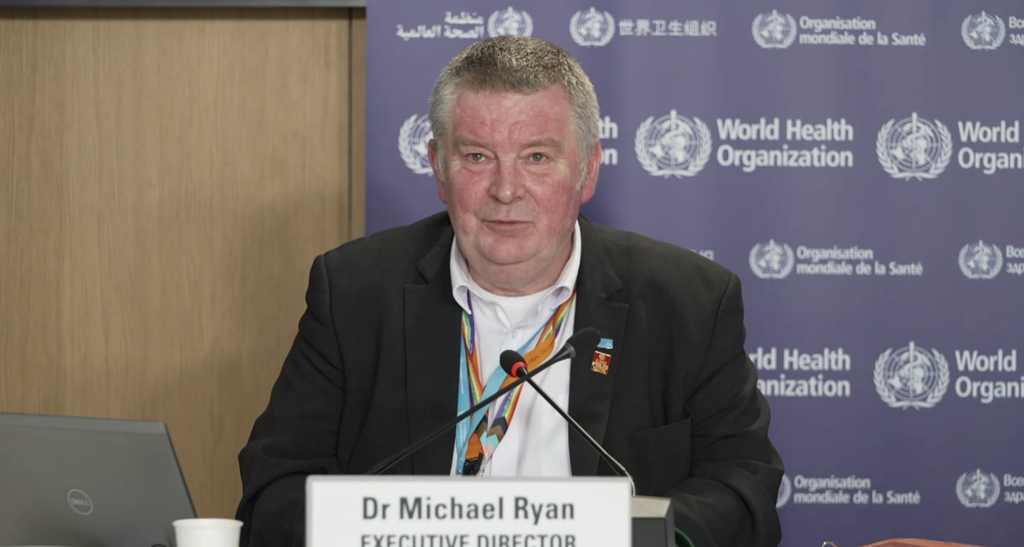
    Dr Mike Ryan

    The WHO is in the midst of intense reprioritisation following the loss of around a quarter of its budget. It faces a gap of $2,5 billion for the 2025/27 period, according to a recent Health Policy Watch report.

    Ryan, who chairs the WHO prioritisation committee, said that the pain being experienced at WHO was a “ha’penny space” in “the hierarchy of suffering”.

    “However, we recognise that we’re in a situation where, with the advice and with cooperation with our member states, we need to contract the amount of money we absorb as an organisation to do the work we do,” said Ryan.

    “We’re approaching that very, very responsibly in terms of cost containment, resource mobilisation” and prioritisation of activities, he said.

    “We have to have a new budget on the table for the World Health Assembly [next month]… and there will have to be a new set of priorities, and obviously an organisational design that can deliver that.”

    Aside from $260 million hole left by the US withdrawal, other member states owe the WHO $193 million in unpaid membership fees (called “assessed contributions”), according to a report compiled for the World Health Assembly next month.

    The voting privileges of Afghanistan, Central African Republic, Comoros, Dominica, Lebanon, Sierra Leone, Somalia, South Sudan, Sudan, Venezuela and Yemen remain suspended as a result of unpaid fees.

    Algeria, Bolivia, Cameroon, Grenada, Iran, Myanmar, Panama and Saint Lucia may also lose their voting rights as a result of unpaid fees for 2024 and 2025.

    Gaza blockade

    A child forages in Gaza rubble.

    Tedros also condemned Israel’s “complete blockade” of Gaza since the breakdown of the ceasefire on 2 March, in which it has prevented all food and medicine from entering into Gaza.

    “In the past week, 75% of UN missions within Gaza have been denied or impeded. This blockade is leaving families hungry, malnourished, without clean water, shelter and adequate health care, and increasing the risk of disease and death,” said Tedros.

    During the ceasefire, WHO had been able to resupply the health system and its warehouses but those supplies “will run out in two to four weeks unless the siege is lifted”, he added.

    “Some 180,000 doses of routine childhood vaccines, enough to protect 60,000 children under the age of two, have not been allowed to enter leaving newborns and young children at risk,” said Tedros.

    “Since the breakdown of the ceasefire, almost 400,000 people are estimated to have been displaced again with no safe place to go, and almost 1500 people have been killed, including 500 children,” said Tedros.

    “The health system is only functioning partially and is overwhelmed. Meanwhile, healthcare continues to be attacked. On the 23 March, the Israeli army attacked a medical and emergency convoy, killing 15 health and humanitarian workers.”

    On Wednesday, WHO assisted in evacuating 18 patients and 29 companions to Norway, Malta, Luxembourg and Romania but “more than 10,000 other patients are still awaiting evacuation” for medical treatment.

    “WHO calls for the urgent lifting of the aid blockade, the protection of healthcare and embedded humanitarian access across Gaza, the immediate resumption of daily medical evacuations, the release of hostages still detained in Gaza, and above all, a ceasefire,” Tedros concluded.

  • GHIB and BII announce $50m partnership to boost cross-border trade across Africa’s frontier economies

    GHIB and BII announce $50m partnership to boost cross-border trade across Africa’s frontier economies

    • First partnership between GHIB and BII, two UK institutions to address trade finance needs on the continent. 
    • Target economies include Sierra Leone, Liberia, The Gambia, Benin, DRC, Rwanda, and Tanzania. 

    Ghana International Bank plc (GHIB), a leading UK-based African financial institution, and British International Investment (BII), the UK’s development finance institution and impact investor, today announced a $50m trade finance facility covering Sierra Leone, Liberia, The Gambia, Benin, Democratic Republic of Congo, Rwanda and Tanzania.

    Under a Master Risk Participation Agreement (MPRA), the $50 million facility will enable GHIB to support more businesses and facilitate trade flows in the target countries. This addresses the general lack of credit appetite for frontier markets in Africa for reasons including high risk perception and comparatively lower volumes. 

    Increased trade finance can enable local businesses to import the commodities and equipment they need to sustain and grow their businesses. It helps create economic opportunities for business owners and maintain continued supply of essential goods in the market for Africans at a reasonable price. 

    The UK’s Minister for Africa, Lord Collins of Highbury, commented: “I’m delighted to see two UK institutions coming together to strengthen economic ties with Africa. Africa’s trade financing gap is one of the continent’s most pressing challenges and access to this funding will enable local businesses to trade more with the world, including the UK. This partnership serves as another example of BII’s leadership in building opportunities for growth with the UK’s partners.”

    Kwabena Asante-Poku, Country Director for Ghana at BII said: “In recent years, many African countries have faced challenging economic conditions that have impacted growth and livelihoods. Trade remains a key driver of growth for African economies especially in frontier markets like Sierra Leone, Liberia and The Gambia. Enhancing the flow of trade credit and financial intermediation to these markets will ensure access to essential goods and services which in turn drives sustainable and inclusive economic growth. We are pleased to partner with GHIB to offer practical trade finance solutions to businesses in countries facing difficulties in accessing finance for imports and exports.” 

    Dean Adansi, Chief Executive Officer of GHIB, added: “At GHIB we believe our success over the last 65 years is rooted in a deep understanding of African risk. This partnership with British International Investment represents a viable path through which we can structure partnerships that leverage this deep knowledge of risk into profitable and impactful transactions. With this deal, we are employing a structure that uses our deep knowledge and access of the market, harnessed together with the superior scale and capacity of BII. Together, we are bringing this to support and expand opportunity in these emerging markets enabling real GDP growth. Our research indicates that each dollar of trade unlocks about $1.3 into the GDP of our markets. We will work to make this deal a success, as it will open the way for more liquidity injections into the market.” 

    The collaboration leverages GHIB’s extensive network and proven track record in trade finance and allows BII to engage in a partnership that addresses the expanding trade finance gap in African markets, especially under challenging economic conditions. BII’s involvement brings essential foreign exchange dollar liquidity, critical for the import of key goods to GHIB’s operating markets.