










Tag: Sierra Leone

  • Wakanow Restructures For Global Expansion

    Wakanow Restructures For Global Expansion

    …Bayo Adedeji and Adenike Macaulay repositioned to lead the charge

    Wakanow is defining the future in the travel industry, opening new doors, creating ease of travel, unlocking new destinations, and providing fintech services that enhance travel. The revolution is creating opportunities that are driving the future of how customers shop for travel and how they interface with travel agencies and the entire value chain of the travel industry.

    Keeping in step with the new frontiers being created, Wakanow has restructured to function as a Group entity. In line with that, the Board of Directors and Management of Wakanow Group has appointed Mr. Adebayo Adedeji as the Group Chief Executive Officer and Mrs. Adenike Macaulay as Chief Executive Officer of Wakanow Nigeria effective January 2023.

    At the tip of the spear in the new structure, Bayo Adedeji will be at the forefront of expanding the business in Africa (beginning with West Africa) and then exporting the Wakanow excellence into other regions of the world. Adenike Macaulay is tasked with leading the charge within the shores of Nigeria and ensuring that the business in Nigeria deepens its roots and spreads its tentacles across the regions of the country.

    Whilst announcing his new role, the new Group CEO Bayo Adedeji stated, “We are expanding into new verticals and Countries in Africa & beyond to take advantage of new business opportunities in the emerging competitive landscape leveraging our deep understanding of the African customer and expertise in the travel tech industry, and I will be leading this venture as Group CEO”

    He went on to state that, “The synergy I have built with Adenike over the last 18 months makes me super confident to take on this new challenge knowing that our core business will continually grow geometrically in her hands.”

    Also reacting to her promotion, Mrs. Adenike Macaulay the new Wakanow Nigeria CEO said, “I am delighted to receive the leadership torch of Wakanow Nigeria from Bayo and also excited to take on the new responsibility saddled upon me by the board and management of Wakanow and look forward to leading and building with an immensely talented team.”

    In addition to major executive management changes, the company has also strategically positioned its subsidiaries to open new frontiers, constantly innovating for a more satisfactory customer travel experience, delivering technologically powered solutions for things as basic as buying flight tickets to booking hotels and rides.

    These strategic changes are necessary considering the significant growth and success the company experienced post pandemic. Wakanow has since reclaimed its number-one position in Nigeria the largest market in West Africa. Another precursor to the structural changes is the commencement of operations in UAE, US, Sierra Leone and Gambia which kickstarts Wakanow’s drive to connect all of Africa and Africans beginning in West Africa. Plans are already in place to launch in UK, Senegal and Cote D’Ivoire in 2023.

    Wakanow has become renowned for her support to local and international airlines and for enhancing the Nigerian aviation industry with distinct products and services. The travel tech company is built to cater to all the travel needs of travel enthusiasts from flights, hotels, holiday experiences, visa processing, and COVID-19 tests, among other offerings for Nigerian travelers. Wakanow’s charge toward global expansion is now in full throttle and with the latest restructuring, new milestones are certain to be reached and surpassed. Wakanow supports African movie, music and entertainment industries to export Africa to the rest of the world.

  • IFC Appoints Dahlia Khalifa as Regional Director for Central Africa, Liberia, Nigeria, and Sierra Leone

    IFC Appoints Dahlia Khalifa as Regional Director for Central Africa, Liberia, Nigeria, and Sierra Leone

    IFC today announced the appointment of Dahlia Khalifa as its Regional Director for Central Africa, Liberia, Nigeria, and Sierra Leone. In her new role, Khalifa will drive IFC’s strategy to create a more resilient and sustainable private sector to support the development and job creation in the region.

    Khalifa will lead IFC’s investment and advisory teams in Cameroon, Central African Republic, Chad, Republic of Congo, Equatorial Guinea, Gabon, Liberia, Nigeria, Sao Tome and Principe, and Sierra Leone. While these countries face challenges such as rising inflation and the effects of climate change, a young, vibrant, and entrepreneurial population presents opportunities for a more dynamic private sector.

    Khalifa will be based in Lagos, Nigeria.

    “I welcome Dahlia to her new role and know her leadership and experience generating impactful investments in the region will further deepen IFC’s work in Africa and enable our partners to meet the challenges of the moment, from rising food insecurity to the effects of climate change. I look forward to working with Dahlia and her team to deliver on new opportunities in the years to come, such as empowering more of the region’s entrepreneurs,” said Sérgio Pimenta, IFC Vice President for Africa.

    “We are stepping up our work to empower the private sector and to work jointly with government and development partners to deliver greener, more inclusive and sustainable growth in the region. I  commit to further strengthening IFC’s work so that together we can build the strong foundations for private and public sector partnerships,” said Khalifa.

    Khalifa, an Egyptian and American national, was most recently the Senior Manager for IFC’s Creating Markets Advisory program in the Middle East, Central Asia, Türkiye, Pakistan, and Afghanistan region, where she and her team supported the removal of barriers to investment to strengthen the private sector and boost economic development.

    Before joining the World Bank Group, Khalifa founded and managed financial services companies providing brokerage, corporate finance, private equity investing, and management consulting services in the Middle East and Africa.

    As of September 30, IFC had an investment and advisory portfolio in Central Africa and Nigeria of more than $2.53 billion across financial services, infrastructure, and agribusiness and is continuing to grow its portfolio in health, manufacturing, and value chain development.

  • Facts about the Africa Palm Oil Initiative (APOI)

    Facts about the Africa Palm Oil Initiative (APOI)

    …the evolution and expansion to become the Africa Sustainable Commodity Initiative (ASCI)

    Globally, 1.6 billion people depend on forests for their jobs and livelihoods, while in many African countries 50–60% of the population work in agriculture. However, the Food and Agriculture Organization (FAO) estimates that the rate of deforestation between 2015 and 2020 was 10 million hectares per year; with agricultural commodities such as palm oil, rubber and cocoa being one of the leading drivers.

    While native to Africa, the majority of oil palm is produced in Southeast Asia. With increasing domestic and international demand, the need to develop the industry in Africa was clear. However, it had to be done in a responsible way, contributing to improved food security and better livelihoods for millions of Africans, while protecting West and Central Africa’s remaining rainforests.

    The Africa Palm Oil Initiative (APOI)

    This led to the establishment of the Africa Palm Oil Initiative (APOI) in 2014, a multi-stakeholder initiative bringing together government, companies and communities in ten palm oil-producing countries. APOI was established with the vision to create a prosperous palm oil industry that brings jobs and wealth to local communities in a way that is environmentally and socially sustainable and protects the rich tropical forests of the region.

    APOI provides a framework for governments to engage with local communities and the private sector, while giving companies a channel to fulfil their commitments to reduce commodity-driven deforestation.

    These ten countries in Central and West Africa account for 25% of global tropical forests, and more than 75% of Africa’s forests: Cameroon, Central African Republic, Côte d’Ivoire, Democratic Republic of Congo, Edo State (Nigeria), Gabon, Ghana, Liberia, Republic of Congo, Sierra Leone.

    Roadmap to CoP27

    2016CoP22: 7 APOI Ministers signed the Marrakesh Declaration for Sustainable Development of the Palm Oil Sector in Africa. Supported by several private sector companies.

    2021 – CoP26: 10 APOI countries provided statements of Five years of progress since the Marrakesh Declaration, committing to expand the principles to other commodities including cocoa and rubber at CoP27.

    Nov 2022  -CoP27:  We will convene Ministers from all ten APOI countries to sign an expanded declaration as part of the new Africa Sustainable Commodities Initiative.

    The Africa Sustainable Commodities Initiative is a single set of principles for the responsible production of agricultural commodities in Africa; protecting forests, good governance, and transparency, while ensuring social benefits for farmers, communities, marginalized people and safeguarding their human rights. ASCI puts producer countries in Africa at the forefront of defining the principles for the sustainable development of cocoa, rubber, palm oil, coffee and other commodities, in a way that protects livelihoods and natural resources.

    Five Years of Progress in West & Central Africa

    These ten countries in Central and West Africa account for 25% of global tropical forests, and more than 75% of Africa’s forests.

    CountryAPOI’s Progress
    CameroonCameroon has embedded the APOI principles into its National Strategy for the Sustainable Development of the Palm Oil Value Chain (2021 – 2030) elaborated by the government, private sector companies, producer associations / cooperatives, and civil society. Commitment to Human Rights: The National Plan embodies commitment to principles of gender equality, the rights of smallholders, workers’ rights and the rights of local and indigenous communities as well as their livelihoods. Cross-commodity Dialogue: Cameroon is actively seeking investment to finance the sustainable development of palm oil alongside cocoa and rubber sectors, as a single pathway. Emissions Reduction: Key activities include promoting the reduction of deforestation and forest degradation (REDD+), and commitment to the national interpretation of RSPO standard
    Central Africa RepublicWorking to ensure the sustainability of the national platform, through technical support and funding from the Belgium Agency for Development to establish the InterProfessional Association of the Oil Palm Industry. Smallholders Are Key: The Inter-professional Association will bring together all associations, cooperatives and the private sector to work with smallholders, backed by government commitment. Technical Input from Industry: A collaboration between the national platform and Palm d’Or agribusiness, will build capacity on best management practices in oil palm planting, HCV-HCS training. Long-term Sustainability: Set up by the Minister of Agriculture, CAR is focused on forging strategic alliances to ensure it can move beyond the creation of principles and plans to long-term implementation and protection of resources.
    Côte d’Ivoire (2nd Largest Producer in Africa)Côte d’Ivoire is balancing sustainable development of palm oil with cocoa, (world’s largest producer with 40% of national export income). Local Community Engagement As part of APOI, the Village Savings and Credit Association was established to ensure representation and engagement at local community level. Tackling Issues in the Landscape: Key issues, such as forest and wildlife conservation, as well as gender equality and smallholder training and certification, are tackled through partners at the landscape level. Zero Deforestation: In 2016 Côte d’Ivoire signed a Zero Deforestation Agriculture Agreement with REDD+, endorsed by the Paris Agreement to reduce emissions from deforestation and forest degradation.
    Democratic Republic of Congo.Most of the land suitable for growing oil palm in the Congo basin is found in the Democratic Republic of Congo. Supporting Smallholders Commitment to ensure support for smallholder production without the clearing of forests to enable that expansion. Strategic Alignment Institutionalisation at a national level demonstrates government commitment to including palm oil production in the national strategy for the overall agricultural recovery Emissions Reduction: The APOI platform in turn has aligned its work with DRC’s national 2016-2021 REDD+ readiness planning.
    GabonDemonstrating how to achieve sustainable development for High Forest Cover countries, while improving people’s livelihoods and preserving the rich tropical forests still standing. Including Smallholders Throughout: Training has been extended to smallholders on HCV and HCS and how to implement requirements, so they can benefit from the expansion of oil palm and participate in the market. Meeting International Standards: Complying with international standards such as RSPO, HCV and HCS, Gabon has also made them relevant with the RSPO National Interpretation Protecting Forests By Empowerment: Gabon’s model includes allocating land to smallholders to develop, with land to live on and raise their families. When smallholder farmers are empowered economically they commit to protect the forests.
    GhanaGhana has developed a national cross-commodity platform through a multistakeholder process, which is endorsed and supported by the President and the Ministry of Lands & Natural Resources. Gender Mainstreaming: Gender equality and social inclusion have been a real focus to ensure that marginalised groups including women, migrant workers and young people are duly considered. Tree Crop Development Authority: A new legal entity established to regulate six commodity supply chains – oil palm, coconut, mango, shea, rubber and cashew. TCDA assumes responsibility for APOI. Farmers at Forefront: Increased investment in schemes by private sector companies to create job opportunities and wealth for smallholder farmers, including training to improve productivity of their farms.
    LiberiaWorking through a multistakeholder process, with APOI and the National Oil Palm Platform of Liberia (NOPPOL), the government has launched a National Oil Palm Strategy, with land rights and local communities at the heart of production, development and forest protection. Legal Backing for Livelihoods: The Land Rights Act (2018) gives legal and regulatory backing – ensuring Free, Prior and Informed Consent (FPIC) is required for all developers and investors on customary land. Value of Ecosystems: Communities must be consulted about any use of customary land and should be justly compensated for their ongoing stewardship of valuable ecosystems. HCV-HCS approaches: Required for impact assessments for land use – this ensures potential investors are aware of all social and environmental risk to the land, the nature and the people who rely on it.
    Edo State, Nigeria (5th Largest Palm Oil Producer)Increasing Nigeria’s sustainable production while protecting remaining forests of the state is economically imperative. Protection of Rights: Free, Prior and Informed Consent (FPIC) must be given by indigenous people and local communities before agricultural development takes place in Edo State. Certified Commitment: All palm oil companies operating in the state must comply with the requirements of the Roundtable on Sustainable Palm Oil. Produce, Protect, Rehabilitate: Companies must integrate smallholder development into operations, protect forest areas within concessions and provide resources to restore degraded forest equivalent to 25% of their land holding.
    Republic  of Congo (223,340 sq. km of forests)A national platform, national principles and an action plan for implementation. FPIC National Guidance: Alongside training government and partners in Free, Prior and Informed Consent, RoC has developed and validated FPIC national guidance, a major achievement and tool for industry Savannah, Not Forests: Ministerial Order signed to orient palm oil plantations towards savannah regions, thus reducing pressure on forests in the Congo Basin. Getting Smarter on Climate: Congo is also working to develop climate smart agriculture regulations and evolve the APOI platform to support this in the near future.
    Sierra LeoneThe platform is co-chaired by the Ministry of Agriculture, Forestry and Food Security and the Ministry of Trade and Industry, reflecting the dual focus of both the forest communities and farmers with the private sector. Land Acquisition Process: The APOI platform has been involved in the setup of five alternative livelihood programmes to reduce dependence on the forest for survival, including beekeeping and aquaculture. RSPO Endorsement: The country’s RSPO National Interpretation was endorsed in November 2021 following public consultation. All oil producing companies, including smallholders will be guided by this. Managing Carbon Sink: A large company has integrated FPIC, HCV and HCS into their operational management plans as a result of training delivered. This will help to manage ecosystems, increase forest cover and carbon sink, and increase biodiversity within plantations.


  • Sky Capital Appoints MD, Non-EDs for Skye Bank Sierra Leone

    Sky Capital Appoints MD, Non-EDs for Skye Bank Sierra Leone

    Sky Capital & Financial Allied Limited, the financial services subsidiary of SIFAX Group, has appointed a new Managing Director and three non-executive directors for one of its subsidiaries Skye Bank, Sierra Leone.

    After the approval by the Bank of Sierra Leone, Mr. Abiola Bolaji has assumed office as the substantive Managing Director while Mr. Ayoku Liadi, Mr. Abdul Sheku Kargbo and Arch. Abel Onomake have assumed the positions of non-executive directors of the bank.

    Abiola Bolaji is a graduate of Obafemi Awolowo University, Ife and has two Masters degrees in Accounting and Financial Management (Distinction) and Corporate Finance from the ICMA Centre, Henley Business School, University of Reading, United Kingdom. He began his professional career as an Office Assistant in the Development Finance office of the Central Bank of Nigeria in Uyo as a Youth Corp member before joining Universal Trust bank as a Relationship Officer in 2003. Between 2006 and 2020, Abiola worked with Guaranty Trust Bank, Access Bank and Stanbic IBTC rising to become a Regional Manager and managing 10 branches of the bank located in Ogun and Oyo states. He has received numerous awards for his outstanding performance both professionally and academically.

    Ayoku Liadi is an accomplished financial expert with over 25 years of progressive experience. He had served as the Deputy Managing Director, UBA Nigeria where he was in charge of about 500 branches of the bank with deposits of more than 3.5 trillion naira. He also served as the MD/CEO of Guaranty Trust Bank Sierra Leone between 2011 and 2013 where he recorded outstanding achievements and led the bank to become the most profitable bank in 2013. Ayoku’s exceptional leadership also earned the bank the prestigious KPMG award for Best Customer Service Bank in 2012. Ayoku holds a B Sc. in Business Management from the University of Nigeria, Nsukka, an ACA from the Institute of Chartered Accountants of Nigeria (ICAN) and a Master’s degree in Marketing from the University of Lagos.

    Abdul Sheku Kargbon is an Executive Director of the National Drug Law Enforcement Agency and the immediate past board chairman of UBA Sierra Leone. He has a vast work experience in policy and strategy formulation locally and internationally. Kargbo is a LLM graduate of Birmingham City University, UK; Master of Arts in Human Rights, Globalization and Justice – University of Keele, UK and LLB (Hons) from the University of Warwick in the UK. 

    Abel Onomake is a seasoned architectural consultant who has worked on key designs and supervision of architectural and engineering projects in Nigeria, Sierra Leone, Liberia and The Gambia. He holds a B.Sc and M.Sc in Architecture from the University of Ife and a Diploma in Valuation and Estate Surveying from the Architecture and Surveying Institute, Wiltshire, United Kingdom. Between 2005 and 2021, he is the Managing Director of Ideas Limited, a West Africa-based consulting firm with offices in Sierra Leone and Nigeria.

    The appointment of the four (4) new Board of Directors brings to seven (7) the directors of the bank including the Acting Chairman, Mr. Brimah Conteh; Chief Adekunle Oyinloye and Mr. Akinremi Akinwale Oladipo (The Executive Director). The Multitude of resident directors is a part of the Bank’s strategic focus on domesticating the governance, products and services of the Bank to meet the local requirements of the country’s economy.

    While congratulating the new appointees, Dr. Taiwo Afolabi, Chairman, SIFAX Group, said the desire to make sustainable impact in the financial sector across West Africa was responsible for the quality of leaders appointed to manage the financial institutions in Sierra Leone.

    He said: “SIFAX Group is synonymous with the delivery of best value and excellence. We know that a quality workforce and experienced board would drive our vision of becoming the most desired financial services brand across the West Coast. We are pleased with these appointments and convinced they possess the requisite knowledge and experience to deliver on the vision.

    “I have no doubt that these new leaders will catapult Skye Bank, Sierra Leone to the top in the country.  We will provide all the necessary support needed for them to succeed in our quest to become a Pan-African financial institution”.

  • Feature: Why Nations Fail

    Feature: Why Nations Fail

    By Lengdung Tungchamma

    This is a very interesting question. Who wouldn’t want to know the answer? For this reason, I bought this book back in 2017 & wanted to know why. Since then it was on my bookshelf until some days ago I picked it up to read. This book is co-authored by Daron Acemoglu, professor of economics at MIT & James Robinson, British Economist.

    So why do nations fail? Why Western Europe, North America & Japan are rich & more prosperous than Sub-Saharan African countries, South American, and South Asian countries? Do nations fail because of their geography? Culture? Ignorance? Or because European people are more intelligent than other people in poor countries? Not at all. Daron Acemoglu doesn’t believe in these theories. If you have read the popular book Guns, Germs & Steel by Jared Diamond that book was premised on geography thesis as the reason for prosperity & poverty of nations. Writers of this book debunked that geography theory as well as mentioned above.

    Daron Acemoglu says If Geography, culture, or climate should have played a role in the poverty & prosperity of nations then there shouldn’t have been any differences between South Korea & North Korea. Both countries are so close, separated by a just border, yet so different. South Korea is rich, prosperous, with better living standards, education & health care. In contrast, North Korea is the opposite of it suffering in poverty & dictatorship.

    So if not geography, culture & ignorance then what is it that leads countries to prosperity or poverty? Or why nations fail then.

    Here comes the core of the book: Inclusive economic & political institutions & Extractive economic & political institutions. Rich, democratic, economically sound & stable countries have inclusive institutions while poor, unstable, absolute, or dictatorial have extractive institutions in place.

    Inclusive institutions involve pluralism, broader political participation & economic opportunities in society for everybody, it allows innovation, entrepreneurship, property rights, rule of law, competition & accountability of leaders. Examples are Western democracies.

    On the other hand, extractive institutions maintain the power of the narrow elite at the expense of society. Absolutist & repressive regimes thrive under this model. The narrow elite maintains economic monopolies to enrich themselves, ordinary people have no private property rights, political participation & economic opportunities. Controlling elite doesn’t like change because their power would be threatened by creative destruction so they resist inclusive institutions to take root & lead to democracy. Examples are European absolute monarchies of the time & Ottoman monarchies, sub-Saharan countries, and south Asian countries of today. European monarchies didn’t become prosperous until they gave up on extractive economic & political institutions in the 18th & 19th centuries & gradually marched towards inclusive institutions & democracy.

    Countries with extractive institutions don’t encourage innovation & change because the narrow elite prefers the status quo it would always resist change. Ottoman empire banned printing press, Austro- Hungarian empire & Russian monarchy resisted railways & industrial Revolution in the fear of lest their power goes away if innovation & industrial Revolution is to be adopted. Because innovation & change overhaul the whole society & brings creative destruction. That’s why they remained behind those who adopted the Industrial Revolution & innovation.

    Writers have researched for 15 years writing this book. Starting from the neolithic revolution about 10 thousand years ago to the 21st century. They found that inclusive economic & political institutions were the key that led to the prosperity of nations not the geography, culture, or ignorance instead institutions that made the difference. As North & South Korea example illustrates. While extractive economic & political institutions led to the absolutism, poverty & collapse of the countries. As of Today’s Sierra Leone a western African country illustrates.

    This book is premised on the institutional history of the world from a political economy’s perspective.

    I found this book very compelling. This is a heavy read in terms of pages but easy & entertaining to read. It is very coherent with compelling arguments. It doesn’t leave any part of the world or history untouched generally. Writers discuss the Roman empire, Maya city-states, Ottoman Empire, African Empires, European Empires & down to the nation-states to prove their point. Highly recommended.

  • Danbatta Pledges Support to New WATRA Leadership

    Danbatta Pledges Support to New WATRA Leadership

    The Executive Vice Chairman (EVC) of the Nigerian Communications Commission (NCC), Prof. Umar Danbatta, has promised the new leadership of the West Africa Telecommunications Regulators Assembly (WATRA) of the unflinching support of the Commission towards advancing the socio-economic agenda of the Assembly for the sub-region.

    Danbatta gave the pledge during a recent courtesy visit of the new executives of WATRA, led by its new Chairman, Sekou Oumar Barry of the Republic of Guinea. Barry came to vist Danbatta in company of the first and second Vice Chairmen of the Assembly, representing Mali and Sierra Leone respectively; as well as the Executive Secretary of WATRA, Aliyu Aboki, among others.

    “In my capacity as the immediate past Chairman of WATRA, I promise my commitment to always share ideas with the new leadership of WATRA towards consolidating the successes so far recorded by WATRA under my leadership. I will give advice that will make you succeed as a friend and not the one that will undermine your authority,” Danbatta said, while welcoming the WATRA team in his office.

    Speaking further, the EVC urged the new WATRA chairman to ensure diligent implementation of the new Strategic Management Plan (SMP) 2022-2024 developed for WATRA. The EVC also emphasized that the strategic vision plan is expected to guide the activities of the Assembly over the next years.

    According to Danbatta, the past one year of his tenure as former chair of WATRA has been eventful with a lot measures put in place towards deploying the power of Information and Communications Technology (ICT) for advancing socio-economic development of the sub-region.

    Danbatta acknowledged the important role WATRA has been playing in creating policy, legal and regulatory frameworks in the sub-region since the mid-1990s and commended the synergy among member states that has resulted in significant growth to the ICT ecosystem.

    “I would like to congratulate my dear brother, Sekou Oumar Barry, on your emergence as the new WATRA chairman and to express, in very clear terms, our commitment as NCC and in my capacity as immediate past Chairman of WATRA to support your leadership to succeed in consolidating on existing achievements of the Assembly towards taking WATRA to a greater height,” he said.

    Reinforcing his delight, Danbatta said, “This is an action in the right direction because we cannot deny the fact that successes are needed and financial and human resources are crucial to achieving success in any organization and WATRA with 16 member countries is not different. The expectation of our citizens is very high, especially in the area of ICT and we must strive to meet and surpass their yearnings.”

    He further tasked the new WATRA executives to roll their sleeves and deepen the work they had started towards achieving the mandate, vision and mission of the Assembly. “If we work together as a team, I believe we would make a lot of difference in a manner that will result in the socio-economic transformation of our sub-region in order to improve the standard of living of our people as we have seen this done successfully in many countries. So, we can repeat the same feat here in Africa,” he said.

    In his response, Barry, who thanked Danbatta for making giant strides during his one-year tenure as Chairman of WATRA, assured of his readiness to work closely with member states and the EVC for valuable advice and guidance to collectively take WATRA to the next level over the next one year.

    He pointed out that his leadership will focus on four key areas of priorities. These, according to him, include ensuring that the SMP is finalized and fully becomes operational, ensuring that member fees contribution is revised upward so that WATRA will have adequate resources to run its operation, build its permanent structure, and ensuring that the regional roaming policy for the sub-region becomes a reality.

    “We want to ensure that the plan you started is not going to stop. We understand that the time left for us is short. We know we cannot do everything and that is why we are going to be focusing on the four key priorities areas as itemized above so that at the end of the tenure we can say we have succeeded on those priorities,” Barry said.

    Danbatta handed over to Barry as the new WATRA Chairman during the 19th Annual General Meeting (AGM) of the Assembly which took place from March 29-31, 2022, in Conakry, Republic of Guinea. The Assembly currently has 16 members states including Togo, Sierra Leone, Senegal, Nigeria, Niger Republic, Mauritania, Mali, Guinea Bissau, Republic of Guinea, The Gambia, Cote d’Ivoire, Cape Verde, Burkina Faso, Benin Republic, Ghana and Liberia.

    WATRA, among other objectives, serves as a platform through which telecommunications regulators work together to broaden access to ICT services in the sub region. It also promotes the adoption of best global practices that stimulate investment in telecommunications infrastructure and services, deliver cheaper services to more citizens and connects people, societies and economies across West Africa and beyond.

  • Feature- Squad: The next generation payment solution for African merchants

    Feature- Squad: The next generation payment solution for African merchants

    When it comes to internet penetration and adoption of mobile payments, most African countries are still very much below the global average. Even where the internet penetration is improving, the mobile payments adoption rate is still low, meaning an overall lag. For instance, in Kenya where mobile payment adoption is the most on the continent, only about 23.1% of the internet users actually use mobile payment methods.

     So, even though the internet infrastructure allows business owners access to a wide market, mostly outside their location, sending and receiving payments with ease still remains a struggle for many. But this is only for businesses that are not taking advantage of Squad – the newly launched Integrated Payment Solution that is set to revolutionise digital payments in Africa.

    Squad is a payment service that is set to drive the future of mobile payments in the African Continent. If you have imagined an Africa where every payment is digital, it is an Africa where every business uses Squad. The features show that this might be the most online and offline payments option for merchants.

    Squad will be empowering businesses by taking care of their payment problems and helping to make every payment digital whether it is made online or offline. It features offline as well as online payment acquisition channels like the Payment Gateway and the Soft POS. If you are worried about getting or handling a POS, the software Point of Sale (Soft POS) allows merchants and vendors to accept payments directly on their phones or devices without the need for any additional software. And isn’t this what every merchant needs?

    Also, there are several value-added services like the bulk payment collection, automated reconciliation of offline and online payments, fraud prevention tools and instant settlement among others.

    There is a need to get on board the use of Squad considering the need to adopt more cashless based transactions in Africa, growing cases of transmittable diseases, tightened cash liquidity, insecurity amongst others.

    The best way to sum it is that Squad is the one-stop payment solution for every business in Africa. Squad is that single product that brings technology and user experience and satisfaction for a meet-and-greet. The features are designed for and targeted at micro and small business owners like Kiosk owners and petty traders, medium business owners like digital sellers, online vendors; Tech talents; and even big enterprises.

    It is interesting to note that the adoption of cashless-based transaction help businesses especially small and medium scale enterprises to increase their top line (revenue). According to a survey by Khatabook, about 45% of SMEs report a boost in sales after adopting mobile or digital payment services.

    Therefore, with Squad bringing in a solution that features ease, convenience, and security from fraud, businesses can jump on this train and improve their chances of success.

    It makes so much sense that such a product is coming from Guaranty Trust Holding Company Plc (GTCO). Indeed, if any brand has the relevant pieces to define new frontiers in payment and dominate the payments landscape in Africa, it is GTCO.

    The GTCO Squad behind Squad

    Guaranty Trust Holding Company Plc is a fully-fledged financial services group, on a mission to make financial services accessible to all Africans. GTCO Plc metamorphosed from Guaranty Trust Bank Ltd which has really been around since the 1990s, and now present in several African countries including Uganda, Ghana, Gambia, Sierra Leone, Rwanda and Kenya.

    In June 2011, Segun Agbaje took over as Chief Executive of the Bank and since then led the team to blaze a trail in innovation and efficiency. Within the space of a decade, Agbaje raised the Bank’s profit by N1.3 trillion and expanded the balance sheet by 12.07% on average annual growth. The assessment indices show positive growth for the financial institution not just in Nigeria, but in every African country where GTCO is present.

    Shareholder’s wealth has also seen a major boost during the period with total equity rising from N230.393 billion in 2011 to N814.395 billion in 2021, an average 13.46% growth per annum. Earnings per share also grew 15.45% on the cumulative average growth rate, from N1.69 per share outstanding in 2011 to N7.11 in 2020. Total assets grew by at least by 12.07% annually in the decade, from N1.598 billion in 2011 to N4.944 trillion in 2020.

    What we can all attest to is that the numbers don’t lie, and GTCO has a track record filled with numbers that demonstrate efficiency and profitability, even in the face of the harsh and challenging economy which crumbled several other businesses. Only a formidable leadership could have sustained such records.

    GTCO has always had a digital-first, customer-centric strategy that builds digital products and helps individuals and businesses thrive. Expectedly, the bank was the recipient of several awards at the Electronic Payment Incentive Scheme (EPIS) Efficiency Awards organized by the Central Bank of Nigeria (CBN) in conjunction with the Nigeria Inter-Bank Settlement System (NIBSS). The bank clinched 8 out of the 13 awards available for the banking industry at the 2019 EPIS Efficiency Awards including Best Customer Experience Award; Cashless Driver, Point of Sale (POS) Transactions; Real-Time Payments Transaction Efficiency; Cashless Driver, USSD Channel Champion among others.

    The Holding company is now home to several trusted brands that are driving innovation and creating viral product adoption, ensuring great experiences and growing valuable customer engagement. Squad is only the latest addition to this list.

    Culled from Nairametrics

  • NCC Boss hands over WATRA Chairmanship to the Republic of Guinea

    NCC Boss hands over WATRA Chairmanship to the Republic of Guinea

    …Tasks member states on increased collaboration


    Having successfully piloted the affairs of the West Africa Telecommunications Regulators Assembly (WATRA) as Chairman in the last one year, Nigeria has handed over the mantle of leadership of the Assembly to the Republic of Guinea.


    Prof. Umar Danbatta, the Executive Vice Chairman (EVC) of the Nigerian Communications Commission (NCC), who served Nigeria’s tenure as the Chief Executive Officer of Nigeria’s national telecommunications regulatory authority, handed over to the newly elected Chairman of the Assembly, Sekou Oumar Barry, of the Republic of Guinea.


    The handover ceremony was one of the major highlights of the recently-concluded 19th Annual General Meeting (AGM) of WATRA which took place in Conakry, Republic of Guinea. The AGM equally approved WATRA’s new Strategic Management Plan (SMP) 2022-2024.


    Barry, the new chairman, who will preside over the affairs of the Executive Council of WATRA for the next one year, is the Director-General of the Telecommunication and Posts Regulatory Authority (ARPT) of the Republic of Guinea. The Assembly also elected the representatives of Mali and Sierra-Leone as 1st and 2nd Vice Chairmen respectively.

    In his address at the event, Danbatta acknowledged the important role WATRA has been playing in creating policy, legal and regulatory frameworks for Information and Communication Technology (ICT) in the sub-region since the mid-1990s and commended the synergy among member states, which he noted has continued to provide an economic defense for member countries against global shocks, especially in the context of the COVID-19 pandemic.

    In Nigeria, Danbatta said ICT currently contributes 17 percent of the country’s Gross Domestic Product (GDP) with ambitious target of 20 percent contribution over the next three years, stating that if one big regional market in which ICT policies and regulations are aligned is created, WATRA members can drive ICT investment and growth faster in their respective countries and collectively in the sub-region.

    Danbatta recalled that he had worked closely with the Executive Secretary of WATRA, Aliu Aboki, and his team in the last 12 months to achieve a lot in the re-organisation of WATRA’s internal governance and processes to make them more efficient and transparent. The EVC, thus, thanked the Executive Secretary and his team for the energy with which they had pursued the re-positioning task just as he commended the Executive Committee for the clarity of purpose with which they have spelt out these priorities.

    Danbatta said some of his achievements as WATRA Chairman, include the delivery of a draft four-year strategic plan in line with 18th AGM resolution, partial payment of long-outstanding membership dues by some member states after long periods of inactivity, deployment of the new WATRA automated Asset Management System, successful organization of various high-quality capacity building programs for members, optimization of WATRA accounting, finance, and budgeting process, as well as the institution of procedures for improved accountability, marked by the weekly financial dashboard.

    The achievements recorded under Danbatta’s one-year chairmanship also include the deployment of an automatic external phone answer and routing system, completion of front-end and back-end development of the redesigned WATRA website, a joint development by WATRA, the Coordination Team, and the Economic Community of West African States (ECOWAS) Commission of a new organizational framework for roaming regulation implementation, reactivation of Niger participation in ECOWAS roaming regulation implementation through WATRA-ECOWAS Commission collaboration.

    Others achievements of WATRA under Danbatta’s leadership include the re-translation of WATRA constitution drafted and under review by Executive Committee, renewed engagements with ECOWAS on World Radiocommunications Conference (WRC) 2023 collaboration, joint conduct of the 2nd WRC2023 prep meeting, successful organisation of 2-day technical physical meeting in Abuja on fraud and roaming tariffs for ECOWAS regional roaming in collaboration with ECOWAS Commission, kick-off of Digital Transformation of WATRA Operations and WATRA Operating Model review service being part of a $300,000 grant from the Nigerian government through NCC, Nigeria.

    While congratulating Barry, as the new WATRA Chairman, Danbatta expressed the conviction that the new leadership will build on the modest achievements of the last one year. “When members see the unique role that WATRA plays in easing the task of national regulators to adopt or fine-tune regulations through mutual learning and capacity building, they see more reason to engage and be active within WATRA. So, if we build on the modest achievements of the Assembly, the benefits will be with the region for decades,” he said.

    He also stated that both at home or in the diaspora, West Africa has the talent to study the most efficient ICT regulations in the world and adapt them for the region’s purposes so that it can attract greater investment into the regions and transform the economy of member states.  “What we have to do is to continue the work of building WATRA into a platform that seamlessly deploys these talents and capacity to the 16 member states. The gains to us are enormous,” Danbatta stated with patent conviction.

    The EVC further assured his colleagues in  WATRA of his commitment to supporting the new leadership in all ways possible. “As I hand over to the incoming Chairman, please be assured of my continued support and that of the Nigerian Communications Commission and, indeed, the Government of the Federal Republic of Nigeria to WATRA,” Danbatta said.

    In his acceptance speech, Barry, who thanked Danbatta for making giant strides in the last 12 months, promised to work with the Executive Committee team and the Management Team to consolidate the achievements of the Assembly, and to ensure greater success of the Assembly for the future.

    The 19th AGM was attended by the following 14 of the 16 WATRA member states:  Togo, Sierra Leone, Senegal, Nigeria, Niger Republic, Mauritania, Mali, Guinea Bissau, Republic of Guinea, The Gambia, Cote d’Ivoire, Cape Verde, Burkina Faso and Benin Republic. Ghana and Liberia were absent at the meeting.

  • Return to Eden, excellence at PraiseVille’s Celestial Showers Convention 4.0 edition

    Return to Eden, excellence at PraiseVille’s Celestial Showers Convention 4.0 edition

    An all-day Celestial Showers 10XBetter Convention 4.0 was hosted by the Shepherd-in-Charge, CCC PraiseVille, Dr. Kunle Hamilton over the weekend. Its focus was excellence. In his opening remarks, the veteran media practitioner and life coach said, “All Christians around the world would be wise to see what is special about the Year 2022. It is a year of supernatural return into the divine favours of the biblical Garden of Eden.

    “The secret lies in the configuration of this year, where the sum of 2+0+2+2 is 6 and the bible records 6 as the number of mankind for man was created on Day 6 when God described His own feat as ‘very good.’ Therefore, for all believers, 2022 is our ‘Year of Goodness’ or if you prefer, our ‘Return to the Goodness of Eden.’

    “It is upon this premise of goodness that our wonderful guests from England, Ms. Toyosi Ogunseye and Ms. Yetunde Odebiyi, Prof. Jaiyeola from Ile-Ife, and our lead speaker from Sierra Leone, Mrs. Vinod-Khatumal crafted their thematic spectrum of the superlatives ‘From Good to Better to Best’ and their delivery was impeccably brilliant as our YouTube videos and viral clips show” Hamilton said.

    Barrister Sally Hamilton Vinod-Khatumal is the Chairman, NP Sierra Leone, the West African country’s largest oil trade and marketing company. She is also the country’s acting Chairman, Ecobank – the transnational bank that straps the continent like a colossus.

    Khatumal is on two weeks’ personal visit to Nigeria, a part of which she spent as the lead speaker on excellence and the need for Nigerians, and indeed all Africans to eschew mediocre mindsets in politics, parenting, academics, religion, corporate governance and personal living.

    Speaking at the annual Celestial Showers 10XBetter Convention in Yaba, Lagos at the behest of the Celestial Church of Christ, PraiseVille on Saturday January 29, Khatumal said, “My intention is to encourage the spirit of excellence in us as Africans, so as to inspire everyone, regardless of your faith or what part of the African continent you may come from. We must all strive to be the best at whatever we do right.

    “Excellence is actually work in progress and when you become the best, you cannot be complacent, for that breeds mediocrity, which is the enemy of excellence. Young Africans must strive to be the best in academics, their careers, in business, sports, entertainment and different professions. But we should also know that the road to being the best can be hard, painful and sacrificial” said Khatumal.

    Also speaking at the 2022 Convention, which is its fourth edition, were Ms. Toyosi Ogunseye and Prof. Temitope Jaiyeola. Ogunseye is the new Head of News and Commissioning of the BBC World Service, London. She’s a Mandela Washington Fellow, two-time CNN African Journalist of the Year, and Nigeria’s most decorated journalist with over 35 professional awards.

    Jaiyeola is a Professor of Mathematics at the Obafemi Awolowo University, Ile Ife and Head, Nigerian Branch of the Neutrosophic Science International Association, University of New Mexico, USA. He won the 2022 Chebyshev Grant for the International Congress of Mathematicians, Russia. He is the Staff Adviser to the Celestial Church of Christ Students’ Parish, OAU.

    Song ministers at the Convention 4.0 were Qhemmy Onasanya, CCC PraiseVille Echoes with Aaretivity Toba and the Seyifunmi Olakiigbe-led CCC Ikorodu Central Choir.

    tion

  • Feature: Convergence of Igbo Visual and Igbo Musical Arts to create Igbo Digital Arts

    Feature: Convergence of Igbo Visual and Igbo Musical Arts to create Igbo Digital Arts

    …The Chuma Anagbado and Gerald Eze example

    By Olutayo Irantiola

    Across the world, all aspects of culture have ways of fusing into one. The musical instrument are works of arts; the lyrics are another form of art and the eventual storage of music is also an art itself. The evolution of the storage of music has continued to change in recent times. Children born in the last 20 years, who do not know the turntable might not appreciate the joy of carrying compact discs (CDs) around.

    Recently, I was glad to see two young Nigerians who are on a journey of revolutionizing the Igbo culture through the convergence of visual and musical arts into digital arts. Anagbado, a multi-talented artist and designer whose work cuts across traditional, digital, and emerging creative mediums. He has continually reimagined functional ways of using both material and non-material aspects of Igbo existence in designing new structures and narratives to build a sense of identity and community.

    With his experience across the world, Anagbado cut his teeth in the Integrated Marketing Communications (IMC) space in Nigeria and Sierra Leone. The Visual artist believes that Igbo culture chose him from the word go and he cannot but always be at the forefront of promoting the culture through his various artistic expressions.

    On the musical side is Gerald Eze, a lecturer of music at the Nnamdi Azikiwe University, Awka brings thought-provoking themes into his music to address various societal issues from family values to feminism, governance amongst others. Eze also believes that there is no higher artistic responsibility higher than enhancing the indigenous Igbo music which is within his experience. He is passionate about the culture and music of the Igbo in a tone marked with activism.

    Eze can play not less than 16 Igbo different instruments and he also teaches his students. For him, “the only way to engage my students is by playing the instrument. Today, every instrument has gone beyond rituals and masquerades that it was used for generations ago.”

    Both Anagbado and Eze, that met about 6 months ago, have fused their artistry, energy, and mastery into the creation of digital musical arts with various Igbo instruments. At a demonstration, Eze was playing the Oja flute of Igbo and at the same time, Anagbado’s laptop was synchronizing the songs with the digital image of the flute.

    For Anagbado, his artistry on both paper and e-format is seamlessly coupled with his understanding of NFT (Non-Fungible Token) Technology. This has helped him to create and prove ownership, validity, and scarcity in unique digital assets and this is what he aims to use in preserving the works.

    The two Igbo Creative artists have put together their strengths and they are willing to preserve the culture for posterity. They are willing to extend the frontiers of the culture and take it to another height with the use of digital arts.

    It is time for creatives across Africa to take a cue from Chuma Anagbado and Gerald Eze by collaborating in a way that will extend the frontiers of cultural knowledge and aesthetics.

    Culled from www.peodavies.com


  • Ayoku Liadi appointed MD of Sky Capital

    Ayoku Liadi appointed MD of Sky Capital

    The Board of Sky Capital and Financial Allied International, the financial subsidiary of SIFAX Group, has appointed Ayoku Liadi as the company’s Group Managing Director.

    In this new role, Ayoku will oversee all Sky Capital’s subsidiaries and affiliates in Nigeria, Sierra Leone, Guinea and Gambia.

    Sky Capital Group presently has investments in banking, insurance brokerage and asset management while some of its subsidiaries and affiliates include Skye Bank Guinea, Skye Bank Sierra Leone, Bloom Bank Gambia and Sky Capital Asset Management.

    Ayoku is an accomplished financial expert with over twenty-five years of progressive experience.

    Prior to his appointment at Sky Capital, he was the Deputy Managing Director, UBA Nigeria, where he was in charge of about 500 branches nationwide.

    He also served as the MD/CEO of Guaranty Trust Bank, Sierra Leone between 2011 and 2013 where he recorded outstanding achievements and led the bank to become the most profitable bank in 2013. His exceptional leadership also earned the bank the prestigious KPMG award for the Best Customer Service Bank in 2012.

    Ayoku holds a Bachelor’s degree in Business Management from the University of Nigeria, Nsukka, an ACA from the Institute of Chartered Accountants of Nigeria (ICAN) and is currently pursuing his Master’s degree in Marketing from the University of Lagos.

    His expertise in business transformation, operations, financial control and relationship management has earned him several awards throughout his career. He is an alumnus of Kellogg Business School, USA; Cranfield Business School, UK; IMD Business School, Switzerland and other prestigious institutions.

    Speaking on the appointment, Dr. Taiwo Afolabi, Group Executive Vice Chairman, SIFAX Group, said the quality of the new helmsman was informed by the Group’s vision to drive pan- African expansion of Sky Capital Group.

    He said: “As part of the Group’s expansion and transformation plan, which is targeted at strategic positioning, improved service delivery, corporate re-engineering and next level strategic growth, we are delighted to appoint Mr. Ayoku Liadi to provide strategic leadership and drive growth at our financial subsidiary, Sky Capital & Financial Allied International.

    Though the company is relatively young in the market, we believe this quality of leadership will position it for the level of success we are targeting.”

  • Feature: FirstBank Celebrates 2021 Corporate Responsibility and Sustainability Week, Calls for All to Adopt Kindness as a Way of Life

    The best definition of kindness is not one provided by any of the world’s best dictionaries but one demonstrated by how we treat others on a daily basis. Kindness is a universal language that does not require any special knowledge, exposure, skills, training or background to understand and appreciate it as a beneficiary or observer of a kind act. Neither is any special knowledge or training required to show and extend it to others. Just as anyone and everyone can be shown acts of kindness, all persons without exception can and ought to show and extend acts of kindness to others. Kindness flows from deep within us, from the better angels of our nature. Hence, the common idiom “the milk of human kindness”.

    This is probably the backdrop to the theme “Kindness…a Way of Life”, which FirstBank has chosen for the commemoration of its 2021 Corporate Responsibility and Sustainability Week (CR&S Week). This year’s CR&S Week, scheduled to hold from 26th – 30th July 2021, will feature Kind Comments Days, visits to orphanages/less privileged homes, webinars focused on the kindness theme, SPARK school engagement among other activities – lined up for each of the days. The yearly CR&S Week is a dedicated week designed to offer FirstBank staff, customers and the public opportunities to demonstrate the milk of human kindness that flows in them and give their time and resources to defined causes. It seeks to amplify FirstBank’s innate culture of giving and volunteering as embodied in its Employee Giving and Volunteering programme.

    The Corporate Responsibility and Sustainability Week was introduced in 2017 as part of the bank’s longstanding Employee Giving and Volunteering programme created to enable and encourage staff to give back to society through donations and volunteering. Specially designed to reignite acts of random kindness in the society with events that are tailored to reorient people towards the right values, it provides a veritable platform for encouraging the citizenry to intentionally create a positive impact in their immediate environment. One of the main highlights of the first CR&S Week was the SPARK Initiative. S.P.A.R.K stands for Start Performing Acts of Random Kindness. But originally the “S” stood for “Staff”. It was changed to “Start” to broaden the initiative beyond just staff and encourage everyone else to be part of the kindness brigade. Also, “P” originally stood for “Promoting” but was changed to “Performing” to convey the sense that participants are equally involved in actually doing kind acts and not only promoting kindness.

    Held between 25 – 29 September 2017 with “Promoting Kindness: Putting You First” as the theme, the maiden CR&S Week was the first of its kind in Nigeria’s financial services industry. It highlighted the role FirstBank’s corporate citizenship interventions were playing in driving positive impact across various communities – all within one compact week. It was aimed at encouraging people everywhere to step out of their comfort zones, shift attention from themselves and their personal needs to others in society who have not been as fortunate as they have and perform a random act of kindness towards them. The first edition of the CR&S Week provided the opportunity for FirstBank staff to give their time and resources to promote acts of random kindness within their communities and contribute to the welfare and well-being of others through giving and visits to orphanages/homes of the less fortunate and internally displaced people (IDPs).

    Within the same Week, the bank held career counselling sessions with secondary school students across the six geo-political regions in Nigeria with FirstBank staff coordinating the impactful sessions that inculcated the values of financial literacy and inclusion in young students. Also, staff had the opportunity to nominate beneficiaries they believe are deserving of random of acts of kindness. Through this activity, Baby Ijeoma was nominated as one of the beneficiaries that received corrective heart surgery in India which was in partnership with Vama Wave Foundation. The impact of the first edition went beyond Nigeria as FirstBank’s subsidiaries in sub-Saharan Africa and the UK also participated, benefitting people and at least 22 charities in six countries.

    The second edition of the CR&S Week was held from 19 – 23 June 2018. Themed “Touching Lives: You First”, the 2018 Week was intended to demonstrate FirstBank brand promise to always put stakeholders first. It focused mainly on five key initiatives/activities. First was the launch of a partnership with VisionSpring to advance social impact by providing vision screening and affordable eyeglasses for 10,000 low-income earners. This aligned with the bank’s financial inclusion and financial literacy approach of promoting accessible and affordable financial products and services to disadvantaged groups with the goal of bringing these marginalised populations into the mainstream economy, improving their chances for resilient livelihoods and financial stability. Second were giving and visits to orphanages/less privileged homes. This was the biggest platform for employee engagement during the week. It followed a needs assessment of the orphanages to be visited to enable employees to donate appropriate items, and employees responded generously, donating at a scale that had never been done before.  In all, eight countries witnessed this initiative while more than 26 charities participated.

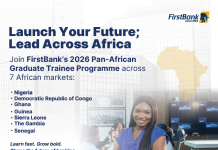
    Celebration of the UN International Widows’ Day on 23rd June 2018, which coincided with the last day of the CR&S Week, was the third activity. Driven by the International Women’s Society (IWS) in Lagos with whom the bank partnered to organise an empowerment outreach for 500 widows in Lagos, it provided start-up capital and capacity building required to successfully run start-ups and small businesses, to the widows. The fourth was a Career Counselling Day for over 10,000 senior secondary school students, as part of the broader FutureFirst programme of the bank aimed at ensuring the youth are empowered to be financially independent through fulfilling careers and the right financial knowledge. Fifth and final was the SPARK (Start Performing Acts of Random Kindness) initiative, which included a SPARK Day set aside in the bank for people to act within their individual spheres of influence to promote kindness. The initiative also saw the bank receiving about 200 internal and external nominations of people deserving of kindness, out of which 24 beneficiaries were to emerge. The 2018 Week was marked across Nigeria’s six geopolitical zones with two states from each zone, totalling 12 states in all. It was also commemorated in the six countries/markets outside Nigeria where FirstBank already had subsidiaries – UK, Ghana, Democratic Republic of Congo (DRC), Guinea, Sierra Leone and Senegal.

    In 2019, the CR&S Week was held from 1 – 6 July 2019 with the theme “Ripples of Kindness: Putting You First”. The theme was informed by the bank’s belief that every act of kindness (regardless of how little or in whatever form) ignites a ripple effect that goes on without end. The year’s CR&S Week focused mainly on the SPARK initiative, which had gained so much traction since its humble beginnings in 2017. A Kindness Manifesto for both internal stakeholders and external stakeholders was introduced. There were other new activities or initiatives. A Nice Comments Day was introduced for the first time and scheduled to hold on the first day of the CR&S Week. The basis for it, according to the bank’s committee that oversaw the planning and implementation of the 2019 CRS Week, is the important place of words in the “kindness ecosystem”. The committee underlined this point when it noted as follows: “One of the truest reflections of how kind we are in our choice of words. That’s why we have created Nice Comments Day to help build a kinder world [through kind words].”

    Another new initiative introduced in 2019 was the SPARK School Engagement, which involved launching the SPARK initiative in schools to promote the 3Cs projected as the pillars of kindness – Compassion, Civility and Charity. The schools – secondary schools across Nigeria – were to be visited to educate students on acts of kindness, encouraging them to make kindness a lifestyle. A crowd-funding initiative was also added in 2019 to enable both employees and external stakeholders to donate to defined humanitarian causes, such as supporting widows, sending children (from indigent homes) to school and providing health care for the physically challenged and the old. As at August 2019, nearly N7 million had been raised through the crowd-funding initiative.

    The regular initiatives/activities were also retained in 2019. There were visits to orphanages/less privileged homes. Widows’ empowerment was organised in collaboration with International Women’s Society (IWS), Nigeria to empower a select number of widows across Nigeria. The implementation in Nigeria covered the six geopolitical zones with activities held in four states per zone, amounting to 24 states in all. Six subsidiaries of FirstBank also implemented the programme in their markets/countries – UK, Ghana, DRC, Guinea, Sierra Leone and Senegal. In all, 25 schools benefitted with 6,000 students participating in terms of the School Engagement; 50 charities and NGOs, including Leap Africa and IWS, were partnered. Over 20,000 orphans/less privileged people including widows were reached and impacted.

    No CR&S Week could take place in 2020 because of the COVID-19 pandemic and its associated restrictions on public gatherings and visits. But FirstBank did not just fold its hand and sit idly. The bank did something absolutely amazing, demonstrating uncommon solidarity with a vulnerable segment of society – children. Realising that the harsh effects of the COVID-19 crisis were borne disproportionally by children, whose education and thus future was being endangered due to the lockdown and prolonged closure of schools, FirstBank embarked on a mission to do something about it. Working with partners, such as IBM, UNESCO, Robert & John, Curious Learning and the Lagos State Government, it launched the bold and ambitious e-Learning Initiative designed to move one million children onto safe online learning platform. The Initiative was to minimise the disruption to children’s education, ensuring that they remained fully engaged during the difficult period and are not left behind by their peers across the (developed) world. There are already over 150,000 students benefitting from the e-Learning initiative in the height of the COVID-19 crisis. In addition, the Bank deployed communication material to create more awareness of the SPARK Initiative and to sensitize staff, customers and the public during unprecedented times.

    What greater demonstration of kindness could there have been in 2020 given the circumstances the whole world found itself, especially vulnerable children? So there may not have been a CR&S Week in 2020 but the same kindness narrative that has characterised all activities of the various CR&S Week since 2017 clearly shone through FirstBank’s COVID-19 response, especially its e-Learning Initiative. In future, people would probably easily be forgiven if they assumed the e-Learning Initiative represented FirstBank’s CR&S Week in 2020. FirstBank has demonstrated uncommon consistency over the years to its Corporate Responsibility and Sustainability Week and the ideals it seeks to project through the platform. This has earned the bank the right to make the bold call that is the theme of this year’s CR&S Week.

    The question is whether we will heed the clarion call to adopt kindness as a way of life. Will we go out there and extend kindness to others in ways that will make them realise that kindness is not just a word taken from the dictionary but an act that should always be expressed to others? Will we embrace kindness as our new way of life? Will we commit to making our everyday a Kind Comments Day, thus giving others permission and the strength to do the same? Will we Start Performing Acts of Random Kindness towards all and make them feel obligated to start acting kindly towards other people as their new lifestyle?

    Culled from Nigerian Tribune


  • Access Bank Launches Womenpreneur Pitch-A-Ton Season

    Access Bank Launches Womenpreneur Pitch-A-Ton Season

    …empowering Female Entrepreneurs Across Africa

    As part of the Bank’s mandate to empower female entrepreneurs with financial and business skills, Access Bank Plc has unveiled the third edition of its Womenpreneur Pitch-a-ton Africa programme.

    The Womenpreneur Pitch-a-ton Africa programme is designed to provide female owned businesses across Africa an opportunity to access finance, world-class business trainings as well as mentoring opportunities. This programme has been designed to create an enabling environment for female entrepreneurs to grow their businesses.

    Speaking at the launch of the third edition of the initiative, Ayona Trimnell, Group Head W Initiative, said, “Access Bank has been a leading advocate for women’s economic empowerment in Africa and this is the key motivation for the ‘W’ Initiative which caters to the women economy particularly in the areas of financing, capacity building and creating networking opportunities for women”. She further stated that “we launched the first Womenpreneur pitch-a-ton initiative in 2019 in line with our value proposition to be the No. 1 Bank of Choice for women in Nigeria, and we have received over 100,000 applications over the last 2 years.

    In 2020, despite the pandemic, we were able to expand the programme to other female entrepreneurs across 7 African countries with 3 winners emerging from Sierra Leone, Ghana and Zambia out of 50 finalists. This year we are making the programme bigger and better by increasing the numbers to 100 women entrepreneurs who will emerge as finalists. The programme will also be opening up to a total of 9 African countries – Nigeria, Ghana, Zambia, Rwanda, Mozambique, Kenya, Democratic Republic of Congo, Sierra Leone and the Gambia”.

    The 2021 Womenpreneur Pitch-a-ton Africa programme will officially kick off on Monday, June 21st – August 13th, 2021 and will offer financial grants, an exclusive certified capacity building program and business coaching aimed at empowering women entrepreneurs. Interested female entrepreneurs who meet the criteria of having an existing business for at least one year with at least 50% female ownership and between the age range of 18-45 years are eligible and required to fill an online application on www.womenpreneur.ng

    All online applications will be reviewed and screened by independent business experts to five hundred (500) candidates who will be required to send in a sixty-second video pitch for the opportunity to be selected as part of the final top 100 candidates who will benefit from an exclusive and certified Mini-MBA and grant prizes.

    “The programme is designed as a 3-month period comprising 12 weeks of mini-MBA training in collaboration with the International Finance Corporation (IFC) and pitching sessions to a Pan-African Jury panel where the top one hundred (100) finalists will pitch their businesses, infusing learnings from the mini-MBA and will stand an opportunity to win financial grants and other consolation prizes.”

    As a leading commercial bank in Nigeria, Access Bank has made significant investments aimed at enhancing growth in the Small and Medium-size Enterprise sector. The Bank is also a major advocate for women in business through innovative offerings like the W Power Loan, a discounted financing at 15% interest per annum, for women to grow their business as well as other Business Support Services.

    The Womenpreneur Pitch-a-ton Africa Programme is the first women-in-business support initiative of its kind in the industry. Please click HERE to know more.

  • FirstBank ranked Second Most Admired Financial Services Brand in Africa

    First Bank of Nigeria Limited, Nigeria’s premier and leading financial inclusion services provider, has been ranked the second ‘most admired financial services brand’ in Africa – for the second straight year – at the 2021 Brand Africa 100: Africa’s Best Brands Event, held on Africa day, 25th May 2021.

    Brand Africa is an intergenerational movement to inspire a great Africa through promoting a positive image of Africa, celebrating its diversity and driving its competitiveness. It is a brand-led movement which recognizes that in the 21st century, brands are an asset and a vector of image, reputation and competitiveness of nations.

    With over 127 years of being woven into the fabric of society, FirstBank has been at the forefront of promoting growth and development in the country, extending its financial services footprints – through its subsidiaries – to over half a dozen countries across 3 continents. The Bank’s international business presence includes FBN Bank (UK) Limited in London and Paris, FBNBank in the Republic of Congo, Ghana, The Gambia, Guinea, Sierra Leone and Senegal, as well as a Representative Office in Beijing.

    Through the years, the Bank’s leading digital banking services and innovative products like FirstMobile, USSD, Firstmonie Agent amongst many others, have been essential to promoting cashless transactions in today’s digital age. FirstBank’s digital savviness extends to the social media platforms where it has been ranked by Financial Brand as the number one on Instagram in Nigeria and second globally based on the highest number of fan base/followers and it’s clearly poised to reclaim number 1 position across all parameters

    Appreciating the recognition on behalf of the Bank, the Chief Executive Officer, Dr Adesola Adeduntan, said, “we are grateful to Brand Africa for the back-to-back recognition as the ‘Second Most Admired Financial Services Brand in Africa’. This is a testament to the impactful role we are playing in promoting socio-economic development in Africa, which includes being at the forefront of bridging the financial inclusion gap as well as our commitment to supporting Small and Medium Enterprises because of the critical role they play in economic growth and development”. He further noted that FirstBank has created a functional ecosystem for SMEs to thrive through various value adding solutions and value propositions.

    Only recently, First Bank of Nigeria Limited was awarded the 2021 ‘’Retail Banking CEO of the Year Nigeria’’, ‘’Most innovative Retail Banking App Nigeria’’ and ‘’Best CSR Bank Nigeria’’ awards by Global Banking and Finance magazine.

  • Africa Cup of Nations tournament to be hosted by Cameroon in2022

    Africa Cup of Nations tournament to be hosted by Cameroon in2022

    The Africa Cup of Nations tournament will be staged in Cameroon from January 9 to February 6 next year, a Confederation of African Football (CAF) official confirmed on Thursday.

    A virtual executive committee meeting chaired by recently elected president Patrice Motsepe from South Africa also decided that a draw to divide the 24 qualifiers into six groups will be held on June 25.

    Algeria, Burkina Faso, Cameroon, Cape Verde, Comoros, Egypt, Equatorial Guinea, Ethiopia, Gabon, Gambia, Ghana, Guinea, Guinea-Bissau, Ivory Coast, Malawi, Mali, Mauritania, Morocco, Nigeria, Senegal, Sudan, Tunisia and Zimbabwe have qualified.

    The remaining place rests between Benin and Sierra Leone, whose fixture in Freetown this week did not take place because the visitors challenged Covid-19 results after five of their key players tested positive.

    A CAF statement said the match had been rearranged for the May 31-June 15 international window, following which Sierra Leone launched an appeal against that decision.