Tag: terrorism

  • CNN speaks with Nigeria’s Foreign Minister

    CNN speaks with Nigeria’s Foreign Minister

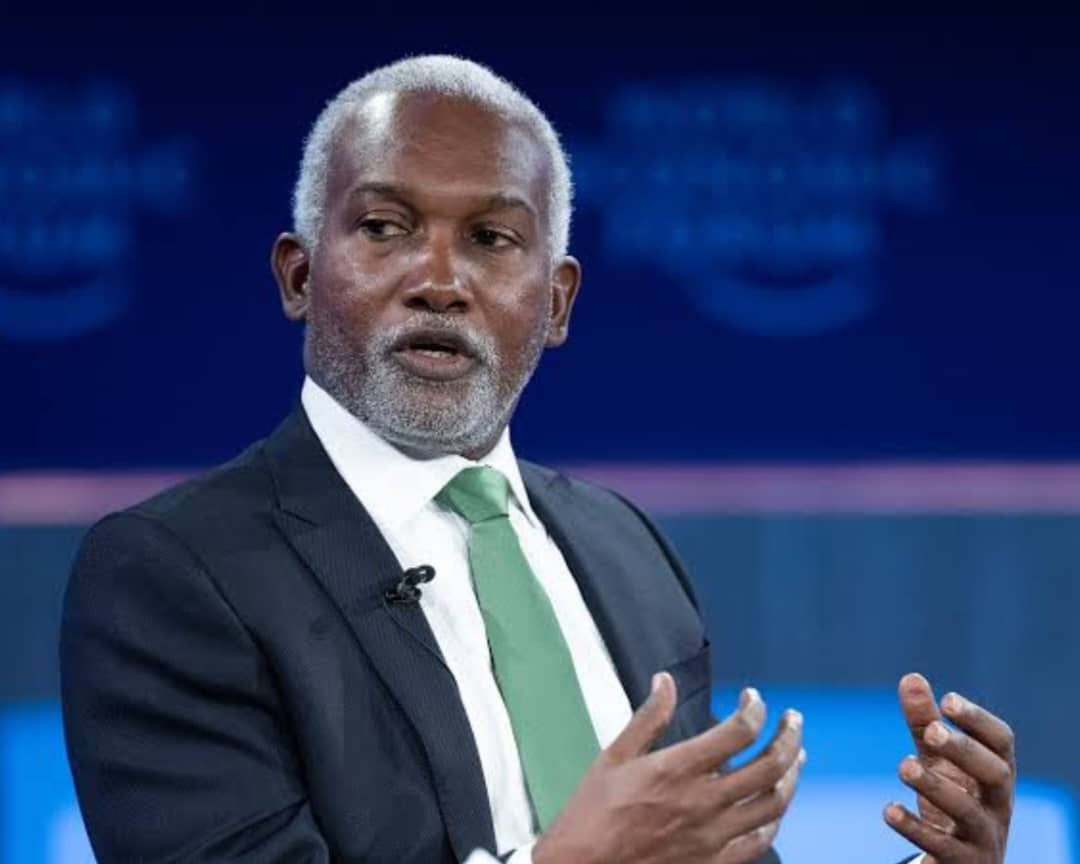
    CNN’s Zain Asher and Bianna Golodryga speak with Nigerian Foreign Minister, Yusuf Maitama Tuggar, live from the World Economic Forum in Davos, Switzerland about Nigeria’s heightened security concerns after more than 170 worshippers were kidnapped during church services in northern Kaduna over the weekend.

    In response to the questions from Asher on what concrete steps are the Nigerian government taking to ensure that the most vulnerable populations across Nigeria are safe and protected, Tuggar emphasised Nigeria’s “partnership with the United States of America.”

    Tuggar addresses the outcome of the U.S ordered strike against Islamic State targets in Northwest Nigeria on Christmas Day, saying, “As is the case with some of these strikes, sometimes you don’t get the right target, but it underscores the willingness of Nigeria and the United States and indeed other countries towards a better understanding of the conflict in the region.”

    Tuggar furthers Nigeria’s commitment to fighting terrorism, “regionally, we’re doing a lot. It’s Nigeria that is shouldering a lot of responsibilities.”

    Key Quotes from Tuggar:

    On the steps the Nigerian government are taking to protect the vulnerable:

    “There have been so many steps that have been taken. The partnership with the United States of America in targeting some of the band aids and terrorists in the hideouts. And this is something that we have always called for, that the Tinubu Administration has always called for partners to join with us, because we have always been a regional anchor. So, it’s a matter also of narratives. It’s very important to see the conflict for what it is. It’s a regional conflict that has spilled over into Nigeria. It is not removed from the conflict in the Sahel. It’s not removed from what happened in Libya many years ago. It’s not removed from the proliferation of weaponry, of fighters and climate change issues and so many other complex issues.”

    “We have forest guards. We have several other initiatives. In fact, we had done very well with the fight against Boko Haram. We were trying to sort out the thousands that had surrendered. Some were innocent, victims caught in conflict areas until the coup in Niger, and Niger pulled out of the Multinational Joint Task Force that was working so well, because it allows for the right of pursuit. It allows for soldiers, Nigerian soldiers, to pursue terrorists in Tunisia and vice versa.”

    On ensuring investors and world business leaders see Nigeria as a place of stability:

    “The fact that there is an incident in a country of 923,000 square kilometers does not mean you write off the entire country, and some of the conversations that are taking place here also have to do with Africa’s risk bias, where the issue of risk, geopolitical risk in particular, is overhyped when it comes to Africa, which doesn’t apply in other parts of the world.”

    “It’s very important we look at the progress that the Tinubu Administration has been making with macro-economic reforms, with the tax reforms that makes it easier for investors to come into Nigeria, lowering of corporate income tax, reform of the foreign exchange. We can actually come to Davos and use our Nigerian cards here, credit cards without a limit, 43 billion in foreign reserves. I can go on and on and on.”

    On the number of terrorists that were killed as a result of the partnership with the United States:

    “As is the case with some of these strikes, sometimes you don’t get the right target, but it underscores the willingness of Nigeria and the United States and indeed other countries towards a better understanding of the conflict in the region and to work together towards bringing it to an end, because it is a conflict that affects the entire planet. The West African region and the Sahel and Lake Chad regions in particular are among the fastest growing regions in the world. Nigeria is going to be 400 million in the next 24 years. The African continent is going to be the most populous.”

    “It’s important that we nip these conflicts at the bud, so that they don’t spill over into other continents. So that the Sahel does not become a breeding ground for terrorism, for extremism, for all sorts of criminal activity […].

    We need to be supported with the equipment. We need to be supported with the training. And more importantly, we need to be supported with the understanding and the right framing to what is happening in our region and what is happening in the country.”

  • Qatar Strongly Condemns Attack on Village in Nigeria

    Qatar Strongly Condemns Attack on Village in Nigeria

    The Ministry extends Qatar’s condolences to the families of the victims, as well as to the government and people of Nigeria, and wishes a speedy recovery to the injured

    The State of Qatar expresses its strong condemnation and denunciation of the attack on a village in northeastern Nigeria, which caused dozens of deaths and injuries.

    The Ministry of Foreign Affairs reiterates the State of Qatar’s position rejecting violence, terrorism, and criminal acts, regardless of their motives and reasons.

    The Ministry extends Qatar’s condolences to the families of the victims, as well as to the government and people of Nigeria, and wishes a speedy recovery to the injured.

  • US Entry Ban a Barrier, Even Though West Africa Wants Deal With Trump Government – Nigeria’s Foreign Affairs Minister, Yusuf Tuggar

    US Entry Ban a Barrier, Even Though West Africa Wants Deal With Trump Government – Nigeria’s Foreign Affairs Minister, Yusuf Tuggar

    Nigeria’s Foreign Affairs Minister, Yusuf Maitama Tuggar, has contended that the recent decision by the United States to include all ECOWAS countries in its visa restrictions (Togo on an earlier list) would be most unfortunate if it were implemented because the region has opportunities to make deals.

    The Honourable Minister said the region is ready to do business with the US, but the government needs to create a conducive atmosphere for it to happen, as other countries are also looking forward to working with the ECOWAS member states. 

    “We in this part of the world are students of the Art of the Deal and have been part of the international trading system even before the modern state system. ECOWAS countries and the US have a rare opportunity to create a partnership based on principles of need. We are also a strategic alternative to more distant and politically divergent energy producers. So, we will do deals for our prosperity; the only question is with whom?” He wondered who takes up the opportunities in the region by allowing government officials, technocrats, business executives, and entrepreneurs to travel freely back and forth to close deals.                                                                

    Tugar spoke at the 54th Ordinary Session of the Mediation and Security Council at the Ministerial level meeting in Abuja, on Wednesday, 18th June 2025.

    The minister affirmed that the Regional Partnership for Democracy (RPD) initiative, launched in May this year, in conjunction with the United Nations Development Programme, would help to address the challenges of democratic governance in West Africa and ensure its success.

    He said the RPD is a template that should be collectively owned and applied within the West African region based on the particularities of member states’ polities.

    According to him, the humanitarian challenges facing the region, ranging from forced displacement, food insecurity, and climate-related vulnerabilities to health and protection concerns, demand not only joint attention but also coordinated action.

    Yusuf Tuggar averred that in the humanitarian and early warning domains, which are interconnected, the Mediation and Security Council will receive a comprehensive update on the Early Warning and Response Centres, which are essential components of the regional conflict prevention framework, in the member states.

    He said the Economic Community of West African States (ECOWAS) has benefited greatly from the foresight demonstrated in the establishment of the Inter-Governmental Action Plan Group Against Money Laundering in West Africa (GIABA) some decades ago, as illicit financial flows, money laundering, and terrorism financing continue to threaten the region’s collective security.

    The Minister asserted that member states must therefore reaffirm their commitment to enhance financial transparency and resilience. “The Council will receive briefings and updates on the resilience of the region, especially efforts by member states to strengthen our institutional capacities to tackle money laundering and terrorism financing,” he said.

    He also highlighted the completion of the Lungi Military Logistics Depot, constructed under the auspices of ECOWAS, which he described as a landmark achievement, coming at a time when the region is preparing to mobilize and operationalize its Standby Force against terrorism.

  • Feature: Redefining the Disconnect in Strategic Communication between the Nigerian Government and the People

    Feature: Redefining the Disconnect in Strategic Communication between the Nigerian Government and the People

    By Dr. Omolaraeni Olaosebikan

    The relationship between the government and the governed is pivotal for the progress and growth of any society. When the government fails to effectively communicate its policies, programs, and initiatives to the citizens, it only deepens the distrust and disconnect between them.

    Studies have shown that most African citizens don’t trust their leaders as the news of corruption allegations and other vices seem to be the order of the day. This is not different in Nigeria, a country regarded as the giant of Africa. The lack of trust in leadership can have far-reaching consequences, affecting the country’s socio-economic development and political stability. Addressing corruption and restoring faith in government institutions is crucial to building a better future for all Nigerians. Leaders need to demonstrate transparency, accountability, and integrity to regain the trust of their people and work towards a more prosperous and equitable society.

    The lack of strategic communication in government activities across all levels in the country is a concerning issue. While funds are being released by ministries and agencies to support businesses and citizens, the intended beneficiaries are not effectively reached due to inadequate messaging. This communication gap creates opportunities for corrupt individuals and officials to exploit the situation for personal gain. Addressing this communication inefficiency is crucial to ensuring the effective and transparent distribution of resources to those in need, ultimately preventing misuse and corruption. A more coordinated and targeted approach to communication can help bridge this gap and ensure that government support reaches its intended recipients efficiently and fairly.

    Unfortunately, due to economic challenges, some businesses have been forced to shut down, leading to a mass exodus of citizens, especially the youth, who are seeking better opportunities abroad. This phenomenon has been termed the ‘Japa syndrome’, as individuals are opting to leave their homeland in search of greener pastures. The increasing trend of young people leaving the country in pursuit of better prospects reflects the struggles and limitations faced by businesses and individuals within the local economy. It highlights the need for reforms and support to retain talent and foster growth within the community.

    At every stage, Nigerian political leaders must take a cue from developed countries that many young individuals aspire to live in. By examining what sets these countries apart and makes them attractive to their citizens, Nigerian leaders can gain valuable insights. While direct comparisons may not always be relevant due to differing contexts, conducting a thorough study of successful practices in developed nations can serve as a guide for the Nigerian government in making informed decisions. Looking at what these countries have done right can provide a yardstick for measuring progress and implementing positive changes for the benefit of Nigerian society.

    To renew the hope of the citizens and business community in line with President Bola Ahmed Tinubu’s ‘Renewed Hope’ mantra, strategic communication plays a pivotal role. It is crucial to bear in mind that the hallmark of good governance lies in maintaining an accountable, transparent, fair, and efficient system. By effectively communicating government initiatives, policies, and progress, trust and confidence can be fostered among the people and businesses. This transparent and open dialogue ensures that stakeholders are well-informed and engaged, promoting a sense of inclusivity and collaboration. Ultimately, strategic communication is instrumental in building a stronger foundation for a prosperous and sustainable future for all.

    Fundamentally, strategic communication plays a crucial role in averting crises like riots or protests that may arise when new policies are introduced. Take, for instance, the tragic outcome of the #EndBadGovernance protest in some regions – it could have been prevented with effective communication strategies. Through strategic communication, governments can sway citizen opinions towards endorsing national objectives, fostering a closer relationship between the government and its people. In this way, a symbiotic connection is established, benefitting both parties involved.

    Emphasizing the importance of strategic communication is essential, as the failure to do so has been a contributing factor to the rise of fake news and misinformation. Research shows that there is a lack of public knowledge about the government’s continuous endeavors, as they usually only announce their projects, plans, and achievements during specific occasions. President Tinubu’s speech at the 64th Independence Day festivities exemplifies this ongoing problem.

    Citizens feel the government doesn’t value or see them as key stakeholders aside from election time. They feel that news disseminated is not completely true or has hidden facts. The Case of Dangote Refinery and Nigeria National Petroleum Company (NNPC) Limited is an example. Aliko Dangote, Chief Executive Officer of Dangote Refinery, had to address the media before his concerns were addressed.  It also shows that the government often waits for citizens’ outbursts before responding to critical issues.

    Another issue is the lack of transparent communication regarding developments in the oil and gas sector, leaving citizens uninformed. An example of this is the Port Harcourt refinery in Rivers State, which has yet to start operations despite assurances from the Federal Ministry of Petroleum Resources and NNPC. This lack of clarity raises concerns about the government’s ability to deliver on its promises and effectively manage the oil and gas industry. Citizens deserve more transparency and accountability to understand the status of crucial projects like the Port Harcourt refinery and the overall state of the sector.

    In another vein, citizens are always told to be patient by the government but are not told what to do to complement the government’s effort through effective communication campaigns. So, communicating ways citizens can mitigate the effects of climate change and natural disasters; and ways to support security agencies in reducing terrorism, kidnapping; and others could boost citizens’ engagement in contributing to nation-building. This includes the government being transparent in communicating its plans and programmes.

    I am very certain that the governments of developed nations prioritize proactive communication with their citizens rather than waiting for crises to unfold. By fostering transparency and open dialogue, they have successfully garnered the trust of their people. This approach has cultivated a generation of patriotic individuals who are committed to safeguarding the integrity and stability of their nations at all costs. This proactive communication strategy not only ensures a sense of unity and shared responsibility but also lays the foundation for a strong bond between the government and its citizens, ultimately contributing to the overall well-being and prosperity of the country.

    The key to success for government at all levels lies in prioritizing strategic communication. It is essential for them to take a proactive approach to communication rather than simply reacting to problems. It is time to shift focus away from propaganda and instead concentrate on transparent communication methods that encourage citizen participation. By collaborating closely with the citizens, Nigeria can reach its true potential and flourish. The political leaders must accentuate open, honest communication to establish trust and encourage collaboration between the government and the people in order to make Nigeria great.

    Dr. Omolaraeni Olaosebikan is a strategic communications expert and the CEO of McEnies Global Communications, a leading strategic integrated marketing communications agency in Nigeria.

  • Feature: Nigeria should ensure National Security through Self-Sufficient Defence Manufacturing

    Feature: Nigeria should ensure National Security through Self-Sufficient Defence Manufacturing

    by Ayo Akinfe

    As President Tinubu returns home to face domestic problems like insecurity, inflation, the minimum wage dilemma, power shortages, and infrastructural inadequacies, I hope he realises that no nation can ever be secure unless it manufacturers its own defence equipment

    [1] I hope that President Tinubu has made Nigeria self-reliant when it comes to defence equipment, one of his cardinal programmes. There is no way any other nation will be able to manufacture the equipment we want, in the quantities we want, at the time we want it and at the price we can afford

    [2] If we want to eliminate all these current insecurity problems, including Boko Haram, kidnapping, banditry, armed robbery, etc, we need an internal armament manufacturing industry that can respond to requests from the security forces for equipment. If for instance the Nigeria Police Force 12 helicopter gunships to combat bandits operating in the forests of Zamfara State, we need to be able to deliver them within a fortnight

    [3] Any such programme needs to be part of a wider security plan that includes other ambitious goals. It should, for instance, include a plan that, as of January 1 2024, Nigeria shall launch a fourth military service known as the National Guard or Republican Guard that will be tasked solely with dealing with internal security. It will have an army, naval and air component and be charged with dealing with terrorism, kidnapping, banditry, etc

    [4] Also, as part of a plan to check our porous borders, the Nigerian Army shall undertake a five-year programme to plant trees along our borders to demarcate the nation’s boundaries. Such trees shall be painted in the country’s colours

    [5] Nigeria’s maritime borders will also be marked out with cones right along our 853km Atlantic seaboard. A fifth military service will be created called the Nigerian Coast Guard. Its job will be solely to police our maritime borders, which will include combatted crude oil theft

    [6] All members of the armed forces will be registered for a national compensation programme that will pay their dependents their full salaries and grant their children scholarships up to university level should they lose their lives during the course of duty

    [7] Each state capital shall house at least one mechanised division of the Nigerian Army. Every one of our 784 local government areas shall also have one battalion

    [8] Nigeria’s federal ministries of defence, police affairs and internal affairs shall have a coordinating minister for security. It shall then be overseen by the office of the vice president in what will be the Super Security Ministry, which will have overall responsibility for combating terrorism

    [9] New laws will be passed as from January 2024 under which members of the security forces aiding and abetting terrorism will face statutory treason charges with the mandatory death penalty being the maximum punishment. Also, military commanders convicted of embezzling funds meant for defence will face statutory treason charges, with the accompanying mandatory death penalty being the maximum punishment

    [10] Nigeria will enter into bilateral defence agreements with friendly nations aimed at getting their equipment manufacturers to establish factories in the country. As part of this, specialist units of the armed forces, like the engineering corps of the Nigerian Army, will be free to bid for government contracts in their areas of expertise. This will enable them to develop infrastructure in insecure areas

  • Feature: Proposed Security Policy for Nigeria at Chatham House

    Feature: Proposed Security Policy for Nigeria at Chatham House

    by Ayo Akinfe

    Were I invited to talk about Nigerian insecurity at Chatham House, I would unveil policy plans that look something like this

    [1] Insecurity is by far our biggest problem in Nigeria today. I would appoint a coordinating minister for security who will coordinate the affairs of the defence, police and internal affairs ministries

    [2] I will also appoint a coordinating minister of the economy who will oversee the finance, agriculture, labour & employment, trade & industry and petroleum ministries

    [3] I am amazed that none of the presidential candidates picked a former soldier a running mate. Tinubu could have picked Martin Luther Agwai, Atiku could have gone with Onyabor Ihejirika, while Peter Obi could have selected Luka Yusuf and Rabiu Kwankwaso could have gone with Kenneth Minimah. As Nigeria stands today, the combination of an economist and a former soldier would be ideal for the presidency

    [4] When I look at the calibre of military hardware being supplied to Ukraine, I shudder. I am particularly gobsmacked with the high tech High Mobility Artillery Rocket System (Himras) systems currently being delivered. They can hit targets about 300km away, are highly mobile and are fully digitised. Nigeria demands similar support in its fight against terrorism

    [5] I want the US, EU and UK to supply Nigeria with surveillance equipment, high tech drones and Himras systems that can enable us take out the likes of Boko Haram, Iswap, kidnappers, etc in their dens and forests

    [6] Since February 2022, the US has offered military aid of up to $7bn to Ukraine. Nigeria demands likewise

    [7] Similarly, the European Union has sent equipment worth €2.5bn to Ukraine since hostilities began

    [8] Not to be left out, the UK has equally sent £2.5bn worth of equipment to the Ukraine

    [9] All these nations pledging to be friends of Nigeria need to be put on the spot. If they can do it for Ukraine, why can’t they do it for Nigeria?

    [10] I will launch a public works programme to provide jobs for up to 30m youths. This is to combat terrorism, kidnappings and banditry which appeal to our youths a lot at the moment

  • Feature: Nigeria needs another FDI target as China cuts borrowings

    by Ayo Akinfe

    With China cutting back on its borrowing, our next president needs to set very ambitious foreign direct investment targets

    [1] Food processing – $20bn
    [2] Railways – $15bn
    [3] Power generation – $10bn
    [4] Automobile assembly plants – $10bn
    [5] Steel production – $5bn
    [6] Solid mineral processing plants – $5bn
    [7] Pharmaceuticals – $5bn
    [8] Leather processing – $5bn
    [9] Green energy – $5bn
    [10] Cosmetics and beauty products – $5bn

    If we can attract $85bn in FDI in 2023 and then get domestic industrialists to invest a further $15bn in the economy, we should be fine. As things stand today, we are facing a crisis because Chinese overseas investment is slowing down and the Nigerian state no longer has the cash to take out stakes in commercial ventures.

    Something simply has to give or Nigeria will collapse beneath our feet. Our next president has to attract about $85bn worth of investment if he wants to take 90m people out of poverty and end our designation as the poverty capital of the world.

    By my calculations, about 30m sustainable and remunerative new jobs must be created to end the current scourge of terrorism, kidnapping, armed robbery, banditry, etc. I would like to see the masterplan.

  • Feature: It is a Great honour to be the first Nigerian and African Executive Director leading a U.S. Non-Profit- Damilola Akinyele

    Feature: It is a Great honour to be the first Nigerian and African Executive Director leading a U.S. Non-Profit- Damilola Akinyele

    Damilola Akinyele is the Executive Director at Princeton in Africa where she leads the organization that develops young leaders of tomorrow. An international training, development and education professional driven by quality education, social impact, inclusive and equitable projects, design, and innovation, she has spent her career cultivating strong leaders, strengthening institutions and developing high-impact programmes across the world.

    Her professional experience spans a decade and her donor experiences include the U.S. Department of State, U.S. Embassies, state and Local Councils in Nigeria. In recent years, she has been providing vision and leadership on social justice, equity, and inclusion practices for dozens of faith-based non-profits in the U.S, U.K and Africa. During her career at World Learning, she co-chaired and pioneered the Diversity, Equity, and Inclusion task force, which managed the vision, strategy and execution of the organization’s DEI efforts.

    Damilola received her BA in Sociology from Morgan State University and her MA in International Training and Education at American University, Washington, DC. As the founder of ETRAssociates, she applies her skills, knowledge and experiences to serve the Nigerian society by developing programmes that are relevant, context-specific, transformative and sustainable. In this exclusive interview with News Wings NG, she speaks on her journey to becoming the first African woman executive of a major non-profit organization, getting more women into executive positions, and how to improve education and the lives of Nigerian women.

    News Wings: Tell us a bit about your growing up years, would you say it influenced your journey significantly?

    DA: I attribute a significant part of my life and career trajectory to the values of empathy, integrity, and hard work I saw my parents exemplify growing up. I was born and raised in Lagos, Nigeria. My parents did business internationally and had unique opportunities to interact with the world and different cultures, which afforded us some of those experiences. My mother is an endless volunteer for social causes, and my father was an active social commentator on Nigerian institutions and leadership – I was always privy to some of these conversations with his friends and grew up fascinated by our institutions and the life of service.

    My family also has a history of men who loved & practiced Law, so I naturally would become a lawyer (or so I thought). Instead, I ended up in the United States, where you have to get an undergraduate degree first before attending law school. Reminiscing on the first week of a course I took in my sophomore year of college, I recall the deep feeling of compulsion to actively fulfill the 2nd Millennium Development Goal: Achieving universal primary education. I also remember the sense of responsibility that consumed me and changed the course of my life forever. I had access to good schools growing up, but I was acutely aware that others did not always have the same or equal opportunities. For example, in my obsessive research and discovery in college, I learned that over 10 million Nigerian children were out of school. So, I started volunteering at education centers in the United States, during my holidays in Lagos, attending conferences around education, and engaging more intellectually with development issues.

    After college, I worked at DLA Piper, one of the biggest global law firms, while studying for the LSAT, but I was now aware that this was not my purpose. I finally summoned the courage to tell my Nigerian parents that I was changing my career trajectory and going to graduate school for ‘International Training, Education, and Development instead of Law. My father didn’t understand or agree with why I chose this path for a long time, but he was supportive. Since then, I have spent my career cultivating strong leaders, strengthening institutions, and developing high-impact programs in Africa, the United States of America, the Middle East, and Asia.

    Paradoxically, in 2017, I discovered a piece of history I never knew about my family- My Father’s Grandfather, whose picture hung/ still hangs in the house I grew up in and whom I knew as a lawyer, and the former Western Minister of Works in The Great Awolowo’s time was also an educator and academic- He was a teacher and a principal, to be exact. So, although I seemed a rebel who chose a non-profitable path for many years, the apple did not fall too far from the tree with my quest to be an educator.

    News Wings: Take us a bit through your career and professional journey till date?

    DA: That’s a bit hard to summarize, but I’ll try and take it from where I am currently to where I have been through the years.

    I am an International Training, Development, and Education Professional driven by quality education, social impact, inclusive and equitable projects, design, and innovation. I have spent my career cultivating strong leaders, strengthening institutions, and developing high-impact programs in Africa, the United States of America, the Middle East, and Asia. My professional experience spans over the course of 10 years, and my donor experiences include the U.S. Department of State, U.S. Embassies, state and local governments in Nigeria, West Africa.

    I currently live and work in New Jersey. I am the Executive Director at Princeton in Africa where I lead the organization that develops young leaders of tomorrow as they contribute to some of the most impactful organizations in Africa today.  In this role, I maintain a preeminent fellowship program that aligns with the core values of ethical and responsible engagement on the African continent, Management of Princeton in Africa Staff, Financial Oversight, Donor Relations, Development and Communications, and Board Governance. Prior to this role, I worked at a church/ faith-based non-profit where I co-developed leadership structures, developed inclusion practices, and organized sustainable community engagement and fundraising initiatives.

    A significant part of my career was at a global non-profit based in Washington D.C. I held different roles at the organization through the years, all of which can be summarized as designing and implementing youth, leadership, exchange, and developmental programs funded by the U.S. Department of State. I have managed a special envoys program that covered 160+ countries, designed and implemented educational learning experiences for Iraqi Young Leaders on peacebuilding and reconciliation, youth activism and civic engagement, reintegrating refugees and IDP’s, and managed continued professional development for a network of 2,000+ alumni. During my career at this global non-profit in Washington D.C., I also co-chaired and pioneered the Diversity, Equity, and inclusion Taskforce which managed the vision, strategy, and execution of the organization’s DEI efforts.

    At the beginning of my professional journey, I had the opportunity to work as a TA/RA (research and teaching assistant) at Morgan State University in my final year of college. I started by going to graduate school at American University, Washington D.C. While in graduate school, I worked multiple internships at D.C. non-profits focused on International Development and Education.  In 2016, I co-founded ETRAssociatesng, where I apply my skills, knowledge and experiences to serve the Nigerian society by developing programmes that are relevant, context-specific, transformative, and sustainable. Through the years, I have also consulted with the ministry of education in a southwestern Nigerian state. I have hosted youth leadership and teacher training workshops, developed active learning strategy manuals.

    My educational background has been diverse, as I attended a HBCU (Historically Black College and University) and PWI (Predominantly White Institution) which gave me a diverse outlook on racial, social, and political experiences.  My BA is in Sociology from Morgan State University, and my MA in International Training and Education at American University, Washington, DC.  My volunteer experiences vary from research institutions to tutoring and training Black youth and public-school students in Baltimore, Maryland and Lagos, Nigeria.

    News Wings: As an immigrant and black woman, would you say you have faced profiling and discrimination in any way?

    DA: That’s a fascinating question. Yes, I have been profiled and discriminated against in academic and professional settings in covert or overt ways. These are stories I would rather not recount on the pages of a newspaper as they do not diminish who I am or the experiences of freedom, opportunity, acceptance, and love I have also experienced in those spaces and the U.S. I very much resonate with Toni Morrison when she says, “The function, the very serious function of racism is a distraction. It keeps you from doing your work. It keeps you explaining, over and over again, your reason for being. Somebody says you have no language, and you spend twenty years proving that you do. Somebody says your head isn’t shaped properly so you have scientists working on the fact that it is. Somebody says you have no art, so you dredge that up. Somebody says you have no kingdoms, so you dredge that up. None of this is necessary. There will always be one more thing.”

    Although I can choose not to give into despair sometimes, I do have to say that I have friends and acquaintances who have been stripped of life, dignity, opportunity, and property because of race. Daily, we see people dehumanized and disenfranchised due to race. Racism (structural or individual) kills. As an immigrant, you initially think that it doesn’t affect you- It does. You learn very quickly that no one distinguishes you by being Nigerian or Kenyan- you are identified and grouped by your race before your ethnicity.

    However, America is not a static country. Daily, you see people acknowledging and embracing the history of racism but not becoming victims of it; you see people fighting for justice and equality in healthcare, education, and jobs and demanding more from the system, leaders, and the institutions. There is despair, but there is hope and progress. It’s getting easier and easier to say that people can write their destinies, which gives me hope.

    NewsWings: What would you say has been the most challenging moment of your career till date?

    DA: The most challenging moment of my career so far is not an exceptional story per se, but I think it speaks to the experiences of millennials and how we are redefining what success means to us separate from the expectations our parents set for us or how the boomer generation approached work and life. The most significant and most challenging times of my career have been when I asked myself: What is my purpose? What are my values? Where can I have an impact?

    These questions have led me to take the risk and co-found, run, and attempt to grow my international development and education nonprofit in Nigeria. We have had successes with leadership, training, and education consultancy opportunities- it also comes with various challenges of bureaucracy in Nigeria and seeking local investors and partners. While running my nonprofit with my co-founders, I also must balance my full-time job in the United States, which I happen to be highly passionate about and keeps me functioning in a highly capitalistic society.

    In my employment journey, after working on programmes in regions in the Middle East and Southeast Asia for so long and taking a personal pivot to work in faith-based nonprofits, I am now back to fully running a nonprofit in the United States that focuses solely on Africa. Due to the magnitude of responsibility in this role, it is challenging to juggle with anything else, so my consultancy role in Nigeria has paused since 2021. I have found that very hard because of my personal life’s mission to the leadership and intuitions in Nigeria. However, I am also grateful that I can build systems and further African development in as many ways as they present themselves.

    News Wings: As the first African Executive Director of a U.S non-profit working in Africa, what does this mean to you and other black women?

    DA: My life’s mission is a commitment to the development of Africa by contributing to the leadership and institutions through my work. Which is why I am deeply honored and humbled to be Princeton in Africa’s Executive Director. Princeton in Africa has built a solid reputation across the United States and Africa over the last 23 years. In the last 23 years, this programme has placed over 600 Fellows with more than 100 organizations in 36 African countries where our Fellows, through their work, have made contributions to Africa’s institutions in Business and Economic Development, Education & Youth Capacity Building, Public & Community Health, Advocacy, Research, Civil Society, and so much more.

    President Bill Clinton described us as a model: “Princeton in Africa’s mission to allow young leaders to serve in Africa is a model. . . Working in every field from public health to conservation to conflict resolution, PiAf Fellows improve the lives of everyday Africans in tangible and significant ways.”

    As a Nigerian woman and an African, it is an absolute honor to lead the organization at a pivotal time in reshaping our organization where we recognize the importance of responsible and ethical engagement with the continent. I came on as the first African Executive Director of this organization last year, and one area of my strategic focus is centering African ingenuity, leadership, agency, and achievement as we foster equal and beneficial partnerships in both Africa and the United States. 

    Let me tell you a bit about Black women in the United States. Black women were the unsung heroes of the suffrage movement, they led the way for civil rights in America, and they remain the most consistent group that shows up through their voting for the rights of marginalized people. Recent studies have also shown us as the most educated demographic in the United States. We are not underqualified or undereducated; we are under-selected for some high-level opportunities. For example, Judge Kentaji Brown Jackson is the first Black woman on the nation’s highest court in its 232-year history. How incredible, but also bizarre is that.

    Women of color make up just 4% of C-suite executives, a percentage that hasn’t changed for several years. There are various barriers, such as double standards, lack of advocacy, and unconscious bias. In my career through the years, from entry-level to now, I try to do my work exceedingly well, so women of color can continue to have the opportunity and ensure that I am advocating for policies and systems that provide access for more Black women and people of color. In my career trajectory as a Black woman, it often feels like I have two jobs- my actual job description and the role of ensuring a more inclusive culture where I work. It’s never just about me. 

    News Wings: How are you using your work to impact positively in the lives of people here?

    DA: Africa, and Nigeria to be specific, is faced with the task of education, and nation-building, both formal and informal, as this plays a major role in the development of our continent. In a continent of rapid change, we have made tremendous progress in the field of education: the elementary population has doubled, over 60% of school-age children are now receiving education, and universities have sprung up in countries that previously had none.

    However, Nigeria must stop playing catch-up in teacher education, elementary and secondary curriculum, in adult education, science, and technology. In the words of Nyerere, the first president of Tanzania, “We must run while others walk.”

    In 2016, my colleagues and I from graduate school combined our passion for Nigeria, Sub-Saharan Africa, training, and education to build an organization that is committed to providing quality education, and training programs for intrinsic and instrumental purposes, enabling individuals and institutions to function at their highest potential. We do youth development trainings, leadership and institutional development trainings, and education consultancy. We have worked with organizations, private schools, and state ministry of education since our founding.

    News Wings: What is the importance of having black people in executive roles and how can we work towards achieving this?

    DA: I always tell people that I never struggle to see Black people in executive roles. This is because I have a unique layered experience of being born and raised in Nigeria, a predominantly Black country. I’ll give you an example; In the history of the Fortune 500 list in the United States, there have been only 19 Black CEOs out of 1,800 chiefs. Currently, there are only 4 Black Fortune 500 CEOsThasunda Brown Duckett of TIAA, Rosalind Brewer of Walgreens, Rene F. Jones of M & T, and Kenneth Frazier of Merck. In Nigeria, There’s Mike Adenuga, Segun Agbaje, Nneka Onyeali-Ikpe, Herbert Wigwe, Oluwatomi Somefun, Emeka Emuwa, Abubaker Suleiman, and so much more, and all these people are Black. The Black excellence, competence, professionalism, and adequacy are in abundance. It is also the same abroad, but Black people are under-selected for these opportunities. These things are interconnected to the systems of exclusion we talked about earlier in the interview. In the wake of George Floyd’s death, we saw the glaring lack of representation in Corporate America and organizations pledging to do better.

    There must be a commitment to diversity, equity, and inclusion. Organizations must commit to a plan of action that includes bias training for managers and decision managers, clear standards for hiring and promoting, and hiring diverse decision-makers. I always tell people that a Pakistani-American man led one of the most diverse teams I ever worked on and it was reflected in hiring, language, communication, and compensation. In this same organization, he and I co-founded a Diversity, Equity, and Inclusion Taskforce that managed the vision, strategy, and execution of the organization’s DEI efforts. Companies have a duty to not have racial exclusivity at the top of the organization with black workers unable to rise through the ranks. It is important to have Black people in executive roles because people must have equal opportunity- to be treated similarly, unhampered by artificial barriers, prejudices, or preferences. Companies must look like the country they serve. There should be equal opportunity in the class and wealth divide in America. 

    News Wings: With less than 20 percent of women in executive roles, what kind of support would you say is needed so that more women can get and thrive in these positions?

    DA: First, I would like to establish that women bring different skills, imagination, creativity, strategic thinking, and effectiveness to the workforce. There is no shortage of qualified women to fill leadership roles either, and women are educated and makeup half of the labor force. However, some issues keep women out, such as stereotypes about our credibility and competence, our ability to have connections and mentors that help us rise, the bias and discriminations based on our sex, and workforces that lack flexibility in allowing women to balance their lives as wives or mothers with leadership roles. As Ruth Bader Ginsburg said, women belong in places where decisions are being made. For women to succeed in the workforce, we need mentors committed to us, leadership and skill-building training opportunities, employers and bosses committed to an equitable workforce, and clear growth opportunities that support our work-life balance and allow us to be flexible.

    Through this pandemic, if there’s anything we learned, we saw those countries with women at the head, such as Denmark, Finland, Iceland, New Zealand, Germany, and Slovakia, had exceptional and effective responses to the pandemic. So, how’s that for women in leadership?

    News Wings: Would you say that the Nigeria’s educational sector is living up to its rightful potential?

    DA: This is a difficult conversation, and I often try to sugarcoat my answer to this question, but these are the facts. Although they are difficult to confront, we must confront them for the future of our nation. We have made significant progress as a nation, and Nigeria has a population of 200 million people, almost equally divided between Muslims and Christians. Our GDP is estimated at around $432.3 billion, making us the biggest economy in sub-Saharan Africa. We have the potential to truly build a prosperous economy, significantly reduce poverty, and provide good systems and structures that meet the needs of the population, including education. Unfortunately, our formal education system is not as strong because of our history of military rule, corrupt political systems, lack of accountability, and poor public sectors. We have made some strides in our education systems, but our education is still primarily a European-style system education that does not meet the needs of our society. The quality of education is poor in many schools, and there is still a low enrollment rate in our education systems. There are over 10 million Nigerian children out of school- the highest number in the world. There are dilapidated structures, a lack of basic education materials, a high rate of underqualified or underpaid teachers, and under-resourced schools.

    I think our governments on the federal, state, and local levels have a duty to firstly, fund our schools and provide adequate learning tools for our students and teachers. Secondly, revise and update our curriculums to reflect the global society we live in and allow Nigerians access to knowledge, skills, and experiences to survive in today’s world. Thirdly, invest in training our teachers and creating basic standards on hiring them to ensure the quality gap for our students. Fourthly, eradicate corruption in our schools. Fifthly, ensure that our societies are safe for our children to learn- the majority of the children out of school are in the North and have been heavily impacted by the insurgency in that region.

    News Wings: With hindsight to the ENDSARS saga and youth restiveness all across the country, what should the government do to foster peace building and reconciliation and civic engagement?

    DA: Nigeria is a very political nation encompassing 350 to 400 ethnic groups of varied beliefs, cultures, practices, and social attitudes. Nigeria faces the challenge of nation-building. Many years of postcolonialism, several events like the Nigerian Civil War, Conflict in the Niger Delta, Boko Haram, Herdsmen’s killings and attacks, ENDSARS, and hundreds of thousands of ethnical, tribal, and religiously charged terrorism, community disputes, and neighbor to neighbor distrust, It is crucial to build a safe space and community of trust, respect and shared values amongst Nigerians.

    We can all collectively agree that the ENDSARS movement was a manifestation of the dissatisfaction with systems and leaders that are failing our society- even if we disagree on how citizens should have expressed that dissatisfaction. Various academic research findings from across the world show that education and civic engagement activities and initiatives play a role in helping us find expressions of collaboration between each other for a more stable, democratic, and peaceful future. I have professional experience designing and implementing civic engagement programmes. The most notable and challenging, I will say, has been developing educational learning experiences for Young Iraqi Leaders on peacebuilding and reconciliation, youth activism, and civic engagement.

    I will tell you for free that you cannot only build intervention programs to address deep-seated issues that holistic policy changes and adequate systems and processes should fix. For example, the efforts of civil rights movements and protests in the United States brought about legislation to end segregation, Black voter suppression, and discriminatory employment and housing practices. Although professionals like me can help build programs that can be structured around civic engagement and peacebuilding, very tangible legislative demands and results must also be addressed by the government.

    News Wings: Living the busy life you do; how do you strike a perfect work-life balance?

    DA: To be honest, my work and faith have taken precedence in my life through the years. My work and faith are a significant part of how I make meaning of my life, so I never stop. My well-being and some of my relationships have taken the backseat due to this. The pandemic taught me a great lesson in slowing down and prioritizing my well-being. Although my routine is not set in stone because my work through the years has often involved travel, I dedicate my mornings to praying, journaling, and catching up with my family in Nigeria or England. I get dressed every day because that makes me feel powerful. I work exceedingly long hours beyond my 9-5, but I make up for it by visiting my family in Nigeria as often as I can, traveling to new cities on vacation when I have time off, sitting at a local bookstore, or hiking a new trail at least once a week, going to the theatre monthly, kayaking/canoeing when the weather is warm, and finding moments of joy daily. This year, I am committing to working less on weekends and scheduling more activities that take me out of my comfort zone in my daily routine.

    News Wings: What advice do you have for younger women looking to walk down this path which you’re on?

    DA: I was fortunate to grow up with a mother who has an entrepreneurial, never give up spirit. An astute businesswoman, she always tries something new even if she fails- she doesn’t give up. From her, I learned the value of hard work. So, I will say this- Beautiful Girl, you can do hard things. My path has not always felt easy as an immigrant navigating a new continent as an international student. However, I committed to focusing on college and graduate school, finding my tribe of like-minded people, charting a new course different from the one my parents imagined for me, and building the skills, knowledge, and experiences required to thrive in professional spaces.

    I learned to be humble enough to learn from others, work hard, find mentors in the workplace, do my work exceedingly well, maintain my integrity, and exercise my stickability even when many of the roles or experiences I did not seem profitable. Purpose can feel uncomfortable. I’ve found myself in different, challenging, and unusual places, but a defined purpose gave me hope through those experiences and enhanced the meaning of those stages. It may not look like it at the moment, but the courage to take meaningful action and lead meaningful lives is always rewarded. I do not have my journey all figured out yet, but I know that women deserve the same rights, power, and opportunities as men, and I hope you never give up in your quest for self-actualization even if you feel an imposter syndrome.

  • Feature- Is the Nigerian State Committing suicide

    Feature- Is the Nigerian State Committing suicide

    BY Kudo ERESIA-EKE

    States like humans are entities.

    Both are capable of committing suicide, simply by shutting off their own life supply.

    In the case of humans that could simply be cutting off oxygen and life is gone. For a state, it could be as simple as stabbing at the heart of the social contract with citizens to protect lives and property.

    As an aside, people often take the coercive power of the state as a given; sometimes even as a God-given. But it is not.

    What we have as state power is really the sum of the powers of all citizens of that state, voluntarily surrendered. That way the state garners enough might to protect all citizens and their property against internal and external intruders.

    This is instead of having each individual take care of his own life and property himself, which may result in what a philosopher has called “the war of everyone against everyone”. In such a situation, might becomes right, while life becomes “nasty, brutish and short”

    Thus individuals in society are persuaded to surrender their powers in the belief that the state would do a better job of protecting them because of its presumed impartiality and its monopoly of aggregated coercive force.

    This is the basis for the emergence and sustenance of states.

    Three key necessary conditions therefore for the erection and continous existence of a state are: willingness of the citizens as individuals to submit to the state; the perception of the state as imparial; and the proof that the contract with the state works as in the actual protection of lives and property of citizens.

    Obviously the last two- impartiality and actual protection of citizens are enablers for the willingness of individuals to surrender and keep surrendering their  powers to the state.

    Where the behavior of state induces perception of partiality in citizens and more importantly does not provide actual assurance of protection of the lives and property of citizens, the basis for surrendering of individual powers to the state begins to dissolve.

    It is in the dereliction of this all-important assignment that the state can be seen as plotting its own suicide.

    Is this what the Nigerian state is doing now? Are the citizens enjoying the protection of the Nigerian state today, or is there palpable dereliction as we see in ubiquitous insecurity in the country – the incessant spate of terrorism, kidnapping  and mass killing by hordes of criminals, some disguised as herdsmen, swarming like locusts all over the country?

    Two, is the state perceived to be impartial in intervening in the security crises, or is it perceived to be siding with terrorists that are daily decimating citizens, sacking them from their lands?

    Lastly, does the state have any convincing record of its ability to defend the citizens given its recent pedigree?

    If the answer to these three questions is NO, it would  then appear that the conditions for the dissolution of the social contract of citizens with the state are essentially being met.

    The shocking conclusion that this may be leading to is that the state is killing itself by assiduously working through obvious acts of commission and omission to cut off its own life supply, and thus force citizens to take back their individual powers to protect themselves.

    So, should we be drafting an obituary for the Nigerian state? Have current state managers seriously considered the consequences of this abominable act of state suicide?

    I shudder to think it!

    The current managers of the Nigerian state are admitting by their actions or inactions anarchy into the country. They could be seen to be deliberately capsizing the ship of state to then leave citizens to drown in turbulence.

    The potential resultant cataclysm is truly too gruesome to contemplate.

    They must pull back the country from the brink or be marked out as the killers and undertakers of the the Nigerian state who pushed it off the cliff

    Kudo Eresia-Eke is a seasoned and accomplished communicator and administrator with rich experience in the media, academia, government and the oil and gas industry. He holds a Ph.D in Political Science from the University of Port Harcourt, and a Bachelors Degree in Mass Communication from the University of Lagos. He is a prolific writer with numerous publications spanning poetry, short stories, inspirational and academic essays.

  • Feature- Demanding Answers at very unusual times

    Feature- Demanding Answers at very unusual times

    Address by the President of Nigeria Labour Congress, Comrade Ayuba Wabba, mni to the National Executive Council (NEC) held on 17th February 2021

    Protocol

    Fellow comrades and leaders of our movement, I welcome you to the very first meeting of the National Executive Committee (NEC) this year. This meeting takes place as the world continues to battle the second wave of the novel corona virus disease (COVID-19). I commend your industry and commitment to the Nigerian working class regardless of the adversity of the #COVID-19 pandemic. I commend the leadership you have provided for your unions and to millions of workers in Nigeria.

    The impact of the novel coronavirus in the World of Work continues to bite. In a January 2021 Report, the International Labour Organization (ILO) posited that in 2020, COVID-19 wiped off 225 million Full Time Equivalent working hours from the labour market. In all, 114 million jobs were lost temporarily and a further 33 million jobs disappeared permanently due to COVID-19. In Nigeria, the impact of COVID-19 is no less daunting as the Nigeria’s GDP shrunk by 34.1%. The pandemic also led to a 14% increase in poverty headcount rate in Nigeria. About 27 million Nigerians fell headlong into poverty as a result of COVID-19.

    As the infection rate and death toll from this current wave of the pandemic continues to soar, we owe it to ourselves and to Nigerian workers and people to continue to advocate for caution and care. The vicissitudes of these times also instruct us on gratitude. We remain grateful for the unquantifiable sacrifice, commitment and love shown by our frontline workers. You have astutely stood between us and a great plague of death and calamity. Even with scant regard for your welfare and poor reward for your efforts, you have admirably continued to render your profound services to the Nigerian workers and people.

    As the punches of the prevalent pandemic are tempered by the discovery of vaccines, we cannot yet lower our guards. We urge our affiliate unions and state councils to remain vigilant. Until these vaccines get into the arms of every Nigerian worker and citizen or at least a good proportion of the population is vaccinated in order to foster the so called “Herd Immunity”, we must all remain at very high alert.

    In my New Year Message to Nigerian workers, I had called for the provision of affable, affordable and available vaccines for Nigerians and people in less developed and developing countries of the world. I wish to reiterate that call. I am emphatic about this given the fact that no country of the world would be safe if all the countries of the world are not safe from this very unfortunate pandemic. This time demands the best of international goodwill, cooperation, and solidarity. I also wish to challenge the Nigerian government and governments of other African countries to rise up to the challenge of research and innovation. Our failure to develop a novel corona vaccine does not speak well of us.

    On the Economy

    The Nigerian economy continues to go through the challenge imposed by the COVID-19 pandemic especially as a result of the near global lockdown of economic and social activities. It has been predicted that the national economy would make some rebound as the production spaces all over the world open up and as demands for goods and services increase. For Nigeria, the story is a tale of mixed fortunes. While the increase in the demand for crude oil has occasioned higher prices in the international commodities market, the appreciable swell in the coffers of government translates to very piercing pain for citizens.

    Comrades, you may recall our historical struggle against incessant increases in the prices of petrol – a struggle that has spanned decades. In the last quarter of last year, precisely September 28, we resolved to embark on a nationwide strike if government failed to halt the trend of consistent hike in the price of petrol and other essential public utilities.

    That same September 28, 2020, the government agreed to set up a technical committee to examine the root challenges in Nigeria’s downstream petroleum sub sector and the electricity sector. The government also agreed to our demand to suspend further increases in petrol price and hike in electricity tariff at least until the committee on downstream petroleum subsector and electricity submits their report.

    Leaders of our movement, as we all know – government has reneged on this promise more than once. Relying on your mandate, we had engaged government each time they went contrary to our agreement and increased the prices of petrol or hiked electricity tariff. We had successfully forced the hands of government on those occasions to reverse, suspend or reduce the pains they had brought upon Nigerians.

    While we look ahead to a better year for Nigerian workers, the current economic indicators point otherwise. As earlier submitted, the prices of crude oil in the international market which should be an advantage for Nigeria has become a major disadvantage as government insists that workers and citizens must pay higher for imported refined petroleum products and pay dearly for electricity services consumed in the country.

    Comrades, the failure of successive governments and also this current government to revamp our domestic refineries have brought us to this cul-de-sac. Furthermore, the insistence of our government on using the so-called Import Parity Prices to calculate the landing cost of petrol and other refined petroleum products has made matters worse.

    Fellow leaders, our resistance against the subjection of our people to chains of hardship and suffering will be a long one. It is a marathon. We must be ready to give it our best shot. Our position has never changed. We insist that the resuscitation of our refineries and the overhauling of the entire value chain in our downstream petroleum sub sector are the only sustainable ways to halt the embarrassing mass importation of refined petroleum products into Nigeria and the high price volatility that comes with it. Refining crude oil is no longer rocket science. We demand that our public refineries must work. Is this too much to ask?

    On Persistent Increase in Electricity Tariff

    A few weeks ago, the Government – Labour Technical Committee on Electricity Tariff released its Final Report. The committee’s recommendations validate our position that the major factors behind incessant electricity tariff hike are combinations of pressure from neo-liberal global market forces, poor policy choices, dereliction of duties by the power sector regulator and investors and general inefficiencies in the system. We had canvassed these positions at an earlier engagement in March 2020 with Nigeria Electricity Regulatory Commission (NERC).

    We maintained the same position at the Technical Committee on Electricity Tariff. From the Report of the Technical Committee, it is clear that the factors fueling incessant hike in electricity tariff such as the dollarization of gas used by GENCOs to run our power stations are issues that government can control. As we speak, the promise by government to force DISCOs to mass deploy meters to electricity consumers has been poorly pursued as these meters are still hoarded by DISCOs and sold at exorbitant rates to frustrated consumers. The implication of this for productivity, employment and stability are huge.

    On Security

    Our beloved country has never been emmeshed in the grips of insecurity turbulence and crisis as we witness today. In the past two years or so, we have witnessed an intense resurgence of terrorism, armed banditry, kidnap-for-ransom, militancy and resource conflicts all over the country. There is also the challenge of criminals who hide under the camouflage of pastoralists to commit all sorts of crime against Nigerians. The mindless bloodshed and misery that our current state of insecurity unleash points to a serious breakdown in governance.

    There is no day in Nigeria that one form of violent crime or another is not reported. Many Nigerian citizens have been forced by the large scale spread of rural and urban violence to abandon their homes. Millions of Nigerians have become refuges in their own land. Many Nigerians yet to flee their homes have literarily become prisoners in their own homes as criminals have forced us into a state of perpetual tension and apprehension. Kidnap for ransom has been elevated to the status of jungle enterprise. The crime of kidnapping has become a no respecter of persons as the low and mighty are all vulnerable. Workers are also victims. Many of us no longer feel safe both at work and home.

    Perhaps, even more worrisome is the cataclysmic path that the current state of insecurity in Nigeria leads to. In response to the absence of a firm State response to the persistent confrontations between herdsmen and farmers, many Nigerians are beginning to resort to self-help. The tunes, discordance, reactions and counter-reactions from these informal frequencies have constituted in themselves new grand threats to the security, stability and sustainability of the Nigerian project. We cannot fold our hands and watch Nigerians engage themselves in ethnoreligious squabbles.

    The dangers are too significant to ignore.
    When the security situation in the country started getting out of hand, we called for the rejig of the leadership of our national security apparatus. This call was neglected until things deteriorated abysmally. Now that we finally have new sets of service chiefs in play, we demand that the lapses of the old be identified and corrected. We call for a new verve of zeal and commitment in the war against terrorism, banditry, kidnapping, communal unrests and clashes. We must never get to that point where we surrender the initiative and paraphernalia of sovereignty to autonomous state actors and to forces of state capture.

    Going forward, the Nigeria Labour Congress will revisit the resolutions of the last Delegates Conference which called for strong proactive steps by Congress to promote the security of lives and property particularly those of workers and their families. To this end, we will revive our efforts last year to convene a National Peace and Security Summit which preparations were scuttled by the outbreak of COVID-19 and the associated lockdown. Ultimately, we say “Enough is Enough”.

    On the National Minimum Wage and Minimum Pension

    Since April 18, 2019 when President Muhammadu Buhari signed the new national minimum wage into law, the expectation is that all Nigerian employers both in the public and private sector must comply. Unfortunately, Comrades, that has not been the case. There are still some states that are yet to implement the national minimum wage of N30,000. Do we need to make this point again and again that the National Minimum Wage is an Act of the Parliament and so is binding on all employers in Nigeria who are so categorized by the number of workers in their employment to pay the national minimum wage?

    Unfortunately, the worse violators of the national minimum wage law are employers in the public sector especially State Governors. There is no begging anyone to comply with the provisions of the law. Perhaps, a very pragmatic way to deal with this would be to provide special penalties against public sector employers who violate the national minimum wage law. We should also consider the use of the court of law to assert the sovereignty of our laws and compliance to same.

    We are also mindful of national minimum pension for our pensioners. Section 173 of Nigeria’s Constitution demands review of minimum pension every four years. This must be dutifully complied with.

    By this time, it is expected that all the states in Nigeria should have concluded negotiations on the consequential increase in salaries owing to the new national minimum wage. Unfortunately, there are still some states that are yet to conclude negotiations for consequential adjustment of salaries. This is not acceptable. We urge all our State Councils yet to reach a negotiated agreement on consequential salary increases owing to the new national minimum wage of N30,000 to do so as workers are not going to wait forever. Indeed, we have waited enough. Now, we must match our longsuffering with robust results.

    Attack on Human, Trade Union and Workers Rights

    The right to belong to a trade union of choice by workers is a fundamental human right guaranteed by the Universal Declaration on Human Rights of the United Nations, the African Charter on Human and Peoples’ Rights, and Section 40 of the 1999 Constitution of the Federal Republic of Nigeria and relevant sections of the Trade Union Act.

    Furthermore, Conventions 87 and 98 of the International Labour Organization which Nigeria ratified upon attaining independence amply protects the fundamental rights of workers to organize, join trade unions of their choice and freely enter into collective bargaining with employers in the public and in the private sectors of the economy.

    Of recent we have witnessed an upsurge in attack against trade union rights by some organizations in Nigeria. First is the corporate irresponsibility of the Corporate Affairs Commission (CAC) which management has introduced very draconian measures to stifle trade unions and workers rights in the establishment. The management has institutionalized a practice of punitive transfers and other forms of punishment against trade union leaders and workers who dare speak up for their rights in the CAC. Many members of AUPCTRE have been affected in this wise. Also, the management of CAC has refused to remit check off dues accruing to AUPCTRE. This is aimed at killing unionism in CAC. In order to cover their tracks, the management of CAC has also tried to introduce divide and rule tactics between the unions in CAC.

    The management of CAC also attempts to adorn its industrial tyranny with a robe of officialdom by taking AUPCTRE to court. Our response as Organized Labour is simple – we will picket CAC for three days as a warning to other employers who desire to tow CAC’s line of perfidy. Our message is very clear – no one can take away the rights of workers and trade unions to organize, unionize and engage in collective bargaining.

    Turkish Air has also drawn the wrath of workers. For some time, we have engaged Turkish Air in quiet negotiations to recall NUATE executives in its establishment who were sacked. Sadly, the response of the management of Turkish Air has been that of contempt and iron clad insensitivity to the appeal by workers’ representative union. Right now, we have issued a 14-day ultimatum to Turkish Air to reverse its anti-workers and anti-trade union actions or face a total shut down of its operations in Nigeria. The same applies to Caverton Helicopters.

    In the banking sector, we have witnessed some improvements in the way their management have treated workers especially in the wake of the COVID-19 pandemic. It is heartening that our intervention last year prompted the Central Bank of Nigeria (CBN) to issue a directive to all banks to desist from sacking their workers.

    We understand that the situation in Access Bank is being brought under control as our trade union leaders in the banking sector continue to make progress in defending the rights of workers who were sacked. We warn against any further attempt to sacrifice any worker on the alter of COVID-19 because we, workers and employers, are all in this pandemic together.

    In other to sustain the momentum of progress in this wise, we urge the CBN to direct all the management of banks in Nigeria to constitute the employers’ representative body – the Nigeria Employers Association of Banks and Allied Institutions. This is to ensure seamless collective bargaining machinery and frameworks in the banking industry.

    In Conclusion

    As we prepare to embrace the opportunities of decent work, decent wages and decent living conditions, we must remember that the oppressor is never tired of oppressing. We must, therefore, never be tired of agitating. After all, the ones who are down need fear no fall.

    I call on all the leaders of our movement both in our affiliate unions and in our state councils to double our efforts. The challenge of advancing the interest and concerns of the Nigerian working class is now more herculean amidst a treacherous capitalist system, an unequal class yoke, a menacing pandemic, a distracted political class, and a disenchanted citizenry. The task before us is huge but not insurmountable.

    Maybe, a smarter way to surmount the challenges presented by the task of achieving class justice for workers is to engage the political system. We have the numbers to make an impressionable dent on the political system in our country. The task of organizing politically is one we all must embrace. I urge us to continue to support the efforts of the leadership of Congress, in line with the marching mandate of the 12th National Delegates Conference of the NLC, to recover and reposition the Labour Party or form a new Workers Party that would serve as the political vehicle for the mass of Nigerian workers and millions of downtrodden Nigerians who are desperately in need of true change.

    Finally, Comrades, I thank you immensely for your continued commitment and fidelity to our cause and for attending this very important NEC meeting. I congratulate all the newly elected national officers from some of our affiliate unions that recently held their National Delegates Conferences. I pray that the Almighty God will grant all of us journey mercies back to our respective stations.

    Solidarity Forever!
    Forward Ever!! Backward Never!!!

    Comrade Ayuba Wabba, mni
    President, Nigerian Labour Congress