Tag: TLcom Capital

  • No Winner Verdict Declared for 2025 The Nigeria Prize for Science

    No Winner Verdict Declared for 2025 The Nigeria Prize for Science

    The Advisory Board of The Nigeria Prize for Science has announced that there will be no winner for the 2025 edition, following the judges’ dissatisfaction with the overall quality of entries received.

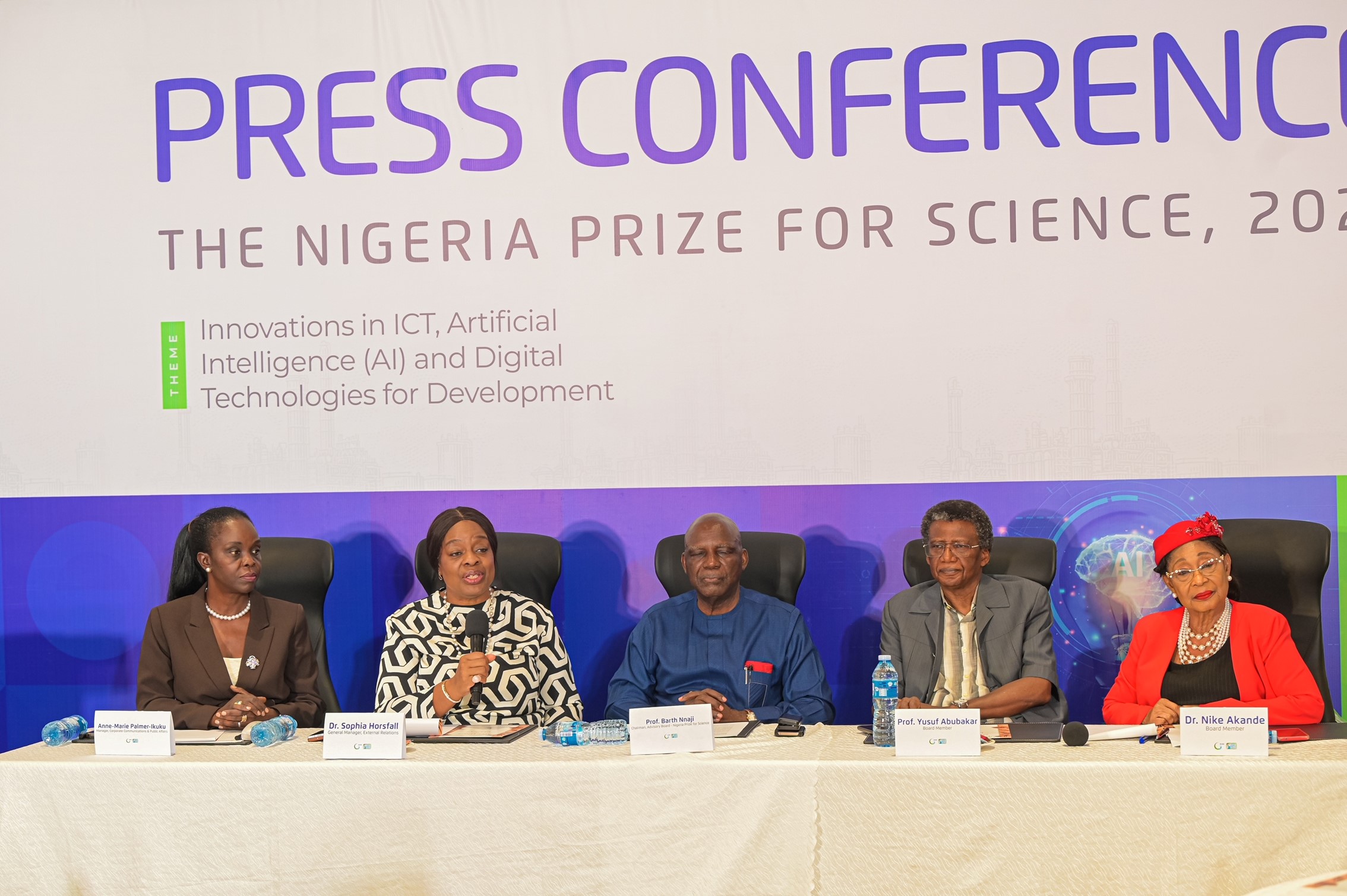
    Speaking at a press briefing in Lagos, the Chairman of the Advisory Board, Professor Barth Nnaji, explained that after a rigorous adjudication of the 112 entries submitted this year, none was found suitable for the Prize. He stated that the decision, though difficult, reinforced the Board’s commitment to upholding the integrity of the selection process and protecting the reputation of the prestigious Nigeria Prize for Science.       

    He noted that the Prize is not just about rewarding scientific output, but safeguarding the values of creativity, originality, and scientific rigour that define truly outstanding work.

    “To lower the bar would be to betray the trust of the public and diminish the legacy of the Prize itself,” Prof. Nnaji affirmed.

    He commended the courage and dedication of all who submitted entries, noting that their efforts reflect discipline and a desire to contribute to national and global scientific discourse. He stressed that excellence was beyond effort and that it required innovation, mastery of craft, and the ability to leave a lasting mark on human thought and development.

    The Board chairman called on Nigerian scientists, researchers, and innovators to be inspired by the judges’ verdict to do more and strive higher.

    “The Nigeria Prize exists to celebrate only the finest achievements, work that embodies originality, withstands scrutiny, and elevates scientific discourse. Where these qualities are absent, we cannot, in good conscience, bestow the Prize,” he stated.

    This 2025 outcome is not unprecedented. In previous years, in 2005, 2007, and then during the haitus between 2011 to 2016,  and again in 2021, The Nigeria Prize for Science was not awarded. Prof. Nnaji admonished Nigerian scientists that the high bar set for the Prize should not discourage future participation, but rather reinforce the fact that the Prize will never compromise on its standards of scientific innovation and excellence.

    The Advisory Board also announced that the theme for this year “Innovations in ICT, Artificial Intelligence (AI), and Digital Technologies for Development” will be repeated for the 2026 edition. The Board stated that the decision was taken to attract a wider spectrum of innovators, particularly in the emerging field of Artificial Intelligence.

    Furthermore, the Advisory Board unveiled the members of the panel of judges. They include Dr. Omobola Johnson, the Chairperson of the Panel of Judges for The Nigeria Prize for Science, a Senior Partner at TLcom Capital. Omobola Johnson drives investment and value creation in technology companies across sub-Saharan Africa. She previously served as Nigeria’s Minister of Communication Technology (2011–2015) and spent over 25 years at Accenture, including five years as Country Managing Director.

    Prof. Collins Udanor is an Associate Professor of Computer Science (Artificial Intelligence) at the University of Nigeria, Nsukka, Prof. Udanor specialises in data analytics, intelligent agent systems, and multi-agent learning. He leads the High-Performance and Intelligence Computing Group (HiPIC) and has secured multiple grants from organisations such as UNESCO-HP, Google, Nvidia, and TETFund.

    Prof. Aminu Muhammad Bui, is a scholar at the Department of Computer Science, Usmanu Danfodiyo University, Sokoto, Prof. Bui specialises in Artificial Intelligence, decision support systems, information retrieval, feature selection, Hidden Markov Models, and educational data mining. His research contributes to advancing AI applications in decision-making and student performance prediction.

    Now in its 21st year, the 2025 edition of The Nigeria Prize for Science opened for entries in February and drew a total of 112 submissions.

  • AVCA’S Fifth VC Summit Spotlights Resilience, Scale, and Bankability as Critical Levers to Propel Africa’s VC Ecosystem

    AVCA’S Fifth VC Summit Spotlights Resilience, Scale, and Bankability as Critical Levers to Propel Africa’s VC Ecosystem

    The African Private Capital Association (AVCA) hosted its fifth Venture Capital (VC) Summit yesterday. The summit forms part of the industry association’s 21st Annual AVCA Conference week, held in Lagos until 2 May. The global gathering brings early-stage and venture capital investors, corporate venture arms, founders, entrepreneurs, and accelerators together to discuss new trends and plot the rise of Africa’s venture capital landscape.

    Abi Mustapha-Maduakor, CEO of AVCA, opened the Summit by acknowledging the strategic importance of Nigeria’s entrepreneurial landscape: “Hosting the Summit in Nigeria is significant because this country has long been at the heart of Africa’s entrepreneurial evolution. Despite economic headwinds, we’ve witnessed innovation and resilience in the early-stage ecosystem. It is no coincidence that in 2024, Nigeria produced one of the continent’s newest unicorns.”

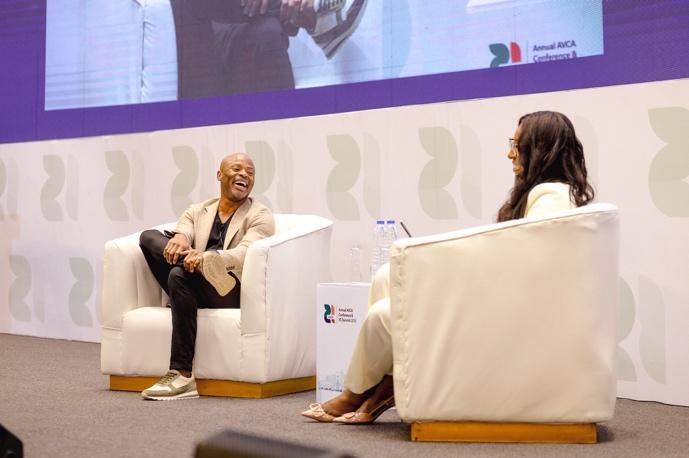
    Tope Awotona, Founder and CEO of Calendly, the US$3bn tech unicorn, and Abi Mustapha-Maduakor, CEO of AVCA, kicked off the summit with a keynote fireside chat. Describing his remarkable entrepreneurial journey, Awotona said: “I knew scheduling wasn’t just a productivity tax—it was a tax on important business outcomes like revenue. We didn’t invent online scheduling but made it accessible to more people through three key innovations: our freemium pricing model, our viral distribution method, and our data-driven product improvements.”

    The conversation affirmed the power of innovation, enabling expansion to international markets and the benefits of experimentation with price, distribution, and product. Awotona said: When scheduling went virtual, more users meant more data could help to improve the product and help to become the best on the market.” 

    Following the sentiments of Calendly’s Founder and CEO, a panel titled Unlocking Scale: The Growth-Stage Challenge with Leo Batalov, Partner, Global Co-Head of Emerging Growth Companies and Venture Capital, DLA Piper, and Brian Waswani Odhiambo, Partner, Novastar Ventures, examined how to bridge the gap for businesses moving from early stage development to accessing capital in their growth stage, and highlighted the urgency of building strong local investor ecosystems.

    Outlining the roles of founders and venture capital investors in supporting the long-term sustainability of Africa’s burgeoning tech ecosystem, Dr Omobola Johnson, Senior Partner, TLcom Capital, said: “We need to help founders understand that at the growth stage, they’re competing for global capital, not just local. Founders must recognise the competition and make their businesses appealing to international investors…This makes the African market more scalable, bankable, and investable.”

    The summit proceeded with a headline session, entitled Titans of Industry: Bold Moves, featuring Tosin Eniolorunda, Group CEO of Moniepoint, who underscored the merits of building a valuable company and building a robust team. He said, “If you have an organisation that is growing, investors will be interested; so we focused early on establishing good fundamentals—topline growth, profitability, EBITDA margins, return on equity. The more important goal is building a valuable company with healthy bottom lines. This opens up multiple opportunities, whether through Nigeria’s evolving stock exchange or large buyouts from sovereign wealth funds.”

    Other panels convened capital allocators – representing corporate, commercial, and development-focused interests – to share their perspectives on a maturing venture capital ecosystem in Africa. The competitive fundraising environment provided a backdrop to outline how Limited Partners (LPs) select where to invest, assess risk, evaluate opportunity, and determine priorities.

    In a panel entitled Venture Debt – Africa’s Missing Piece? speakers including Rosanne Whalley, Chief Executive Officer, AHL Ventures Partners, Roeland Donckers, Managing Partner, iungo capital, and moderator Tage Kene-Okafor, Africa reporter at TechCrunchdiscussed the role of venture debt products as a complement to equity funding, providing bridge capital to accelerate company growth. 

    According to AVCA’s latest report, venture debt showed impressive resilience in 2024, with 60 deals totalling US$1.0bn—a 3% increase year-on-year. While representing just 12% of total deal volume, venture debt accounted for 37% of total capital deployed, with median deal sizes reaching US$7.5mn, nearly three times larger than equity-based transactions.

    The session underscored the need for African investors to know when to deploy these tools and the importance of raising awareness amongst founders of these financing alternatives. Biola Alabi, Venture Partner, Delta40, noted that “there is a critical gap in financial literacy around debt financing in our ecosystem. Many founders and even some GPs don’t fully understand what debt investors require in terms of traction and stability. We need to help restructure existing debt and educate founders on how venture debt can complement equity to extend runway and avoid dilution, particularly for businesses with predictable revenue streams.”

  • AVCA set to host Second Venture Capital Summit & Anounces New Board Members

    AVCA set to host Second Venture Capital Summit & Anounces New Board Members

    Following the African Private Equity and Venture Capital Association’s (AVCA) successful 18th Annual Conference, held from Tuesday 26th – Wednesday 27th April, the association introduced its second Venture Capital (VC) in Africa summit on Thursday 28th April. The conference convened over 500 leaders in the private equity (PE) and venture capital industry to discuss emerging trends and strategies to maintain sustainable growth of VC investment in Africa.

    ‘Tokunboh Ishmael, co-Founder and Managing Director, Alitheia Capital, opened the summit with a welcome address where she described the surge of international interest in Africa’s thriving VC sector as a decisive opportunity to learn from Africa’s evolving private equity ecosystem over the years.  She said, “There is still much to learn from African PE. We have the investors and skill to solve some of the continent’s most pressing problems.”

    Advocating for knowledge exchange and deeper collaboration in a growing industry, she continued by saying: “Let’s use the insight and expertise that has catalysed success across geographies to unlock the scale and growth of more bright ideas and ambitious companies leaping us further into the future. I can’t wait to see the next 20 years of Africa’s PE and VC landscape.”

    The summit proceeded with a panel charting the development of Africa’s early-stage investment landscape over the years, unpacking how it has become a recognised and distinguished investment class.

    Speakers including Tarek Assaad, Managing Partner, Algebra Ventures; Maurizio Caio, Founder and Managing Partner, TLcom Capital; Michael Oluwagbemi, Co-Fund Manager, LoftyInc Capital Management; and Shruti Chandrasekhar, Regional Head, Africa, International Finance Corporation, exchanged perspectives on the continent’s expanding technology ecosystems; trading views on how to bridge the “valley of death” that ensnares so many high-potential African start-ups and addressed the increasing participation of private equity firms in the venture capital space.

    Maurizio Caio, Founder and Managing Partner, TLcom Capital, commented: “It’s important that we focus on how to make sure that the ecosystem’s growth is healthy. Let’s turn the excitement from capital deployment into an impetus that makes sure global capital investors see VC in Africa as the destination to go to. More PE investors should allocate capital to VC.”

    A conversation exploring the concept of unicorns harked back to 2021, a year that saw a record four African start-ups reach billion+ dollar valuations. VC champions Tidjane Deme, General Partner, Partech; Hany Al-Sonbaty, Managing Partner, Sawari Ventures; Khaled Ben Jilani, Senior Partner, AfricInvest and Brian Waswani Odhiambo, West Africa Director, Novastar Ventures examined the business models attracting high-level investor interest as well as the prospects for the industry seeing similar stories of success in the future.

    The summit continued with a series of plenary sessions centred on how early-stage VC investors are faring in Africa’s growing late-stage market; diversity, equality and inclusion; and workshops focussed on data, governance, and effective solutions to navigate complex country-specific and regional financial, legal, and regulatory frameworks.

    The summit progressed with an entrepreneur showcase and sessions addressing the implications for the diversification of capital streams. Thabiso Foto, Chief Financial Officer, Founders Factory Africa; Ory Okolloh, Partner, Verod Kepple Africa Ventures; Nthabiseng Thema, Director, Sango Capital, and Folake Elias-Adebowale, Partner, Udo Udoma & Belo-Osagie discussed strategies to overcome the bottlenecks – posing viable routes for corporate ventures, investment holding companies, fund of funds and private equity firms to crowd into the early-stage investing space.

    In a panel bringing together global perspectives speakers addressed the market drivers for Africa’s continued attractiveness to international investors, the rising diversification of actors in Africa’s VC ecosystem, and the spread of corporate venture capital supporting new and dynamic entrepreneurial ventures in Africa.

    Highlighting the vast opportunities within a flourishing and nascent VC ecosystem in Africa, Ben Marrel, Managing Partner, Breega, said: “It is undeniable – Africa has strong demographics. Like all markets, they are never perfect – but it’s important to identify how massive problems can be transferred into massive opportunities, and this is how pioneering companies are formed.”

    As AVCA marks the onward journey ahead for a private capital industry at an inflexion point, the association announces new Board Chairs and Committee Members. Accordingly, the Board of Directors of the African Private Equity and Venture Capital Association (AVCA) has appointed Paul Botha as Chair; Genevieve Sangudi as Vice-Chair; Mark Kenderdine-Davies and Jennifer Mbaluto as Chair, and Co-Chair of the Legal & Regulatory Committee (LRC), effective immediately.

    Abi Mustapha-Maduakor, Chief Executive Officer, AVCA, added: “I am delighted to have Paul and Genevieve as AVCA’s Chair and Vice-Chair. Their support as existing Board members, and their extensive knowledge and experience in the industry, will be invaluable as we lead AVCA towards delivering on our ambitious goals for 2022 and beyond. I would also like to thank the outgoing Chair, ‘Tokunboh Ishmael, and Vice-Chair, Ziad Oueslati, for their unwavering commitment, support and leadership of AVCA over the past four years. AVCA is unquestionably stronger for their contributions.

    She added: “Additionally, I am delighted to welcome Mark and Jennifer as AVCA’s LRC Co-Chairs. Their collective experience and deep expertise will be instrumental in defining the committee’s deliverables over the coming months. Our appreciation to the outgoing LRC Committee Chair, Geoffrey Burgess, for his outstanding commitment and valuable guidance over the past five years.”