Tag: TotalEnergies

  • Feature- BP’s Great Reversal and the Return of Energy Realism

    Feature- BP’s Great Reversal and the Return of Energy Realism

    By Sola Adebawo

    BP’s recent decision to eliminate its standalone Low Carbon Energy division and reorganize around upstream and downstream hydrocarbons is more than a corporate restructuring.

    It is one of the clearest signals yet that the assumptions underpinning the global energy transition are being reassessed.

    For much of the past decade, BP positioned itself as the oil major most determined to reinvent itself. Under its previous leadership, the company sought to transform from a traditional oil and gas producer into an integrated energy company, reducing emphasis on hydrocarbons while expanding investments in renewable energy and other low-carbon businesses.

    Today, that strategy is being recalibrated.

    Some observers see this as evidence that the energy transition is failing. Others view it as vindication for those who argued that oil and gas would remain dominant for decades.

    Both interpretations miss the deeper lesson.

    BP’s restructuring does not signal the end of the energy transition. Around the world, investments in renewable energy, battery storage, grid modernization, electric mobility, hydrogen, biofuels, and energy efficiency continue to grow. Electrification remains one of the defining trends of the twenty-first century.

    What BP’s decision reveals is something else entirely.

    The greatest challenge facing the energy transition is no longer technology.

    It is financing.

    For years, many policymakers, investors, and activists assumed that major oil companies would become the primary vehicles through which the world transitioned away from fossil fuels. BP embraced that vision more aggressively than most of its peers.

    Yet investors increasingly questioned whether low-carbon investments could consistently generate returns comparable to those available in traditional oil and gas businesses. At the same time, global energy demand continued to rise, oil and gas markets remained resilient, and concerns about energy security returned to the forefront of policymaking.

    The result is not a rejection of energy transition.

    It is a recognition that energy transitions are ultimately constrained by economics.

    BP’s decision should not be interpreted as an industry-wide retreat from lower-carbon energy. Companies such as Chevron, Shell, and TotalEnergies continue to invest in carbon reduction technologies, renewable power, biofuels, hydrogen, and other transition-related opportunities. The difference is increasingly one of emphasis rather than direction.

    Across much of the industry, the emerging consensus appears to be that hydrocarbons will finance the transition rather than be rapidly displaced by it.

    This reality reinforces an argument I advanced in an earlier article: the future of energy will not be built without hydrocarbon-generated capital.

    That statement is often misunderstood.

    It is not an argument against renewable energy.

    Nor is it an argument for perpetual dependence on fossil fuels.

    Rather, it is an acknowledgment of a simple reality. The capital required to build the future energy system must come from somewhere.

    Today, a significant portion of that capital continues to originate from hydrocarbons.

    Oil and gas revenues fund government budgets.

    Oil and gas revenues fund sovereign wealth funds.

    Oil and gas revenues support infrastructure development.

    Oil and gas revenues strengthen corporate balance sheets.

    Even many investments associated with the energy transition continue to depend, directly or indirectly, on wealth generated from fossil fuel production.

    This reality is especially important for Africa.

    The continent’s challenge has never been choosing between hydrocarbons and renewables.

    Its challenge is financing development.

    For many African countries, hydrocarbons remain among the few available sources of large-scale investable capital capable of funding electricity access,

    industrialization, transportation infrastructure, human capital development, and economic diversification.

    Yet history offers an important warning.

    Hydrocarbon wealth is not development.

    It is development capital.

    History demonstrates that resource wealth alone creates neither prosperity nor industrialization. Numerous countries have earned enormous revenues from oil and gas while achieving limited economic transformation. The difference between success and failure has never been the existence of resource wealth itself. The difference lies in institutions, governance, policy discipline, and the ability to convert natural capital into productive capital.

    Hydrocarbon revenues can finance transformation.

    They cannot substitute for it.

    This distinction is critical because the debate is often framed incorrectly.

    The choice facing Africa is not between producing hydrocarbons and pursuing energy transition.

    Nor is it between economic development and climate responsibility.

    The real challenge is using today’s resource wealth to build tomorrow’s economy.

    That means investing hydrocarbon revenues in power infrastructure, manufacturing capacity, transportation networks, technology ecosystems, educational institutions, and globally competitive industries.

    In short, it means transforming finite resource wealth into enduring economic capability.

    BP’s decision also highlights a broader shift in how the energy transition itself should be understood.

    For much of the past decade, many discussions assumed a future in which renewables would rapidly replace hydrocarbons. Reality is proving more complex.

    Across much of the world, energy demand continues to grow faster than new energy sources can fully displace existing ones. 

    Renewables are expanding. Electricity demand is expanding. Natural gas remains essential in many markets. Oil demand remains substantial. Developing economies continue to require increasing amounts of affordable and reliable energy to support industrialization and rising living standards.

    The emerging reality is not simply one of energy replacement.

    It is one of energy addition.

    The world is still transitioning, but it increasingly appears to be transitioning from a hydrocarbon-dominated system toward a hydrocarbon-plus-electricity system rather than rapidly eliminating hydrocarbons altogether.

    That distinction has profound implications for Africa.

    It suggests that the continent may have a longer window than many anticipated to convert hydrocarbon wealth into productive assets before global demand eventually peaks and declines.

    But a longer window should not be mistaken for an unlimited one.

    The opportunity remains significant, but it is not permanent.

    Countries that use hydrocarbon revenues to build productive economies will be better positioned for the future.

    Those that merely consume resource wealth will find themselves increasingly vulnerable as the global energy system evolves.

    Ultimately, BP’s restructuring is not a story about the failure of energy transition.

    It is a story about the economics of transition.

    It is a reminder that aspirations must be financed, infrastructure must be funded, and transformation requires capital.

    The future of energy may well be lower carbon.

    But for much of the world, and especially for Africa, the capital required to build that future will continue to come from hydrocarbon-generated wealth for decades to come.

    The real question is not whether Africa should produce hydrocarbons.

    The real question is whether Africa can convert hydrocarbon wealth into the infrastructure, industries, and institutions that ultimately make hydrocarbons less necessary.

    Oil is not Africa’s future.

    But for much of Africa, oil may still be the capital that finances it.

    Sola Adebawo is an energy industry executive and strategic advisor with nearly three decades of experience across Africa’s oil and gas sector. He is the Chief Executive Officer of Hyphen Partners Limited, a specialist advisory firm focused on policy and regulatory intelligence, market entry, stakeholder strategy, and executive positioning in complex and highly regulated industries. He writes on energy, industrialization, development sovereignty, and Africa’s economic transformation.

  • NLNG Emerges Overall Champion at 20th Nigeria Oil and Gas Industry Games

    NLNG Emerges Overall Champion at 20th Nigeria Oil and Gas Industry Games

    NLNG has been crowned Overall Champion and Best Sports Company at the 20th edition of the Nigeria Oil and Gas Industry Games (NOGIG), which ended, Saturday, in Abuja with a resounding display of athletic excellence and team spirit.

    Team NLNG topped the medal table with an impressive 52 medals; comprising 20 gold, 16 silver and 16 bronze to take the lead from the defending champion, Nigerian National Petroleum Company Limited (NNPCL), who finished second with 49 medals (14 gold, 15 silver and 20 bronze).

    The Nigerian Content Development and Monitoring Board (NCDMB) secured third place with 18 medals, while TotalEnergies finished fourth with 15 medals. Other notable participants included Renaissance, Oando, Seplat Energy, PTI, NUPRC, ND Western, Chevron, NMDPRA, ExxonMobil, Shell and Aradel.

    The biennial tournament, held from February 8 to 14, 2026, marked a milestone celebration of four decades of unity, collaboration and sporting excellence within Nigeria’s oil and gas industry.

    Leading the NLNG delegation at the Abuja Stadium was the Deputy Managing Director, Olakunle Osobu, who commended Team NLNG for exemplifying the company’s core values both on and off the field.

    “This victory is a testament to the resilience, discipline and unity that define NLNG,” Osobu said. “At NLNG, excellence is not confined to the boardroom. It is embedded in our culture and reflected in how we compete, collaborate and win, whether in business or on the field. I am immensely proud of Team NLNG for demonstrating that our winning spirit extends beyond our operations and into every sphere we engage in.”

    He further noted that the company’s performance at NOGIG reflects its broader commitment to fostering teamwork, promoting wellness, and strengthening industry relationships.

    Organisers described the 20th edition of NOGIG as a landmark event, underscoring the industry’s enduring commitment to corporate camaraderie, healthy competition and collaboration beyond the workplace.

    With chants of #TeamNLNG and #Champions echoing across the stadium, the victory reinforces NLNG’s reputation as a leader not only in Nigeria’s energy sector but also in promoting sportsmanship, unity and excellence.

  • The Africa Energy Bank (AEB) Effect: How the Africa Energy Bank is Re-Writing the Frontier Investment Playbook

    The Africa Energy Bank (AEB) Effect: How the Africa Energy Bank is Re-Writing the Frontier Investment Playbook

    As global upstream capital tightens, the Africa Energy Bank is stepping in to unlock risk capital, crowd in partners and accelerate frontier exploration across Africa’s oil and gas sector

    While global exploration and production capital expenditure is set to reach $504 billion in 2026, the upstream market is also entering a period of heightened discipline. International oil companies are prioritizing capital efficiency, investors are narrowing exposure to hydrocarbons and commercial banks are scaling back long-cycle lending. For Africa – home to some of the world’s most prospective yet underexplored basins – this tightening threatens to stall exploration just as geological momentum is accelerating. However, with the rise of the Africa Energy Bank (AEB), the continent has the chance to redefine how frontier projects are financed, reshaping risk allocation and restoring confidence in Africa’s upstream investment case.

    Financing Africa at a Moment of Constraint

    Spearheaded by the African Petroleum Producers Organization (APPO) and the African Export-Import Bank (Afreximbank), the AEB was established under an overarching goal to address the continent’s energy finance gap – estimated by the African Energy Chamber (AEC) at between $31.5 billion and $45 billion annually. With an initial capitalization of $5 billion, the Bank’s mandate spans upstream, midstream and energy-linked infrastructure, with a core focus on addressing the early-stage financing gap that has historically constrained exploration and appraisal activity. The bank is expected to grow to $120 billion within three to five years, reflecting its potential as a major financing institution in Africa.

    Momentum is already building towards the AEB’s operationalization. As of December 2025, Nigeria completed the fully furnished headquarters of the Bank in Abuja. December 2025 also saw Senegal approve its share of payment for the Bank, with the country joining Nigeria, Angola and Ghana fulfilling their requisite capital shares. Other APPO member states including the Republic of Congo, Algeria, Benin, Equatorial Guinea and Ivory Coast have pledged to make their payments, representing a key step towards realizing the potential of this critical institution.

    Unlocking New Frontiers

    The AEB’s impact is expected to be most visible across Africa’s frontier oil and gas provinces, where exploration interest is strong but financing remains a central challenge. In Namibia, recent deepwater discoveries have transformed geological perceptions, yet advancing appraisal drilling and infrastructure planning requires fresh capital. TotalEnergies hopes to reach a final investment decision for its Venus project in 2026, while Galp is advancing its Mopane discovery toward development. Frontier drilling is currently underway by Shell at PEL 39, Rhino Resources at PEL 85 and Chevron at PEL 82. AEB-backed financing could shorten the timeframe from exploration to development, supporting the creation of a new petroleum province in Africa.

    Over the border, South Africa’s offshore basins are similarly attracting renewed interest, but regulatory complexity and long lead times amplify financing risk – precisely where structured, patient capital becomes critical. TotalEnergies, Impact Oil & Gas and Shell are planning multi-well drilling campaigns, while a moratorium lift on shale gas exploration in 2025 is expected to drive onshore exploration in the Karoo. Zimbabwe is also advancing onshore exploration, with Invictus Energy recently reopening its funding search following a failed agreement with Al Mansour Holdings.

    Further north, countries across the MSGBC Basin are seeking partners and capital to advance frontier exploration. Hoping to mirror offshore success seen in Senegal (Sangomar) and Mauritania (BirAllah), regional neighbours are engaging operators to invest. Home to Africa’s largest discovery of 2021, Ivory Coast has seen explorers return in force in recent years, with companies such as Murphy Oil Corporation set to drill in the coming months. As frontier exploration advances, the AEB not only strengthens balance sheets, but also de-risks early-stage projects and accelerates the path from geological promise to commercial development.

    The AEB on a Global Stage at AEW 2026

    The AEB is expected to take center stage at this year’s African Energy Week conference – taking place October 12-16 in Cape Town. As the continent’s leading energy investment platform, the event will convene policymakers, financiers and operators to examine how institutions like the AEB are reshaping capital flows into frontier markets. At a time of tightening global capital and rising African ambition, the AEB effect is clear: frontier exploration is no longer a leap of faith – it is becoming a structured, financeable pathway to Africa’s energy future.

    “Africa does not lack resources or opportunity – it lacks access to capital that understands its realities. The AEB is about restoring balance, empowering African projects and ensuring the continent controls its own energy destiny,” stated NJ Ayuk, Executive Chairman, African Energy Chamber. 

  • TotalEnergies buys 50% of Nigeria’s OPL 257 from Conoil

    TotalEnergies buys 50% of Nigeria’s OPL 257 from Conoil

    TotalEnergies has signed agreements with its long-standing partner Conoil Producing Limited to acquire from Conoil a 50 per cent operated interest in block OPL257 while Conoil acquires the 40 per cent participating interest held by TotalEnergies in block OML136.

    Both OPL 257 and OML 136 are located offshore Nigeria.

    Following this transaction, TotalEnergies’ interest in OPL257 will reach 90 per cent, leaving Conoil with the remaining 10 per cent.

    OPL 257 includes an oil discovery made in 2005 on PP261, a structure straddling the block. TotalEnergies plans to drill an appraisal well in 2026 during its next drilling campaign, aiming for swift appraisal.

    The proximity of the resources to Egina provides an opportunity to tie them back, leveraging the existing FPSO.

    This transaction reflects TotalEnergies’ strategy in Nigeria to focus on operated perimeters in gas and offshore oil and to accelerate development opportunities in Nigeria.

    With the Ubeta FID in June 2024 and entry in PPL2000/2001 offshore exploration in August 2025, the company said its firmly committed to its strategy of continuous investments in Nigeria and to growing production.

    The Akpo West start-up in February 2024, Ubeta FID in June 2024, entry into PPL 2000/2001 deepwater exploration in Aug 2025 and this increase of stakes on OPL257 highlight TotalEnergies’ commitment to the country and support for Nigeria’s national objective to attract investments and grow production.

  • Dangote Refinery Accuses PENGASSAN of Economic Sabotage

    Dangote Refinery Accuses PENGASSAN of Economic Sabotage

    …directive threatens fuel availability, government revenue

    Dangote Petroleum Refinery has accused the Petroleum and Natural Gas Senior Staff Association of Nigeria (PENGASSAN) of attempting to sabotage the country’s energy supply chain following a directive issued by the union to its branches to cut off crude oil and gas supplies to the refinery.

    In a statement issued on Saturday, the company described the directive as “a brazen display of lawlessness and criminality,” warning that the move could plunge Nigeria back into widespread fuel scarcity and disrupt the availability of key petroleum products, including petrol, aviation fuel, kerosene, diesel, and cooking gas.

    According to Dangote Refinery, PENGASSAN on 26 September instructed its members in various multinational oil companies and subsidiaries including TotalEnergies, Seplat, Renaissance, Chevron, Oando, Shell Nigeria Gas, and NGIC to halt crude oil loading operations and cut off gas supply to the facility “with immediate effect.”

    The refinery stressed that the union has no legal authority to interfere with contracts signed between the refinery and its suppliers, insisting that such interference amounts to “economic sabotage” against both the company and the Nigerian state.

    “This is a brazen, albeit shocking display of lawlessness and criminality by PENGASSAN. Absolutely no law gives PENGASSAN the right to direct its branches to “cut off” gas and crude oil supplies to Dangote Refinery or at all. There is also no law in our statute books that would support or enable the PENGASSAN branches having to “cut off” gas and crude oil supplies to Dangote Refinery or at all,” the statement read.  “Besides, it constitutes a criminal conduct for PENGASSAN or its members to disrupt and/or interfere howsoever in the contract between Dangote Refinery and its various vendors for the supply of gas and crude oil to the Refinery. Those supply contracts were not entered into with PENGASSAN; they were entered into by Dangote Refinery with third party vendors and suppliers and PENGASSAN has no right whatsoever to disrupt and/or interfere with the performance of those contracts”.

    It noted that PENGASSAN needs to be reminded that Nigeria is a country governed by laws.

    “Our laws do not brook self-help and mob action that could introduce mayhem and chaos and easily translate into anarchy,” it added.

    Dangote Petroleum Refinery, world’s largest single-train refinery and one of Nigeria’s highest taxpayers, argued that the directive undermines investor confidence and threatens revenues accruing to federal and state governments. The company also described the refinery as a strategic national asset that should be safeguarded rather than targeted.

    “We are, by this write-up, drawing the attention of the Federal Government and its security and law enforcement agencies – as well as all other levels of governments in Nigeria – to this criminal, lawless, reckless and irresponsible conduct of PENGASSAN and calling on them – the Federal Government and its agencies, in particular – to call the Association to order. PENGASSAN has no right to introduce anarchy and mayhem into our society. The Association is not above the law, and it must not be allowed to believe that it is or behave as if it is,” it said

    The statement further criticised the union for what it called “a contradictory stance,” noting that while PENGASSAN had earlier pledged to pursue legal action against the refinery, it “abandoned the path of lawfulness and embraced mob action.”

    The refinery noted that apart from the lawlessness and criminality inherent in the PENGASSAN’s instruction to its branches, the Association’s directive amounts to economic sabotage at multiple levels.

    “In plain language, PENGASSAN has directed its branches to disrupt and stop the supply of petroleum products from the Dangote Refinery to Nigerians. The products that would be disrupted and stopped include but are not limited to aviation fuel, petrol, kerosene, diesel and cooking gas – all products that are used and required by all stripes of Nigerians and persons living in Nigeria, whether high and mighty or lowly and ordinary. In what circumstance would it be justified for PENGASSAN to so disrupt and introduce insufferable hardship into the living conditions of Nigerians? None that we can see. The follow up question is, in whose interest and on whose behalf is PENGASSAN directing and intending to inflict such anarchic and criminal disruption upon the Nigerian society and persons living in Nigeria? Most certainly, not in the interest of the Nigerian State and/or the Nigerian public and citizens,” it added.

    It stressed that it is also economic sabotage against the Nigerian State at multiple levels as the Dangote Refinery is the only refinery of its type in Africa and ordinarily should be the pride of all Nigerians as well as the governments of Nigeria.

    “It should ordinarily have special protection and status and indeed qualifies as a strategic national asset. An irreparable injury to the Dangote Refinery, such as PENGASSAN has directed, constitutes a national embarrassment to all of us. The directive is a disincentive to external investors who ordinarily would have been encouraged by the success of Dangote Refinery to contemplate investing in Nigeria’s oil and gas sector or generally. PENGASSAN may also not be aware that Dangote Refinery is one of the largest contributors to the revenue purse of the Nigerian governments, both Federal and sub-national. That contribution is currently threatened by PENGASSAN and would of course be paused if and as soon as and for as long as the PENGASSAN directive is implemented by its branches,” it added.

    Calling on the federal government and security agencies to intervene, the company urged Nigerians to resist any attempt to disrupt refinery operations, warning that compliance with the directive would cause “irreparable hardship” for households and businesses nationwide.

    “We are also calling on all Nigerians to take note of the unquantifiable and irredeemable hardship which PENGASSAN wishes to inflict on all of us. There is no Nigerian household that does not use or need the petroleum products which PENGASSAN has now directed its branches, by fiat, to withdraw from the Nigerian market – again, we list some of them: petrol, cooking gas, diesel, kerosene and aviation fuel. The production and supply of these products by Dangote Refinery would cease if the PENGASSAN cabal is allowed or permitted to enforce its lawless and criminal “directive”. The Association must not be allowed to ride roughshod on Nigerians. The repercussions from the PENGASSAN directive would affect and inflict harm on all Nigerians This is therefore a fight for all Nigerians,” noted the statement.

  • Celebrating Africa’s 20 Under 40 Energy Women Rising Stars

    Celebrating Africa’s 20 Under 40 Energy Women Rising Stars

    As Africa’s energy sector continues to grow, the 20 Under 40 Energy Women Rising Stars celebrates innovation and leadership across the sector

    The African Energy Chamber (AEC) proudly announces this year’s 20 Under 40 Energy Women Rising Stars, celebrating the visionaries shaping Africa’s energy future. The 20 Under 40 Energy Women Rising Stars represent the full spectrum of the energy industry across Africa – from oil to natural gas and renewables – and have emerged as the drivers of the African energy sector. Representing both public and private companies, these women have demonstrated that their commitment to the industry goes beyond their job scope, to empower others, uplift communities and create lasting change across the African energy sector.

    In alphabetical order:

    Annie Cyrielle Okouma, Production Chemistry Engineer, SLB – Gabon

    Annie Cyrielle Okouma is a trained chemical engineer, working for global technology company SLB in Gabon. Since joining the company, she rose the ranks, starting as a trainee laboratory technician and field engineer and now working as a production chemistry engineer.

    Ashanti Kutala Mbanga, Program Manager, SANEDI – South Africa

    Ashanti Kutala Mbanga, Project Manager at South African National Energy Development Institution, leads South Africa’s energy efficiency labelling program. She advocates for women and youth inclusion, serving as Vice-Chairperson of the Association for Females in Energy Efficiency.

    Carolina Ana da Graça, Business Analyst, Chevron – Angola

    Angolan professional Carolina Ana da Graca, a Chevron Angola Business Analyst, holds a degree in maritime transportation. An award-winning researcher, she is pursuing a master’s in transportation planning, specializing in maritime cybersecurity challenges.

    Chisom Okolie, Senior Associate, Udo Udoma & Belo-Osagie – Nigeria

    Nigerian lawyer Chisom Okolie, Senior Associate in energy and finance, advises multinational clients on complex transactions. Recognized as a Rising Star, she co-authors legal publications and champions women’s advancement in business law.

    Elisangela Neto Fernandes, Global Asset Manager: Production Systems, SLB – Angola

    Angolan geologist Elisangela Neto Fernandes began offshore as a Field Engineer in 2012. Rising through technical, global coordination and leadership roles, she now manages Surface Production Systems across Angola and Central East Africa.

    Fiona Magomere, Power System Control Engineer, Kenya Power & Lighting Company – Kenya

    Kenyan engineer Fiona Magomere, Power Systems Control Engineer at Kenya Power & Lighting Company, champions sustainability and clean energy access. A STEM mentor and storyteller, she advocates for collaboration to advance Africa’s inclusive energy transition.

    Hunadi Nkabonwa Mahlanyane, Acting Line Manager, Coal & Civil Department, Eskom – South Africa

    A trained technician, Hunadi Nkabonwa Mahlanyane is currently the Acting Line Manager in the Coal & Civil Department at South Africa’s state-owned power utility Eskom. Having studied electrical engineering at Witbank Technical College, she now plays a central role within Eskom.

    Jakobina Junias, Founding Partner & CEO, Amperra Charging Company – Namibia

    Namibian entrepreneur Jakobina Junias, CEO of Amperra Charging Company, pioneers sustainable EV solutions. A University of Namibia graduate, she champions environmental sustainability and innovation, positioning ampperra as a trusted African electric mobility brand.

    Jesupelumi Ajibola, Training Business & Service Delivery Manager, SLB – Cameroon

    Jesupelumi Ajibola, Training Business & Service Delivery Manager at SLB, is a petroleum engineer with international experience. Holding a master’s from Imperial College London, she has worked for some of West Africa’s leading energy companies.

    Joy Nancy Ogechi, Energy and Project Engineer, Kenya Power & Lighting Company – Kenya

    Joy Nancy Ogechi, Energy and Project Engineer at Kenya Power, has over seven years’ experience managing development projects. She enhances healthcare, infrastructure, and socio-economic productivity through multilateral and government-financed energy initiatives.

    Justina Erastus, Founder, Youth in Oil and Gas Summit – Namibia

    Namibian lawyer-in-training Justina Erastus, Founder of the Youth in Oil and Gas Summit, champions youth inclusion. She empowers young professionals through advocacy, education and engagement in Namibia’s evolving energy landscape.

    Kavenamuua Kgosiemang, Field Engineer, SLB – Namibia

    As Field Engineer at SLB, Kavenamuua Kgosiemang manages operations, data acquisition and reporting for well development projects. Her technical role supports decision-making critical to sustainable, long-term oilfield success.

    Keleadile Ruda, Founder, Women in Energy – Botswana

    Botswana’s Keleadile Ruda, Co-Founder of Women in Energy, is a solar PV specialist with five years’ experience. She leads projects from design to commissioning while mentoring women and youth in STEM.

    Lydia Kapangila, Founder & CEO, Africa Youths in Energy Network – South Africa

    Lydia Kapangila, Founder and CEO of Africa Youths in Energy Network, is dedicated to collaboration, sustainable growth and youth empowerment. She drives continental change through business acumen, advocacy and strategic leadership.

    Mariah Lucciano-Gabriel, Head: Integrated Gas Ventures, Asharami Energy – Nigeria

    Mariah Lucciano-Gabriel, Head of Integrated Gas Ventures at Asharami Energy, is a respected energy leader. With expertise in operations optimization and cross-functional leadership, she drives revenue growth and champions innovative business strategies.

    Nancy Murithi, Green Growth & Climate Change Officer, Kenya Association of Manufacturers – Kenya

    Nancy Murithi, Green Growth and Climate Change Officer at the Kenya Association of Manufacturers, advances energy efficiency and climate policy. An award-winning trainer and advisor, she empowers organizations and youth across Africa.

    Nisia Ingles Pinto, Fluids Construction Engineer, SLB – Angola

    Angolan engineer Nisia Pinto, Well Construction Fluids Engineer at SLB, specializes in cementing operations. With strong field expertise, she ensures drilling safety, reliability and innovation across Angola’s oil hubs in Soyo and Luanda.

    Ololade Olubi, Division Manager Economics, Oando Energy Resources – Nigeria

    Ololade Olubi, Division Manager of Economics at Oando Energy Resources, is a petroleum economist with 12+ years’ experience. She leads project economics, strategy and new ventures, shaping upstream development across Africa.

    Rana Badi, CSR Project Lead, TotalEnergies – Libya

    Rana Badi, CSR Project Lead at TotalEnergies, has over a decade’s experience in CSR, communications and digital transformation. She leverages dual master’s degrees to drive impactful social investment and sustainability programs.

    Yetunde Margret Sorinola, CFO, Egbin Power Plc – Nigeria

    Yetunde Margret Sorinola, CFO of Egbin Power Plc, is a governance-focused finance leader in power generation. She specializes in compliance, risk management, tariff modeling and financial stewardship of capital-intensive energy projects.

    “The AEC believes that these 20 women represent the future and we look forward to having many more women on the list in years to come. These women are not only recognized for their amazing careers, but for their work and commitment across their respective communities. This is a testament to what happens when women are given opportunities to lead in the industry – going beyond executing their jobs to championing communities and mentoring others to become part of the larger African energy family” stated NJ Ayuk, Executive Chairman, AEC.

  • Adelaar Energy Chief Executive Officer (CEO) Grace Orife Joins African Energy Week (AEW) 2025 to Discuss African Energy Solutions

    Adelaar Energy Chief Executive Officer (CEO) Grace Orife Joins African Energy Week (AEW) 2025 to Discuss African Energy Solutions

    At the helm of the full-stream oil and gas consultancy company, Orife offers a unique perspective into how Africa can advance sustainable oil projects

    Grace Orife, CEO of oil and gas consultancy and services company, Adelaar Energy Limited, has joined this year’s edition of the African Energy Week (AEW): Invest in African Energies conference as a speaker. Taking place September 29 to October 3 in Cape Town, AEW: Invest in African Energies represents the premier meeting platform for the continent’s energy industry, convening stakeholders from upstream operators to downstream project developers to service providers, technology experts and policymakers. As the CEO of a full-stream oil and gas consultancy, Orife offers a unique perspective into Africa’s energy landscape.

    Adelaar Energy – headquartered in Nigeria – offers a variety of services that support oil and gas projects across Africa. These include engineering, procurement, construction and implementation solutions, as well as alternative energy products. By working closely with upstream operators, the company strives to enhance production in the country, in line with Nigeria’s goals of reaching 2.5 million barrels per day in the coming years. At AEW: Invest in African Energies 2025, Orife is expected to share insights into the role innovative energy solutions play in supporting Africa’s production targets.

    AEW: Invest in African Energies is the platform of choice for project operators, financiers, technology providers and government, and has emerged as the official place to sign deals in African energy. Visitwww.AECWeek.comfor more information about this exciting event.

    As one of the continent’s biggest oil producer, Nigeria is working to address production decline by advancing exploration projects as well as efforts to maximize output at active fields. The country is witnessing greater spending across its upstream market, with leading international operators targeting new drilling and development campaigns. Notably, ExxonMobil is investing $1.5 billion to revitalize the Usan deepwater oilfield in offshore Block OML 138, with a final investment decision expected in 2025.

    Shell’s Nigeria’s subsidiary SNEPCo is spearheading the $5 billion Conga North project, while TotalEnergies and the Nigerian National Petroleum Company are driving a $550 million non-associated gas project. With the country seeking to unlock $30 billion in oil and $5 billion in gas investments by 2029, a strong pipeline of projects is on the horizon for Nigeria.

    Amid these developments, services offered by companies such as Adelaar Energy will not only support operations but ensure projects align with Nigeria’s broader goals of reducing emissions, enhancing output and delivering impactful energy to West Africa. Orife’s participation at AEW: Invest in African Energies reflects a commitment to supporting African production and is expected to create new pathways for industry collaboration.

    “To meet its production goals, Africa requires innovation and collaboration – particularly between operators and service providers. Companies such as Adelaar Energy stand at the intersection of the continent’s oil, gas and energy industries, supporting projects through technology-driven solutions. As Africa strives to make energy poverty history, these solutions will prove highly valuable as countries balance operational efficiency with sustainability,” states Tomás C. Gerbasio, Strategy and Business Development Director of the African Energy Chamber.

  • Dangote Refinery reduces fuel price again, ex-depot price now N820 per litre

    Dangote Refinery reduces fuel price again, ex-depot price now N820 per litre

    Dangote Refinery has again within a week interval reduced its ex-depot the price of Premium Motor Spirit (PMS), commonly known as petrol, from N840 per litre to N820 per litre, effective immediately.

    It would be recalled that the company last week reduced its ex-depot price from N880 to N840 per litre.
    With assurance of steady supply of petroleum products, more independent marketers have joined the growing list of distributors retailing Dangote Refinery’s high-quality petroleum products across the country.

    Dangote Group’s spokesperson, Mr. Anthony Chiejina, confirmed the price adjustment in Lagos, stating: “PMS price has been reduced from N840 to N820 per litre effective immediately.

    The previous reduction to N840 per litre had followed global crude oil market volatility, particularly during the 12-day geopolitical crisis in the middle east, which pushed up crude oil prices.

    The refinery’s existing partners—MRS, Heyden, Ardova (AP), Hyde, Optima, and Techno Oil—are expected to reflect the new pricing at their retail outlets.

    Additionally, several new marketing companies have joined Dangote’s distribution network. These include TotalEnergies, Garima Petroleum, Sunbeth Energies, Sobaz Nigeria Ltd., Virgin Forest Energy, Sixxco Oil Ltd., N.U. Synergy Ltd., and Soroman Nigeria Ltd. Others on the growing list are Jezco Oil Nigeria Ltd., Jengre, Cocean, Kifayat, Triumph Golden, Sifem Global, Riquest, and Mamu Oil, among others.

    The Dangote Refinery, the largest single-train refinery in the world, continues to expand its domestic fuel distribution footprint, offering competitive pricing and improving access to refined products across Nigeria.

    The refinery, recently, announced that it has invested over N720 billion to implement its initiative of deploying 4,000 Compressed Natural Gas-powered trucks for the nationwide distribution of petroleum products, saying it is expected to save Nigerians over N1.7 trillion annually.

    This step, the management, will see the refinery absorb over N1.07 trillion annually in fuel distribution costs. The initiative is also poised to significantly benefit over 42 million Micro, Small and Medium Enterprises (MSMEs) by reducing energy costs and enhancing profitability, the mega refinery said.

    The initiative, which eliminates transportation costs for fuel marketers and large-scale consumers, is expected to help reduce pump prices and inflation.

    From August 15, Dangote will begin the direct delivery of petrol and diesel to filling stations, industrial facilities, and other high-volume consumers, the company said earlier

  • Africa-Paris Declaration: Financing Africa’s Energy Future

    Africa-Paris Declaration: Financing Africa’s Energy Future

     the Declaration reaffirms the continent’s commitment to pragmatic energy development, investor-driven partnerships and equitable energy access — with financing at the heart of the conversation

    Following the Invest in African Energy Forum in Paris this month, the African Energy Chamber (AEC) reaffirms its position that Africa’s energy future must be defined by pragmatism, partnership and progress. With 600 million Africans lacking access to electricity and 900 million without clean cooking fuel, the development imperative is clear: without investment there can be no progress. 

    The Forum highlighted bold investments underway across the continent — from ExxonMobil’s $10 billion plans in Nigeria, to TotalEnergies’ multibillion-dollar ventures in Mozambique and Namibia, and Eni’s gas monetization projects in Libya and the Republic of Congo. These initiatives reflect growing confidence in Africa’s energy potential. But to replicate and scale these endeavors, barriers to investment must be addressed head-on. 

    Many energy projects remain stranded due to delayed approvals, opaque regulatory processes and high above-ground risk. Yet several countries are making strides: Nigeria’s Petroleum Industry Act has improved clarity for investors; Angola’s new local content regulations strike a better balance between incentives and domestic value creation; and Ghana’s tax amendments are making upstream projects more attractive. 

    Still, finance remains the sector’s greatest bottleneck. Rising global interest rates, tightening lending conditions and restrictive green finance taxonomies are making it harder for African governments and companies to access affordable capital. The Declaration calls for a rethinking of what qualifies as sustainable investment — one that includes natural gas as a viable transition fuel and recognizes the social dividends of energy access. 

    Mobilizing finance will require a coordinated effort. African governments must lead by improving credit profiles, ensuring policy consistency and creating bankable project environments. Private-sector-led energy systems — driven by independent producers and not solely dependent on sovereign guarantees — offer a more resilient path to investment. Innovative financial instruments and local capital markets must also play a greater role. 

    Ultimately, energy is not a privilege. It is a foundation for health, education, economic participation and human dignity. As the global energy conversation continues, Africa’s development cannot be dictated by external climate agendas. The AEC’s Declaration makes clear: Africa must lead its own energy transition, and that transition must be financed on its own terms. 

  • TotalEnergies’ Mike Sangster Talks Multi-Energy Strategy at Invest in African Energy (IAE) 2025

    TotalEnergies’ Mike Sangster Talks Multi-Energy Strategy at Invest in African Energy (IAE) 2025

    TotalEnergies is balancing risk, technology and long-term value in key markets across the continent

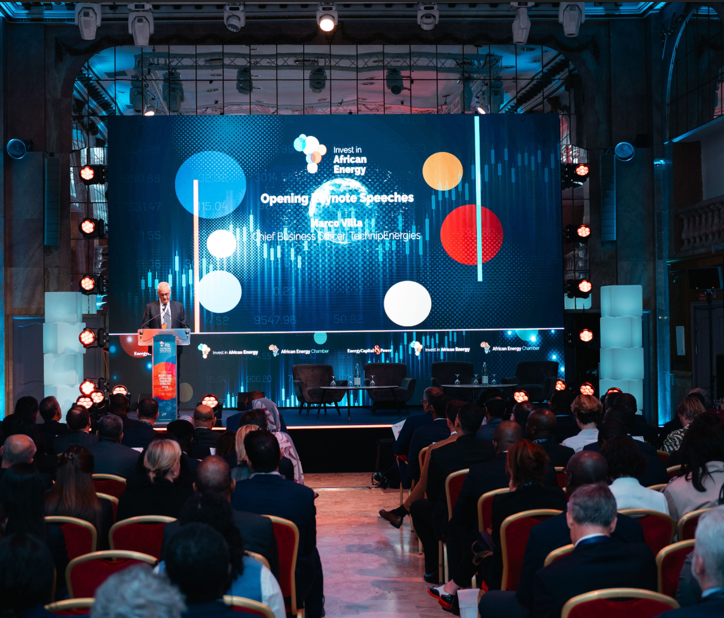
    Mike Sangster, Senior Vice President for Africa at TotalEnergies, outlined the company’s multi-energy strategy in Africa at the Invest in African Energy (IAE) 2025 Forum in Paris. Speaking during a one-on-one conversation with America Hernandez, Energy Correspondent at Reuters, Sangster said that the company is committed to producing more energy in a sustainable manner.

    In the oil sector, TotalEnergies continues to invest in established markets such as the Republic of Congo and Angola as well as in emerging markets such as Namibia, Uganda and South Africa. According to Sangster, TotalEnergies’ African portfolio constitutes half of the company’s operated production globally. “The largest part of our exploration budget is also in Africa,” he said.

    In South Africa, the company hopes to start drilling in 2026. The company is currently awaiting the requisite permits. In Namibia, the company is spearheading efforts to produce first oil by 2029 through its Venus project. A field development plan is currently underway, with plans to make a final investment decision by Q4, 2026. Given the complexity of the deepwater project, Venus will target oil production.

    “The site is extremely remote, 300 km offshore and at a depth of 1,900 m,” Sangster said, highlighting that much of the associated gas discovered would need to be reinjected.

    Monetizing Africa’s natural gas resources through LNG deployment and flare reduction represents a core part of TotalEnergies’ African strategy. “Part of our growth target is focused on LNG,” Sangster stated, adding that “we finished routine flaring in Nigeria, Gabon and Angola. In the Republic of Congo, we will eliminate flaring this year.”

    In Nigeria, TotalEnergies is ramping up gas investments to support both local energy needs and exports. “It’s important to monetize gas and its reservoirs,” Sangster noted. “In Nigeria, there are significant reserves and we are actively developing this sector. There are high-quality fields that can also serve export markets.”

    Beyond oil and gas investments, TotalEnergies’ broader energy strategy includes the development of renewable energy projects. Sangster reiterated TotalEnergies’ rebranding from an oil major to a multi-energy company, stating that “It makes sense to expand integrated energy activities. We have invested in renewables, green hydrogen and even mining in Africa. The future of our industry is integrated energy combined with new technologies to meet growing demand sustainably.”  

    Meanwhile, TotalEnergies is committed to supporting capacity building across the markets in which it operates. Sangster explained that through projects such as Tilenga, TotalEnergies has generated around 20,000 direct jobs in Uganda and Tanzania. We are also training 200 local people. These are high-paying jobs that will be there for the next 20 years.”

    In Nigeria, TotalEnergies works closely with local educational institutions to transfer skills and enhance capacity building. “In Nigeria, we have the Petroleum Institute, and we’re fully committed to developing [capacity] in the country,” Sangster said. These initiatives not only support the development of projects, but create tangible opportunities for local communities. 

  • African Ministers to Tackle Energy Investment Gap at Invest in African Energy (IAE) 2025

    African Ministers to Tackle Energy Investment Gap at Invest in African Energy (IAE) 2025

    Energy ministers from Nigeria, Guinea-Bissau, the DRC and Zimbabwe will convene to explore financing strategies and partnerships to advance Africa’s next wave of oil and gas development at the Invest in African Energy Forum in Paris next week

    At Invest in African Energy 2025, a high-level ministerial panel will bring together energy ministers from Nigeria, Guinea-Bissau, the Democratic Republic of Congo (DRC) and Zimbabwe to examine the capital requirements and strategic partnerships needed to bring Africa’s next generation of energy projects online.

    Set against a backdrop of evolving global energy dynamics and intensifying pressure to meet net-zero targets, the session – “Africa on the Global Energy Stage: Financing the Next Generation of Energy Projects” – will explore how African nations are navigating complex investment landscapes to drive sustainable hydrocarbon development. Moderated by NJ Ayuk, Executive Chairman of the African Energy Chamber, the discussion will feature Ekperikpe Ekpo, Minister of State for Petroleum Resources (Gas) of Nigeria; Malam Sambu, Minister of Energy of Guinea-Bissau; Wivine Moleka, Deputy Minister of Hydrocarbons of the DRC; and July Moyo, Minister of Energy & Power Development of Zimbabwe.

    IAE 2025 is an exclusive forum designed to facilitate investment between African energy markets and global investors. Taking place May 13-14, 2025 in Paris, the event offers delegates two days of intensive engagement with industry experts, project developers, investors and policymakers. For more information, please visit www.Invest-Africa-Energy.com.To sponsor or participate as a delegate, please contactsales@energycapitalpower.com.

    Nigeria, which holds the largest natural gas reserves in Africa, is advancing its “Decade of Gas” agenda under a reform-oriented administration working to reposition the country as a global gas hub. The government is prioritizing infrastructure development, market liberalization and targeted policy incentives to draw large-scale investment into the sector, which has already led to major capital commitments from international players including Shell, Chevron and TotalEnergies, and the rollout of new LNG, FLNG and mini-LNG projects.

    In Guinea-Bissau, the energy sector is entering a new phase of exploration and frontier investment. As one of the continent’s least developed hydrocarbon markets, the country is laying the institutional and regulatory foundations for future growth, with an emphasis on public-private collaboration and regional integration. Last September, Guinea-Bissau spudded a deep offshore exploration well near the neighboring Sangomar discovery in Senegal, marking a significant step toward unlocking its offshore potential.

    The DRC, meanwhile, is pushing to unlock the potential of its underexplored hydrocarbon basins. With a renewed focus on exploration and development, the DRC is pursuing strategic licensing efforts and engaging international partners to accelerate activity, while also seeking to balance environmental considerations with its economic development goals.

    Zimbabwe continues to prioritize energy diversification and regional power security. In recent years, the country has undertaken efforts to expand its generation capacity and foster investment through independent power producers and infrastructure partnerships. As southern Africa faces persistent energy shortfalls, Zimbabwe is positioning itself as a critical part of the regional solution. Together, Africa’s leading energy ministers will engage in a forward-looking dialogue on innovative partnership models, policy frameworks and the capital flows needed to ensure Africa’s energy projects not only get off the ground, but also deliver long-term value for both investors and local economies

  • Africa Energy Bank Gains Momentum with Capital Contributions from Nigeria, Angola and Ghana

    Africa Energy Bank Gains Momentum with Capital Contributions from Nigeria, Angola and Ghana

    Nigeria, Angola and Ghana have contributed their capital shares to the Africa Energy Bank, reinforcing its role in advancing energy finance

    In a significant development for Africa’s energy sector, Nigeria, Angola and Ghana have fulfilled their capital commitments toward establishing the Africa Energy Bank (AEB). This milestone represents 44% of the minimum required funding from African Petroleum Producers Organization (APPO) members to initiate the bank’s operations. Dr. Omar Farouk Ibrahim, Secretary General of APPO, announced this progress during the Congo Energy & Investment Forum last week.

    The AEB aims to finance oil and gas projects across the continent, addressing funding challenges posed by traditional Western financial institutions’ reluctance to support fossil fuel initiatives due to environmental concerns. APPO has requested each of its 18 member states to contribute $83 million, targeting a total initial capitalization of $5 billion. Beyond Nigeria, Angola and Ghana, five additional member states – Algeria, Benin, the Republic of Congo, Equatorial Guinea and Ivory Coast – have pledged to make their payments, aligning with the bank’s goal to commence operations in the first half of 2025.

    Nigeria remains sub-Saharan Africa’s largest oil producer, offering significant opportunities in the oil and gas sector, including a 2025 bid round. The implementation of the Petroleum Industry Act has introduced regulatory reforms to enhance transparency and attract investment, driving major projects forward. Recent final investment decisions (FIDs) include TotalEnergies’ $550 million Ubeta Gas Field Development and Shell’s $5 billion Bonga North Project, yet additional financing is crucial to advancing Nigeria’s gas agenda and unlocking its full potential in the energy transition.

    Angola, meanwhile, is actively diversifying its energy portfolio while advancing major deepwater developments, including TotalEnergies’ $6 billion Kaminho Deepwater Project, Eni’s Agogo Integrated West Hub and a limited public tender, with a long-term goal of increasing production to 2 million barrels per day. The country plans to make an FID on its first green hydrogen project by 2025 – a 600 MW development led by Sonangol in collaboration with international partners. Additionally, Angola is spearheading its first non-associated gas project, the New Gas Consortium, and undertaking a $12 billion expansion of the Angola LNG plant to enhance its gas monetization efforts.

    Ghana is strengthening its position as a leading oil and gas player with new commitments from Eni and Tullow Oil. In March, Eni and the Ghana National Petroleum Corporation signed an agreement to enhance offshore exploration, optimize existing assets and advance untapped reserves. This follows recent regulatory reforms aimed at improving fiscal terms, transparency and investment incentives. Tullow Oil also remains integral to Ghana’s energy sector, with production from the Jubilee and TEN fields supporting economic growth and plans to launch a drilling program in May 2025 to bring new production online. Beyond hydrocarbons, Ghana is modernizing infrastructure, expanding energy access and diversifying into renewables to strengthen long-term energy security.

    Amid these developments, the establishment of the AEB is a strategic response to Africa’s need for dedicated financial institutions that understand the continent’s unique energy landscape. By providing tailored financing solutions, the Bank is poised to accelerate energy project development, enhance energy security and drive economic growth. As more countries contribute their capital shares, the bank is expected to play a pivotal role in unlocking investment, bridging financing gaps and ensuring sustainable energy expansion across Africa.

    With Nigeria, Angola and Ghana contributing their capital shares, the AEB is gaining momentum as a key financial institution for the continent’s energy future. African Energy Week (AEW) 2025: Invest in African Energies – taking place from September 29 to October 3 in Cape Town – will serve as a vital platform to advance discussions on the AEB’s role in mobilizing investment and bridging financing gaps. The conference will cover strategic topics including upstream oil and gas, downstream infrastructure, the energy transition and power industry developments. Notably, AEW 2025 will feature an energy finance stage dedicated to the latest updates from the AEB, investment trends and strategies to reduce barriers to capital access, ensuring that Africa’s energy sector is well-positioned for sustainable growth.

    AEW: Invest in African Energies is the platform of choice for project operators, financiers, technology providers and government, and has emerged as the official place to sign deals in African energy. Visitwww.AECWeek.comfor more information about this exciting event.

  • Vandalism threatens Nigeria LNG’s N727bn dividends in 2025

    Vandalism threatens Nigeria LNG’s N727bn dividends in 2025

    …As only two of six trains operational- Mshelbila

    The Nigeria LNG Limited (NLNG) has announced that only two of its six trains are currently operational, thanks to the activities of pipeline vandals.

    The development is a threat to the nation’s revenue streams and Nigeria LNG’s N727 billion dividends.

    Philip Mshelbila, managing director of Nigeria LNG, lamented the impact of the attacks, which have severely disrupted gas supply and crippled production.

    According to Mshelbila, the Nigeria LNG, which plays a critical role in Nigeria’s economy and global energy market, has been forced to operate at a fraction of its capacity.

    The company relies on a network of pipelines to transport natural gas from upstream suppliers to its Bonny Island facility.

    However, frequent attacks on these pipelines have led to a drastic reduction in gas supply, having left four of the company’s six trains idle.

    “In the current moment, I am only running two trains out of six. Three of our gas supply pipelines are down for repairs due to illegal connections by thieves. These are critical lines—GTS 1, GTS 2, and GTS 4—that supply the energy required for our operations,” Mshelbila said at a panel session during the Nigeria International Energy Summit on Wednesday in Abuja.

    Mshelbila expressed deep concern over the situation, stating that the vandalism not only undermines Nigeria’s reputation as a reliable LNG supplier but also results in significant revenue losses for the country.

    “Since the Russian war, I have been approached by dozens of European and other countries for LNG, but we have been unable to supply it because of this. You see what is happening with Qatar and the US. We can’t compete,” Mshelbila said.

    The Nigeria LNG, which accounts for about 7 per cent of global LNG supply, has been a major contributor to Nigeria’s economy, generating billions of dollars in revenue annually.

    Experts have warned that the persistent attacks on Nigeria LNG’s gas supply pipelines could jeopardise its projected dividends of N727 billion to the Nigerian government by 2025, a 113 per cent growth from N346 billion last year.

    Data showed the federal government has received about $21.56 billion of the $44 billion dividends disbursed by Nigeria LNG in the last 25 years.

    Nigeria LNG was incorporated as a limited liability company to harness Nigeria’s vast natural gas resources and produce Liquefied Natural Gas (LNG) and Natural Gas Liquids (NGLs) for the domestic market and export.

    It is owned by four shareholders: Nigerian National Petroleum Company Limited (49 per cent), Shell (25.6 per cent), TotalEnergies (15 per cent) and Eni International (10.4 per cent).

    The reduction in production capacity is expected to have far-reaching consequences, including a decline in export earnings and potential job losses in the sector.

    Security challenges in the Niger Delta region, where most of Nigeria’s oil and gas infrastructure are located, have persisted for years.

    Despite efforts by the government and private sector to curb pipeline vandalism and oil theft, the problem remains rampant.

    Mshelbila called for urgent action to address the security issues, emphasising the need for collaboration between the government, communities, and industry stakeholders.

    “Energy security has to be seen as important as national security. However, gas security has deteriorated, and until we can safeguard these pipelines, we will continue to underperform,” he said.

  • Feature: To Stem Investment Elsewhere, Nigeria’s Oil Sector Requires Change

    Feature: To Stem Investment Elsewhere, Nigeria’s Oil Sector Requires Change

    …With two-thirds or more of its revenue coming from oil, investor flight is a serious problem for Nigeria

    by NJ Ayuk

    Nigeria, a previous bright spot on big oil and gas investors’ radar screens, has dimmed substantially as investor attention is increasingly drawn to new and emerging developments in Namibia, Ivory Coast, Angola, and the Republic of Congo.

    With two-thirds or more of its revenue coming from oil, investor flight is a serious problem for Nigeria.

    Divestments: The Reasons and the Buyers

    Big foreign players, including TotalEnergies and Shell, are exiting or shifting their priorities in Nigeria, rattled by a variety of deleterious forces: an uninviting regulatory environment, lack of transparency, safety issues, vandalism, and theft, among other factors.

    For a country whose economy is dependent on fossil fuels, this divestment by majors, totaling around £17 billion since 2006, is catastrophic. Nigeria’s 37 trillion barrels of reserves can do the country no good underground.

    Among those looking to pull out of the country, at least in part, is France’s TotalEnergies. The company is seeking to sell its share of Shell Petroleum Development Company of Nigeria, Limited (SPDC), although it will continue to have 18% of its investments in Nigeria.

    TotalEnergies CEO, Patrick Pouyanne says his company hasn’t explored for oil in Nigeria for 12 years, explaining, “There is always a new legislature in Nigeria about a new petroleum law. When you have such permanent debates, it’s difficult for investors looking for long-term structure to know what direction to go.”

    TotalEnergies’ stance highlights the obvious — investors want predictable environments and simple, trustworthy systems of regulation. A dearth of these factors seems to have trumped the fact that Nigeria yet contains large reserves that could be tapped.

    Five global oil companies are still working in the country, but three of those — Shell, Eni, and ExxonMobil — are selling in-country assets valued at £1.8 billion, £4 billion, and £11.9 billion, respectively.

    Both Shell and Eni have stated an intent to continue operating in Nigeria’s offshore sector, and ExxonMobil has expressed a commitment to continued investment in Nigeria.

    Nigerian companies such as Seplat, Aiteo, and Eroton have moved quickly to buy divested assets. So has the Nigerian government, which has been named top bidder for 57 oilfields and granted licenses to 130 firms for development.

    I am pleased to see indigenous companies seizing these opportunities created by divestments. I also urge them to take serious measures to control emissions and limit flaring, as large international firms have. In doing so, they will be taking care of their own families, neighbors, friends, and fellow citizens, while building top-notch reputations.

    Large or small companies — Nigeria must never choose one or the other. International oil companies, national oil companies, independents, and indigenous companies all have important roles to play in Nigeria’s economic growth.

    Where the Investments Are Going

    As I said, Ivory Coast, Namibia, the Republic of Congo, and Angola are drawing investors’ attention away from Nigeria.

    Shell is exploring deepwater blocks in the Ivory Coast, while large Italian firm Eni has just added offshore Block CI-205 to its vast Murene Bailene discovery of 2021. Production from the Baleine discovery has shot Ivory Coast’s production to 30,000 barrels per day (bpd), a number that is expected to rise an astonishing 556% to 200,000 bpd by 2027.

    All of this is happening while Ivory Coast is successfully emphasizing carbon-reducing technologies and natural gas as a transition fuel.

    Overseas investment has also spurred significant recent discoveries in Namibia, earning the country the nickname, “new Guyana.” (That South American country’s crude oil production soared by a yearly average of 98,000 bpd from 2020 to 2023, making Guyana the third-fastest growing non-OPEC oil-producing country.)

    Notable among recent Namibian discoveries is TotalEnergies’ Venus Discovery, for which the French major is seeking approval to move ahead by the close of 2025. Venus is expected to produce up to 180,000 bpd of oil.

    TotalEnergies is also looking to invest $600 million in exploration and production in the Republic of Congo’s Moho Nord deep offshore field this year. As I have said before, this kind of investment is evidence that the company is in the Republic of Congo to stay.

    Angola, too, has become a major investment site for TotalEnergies. The firm’s CEO has said (https://apo-opa.co/3A2CNbe) it will invest $6 billion in energy in Angola, as “a country with a more stable policy framework.”

    Nigerian Reforms and Rules Changes

    March 2024 brought some much-needed federal policy reforms to Nigeria’s petroleum industry in the form of presidential executive orders and policy directives. The reforms are aimed at improving the country’s investment environment and reinvigorating growth in its petroleum industry.

    The changes include investor tax credits, an investment allowance, simplifying contracting procedures, and easing local content rules.

    The tax credits apply to non-associated gas greenfields — that is, new ventures — both onshore and in shallow water and vary according to hydrocarbon liquids (HCL) content. The credit becomes an allowance after 10 years, making it an ongoing investment incentive.

    A 25% investment allowance has also been added for qualified capital expenditures (QCEs) on plants and equipment, cutting down on large capital outlays and thus encouraging industry growth and improvement.

    Changes in third-party contracting aim to decrease both contracting costs and the time it takes for companies to get to production. The new rules encompass financial approval thresholds, consent timelines, and contract duration. The requirements call for only one level of approval at each contract stage and establish time limits for completion of approvals.

    Local content requirements have also been modified to take local capacity into account, enabling investors to keep their projects cost competitive.

    Overall, the executive orders help clear up the regulatory fog that has been discouraging major investment and will hopefully help the country regain its status among investors.

    The Economy and the New Licensing Round

    It’s been estimated that Nigeria requires USD 25 billion of investment per year to keep its production at 2 million bpd — a level that will sustain the nation’s economy. Historically, 2014 marked the peak of investment in Nigerian oil at USD 22.1 billion.

    The federal government is strategizing for increased oil production to meet this fiscal need in an environment where vandals have attacked pipelines and stolen oil — factors the government has claimed as reasons it has fallen short of its 1.5 million bpd OPEC quota. (Though not by much: for example, production in March 2024 declined from 1.47 million bpd to 1.45 million bpd, according to S&P Global Commodity Insights.)

    Looking to improve those figures in the remainder of 2024, the government’s target is 1.78 million bpd. Although recent problems on the Trans Niger Pipeline and maintenance by oil companies have dropped output, President Bola Tinubu expects a return to target levels.

    By using every available well to increase production and revenue, the government aspires to increase crude production to 2.6 million bpd by 2027.

    In April 2024, Nigeria began a new oil and gas licensing round, with an attached promise to investors that the process would be transparent. The new round is intended to help stem the flow of investments to African competitors like Angola and Namibia by easing the process of acquiring oil blocks.

    The new licensing round offers 19 onshore and deepwater oil blocks, plus an additional 17 deep offshore blocks. These were chosen for their attractiveness to foreign investors who have both the necessary finances and technical savvy to develop the areas.

    Successful bidders will be held to precise exploration timelines.

    Bidding had begun on seven offshore blocks in 2022 but was delayed for the installation of a new government — just the sort of shaky situation large foreign investors like to avoid.

    With that experience in mind, Nigeria must work tirelessly to mitigate not only government instability, but other factors that discourage investment, be they regulatory hurdles, lack of transparency, or safety and security issues.

    NJ Ayuk is the Executive Chairman of African Energy Chamber (www.EnergyChamber.org).