Tag: Uganda

  • Prudential Launches Programme for Young Professionals Aspiring to be Change Makers

    Prudential Launches Programme for Young Professionals Aspiring to be Change Makers

    Big time supporter and enabler of youth development, Prudential (www.Prudentialplc.com) has completed a four-day immersive leadership program for young professionals from across the Group hosted in Lagos, Nigeria, West Africa, set to inspire, empower and develop a community of young employees to become active change makers through innovation in order to create a future-ready Prudential.

    Now in its third cohort, the Prudential Young Professional Programme is a grouping of 40 young employees aged 35 years and below from Africa, Europe and Asia i.e. Cameroon, Cote d’Ivoire, Ghana, Kenya, Togo, Uganda, Zambia, and Nigeria, Singapore, Thailand, Malaysia, United Kingdom selected on the recommendation of their leaders.  

    The young professional programme was designed to connect young changemakers across the Group to each other, mentors who are CEOs as well as senior executives, to learn and create solutions for our customers.

    “With an average employee age of 37 years in Africa, we value thoughts and ideas from our younger employees. The program is not only designed to serve our customers to get the most out of life, we enable all employees to pursue their dreams and reach the highest potential, both personally and professionally. Prudential is counting on the young professionals, our next generation, to continue building our legacy as future leaders and create a future-ready Prudential,” said the Chief HR Officer for Prudential Africa, Maria Shipiri.

    “As a just and inclusive employer, Prudential strives to create a work environment where our diverse and talented team can bring their authentic selves to the workplace, in order to create, innovate, learn, succeed and grow,” said Nikki Davies, Group Diversity and Inclusive Director

    The programme is central to Prudential’s efforts to contribute to the growth and transformation of the economy and young employees by bringing a fresh perspective and a different way of thinking to any business.

    Harnessing on the creativity and energy of our young colleagues, the cohorts will collaborate across locations, businesses, and departments, generating ideas and prototypes and resulting in proposals to create a future-ready and competitive Prudential. 

    With over 540 employees in Africa 35 or less, the program focuses on building a tight-knit cohort while simultaneously supporting individuals and uniting emerging leaders from various businesses to engage in value-based leadership discussions and hands-on workshops, while also gaining visibility across senior stakeholders and co-creating solutions for the company.

    As part of Prudential’s growth roadmap, we are significantly investing in our people and technology to build the capacity to serve more customers. Today, Prudential serves over 19 million life customers in Asia and Africa.

  • Latest processing Finn-ovations set to revolutionise plastic lifecycle

    Latest processing Finn-ovations set to revolutionise plastic lifecycle

    Finland is set to be one of the first countries to develop a fully circular plastics economy by 2030. Led by the country’s 2022 Plastic Reduction Roadmap (http://bit.ly/3tYDNXL), its ecosystem of plastic processing companies is set to revolutionise the global plastic waste problem through innovative R&D and technologies. The potential of these Finnish solutions to help address sub-Saharan climate issues was discussed at the panel discussion, Circular Economy Investments & Business in Nigeria, on November 16, 2022.

    Only 16% of plastics globally are recycled (http://bit.ly/3GvF3c6) making a fully circular plastics economy an urgent need. Plastics are estimated to make up one-fifth of all oil consumption by 2050 (https://bit.ly/3GvF3c6) and black carbon, a by-product of burning plastic waste, has a global warming potential up to 5,000 times that of carbon dioxide (http://bit.ly/3V6eBd9).

    To reverse the scale of the plastic problem, Finland has developed a systemic plastic processing industry made up of players in multiple sectors, from recycling to processing. Its innovative businesses are now offering international governments and businesses the solutions needed to support the global need to reduce plastic pollution on a vast scale.

    There are as much as 199 million tonnes of plastic in the world’s oceans (http://bit.ly/3hRVB3Z). The amount of plastic waste in the Caribbean Sea has also been shown to increase the intensity of hurricanes (http://bit.ly/3geLK7F). Two Finnish companies are helping international governments to clean global waters of plastic pollution. Working in South East Asia and Africa, RiverRecycle provides governments with the entire plastic removal value chain. It gathers plastic waste from rivers, recycling high-value plastics or converting low quality items (http://bit.ly/3ULqpSz) into mechanically recycled products or alternative energy forms through pyrolysis. The profits from which are then shared with the system to keep the circular process running. The aim is to establish 500 collection overall points.

    In addition, Block Solutions has developed circularly made building blocks (www.Block-Solutions.com) composed of between 50 and 100% recycled marine plastic to bring affordable, durable and sustainable housing in Rwanda, Uganda and Morocco so far.

    As well as plastic clean up, Finland has developed a technology to recycle waste into virgin grade plastic, making the lifecycle of the product circular and infinite. Olefy Technologies, a by-product of Finland’s leading research institution, VTT, have developed a scalable technology to affordably extract over 70% of usable virgin-grade plastics (http://bit.ly/3XehrhZ) and raw chemical materials components from plastic waste in a single-step – including low-quality single use plastic waste –  set to make up nearly one-fifth of the global carbon budget (https://bit.ly/3hRVB3Z) by 2040.

    “The scale of plastic waste around the world is a pressing global challenge with ramifications for our environment and humanity. Something must be done to reverse the tide of plastic pollution. Finland’s strong history developing sustainable solutions and world-class expertise have led to innovations and advanced technologies paving the way for a circular plastics economy. We are calling on businesses and governments around the world to work with Finnish business to protect our planet and our futures,” says Outi Suomi, Head of Bio and Circular Finland, Business Finland.

    With 400 million tonnes of plastic waste produced every year (https://bit.ly/3hRVB3Z), waste mismanagement is also a crucial part of the problem. In that sector, Griffin Refineries is supporting the United Arab Emirates on its mission to lower carbon emission by 25% by 2030. The brand converts waste collected from its holistic waste management solution into refused derived fuel (RDF) (http://bit.ly/3hV2Bgt) that is used to power Emirates cement plants, saving up to 30% in fuel costs (http://bit.ly/3hRP8pI). This process prevents 80% of the treated waste from entering landfills (https://bit.ly/3hRP8pI).

    Similarly, Kuusakoski Oy’s plastic management solutions restore value to some of the most challenging forms of plastic waste, like electronic equipment. Last year alone the company prevented 1.49 million tonnes of CO2 emissions (http://bit.ly/3tHi2v8) – equivalent to the annual emissions of over half a million cars.

    Finland’s strong R&D sector has put extensive resources and skills towards developing robust solutions that can help transform the issue of plastic pollution. Such technology is available to local and national governments and organisations in all areas of the globe – even the Arctic. Find out more about the Finnish Plastic Processing technology ecosystem to make your country’s plastic waste processing model circular and sustainable at: www.BusinessFinland.com

  • Nigeria re-elected to ICAO-PKD board for the 4th time

    Nigeria re-elected to ICAO-PKD board for the 4th time

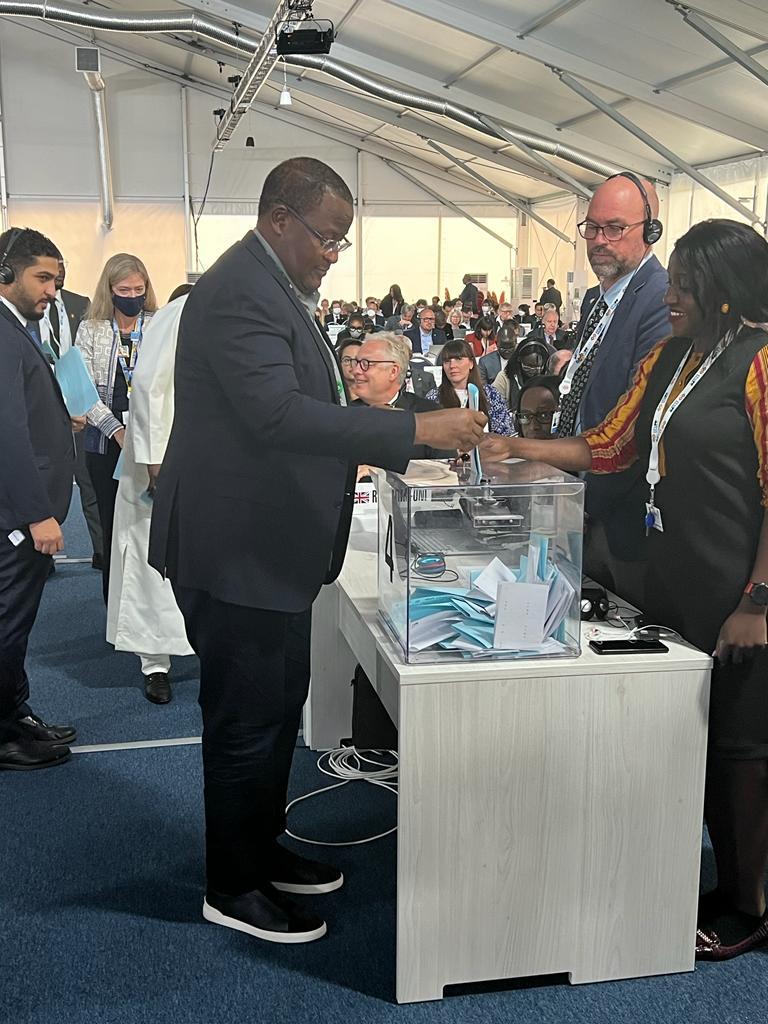
    In recognition of the vital roles Nigeria has been playing on the global stage of electronic Travel Documents, the country has been re-elected as a member of the International Civil Aviation Organization Public Key Directory (ICAO-PKD) Board for the fourth time.

    The ICAO-PKD, is a central repository for exchanging the information required to authenticate electronic Machine Readable Travel Documents (eMRTDs) such as ePassports, electronic ID cards and Visible Digital Seals.

    In a statement esigned by the NIS’ spokesman, Tony Akuneme on behalf of the Comptroller General of Immigration, Isah Jere Idris, MFR  and made available to African Business Travel News (ABTN), the election of Nigeria and other countries to the Board, was the high point of the 29th ICAO-PKD Board meeting held in Speke Resort Munyoyo, Uganda, from  November 16 to 17, 2022.

    The ICAO-PKD Board is the standing body responsible for the global aviation body’s administration and operation procedures to ensure efficient operation of the PKD, including its financial and contractual management. It as well develops policies.
    ICAO-PKD is made up of 88 member countries, with 15 Board members who serve three-year term each. Board members are nominated and voted by PKD participants and are appointed by ICAO Council in accordance with the provision of the  Memorandum of Understanding (MoU).

    Nigeria has over the years been an active participant in the ICAO-PKD Board meetings and has contributed immensely, especially on the issue of electronic Passport control systems and border control solutions. The Nigerian delegation was led by the Comptroller General of Nigeria Immigration Service.

  • Kizz Daniel, The  ‘Buga’ Star To Perform Live at 2022 FIFA World Cup in Qatar

    Kizz Daniel, The ‘Buga’ Star To Perform Live at 2022 FIFA World Cup in Qatar

    Following the successes of his global tour and the release of his recent hit track, ‘COUGH’, incredibly multi-talented Afrobeats, Pop, R&B singer/songwriter, Kizz Daniel is arguably having an impressive time of life as FIFA announces him as one of the headliners at the FIFA Fan Festival event in DohaQatar.

    The performance, which is an extension of FIFA Sound, is an entertainment strategy designed to bring more connections between the beautiful game of football and music.

    A few months ago, when the artist with the historic record of No Bad Songs tweeted that he would love to perform his hit single ‘Buga‘ at the World Cup, little did he know that the universe would grant him this fervent wish. In a quote, the singer said “When you have a dream, you have to hold on to it and never let go. The FIFA Fan Festival in Doha is a collective dream and we’ll make it a once-in-a-lifetime experience!”

    Among more than 20 additional top-level entertainers from around the world performing at the event, Kizz Daniel will be performing alongside five international award-winning singers — American artist, Diplo on November 22; Nigeria’s Kizz Daniel on November 23 – 20h55 – 21h40; Canadian crooner, Nora Fatehi on November 29; American singer, Trinidad Cardona  on December 1 and Scotland’s Calvin Harris on December 10 — at the Qatar2022 FIFA Fan Festival mainstage as part of the FIFA Sound lineup, all in a bid to enrich the great programme of the FIFA Fan Festival over the 29-day tournament at Al Bidda Park in the heart of Doha, next to The Corniche.

    Kizz Daniel has enjoyed a successful 2022 with his single ‘Buga‘ becoming one of the biggest singles out of the continent; his successful ‘AfroclassicTour‘ of the UKUSCanada, and select African countries, including Rwanda, Namibia, Uganda and one of South America’s vivacious entertainment hubs — Suriname; and now his addictive street jam, ‘Cough‘ Odo. This gifted artist is now ready to take ‘Buga‘ to the most significant event in competitive sport — the 2022 FIFA World Cup which holds in Qatar from Sunday, November 20, 2022 to Sunday,  December 18, 2022.

  • Uganda’s Project Shelter Wakadogo wins inaugural World’s Best School Prize for Overcoming Adversity

    Uganda’s Project Shelter Wakadogo wins inaugural World’s Best School Prize for Overcoming Adversity

    • ….The five World’s Best School Prizes, founded this year by T4 Education in collaboration with Templeton World Charity Foundation, Accenture and American Express, are the world’s most prestigious education prizes and see winning schools share $250,000
    • …Best Intellectuals Model School in Nigeria was named in the Top 10 shortlist for the World’s Best School Prize for Overcoming Adversity

    Project Shelter Wakadogo in Uganda, which was founded in the wake of war and now educates over 450 children with one of the highest student retention rates in the country, was today named the winner of the inaugural World’s Best School Prize for Overcoming Adversity. The five World’s Best School Prizes, founded this year by T4 Education in collaboration with Templeton World Charity Foundation, Accenture and American Express, are the world’s most prestigious education prizes and see winning schools share an award of $250,000.

    The five World’s Best School Prizes – for Community Collaboration, Environmental Action, Innovation, Overcoming Adversity, and Supporting Healthy Lives – celebrate schools everywhere for the pivotal role they play in developing the next generation of learners and for their enormous contribution to society’s progress especially in the wake of COVID.

    Project Shelter Wakadogo was chosen as the winner of the World’s Best School Prize for Overcoming Adversity from among the Top 3 finalists for the prize, which also included Pinelands North Primary School in South Africa and Escola Evandro Ferreira Dos Santos in Brazil.

    The Prizes were founded by T4 Education in collaboration with Templeton World Charity Foundation, Accenture, American Express, Yayasan Hasanah, and the Lemann Foundation to share the best practices of schools that are transforming the lives of their students and making a real difference to their communities.

    Vikas Pota, Founder of T4 Education and the World’s Best School Prizes, said:

    “Congratulations to Project Shelter Wakadogo for winning the World’s Best School Prize for Overcoming Adversity. It’s time for world leaders to sit up and listen to institutions like this outstanding Ugandan school.

    “Far too many children will continue to be left behind in the wake of COVID unless governments take urgent action to tackle the education crisis. As a first step, they must turn to the knowledge and experience contained within our schools because those at the frontlines of education know better than anyone else the change we need to see.

    “We founded the World’s Best School Prizes to surface the expertise of trailblazing schools from every corner of the globe so that leaders can learn from their incredible stories.”

    Project Shelter Wakadogo in Gulu, Uganda, has flourished from a school with only two classrooms founded in the wake of war to now educating over 450 children with one of the highest student retention rates in the country.

    In the aftermath of two decades of civil war and the violence committed by the Lord’s Resistance Army, which displaced over a million people in Northern Uganda, families in the village of Pece Acoyo in Gulu were slowly returning to their homes. Amongst the wreckage left by the war, calls for a safe, quality school began to grow. Through a large community effort Project Shelter Wakadogo was born – land was procured, roads leading to the school were levelled and vegetables were planted to be used for school meals. In 2009, the school opened. The name Wakadogo reflects the school’s mission to extend a duty of care to those who walked through its doors, meaning ‘for the little ones’ in Swahili.

    Its commitment to providing free school meals, healthcare and quality education for the surrounding community, has seen the school become a second home for many.

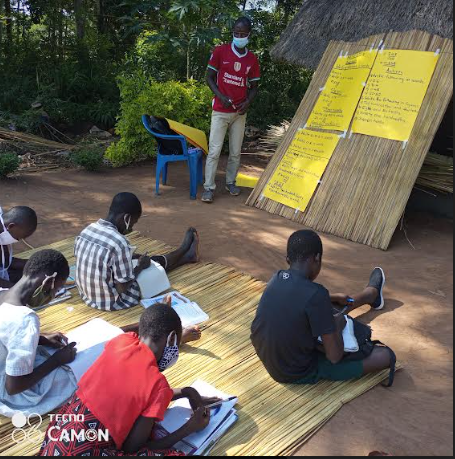
    When Uganda imposed a long lockdown during the pandemic, Project Shelter Wakadogo quickly determined that online schooling wouldn’t be possible for its students. In Uganda, only 2% of the population has access to personal computers and less than 9% of the rural population has access to the internet. Instead, Project Shelter Wakadogo pivoted to conducting 36,000 home-schooling lessons during the pandemic. This dedication to continuing to provide education to its students was crucial as the school closures across Uganda saw children forced into the labour market, a rise in teenage pregnancy and gender-based violence.

    Project Shelter Wakadogo will use the prize funds to offer more scholarships for marginalised and underprivileged children in the community. It will also use the funds to set up an online learning platform to facilitate hybrid and catch-up learning, in case schools should ever close again, and share its approach and technology where possible with schools in the region. It will also use the funds to continue to provide mid-morning porridge and midday meals to its students as most in the wider community live on one meal a day.

    The winners of the five World’s Best School Prizes were chosen by a Judging Academy, comprising distinguished leaders all across the globe including academics, educators, NGOs, social entrepreneurs, government, civil society, and the private sector, based on a set of rigorous criteria. Judges were informed by a public advisory vote in which nearly 50,000 people from around the world voted for their favourite schools.

    At the same time, Dunoon Grammar School in the UK won the World’s Best School Prize for Community Collaboration. Escuela Emilia Lascar in Chile won the World’s Best School Prize for Innovation. Bonuan Buquig National High School in the Philippines won the World’s Best School Prize for Environmental Action. And Curie Metropolitan High School in the US won the World’s Best School Prize for Supporting Healthy Lives.

    A prize of US$250,000 will be shared equally among the winners of the five Prizes, with each receiving an award of US$50,000. 

    All shortlisted schools across the five Prizes will share their best practices through School Transformation Toolkits that showcase their “secret sauce” to innovative approaches and step-by-step instructions on how others can replicate their methods to help improve education everywhere. These will be available on the new T4 Communities app launched at World Education Week.

    To know more about the school, watch the video below-

  • Romeo Oriogun’s Nomad wins The Nigeria Prize for Literature

    Romeo Oriogun’s Nomad wins The Nigeria Prize for Literature

    Science, literature instruments of national development – Obasanjo

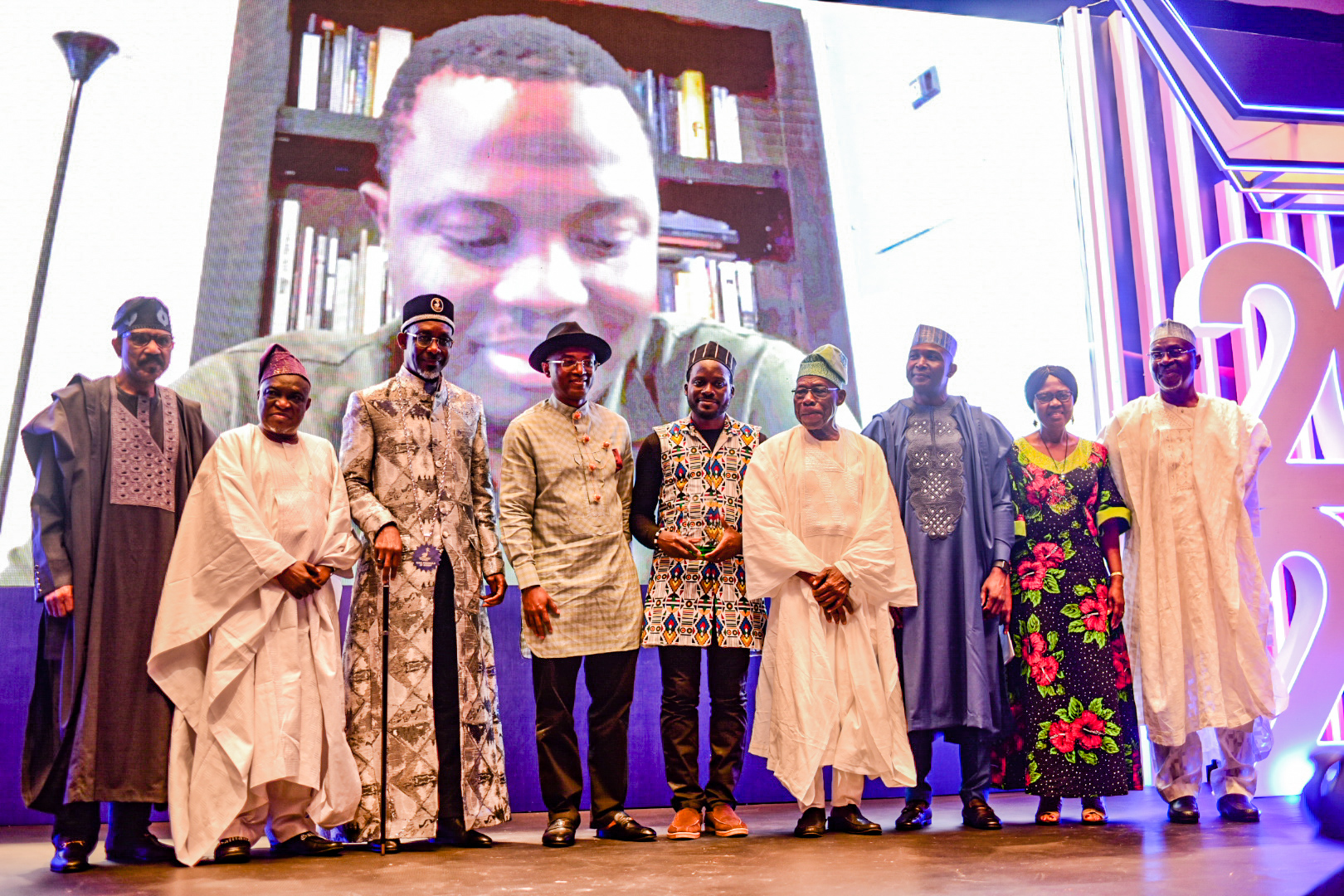
    The Advisory Board for The Nigeria Prize for Literature, sponsored by Nigeria LNG Limited, today announced Nomad, authored by the poet, Romeo Oriogun, as the winner of the $100,000 prize for the 2022 cycle on Poetry.

    Professor Akachi Adimora-Ezeigbo, Chairperson of the Advisory Board, made the announcement at the Grand Award Night ceremony in Lagos, themed “Touching the Stars”. She also announced Dr. Sakiru Adebayo as the 2022 winner of the Nigeria Prize for Literary Criticism, which comes with One Million Naira (N1,000,000) prize money.

    Four winners of The Nigeria Prize for Science were also jointly awarded the prize money of $100,000. Muhydideen Oyekunle and Shehu Ado, as well as Sesan Peter Ayodeji and Emmanuel Olatunji Olatomilola, won the prize for their respective works titled, Gains in Grain Yield of Released Maize (Zea Mays L.) Cultivars under Drought and Well-Watered Conditions, and Development of Process Plant for Plantain Flour.

    The winners were awarded after the former president, Chief Olusegun Obasanjo (GCFR), in the keynote address stressed the critical roles science and literature play in national development. Chief Obasanjo said Nigeria could reach greatness through a strong will to change the prevailing narrative, adding “Nigeria is, as we all know, blessed beyond measure in talents, capabilities, and resources.”

    “The world has always been fast spinning into areas of scientific breakthroughs and innovations that aim to maintain high standards of living, while sustainably preserving the earth for generations yet unborn. But now, more than ever, there is a sweeping tide of energy transition and climate change mandates, medical advancements and applications, food security interventions to combat hunger, as well as measures to sustain life on earth.

    “Who is truly listening, and willing? Reaching and indeed, touching the stars which are light years away, is in retrospect, very much possible. In fact, there are several Nigerian citizens that occupy positions of merit, as global patriots. A national meteoritic rise can happen within the blink of an eye. Just like a space launch, a scientific breakthrough can shoot our nation to those seemingly unattainable heights where we can touch the stars.

    “We can adopt world-class best practices, and leap with giant strides into the future. We can collaborate on exchanges of ideas and invest in research and development. We can focus on the education and mental development of our people so that we position the nation in the direction it should go.

    “I speak to the political class, the administrators, business institutions and organisations, small and medium scale enterprises, the creatives and content developers, leaders across all spheres of influence, the man or woman whose heart burns with passion for Nigeria’s good, and to the boy or girl, who is discovering his or her talents and gifts. May we all rise to that place of willingness and do so, collectively,” he said.

    In his welcome remarks, NLNG’s Managing Director and Chief Executive Officer, Dr. Philip Mshelbila, said the Company sponsored the prizes to ensure that excellence takes a prominent position in creativity and innovation in the country.

    Speaking on the 2022 theme of the science prize, Innovations in Sustainable Food Security, Dr. Mshelbila stated that the prize and the winners were a wake-up call for the country and Nigerians to take responsibility for food sustenance.

    “From the mangroves of the Niger Delta, through the rain forests, to the grassy plains and savannah terrains, the nation pitifully boasts of poverty, yet it is bountifully endowed with arable lands and agricultural treasures. Including its aquatic wealth. This is a wake-up call! We must take responsibility for food sustenance, at the very least, and scale up to foreign exchange revenue drive from food/agriculture export once our people are assured of their daily meals. What’s more, we must shun wastages, arising from poor handling or preservation of agricultural produce,” he said. 

    On literature, he stated that leading publishing experts indicate that poetry submissions have been unprecedented the world over. He stated further that the entries for the 2022 Nigeria Prize for Literature were the most ever in the history of the prize.

    He said NLNG, as a world-class company, was actively seeking its place in the future, adding it is focused on gaining strength within the energy transition landscape.

    “It really is the future of the world, and one for which NLNG should be rightly positioned, to bring Nigeria into that realm,” he stated.

    The winning book beat two other books on the Shortlist of Three, the Call of Water by Su’eddie Vershima  Agemaand Your Crib, My Qibla by Saddiq Dzukogito clinch the prize. The book competed against 287 books submitted for the competition in 2022.

    According to the judges, the winning book, Nomad, stands out as the most technically accomplished, rendering the topical subject of migration in a language laced with lyrical figurations. They stated that “the 67 poems in the collection were held together by a travel motif, marshalled in each poem with equal intensity, and linked to the African past, including the Middle Passage, and the African future.”

    The panel of judges include Sule Emmanuel Egya, who is the Chairman of the panel and a professor of African Literature and Cultural Studies at Ibrahim Badamasi Babangida University, Lapai, Niger State. Other judges are Toyin Adewale-Gabriel and Dike Chukwumerije. Adewale-Gabriel is a poet and fiction writer. Dike Chukwumerije is a spoken word and performance poet, and an award-winning author. Professor Susan Nalugwa Kiguli was the International Consultant for this year’s Prize.  She is a Ugandan poet and an associate professor of literature at Makerere University.

    Nigeria LNG Limited remains committed to responsible corporate citizenship, and The Nigeria Prize for Science, The Nigeria Prize for Literature and The Nigeria Prize for Literary Criticism are some of the company’s numerous contributions towards building a better Nigeria.

  • Kizz Daniel Returns with Another Hit Single,  “COUGH” (ODO)

    Kizz Daniel Returns with Another Hit Single, “COUGH” (ODO)

    Hard on the heels of his masterpiece ‘BUGA‘ which moved the world with over 264.5 million views on TikTok, among other social media platforms, incredibly gifted Afro pop artist, Kizz Daniel, releases an equally addictive new single: “ODO – COUGH“.

    Produced by Philkeyz, the track which already has a catchy choreography tells a beautiful story of a new found love interest. In his words: “For this song, I wanted to highlight the feeling of new love. The song itself is energetic, celebratory and really captures what it’s like to impress someone new.”

    Having toured famous cities in the UK during his successful ClassicWorldTour — selling out in LondonManchesterGlasgow and Birmingham in May 2022 and also  taking his sold-out Afroclassic US tour to 10 major cities in July 2022,

    Kizz Daniel has the undeniable X-factor! Still on his world tour, the entertainment industry’s golden goose recently performed for millions of his fans in CanadaSurinameMalawiRwanda and Uganda
    The widely acclaimed singer who’s known for his historic ‘No Bad Songz‘ record has bagged numerous successful singles and albums that have become street anthems across Africa and the world, making him one of the most sought-after musicians of his time — as he knows the exact type of music to dish out and continually fan the eternal flame of good music for his fans in NigeriaAfrica and the world.  

    ODO” by Kizz Daniel Is out today, FridayOctober 142022 on all digital platforms. 
  • Nigeria Re-Elected as ITU Council Member

    Nigeria Re-Elected as ITU Council Member

    In clear recognition of the critical role Nigeria is playing on the global telecom stage, the country was re-elected earlier today as a Council member of the International Telecommunication Union (ITU), the United Nations specialized agency that oversees global telecommunication operations. Nigeria will serve on the Council again from 2023-2026.

    The election of Nigeria and other countries, on Monday, October 3, 2022, into different regional groups that constitute ITU Council, was the highpoint of the Plenipotentiary Conference 2022 (PP-22) ongoing in Bucharest, the capital city of the Republic of Romania.

    The Nigerian delegation was successfully led to the global event by the Honourable Minister of Communications and Digital Economy, Prof. Isa Ali Ibrahim Pantami. Other members of the delegation include the Chairman, Board of Commissioners of the Nigerian Communications Commission (NCC), Prof. Adeolu Akande, and the Executive Vice Chairman/Chief Executive Officer of NCC, Prof. Umar Danbatta.

    At the conference, which started on September 26, 2022 and is scheduled to end on October 14, 2022, member states at the event voted on the composition of the next ITU Council and the 12 representatives to serve on the Radio Regulations Board (RRB) for the next four years.

    The 21st Plenipotentiary Conference of the Council, also saw the election by member states, of Doreen Bogdan-Martin of the United States of America as the organisation’s next Secretary-General.

    Like Nigeria and the countries elected into the Council, Bogdan-Martin, as the first woman to lead ITU in its 157-year history, will begin her four-year term from January 2023, when Houlin Zhao would have completed his second final term of four years in office as ITU Secretary General.

    The seats in ITU Council are divided into five regions, A to E. Nigeria was elected into the ITU Council, Region D for Africa, which has 13 seats. Other 12 countries elected alongside Nigeria are Algeria; Egypt; Ghana; Kenya; Mauritius; Morocco; Rwanda; Senegal; South Africa; Tanzania; Tunisia; Uganda.

    Elections of member states also took place into the Region A for The Americas (nine seats); Region B for Western Europe (eight seats); Region C for Eastern Europe & Northern Asia (five seats); and Region E, for Asia and Australasia with 13 seats as Africa.

    Commenting on Nigeria’s re-election as ITU Council member, the Executive Vice Chairman and Chief Executive Officer, Prof. Umar Danbatta, thanked the ITU member states for the confidence it has in Nigeria expressed by the re-elected into the ITU Council, in which the country has been playing critical role over the years.

    “The re-election of Nigeria as a member of ITU Council for the next four years, again, points to the globally-recognised leadership role Nigeria is playing in Africa and at the level of ITU Council in the area of telecommunications policy formulation and technical regulations development to drive ITU’s mission and vision,” the EVC said.

    The ITU, originally established in 1865 as the International Telegraph Union and became a United Nations specialised agency in 1947, was set up to coordinate telecommunications operations and services throughout the world. It is headquartered in Geneva, Switzerland.

    Nigeria became a member of ITU on November 4, 1961. The USA joined on July 1, 1908; United Kingdom, February 24, 1871, and UAE on June 27, 1972.

    The ITU is governed by the Plenipotentiary Conference and the Administrative Council. The Plenipotentiary Conference is the supreme organ of the Union. It is the decision-making body that determines the direction of the Union and its activities.

    The Council, on the other hand, acts as the Union’s governing body in the interval between Plenipotentiary Conferences. Its role is to consider broad telecommunication policy issues to ensure that the Union’s activities, policies, and strategies fully respond to today’s dynamic, rapidly changing telecommunications environment.

    ITU Council also prepares a report on the policy and strategic planning of the ITU, and it is responsible for ensuring the smooth day-to-day running of the Union, coordinating work programmes, approving budgets, and controlling finances and expenditure. 

    The Council also takes all steps to facilitate the implementation of the provisions of the ITU Constitution, the ITU Convention, the Administrative Regulations (International Telecommunications Regulations and Radio Regulations), the decisions of Plenipotentiary Conferences, and where appropriate, the decisions of other conferences and meetings of the Union.

  • WiredUp, Africa’s First Publishing Platform for Science and Business Excellence on the Continent, Launches Call for Partnerships

    WiredUp, Africa’s First Publishing Platform for Science and Business Excellence on the Continent, Launches Call for Partnerships

    WiredUp, Africa’s first publishing platform for extraordinary stories about African changemakers, groundbreakers and torchbearers in STEM, business and innovation, launched a call for partnerships today. The aim of the call is to partner with organisations in Africa and in the diaspora to help tell their stories in these sectors, showcase their excellence, and shift the stereotypical narratives about Africa’s contributions to science and industry.

    While research has shown that some African innovators have succeeded in creating new markets where many global giants have failed, the stories of these professionals and entrepreneurs remain largely untold. WiredUp, launched in 2020 as the world was managing a global pandemic and dealing with widespread job loss, was born from the realisation that there is a clear lack of coverage of African ingenuity in STEM, business and innovation in mainstream media globally. The initiative is unapologetic about highlighting the accomplishments of African leaders in these fields as a way to contribute to the continent’s reputational equity and, by extension, economic growth.

    Mimi Kalinda, Founder of WiredUp, said: “We are conscious of the fact that Africa, like all continents, faces some developmental challenges. This facet of our story has been exhaustively shared by mainstream media across the world. The good news is, Africa is growing beyond mere potential. Therefore, our narratives must be expanded. Our reality not only speaks of a continent that births great musicians and sports stars; African scientists, engineers, tech experts, mathematicians, business and industry leaders, and innovators in various fields are leapfrogging solutions to global issues. Our mission is to tell their extraordinary stories.”

    The call for partnerships is aimed at organisations that are doing outstanding work in STEM, business and innovation, and that are looking to increase the visibility of their work globally. WiredUp offers a full suite of channels with growing engagement, subscribers and followers, including on its website and YouTube, LinkedIn, Twitter, Instagram and Facebook pages. The platform has interviewed more than 40 innovators from 15 countries in Africa, including Ethiopia, Benin, South Africa, Nigeria, Ghana, Liberia, Uganda and Zimbabwe. Partners will have the opportunity to tell their stories and build awareness of their work.

    Potential partners can reach the WiredUp team by visiting the organisation’s website or via social media.

  • Ecobank Partners with AMA Academy to Launch First Pan-African Fintech Training and Awards for Journalists

    Ecobank Partners with AMA Academy to Launch First Pan-African Fintech Training and Awards for Journalists

    Ecobank Group, the leading Pan-African banking Group, is committed to developing and supporting Fintechs to transform digital finance and banking, and today announces a partnership with AMA Academy, which is the only free-to-use pan-African online learning platform dedicated to upskilling journalists in Africa. Ecobank Group and AMA Academy will work together to develop customised fintech training modules for business, finance, and tech journalists across the continent. Modules will be available in two languages: English and French. 

    The five-module curriculum will be taught online by industry experts and will culminate in recognition and other awards for Africa’s top fintech journalists. It will cover topics including the history of financial services in Africa, its transformation, blockchain, AI in fintech and Open Banking. It will also cover security, regulation, governance, inclusion, and future trends of the fintech market in Africa. The partnership aims to provide a deeper knowledge and understanding of the fastest-growing industry on the continent and to improve the quality of reporting and have more effective public awareness. 

    Eloïne Barry, Founder and Chief Executive Officer of African Media Agency and AMA Academy, said “We are delighted to partner with Ecobank Group, which is at the forefront of fintech transformation and progression in Africa. Our Academy is equally committed to enhancing the skills of journalists by creating access to experts and training. Journalists are often faced with several beats to cover, and our aim is to help support the quality and effectiveness of their reporting.”  

    Africa is responsible for an astonishing 45.6% of mobile money activity in the world – a phenomenon made possible by the rapid growth in access to the internet and smartphone devices, and further accelerated by the COVID-19 pandemic in 2020.  

    According to tech industry researchers, in 2021 fintech companies received 60% of the over $4 billion investments in the tech industry, surpassing total investments made into the broader tech start-up ecosystem in previous years. An estimated 6 million young Africans gain access to the internet every year, delivering ripe growth prospects in budding fintech sectors like agriculture, insurance, healthcare, clean energy and education; in addition to relatively unexplored areas such as crowdfunding, blockchain technology, artificial intelligence and augmented reality. 

    “In the midst of all the positivity around growth in the African fintech industry, there is a deficiency and imbalance in how this story is told and understood. The narrative today is driven by international media sources. We lack a strong homegrown narrative with an in-depth analysis of what is really taking place in Africa, by Africans. This course will give journalists the confidence, skills and understanding required to become as relevant and competitive as journalists operating within the same space globally,” Eloïne Barry added. 

    Djiba Diallo, Senior Fintech Advisor at Ecobank Group, commented on the partnership saying “The continent has seen the rise of ‘challenger markets’ outside of the traditional strongholds of Nigeria, Kenya, and South Africa to include Ethiopia, Ghana, Rwanda, Senegal, and Uganda, just to mention a few. These are countries in which Ecobank is present and where the fintech media training course will have a real impact. As a pan-African banking Group, we are committed to growing local fintech solutions, many of which have the potential to become global solutions, and to empowering our local media partners.” 

    Fintech Journalist of the Year Award 

    Journalists who attend the full training modules will also stand the chance of being awarded the top Anglophone and Francophone fintech journalist at an awards ceremony following the training. 

    Journalists based in Africa covering business, Finance and Technology, should visit https://amacademy.io/ecobank to register for the fintech masterclass. 

  • Feature: How Sendy’s technology is offering a lifeline to businesses

    Feature: How Sendy’s technology is offering a lifeline to businesses

    by Iremiyika Oyegbami.

    Africa has witnessed an impressive growth in many economies over the last decade. Many factors have contributed to this phenomenon. The vibrant SME sector is one of them. The sector has proven to be a significant contributor to economic development across the continent. 

    Globally, SMEs represent about 90% of businesses and account for over 50% of employment opportunities. In Africa, they contribute to nearly 80 percent of jobs across the continent.

    The effect of this has now seen deliberate efforts by various governments to prioritize and offer special support to SMEs through budgetary allocation, favourable policy formulation, and many other capacity development initiatives.

    Other players in the private sector, such as banks, technology and financial services companies, have also been working with SMEs to support their growth in many ways. 

    Google recently partnered with Sendy through a program that will see them work to empower Small and Medium Businesses. The program is offering SMEs in Kenya, Nigeria and South Africa expertise in business strategy and development, digital marketing and financial planning. The businesses are also getting trained on how to identify new markets and access funding opportunities.

    There is a growing effort by many stakeholders in the SME sector to scale the capacity of SMEs to make them productive and profitable. 

    Technology is the biggest enabler in this digital age. Many businesses are digitizing their operations to reap the benefits and efficiency of digitization. The digital economy has presented many opportunities for SMEs to scale. 

    Several tech solutions are also being developed to address barriers that are hindering effective trade for SMEs. Challenges such as access to markets, reliable logistics and inadequate capital are now being addressed. 

    Studies have shown that the cost of poor trade facilitation and logistics has many effects on businesses (market access, growth, and sales) and consumers (price, choice, and delivery time). The effect on market access for SMEs is lost sales and revenues and limited growth, and consumers do not benefit from lower prices and greater choice.

    However, social sellers who trade on social media platforms now have a lifeline through tech enablers like Sendy. 

    Sendy is creating solutions to enable businesses to trade effectively across the continent. Through their fulfillment platform, they are offering storage and delivery services to online sellers, relieving them of the high costs associated with logistics and warehousing. 

    They are also working with merchants in the retail space to enable them to purchase stock at competitive prices from various suppliers and manufacturers. This is connecting merchants and suppliers in real-time using technology. Their service also provides financing to enable merchants to restock and continue doing business.

    The company is today operating in Kenya, Uganda, Nigeria and Cote d’Ivoire. 

    In Africa, there are many other tech startups trying to offer a lifeline to businesses and SMEs in general. Technology has become a significant driver of trade in the continent. It has simplified a lot of complexities that have for the longest time crippled the sector. It is steadily defining the capacity of businesses to grow.

    It is obvious the benefits that players like Sendy have brought, solving logistics and warehousing, offering financing and creating a marketplace for businesses. Online sellers can now do business with ease because of such solutions. Merchants can succeed in the retail sector.

    The potential is huge and the opportunities are many. SMEs should continue tapping the benefits of technology to digitize and grow the capacity of SMEs

    Ms Oyegbami is a freelance writer and lives in Lagos.

  • IFC and Jubaili Holdings Partner to Enhance Food Security in Sub-Saharan Africa

    IFC and Jubaili Holdings Partner to Enhance Food Security in Sub-Saharan Africa

    To strengthen food security in sub-Saharan Africa, IFC and Jubaili Agrotec, a Nigeria-based agrochemicals manufacturer and distributor, today announced a partnership that will support the company to expand its regional footprint and increase thousands of smallholder farmers’ access to key inputs such as fertilizer used to protect crops and increase food production.

    IFC’s $35 million financing package will help Jubaili expand its production capacity in Nigeria, Ghana, Tanzania and Uganda, helping to offset Africa’s reliance on agrochemical imports. Farmers use agrochemicals to protect crops against pests and diseases. With support from the local currency facility of the International Development Association’s Private Sector Window, IFC is providing $20 million of the financing in Nigerian Naira.

    IFC’s financing package will be accompanied by advisory services to support Jubaili to incorporate products that contribute to climate adaptation and climate-smart agriculture such as drip irrigation equipment. The advisory work will also support smallholder farmers to integrate sustainable farming techniques and benefit from improved productivity and incomes.

    “Agriculture is a significant part of many African economies and our partnership with IFC will help us to expand across Africa to reach thousands of farmers, helping them to build more resilience in their crops,” said Rajab Jubaili, Managing Director of Jubaili Agrotec.

    “Our partnership with Jubaili will contribute to improving food production in sub-Saharan Africa at a time when many parts of Africa, and the world, face rising food prices and food shortages. The region is heavily reliant on imported agrochemicals for crop protection and this partnership will improve the competitiveness of local production, thereby bolstering Africa’s agricultural resilience,” said Samuel Dzotefe, IFC’s Manager for Agribusiness and Forestry in Africa.

    IFC’s financing and advisory support to Jubaili is part of the organization’s broader work in Africa to support sustainable agriculture practices and to develop regional value chains and markets that will support the continent’s food security and job creation.

  • Feature: A Sport Patriot

    Feature: A Sport Patriot

    by Ayo Akinfe

    Tobi Amusan has just exposed the lame excuse of bad governance which most Nigerians hide behind for their misdeeds as pathetic

    [1] 100 metre hurdler Tobi Amusan set two world records of 12.12 and 12.06 seconds in the semi finals and finals of the World Athletics Championship in Oregon to clinch gold

    [2] Frankly speaking, Toni and Ese Brume were Nigeria’s only two realistic medal holes at this tournament

    [3] It is time we look at ourselves in the mirror and ask why we are performing so badly. A country our size where sports is a past-time for every youth should be a global sporting giant

    [4] Before we start the usual blame game of saying it is the government, there is no investment, athletes are not treated well, bla, bla, bla, we should take a look at the medals table. Countries like Kenya, Ethiopia, Uganda, etc have far worse facilities and pay their athletes less than Nigeria does and always finish above us in these tournaments

    [5] I put it to you all that Nigeria’s sports budget is higher than the combined total of Kenya, Ethiopia and Uganda combined and our athletes are paid far bigger bonuses than theirs. Anyone who has been to an African sports meeting will tell you that the Nigerian contingent always has the best facilities, gets paid the highest bonuses and has professional expertise which many other participants can only dream of

    [6] Do you know that Kenyan javelin thrower, Julius Yego, is nicknamed Mr YouTube because he learnt how to throw by watching YouTube videos. Yego is the African and Commonwealth record holder for the event. He basically taught himself how to compete with no training, coaching, physios, financial support or government backing

    [7] Many African athletes started out like Yego, competing in school meetings with few facilities. Right up to NUGA, NIPOGA and College of Education games. Back then, the sports facilities in Nigeria were minimal but that did not prevent us from producing champions on an annual basis. Now, however, we only think of financial gain and the government is a convenient excuse for what is a malaise known as national greed

    [8] Emmanuel Ifeajuna became the first Black African to win a gold medal at an international sports event when he won the high jump at the 1954 British Empire and Commonwealth Games. His winning mark and personal best of 6 ft 8 in (2.03 m) was a games record and a British Empire record at the time. Ifeajuna did not make one penny from that feat. Where has that spirit gone today I ask?

    [9] In 1949, the Nigerian national team the Red Devils visited England to play several friendly games. They were nicknamed the UK Tourists and the players played barefoot. It was the players’ first sea voyage and it was feared they would be sea sick on the two week journey from Lagos to Liverpool. None was sick,however and they kept fit for the tour by running several times around the ship’s deck every morning and evening. Etim Henshaw, the team’s captain, said in one interview: “We travelled third class but we were treated as first class passengers by everyone on board. Those boys did it for the love of country. Sadly, today, everything is about money

    [10] Rather than admit that we have lost our values as a people, Nigerians chose to blame their governments. Until we recover the spirit of the UK Tourists, we will continue to do poorly at international sporting events!

  • Afri-Plastics Challenge awards £750,000 to innovations tackling behaviour change to plastic usage

    Afri-Plastics Challenge awards £750,000 to innovations tackling behaviour change to plastic usage

    Fifteen (15) teams of innovators from across Sub-Saharan Africa have been named finalists in the Afri-Plastics Challenge with solutions that will change both the behaviour of individuals and communities around plastic waste in Sub-Saharan Africa. Finalists from Botswana, Burkina Faso, Cameroon, Ethiopia, Ghana, Kenya, Nigeria, Senegal, South Africa, and Uganda will receive a £50,000 grant towards their solutions.

    Projects that made it to the finals include “Change at the till”, a solution developed by Botswana’s Meeticks Africa. “Change at the Till” runs a 30-day challenge that aims to get users to gain knowledge on how their use of single-use plastics, especially when shopping, negatively affects the environment and contributes heavily to marine plastic waste, and to practice what they learn. The solution is a multi-day gamified experience conducted over an intelligent WhatsApp chatbot and backend app.

    Another project is a Training-Empowerment-Promotion (TEP) model developed by Catharina Natang, a Cameroonian organisation. The TEP model aims to provide training on sustainable fashion and resource mobilisation to fashion designers and equip local designers to understand the subtle but massive presence of plastic-based fabrics in the fashion industry, and how this contributes to the global plastic waste problem. Students will learn about innovative non-plastic alternatives that are in existence and how to access them, and also how to recycle, properly dispose of and select non-plastic alternatives. The project will also organise annual sustainable fashion events to widen public awareness on sustainable fashion to reduce plastic wastes that end up in oceans.

    Also in the running is  Kenya’s Homeless of Kisumu’s M-taka solution which aims to train and empower women economically to become recycling agents who build communities of recyclers by leveraging technology and inducing behavioural change through social connections and incentives. Through an app, the masses will be targeted to increase recycling culture and link them with agents in their areas to collect the plastic and transport it to recyclers.

    Honourable Harjit Sajjan, Minister of International Development, Government of Canada said: “Plastic pollution is threatening our ecosystems and food systems. I strongly believe that we must empower communities across the world to make sustainable choices. Choices that result in a better, more environmentally friendly future for all. I look forward to seeing the hard work and innovation of these amazing finalists, and can’t wait to contribute our expertise and efforts in supporting Africa in becoming a plastic waste-free continent.”

    Tackling plastic pollution through three prize strands, the finalists in the third strand – Promoting Change – announced today are being supported to develop innovative engagement strategies such as gamification, incentives and storytelling to promote behaviour change and educate communities, as well as provide insights into the roles that women and girls play across the value chain.  The marine plastic pollution issue is growing and  we need to ensure that awareness translates into action and long-term behaviour change, at both individual and collective levels. To help the finalists achieve this, they will be further supported through a capacity-building portfolio of subject matter experts over the next several months to further develop their solution.

    Constance Agyeman, Director of International Development, Challenge Works said: “The issue of marine plastic pollution has grown rapidly in recent years. It is crucial that awareness translates into action and long-term behaviour change, at individual and collective levels alike. The 15 finalists will be supported over the course of the next seven months to develop their communications campaigns and projects. The £50,000 grants will support teams to generate evidence of change around reducing littering, segregation of plastic waste, choosing reusable options, or refusing single-use plastic all together.”

    Having made their way through the semi-final round, each finalist has already received grants of £5 000 to develop their ideas. Three winning projects will be awarded £250 000 each in March 2023.

    While women and low-income populations are more likely to be negatively affected by plastic pollution, they are also a driving force of positive change, leadership and innovation in their communities. The Afri-Plastics Challenge aims to support innovative efforts to reduce plastic pollution in a way that empowers all, by promoting greater gender inclusiveness and social justice in national policies on plastic waste.

    To find out more about the Afri-Plastics Challenge and the 15 finalists in the Promoting Change strand, please visit afri-plastics.challenges.org

  • British International Investment launches new name in Nigeria with US $20m commitment to mobility fintech Moove

    British International Investment launches new name in Nigeria with US $20m commitment to mobility fintech Moove

    British International Investment (“BII”), the UK government’s Development Finance Institution (DFI), formerly known as CDC Group, introduced its new name and announced a US $20 million, 4-year structured credit investment in Moove – a mobility fintech democratising access to vehicle ownership in Africa.

    The investment reflects BII’s focus on mobilising capital to build self-sufficiency and market resilience in Nigeria, and improve access to inclusive economic opportunities while helping to catalyse the country’s boundless entrepreneurial ambition.

    Last night, the British High Commissioner in Nigeria, H.E. Catriona Laing CB and CEO of BII, Nick O’Donohoe, co-hosted a business reception in Lagos to celebrate the launch of BII’s new name and reiterate the DFI’s continued ambition to scale up investment that will boost key economic sectors in Nigeria.

    The event was held at the British Deputy High Commissioner’s Residence in Ikoyi, bringing together key leaders in business and BII’s investment partners from across the country. BII’s leadership outlined the organisation’s strategy to deliver productive, sustainable and inclusive investment and pledged to deepen its capital commitments to support the emergence of more breakthrough Nigerian businesses providing progressive solutions to urgent and complex development challenges.

    British High Commissioner, H.E. Catriona Laing CB, said: “It’s a pleasure to be in Lagos to mark the launch of British International Investment, and to host Nick O’Donohoe during his visit to Nigeria.”

    “BII forms an important part of the UK’s package of tools and expertise to help Nigeria build their pipeline for investment and scale up infrastructure investment, in particular to achieve clean, green growth.”

    “The launch of BII marks a continuation of this partnership, and we look forward to seeing BII’s support expand and diversify in Nigeria.”

    In his keynote speech, Nick O’Donohoe highlighted BII’s 74-year history in Nigeria, from its first investments in 1949, in West African Fisheries and Cold Store, to the organisation’s pioneering role in supporting Nigeria’s first private equity fund – African Capital Alliance’s Capital Alliance Private Equity Fund I (CAPE I).

    On how BII’s new five-year strategy is driving its investment in the world’s first mobility fintech, Moove, O’Donohoe comments: “Investing in the prosperity of Nigeria’s growing population requires innovative new partnerships that can leverage the country’s abundant capabilities and expertise. In Moove, BII has a partner that aligns with our commitment to back dynamic tech-enabled businesses that can help accelerate impact in Nigeria by strengthening the country’s informal transport industry.

    “I am delighted that not only will BII’s investment help to create jobs and provide entrepreneurial self-starters with the means to own their vehicles, but Moove’s clear focus on gender diversity will foster inclusive economic opportunities for women, both within the company’s workforce and among its drivers.”

    Founded by serial entrepreneurs, Moove is democratising access to vehicle ownership by providing revenue-based vehicle financing and financial services to mobility entrepreneurs. The mobility fintech is creating sustainable employment opportunities to empower those otherwise excluded from financial services by embedding its alternative credit scoring technology onto ride-hailing, e-logistics and instant delivery platforms, and using proprietary performance and revenue analytics to underwrite vehicle loans.

    Since its launch in 2020, Moove has rapidly expanded its operations within Nigeria and has entered into new African markets including Ghana, Kenya, Uganda and South Africa, as well as Europe, Middle East and Asia markets. Currently, mobility marketplaces such as Uber face difficulty meeting rising rider demand, due to limited access to car supply and onerous and inflexible auto leasing products for aspiring drivers. The funding from BII will enable Moove to purchase and import brand new fuel-efficient cars into Lagos, which will be leased to drivers who can then earn their way to asset-ownership, over a three to four-year period. This will also alleviate one of the key blockages to the development of ‘ride-hailing’ transportation infrastructure in Nigeria’s commercial capital.

    Ladi Delano, co-founder and co-CEO at Moove, said, “We’re incredibly proud to welcome onboard a world-class partner such as BII, whose strategic support will play a key role in our mission to build the world’s largest integrated vehicle financing platform for mobility entrepreneurs.

    With our new funding, we’re now in an even stronger position to use our technology and productivity data in creating a more inclusive financing ecosystem, whilst also tackling the unemployment problem affecting over a third of Nigerians by generating the opportunity for more seamless and sustainable employment.”

    Nigeria is the BII’s biggest investment market in Africa, with a portfolio of nearly US $570 million, through more than 100 businesses and 43 funds, which collectively support almost 45,000 jobs across the country in 2020.

    The DFI’s investments in Nigeria, both direct and indirect through various impact-led funds and intermediaries, cover a variety of sectors from clean infrastructure and energy to digital infrastructure, food and agriculture, financial services, manufacturing and logistics. A highlight of BII’s key investment activities in Nigerian include:

    Backing Nigeria’s private equity industry by investing in Capital Alliance Private Equity Fund I (CAPE I), managed by African Capital Alliance (ACA); CardinalStone Capital Advisors Growth Fund; Nigerian-led Synergy Private Equity Fund II, Fund for Agricultural Finance in Nigeria (FAFIN), Verod Growth Fund III, Uhuru Growth Fund, among others.

    –       Bolstering Nigeria’s financial institutions to boost financial inclusion through a US $100 million loan to First Bank of Nigeria to support women and small business owners; a US $75 million investment in Stanbic IBTC Bank in 2020 to expand lending to businesses in critical sub-sectors; and helping to fund a $162.5 million syndicated loan package to Nigeria’s Access Bank Plc to increase funding to local micro, small, and medium-sized enterprises.

    –       Supporting the country’s food and agriculture sector through US $140 million investment in Indorama Eleme Fertilizer and Chemical Limited which is boosting fertilizer production in Nigeria and supporting local jobs. 

    –       Catalysing early-stage innovation and entrepreneurial activities in Nigeria by investing in Venture Capital funds including US $25 million invested in TLcom, US $5 million in TradeDepot and US $5 million in TeamApt.

    –       Expanding access to clean and affordable clean energy through investments such as Gridworks, a pan-continental equity investment platform; M-KOPA, the world’s largest pay-as-you-go solar energy companies; and Lumos, an off-grid solar company that offers access to affordable and reliable electricity to homes and businesses in Nigeria.

    British International Investment has an office in Lagos, Nigeria, which is led by Benson Adenuga.