Tag: UK’s development finance institution and impact investor

  • GHIB and BII announce $50m partnership to boost cross-border trade across Africa’s frontier economies

    GHIB and BII announce $50m partnership to boost cross-border trade across Africa’s frontier economies

    • First partnership between GHIB and BII, two UK institutions to address trade finance needs on the continent. 
    • Target economies include Sierra Leone, Liberia, The Gambia, Benin, DRC, Rwanda, and Tanzania. 

    Ghana International Bank plc (GHIB), a leading UK-based African financial institution, and British International Investment (BII), the UK’s development finance institution and impact investor, today announced a $50m trade finance facility covering Sierra Leone, Liberia, The Gambia, Benin, Democratic Republic of Congo, Rwanda and Tanzania.

    Under a Master Risk Participation Agreement (MPRA), the $50 million facility will enable GHIB to support more businesses and facilitate trade flows in the target countries. This addresses the general lack of credit appetite for frontier markets in Africa for reasons including high risk perception and comparatively lower volumes. 

    Increased trade finance can enable local businesses to import the commodities and equipment they need to sustain and grow their businesses. It helps create economic opportunities for business owners and maintain continued supply of essential goods in the market for Africans at a reasonable price. 

    The UK’s Minister for Africa, Lord Collins of Highbury, commented: “I’m delighted to see two UK institutions coming together to strengthen economic ties with Africa. Africa’s trade financing gap is one of the continent’s most pressing challenges and access to this funding will enable local businesses to trade more with the world, including the UK. This partnership serves as another example of BII’s leadership in building opportunities for growth with the UK’s partners.”

    Kwabena Asante-Poku, Country Director for Ghana at BII said: “In recent years, many African countries have faced challenging economic conditions that have impacted growth and livelihoods. Trade remains a key driver of growth for African economies especially in frontier markets like Sierra Leone, Liberia and The Gambia. Enhancing the flow of trade credit and financial intermediation to these markets will ensure access to essential goods and services which in turn drives sustainable and inclusive economic growth. We are pleased to partner with GHIB to offer practical trade finance solutions to businesses in countries facing difficulties in accessing finance for imports and exports.” 

    Dean Adansi, Chief Executive Officer of GHIB, added: “At GHIB we believe our success over the last 65 years is rooted in a deep understanding of African risk. This partnership with British International Investment represents a viable path through which we can structure partnerships that leverage this deep knowledge of risk into profitable and impactful transactions. With this deal, we are employing a structure that uses our deep knowledge and access of the market, harnessed together with the superior scale and capacity of BII. Together, we are bringing this to support and expand opportunity in these emerging markets enabling real GDP growth. Our research indicates that each dollar of trade unlocks about $1.3 into the GDP of our markets. We will work to make this deal a success, as it will open the way for more liquidity injections into the market.” 

    The collaboration leverages GHIB’s extensive network and proven track record in trade finance and allows BII to engage in a partnership that addresses the expanding trade finance gap in African markets, especially under challenging economic conditions. BII’s involvement brings essential foreign exchange dollar liquidity, critical for the import of key goods to GHIB’s operating markets. 

  • British International Investment Boosts Emerging Markets Investment

    British International Investment Boosts Emerging Markets Investment

    dedicated facility believed to be the first of its type offered by a development finance institution

    British International Investment, the UK’s development finance institution and impact investor, is to launch a new facility to boost the flow of private capital to meet the twin challenges of development and the climate emergency.

    The new facility aims to unlock hundreds of millions of pounds of private investment into climate and sustainability-focused investments in emerging economies that are currently deemed to be too risky by global investors. 

    It will address the gap between the risk appetite and return thresholds of commercial investors who are currently inclined to place capital in more developed markets. 

    Nick O’Donohoe, Chief Executive of BII, said: “With the launch of this facility, BII and the UK Government are demonstrating global leadership in unlocking the private capital that is so desperately needed to accelerate the green transition in emerging economies.

    “The role for BII, and the development finance community, is to judiciously deploy concessionary finance to give global investors the confidence to put their capital where it is most needed.”

    These investments are expected to include utility-scale climate infrastructure, such as renewable energy generation and transmission; other climate infrastructure, such as water, waste-to-energy, and battery storage; green finance, through banks and specialist finance companies that lend to climate-focused businesses; and investments that deepen capital markets for gender finance.

    The facility will target deep and long-term pools of capital, such as pension savings and life insurance policies; as well as focus on asset managers in the City of London and beyond, to design investment products that increase investment allocations to emerging markets.

    BII will use the facility to support a mix of existing pipeline and newly identified projects.

  • British International Investment and Citi launch $100 million risk-sharing facility to support trade finance in frontier and emerging African economies.

    British International Investment and Citi launch $100 million risk-sharing facility to support trade finance in frontier and emerging African economies.

    • The facility targets underserved African markets such as Benin, Cameroon, Tanzania and Uganda. 
    • The funding helps to accelerate the flow of key agricultural commodities, and use of machinery and solutions that strengthen food security in vulnerable economies. 
    • This initiative seeks to address the lack of liquidity among Africa’s commercial banks. 

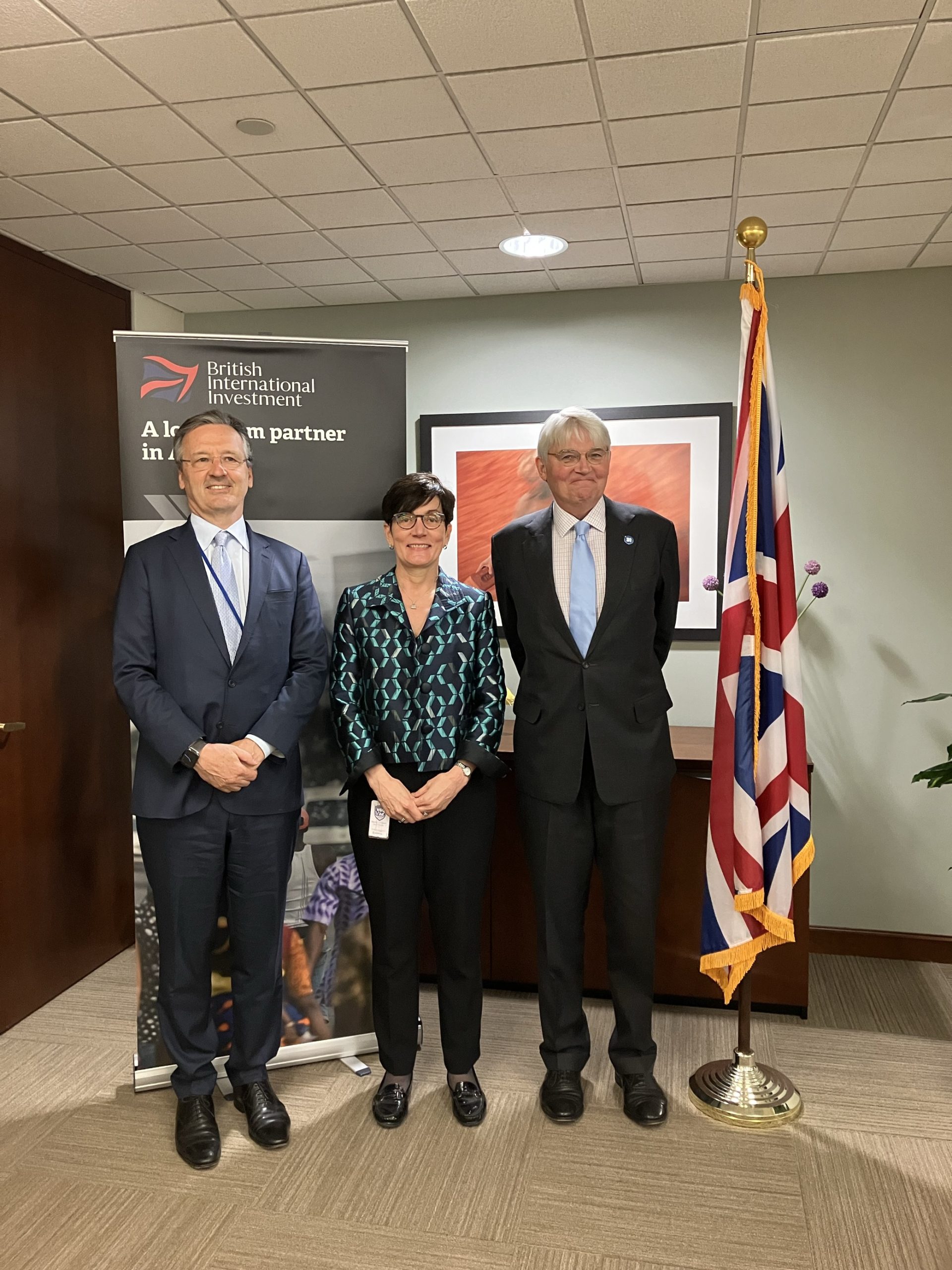
    British International Investment (BII), the UK’s development finance institution and impact investor, today announced the signing of a $100 million risk-sharing facility with Citi to support the trade finance needs of SMEs and corporates in frontier and emerging African economies. The initiative was announced during a signing ceremony in Washington at the World Bank’s Spring Meetings and is expected to provide a boost to businesses with high-potential but limited by a lack of finance.

    The investment seeks to address the critical lack of foreign currency in the region by providing trade finance liquidity to Citi’s extensive network of commercial banks, enabling financial institutions to increasingly support African businesses with imports of key commodities such as wheat, fertiliser, rice and sugar. 

    The BII and Citi facility will help local businesses in underserved markets to finance the import of economically productive goods, transport, essential equipment and machinery supporting the emergence of manufacturing industries in frontier and emerging economies, including Benin, Cameroon, Côte d’Ivoire, Rwanda, Tanzania, Uganda and Zambia.  

    The funding comes as local businesses struggle to secure key imports due to challenges precipitated by the COVID-19 pandemic and the Russia-Ukraine war, which have led to high inflation, rising interest rates and an increase in commodity prices. As a result, the trade finance gap in Africa has increased by approximately a third since the onset of the pandemic, climbing from $81 billion in 2019 to $120 billion in 2023. 

    BII has supported businesses in Africa since 1948 and Citi opened its first office in the continent in 1920. The new facility leverages their combined expertise and will potentially deepen Citi’s relationships with over 200 local banks who in turn can empower ambitious companies facing severe funding constraints in harder-to-reach markets.

    The UK’s Minister for Development and Africa, Andrew Mitchell said: “This investment underlines BII’s commitment to supporting fragile economies across Africa in accessing vital goods to support food production, including fertiliser and agricultural machinery. By investing in countries where support is most needed, BII continues to take a lead in the fight against food insecurity.”

    Nick O’Donohoe, CEO, British International Investment, said: “Our investment with Citi deepens BII’s footprint across the continent and supports local businesses struggling to maintain and expand operations due to a lack of capital. The facility is testament to our commitment to tackle complex issues such as food security in Africa by extending liquidity solutions to strategic sectors. This empowers local businesses to strengthen supply chains and accelerate the flow of essential trade.”

    Stephanie von Friedeburg, Head of DFI Strategic Partnerships, Citi, said: “Citi is proud to work with BII in seeking to strengthen trade, and food security in frontier and emerging African economies. Today’s announcement brings together BII’s long history of support in the region, with Citi’s unique cross-border vantage point. At Citi, we understand the transformative potential of global trade and are committed to bringing solutions that facilitate critical investments to enable economic growth.” 

    This investment contributes to the United Nations’ Sustainable Development Goals 1, 2 and 8, No Poverty, Zero Hunger, and Decent Work & Economic Growth.