Tag: United bank for Africa Plc

  • Mrs. Adepeju Adebajo appointed Independent Non-Executive Director of FCMB Group PLC

    Mrs. Adepeju Adebajo appointed Independent Non-Executive Director of FCMB Group PLC

    FCMB Group PLC has announced the appointment of Mrs. Adepeju Adebajo as an Independent Non-Executive Director on the Board of FCMB Group PLC. This was released by the Nigerian Exchange Limited (NGX) after the approval of the Central Bank of Nigeria.

    Mrs Adepeju Adebajo holds a Master’s and a BSc in Chemical Engineering from Imperial College London and an MBA from Harvard Business School.

    She chairs the Board of the Lagos State Employment Trust Fund and is a Transformation Lead at Etex Group (Nigerite and Emenite Limited). She brings over 30 years’ experience across industry, renewable energy, agriculture, finance and consulting. She has worked with teams and
    clients in Sub-Saharan Africa and Europe, helping them grow and multiply impact.

    Throughout her career, Mrs. Adebajo has led teams through change and growth. She was previously the Chief Executive Officer (CEO) Cement at Lafarge Africa Plc, CEO, Mouka Limited, CEO, Lumos Nigeria, CEO, UTC Nigeria Plc and an Assistant General Manager at United Bank for Africa Plc.

    In 2025, she founded Climate Governance Initiative Nigeria, affiliated with the World Economic Forum and serves on the World Economic Forum Council on Climate and Nature Governance (2025-2027).

    Mrs. Adebajo’s appointment is intended to strengthen the Board and support its transformation goals across the Group.

  • United Bank for Africa announces Executive Board Changes

    United Bank for Africa announces Executive Board Changes

    United Bank for Africa PLC has announced the retirement of the following Executive Directors, effective January 1, 2026, following the completion of their tenure:

    ▪ Mr. Muyiwa Akinyemi – Deputy Managing Director
    ▪ Mrs. Abiola Bawuah – Executive Director
    ▪ Mr. Alex Alozie – Executive Director
    ▪ Mrs. Sola Yomi-Ajayi – Executive Director

    Commenting on the completion of tenure and retirements, the Group Chairman, Mr. Tony O. Elumelu, CFR, stated: “I express my sincere thanks and appreciation to the retiring Executive Directors for their years of dedicated service, steadfast commitment,
    and support to UBA. Each of them has made significant contributions to the growth and success of UBA Group. On behalf of the Board, I thank them for their service and commend their impact. They will remain cherished members of the UBA family and enduring ambassadors of the values and standards we represent.”

    The Board also approved the appointment of the following individuals as Executive Directors effective January 1, 2026, subject to the approval of the Central Bank of Nigeria:

    Mr. Emmanuel Lamptey, Executive Director, Digital Banking. Emmanuel is a seasoned banker with twenty-five (25) years of
    multinational, cross-functional experience, working across retail and corporate banking, asset management, securities brokerage
    services, pensions, insurance, and microfinance, with operations in over thirty (30) African countries. He previously held executive and non-executive directorships in and outside the financial services sector. He has a proven track record of success in leading transformation, including digital and customer experience transformation, and operational excellence in the financial services sector. He is an alumnus of Harvard Business School (USA) and a fellow of the Association of Chartered Certified Accountants, United Kingdom. He holds a Bachelor of Commerce Degree from the University of Cape Coast, Ghana.

    Mr. Tosin Adewuyi, Executive Director, Corporate Banking. He has over twenty-five (25) years’ experience across Sub-Saharan Africa, including over fifteen (15) years in senior management, FCA and CBN-approved roles in London and Lagos. Tosin has championed senior client engagement across an extensive corporate and sovereign footprint and has a track record of building highperformance teams and effecting successful business turnarounds. He has had prior financing roles in Structured Trade Finance, Corporate and Investment Banking, Debt Capital Markets, Financial Institutions Coverage, and Correspondent Banking. Tosin is a Fellow of the Association of Chartered Certified Accountants (FCCA), and he has a BA (Hons) in Economics and Accounting
    from the University of Manchester. He is an Honorary Member of the Chartered Institute of Bankers of Nigeria. Tosin is an alumnus of Wharton Business School.

    Mr. Chidi Okpala, Executive Director, UBA Nigeria. Until his appointment, Chidi Okpala served as an Executive Director for
    Payments, Group Integration, and Strategy (PGIS) for Heirs Holdings, providing leadership across the Heirs Holdings Group’s
    payments portfolio and strategic oversight of its technology and healthcare investments. With deep expertise in payments, financial
    services innovation, corporate strategy, and ecosystem building, Chidi has led the development of scalable platforms, crossbusiness value creation initiatives, and long-term growth programmes for technology-enabled businesses across Africa. He has over twenty (20) years of banking experience and holds a B.Sc. in Finance, an MBA in Banking and Finance, and an MSc in Leadership and Strategy from London Business School, where he is a Sloan Fellow.

    Speaking on the appointments, the Group Chairman added: “I congratulate the incoming Executive Directors on their appointments. The Board is confident that they bring the experience, depth, and execution capability required to build on the strong foundation and successes established by their predecessors, and to advance UBA’s next phase of growth.”

    United Bank for Africa operates in twenty African countries and in the United Kingdom, the United States of America, France and the United Arab Emirates. UBA provides retail, commercial and institutional banking services, leading financial inclusion and implementing cutting edge technology. UBA is one of the largest employers in the financial sector on the African continent, with 30,000 employees group wide and serving over 50 million customers globally.
  • Abbey Mortgage Bank Appoints John Okonkwo as Executive Director to Strengthen Financial Operations

    Abbey Mortgage Bank Appoints John Okonkwo as Executive Director to Strengthen Financial Operations

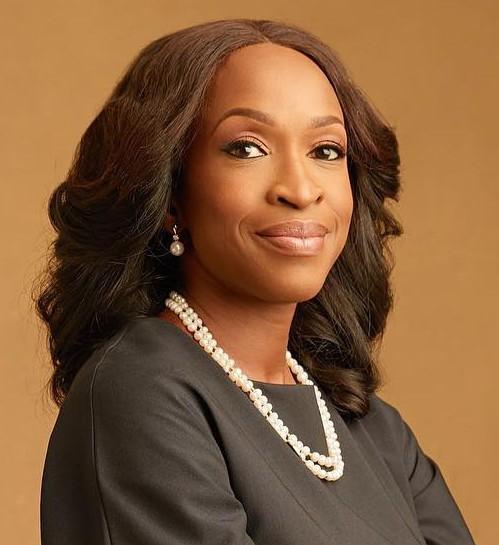
    Abbey Mortgage Bank Plc, a leading institution in the mortgage sector has strengthened its Executive Management team with the appointment of Mr. John Okonkwo as Executive Director, Finance, Risk, and Operations.
     
    Mr. Okonkwo is an accomplished and experienced Finance and Operations Professional, Auditor, Risk Management Practitioner, Board and Corporate Governance Advisor, Compliance Risk Management and Sustainability Services Professional.
     
    He has over 20 years of experience leading strategic initiatives across industries with a particular focus on financial services. He is KPMG-trained, a Fellow of the Institute of Chartered Accountants of Nigeria (ICAN), an Associate of the Chartered Institute of Taxation of Nigeria (CITN) and an Alumnus of the Advanced Management Programme (AMP) of the Lagos Business School (LBS).
     
    Mr. Okonkwo started his career at KPMG and held various finance, governance, risk and compliance positions at Heirs Holdings Group, United Bank for Africa Plc and VFD Group Plc.
     
    In his new role, Okonkwo will be responsible for providing strategic direction and oversight across the Bank’s finance, risk management, and operations functions, ensuring they align with Abbey’s long-term vision of delivering innovative, customer-centric financial solutions.
     
    Commenting on the appointment, Chairman of the Board of Directors, Abbey Mortgage Bank Plc, High Chief Samuel Oni said, “We are delighted to welcome John to the Board. His extensive experience across finance, risk management, and corporate governance will be instrumental in deepening our institutional resilience and driving operational excellence as we continue to position Abbey for long-term growth.”
     
    On his part, Mobolaji Adewumi, Managing Director of Abbey Mortgage Bank Plc, said: “John’s appointment comes at a crucial time in our transformation journey. His deep expertise and leadership will further strengthen our operational backbone, helping us build a more resilient, efficient, and customer-focused institution.”
     
    The appointment has been formally approved by the Central Bank of Nigeria (CBN), following a thorough regulatory process.
     
    Abbey Mortgage Bank Plc remains committed to enhancing value for its customers and stakeholders. With a wide range of services including mortgage loans, construction finance, equity release, savings and investment products, and digital banking services via the AbbeyMobile app, the Bank continues to simplify home ownership and financial planning for Nigerians

  • Fidelity Bank ED, Kevin Ugwuoke, takes over as President of Risk Managers Association

    Fidelity Bank ED, Kevin Ugwuoke, takes over as President of Risk Managers Association

    Kevin Ugwuoke, Executive Director and Chief Risk Officer of Fidelity Bank Plc, has formally assumed office as President of the Chartered Risk Management Institute of Nigeria (CRMI). His leadership promises a reform-focused era anchored on policy advocacy, ethical standards, and digital innovation to deepen risk governance across sectors in the country.

    Speaking during the presidential handover ceremony in Lagos over the weekend, Ugwuoke — who also doubles as acting President of the Federation of African Risk Management Associations (FARMA) — described his election as “a call to action.” He pledged to reposition CRMI as a thought leader and institutional partner in shaping the future of risk management in Nigeria’s national development.

    “Our mission is more than just certification; it’s about strengthening the culture of risk governance across sectors. We will collaborate with regulators, raise awareness, and provide practical tools to help organizations embed risk discipline at all levels.”
    Ugwuoke outlined a five-pronged strategy to guide his administration: strengthening professional education and certification; deepening policy and regulatory engagement; accelerating digital transformation; integrating ESG and climate risk into corporate strategies; and mentoring the next generation of risk practitioners.

    He explained that CRMI will align its initiatives with key policy institutions — including the Nigerian Economic Summit Group, the National Assembly, and sub-national governments — to help embed robust risk frameworks into economic development plans.

    “We must integrate risk thinking into planning, governing, and investing. We will advocate for more inclusive regulations to empower small and medium enterprises, improve macroeconomic stability, and foster institutional resilience.”

    Ugwuoke also announced plans to revise the Institute’s curriculum, introduce specialized certifications to reflect emerging risks, and implement a new National Risk Observatory to provide real-time risk data to both the public and private sectors.

    “Digital innovation will be central to how CRMI operates going forward. We are automating our backend, delivering more virtual training, and employing technology to scale our impact across the country and beyond.”

    In his remarks, the outgoing President of CRMI, Ezekiel Oseni, challenged the new leadership to consolidate on the achievements made under his tenure — from securing chartered status and strengthening partnerships to gaining greater international recognition — and take the Institute to the next level.

    Also speaking on the occasion, Chukwuma Nweke, deputy managing director of United Bank for Africa (UBA), delivering a goodwill message on behalf of Group Managing Director, Oliver Alawuba, described Ugwuoke as a worthy successor. “As Professor Oseni hands over the baton to Kevin Ugwuoke — a well-respected leader in the risk management ecosystem — we are assured CRMI is poised for greater achievements under his watch.”

    Nweke stressed that growing economic uncertainties — from inflation and exchange rate volatility to growing debt — underscore the need for a more strategic view of risk. “Risk must be recognized not as a compliance obligation or a cost center but as a key enabler of resiliency and growth. Institutions that embed risk into their strategies will absorb shocks more effectively, unlock value, and inspire investor confidence.”

    As part of the day’s ceremonies, 11 distinguished practitioners were conferred with the Fellow of Chartered Risk Manager (FCRMI) award, while 21 new members were formally inducted as Chartered Risk Managers (CRM). Furthermore, a new Governing Council was inaugurated to oversee the affairs of the Institute for the 2025–2027 term, marking a decisive step forward in institutional renewal and policy direction.

  • Banks clear major USSD debt to prevent service disconnection

    Banks clear major USSD debt to prevent service disconnection

    Nigeria’s telecom operators have kept Unstructured Supplementary Service Data services active as banks make significant progress in repaying their outstanding debts, preventing a potential disruption that could have impacted millions of users.

    The banks, which were at risk of disconnection due to a N160bn debt, have made substantial progress in clearing their liabilities, ensuring continued access to the USSD platform—vital for customers without internet access.

    In a January 15, 2024, notice, the Nigerian Communications Commission warned that nine banks would be cut off from USSD services by January 27 if they failed to clear debts accumulated since 2019. However, the banks acted quickly to resolve the issue, averting service disruptions.

    Chairman of the Association of Licensed Telecommunications Operators of Nigeria, Gbenga Adebayo, confirmed at a CEO forum in Lagos that the matter had been de-escalated.

    “The matter has been de-escalated. Money has been paid, and we are making progress thanks to the regulators,” he said.

    The nine banks that would have been affected by the NCC’s disconnection notice include Fidelity Bank Plc, First City Monument Bank, Jaiz Bank Plc, Polaris Bank Limited, Sterling Bank Limited, United Bank for Africa Plc, Unity Bank Plc, Wema Bank Plc, and Zenith Bank Plc.

    The dispute began in 2019 when banks started incurring charges for using USSD services provided by telecom companies. However, many banks struggled to settle the charges, causing the debt to accumulate.

    This enforcement is part of the first phase of a structured payment plan outlined in a December 20, 2024 memo from the NCC and the Central Bank of Nigeria.

    The memo details a three-phase payment obligation for banks to settle the N250bn debt, with specific deadlines for each phase.

    The first phase requires banks to settle 60 per cent of all outstanding pre-API invoices by January 2, 2025.

    The second phase mandates the full payment of all pre-API invoices by July 2, 2025. Finally, the third phase requires banks to settle 85 per cent of post-API invoices by December 31, 2025.

  • CBN fines nine banks N150m each for failing to disburse ATM cash

    CBN fines nine banks N150m each for failing to disburse ATM cash

    The Central Bank of Nigeria (CBN) has imposed fines of N150 million each on nine Deposit Money Banks (DMBs) for failing to dispense cash via Automated Teller Machines (ATMs) during the festive season.

    This enforcement action follows spot checks on branches, revealing non-compliance with CBN’s cash distribution guidelines.

    The sanctioned banks are Fidelity Bank Plc, First Bank Plc, Keystone Bank Plc, Union Bank Plc, Globus Bank Plc, Providus Bank Plc, Zenith Bank Plc, United Bank for Africa Plc, and Sterling Bank Plc. The fines, totalling N1.35 billion, will be debited from the banks’ accounts with the apex bank.

    This is according to a press statement on Tuesday by CBN’s Acting Director of Corporate Communications, Mrs. Hakama Sidi Ali.

    The statement read “In a clear message of zero tolerance for cash flow disruptions, the Central Bank of Nigeria (CBN) has sanctioned Deposit Money Banks (DMBs) for failing to make Naira notes available through automated teller machines (ATMs), during the yuletide season. 

    “Each bank was fined N150 million for non-compliance, in line with the CBN’s cash distribution guidelines, following spot checks on their branches. The enforcement action follows repeated warnings from the CBN to financial institutions to guarantee seamless cash availability, particularly during periods of high demand.

    “The affected banks include Fidelity Bank Plc, First Bank Plc, Keystone Bank Plc, Union Bank Plc, Globus Bank Plc, Providus Bank Plc, Zenith Bank Plc, United Bank for Africa Plc, and Sterling Bank Plc.” 

    Sidi Ali confirmed the sanctions, stressing the importance of seamless cash availability.

    “Ensuring seamless cash flow is paramount to maintaining public trust and economic stability. 

    “The CBN will not hesitate to impose further sanctions on any institution found violating its cash circulation guidelines,” she stated.

    The CBN’s actions highlight its zero-tolerance stance on cash flow disruptions, particularly during high-demand periods. The regulator had previously warned banks about adhering to cash distribution policies.

    The CBN has announced intensified monitoring of cash hoarding and rationing, both at bank branches and by Point-of-Sale (POS) operators. It is collaborating with security agencies to curb illegal cash sales and enforce the N1.2 million daily withdrawal limit for POS operators.

  • NCC Approves Disconnection Of USSD Services For Nine Banks Over N200bn Debt

    NCC Approves Disconnection Of USSD Services For Nine Banks Over N200bn Debt

     The Nigerian Communications Commission (NCC) has issued a directive to telecommunications companies to disconnect the Unstructured Supplementary Service Data (USSD) codes of nine financial institutions. This action comes in response to the banks’ failure to settle a staggering debt of N200 billion that has been accumulating since 2019.

    The NCC has set a deadline of January 27, 2025, for the disconnection to take effect, should the banks not resolve their outstanding obligations. The financial institutions affected by this directive include Fidelity Bank Plc, First City Monument Bank, Jaiz Bank Plc, Polaris Bank Limited, Sterling Bank Limited, United Bank for Africa Plc, Unity Bank Plc, Wema Bank Plc, and Zenith Bank Plc.

    These banks owe substantial amounts to telecommunications operators, with some debts remaining unpaid since 2020. The NCC’s notice, signed by its Director of Public Affairs, Reuben Muoka, highlights the urgency of the situation, emphasizing that the banks’ non-compliance with a joint directive from the Central Bank of Nigeria (CBN) and the NCC has necessitated this ultimatum.

    The notice warns consumers that they may experience disruptions in accessing USSD services, which are essential for mobile banking, if the debts are not resolved. USSD codes, such as 770, 919, and 822, play a crucial role in providing banking services to customers without internet access. The NCC has indicated that unresolved debts could lead to the reassignment of these codes to other applicants.

    In the statement, NCC stated, “As of close of business on Tuesday, 14th January 2025, of a total of 18 financial institutions, the nine institutions listed below have failed to comply significantly with the directives in the Second Joint Circular of the Central Bank of Nigeria and the commission dated December 20, 2024, for the settlement of outstanding invoices due to Mobile Network Operators (MNOs), some since 2020.”

    The regulator further noted that the banks’ failure to comply with the CBN-NCC joint circular indicates their inability to meet the good standing requirements necessary for the renewal of the USSD codes assigned to them. The NCC reiterated its commitment to consumer protection, informing the public that they may be unable to access the USSD platforms of the affected financial institutions starting January 27, 2025.

    This development highlights the ongoing tensions between telecommunications operators and financial institutions over unpaid USSD-related debts, a challenge that has persisted for several years and continues to impact consumers and the banking sector alike.

  • Bears Resurface; Investors lost N102.55 billion;  Naira appreciated by 0.66% to close at N1,476.12

    Bears Resurface; Investors lost N102.55 billion; Naira appreciated by 0.66% to close at N1,476.12

    The domestic bourse experienced a reversal last week’s bullish momentum to start the new week, as the day’s trading opened in the negative zone. The All-Share Index (NGXASI) gained shed 0.18% to close at 99,118.86 points from 99,300.38 points in the previous session.

    The day’s negative performance was primarily driven by investors profit taking activities in stocks like Access Corporation (-0.29%), United Bank for Africa (-1.35%), Fidelity Bank (-0.49%), FBN Holdings (-4.69%) and 13 others.

    Consequently, the year-to-date return settled at 32.56%. Similarly, the overall market capitalization decreased by 0.18% to close at N56.07 trillion as investor’s wealth declined by N102.55 billion.

    Market activity for the day was negative as volume and value traded decreased by 19.45% and 38.92% to 349.59 million units and N5.24 billion, respectively.

    We expect the market to trade mixed amidst investors profit-taking actions.

    CURRENCY MARKET:

    The Nigerian Naira appreciated by 0.66% against the US Dollar in the NAFEM Window, closing at a rate of ₦1,476.12.

  • First Bank appoints Olusegun Alebiosu as acting CEO, effective immediately

    First Bank appoints Olusegun Alebiosu as acting CEO, effective immediately

    First Bank of Nigeria Limited has announced the appointment of Mr. Olusegun Alebiosu as its Acting Chief Executive Officer, effective immediately.

    This development follows the resignation of Dr. Adesola Adeduntan, the bank’s Managing Director/CEO.

    The announcement was made official through a notification to the Nigerian Exchange Limited and the investing public, adhering to the Issuers’ Rules of The Exchange.

    Mr. Alebiosu, who previously held the position of Executive Director and Chief Risk Officer at FirstBank, has been pivotal in spearheading the bank’s transformation strategies over the past eight years.

    • His tenure at FirstBank began in 2016, and he brings over three decades of extensive banking experience, with a strong background in risk management, compliance, and corporate banking.
    • The board’s decision to appoint Mr. Alebiosu underscores his deep involvement and proven track record within the bank under the leadership of previous CEOs.
    • His broad experience includes significant roles such as Chief Risk Officer at Coronation Merchant Bank Limited and Chief Credit Risk Officer at the African Development Bank Group.
    • Before joining FirstBank, he served in key capacities at United Bank for Africa Plc and started his career at Oceanic Bank Plc (now Ecobank Plc) in 1991.
    • FirstBank expressed its deep gratitude to Dr. Adeduntan for his leadership and contributions, especially noting his role in overseeing the bank’s growth and transformation during his nine-year tenure.

    As Mr. Alebiosu steps into his new role, his appointment is pending approval from the Central Bank of Nigeria, signaling a new chapter for the 130-year-old financial institution as it continues to navigate the evolving banking landscape.

  • Market opens Bearish; Investors lost N50.64 billion; Naira appreciated by 4.96% to close at ₦1,582.94

    Market opens Bearish; Investors lost N50.64 billion; Naira appreciated by 4.96% to close at ₦1,582.94

    The Nigerian equities market opened the week’s trading on a bearish note. The NGXASI recorded a marginal downtick of 9 basis points from 102,088.07 points to 101,995.21 points.

    The market’s bearish closure was majorly driven by investors’ profit-taking activities in Access Corporation (-4.30%), Dangote Sugar (-7.69%), United Bank for Africa (-0.42%), Wema Bank (-2.41%), Fidelity Bank (-0.96%) and 20 other stocks.

    Consequently, the year-to-date return decreased to 36.41%. Similarly, the overall market capitalization decreased by 0.09% to ₦55.81 trillion, as investors lost ₦50.64 billion.

    Market activity for the day was positive as volume and value traded advanced by 1.14% and 11.69% to 294.32 million units and ₦6.72 billion, respectively.

    We expect the equities market to trade mixed this week.

    CURRENCY MARKET:

    The Nigerian Naira appreciated by 4.96% against US Dollar in the NAFEM Window, closing at a rate of ₦1,582.94.

  • Bears hold sway; Investors lost N67.45 billion;  Naira depreciated by 1.86% to close at ₦1,571.31

    Bears hold sway; Investors lost N67.45 billion; Naira depreciated by 1.86% to close at ₦1,571.31

    Bears held sway as the Nigerian equities market closed the day’s trading on a negative note. The NGXASI recorded a marginal downtick of 12 basis points from 101,362.38 points to 101,239.10 points.

    The market’s bearish closure was majorly driven by investors’ profit-taking activities in Access Corporation (-2.55%), OANDO (-1.74%), PZ Cussons (-9.89%), Transnational Corporation of Nigeria (-2.95%), United Bank for Africa (-0.42%) and 23 other stocks.

    Consequently, the year-to-date return decreased to 35.39%. Likewise, the overall market capitalization decreased by 0.12% to ₦55.39 trillion, as investors lost ₦67.45 billion.

    Market activity for the day was negative as volume and value traded declined by 16.43% and 24.54% to 253.00 million units and ₦4.94 billion, respectively.

    We expect the equities market to trade mixed this week.

    CURRENCY MARKET:

    The Nigerian Naira depreciated by 1.86% against US Dollar in the NAFEM Window, closing at a rate of ₦1,571.31.