Tag: values

  • ipNX Director, Dr. Olusola Teniola, Honoured with Yoruba Study Group Golden Leadership Excellence Award

    ipNX Director, Dr. Olusola Teniola, Honoured with Yoruba Study Group Golden Leadership Excellence Award

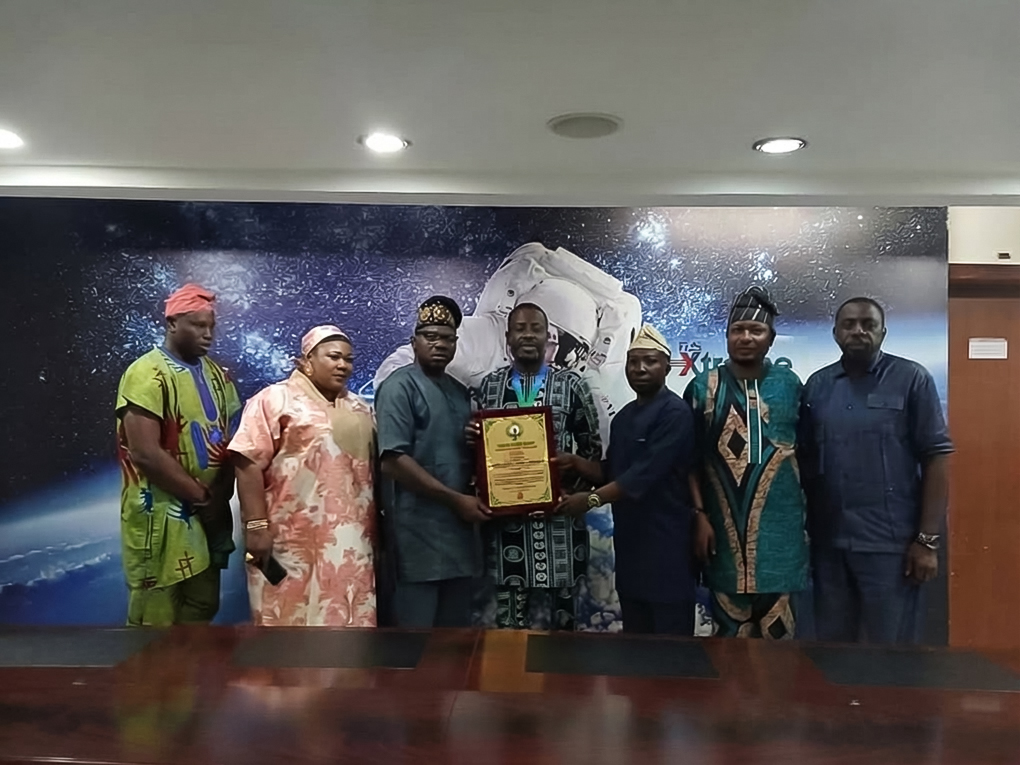
    ipNX Director, Dr. Olusola Teniola, has been awarded the prestigious Golden Leadership Excellence Award by the Yoruba Study Group. Dr Teniola, who leads Strategic Business Initiatives (SBI) at ipNX, the leading Nigerian technology and telecommunications company, was conferred with this award on Friday 4th April, 2026 at the ipNX Corporate Headquarters, Victoria Island, Lagos.

    Dr. Teniola was recognised as an Icon of Excellence & Most Outstanding Administrator of the Year 2025/2026 for his remarkable contributions to the advancement of Nigeria’s telecommunications industry, as well as his unwavering commitment to making data more affordable and accessible to millions of Nigerians.

    The award celebrates his embodiment of the revered Omoluabi ethos of Yorubaland, defined by integrity, diligence, excellence, and strong character. His leadership and impact have been particularly notable through his work with the Association of Telecommunications Companies of Nigeria (ATCON) and the Alliance for Affordable Internet, where he has played a pivotal role in shaping policies and initiatives that drive digital inclusion and connectivity across Nigeria.

    In its citation, the Yoruba Study Group commended Dr. Teniola for his “exemplary contributions to the advancement and management of telecommunications in Nigeria, his unquantifiable efforts in ensuring affordable data for the teeming masses, and his outstanding record of quality service delivery.”

    Reacting to the recognition, Dr. Teniola said “I am deeply honoured to receive this award from the Yoruba Study Group. This recognition is not just a personal milestone, but a reflection of the collective efforts of industry stakeholders committed to advancing Nigeria’s digital future. I remain dedicated to driving initiatives that promote affordable access to connectivity, foster innovation, and empower more Nigerians to participate meaningfully in the digital economy, while upholding the values of integrity, excellence, and service.”

    The Yoruba Study Group, a socio-political organisation founded in 2019, is dedicated to promoting Yoruba traditions, values, and cultural heritage. ipNX described the award as a testament to Dr. Teniola’s enduring impact on both the technology sector and society at large.

    “Dr. Teniola exemplifies the highest standards of leadership, innovation, and service. His contributions continue to strengthen Nigeria’s digital economy while reflecting the values of excellence and integrity that we uphold at ipNX,” said Mobolaji Caxton-Martins, Head Marketing and Corporate Communications, ipNX Nigeria.

    This recognition not only highlights Dr. Teniola’s professional achievements but also underscores his commitment to fostering inclusive growth, strengthening industry collaboration, and advancing Nigeria’s position in the global digital landscape.

  • For the Records: Welcome Address delivered at the 2025 Okeho Day Education Summit

    For the Records: Welcome Address delivered at the 2025 Okeho Day Education Summit

    by J. Moyo Ajekigbe, OFR

    On behalf of the organisers of the 2025 Okeho Day, I am delighted to welcome you all to this Education Summit and to make a few introductory remarks.

    I would like to start by thanking God for the gift of life and for the privilege to celebrate another Okeho Day. This edition of Okeho Day is very special in that it is being held in the year when Okeho attained the status of a University Town, following the decision by the Federal Government of Nigeria to locate a Federal University in Okeho. The Federal University of Agriculture and Technology Okeho (FUNATO) is a dream come true. We thank God for this special blessing, and for those He has used to make it happen, especially Prof Segun Gbadegesin, the Asiwaju of Okeho, and Senator Abdulfatai Buhari, the senator representing Oyo North District Constituency in the Senate.

    It is not a surprise that the theme of this summit has been appropriately titled, “FUNATO: Benefits and Opportunities in the context of Regional Growth and Development”.  But before I comment on the theme of the summit, I would like to draw our attention to the theme of the 2025 Okeho Day which is, “Rooted in Heritage, United for Education: A Grand Reunion for Okeho’s Future”.

    When we talk about heritage, most people think in terms of physical and financial assets that are or may be inherited. In broad terms, however, heritage is anything that is passed down from generation to generation, and it includes the people’s traditions, values, beliefs, culture as well as historical sites and natural landscapes.  Okeho is known as Akikanju Oke Oogun, and her people are known to be Omoluabi Eniyan, that is, people born of good character. It embodies virtues like honesty, respect for others, integrity and hardwork. This is the heritage that our ancestors passed down to us, and which we too must pass down to our children. Maybe it is appropriate to ask at this juncture the question: “How many of us can beat their chest and say they are truly Omoluabi in words and in deed?”

    FUNATO has brought out the best in our people.  Many have made significant contributions (treasure, talent and time) towards the preparation of temporary campuses for the university, and obtaining necessary regulatory approvals.  This is highly commendable.  We can rightly say that Okeho is united for the actualization of the FUNATO project.  The challenge before us is to remain united as the university takes off and develops its own unique brand. We must also unite to ensure the security, development and progress of our community.

    Let me now shift my focus to the main business of the day. The theme of the summit is very appropriate and timely; and the choice of Prof. Sola Ajayi as Guest Speaker is a wise decision. He is an erudite scholar with considerable teaching and administrative experience. And most importantly, he is one of us: he knows our environment, and understands our problems. I have no doubt in my mind that he will do justice to the topic that has been assigned to him.

    FUNATO means different things to different people. For some, it is an opportunity to serve the community and its people; for some, it is a business opportunity; for some, it is a place for personal growth and development; for some, it is an opportunity to earn a living; and for some, it is an opportunity to propagate certain beliefs and ideologies. Whatever our personal or group objectives may be, let us always remember that the peace, prosperity, and progress of Okeho, and indeed of the entire Oke Oogun area, remain sacrosanct.

    The theme of this summit focuses on benefits and opportunities of FUNATO.  We must, however, also prepare for the challenges that come with having a university in a community such as ours. Our strategy should be how to convert those challenges to opportunities for the benefit of the entire community. The future promises to be bright and interesting, but we must be conscious of the fact that, “The future belongs to those who prepare for it”.

    Thank you for your time.  Please enjoy the rest of the summit.

    J. Moyo Ajekigbe, OFR is the Chairman FUNATO Planning Committee

    Images from the Summit-

    Chairman, Egbe Ọmọ Ìbílẹ̀ Okeho
    Captain Adegboyega Olopoenia, Chairman, 2025 Okeho Day Celebration
    Prof Adesola Ajayi, Vice-Chancellor,  Abiola Ajimobi Technical University 
  • Halima Dangote: Family-Owned Businesses driving global economic success

    Halima Dangote: Family-Owned Businesses driving global economic success

    Family-owned businesses (FOBs) can continue to drive economic success, create value for shareholders, and positively impact their communities worldwide by staying true to their core values and adopting strategic practices prioritising long-term growth, efficiency, and resilience. This was part of the submission made by Halima Aliko-Dangote, Group Executive Director of Dangote Industries Limited, during the Forbes Global CEO Conference in Bangkok, Thailand.

    Halima, also the Executive Director of Family Office, spoke at the panel session on Family Business: Looking at the Next Frontier and opined that family-owned businesses have demonstrated exceptional resilience, navigating challenges and thriving over multiple decades. Other speakers include Carolyn Choo, Managing Director and CEO of Worldwide Hotels; Rose Damen, Managing Director of Damen Yachting, third-generation family shareholder of Damen Shipyards Group; and Caroline Link, Co-Chairman of B.GRIMM Pharma, President of B. Grimm Joint Venture, and Board Member of B. Grimm Power.

    She stated that success in family-owned businesses starts with shared values, goals, governance policies and alignment adding that reputation is part of Family Capital. According to her, governance structure, adherence to core values, customer satisfaction, optimization of shareholder value, meritocracy, integrity, leadership, brand equity, diversification/growth, philanthropy and preserving generational wealth play key roles to the success of our businesses.

    She opined that Dangote Group’s governance policies do not allow the board and management to operate in silos as each business unit has at least three independent directors that will give a holistic view.

    Speaking on other success factors for Dangote Group, Halima emphasized, “We family-owned businesses have to stick to our tradition of asset rich-cash moderate or as my father will correct me, asset rich-cash poor. We, as Dangote, perpetuate a profitable business with strong values and a strong governance structure. We make money while building our nation by contributing heavily to the global economy, creating massive jobs, thinking of our great grandkids and contributing excessively to humanity.”

    Highlighting the significant contribution of FOBs to the global economy, Halima noted that studies by Mckinsey showed that they account for more than 70% of global GDP, generate annual turnovers of between $60 trillion and $70 trillion, and provide around 60% of global employment. She stressed the crucial role these businesses play in creating jobs, sustaining communities, and driving development in sectors such as manufacturing, education, healthcare, and infrastructure across the world.

    “Family-owned businesses (FOBs) have proven to be resilient, weathering challenges and thriving across multiple decades. Despite facing external pressures, many FOBs not only survive but also grow, contributing significantly to the global economy in ways that are often underestimated or overlooked,” she said.

    She also pointed out that family-owned businesses often employ two key approaches in preparing the next generation for leadership roles: internal and external capacity building. Regarding internal capacity building, Halima explained that many families create internship programmes for young family members interested in taking over the business or assuming leadership positions.

    “In Nigeria, we train the next generation so they can grow organically to leadership roles in family businesses. My dad’s approach is for you to start from ground up knowing you will get to leadership role if you work hard and do your job right. These experiences make it easier for you to learn the ropes and be prepared for leadership role in the future,” she said.

    On external capacity building, Halima discussed the practice of sending younger generations to work in non-family businesses. This approach enables them to acquire new skills, learn better processes, and gain diverse perspectives that can benefit the family business in the long run adding that she started her career as an Analyst at KPMG before joining Dangote Industries Limited.

    The approach, she explained, “removes the familiarity tag as the young generation got employed as other people and supervised to monitor their performance. This has been a common avenue business families have chosen to pursue for many years, having their next generation spend three to five years working outside the family business before eventually joining with a new set of skills and business knowledge.”

    Addressing the challenges of succession planning, Halima emphasised the importance of involving the younger generation in the business early on. She suggested that this creates a space for open communication, where the next generation can share their thoughts, ideas, and aspirations, while the senior generation provides critical information to help the next leaders make informed decisions.

    She stressed the need for a balance between tradition and innovation in family-owned businesses. While tradition provides continuity and stability, she noted that innovation is vital to staying relevant and competitive in the modern marketplace.

    “Successful family businesses recognise the need to adapt to changing consumer preferences, technological advancements, and market trends. Family businesses often have a wealth of experience and deep-rooted traditions. They can also benefit from external expertise and fresh perspectives,” she concluded.

  • GOtv: Providing a Platform for Original African Stories to Thrive

    GOtv: Providing a Platform for Original African Stories to Thrive

    Since time immemorial, storytelling has been a cornerstone of African culture, serving as a powerful tool for answering questions, passing down history, and imparting timeless lessons. What began as oral narration to preserve culture and tradition has evolved into one of the most cherished forms of entertainment today.

    The evolution of African cinema has been nothing short of remarkable. Drama series such as Riona, Ajoche, Jemeji, and Masquerades of Aniedo, alongside films like Half of a Yellow Sun, Saworoide, Sango, Jagun Jagun, and Igodo, captivate audiences not only with their compelling storylines but also with their authentic portrayal of cultural norms from different historical eras. These films and series are not only entertaining but also rich in tradition, offering a glimpse into Nigeria’s historical and cultural heritage through the art of storytelling.

    In today’s interconnected world, where the exchange and preservation of cultural values have become crucial, there is a pressing need to make this type of content widely accessible. GOtv continues to champion this cause, providing a dedicated platform that brings these narratives to life and shares them with audiences worldwide.

    Through channels like Africa Magic Yoruba, Igbo, Hausa, and Epic—complete with English subtitles to overcome language barriers—GOtv bridges the gap between local content and international audiences. By offering diverse films, series, and documentaries, GOtv allows viewers to enjoy the richness of African traditions, values, and perspectives.

    GOtv goes beyond traditional entertainment by giving African filmmakers, musicians, and artists a space to showcase their talents. With offerings that range from Nollywood blockbusters to reality TV shows and more, GOtv exposes viewers to the unique narratives of African creators.

    Another significant factor in GOtv’s success is its extensive Digital Terrestrial Television (DTT) reach, which has democratized access to quality entertainment and cultural storytelling. GOtv’s DTT infrastructure allows the service to bring local content into the homes of people from diverse socioeconomic backgrounds, promoting inclusivity and cultural pride. By making these stories accessible to a wider audience, GOtv plays a crucial role in preserving cultural narratives and fostering a shared understanding of Africa’s heritage.

    GOtv’s commitment extends to supporting the growth and recognition of African talent. Through initiatives such as the Africa Magic Viewer’s Choice Awards and the MultiChoice Talent Factory, creatives gain global recognition and can hone their skills.

    As the world becomes increasingly interconnected, GOtv remains dedicated to promoting true African culture, providing a platform where original African stories can thrive and inspire audiences across the globe.

  • Netflix & UNESCO Launch Groundbreaking Competition in Sub-Saharan Africa

    Netflix & UNESCO Launch Groundbreaking Competition in Sub-Saharan Africa

    …Six Winners Will Create Short Films That Will Premiere on Netflix

    Netflix and UNESCO have partnered to launch an innovative short film competition on ‘African Folktales, Reimagined’ across Sub-Saharan Africa. Winners of the competition will be trained and mentored by industry professionals and provided with a US$75,000 production budget to create short films that will premiere on Netflix in 2022 as an “Anthology of African folktales”.

    One key aim of this competition is to discover new voices and to give emerging filmmakers in Sub-Saharan Africa visibility on a global scale. We want to find the bravest, wittiest, and most surprising retellings of some of Africa’s most-loved folktales and share them with entertainment fans around the world in over 190 countries.

    The competition, which will be administered by Dalberg,  will open on 14 October 2021 until 14 November 2021. Each of the 6 winners will receive a production grant of US$75,000 (through a local production company) to develop, shoot and post-produce their films under the guidance of industry mentors selected by UNESCO & Netflix to ensure everyone involved in the production is fairly compensated. In addition, each of the 6 winners will also receive $25,000.

    UNESCO and Netflix both strongly believe in the importance of promoting diverse local stories, and bringing them to the world. They recognize that many emerging filmmakers struggle with finding the right resources and visibility to enable them to fully unleash their talents and develop their creative careers. This competition aims to address these issues and enable African storytellers to take a first step towards showcasing their content to a global audience.

    This partnership will also help create sustainable employment and encourage economic growth and it will therefore contribute to the achievement of the 2030 Sustainable Development Agenda, a series of targets established by the United Nations which aims to end global poverty in all its forms by the end of this decade. This film competition will also help reduce inequalities by facilitating access to global markets and by guaranteeing dignified working conditions. All of these are key goals within the 2030 Agenda.

    The competition is open to emerging filmmakers across Sub-Saharan Africa on the theme of “African Folktales, Reimagined.” Folktales have always been an important way of passing on culture, heritage, and values to future generations, while constantly inviting people to reimagine their relevance to our contemporary societies. This theme is inspired by the African Union 2063 Agenda’s Aspiration 5, which celebrates African cultural identity, common heritage, values, and ethics. This competition aims to harness this important tradition with a modern outlook while leveraging new mediums of distributing artistic and creative content, like Netflix.

    For the first round, applicants will be required to submit a synopsis of their concept (no more than 500 words) as well as links to a recent CV and a portfolio/ evidence of any past audiovisual work they have produced. Applications can be submitted via www.netflix-growcreative.com/unesco from October 14th at 16:00 CET and will close on November 14th, 2021 at 13:59 PM CET.

    “It is important that the film sector acts to ensure the voices of Africa are heard, by supporting the emergence of diverse cultural expressions, putting forth new ideas and emotions, and creating opportunities for creators to contribute to global dialogue for peace, culture and development.” says Audrey Azoulay, Director-General, UNESCO

    In addition, Ernesto Ottone R., Assistant Director-General for Culture, UNESCO said, “The film sector must ensure that the creative talents of Africa are promoted, by supporting young talents and making sure that African filmmakers contribute to the international film industry.” 

    Growing up, entertainment was how I connected with people. I fell in love with the stories and characters I saw on screen and experienced how storytelling has the power to inspire, which is why I’m excited about this partnership with UNESCO and the opportunities ahead. Together we will promote local cultures and support the creative industries in telling stories that cross borders, reflect universal truths, and ultimately, bring us together.” Ted Sarandos, Co-CEO and Chief Content Officer, Netflix said.

    Also commenting, Ben Amadasun, Director of Content in Africa, Netflix said “Africa has a rich storytelling heritage and a wealth of folktales that have been passed down for generations. When you marry these very local stories with Africa’s emerging talent, there’s no limit to fresh new stories to connect people with African cultures and bring the world that much closer to each other.”

    For more information about the application process, please visit www.netflix-growcreative.com/unesco.