Tag: Vertiv

  • Vertiv Announces Expansion of Manufacturing Capacity Spanning Infrastructure Solutions, Power, and Rack Systems, to Meet Rising Demand

    Vertiv Announces Expansion of Manufacturing Capacity Spanning Infrastructure Solutions, Power, and Rack Systems, to Meet Rising Demand

    New and expanded Americas manufacturing facilities to support high-density applications with solutions to drive speed of deployment and scalable infrastructure.

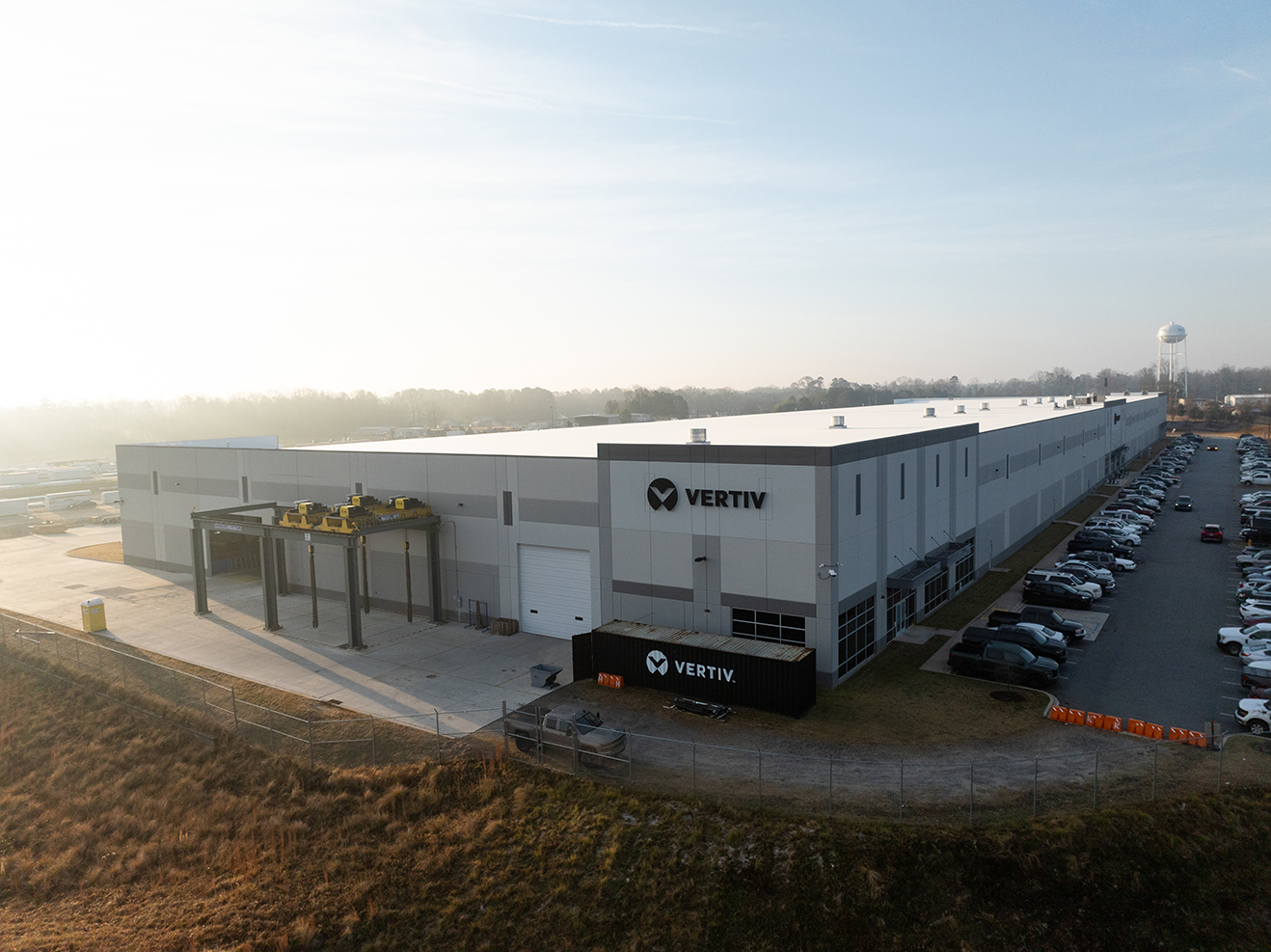
    Vertiv, a global leader in critical digital infrastructure, today announced four new or expanding manufacturing facilities in the Americas, growing the company’s production capacity for infrastructure solutions, power management, and integrated cabinets. As data centre operators focus on scaling quickly and time to first token speed, Vertiv is uniquely positioned to help meet the rapidly evolving infrastructure and services requirements for AI factories, through its focus on innovation and manufacturing footprint. 

    “Vertiv sees AI as a long-term, secular trend, and we are accelerating our capacity expansions to anticipate the continued growth in demand,” said Vertiv CEO Giordano (Gio) Albertazzi. “Today’s announcement represents the most recent steps in our continuous capacity planning and deployment approach, as we further increase our regional and global footprint. We remain committed to our strategy of delivering future-ready, high-density solutions that enable our customers to plan confidently for multiple generations of compute ahead.”

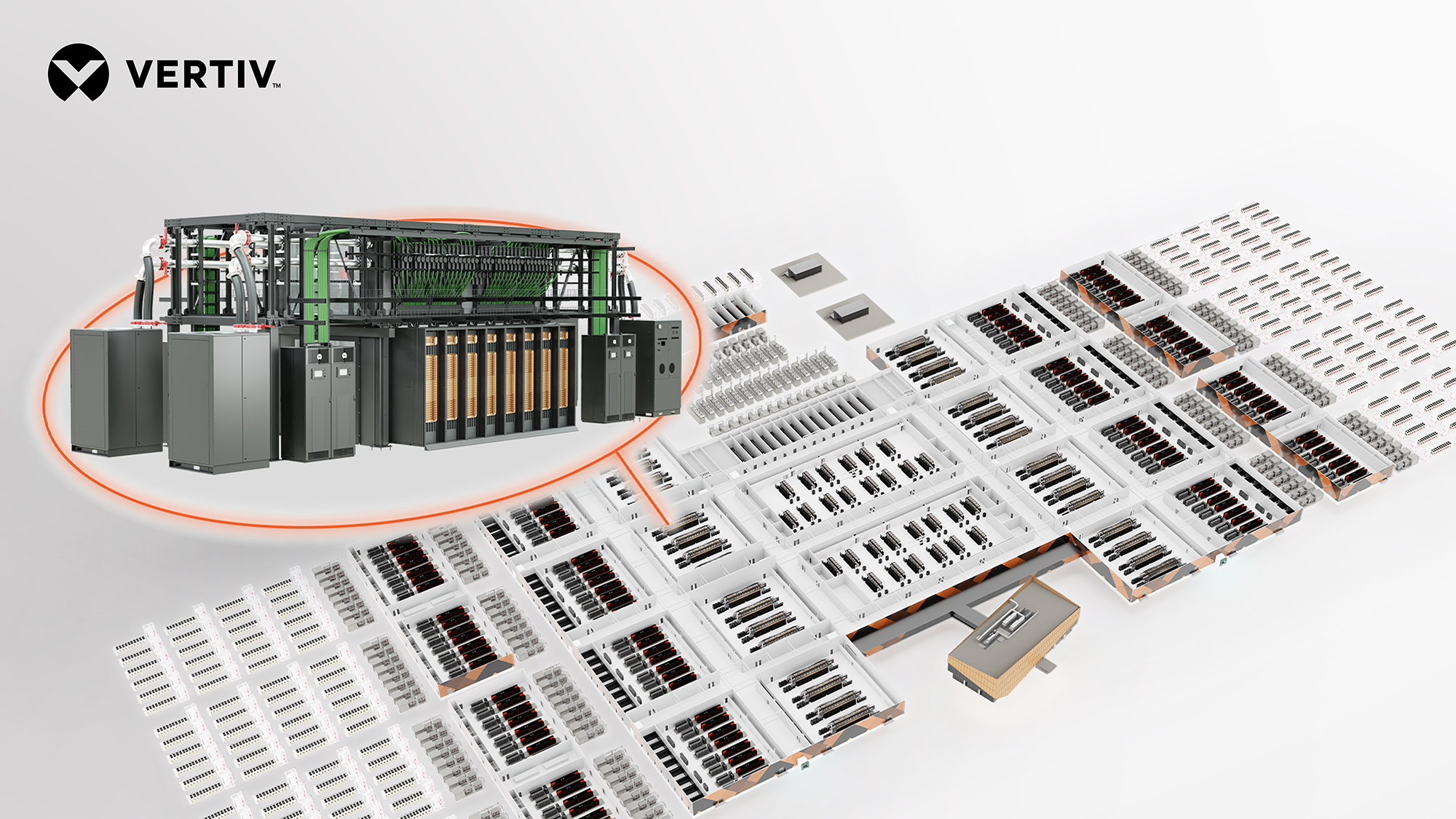
    ·       In South Carolina, two additional manufacturing facilities focus on Vertiv™ infrastructure solutions technologies vital to data centre deployment speed and are expected to increase regional capacity by ~7x when fully ramped. Vertiv™ integrated power modules are complete modular power infrastructure that can speed deployment of power systems by up to 50% over traditional builds, while Vertiv™ SmartRun converged, prefabricated white space infrastructure solution is designed to greatly accelerate and optimise data centre white space fit-out. Vertiv SmartRun is delivered as a unified system for high-density busway, liquid cooling piping, networking, and containment, with on-site deployment time up to 85% faster than traditional methods. 

    ·       Vertiv’s racks and containment business in Pennsylvania launched an additional facility to increase manufacturing capacity of cabinets with integrated cooling systems for AI applications in high-density data centres. These cabinets enable simplified, repeatable, and accelerated deployment compared to traditional onsite integration.

    ·       An expansion in Mexicali, Mexico is anticipated to increase regional capacity by ~45% for power conversion, conditioning and distribution technologies for high-density AI applications and more traditional loads. 

    Vertiv’s innovation and portfolio strategy reflects the demands of the AI revolution, which requires infrastructure that works as one integrated system. From grid to chip and chip to heat reuse, Vertiv delivers end-to-end infrastructure where power, cooling, IT, and services operate in unison and are built for multiple compute generations ahead. Backed by the recent regional manufacturing capacity and an industry-leading end-to-end portfolio, Vertiv is enabling customers to deploy efficiently and scale seamlessly.

  • Vertiv Brings Converged Physical Infrastructure to NVIDIA Vera Rubin DSX AI Factories

    Vertiv Brings Converged Physical Infrastructure to NVIDIA Vera Rubin DSX AI Factories

    Simulation-ready power and cooling infrastructure models, designed to accelerate deployment and reduce execution risk

    Vertiv (NYSE: VRT), a global leader in critical digital infrastructure, today announced its role in advancing converged physical infrastructure designs for the NVIDIA Vera Rubin DSX AI factory reference design and the NVIDIA Omniverse DSX Blueprint.

    As AI factories scale in density, complexity, and power demand, operators are under pressure to compress time to deployment, improve infrastructure utilisation, and reduce integration risk. A new infrastructure design approach that reduces complexity, improves confidence before buildout, and accelerates time to capacity is now available to meet these evolving needs. Through its work with NVIDIA, Vertiv is contributing simulation-ready, or DSX SimReady digital power and cooling assets, validated interfaces, and repeatable infrastructure building blocks designed to help customers deploy AI factories faster and with greater operational assurance.

    This work reflects an expansion of Vertiv’s established approach to converged physical infrastructure—a system-level model that integrates power, cooling, controls, and services into interdependent designs optimised across the full power train and thermal chain. This approach is enabled through five foundational elements: repeatable building blocks, defined interfaces, system orchestration, digital continuity, and lifecycle support. Together, these elements support more scalable AI factory execution by helping reduce design complexity, strengthen coordination across infrastructure domains, and improve confidence from initial design through deployment and operation.

    At the core of this approach is a scalable building block architecture designed around the standardised 12.5MW infrastructure blocks of Vertiv™ OneCore integrated modular solutions that can be combined, configured, and extended to support deployments ranging from smaller AI clusters to gigawatt-scale AI factories. By establishing repeatable block-level designs with validated interfaces, Vertiv aims to simplify scaling while improving deployment consistency, system coordination, and operational performance.

    “AI factories are forcing a fundamental change in how digital infrastructure is designed, validated, and deployed,” said Scott Armul, chief product and technology officer at Vertiv. “Vertiv’s role is to help turn complex AI infrastructure from a collection of separate products into converged, simulation-ready physical systems. Working with NVIDIA, we are helping customers move faster from design to deployment. By combining our power and cooling portfolio with validated interfaces and digital models, we can help customers accelerate development, improve operational confidence, and unlock better output per watt.”

    Vertiv’s collaboration supports the development of digitally validated AI factory infrastructure using real-time simulation and system-level modelling before physical deployment begins. This approach is designed to help customers:

    ·       reduce deployment complexity and field integration risk,

    ·       accelerate time to operational readiness,

    ·       improve infrastructure coordination across power, cooling, and controls,

    ·       and optimise performance from grid connection through chip-level thermal management and heat-reuse pathways.

    Vertiv’s contribution is grounded in its ability to bring together one of the industry’s most complete portfolios of critical power, thermal management, integrated controls, and lifecycle services into a cohesive converged physical infrastructure. Unlike conventional modular or prefabricated approaches that primarily compress schedule, converged physical infrastructure is intended to deliver both deployment speed and compounding system-level gains. By standardising interfaces and creating repeatable building blocks, Vertiv aims to support more scalable AI factory execution while enabling improved performance, efficiency, and reliability.

    “As AI factories scale to unprecedented levels of power and density, enterprises require a converged approach to physical infrastructure that unifies power, cooling, and digital twin simulation to reduce deployment risk,” said Vladimir Troy, vice president of AI Infrastructure at NVIDIA. “By integrating simulation-ready infrastructure models into the NVIDIA Vera Rubin DSX design, Vertiv is providing the repeatable building blocks and validated interfaces necessary to accelerate the path from design to operational readiness.”

    This collaborative output, Vertiv™ OneCore Rubin DSX, is a design outcome grounded in converged physical infrastructure that Vertiv will continue to iterate for multiple compute generations ahead. It is intended to support AI factory builders with parameterised infrastructure models and deployment-ready building blocks that span power, cooling, controls, and lifecycle services.

    Vertiv expects this work to inform future converged infrastructure offerings across hyperscale, colocation, enterprise, and emerging AI deployment environments.

    For more information on Vertiv solutions for AI infrastructure, visit Vertiv.com.

  • Vertiv Supports Nxtra’S Expansion in the African Market with Large-Scale Colo Data Centre Network Project in Nigeria

    Vertiv Supports Nxtra’S Expansion in the African Market with Large-Scale Colo Data Centre Network Project in Nigeria

     Vertiv, a global leader in critical digital infrastructure, is extending its collaboration with Airtel Africa through Nxtra, their Data Center division. Starting with Nigeria, this collaboration is a first step in Nxtra’s strategic objective of establishing one of the largest high-capacity data centre networks in Africa, strategically located in major cities and bolstered by its extensive operations experience in India.

    “Nxtra has been a valued customer for nearly three decades,” said Karsten Winther, president of Europe, Middle East, and Africa (EMEA) for Vertiv. “This next chapter in our collaboration demonstrates the power of combining local support in Africa with international manufacturing and innovation.”

    “As we invest into high capacity, high quality data centers for Africa, it was crucial to partner with a vendor who combines global capabilities with strong local presence,” said Yash Issur, CEO of Nxtra by Airtel Africa. “Vertiv’s extensive multinational expertise, coupled with their established service team in Africa, provides us the reliability and support we need. We’re particularly pleased to name Vertiv as a main vendor for the first project in Nigeria and extend a collaboration ranging from India to Africa.” 

    Planned growth across Africa

    The Nigerian facility of 42 megawatts (MW) of capacity will be completed in a four-phase rollout process, expected to be fully operational by 2028. Vertiv will provide thermal management solutions and uninterruptible power supply (UPS) systems with batteries for the project, marking the start of a three-year rollout across Africa that will deliver energy-efficient, scalable, and reliable infrastructure. Vertiv will also provide commissioning, handover, and five years of maintenance services supported by its established Nigerian service team. This enables Nxtra’s facilities to have strong on-the-ground support for long-term operations.

    Says Wojtek Piorko, managing director for Africa at Vertiv: “Africa’s growing, data-hungry population is a key driver of digital growth on the continent, and more data centres are required to meet this demand. Our collaboration in Africa with Nxtra marks an important milestone in strengthening Africa’s critical digital infrastructure. Together, we are bringing proven global expertise and advanced technology into Nigeria and beyond.”

    In addition to the Nigerian site, Vertiv is also working with Nxtra on forward-looking projects in the markets where Airtel Africa operates, with the Nairobi-based operation anticipated to surpass the Nigerian site in scale.

  • Feature- The Importance of ‘Mining’ Facts and Data in Nigeria’s Oil and Gas Arena

    Feature- The Importance of ‘Mining’ Facts and Data in Nigeria’s Oil and Gas Arena

    By Gary Chomse

    As with all modern industries, the oil and gas sector globally is under pressure to embrace the critical convergence of information technology (IT) and operational technology (OT) systems to maximise efficiencies and productivities. This shift is equally important in Nigeria, where the oil and gas industry plays a pivotal role in the national economy.

    Oil production is a major source of income and a substantial contributor to the GDP of many African countries, and Nigeria remains consistently in the top spot as Africa’s largest producer of crude oil. In addition, it possesses significant quantities of natural gas reserves. The country’s oil and gas sector is critical to the economy, contributing over 85% of export earnings and approximately 30% of budget revenue, but it has been performing below its potential in recent years due to a number of challenges.

    Against this background, the newly operational Dangote Refinery and Petrochemicals in the Lekki Free Zone outside Lagos, which began production in January 2024, is a positive symbol of the hoped-for revival of the oil and gas arena in Nigeria. This newest addition to Nigeria’s oil and gas industry is Africa’s biggest oil refinery and also the largest single-train facility in the world (meaning a facility where all the major processing units for the crude oil entering the refinery are contained within a single integrated complex).

    However, despite this beacon’s positive symbolism within the Nigerian oil and gas realm, the sector is still navigating the complex regulatory landscape and fiscal reforms introduced by the Petroleum Industry Act of 2021. The Act’s intention is to restructure fiscal terms, institutional frameworks, and regulatory policies, thus attracting investment and boosting efficiency. 

    Prior to the implementation of this Act, Nigeria’s oil and gas arena had seen years of under-investment in exploration and production which, together with persistent infrastructure issues and other challenges, had suppressed growth and innovation, as outlined by Nigerian credit rating agency, Agusto & Co.

    Implementing effective technology infrastructure in the oil and gas field can support strategic business and national objectives and help overcome legacy infrastructure challenges.

    Supporting key African markets in their digitalisation journeys

    Over the past few years, Vertiv has participated in several focused events across Africa to showcase our products and solutions that are suitable for the broader industrial realm. The intention was to create greater awareness around the benefits that Vertiv can bring to these local sectors, following on from our proven success within the oil and gas field in other parts of the globe. 

    We look forward to similarly engaging with industry representatives within Nigeria also, being Africa’s largest oil producer, as well as possessing substantial natural gas reserves. Nigeria’s natural gas reserves are, in fact, estimated to be one of the largest in Africa, as outlined by global research company, Mordor Intelligence, in its report entitled ‘Oil and Gas Industry in Nigeria Market Size & Share Analysis – Growth Trends & Forecasts (2025 – 2030)’.

    Natural gas is considered a cleaner and more environmentally friendly source of energy compared to other fossil fuels, and investments in natural gas infrastructure would allow Nigeria to diversify its energy mix and meet both domestic and international demand for cleaner energy sources.

    According to the Mordor Intelligence report, it appears that, considering the issues holistically and despite certain challenges, there is much to anticipate for the growth of Nigeria’s oil and gas industry over the next few years. One important key is enabling the true convergence of IT and OT systems, to be able to ‘mine’ facts and data as well as oil and gas, and thereby drive informed planning and decision making.

    The Importance of Integrating IT and OT Systems 

    In a challenging global economy, it is critical for oil and gas companies to digitalise their systems and processes, thereby allowing for the harnessing of data volumes from day-to-day operations. As outlined by global IT consulting company BirlaSoft, the IT-OT convergence within the oil and gas sector allows companies to harvest data within the OT layer and then ‘cross-contextualize it to build valuable insights and automated control and orchestration mechanisms’.

    According to BirlaSoft: ‘IO/OT convergence in the oil and gas industry is a key step to harnessing the business benefits of big data. Operational technology generates a vast amount of data when IoT sensors are attached to various parts of critical machinery to record intended parameters. This data is usually in the form of time series. Analysing it with the right artificial intelligence (AI) and machine learning (ML) techniques can help organisations anticipate potential risks or if the operations as a whole are generating a strange footprint. In other words, IT-OT convergence is the bridge to seamless, proactive, and resilient oil and gas operations.’

    By maximising a mix of more modern IT systems intertwined with legacy OT systems, and capturing important information, oil and gas companies can derive insight for enhancing operational efficiencies, increasing performance and improving decision-making. 

    To enable such strategic aims around the necessary digitalisation to link IT and OT systems, Vertiv’s digital infrastructure solutions are designed to assist with power supplies and distribution, as well as thermal management solutions, as follows:

    • Critical power products, such as efficient, reliable uninterruptible power supplies (UPS); scalable, flexible hybrid DC power products; power distribution systems; switchgear; and Vertiv’s battery energy storage system (BESS), which delivers scalable, high-capacity battery energy storage systems for data centres and critical infrastructure;
    • Thermal management solutions, including Vertiv™ air handling and chillers for climate control of large electronic systems located outside the data room; cooling solutions for data centres, IT rooms, laboratories, and other critical applications; as well as small thermal systems, incorporating room, and row/ rack cooling;
    • Vertiv™ Integrated Solutions, including prefabricated rack, row, aisle, and modular data centres, featuring built-in flexible designs based on proven configurations; and
    • Monitoring and management options, such as Vertiv™ Avocent® DSView™ solution, a family of IT management devices and software that provides solutions in edge, enterprise and engineering lab environments. 

    There is a well-known saying which notes that ‘knowledge is power’, and in any industry, information is vital for understanding that sector’s own outlook through the harnessing of facts, statistics and trends. With the oil and gas industry in Nigeria poised for robust growth that strategic investments and technological advancements will drive, the importance of being able to access information digitally is critical. 

    The strategically-placed implementation of robust yet high-performance data centres will work to form the backbone for this critical data and support the necessary IT-OT convergence of individual oil and gas companies, while at the same time also supporting the overall aims of the Petroleum Industry Act of 2021 at a national level. 

    Gary Chomse is the Regional Director, Central-Southern Africa at Vertiv

  • Vertiv Announces New Regional Structure for Africa to Enhance Market Presence and Boost Customer Engagement

    Vertiv Announces New Regional Structure for Africa to Enhance Market Presence and Boost Customer Engagement

    Vertiv, a global provider of critical digital infrastructure and continuity solutions, announced a strategic restructuring of its operations across Africa to enhance and expand its market presence and customer engagement.

    Under this new structure, the organisation streamlined its focus on Africa into four distinct regions, led by regional directors as follows:

    ·       Northwest Africa – Zineb Kamri, based in Casablanca, Morocco.

    ·       Northeast Africa – Ehab El Hefnawy, based in Cairo, Egypt.

    ·       Central-Southern Africa – Gary Chomse, based in Johannesburg, South Africa, with regular operations from Lagos, Nigeria.

    ·       Eastern Africa – Rohan Patil, based in Nairobi, Kenya.

    The regional directors report directly to Vertiv’s managing director for Africa, Wojtek Piorko,each with careers in leading roles and responsibilities in their years with the company, building a wealth of knowledge and experience across the African continent and beyond. The new assignments and strategic structuring enable Vertiv to get closer to its partners and customers alike, foster deeper relationships and collaboration, and deploy components, products, training, and services for faster response times.

    Optimising structure for sharpened regional focus 

    “This strategic move positions Vertiv closer to its local customers, enabling a deeper understanding of their unique needs and a more effective response to local market dynamics within each region,” explains Piorko. “It will also facilitate the strategic alignment of resource investments with market growth and customer expectations.”

    Piorko adds, “By enhancing our regional presence, Vertiv aims to support African businesses in their digital transformation journeys, providing them with access to experienced experts and a broad portfolio of power, cooling, IT management and services solutions to help accelerate the growth of compute in the region.”

    For more information on Vertiv’s presence and offerings within Africa, please click here.

  • How Modular Data Centres Can Support Nigeria’s ICT Growth

    How Modular Data Centres Can Support Nigeria’s ICT Growth

    By Gary Chomse

    Nigeria’s information and communications technology (ICT) sector is experiencing robust expansion, fuelled by the financial services, oil and gas and fintech industries. This brings with it new investment prospects for data centres, to service advances in cloud computing infrastructure and the rollout of 5G technology[1]

    According to a 2023 research report, the size of the Nigerian data centre market is projected to grow at a compound annual growth rate (CAGR) of almost 20 percent (17.9 percent) during the period 2021-2027[2]. Critical aspects of Nigeria’s data centre ecosystem include the need to deploy next-generation data infrastructure for agility and sustainability, and the ability to scale up as required. 

    The strategic use of prefabricated modular data centres can help to address these challenges. 

    Adding data centre capacity 

    The complexity of new technologies – including machine learning (ML) and artificial intelligence (AI) – as well as the spreading of the network edge, is driving the need for enterprise data centres to add capacity. There is a growing need to upgrade data centre facilities to support the required advanced computing and higher-density architectures, including an increased complexity in power and cooling needs. 

    As a result, many local organisations will need to plan to add capacity due to increasing growth and reliance on digital applications, and the realisation that in-house options aren’t sufficient. The requirement is to be able to add capacity quickly and easily, without compromising on network security or the bottom line.

    Prefabricated modular data centre offerings provide sophisticated, customisable and scalable solutions to modern capacity challenges, offering factory-built reliability, rapid deployment, flexibility and efficiency. 

    While prefabricated modular data centres are not new, the technology has been refined since its introduction around 15 years ago, and at the same time, the building practices involved have also been improved. These sophisticated, fully integrated IT solutions can be configured to meet specific needs, as well as for quick deployment wherever computing is required. 

    Benefits of prefabricated modular data centres

    In addition to being an easy-to-implement, affordable alternative to building traditional data centres, prefabricated modular data centres offer the following benefits:  

    • Factory engineered reliability: Prefabricated solutions are engineered, assembled and tested in the factory, resulting in offerings that are rugged, reliable and repeatable. This reliability can pay dividends over the system’s lifespan, reducing the overall need for repairs and service calls.
    • Speed of deployment: Integrated modular solutions can be built while on-site activities continue. In addition, because they are fully integrated and virtually plug-and-play, these solutions can be commissioned and operational much faster than traditional data centres –  up to 30 percent more quickly, in fact. 
    • Customisable: Modern modules are custom-built to customer specs, then the configuration and build can be repeated quickly and efficiently as demand increases. This simplifies operation and service.
    • Flexible: Integrated modular solutions can be built and configured to support various architectures, including high-density computing and liquid cooling. In addition, a modular solution is portable and can be relocated as network demands change, for example to better support a low-latency application.
    • Reduced waste: These integrated, closed systems can be engineered to eliminate waste and be more sustainable than a traditional design. 
    • Cost certainty and scalability: The total cost of ownership is typically lower for integrated modular solutions, which also allow an organisation to add capacity when and where it is required

    Meeting market growth requirements  

    As outlined, the data centre industry in Nigeria is predicted to see significant growth in the next few years, being projected to reach USD 646 million by 2030, after its 2023 valuation of USD 250 million[3] – an anticipated doubling and more, in just over five years. This growth comes on the back of the increasing demand for data storage and processing through the rise of the digital economy and the growth of internet usage in Nigeria[4]

    In support of this growth, enterprise data centres looking to add compute, power or cooling in smaller increments can be enabled by these aims through modular solutions from Vertiv, a global provider of critical digital infrastructure and continuity solutions.  

    Vertiv remains committed to addressing critical data centre challenges across the continent, supporting the advancement of ICT enablement and digitalisation throughout the Central African region. The organisation established its office in Lagos, Nigeria, in 2003, manned by highly trained local sales, service and project delivery teams. During this time, Vertiv has built a strong, loyal local customer base, gaining recognition for delivering reliable prefabricated solutions tailored to regional needs. 

    Gary Chomse is the Regional Director for Consolidated, Central and Southern Africa at Vertiv

  • Vertiv Announces Global Launch of Liquid Cooling Services Portfolio to Support Systems for AI and High-Density Compute Applications>

    Vertiv Announces Global Launch of Liquid Cooling Services Portfolio to Support Systems for AI and High-Density Compute Applications>

    Vertiv™ Liquid Cooling Services support and enhance the entire lifecycle of liquid cooled systems, from installation to fluid management and maintenance to digital services.

     Vertiv (NYSE: VRT), a global provider of critical digital infrastructure and continuity solutions, today announced the launch of Vertiv™ Liquid Cooling Services. This offering provides customers with the tools to enhance system availability, improve efficiency, and navigate the evolving challenges of advanced liquid cooling systems with confidence. The offering is now globally available.

    Vertiv has been delivering these services for more than a year to regional early adopters, refining best practices and gaining valuable insights that have now enabled the expansion of our liquid cooling service capabilities on a global scale. This experience brings a mature and proven approach, providing data centre operators worldwide with expert support based on real-world application and success.

    AI workloads continue to reshape the data centre landscape, driving a significant increase in data centre rack densities, with 30 kW racks now becoming the standard and some reaching up to 120 kW or higher. Operators are facing increased heat loads, higher power densities, and the need for liquid cooling solutions to maintain operational continuity is in high demand.

    “The increasing reliance on liquid-cooled AI servers necessitates a comprehensive approach to lifecycle management,” said Sean Graham, research director of cloud and data centre at IDC. “Given the complexities inherent in these cooling ecosystems, a robust support programme is not merely advisable, but a best practice to ensure both system availability and long-term operational viability.”

    Vertiv Liquid Cooling Services offering is focused on providing seamless integration of liquid cooling systems with IT equipment and adjacent infrastructure. It includes expert installation and commissioning, ongoing maintenance with special attention to fluid management, cleanliness, and preventing air from entering the system — key for system reliability. Traditional maintenance practices aren’t enough for the complexities of liquid cooling systems supporting critical AI applications. This offering leverages Vertiv’s decades of industry experience and provides best-practices delivery of preventive and condition-based maintenance to provide reliable and efficient system performance and to maximise availability.

    Vertiv Liquid Cooling Services include a full range of solutions designed to support AI-driven and high-performance computing environments, providing seamless integration, long-term reliability, and operational continuity. Vertiv’s certified technicians and field engineers provide expert support at every stage, confirming that heat rejection systems and cooling loop fluid systems function optimally:

    • Startup & Commissioning Services – Proactively identify and address potential issues that could result from improper installation, preventing delays and enabling a smooth and efficient system launch while verifying quality of all of the connected equipment.
    • Spare Parts Availability – Quick access to replacement components, supporting faster repairs when needed, and reducing potential downtime.
    • End-to-End Lifecycle Support – Digital, proactive system maintenance is at the core of this offering, allowing long-term reliability and optimised cooling performance. Documentation of all processes supporting the secondary fluid network provides a health history for the equipment to inform ongoing support.
    • Comprehensive Fluid Management Services –Maintaining optimal coolant quality is essential for reliable system performance. Vertiv’s services include coolant sampling, laboratory testing, contamination prevention, and environmentally responsible disposal to maximise system longevity and efficiency while enhancing system resilience of the secondary fluid network and technology cooling system.
    • Emergency and preventive support: Emergency response teams provide rapid, on-site and remote support to diagnose and resolve issues, minimising downtime and restoring operations quickly.

    “High-performance computing (HPC) and AI are critical to business innovation and competitive advantage, making reliability and efficiency in supporting critical digital infrastructure more important than ever,” said Ryan Jarvis, vice president global services business at Vertiv. “As organisations continue to invest in AI-driven systems, they need robust liquid cooling solutions to protect their investment and to enable long-term performance.”

    Vertiv™ Liquid Cooling Services leverages the Vertiv™ Global Services network, which provides project services, product support, testing and training for Vertiv’s portfolio of products. Backed by 240+ service centres, 3,500+ field engineers, and 190+ technical response specialists, Vertiv provides expert support across multiple regions.

  • Global Trends Echoed In West Africa’s Data Centres, Says Vertiv’s Adebowale

    Global Trends Echoed In West Africa’s Data Centres, Says Vertiv’s Adebowale

    Organisations around the world are trying to manage an explosion of data across distributed sites and environments, requiring them to be more agile and responsive than ever before, but often by means of legacy infrastructure. This scenario is no different for businesses in West Africa.

    So said Gbenga Adebowale, Enterprise Sales Director for Central Africa at Vertiv, a global provider of critical digital infrastructure and continuity solutions. Speaking at the West African leg of a series of ‘Accelerate’ events run by Vertiv, Adebowale clarified to attending Nigerian and Ghanian organisations that local businesses not only face similar challenges as their global counterparts but must also contend with unstable power and the rising costs of doing business, further complicating efforts to integrate, monitor and manage data faster and more efficiently. 

    “Part of the answer lies in harnessing the power of intelligent infrastructure, which assists in overcoming complexity, improving efficiencies, and accelerating data management,” he added.

    Global survey: African data centre landscape reflects global issues 

    Eben Owen, Senior Business Director, Anglophone Africa, Uptime Institute, a guest speaker at the Nigerian Accelerate event, corroborated Adebowale‘s statements, backing this with results from the Uptime Institute’s 14th Annual ‘Uptime Institute Global Data Center Survey’, which is the most comprehensive and longest-running study of its kind. 

    The survey collected responses from more than 850 data centre owners and operators, including those responsible for managing infrastructure at the world’s largest IT organisations, as well as nearly 700 vendors and consultants. Almost 10 percent of the respondents were from Africa, with an additional 20 percent coming from the US and Canada, another 21 percent from Latin America, and a similar percentage from Europe.

    The findings in the report highlight the experiences and strategies of data centre owners and operators in the areas of resiliency, sustainability, efficiency, regulations, staffing, cloud and innovative technologies.

    Owen noted: “The survey has revealed that digital infrastructure managers are now most concerned with improving energy performance and dealing with staffing shortfalls. At the same time, government commitments to reduce carbon emissions are nearing their target deadlines and, as a result, regulations aimed at data centre energy use require urgent attention, investment and action.

    “In addition, many of the organisations surveyed remain wary of using the public cloud for mission critical applications, with their primary concern being data security, and concern about infrastructure performance and resiliency being less significant. Two-thirds (65 percent) of respondents to the survey are not hosting any mission-critical applications in the public cloud, with many saying that they preferred to operate their own data centres and have greater control. Respondents also believed that their data centres were less likely to experience outages than public cloud operators.

    According to Owen, the findings show that concerns within the African data centre arena are closely tracking similar industry concerns globally.

    Local market growth predictions

    Nigeria’s information and communication technology (ICT) sector is currently experiencing robust expansion, fuelled by industries including the oil and gas sector, financial services industry and the fintech arena. The rollout of 5G and advances in cloud computing infrastructure are opening up new investment prospects for data centres. As a result, the local market is predicted to see significant growth in the next few years, and is projected to reach USD 646 million by 2030, having been valued at USD 250 million in 2023[1]

    The ICT Services market in Ghana has been steadily growing over the past few years, playing a key role in the country’s broader economic growth.[2] According to the Ghana Investment Promotion Center, the ICT sector in Ghana is valued at about 1.5 billion Ghanaian cedis (around USD 9,5716,155) annually and is expected to continue to grow steadily.

    “Against this encouraging background, Vertiv is proud to continue focusing on supporting the local data centre industry across the greater West African area,” explained Adebowale. “Vertiv solves the most important challenges facing today’s data centres, communication networks and commercial and industrial facilities with a portfolio of power, cooling and IT infrastructure solutions and services.

    “Vertiv powers and cools the data that drives the world. As Africa is poised to see significant growth in the local data centre market, we remain committed to supporting the continent’s evolving data storage, networking and compute power requirements,” he concluded.

    For more information on Vertiv’s offerings, please click here.

  • Redington and Vertiv Join Forces to Drive Technology Adoption and Support IT Deployments Across Africa

    Redington and Vertiv Join Forces to Drive Technology Adoption and Support IT Deployments Across Africa

    Redington, the leading technology aggregator and innovation powerhouse across emerging markets, today announced a strategic distribution partnership with Vertiv, a global provider of critical digital infrastructure and continuity solutions. This collaboration aims to empower channel partners across Africa to leverage the transformative potential of Vertiv’s technology and expand its reseller network.

    The partnership leverages Redington’s established presence and expertise in emerging markets, particularly in data centre transformation and artificial intelligence (AI), alongside Vertiv’s industry-leading[1] power and cooling technology, resources, and over 50 years of experience in critical infrastructure services. This powerful combination will unlock new opportunities for Vertiv to extend its reach within the regional channel market. The distributor’s comprehensive reach across Africa, coupled with its strong in-house services team, will provide additional value to Vertiv’s local channel partners and end users.

    The partnership encompasses Vertiv’s entire Integrated Solutions portfolio and IT channel product stack, spanning Africa. This comprehensive offering enables Redington to deliver a complete suite of Vertiv’s cutting-edge solutions to its extensive network of channel partners and end users.

    “As Vertiv continues to expand its footprint across Africa, this strategic partnership with Redington marks a significant milestone in our journey,” said Wojtek Piorko, Managing Director for Africa at Vertiv. “Africa is a critical region for Vertiv as a business, and we look forward to supporting local customers in meeting their efficiency, scalability and sustainability goals into the future, together with Redington.”

    “At Redington, we’re constantly seeking strategic partnerships that fuel innovation and drive growth across Africa,” said Dharshana Kosgalage, Executive Vice President, Technology Solutions Group, Redington Middle East and Africa. “Our collaboration with Vertiv exemplifies this commitment. Vertiv’s industry-leading technology perfectly complements our extensive reach, creating a powerful value proposition for businesses across the continent. We’re confident this alliance will catalyse Africa’s digital revolution.”

    The distributor will hold specialised training and partner empowerment sessions to enable its channel network to effectively deliver Vertiv’s portfolio, as well as carefully managing inventory to serve the market without delays and designing solutions to meet customers’ specific requirements alongside partners.

  • Vertiv’s AI-Ready Infrastructure Solutions Take Centre Stage at Datacloud Global Congress 2024

    Vertiv’s AI-Ready Infrastructure Solutions Take Centre Stage at Datacloud Global Congress 2024

    CEO Giordano Albertazzi will share cutting-edge insights in a keynote panel on AI and HPC trends

     Vertiv (NYSE: VRT), a global provider of critical digital infrastructure and continuity solutions, will present its latest innovations at Datacloud Global Congress, the premier leadership gathering for senior executives in the ICT (information and communication technologies) space, on June 4-6 in Cannes, France. Vertiv will be presenting the latest advancements in infrastructure solutions for AI (artificial intelligence) and HPC (high performance computing) applications at its stand #72, offering visitors the opportunity to experience its innovations firsthand and connect with technology experts.

    Giordano (Gio) Albertazzi, CEO for Vertiv, says: “Datacloud consistently offers thought-provoking content and attendees eager to learn how the industry is advancing data centre technology. We are looking forward to showcasing our end-to-end products and solutions that support and enable customers’ critical digital infrastructure and AI adoption, and spotlighting recent success stories that demonstrate how we are helping our customers address their unique challenges.”

    At the Vertiv stand, attendees will be able to experience the Vertiv™ XR app, the Virtual Showroom and join exclusive VR Guided Tours to get hands-on with the latest power and thermal management offerings that enable customer’s AI applications and explore their capabilities through virtual and augmented reality experiences. Attendees will also have the exclusive opportunity to get a sneak peek of Vertiv’s new cutting-edge integrated solutions to power and cool a variety of mission-critical AI applications. With the most complete portfolio of power and cooling systems, deep expertise and global scale, Vertiv is a preferred solutions partner for the world’s leading AI chipmakers.

    Vertiv will contribute to these key sessions:

    Keynote Panel: The Future of Data Centres: How are we keeping up with AI and HPC demands? 

    5th June, 10:20 – 11:00 am CEST, Palais des Festivals, Cannes


    Join Vertiv CEO Gio Albertazzi and other industry experts for this must-attend session focusing on how to ride the wave in the AI era and how to handle HPC demands in this fast-growth market.

    Albertazzi will share key considerations for retrofits and new builds, discussing how power availability is becoming a determining factor for AI adoption success. He will also share insights on how partnerships with leading AI microchip producers are reshaping the industry and how Vertiv is applying its decades of experience and pioneering advances to power and enable AI adoption today, and enable where AI applications may go tomorrow.

    Gulf Data Hub Data Centre Features Energy-Efficient Solutions to Enable Effective Data Centre Builds 

    5th June, 14:55 – 15:10 pm CEST, Palais des Festivals, Cannes

    • Tarek Ghaoui, portfolio director, Gulf Data Hub (GDH)
    • Tassos Peppas, regional director for Middle East, Turkey and Central Africa (METCA), Vertiv
    • Ian Paul, colo & hyperscale strategic segments director for METCA, Vertiv

    Gulf Data Hub (GDH) is a top-tier provider of colocation services and purpose-built data centres, operating six data centres within Dubai Silicon Oasis (DSO), with three of them boasting a capacity of 16 MW each. GDH’s latest endeavour involved the conceptualisation of an energy-efficient and modern research facility dedicated to biotechnology and renewable energy generation. Its primary focus was to integrate architectural and technological elements while prioritising environmental sustainability and minimising ecological footprints associated with the facility. Join this session to learn more on how Vertiv solutions helped increase the total efficiency of the GDH data centre, maintain maximum reliability and provide ease of maintenance.

    Revolutionising Sweden’s Data Landscape: Inside Conapto’s Cutting-Edge Data Centre Evolution with Vertiv’s Dynamic Grid Support

    6th June, 11:10 – 11:25 am CEST, Palais des Festivals, Cannes

    • Stefan Nilsson, chief commercial officer, Conapto
    • Andrea Ferro, VP channel, IT & edge applications for EMEA, Vertiv
    • Victor Elm, strategic segment and partners director, colo & hyperscale for Northern Europe, Vertiv

    The main challenge posed by Conapto was how to maximise the potential of the entire capacity of the uninterruptible power supply (UPS) system. Vertiv, Conapto and Fever Energy took on this challenge by updating the existing installation and ensuring Conapto qualified for the FFR (Fast Frequency Reserve) program which helps stabilise the national grid, demonstrating the UPS system’s capabilities in compliance to the electricity market. Read the press release and case study to learn more about the project. 

    On the evening of June 5th, Vertiv will host the exclusive Data Centre Networking (DCN) event, an exceptional evening filled with compelling discussions and networking opportunities with industry leaders and visionaries, to gain insight into the latest trends, innovations, and best practices in the industry.

    Vertiv is also shortlisted in three categories for the 2024 Datacloud Global AwardsExcellence in Data Centre Europe and Decarbonisation of Electricity with Conapto; plus Excellence in Data Centre Middle East & Africa together with Medallion.

  • Vertiv and TechAccess Drive Digital Growth Across Sub-Saharan Africa

    Vertiv and TechAccess Drive Digital Growth Across Sub-Saharan Africa

    A collaboration between Vertiv, a global provider of critical digital infrastructure and continuity solutions, and South Africa-based IT services and solutions company, TechAccess, is growing the presence of both companies in the region, and providing needed support for data centre-colocation, enterprise, financial sector and mining customers across sub-Saharan Africa.

    This is the view of TechAccess Managing Director, Jaxon Martin, who says that in collaboration with Vertiv, TechAccess is rapidly expanding its reach within sub-Saharan Africa, with projects and delivery across the continent. “Our focus is on the delivery of data centre fit-out infrastructure solutions, as well as advanced structured cabling solutions and data centre infrastructure management software. The TechAccess partnership with Vertiv has thus given us access to a varied and unique product set within the data centre space,” he says.

    However, this relationship goes beyond simply distributing and supplying product, Martin explains, stating that TechAccess is unique in that it offers a full turn-key set of solutions – from consultancy, design, installation, logistics and project management. Vertiv works alongside TechAccess, enabling the company to deliver expertise and critical digital infrastructure system support to its customers.

    As a Vertiv Diamond Elite Partner, TechAccess is able to distribute Vertiv’s integrated rack solutions (IRS) portfolio – specifically designed for the enterprise sector – as well as deliver support for critical digital infrastructure systems.

    TechAccess, with its strong focus on data centre co-location providers and tier operators, has been working to promote the Vertiv(TM) IRS range of products in the whitespace throughout sub-Saharan Africa. This has manifested in a surge of Vertiv solutions deployed in the region.

    “Partnering with a global data centre vendor like Vertiv has given us the confidence we need to deliver on the opportunities in the market,” Martin says.

    “Vertiv provides the assurance customers are looking for, standing firmly behind us as a key partner. And knowing that there is a strong local presence and support base for pre- and post-sales enquiries via Vertiv has also translated into greater customer satisfaction,” he explains.

    Martin refers to specific benefits seen through Vertiv’s partner programme, including: leads received from Vertiv, which has assisted with TechAccess’s business growth and entry into new market; access to the user-friendly Vertiv marketing centre, a one-stop shop which has provided TechAccess with co-branded assets, content syndication, ready-to-use marketing campaigns and collateral that is easy to adapt; and the ability to work with Vertiv on pooled co-op activities.

    “Working with Vertiv has been a seamless process. On marketing activities, we engage in advance, discuss the key messages, identify the target market, agree on the outcome/results we want to achieve, and execute. Not only does Vertiv deliver a world-class, global end-to-end solution offering, we’ve experienced great collaboration, alignment and engagement with the Vertiv Africa sales and marketing team. They are always very supportive,” Martin adds.

    “Vertiv’s recently redesigned partner programme was developed to promote the mutual success of all parties involved,” says Vertiv Africa distribution manager, Dirk Cilliers. “This comes through direct pre-sales and post-sales assistance on opportunities and product support, as well as joint marketing initiatives to drive specific product and solutions across multiple sectors.

    “We are delighted that our shared vision, technical ability and marketing strategies have come together in a strong partnership between Vertiv and TechAccess. This, we believe, has been key to driving this growth into the Sub- Saharan market,” he concludes.

  • Feature: Keeping It Cool Within the Edge Data Centre

    Feature: Keeping It Cool Within the Edge Data Centre

    By Jonathan Duncan, technical director, Africa at Vertiv

    Digital transformation means organisations are becoming increasingly reliant on information technology to run almost every aspect of their business. The creation of more data – which needs to be processed and stored – brings with it the corresponding need for more compute power and more data centres. In many cases, these are not large, purpose-built data centres, but rather close-proximity, smaller edge facilities that share space in the same building as the rest of the business. This, in turn, can create unique challenges with regards to securing the environment and cooling the IT loads.

    On the edge

    Edge computing can be described as the concept of having compute and storage capacity physically close to where users are generating, consuming and manipulating data. We are seeing a rise in edge computing (also known as decentralised IT) driven by such factors as the ongoing rise of the Internet of Things (IoT), which generates significant amounts of data; legal requirements; the need to consolidate data; high network costs; latency issues, and network security requirements.

    When the latency involved in sending data to a centralised or cloud data centre is too long and becomes an inhibitor, this drives the need for localised processing capabilities, in other words edge data centres.

    However, these edge data centres must often share an area that’s already serving another purpose, and which may not have cooling systems intended to handle the IT equipment at the edge of the network.

    Checking the cooling requirements

    IT equipment can produce large amounts of heat continuously. Organisations must therefore take steps to ensure the proper cooling of that equipment in order to protect it and ensure its availability. Placing sensitive IT equipment into spaces designed originally for some other purpose can present challenges, especially with respect to cooling.

    For example, an office building is optimised to be comfortable for its employees, while a more open space, such as a factory floor or warehouse, has its own heat and cooling requirements. In either case, the existing cooling system may not meet the stringent requirements for the proper functioning of a data centre. This is especially true for high-density IT equipment, including hyperconverged infrastructure, which can generate large amounts of heat from a relatively small space.

    Controlled versus uncontrolled environments: what is the difference?

    Companies are now routinely installing edge data centres in two general categories of spaces, as follows:

    • Controlled office environments, which are geared towards standard comfort cooling for humans; and
    • Uncontrolled environments such as manufacturing spaces, which may or may not have ambient cooling and humidity control in place.

    The typical office environment uses room-based cooling systems provided by building heating, ventilation and air conditioning (HVAC) systems, or de-centralised mini-split cooling systems. Cooling capacity is calculated based on the heat load the comfort cooling system needs to handle, typically measured in watts (W) or kilowatts (kW).

    A typical office HVAC system could have a cooling capacity to deal with a heat load in the range of 50 to 100W per square metre, or perhaps 1 to 2kW for an entire room. But a single rack of IT equipment may produce a heat load of 3 to 4kW or more. As a result, a cooling system designed for 1kW of cooling could now be asked to deal with as much as four times that capacity.

    This is likely to have several repercussions:

    • Employees may be uncomfortable as the comfort system struggles to maintain a target temperature.
    • IT equipment (such as servers) often has thermal protection systems that trigger a shutdown if the temperature rises too high.
    • Overtaxing the comfort HVAC system by requiring it to continually operate above its rated cooling capacity will drive up operating costs over the long term, and probably also cause its early failure, as it is typically not engineered for continuous operation.

    Another issue with typical office buildings is humidity. With doors and potentially windows opening and closing all the time, humidity levels can change constantly, depending on conditions outside. This is not ideal for IT equipment. Similarly, dust does not facilitate the optimal functioning of IT equipment, which is why purpose-built data centres have air filtration systems that remove dust and other particulates from the air.

    As well as office environments, many companies need to install edge data centres on factory floors, in manufacturing facilities, and in warehouses that have widely differing environmental characteristics. These are typically large spaces of 200 square metres and upwards.

    Any warehouse faces challenges in maintaining a constant temperature, as they aren’t usually well-insulated or sealed. This can lead to excessive heat or cold inside the facility, as well as wide fluctuations in terms of seasonal temperatures. Again, humidity can become an issue, especially in facilities with no ambient air control system in place. Uncontrolled environments are also likely to be even dustier than offices, and less likely to have a particulate filtration system in place. Dust combined with high humidity can be particularly harmful to IT equipment.

    What are the cooling options?

    Theoretically, the same cooling systems that apply in an office environment can also be used in uncontrolled locations, but most customers favour an approach that involves a sealed rack or row, which means dedicated rack- or row-based cooling.

    The reason is simple: these self-contained systems essentially seal off the IT equipment from the outside air, thus protecting it from dust and humidity, while enabling the company to tightly control the temperature of the racks.

    The key is to look for a system with a high Ingress Protection (IP) rating as defined in the International Electrotechnical Commission (IEC) 60529 specification, which covers mechanical and electrical enclosures intended to protect against intrusion, dust and water.

    An IP 54 rating, for example, means an enclosure offers strong protection against dirt, dust, oil, and splashing water – all enemies of IT equipment. With such an enclosure, the IT equipment is isolated from the environment in which it’s installed.

    Combined with a rack- or row-based cooling system, companies can tightly control the temperature for IT equipment while also protecting it from its potentially harsh surroundings. Such a setup can also be highly efficient since IT equipment can withstand far higher temperatures than is comfortable for humans.

    Operating the IT cooling system at higher allowable temperature envelopes would save significant sums on cooling costs versus using temperatures closer to the comfort levels set for humans.

    Cooling solutions for any environment

    As companies continue on their digital transformation journeys, they will be producing more data, which in turn will demand more edge data centres for processing. These facilities will need to be in close proximity to the data origination source, be it an office facility, warehouse, or manufacturing floor. Companies therefore also need racking and cooling strategies that can cover edge data centres located anywhere.

    Jonathan Duncan is the Technical Director, Africa at Vertiv
  • Vertiv Acquisition of CoolTera Ltd. Boosts Liquid Cooling Portfolio

    Vertiv Acquisition of CoolTera Ltd. Boosts Liquid Cooling Portfolio

    deal to strengthen Vertiv’s capabilities to support deployment of AI at scale

    Vertiv (NYSE: VRT), a global provider of critical digital infrastructure and continuity solutions, has announced that subsidiaries of the company have entered into a definitive agreement to acquire all of the shares of CoolTera Ltd. (CoolTera), a provider of coolant distribution infrastructure for data center liquid cooling technology and certain assets, including certain contracts, patents, trademarks, and intellectual property from an affiliate of CoolTera.

    Founded in 2016 and based in the UK, CoolTera provides liquid cooling infrastructure solutions, and designs and manufactures coolant distribution units (CDU), secondary fluid networks (SFN), and manifolds for data center liquid cooling solutions. CoolTera and Vertiv have been technology partners for three years with multiple global deployments to data centers and super compute systems. The acquisition of CoolTera brings advanced cooling technology, deep domain expertise, controls and systems, and manufacturing and testing for high-density compute cooling requirements to Vertiv’s already robust thermal management portfolio, as well as key industry partnerships already in place across the ecosystem for such applications. CoolTera has a proven track record of engineering excellence and strong customer service supported by a team of highly qualified, proven liquid cooling engineers.

    “This bolt-on technology acquisition is consistent with our long-term strategic vision for value creation, and further strengthens our expertise in high-density cooling solutions,” said Giordano Albertazzi, Chief Executive Officer, Vertiv. “And while the purchase price is not material to Vertiv, the acquisition is essential to further reinforce our liquid cooling portfolio, enhancing our ability to serve the needs of our global data center customers and strengthening our position and capabilities to support the needs of AI at scale.”

    “It was a logical decision to join the Vertiv family,” said Mark Luxford, CoolTera’s Managing Director. “We are excited to join the leader in data center thermal management. Vertiv has demonstrated the ability to scale technologies at a pace that is needed for AI deployment. We look forward to working as a team to deliver next-generation liquid cooling technologies at the scale the industry requires. Vertiv is well-positioned to support the industry growth.”

    The acquisition is expected to close in the fourth quarter of 2023, subject to customary closing conditions.     

  • Vertiv Rewards African Partners in South Africa, Egypt, Kenya, Nigeria and Morocco Through Enhanced Partner Programme

    Vertiv Rewards African Partners in South Africa, Egypt, Kenya, Nigeria and Morocco Through Enhanced Partner Programme

    Invites New Local Distributors and Resellers To Join Programme

    Vertiv (NYSE: VRT), a global provider of critical digital infrastructure and continuity solutions, has announced its enhanced partner programme for Africa, with a strong focus on rewarding its local network of expert distributors and resellers across South Africa, Egypt, Kenya, Nigeria and Morocco.

    Says Jacqui Gradwell, field marketing manager for Africa at Vertiv: “The African data centre sector is set to see major growth over the next few years, with the region being referred to as the next frontier for the industry. In fact, a report released earlier this year by research company Arizton Advisory and Intelligence states that the local data centre construction market is set to grow at a compound annual growth rate (CAGR) of 10.7 percent, reaching USD 1.40 billion by 2028.

    “The report maintains that this intensifying development is due to a number of factors, including the adoption of 5G, artificial intelligence (AI), government incentives and smart city initiatives. In particular, it notes increasing cloud investment in the region, with particular reference to countries such as Kenya, Nigeria and South Africa,” she continues. “Vertiv continues to grow our business in the African region, and our network of partners, distributors and resellers here are vital to achieving this.”

    Vertiv’s portfolio offers access to one of the largest incremental opportunities in IT from core brands including Avocent®, Cybex™, Geist™ and Liebert®. 

    The Vertiv Partner Program comprises five reseller membership tiers: Silver, Gold, Platinum, Diamond and Diamond Elite. Each level brings with it benefits to partners, such as access to the Vertiv partner portal, which brings together all of the resources partners need to engage with the Vertiv team and allows partners to earn and redeem valuable rewards. This includes a personalised dashboard where partners can easily view the bonus points they have earned, see the incentives on offer and redeem exciting rewards.

    Vertiv’s Incentive Programs, which are currently available in key African countries such as South Africa, Egypt, Kenya, Nigeria and Morocco, reward partners for their hard work. On buying eligible Vertiv products from Authorised Distribution Partners and signing up for the VIP (Vertiv Incentive Program), partners are rewarded with bonus points for every 100 Dollars in sales. For each product sold, partners earn points that are redeemable for a wide range of rewards. The incentive program includes:

    • VIP+: The VIP+ Program rewards Platinum-level partners for achieving a minimum quarterly revenue, enabling them to gain twice as much as the standard VIP;
    • e-VIP: Partners can earn more with the e-Commerce Incentive Program when they achieve a minimum quarterly revenue in Vertiv eCommerce product range; and
    • i-VIP: A new feature, allowing for the collection of individual points, which can then be spent in the rewards store. Here, individuals are rewarded for their activity on the partner portal.

    Furthermore, partners are provided with access to the Vertiv Learning Platform, virtual and augmented reality tools, project assistance, and the Vertiv Marketing Center which provides ready-to-use assets, such as co-branded emails, social media posts, Google Ads and more. Partners are also able to quickly and easily design the best solution for their customers using the Vertiv Solution Designer and Product Selector Tool.

    “Vertiv is committed to providing an industry-leading partner programme to give our African partners all of the support they need,” Gradwell concludes.

  • ‘Data Centres are the IoT Environment’s Workhorse’: Vertiv Shares Expertise at IoT West Africa Conference and Exhibition

    ‘Data Centres are the IoT Environment’s Workhorse’: Vertiv Shares Expertise at IoT West Africa Conference and Exhibition

    “When it comes to IoT, the data centre is essentially the workhorse of this environment – effectively, we are breaking the data centre space down into smaller pieces to bring the processing closer to the consumer, which is how core data centres and edge computing fit into the IoT space.” This is according to Jon Abbott, telecom strategic clients director for EMEA at Vertiv (NYSE: VRT), a global provider of critical digital infrastructure and continuity solutions, while speaking at the IoT West Africa Conference and Exhibition.

    During the exhibition, which was held in Lagos, Nigeria earlier this year, Abbott presented to delegates on the topic of ‘The Importance of both Core and Edge Data Centre Rollout in Supporting the Development of IoT’, and also shared his views, together with other presenters, during the panel discussion on ‘Advancing Data Centres’ Critical Infrastructures’.

    MarketResearch.com notes that the growing transition from traditional to digital ecosystems across industries is creating a huge demand for connectivity, resulting in the growing demand for Internet of Things (IoT) based solutions, adding that: “the continuous improvements in cloud infrastructure and reduced data service costs are fueling the digitalisation of industrial processes.”

    In particular, this industry intelligence provider states that the Middle East and Africa IoT market is projected to grow from US$ 33.01 billion in 2022, to US$ 138.27 billion by 2028 – an anticipated increase of over US$ 100 billion in approximately five years.

    Speaking briefly on the pervasive and trending topic of artificial intelligence (AI), which complements IoT, Abbott noted: “While data is the new oil, it has to be mined by an engine that can both understand what it’s looking at, and be capable of managing millions of pieces of incremental data. And this is really what the future of AI and machine learning is.”

    Panel discussion: Advancing data centres’ critical infrastructures

    With net-zero and ESG targets on clients’ minds, there is more pressure than ever for data centres to use less energy and become more efficient and environmentally friendly. This makes it critical for project stakeholders to work together to identify creative solutions to increase productivity and satisfy demands for speedy deployment while also navigating the challenges brought by the market.

    During the panel discussion, Abbott and his fellow panellists discussed the advancement of data centre critical infrastructure and examined its major challenges. On IoT,  Abbott noted: “IoT brings the ability to pick up billions of pieces of information, collate and process them for the advantage of efficiency, learning or enhancement in some way. 5G is necessary to connect the sheer volume of IoT devices.”

    In this regard, he explained that the growing number of subsea cables at designated coastal venues are integral for the growth of data, powering the internet and with it the IoT.

    “All parties involved in sea cable landfalls should function as an ecosystem to best support data center deployments.,” he said, “through regulation, planning, commissioning, construction and so forth, to maximise the successful growth of data and bring its required infrastructure to the continent.”

    On infrastructure challenges and digitilisation regulation within Africa, Abbott noted: “Regulation should not hold growth on a leash, otherwise it risks being left behind. At the same time, growth should be sustainable. I would advise regulators to engage more stakeholders in order to  best support the growth of data centres and other digital infrastructure. This type of thinking and engagement is integral to assisting countries in their digitalisation journeys,” he concluded.

    Exhibition attendees enjoy Vertiv’s VR applications

    Visitors to the IoT West Africa conference and exhibition were able to connect with Vertiv experts at its exhibition stand, as well as enjoy a Virtual Reality (VR) tour at the booth, allowing them to experience Vertiv’s data centres in a virtual manner, as well as enter a raffle to win Vertiv™ desktop UPS systems during the three days of the conference.

    Vertiv offers customers a VR experience of its large-scale modular data centres, as well as its power and thermal management solutions. Through the power of virtual reality, visitors were able to experience Vertiv’s capabilities, by wearing a headset and using hand controllers to navigate the VR environment, interact with equipment, and watch animations that demonstrate a product’s value and key features.

    The exhibition aimed to highlight game-changing technologies, providing a platform for delegates to experience and explore the latest developments and best practices. Today’s advanced solutions will assist businesses in their digital transformation, with live demonstrations at the exhibition – such as Vertiv’s VR applications – showcasing some of the latest benefits of digitalisation.