Tag: Wema Bank

  • PalmPay Executes Nigeria’s First Live Transaction on the National Payment Stack (NPS)

    PalmPay Executes Nigeria’s First Live Transaction on the National Payment Stack (NPS)

    PalmPay, Nigeria’s leading digital banking platform, has once again demonstrated its leadership in driving the nation’s payment revolution. In a landmark development for Nigeria’s digital economy, PalmPay, in collaboration with Wema Bank, completed the first live transaction on the Nigeria Inter-bank Settlement System (NIBSS) National Payment Stack (NPS), a next-generation infrastructure designed to redefine how money moves across the country.

    The first live transaction, which happened at exactly 11:56 am on Friday, November 7, 2025, marks a new era in Nigeria’s financial innovation journey and reinforces PalmPay’s role as a trusted pioneer in the payment ecosystem. This achievement rides on the back of the brand’s growing reputation as a fintech innovator, following recent global recognitions as Financial Times Africa’s Fastest-Growing Companies 2025 and CNBC and Statista’s Top 300 Global Fintech Companies for two consecutive years (2024 and 2025) for its impact, scale, and commitment to inclusive growth across emerging markets.

    A Milestone that Redefines the Future of Payments

    The National Payment Stack (NPS), powered by NIBSS, builds on the success of the NIP infrastructure, introducing greater speed, interoperability and real-time settlement across the financial ecosystem. Designed to meet international standards, NPS enhances cross-border payment capabilities while introducing more advanced security features, including digital signatures and multi-factor authentication to safeguard users and institutions.

    Beyond its technical advancements, the National Payment Stack (NPS) sets a new benchmark for Nigeria’s leadership in Africa’s finance landscape. Through the ISO 20022 global messaging standards, Nigeria is now positioned as a regional hub for
    seamless and secure cross-border transactions.

    Commenting on the landmark achievement, the Managing Director/Chief Executive Officer of the NIBSS, Premier Oiwoh, said: “We commend PalmPay for this historic achievement as one of the key collaborators in executing the first successful transaction on the National Payment Stack (NPS). This milestone reflects our shared commitment to advancing a faster, safer and more interoperable payment ecosystem for Nigeria. The NPS represents the next frontier of innovation designed to power inclusion, efficiency and growth across the financial industry. We look forward to more institutions coming on board as we collectively shape the future of payments in Nigeria and across Africa.”

    Also speaking, Jaipei Yan, Group Chief Commercial Officer at PalmPay, stated, “This achievement is a win for Nigeria and Nigerians. PalmPay is all about providing smarter banking solutions. Since our launch six years ago, we have focused on bridging the gap between innovation and everyday financial inclusion. It was an absolute delight to work with NIBSS and other stakeholders on this remarkable
    milestone.”

    By pioneering this milestone, PalmPay not only strengthens its credibility but also reinforces its alignment with the Central Bank of Nigeria’s drive toward a digital, connected economy. From ranking among the world’s leading fintech brands to executing Nigeria’s first live transaction on a national payment infrastructure, PalmPay is proving that innovation, when purpose-driven, can transform economies.

    Looking ahead, PalmPay aims to accelerate its vision of a connected, digital, and financially inclusive Africa, combining global standards with local relevance to build technology that truly empowers people and businesses.

  • Five banks clear USSD debt as deadline elapses

    Five banks clear USSD debt as deadline elapses

    At least five of the nine banks owing telecommunication companies N160 billion for the Unstructured Supplementary Service Data (USSD) have made some form of payment after the Nigerian Communications Commission (NCC) set a January 27 disconnection deadline.

    In a notice on January 15, the NCC stated that it would cut off the USSD access of nine banks over their inability to settle an N160 billion debt that had accumulated since 2019.

    The banks included Fidelity Bank Plc (770), First City Monument Bank (329), Jaiz Bank Plc (773), Polaris Bank Limited (833), Sterling Bank Limited (822), United Bank for Africa Plc (919), Unity Bank Plc (7799), Wema Bank Plc (945), and Zenith Bank Plc (966).

    However, a top source in the NCC disclosed on Monday that five of these banks have paid. “Only four or fewer are yet to pay. They are responding. Banks have been responding since the advert came out,” the source said, without giving any names. Another industry source corroborated this but noted that banks still owe telcos.

    Industry players expect more banks to meet the NCC’s today’s deadline (January 27) as it plans to cut the USSD access of indebted banks. Reuben Muoka, director of Public Affairs of the NCC, said there would be clarity regarding the issue after the deadline elapses.

    He, however, noted that the commission intends to go through with its disconnection notice of January 15.

    “In fulfillment of its consumer protection mandate, the Commission wishes to inform consumers that they may be unable to access the USSD platform of the affected financial institutions from January 27, 2025,” the commission said in that notice.

    Commercial banks have been unable to settle a payment dispute with telcos over USSD infrastructure since 2019, prompting the Central Bank of Nigeria (CBN) and the NCC to order banks to pay a chunk of the USSD debt owed to telcos.

    In a December 20 memo, the CBN and the NCC gave banks a December 31, 2024, deadline to pay 85 percent of all outstanding invoices (from February 2022). According to the NCC, nine of the 18 banks indebted to the telcos cleared over 90 percent of their debt by the deadline.

    “The financial institutions’ failure to comply with the CBN-NCC joint circular also means that they are unable to meet the Good Standing requirements for the renewal of the USSD codes assigned to them by the Commission,” the NCC noted in its latest communique.

    USSD is a crucial payment gateway for many Nigerians, and its disconnection will cut off many from essential banking services.

  • Market opens Bearish; Investors lost N50.64 billion; Naira appreciated by 4.96% to close at ₦1,582.94

    Market opens Bearish; Investors lost N50.64 billion; Naira appreciated by 4.96% to close at ₦1,582.94

    The Nigerian equities market opened the week’s trading on a bearish note. The NGXASI recorded a marginal downtick of 9 basis points from 102,088.07 points to 101,995.21 points.

    The market’s bearish closure was majorly driven by investors’ profit-taking activities in Access Corporation (-4.30%), Dangote Sugar (-7.69%), United Bank for Africa (-0.42%), Wema Bank (-2.41%), Fidelity Bank (-0.96%) and 20 other stocks.

    Consequently, the year-to-date return decreased to 36.41%. Similarly, the overall market capitalization decreased by 0.09% to ₦55.81 trillion, as investors lost ₦50.64 billion.

    Market activity for the day was positive as volume and value traded advanced by 1.14% and 11.69% to 294.32 million units and ₦6.72 billion, respectively.

    We expect the equities market to trade mixed this week.

    CURRENCY MARKET:

    The Nigerian Naira appreciated by 4.96% against US Dollar in the NAFEM Window, closing at a rate of ₦1,582.94.

  • Wema Bank PLC appoints Two new Directors to its Board

    Wema Bank PLC appoints Two new Directors to its Board

    …Yusuf Zubair Kazaure as Non-Executive Director and Segun Opeke as Executive Director

    Wema Bank is pleased to announce the addition of two new Directors to its Board effective February 2, 2024.

    In a statement sent to the Nigerian Exchange Group, the two new Directors are strong leaders in their relevant sectors and will bring a wealth of experience and expertise to the Board of the Bank. The Bank has received approval from the Central Bank of Nigeria to appoint the new directors: Mr. Yusuf Zubair Kazaure as a Non-Executive Director and Mr. Segun Opeke as an Executive Director.

    Mr. Kazaure is a seasoned professional with over thirty-five (35) years cumulative multi sector working experience spanning Architecture, Construction, Banking, as well as Information and Communication Technology (ICT). He is an experienced corporate and technology industry executive, focused on transformative outcomes and motivated by challenges. Mr. Kazaure obtained a BSc and MSc in Architecture from the prestigious Ahmadu Bello University Zaria, Nigeria. He is also an alumnus of Bayero University Kano, Nigeria and Oxford University, United Kingdom where he obtained an MBA and Diploma in Computing respectively. He is currently pursuing a PhD in Cybersecurity at the Nasarawa State University, Keffi, Nigeria.

    He started his career in public service in 1987 as an Architect in the Kano State Ministry of Works and Housing before moving into the banking sector, where he worked for 10 years. He served as the Permanent Secretary in the Ministry of Commerce and that of Urban & Regional Planning in Jigawa State and later became a Director General in charge of International and Governmental Affairs in the Executive Governor’s Office of Jigawa State between 1999 and 2002. He was the pioneer Managing Director /CEO of Galaxy Information Technology and Telecommunication Ltd – the Jigawa State-owned ICT company in 2002, and later the CEO of Galaxy Backbone Ltd – a Federal Government owned ICT company in 2014 up until December 2019. He was also the Chairman of the Board of Directors, Nigeria Satellite Communications Ltd between January 2020 to June 2023 and a director of MAG Group Ltd, a multinational conglomerate with about eight (8) subsidiaries/ affiliates in over 20 countries.

    Mr. Kazaure has attended several executive training courses at various universities and institutions across the world including Leading the Effective Sales Team at INSEAD, France; Strategic Alliance at Wharton, University of Pennsylvania, USA; Securitization for Housing Finance, Fannie Mae, USA; the Advance Management Training Program (AMP) of the Lagos Business School; the CIO Institute of Carnegie Mellon University, USA to mention a few. He is a fellow of the Nigeria Computer Society, a
    fellow of the Nigeria Institute of Management Consultants and a fellow of the Nigerian Institute of Architects.

    Mr. Segun Opeke is a result-oriented professional banker with over thirty-five (35) years working experience from leading Nigerian commercial banks. He studied Banking and Finance at the University of Lagos and thereafter obtained an MBA from the same University of Lagos in 1999. He is also an alumnus of the Columbia Business School, New York and the London Business School, United Kingdom.

    Segun started his career at Chartered Bank Limited and played diverse strategic roles in various banking institutions, including leading the consumer banking team at FSB International Bank before proceeding to Prudent Bank as an area manager. Following the consolidation of Skye Bank in 2006, Segun worked as the bank’s Treasurer, Regional Director and later became the Group Head of Corporate Banking, Aviation and Maritime group. Upon Polaris Bank taking over the defunct Skye Bank in 2018, Segun was made an Executive Director in charge of Lagos Business and Corporate Banking directorates until June 2023, when he retired from
    the Bank.

    Segun has attended several professional, management and leadership programs in world-class institutions including INSEAD and Euromoney, London. He is a strong team player, and he is credited with making immense contributions in the areas of business development, corporate finance/restructuring and digital transformation.

  • Comercio Partners Weekly Markets Round-up

    Comercio Partners Weekly Markets Round-up

    President Bola Tinubu has approved the extension of the 2023 supplementary budget until March 2024, aligning it with the 2024 capital component. Speaker Tajudeen Abbas confirmed the decision and mentioned Tinubu’s approval of the N28.7 trillion 2024 appropriation bill. The extension allows concurrent operation with the 2024 budget until March 31. The initial enactment of the N2.17 trillion 2023 supplementary budget in November sparked controversy over specific allocations. Tinubu’s decision to securitize the N7.3 trillion Ways and Means debt balance aims to address borrowing concerns. The National Assembly sanctioned this move on December 30. 

    Money Market

    Despite the central bank’s debit of N576.20 billion through the CRR, system liquidity remained notably stable throughout the week, ending at a considerable sum of N862.82 billion. Consequently, the Open Buy Back rate (OBB) experienced a 117 basis points decline in a week-on-week analysis, settling at 14.25%. Concurrently, the Overnight rate (O/N) saw a significant 80 basis points drop, concluding at 14.90%.

    We expect rates to hover around similar levels next week.

    Treasury Bills

    The treasury bills market saw a bullish trend this week, primarily due to strong system liquidity levels, driving interest toward longer-dated maturities. As a result, the average benchmark yield decreased by 28 basis points, closing the week at 5.72%.

    We activities to be skewed towards the NTB auction next week. 

    FGN Bond Market

    The FGN market witnessed a bullish trend as various maturities garnered buying interest across the curve. This week, in contrast to the previous one, the average benchmark yield experienced a 39 basis points decline, reaching a closing rate of 14.15%.

    We foresee cautious activity at the next trading session.

    Eurobond Market

    The Eurobond market traded with bearish sentiment for the most part of the week with selling activities seen on securities traded across board. As a result, the week witnessed a discernible impact on the average benchmark yield, which advanced by 81bps, eventually stabilizing at a closing rate of 10.38%.

    We expect marginal buying activities in the next session.  

    Currency Market

    The value of the Naira to the dollar appreciated by 1,665 bps to print at ₦869.39/$ this week at the Investors and Exporters FX Window.

    Equities Market

    The local stock market had a positive week, closing with the NGX All Share Index (NGXASI) surging by 211 basis points in a single day to hit 71,541.74 points. This marked a 654 basis points increase from the previous week. The upturn was primarily driven by heightened interest in banking stocks like Wema Bank (+9.99%) and Access Corporation (+6.20%), as well as major players in the index such as MTN Nigeria (+4.97%), Dangote Cement (+1.59%), and Nestle (+8.73%). Year-to-date growth sits at 6.54%, with the market capitalization ending the week at ₦43.59 trillion. Market breadth, which measures advancing stocks against decliners, closed at 2.74x, with 52 stocks gaining ground against 19 declining.

    Looking at trading metrics, total volumes traded saw a 9.30% decline, while the traded value increased by 28.38%, amounting to 892.68 million units traded at N14.33 billion.

    Looking ahead, we anticipate similar activities in the upcoming trading session.

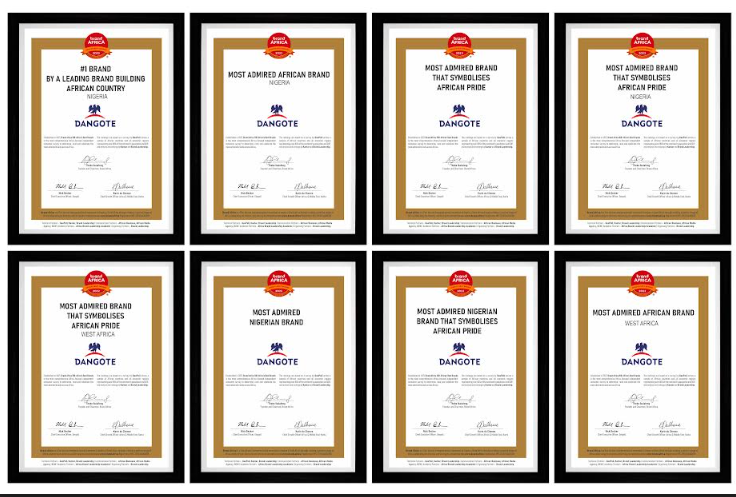
  • Dangote beats MTN, Globacom, Banks to emerge Most Valuable Brand in Nigeria for 6th Consecutive Year

    Dangote beats MTN, Globacom, Banks to emerge Most Valuable Brand in Nigeria for 6th Consecutive Year

    Dangote Industries Limited has emerged as Nigeria’s most valuable brand for the sixth consecutive year. This achievement was confirmed by the brand and marketing firm, TOP 50 BRANDS NIGERIA, as part of its comprehensive 2023 Top Brands perception assessment.

    Winning the award for a record 6th time confirms the foremost African indigenous Conglomerate’s unwavering dominance of the domestic brand space.

    TOP 50 BRANDS NIGERIA, is a qualitative, non-financial evaluation of top corporate brands in the country.  The annual top brands league table which has become like a report card, with which top corporate brands have a feel of their ranking in the market is done with a special purpose model, the Brand Strength Measurement (BSM Index).

    The rating firm in a statement said that Dangote got an impressive aggregate score of 86.2 on the Brand Strength Measurement (BSM) index, reinforcing its position at the forefront. The score reflects the consistent excellence of the brand.

    MTN remains a strong contender, securing a close second place with an 85 BSM index score. This year’s third and fourth positions are secured by Airtel Nigeria and Globacom, both with BSM index scores of 77.9 and 77 respectively. Interestingly, this reaffirms the prominence of telecom brands, with three out of the top four hailing from this sector. Among the Top 10 brands are Access Bank, Zenith Bank, Coca-Cola, GTCO, and First Bank. Globacom was adjudged the Most Popular Brand following the outcome of a Top of Mind (TOM) Survey, where respondents mentioned 10 brands that came to their mind or that they could easily recall. 

    This year’s survey had as respondents Chief Marketing Officers and Head of Corporate Communications of major companies across the land.

    TOP 50 BRANDS NIGERIA, announcing the ratings said, “this annual top brand evaluation provides a qualitative, non-financial assessment of the value of leading corporate brands in the country. It gauges consumers’ perceptions of brands and their impact on overall brand strength, using the Brand Strength Measurement (BSM) index—a model designed to assess a brand’s ability to deliver on its promises from the consumer’s perspective.”

    In today’s market, brands have woven themselves into the fabric of our daily lives, from dawn to dusk and even in every consumer choice. This phenomenon is amplified by the rise of concepts like consumer awareness, differentiation, and the dynamics of the global economy, making brands pivotal actors.

    Chief Executive Officer, TOP 50 BRANDS NIGERIA, Taiwo Oluboyede, speaking on the outcome of this year’s evaluation, likened brand to a person.  He said, “A brand is like a person with all the traits that define his/her personality to the audience. When you hear someone’s name, you are likely not just going to remember their faces or apparel, but who they really are and what they mean to you.”

    “Someone may claim to be the best man in the world, and could even go as far as doing paid advertising to attract attention. However, the real description of the person to you is your experience. Perception about a person could change from like to dislike or the other way round, the same is also true for a brand. That is why promoters go the extra length consistently remain in the target audience like-list” he added.

    He elaborated that the onus lies with brand owners and promoters to uphold compelling propositions and consistently deliver on promises. “It’s not just about making pledges anyway; it’s about steadfastly living up to them—a commitment that separates the top brands from the rest,” he stated.

    A breakdown of the 2023 evaluation report indicated that Nigerian-owned brands continued to shine among the top 10, with 10 brands. These are Dangote, Globacom, Access Bank, Zenith Bank, GTCO, and  First Bank.

    Five of the top ten brands are Banks, while three are Telecoms. Impressively, 9 of the 10 were among the top 10 last year, while 4 maintained their previous position. Airtel Nigeria made a remarkable ascent to third place. Also, six brands have consistently maintained top 10 positions for a remarkable 7 years in a row.

    Overall, 26 or 52% of the 50 brands are multinational, while 24 or 48% are Nigerian brands.

    Rite Foods Limited stands out as the highest gainer this year, leaping 14 places from 46th to 30th. Notably, Wema Bank makes a noteworthy debut in the annual brand ranking. Furthermore, nine brands maintained their 2022 positions, they are Dangote, MTN Nigeria, GTCO, First Bank, Multichoice, Fidelity, Toyota Nigeria, FMNPLC, and AXA Mansard.

    A breakdown of the report indicated that Banking Services, as usual, had the largest entries with 12 entrants, representing 24% of the total. Access Bank topped the category. This is followed by Consumer Goods with 9 brands, that is 18%, with Dufil Prima Foods leading the charge.

    The Conglomerates category has 6 brands, making up 12%, with Dangote Group on top. The Oil and gas, Beverages, and Telecom sectors each contribute 4 brands, with Oando, Coca-Cola, and MTN leading their respective categories.

    The Insurance sector has 3 brands, with AIICO at the forefront. Meanwhile, the Building & Construction Services, Media, and Electronics categories had 2 brands each, featuring Julius Berger, Multichoice, and Tecno Nigeria leading their respective categories.

    Automobile, Agricultural, and Aviation/Logistics sectors had 1 brand each —Toyota Nigeria, Olam International, and Air Peace.
    Of note in the report also is a class called Brands to Watch, a set of 10 brands that have shown some level of vibrancy in recent times and are gaining momentum in consumer acquisition with the possibility of achieving the 50 top Brands League Table in few years. It should be noted that, while these brands have considerable mentions in the TOM survey, they were not strictly subjected to the rigorous BSM evaluation.

  • Clickatell Wins Business Efficiency Solutions Provider of the Year Award

    Clickatell Wins Business Efficiency Solutions Provider of the Year Award

    Clickatell is once again recognized for its talent, innovation and contribution to the growth of the Nigerian ICT industry at Africa’s Beacon of ICT Merit and Leadership (ABoICT) Awards 2023.

     Clickatell, a pioneer in mobile messaging and Chat Commerce innovation, was acknowledged by Nigeria Communications Week as the winner in the Business Efficiency Solutions Provider of the Year category as part of their 14th Africa’s Beacon of ICT Merit and Leadership (ABoICT) Awards, held on Saturday 27 May at the Lagos Oriental Hotels, Lekki. Clickatell was declared a winner in its category through a voting process that included business leaders, readers, as well as independent quality experts.

    In a letter announcing the achievement, Ken Nwogbo, Editor-In-Chief of Nigeria Communications Week said, “This is a testament to your talents, innovations, contributions and commitments to the growth of the ICT industry, and we are happy that Nigerians have recognized your hard work, sincerity and dedication towards the development of the ICT industry.”

    Speaking after the awards ceremony and annual ABoICT lecture delivered this year by Dr. Krishnan Ranganath, Regional Executive, West Africa, Africa Data Centres FZE Nigeria, Clickatell’s Samson Isa, Regional Managing Director, West Africa, shared his thoughts on the past year and what the award means for the company and his team.

    “We are delighted to once again be recognized by our peers at this prestigious event. Over the past year, we have seen a marked increase in awareness of chat commerce with some great success stories coming from early adopters. Over the last 12 months, Clickatell has expanded to provide new and full commerce experiences in mobile messaging channels and worked closely with local customers to begin their chat commerce journey. We have helped them to optimize their processes, improve efficiencies and ultimately reduce costs. It is a great honor to see our efforts formally recognized, not just by our satisfied customers, but by the industry in general,” Isa said.

    According to Isa, companies in the banking and aviation sectors have shown particularly strong interest in the opportunities offered by chat commerce. According to Isa, chat commerce is also set to revolutionize the retail sector in the coming months.  

    “Despite the many macro-economic pressures of the last year, we are pleased to see our business expanding into more verticals as Nigerian business leaders become more familiar with chat commerce. We believe this will continue into 2024 and beyond. We are grateful to the organizers for creating platforms like this, where the industry can salute one another’s efforts. We congratulate all the participants and winners and we are proud to be in such excellent company,” Isa added. 

    Clickatell’s chat commerce offering has already been deployed by many respected brands including EcoBank, Wema Bank and Stanbic IBTC Bank. In the past year, the company has also added among others CBN, eNaira, and QRIOS to its list of clients.

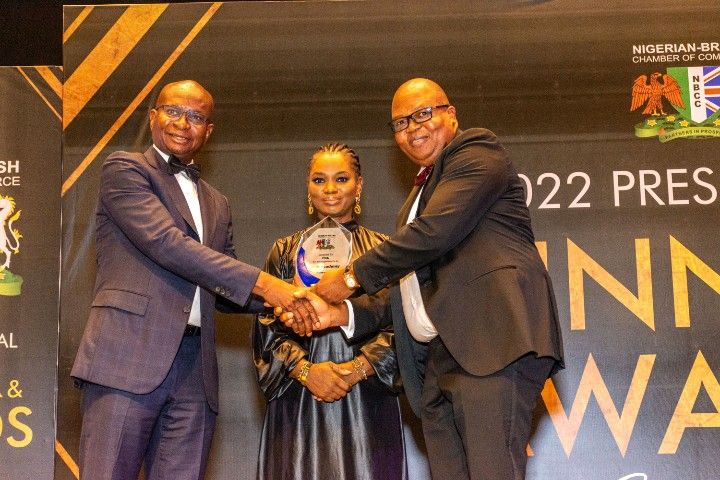
  • Nigerian-British Chamber of Commerce holds The Annual Presidential Dinner & Awards Ceremony 2022 in Lagos

    Nigerian-British Chamber of Commerce holds The Annual Presidential Dinner & Awards Ceremony 2022 in Lagos

    It was all pomp and pageantry at the 2022 Annual Presidential Dinner and Awards of the Nigerian British Chamber of Commerce (NBCC), a signature event of the Chamber which took place at the prestigious Eko Hotels and Suites which was graced by partners and Members of the Chamber, dignitaries and eminent personalities. The event which celebrates excellence in the Nigerian business space while providing a platform to foster UK-Nigerian bilateral relationship had as Chairman of the occasion Bola Adesola, Chairman Ecobank Nigeria and Bolaji Balogun, Chief Executive, Chapel Hill Denham as Guest Speaker.

    In her welcome address, Bisi Adeyemi, President & Chairman of Council appreciated all Chamber Members and especially the premium category for their support through the years. Detailing milestones achieved; “The year 2022 has been a remarkable one for us all at the Chamber, as we achieved some milestones. A major highlight was the graduation of the first cohort of the NBCC Tech Academy which was launched this time last year. This was made possible with the support of our sponsors and partners. In particular, I recognize the significant support received from PwC Nigeria”.

    Other achievements were the addition of 2 new sectoral groups (Tech and Creatives/Cultural Groups), The hosting of a successful 2-day Conference & Exhibition – now to be held biennially, Advocacy series Podcast Launch amongst many others.

    The Chairman of the occasion, Bola Adesola, in her opening remarks went down memory lane recalling her interactions with the NBCC President over the years and how overjoyed she was at the numerous giant strides she has so far taken and the achievements recorded. She also emphasized the imperative of having more women in leadership positions.

    In a moving and engaging letter titled “Dear Mr President”, the Guest Speaker at the occasion, Bolaji Balogun took a deep-dive deep into the nation’s myriad of problems and how best they can be addressed by the future President of Nigeria.

    The evening was not complete without the recognition and presentation of awards to organisations and individuals that have been exemplary and supported the activities of the Chamber. Included among the corporate recipients were Standard Chartered Bank (SCB), PriceWaterhouseCoopers (PWC), the British Deputy High Commission (BDHC) to mention a few.

    Concluding the evening in his vote of thanks, Vice President and Chairman of the Trade and Investment Committee Akin Osuntoki, appreciated the Guest Speaker, the Chairman of the Occasion, as well as all the Sponsors namely Shell Petroleum Development Company (SPDC), Bank of Industry (BOI), Custodian Life Assurance Ltd, Banwo & Ighodalo, Cruxstone Development & Investment Limited, Wema bank, First bank, First City Monument Bank (FCMB) and NAHCO.

  • SIFAX Chairman admonishes Babcock Graduating Class to embrace Challenges

    SIFAX Chairman admonishes Babcock Graduating Class to embrace Challenges

    The Chairman of SIFAX Group, Dr. Taiwo Afolabi has identified courage, self-belief, determination, and a solution-oriented mindset as some of the factors necessary for achieving success. 

    Afolabi said this at an interactive session with the 2022 graduating students of Babcock University, Ilishan Remo, Ogun State. 
    The SIFAX Group Chairman who was represented at the occasion by Mr. Bode Ojeniyi, Group Executive Director (GED), SIFAX Group, admonished the students not to be deterred or intimidated by challenges that life would throw their way.

    He said: “Challenges are part of life and it is practically impossible to avoid them. You can’t avoid challenges if your ultimate goal is to succeed, either in your career, marriage or business. You need to believe in yourself because you are endowed with all you require to excel. You must also take self-development seriously. Don’t be comfortable with the level of knowledge you have. Keep seeking for more. The more you know, the more likely you are to succeed”.

     “Having a solution-oriented mindset is also critical. When you encounter a difficulty or problem, ability to generate solutions, rather than lamentations sets people apart. When you are reputed for this kind of thinking, achieving success will be easier, as colleagues, bosses and clients would trust you more and avail you greater responsibilities that would account for your rise.” 

    Afolabi further commended the university for organizing the event where the graduating students interacted with successful professionals and captains of industries. 

    Other speakers at the event include Mr. Kunle Elebute, Chairman, KPMG Africa; Dr. Babatunde Ipaye, former Consultant, World Bank; Dr.(Mrs) Abimbola Abolarinwa of Lagos State University Teaching Hospital; Prof. Pat Utomi, and Mr. Ademola Adebise, Managing Director, Wema Bank, among others.

  • Innovations for Poverty Action (IPA) and the Inclusion for All initiative announce the launch of a joint report to assess the transparency in Digital Financial Services fees in Nigeria

    Innovations for Poverty Action (IPA) and the Inclusion for All initiative announce the launch of a joint report to assess the transparency in Digital Financial Services fees in Nigeria

    Innovations for Poverty Action (IPA) and the Inclusion for All initiative today announced the launch of the Measuring Fees and Transparency in Nigeria’s Digital Financial Services report. The joint study examines compliance levels with existing fee structures, compliance with price transparency requirements, the reliability of transactions and the consistency of information available from customer service channels – highlighting a series of barriers that impact consumer trust in financial services.

    Nigeria’s digital financial services ecosystem has rapidly evolved over the last decade due to increased broadband and mobile penetration and digital payments, which boost financial access in urban, rural, and hard-to-reach areas across the country. 

    This progress provides underbanked populations with greater access to digital banking products, mobile payments, savings and credit facilities – transforming the financial inclusion landscape. However, between 2018 and 2020, financial exclusion in Nigeria decreased by only 1 percentage point, from 37% in 2018 to 36% in 2020.

    The cost of financial services remains a major barrier to access for price-sensitive consumers, especially within marginalised, vulnerable, and lower-income segments of society. In addition, any lack of transparency on product pricing, departures from regulated pricing and limits trust between customers and service providers.

    A new collaboration between Innovations for Poverty Action (IPA) and the Inclusion for All initiative aims to address the challenges and understand the ease of accessing accurate price information from providers and their levels of compliance with the revised pricing guidelines.

    High-profile speakers and panellists opened the virtual launch of the report with a discussion to understand the practical implications of the audit findings and how regulators and providers can cooperate to enhance customer experience.

    In a keynote speech, Mrs Rashida Monguno, Director, Consumer Protection Department, Central Bank of Nigeria (CBN), commended IPA and Inclusion for All for the study, saying: 

    “This groundbreaking research provides new evidence and insights on one of the most critical aspects of consumer protection which is pricing transparency. Consumers’ right to easily access and understand the cost of services they use is one of the most fundamental rights of consumers. The research provides a baseline for future audits and identifies several areas which require improvement. I trust that the results will be instrumental in exploring new conversations that will result in tangible changes in the digital financial services marketplace.”

    The government regulator, the Central Bank of Nigeria (CBN), recognised the impact of product pricing on financial inclusion outcomes and reviewed pricing guidelines in 2019, issuing lowered pricing caps for electronic banking transactions effective January 2020. In addition, CBN encouraged financial service providers to restructure transaction fees and limits. The action supports Nigeria’s digital financial services uptake, which increased during the covid-19 pandemic, where government responses such as lockdown restrictions led to the temporary closure of bank branches, reinforcing digital access. 

    Presenting key findings from the digital financial services audit, IPA revealed multiple areas where improvements may be required to enhance the consumer experience and assure compliance with existing regulatory frameworks. Drawing on the new research, William Blackmon, Financial Inclusion Research Manager, IPA, said: “Most providers do not list their prices on their website – contacting customer care can take a matter of hours. Limited pricing transparency wastes consumers’ time and comes at a high cost that lower-income customers simply cannot afford.” 

    Without accurate and accessible information – consumers cannot make informed decisions about the services they want to use; this reduces competition in the market. During the panel, Adedotun Ifebogun, Head, Retail & SME, Wema Bank, emphasised the need for a more holistic approach to the transparency of pricing that ensures customers’ evolving needs are met across all preferred platforms and locations, he said:

    “We are committed to understanding consumers’ preferred information points and how well and easily statements can be accessed, especially for communities at the last mile. Customer service has been identified as a preferred platform for consumers to get information. We see the need for training in this area to ensure good customer service since competition between banks and mobile money should be on service delivery and not necessarily on price, which is regulated. The solution will be a collaborative effort.” 

    Speakers also exchanged perspectives on market events such as price fluctuations and promotions that affect price reliability. Jay Alabraba, Chairman, Association of Licensed Mobile Payment Operators (ALMPO), commented: “Even though there are challenges with price transparency and reliability, we need to acknowledge that transparency and reliability are already an industry focus. And in speaking of serving consumers best, business sustainability is critical. In a way forward, sufficient dialogue between industries and telcos is key.”

    Driving debate on the reliability of transactions and the impact of infrastructure on the financial service provider ecosystem, Gbenga Adebayo, Chairman, Association of Licensed Telecoms Operators of Nigeria (ALTON), said: “Several consumers are connected to Nigeria’s 2G and 3G networks which offer less reliable data access. Naturally, this impacts access to higher-quality network coverage and influences customers’ ability to transact. Further, pricing on USSD has not been transparent historically; this is a legacy issue that impacts customer confidence.”

    Among other key findings, the Innovation for Poverty Action and Inclusion for All Study found that:

    • Across all transaction types, less than 50% of customer care representatives provided a fee that was the same as the fee our auditors observed. 
    • Auditors were able to find price lists on only 2 providers out of 29 included in the study.
    • Only 14% of providers offered toll-free lines, and the median airtime charge for non-toll-free lines was 123 Naira.
    • Deposit money banks provided more inconsistent fee information than mobile money providers.
    • Mobile money providers were more likely to provide no-fee information at all.
    • 60% of the study’s attempted transactions were successfully completed, while 40% failed.
    • Transactions with deposit money banks were more than 20 percentage points more likely to succeed than mobile money transactions.

    Signalling the necessary work ahead to ensure digital financial services in Nigeria encourages financial wellbeing of the country’s citizens, Mrs. Rashida Monguno, Director, Consumer Protection Department, Central Bank of Nigeria (CBN), commented: “Results from the 2020 EFInA survey show that 38 million adults in Nigeria are financially excluded, and trust in the financial ecosystem is a big barrier, particularly in pricing. As Nigeria seeks to achieve its financial inclusion goals, concerted efforts must be made to ensure that consumers are protected and that their financial health is not worsened due to the proliferation of digital financial services. Financial services should aim to meet their needs.”

    Chinasa Collins-Ogbuo, Head, Inclusion for All, said: “It is encouraging to have such strong players across the ecosystem collectively lend their voices to an issue that is critical to the evolution and sustainability of Digital Financial Services in Nigeria. It remains aligned with our primary mission, to ensure that the poor and marginalised populations do not remain excluded from formal financial services.  We will continue the conversation as we strive to catalyse action in the right quarters and increase the likelihood of more populations being formally included.”

  • ALAT by Wema Encourages Strategic Financial Decisions In Relationships

    ALAT by Wema Encourages Strategic Financial Decisions In Relationships

    …as third edition of ALAT Talk Series attracts young Nigerian professionals from across the country

    Fostering a healthy work-life balance is one of the many concerns of young professionals across the world, especially as the COVID-19 pandemic persists. On Thursday, October 28, 2021, a diverse group of Nigerian professionals – Gbemi O, media personality; Claire and Akah Nnani, YouTube content creators and creatives; Funmilayo Falola, Head, Marketing Communications and Investor Relations, Wema Bank; Hannah Jonathan, Clinical Sexuality Coach – gathered to discuss balancing a healthy relationship and a hectic workload, while ensuring financial stability.

    This discussion was held during the third edition of the ALAT Talk Series, a platform for the exchange of ideas and insights about life, relationships, technology, and finance. The virtual series themed ‘Relationship, Love and Work: How To Juggle It All’ was held via teleconferencing application, Zoom.

    The latest edition of the series was aimed at providing young Nigerians with the skills and knowledge required to combine a hectic work lifestyle with a healthy sex/love life. Media personality and co-host of the OffAir Show, Gbemi Olateru-Olagbegi, moderated the 90-minute session. Comments and questions poured in from the eager audience who watched on the Zoom app and via ALAT’s Facebook page.

    Akah and Claire Nnani’s session was brutally honest as they shared their experiences as a couple, their transition into parenthood, and how they thrived as business partners while managing their demanding careers. Akah emphasised the need for trust, “trust is important in all our dealings. We trust each other in setting boundaries and understanding each other’s perspectives while managing our business together.” Claire buttressed Akah’s point with her take on the need for couples to reach an understanding, “It is hard not to see each other as competition, especially when you are working in the same space, but understanding your strengths is key.”

    During the event, the Head, Marketing Communications and Investor Relations, Wema Bank, Funmilayo Falola reiterated the objective of the ALAT Talk Series and the importance of addressing key financial decisions from the onset: “At ALAT we are committed to improving financial literacy among young Nigerians by providing them with the tools and services to make the right financial decisions in any situation even marriages and relationships.

    This is why we advise the need to address the seemingly difficult financial decisions from the onset. Investment plans, yearly and monthly budgets, individual and joint financial goals, allowances and childcare plans, are some of the important conversations to have in any relationship,” she added.

    Speaking on the sexual status of many relationships in Nigeria, Sex Expert, Hannah Jonathan spoke about boundaries and influence, “Most couples do not set boundaries early in their relationship and are easily influenced by work, friends and family, which leads to stress. This stress causes frustration that can cause further issues in the future.”

    Over the years, ALAT has developed several youth-focused initiatives to support Nigerians across the country in building sustainable relationships and a healthy lifestyle – and this third edition of the ALAT Talk Series is one of such initiatives.