Tag: workforce

  • How FirstBank is investing in Its People and Building Future Leaders

    How FirstBank is investing in Its People and Building Future Leaders

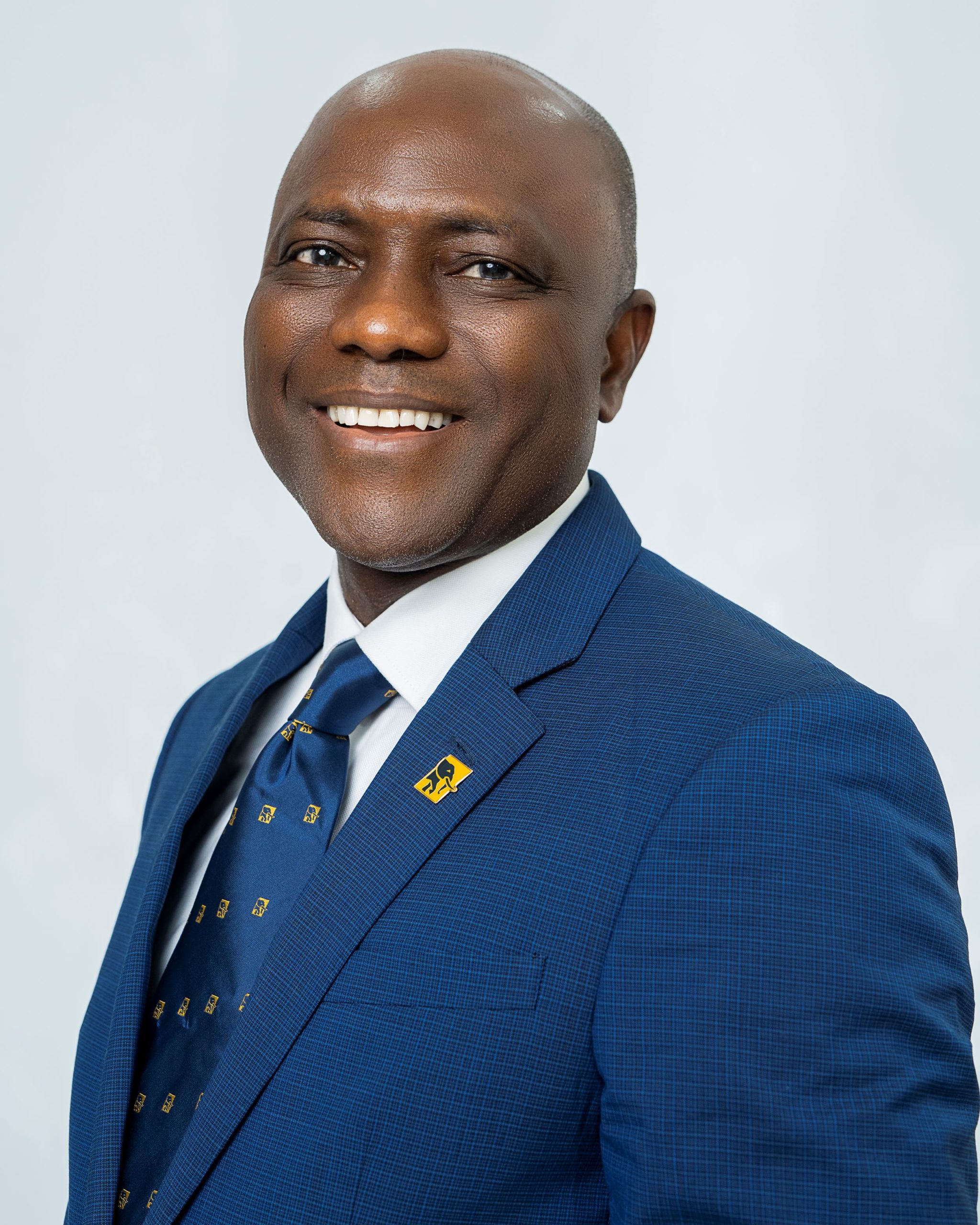
    For an average 9-5er, having a job isn’t enough. You want a career that grows with you, gives you stability, and opens doors to bigger opportunities. People everywhere are looking for workplaces that don’t just pay salaries but actually invest in their staff, helping them learn, lead, and succeed.

    That’s exactly what FirstBank is doing. The Bank is building a future where every employee has the opportunity to grow, lead, and thrive. Through its human capital management and development agenda, FirstBank is creating numerous pathways for staff to transform their careers and become tomorrow’s leaders.

    Conversion Programme: Turning Opportunities Into Careers

    Needless to say that there is no desire for the 9-5er to remain in a temporary role when they can secure a full-time career. With FirstBank’s Conversion Programme, eligible non-core employees who have served for at least one year can transition into permanent positions. This initiative ensures that hardworking staff are rewarded with stability, growth, and the chance to contribute more meaningfully to the Bank’s success.

    Leadership Programmes: Grooming the Next Generation

    FirstBank has designed three flagship programmes to identify and nurture high-potential talents:

    • FirstBank Management Associate Programme (FMAP): A 24-month fast-track initiative that grooms future middle managers. Upon completion, participants are promoted to Assistant Manager grade, regardless of their previous grade.
    • Leadership Acceleration Programme (LAP): Focused on preparing internal middle-management talents for leadership responsibilities, ensuring the Bank’s succession pipeline remains strong.
    • Senior Management Development Programme (SMDP): A programme for senior managers who are proven leaders in their functions and critical to the Bank’s succession plan.

    These programmes are not just training—they are career accelerators, designed to put staff on the fast lane to leadership.

    FirstAcademy: Learning With Global Standards

    Backing these initiatives is FirstAcademy, FirstBank’s corporate university, accredited by the Chartered Institute of Bankers of Nigeria (CIBN).

    Staff also benefit from partnerships with institutions like Rome Business School and Association of Chartered Certified Accountants (ACCA), gaining access to world-class training—often at discounted rates

    A Workplace That Values People

    FirstBank’s parent company, First HoldCo PLC, was named second in the Best Workplaces in Financial Services in Nigeria. The Bank remains firmly committed to responsible employment practices, ensuring that all colleagues are treated with dignity, fairness, and respect.

    The Future Is Human

    With these initiatives, FirstBank is showing that its greatest investment is its people. By empowering staff through various growth opportunities, the Bank is not just building a workforce, it is cultivating leaders who will shape the future of banking in Nigeria and beyond.

  • Leading brands showcase SAP-fuelled AI, cloud innovation at Sapphire 2025

    Leading brands showcase SAP-fuelled AI, cloud innovation at Sapphire 2025

    Leading global brands showcased their successful innovation and business transformation initiatives at this year’s SAP Sapphire, a flagship business and technology event held in Madrid, Spain from 26 to 28 May.

    Sapphire is SAP’s top customer annual customer event, bringing together customers, partners and business leaders to discover the latest SAP innovations. This year’s event unveiled several innovations that put the power of Business AI in every user’s hands, revolutionising the way work gets done.

    Nazia Pillay, Interim Managing Director for South Africa at SAP, says: “Organisations are leveraging powerful new technologies and integrated business applications to drive innovation-fuelled growth across the enterprise. The growing power of Business AI applications that draw on trusted business data is already proving to be a transformative force for companies seeking enhanced decision-making and greater efficiency.”

    Unleashing power of Business AI

    Several brands unveiled successful Business AI initiatives built on SAP technologies. Global brewer Heineken was looking to streamline data access so business users could quickly find and analyse data in their preferred language. The company developed Hoppy, an AI-driven chatbot that runs on SAP Business Technology Platform (SAP BTP), representing a significant leap forward in Heineken’s commitment to streamline internal processes and empower its workforce.

    Since Hoppy was introduced within the company’s collaboration platforms, Heineken has seen the time knowledge workers need to retrieve information fall to 1 minute from 15 minutes. With SAP Business AI capabilities at Hoppy’s core, Heineken also is exploring automating repetitive tasks to enhance business processes and streamline communications and decision-making. And with a unified view across its data, Hoppy can now flag missing cost centre information in purchase orders to improve efficiency and accuracy.

    Competitive gaming organisation Team Liquid is using SAP’s Joule agents to provide instant access to game statistics, player performance trends and strategic comparisons using natural language. Team Liquid runs its data analysis through its Next Level Esports Centre dashboard, built entirely on SAP BTP.

    The team’s analysts rely on the dashboard to equip coaches and players with insights about upcoming opponents, managing high-pressure situations under short turnaround times and frequent data requests between games.

    Victor Goossens, co-CEO and founder of Team Liquid, says: “This partnership is changing the way we utilise our extensive database, proving that AI and data integration are becoming a vital part of our game preparation and success in esports.”

    Scaling new heights with cloud

    Moving from a heavily customised on-premises landscape to a standardised one in the cloud, CAF, a global leader in urban rail and bus systems, has successfully migrated to SAP S/4HANA Cloud Private Edition. CAF has smoothly integrated SAP solutions into core business functions including master data management, record to report, source to pay, and sales and transport.

    “CAF is now set for future success, as our new technology landscape allows us to better comply with business requirements in a complex and fast-changing market,” said Guillermo Apellániz, CAF’s digital transformation director.

    Companies RISE to business transformation challenges

    For companies still operating with on-premise solutions, RISE with SAP offers the optimal path to a cloud ERP landscape. RISE with SAP helps companies confidently transform their business, enable continuous innovation, and realise value faster.

    Global medical technology company Siemens Healthineers selected RISE with SAP to support its digital transformation journey.

    Stefan Henkel, Chief Information Officer at Siemens Healthineers, says: “By embracing SAP technology, we will be able to reduce complexity and highly standardise our processes while delivering on our promise to pioneer breakthroughs in healthcare.”

    Xerox also chose RISE with SAP to move to the cloud and embark on the clean core approach to streamline operations across markets and business processes. The company expects to reduce IT costs and enable the delivery of new business models in line with the changing demands of the industry.

    Louie Pastor, Executive Vice President, Chief Transformation and Administrative Officer at Xerox, says: “SAP is a strategic partner helping us meet the evolving needs of our clients and partners as we increase our speed, agility and cost-effectiveness while providing the entire enterprise with modern tools and improved support. “

  • 2024 Report: Airtel Africa Reports Progress on Sustainability Goals

    2024 Report: Airtel Africa Reports Progress on Sustainability Goals

    Airtel Africa, a leading provider of telecommunications and mobile money services in 14 countries across Africa, has published its 2024 Sustainability Report.

    The report highlights Airtel Africa’s progress across its key sustainability targets, including support for its people and communities, promoting financial and digital inclusion, and initiatives to reduce the environmental impact of its operations.

    Airtel Africa’s outgoing Group CEO, Segun Ogunsanya, said: “I’m very proud of the strides Airtel Africa has made in advancing our sustainability goals. While targets are vital to driving change, our mission is much bigger: to transform people’s lives through connectivity, products and services fostering digital and financial inclusion while unlocking the potential of the next generation.”

    The report shares progress highlights for the company’s four sustainability pillars: ‘Our business’, ‘Our people’, ‘Our community’ and ‘Our environment’.

    Our business: Airtel Africa continued to expand telecommunications services, supporting economic growth and development across the continent. Key milestones include:

    • Growing the customer base to 152.7 million across 14 markets
    • Attaining ISO 27001 and ISO 22301 certifications which demonstrate Airtel Africa’s compliance with international standards and commitment to data privacy and security
    • Expanding the 4G network and reaching 70.7% of the population in these markets, a 4.9% increase since 2022/23
    • Introducing 5G services, now covering 4.14% of customers, primarily in urban areas

    Our people: Airtel Africa is committed to creating a working environment where all employees can achieve their full potential. Key milestones include:

    • Increasing workforce and leadership diversity, with 35.4% of new or open leadership roles filled by women, raising the representation of women in senior management to 22.3%, up from 19.5% the previous year
    • Enhancing diversity and inclusion and advancing female talent through the ‘Women for technology’ programme which benefitted 54 high performing women and resulted in a 21% increase in internal promotions from this group as of 31 March 2024
    • Investing $1.2m in training and development programme

    Our community: Airtel Africa is transforming the lives of individuals, families and communities across Africa by building opportunities for better futures. Key milestones include:

    • Driving financial inclusion for unbanked populations by growing Airtel Money’s customer base to 38 million people. This is particularly significant for the financial inclusion of women in Africa, who make up 38% of Airtel Money’s customers
    • Advancing digital learning across Africa through the five-year $57m partnership with UNICEF, connecting almost 1,200 schools to the internet and providing free access to online educational platforms to thousands of students in 2023/24

    Our environment: Airtel Africa is working to address and minimise the impact of the company’s operations on the environment. Key milestones include:

    • Publishing the ‘Journey towards a net zero future’ in May 2023 which outlines the scenarios for the reduction of scope 1 and 2 emissions while setting out a near-term target to reduce emissions intensity by 62% from March 2022 baseline
    • Announcing the scope 3 strategy in November 2023 which sets out the partners and suppliers’ engagement programme (PSEP) to further advance our engagement with the supply chain
    • Launching our new multi-million data centre business, Nxtra by Airtel, in December 2023 and commencing construction of one of Africa’s largest data centres in Lagos, Nigeria, which will incorporate modern energy efficiencies to complement the ongoing work on reducing carbon emissions across existing sites

    Airtel Africa’s Sustainability Report 2024 adheres to the Global Reporting Initiative (GRI) framework and the GSMA’s recommendations for the telecommunications industry.  

    To view Airtel Africa’s Sustainability Report 2024, visit www.airtel.africa

  • The Art of Technology Lagos 5.0 announces “The Creative Economy and A Digital Lagos” as theme for the next edition

    The Art of Technology Lagos 5.0 announces “The Creative Economy and A Digital Lagos” as theme for the next edition

    The pinnacle of technological innovation and thought leadership, Art of Technology Lagos (AOT), returns for its fifth edition, AOT 5.0. With an unwavering commitment to progress, this year’s conference dives into two crucial pillars shaping Lagos’s future: “The Creative Economy” and “A Digital Lagos.”

    Curated by the Eko Innovation Centre in collaboration with the Lagos State Government, AOT 5.0 promises to be an unparalleled gathering of visionaries, industry leaders, and changemakers.

    Lagos’s creative economy sector is a dynamic force that fuels the state’s economic growth, encompassing diverse industries such as film, music, fashion, design, and advertising. This ecosystem thrives on the brilliance and innovation of its workforce, playing a pivotal role in driving economic progress.

    Under the theme “The Creative Economy and A Digital Lagos,” AOT 5.0 will be a platform for thought-provoking discussions, insights, and strategies that will steer these industries toward greater heights. Scheduled to take place on December 8–9 at the Landmark Center in Lagos, this conference will bring together pioneers, professionals, and enthusiasts to explore the symbiotic relationship between creativity and technology.

    Key Highlights of AOT 5.0

    ● Exploring Synergies: Dive into the intersection of creativity and technology, uncovering how digital innovation enhances the creative economy’s potential.

    ● Digital Lagos Transformation: Delve into the ongoing transformation of Lagos into a digital hub, examining initiatives that are fostering technological advancements across the city.

    ● Empowering Creatives: Spotlight on empowering creatives to thrive in the digital age by equipping them with the tools and knowledge to navigate the evolving landscape

    ● Collaborative Networking: Engage with industry peers, startups, investors, policymakers, and technologists, fostering collaborations that will shape the future of Lagos.

    Also, the organizers of the programme are also calling on individuals and organizations to be a part of it through various opportunities such as sponsorship, exhibition, and speaking and networking avenues.

  • Kogi Communities Jubilate as Dangote Cement Obajana Plant reopens

    Kogi Communities Jubilate as Dangote Cement Obajana Plant reopens

    There were huge scenes of jubilation among affected host communities following the Federal Government’s order for the immediate reopening of the Dangote Cement Plc plant at Obajana in Kogi State.  

    Members of the host communities from Iwaa, Oyo, Obajana, and Apata who spoke to newsmen said they could now heave a sigh of relief as the consequences of shutting down the factory were better imagined than described, a situation which was worsened with the recent ASUU strike that kept students at home across the country. 

    Recall that the National Security Council (NSC), chaired by President Muhammadu Buhari, had Friday directed the reopening of the cement plant, after raising concerns about job losses, potential increase in criminality and resultant unemployment in the area and the State due to the shutdown.

    Minister of Interior, Alhaji Rauf Aregbesola told newsmen that an agreement had been reached between the Dangote Group and the Kogi State Government on the need to reopen the factory, while urging both parties to respect the agreement.  

    Reacting to the latest directive, the Secretary of the Association of Fresh Fish Dealers at the Obajana market, Mrs. Lola Adinu, told newsmen that her association members were overjoyed when the news came that the Federal Government had ordered the reopening of the factory.  

    Mallam Bala Dreba, a 50-year-old commercial motorist plying the 43km concrete Obajana-Kabba road that was constructed by Dangote Industries Limited, said travelers from the South and from the North were apprehensive about the security of the road and its environs since the recent invasion of the company by Government vigilantes. Dreba said the road is now the most important road network linking the Northern and Southern parts of Nigeria. 

    Commercial motorcyclists who brandished green leaves in victory were seen cruising in different directions on Friday evening and Saturday morning to celebrate the announcement by the Federal Government.  

    Adamu Ibrahim, a 45-year-old commercial motorcyclist, and father of four lamented that commercial activities had been paralysed after the invasion of the plant by thugs. He expressed joy that the situation is now reverting to the usual economic bustle in Obajana.   

    A community leader, Pa Isaac Ade, said the Federal Government’s announcement was welcomed with jubilation in his neighbourhood because the lives and the livelihood of the host communities revolve around Dangote Cement Plc.

    “Without this company, the communities cannot survive, the markets cannot survive, the commercial motorcyclists cannot survive, and if I may add, this Local Government and the state, in general, will be badly affected,” Mr. Ade averred.  

    Dangote Cement Plc is the biggest taxpayer and employer of labour in Kogi State. The conglomerate is a part of the Dangote Industries Limited, which is also the second largest employer of labour in Nigeria after the government, as well as the highest private-sector taxpayer to the Federal Government.   

    The Manufacturers Association of Nigeria (MAN), the Nigeria Labour Congress (NLC), the Nigerian Economic Summit Group (NESG), the Trade Union Congress (TUC), and the Shareholders Associations in Nigeria, had all berated the Kogi State Government over the invasion and the closure of the cement company.   

    In the same vein, the Nigerian Association of Chamber of Commerce Industry Mines and Agriculture (NACCIMA), the Lagos Chamber of Commerce and Industry (LCCI) as well as the Abuja Chamber of Commerce and Industry (ACCI) were among groups who condemned the invasion of the Dangote Cement plant, saying the move was capable of driving away investors in the country.

    The associations said the hasty move by the state in resorting to self-help could send the wrong signal to investors within and outside the country.   

    Peter Dare, a businessman at the Obajana main market described the closure situation as worrisome, but added that activities in the market were picking up soon after the government ordered the reopening of the factory. He said thousands of people would have been impoverished if the company was not reopened.  

    At Iwaa, location of the multi-million naira hospital built by the Dangote Cement Plc, the story was the same, as residents were jubilating that the Federal Government waded into the crisis and rescued the situation.  

    A Septuagenarian, who sought anonymity, said he had been wondering how he would offset the tuition fees of his two children in the university following the calling off of the eight-month-old industrial action by the Academic Staff Union of Universities (ASUU). 

    Some of the Dangote Cement staff who are indigenes of Kogi State welcomed with excitement the intervention of the Federal Government. They had earlier expressed fear that the closure would have sent them out of jobs.  

    Dangote Cement Plc Obajana Plant had said that most of its workforce, and technical students at the Dangote Academy situated in Obajana are indigenes from Kogi State.

    In a statement, the Advocacy Centre for Industrialisation in Africa (ACIA) had expressed regret that the invasion and forceful closure of the Dangote Cement Plc at Obajana has cast a shadow on the Ease of Doing Business in the state.

    The Arewa Youth Assembly, a conglomeration of youth groups in the 19 northern states had vehemently condemned the Kogi State Governor Yahaya Bello, describing his closure moves as a war against employment and the youth.

  • Feature: Celebrating Nigeria’s 1st Independence Post-Queen Elizabeth II

    Feature: Celebrating Nigeria’s 1st Independence Post-Queen Elizabeth II

    By Ayo Akinfe

    Nigeria’s first Independence Day celebration post-Elizabeth II should be a declaration for economic independence that looks something like this

    [1] Nigeria will have an annual budget ratio of $1bn to every 1m citizens. In 2023 for instance, with a population of 200m, our national budget shall not be less than $200bn

    [2] Every one of Nigeria’s 36 states shall generate at least twice the amount of its running costs. Any state that fails to do this over two successive quarters shall be dissolved and incorporated into one of its neighbours

    [3] It will from henceforth be illegal to export primary products or raw materials from Nigeria. Value of some sort must be added to any agricultural product or mineral resource before it is sold outside Nigeria

    [4] Any multinational that makes in excess of $1m from Nigeria annually will be compelled by law to open a local facility in the country

    [5] International suppliers of industrial goods to the government must train all local staff up to the same standards as workers in their home countries

    [6] At no point in time must the local workforce of any multinational operating within the country be less than 90% of the total staff strength

    [7] Nigeria’s gross domestic product (GDP) must at every time be at least 1000 times the size of the population. For instance, with the current population of 200m, the country’s GDP must be $2trn at the very minimum

    [8] Nigeria will be twinned with several similar developing nations like Brazil, Mexico, Malaysia, Indonesia, Vietnam, The Philippines and Turkey for infrastructural purposes. At no point in time will infrastructure like kilometres of rail track, number of hospital beds, ratio of university graduates, kilometres of tarred road, number of airports, amount of electricity supplied, number of social houses built, etc be allowed to drop below 10% of the average of these other nations

    [9] At no point in time will unemployment be allowed to grow beyond 5% of the adult working population. Whenever this happens, special government schemes will be launched to provide emergency jobs

    [10] At least 95% of all healthcare requirements must be provided locally. To facilitate this, internationally renown hospitals will be brought to Nigeria to open units and train local medical staff

    Like the US Declaration of Independence, this will be signed by 53 individuals, arguably at the National Theatre, Iganmu, simply because it is Nigeria’s most iconic building. Signing it there will be making a statement that we are ready to stand toe-to-toe with the rest of the world that has the Statue of Liberty, The Sydney Opera House, Big Ben, Eiffel Tower, the Kremlin, Brandenburg Gate, the Taj Mahal, the Great Wall of China, etc.

  • Group hail Subair-led Team on Staff Welfare

    Group hail Subair-led Team on Staff Welfare

    A civil society organisation, Vanguard for Transparency and Accountability, has lauded the Ayodele Subair-led LIRS management for sustaining its pace-setting records in tax management reforms in Nigeria while also describing the recently launched Whistle-Blower Initiative of the Lagos State Internal Revenue Service, as an exemplary boost to the anti-corruption crusade.

    The President of the anti-corruption crusade group, Paulycap Nnabuogor, said in a press statement, that the initiative which subjects the operations of LIRS to public scrutiny, will promote openness, accountability and ultimately enhance citizens’ participation in governance, boosting their trust in the activities of a sensitive agency of government.

    Nnabuogor said the anti-corruption group is convinced that the initiative is targeted at strengthening and re-invigorating frontiers in the fight against fraud and corruption and puts both the management and the staff of the agency on their toes to deliver their statutory roles in compliance with the global best practices.

    He said, “We are not particularly surprised that the Lagos State government chose the LIRS as a pilot scheme for its Speak Up programme because of the reforms the Subair-led management of the revenue agency had carried out internally to boost its operations and enhance the capacity of its workforce. Undoubtedly, this initiative shows that the activities of civil society organisations like ours are beginning to bear fruit and Nigeria is the ultimate winner.

    “Before the birth of the Whistle-Blower Initiative, we were aware of the efforts of the LIRS management to promote accountability within the system and the importance Subair particularly attached to the welfare of his staff. Our findings show that the LIRS maintained the payment of performance allowances to the staff, and doesn’t joke with the prompt release of other pay including wardrobe allowances, particularly to the staff at both the legal and relationships units all geared towards enhancement of performance.

    “More so, we found out that the decision to introduce a computer-based test for promotion, which is handled by independent assessors, has encouraged high-fliers within the system to grow rapidly and underlined why the agency has maintained its status as the best-performing tax collecting board in the country. Subair’s Award of Recognition by the Joint Tax Board of Nigeria is a testimony of his achievements as the agency has always met its revenue target even during the COVID-19 pandemic.”

    Meanwhile, Subair restated the commitment of the LIRS management to the welfare of its staff, strengthened by the belief that a motivated workforce will lead to greater productivity.

    He said.” We take our workforce’s welfare and career development as a key metric in our journey to consistently deliver our statutory role as a revenue agency.  In 2019, we approved a 70% salary increase for staff from Assistant Revenue Manager and below, and a 50% increase for Revenue Manager and above. This is the most significant salary review in the Agency to date. A total of 3,608 members of staff were promoted between 2017 to 2021 and all our staff do not pay for standard medical services.

    “We also ensure that performance bonuses are paid to all staff, based on clearly defined and documented processes while Union dues are remitted timely and correctly with all  other statutory deductions such as pensions.”

    He added that the consequential adjustment of salaries has been agreed upon in principle and payment modalities are currently being worked out by management, stressing that all are geared toward ensuring that the agency serves the people of Lagos State effectively.

  • MTN Hosts Maiden Edition of the Nigeria Disability Business Network

    MTN Hosts Maiden Edition of the Nigeria Disability Business Network

    MTN Nigeria recently hosted the first-ever gathering of the Nigerian Business and Disability Network (NBDN). Registering over 100 stakeholders in attendance, the event was held at MTN Nigeria headquarters, at Falomo, Lagos, on Thursday, May 19, 2022.

    The Nigerian Business and Disability Network (NBDN) is an employer-led platform launched in 2020 and incubated by Sightsavers in partnership with the Chartered Institute of Personnel Management (CIPM). The network’s strategic objective is to bring member-organisations and other key stakeholders together to share knowledge, find lasting solutions to pressing issues, and foster multi-stakeholder partnerships aimed at making workspaces in private and public organisations for persons with disabilities more accessible.

    With over 25 million people living with disabilities in Nigeria, the theme of the maiden edition of the conference ‘Eliminate Barriers Against Inclusive Workplaces in the Private Sector’ promotes inclusion in organisational policies, while also building the disability confidence of employers, and ensuring the job-readiness of people with disabilities.

    In his keynote address, Dr. Adebukola Adebayo, a Disability Inclusion Consultant at World Bank Group, Nigeria said; “I am happy that in my lifetime, we can see the private sector converge for our sake. This is a huge leap and we must eliminate barriers in the workplace. Companies that employ people with disabilities are more socially responsible than companies who do not.”

    Chief Human Resource Officer, MTN Nigeria, Esther Akinnukawe, said “We at MTN Nigeria are delighted to be hosting this event. There is a lot of value inherent in the promotion and inclusion of persons with disability. At the same time, there are varying issues to be solved around the clusters of disability, and although these are early days for us, MTN is committed to focusing on areas of accessibility and recruitment. Ultimately, our goal is to incorporate qualified individuals, despite disability, into the workforce.”

    The well-attended event had stakeholders from different organisations, including James Lalu, Executive Secretary, National Commission for Persons with Disability (NCPWD); Omobolanle Victor-Laniyan, Chairperson, Nigeria Business Disability Network (NBDN); Dr. Joy Shu’aibu, Director of Programs and Operations, Sightsavers Nigeria; Olatunji Solanke, Area Head Talent, British American Tobacco, and Inyang Osazuwa, Senior Manager, Employee Experience, MTN Nigeria