Tag: World Trade Organization (WTO)

  • Global Economic Institutions Warn of Rising Energy, Food Security Risks as Middle East Conflict Deepens

    Global Economic Institutions Warn of Rising Energy, Food Security Risks as Middle East Conflict Deepens

    IEA, IMF, World Bank and WTO Coordinate Response to Growing Global Economic Pressures

    The International Energy Agency (IEA), International Monetary Fund (IMF), World Bank Group and World Trade Organization (WTO) have raised concerns over the escalating economic consequences of the ongoing conflict in the Middle East, warning that disruptions to energy supplies, rising food production costs and growing uncertainty could significantly impact vulnerable economies around the world.

    The warning followed a high-level meeting held on May 28 by the heads of the four global institutions as part of a coordination mechanism established to strengthen international responses to the energy, trade and economic implications of the conflict.

    In a joint statement issued after the meeting, the organisations noted that while the global economy has remained relatively resilient, the effects of the conflict are increasingly being felt through higher fuel prices, rising fertilizer costs and growing risks to jobs, livelihoods and economic stability, particularly in developing countries.

    According to the institutions, fertiliser prices have become a major source of concern as many countries enter critical planting seasons, raising fears of further pressure on global food production and food security.

    The organisations also highlighted growing risks in the global oil market as inventories continue to decline at an unprecedented pace due to significant disruptions in supply flows through the Strait of Hormuz, one of the world’s most strategic energy transit routes.

    They cautioned that if normal shipping operations are not restored quickly, continued depletion of oil inventories ahead of the peak summer demand period could create additional challenges for fuel security, energy markets and broader economic resilience.

    The four institutions disclosed that their discussions focused on assessing the impact of the conflict on the most affected countries and regions, identifying emerging risks and coordinating support measures for economies facing the greatest vulnerabilities.

    They further emphasised the need for close monitoring of fertiliser supply chains, energy markets, economic developments and policy responses by governments across the world.

    As part of ongoing efforts to strengthen global economic stability, the organisations said they are tracking measures being implemented by countries to mitigate the economic consequences of the conflict, with the aim of promoting transparency, sharing best practices and identifying potential threats to economic recovery.

    The institutions reaffirmed their commitment to continued collaboration and coordination as the situation evolves, pledging to support countries most affected by the crisis and help preserve global economic stability.

    For Nigeria and other emerging economies, the warning comes at a time when global energy market volatility, inflationary pressures and supply chain disruptions continue to pose significant challenges to economic growth, fiscal stability and food security.

    Analysts note that prolonged instability in the Middle East could lead to higher crude oil prices, increased transportation and production costs, elevated inflationary pressures and renewed uncertainty across global financial markets, with potential implications for businesses and consumers alike.

    The coordinated intervention by the IEA, IMF, World Bank, and WTO underscores growing international concern about the broader economic fallout of the conflict and the need for collective action to safeguard global growth and stability.


  • Trump tariffs have caused “the greatest disruption in trade in 80 years”: WTO’s Dr. Ngozi Okonjo-Iweala

    Trump tariffs have caused “the greatest disruption in trade in 80 years”: WTO’s Dr. Ngozi Okonjo-Iweala

    This week, Dr. Ngozi Okonjo-Iweala sat down with CNN’s Christiane Amanpour at the network’s first Global Perspectives event in London to discuss the big picture on global trade before zeroing in on Africa.

    The Nigerian economist and World Trade Organisation (WTO) director-general called the ripple effect of Trump administration tariffs “the greatest disruption in trade in 80 years.” She also said that she agreed with some of the criticisms levelled at the organisation by the US.

    “The crisis is an opportunity to reform (the WTO),” she said, calling for greater transparency and conceding that decision-making “sometimes … does result in paralysis.”

    “In this modern world with AI, we need to find a way to be flexible, faster,” she added.

    Okonjo-Iweala noted that the US isn’t the only nation critiquing the WTO, and developing nations also have legitimate gripes. “I think they are coming to the fore because of the crisis we’re in,” she said.

    Beyond the bureaucracy, the director-general was bullish about the continent’s prospects, pointing to an IMF projection of 4% growth in Africa in 2025 and 2026.

    “Most of Africa’s mineral resources are yet to be discovered,” she said, while pointing to the continent containing “67% of the world’s arable land,” and 22% of the world’s working population.

    “But how do we make this work for us?” she added.

    Okonjo-Iweala called for “careful thinking” on tensions in Nigeria, after US President Donald Trump suggested the United States may take military action there to protect the nation’s Christians.

    Okonjo-Iweala, who previously served as Nigeria’s finance minister, said “This is an incredibly complex question. The situation is very difficult and needs careful thought.

    “It has religious issues involved in it, it has resource issues involved in it, it has different complexities. So, I just think we need careful thinking through.”

  • Feature- Rethinking Public-Private Partnerships for Africa’s Trade Future

    Feature- Rethinking Public-Private Partnerships for Africa’s Trade Future

    By Ludovic Thanay

    Africa stands at a turning point. Home to nearly a fifth of the world’s population but responsible for less than 3% of global trade, the continent continues to punch below its weight. The reasons are well documented: weak infrastructure, fragmented policies, and slow adoption of digital systems. The real challenge is not only to bridge the divide but to design a model of trade that reflect’s Africa’s own realities and ambitions. Public-private partnerships (PPPs), when built on trust and shared responsibility, can play a decisive role in that transformation.

    More than Procurement

    All too often, PPPs in Customs and trade are seen as procurement arrangements, with governments buying systems and private firms delivering them. That narrow view misses the point. Strong partnerships are those that bring stakeholders together to design solutions everyone can benefit from. Governments bring legitimacy and reform agendas rooted in World Customs Organization (WCO) and World Trade Organization (WTO) commitments. Private partners bring technology, agility, and the capacity to deliver at scale. When these elements are combined, partnerships move from being procurement exercises to becoming drivers of reform.

    The frameworks already exist. The WCO Data Model, the WCO SAFE Framework of Standards to Secure and Facilitate Global Trade, and the Time Release Study all provide the international backbone for reform. But frameworks do not implement themselves. They need digital tools, from risk management systems to Single Windows, Port Community Systems, and e-payment platforms. This is where PPPs prove their value: by turning policy ambitions into working systems that deliver results.

    Trust, Governance, and Transparency

    Strong governance underpins every sustainable reform. Without clear roles, independent oversight, and visible results, even the most advanced technology can fail to take root.

    Digital systems can reinforce this credibility. Linking e-payment solutions directly to Customs, for example, not only accelerates transactions but also gives finance ministries a real-time picture of revenue. Risk engines that leave an auditable trail make clearance decisions faster while also making them open to review. When operators see a process that is efficient and predictable, trust in the wider system follows.

    Data: Shared but Protected

    Trade digitalisation depends on data. Declarations, shipping manifests, payments, and risk profiles all need to move quickly between agencies, operators, and even across borders. But speed raises questions of ownership and protection. Who controls this data? How is it used? How is it secured?

    PPPs must give answers. Shared platforms cannot succeed if businesses and citizens doubt the safety of their information. Data must flow, but it must also be protected. For Africa, where regional integration under the African Continental Free Trade Area (AfCFTA) depends on interoperability, this means developing consistent data governance rules that balance openness with privacy. Private partners have a critical role here, providing not only the systems but also the security frameworks that keep information safe while still enabling smarter, faster trade.

    Capacity and Ownership

    Even the best technology fails if the people who use it are not part of the journey. Too many projects collapse because systems were handed over without building local skills or ownership. Sustainable partnerships integrate training and institution-building from the start. Success should be judged by more than faster clearance; it should be about whether administrations can manage and expand these systems themselves over time.

    AfCFTA: From Vision to Practice

    The AfCFTA offers the prospect of the world’s largest single market. But no agreement, however ambitious, will succeed if each country implements its own isolated digital solutions. A corridor cannot be “smart” if every border is a digital island.

    This is where PPPs can help governments look beyond national boundaries and build systems that work together. Integration depends on the basics: harmonised standards, interoperable systems, and shared infrastructure.

    Towards a Distinct African Model

    By 2050, one in four people on earth will be African. The real question is whether Africa will still be adapting to external models of trade, or whether it will be shaping its own. PPPs provide a chance to do the latter: to design solutions that grow out of African realities while staying connected to global norms.

    The lesson from years of reform is clear. Technology matters, but what makes the difference is governance, trust, capacity, and shared responsibility. The real measure of success will be whether the continent can help shape the rules of tomorrow rather than adapt to those of yesterday.

    Ludovic Thanay is the Senior Vice President Sales, Webb Fontaine

  • Melissa Kariuki, Dr. Ngozi Okonjo-Iweala, others to Speak At WTO Public Forum

    Melissa Kariuki, Dr. Ngozi Okonjo-Iweala, others to Speak At WTO Public Forum

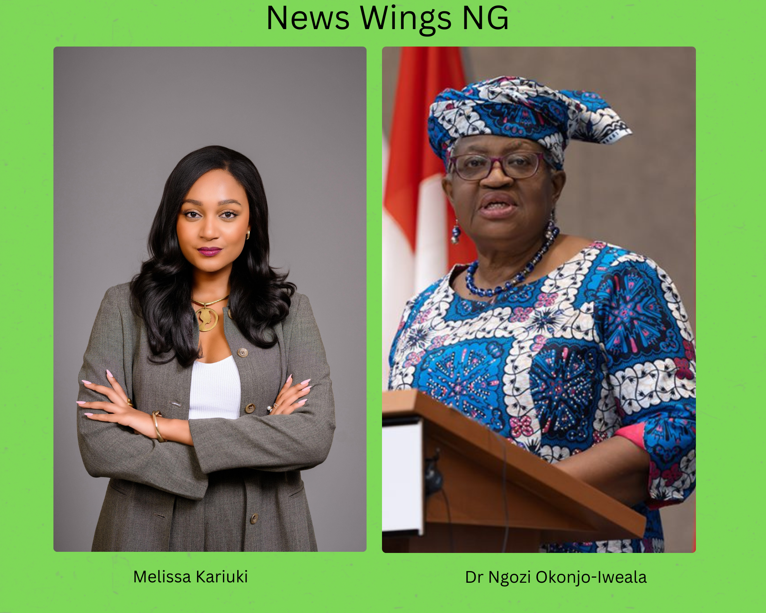
    Melissa Kariuki, Founder and CEO of Whip Music and one of the GRAMMYs’ 13 Women Shaping African Music (2025), Dr. Ngozi Okonjo-Iweala, WTO Director-General and others will speak at the prestigious World Trade Organization (WTO) Public Forum 2025 in Geneva on 18 September 2025.

    This invitation follows Kariuki’s recognition as a member of the Recording Academy (GRAMMYs) and her inclusion on Hotlist Africa’s Top 30 Executives in the African Music Industry (2025), further establishing her as one of Africa’s most influential young leaders at the intersection of creativity, technology, and trade.

    The World Trade Organization (WTO) is the only global organization that formulates and enforces the rules of trade between nations, with 166-member countries representing over 98 percent of global trade and GDP. The Public Forum is the largest global trade policy platform, drawing government leaders, corporate executives, academics, and civil society to discuss the future of trade. Being invited to speak is exceptionally prestigious as it marks Kariuki as a recognized emerging global thought leader.

    Kariuki will speak in a session titled “Bridging Digital Divides Through Local Solutions”, highlighting how enabling digital policies and technology infrastructure can allow African creators to scale globally and strengthen the continent’s role in the world economy.

    “I am honoured to be invited by the WTO to share Africa’s perspective on digital trade and creativity as a driver of global growth. For too long, creativity has been seen as culture, but it is also one of Africa’s highest-potential commodities. With the right digital policies and local solutions, African creators can reach global markets, scale new industries, and shape the future of trade. As a young, African woman in technology and the creative economy, it is a privilege to represent our continent at this global forum and to ensure our voices and solutions are part of the world’s trade agenda.” – Melissa Kariuki.

    The event will feature other distinguished leaders from both the public and private sectors, among them are Pedro Manuel Moreno, Deputy Secretary-General of UNCTAD; Shamika N. Sirimanne, Director of Technology, UNCTAD; Aissatou Diallo, Chief of the Office for Africa at the International Trade Centre; Katherine Wang, Manager of Trade and Supply Chain Policy at Amazon Web Services; Claire Alexandra, Head of International Government Relations for PayPal. Other are Christian Keller, Chair and General Manager of IBM Switzerland; Fancy Too, Ambassador and Permanent Representative of Kenya to the United Nations Office; and Dr. Elizabeth Sidiropoulos, Executive Director of the South African Institute of International Affairs.

    Creativity as Africa’s Next Global Commodity

    Africa’s creative economy, currently valued at US$58.4 billion, accounts for roughly 4 per cent of the continent’s GDP but represents less than 0.3 per cent of global creative exports. For example, in one of Africa’s largest economies, South Africa, the creative sector generated roughly the same amount of revenue as agriculture at US$8.7 billion (R161 billion) in 2020. Analysts predict that with the right digital policies and trade frameworks, African creative exports could reach US$200 billion by 2030, potentially accounting for 10 percent of global creative goods trade.

    Kariuki’s contribution to the WTO Public Forum underscores the growing recognition of creativity not only as cultural expression but also as a strategic commodity with transformative trade potential.

  • DG Okonjo-Iweala appoints American as new Deputy Director-General

    DG Okonjo-Iweala appoints American as new Deputy Director-General

    WTO Director-General, Dr Ngozi Okonjo-Iweala, has announced the appointment of Jennifer DJ Nordquist of the United States as a new Deputy Director-General. DDG Nordquist will replace Angela Ellard, who will step down from her post at the end of August.

    Ms. Nordquist is currently Counselor of the Council of Economic Advisers at the White House.  Her previous roles have included Executive Vice President of the Economic Innovation Group; Senior Advisor at the Center for Strategic and International Studies; Executive Director for the United States at the World Bank Group; and Chief of Staff and Deputy of Economic Studies at the Brookings Institution. 

    Ms Nordquist holds a Master’s degree in Journalism from Northwestern University and a Bachelor’s degree in Psychology and Communications from Stanford University.  She is a native English speaker and is fluent in French.

    In appointing Ms Nordquist, DG Okonjo-Iweala noted her decades of leadership experience as a seasoned economic and policy strategist. “She will work as part of the senior management team with me and the other DDGs, driving forward our objective of helping our members use trade as a means to raise living standards, create jobs and improve people’s lives,” the Director-General said.

    Ms Nordquist is expected to take up her appointment on 1 October.

    Serving Deputy Directors-General Johanna Hill of El Salvador, Jean-Marie Paugam of France and Xiangchen Zhang of China have been reappointed for an additional four-year term.

    In November 2024, DG Okonjo-Iweala was reappointed as Director-General for a second four-year term beginning on 1 September.

  • “More than ever all eyes are on us”- Okonjo-Iweala

    “More than ever all eyes are on us”- Okonjo-Iweala

    “The world is looking to the WTO to respond to issues that impact lives, livelihoods and the future prospects of the businesses that drive trade,” Director-General Ngozi Okonjo-Iweala told a meeting of the Trade Negotiations Committee (TNC) on 15 July. Speaking in her capacity as Chair of the TNC, the Director-General said that with trade in the global spotlight a “genuine shift in negotiating mindset and political will” is needed to deliver results that address these concerns.

    DG Okonjo-Iweala: “More than ever all eyes are on us”
    DG Okonjo-Iweala: “More than ever all eyes are on us”

    In her report to the TNC, DG Okonjo-Iweala noted that despite rising trade measures, 74% of global goods trade still flows under most favoured nation tariff terms, “but in today’s climate of record trade policy uncertainty, safeguarding the stability and predictability the WTO provides has never been more urgent.”

    “It’s precisely because of today’s challenges that calls for reform, deep reform, repositioning and real delivery are growing louder,” she said. From recent interactions with leaders in various fora, “one message is clear – they understand the stakes, the urgency, and they want results.”

    “Clearly, we are far from where leaders and stakeholders expect us to be,” the Director-General added. “We are not yet adhering to the call for results.”

    The challenges facing the organization and its members were highlighted in the update reports from the negotiating chairs to the membership.

    Reporting in his capacity as the Chair of the fisheries subsidies negotiations, Ambassador Einar Gunnarsson (Iceland) noted that in a readout to the negotiating group on 14 July on his recent consultations with members, he “unfortunately did not see any indication, nor pick up any signals, of a possible pathway” that could lead to successful conclusion of negotiations on additional provisions to discipline subsidies contributing to overcapacity and overfishing”.

    While most members continue to believe that a draft text circulated in July 2024 and revised the following November remains the basis for reaching an agreement, “gaps that had prevented members from concluding in 2024 remain and, in some aspects, have possibly widened,” the Chair said.

    “My honest assessment, therefore, remains that the (negotiating group) is not ready to reach consensus now, nor in the coming months,” said Ambassador Gunnarsson, who is stepping down from his Chair role. 

    The “vast majority of members” saw value instead in focusing on the entry into force and implementation of the Agreement on Fisheries Subsidies adopted in June 2022, which is now awaiting six additional instruments of acceptance for entry into force, and the setting up of the new Committee on Fisheries Subsidies.

    “A successful start to the work of the Committee on Fisheries Subsidies could serve to build trust and confidence conducive to giving the negotiations on the additional provisions the necessary push forward,” he said.

    Reporting in his capacity as Chair of the agriculture negotiations, Ambassador Ali Sarfraz Hussain (Pakistan) said that his recent meetings and that of the negotiating group on 25 June showed “long-standing divergences on substantive issues continue to persist.” 

    “I have not been able to pick signals from the revealed preferences of the members that can lead me to be optimistic about the unlocking of outcomes on the main agricultural pillars” before the WTO’s 14th Ministerial Conference (MC14) in March 2026, Ambassador Hussain said. 

    Various ideas such as securing a mini package at MC14 focusing on food security and development support, or on transparency in the application of export restrictions, have met resistance, he noted. Several options for an MC14 outcome remain on the table, including a political declaration reaffirming the value of existing WTO disciplines, establishing a work programme for continued negotiations beyond MC14, and an agreement on comprehensive disciplines on all negotiating pillars, the Chair added.

    “My objective remains to have by the end of September a better sense of what could constitute the best path forward, including the nature of any outcome we can aim for at MC14,” Ambassador Hussain said.

    Reporting in her capacity as Chair of the negotiations on trade and development, Ambassador Kadra Hassan (Djibouti) said that while the work “remains challenging, as much as we are making incremental progress at this juncture, it is important that we focus on identifying elements for possible outcomes.”  She said she was encouraged by discussions on the implementation of special and differential treatment provisions in the Agreements on Sanitary and Phytosanitary Measures and Technical Barriers to Trade.

    “We are approaching MC14 fast,” Ambassador Hassan said. “I urge all members to continue their efforts and maintain momentum as we approach MC14.”

    Ambassador Alfredo Suescum (Panama), Chair of the negotiations on the multilateral register for wines and spirits, said in a video statement that no new proposals have been submitted but that industry stakeholder groups he has been in touch with were eager for further dialogue.  The Chair said he would further assess the appetite for renewed substantive work after the WTO’s summer break.

    In a written report to members, Ambassador Adamu Mohammed Abdulhamid (Nigeria), Chair of the services negotiations, said there was broad recognition of the growing importance of services in world trade and the need to respond to the call of ministers at MC13 in 2024 to reinvigorate work at a meeting of the negotiating group on 12 June.

    The main suggestions for future work included examining the levels of market access achieved in regional trade agreements, looking at applied levels of market access and discussing sectors and modes of supply of interest to developing countries. However, Ambassador Abdulhamid said several delegations shared reservations about the different suggestions made. Discussions will continue at the next negotiating group meeting in October, he added.

  • DG Okonjo-Iweala underscores importance of partnerships to support LDCs

    DG Okonjo-Iweala underscores importance of partnerships to support LDCs

    WTO Director-General, Ngozi Okonjo-Iweala, emphasised the need to mobilise partnerships to support least-developed countries (LDCs) through trade at a high-level side event on 30 June 2025 at the 4th International Conference on Financing for Development in Sevilla, Spain.

    Co-organized by Djibouti, Finland and the Executive Secretariat of the Enhanced Integrated Framework (EIF), the event focused on strengthening international partnerships in support of LDC trade and investment priorities. The vision for EIF Phase Three – the next stage of this Aid for Trade programme exclusively dedicated to LDCs – was also presented. Several countries announced new funding commitments to this new phase of the EIF.

    Several donors pledged new contributions to the EIF Trust Fund, providing strong momentum for Phase Three, which is set to begin in October 2025. Sweden announced a contribution of SEK 75 million (approx. CHF 6.3 million), Denmark DKK 20 million (approx. CHF 2.5 million), Norway NOK 12 million (approx. CHF 0.9 million), France EUR 300,000, (approx. CHF 0.3 million) and Liechtenstein CHF 50,000, building on Finland’s earlier pledge of EUR 2.5 million (approx. CHF 2.3 million) and a GBP 400,000 (approx. CHF 0.4 million) contribution from the United Kingdom to EIF Phase Three. These pledges will help ensure a solid start to the next phase of EIF support, which is designed to deliver catalytic and transformative impact for LDCs through trade.

    In her opening remarks, DG Okonjo-Iweala highlighted the growing gap between development needs and available resources, emphasizing the ongoing relevance of the EIF in helping LDCs benefit from trade. She noted that the partnership has “gone from strength to strength,” supporting USD 1 billion in LDC exports and enabling hundreds of thousands of small farmers and entrepreneurs to improve their livelihoods.

    She also shared the story of Sittina Farate Ibrahima from Comoros, whose biocosmetics business was developed with EIF support. “Today, 80% of her products are exported to Europe. This is what Aid for Trade to LDCs is all about.”

    Looking ahead, the Director-General welcomed the shared ambition behind EIF Phase Three and its USD 200 million funding target. “`We hope we can count on all the partners in bringing this vision to life, she said, noting that the event would serve as “a springboard for a high-level launch of the next phase of the EIF partnership at the 14th Ministerial Conference.”

    The event brought together ministers from Djibouti, Finland and Guinea, along with senior representatives from other least-developed and donor countries, including Sweden, Denmark, France, Germany, Norway, Liechtenstein and the United Arab Emirates. UNCTAD Secretary-General, Rebeca Grynspan, delivered closing remarks, alongside representatives from other international organizations and other development partners. Discussions focused on priorities for EIF Phase Three, which will run up to 2031.

    “From the perspective of the WTO LDC Group, EIF Phase Three comes at a critical time,” said H.E. Ilyas Moussa Dawaleh, Minister of Economy and Finance of Djibouti. “What we need is a mechanism that catalyses our efforts, brings innovation to respond to our evolving trade and investment priorities, supports stronger institutions, and helps unlock new partnerships. We see in the vision for EIF Phase Three a foundation to move towards precisely that. For many of our countries, including my own, the EIF has not only been a financial and technical partner. It has also been a catalyst for inclusive economic transformation.”

    “Finland is a longstanding supporter of multilateral efforts to strengthen the trade capacities of least-developed countries,” said H.E. Ville Tavio, Minister for Foreign Trade and Development of Finland. “We believe in the transformative power of trade as, when matched with targeted support and strong local ownership, it can unlock lasting development impact. The EIF has consistently proven to be a trusted and effective partner for LDCs. As it enters a new phase, we see an opportunity to deepen its reach and amplify its role in advancing inclusive and sustainable growth. Finland is proud to contribute to this next chapter.”

    A follow-up pledging and partnership event is scheduled for September 2025 on the margins of the WTO Public Forum in Geneva.

    EIF Phase Three aims to mobilize at least USD 200 million to help LDCs strengthen trade capacities, expand exports, and harness trade for inclusive, sustainable development.

  • Okonjo-Iweala, WTO Director-General, Welcomes Positive U.S.-China Trade Talks, Emphasizes Need for WTO Reform

    Okonjo-Iweala, WTO Director-General, Welcomes Positive U.S.-China Trade Talks, Emphasizes Need for WTO Reform

    The Director-General of the World Trade Organization (WTO), Dr. Ngozi Okonjo-Iweala, has welcomed the constructive discussions between the United States and China held in Geneva. Following her meeting with Chinese Vice-Premier, He Lifeng, she expressed optimism about the progress made and its potential global economic impact.

    “I am pleased with the positive outcome of the talks between the United States and China in Geneva. These discussions mark a significant step forward and, we hope, bode well for the future. Amid current global tensions, this progress is important not only for the US and China but also for the rest of the world, including the most vulnerable economies,” Okonjo-Iweala stated.

    She emphasized the importance of sustained dialogue, urging both nations to build on this momentum by continuing to develop practical solutions that mitigate tensions, restore predictability, and strengthen confidence in the multilateral trading system.

    Additionally, WTO reform was a key discussion point between Okonjo-Iweala and Vice-Premier He Lifeng. The WTO chief welcomed China’s support for strengthening the organization, underscoring the critical need to reposition global trade rules to align with today’s economic realities.

    “During my conversations with Vice Premier He, we also addressed the need for WTO reform. I welcome China’s support for these reforms and the repositioning of the organization to better serve today’s global trade environment,” she added.

    The WTO remains committed to fostering trade cooperation, reducing global tensions, and ensuring equitable access to international markets, reinforcing its role as a key driver of global economic stability.

  • WTO-ITC WEIDE Fund opens applications for Women Exporters

    WTO-ITC WEIDE Fund opens applications for Women Exporters

    A joint initiative of the World Trade Organization (WTO) and the International Trade Centre (ITC), the WEIDE Fund is supported by a USD 50 million commitment to empower women entrepreneurs and help them thrive in global markets through the use of digital tools and platforms.

    WTO Director-General Dr Ngozi Okonjo-Iweala emphasized the importance of inclusive access to digital trade opportunities: “Digital trade is reshaping the global economy. Women — including those in developing countries — must be at the forefront. The WTO-ITC WEIDE Fund is about powering growth, innovation and job creation. It reflects the WTO’s broader commitment to sustainable and inclusive re-globalization, where no one is left behind.”

    The WEIDE Fund offers two types of grants:

    • Discovery Grant (up to USD 5,000): For early-stage businesses exploring digital trade opportunities.
    • Booster Grant (up to USD 30,000): For businesses ready to scale up their digital presence and expand into global markets.

    Beyond financial support, the WEIDE Fund provides technical assistance, mentorship and access to international business networks. The initiative aims to build the long-term competitiveness and resilience of women-led micro, small and medium-sized enterprises (MSMEs) involved in e-commerce, online services, or other forms of digital trade as well as those ready to engage in these activities.

    ITC Executive Director, Pamela Coke-Hamilton highlighted the importance of removing barriers for women in global trade: “ITC is committed to breaking barriers for women exporters and ensuring they have the resources needed to succeed in the digital economy. The WTO-ITC WEIDE Fund is an opportunity for women-led businesses to access not only funding but also the expertise and networks critical for long-term success.”

    The WEIDE Fund announced on 7 March the selection of four pilot beneficiary countries: Dominican Republic, Jordan, Mongolia and Nigeria. Business support organizations in these countries were selected from a competitive call for proposals to implement programmes that can help women entrepreneurs expand their business through international trade and digitalization.

    To be eligible for support, women-led businesses must be:

    • Registered and operational in the Dominican Republic, Jordan, Mongolia, or Nigeria
    • Export-ready and keen to engage in digital trade
    • Able to demonstrate potential for business growth and job creation

    The application period runs from 22 April to 18 May 2025 for the Dominican Republic, Mongolia and Nigeria. Applications from Jordan will be accepted at a later stage.

    In each country, the WEIDE Fund collaborates with the following business support organizations (BSOs) to strengthen outreach and local engagement:

    • ProDominicana
    • Jordan Enterprise Development Corporation (JEDCO)
    • Mongolian National Chamber of Commerce and Industry (MNCCI)
    • Nigerian Export Promotion Council (NEPC)

    The WEIDE Fund has been made possible through the support of the United Arab Emirates and the FIFA World Cup Qatar 2022 Legacy Fund.

    For more details on eligibility and how to apply, visit wto.org/weidefund or contact weidefund@intracen.org.

  • WTO Warns of Severe Global Economic Fallout from Escalating U.S.-China Trade Tensions

    WTO Warns of Severe Global Economic Fallout from Escalating U.S.-China Trade Tensions

    The World Trade Organization (WTO) has raised serious concerns about the intensifying trade dispute between the United States and China, warning that a further escalation could trigger a dramatic contraction in bilateral trade and pose broader risks to the global economy.

    Preliminary WTO projections indicate that merchandise trade between the two largest global economies could fall by as much as 80% if current tensions persist. With U.S.-China trade accounting for approximately 3% of global trade, the ripple effects of such a decline would extend well beyond their borders.

    “This tit-for-tat approach presents a significant threat to the stability of the global trading system,” the WTO said. “The consequences of continued escalation could be both severe and far-reaching.”

    The WTO’s latest assessment highlights the possibility of global economic fragmentation, as trade increasingly aligns along geopolitical lines. In such a scenario, the global economy could see a long-term decline in real GDP by up to 7%, disproportionately affecting the world’s poorest nations.

    Trade diversion—where trade shifts away from traditional partners due to tariffs or restrictions—also poses an immediate concern. The WTO has called for a coordinated international response, emphasizing the need for collaboration and open dialogue among member states.

    “The negative macroeconomic effects will not be confined to the U.S. and China. Developing and least-developed countries stand to suffer the most,” the statement continued. “A divided global economy is in no one’s interest.”

    The WTO reiterated its commitment to a rules-based multilateral trading system and urged all members to leverage the organization as a platform for resolving disputes and promoting cooperative solutions.

    “It is critical for the global community to come together to preserve the openness of international trade. WTO members have the agency and responsibility to uphold the principles of a transparent and predictable trading system,” the organization affirmed.

  • WTO: US Trade Moves Could Trigger Major Global Trade Contraction

    WTO: US Trade Moves Could Trigger Major Global Trade Contraction

    The World Trade Organization (WTO) has expressed deep concerns over the potential impact of recent trade measures announced by the United States on April 2, 2025. According to WTO estimates, these measures, combined with others introduced since the start of the year, could result in a 1% contraction in global merchandise trade volumes, marking a downward revision of nearly four percentage points from previous projections.

    “I’m deeply concerned about this decline and the potential for escalation into a tariff war, with a cycle of retaliatory measures that could further depress global trade,” Dr Mrs Ngozi Okonjo-Iweala stated.

    The WTO Secretariat has been closely monitoring the situation and engaging with concerned members who have reached out regarding the potential economic consequences and disruptions to the global trading system.

    Despite these developments, the WTO reaffirmed that the majority of global trade continues to operate under Most-Favored-Nation (MFN) terms, though this share has declined to 74% from 80% at the beginning of the year. The organization urged members to stand together in preserving the integrity of the global trading framework.

    The WTO also warned that the scale of these trade measures could lead to significant trade diversion effects, urging nations to handle the resulting pressures responsibly to prevent escalating tensions.

    “The WTO was established to serve precisely in moments like this — as a platform for dialogue, to prevent trade conflicts from escalating, and to support an open and predictable trading environment,” the organization emphasized. “We encourage Members to use this forum constructively to seek cooperative solutions.”

  • WTO launches applications for 2025 Young Trade Leaders Programme

    WTO launches applications for 2025 Young Trade Leaders Programme

    The WTO is inviting applications for the 2025 Young Trade Leaders Programme, an initiative aimed at fostering a better understanding of the WTO’s work and international trade among young people and creating a network of Young Trade Leaders around the world.

    About the Young Trade Leaders Programme

    The Young Trade Leaders Programme was created in 2024 to establish a closer link between young people and the WTO. Candidates selected to be “Young Trade Leaders” will be exceptional young people who demonstrate a clear understanding of how trade can be of benefit to people and planet. They will bring new perspectives and ideas about the role of trade and the WTO, while also having the opportunity to learn about the organization’s work and play a role in advancing its mission.

    How to apply

    Young Trade Leaders are selected for one year. For more details on the 2025 programme and information on how to apply, consult the information note.

    The deadline for applications is 2 May 2025 (23.59 CET).

    Short-listed candidates will be invited to take part in an interview in May 2025.

    The start date for successful candidates is 1 July 2025.

    Benefits

    Selected leaders will have the opportunity to take advantage of training courses organized by the WTO, to benefit from WTO Secretariat advice and mentoring, and to receive support when organizing WTO-related activities in their home countries.

    They will not receive remuneration, but they will be invited to travel to Geneva to participate in the 2025 WTO Public Forum in September. 

    Additional information on the Programme is available here.

  • Access Bank’s Africa Trade Conference Ignites New Era of Intra-Africa Commerce

    Access Bank’s Africa Trade Conference Ignites New Era of Intra-Africa Commerce

    Access Bank PLC successfully hosted the inaugural Africa Trade Conference in Cape Town, South Africa, bringing together industry leaders, policymakers, and trade experts to drive solutions for accelerating intra-African trade and unlocking the continent’s economic potential. The conference tackled critical challenges, including limited access to capital, market information gaps, trust deficits between trading partners, and the urgent need for modernised trade infrastructure.

    Roosevelt Ogbonna, Managing Director/CEO of Access Bank, delivered the opening remarks, setting the tone for discussions by highlighting the critical barriers hindering trade across Africa. He emphasised the urgent need for financial sector collaboration to facilitate seamless access to capital and foster a business environment where African enterprises can scale and compete globally.

    “We must invest in the initiatives that ensure that we can bring businesses together, forge trust, and create the connections necessary for trade. In doing so, we must stamp out the narrative that ‘Made in Africa’ is inferior to any product made anywhere else in the world. We must buy Africa, be proud to wear Africa, and invest in Africa because that is what the continent needs to leap forward into the next generation,” Ogbonna stated.

    With Africa’s population projected to surge to 2.5 billion by 2050 from 1.2 billion, the African Continental Free Trade Area (AfCFTA) stands as the most significant free trade initiative since the formation of the World Trade Organisation. By fostering economic integration, AfCFTA has the potential to reshape trade dynamics across the continent, creating a unified market that enhances industrialisation, boosts employment, and strengthens Africa’s global competitiveness. Recognising this transformative opportunity, H.E. Wamkele K. Mene, Secretary-General of AfCFTA, emphasised the urgency of fully implementing the agreement to unlock its immense benefits.

    “The AfCFTA is not just a trade agreement; it is an instrument for Africa’s industrialisation and economic sovereignty. It is a tool that will enable us to break down historic trade barriers and build an Africa that is self-sufficient, competitive, and prosperous. But for this to happen, we must commit to operationalising the agreement fully, ensuring that businesses, particularly SMEs and women-led enterprises, have access to the information, capital, and platforms they need to thrive,” Mene stated.

    Also, Kanayo Awani, Executive Vice President of Afreximbank, emphasised the importance of financing mechanisms that support African businesses in their expansion across borders. She reaffirmed Afreximbank’s commitment to championing trade finance solutions and infrastructure investments that will unlock Africa’s trade potential.

    “At Afreximbank, we understand that trade finance is the lifeblood of economic development. Without it, businesses cannot scale, industries cannot innovate, and Africa cannot fully realise its trade potential. This is why we have developed instruments such as the Pan-African Payment and Settlement System (PAPSS) to facilitate seamless transactions across borders, reducing reliance on foreign currencies and strengthening intra-African trade,” Awani remarked.

    The conference featured an insightful testimonial from Nathalie Louat, Global Director at the IFC/World Bank Group, who pointed out the pivotal role of trade finance in enabling cross-border transactions and supporting financial inclusion. She underscored the long-standing partnership between IFC and Access Bank in fostering Africa’s economic resilience.

    Several high-level panel discussions explored strategies to overcome trade barriers and enhance market access through innovative solutions. Experts from leading institutions, including Deutsche Bank, Traydstream, OWP Partners, Fiducia International, and more, examined how infrastructure improvements, digital solutions, and policy harmonisation could drive economic growth and boost intra-African trade.

    Dr. Marc Auboin from the World Trade Organization (WTO) shared key insights on how digital transformation is reshaping Africa’s supply chain landscape, creating efficiency and unlocking new global market opportunities. Tanya Dos Santos-Ford from GIBS Business School also led a session on sustainable trade practices, emphasising the need for environmentally responsible economic growth strategies.

    The event culminated in an awards ceremony recognising outstanding contributions to intra-African trade and economic transformation. Tradepass Commodities Limited (Ghana), Chemaf International FZE (DR Congo), and Harvest Group of Companies (Zambia) were honoured for their impact on SMEs and women-led trade enterprises. Bulkstream Limited (Kenya) and Electricidade de Moçambique (Mozambique) received awards for advancing intra-African trade, while Tennant Metals South Africa Pty Ltd was recognised as an Emerging Leader in Trade.

    The International Finance Corporation (IFC) was awarded the Climate Finance Leadership Award, while Afreximbank received the Champion of Intra-African Trade Award. The African Development Bank (AfDB) and Africa Finance Corporation (AFC) were celebrated for their roles in economic transformation and infrastructure finance, respectively. The prestigious African Icon Award was presented to IHS Group, Dangote Industries Limited, and MTN Group Limited for their significant contributions to Africa’s economic progress.

    As the conference ended, Seyi Kumapayi, Executive Director, African Subsidiaries at Access Bank, reaffirmed the institution’s commitment to supporting trade finance, fostering regional integration, and championing policies that create an enabling environment for businesses across Africa.

  • Auboin, Awani, Mene, Quaynor to Lead Conversations at Access Bank’s Africa Trade Conference

    Auboin, Awani, Mene, Quaynor to Lead Conversations at Access Bank’s Africa Trade Conference

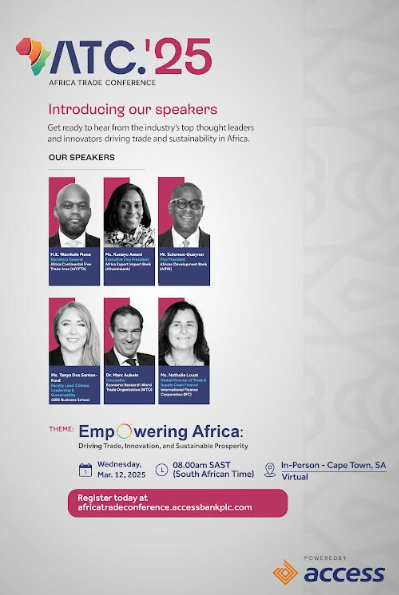
    Access Bank PLC, Africa’s leading financial institution,today, announced a distinguished line-up of speakers for the maiden edition of its highly anticipated Africa Trade Conference 2025, set to hold on Wednesday, March 12, 2025, at the Cape Town International Convention Centre (CTICC), South Africa. Under the theme “Empowering Africa: Driving Trade, Innovation, and Sustainable Prosperity”, the conference will convene some of the most influential figures in global finance, trade, and economic development to discuss the future of commerce and investment across the continent.

    H.E. Wamkele K. Mene, Secretary-General of the African Continental Free Trade Area (AfCFTA), will deliver the keynote address, exploring how Africa can fully harness the AfCFTA to drive economic growth and industrialisation. The event will also feature a presentation from Kanayo Awani, Executive Vice President of the Africa Export-Import Bank (Afreximbank), who will analyse the opportunities and challenges shaping Africa’s trade landscape.

    Further insights will come from Solomon Quaynor, Vice President of the African Development Bank (AfDB), who will examine the role of trade facilitation in economic growth, and Dr. Marc Auboin, Counsellor for Economic Research and Statistics at the World Trade Organization (WTO), who will discuss the impact of digitisation and innovation on global supply chains.

    Adding further depth to the discussions, experts from leading multinational financial institutions will weigh in on strategies for enhancing Africa’s competitiveness in global markets. Florian Wicht, Regional Lead for Africa, Trade & Supply Chain Finance at IFC, alongside Kristina Holzhauser, Managing Director for Regional FI Africa & Middle East at Commerzbank AG; Ferdinand Zaumu, Managing Director, Head of Trade & Working Capital Solutions for the Middle East and Africa at Citibank, and Shyamasish Acharya, Resident Representative, India EXIM Bank, will provide perspectives on financing solutions to unlock trade potential. Meanwhile, Eduardo Barbosa, CFO of Grupo Naval, along with other industry leaders, will share practical insights from the private sector on navigating Africa’s evolving trade and logistics environment.

    Tanya Dos Santos-Ford, Faculty Lead on Climate Leadership and Sustainability at GIBS Business School, who will lead  discussion on the intersection of trade and sustainability, is billed to explore how Africa can balance trade expansion with environmental responsibility. Additionally, industry leaders such as Marcelo Mendes, Head of

    Commercial at Tennant Metals South Africa, and Lodewyk Meyer, Director of Banking and Finance at OWP Partners, will offer perspectives on how businesses can capitalise on Africa’s growing trade opportunities while mitigating risks.

    With an agenda designed to foster actionable solutions and strategic partnerships, the Africa Trade Conference 2025 is set to be a defining event for business leaders, investors, and policymakers working to unlock Africa’s vast trade potential.

    Interested participants cantake part in the discourse by visiting https://africatradeconference.accessbankplc.com/.

  • Feature: The U.S. vs China Trade War – What It Means for Nigeria

    Feature: The U.S. vs China Trade War – What It Means for Nigeria

    Introduction: A New Trade Battle Begins

    On February 1, 2025, U.S. President Donald Trump signed an executive order imposing a 10% tariff on all Chinese imports into the U.S. This decision was aimed at reducing America’s dependence on Chinese goods and protecting domestic businesses. However, it did not go unnoticed.

    In response, China retaliated by announcing a 15% tariff on U.S. coal and liquefied natural gas (LNG), as well as a 10% tariff on American oil and agricultural machinery. Additionally, China filed a dispute with the World Trade Organization (WTO), arguing that the new U.S. tariffs were unfair and violated global trade agreements.

    For global markets, this marks another escalation in the ongoing trade tensions between the two superpowers. But beyond the U.S. and China, how does this affect Africa, and more specifically, Nigeria? How This Trade War Impacts Nigeria and Africa

    1.     Pressure on Commodity Prices

    Africa, and Nigeria in particular, is heavily dependent on commodity exports, especially crude oil. China is one of the biggest buyers of African raw materials, including oil, metals, and agricultural products.

    With the U.S. imposing tariffs on China, China’s economy may slow down, leading to reduced demand for oil and minerals from Africa. This could cause a drop in global commodity prices, affecting Nigeria’s revenue and putting pressure on government finances. Since over 80% of Nigeria’s revenue comes from oil exports, any decline in prices could impact economic growth and foreign exchange reserves.

    2.     Foreign Investment May Slow Down

    The uncertainty surrounding the trade war makes global investors cautious, leading them to pull funds from emerging markets like Nigeria and move them to safer economies like the U.S. or Europe.

    Additionally, China is one of the largest investors in African infrastructure, financing projects like railways, roads, power plants, and telecoms. If China’s economy weakens due to trade tensions, Chinese investment in Nigeria could slow down, delaying key infrastructure projects.

    1.     Pressure on the Naira & Inflation Risks

    China may choose to devalue its currency (the Yuan) to make its exports more competitive. If this happens, it could affect Nigeria’s exchange rate because Nigeria imports a lot of machinery, electronics, and industrial equipment from China.

    A weaker Yuan could make Chinese goods cheaper, benefiting Nigerian importers. However, if the trade war causes oil prices to fall, Nigeria could face a foreign exchange crisis, making it harder to defend the Naira and leading to inflation.

    2.     Nigeria’s Equities Market: A Strong Opportunity Amid Global Volatility

    While global markets may experience volatility due to trade tensions, Nigeria’s equities market presents a compelling opportunity for investors.

    • Resilient Banking and Consumer Goods Sectors: The Nigerian Exchange (NGX) is home to well-capitalised banks and fast-growing consumer goods companies that continue to expand despite global uncertainties.
    • Growth in Local Manufacturing: As global supply chains shift, Nigerian manufacturers are poised to benefit from increased local demand and government incentives.
    • Technology and Fintech Boom: Nigeria’s fintech sector continues to attract investment, positioning itself as a leading player in Africa’s digital transformation.
    • Attractive Valuations: Compared to developed markets, Nigerian stocks remain undervalued, presenting a golden opportunity for long-term investors.

    3.     Potential Opportunities for Nigerian Exporters

    While the trade war poses risks, it also opens up new opportunities. If U.S. tariffs make Chinese goods more expensive for American buyers, the U.S. may start importing more products from alternative markets, including Africa.

    Nigeria could benefit if:

    • U.S. buyers shift to Nigerian agricultural products like cocoa, rubber, and sesame seeds.
    • African textile and manufacturing companies get access to U.S. markets as alternatives to China.

    This could be an opportunity for Nigeria to strengthen its non-oil exports and diversify its economy away from crude oil reliance.

    What Should Investors and Policymakers Do?

    To navigate these uncertainties, Nigerian investors and policymakers need to take strategic actions:

    1. Diversify Investments: Investors should balance their portfolios by including assets like gold, dollarbased funds, and sectors that can withstand global trade fluctuations.
    2. Monitor Exchange Rate Trends: Businesses that rely on imports should watch the Naira closely and hedge against possible currency risks.
    3. Explore Export Markets: Nigerian businesses should seek new trade opportunities in the U.S. and Europe, especially in agriculture and manufacturing.
    4. Strengthen Local Manufacturing: The government should support local industries to reduce dependence on imports and take advantage of shifting trade dynamics.
    5. Enhance Trade Agreements: Nigeria should negotiate better trade agreements with the U.S. and EU to position itself as an alternative supplier in sectors affected by the U.S.-China dispute.

    In Summary | Prepare for Volatility, Seek Opportunities

    The U.S.-China trade war is more than just a conflict between two economic giants—it has ripple effects across the world, including Africa and Nigeria. While commodity-dependent economies like Nigeria may face risks from falling oil prices, foreign investment slowdowns, and currency pressure, there are also opportunities for Nigerian exporters to gain market share in the U.S. and other regions.

    Most importantly, Nigeria’s equities market remains a bright spot for investors, with strong growth in banking, manufacturing, and technology sectors. Investors should stay informed, remain adaptable, and take advantage of undervalued Nigerian stocks while preparing for shifts in global trade flows.

    With the right policies and investor strategies, Nigeria can turn global challenges into new economic opportunities. Meanwhile, Nigeria must act strategically to diversify its economy, strengthen local industries, and leverage emerging trade opportunities in a rapidly shifting global landscape.