Tag: Zenith Bank PLC

  • Zenith Bank commemorates 2026 World Environment Day with Two-Phase Clean-Up Initiative in Lagos

    Zenith Bank commemorates 2026 World Environment Day with Two-Phase Clean-Up Initiative in Lagos

    In line with its commitment to environmental sustainability and responsible business practices, Zenith Bank Plc has commemorated the 2026 World Environment Day with a two-phase environmental clean-up initiative in Lagos State, held under the global theme “Inspired by Nature. For Climate. For Our Future.”

    The first phase was a morning clean-up conducted by staff of the Bank on Wednesday, 3 June 2026, along Ajose Adeogun Street, Victoria Island, Lagos. The exercise mobilised employees to clear waste, sensitise residents on proper disposal practices, and reinforce the Bank’s culture of community service and environmental stewardship.

    The second phase, on Thursday, 4 June 2026, featured a waterways clean-up at the Falomo Waterways, Ikoyi, Lagos, executed in collaboration with the Lagos Waste Management Authority (LAWMA) and the Lagos State Waterways Authority (LASWA). The joint effort focused on removing marine debris, promoting cleaner waterways, and supporting the State’s broader climate-resilience agenda.

    Speaking on the initiative, Dame Dr. Adaora Umeoji, OON, Group Managing Director/CEO of Zenith Bank Plc, said: “At Zenith Bank, sustainability is integral to how we operate. Clearing our streets and our waterways is a practical reminder that protecting the environment is a shared responsibility – and one we are proud to take up alongside LAWMA and LASWA. Through these exercises, we are taking deliberate action to preserve our communities, support climate action, and inspire others to act. Our operations will continue to align with global environmental standards as we build a more sustainable future for Nigeria and Africa.”

    Zenith Bank remains committed to embedding Environmental, Social and Governance (ESG) principles across its operations, investing in green initiatives, energy efficiency, and community-focused programmes. These efforts advance the United Nations Sustainable Development Goals – particularly SDG 7 (Affordable and Clean Energy), SDG 11 (Sustainable Cities and Communities) and SDG 13 (Climate Action). Sustainability remains an operational imperative across the Bank’s Nigerian base and its broader African, UK and European footprints.

  • Jim Ovia Steps Down As Zenith Bank Chairman, Mustapha Bello Steps In

    Jim Ovia Steps Down As Zenith Bank Chairman, Mustapha Bello Steps In

    The founder and long-serving Chairman of Zenith Bank Plc, Jim Ovia, has officially stepped down from his role, marking the end of an era at the Zenith Bank’s 35th Annual General Meeting (AGM) held in Lagos.

    Ovia quit after he completed the mandatory 12-year tenure permitted under corporate governance guidelines for financial holding companies in Nigeria.

    His exit signals a major leadership transition for one of Nigeria’s most systemically important banks, where he has been instrumental in driving its evolution from a startup institution into a tier-one banking franchise.

    Ovia, who founded Zenith Bank and has been a central figure in its growth trajectory, was credited by the Board for providing strong leadership, strategic direction, and effective oversight throughout his time as chairman.

    Under his stewardship, Zenith Bank built a reputation for strong corporate governance, consistent profitability, and disciplined risk management, positioning itself as a market leader in Nigeria’s financial services sector.

    His strategic influence also guided the bank’s expansion across key African markets and its dual listing on both domestic and international exchanges, reinforcing investor confidence and global visibility.

    Following his departure, Engr Mustapha Bello has assumed the position of Chairman, taking on the responsibility of steering the bank through its next phase of growth and transformation.

    Bello, who joined the Board on December 29, 2017, is currently the longest-serving director.

    According to the bank, he brings extensive leadership experience, a deep understanding of corporate governance principles, and a track record in strategic oversight and organisational growth.

    The bank added that Bello has demonstrated integrity, independence, and sound judgment during his time on the Board, positioning him to lead the institution through its next phase.

    Zenith Bank confirmed that the appointment of Bello has received the Central Bank of Nigeria’s approval.

    The transition is expected to ensure stability and a seamless continuation of the bank’s strategic objectives, as it navigates evolving regulatory and market dynamics.

    In his acceptance remarks at the AGM, Bello reaffirmed his commitment to preserving and advancing the legacy established under Ovia’s leadership.

    He emphasised a strategic focus on consolidating existing gains, enhancing operational efficiency, and accelerating innovation to ensure the bank remains competitive in an increasingly dynamic financial landscape.

    Market analysts view the transition as a defining moment for Zenith Bank, given Ovia’s deep-rooted influence on the institution’s culture, governance framework, and long-term strategy.

    Stakeholders are expected to closely monitor how the new leadership executes its mandate, particularly amid evolving regulatory pressures and macroeconomic challenges.

    Further details are anticipated as the bank provides additional clarity on its leadership transition roadmap and strategic priorities.

  • Zenith Bank Exceeds N1 Trillion Mark In Q1 2026 Gross Earnings

    Zenith Bank Exceeds N1 Trillion Mark In Q1 2026 Gross Earnings

    Zenith Bank PLC  has announced its unaudited results for the first quarter ended 31st March 2026, with a 6% growth in Gross Earnings, from N950 billion reported in Q1 2025 to N1.01 trillion in Q1 2026. This is despite the challenging operating environment and tightening monetary policy stance.

    From the unaudited statement of account submitted to the Nigerian Exchange (NGX) recently, this growth was driven by an increase in interest income and non-interest income.

    The increase in interest income was primarily due to the expansion of the Bank’s risk asset portfolio, supported by disciplined, risk-adjusted pricing. Interest expense moderated by 5% YoY in Q1 2026 underscored by a continued optimisation of the Bank’s deposit mix and funding structure.

    This resulted in a 7% growth in net interest income from N591 billion in Q1 2025 to N634 billion in Q1 2026.

    Non-interest income also improved 19% year on year, rising from N89 billion to N106 billion, highlighting an improvement in fees and commissions and higher contributions from other operating income streams. This performance reflects stronger customer activity and deeper transaction volumes across key business channels.

    As a result, the Group recorded a 3% year on year increase in profit before tax, which rose to N361 billion compared with N351 billion in Q1 2025. Profit after tax also increased by 1% to N314 billion.

    Profitability was further supported by a decline in cost of funds to 3.76% in Q1 2026 from 3.90% in Q1 2025; while cost of risk moderated to 2% in Q1 2026, reflecting a prudent and proactive risk management stance in an elevated yield environment.

    Gross loans increased by 9% from N11.06 trillion as at full year 2025 to N12.04 trillion in Q1 2026, reflecting the continued commitment to carefully deploying credit into high growth sectors of the economy that enhance portfolio returns. Asset quality strengthened as the Non-Performing Loan (NPL) ratio eased to 3.79%, from 3.82% reported in December 2025, underpinned by disciplined credit risk management. Customer deposits rose to N24.47 trillion in Q1 2026, while total assets increased by 2% to N32.01 trillion over the same period.

    Return on Average Equity (ROAE) and Return on Average Assets (ROAA) stood at 24.9% and 4% respectively, supported by strong top line earnings and enhanced balance sheet efficiency.

    Net interest margin (NIM) strengthened to 12.5%, up from 10.3% in Q1 2025, underscoring the Group’s ability to preserve its margins and deliver improved shareholder returns. Prudential ratios remained strong and comfortably above regulatory requirements.

    The Group’s Capital Adequacy Ratio (CAR) and Liquidity Ratio stood at 23.5% and 71% respectively, while the coverage ratio remained strong at 169%, reinforcing the Bank’s resilient capital and liquidity position.

    The Group’s Q1 2026 performance underscores its continued focus on sustaining high-quality earnings growth, further strengthening asset quality, and deepening customer engagement through continued digital innovation. The Bank remains firmly committed to delivering sustainable growth anchored on sound corporate governance, prudent risk oversight, and disciplined capital allocation.

  • Zenith Bank elevates Kennedy Okwudili to an Executive Director

    Zenith Bank elevates Kennedy Okwudili to an Executive Director

    Zenith Bank Plc has elevated Mr Kennedy Onuwa Okwudili as an Executive Director of the bank, effective May 1, 2026. The appointment, which is consistent with the bank’s tradition and succession strategy of grooming leaders from within, will further strengthen the bank’s Executive Management.

    Mr Okwudili graduated with a Bachelor of Science (Honours) in Accounting in 1998 from the University of Maiduguri, Nigeria, with a Second Class Upper Division. He obtained a Master’s of Business Administration (MBA) from Ahmadu Bello University, Zaria, Nigeria, in 2008 and a Master’s of Science in Accounting from Veritas University, Abuja, Nigeria, in 2021.

    Mr Okwudili has over twenty-five years of cognate banking experience spanning credit and marketing, treasury, compliance, as well as operations and has at different times worked in various zones and departments of the bank.

    He is a Fellow of the Institute of Chartered Accountants of Nigeria (ICAN), 2013, a Fellow of the Chartered Institute of Bankers of Nigeria (CIBN), 2024 and an Associate of the Chartered Institute of Taxation of Nigeria (CITN), 2016.

    He has attended several Executive Education Programmes both within and outside the country, including: Senior Leadership Development Programme at the Lagos Business School, Corporate Directorship Programme at the Harvard Business School and Oxford Advanced Management and Leadership Programme at the University of Oxford, SAID Business School.

    He is currently the President of Catholic Bankers Association of Nigeria (CBAN) and a member of the Noble Order of the Knights of St. John International (KSJI).

  • Zenith Bank expands footprint, opens Manchester branch to strenghten Global Financial Connectivity

    Zenith Bank expands footprint, opens Manchester branch to strenghten Global Financial Connectivity


    Zenith Bank Plc has announced the opening of a new branch in Manchester, United Kingdom, in a move aimed at strengthening financial connections between Africa and the United Kingdom while supporting businesses engaged in cross-border trade and investment.

    The official opening ceremony for the new branch is scheduled for Tuesday, March 17, 2026, and is expected to attract government officials from Nigeria and the United Kingdom, regulators, investors, customers and business leaders from both countries.

    The expansion marks another milestone in the bank’s international growth strategy as it continues to position itself as a leading African financial institution, facilitating global trade flows involving Africa.

    According to the bank, the Manchester branch will complement its existing operations in the United Kingdom and serve as a strategic hub for providing corporate banking, trade finance, treasury and related financial services to clients operating across the United Kingdom, Europe and Africa.

    Group Managing Director and Chief Executive Officer of Zenith Bank Plc, Adaora Umeoji, said the expansion reflects the bank’s commitment to strengthening financial connectivity between businesses in developed markets and Africa’s rapidly expanding economies.

    “The opening of our Manchester branch represents another important step in Zenith Bank’s growth as a leading African financial institution connecting businesses and markets across continents. Manchester is one of the United Kingdom’s most dynamic commercial centres, and our presence here will further strengthen financial connections between businesses in the UK and opportunities across Africa’s rapidly expanding markets,” Umeoji said.

    Founded in 1990 by its Founder and Chairman, Jim Ovia, Zenith Bank has grown into one of Africa’s leading banking institutions with a strong capital base and consistent profitability.

    The bank operates more than 500 branches and business offices across Nigeria’s 36 states and the Federal Capital Territory, while maintaining subsidiaries in several African markets including Ghana, Sierra Leone, Gambia and Côte d’Ivoire.

    Beyond Africa, Zenith Bank maintains a presence in major international financial centres including the United Kingdom, France, the United Arab Emirates and China as part of its strategy to support global trade and investment involving African businesses.

    Manchester, one of the United Kingdom’s leading commercial centres, hosts a diverse business community spanning sectors such as manufacturing, logistics, engineering, technology and consumer goods.

    The city’s strong economic base and international outlook make it a strategic location for financial institutions seeking to support businesses operating across multiple global markets.

    Zenith Bank said the Manchester branch will work closely with its London operations and the bank’s broader international network to support clients expanding across markets and seeking new trade and investment opportunities.

    With the launch of the Manchester branch, the bank continues to advance its long-term vision of building a globally connected African financial institution capable of facilitating international commerce and strengthening economic partnerships between Africa and global markets.

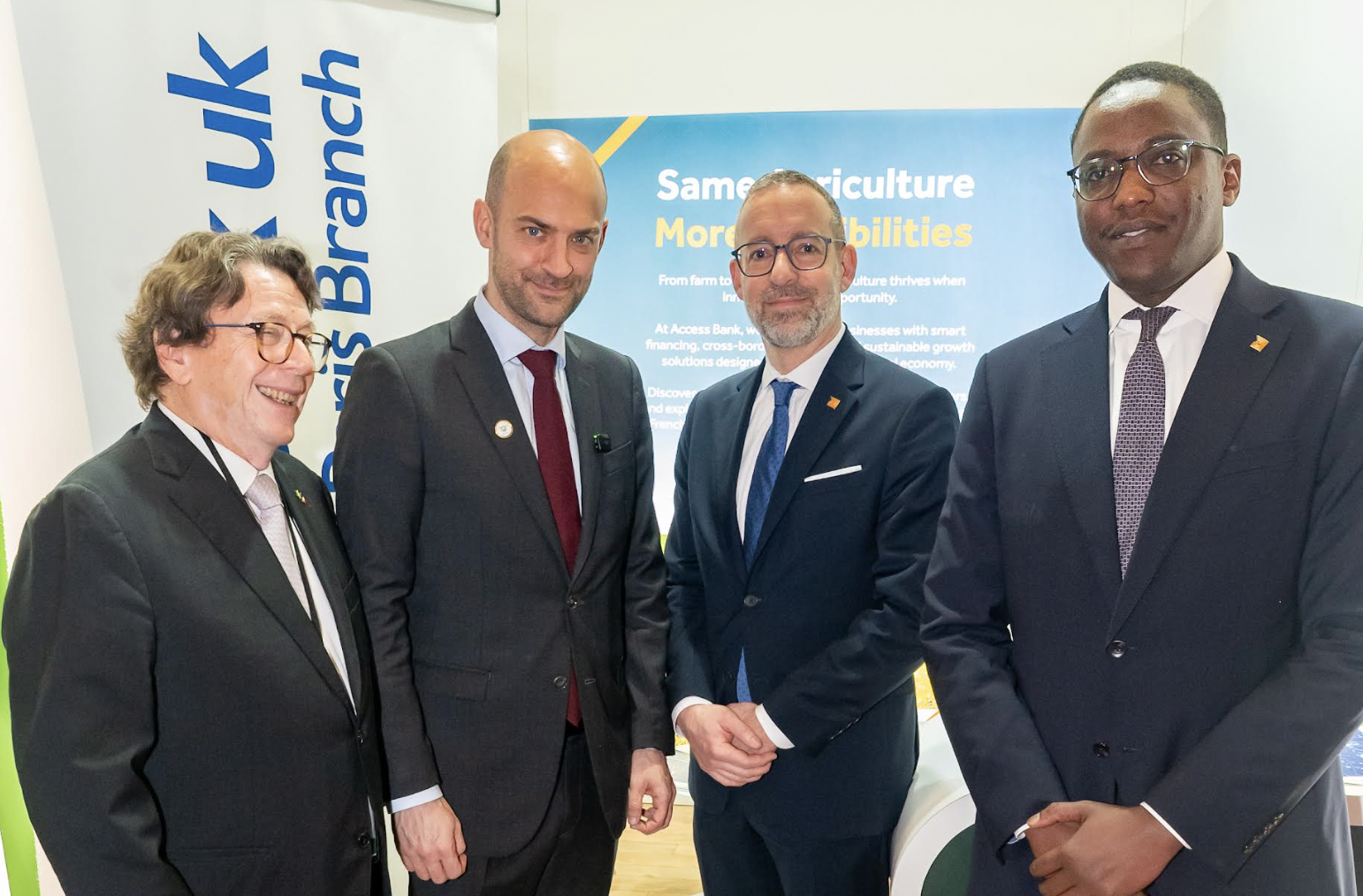
  • Access Bank Drives Africa–Europe Trade Corridor at the Paris International Agricultural Show 2026

    Access Bank Drives Africa–Europe Trade Corridor at the Paris International Agricultural Show 2026

    Access Holdings PLC, the parent company of Access Bank Group, has reinforced the leadership of the financial institution in connecting African and European markets as its Group Managing Director and CEO, Innocent C. Ike, officially inaugurated the Nigerian Pavilion at the 2026 Paris International Agricultural Show.

    The event marks a pivotal moment in advancing strategic trade, investment, and agricultural partnerships between Nigeria and France, while positioning Access Holdings at the centre of cross-continental economic integration.

    Representing Aigboje Aig-Imoukhuede, Chairman of Access Holdings and the France–Nigeria Business Council (FNBC), Ike opened the pavilion before an audience of global investors, policymakers, and corporate leaders, signalling Nigeria’s readiness to deepen commercial engagement with Europe and strengthen value chains across the agricultural sector.

    “The Nigerian Pavilion represents readiness, readiness to partner, to invest, and to grow together.” Ike stressed in his opening remarks also reminding the audience that “Paris serves as a gateway into Europe, while Nigeria represents one of Africa’s largest and most dynamic markets. The presence of Nigerian banks here enhances trade finance, investment flows, and cross-border partnerships across continents.”

    The inauguration marks the beginning of a week-long series of engagements aimed at unlocking new investment opportunities, strengthening agribusiness value chains, and enabling greater participation of small and medium-sized enterprises (SMEs) in cross-border trade. As a leading African financial institution with an expanding global footprint, Access Bank, continues to serve as a key enabler of international commerce, providing the financial infrastructure required to connect businesses, markets, and capital across continents.

    A cornerstone of this strategy is the Paris branch of Access Bank UK, which since its establishment in 2023 has played a critical role in facilitating trade and investment between Europe and Africa. Under the leadership of Justin Maria, the branch delivers specialist trade finance, corporate banking, and structured financing solutions that enable European and African businesses to execute cross-border transactions efficiently and scale their international operations.

    Through its active participation in high-level platforms such as the Nigeria Business Forum and the Spotlight Nigeria Business Forum, Access Holdings has strengthened investor confidence, supported capital flows, and reinforced its position as a trusted financial partner for companies expanding into African and European markets.

    The opening ceremony brought together distinguished public and private sector leaders, including Jim Ovia, Founder and Chairman of Zenith Bank Plc; Adaora Umeoji, Managing Director and CEO of Zenith Bank Plc; Umar Dikko Radda, Executive Governor of Katsina State; and Emmanuelle Blatmann, Director of African Affairs at the French Ministry of Foreign Affairs, alongside senior government officials, investors, and corporate executives.

    The Nigerian Pavilion, sponsored by the France–Nigeria Business Council and supported by leading institutions including Access Holdings/Access Bank, reflects the growing momentum behind Nigeria’s global trade ambitions and the strategic role of the Group in facilitating economic connectivity between Africa and the rest of the world.

    As global supply chains continue to evolve, Access Bank remains committed to building bridges between Africa and international markets, supporting trade, enabling investment, and empowering businesses to scale across borders. The Group’s participation in the Paris International Agricultural Show underscores its broader vision of positioning Africa, and Nigeria in particular, as a key player in global commerce.

  • Jim Ovia not involved in any investment scheme- Zenith Bank

    Jim Ovia not involved in any investment scheme- Zenith Bank

    Zenith Bank Plc, a major financial services provider in Nigeria and Anglophone West Africa, has advised members of the public to disregard videos circulating online linking the Banks’ Group Chairman, Dr Jim Ovia, as endorsing an investment scheme known as Wealth Bridge.

    The bank gave the advice on its official X on Tuesday in Abuja.

    It said that the videos had urged members of the public to engage in a business relationship with the entity, alleging that the Central Bank of Nigeria (CBN) approved or endorsed the project.

    It described the videos and promotional materials as fake and had nothing to do with the bank or its Group Chairman.

    The bank said that the videos which circulated through the ‘Greece Island’ Facebook handle, made a fake promise of up to two million naira in weekly returns on a contribution of N380, 000 investment.

    “The video redirects unsuspecting members of the public to an alleged Arise News webpage with the details of this scheme and an embedded registration portal for signups.

    “This claim is entirely false and has no connection whatsoever to the Group Chairman, the Bank or any of its affiliate companies.

    “The general public is hereby advised to disregard these fraudulent communications.

    “Anyone who engages with the Greece Island handle, Wealth Bridge, delicious site, AfriQuantumX, Stock market analyst 1 or any other entity on the basis of these fake videos and images published by impostors, does so strictly at his or her own risk,’’ the bank said.

  • Feature- After the Capital Rush: Who Really Wins Nigeria’s Bank Recapitalisation?

    Feature- After the Capital Rush: Who Really Wins Nigeria’s Bank Recapitalisation?

    By Blaise Udunze

    By any standard, Nigeria’s ongoing bank recapitalisation exercise is one of the most consequential financial sector reforms since the 2004-2005 consolidation, which reduced the number of banks from 89 to 25. Then, as now, the stated objective was stability to have stronger balance sheets, better shock absorption, and banks capable of financing long-term economic growth. The Central Bank of Nigeria (CBN), in 2024, mandated a sweeping recapitalisation exercise compelling banks to raise substantially higher capital bases depending on their license categories. The categorisation mandated that every Tier-1 deposit money bank with international authorization is to warehouse N500 billion minimum capital base, and a national bank must have N200 billion, while a regional bank must have N50 billion by the deadline of 31st March 2026. According to the apex bank, the objectives were to strengthen resilience, create a more robust buffer against shocks, and position Nigerian banks as global competitors capable of funding a $1 trillion economy.

    However, as the race to comply intensifies and the dust gradually settles, a far bigger conversation has emerged, one that cuts to the heart of how our banking system operates. What will the aftermath of recapitalisation mean for Nigeria’s banking landscape, financial inclusion agenda, and real-sector development? Beyond the headlines of rights issues, private placements, and billionaire founders boosting stakes, every Nigerian deserves a sober assessment of what has changed, and what still must change, if recapitalisation is to translate into a genuinely improved banking system. The points are who benefits most from its evolution, and whether ordinary Nigerians will feel the promised transformation in their everyday financial lives, because history has taught us that recapitalisation is never a neutral policy. The fact remains that recapitalization creates winners and losers, restructures incentives, and often leads to unintended outcomes that outlive the reform itself.

    Concentration Risk: When the Big Get Bigger

    Recapitalisation is intended to strengthen banks, but at the same time, it risks making them fewer and larger, concentrating power and risk in an ever-narrowing circle. Nigeria’s Tier-1 banks, those already controlling roughly 70 percent of banking assets, are poised to expand further in both balance sheet size and market influence. This deepens the divide between the “haves” and “have-nots” within the sector. A critical fallout of this exercise has been the acceleration of consolidation. Stronger banks, such as Access Holdings and Zenith Bank, with ready access to capital markets, have managed to meet or exceed the new thresholds early by raising funds through rights issues and public offerings. Access Bank boosted its capital to nearly N595 billion, and Zenith Bank to about N615 billion.

    In contrast, banks that lack deep pockets or the ability to quickly mobilise investors are lagging. The results always show that the biggest banks raise capital faster and cheaper, while smaller banks struggle to keep pace.

    As of mid-2025, fewer than 14 of Nigeria’s 24 commercial banks met the required capital base, meaning a significant number were still scrambling, turning to rights issues, private placements, mergers, and even licensing downgrades to survive.

    The danger here is not merely numerical. It is systemic: as capital becomes more concentrated, the banking system could inadvertently mimic oligopolistic tendencies, reducing competition, narrowing choices for customers, and potentially heightening systemic risk should one of these “too-big-to-fail” institutions falter.

    Capital Flight or Strategic Expansion? The Foreign Subsidiary Question

    One of the most contentious aspects of the recapitalisation aftermath has been the deployment of newly raised capital, especially its use outside Nigeria. Several banks, flush with liquidity from rights issues and injections, have signalled or executed investments in foreign subsidiaries and expansions abroad, like what we are experiencing with Nigerian banks spreading their tentacles to the Ivory Coast, Ghana, Kenya, and beyond. Zenith Bank’s planned expansion into the Ivory Coast exemplifies this outward push.

    While international diversification can be a sound strategic move for multinational banks, there is an uncomfortable optics and developmental question here: why is Nigerian money being deployed abroad when millions of Nigerians remain unbanked or underbanked at home?

    According to the World Bank, a large number of Nigeria’s adult population still lack access to formal financial services, while millions of SMEs, micro-entrepreneurs, and rural households remain on the edge, underserved by traditional banks that now chase profitability and scale.

    Of a truth, redirecting Nigerian capital to foreign markets may deliver shareholder returns, but it does little in the short term to advance domestic financial inclusion, poverty reduction, or grassroots economic participation. The optics of capital flight, even when legal and strategic, demand scrutiny, especially in a nation still struggling with deep regional and demographic disparities.

    Impact on Credit and the Real Economy

    For the ordinary Nigerian, the most important question is simple: will recapitalisation make credit cheaper and more accessible?

    History suggests the answer is not automatic. The tradition in Nigeria’s bank system is mainly to protect returns, and for this reason, many banks respond to higher capital requirements by tightening lending standards, raising interest rates, or focusing on low-risk government securities rather than private-sector loans, because raising capital is expensive, and banks are profit-driven institutions. Small and medium-sized enterprises (SMEs), often described as the engine of growth, are usually the first casualties of such risk aversion.

    If recapitalisation results in stronger balance sheets but weaker lending to the real economy, then its benefits remain largely cosmetic. The economy does not grow on capital adequacy ratios alone; it grows when banks take measured risks to finance production, innovation, and consumption.

    Retail Banking Retreat: Handing the Mass Market to Fintechs?

    In recent years, we have witnessed one of the most striking shifts, or a gradual retreat of traditional banks from mass retail banking, particularly low-income and informal customers.

    The question running through the hearts of many is whether Nigerian banks are retreating from retail banking, leaving space for fintech disruptors to fill the void.

    In recent years, players like OPAY, Moniepoint, Palmpay, and a host of digital financial services arms have become de facto retail banking platforms for millions of Nigerians. They provide everyday payment services, wallet functionalities, micro-loans, and QR-enabled commerce, areas traditional banks once dominated. This trend has accelerated as banks chase corporate clients where margins are higher and risk profiles perceived as more manageable. The true picture of the financial landscape today is that the fintechs own the retail space, and banks dominate corporate and institutional finance. But it is unclear or uncertain if this model can continue to work effectively in the long term.

    Despite the areas in which the Fintechs excel, whether in agility, product innovation, and customer experience, they still rely heavily on underlying banking infrastructure for liquidity, settlement, and regulatory compliance. Should the retail banking ecosystem become split between digital wallets and corporate corridors, rather than being vertically integrated within banks, systemic liquidity dynamics and financial stability could be affected. Nigerians deserve a banking system where the comforts and conveniences of digital finance are backed by the stability, regulatory oversight, and capital strength of licensed banks, not a system where traditional banks withdraw from retail, leaving unregulated or lightly regulated players to carry that mantle.

    Corporate Governance: When Founders Tighten Their Grip

    The recapitalisation exercise has not been merely a technical capital-raising exercise; it has become a theatre of power plays at the top. In several banks, founders and major investors have used the exercise to increase their stakes, concentrating ownership even as they extol the virtues of financial resilience.

    Prominent founders, from Tony Elumelu at UBA to Femi Otedola at First Holdco and Jim Ovia at Zenith Bank, have all been actively increasing their shareholdings. These moves raise legitimate questions about corporate governance when founders increase control during a regulatory exercise. Are they driven by confidence in their institutions, or are they fortifying personal and strategic influence amid industry restructuring.

    Though there might be nothing inherently wrong with founders or shareholders demonstrating faith in their institutions, one fact remains that the governance challenge lies not simply in who holds the shares, but how decisions are made and whose interests are prioritised. Will banks maintain robust internal checks and balances, ensuring that capital deployment aligns with national development goals? The question is whether the CBN is equipped with adequate supervisory bandwidth and tools to check potential excesses if emerging shareholder concentrations translate into undue influence or risks to financial stability. These are questions that transcend annual reports; they strike at the heart of trust in the system.

    Regional Disparity in Lending: Lagos Is Not Nigeria

    One of the persistent criticisms of Nigerian banking is regional lending inequality. It has been said that most bank loans are still overwhelmingly concentrated in Lagos and the Southwest, despite decades of financial deepening in this region; large swathes of the North, Southeast, and other underserved regions receive disproportionately smaller shares of credit. This imbalance not only undermines inclusive growth but also fuels perceptions of economic exclusion.

    Recapitalisation, in theory, should have enhanced banks’ capacity to support broader economic activity. Yet, the reality remains that loans and advances are overwhelmingly concentrated in economic hubs like Lagos.

    The CBN must deploy clear incentives and penalties to encourage geographic diversification of lending. This could include differentiated capital requirements, credit guarantees, or tax incentives tied to regional loan portfolios. A recapitalised banking system that does not finance national development is a missed opportunity.

    Cybersecurity, Staff Welfare, and the Technology Deficit

    Beyond balance sheets and brand expansion, there is a human and technological dimension to the banking sector’s challenge. Fraud remains rampant, and one of the leading frustrations voiced by Nigerians involves failed transactions, delayed reversals, and poor digital experience. Banks can raise capital, but if they fail to invest heavily in cybersecurity, fraud detection, staff training, and welfare, the everyday customer will continue to view the banking system as unreliable. Nigeria’s fintech revolution has thrived precisely because it has pushed incumbents to become more customer-centric, agile, and tech-savvy. If banks now flush with capital don’t channel a portion of those funds into robust IT systems, workforce development, fraud mitigation, and seamless customer service, then the recapitalisation will have achieved little beyond stronger balance sheets. In short, Nigerians should feel the difference, not merely in stock prices and market capitalisation, but in smooth banking apps, instant reversals, responsive customer care, and secure platforms.

    The Banks Left Behind: Mergers, Failures, or Forced Restructuring?

    With fewer than half the banks having fully complied with the recapitalisation requirements deep into 2025, a pressing question is: what awaits those that lag? Many banks are still closing capital gaps that run into hundreds of billions of naira. According to industry estimates, the total recapitalisation gap across the sector could reach as much as N4.7 trillion if all requirements are strictly enforced.

    Banks that fail to meet the March 2026 deadline face a few options:

    • Forced M&A. Regulators could effectively compel weaker banks to merge with stronger ones, echoing the consolidation wave of 2005 that reduced the sector from 89 to 25 banks.
    • License downgrades or conversions. Some banks may choose to operate at a lower license category that demands a smaller capital base.
    • Exits or closures. In extreme cases, banks that can neither raise capital nor find a merger partner might be forced out of the market.

    This regulatory pressure should not be construed merely as punitive. It is part of the CBN’s broader architecture of ensuring that only solvent, well-capitalised, and risk-prepared institutions operate. However, the transition must be managed carefully to prevent contagion, protect depositors, and preserve confidence.

    Why Are Tier-1 Banks Still Chasing Capital?

    Perhaps the most intriguing puzzle is why some Tier-1 banks, long regarded as strong and profitable, are aggressively raising capital. Even banks thought to be among the strongest, such as UBA, First Holdco, Fidelity, GTCO, and FCMB, have struggled to close their capital gaps. UBA, for instance, succeeded in raising around N355 billion toward its N500 billion target at one point and planned additional rights issues to bridge the remainder.

    This reveals another reality that capital is not just numbers on paper; it is investor confidence, market appetite, and macroeconomic stability.

    One can also say that the answer lies partly in ambition to expand into new markets, infrastructure financing, and compliance with stricter global standards.

    However, it also reflects deeper structural pressures, including currency depreciation eroding capital, rising non-performing loans, and the substantial funding required to support Nigeria’s development needs. Even giants are discovering that yesterday’s capital is no longer sufficient for tomorrow’s challenges.

    Reform Without Deception

    As the Nigerian banking sector recapitalization exercise comes to a close by March 31, 2026, the ultimate test will be whether the reforms deliver on their transformational promise.

    Some of the concerns in the minds of Nigerians today will be to see a system that supports inclusive growth, equitable credit distribution, world-class customer service, and resilient financial intermediation. Or will we see a sector that, despite larger capital bases, still reflects old hierarchies, geographic biases, and operational friction? The cynic might say that recapitalisation simply made big banks bigger and empowered dominant shareholders. But a more hopeful perspective invites stakeholders, including regulators, customers, civil society, and bankers themselves, to co-design the next chapter of Nigerian banking; one that balances scale with inclusion, profitability with impact, and stability with innovation. The difference will be made not by press releases or shareholder announcements, but by deliberate regulatory action and measurable improvements in how banks serve the economy.

    For now, the capital has been raised, but the true capital that counts is the confidence Nigerians place in their banks every time they log into an app, make a transfer, or deposit their life’s savings. Only when that trust is visible in everyday experience can we say that recapitalisation has truly succeeded.

    Blaise, a journalist and PR professional, writes from Lagos and can be reached via: blaise.udunze@gmail.com

  • Zenith Bank Marks Successful Public Offer and Achievement of CBN Recapitalization at NGX

    Zenith Bank Marks Successful Public Offer and Achievement of CBN Recapitalization at NGX

    Zenith Bank Plc yesterday marked a significant milestone with a Closing Gong Ceremony at the Nigerian Exchange (NGX), celebrating the successful conclusion of its public offer and the achievement of the Central Bank of Nigeria’s (CBN) recapitalization target.

    The Bank’s recently concluded public offer, which was heavily oversubscribed, contributed ₦350.46 billion to its total capital raise, bringing its capital base to ₦614.65 billion. This positions Zenith Bank comfortably above the ₦500 billion regulatory threshold for banks with international authorization and underscores the strong confidence investors continue to place in the institution’s leadership, performance, and growth strategy.

    Speaking at the ceremony, Dr. Emomotimi Agama, Director-General of the Securities and Exchange Commission (SEC), commended the success of the offer, describing it as a reflection of the market’s strength and integrity. “This capital raise demonstrates the robust capacity of our markets. It’s a clear signal that with sound fundamentals and transparency, Nigeria can efficiently mobilize capital for growth,” he said.

    Also speaking, Alhaji (Dr.) Umaru Kwairanga, Group Chairman of Nigerian Exchange Group (NGX Group), described the milestone as “a testament to strong leadership and a win for our capital markets,” adding that “Zenith Bank’s achievement solidifies its position as a pillar of the financial sector and underscores the market’s faith in its future.”

    In his remarks, Temi Popoola, Group Managing Director/Chief Executive Officer of NGX Group, highlighted the role of innovation in driving the success of the offer. “The oversubscription of Zenith Bank’s offer is a direct result of innovation and collaboration. Our NGX Invest platform was instrumental in broadening access, onboarding a new generation of investors, and deepening market participation,” he stated.

    Reflecting on the achievement, Dr. Jim Ovia, CFR, Founder and Chairman of Zenith Bank Plc, expressed gratitude to the investing public for their trust and support. “This successful capital raise, which secures our regulatory standing, is a vote of confidence in our legacy and our future growth trajectory,” he said.

    Dame (Dr.) Adaora Umeoji, OON, Group Managing Director/Chief Executive Officer of Zenith Bank Plc, described the accomplishment as both a regulatory milestone and a springboard for sustainable growth. She also acknowledged the role of NGX Invest as a vital enabler in achieving the Bank’s goals. “Reaching a capital base exceeding ₦600 billion is not just a compliance achievement; it’s a foundation for the future. Through platforms like NGX Invest, which expanded access and simplified participation, we were able to reach a broader pool of investors. This underscores how innovation within our market ecosystem can drive inclusivity and accelerate growth,” she stated.

    The Closing Gong Ceremony symbolized the beginning of a new chapter for Zenith Bank, one defined by strengthened capacity, innovation, and renewed investor confidence. It also underscored the productive collaboration between the Bank, regulators, and the exchange group in fostering a resilient and dynamic capital market in Nigeria

  • Zenith Bank signals Strong Full-Year Outlook with N51.3 billion Interim Dividend Payout

    Zenith Bank signals Strong Full-Year Outlook with N51.3 billion Interim Dividend Payout

    Zenith Bank Plc, on Friday, October 10, 2025, made good on its promise as it paid a total interim dividend of N51.3 billion to its shareholders for the Half Year (H1) 2025, at N1.25 per share. This significant payout represents over 60% increase from the N31.4 billion paid in H1 2024, demonstrating the bank’s commitment and enhanced capacity to continually generate value for its shareholders amidst a challenging macroeconomic environment.

    The dividend payment comes on the heels of the bank’s audited financial results for the half-year ended June 30, 2025, released to the Nigerian Exchange (NGX) in September 2025, which showcased a robust financial position and growth trajectory.

    Commenting on the dividend payout, the Group Managing Director/CEO, Dame Dr. Adaora Umeoji, OON, said, “We are pleased to have paid this significant interim dividend to our valued shareholders. Our half-year results underscore our resilience and commitment to our stakeholders. Based on the momentum achieved in H1, we are confident in our full-year outlook and expect to exceed shareholders’ expectations by year end.”

    The substantial dividend payout reflects exceptional underlying performance as the Bank recorded a robust 20% year-on-year increase in gross earnings, rising from N2.1 trillion to N2.5 trillion in H1 2025. Interest income drove this performance with an impressive 60% growth, climbing from N1.1 trillion to N1.8 trillion. The Bank achieved this impressive increase in interest income through strategic repricing of risk assets and effective treasury management.

    The Bank’s total assets also expanded to N31 trillion in June 2025, representing steady growth from N30 trillion in December 2024, underpinned by a robust and well-structured balance sheet. Customer confidence remained strong, with deposits growing by 7% from N22 trillion to N23 trillion in June 2025.

    Zenith Bank’s shareholders can be assured of the bank’s continued focus on delivering exceptional value and growth, driven by its strong financial fundamentals and strategic initiatives.

    The Bank’s track record of excellent performance has continued to earn the brand numerous awards, including being recognised as the Number One Bank in Nigeria by Tier-1 Capital for the sixteenth consecutive year in the 2025 Top 1000 World Banks Ranking, published by The Banker and “Nigeria’s Best Bank” at the Euromoney Awards for Excellence 2025. The Bank was also awarded Bank of the Year (Nigeria) in The Banker’s Bank of the Year Awards for 2020, 2022 and 2024; Best Bank in Nigeria from 2020 to 2022, 2024 and 2025, in the Global Finance World’s Best Banks Awards; Best Bank for Digital Solutions in Nigeria in the Euromoney Awards 2023; and was listed in the World Finance Top 100 Global Companies in 2023.

    Further recognitions include Best Commercial Bank, Nigeria for five consecutive years from 2021 to 2025 in the World Finance Banking Awards and Most Sustainable Bank, Nigeria in the International Banker 2023 and 2024 Banking Awards. Additionally, Zenith Bank has been acknowledged as the Best Corporate Governance Bank, Nigeria, in the World Finance Corporate Governance Awards for four consecutive years from 2022 to 2025 and ‘Best in Corporate Governance’ Financial Services’ Africa for four consecutive years from 2020 to 2023 by the Ethical Boardroom.

    The Bank’s commitment to excellence saw it being named the Most Valuable Banking Brand in Nigeria in The Banker’s Top 500 Banking Brands for 2020 and 2021, Bank of the Year 2023 to 2025 at the BusinessDay Banks and Other Financial Institutions (BAFI) Awards, and Retail Bank of the Year for three consecutive years from 2020 to 2022 and 2024 to 2025 at the BAFI Awards. The Bank also received the accolades of Best Commercial Bank, Nigeria and Best Innovation in Retail Banking, Nigeria, in the International Banker 2022 Banking Awards.

    Zenith Bank was also named Most Responsible Organisation in Africa, Best Company in Transparency and Reporting and Best Company in Gender Equality and Women Empowerment at the SERAS CSR Awards Africa 2024; Bank of the Year 2024 by ThisDay Newspaper; Bank of the Year 2024 by New Telegraph Newspaper; and Best in MSME Trade Finance, 2023 by Nairametrics. The Bank’s Hybrid Offer was also adjudged ‘Rights Issue/ Public Offer of the Year’ at the Nairametrics Capital Market Choice Awards 2025.

  • Zenith Bank Plc Declares ₦1.25 Interim Dividend For H1 2025

    Zenith Bank Plc Declares ₦1.25 Interim Dividend For H1 2025

    Zenith Bank Plc has declared an interim dividend of ₦1.25 per share for the period ended 30th June 2025, subject to appropriate withholding tax.

    The Board of Directors, pursuant to the powers vested in it by the provisions of section 426 of the Companies and Allied Matters Act (CAMA 2020) of Nigeria, proposed an interim dividend of ₦1.25 per share (2024: Interim dividend of ₦1 per share) from the retained earnings accounts as at 30 June 2025.

    This will be presented for ratification by the shareholders at the next Annual General Meeting. Payment of dividends is subject to withholding tax rate of 10% in the hands of qualified recipients.

    On October 10, 2025, dividends will be paid electronically to shareholders whose names appear on the Register of Members as at October 3, 2025, and who have completed the e-dividend registration and mandated the Registrar to pay their dividends directly into their Bank accounts. GDR holders will be paid after this date.

    Zenith Bank Plc reported a gross earnings of ₦2.52 trillion (H1 2024: ₦2.10 trillion) for the first half of 2025, and a profit after tax of ₦532.18 billion (H1 2024: ₦577.85 billion), with a basic and diluted earnings per share of ₦12.95 (H1 2024: ₦18.41).

    As at 30 June 2025, the financial services company held ₦2.45 trillion (31 Dec. 2024: ₦2.01 trillion).

    Zenith Bank Plc was incorporated in Nigeria under the Companies and Allied Matters Act as a private limited liability company on May 30, 1990. It was granted a banking licence in June 1990, to carry on the business of commercial banking and commenced business on June 16, 1990.

    The Bank is domiciled in Nigeria and was converted into a Public Limited Liability Company on May 20, 2004. The Bank’s shares were listed on October 21, 2004 on the Nigerian Stock Exchange. In August 2015, the Bank was admitted into the Premium Board of the Nigerian Stock Exchange.

    The principal activity of the Bank is the provision of banking and other financial services to corporate and individual customers. Such services include granting of loans and advances, corporate finance and money market activities.

    The Bank has six subsidiary companies, namely: Zenith Bank (Ghana) Limited, Zenith Bank (UK) Limited, Zenith Bank (Sierra Leone) Limited, Zenith Bank (The Gambia) Limited, Zenith Pensions Custodian Limited and Zenith Nominees Limited. The Bank also has a representative office in China, in addition to operating a branch of Zenith Bank (UK) Limited in the United Arab Emirates and also in France

  • Zenith Bank Gives Investors 53% Return in 8 Months

    Zenith Bank Gives Investors 53% Return in 8 Months

    Zenith Bank Plc upside potential has widened as the financial services company’s share price becomes cheaper for investors seeking value ahead of earnings release. At the reference price of N70 last week, Ajose Adeogun, headquartered financial service company with 35 years in operation, has delivered a 53% return to investors in eight months.

    Data from the Nigerian Exchange (NGX) showed the bank’s share price closed at N66, which is approximately a 16% discount below its 52-week high of N78.50. In the stock market, bargain hunting faded sharply last week in the absence of fresh catalysts that had fuelled rallies across sectorial indexes.

    At the close of last week’s trading session, Zenith Bank Plc’s market value declined to N2.710 trillion on 41.069 billion shares outstanding in the Nigerian Exchange. The financial services group’s price movement was less volatile compared with the Nigerian Exchange’s negative performance.

    However, its contribution to the overall banking index loss was strong compared to other small lenders with negative price movements. Zenith Bank Plc’s share price declined to N66 on Friday as 17.349 million units valued at N1.174 trillion were traded in the local bourse. The huge trading volume was led by sell-side traders who sought to take profit ahead of the bank’s earnings release.

    The financial services company lost more than N164 billion from its opening market value as investors engaged in cautious trading amidst earnings delay The bank has indicated a plan to pay interim dividends, suggesting a healthy earnings performance for the first six months of operations in 2025.

    The market valued Zenith Bank Plc’s 41.069 billion shares outstanding at N2.71 trillion, a significant discount to its highest value reached in the local bourse in 52 weeks.

    Equity Analysts’ Expectations

    Equity analysts sampled by MarketForces Africa Research have different expectations about the group expected earnings stream, with varied evaluations of the group business fundamentals. Alpha Morgan Limited is the most optimistic investment firm, sets the highest price target of N102 per share for Zenith Bank, suggesting huge upside potential of about 55% to its latest price.

    The investment firm sees potential for strong upside where others played cool. Equity analysts at Afrinvest Securities Limited estimated a price target of N96.38 for Zenith Bank Plc with an upside potential of 37.70% on a reference price of N70 last week.

    In its stock recommendation, Apel Asset Limited reported that the banking group has delivered a 53.85% year-to-date return to investors with the target price set at N78.81. Equity analysts at Cowry Asset Limited are now seeing 44% upside potential in Zenith Bank on a reviewed target price of N95.

    Atlass Portfolio Limited thinks N80 is the right target price for Zenith Bank Plc, which analysts followed up with a hold or neutral recommendation due to limited upside potential of 14.29% at a reference price of N70 last week.

  • Zenith Bank marks 35th Anniversary in Grand Style, Recognises Pioneer Customers and Long-Serving Staff

    Zenith Bank marks 35th Anniversary in Grand Style, Recognises Pioneer Customers and Long-Serving Staff

    Amidst pomp and pageantry layered with a mixture of glitz and glamour, Zenith Bank Plc marked its 35th anniversary with a commemorative Chairman’s Dinner at the Eko Convention Centre, Eko Hotels & Suites, Victoria Island, Lagos on Friday, August 15, 2025.

    In recognition of their immense contributions to the success of the brand, the bank also presented commemorative awards and plaques to pioneer customers and long-serving staff, who have served meritoriously for 25 years and above.

    The ceremony brought together key stakeholders of the bank including customers, staff (past and present), regulators, partners, and friends, who all came together to celebrate 35 years of excellent and innovative banking services that has propelled the banking giant to the peak of Nigeria’s financial industry.

    Among the eminent personalities who graced the occasion were the Vice President, Federal Republic of Nigeria, Senator Kashim Shettima, GCON; Governor of Lagos State, Mr. Babajide Sanwo-Olu; Governor of Ondo State, Mr. Lucky Aiyedatiwa; Governor of Taraba State, Dr. Agbu Kefas; Governor of Borno State, Prof. Babagana Zulum; Governor of Delta State, Rt. Hon. Sheriff Oborevwori, who was ably represented by the Deputy Governor, Sir. Monday Onyeme; Alhaji Aliko Dangote, GCON; and former governors Peter Obi and Udom Emmanuel (also an alumnus of Zenith Bank).

    In her welcome address, the Group Managing Director/ Chief Executive of Zenith Bank Plc, Dame Dr. Adaora Umeoji, OON applauded the Founder and Chairman, Jim Ovia, CFR for his foundational role in building the structures for what has today become a shining example of excellence in the Nigerian banking industry and a globally recognised financial institution. She described him as “the Godfather of modern banking and the Nostradamus of our time, who through sheer tenacity, foresight, and uncompromising integrity transformed a modest vision into the financial powerhouse we celebrate today”.

    In his goodwill message, the Vice President, Federal Republic of Nigeria, Senator Kashim Shettima, GCON, a proud alumnus of the bank, praised the Founder and Chairman of Zenith Bank Plc, Jim Ovia, CFR for being at the heart of the very successful brand that today stands as Nigeria’s largest bank by Tier-One capital. According to him, “Long before technology became the bloodstream of global finance, Jim Ovia had already woven it into the DNA of Nigerian banking industry. He introduced innovation not as a fashion but as a philosophy, placing Zenith Bank on a path where excellence is not an ambition but a standard. Yet his true signature is not only on the balance sheet. For Jim Ovia, the people make an institution. His greatest investment has been in human capital – in transferring his experience and sense of adventure to generation after generation of bankers and investors forged at Zenith Bank”.

    Also speaking at the event, the Founder and Chairman of Zenith Bank, Jim Ovia, CFR expressed its immense appreciation to all guests for joining the bank in celebrating this momentous occasion. He thanked the bank’s esteemed customers and shareholders for their trust, confidence and shared vision; the regulators, for their guidance over the years; his friends and partners, for being a constant source of strength; the Zenith Bank family led by the exceptional Group Managing Diector/CEO, Dame Dr. Adaora Umeoji, OON, for their loyalty and commitment; and his beloved wife and family for their love and support.

    Founded in May 1990, Zenith Bank has grown from humble beginnings into one of Africa’s leading financial institutions with branches across the 36 states of the federation and the FCT, Abuja as well as subsidiaries in the United Kingdom, Ghana, Sierra Leone, Gambia, France, UAE and a representative office in China.

  • Zenith Bank Rolls Out Drums for D’Tigress, rewards team with N200m

    Zenith Bank Rolls Out Drums for D’Tigress, rewards team with N200m

    Sponsors of the Women National Basketball League, Zenith Bank Plc, on Tuesday at a reception held at their Abuja head office in Maitama, rolled out the drums for the victorious D’Tigress of Nigeria after the team secured a record-breaking 5th back-to-back AfroBasket title.

    The bank rewarded the team with N200 million .

    Each of the players will receive N10m which will be paid into their Zenith Bank accounts while the technical crew and others will share the remaining.

    D’Tigress, after beating Mali 78-64 in the final played in Abidjan on Sunday arrived the country on Monday afternoon and were hosted by President, Bola Tinubu, where they were rewarded with National Honours of OON and cash rewards.

    After sponsoring the national women league for 18 years with some of the players in the past title winning team going through the league as two of the current team, Murjanatu Musa, the MVP of the Air Warriors team that won the league title in 2022 and Ifunnaya Okoro with the current coach of the team, Rena Wakama, also participating in the league as a player with First Bank Women Basketball team.

    Present at the reception were some of Zenith Bank’s Executive Directors, who expressed their appreciation to the D’Tigress for making the country proud. They are Adobi Nwapa, Akin Ogunranti, Henry Oroh and Louis Odom.

    The Chairman of the National Sports Commission, Mallam Shehu Dikko, President of the NBBF, Musa Kida and some of his board members were also at the colourful event

    While appreciating the D’Tigress for a job well done, the GMD/CEO of Zenith Bank, Dame (Dr.) Adaora Umeoji OON, said the outfit would continue to support the women basketball in Nigeria as they look forward to the team excelling at the world stage.

    “Your victory at the 2025 FIBA Women’s AfroBasket is not just a win for Nigeria, it is a win for African sports,” she said.

    “At Zenith Bank, we celebrate your victory – not just as supporters, but as longstanding partners in the development of women’s basketball in Nigeria.

    “I hereby reaffirm Zenith Bank’s steadfast commitment to advancing women’s basketball and promoting sports development across Nigeria.”

    Responding to the kind gesture, the captain of the team and the Most Valuable Player of the AfroBasket, Amy Okonkwo, on behalf of the team, appreciated the financial institution for doing a lot for women basketball in the country.

  • Zenith Bank emerges Nigeria’s Best Bank at Euromoney Awards for Excellence 2025

    Zenith Bank emerges Nigeria’s Best Bank at Euromoney Awards for Excellence 2025

    Zenith Bank Plc has been named “Nigeria’s Best Bank” at the Euromoney Awards for Excellence 2025, emerging as Nigeria’s standout performer, and clinching the biggest and most coveted country award. The award, which was presented to the bank on Thursday, July 17, 2025 at The Peninsula, London, is a testament to its commitment to delivering exceptional banking services, innovative products and superior value to its customers and shareholders.

    Euromoney’s Awards for Excellence are one of the most highly coveted awards that matter to banks and bankers who matter. The annual Awards for Excellence celebrates financial institutions that demonstrate leadership, innovation, and resilience in their markets, with this year’s edition seeing a record number of over 770 entries from world-class financial institutions including HSBC, Morgan Stanley, CitiBank, Barclays, Standard Bank and Development Bank of Singapore (DBS), amongst others.

    Commenting on the award, the Group Managing Director/Chief Executive of Zenith Bank Plc, Dame Dr. Adaora Umeoji, OON said, “We are absolutely thrilled to be recognized as Nigeria’s Best Bank by Euromoney. This award is not just a testament to our relentless pursuit of excellence, but also a validation of the unwavering trust and confidence our customers have placed in us. We are once again reminded that our success is not just about us, but about the impact we continue to have on the financial ecosystem. We will continue to work tirelessly to support the growth and development of our economy and uphold the highest standards of governance, integrity and transparency that has earned us this recognition”.—– Download Omega News App —–

    She dedicated the award to Zenith Bank’s customers across the globe for their loyalty, and to the Founder and Chairman, Jim Ovia, CFR, for his visionary leadership and commitment to excellence which formed the foundation for the bank’s successes. She also thanked the Board for their guidance, as well as the staff for their unwavering dedication to building a formidable and best in class global financial institution that will outlive generations.

    Zenith Bank’s track record of excellent performance has continued to earn the brand numerous awards including being recognised as the Number One Bank in Nigeria by Tier-1 Capital for the sixteenth consecutive year in the 2025 Top 1000 World Banks Ranking, published by The Banker. The Bank was also awarded Bank of the Year (Nigeria) in The Banker’s Bank of the Year Awards for 2020, 2022 and 2024; Best Bank in Nigeria from 2020 to 2022, 2024 and 2025, in the Global Finance World’s Best Banks Awards; Best Bank for Digital Solutions in Nigeria in the Euromoney Awards 2023; and was listed in the World Finance Top 100 Global Companies in 2023.

    Further recognitions include Best Commercial Bank, Nigeria for five consecutive years from 2021 to 2025 in the World Finance Banking Awards and Most Sustainable Bank, Nigeria in the International Banker 2023 and 2024 Banking Awards. Additionally, Zenith Bank has been acknowledged as the Best Corporate Governance Bank, Nigeria, in the World Finance Corporate Governance Awards for four consecutive years from 2022 to 2025 and ‘Best in Corporate Governance’ Financial Services’ Africa for four consecutive years from 2020 to 2023 by the Ethical Boardroom.

    The Bank’s commitment to excellence saw it being named the Most Valuable Banking Brand in Nigeria in The Banker’s Top 500 Banking Brands for 2020 and 2021, Bank of the Year 2023 and 2024 at the BusinessDay Banks and Other Financial Institutions (BAFI) Awards, and Retail Bank of the Year for three consecutive years from 2020 to 2022 and in 2024 at the BAFI Awards. The Bank also received the accolades of Best Commercial Bank, Nigeria and Best Innovation in Retail Banking, Nigeria, in the International Banker 2022 Banking Awards.

    Zenith Bank was also named Most Responsible Organisation in Africa, Best Company in Transparency and Reporting and Best Company in Gender Equality and Women Empowerment at the SERAS CSR Awards Africa 2024; Bank of the Year 2024 by ThisDay Newspaper; Bank of the Year 2024 by New Telegraph Newspaper; and Best in MSME Trade Finance, 2023 by Nairametrics. The Bank’s Hybrid Offer was also adjudged ‘Rights Issue/ Public Offer of the Year’ at the Nairametrics Capital Market Choice Awards 2025.