
























By Olutayo Irantiola
For many centuries, traditional institutions have existed before the introduction of either democracy or military administrations with their governance structure, systems, and processes. However, the intrusion of the colonialists’ and their dominance over all forms of institutions have continually caused a ruffle between the government and the traditional institutions.
The multilayered interference includes- the determination of the Prince who eventually becomes the Emir or Oba from the plethora of contenders, the interest in changing the territorial influence of the Emir or King, excessive power play, and the endless strive between the Emir or Oba and those in Government amongst others.
We have forgotten that in 1962, a traditional ruler, Oba Adesoji Aderemi, the Ooni of Ife acted as the Governor, he used his power to remove the premier of the region, sensing the premier did not have the support of the majority members of the House of Assembly. The event escalated the political rivalries in the region at that time.
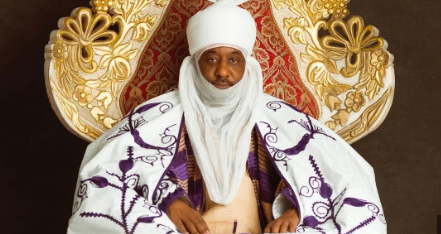
There are lots of deposed traditional rulers in colonial and post-colonial Nigeria. However, this discourse is limited to the recent happening in Kano State that led to the dethronement of the Emir of Kano, Muhammed Sanusi II, and his reinstatement today, May 23, 2024.
The former Governor of the Central Bank of Nigeria (CBN), Muhammadu Sanusi II, was returned as the Emir of Kano four years after he was dethroned.
Sanusi’s return reignited a part of Kano history which played out in the late 1970s and early 1980s.
Governor Abba Yusuf of Kano State reinstated the 14th Kano Emir to the throne on Thursday when he signed the Kano State Emirate Council (Repeal) Bill 2024 into law.
The new law replaces the Kano State Emirates Council Law, 2019, and dissolves the emirate councils created by Governor Yusuf’s predecessor, Abdullahi Ganduje.
That law was used by Ganduje to split the Kano Emirate into five in December 2019 and depose Sanusi, on March 9, 2020. The emirates created by the Ganduje administration were Karaye, Bichi, Rano, and Gaya, in addition to Kano.
The decision generated controversy back then, and Governor Yusuf, in reversing it, said it was the reversal of law “that balkanised the over 1,000-year-old Kano Emirate.”
Based on the new law, the governor gave the emirs who ruled the dissolved emirates 48 hours to vacate their palaces.
The last time a similar scenario played out in Kano was in the late 1970s and early 1980s.
During the administration of Governor Abubakar Rimi, there was an attempt to create five emirates in Kano State by splitting the Kano Emirate into five.
This move was opposed by some members of the royal family and other traditional rulers, who saw it as an attempt to weaken the Kano Emirate’s influence.
However, Governor Rimi went ahead with the plan and created the new emirates of Gaya, Karaye, Bichi, Rano, and Kano.
The Kano Emirate was reduced in size and given a more ceremonial role, while the new emirates were granted more administrative and political powers.
The Emir of Kano at the time was, however, not deposed. Rather, he was suspended in 1981. The move led to riots in Kano and Rimi never recovered politically and resigned in 1983 after falling out with Aminu Kano.
When Governor Sabo Bakin Zuwo took over in 1983, he reversed the decision and restored the Kano Emirate to its original size and status, with the other emirates abolished.
His decision was seen as an attempt to restore the traditional balance of power and to address the concerns of those who opposed the creation of the new emirates.
More than 35 years later, Ganduje’s move has met the same fate. Like Rimi’s decision, it was surrounded by controversy and legal challenges.
A historian at Ahmadu Bello University in Zaria, Nadir Nasidi, is among the experts who opposed the creation of the new emirates this time around.
“Kano is the only emirate in the country with one unifying king. The creation of unnecessary kings isn’t palatable. Many people, including myself, told the Ganduje administration that what he was doing wasn’t a good one,” he said in an interview.
While he wasn’t sure about the possibility of bringing Sanusi back, he was adamant that the new emirates had to go.
“The other emirates must be reduced to local chiefs under the overall emir of Kano. They can choose amongst all the kings one person to be the overall king,” he said.
The major lesson from both episodes is for politicians to know that traditional institutions will outlive their tenure in office. When political power is gone, the next dispensation can write off the decisions made in the past. People do not joke about their traditional institutions and they must be tactful in dealing with the thrones.
Welcome back to the Palace, Mohammed Sanusi II, let the good work that you have begun continue to the delight of the people of Kano.
Irantiola sends this in from Lagos. He is a PR Consultant and Creative Writer.