

















By Augusta Okon
 https://www.digital.zenithbank.com/ZEQ/ZEQ-jan-2026/index.html#p=1
Before delving into the history (origin) of movie/film trailers in Nollywood, it is of paramount importance that a good foundation be first laid that would fast track clarity, trigger unbiased perception and with certitude, provide valuable insights into how the concept came to be in the second largest movie producing Industry in the world. To attain this, we need to back track to the past, move through series of time loops, maze of viewpoints and sift facts from fiction.
It all started in Hollywood and there is a conflict as to the precise year wherein trailers were first used in the motion picture Industry. In some quarters, it has been attributed to a film advertisement for the film serial “What Happened to Mary”. The film’s ending had some text informing the audience that the next incident about what happened to Mary would be shown next week.
However, Kernan (2004) gives the origin credits to the 1912 film, “The Adventures of Kathyln” which had a cliff hanger text at the end of the film asking the audience if she would escape from the lion’s pit. They were asked to watch next week’s thrilling chapter. On the other hand, DiStefano (2015), Suliza (2019) attributes it to the 1913 showing of “The Pleasure Seekers” at the Loew theatre, New York. The idea was conceived by Nils Granlund, the advertising manager of Marcus Loew Theatres, who put together the rehearsal footage of the Broadway play (The Pleasure Seekers) into a mini promotional montage. It was an alternative to a card showing the list of upcoming shows presented at the end of the performance i.e. it ‘trailed’ the film.
Paramount saw the potentials trailers had as an effective advertising tool in 1912 and made same available to exhibitors for a small cost to highlight their productions. Other studios seeing the positive effect it had on Paramount’s box office sales, adopted the trailering strategy. Typically, trailers were shown at the end of films and so they “trailed” the movie. It was done to prevent the audience from immediately leaving the theatre after watching the feature film.
The Jazz singer in 1927 was the first to have a trailer with sound and images. Thomas (1966) as cited in Losben (2011) states by 1938, trailers began to have special material written and shot specifically for them and their own scores. This gave rise to “special shoot trailers” in the 30’s and 40’s which contained separate footage or material shot specifically for the trailer.
Losben (2011) asserts that 1919 witnessed the establishment of the National Screen Service (NSS) by advertising professionals; Joe Pollack, Àkóbá Winberg, Tony Gruen for the sole purpose of creating trailers for subscribing exhibitors. They made basic 35 mm film ads from transferred film stills without the studios permission and sold them to exhibitors to run following the feature film (Kernan, 2004).
Losben (ibid) notes that the trailer for Stanley Kubrick’s film, Dr. Strange love or: How I stopped worrying and love the bomb, created by Pablo Ferno, is credited as the first contemporary trailer. Furthermore, the rise of boutique trailer houses coincided with shifts towards modern trailers with the first owned by Andrew J. kuehn Jr, an advertising and promotion head at MGM in 1964 who left and opened Kaleidoscope films with Steve Panama in New York City. NSS led in its production of trailers and distribution for over 45 years and extended to the UK. It experienced financial troubles in 1988 due to fierce competition and was bought by Technicolor.
Johnston (2009) asserts that replacing basic narrative structure of trailers were colour upgrades, better sound, introduction of special effects in the 1950’s and music in the 1980’s. Most trailers followed the old formulaic approach using voice over, graphic text and images from the film.
By the 1970’s, TV spots for trailers were adopted and in the late 1980’s trailer production also moved towards digital technology. Septak (2008) states exhibitors played trailers for upcoming films before the feature film presentation during the period called ‘coming attractions’ and film producers competed for these free spots provided by exhibitors. It was provided as part of the theatrical booking agreements, one which still obtains today.
The 90’s and early millennium saw the blend of narration (voice of god) alongside images, texts, dialogue. McCallen (2008) asserts that the voice of the late great Don La Fontaine in over 5,000 films during his 33 years in the business and known as “the thunder throat,” “the voice of god”, was the highest paid movie narrator in Hollywood. Laman (2022) states that by late 2000’s the movie trailer narrator had largely vanished as voice over narrators were traded for on-screen texts placed against a backdrop separate from the footage.
However, there was a change in style from 2015 which saw the insertion of a witty remark, memorable scene or dialogue, after the trailer had ended to further reinforce the belief in the audience that the movie being advertised was worth seeing. Years later, Hollywood trailers particularly from the big studios began with a pre-trailer, followed by the text ‘trailer starts now’.
Origin of Movie Trailers In Nollywood
There’s hardly any data in the annals of the Nigerian film industry regarding the precise year when movie trailers were first used or locally produced as opposed to the usage of theatrical posters or other promotional assets. However, we can infer from foreign movies exhibited in theatres pre and post-independence, and foreign movies viewed in VHS cassettes particularly Indian movies with the “intermission” time out used in showcasing scenes from another movie (trailers), might have introduced the Nigerian audience to movie trailers.
However, the advent of the Home video revolution which birthed Nollywood, soon witnessed the deployment of movie trailers as promotional tools by marketers which were powered by voice over artists (trailer narrators). The emergence of Silverbird Television as the hub of entertainment gave rise to the use of 30–60 seconds TV Ad spots for trailers with the NFVCB rating for the film thereon. Popular voice over merchants were Segun Arinze, Isaac Moses, and the late Johnson Davidson.
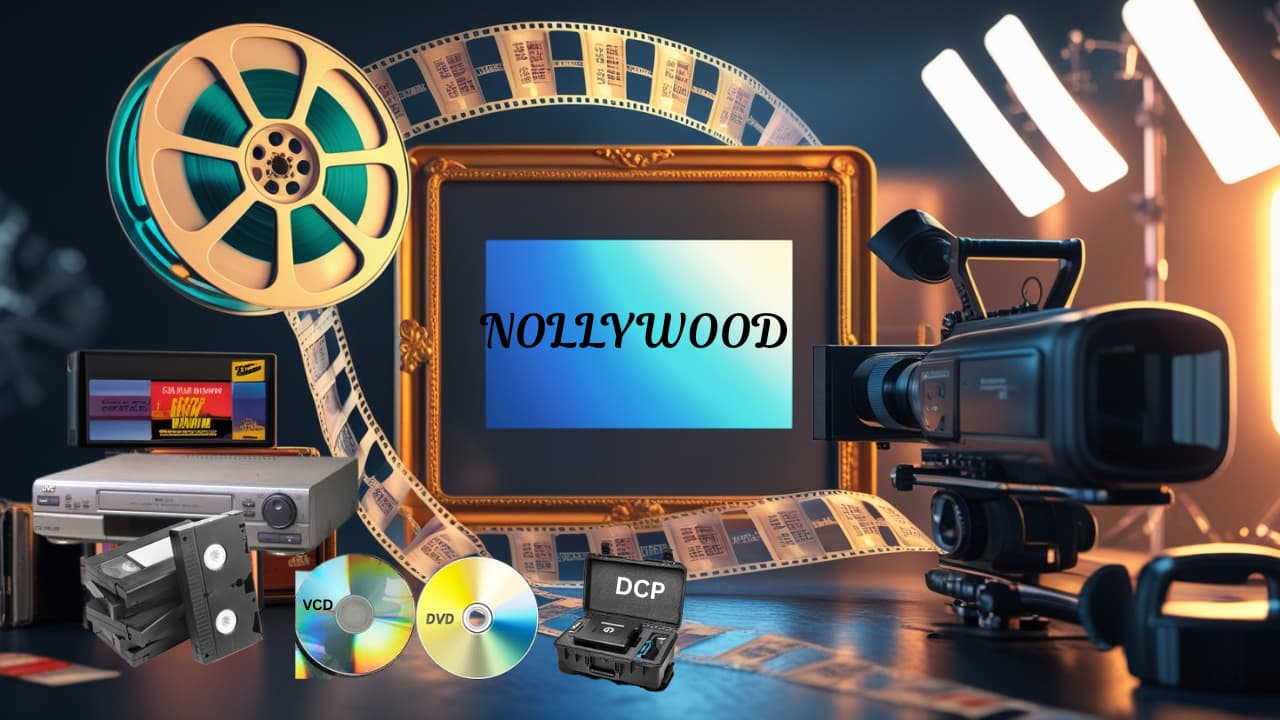
Johnson who was the founder of Heavy metal Studio, stood out, with his use of pidgin, fast paced adrenaline pumping narration with witty, funny lines, as he ushered the audience into the world of the advertised movie. Memorable line still remains ‘ashawo no be work’ in the Domitilla trailer and just like Don Fontaine whose signature trade mark was, “in a world”, Johnson’s was ‘Grab your copy now!’ and the reeling of “available at 51 Iweka road Onitsha, 1/3 Pound road Aba, 7 Ebinpejo lane, Idumota, Lagos.” Trailers were also shown prior to the commencement of movies on VCDs, then DVDs.
Nollywood trailers from using voice over artists, soon ditched that and embraced the use of straight through scenes powered by dialogue and occasionally interlaced with plain on-screen texts. Years later (up till now) it appeared to follow in the footsteps of Hollywood with some filmmakers adopting an additional climax scene after the trailer had seemingly ended e.g. Out of Luck, Chief Daddy, Family Gbese, When love Strikes, Muri & Ko to even “trailer starts now” technique (used in Wole Soyinka: Eni Ogun). However most still tow the straight through scenes powered by dialogues with on screen texts including coming soon or the release date info at the end.
The resurgence of theatres (cinemas) in Nigeria in 2004 by Silverbird cinemas, in Victoria Island, Lagos, exposed movie goers to foreign and later indigenous trailers as they sat in the respective screens waiting to watch the paid for movies. The trailers were further promoted on their sister media company’s platforms, STV and Rhythm Fm.
Besides Silverbird cinemas, others sprung up prior to 2016 to compete for market share such as Genesis Deluxe Cinemas, Ozone Cinemas, FilmHouse cinemas and Viva cinemas with their various sites (branches) spread in various geo-locations across the country. Theatrical trailers were also shown on Cable TV particularly African Magic via barter deals with filmmakers/producers. In cinemas, trailers were also shown on TV sets strategically positioned at the box office and concession areas for the audience to watch as they sat or hung around waiting for access into the designated screens to watch the movie they had paid for.
From the onset (through to the DCP era), theatrical trailering was restrictive as one had to be present to watch the trailers therein or wait for it to be shown on TV. However, the advent of the internet made it possible to watch movie trailers from anywhere and on any device. Indeed it took accessing and viewing of trailers to a whole new level in the online space through blogs, (BellaNaija, Linda Ikeji prior to their migration into websites) and on Kemi Filani, Stella Dimokokorkus, Nigerian Entertainment Today (NET), 360 Nobs, Ynaija, Nollywood Reinvented, Olori Super Gal, Nigerian Voice, Nollywood Access by Bola Aduwo, Nollywood by Mindspace by Adewemimo Oloyede, then later on Naij (now legit.ng), Pulseng, Shockng, and What Kept Me Up exhibiting same, among others.
Online fora, such as Nairaland and Naija Pals, were integral to the promotion of trailers and, subsequently, the discussion of the upcoming films. Social media platforms, particularly Twitter (now X), Facebook, Instagram, later on messaging apps (WhatsApp, Telegram) were used to promote movies and watch trailers.
Video sharing Giant, YouTube, has various Nollywood content-based channels wherein the audience can visually consume movies and designated trailers. In fact, YouTube which was launched in 2005 has evolved into a giant video sharing and streaming platform. One can call it the “Home of Trailers” with a repertoire of old and latest ones.
Kernan (2009) describes it as the most popular trailer- viewing platform. Studios, independent film producers, SVODs and movie enthusiasts operating YouTube movie themed channels are constantly uploading movie trailers globally. The former grants the latter permission to re-upload movie trailers on their channels, allowing more people to be aware of the soon to be released movie and spread the word by sharing on their social media platforms and through word of mouth.
In a research carried out by Google, 81% of people who watched a movie trailer online watched it on YouTube, with 65% of movie goers agreeing that watching trailers on YouTube influenced which movie they planned on seeing (Gesenhues, 2015).
Over time, a few YouTube channels dedicated to showing movie trailers also emerged such as; The Movie Base, Nollywood Reinvented, FilmPeek, Sneek Peek Party, Nolly Critic, among others. These channels among others are allowed by local and foreign filmmakers/producers to re-upload their trailers and show to their own audience (new and old). Some do not check mark their copy right claim which is a huge relief to trailer themed channels while some do but nonetheless allow them to still use the content.
Releasing trailers on online platforms and the attendant announcement of same has the power to spike awareness of the movie with hundreds/thousands of YouTube Channels and users of social media platforms sharing same to their audience. This invariably increases the chances of the movie doing well at the box office or on streaming platforms due to the exposure.
Movie trailers have shattered online viewership records in Hollywood and include; Thor: love and Thunder (2022 teaser trailer) with 209 million views, The Lion King (2019) with 224.6 Million views raking in 1.6 billion in box office sales, Avengers : Infinity war (2018) with 230 million views and raking in $2 billion, Transformers: Rise of the Beasts (2023), 238 million views, Lord of the Rings: The Rings of Power TV series (2022) 250 million views in 24 hours, Avengers: End Game with 289 Million views, Spider Man: No way home (2021) — 355.5 Million views with 135 million views in the first 24 hours (Thibeaux, 2022; Statista, 2023) and holds the Guinness book of records for the most viewed movie trailer globally (Guinness world records, 2021). Dead Pool and Wolverine (2024) holds the record for the most watched trailer, 365 million Views albeit powered by the Super bowl.
Kumar (2023) puts forth the most viewed Bollywood (Hindi) trailers “within 24 hours” on YouTube as; KGF 2 (49.02 million), Jawan (2023) clocked 23 million, 83 movie had 43.5 million, Sooryavanshi (42.7 million), Heropanti 2 (38.80 million), and Zero garnering 40.5 million views. When considering total accumulation of views, War: RS leads with 137.14 million, Baaghi 3 (129.40 million), Baahubali 2 (126 million), Zero (124.32million), Housefull 4 (124.03 million), KGF 2 (120.53 million), and Sooryavanshi with 112.67 million views.
For Nollywood, a look at the trailer views on YouTube channels of independent filmmakers, and streaming platforms with original productions, shows the level to which the audience consumes movie trailers for Nollywood films.
Shockng (2023) states that Gangs of Lagos, the first African original by Prime video had 684,000 views within one week of its trailer (teaser) release on March 20th 2023. They spun the possibility of amassing 1 million views but as of 2023, teaser trailer views were at 942,000, (now 964,000 in February 2025) while the trailer was 907,000 views (now 1 million in February 2025).
Other movie trailers are Namaste Wahala with 2.6 million views in 2021, (2.7 million in 2023 and 3.1 million in 2025), Aki and PawPaw had 1.7 million views in 2022, (1.8 million both in 2023 and 2025), Anikulapo secured 799,000 views in 2022 (859,000 views in 2023, and 987,000 views in 2025), King of Boys: Return of the King had 706,000 views in its kitty in 2021, (728,000 views in 2023, and 766,000 views in 2025), Merry Men 2: 674,000 views in 2020, (698,000 views in 2023, and 736,000 views in 2025), Brotherhood bagged 423,000 views in 2022, (540,000 views in 2023 and 625,000 views in 2025) (Shockng Ibid). The 2023 and 2025 data of the above-mentioned movie trailers are by this writer.
The online print medium (newspapers) typically shares information about the upcoming films and does not show trailers, with the laudable exception of thecable.ng lifestyle arm which unveils movies the audience can watch in cinemas or on streaming platforms over the weekend, ably authored by its reporter, the ingenuity laden, Idris Shehu.
Trailers via Radio Ads were utilized by FilmOne Distribution in the 2014 theatrical release of “Half of A Yellow Sun” and subsequently with a good number of films in its portfolio, and other filmmakers towing this path. There have been specialized TV programmes on movies such as Silver Bird’s ‘Movie Mania’, ‘Movies Today’ on NTA, promotion of Nollywood content and pre-release event e.g. on TVC’s “Wake up Nigeria” and its entertainment news belt, Channels TV Entertainment News and entertainment news belt of some TV stations.
Radio shows have not been left out with ‘The Movie Road Show with Irabor Okosun’ on Nigeria Info FM 99.3, Film Focus on Smooth 98.1 FM, Nollywood on Radio on Top Radio, ‘Movies on Radio’ segment formerly presented by Dr Shaibu Husseini (now Julie Mose) on Creative Naija programme under dual hosts; Frank Meke and Bunmi Bade Adeniji (Mainland 98.3 FM) among others. Podcast has evolved over the years and has likewise become a platform to discuss same with the likes of The Naija Filmmaker, Ink blot Meet and Greet, Popcorn and Reels, I love Nollywood Podcast, The Nollywood Ramblers, among others.
Trailers watched on streaming platforms such as Netflix, Amazon Prime Video, Show Max, iROKOtv, Ibaka TV piques the audience curiosity to seek more information about the movie online and where it stimulates their interest, they subsequently watch the movies. Outdoor digital screens on the building housing cinemas or standalone digital billboards owned by Advertising companies located in strategic areas, run movie trailers during the film’s marketing campaign.
With various releases across different distribution platforms, movie trailers more than ever, have become an essential promotional creative asset for Nigerian filmmakers, distributors and production houses. These days, it is not uncommon to have filmmakers/producers announce the date the movie trailer would drop on their online platforms, having witnessed the powerful effect the strategy had for certain Hollywood movies. Trailers are typically cut by editors, and Nollywood indeed boast of an array of the finest such as Valentine Chukwuma, Steve Sodiya, Sanjo Adegoke, Martini Akande, Susan Maro Ukulor, Agboola Ola’Kazeem, Victoria Akujobi, Idris Razaq, among others. However, founder of Starmark Studios, Ebukah Emmanuel Nzeji (The Artifact, Deafening Silence, Wòkè, Dance With Me) happens to be the first to “specialize in trailer editing” in the Nigerian Movie Industry.
No doubt the quality of trailers produced in recent times surpasses those in pre-2014, particularly the non- theatrical ones. Sadly, it isn’t just the high-quality production of the “cut trailer” that is prime but its ability “to draw the audience in, with a view to making them want to watch the movie upon its release”. This is indeed lacking in a good number of movie trailers, but that’s a discussion for another day!
Augusta Òkon is a Film adaptation advocate, story teller, Film Critic, lawyer, and author. She has served as member of the screening panel for AMAA, Inshort International Film Festival and Jury member, Lekki International Film Festival.
REFERENCES
Distefano, D. (2015, July 1). A brief history of film trailers or: Turns out this post is not about Peter Orner. Michigan Quarterly Review. https://sites.isa.umich.edu/imqr/2015/07/a-brief-history-of-film-teasers-or-turns-out-this-post-is-not-about-peter-orner/
Johnston, K.M. (2009). Coming Soon: Film Trailers and the Selling of Hollywood Technology. Jefferson, NC: McFarland & Co.
Kernan, L. (2004). Coming attractions: Reading American movie trailers. Austin: University of Texas Press.
Laman, L (2022, September 15). Bring back trailer narrator guy. Collider. https://collider.com/bring-back-trailer-narrator-guy
Losben, S.M.A. (2011). Coming soon to an archive near you: Movie Trailers and Their Need for Access and Preservation. Master thesis, New York University, USA
Septak, D. (2008). Understanding the effectiveness of trailers, teasers, and television spots in marketing movies. Thesis Leonard N. Stern School of Business, New York
Suliza, R. (2019). Do you want to watch that movie? Experimental study on the effects of music in movie trailers. Master Thesis, University of Twenty
This Day (2025, March 16). How I’m Pioneering Nollywood’s Trailer Creation Niche- Ebuka E. Nzeji.
McCallen, D. (2008, September 3). The booming voice behind thousands of movie trailers. La times. https://www.latimes.com/archives/la-xpm-2008-sep-03-me-lafontaine3-story.html