


























August 2025 marked the fifth consecutive month of declining inflation in Nigeria, reinforcing signs of a steady return to price stability and macroeconomic recovery. According to the latest data, headline inflation eased to 20.12%, down from 21.88% in July—a significant drop of 1.76 percentage points. Month-on-month inflation also decelerated sharply, with prices rising by just 0.74%, compared to 1.99% in the previous month. This represents one of the lowest sequential increases recorded in over a year.
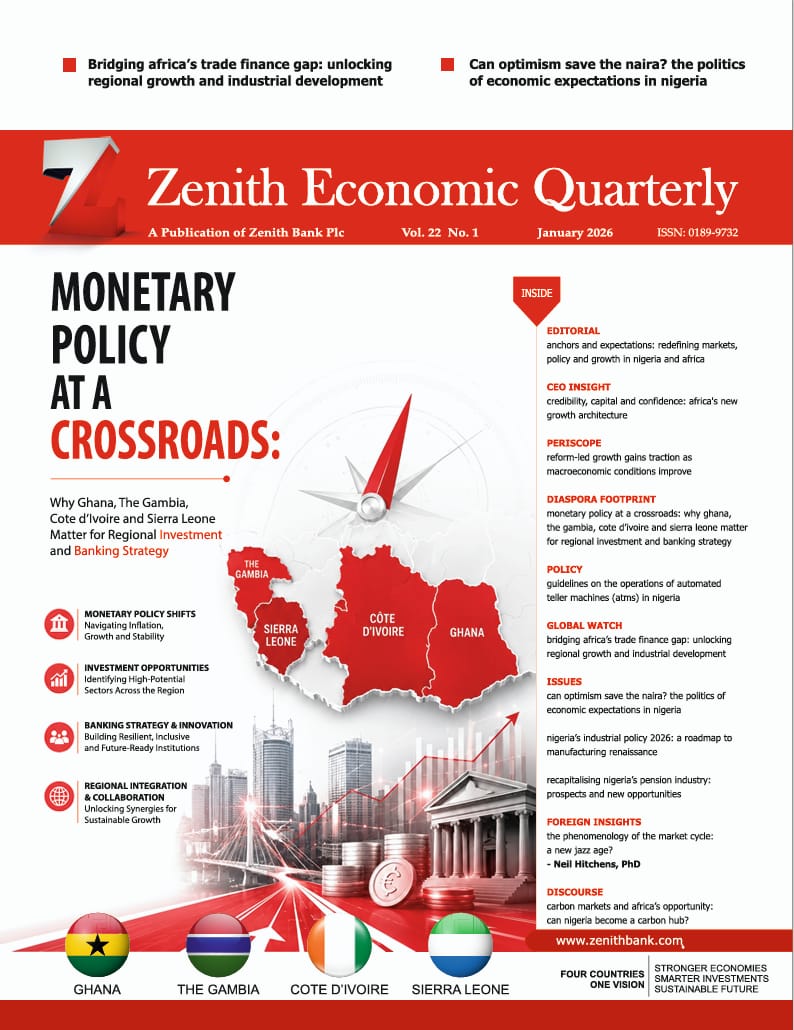 https://www.digital.zenithbank.com/ZEQ/ZEQ-jan-2026/index.html#p=1
The primary drivers of inflation remained consistent, with food and alcoholic beverages, restaurants and accommodation services, and transport and energy costs contributing most to price pressures. Notably, food inflation moderated to 21.87%, down from 22.74%, while core inflation—which excludes volatile food and energy prices—declined to 20.33% from 21.33%, indicating a broad-based easing across sectors.
“This sustained moderation in inflation is a positive signal that Nigeria is gradually regaining macroeconomic stability,” said Dr. Muda Yusuf, Chief Executive Officer of the Centre for the Promotion of Private Enterprise (CPPE). “Business confidence has improved, as reflected in the NESG–Stanbic IBTC Business Confidence Monitor, which has posted six consecutive months of positive readings in 2025.”
Despite the encouraging trend, consumer confidence remains fragile, largely due to persistently high food prices and weak purchasing power. However, early signs of recovery are emerging, with consumer pessimism gradually easing as households begin to adjust expectations in response to slowing inflation.
Several key factors have contributed to the disinflationary trend:
- Base effects from the unusually high inflation rates recorded in 2024
- Stabilization of the foreign exchange market, which has helped reduce imported inflation and bolster business sentiment
- Improved agricultural output, driven by sub-national government interventions that have boosted food supply and helped contain price spikes
To consolidate these gains and ensure long-term stability, Dr. Yusuf emphasized the need for a coherent mix of fiscal, monetary, and structural reforms. He outlined four critical policy priorities:
- Maintain Macroeconomic Stability
- Continue efforts to stabilize the exchange rate
- Deepen fiscal consolidation to manage public debt and curb deficits
- Address Structural Bottlenecks
- Partner with state governments to remove productivity constraints
- Invest in infrastructure, logistics, and security to reduce production costs
- Strengthen Policy Coordination
- Moderate money supply growth through tighter monetary-fiscal alignment
- Harmonize fiscal, tax, and trade policies to lower operating costs across sectors
- Enhance Food Security
- Sustain targeted interventions such as input subsidies, storage infrastructure, and mechanisation programs to reduce food production costs and ease household burdens.
“If these measures are sustained,” Dr. Yusuf concluded, “Nigeria could witness a further decline in inflation, a gradual rebound in consumer confidence, and stronger foundations for inclusive and sustainable economic growth.”