

























The Centre for the Promotion of Private Enterprise (CPPE) has said Nigeria entered the second half of 2026 with its strongest macroeconomic fundamentals in several years, driven by improved exchange rate stability, moderating inflation, stronger external reserves, increased crude oil production and resilient financial markets.
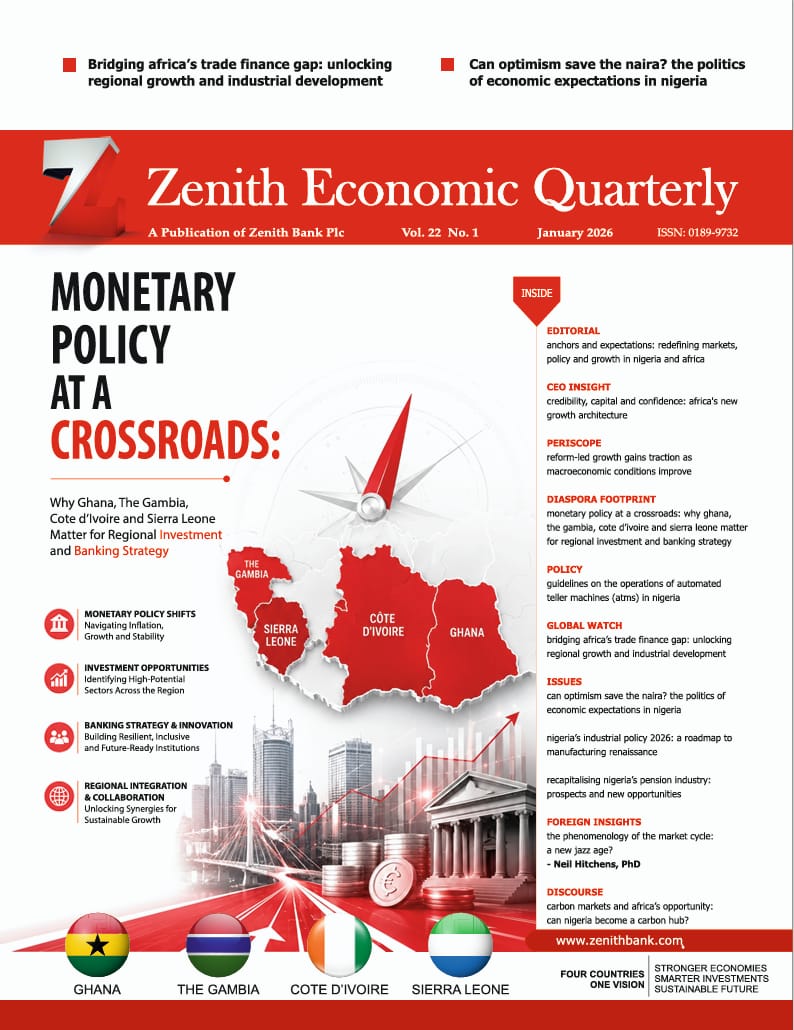 https://www.digital.zenithbank.com/ZEQ/ZEQ-jan-2026/index.html#p=1
In its Half-Year Economic Review and Second-Half Outlook for 2026, titled “Macroeconomic Recovery, Structural Reforms and the Competitiveness Imperative,” the CPPE noted that while recent policy reforms have significantly strengthened macroeconomic stability and restored investor confidence, these gains have yet to translate into broad-based improvements in business competitiveness, job creation and household welfare.
According to the report, Nigeria recorded positive economic growth during the first half of the year, supported by a more orderly foreign exchange market, improved oil revenues, stronger non-oil tax collections and resilient financial markets. However, businesses continued to grapple with high borrowing costs, elevated energy prices, poor electricity supply, logistics challenges and inadequate transport infrastructure, all of which sustained a high-cost operating environment.
The CPPE also observed that insecurity continued to disrupt agricultural production, weaken supply chains and discourage investment in key sectors, while slow implementation of capital projects due to procurement delays, funding constraints and debt-service obligations limited the impact of fiscal policy on economic growth.
Looking ahead, the economic policy think tank expressed cautious optimism about the country’s prospects in the second half of 2026, projecting continued positive growth driven by financial services, telecommunications, construction, trade, oil refining and other service-sector activities. Inflation is also expected to remain below the exceptionally high levels recorded in 2025, while exchange rate stability is likely to be sustained by stronger foreign exchange inflows, healthier reserves and improved investor confidence.
The report further noted that the ongoing recapitalisation of the banking sector, stronger corporate earnings and improved regulatory oversight are expected to keep financial markets resilient. Increased domestic refining capacity and higher crude oil production are also projected to strengthen government revenues, improve foreign exchange earnings and enhance energy security.
However, CPPE warned that rising political activities ahead of the 2027 general elections could pose downside risks to macroeconomic stability. According to the Centre, election-related spending may increase liquidity in the economy, fuel inflationary pressures, heighten demand for foreign exchange and divert attention from critical economic reforms and fiscal management.
To consolidate the gains already recorded, the Centre urged the Federal Government to shift the next phase of economic reforms towards improving Nigeria’s competitiveness. It recommended prioritising reliable electricity supply, transport infrastructure, efficient logistics and port operations, enhanced security in farming communities and transport corridors, improved access to affordable long-term financing for productive sectors, accelerated budget implementation and greater domestic value addition.
The CPPE also advised the government to focus on improving revenue collection through efficiency-enhancing reforms rather than imposing additional taxes on businesses, while maintaining policy consistency despite increasing political activities.
According to the Centre, Nigeria now has a unique opportunity to convert its improving macroeconomic indicators into stronger private sector investment, increased productivity, sustainable job creation and higher living standards.
“The quality of economic management in the second half of 2026 will be judged not merely by macroeconomic stability, but by the extent to which structural reforms reduce the cost of doing business, improve productivity and enhance the competitiveness of Nigerian enterprises,” the report stated.
The CPPE concluded that sustaining reform momentum, strengthening implementation capacity and maintaining policy consistency will be essential to transforming the country’s macroeconomic recovery into durable, inclusive and broad-based economic growth.