























By Sola Adebawo
Africa is expanding electricity access, investing in generation and mobilising capital for grid and off-grid projects. But are these investments translating into better electricity services?
Installed capacity measures the rated output of power plants, not how much electricity is available, generated, transmitted or reliably received. A household connection, similarly, does not guarantee adequate or affordable supply.
This exposes what might be called Africa’s electricity conversion gap: the distance between the capacity and resources invested in power systems and the reliable, affordable electricity that households and businesses actually receive.
Recent evidence illustrates the problem. The International Energy Agency (IEA), reporting on 2025, says eight million more people in sub-Saharan Africa gained electricity access, the region’s largest annual reduction in the population without access since tracking began in 2000. Yet the share of businesses experiencing outages rose from 74 per cent to 79 per cent across the latest available survey rounds. The underlying survey periods vary by country. Expanding access, therefore, does not necessarily mean improving reliability.
The World Bank’s Independent Evaluation Group, in its October 2026 review of electricity-access support over 2015–25, found that fewer than one-third of World Bank lending operations systematically tracked reliability outcomes. Among 42 projects that did, only 14 reported improved end-user service through fewer and shorter outages. The lesson is clear: infrastructure investment and better electricity service are not the same thing.
Understanding the electricity conversion gap
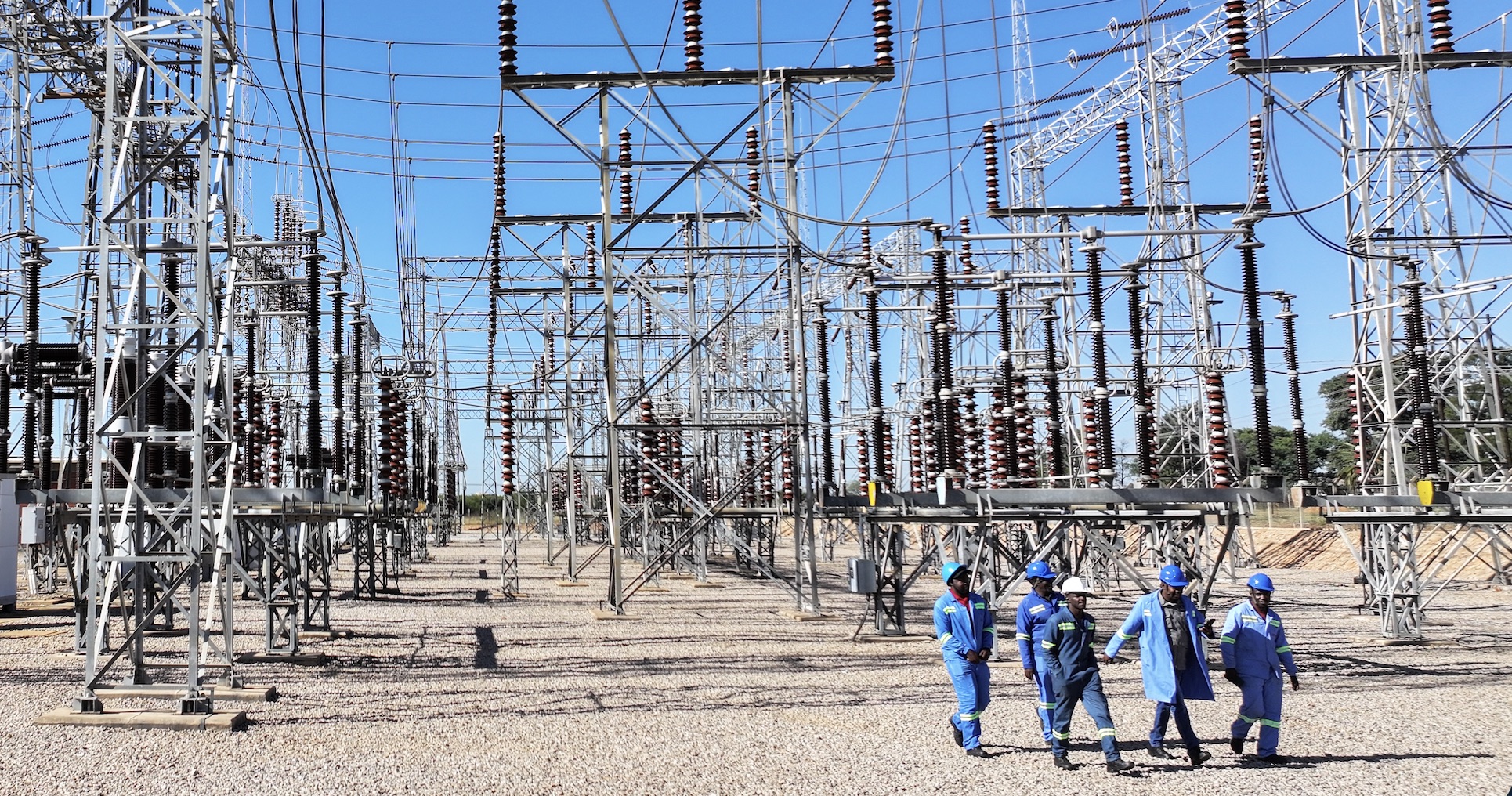
A power system must convert installed capacity into usable electricity through several stages. Installed capacity must become available capacity; available capacity must be generated; generated electricity must pass through transmission and distribution networks; and the final service must be reliable and affordable for consumers.
Value can be lost at every stage. A power plant may be unavailable because of maintenance or fuel shortages. Transmission constraints may prevent generated electricity from reaching demand centres. Distribution weaknesses, commercial losses and poor revenue collection can further undermine service delivery.
This is not an argument against building more power plants. Africa needs additional generation, and millions of people still need electricity connections. It is an argument for planning generation alongside fuel supply, transmission, distribution, system operation and financially sustainable electricity markets.
The World Bank’s Multi-Tier Framework already recognises that electricity access involves capacity, availability, reliability, quality, affordability, formality, and health and safety. The next challenge is to connect such measures more directly to investment choices and institutional accountability.
A proposed African Electricity Outcomes Scorecard
Africa needs a practical instrument for determining whether electricity investment is improving people’s lives and economic activity. I propose an African Electricity Outcomes Scorecard built around seven dimensions. Its purpose would be to identify where the conversion gap occurs, what causes it and which interventions are most likely to improve electricity service.
The seven dimensions would be organised into two connected layers: the outcomes consumers experience and the system’s capacity to deliver them.
Consumer outcomes
- Access and adequacy: Who is connected, and can the available supply support essential household and productive uses? Report access through grid, mini-grid and stand-alone systems, alongside service tier and capacity.
- Reliability and quality: How often does supply fail, for how long, and with what consequences? Track SAIDI and SAIFI, hours of supply, power quality and the share of customers experiencing outages. Where standard utility data are unavailable, use transparent household and business surveys.
- Affordability and financial sustainability: Can consumers afford electricity, and can providers sustain the service? Measure household tariff burden, business energy costs, revenue collection, payment arrears, subsidy obligations and utility cost recovery. Consumer affordability and utility financial health must be assessed together, but not confused with one another.
- Productive use and economic impact: Is dependable electricity reducing business costs and supporting production? Track business outage exposure, expenditure on self-generation, outage-related lost sales and industrial electricity use.
System delivery capability
- Generation and fuel adequacy: How much installed capacity is actually available and dispatched? Publish available capacity, plant availability, forced outages, fuel constraints and unserved energy.
- Network performance: Can electricity be transmitted and distributed efficiently? Measure transmission constraints, network availability, technical and commercial losses, and electricity reaching end users.
- Regional resilience: Do interconnections and power pools improve security in practice? Measure cross-border electricity traded and delivered, interconnector availability, settlement performance and the contribution of imports to meeting demand.
The scorecard should be an annual public dashboard, not a composite league table. It should distinguish households from businesses, urban from rural communities, and grid-connected consumers from those served by mini-grids and stand-alone systems. Every indicator should have a published definition, source and reporting period. Estimates, proxies and missing data must be clearly identified. Countries should not be ranked where underlying data are incomplete or incomparable.
This qualification matters. The World Bank evaluation identifies significant gaps in the reporting of reliability data across African utilities. A scorecard cannot manufacture evidence where none exists. Building the capacity to collect, verify and publish credible data must therefore be part of the reform agenda.
Accountability must guide investment
The IEA estimates that around 75 per cent of sub-Saharan African utilities are in poor financial health. Weak finances constrain maintenance, network modernisation and the ability to pay suppliers. The World Bank evaluation similarly finds that access gains have not consistently translated into improvements in reliability, affordability or utility performance.
Nigeria illustrates the consumer dimension. A November 2026 World Bank analysis reported that connected households experienced nearly seven outages in a typical week, each lasting about 12 hours. Experiences vary, but the figures demonstrate why capacity totals cannot adequately describe the service households receive.
The scorecard’s real value would be in connecting diagnosis to investment. A market with inadequate generation may require new plants. Another may have sufficient available generation but lack gas delivery or transmission capacity. Elsewhere, distribution upgrades, metering, revenue collection or regional imports may offer greater near-term gains.
The objective is to direct scarce capital towards the binding constraint, rather than automatically favouring projects with the greatest political visibility or headline capacity.
Africa should continue expanding generation and connections. But these are necessary outputs, not the final measure of success. The more important question is how effectively investment is converted into reliable, adequate, safe and affordable electricity.
The real test of Africa’s electricity ambition is not simply how much capacity it can announce, but how consistently its power systems deliver electricity that households can use, businesses can depend on and industries can turn into prosperity.
Sola Adebawo is an energy industry executive, strategic adviser and thought leader with 30 years of experience across Nigeria’s petroleum industry. He is the Chief Executive Officer of Hyphen Partners Limited, a specialist advisory firm focused on policy and regulatory intelligence, market entry, stakeholder strategy, and executive and institutional positioning in complex and highly regulated industries. A former executive at Chevron and Heritage Energy, he is also an author, scholar and ordained minister. His writing explores energy policy, political economy, corporate governance, strategic communication, leadership and the institutional forces shaping Africa’s development.
The views, thoughts and opinions expressed in this article are solely belong to the author and do not necessarily reflect the official policy, views, opinions, or position of News Wings NG, its management, editorial team, or staff.