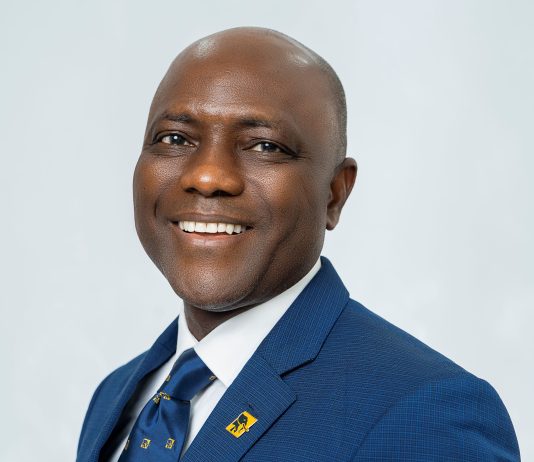



























by Felix Tomolojo
Tunde runs a viewing centre in Agege, Lagos. He pays for a legitimate television subscription, buys fuel for his generator as backup to public power, pays rent and maintains chairs for customers who come to watch football. On match days, the business helps him meet his expenses and put something aside for his family.
Across the road, another operator offers the same matches at a fraction of the price. Customers begin drifting away. They are not particularly interested in how his rival obtains the games. They simply want to watch football as cheaply as possible.
Tunde knows, however, that his competitor is retransmitting a signal obtained from an illegitimate distributor. He cannot compete with a business that has eliminated one of its biggest costs by taking somebody else’s property. Before long, the customers who kept his business afloat have gone elsewhere. Tunde is left with his subscription bill, generator expenses and an increasingly empty room.
The story is imaginary, but the injury is familiar to broadcasters, content owners and legitimate distributors whose signals are intercepted and retransmitted without authorisation. Signal piracy is not simply a commercial dispute between large companies. Its consequences extend to subscribers, small businesses and the wider television ecosystem.
The real test of a television service is whether viewers can trust that the channels they pay for are lawfully acquired and reliably delivered. This, I know, may sound like a technical concern for lawyers, broadcasters and regulators, but it matters to anyone trying to watch a football match, a film or a favourite programme without interruption.
This is why the National Broadcasting Commission’s November 2 directive deserves attention from the audience’s point of view. It addresses the lawful acquisition, sub-licensing and retransmission of broadcast content and signals. Its central message is straightforward. Receiving a signal does not confer the right to retransmit it. Operators distributing another broadcaster’s content must obtain the necessary rights and authorisation. Interception, decryption, copying or rebroadcasting without permission is not legitimate distribution.
For viewers, the distinction is important. A channel does not become the property of every operator capable of receiving its signal. Its appearance on a cable network or satellite platform does not establish that the distributor has secured the rights to carry it. Subscribers may have no practical way of knowing whether the necessary arrangements exist.
That uncertainty creates risks for consumers. Operators can promise impressive channel numbers and attractive prices without demonstrating that the content has been legitimately acquired. A cheaper package may be tempting, but the consequences can be considerably less attractive.
Imagine subscribing to a service because it offers a particular sports channel, only to find that the channel disappears shortly before an important match. I recently experienced that a car wash, where i had paid for a bottle of Heineken and pepper soup to be taken as the game was starting. I could not ask for refund. I asked what happened to the signal and I was told it was a technical problem. The subscriber is left with the bill and little explanation. Where a service depends on content it has no right to distribute, disruption is an ever-present possibility.
Respect for content rights also encourages investment in the programmes audiences want to watch. Football rights cost money. Drama, documentaries, children’s programmes and news require people, equipment and sustained funding. Broadcasters and production companies take commercial risks, expecting to distribute and monetise their work under agreements with rights holders.
When an operator intercepts a signal and sells the content without paying for the rights, legitimate distributors carry the cost while the unauthorised operator enjoys the benefit. This is not competition, but free riding.
None of this means broadcasters should be shielded from competition or consumers should accept limited choice. Nigeria needs more operators, stronger indigenous participation, affordable services and a regulatory environment that allows new entrants to thrive. Complaints about restrictive conduct, excessive pricing and unfair commercial practices deserve serious investigation.
Competition, however, must take place within the law. A licence to operate a distribution platform is not a licence to appropriate another company’s content. A disagreement over channel access does not yield permission to intercept and retransmit a signal. These are distinct issues and should not be conflated.
The directive addresses a fundamental distinction in broadcasting, namely the difference between holding a licence to operate a distribution platform and possessing the rights to distribute someone else’s content. They are not interchangeable. Having the equipment, subscribers and regulatory approval to operate a platform does not establish permission to retransmit another broadcaster’s signal.
The commercial realities of acquiring content must also be acknowledged. Smaller operators may struggle to negotiate rights on terms comparable to those available to larger companies. This raises legitimate questions about affordability, access and the conditions under which content owners make their offerings available. The NBC should be concerned that the market does not become inaccessible to smaller operators.
Nevertheless, the difficulty of acquiring content cannot justify taking it without permission. Operators must negotiate with rights holders, pursue legitimate sub-licensing arrangements or develop packages around content they are authorised to distribute. The rules should accommodate genuine commercial disagreements without creating loopholes for piracy.
Allegations of unlawful interception and rebroadcasting have brought the problem into sharper focus. Where criminal proceedings arise, the courts must establish the facts and determine responsibility. No operator should be presumed guilty before due process is concluded. The principle that content and signal rights must be respected, however, should remain beyond dispute.
For audiences, effective implementation of the directive should inspire greater confidence in television services. Operators should be encouraged to build packages around properly acquired content and compete on quality, affordability and reliability. Subscribers should also be protected from services whose channel offerings rest on arrangements that may be challenged or withdrawn.
The NBC must ensure even-handed enforcement. The directive should not become an instrument for protecting established operators from competition or making life unnecessarily difficult for smaller broadcasters. The Commission must distinguish piracy from legitimate disputes over access, pricing, licensing and market conduct. It should also clarify the documentation and procedures required to resolve disagreements.
Viewers’ rights must not disappear in the process. When a service is disrupted, subscribers deserve clear information and fair treatment, not unexplained consequences of commercial disputes between operators. Consumer education is equally important. A large channel list does not necessarily translate into a reliable service, just as a low subscription price does not automatically represent good value.
Ultimately, the directive should not determine which operator dominates the market. Its purpose should be to establish fair competition, protect content rights and promote informed consumer choice.
Audiences may not care how a signal reaches their television screens until something goes wrong. They care that the programme is available, the picture is clear, the service is dependable and the price is reasonable. These are basic expectations of a service for which they pay.
Protecting the integrity of broadcast signals is therefore not a favour to broadcasters. Properly implemented, it protects viewers’ choices, the value of their subscriptions and the future supply of quality content. The objective should not simply be to stop operators from taking signals they have no right to distribute. It should be to create a television market where more companies can compete legitimately, more content can be financed and Nigerians can watch with confidence.
Tomoloju writes from Lagos