
























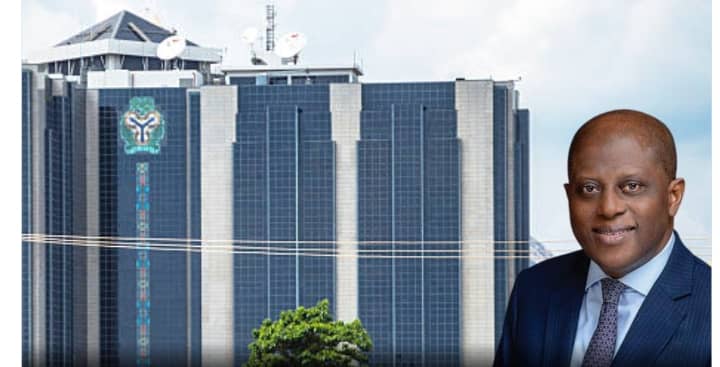
The Central Bank of Nigeria (CBN) retained the Monetary Policy Rate (MPR) at 23% following its 308th Monetary Policy Committee (MPC). The committee also maintained the Standing Facilities Corridor at +50/-300 basis points, while keeping the Cash Reserve Requirement (CRR) unchanged at 45% for deposit money banks, 16% for merchant banks and 75% for non-TSA public sector deposits. The decision comes after the 350bps rate reduction in September, as the committee opted to maintain its current policy stance rather than introduce another cut. The MPC noted that headline inflation had declined for the fifth consecutive month, easing to 14.06% in October from 14.63% in September, while core inflation fell to 10.78% from 12.95%. Despite the improvement, the committee remained cautious about the inflation outlook, highlighting the ongoing Middle East conflict and its potential impact on global energy prices. It also warned that increased spending during the festive season and ahead of the 2027 elections could create additional demand pressures and slow the pace of disinflation. For the fixed-income market, the decision signals that the CBN is not yet ready to ease monetary policy further, despite the continued decline in inflation. Investors may therefore continue to demand attractive yields across Treasury bills and bonds, while expectations of further monetary easing will depend largely on the inflation trend and stability in the foreign exchange market.
President Bola Ahmed Tinubu, GCFR has submitted a revised 2026 budget to the National Assembly, proposing to reduce total expenditure from ₦68.32 trillion to ₦65.18 trillion, a cut of ₦3.15 trillion. Under the revised plan, projected revenue stands at ₦33.72 trillion, while capital expenditure has been reduced from ₦32.29 trillion to ₦26.23 trillion. The adjustment reflects revenue shortfalls, higher debt-service costs and additional NNPCL expenses not captured in the original budget. The government also plans to prioritize ongoing road, agricultural and water projects nearing completion. Despite the lower spending target, the fiscal deficit remains at ₦31.46 trillion, equivalent to 5.64% of GDP, while the borrowing target is unchanged at ₦29.22 trillion, comprising ₦18.43 trillion in domestic borrowing and ₦10.79 trillion in external borrowing. For the fixed-income market, the unchanged domestic borrowing target suggests the government will continue to rely heavily on domestic debt issuance to meet its funding needs. This could sustain supply pressure in the FGN bond market as investors monitor upcoming issuances. The revised budget is still subject to legislative approval, with the National Assembly expected to complete its review before it takes effect.
Money Market
System liquidity saw an increasing trend throughout the trading week, opening at ₦3.61 trillion on Monday and closing at ₦5.10 trillion. Week-on-week, the Nigerian Overnight Financing Rate (NOFR) held steady to close at 20.00%, while the Overnight (OVN) rates increased by 7bps to close at 20.18%.
We expect rate to continue to hover around this level.
Treasury Bills Market
The Treasury Bills market traded on a mixed note this week, as activity was largely driven by the NTB auction. The week began with selling pressure across short-dated OMO papers, while activity in the NTB segment remained subdued. Sentiment improved in the following session as investors took advantage of the ₦1.8trn OMO maturities to increase positions in selective maturities, particularly the 5-Oct OMO, which was seen trading at 16.40%/16.15%. However, attention shifted to the NTB auction, where the DMO received ₦882.76bn in subscriptions against its ₦600bn offer and allotted ₦713.28bn. Despite the oversubscription, stop rates recorded significant increases across all tenors, with the 91-day, 182-day and 364-day increasing by 60bps, 35bps and 71bps to close at 16.00%, 16.14% and 16.60%, respectively. The higher stop rates triggered renewed selling pressure in the secondary market, particularly on the newly issued 25-Nov NTB, which traded as high as 16.49%. Towards the end of the week, activity picked up again, with demand returning to short-end OMO maturities, with the 16-Feb paper executed at 19.45%. The newly issued 25-Nov NTB also recorded some activity at 16.50% to close the week. Week-on-week, the average benchmark yield declined by 4bps to close at 17.82%.
We expect a cautious session, as investors reassess positions following the recent upward repricing of NTB yields.
FGN Bond Market
The FGN Bond market traded on a bearish note this week, as investors maintained a cautious stance ahead of the MPC meeting and the recent repricing of yields in the fixed income market. The week started on a quiet note, with limited trading activity as market participants stayed on the sidelines ahead of the MPC announcement. The 2033 maturity was quoted around 17.10%/17.00%, with trades executed at 17.00%. Following the decision to retain the MPR at 23% and maintain all other policy parameters, investors remained cautious, with little immediate reaction across the curve. As the week progressed, selling pressure picked up following the NTB auction, where the DMO allotted above its offer for the first time in Q4, alongside significant increases in stop rates across all tenors. This triggered a bearish reaction in the bond market, as local investors began to offload positions, pushing bids back above the 17.00% level across the belly of the curve. Towards the end of the week, bearish sentiment persisted as sellers continued to seek bids around the 17.00% level, while buying interest remained weak. The 2033 maturity was executed at 17.00% to close the week, with selling pressure extending across most maturities. Week-on-week, the average benchmark yield increased by 13bps to close at 16.35%.
We expect bearish sentiment to persist in the coming week, as investors continue to demand higher yields before taking on fresh positions.
FGN Eurobond Market
The Eurobond market traded on a mixed note this week, with sentiment driven by Fed rate expectations and developments in the Middle East. The week started with mild buying interest, supported by safe-haven demand which pushed U.S. Treasury yields lower, while declining oil prices also provided some support. However, renewed tensions between the U.S. and Iran kept investors cautious, particularly after President Trump threatened possible military action against Tehran if negotiations failed. As the week progressed, the market came under renewed selling pressure as investors positioned ahead of U.S. PCE data, while hawkish comments from Fed officials and fresh tariff threats against China, the EU and other trading partners added to uncertainty. The stronger-than-expected GDP growth of 4.3% and hotter-than-expected Core PCE reading of 3.3%, above the 3.2% forecast, further reinforced concerns that the Fed may maintain a tighter policy stance for longer. However, the bearish trend eased towards the end of the week as investors returned to the market to buy the dip, with pockets of short-covering supporting prices. The fading expectations of a 50bps rate hike, alongside continued demand for bonds at attractive levels, helped sustain the recovery, with the Eurobond market maintaining its bullish momentum into the weekend. Week-on-Week, the average benchmark yield declined by 15bps to close at 7.54%.
We expect market direction to be driven by evolving geopolitical developments, Job data and NFP data.
Currency Market
The value of the Naira to the dollar appreciated by 1.60% week on week to close at ₦1,389.73/$ at the Nigerian Foreign Exchange Market Window (NFEM).
Equities Market
The local bourse ended the day with the benchmark NGX All-Share Index (ASI) increasing by 0.34% to close at 244,912.20 points while market capitalisation also increased to close at ₦160.63 trillion. Market breadth was positive at 2.13x. Trading activity was significantly active on the day, with the volume of shares traded decreasing by 81.36% to 307.00 million units, while total value of shares traded decreased by 56.01% to ₦18.00 billion.
Reflecting the week’s performance, the NGX All-Share Index depreciated by 1.11%, as gains in FCMB (+21.92%), CORNERST (+20.00%), and OANDO (+15.65%) were offset by declines in MCNICHOLS (-21.98%), SOVRENINS (-19.53%), and LIVESTOCK (-16.06%).
Overall, the NGX has posted a year-to-date gain of 57.39%. Other notable indices are the NGX Top 30 Index (+0.30%; -1.13% 1WK; 58.88% YTD), NGX Banking Index (+1.87%; -0.80% 1WK; 50.51% YTD), NGX Oil & Gas Index (+0.29%; +0.43% 1WK; +114.84% YTD), and NGX Insurance Index (+0.19%; 1.25% 1WK; -6.46% YTD).